Acute and Delayed Effects of Post-Exercise Recovery Strategies on Explosive Performance and Markers of Muscle Damage: A Systematic Review and Network Meta-Analysis


Highlights
- Recovery effects after exercise-induced muscle damage were time-dependent, with most benefits observed within the first 24 h rather than at 48–72 h.
- Active recovery was most favorable for short-term countermovement jump recovery and massage for early soreness relief, and cold-water immersion showed the most consistent benefits across delayed-onset muscle soreness and creatine kinase outcomes.
- Post-exercise recovery strategies should be selected according to the primary goal of recovery, such as restoring explosive performance, reducing soreness, or limiting muscle-damage markers.
- For sport and clinical practice, cold-water immersion may be the most versatile option when broader short-term recovery support is needed, whereas active recovery or massage may be preferable for more specific recovery priorities.
Abstract
1. Introduction
2. Materials and Methods
2.1. Protocol and Reporting
2.2. Search Strategy and Eligibility Criteria
2.2.1. Information Sources and Search Strategy
2.2.2. Eligibility Criteria
2.2.3. Study Selection
2.3. Data Extraction and Risk of Bias
2.3.1. Data Extraction
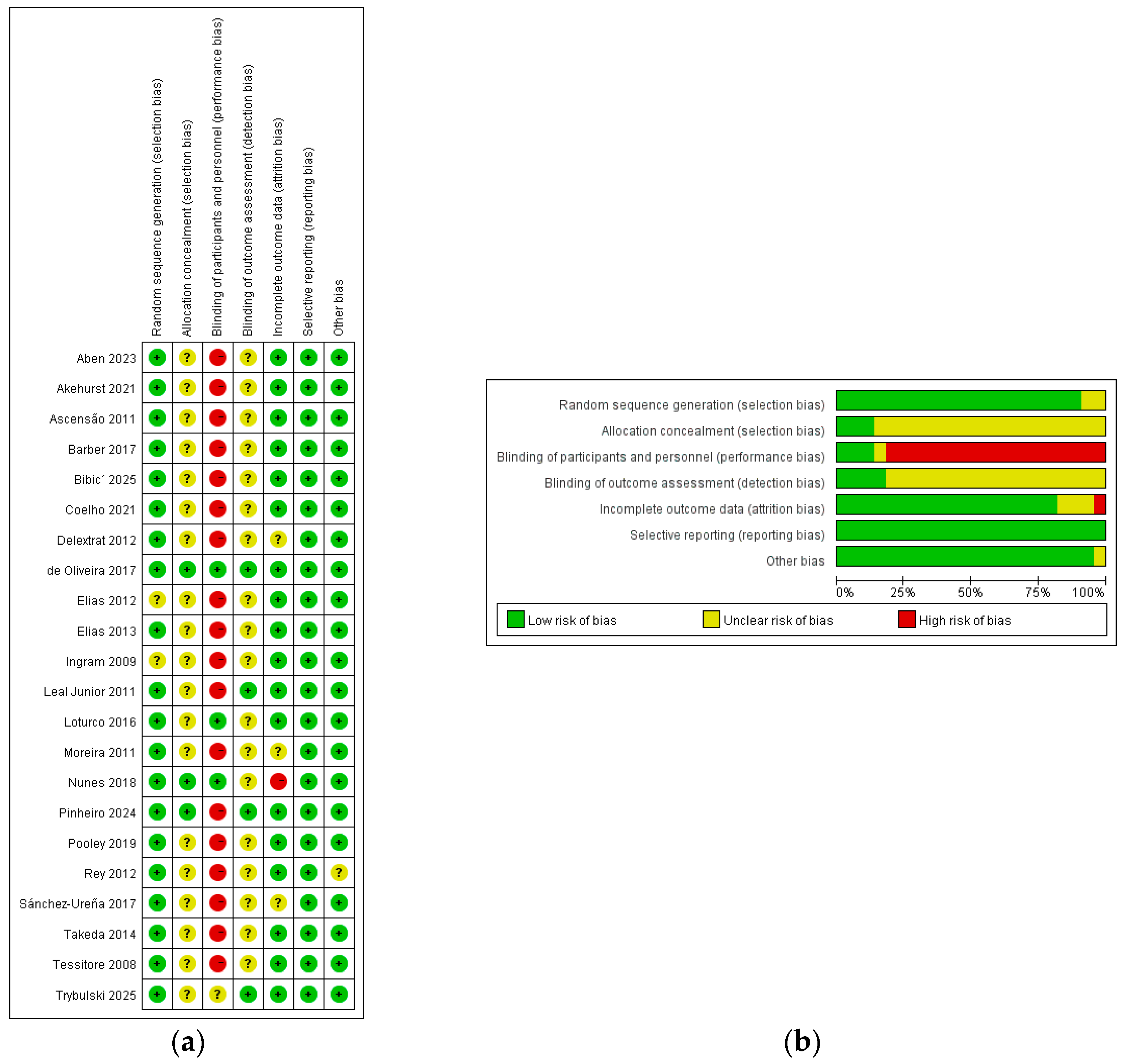
2.3.2. Risk-of-Bias Assessment
2.3.3. Time-Window Aggregation and Subnetwork Management
2.3.4. Statistical Analysis
3. Results
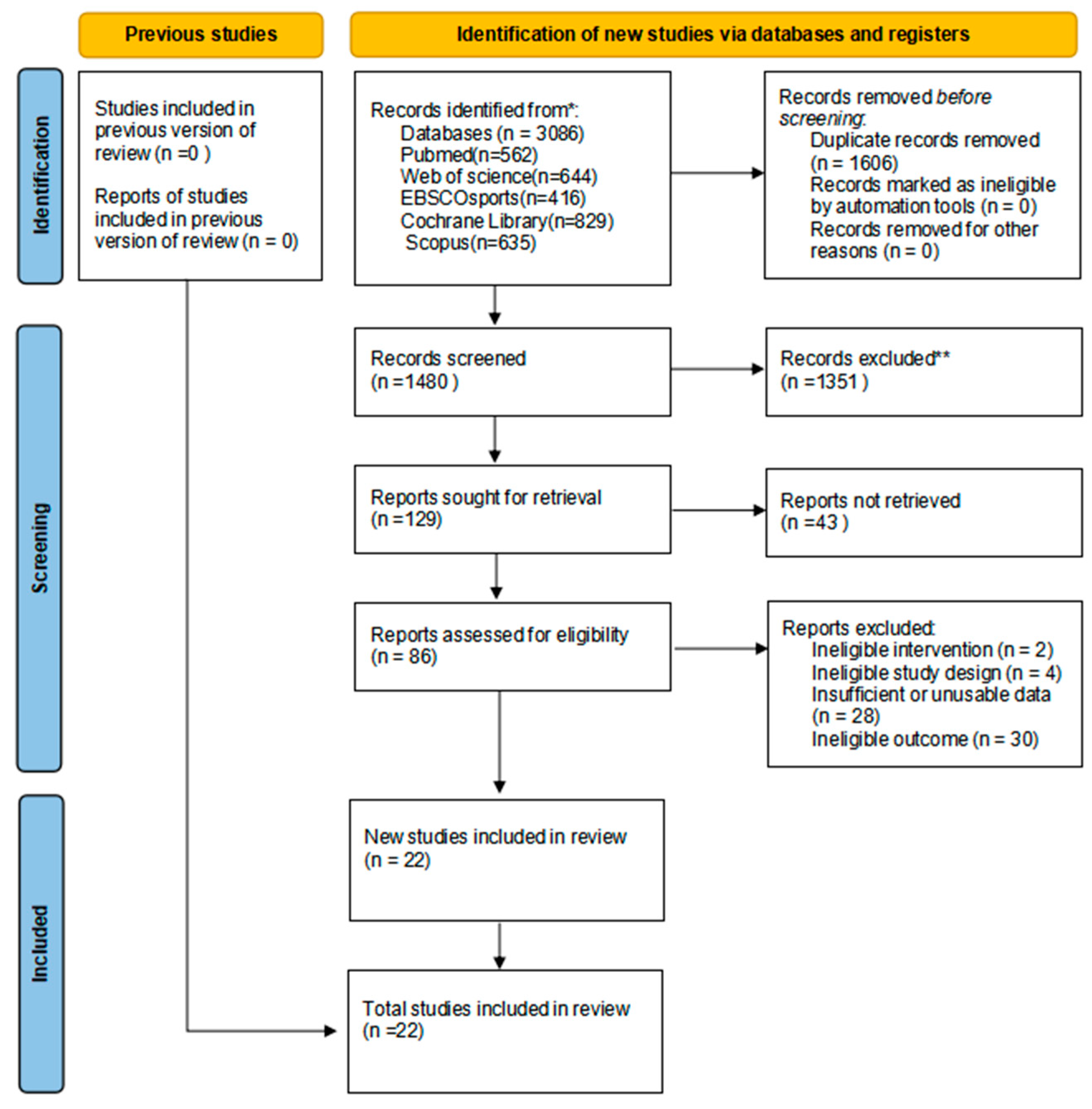
3.1. Study Selection and Characteristics
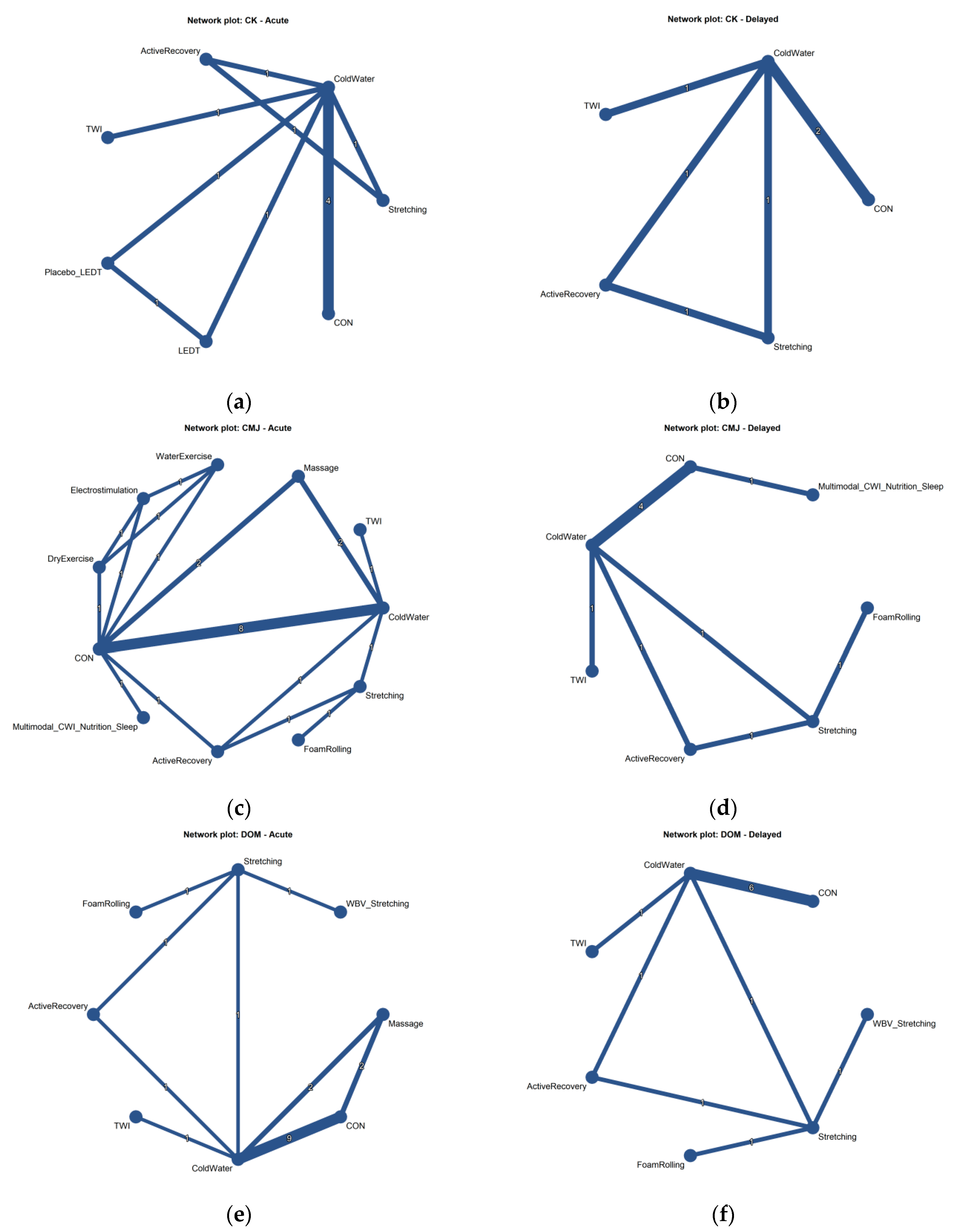
3.2. Network Geometry
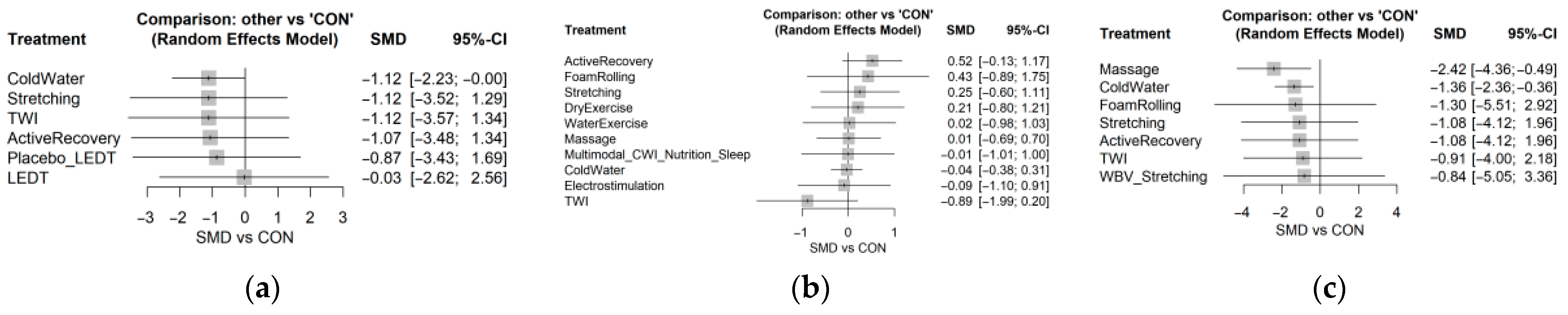
3.3. Acute Recovery Phase (0–24 h)
3.4. Delayed Recovery Phase (48–72 h)
3.5. Heterogeneity and Inconsistency
4. Discussion
4.1. Principal Findings
4.2. Mechanistic Interpretation
4.3. Delayed Recovery and the Role of CWI
4.4. Clinical Implications
4.5. Limitations
5. Conclusions
Supplementary Materials
Author Contributions
Funding
Institutional Review Board Statement
Informed Consent Statement
Data Availability Statement
Conflicts of Interest
Abbreviations
| CK | Creatine kinase |
| CMJ | Countermovement jump |
| CWI | Cold-water immersion |
| DOMS | Delayed-onset muscle soreness |
| OSF | Open Science Framework |
| LEDT | Light-emitting diode therapy |
| PBMT | Photobiomodulation therapy |
| TWI | Thermoneutral water immersion |
| WBV | Whole-body vibration |
References
- Howatson, G.; van Someren, K.A. The prevention and treatment of exercise-induced muscle damage. Sports Med. 2008, 38, 483–503. [Google Scholar] [CrossRef]
- Proske, U.; Morgan, D.L. Muscle damage from eccentric exercise: Mechanism, mechanical signs, adaptation and clinical applications. J. Physiol. 2001, 537, 333–345. [Google Scholar] [CrossRef] [PubMed]
- Gathercole, R.; Sporer, B.; Stellingwerff, T.; Kellett, A. Comparison of the capacity of different jump and sprint field tests to detect neuromuscular fatigue. J. Strength Cond. Res. 2015, 29, 2522–2531. [Google Scholar] [CrossRef] [PubMed]
- Dupuy, O.; Douzi, W.; Theurot, D.; Bosquet, L.; Dugué, B. An evidence-based approach for choosing post-exercise recovery techniques to reduce markers of muscle damage, soreness, fatigue, and inflammation: A systematic review with meta-analysis. Front. Physiol. 2018, 9, 403. [Google Scholar] [CrossRef]
- Poppendieck, W.; Wegmann, M.; Ferrauti, A.; Kellmann, M.; Pfeiffer, M.; Meyer, T. Massage and performance recovery: A meta-analytical review. Sports Med. 2016, 46, 183–204. [Google Scholar] [CrossRef]
- Machado, A.F.; Ferreira, P.H.; Micheletti, J.K.; de Almeida, A.C.; Lemes, Í.R.; Vanderlei, F.M.; Netto Junior, J.; Pastre, C.M. Can water temperature and immersion time influence the effect of cold water immersion on muscle soreness? A systematic review and meta-analysis. Sports Med. 2016, 46, 503–514. [Google Scholar] [CrossRef]
- Higgins, T.R.; Greene, D.A.; Baker, M.K. Effects of cold water immersion and contrast water therapy for recovery from team sport: A systematic review and meta-analysis. J. Strength Cond. Res. 2017, 31, 1443–1460. [Google Scholar] [CrossRef]
- Salanti, G. Indirect and mixed-treatment comparison, network, or multiple-treatments meta-analysis: Many names, many benefits, many concerns for the next generation evidence synthesis tool. Res. Synth. Methods 2012, 3, 80–97. [Google Scholar] [CrossRef]
- MacIntyre, D.L.; Reid, W.D.; McKenzie, D.C. Delayed muscle soreness: The inflammatory response to muscle injury and its clinical implications. Sports Med. 1995, 20, 24–40. [Google Scholar] [CrossRef]
- Peake, J.M.; Neubauer, O.; Della Gatta, P.A.; Nosaka, K. Muscle damage and inflammation during recovery from exercise. J. Appl. Physiol. 2017, 122, 559–570. [Google Scholar] [CrossRef]
- Page, M.J.; McKenzie, J.E.; Bossuyt, P.M.; Boutron, I.; Hoffmann, T.C.; Mulrow, C.D.; Shamseer, L.; Tetzlaff, J.M.; Akl, E.A.; Brennan, S.E.; et al. The PRISMA 2020 statement: An updated guideline for reporting systematic reviews. BMJ 2021, 372, n71. [Google Scholar] [CrossRef]
- Hutton, B.; Salanti, G.; Caldwell, D.M.; Chaimani, A.; Schmid, C.H.; Cameron, C.; Ioannidis, J.P.A.; Straus, S.; Thorlund, K.; Jansen, J.P.; et al. The PRISMA extension statement for reporting of systematic reviews incorporating network meta-analyses of health care interventions: Checklist and explanations. Ann. Intern. Med. 2015, 162, 777–784. [Google Scholar] [CrossRef]
- Drevon, D.; Fursa, S.R.; Malcolm, A.L. Intercoder reliability and validity of WebPlotDigitizer in extracting graphed data. Behav. Modif. 2017, 41, 323–339. [Google Scholar] [CrossRef]
- Sterne, J.A.C.; Savović, J.; Page, M.J.; Elbers, R.G.; Blencowe, N.S.; Boutron, I.; Cates, C.J.; Cheng, H.-Y.; Corbett, M.S.; Eldridge, S.M.; et al. RoB 2: A revised tool for assessing risk of bias in randomised trials. BMJ 2019, 366, l4898. [Google Scholar] [CrossRef]
- R Core Team. R: A Language and Environment for Statistical Computing; R Foundation for Statistical Computing: Vienna, Austria, 2025. [Google Scholar]
- Schwarzer, G.; Carpenter, J.R.; Rücker, G. netmeta: An R package for network meta-analysis using frequentist methods. J. Stat. Softw. 2023, 106, 1–40. [Google Scholar] [CrossRef]
- Higgins, J.P.T.; Thomas, J.; Chandler, J.; Cumpston, M.; Li, T.; Page, M.J.; Welch, V.A. (Eds.) Cochrane Handbook for Systematic Reviews of Interventions, 2nd ed.; Wiley: Hoboken, NJ, USA, 2019. [Google Scholar]
- Borenstein, M.; Hedges, L.V.; Higgins, J.P.T.; Rothstein, H.R. A basic introduction to fixed-effect and random-effects models for meta-analysis. Res. Synth. Methods 2010, 1, 97–111. [Google Scholar] [CrossRef]
- Rücker, G.; Schwarzer, G. Ranking treatments in frequentist network meta-analysis works without resampling methods. BMC Med. Res. Methodol. 2015, 15, 58. [Google Scholar] [CrossRef]
- Higgins, J.P.T.; Thompson, S.G.; Deeks, J.J.; Altman, D.G. Measuring inconsistency in meta-analyses. BMJ 2003, 327, 557–560. [Google Scholar] [CrossRef]
- Aben, H.G.J.; Hills, S.P.; Higgins, D.; Cooke, C.B.; Davis, D.; Jones, B.; Russell, M. The efficacy of a multimodal recovery strategy implemented after a high-intensity rugby league training session. J. Strength Cond. Res. 2023, 37, 1634–1642. [Google Scholar] [CrossRef]
- de Oliveira, A.R.; Vanin, A.A.; Tomazoni, S.S.; Miranda, E.F.; Albuquerque-Pontes, G.M.; De Marchi, T.; dos Santos Grandinetti, V.; de Paiva, P.R.V.; Imperatori, T.B.G.; de Carvalho, P.D.T.C.; et al. Pre-exercise infrared photobiomodulation therapy (810 nm) in skeletal muscle performance and postexercise recovery in humans: What is the optimal power output? Photobiomodul. Photomed. Laser Surg. 2017, 35, 595–603. [Google Scholar] [CrossRef]
- Moreira, A.; Costa, E.C.; Coutts, A.J.; Nakamura, F.Y.; da Silva, D.A.; Aoki, M.S. Imersão em água fria não acelerou a recuperação após uma partida de futsal. Rev. Bras. Med. Esporte 2015, 21, 40–43. [Google Scholar] [CrossRef]
- Delextrat, A.; Calleja-González, J.; Hippocrate, A.; Clarke, N.D. Effects of sports massage and intermittent cold-water immersion on recovery from matches by basketball players. J. Sports Sci. 2013, 31, 11–19. [Google Scholar] [CrossRef]
- Ascensão, A.; Leite, M.; Rebelo, A.N.; Magalhães, S.; Magalhães, J. Effects of cold water immersion on the recovery of physical performance and muscle damage following a one-off soccer match. J. Sports Sci. 2011, 29, 217–225. [Google Scholar] [CrossRef]
- Tessitore, A.; Meeusen, R.; Pagano, R.; Benvenuti, C.; Tiberi, M.; Capranica, L. Effectiveness of active versus passive recovery strategies after futsal games. J. Strength Cond. Res. 2008, 22, 1402–1412. [Google Scholar] [CrossRef]
- Sánchez-Ureña, B.; Martínez-Guardado, I.; Crespo, C.; Timón, R.; Calleja-González, J.; Ibañez, S.J.; Olcina, G. The use of continuous vs. intermittent cold water immersion as a recovery method in basketball players after training: A randomized controlled trial. Physician Sportsmed. 2017, 45, 134–139. [Google Scholar] [CrossRef]
- Coelho, T.M.; Nunes, E.F.H.; Nakamura, F.Y.; Duffield, R.; Serpa, M.C.; da Silva, J.F.; Carminatt, L.J.; Filho, F.J.C.; Goldim, M.P.; Mathias, K.; et al. Post-match recovery in soccer with far-infrared emitting ceramic material or cold-water immersion. J. Sports Sci. Med. 2021, 20, 732–742. [Google Scholar] [CrossRef]
- Bibić, E.; Barišić, V.; Katanić, B.; Chernozub, A.; Trajković, N. Acute effects of foam rolling and stretching on physical performance and self-perceived fatigue in young football players. J. Funct. Morphol. Kinesiol. 2025, 10, 36. [Google Scholar] [CrossRef]
- Leal Junior, E.C.; de Godoi, V.; Mancalossi, J.L.; Rossi, R.P.; De Marchi, T.; Parente, M.; Grosselli, D.; Generosi, R.A.; Basso, M.; Frigo, L.; et al. Comparison between cold water immersion therapy (CWIT) and light emitting diode therapy (LEDT) in short-term skeletal muscle recovery after high-intensity exercise in athletes—Preliminary results. Lasers Med. Sci. 2011, 26, 493–501. [Google Scholar] [CrossRef]
- Elias, G.P.; Varley, M.C.; Wyckelsma, V.L.; McKenna, M.J.; Minahan, C.L.; Aughey, R.J. Effects of water immersion on posttraining recovery in Australian footballers. Int. J. Sports Physiol. Perform. 2012, 7, 357–366. [Google Scholar] [CrossRef]
- Elias, G.P.; Wyckelsma, V.L.; Varley, M.C.; McKenna, M.J.; Aughey, R.J. Effectiveness of water immersion on postmatch recovery in elite professional footballers. Int. J. Sports Physiol. Perform. 2013, 8, 243–253. [Google Scholar] [CrossRef]
- Akehurst, H.; Grice, J.E.; Angioi, M.; Morrissey, D.; Migliorini, F.; Maffulli, N. Whole-body vibration decreases delayed onset muscle soreness following eccentric exercise in elite hockey players: A randomized controlled trial. J. Orthop. Surg. Res. 2021, 16, 589. [Google Scholar] [CrossRef]
- Ingram, J.; Dawson, B.; Goodman, C.; Wallman, K.; Beilby, J. Effect of water immersion methods on post-exercise recovery from simulated team sport exercise. J. Sci. Med. Sport 2009, 12, 417–421. [Google Scholar] [CrossRef]
- Loturco, I.; Abad, C.; Nakamura, F.; Ramos, S.; Kobal, R.; Gil, S.; Pereira, L.; Burini, F.; Roschel, H.; Ugrinowitsch, C.; et al. Effects of far infrared rays emitting clothing on recovery after an intense plyometric exercise bout applied to elite soccer players: A randomized double-blind placebo-controlled trial. Biol. Sport 2016, 33, 277–283. [Google Scholar] [CrossRef]
- Takeda, M.; Sato, T.; Hasegawa, T.; Shintaku, H.; Kato, H.; Yamaguchi, Y.; Radak, Z. The effects of cold water immersion after rugby training on muscle power and biochemical markers. J. Sports Sci. Med. 2014, 13, 616–623. [Google Scholar]
- Rey, E.; Lago-Peñas, C.; Casáis, L.; Lago-Ballesteros, J. The effect of immediate post-training active and passive recovery interventions on anaerobic performance and lower limb flexibility in professional soccer players. J. Hum. Kinet. 2012, 31, 121–129. [Google Scholar] [CrossRef]
- Nunes, R.F.H.; Cidral-Filho, F.J.; Flores, L.J.F.; Nakamura, F.Y.; Rodriguez, H.F.M.; Bobinski, F.; de Sousa, A.; Petronilho, F.; Danielski, L.G.; Martins, M.M.; et al. Effects of far-infrared emitting ceramic materials on recovery during 2-week preseason of elite futsal players. J. Strength Cond. Res. 2020, 34, 235–248. [Google Scholar] [CrossRef] [PubMed]
- Trybulski, R.; Muracki, J.; Aldhahi, M.I.; Kurtoğlu, A.; Halski, T. Effect of cold compression and ice therapy on muscle recovery after plyometric exercise: A randomized crossover trial. J. Bodyw. Mov. Ther. 2025, 45, 1010–1019. [Google Scholar] [CrossRef] [PubMed]
- Pooley, S.; Spendiff, O.; Allen, M.; Moir, H.J. Comparative efficacy of active recovery and cold water immersion as post-match recovery interventions in elite youth soccer. J. Sports Sci. 2020, 38, 1423–1431. [Google Scholar] [CrossRef] [PubMed]
- Pinheiro, S.M.; Dantas, G.A.F.; Silva, L.D.R.; Trajano, G.S.; Barbosa, G.M.; Dantas, P.M.S. Effects of multiple cold-water immersion during pre-season on recovery performance in under-20 male soccer players: A randomized controlled trial. J. Bodyw. Mov. Ther. 2024, 40, 563–568. [Google Scholar] [CrossRef]
- Barber, S.; Pattison, J.; Brown, F.; Hill, J. Efficacy of repeated cold-water immersion on recovery after a simulated rugby union protocol. J. Strength Cond. Res. 2020, 34, 3523–3529. [Google Scholar] [CrossRef]
- Mika, A.; Oleksy, Ł.; Kielnar, R.; Świerzko, K.; Twardowska, M.; Kamiński, K.; Małek, Z. Comparison of two different modes of active recovery on muscles performance after fatiguing exercise in mountain canoeist and football players. PLoS ONE 2016, 11, e0164216. [Google Scholar] [CrossRef]
- Wiewelhove, T.; Schneider, C.; Döweling, A.; Hanakam, F.; Rasche, C.; Meyer, T.; Kellmann, M.; Pfeiffer, M. Effects of different recovery strategies following a half-marathon on fatigue markers in recreational runners. PLoS ONE 2018, 13, e0207313. [Google Scholar] [CrossRef]
- Crane, J.D.; Ogborn, D.I.; Cupido, C.; Melov, S.; Hubbard, A.; Bourgeois, J.M.; Tarnopolsky, M.A.; Coffey, V.G. Massage therapy attenuates inflammatory signaling after exercise-induced muscle damage. Sci. Transl. Med. 2012, 4, 119ra13. [Google Scholar] [CrossRef]
- Weerapong, P.; Hume, P.A.; Kolt, G.S. The mechanisms of massage and effects on performance, muscle recovery and injury prevention. Sports Med. 2005, 35, 235–256. [Google Scholar] [CrossRef]
- Ihsan, M.; Watson, G.; Abbiss, C.R. What are the physiological mechanisms for post-exercise cold water immersion in the recovery from prolonged endurance and intermittent exercise? Sports Med. 2016, 46, 1095–1109. [Google Scholar] [CrossRef]
- White, G.E.; Wells, G.D. Cold-water immersion and other forms of cryotherapy: Physiological changes potentially affecting recovery from high-intensity exercise. Extrem. Physiol. Med. 2013, 2, 26. [Google Scholar] [CrossRef]
- Ochoa-Lácar, J.; Calleja-González, J.; Vaquera, A.; Flórez-Gil, E. Are Specific Performance Factors Influenced by Stress-Related Sleep Disturbances in Basketball Players? A PRISMA-Guided Descriptive and Qualitative Systematic Review. Appl. Sci. 2026, 16, 1787. [Google Scholar] [CrossRef]
- Tidball, J.G. Inflammatory processes in muscle injury and repair. Am. J. Physiol. Regul. Integr. Comp. Physiol. 2005, 288, R345–R353. [Google Scholar] [CrossRef]
- Eston, R.; Peters, D. Effects of cold water immersion on the symptoms of exercise-induced muscle damage. J. Sports Sci. 1999, 17, 231–238. [Google Scholar] [CrossRef]
- Peake, J.M.; Markworth, J.F.; Nosaka, K.; Raastad, T.; Wadley, G.D.; Coffey, V.G. Modulating exercise-induced hormesis: Does less equal more? J. Appl. Physiol. 2015, 119, 172–189. [Google Scholar] [CrossRef]
- Roberts, L.A.; Raastad, T.; Markworth, J.F.; Figueiredo, V.C.; Egner, I.M.; Shield, A.; Cameron-Smith, D.; Coombes, J.S.; Peake, J.M. Post-exercise cold water immersion attenuates acute anabolic signalling and long-term adaptation in muscle to strength training. J. Physiol. 2015, 593, 4285–4301. [Google Scholar] [CrossRef] [PubMed]
- Macchi, R.; Kunimasa, Y.; Chavet, P.; Corcelle, B.; Pomportes, L.; Fazzari, C.; Hays, A.; Vercruyssen, F.; Rossi, F.; Bendahan, D.; et al. Effect of a graded running race on lower limb muscle damage, jump performance and muscle soreness in men and women. Scand. J. Med. Sci. Sports 2024, 34, e14643. [Google Scholar] [CrossRef] [PubMed]
- Li, D.C.W.; Rudloff, S.; Langer, H.T.; Norman, K.; Herpich, C. Age-Associated Differences in Recovery from Exercise-Induced Muscle Damage. Cells 2024, 13, 255. [Google Scholar] [CrossRef] [PubMed]



| Follow-Up | Outcomes | Recovery Arms | Exercise Protocol | Participants | Study |
|---|---|---|---|---|---|
| Baseline, 24 h, 48 h | CMJ | Multimodal recovery (10 min CWI + nutrition + sleep hygiene); passive control | High-intensity field session with repeated running, collisions, and high-intensity efforts | 10 male collegiate rugby players | Aben et al. (2023) [21] |
| Baseline, 0 h, 24 h, 48 h, 72 h | DOMS | PBMT 100/200/400 mW; placebo PBMT | Isokinetic eccentric knee extension (75 reps at 60°/s) | 28 professional male soccer players | de Oliveira et al. (2017) [22] |
| Baseline, 0 h, 24 h | CMJ, DOMS | CWI (12 min, 15 ± 1 °C); passive recovery | Futsal match | 10 professional male futsal players | Moreira et al. (2015) [23] |
| Baseline, 0 h, 24 h | CMJ, DOMS | CWI (10 min, 11 ± 0.7 °C); massage (30 min); passive recovery | Competitive basketball match | 16 university basketball players (men and women) | Delextrat et al. (2013) [24] |
| Baseline, 0 h, 24 h, 48 h | CMJ, DOMS, CK | CWI (10 min, 10 °C); TWI (10 min, 35 °C) | Official soccer match (90 min) | 20 elite male soccer players | Ascensão et al. (2011) [25] |
| Baseline, 0 h | CMJ | Water exercise; dry exercise; electrostimulation; seated rest | Standard futsal match | 10 male futsal players | Tessitore et al. (2008) [26] |
| Baseline, 0 h, 24 h, 48 h | CMJ, DOMS | Continuous CWI; intermittent CWI; passive control | Three 90 min basketball technical-tactical training sessions | 10 male youth basketball players | Sánchez-Ureña et al. (2017) [27] |
| Baseline, 0 h, 24 h, 48 h | DOMS | CWI (10 min, 10 °C); bioceramic garment; passive rest | One-off friendly soccer match | 25 university-level soccer players | Coelho et al. (2021) [28] |
| Baseline, 0 h, 24 h, 48 h | CMJ, DOMS | Foam rolling (20 min); static stretching (20 min) | Football match | 20 elite U-17 soccer players | Bibić et al. (2025) [29] |
| 0 h, 24 h | CK | Active LEDT; placebo LEDT; CWI (5 min, 5 °C) | Three Wingate tests | 6 elite male futsal players | Leal Junior et al. (2011) [30] |
| Baseline, 0 h, 24 h, 48 h | CMJ, DOMS | CWI (14 min, 12 °C); passive rest | Standardized Australian football training | 14 male professional Australian football players | Elias et al. (2012) [31] |
| Baseline, 0 h, 24 h, 48 h | CMJ, DOMS | CWI (14 min, 12 °C); contrast water therapy; passive recovery | Practice match (75 min) | 24 elite male Australian football players | Elias et al. (2013) [32] |
| 0 h, 24 h, 48 h, 72 h | DOMS | Static stretching; WBV + stretching | 4 × 10 eccentric knee extensions at 60% 1RM; final set to failure | 22 elite field hockey players (14 men, 8 women) | Akehurst et al. (2021) [33] |
| Baseline, 0 h, 24 h, 48 h | DOMS, CK | CWI (15 min, 10 °C); contrast water therapy; control | 80 min simulated team-sport protocol + 20 m shuttle run to exhaustion | 11 men with team-sport experience | Ingram et al. (2009) [34] |
| Baseline, 0 h, 24 h, 48 h, 72 h | CMJ, DOMS, CK | Far-infrared-emitting clothing; placebo clothing | 100 drop jumps from 45 cm (6 s intervals) | 21 elite male soccer players | Loturco et al. (2016) [35] |
| Baseline, 0 h, 24 h | CMJ, CK | CWI (10 min, 15 °C); passive rest | 80 min simulated rugby protocol | 20 trained male collegiate rugby players | Takeda et al. (2014) [36] |
| Baseline, 24 h | CMJ | Active recovery (20 min); passive recovery | Standardized soccer training (45 min) | 31 professional male soccer players | Rey et al. (2012) [37] |
| Baseline, 24 h, 48 h | CMJ | Bioceramic garment; placebo garment | Two-week preseason high-intensity training program | 20 elite male futsal players | Nunes et al. (2020) [38] |
| Baseline, 0 h, 24 h, 48 h, 72 h | CK | Cold + intermittent compression; ice only; sham/placebo | Box jumps from 50 cm | 45 amateur male soccer players | Trybulski et al. (2025) [39] |
| Baseline, 0 h, 48 h | CMJ, DOMS, CK | Static stretching; active recovery; CWI (10 min, 14 ± 0.8 °C) | Formal 80 min match | 15 elite male youth soccer players | Pooley et al. (2020) [40] |
| Baseline, 24 h | CMJ, CK | CWI (10 min, 10 ± 1 °C); passive rest | Nine-day preseason microcycle | 23 U20 semi-professional male soccer players | Pinheiro et al. (2024) [41] |
| Baseline, 0 h, 24 h, 48 h | CMJ, DOMS, CK | CWI (2 × 5 min, 10 °C); control | Bath University Rugby Shuttle Test (BURST) | 16 club-level male rugby players | Barber et al. (2020) [42] |
| Outcome | Recovery Window/Time Point | Highest-Ranked Intervention (By P-Score) | Effect Versus Control | Interpretation |
|---|---|---|---|---|
| CMJ | Acute phase (24 h) | Active recovery | SMD = 0.944 (95% CI 0.201 to 1.686) | Largest improvement in explosive performance versus control |
| CMJ | Acute phase (24 h) | Cold-water immersion (CWI) | SMD = 0.447 (95% CI 0.124 to 0.770) | Moderate benefit for CMJ recovery versus control |
| DOMS | Acute phase (0 h) | Massage | SMD = −2.237 (95% CI −3.995 to −0.479) | Strong immediate reduction in perceived soreness |
| DOMS | Acute phase (0 h) | Cold-water immersion (CWI) | SMD = −1.147 (95% CI −2.106 to −0.188) | Significant immediate soreness reduction |
| DOMS | Acute phase (24 h) | Massage | SMD = −2.616 (95% CI −4.427 to −0.804) | Strong reduction in soreness at 24 h |
| DOMS | Acute phase (24 h) | Cold-water immersion (CWI) | SMD = −2.187 (95% CI −3.193 to −1.182) | Large reduction in soreness at 24 h |
| CK | Acute phase (0 h) | Cold-water immersion (CWI) | SMD = −0.494 (95% CI −0.944 to −0.044) | Lower CK immediately after exercise |
| CK | Acute phase (24 h) | Cold-water immersion (CWI) | MD = −177.100 (95% CI −343.253 to −10.946) | Lower CK at 24 h |
| CMJ | Delayed phase (48–72 h) | None | No significant effect versus control | Most effects attenuated beyond 24 h |
| CK | Delayed phase (48–72 h) | None | No significant effect versus control | Most effects attenuated beyond 24 h |
| DOMS | Delayed phase (48 h) | Cold-water immersion (CWI) | SMD = −1.568 (95% CI −2.578 to −0.558) | Only sustained protective effect in the delayed phase |
Disclaimer/Publisher’s Note: The statements, opinions and data contained in all publications are solely those of the individual author(s) and contributor(s) and not of MDPI and/or the editor(s). MDPI and/or the editor(s) disclaim responsibility for any injury to people or property resulting from any ideas, methods, instructions or products referred to in the content. |
© 2026 by the authors. Licensee MDPI, Basel, Switzerland. This article is an open access article distributed under the terms and conditions of the Creative Commons Attribution (CC BY) license.
Share and Cite
Hou, C.; Yin, W.; Qiao, F. Acute and Delayed Effects of Post-Exercise Recovery Strategies on Explosive Performance and Markers of Muscle Damage: A Systematic Review and Network Meta-Analysis. Healthcare 2026, 14, 1321. https://doi.org/10.3390/healthcare14101321
Hou C, Yin W, Qiao F. Acute and Delayed Effects of Post-Exercise Recovery Strategies on Explosive Performance and Markers of Muscle Damage: A Systematic Review and Network Meta-Analysis. Healthcare. 2026; 14(10):1321. https://doi.org/10.3390/healthcare14101321
Chicago/Turabian StyleHou, Chunlin, Wenhui Yin, and Fengjie Qiao. 2026. "Acute and Delayed Effects of Post-Exercise Recovery Strategies on Explosive Performance and Markers of Muscle Damage: A Systematic Review and Network Meta-Analysis" Healthcare 14, no. 10: 1321. https://doi.org/10.3390/healthcare14101321
APA StyleHou, C., Yin, W., & Qiao, F. (2026). Acute and Delayed Effects of Post-Exercise Recovery Strategies on Explosive Performance and Markers of Muscle Damage: A Systematic Review and Network Meta-Analysis. Healthcare, 14(10), 1321. https://doi.org/10.3390/healthcare14101321