1. Introduction
Cervical cancer remains one of the most preventable malignancies worldwide; however, it continues to represent a significant public health burden, particularly in low- and middle-income countries where screening coverage is suboptimal according to the World Health Organization [
1]. Globally, cervical cancer is the fourth most common cancer and the fourth leading cause of cancer-related mortality among women [
2]. In response, the WHO has launched a global strategy aiming to eliminate cervical cancer as a public health problem, targeting 90% HPV vaccination coverage, 70% screening coverage, and 90% treatment access [
1].
Persistent infection with high-risk human papillomavirus (HPV), particularly types 16 and 18, is the primary etiological factor in cervical carcinogenesis [
3]. Consequently, HPV-based screening has become the cornerstone of modern cervical cancer prevention strategies, offering higher sensitivity compared to cytology-based methods [
4].
Despite the implementation of organized screening programs, participation rates remain below the desired levels in many countries, including Türkiye [
5,
6,
7]. Barriers to screening are multifactorial and include fear of gynecological examination, embarrassment, cultural factors, lack of awareness, and logistical difficulties [
7,
8]. Importantly, even in settings where screening is provided free of charge, such as Türkiye, non-structural barriers continue to limit participation [
8].
In this context, underserved populations are defined as individuals who face barriers to accessing routine screening despite the availability of services. These include women with limited health literacy, those living in rural or underserved areas, and individuals with sociocultural barriers to gynecological examination [
8].
HPV self-sampling has emerged as a promising alternative approach to address these barriers. This method allows women to collect their own vaginal samples in a private setting, potentially increasing participation by improving convenience, autonomy, and acceptability. A growing body of evidence has demonstrated that HPV testing on self-collected samples has comparable diagnostic accuracy to clinician-collected samples when validated assays are used [
9,
10].
Recent updates in international guidelines increasingly support the integration of self-sampling into cervical cancer screening strategies. The American Cancer Society and consensus recommendations led by Nicolas Wentzensen emphasize the potential role of self-collected HPV testing in improving screening coverage, particularly among under-screened populations [
11,
12,
13,
14].
In several countries, such as the Netherlands and Australia, organized self-sampling programs have demonstrated increased participation among women who do not attend routine screening [
12,
13,
14,
15]. However, data regarding the acceptability and implementation of HPV self-sampling in Türkiye remain limited.
Therefore, this study aimed to evaluate the acceptability of HPV self-sampling among Turkish women and to identify factors influencing their screening preferences.
2. Methods
This cross-sectional study was conducted in 2025 at the gynecology outpatient clinic of Kırşehir Training and Research Hospital, affiliated with Kırşehir Ahi Evran University Faculty of Medicine, Türkiye.
Women aged 30–65 years who had previously undergone clinician-collected cervical sampling were included. A total of 302 participants were enrolled.
Participants were recruited consecutively from eligible women attending the gynecology outpatient clinic during the study period, based on predefined inclusion criteria.
The questionnaire was developed based on previously published studies and consisted of 14 items assessing the participants’ attitudes, preferences, and concerns regarding HPV self-sampling. The draft questionnaire was reviewed by the study investigators for clarity, relevance, and comprehensibility before administration. It was administered in a standardized manner after the participants had received brief verbal information about the HPV self-sampling procedure.
As a questionnaire-based study, the findings may be subject to response bias, including social desirability bias.
Descriptive statistics were used to summarize the data. Associations were analyzed using the Fisher–Freeman–Halton exact test due to small expected cell counts. A p-value < 0.05 was considered statistically significant.
This study was designed to evaluate attitudes and acceptability toward HPV self-sampling. No biological samples were collected, and no diagnostic performance outcomes (e.g., sensitivity, specificity, or false-positive rates) were assessed.
3. Results
A total of 302 women were included (mean age: 44.76 ± 8.10 years). The sociodemographic and screening-related characteristics of the participants are presented in
Table 1.
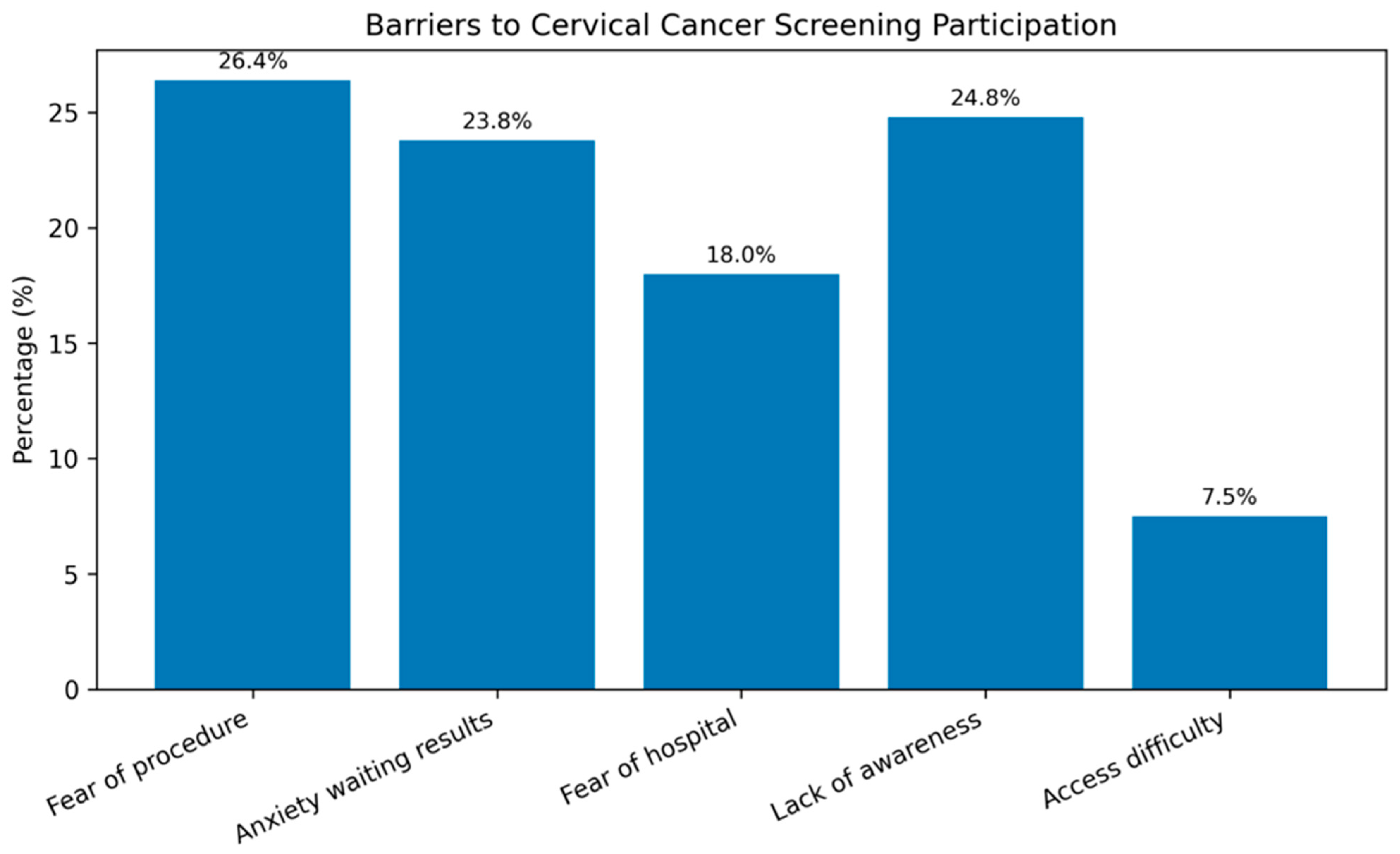
The most commonly reported barriers to cervical cancer screening were fear of the procedure (26.4%) and limited awareness (24.8%), followed by anxiety while waiting for results (23.8%) and fear of visiting healthcare facilities (18.0%) (
Figure 1).
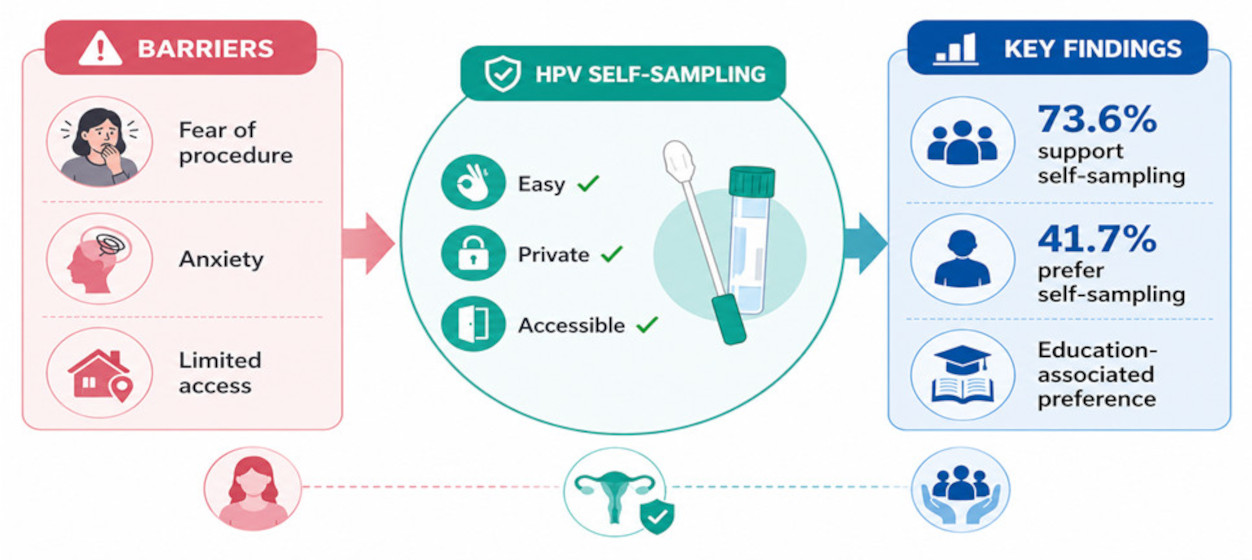
Overall, 73.6% of participants supported the inclusion of HPV self-sampling as a screening option. Additional screening-related characteristics and attitudes toward HPV self-sampling are summarized in
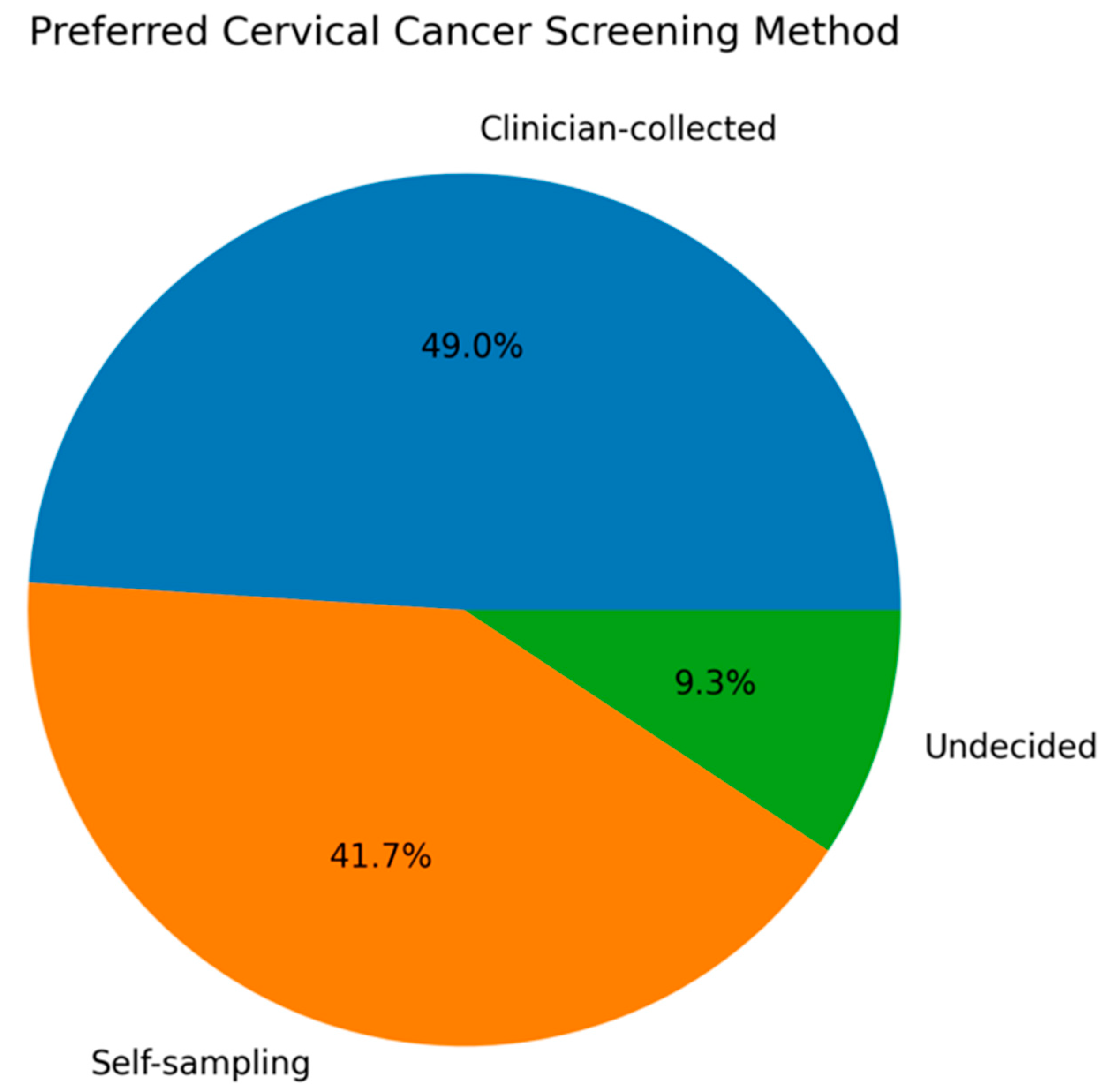
Table 2. However, 49% still preferred clinician-collected sampling, while 41.7% preferred self-sampling (
Figure 2).
Approximately 34.4% of participants reported that performing self-sampling could cause anxiety.
Educational level was significantly associated with self-sampling preference (
p = 0.002), with higher acceptance among university graduates. No significant association was found between age and preference (
Table 3) Association between educational level and preference for HPV self-sampling.
4. Discussion
This study provides evidence that HPV self-sampling is widely accepted among Turkish women and may represent a feasible complementary strategy within cervical cancer screening programs. A substantial proportion of participants (73.6%) supported the inclusion of self-sampling in the national screening program, highlighting its potential role in improving screening accessibility.
The high level of acceptability observed in our study is consistent with previous international studies reporting favorable attitudes toward self-sampling across diverse populations [
6,
16,
17]. These findings suggest that self-sampling is broadly acceptable across different healthcare systems and cultural contexts. Recent systematic review evidence from Asian populations further confirms the high acceptability and feasibility of HPV self-sampling, supporting its applicability across diverse cultural settings [
18]. The increased privacy, convenience, and autonomy associated with self-sampling are key factors contributing to its acceptance [
6].
However, nearly half of the participants (49%) preferred clinician-collected sampling. This finding is particularly important, as it suggests that self-sampling may be better positioned as a complementary option rather than a replacement for clinician-based screening. Similar patterns have been observed in other studies, where a proportion of women continue to prefer clinician involvement due to perceived reliability and reassurance, despite strong evidence demonstrating the comparable diagnostic accuracy of self-collected samples [
10].
The preference for clinician-collected sampling observed in our study may reflect concerns regarding test reliability and confidence in performing the procedure correctly. This finding highlights the importance of trust in healthcare providers and suggests that self-sampling strategies should be accompanied by adequate patient education and reassurance mechanisms [
10,
16].
Cultural factors and healthcare-seeking behaviors specific to Türkiye may also influence screening preferences. In healthcare systems where physician-led care is traditionally emphasized, individuals may feel more confident in clinician-based procedures, which could explain the continued preference for clinician-collected sampling [
7,
8].
A notable proportion of participants (34.4%) reported anxiety related to performing self-sampling. This highlights a critical barrier to implementation. Concerns regarding correct sample collection, fear of obtaining inaccurate results, and lack of confidence in performing the procedure have been previously reported [
6,
16]. These concerns underline the importance of structured patient education, clear instructions, and supportive communication strategies when implementing self-sampling programs.
Educational level was significantly associated with preference for self-sampling, indicating that health literacy plays a key role in the acceptance of alternative screening methods. Women with higher educational levels may have greater confidence in performing self-sampling and interpreting health-related information. This finding is consistent with previous studies demonstrating a positive association between education and acceptance of HPV self-sampling [
19].
From a public health perspective, these findings are particularly important. Even in countries such as Türkiye, where cervical cancer screening is provided free of charge, participation remains suboptimal due to non-structural barriers such as fear, embarrassment, and lack of awareness [
7,
8]. Self-sampling represents a patient-centered approach that may help overcome these barriers, particularly among under-screened populations [
6].
The implementation of HPV self-sampling requires robust healthcare system support. International experiences suggest that organized strategies, such as mail-based distribution or community-based approaches, can facilitate participation in cervical cancer screening programs [
12,
15,
20]. However, ensuring appropriate follow-up of positive cases remains a critical challenge. Effective referral systems for colposcopy and treatment are essential to translate improved engagement in screening into better clinical outcomes.
It is important to note that our study population consisted of women who had previously participated in cervical cancer screening. Therefore, the findings may not fully reflect the attitudes of never-screened populations, who are a primary target for self-sampling strategies. Previous studies suggest that the impact of self-sampling may be even greater in these populations [
6].
The scarcity of Türkiye-specific data further underscores the importance of the present study, which provides one of the first insights into women’s attitudes toward HPV self-sampling in this setting. These findings may contribute to the development of evidence-based, context-specific screening strategies.
Importantly, these findings suggest that HPV self-sampling should not be considered as a replacement for clinician-based screening but rather as a complementary strategy to address barriers to participation. This approach may be particularly valuable for engaging under-screened populations and supporting the effectiveness of existing screening programs [
6,
20].
These findings are also aligned with global cervical cancer elimination efforts, which emphasize the importance of increasing screening coverage and reducing barriers to participation through innovative approaches such as self-sampling [
1,
20].
5. Limitations
This study has several limitations. First, it was conducted in a single tertiary care center, which may limit the generalizability of the findings. However, the study population reflects real-world participants within the national screening program, providing valuable insights into practical barriers and attitudes toward HPV self-sampling. Second, all participants had prior experience with clinician-collected sampling, which may influence their preferences. Future multicenter studies including never-screened populations are warranted to further evaluate the impact of self-sampling on screening uptake.
6. Conclusions
HPV self-sampling appears to be a well-accepted approach among previously screened women and may help address key barriers related to privacy, accessibility, and discomfort. While clinician-based sampling remains preferred by a substantial proportion of women, self-sampling may serve as a complementary option within cervical cancer screening programs.
From a public health perspective, integrating self-sampling into existing screening strategies may support efforts to improve accessibility and engagement, particularly among under-screened populations. Future multicenter studies are needed to evaluate its real-world implementation and potential impact on screening participation.
Author Contributions
S.S.D. designed the study and supervised the research process. M.A. contributed to data collection and analysis. Both authors contributed to manuscript preparation and approved the final manuscript. All authors have read and agreed to the published version of the manuscript.
Funding
This research received no external funding.
Institutional Review Board Statement
The study was conducted in accordance with the Declaration of Helsinki, and approved by the Kırşehir Ahi Evran University Faculty of Medicine Ethics Committee (approval number: 2025-20/264, approval on 8 December 2025).
Informed Consent Statement
Informed consent was obtained from all subjects involved in the study.
Data Availability Statement
The data presented in this study are available from the corresponding author upon reasonable request. The data are not publicly available due to ethical and privacy restrictions.
Acknowledgments
The authors thank all participants who agreed to take part in this study.
Conflicts of Interest
The authors declare that they have no competing interests.
References
- Gultekin, M.; Ramirez, P.T.; Broutet, N.; Hutubessy, R. World Health Organization call for action to eliminate cervical cancer globally. Int. J. Gynecol. Cancer 2020, 30, 426–427. [Google Scholar] [CrossRef] [PubMed]
- Wu, J.; Jin, Q.; Zhang, Y.; Ji, Y.; Li, J.; Liu, X.; Duan, H.; Feng, Z.; Liu, Y.; Zhang, Y. Global burden of cervical cancer: Current estimates, temporal trend and future projections based on the GLOBOCAN 2022. J. Natl. Cancer Cent. 2025, 5, 322–329. [Google Scholar] [CrossRef] [PubMed]
- Yang, M.; Du, J.; Lu, H.; Xiang, F.; Mei, H.; Xiao, H. Global trends and age-specific incidence and mortality of cervical cancer from 1990 to 2019: An international comparative study based on the Global Burden of Disease. BMJ Open 2022, 12, e055470. [Google Scholar] [CrossRef] [PubMed]
- Burd, E.M. Human papillomavirus and cervical cancer. Clin. Microbiol. Rev. 2003, 16, 1–17. [Google Scholar] [CrossRef] [PubMed]
- Republic of Türkiye Ministry of Health, General Directorate of Public Health, Department of Cancer. Cancer Statistics. Available online: https://hsgm.saglik.gov.tr/tr/kanser-istatistikleri.html (accessed on 10 January 2026).
- Nelson, E.J.; Maynard, B.R.; Loux, T.; Fatla, J.; Gordon, R.; Arnold, L.D. The acceptability of self-sampled screening for HPV DNA: A systematic review and meta-analysis. Sex. Transm. Infect. 2017, 93, 56–61. [Google Scholar] [CrossRef] [PubMed]
- Ministry of Health of Türkiye. Cancer Early Diagnosis, Screening and Training Centers (KETEM); Ministry of Health of Türkiye: Ankara, Türkiye, 2025; pp. 21–24.
- Ürek, D.; Karaman, S.; Bilgin, I.; Işik, O.; Uğurluoğlu, Ö. Socio-demographic factors associated with utilization of breast and cervical cancer screening methods in Turkey. Turk. J. Oncol. 2022, 37, 23–31. [Google Scholar] [CrossRef]
- Arbyn, M.; Smith, S.B.; Temin, S.; Sultana, F.; Castle, P. Detecting cervical precancer and reaching underscreened women by using HPV testing on self samples: Updated meta-analyses. BMJ 2018, 363, k4823. [Google Scholar] [CrossRef] [PubMed]
- Phillips, S.A.; Denoël, S.; Wentzensen, N.; Arbyn, M. Accuracy of HPV Self-Collection Compared with Clinician-Collected HPV Testing and Cytology: A Meta-analysis. Cancer Epidemiol. Biomark. Prev. 2025, 34, 1467–1471. [Google Scholar] [CrossRef] [PubMed]
- Christine, B.; Bush, M.; Thurakal, A.; Sheehy, A.M. New Cervical Cancer Screening Guidelines From the US Department of Health and Human Services: Strengthening Women’s Preventive Health. JAMA 2026, 335, 661–662. [Google Scholar] [CrossRef] [PubMed]
- Wentzensen, N.; Massad, L.S.; Clarke, M.A.; Garcia, F.; Smith, R.; Murphy, J.; Guido, R.; Reyes, A.; Phillips, S.; Berman, N. Self-collected vaginal specimens for HPV testing: Recommendations from the enduring consensus cervical cancer screening and management guidelines committee. J. Low. Genit. Tract Dis. 2024, 29, 144–152. [Google Scholar] [CrossRef] [PubMed]
- Toes-Zoutendijk, E.; Arbyn, M.; Auvinen, A.; Baldwin, D.; Castells, X.; DeCensi, A.; Hofvind, S.; Ivanus, U.; Senore, C.; Thorat, M. European Code Against Cancer, –organised cancer screening programmes. Mol. Oncol. 2026, 20, 134–153. [Google Scholar] [CrossRef] [PubMed]
- Arbyn, M.; Costa, S.; Latsuzbaia, A.; Kellen, E.; Girogi Rossi, P.; Cocuzza, C.E.; Basu, P.; Castle, P.E. HPV-based cervical cancer screening on self-samples in the Netherlands: Challenges to reach women and test performance questions. Cancer Epidemiol. Biomark. Prev. 2023, 32, 159–163. [Google Scholar] [CrossRef] [PubMed]
- Polman, N.J.; Ebisch, R.M.; Heideman, D.A.; Melchers, W.J.; Bekkers, R.L.; Molijn, A.C.; Meijer, C.J.; Quint, W.G.; Snijders, P.J.; Massuger, L.F. Performance of human papillomavirus testing on self-collected versus clinician-collected samples for the detection of cervical intraepithelial neoplasia of grade 2 or worse: A randomised, paired screen-positive, non-inferiority trial. Lancet Oncol. 2019, 20, 229–238. [Google Scholar] [CrossRef] [PubMed]
- Khoo, S.P.; Lim, W.T.; Rajasuriar, R.; Nasir, N.H.; Gravitt, P.; Woo, Y.L. The acceptability and preference of vaginal self-sampling for human papillomavirus (HPV) testing among a multi-ethnic Asian female population. Cancer Prev. Res. 2021, 14, 105–112. [Google Scholar] [CrossRef] [PubMed]
- Kilfoyle, K.A.; Des Marais, A.C.; Ngo, M.A.; Romocki, L.; Richman, A.R.; Barclay, L.; Brewer, N.T.; Rahangdale, L.; Smith, J.S. Preference for human papillomavirus self-collection and papanicolaou: Survey of underscreened women in North Carolina. J. Low. Genit. Tract Dis. 2018, 22, 302–310. [Google Scholar] [CrossRef] [PubMed]
- Ji, X.; Hao, M.; Wang, Y.; Kong, W.; Pan, Z.; Sun, Q.; Miao, J. Human papillomavirus self-sampling in Asia: A systematic review. Front. Microbiol. 2025, 16, 1540609. [Google Scholar] [CrossRef] [PubMed]
- Song, J.; Ni, Y.-H.; Fang, J.; Qu, S.-X.; Chen, X.-Y.; Wu, W.-L.; Zhang, W.-C.; Qin, J.-F. The levels of women’s awareness, experience, acceptability and preference for Vaginal Human Papillomavirus (HPV) self-sampling in three provinces of China: A cross-sectional study. BMC Women’s Health 2024, 24, 343. [Google Scholar] [CrossRef] [PubMed]
- Perkins, R.B.; Wolf, A.M.; Church, T.R.; Elkin, E.B.; Skates, S.J.; Etzioni, R.D.; Guerra, C.E.; Herzig, A.; Hoffman, R.M.; Oeffinger, K.C. Self-collected vaginal specimens for human papillomavirus testing and guidance on screening exit: An update to the American Cancer Society cervical cancer screening guideline. CA Cancer J. Clin. 2026, 76, e70041. [Google Scholar] [CrossRef] [PubMed]
| Disclaimer/Publisher’s Note: The statements, opinions and data contained in all publications are solely those of the individual author(s) and contributor(s) and not of MDPI and/or the editor(s). MDPI and/or the editor(s) disclaim responsibility for any injury to people or property resulting from any ideas, methods, instructions or products referred to in the content. |