Hospital Influenza Outbreak Management in the Post-COVID Era: A Narrative Review of Evolving Practices and Feasibility Considerations


Highlights
- Hospital influenza outbreak control has shifted significantly post-COVID, with layered measures (N95 use, ventilation, multiplex PCR) now standard, reducing nosocomial transmission.
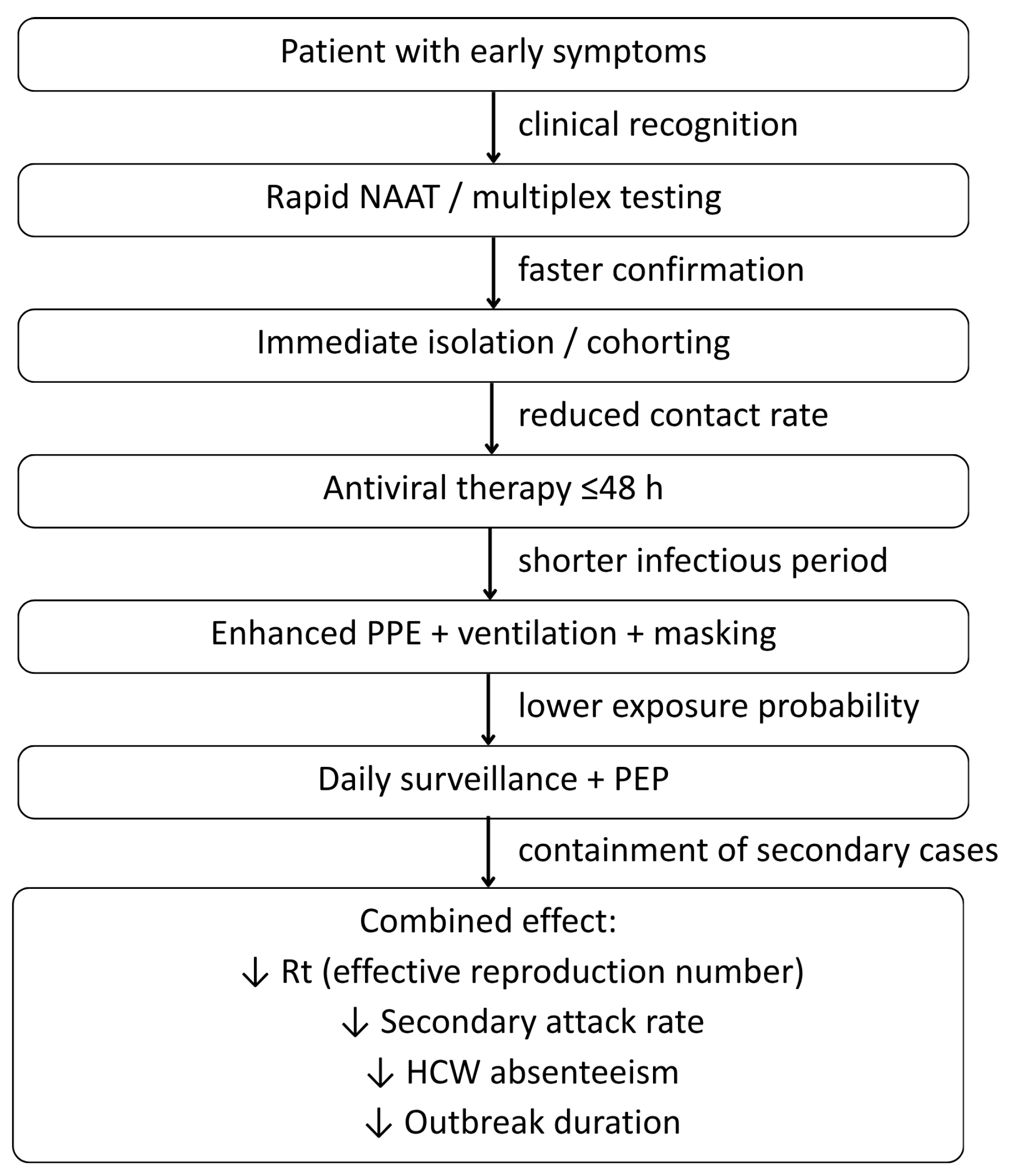
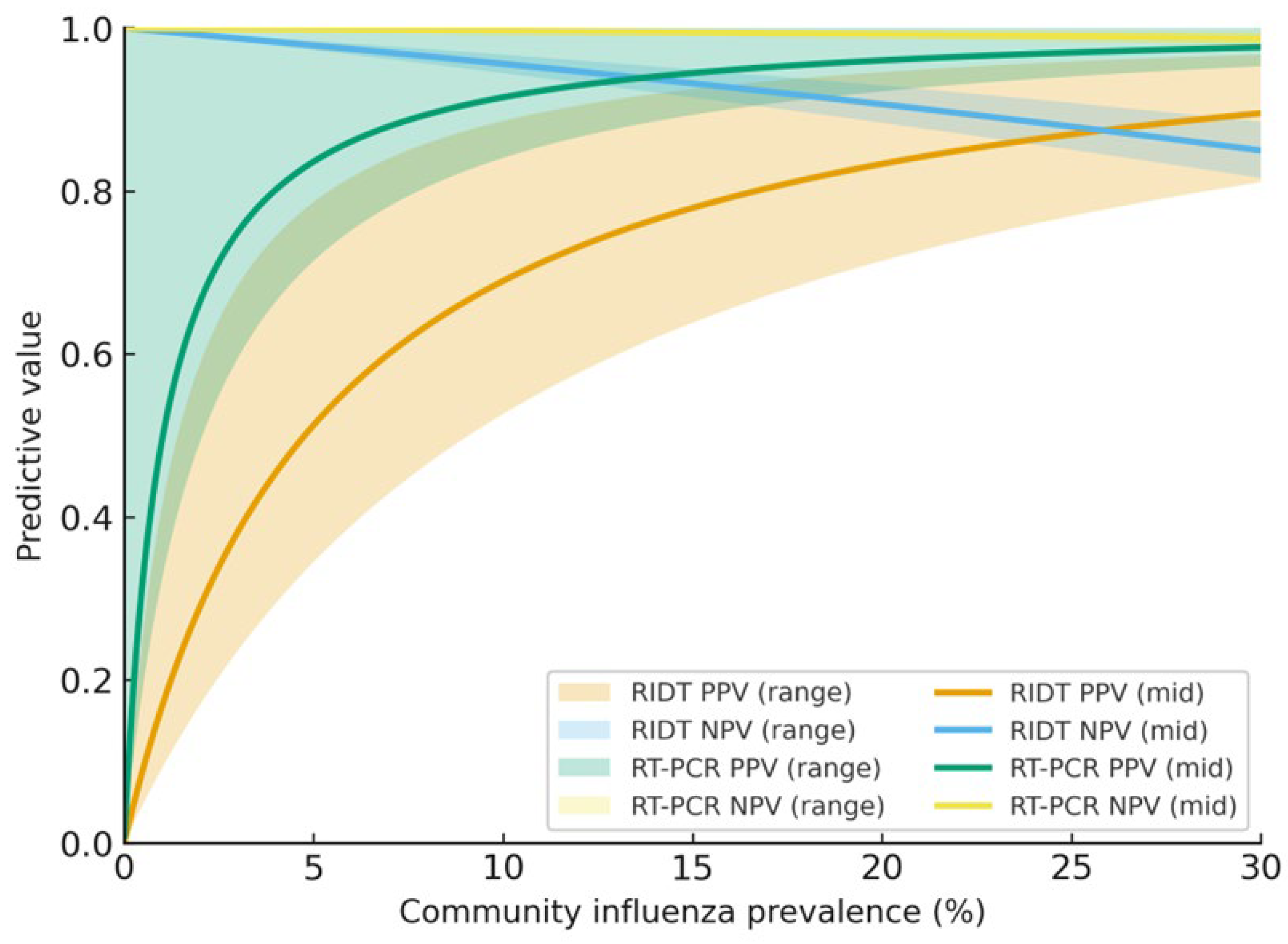
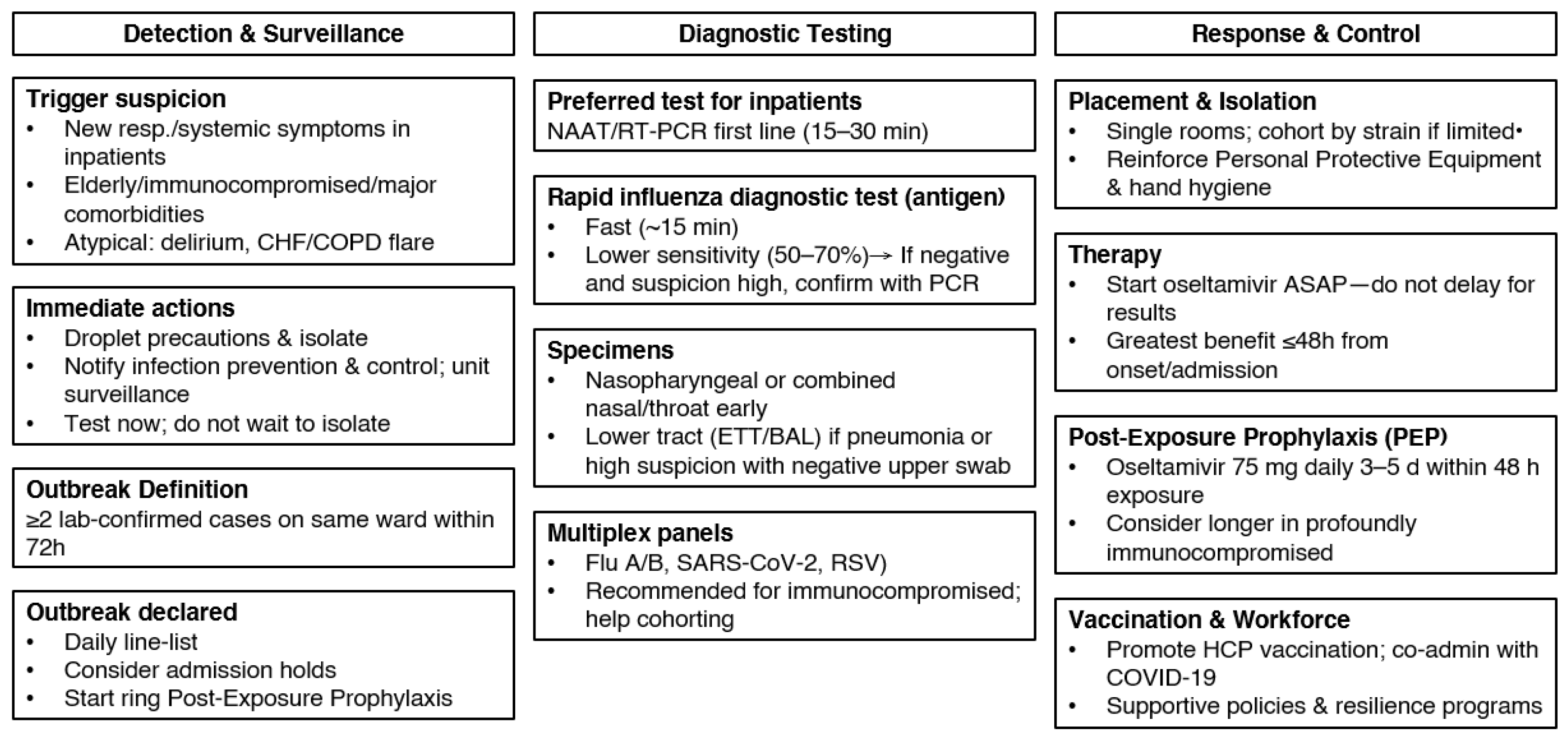
- Quantitative figures and tables (predictive values of diagnostic tests, outbreak thresholds, and intervention schematics) provide evidence-based visuals for clinicians and infection-control teams
- Visual, data-driven tools enable faster recognition and standardized response to influenza outbreaks, helping frontline teams translate guidelines into action.
- Hospitals can adapt COVID-era practices into routine seasonal influenza playbooks, preserving workforce capacity and protecting vulnerable patients.
Abstract
1. Introduction
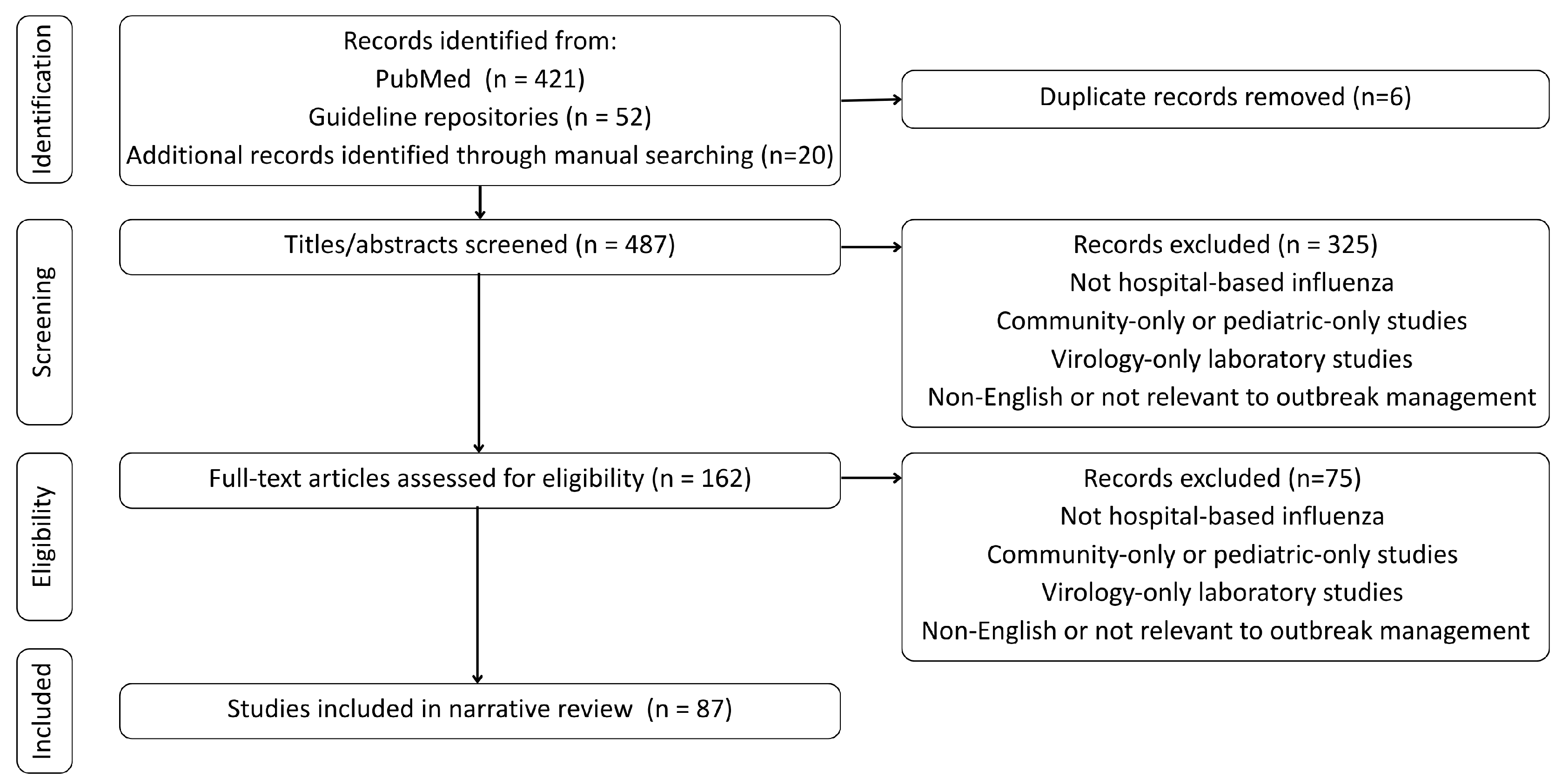
2. Methods
2.1. Search Strategy
2.2. Eligibility Criteria
- Examined hospital-acquired or healthcare-associated influenza;
- Evaluated outbreak management, transmission-control strategies, diagnostics, antiviral therapy, chemoprophylaxis, or inpatient vaccination;
- Involved adults or mixed adult–pediatric inpatient settings;
- Were published in English between 2015 and 2025;
- Represented guideline statements, randomized trials, cohort studies, outbreak investigations, or systematic reviews.
- Pediatric-only community studies;
- Non-English publications;
- Abstracts, letters, or opinion pieces without primary data;
- Laboratory virology studies without direct clinical relevance.
2.3. Screening and Study Selection
2.4. Data Extraction and Synthesis
2.5. Quality Appraisal and Limitations
3. Results
3.1. The Post-COVID Paradigm Shift in Respiratory Virus Control
3.1.1. Transmission Precautions
3.1.2. Clinical Recognition and Diagnosis
3.1.3. Infection Control Policies
3.2. Outbreak Detection and Surveillance
3.2.1. Early Recognition and Reporting Matter
3.2.2. Early Detection and Surveillance in the Hospital Setting
3.2.3. Diagnostic Testing for Influenza in Hospitals
- Role of testing
- Antigen tests vs. NAATs
- Multiplex panels
- Specimen collection
- Serology and Viral Culture (Non-Recommended Methods)
- Clinical interpretation
3.2.4. Interpreting Test Results in Clinical Context
- Contextual Interpretation
- Positive Results
- Negative Results
- Preferred Modality (RT-PCR/NAATs)
- Timing of Collection
- Specimen Type and Site
- Immunocompromised Hosts
- Outbreak Settings
3.3. Infection Control Measures
3.3.1. Adherence to Institutional Algorithms and Protocols
3.3.2. Expanded Testing in Confirmed Outbreaks
3.3.3. Diagnostic Strategy and Follow-Up Testing
3.3.4. Outbreak Recognition and Response Activation
3.3.5. Patient Placement, Isolation, and Cohorting
3.3.6. Personal Protective Equipment: Practice and Pitfalls
3.3.7. Active Case-Finding, Surveillance, and Exit Criteria
3.3.8. Communication and Documentation
3.3.9. Clinician’s Role Across the Outbreak Lifecycle
3.4. Antiviral Therapy and Chemoprophylaxis
3.4.1. Antiviral Therapy
3.4.2. Post-Exposure Prophylaxis
3.5. Vaccination Strategies
3.5.1. Integrating Influenza and COVID-19 Vaccination Strategies
3.5.2. Healthcare Personnel Vaccination Coverage Trend
3.5.3. Antiviral Chemoprophylaxis for Unvaccinated Personnel
3.5.4. Patient Vaccination Integration Strategies
3.5.5. Vaccination as a Pillar of Workforce Resilience
3.6. Communication and System-Level Coordination
3.6.1. Communication
3.6.2. Visitor Management
3.6.3. Unit or Service Modifications
4. Discussion
5. Conclusions
Author Contributions
Funding
Institutional Review Board Statement
Informed Consent Statement
Data Availability Statement
Acknowledgments
Conflicts of Interest
References
- World Health Organization. Influenza (Seasonal). 2025. Available online: https://www.who.int/news-room/fact-sheets/detail/influenza-(seasonal) (accessed on 29 April 2025).
- Centers for Disease Control and Prevention. About Estimated Flu Burden. 2024. Available online: https://www.cdc.gov/flu-burden/php/about/ (accessed on 29 April 2025).
- Centers for Disease Control and Prevention. Infection Prevention and Control Strategies for Seasonal Influenza in Healthcare Settings. 2025. Available online: https://www.cdc.gov/flu/professionals/infectioncontrol (accessed on 29 April 2025).
- Uyeki, T.M.; Bernstein, H.H.; Bradley, J.S.; Englund, J.A.; File, T.M.; Fry, A.M.; Pavia, A.T. Clinical Practice Guidelines by the Infectious Diseases Society of America: 2018 Update on Diagnosis, Treatment, Chemoprophylaxis, and Institutional Outbreak Management of Seasonal Influenza. Clin. Infect. Dis. 2019, 68, e1–e47. [Google Scholar] [CrossRef]
- Centers for Disease Control and Prevention. Interim Guidance for Influenza Outbreak Management in Long-Term Care and Post-Acute Care Facilities. 2024. Available online: https://www.cdc.gov/flu/hcp/infection-control/ltc-facility-guidance.html (accessed on 16 December 2025).
- World Health Organization. Clinical Practice Guidelines for Influenza. 2024. Available online: https://www.who.int/publications/i/item/9789240097759 (accessed on 29 April 2025).
- Yan, J.; McClure, T.; Aslam, A.; Bubb, T.; Babady, N.E.; Usiak, S.; Kamboj, M. Impact of Universal Masking in Reducing the Risk of Nosocomial Respiratory Viruses among People with Cancer. Infect. Control Hosp. Epidemiol. 2024, 45, 1405–1409. [Google Scholar] [CrossRef]
- Olsen, S.J. Decreased Influenza Activity during the COVID-19 Pandemic—United States, Australia, Chile, and South Africa, 2020. MMWR Morb. Mortal. Wkly. Rep. 2020, 69, 1305–1309. [Google Scholar] [CrossRef]
- Chan, L.Y.H.; Morris, S.E.; Stockwell, M.S.; Bowman, N.M.; Asturias, E.; Rao, S.; Lutrick, K.; Ellingson, K.D.; Nguyen, H.Q.; Maldonado, Y.; et al. Estimating the generation time for influenza transmission using household data in the United States. medRxiv 2024. [Google Scholar] [CrossRef]
- Baek, J.H.; Seo, Y.B.; Choi, W.S.; Kee, S.Y.; Jeong, H.W.; Lee, H.Y.; Kim, W.J. Guideline on the Prevention and Control of Seasonal Influenza in Healthcare Settings. Korean J. Intern. Med. 2014, 29, 265–280. [Google Scholar] [CrossRef] [PubMed][Green Version]
- Youngs, J.; Marshall, B.; Farragher, M.; Knapper, F.; McGrath, E.; Riley, P.; Shallcross, L.; Edgeworth, J.D. Implementation of Influenza Point-of-Care Testing and Patient Cohorting during a High-Incidence Season: A Retrospective Analysis of Impact on Infection Prevention and Control and Clinical Outcomes. J. Hosp. Infect. 2019, 101, 276–284. [Google Scholar] [CrossRef] [PubMed]
- Birrer, M.; Draps, K.; Hobi, F.; Guery, B.; Manuel, O.; Widmer, A.; Sax, H. Hospital-Acquired Respiratory Viral Infections While Applying Droplet Precautions On Site (DroPS): Prospective Observation during the 2019/20 Influenza Season, Bern, Switzerland. Infect. Prev. Pract. 2024, 6, 100386. [Google Scholar] [CrossRef]
- Pratt, G.W.; Wong, C.L.; Rao, L.V. Prevalence and Co-Detection Rates of SARS-CoV-2, Influenza, and Respiratory Syncytial Virus: A Retrospective Analysis. APMIS 2025, 133, e70010. [Google Scholar] [CrossRef]
- Clark, T.W.; Lindsley, K.; Wigmosta, T.B.; Bhagat, A.; Hemmert, R.B.; Uyei, J.; Timbrook, T.T. Rapid Multiplex PCR for Respiratory Viruses Reduces Time to Result and Improves Clinical Care: Results of a Systematic Review and Meta-analysis. J. Infect. 2023, 86, 462–475. [Google Scholar] [CrossRef] [PubMed]
- Verdier, V.; Lilienthal, F.; Desvergez, A.; Gazaille, V.; Winer, A.; Paganin, F. Severe Forms of Influenza Infections Admitted in Intensive Care Units: Analysis of Mortality Factors. Influenza Other Respir. Viruses 2023, 17, e13168. [Google Scholar] [CrossRef]
- Bilgin, H.; Başarı, T.; Pazar, N.; Küçüker, I.; Can-Sarınoğlu, R. Comparison of 28-Day Mortality between Hospital- and Community-Acquired Influenza Patients. Infect. Dis. Clin. Microbiol. 2023, 5, 231–238. [Google Scholar] [CrossRef]
- Centers for Disease Control and Prevention. Clinical Signs and Symptoms of Influenza. 2024. Available online: https://www.cdc.gov/flu/hcp/clinical-signs/index.html (accessed on 8 August 2024).
- Falsey, A.R. Neurologic Complications of Influenza and Potential Protective Vaccine Effects. Influenza Other Respir. Viruses 2025, 19, e70071. [Google Scholar] [CrossRef]
- Huang, Y.; Li, S.; Ye, W.; Wang, H.; Su, J.; Gao, L.; Chen, G. Viral Infections in Elderly Individuals: A Comprehensive Overview of SARS-CoV-2 and Influenza Susceptibility, Pathogenesis, and Clinical Treatment Strategies. Vaccines 2025, 13, 431. [Google Scholar] [CrossRef]
- Merckx, J.; Wali, R.; Schiller, I.; Caya, C.; Gore, G.C.; Chartrand, C.; Papenburg, J. Diagnostic Accuracy of Novel and Traditional Rapid Tests for Influenza Infection Compared with Reverse Transcriptase Polymerase Chain Reaction: A Systematic Review and Meta-analysis. Ann. Intern. Med. 2017, 167, 394–409. [Google Scholar] [CrossRef]
- Centers for Disease Control and Prevention. Rapid Influenza Diagnostic Tests. Available online: https://www.cdc.gov/flu/hcp/testing-methods/clinician_guidance_ridt.html (accessed on 26 September 2025).
- Berry, G.J.; Jhaveri, T.A.; Larkin, P.M.; Mostafa, H.; Babady, N.E. ADLM Guidance Document on Laboratory Diagnosis of Respiratory Viruses. J. Appl. Lab. Med. 2024, 9, 599–628. [Google Scholar] [CrossRef]
- Centers for Disease Control and Prevention. Guide for Considering Influenza Testing When Influenza Viruses Are Circulating in the Community. Available online: https://www.cdc.gov/flu/hcp/testing-methods/consider-influenza-testing.html (accessed on 26 September 2025).
- Yin, H.; Wu, W.; Lv, Y.; Kou, H.; Sun, Y. Comparative Evaluation of Three Rapid Influenza Diagnostic Tests for Detection of Influenza A and B Viruses Using RT-PCR as the Reference Method. J. Med. Virol. 2025, 97, e70162. [Google Scholar] [CrossRef] [PubMed]
- Sanz-Muñoz, I.; Sánchez-Martínez, J.; Rodríguez-Crespo, C.; Arroyo-Hernantes, I.; Domínguez-Gil, M.; Rojo Rello, S.; Eiros, J.M. Association of Viral Loads of Influenza A (H3N2) with Age and Care Setting on Presentation: A Prospective Study during the 2022–2023 Influenza Season in Spain. Int. J. Infect. Dis. 2024, 143, 13–19. [Google Scholar] [CrossRef] [PubMed]
- Chan, W.S.; Ho, C.W.Y.; Chan, T.C.; Hung, J.; To, M.Y.; Leung, S.M.; Tang, B.S.F. Clinical Evaluation of the BIOFIRE SPOTFIRE Respiratory Panel. Viruses 2024, 16, 600. [Google Scholar] [CrossRef]
- Su, X.; Zhou, J.; Liu, L.; Gao, H.; Lin, Y.; Wang, Z.; Guo, W. Performance Evaluation of Influenza A Rapid Antigen Test and PCR among Nasopharyngeal and Oropharyngeal Samples. Practic. Lab. Med. 2024, 40, e00416. [Google Scholar] [CrossRef]
- Zhang, C.; Fang, V.J.; Chan, K.H.; Leung, G.M.; Ip, D.K.; Peiris, J.M.; Tsang, T.K. Interplay between Viral Shedding, Age, and Symptoms in Individual Infectiousness of Influenza Cases in Households. J. Infect. Dis. 2025, 231, 462–470. [Google Scholar] [CrossRef] [PubMed]
- Ramirez, J.; Furmanek, S.; Chandler, T.; Carrico, R.; Wilde, A.; Junkins, A.; Raghuram, A. Diagnosis of Community-Acquired Pneumonia due to Influenza or Respiratory Syncytial Virus: Evaluation of RT-PCR Sensitivity in Nasopharyngeal, Saliva, and Sputum Samples. Pathogens 2025, 14, 400. [Google Scholar] [CrossRef] [PubMed]
- Centers for Disease Control and Prevention. Clinical Guidance for Hospitalized and Non-Hospitalized Patients When SARS-CoV-2 and Influenza Viruses Are Co-Circulating. Available online: https://www.cdc.gov/flu/hcp/clinical-guidance/testing-guidance-for-clinicians.html (accessed on 26 September 2025).
- Liu, Y.; Wang, Y.; Mai, H.; Chen, Y.; Liu, B.; Liu, Y.; Gao, Y. Clinical Characteristics, Risk Factors, and Antiviral Treatments of Influenza in Immunosuppressed Inpatients in Beijing during the 2015–2020 Influenza Seasons. Virol. J. 2022, 19, 11. [Google Scholar] [CrossRef]
- World Health Organization. Implementing the Integrated Sentinel Surveillance of Influenza and Other Respiratory Viruses of Epidemic and Pandemic Potential by the Global Influenza Surveillance and Response System: Standards and Operational Guidance. 2024. Available online: https://www.who.int/publications/i/item/9789240101432 (accessed on 26 September 2025).
- Adal, K.A.; Flowers, R.H.; Anglim, A.M.; Hayden, F.G.; Titus, M.G.; Coyner, B.J.; Farr, B.M. Prevention of Nosocomial Influenza. Infect. Control Hosp. Epidemiol. 1996, 17, 641–648. [Google Scholar] [CrossRef] [PubMed]
- Sartor, C.; Zandotti, C.; Romain, F.; Jacomo, V.; Simon, S.; Atlan-Gepner, C.; Drancourt, M. Disruption of Services in an Internal Medicine Unit Due to a Nosocomial Influenza Outbreak. Infect. Control Hosp. Epidemiol. 2002, 23, 615–619. [Google Scholar] [CrossRef]
- Salgado, C.D.; Giannetta, E.T.; Hayden, F.G.; Farr, B.M. Preventing Nosocomial Influenza by Improving the Vaccine Acceptance Rate of Clinicians. Infect. Control Hosp. Epidemiol. 2004, 25, 923–928. [Google Scholar] [CrossRef]
- Munier-Marion, E.; Bénet, T.; Régis, C.; Estellat, C.; Morey, J.; Jacquemoud, M.; Timsit, J.F.; Vanhems, P. Hospitalization in Double-Occupancy Rooms and the Risk of Hospital-Acquired Influenza: A Prospective Cohort Study. Clin. Microbiol. Infect. 2016, 22, 461.e7–461.e9. [Google Scholar] [CrossRef]
- Suh, W.; Han, S.B. Nosocomial Influenza in a Pediatric General Ward: Effects of Isolation and Cohort Placement of Children with Influenza. Infect. Control Hosp. Epidemiol. 2023, 44, 1637–1642. [Google Scholar] [CrossRef]
- Ohishi, T.; Shinomiya, S.; Tsuda, Y.; Kurosu, H.; Yoshikawa, T. Personal Protective Equipment Stewardship across 112 Medical Facilities: A Preliminary Survey in Japan. J. Hosp. Infect. 2025, 144, 20–26. [Google Scholar] [CrossRef]
- Chen, Y.-L.; Lin, M.-C.; Chang, Y.-C.; Hsiao, Y.-T.; Lin, Y.-H.; Wu, P.-Y.; Lee, M.-C. From Mandate to Choice: How Voluntary Mask Wearing Shapes Interpersonal Distance among University Students after COVID-19. Healthcare 2025, 13, 1956. [Google Scholar] [CrossRef]
- Dou, L.; Reynolds, D.; Wallace, L.; O’Horo, J.; Kashyap, R.; Gajic, O.; Yadav, H. Decreased Hospital Length of Stay with Early Administration of Oseltamivir in Patients Hospitalized with Influenza. Mayo Clin. Proc. Innov. Qual. Outcomes 2020, 4, 176–182. [Google Scholar] [CrossRef] [PubMed]
- Lewis, N.M.; Harker, E.J.; Grant, L.B.; Zhu, Y.; Grijalva, C.G.; Chappell, J.D.; Self, W.H. Benefit of Early Oseltamivir Therapy for Adults Hospitalized with Influenza A: An Observational Study. Clin. Infect. Dis. 2024; in press. [Google Scholar] [CrossRef]
- Adlhoch, C.; Delgado-Sanz, C.; Carnahan, A.; Larrauri, A.; Popovici, O.; Bossuyt, N.; Olsen, S.J. Effect of Neuraminidase-Inhibitor (Oseltamivir) Treatment on Outcomes of Hospitalised Influenza Patients: Surveillance Data from 11 EU Countries, 2010–2020. Euro Surveill. 2023, 28, 2200340. [Google Scholar] [CrossRef]
- Gao, Y.; Guyatt, G.; Uyeki, T.M.; Liu, M.; Chen, Y.; Zhao, Y.; Hao, Q. Antivirals for Treatment of Severe Influenza: A Systematic Review and Network Meta-analysis of Randomised Controlled Trials. Lancet 2024, 404, 753–763. [Google Scholar] [CrossRef]
- Lee, N.; Chan, P.K.; Choi, K.W.; Lui, G.; Wong, B.; Cockram, C.S.; Sung, J.J. Factors Associated with Early Hospital Discharge of Adult Influenza Patients. Antivir. Ther. 2007, 12, 501–508. [Google Scholar] [CrossRef]
- Lee, N.; Choi, K.W.; Chan, P.K.S.; Hui, D.S.C.; Lui, G.C.Y.; Wong, B.C.K.; Sung, J.J.Y. Outcomes of Adults Hospitalised with Severe Influenza. Thorax 2010, 65, 510–515. [Google Scholar] [CrossRef] [PubMed]
- Ebell, M.H.; Call, M.; Shinholser, J. Effectiveness of Oseltamivir in Adults: A Meta-analysis of Published and Unpublished Clinical Trials. Fam. Pract. 2013, 30, 125–133. [Google Scholar] [CrossRef]
- Ison, M.G.; Hui, D.S.; Clezy, K.; O’Neil, B.J.; Flynt, A.; Collis, P.J.; Alexander, W.J. A Clinical Trial of Intravenous Peramivir Compared with Oral Oseltamivir for the Treatment of Seasonal Influenza in Hospitalized Adults. Antivir. Ther. 2013, 18, 651–661. [Google Scholar] [CrossRef]
- Ramirez, J.; Peyrani, P.; Wiemken, T.; Chaves, S.S.; Fry, A.M.; Arnold, F.W. A Randomized Study Evaluating the Effectiveness of Oseltamivir Initiated at the Time of Hospital Admission in Adults Hospitalized with Influenza-Associated Lower Respiratory Tract Infections. Clin. Infect. Dis. 2018, 67, 736–742. [Google Scholar] [CrossRef]
- Groeneveld, G.H.; Marbus, S.D.; Ismail, N.; de Vries, J.J.; Schneeberger, P.; Oosterheert, J.J.; de Boer, M.G. Effectiveness of Oseltamivir in Reduction of Complications and 30-Day Mortality in Severe Seasonal Influenza Infection. Int. J. Antimicrob. Agents 2020, 56, 106155. [Google Scholar] [CrossRef] [PubMed]
- Sharma, Y.; Horwood, C.; Hakendorf, P.; Thompson, C. Effectiveness of Oseltamivir in Reducing 30-Day Readmissions and Mortality among Patients with Severe Seasonal Influenza in Australian Hospitalized Patients. Int. J. Infect. Dis. 2021, 104, 232–238. [Google Scholar] [CrossRef]
- Wiemken, T.L.; Furmanek, S.P.; Carrico, R.M.; Peyrani, P.; Hoft, D.; Fry, A.M.; Ramirez, J.A. Effectiveness of Oseltamivir Treatment on Clinical Failure in Hospitalized Patients with Lower Respiratory Tract Infection. BMC Infect. Dis. 2021, 21, 381. [Google Scholar] [CrossRef] [PubMed]
- Walsh, P.S.; Schnadower, D.; Zhang, Y.; Ramgopal, S.; Shah, S.S.; Wilson, P.M. Association of Early Oseltamivir with Improved Outcomes in Hospitalized Children with Influenza, 2007–2020. JAMA Pediatr. 2022, 176, e223261. [Google Scholar] [CrossRef]
- Pott, H.; Andrew, M.K.; Shaffelburg, Z.; Nichols, M.K.; Ye, L.; ElSherif, M.; McNeil, S.A. Oseltamivir Reduces 30-Day Mortality in Older Adults with Influenza: A Pooled Analysis from the 2012–2019 Serious Outcomes Surveillance Network of the Canadian Immunization Research Network. Open Forum Infect. Dis. 2025, 12, ofaf058. [Google Scholar] [CrossRef]
- Ishiguro, N.; Oyamada, R.; Nasuhara, Y.; Yamada, T.; Miyamoto, T.; Imai, S.; Ono, K. Three-Day Regimen of Oseltamivir for Post-Exposure Prophylaxis of Influenza in Wards. J. Hosp. Infect. 2016, 94, 150–153. [Google Scholar] [CrossRef][Green Version]
- Wrotek, A.; Jackowska, T. A Non-Inferiority Randomized Open-Label Pilot Study of 3- versus 7-Day Influenza Post-Exposure Prophylaxis with Oseltamivir in Hospitalized Children. Sci. Rep. 2024, 14, 14192. [Google Scholar] [CrossRef]
- Dronavalli, M.; Lord, H.; Alexander, K.; Boonwaat, L.; Pal, N.; Fletcher-Lartey, S.M. Effectiveness of Oseltamivir Prophylaxis in Influenza Outbreaks in Residential Aged Care. J. Epidemiol. Glob. Health 2020, 10, 184–189. [Google Scholar] [CrossRef] [PubMed]
- Zhao, Y.; Gao, Y.; Guyatt, G.; Uyeki, T.M.; Liu, P.; Liu, M.; Hao, Q. Antivirals for Post-Exposure Prophylaxis of Influenza: A Systematic Review and Network Meta-Analysis. Lancet 2024, 404, 764–772. [Google Scholar] [CrossRef] [PubMed]
- Lepen, L.; Blagus, R.; Velušček, M.; Saletinger, R.; Petrovec, M.; Bajrović, F.F.; Stupica, D. Five-Day versus 10-Day Post-Exposure Chemoprophylaxis with Oseltamivir to Prevent Hospital Transmission of Influenza: A Non-Inferiority Randomized Open-Label Study. Open Forum Infect. Dis. 2020, 7, ofaa240. [Google Scholar] [CrossRef]
- Shinjoh, M.; Sato, S.; Sugaya, N.; Mitamura, K.; Takeuchi, Y.; Kosaki, K.; Takahashi, T. Effect of Post-Exposure Prophylaxis with Oseltamivir for Those in Contact with Influenza Patients in Pediatric Wards. Kansenshogaku Zasshi 2004, 78, 262–269. [Google Scholar] [CrossRef][Green Version]
- Vu, D.; Peck, A.J.; Nichols, W.G.; Varley, C.; Englund, J.A.; Corey, L.; Boeckh, M. Safety and Tolerability of Oseltamivir Prophylaxis in Hematopoietic Stem Cell Transplant Recipients: A Retrospective Case-Control Study. Clin. Infect. Dis. 2007, 45, 187–193. [Google Scholar] [CrossRef] [PubMed]
- Shinjoh, M.; Takano, Y.; Takahashi, T.; Hasegawa, N.; Iwata, S.; Sugaya, N. Post-Exposure Prophylaxis for Influenza in Pediatric Wards: Oseltamivir or Zanamivir after Rapid Antigen Detection. Pediatr. Infect. Dis. J. 2012, 31, 1119–1123. [Google Scholar] [CrossRef]
- World Health Organization. Considerations for Integrating COVID-19 Vaccination into Immunization Programmes and Primary Health Care for 2022 and Beyond; WHO: Geneva, Switzerland, 2022; Available online: https://www.who.int/publications/i/item/9789240064454 (accessed on 8 November 2025).
- National Academy of Medicine (NAM). The Influenza Imperative. NAM Perspect. 2023. Available online: https://nam.edu/wp-content/uploads/2022/09/The-Influenza-Imperative_final.pdf (accessed on 8 November 2025).
- Bell, J.; Meng, L.; Barbre, K.; Wong, E.; Lape-Newman, B.; Koech, W.; Thompson, N.D. Influenza and COVID-19 Vaccination Coverage among Health Care Personnel—National Healthcare Safety Network, United States, 2023–2024Respiratory Virus Season. MMWR Morb. Mortal. Wkly. Rep. 2024, 73, 966–972. [Google Scholar] [CrossRef]
- European Centre for Disease Prevention and Control (ECDC). Survey Report on National Seasonal Influenza Vaccination Recommendations and Vaccination Coverage Rates in the EU/EEA, 2023–2024 Season; ECDC: Stockholm, Sweden, 2024. Available online: https://www.ecdc.europa.eu/en/publications-data/survey-report-national-seasonal-influenza-vaccination-recommendations (accessed on 8 November 2025).
- Challenger, A.; Sumner, P.; Powell, E.; Bott, L. Identifying Reasons for Non-Acceptance of Influenza Vaccine in Healthcare Workers: An Observational Study Using Declination Form Data. BMC Health Serv. Res. 2023, 23, 1167. [Google Scholar] [CrossRef]
- Guillari, A.; Polito, F.; Pucciarelli, G.; Serra, N.; Gargiulo, G.; Esposito, M.R.; Simeone, S. Influenza Vaccination and Healthcare Workers: Barriers and Predisposing Factors—A Literature Review. Acta Biomed. 2021, 92, e2021004. [Google Scholar] [CrossRef]
- de Koning, R.; Gonzalez Utrilla, M.; Spanaus, E.; Moore, M.; Lomazzi, M. Strategies Used to Improve Vaccine Uptake among Healthcare Providers: A Systematic Review. Vaccine X 2024, 19, 100519. [Google Scholar] [CrossRef]
- Curtin, M.; Corrigan, P.; Elshami, A.; Naughton, C.; Connolly, R. Resilience among Health Care Workers during a Pandemic: A Meta-Synthesis. Clin. Psychol. Rev. 2022, 93, 102141. [Google Scholar] [CrossRef]
- Baskin, R.G.; Bartlett, R. Healthcare Worker Resilience during COVID-19: An Integrative Review. J. Nurs. Manag. 2021, 29, 2329–2342. [Google Scholar] [CrossRef] [PubMed]
- Pak, T.R.; Chen, T.; Kanjilal, S.; McKenna, C.S.; Rhee, C.; Klompas, M. Testing and Masking Policies and Hospital-Onset Respiratory Viral Infections. JAMA Netw. Open 2024, 7, e2448063. [Google Scholar] [CrossRef] [PubMed]
- MacIntyre, C.R.; Chughtai, A.A.; Kunasekaran, M.; Tawfiq, E.; Greenhalgh, T. The Role of Masks and Respirators in Preventing Respiratory Infections in Healthcare and Community Settings. BMJ 2025, 388, e076044. [Google Scholar] [CrossRef]
- Holdsworth, L.M.; Siden, R.; Wong, B.O.; Verano, M.; Lessios, A.S.; Tabor, H.K.; Aslakson, R. “Like Not Having an Arm”: A Qualitative Study of the Impact of Visitor Restrictions on Cancer Care during the COVID-19 Pandemic. Support. Care Cancer 2024, 32, 288–299. [Google Scholar] [CrossRef]
- Matias, M.A.; Santos, R.; Gutacker, N.; Mason, A.; Rice, N. What Can We Learn about the Impact of Cancelled Planned Operations on Waiting Times? A Case Study Using the 2017/18 Winter Flu Postponement Policy in England. Health Econ. Rev. 2025, 15, 14. [Google Scholar] [CrossRef] [PubMed]
- Lam, F.; Liao, C.C.; Chen, T.L.; Huang, Y.M.; Lee, Y.J.; Chiou, H.Y. Outcomes after Surgery in Patients with and without Recent Influenza: A Nationwide Population-Based Study. Front. Med. 2023, 10, 1117885. [Google Scholar] [CrossRef] [PubMed]
- Mellor, J.; Christie, R.; Overton, C.E.; Paton, R.S.; Leslie, R.; Tang, M.; Ward, T. Forecasting Influenza Hospital Admissions within English Sub-Regions Using Hierarchical Generalised Additive Models. Commun. Med. 2023, 3, 190. [Google Scholar] [CrossRef] [PubMed]
- World Health Organization. Influenza Public Health Research Agenda, Update 2024; World Health Organization: Geneva, Switzerland, 2024; Available online: https://cdn.who.int/media/docs/default-source/influenza/public-health-research-agenda/who-ph_research_agenda_influenza_update-2024_final_draft.pdf?sfvrsn=ff42c1f9_3 (accessed on 11 December 2025).
- World Health Organization. Maintaining Essential Health Services: Operational Guidance for the COVID-19 Context; WHO: Geneva, Switzerland, 2024; Available online: https://www.who.int/emergencies/diseases/novel-coronavirus-2019/technical-guidance/maintaining-essential-health-services-and-systems (accessed on 8 November 2025).



| Aspect | Pre-COVID (Traditional) | Post-COVID Observations |
|---|---|---|
| Transmission | Primary transmission occurred via droplet and contact routes, with airborne precautions applied only during aerosol-generating procedures (AGPs) [10]. Hospitals typically relied on standard droplet precautions using surgical masks. | The potential for airborne transmission became more emphasized, and N95 respirators were routinely used during AGPs. Many facilities implemented ventilation improvements (e.g., HEPA filtration), and strict non-pharmaceutical interventions, such as universal masking and social distancing, were shown to reduce influenza spread substantially [8,9]. |
| Clinical Features | Typical symptoms included abrupt onset of fever, cough, and myalgia [10]. Older adults more often presented atypically (e.g., confusion), and children occasionally exhibited gastrointestinal symptoms. | Clinical features increasingly overlapped with COVID-19 and RSV, complicating syndromic diagnosis. Coinfections also became more common [13], and multiplex PCR was more widely adopted to differentiate respiratory pathogens. |
| Incubation & Infectivity | The incubation period was typically 1–4 days, and patients were infectious from 1 day before to 5–7 days after symptom onset; children and immunocompromised individuals could shed virus for longer durations [10]. | The biologic characteristics of infectivity remained unchanged, but control practices became stricter. Patients were isolated until symptom resolution or for at least 7 days [11], with more conservative sick-leave policies and earlier testing and quarantine of contacts. |
| Study (Year) [Ref.] | Design | Sample Size (n) | Intervention/Strategy | Nosocomial Outcome † | Operational/Clinical Impact ‡ |
|---|---|---|---|---|---|
| Adal 1996 [33] | Retrospective before–after | NR | Isolation + staff furlough | No significant change | NR |
| Sartor 2002 [34] | Prospective cohort | 23 patients/22 staff | Isolation (details NR) | Attack rate: 41% (patients); 23% (staff) | Cost ↑ USD 34k; ED closure 11 days |
| Salgado 2004 [35] | Prospective before–after | NR | Mobile vaccination cart | ↓ incidence (p < 0.0001) | NR |
| Munier-Marion 2016 [36] | Prospective cohort | NR | Single-room vs. double-room occupancy | 0.7 vs. 2.0 cases/100 patient-days (p = 0.028) | NR |
| Youngs 2019 [11] | Prospective before–after | 654 patients | Point-of-care testing + cohort ward | ↓ cases/day 0.95 → 0.66 (p < 0.0001) | LOS ↓ 2.0 days; 779 single-room bed-days released |
| Suh 2023 [37] | Retrospective cohort | 814 children | Admission isolation and cohorting | Secondary attack rate 1%; hospital-acquired flu 3% | NR |
| Birrer 2024 [12] | Prospective cohort | 764 at-risk patients | DroPS (in-room droplet precautions) | HARVI 0.4% (flu/RSV) | Single-room capacity preserved |
| Study (Year) [Refs.] | Design | Sample Size (n) | Population | Early Treatment Definition * | LOS Change † | Adjusted Effect ‡ |
|---|---|---|---|---|---|---|
| Lee 2007 [44] | Retrospective cohort | 356 | Adults | ≤48 h from symptom onset | ↓ 2 days | aHR 0.65 (0.52–0.81) mortality |
| Lee 2010 [45] | Prospective cohort | 754 | Adults | ≤48 h from symptom onset | Earlier discharge | aHR 0.78 (0.64–0.96) mortality |
| Ebell 2013 [46] | Systematic review (RCTs) | 4327 | Adults | ≤36 h from symptom onset | ↓ symptom duration 17 h | Effect size NR |
| Ison 2013 [47] | Randomized controlled trial | 137 | Adults | ≤48 h from symptom onset | NR | HR 0.84 (CI NR) faster clinical stability |
| Ramirez 2018 [48] | Randomized controlled trial | 1107 | Adults | ≤48 h from symptom onset | NR | RR 0.74 (0.60–0.92) clinical failure |
| Dou 2020 [40] | Single-center retrospective cohort | 433 | Adults | ≤8 h from symptom onset | ↓ 1.3 days | Effect size NR |
| Groeneveld 2020 [49] | Multicenter retrospective cohort | 390 | Adults | ≤48 h from admission | NR | aHR 0.60 (CI NR) 30-day mortality |
| Sharma 2021 [50] | Multicenter retrospective cohort | 1828 | Adults | ≤48 h from admission | ↓ LOS (value NR) | aHR 0.54 (0.35–0.84) readmission/mortality |
| Wiemken 2021 [51] | Secondary analysis of RCT | 691 | Adults | ≤48 h from symptom onset | NR | RR 0.54 (0.34–0.86) clinical failure |
| Walsh 2022 [52] | Multicenter pediatric cohort | 11,294 | Children | ≤24 h from admission | ↓ 0.6 day | OR 0.46 (0.32–0.68) § |
| Lewis 2024 [41] | Prospective multicenter cohort | 840 | Adults | Admission Day 0 (≤24 h from admission) | NR | aOR 0.36 (0.18–0.72) mortality |
| Pott 2025 [53] | Pooled cohort (75 hospitals) | 8135 | Adults | ≤48 h from admission | NR | aHR 0.82 (0.69–0.98) 30-day mortality |
| Study (Year) [Refs.] | Design | Setting | Sample (n) | PEP Regimen (Duration) | Secondary Infection Rate * | Protection/Outcome |
|---|---|---|---|---|---|---|
| Shinjoh 2004 [59] | Prospective | Pediatric wards | 29 | Oseltamivir 7–10 days | 0% (PEP) vs. 69% (no-PEP) | 100% protection |
| Vu 2007 [60] | Case–control | HSCT outpatient facility | 45 | Oseltamivir 10–81 days (median 17) | NR | Outcome NR |
| Shinjoh 2012 [61] | Retrospective | Pediatric wards | 81 | Oseltamivir or Zanamivir (duration NR) | 3% (PEP) vs. 29% (no-PEP) | 90% protection |
| Ishiguro 2016 [54] | Observational cohort | Hospital ward | NR | Oseltamivir 3 days | 1.0% (PEP) vs. 16.7% (no-PEP) | 93% protection |
| Lepen 2020 [58] | Open-label RCT | University hospital | 222 | Oseltamivir 5 days vs. 10 days | 1.8% (5 d) vs. 0% (10 d) | 5-day regimen non-inferior |
| Wrotek 2024 [55] | Randomized open-label pilot | Pediatric wards | 59 | Oseltamivir 3 days vs. 7 days | 0% (3 d) vs. 6.4% (7 d) | 3-day regimen non-inferior; cost ↓ |
| No | Practice Statement (Concise) | Evidence Strength * |
|---|---|---|
| 1 | Maintain a high index of suspicion for influenza in hospitalized patients with new respiratory symptoms or atypical presentations (e.g., delirium in older adults), especially during influenza season. | High |
| 2 | Use nucleic acid amplification tests (NAATs) as the preferred diagnostic modality for hospitalized patients; negative antigen tests should be confirmed with PCR. | High |
| 3 | In severe disease or pneumonia, obtain lower respiratory tract specimens when upper respiratory samples are negative but clinical suspicion remains high. | Moderate |
| 4 | Define a hospital influenza outbreak as ≥2 epidemiologically linked, laboratory-confirmed cases within 72 h on the same ward to trigger outbreak response measures. | Moderate |
| 5 | Initiate isolation or cohorting immediately upon suspicion or confirmation of influenza; do not delay placement decisions pending strain or subtype confirmation. | High |
| 6 | Apply layered infection-control measures during outbreaks, including droplet precautions, appropriate respiratory protection, ventilation optimization, and dedicated staff cohorting where feasible. | Moderate |
| 7 | Start empiric oseltamivir as early as possible (ideally ≤48 h from symptom onset or on admission) in hospitalized patients with suspected or confirmed influenza. | High |
| 8 | Do not delay antiviral therapy while awaiting diagnostic confirmation in critically ill or high-risk patients. | High |
| 9 | Implement short-course post-exposure antiviral prophylaxis (PEP) for exposed patients and healthcare workers during confirmed ward outbreaks. | High |
| 10 | Conduct daily active surveillance for new symptoms among patients and relevant staff on affected units until at least 7 days after the last confirmed case. | Moderate |
| 11 | Integrate influenza vaccination strategies for patients and healthcare personnel into routine hospital preparedness to reduce outbreak risk and workforce disruption. | High |
| 12 | Ensure timely communication, documentation, and coordination among clinicians, infection-prevention teams, and hospital leadership throughout the outbreak lifecycle. | Moderate |
Disclaimer/Publisher’s Note: The statements, opinions and data contained in all publications are solely those of the individual author(s) and contributor(s) and not of MDPI and/or the editor(s). MDPI and/or the editor(s) disclaim responsibility for any injury to people or property resulting from any ideas, methods, instructions or products referred to in the content. |
© 2025 by the authors. Licensee MDPI, Basel, Switzerland. This article is an open access article distributed under the terms and conditions of the Creative Commons Attribution (CC BY) license.
Share and Cite
Huang, W.-H.; Ho, Y.-F.; Yeh, J.-Y.; Liu, P.-Y.; Huang, P.-H. Hospital Influenza Outbreak Management in the Post-COVID Era: A Narrative Review of Evolving Practices and Feasibility Considerations. Healthcare 2026, 14, 50. https://doi.org/10.3390/healthcare14010050
Huang W-H, Ho Y-F, Yeh J-Y, Liu P-Y, Huang P-H. Hospital Influenza Outbreak Management in the Post-COVID Era: A Narrative Review of Evolving Practices and Feasibility Considerations. Healthcare. 2026; 14(1):50. https://doi.org/10.3390/healthcare14010050
Chicago/Turabian StyleHuang, Wei-Hsuan, Yi-Fang Ho, Jheng-Yi Yeh, Po-Yu Liu, and Po-Hsiu Huang. 2026. "Hospital Influenza Outbreak Management in the Post-COVID Era: A Narrative Review of Evolving Practices and Feasibility Considerations" Healthcare 14, no. 1: 50. https://doi.org/10.3390/healthcare14010050
APA StyleHuang, W.-H., Ho, Y.-F., Yeh, J.-Y., Liu, P.-Y., & Huang, P.-H. (2026). Hospital Influenza Outbreak Management in the Post-COVID Era: A Narrative Review of Evolving Practices and Feasibility Considerations. Healthcare, 14(1), 50. https://doi.org/10.3390/healthcare14010050