

Nutritional Interventions in Head and Neck Cancer Patients Undergoing Chemoradiotherapy: A Systematic Review and Meta-Analysis



Abstract
1. Introduction
2. Methods
2.1. Search Strategy and Study Selection
2.2. Inclusion and Exclusion Criteria
2.3. Data Screening and Extraction
2.4. Quality Appraisal
2.5. Statistical Analysis
3. Results
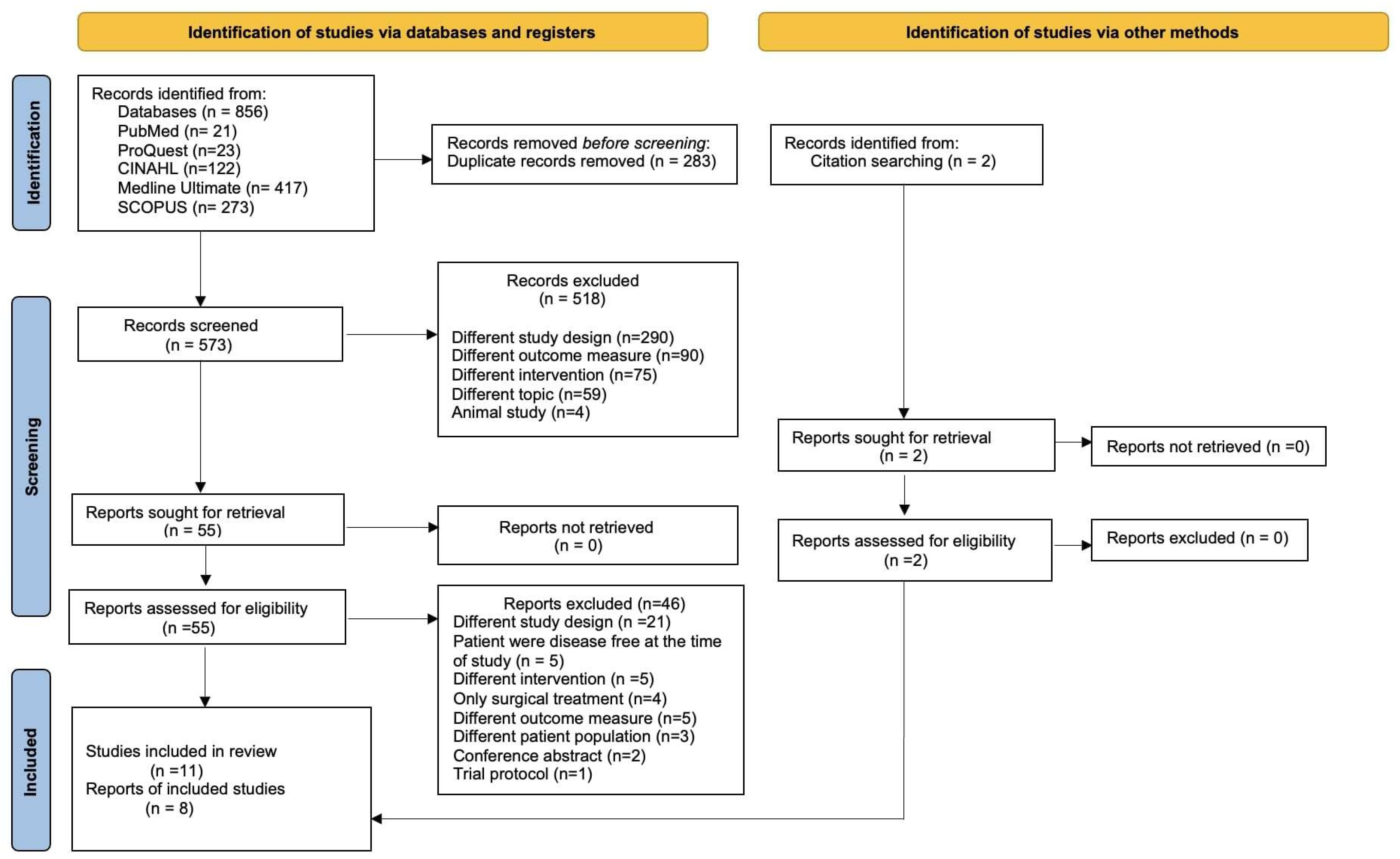
3.1. Study Selection
3.2. Study Characteristics
3.3. Effects on Nutritional Outcomes
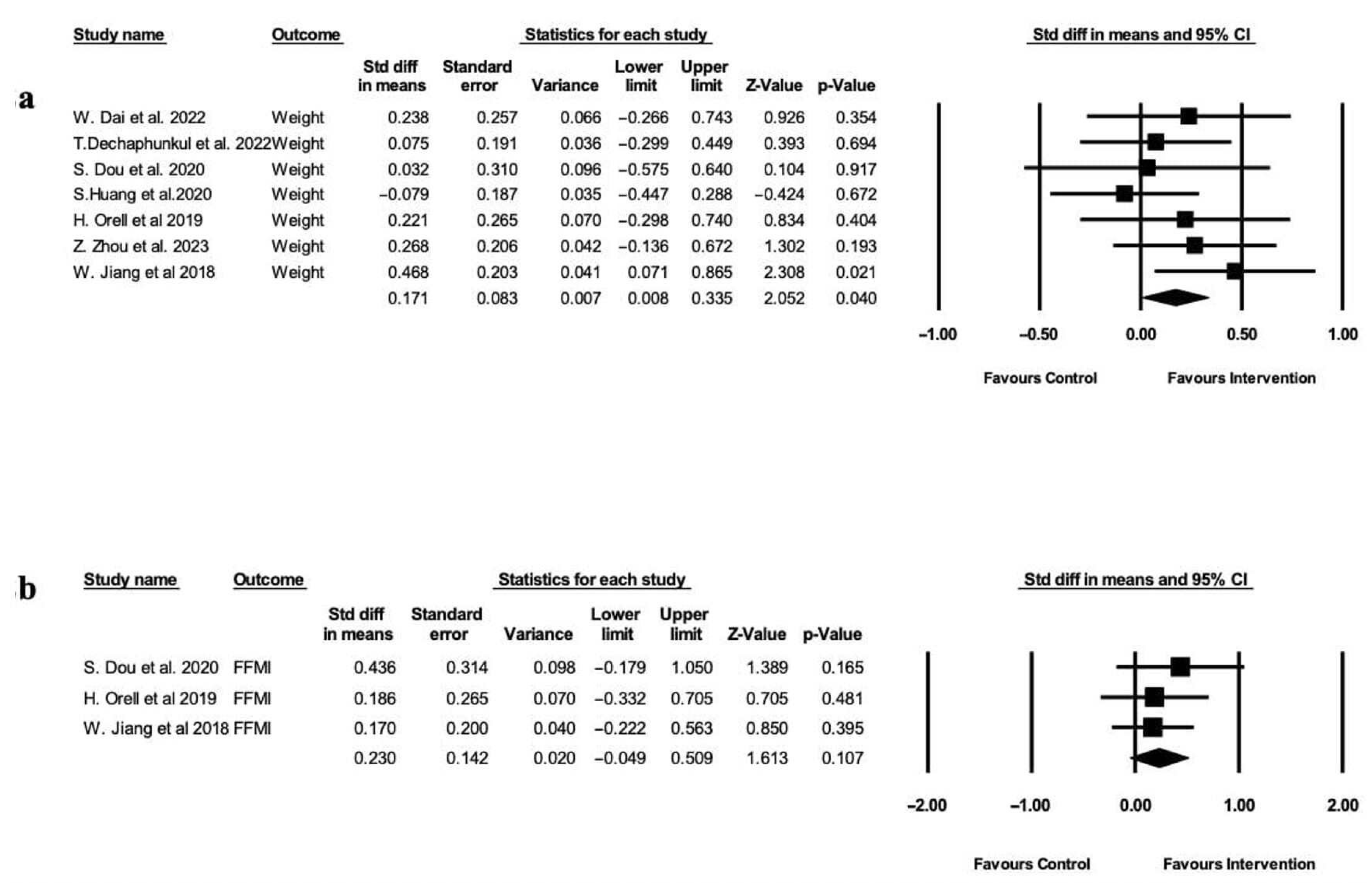
3.3.1. Anthropometric Measurements and Body Composition
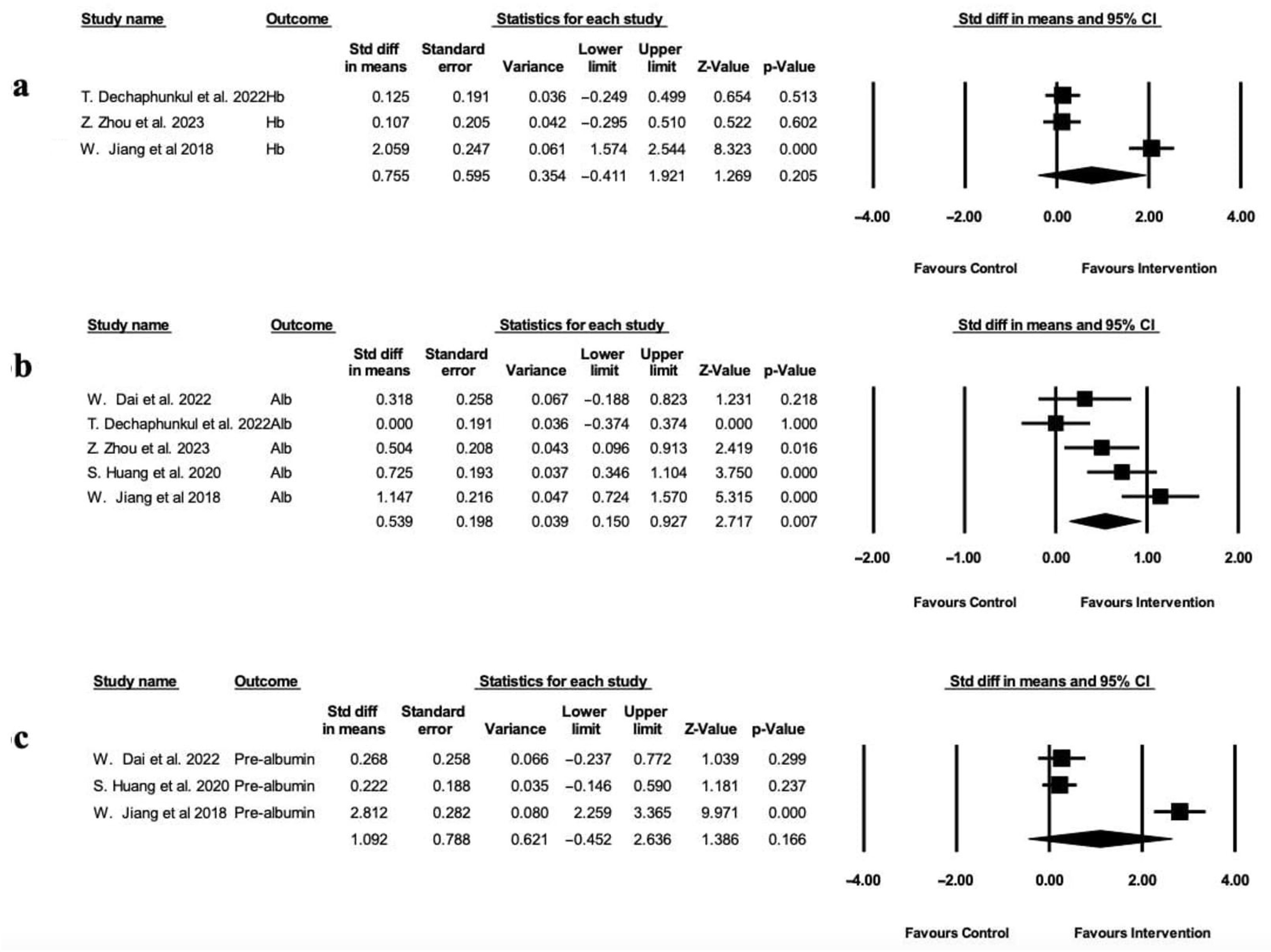
3.3.2. Biochemical Markers
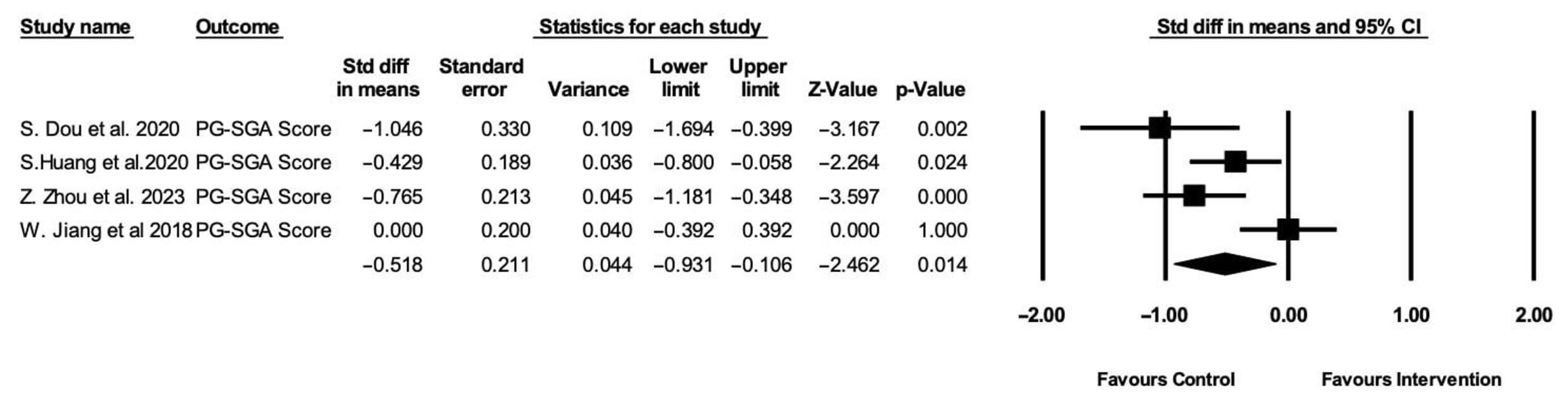
3.3.3. PG-SGA Score
3.3.4. Energy and Protein Intake
3.4. Effects on Clinical and Patient-Reported Outcomes
3.4.1. Oral Mucositis
3.4.2. Pain and Opioid Use
3.4.3. Quality of Life
3.4.4. Psychological Indicators
3.5. Quality Assessment
3.6. Sensitivity Analysis
3.7. Subgroup Analysis
3.8. Publication Bias
4. Discussion
4.1. Future Directions
4.2. Strengths and Limitations
4.3. Conclusions
Supplementary Materials
Author Contributions
Funding
Institutional review board statement
Informed Consent Statement
Data Availability Statement
Acknowledgments
Conflicts of Interest
References
- Sun, H.; Yu, M.; An, Z.; Liang, F.; Sun, B.; Liu, Y.; Zhang, S. Global burden of head and neck cancer: Epidemiological transitions, inequities, and projections to 2050. Front. Oncol. 2025, 15, 1665019. [Google Scholar] [CrossRef] [PubMed]
- Luo, Z.; Huang, Y.; Ye, R.; Yin, M. Global Burden and Gender Disparities in Head and Neck Cancers Among Adults Aged 40–64, 1990–2021: A Systematic Analysis From the Global Burden of Disease Study 2021. Cancer Rep. 2025, 8, e70287. [Google Scholar] [CrossRef] [PubMed]
- Read, J.A.; Choy, S.B.; Beale, P.; Clarke, S.J. An evaluation of the prevalence of malnutrition in cancer patients attending the outpatient oncology clinic. Asia Pac. J. Clin. Oncol. 2006, 2, 80–86. [Google Scholar] [CrossRef]
- Einarsson, S.; Laurell, G.; Tiblom Ehrsson, Y. Mapping the frequency of malnutrition in patients with head and neck cancer using the GLIM Criteria for the Diagnosis of Malnutrition. Clin. Nutr. ESPEN 2020, 37, 100–106. [Google Scholar] [CrossRef]
- Citak, E.; Tulek, Z.; Uzel, O. Nutritional status in patients with head and neck cancer undergoing radiotherapy: A longitudinal study. Support. Care Cancer 2019, 27, 239–247. [Google Scholar] [CrossRef]
- Wang, Y.; Lu, Q.; Zhang, L.; Zhuang, B.; Zhang, T.; Jin, S.; Sun, Y.; Xiao, S.; Zheng, B.; Fang, Y.; et al. Nutrition Impact Symptom Clusters in Patients With Head and Neck Cancer Receiving Concurrent Chemoradiotherapy. J. Pain Symptom Manag. 2021, 62, 277–285. [Google Scholar] [CrossRef]
- Jager-Wittenaar, H.; Dijkstra, P.U.; Vissink, A.; van der Laan, B.F.; van Oort, R.P.; Roodenburg, J.L. Critical weight loss in head and neck cancer—Prevalence and risk factors at diagnosis: An explorative study. Support. Care Cancer 2007, 15, 1045–1050. [Google Scholar] [CrossRef]
- Simon, S.R.; Pilz, W.; Hoebers, F.J.P.; Leeters, I.P.M.; Schols, A.M.W.J.; Willemsen, A.C.H.; Winkens, B.; Baijens, L.W.J. Malnutrition screening in head and neck cancer patients with oropharyngeal dysphagia. Clin. Nutr. ESPEN 2021, 44, 348–355. [Google Scholar] [CrossRef]
- Langius, J.A.; Doornaert, P.; Spreeuwenberg, M.D.; Langendijk, J.A.; Leemans, C.R.; van Bokhorst-de van der Schueren, M.A. Radiotherapy on the neck nodes predicts severe weight loss in patients with early stage laryngeal cancer. Radiother. Oncol. 2010, 97, 80–85. [Google Scholar] [CrossRef]
- Farhangfar, A.; Makarewicz, M.; Ghosh, S.; Jha, N.; Scrimger, R.; Gramlich, L.; Baracos, V. Nutrition impact symptoms in a population cohort of head and neck cancer patients: Multivariate regression analysis of symptoms on oral intake, weight loss and survival. Oral Oncol. 2014, 50, 877–883. [Google Scholar] [CrossRef]
- Brown, T.E.; Banks, M.D.; Hughes, B.G.; Lin, C.Y.; Kenny, L.M.; Bauer, J.D. Comparison of nutritional and clinical outcomes in patients with head and neck cancer undergoing chemoradiotherapy utilizing prophylactic versus reactive nutrition support approaches. J. Acad. Nutr. Diet. 2018, 118, 627–636. [Google Scholar] [CrossRef] [PubMed]
- Talwar, B.; Donnelly, R.; Skelly, R.; Donaldson, M. Nutritional management in head and neck cancer: United Kingdom National Multidisciplinary Guidelines. J. Laryngol. Otol. 2016, 130, S32–S40. [Google Scholar] [CrossRef] [PubMed]
- Caccialanza, R.; Pedrazzoli, P.; Cereda, E.; Gavazzi, C.; Pinto, C.; Paccagnella, A.; Beretta, G.D.; Nardi, M.; Laviano, A.; Zagonel, V. Nutritional Support in Cancer Patients: A Position Paper from the Italian Society of Medical Oncology (AIOM) and the Italian Society of Artificial Nutrition and Metabolism (SINPE). J. Cancer 2016, 7, 131–135. [Google Scholar] [CrossRef] [PubMed]
- Muscaritoli, M.; Arends, J.; Bachmann, P.; Baracos, V.; Barthelemy, N.; Bertz, H.; Bozzetti, F.; Hütterer, E.; Isenring, E.; Kaasa, S.; et al. ESPEN practical guideline: Clinical Nutrition in cancer. Clin. Nutr. 2021, 40, 2898–2913. [Google Scholar] [CrossRef]
- Chow, R.; Bruera, E.; Chiu, L.; Chow, S.; Chiu, N.; Lam, H.; McDonald, R.; DeAngelis, C.; Vuong, S.; Ganesh, V.; et al. Enteral and parenteral nutrition in cancer patients: A systematic review and meta-analysis. Ann. Palliat. Med. 2016, 5, 30–41. [Google Scholar]
- Ravasco, P.; Monteiro-Grillo, I.; Marques Vidal, P.; Camilo, M.E. Impact of nutrition on outcome: A prospective randomized controlled trial in patients with head and neck cancer undergoing radiotherapy. Head Neck 2005, 27, 659–668. [Google Scholar] [CrossRef]
- Cereda, E.; Cappello, S.; Colombo, S.; Klersy, C.; Imarisio, I.; Turri, A.; Caraccia, M.; Borioli, V.; Monaco, T.; Benazzo, M.; et al. Nutritional counseling with or without systematic use of oral nutritional supplements in head and neck cancer patients undergoing radiotherapy. Radiother. Oncol. 2018, 126, 81–88. [Google Scholar] [CrossRef]
- Casas-Rodera, P.; Gómez-Candela, C.; Benítez, S.; Mateo, R.; Armero, M.; Castillo, R.; Culebras, J.M. Immunoenhanced enteral nutrition formulas in head and neck cancer surgery: A prospective, randomized clinical trial. Nutr. Hosp. 2008, 23, 105–110. [Google Scholar]
- Langius, J.A.E.; Zandbergen, M.C.; Eerenstein, S.E.J.; van Tulder, M.W.; Leemans, C.R.; Kramer, M.H.H.; Weijs, P.J.M. Effect of nutritional interventions on nutritional status, quality of life and mortality in patients with head and neck cancer receiving (chemo)radiotherapy: A systematic review. Clin. Nutr. 2013, 32, 671–678. [Google Scholar] [CrossRef]
- Leis, C.; Arthur, A.E.; Chen, X.; Greene, M.W.; Frugé, A.D. Systematic Review of Nutrition Interventions to Improve Short Term Outcomes in Head and Neck Cancer Patients. Cancers 2023, 15, 822. [Google Scholar] [CrossRef]
- Bossola, M. Nutritional interventions in head and neck cancer patients undergoing chemoradiotherapy: A narrative review. Nutrients 2015, 7, 265–276. [Google Scholar] [CrossRef] [PubMed]
- Hunter, M.; Kellett, J.; Toohey, K.; D’Cunha, N.M.; Isbel, S.; Naumovski, N. Toxicities Caused by Head and Neck Cancer Treatments and Their Influence on the Development of Malnutrition: Review of the Literature. Eur. J. Investig. Health Psychol. Educ. 2020, 10, 935–949. [Google Scholar] [CrossRef] [PubMed]
- Haddaway, N.R.; Page, M.J.; Pritchard, C.C.; McGuinness, L.A. PRISMA2020: An R package and Shiny app for producing PRISMA 2020-compliant flow diagrams, with interactivity for optimised digital transparency and Open Synthesis. Campbell Syst. Rev. 2022, 18, e1230. [Google Scholar] [CrossRef] [PubMed]
- Arends, J.; Bachmann, P.; Baracos, V.; Barthelemy, N.; Bertz, H.; Bozzetti, F.; Fearon, K.; Hütterer, E.; Isenring, E.; Kaasa, S.; et al. ESPEN guidelines on nutrition in cancer patients. Clin. Nutr. 2017, 36, 11–48. [Google Scholar] [CrossRef]
- Barker, T.H.; Stone, J.C.; Sears, K.; Klugar, M.; Tufanaru, C.; Leonardi-Bee, J.; Aromataris, E.; Munn, Z. The revised JBI critical appraisal tool for the assessment of risk of bias for randomized controlled trials. JBI Evid. Synth. 2023, 21, 494–506. [Google Scholar] [CrossRef]
- McGuinness, L.A.; Higgins, J.P.T. Risk-of-bias VISualization (robvis): An R package and Shiny web app for visualizing risk-of-bias assessments. Res. Synth. Methods 2021, 12, 55–61. [Google Scholar] [CrossRef]
- Higgins, J.P.T.; Thomas, J.; Chandler, J.; Cumpston, M.; Li, T.; Page, M.J.; Welch, V.A. Cochrane Handbook for Systematic Reviews of Interventions Version 6.3. Cochrane. 2022. Available online: https://www.cochrane.org/authors/handbooks-and-manuals/handbook (accessed on 14 December 2025).
- Dai, W.; Wang, S.A.; Wang, K.; Chen, C.; Wang, J.; Chen, X.; Yan, J. Impact of Nutrition Counseling in Head and Neck Cancer Sufferers Undergoing Antineoplastic Therapy: A Randomized Controlled Pilot Study. Curr. Oncol. 2022, 29, 6947–6955. [Google Scholar] [CrossRef]
- Dou, S.; Ding, H.; Jiang, W.; Li, R.; Qian, Y.; Wu, S.; Ling, Y.; Zhu, G. Effect of oral supplements on the nutritional status of nasopharyngeal carcinoma patients undergoing concurrent chemotherapy: A randomized controlled Phase II trial. J. Cancer Res. Ther. 2020, 16, 1678–1685. [Google Scholar] [CrossRef]
- Huang, S.; Piao, Y.; Cao, C.; Chen, J.; Sheng, W.; Shu, Z.; Hua, Y.; Jiang, F.; Hu, Q.; Chen, X.; et al. A prospective randomized controlled trial on the value of prophylactic oral nutritional supplementation in locally advanced nasopharyngeal carcinoma patients receiving chemo-radiotherapy. Oral. Oncol. 2020, 111, 105025. [Google Scholar] [CrossRef]
- Jiang, W.; Ding, H.; Li, W.; Ling, Y.; Hu, C.; Shen, C. Benefits of Oral Nutritional Supplements in Patients with Locally Advanced Nasopharyngeal Cancer during Concurrent Chemoradiotherapy: An Exploratory Prospective Randomized Trial. Nutr. Cancer 2018, 70, 1299–1307. [Google Scholar] [CrossRef]
- Zhou, Z.; Luo, Y.; Pang, L.; Zhou, X.; Zheng, K.; Cheng, X.; Xu, C.; Yao, B.; Zhou, T.; Chen, J. Effect of the hospital-community-family (HCF) nutritional management on patients with esophageal and head and neck cancers undergoing radiotherapy: A randomized control trial. Transl. Cancer Res. 2023, 12, 375–386. [Google Scholar] [CrossRef] [PubMed]
- Ottery, F.D. Definition of standardized nutritional assessment and interventional pathways in oncology. Nutrition 1996, 12, S15–S19. [Google Scholar] [CrossRef] [PubMed]
- Kondrup, J.; Rasmussen, H.H.; Hamberg, O.; Stanga, Z. Nutritional risk screening (NRS 2002): A new method based on an analysis of controlled clinical trials. Clin. Nutr. 2003, 22, 321–336. [Google Scholar] [CrossRef] [PubMed]
- Zhu, X.; Liu, D.; Zong, M.; Wang, J. Effect of swallowing training combined with nutritional intervention on the nutritional status and quality of life of laryngeal cancer patients with dysphagia after operation and radiotherapy. J. Oral. Rehabil. 2022, 49, 729–733. [Google Scholar] [CrossRef]
- Dechaphunkul, T.; Arundon, T.; Raungkhajon, P.; Jiratrachu, R.; Geater, S.L.; Dechaphunkul, A. Benefits of immunonutrition in patients with head and neck cancer receiving chemoradiation: A phase II randomized, double-blind study. Clin. Nutr. 2022, 41, 433–440. [Google Scholar] [CrossRef]
- Kuroki, K.; Rikimaru, F.; Kunitake, N.; Toh, S.; Higaki, Y.; Masuda, M. Efficacy of beta-hydroxy-beta-methylbutyrate, arginine, and glutamine for the prevention of mucositis induced by platinum-based chemoradiation in head and neck cancer: A phase II study. Clin. Nutr. ESPEN 2023, 57, 730–734. [Google Scholar] [CrossRef]
- Boisselier, P.; Kaminsky, M.C.; Thézenas, S.; Gallocher, O.; Lavau-Denes, S.; Garcia-Ramirez, M.; Alfonsi, M.; Cupissol, D.; de Forges, H.; Janiszewski, C.; et al. A double-blind phase III trial of immunomodulating nutritional formula during adjuvant chemoradiotherapy in head and neck cancer patients: IMPATOX. Am. J. Clin. Nutr. 2020, 112, 1523–1531. [Google Scholar] [CrossRef]
- Orell, H.; Schwab, U.; Saarilahti, K.; Österlund, P.; Ravasco, P.; Mäkitie, A. Nutritional Counseling for Head and Neck Cancer Patients Undergoing (Chemo) Radiotherapy-A Prospective Randomized Trial. Front. Nutr. 2019, 6, 22. [Google Scholar] [CrossRef]
- Ibrahim, S.S.; Hassanein, F.E.A.; Zaky, H.W.; Gamal, H. Clinical and biochemical assessment of the effect of glutamine in management of radiation induced oral mucositis in patients with head and neck cancer: Randomized controlled clinical trial. J. Stomatol. Oral. Maxillofac. Surg. 2024, 125, 101827. [Google Scholar] [CrossRef]
- Lichtenstein, A.H.; Petersen, K.; Barger, K.; Hansen, K.E.; Anderson, C.A.M.; Baer, D.J.; Lampe, J.W.; Rasmussen, H.; Matthan, N.R. Perspective: Design and Conduct of Human Nutrition Randomized Controlled Trials. Adv. Nutr. 2021, 12, 4–20. [Google Scholar] [CrossRef]
- Capuano, G.; Grosso, A.; Gentile, P.C.; Battista, M.; Bianciardi, F.; Di Palma, A.; Pavese, I.; Satta, F.; Tosti, M.; Palladino, A.; et al. Influence of weight loss on outcomes in patients with head and neck cancer undergoing concomitant chemoradiotherapy. Head Neck 2008, 30, 503–508. [Google Scholar] [CrossRef] [PubMed]
- Zhang, X.; Zhang, Q.; Feng, L.J.; Zhang, K.P.; Tang, M.; Song, M.M.; Ruan, G.T.; Zhang, X.W.; Li, W.; Zhou, F.X.; et al. The Application of Fat-Free Mass Index for Survival Prediction in Cancer Patients With Normal and High Body Mass Index. Front. Nutr. 2021, 8, 714051. [Google Scholar] [CrossRef] [PubMed]
- Lønbro, S.; Dalgas, U.; Primdahl, H.; Johansen, J.; Nielsen, J.L.; Aagaard, P.; Hermann, A.P.; Overgaard, J.; Overgaard, K. Progressive resistance training rebuilds lean body mass in head and neck cancer patients after radiotherapy--results from the randomized DAHANCA 25B trial. Radiother. Oncol. 2013, 108, 314–319. [Google Scholar] [CrossRef] [PubMed]
- Cardellini, S.; Deantoni, C.L.; Paccagnella, M.; Casirati, A.; Pontara, A.; Marinosci, A.; Tresoldi, M.; Giordano, L.; Chiara, A.; Dell’Oca, I.; et al. The impact of nutritional intervention on quality of life and outcomes in patients with head and neck cancers undergoing chemoradiation. Front. Oncol. 2024, 14, 1475930. [Google Scholar] [CrossRef]
- Jang, M.K.; Park, C.; Tussing-Humphreys, L.; Fernhall, B.; Phillips, S.; Doorenbos, A.Z. The Effectiveness of Sarcopenia Interventions for Cancer Patients Receiving Chemotherapy: A Systematic Review and Meta-analysis. Cancer Nurs. 2023, 46, E81–E90. [Google Scholar] [CrossRef]
- Gremese, E.; Bruno, D.; Varriano, V.; Perniola, S.; Petricca, L.; Ferraccioli, G. Serum Albumin Levels: A Biomarker to Be Repurposed in Different Disease Settings in Clinical Practice. J. Clin. Med. 2023, 12, 6017. [Google Scholar] [CrossRef]
- Beck, F.K.; Rosenthal, T.C. Prealbumin: A marker for nutritional evaluation. Am. Fam. Physician 2002, 65, 1575–1578. [Google Scholar]
- Meng, L.; Wei, J.; Ji, R.; Wang, B.; Xu, X.; Xin, Y.; Jiang, X. Effect of early nutrition intervention on advanced nasopharyngeal carcinoma patients receiving chemoradiotherapy. J. Cancer 2019, 10, 3650. [Google Scholar] [CrossRef]
- Hubbard, G.P.; Elia, M.; Holdoway, A.; Stratton, R.J. A systematic review of compliance to oral nutritional supplements. Clin. Nutr. 2012, 31, 293–312. [Google Scholar] [CrossRef]
- Britton, B.; Baker, A.; Clover, K.; McElduff, P.; Wratten, C.; Carter, G. Heads up: A pilot trial of a psychological intervention to improve nutrition in head and neck cancer patients undergoing radiotherapy. Eur. J. Cancer Care 2017, 26, e12502. [Google Scholar] [CrossRef]
- Gosak, M.; Gradišar, K.; Rotovnik Kozjek, N.; Strojan, P. Psychological distress and nutritional status in head and neck cancer patients: A pilot study. Eur. Arch. Otorhinolaryngol. 2020, 277, 1211–1217. [Google Scholar] [CrossRef]
- Hariton, E.; Locascio, J.J. Randomised controlled trials—The gold standard for effectiveness research: Study design: Randomised controlled trials. BJOG Int. J. Obstet. Gynaecol. 2018, 125, 1716. [Google Scholar] [CrossRef]
- Nakagawa, S.; Yang, Y.; Macartney, E.L.; Spake, R.; Lagisz, M. Quantitative evidence synthesis: A practical guide on meta-analysis, meta-regression, and publication bias tests for environmental sciences. Environ. Evid. 2023, 12, 8. [Google Scholar] [CrossRef]



| Author/ Year Country | Sample Size | Cancer Stage/Sub Type | Treatment Received | Intervention Type | Follow-Up Period | Outcomes Measured | Tools for Measurement of Outcomes | Main Findings |
|---|---|---|---|---|---|---|---|---|
| W. Dai et al./2022 [28] China | 72 (ITT) (IG: 36; CG: 36) 61(PP) IG: 32 CG: 29 | Stage III/IV HNC | IMRT + Concurrent CT | IG: NC by RD CG: Standard care based on clinician’s experience | 6-week follow-up during CCRT (evaluations at baseline, 2, 4, and 6 weeks) | Body weight TSF Calorie and protein intake S total protein, albumin, transferrin, and pre-albumin KPS Anxiety and depression | Weighing scale, skinfold caliper, 24 h dietary recall, and blood tests KPS Scale HADS-A and HADS-D questionnaire | Less weight loss in IG, less reduction in TSF thickness. Decreased in both groups but significantly better maintained in IG. The biochemical markers showed significantly lower decline in IG. Higher scores on KPS scale showing better functional status. Significant reduction in anxiety and depression level. |
| S. Dou et al./2020 [29] China | 52 (ITT) 42 (PP) IG: 23 CG:19 | Stage II-IVb NPC | CCRT | IG: Individualized dietary counseling along with ONS CG: Individualized dietary counseling | 6-week follow-up during CCRT (evaluations at baseline, 2, 4, 6 weeks) | Body weight and BMI FFMI, SM, BCM, and PA Nutritional status Treatment-related toxicity | Weighing scale BIA PG-SGA [30] CTCAE v3.0 | Decreased in both groups; slightly better maintenance with >2/3 ONS intake (p = 0.170) Significantly better in ONS >2/3 group. PG-SGA scores better in ONS group at the end of treatment (p = 0.053). No significant difference in Grade III–IV mucositis between groups |
| S. Huang et al./2020 [30] China | 114 (ITT) IG: 58 CG: 56 | Stage III-IV NPC | Neo-adjuvant chemotherapy followed by CCRT | IG: Prophylactic ONS with dietitian support CG: Regular diet; ONS provided only if clinically necessary (e.g., weight loss > 5%, intake < 50%) | From baseline through 3 months after radiotherapy (6 time points: T1–T6) | Weight loss (%) PG-SGA [30] NRS-2002 [31] score (to assess nutritional status), serum albumin, prealbumin, and total protein QoL CT/RT interruptions | Weighing scale, PG-SGA, and NRS-2002 Scale Blood tests EORTC QLQ-C30 Medical records | Decreased over time with no significant difference in weight loss, nutritional status, QoL, and global health status between two groups. Pre-albumin shows no significant difference (0.73). Total protein is significantly better in CG (p = 0.008). Better treatment tolerance: lower RT interruption (0% vs. 7.14%) and chemotherapy interruption (10.34% vs. 28.57%) in intervention group. |
| Z. Zhou et al./2023 [32] China | 116 (ITT) IG: 61 CG: 55 95 (PP) IG: 48 CG: 47 | HNC/Esophageal cancer | IMRT | IG: HCF nutritional management model including weekly follow-up, community doctor support, and an individualized nutrition plan based on PG-SGA CG: Conventional hospital-based nutrition management only | Weekly evaluations for 3 months after EoRT | PG-SGA [33] and NRS2002 [34] score ECOG performance score Weight loss Serum albumin, prealbumin, and hemoglobin Treatment-related toxicity | PG-SGA [33] and NRS2002 [34] scoring system ECOG performance scale Weighing scale Blood tests RTOG grading for radiation toxicity | HCF group showed significantly better PG-SGA (p < 0.001), NRS2002 (p < 0.001), ECOG (p = 0.006), and less weight loss (p = 0.024). Higher albumin (p = 0.001), prealbumin (p = 0.046), and hemoglobin (p = 0.013). Reduced severity of radiation mucositis (p = 0.018) and dermatitis (p = 0.028). |
| W. Jiang et al./2018 [31] China | 100 (ITT) IG: 50 CG: 50 95 (PP) | Stage III–IV NPC | Induction chemotherapy before CRT | IG: ONS + Regular meals CG: Regular diet + general dietary advice (no ONS) | From baseline to end of CCRT, and 3-month post-CRT follow-up | Body weight, BMI, FFM, FFMI, hemoglobin, albumin, and prealbumin, transferrin PG-SGA score QoL Treatment tolerance and CRT-related toxicities | PG-SGA EORTC QLQ-C30 and H&N35 Lab tests | ONS group had significantly higher body weight (p = 0.036), BMI (p = 0.021), and prealbumin (p = 0.048) at the end of CRT. No significant difference in PG-SGA, FFM, FFMI, or QoL between groups. No major difference in CRT-related toxicity; compliance fair, but some nausea reported. |
| X. Zhu et al./2022 [35] China | 66 IG: 33 CG: 33 | Laryngeal cancer and dysphagia post-total laryngectomy and radiotherapy | RT | IG: Swallowing training + individualized nutritional intervention (weekly sessions with a dietitian for 3 months, meal planning with caloric/protein goals, and ONS/tube feeding if needed) CG: Routine health counseling + swallowing training only | 3 months post-RT | Swallowing function Nutritional status QoL | VFSE PG-SGA scale EORTC QLQ-C30 questionnaire | Both groups improved in VFSE, PG-SGA, and QLQ-C30 scores, but the intervention group improved significantly more. - VFSE: 3.64 vs. 2.23 (p = 0.013); - PG-SGA: 1.92 vs. 0.69 (p = 0.002); - QLQ-C30: 8.28 vs. 4.45 (p = 0.044). |
| T. Dechaphunkul et al./2022 [36] Thailand | 110 (ITT) IG: 55 CG: 55 | Stage II–IVb non-metastatic HNC | CCRT | IG: Immune nutrient formula containing omega-3 fatty acids, arginine, dietary nucleotides, and soluble fiber. (For 5 days before each CT cycle) CG: Isocaloric isonitrogenous standard enteral nutrition formula | Median 42.2 months; assessments during treatment and up to 3 years for survival | Severe OM (grade 3–4) Treatment-related toxicities Body weight Serum albumin Inflammatory markers (CRP, NLR, and PLR) PFS, OS | CTCAE v4.03 Weight scale Blood tests Kaplan–Meier for survival analyses | No significant difference in OM (62% vs. 67%, p = 0.690). No differences in weight loss or serum markers. PFS at 3 years: 69% (IG) vs. 44% (CG), p = 0.056. OS at 3 years: 69% vs. 50%, p = 0.065 (not statistically significant). More treatment delays in CG (56% vs. 38%). |
| K. Kuroki et al./2023 [37] Japan | 75 (ITT) IG: 38 CG: 37 58 (PP) IG: 24 CG: 34 | Non-metastatic HNC | PBCRT | IG: Immunonutrition containing HMB/Arg/Gln CG: Not given | Weekly assessments during CRT and two weeks post-treatment | Incidence of Grade ≥ 2 and ≥3 mucositis Body weight Opioid use CRT suspension duration | CTCAE v4.03 Weighing scale Medical records | Grade 3 mucositis: 25% (IG) vs. 64.6% (CG), p = 0.0037. Weight loss: 3.57 kg (5.6%) in IG vs. 5.89 kg (8.9%) in CG, p = 0.0020/0.0038. No significant difference in opioid use (25% vs. 35.3%). Shorter CRT delays in IG, though not statistically significant. |
| P. Boisselier et al./2020 [38] France | 180 (ITT) IG: 90 CG: 90 172 (PP) IG: 86 CG: 86 | HNC | CCRT post-surgery | IG: Immunonutrition enriched with l-arginine, omega-3 fatty acids, and RNA CG: Isocaloric isonitrogenous formula | Up to 3 years of assessments weekly during CRT, 1-month post-CRT, and annual survival follow-ups | Grade 3–4 OM Treatment-related toxicities, and CT interruptions Compliance OS and PFS | RTOG and WHO grading CTCAE v4.03 Compliance via sachet count and patient reporting Kaplan–Meier and log-rank tests | No significant difference in grade 3–4 mucositis between groups. No differences in toxicity or chemo delays overall. In ≥75% compliant patients: OS at 3 years was significantly better (81% vs. 61%, p = 0.034); PFS also improved (73% vs. 50%, p = 0.012). |
| H. Orell et al./2019 [39] Finland | 65 (ITT) IG: 32 CG: 33 58 (PP) IG: 26 CG: 32 | Stage III–IV HNC | CCRT | IG: Intensive nutritional counseling (INC) by a dietitian CG: On-demand counseling (ODC) by a dietitian | During CRT (6–7 weeks) and survival follow-up for median 43 months | Nutritional status Body weight, BMI, FFM, FFMI, fat mass, and Handgrip strength (HGS) Nutritional intake (kcal/kg, protein intake) Treatment-related toxicities, mucositis, and nausea Survival (OS, DFS, and DSS) | PG-SGA Weighing scale BIA JAMAR dynamometer Dietary recall and PEG feed tracking CTCAE v3.0 Kaplan–Meier/log-rank | No significant difference between two groups for nutritional status or outcomes. A total of 71% experienced critical weight loss (>5%). Pre-treatment malnutrition and low HGS predicted poorer survival (OS and DFS). INC did not significantly reduce mucositis or weight loss compared to ODC. Many patients (69%) struggled to complete planned nutritional treatment. |
| S. S. Ibrahim et al./2024 [40] Egypt | 50 (ITT) IG: 25 CG: 25 40 (PP) IG: 20 CG: 20 | Stage I–IV HNC | RT | IG: Single agent immunonutrition (Oral L-glutamine suspension (5 g glutamine + 5 g maltodextrin in water) CG: Placebo suspension of 10 g of maltodextrin dissolved in cold water | From baseline (RIOM onset) to EoRT (5–7 weeks); 3 assessments: baseline, 2 weeks, end of RT | OM Pain Opioid usage incidence BMI Salivary TGF-β1 levels | WHO Oral Toxicity Scale OMAS VAS kg/m2 ELISA | Significant reduction in mucositis severity in IG on WHO and OMAS (p < 0.001). Pain-VAS scores and opioid use significantly reduced (p < 0.001 and p = 0.014). BMI more stable in glutamine group; significant intergroup difference in BMI change (p < 0.001). Salivary TGF-β1 decreased in IG, increased in CG p < 0.001). Strong correlations between OM severity and TGF-β1 (r = 0.738), pain (r = 0.737), and BMI (r = –0.899). |
| Certainty Assessment | ||||||||||
|---|---|---|---|---|---|---|---|---|---|---|
| Outcomes | n | Study Design | RoB | Inconsistency | Indirectness | Imprecision | Other Considerations | No. of Participants | Effects | Certainty |
| Weight maintenance | 7 | RCT | Not serious | Not serious | Not serious | Not serious | none | 622 | SMD = 0.171 (95% CI: 0.008 to 0.335), p = 0.040 | Moderate |
| FFMI | 3 | RCT | Serious | No serious | No serious | Serious (small sample size, CI crosses 0) | none | 217 | SMD = 0.230 (95% CI: –0.049 to 0.509), p = 0.107 | Low |
| Albumin | 5 | RCT | Serious | Serious | Serious | No serious | none | 512 | SMD = 0.539 (95% CI: 0.150 to 0.927), p = 0.007 | Very Low |
| Hemoglobin | 3 | RCT | Serious | Very Serious (very high heterogeneity) | Serious | Serious (small sample, wide CI) | none | 326 | SMD = 0.755 (95% CI: –0.411 to 1.921), p = 0.205 | Very Low |
| Pre-albumin | 3 RCT | Serious | Serious (very high heterogeneity) | Not serious | Serious (small sample size, wide CI, effect driven by single study) | none | 314 | SMD = 1.092 (95% CI −0.452 to 2.636), p = 0.166 | Very low | |
| PG-SGA | 4 | RCT | Serious | Serious | Not serious | Serious | none | 382 | SMD = –0.518 (95% CI: –0.931 to –0.106), p = 0.014 | Very low |
| OM | 4 | RCT | Serious (narrative synthesis) | Serious (inconsistent findings) | Serious (different grading systems) | Serious (small sample size) | none | 234 | Not pooled (Narrative synthesis) | Very low |
| QoL | 3 | RCT | Serious (methodological limitations) | Serious (inconsistent outcomes) | Serious (different measurement tools) | Serious (small sample size) | none | 202 | Not pooled (Narrative synthesis) | Very low |
Disclaimer/Publisher’s Note: The statements, opinions and data contained in all publications are solely those of the individual author(s) and contributor(s) and not of MDPI and/or the editor(s). MDPI and/or the editor(s) disclaim responsibility for any injury to people or property resulting from any ideas, methods, instructions or products referred to in the content. |
© 2025 by the authors. Licensee MDPI, Basel, Switzerland. This article is an open access article distributed under the terms and conditions of the Creative Commons Attribution (CC BY) license (https://creativecommons.org/licenses/by/4.0/).
Share and Cite
Patnaik, S.; Wang, J.-Y.; Sadiq, F.U.; Sharma, K. Nutritional Interventions in Head and Neck Cancer Patients Undergoing Chemoradiotherapy: A Systematic Review and Meta-Analysis. Healthcare 2025, 13, 3324. https://doi.org/10.3390/healthcare13243324
Patnaik S, Wang J-Y, Sadiq FU, Sharma K. Nutritional Interventions in Head and Neck Cancer Patients Undergoing Chemoradiotherapy: A Systematic Review and Meta-Analysis. Healthcare. 2025; 13(24):3324. https://doi.org/10.3390/healthcare13243324
Chicago/Turabian StylePatnaik, Sneha, Jiun-Yi Wang, Fawziyyah Usman Sadiq, and Khemraj Sharma. 2025. "Nutritional Interventions in Head and Neck Cancer Patients Undergoing Chemoradiotherapy: A Systematic Review and Meta-Analysis" Healthcare 13, no. 24: 3324. https://doi.org/10.3390/healthcare13243324
APA StylePatnaik, S., Wang, J.-Y., Sadiq, F. U., & Sharma, K. (2025). Nutritional Interventions in Head and Neck Cancer Patients Undergoing Chemoradiotherapy: A Systematic Review and Meta-Analysis. Healthcare, 13(24), 3324. https://doi.org/10.3390/healthcare13243324