Oral Health-Related Quality of Life (OHRQoL), Pain and Side Effects in Adults Undergoing Different Orthodontic Treatment Modalities: A Systematic Review and Meta-Analysis


Abstract
1. Introduction
2. Methods and Materials
2.1. Protocol and Registration
2.2. Eligibility Criteria
- (i)
- Participant experiences and the impact of the various appliances on OHRQoL and self-esteem.
- (ii)
- Severity and nature of pain or discomfort experienced with orthodontic appliances.
- (iii)
- Other side effects and/or complications, including the effect on function.
2.3. Information Sources, Search Strategy and Study Selection
2.4. Risk of Bias and Quality Assessment in Individual Studies
2.5. Data Items and Collection
2.6. Summary Measures and Approach to Statistical Analysis
2.7. Additional Analysis
3. Results
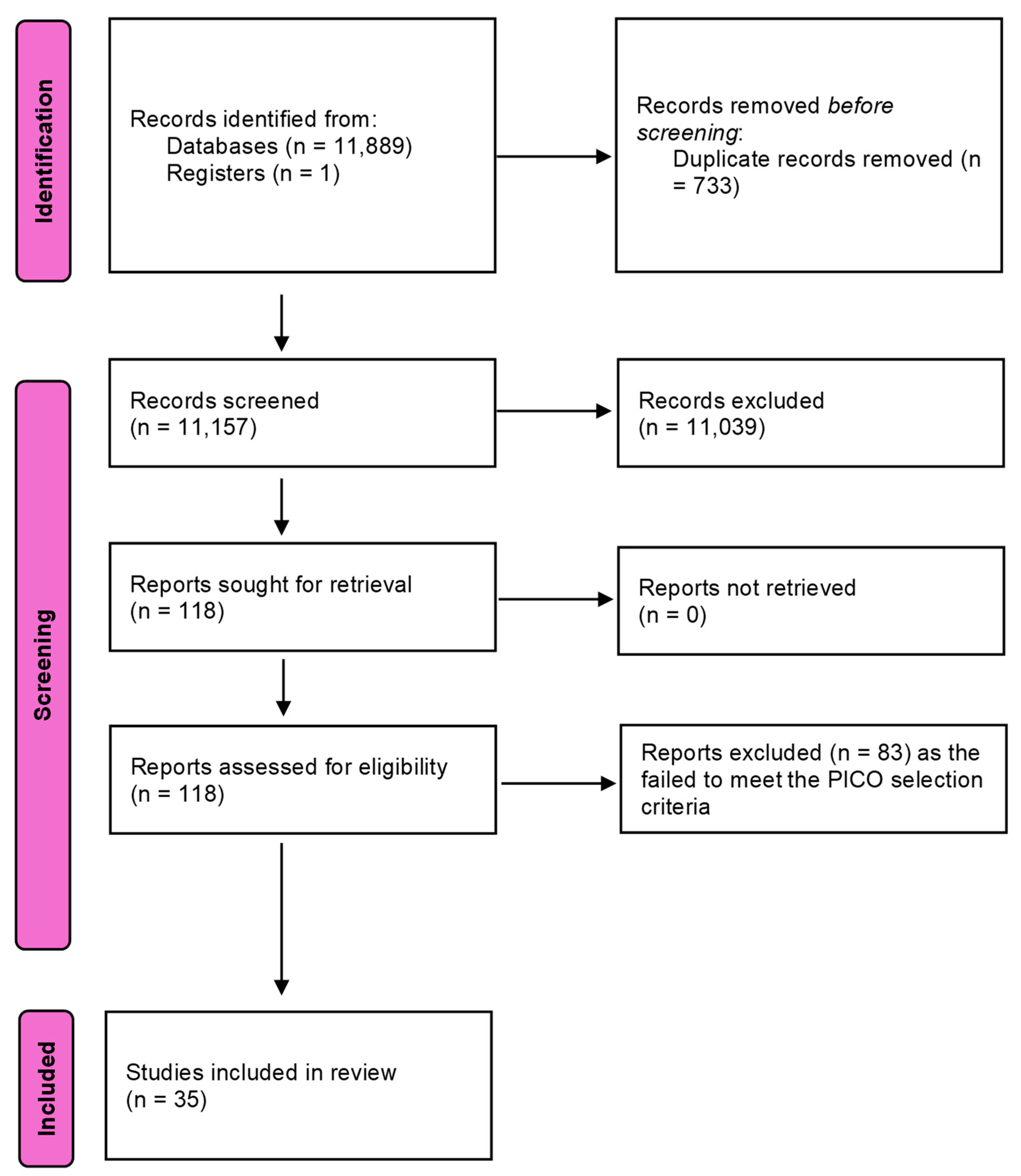
3.1. Study Selection and Characteristics of Included Studies
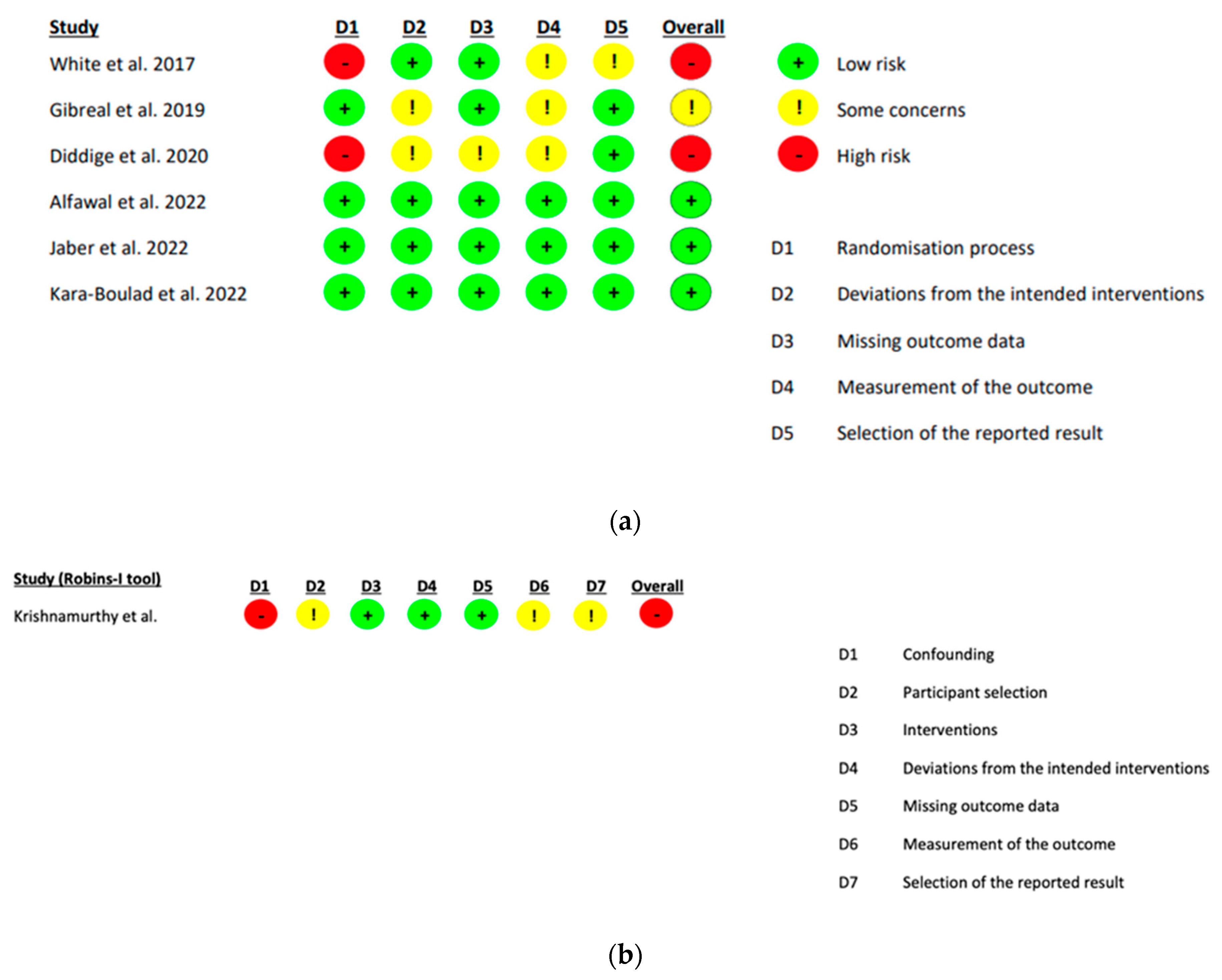
3.2. Risk of Bias Within Studies
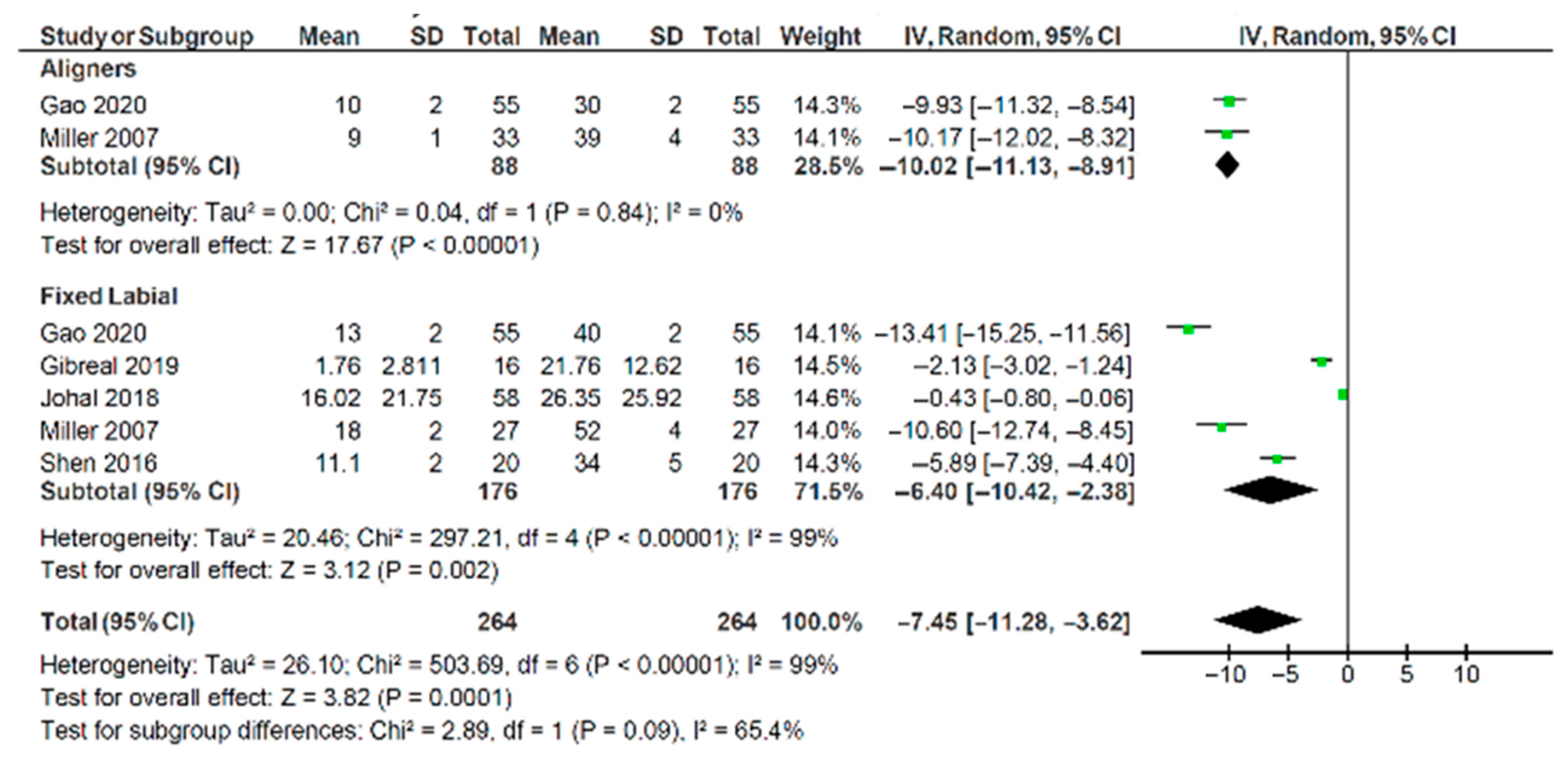
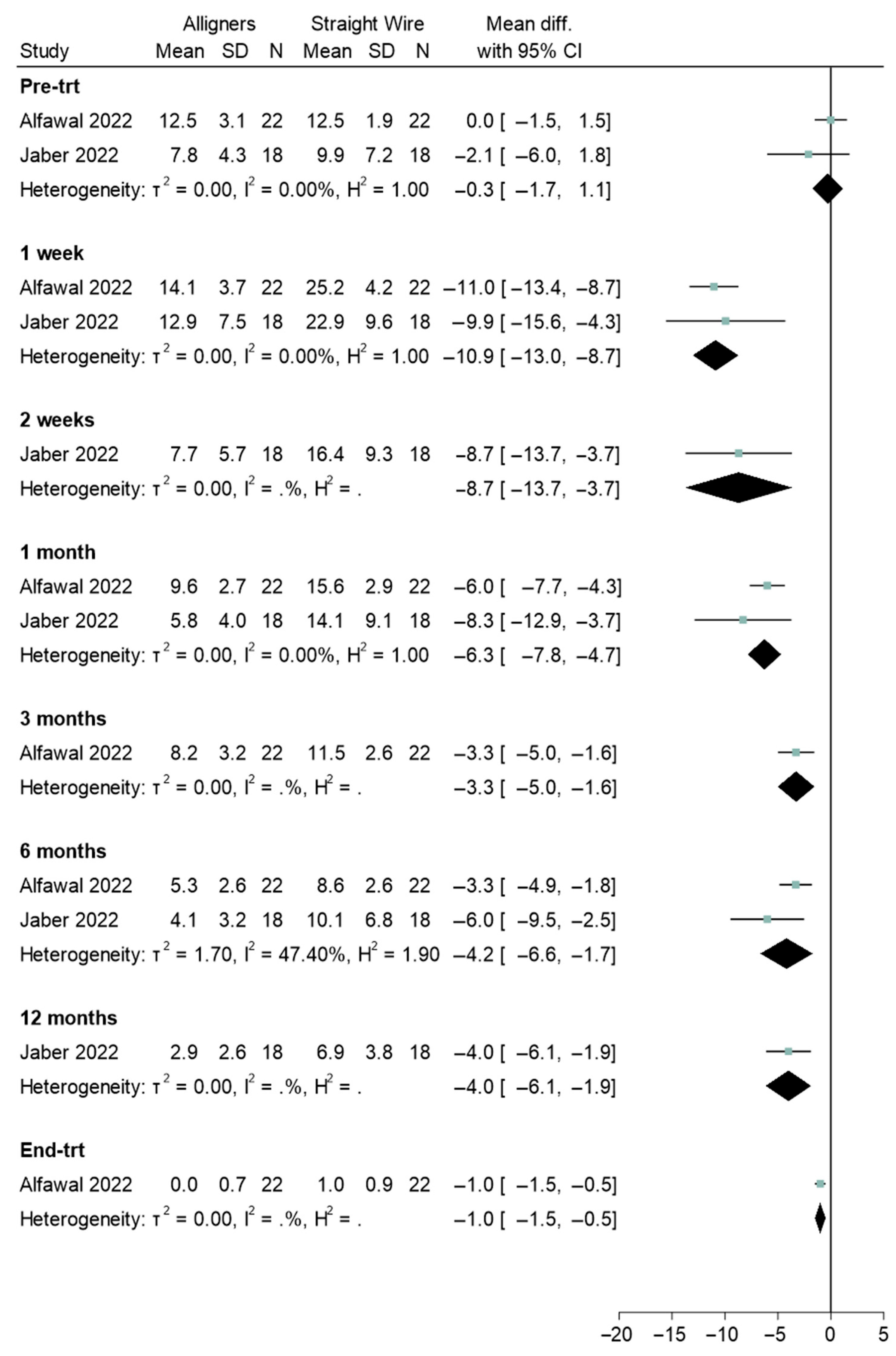
3.3. Results of Individual Studies, Meta-Analysis and Additional Analysis
3.4. Qualitative Analysis of Results
3.4.1. Three-Arm Studies (Aligners, Labial and Lingual Appliances)
3.4.2. Two-Arm Studies
3.4.3. Single-Arm Studies
3.5. Aligners
3.6. Quantitative Analysis of Studies
3.7. Pain Experience
3.8. Oral Health-Related Quality of Life and Self-Esteem
4. Discussion
Limitations
5. Conclusions
- There is a lack of consistency measuring in-treatment experiences with a number of both validated and non-validated questionnaires used to assess changes in OHRQoL in adults undergoing orthodontic treatment.
- From the evidence currently available, there appears to be no significant difference in the pain experienced by adults undergoing orthodontic treatment with aligners or labial appliances during the first week of treatment.
- Aligners may have less impact on OHRQoL when compared to labial appliances within the first two weeks of treatment, as their removable nature allows participants to eat and chew effectively.
- Despite some adaptability, lingual appliances have a persistent impact on speech throughout the duration of treatment.
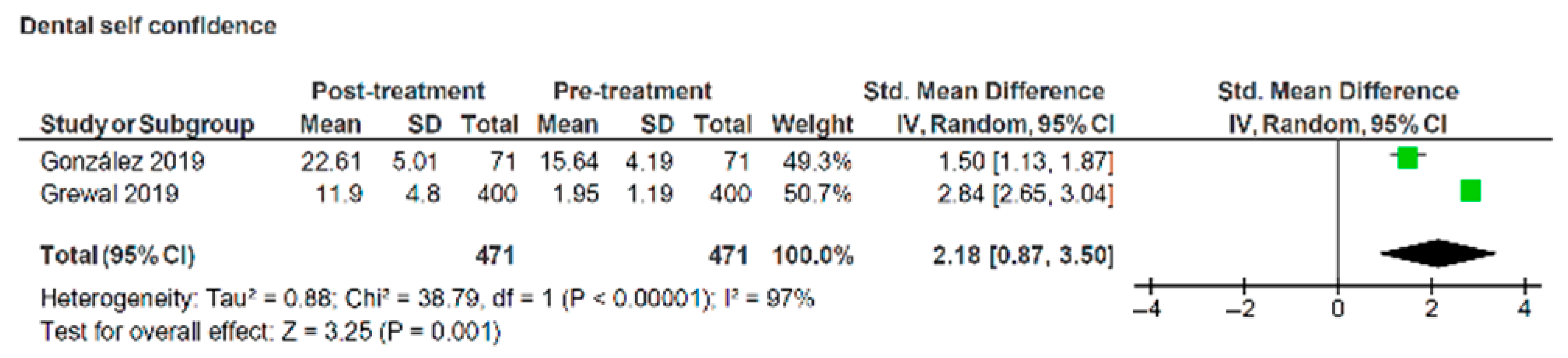
- Any deterioration in OHRQoL measures with labial appliances during treatment is temporary, and these return to pre-treatment norms following appliance removal, with a statistically significant improvement in dental self-confidence.
Supplementary Materials
Author Contributions
Funding
Institutional Review Board Statement
Informed Consent Statement
Data Availability Statement
Conflicts of Interest
Appendix A

| Database | Search Criteria | Results |
|---|---|---|
| Medline via PubMed | (Orthodont* OR aligners OR Invisalign® OR “lingual orthodont*” OR “adult orthodont*”) AND (“Quality of life” OR “patient-experiences” OR “pain” OR “OHRQoL” OR “patient-concerns” | 2344 |
| Web of Science | #1 = (Orthodont* OR “clear aligner*” OR Invisalign® OR “lingual orthodontic*” OR “adult orthodontic*”) #2 = (“impact” OR “patient experience” OR pain OR OHRQoL OR “patient concern” OR speech OR complication* OR “side-effect”) #3 = (#1 and #2) | 3114 |
| Embase | Same as PubMed search | 2040 |
| Scopus | Same as web of science | 3620 |
| Cochrane | Same as web of science | 771 |
| Study ID | Selection (Max 4 Stars) | Comparability (Max 2 Stars) | Outcome Assessment (Max 3 Stars) | Total Scores (Max 9 Stars) | High Quality: 9 Moderate Quality: 6–8 Low Quality: 1–5 | ||||||
|---|---|---|---|---|---|---|---|---|---|---|---|
| I | II | III | IV | V | VI | VII | VIII | IX | |||
| Johal et al. [34] | * | * | * | 0 | 0 | * | * | * | * | 7 | Moderate |
| Shalish et al. [41] | * | 0 | * | 0 | 0 | 0 | 0 | * | * | 4 | Low |
| Wu et al. [14] | * | 0 | * | 0 | 0 | * | 0 | * | * | 5 | Low |
| Pacheco-Pereira et al. [35] | * | 0 | * | 0 | 0 | * | * | * | * | 6 | Moderate |
| Wu et al. [15] | * | 0 | * | 0 | 0 | * | 0 | * | * | 5 | Low |
| Varela & Garciacamba [44] | * | * | * | * | * | 0 | 0 | * | * | 7 | Moderate |
| Shen et al. [24] | * | 0 | * | * | * | 0 | 0 | * | * | 6 | Moderate |
| Prado et al. [37] | * | * | * | * | * | * | 0 | * | * | 8 | Moderate |
| Miller et al. [12] | * | 0 | * | * | 0 | * | * | * | * | 7 | Moderate |
| Johal et al. [39] | * | 0 | * | * | 0 | * | 0 | * | * | 6 | Moderate |
| Hohoff et al. [42] | * | 0 | * | * | 0 | 0 | * | * | * | 6 | Moderate |
| Hohoff et al. [43] | * | 0 | * | * | 0 | * | * | * | * | 7 | Moderate |
| Choi et al. [36] | * | 0 | * | * | 0 | * | 0 | * | * | 6 | Moderate |
| Almasoud et al. [33] | * | 0 | * | 0 | 0 | * | 0 | * | * | 5 | Low |
| Fujiyama et al. [40] | * | 0 | * | 0 | 0 | 0 | 0 | * | * | 4 | Low |
| Chen et al. [38] | * | 0 | * | * | 0 | 0 | 0 | * | * | 5 | Low |
| González et al. [31] | * | 0 | * | * | 0 | * | 0 | * | * | 6 | Moderate |
| Antonio-Zancajo et al. [9] | * | 0 | * | 0 | 0 | 0 | 0 | * | * | 4 | Low |
| Grewal et al. [32] | * | * | * | * | * | * | 0 | * | * | 8 | Moderate |
| Lau et al. [26] | * | 0 | * | * | 0 | 0 | 0 | * | * | 5 | Low |
| AlSeraidi et al. [27] | * | * | * | 0 | * | * | 0 | * | * | 7 | Moderate |
| Antonio-Zancajo et al. [28] | * | * | * | 0 | 0 | * | 0 | * | * | 6 | Moderate |
| Gao et al. [13] | * | * | * | 0 | * | * | 0 | * | * | 7 | Moderate |
| Zampora-Martínez et al. [29] | * | * | * | 0 | * | * | 0 | * | * | 7 | Moderate |
| Al Nazeh et al. [30] | * | 0 | * | * | * | * | 0 | * | * | 7 | Moderate |
| Study ID | Selection (Max 4 Stars) | Comparability (Max 2 Stars) | Outcome Assessment (Max 3 Stars) | Total Scores (Max 9 Stars) | High Quality: 9 Moderate Quality: 6–8 Low Quality: 1–5 | ||||||
|---|---|---|---|---|---|---|---|---|---|---|---|
| I | II | III | IV | V | VI | VII | VIII | IX | |||
| Flores-Mir et al. [10] | * | 0 | * | 0 | 0 | 0 | * | * | * | 5 | Low |
| Romero-Maroto et al. [45] | * | * | * | 0 | * | * | * | * | * | 8 | Moderate |
References
- Rosvall, M.D.; Fields, H.W.; Ziuchkovski, J.; Rosenstiel, S.F.; Johnston, W.M. Attractiveness, acceptability, and value of orthodontic appliances. Am. J. Orthod. Dentofac. Orthop. 2009, 135, 276-e1. [Google Scholar] [CrossRef]
- Twenge, J.M.; Campbell, W.K.; Freeman, E.C. Generational differences in young adults’ life goals, concern for others, and civic orientation, 1966–2009. J. Pers. Soc. Psychol. 2012, 102, 1045–1062. [Google Scholar] [CrossRef] [PubMed]
- Tsichlaki, A.; O’Brien, K. Do orthodontic research outcomes reflect patient values? A systematic review of randomized controlled trials involving children. Am. J. Orthod. Dentofac. Orthop. 2014, 146, 279–285. [Google Scholar] [CrossRef]
- Health Department (Ed.) Assessing the Effects of Health Technologies: Principles, Practice, Proposals, Advisory Group on Health Technology Assessment; His Majesty’s Stationery Office: London, UK, 1992. [Google Scholar]
- Baker, G.A.; Smith, D.F.; Dewey, M.; Jacoby, A.; Chadwick, D.W. The initial development of a health-related quality of life model as an outcome measure in epilepsy. Epilepsy Res. 1993, 16, 65–81. [Google Scholar] [CrossRef]
- Zhang, M.; Mcgrath, C.; Hägg, U. The impact of malocclusion and its treatment on quality of life: A literature review. Int. J. Paediatr. Dent. 2006, 16, 381–387. [Google Scholar] [CrossRef]
- Slade, G.D. Derivation and validation of a short-form oral health impact profile. Community Dent. Oral Epidemiol. 1997, 25, 284–290. [Google Scholar] [CrossRef]
- Page, M.J.; McKenzie, J.E.; Bossuyt, P.M.; Boutron, I.; Hoffmann, T.C.; Mulrow, C.D.; Shamseer, L.; Tetzlaff, J.M.; Akl, E.A.; Brennan, S.E.; et al. The PRISMA 2020 statement: An updated guideline for reporting systematic reviews. BMJ 2021, 372, n71. [Google Scholar] [CrossRef] [PubMed]
- Antonio-Zancajo, L.; Montero, J.; Albaladejo, A.; Oteo-Calatayud, M.D.; Alvarado-Lorenzo, A. Pain and Oral-Health-Related Quality of Life in Orthodontic Patients During Initial Therapy with Conventional, Low-Friction, and Lingual Brackets and Aligners (Invisalign): A Prospective Clinical Study. J. Clin. Med. 2020, 9, 2088. [Google Scholar] [CrossRef]
- Flores-Mir, C.; Brandelli, J.; Pacheco-Pereira, C. Patient satisfaction and quality of life status after 2 treatment modalities: Invisalign and conventional fixed appliances. Am. J. Orthod. Dentofac. Orthop. 2018, 154, 639–644. [Google Scholar] [CrossRef]
- Diddige, R.; Negi, G.; Kiran, K.V.S.; Chitra, P. Comparison of pain levels in patients treated with 3 different orthodontic appliances—A randomized trial. Med. Pharm. Rep. 2020, 93, 81–88. [Google Scholar] [CrossRef] [PubMed]
- Miller, K.B.; McGorray, S.P.; Womack, R.; Quintero, J.C.; Perelmuter, M.; Gibson, J.; Dolan, T.A.; Wheeler, T.T. A comparison of treatment impacts between Invisalign aligner and fixed appliance therapy during the first week of treatment. Am. J. Orthod. Dentofac. Orthop. 2007, 131, 302.e1–302.e9. [Google Scholar] [CrossRef] [PubMed]
- Gao, M.; Yan, X.; Zhao, R.; Shan, Y.; Chen, Y.; Jian, F.; Long, H.; Lai, W. Comparison of pain perception, anxiety, and impacts on oral health-related quality of life between patients receiving clear aligners and fixed appliances during the initial stage of orthodontic treatment. Eur. J. Orthod. 2021, 43, 353–359. [Google Scholar] [CrossRef] [PubMed]
- Wu, A.K.Y.; McGrath, C.P.J.; Wong, R.W.K.; Rabie, A.B.M.; Wiechmann, D. A comparison of pain experienced by patients treated with labial and lingual orthodontic appliances. Ann. R. Australas. Coll. Dent. Surg. 2008, 19, 176–178. [Google Scholar]
- Wu, A.K.Y.; McGrath, C.; Wong, R.W.K.; Wiechmann, D.; Rabie, A.B.M. A comparison of pain experienced by patients treated with labial and lingual orthodontic appliances. Eur. J. Orthod. 2010, 32, 403–407. [Google Scholar] [CrossRef]
- Sterne, J.A.C.; Savović, J.; Page, M.J.; Elbers, R.G.; Blencowe, N.S.; Boutron, I.; Cates, C.J.; Cheng, H.Y.; Corbett, M.S.; Eldridge, S.M.; et al. RoB 2: A revised tool for assessing risk of bias in randomised trials. BMJ 2019, 366, l4898. [Google Scholar] [CrossRef]
- Wells, G.A.; Shea, B.; O’Connell, D.; Peterson, J.; Welch, V.; Losos, M.; Tugwell, P. The Newcastle-Ottawa Scale (NOS) for Assessing the Quality of Nonrandomised Studies in Meta-Analyses. 2000. Available online: https://scholar.archive.org/work/zuw33wskgzf4bceqgi7opslsre/access/wayback/www3.med.unipmn.it/dispense_ebm/2009-2010/Corso%20Perfezionamento%20EBM_Faggiano/NOS_oxford.pdf (accessed on 1 July 2020).
- Sterne, J.A.C.; Hernán, M.A.; Reeves, B.C.; Savović, J.; Berkman, N.D.; Viswanathan, M.; Henry, D.; Altman, D.G.; Ansari, M.T.; Boutron, I.; et al. ROBINS-I: A tool for assessing risk of bias in non-randomised studies of interventions. BMJ 2016, 355, i4919. [Google Scholar] [CrossRef] [PubMed]
- Alfawal, A.M.H.; Burhan, A.S.; Mahmoud, G.; A Ajaj, M.; Nawaya, F.R.; Hanafi, I. The impact of non-extraction orthodontic treatment on oral health-related quality of life: Clear aligners versus fixed appliances-a randomized controlled trial. Eur. J. Orthod. 2022, 44, 595–602. [Google Scholar] [CrossRef]
- Jaber, S.T.; Hajeer, M.Y.; Burhan, A.S.; Latifeh, Y. The Effect of Treatment With Clear Aligners Versus Fixed Appliances on Oral Health-Related Quality of Life in Patients With Severe Crowding: A One-Year Follow-Up Randomized Controlled Clinical Trial. Cureus 2022, 14, e25472. [Google Scholar] [CrossRef]
- Kara-Boulad, J.M.; Burhan, A.S.; Hajeer, M.Y.; Khattab, T.Z.; Nawaya, F.R. Evaluation of the Oral Health-Related Quality of Life (OHRQoL) in Patients Undergoing Lingual Versus Labial Fixed Orthodontic Appliances: A Randomized Controlled Clinical Trial. Cureus 2022, 14, e23379. [Google Scholar] [CrossRef]
- Gibreal, O.; Hajeer, M.Y.; Brad, B. Evaluation of the levels of pain and discomfort of piezocision-assisted flapless corticotomy when treating severely crowded lower anterior teeth: A single-center, randomized controlled clinical trial. BMC Oral Health 2019, 19, 57. [Google Scholar] [CrossRef]
- White, D.W.; Julien, K.C.; Jacob, H.; Campbell, P.M.; Buschang, P.H. Discomfort associated with Invisalign and traditional brackets: A randomized, prospective trial. Angle Orthod. 2017, 87, 801–808. [Google Scholar] [CrossRef]
- Shen, H.; Shao, S.; Zhang, J.; Wang, Z.; Lv, D.; Chen, W.; Svensson, P.; Wang, K. Fixed orthodontic appliances cause pain and disturbance in somatosensory function. Eur. J. Oral Sci. 2016, 124, 26–32. [Google Scholar] [CrossRef]
- Krishnamurthy, S.; Shivamurthy, P.G.; Sagarkar, R.; Sabrish, S.; Bhaduri, N. Quality of Life Before and After Orthodontic Treatment in Adult Patients with Malocclusion: A Quasi-experimental Study. J. Clin. Diagn. Res. 2022, 16, 5–8. [Google Scholar] [CrossRef]
- Lau, C.C.M.; Savoldi, F.; Yang, Y.; Hägg, U.; McGrath, C.P.; Gu, M. Minimally important differences in oral health-related quality of life after fixed orthodontic treatment: A prospective cohort study. Eur. J. Orthod. 2023, 45, 281–286. [Google Scholar] [CrossRef]
- AlSeraidi, M.; Hansa, I.; Dhaval, F.; Ferguson, D.J.; Vaid, N.R. The effect of vestibular, lingual, and aligner appliances on the quality of life of adult patients during the initial stages of orthodontic treatment. Prog. Orthod. 2021, 22, 3. [Google Scholar] [CrossRef]
- Antonio-Zancajo, L.; Montero, J.; Garcovich, D.; Alvarado-Lorenzo, M.; Albaladejo, A.; Alvarado-Lorenzo, A. Comparative Analysis of Periodontal Pain According to the Type of Precision Orthodontic Appliances: Vestibular, Lingual and Aligners. A Prospective Clinical Study. Biology 2021, 10, 379. [Google Scholar] [CrossRef] [PubMed]
- Zamora-Martínez, N.; Paredes-Gallardo, V.; García-Sanz, V.; Gandía-Franco, J.L.; Tarazona-Álvarez, B. Comparative Study of Oral Health-Related Quality of Life (OHRQL) between Different Types of Orthodontic Treatment. Medicina 2021, 57, 683. [Google Scholar] [CrossRef]
- Al Nazeh, A.A.; Alshahrani, I.; Badran, S.A.; Almoammar, S.; Alshahrani, A.; Almomani, B.A.; Al-Omiri, M.K. Relationship between oral health impacts and personality profiles among orthodontic patients treated with Invisalign clear aligners. Sci. Rep. 2020, 10, 20459. [Google Scholar] [CrossRef] [PubMed]
- González, M.J.; Romero, M.; Peñacoba, C. Psychosocial dental impact in adult orthodontic patients: What about health competence? Health Qual. Life Outcomes 2019, 17, 110. [Google Scholar] [CrossRef] [PubMed]
- Grewal, H.; Sapawat, P.; Modi, P.; Aggarwal, S. Psychological impact of orthodontic treatment on quality of life—A longitudinal study. Int. Orthod. 2019, 17, 269–276. [Google Scholar] [CrossRef]
- Almasoud, N.N. Pain perception among patients treated with passive self-ligating fixed appliances and Invisalign® aligners during the first week of orthodontic treatment. Korean J. Orthod. 2018, 48, 326–332. [Google Scholar] [CrossRef] [PubMed]
- Johal, A.; Ashari, A.B.; Alamiri, N.; Fleming, P.S.; Qureshi, U.; Cox, S.; Pandis, N. Pain experience in adults undergoing treatment: A longitudinal evaluation. Angle Orthod. 2018, 88, 292–298. [Google Scholar] [CrossRef] [PubMed]
- Pacheco-Pereira, C.; Brandelli, J.; Flores-Mir, C. Patient satisfaction and quality of life changes after Invisalign treatment. Am. J. Orthod. Dentofac. Orthop. 2018, 153, 834–841. [Google Scholar] [CrossRef]
- Choi, S.H.; Cha, J.Y.; Lee, K.J.; Yu, H.S.; Hwang, C.J. Changes in psychological health, subjective food intake ability and oral health-related quality of life during orthodontic treatment. J. Oral Rehabil. 2017, 44, 860–869. [Google Scholar] [CrossRef]
- Prado, R.F.; Ramos-Jorge, J.; Marques, L.S.; de Paiva, S.M.; Melgaço, C.A.; Pazzini, C.A. Prospective evaluation of the psychosocial impact of the first 6 months of orthodontic treatment with fixed appliance among young adults. Angle Orthod. 2016, 86, 644–648. [Google Scholar] [CrossRef]
- Chen, M.; Feng, Z.-C.; Liu, X.; Li, Z.-M.; Cai, B.; Wang, D.-W. Impact of malocclusion on oral health-related quality of life in young adults. Angle Orthod. 2015, 85, 986–991. [Google Scholar] [CrossRef]
- Johal, A.; Alyaqoobi, I.; Patel, R.; Cox, S. The impact of orthodontic treatment on quality of life and self-esteem in adult patients. Eur. J. Orthod. 2015, 37, 233–237. [Google Scholar] [CrossRef]
- Fujiyama, K.; Honjo, T.; Suzuki, M.; Matsuoka, S.; Deguchi, T. Analysis of pain level in cases treated with Invisalign aligner: Comparison with fixed edgewise appliance therapy. Prog. Orthod. 2014, 15, 64. [Google Scholar] [CrossRef] [PubMed]
- Shalish, M.; Cooper-Kazaz, R.; Ivgi, I.; Canetti, L.; Tsur, B.; Bachar, E.; Chaushu, S. Adult patients’ adjustability to orthodontic appliances. Part I: A comparison between Labial, Lingual, and Invisalign™. Eur. J. Orthod. 2012, 34, 724–730. [Google Scholar] [CrossRef]
- Hohoff, A.; Stamm, T.; Goder, G.; Sauerland, C.; Ehmer, U.; Seifert, E. Comparison of 3 bonded lingual appliances by auditive analysis and subjective assessment. Am. J. Orthod. Dentofac. Orthop. 2003, 124, 737–745. [Google Scholar] [CrossRef]
- Hohoff, A.; Seifert, E.; Fillion, D.; Stamm, T.; Heinecke, A.; Ehmer, U. Speech performance in lingual orthodontic patients measured by sonagraphy and auditive analysis. Am. J. Orthod. Dentofac. Orthop. 2003, 123, 146–152. [Google Scholar] [CrossRef] [PubMed]
- Varela, M.; García-Camba, J.E. Impact of orthodontics on the psychologic profile of adult patients: A prospective study. Am. J. Orthod. Dentofac. Orthop. 1995, 108, 142–148. [Google Scholar] [CrossRef]
- Romero-Maroto, M.; Santos-Puerta, N.; Olmo, M.J.G.; Peñacoba-Puente, C. The impact of dental appearance and anxiety on self-esteem in adult orthodontic patients. Orthod. Craniofacial Res. 2015, 18, 143–155. [Google Scholar] [CrossRef]
- Wong, L.; Ryan, F.S.; Christensen, L.R.; Cunningham, S.J. Factors influencing satisfaction with the process of orthodontic treatment in adult patients. Am. J. Orthod. Dentofacial. Orthop. 2018, 153, 362–370. [Google Scholar] [CrossRef] [PubMed]
- Johal, A.; Damanhuri, S.H.; Colonio-Salazar, F. Adult orthodontics, motivations for treatment, choice, and impact of appliances: A qualitative study. Am. J. Orthod. Dentofac. Orthop. 2024, 166, 36–49. [Google Scholar] [CrossRef] [PubMed]


| Study ID | Sample Size Appliance(s) Setting | Case Type | Outcome Measure(s) Timepoints for Measurements | Findings | |
|---|---|---|---|---|---|
| 1 | Alfawal et al. [19] RCT | n = 44 SWA (22) Aligners (22) Dental Hospital | Class I molar and canine relationships Mild-moderate crowding both arches Non-extraction cases No missing teeth | OHIP-14 Pre-treatment 7 days 1 month 3 months 6 months Post-treatment | OHRQoL of patients treated with aligners was significantly higher than those treated with fixed appliances during the whole period of treatment. Orthodontic treatment has a temporary adverse effect on OHRQoL in both groups, peaking one week following the start of treatment, then a gradual improvement was reported. OHRQoL was greatly improved at the end of orthodontic treatment regardless of the treatment modality. Aligners reduced the length of treatment by 26% compared to fixed appliances. |
| 2 | Jaber et al. [20] RCT | n = 36 SWA (18) Aligners (18) Dental Hospital | Class I malocclusion >5 mm crowding ≥25 ABO-DI No missing teeth No history of trauma | OHIP-14 Baseline 7 days 14 days 1 month 6 months 1 year | Both groups reported a functional limitation one week after appliance placement (p = 0.001). OHRQoL improves throughout treatment after initial phase of deterioration. Patients treated with clear aligners had less impact on OHRQoL than those treated with fixed appliances. Functional limitation, pain and physical disability were most affected aspects for both groups. |
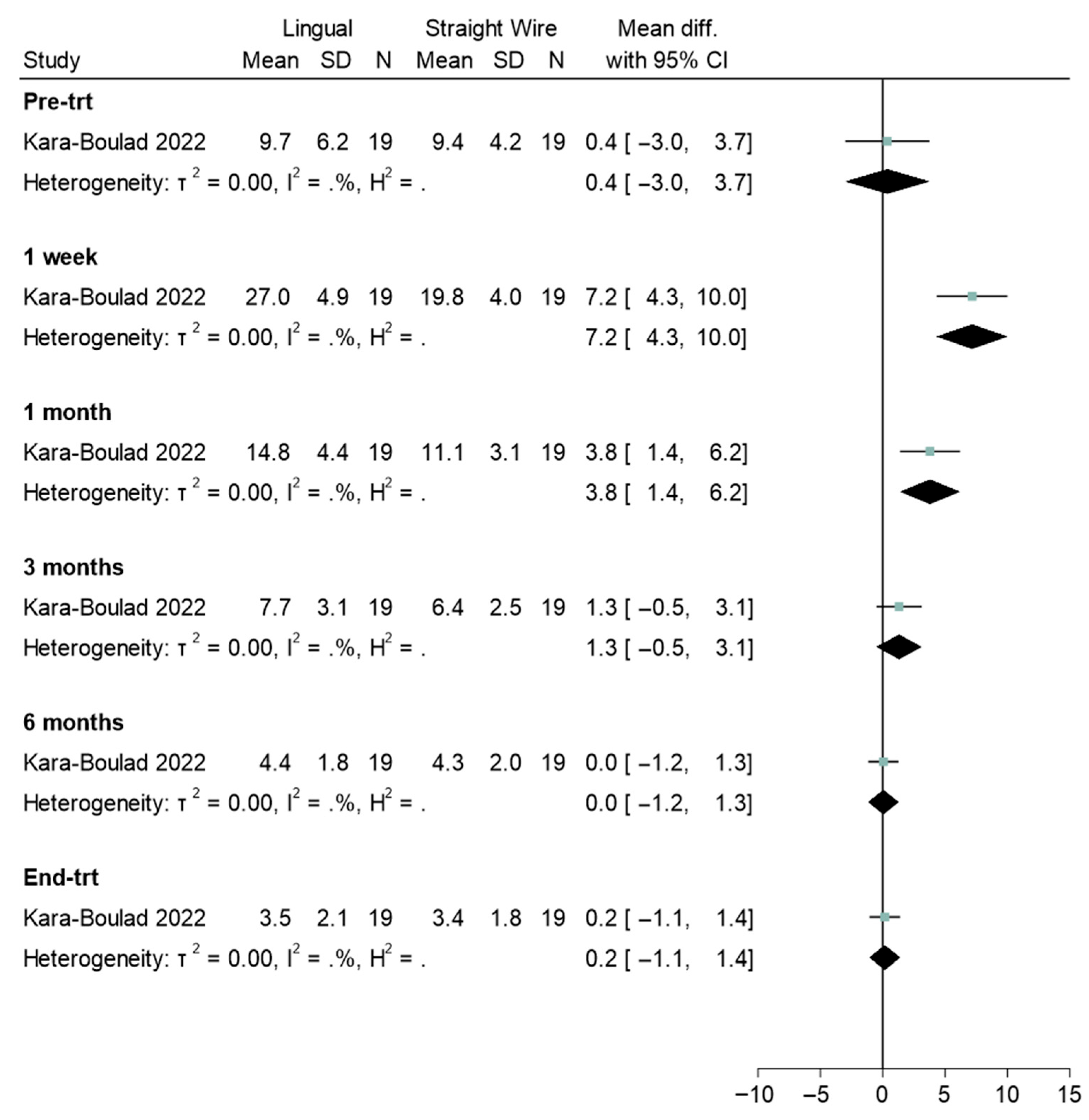
| 3 | Kara-Boulad et al. [21] RCT | n = 38 SWA (19) Lingual (19) (DTC Orthodontics, Hangzhou, China) Dental Hospital | Class I molar and canine relationships 4–6 mm of crowding Non-extraction treatment No anterior crossbites No craniofacial syndromes | OHIP-14 Pre-treatment 1 week 1 month 3 months 6 months End of active treatment | OHRQoL improved in both groups after treatment. OHRQoL was better in the labial group during the first month of treatment. For both groups, the greatest deterioration of OHRQoL was in the first week of treatment but this decreased over time. Functional limitation, physical pain, physical disability and social disability were more common in the lingual group compared to the labial group. Psychological disability was significantly greater in the labial group (p < 0.05). |
| 4 | Diddige et al. [11] RCT | n = 36 SWA (12) SLBs (12) Aligners (Smile Align®, India) (12) Does not specify setting | Non-extraction Full complement teeth LII 3–5 mm | OHRQoL (Miller 2007 [12] questionnaire) Pain (VAS) Speech 4 h 24 h 3 days 7 days | Aligners cause less pain than fixed labial appliances during 1st week of treatment. (p = 0.001) Aligners result in fewer eating disturbances compared to fixed appliances (conventional and SLBs) (p < 0.001). Participants in the aligner group had maximum satisfaction in terms of appliance aesthetics. (p < 0.001) Analgesic consumption higher in conventional group compared to aligner or SLBs (p < 0.001). |
| 5 | Gibreal et al. [22] RCT | n = 16 SWA Dental Hospital | II division I malocclusions requiring premolar extractions Severe lower arch crowding | Pain (VAS) 1 day 7 days 14 days 28 days | No significant difference in pain levels described between control group (group included in this systematic review) and experimental group (group underwent piezocision-assisted orthodontics). |
| 6 | White et al. [23] RCT | n = 40 SWA (18) Aligners (22) (Invisalign®) Dental Hospital | Class I malocclusion Non-extraction Less than 4 mm crowding | Pain (VAS) Immediately after appliance fit and every day for the following seven days 4 days’ worth of measurements after first and second adjustments | Fixed labial appliances produce more discomfort than aligners (p = 0.039). Fixed labial appliance participants have more difficulty chewing (p = 0.023). Participants treated with both fixed labial and aligners report less pain at subsequent visits. Analgesia consumption mirrors levels of discomfort. (p < 0.05) on day two—more analgesia fixed labial group. |
| 7 | Shen et al. [24] CCT | n = 20 SWA (SLBs) Dental Hospital | Non-extraction | Pain (VAS) 2 h 24 h 7, 14 and 30 days | All participants reported pain induced by orthodontic force, which peaked at 24 h and dissipated over 7 days. No healthy controls reported pain at any timepoint. |
| 8 | Krishnamurthy et al. [25] Quasi-experimental | n = 34 SWA Dental Hospital | I/II/III malocclusions No missing teeth ANB −1° to 6° | OHIP-14 Pre-treatment 1-month post-debond | There was a significant reduction in OHIP-14 scores before and after treatment with fixed orthodontic appliances (p < 0.001). There was a significant improvement in OHRQoL following completion of fixed orthodontic treatment. |
| 9 | Lau et al. [26] Cohort | n = 92 SWA Dental Hospital | Adults undergoing fixed orthodontic treatment Dental disease, orthognathic cases, previous orthodontic treatment all excluded | OHIP-14 PAR ICON Pre-treatment Post-treatment | Orthodontic treatment had a positive and clinically important impact on the OHRQoL of patients. OHRQoL was significantly higher among those patients whose dental occlusion was categorised as ‘improved/greatly improved’ compared with those categorised as ‘worse/not different’, according to the PAR score (p = 0.03). |
| 10 | AlSeraidi et al. [27] Cohort | n = 117 SWA (41) Lingual (37) (Incognito®) Aligners (39) (Flash Orthodontics Mumbai, India) Specialist practice | Adults undergoing orthodontic treatment Crowding >8 mm, extractions, previous orthodontic treatment, oral pathology, significant medical history/medications, use of auxiliaries all excluded | WHOQOL-BREF Single questionnaire given between 6 and 9 weeks | Those treated with aligners had significantly better QoL scores, followed by the lingual group and the vestibular group. The aligner group obtained significantly higher scores for psychological health. Aligner and lingual scores for social relationships were significantly greater than those of the vestibular group. Environment displayed significant differences between all groups. |
| 11 | Antonio-Zancajo et al. [28] Cohort | n = 120 SWA (30) Low friction SWA (30) (Synergy®, USA) Lingual (30) (STB®, Ormco®) Aligners (30) (Invisalign®) Does not specify setting | 18–40 years old I/II/mild III skeletal TSALD −6 to −2 mm No extractions (excluding third molars) Good oral and general health No prior orthodontic treatment No severe malformations No surgical treatment No medications/medical conditions influencing pain perception | Ortho-SF-MPQ 4 h 8 h 24 h 2 days 3 days 4 days 5 days 6 days 7 days | Most frequently affected pain location was both anterior arches, followed by the “anterior maxilla” and mandible in all groups. Pain was mild/moderate in the conventional labial appliance group and mild in the low friction, lingual and aligner groups in the first 24 h, progressively decreasing with greater speed in the lingual group. The most frequently reported pain in the first 24 h was acute pain in the low friction and lingual groups, and sensitivity in the conventional labial appliance and aligner groups. The location and amount of pain was similar in all groups. |
| 12 | Zamora-Martínez et al. [29] Cohort | n = 120 SWA (30) (metal brackets) SWA (30) (aesthetic/ceramic brackets) Lingual (30) Aligners (30) University dental clinic | Adults with good oral and general health Orthognathic surgery, previous orthodontic treatment, those who missed >3 appointments/did not complete protocol excluded | OHIP-14 Pre-treatment 6 months End of treatment | All groups had a significant reduction in OHRQoL during treatment compared to pre-treatment, and significant improvements in quality of life at end of treatment. The negative impact was greater in the group with labial appliances in the first 6 months. Almost all domains improved in all groups pre- and post-treatment, except functional limitation was unchanged in those with metal brackets and physical pain was unchanged in those with aesthetic/ceramic brackets and lingual appliances. |
| 13 | Al Nazeh et al. [30] Cohort | n = 50 Aligners (Invisalign®) Dental Hospital | Adults with no previous orthodontic, surgical, prosthodontic or implant treatment No pathology or treatment failure/clinical problems during investigation No medication/medical issues | OHIP NEO-FFI Pre-treatment Post-treatment | Aligner treatment has less negative oral health impacts in females but not males. Personality profiles contribute to the impact of treatment on OHRQoL differently between males and females. Openness before treatment and extraversion, openness and conscientiousness after treatment can predict the oral health impact of aligner treatment in males. |
| 14 | Antonio-Zancajo et al. [9] Cohort | n = 120 SWA (30) SWA SLBs (30) Aligners (30) Lingual (30) (STB®, Ormco®) Does not specify setting | 18–40 years No previous orthodontics Non extraction 2–6 mm of crowding in both arches Skeletal I or mild II/III | Pain OHIP-14 Pain: 4, 8, 24 h and daily for 7 days OHIP-14: 1 month into treatment | Pain peaked between 24 and 48 h post appliance fit. Lingual appliance participants reported lower levels of pain at all times analysed, and their scores in the total OHIP-14 indicated less impact on their oral quality of life (p < 0.01). |
| 15 | Gao et al. [13] Cohort | n = 110 SWA (55) Aligners (55) Dental Hospital | Older than 18 years and receiving treatment in both arches All malocclusion types | Pain VAS STAI-S OHIP-14 Pain: Days 1–14 OHIP-14: Days 1, 7, 14 STAI: Days 1, 3, 5, 7, 14 | Participants treated with clear aligners experienced lower pain levels (p < 0.05 on days 1, 2, 4 and 5), less anxiety (p < 0.05 at all timepoints [1, 3, 5, 7, 14 days]) and higher OHRQoL (p < 0.05 at all timepoints [1, 7, 14 days]) as compared those treated with fixed labial appliances. |
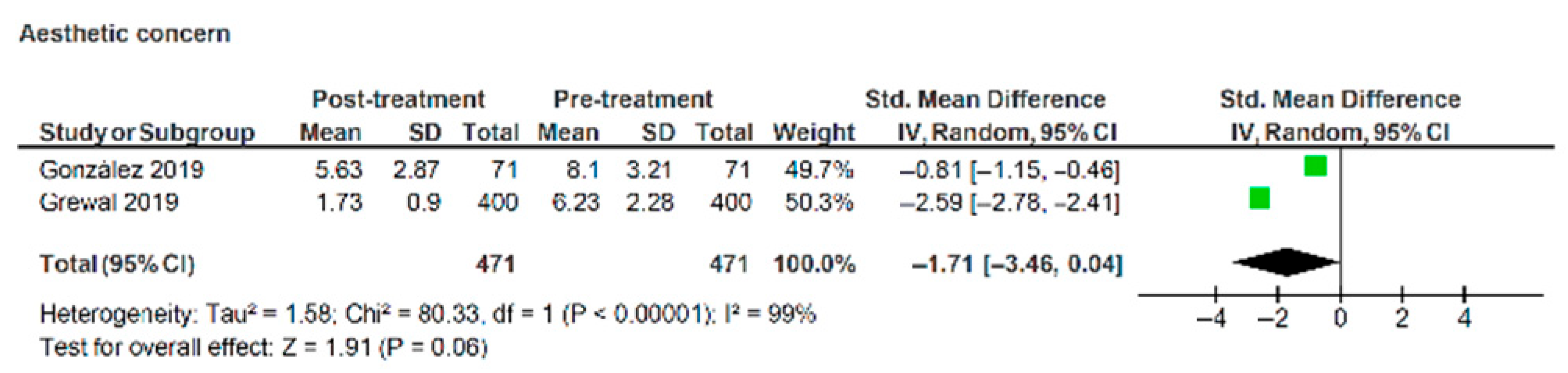
| 16 | González et al. [31] Cohort | n = 71 SWA Dental Hospital | Class I molars <3 mm crowding | PIDAQ Pre-treatment 6 months Debond | Dental self-confidence was shown to increase at both six months (p = 0.001) into treatment and post-treatment (p = 0.001). Psychological impact was shown to improve at both six months (p = 0.049) into treatment and post-treatment (p = 0.01). Aesthetic concern was shown to decrease between pre- and post- treatment (p = 0.031). |
| 17 | Grewal et al. [32] Cohort | n = 400 SWA “Two orthodontic centres” | IOTN “Definite need for treatment” | PIDAQ Pre-treatment Post-treatment | Statistically significant psychosocial impacts after orthodontic treatment were observed in all domains (dental self-confidence, social impact, psychological impact, aesthetic concern, functional limitation, matrimonial concerns). |
| 18 | Almasoud, [33] Cohort | n = 64 SWA (32) (Damon Q®) Aligners (32) (Invisalign®) Specialist practice | Class I molar relationship LII 3–5 mm | Pain VAS 4 h 24 h 3 days 7 days | Participants treated with aligners reported less pain during the first week of treatment compared to those treated with fixed labial appliances (SLBs) (p = 0.001). |
| 19 | Johal et al. [34] Cohort | n = 58 SWA 5 specialist practices | Extraction and non-extraction (6/51) | Pain (VAS) 4 h 24 h 3 days 7 days After appliance fit and following first two adjustment appointments | Pain peaked between 24 h and three days following appliance fit. Pain is less intense following participants second and third fixed appliance adjustment appointments (p < 0.001). Analgesic use mirrored pain experience. Dental irregularity, gender or age did not predict pain experience. |
| 20 | Pacheco-Pereira et al. [35] Cohort | n = 81 Aligners (Invisalign®) 4 specialist practices | “Adult participants treated exclusively with Invisalign” | Dental Impact of Daily Living Patient Satisfaction Questionnaire Post-treatment | Most significant improvements with treatment were in the appearance and eating and chewing categories. Positive doctor–participant relationship correlated with high levels of participant satisfaction. Food packing between teeth and pain were the most common sources of dissatisfaction. The negative experiences were not strong enough to reduce participants’ overall positive experience. |
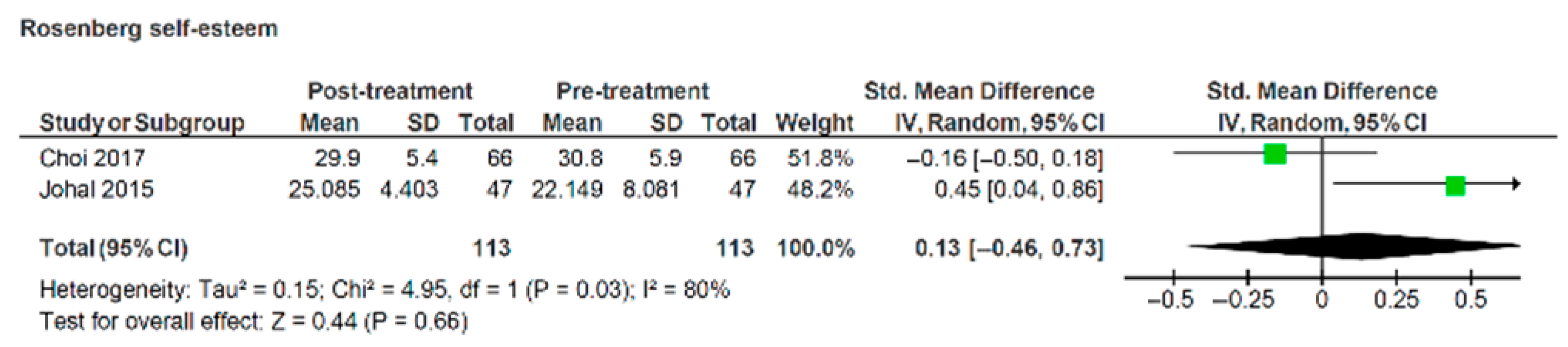
| 21 | Choi et al. [36] Cohort | n = 66 SWA Dental Hospital | Extraction and non-extraction (15/51) | OHIP-14 STAI Zung self-rating depression scale Rosenberg self-esteem scale Key subjective food intake ability Baseline 12 months Debond | OHRQoL temporarily deteriorates during labial fixed appliance treatment (p = 0.002). This is due to an increase in psychological (p = 0.008) and social disabilities (p < 0.001). Changes in OHRQoL were associated with age, psychological health (anxiety, depression, self-esteem) and subjective food intake ability. OHRQoL recovered following treatment (p = 0.22). |
| 22 | Prado et al. [37] Cohort | n = 60 SWA Dental Hospital | Participants 18–30 requiring fixed appliances | PIDAQ Pre-treatment 6 months | The first six months of orthodontic treatment improve the psychosocial impact of malocclusion. Participants report a greater aesthetic impact [worse scores] (p < 0.001) and less psychological impact [better scores] after six months of fixed labial appliances (p < 0.001). |
| 23 | Chen et al. [38] Cohort | n = 190 SWA Dental Hospital | Any malocclusion excluding the need for orthognathic surgery or previous history of orthodontics | OHIP-14 Pre-treatment Post-treatment | Malocclusion has a significant negative impact on OHRQoL. Orthodontic treatment improved OHRQoL among adults (p < 0.05). |
| 24 | Johal et al. [39] Cohort | n = 61 SWA 4 Specialist practices | Participants of at least 18 years requiring fixed appliances Surgical cases excluded | OHIP-14 Rosenberg self-esteem scale Pre-treatment 1, 3 and 6 months Post-treatment | Fixed orthodontic appliance therapy causes a negative impact on OHRQoL during the first three months of treatment (p = 0.001). There is no significant difference between pre- and post-treatment OHRQoL scores (p = 0.078). OHRQoL scores return to pre-treatment norms after fixed appliance treatment. There is a significant increase in self-esteem as a result of fixed appliance treatment (p = 0.002). |
| 25 | Fujiyama et al. [40] Cohort | n = 145 SWA (55) Aligners (Invisalign®) (38) SWA and Aligners (52) Specialist practice | Extraction and non-extraction (30/115) | Pain VAS 60 s 6 h 12 h Each day for next 7 days Same as above at 3 weeks Same as above at 5 weeks | A significant difference was observed in overall VAS pain between fixed labial and Invisalign® participants in intensity of pain (p < 0.05), number of days the pain lasted (p < 0.05), and discomfort level (p < 0.05), favouring Invisalign®. |
| 26 | Shalish et al. [41] Cohort | n = 68 SWA (28) Lingual (19) (Incognito®) Aligners (21) (Invisalign®) Dental Hospital and two private practices | “Consecutive adult patients who needed comprehensive orthodontic treatment” | Daily OHRQoL diary Pain (VAS) Recorded on each day from days 1–7 and again on day 14. | Lingual appliances were associated with more severe pain and analgesic consumption, the greatest oral and general dysfunction and the most difficult and longest recovery. Aligner participants complained of high levels of pain initially; however, this group had the lowest level of oral symptoms. Participants treated with aligners and labial appliances had similar levels of general activity disturbances and oral dysfunction. Many lingual and some buccal appliance participants did not reach a full recovery from eating difficulties by the end of the study. |
| 27 | Wu et al. [14] Cohort | n = 60 SWA (30) Lingual (30) (Incognito®, 3M Unitek, Bad Essen, Germany) Dental Hospital | Labial: 20.33 +/− 4.205 years Lingual: 21.63 +/− 2.236 years | Patient impacts (discomfort, mastication, speech, social function)—non validated Pain VAS 1 week 1 month 3 months | All participants experienced oral impact disturbances, which decreased over time (p < 0.001). Participants treated with customised lingual appliances reported more oral discomfort (p < 0.001), dietary changes (p < 0.001), swallowing difficulty (p < 0.001), speech disturbances (p < 0.001) and social problems (p < 0.001) than did those in labial appliance group. There was no significant difference between the groups regarding ratings of oral self-care, mastication and satisfaction level of treatment (p > 0.05). |
| 28 | Wu et al. [15] Cohort | n = 60 SWA (30) Lingual (30) (Incognito®, 3M Unitek, Bad Essen, Germany) Dental Hospital | Labial: 20.33 +/− 4.205 years Lingual: 21.63 +/− 2.236 years | Pain VAS 1 week after placement 1 month after placement 3 months after placement | No significant difference in global ratings of pain among those treated with labial or lingual appliances (p > 0.05). Global ratings of pain decreased for both groups over the study period (p < 0.001). Lingual appliances cause more tongue soreness (p < 0.001). Labial appliances cause more lip and cheek soreness (p < 0.001). |
| 29 | Miller et al. [12] Cohort | n = 60 SWA (27) Aligners (Invisalign®) (33) Private practice and Dental Hospital | Extraction and non-extraction Included re-treatment cases | Daily diary (amended version of the geriatric oral health assessment index) Pain VAS 4 h 24 h 3 days 7 days | Participants treated with Invisalign® reported fewer negative impacts on overall OHRQoL (p < 0.001). Invisalign® group reported less impact in each quality of life subscale (functional, psychosocial, pain-related) (p < 0.03). VAS pain scores show that Invisalign® caused less pain during the first week of treatment compared to fixed labial appliances (p < 0.0001). Participants treated with Invisalign® took less pain medication compared to fixed labial participants (p < 0.07). |
| 30 | Hohoff et al. [42] Cohort | n = 12 Thermoplastic aligner with lingual appliance Simulated environment | German speakers | Speech evaluation by speech professionals Subjective evaluation by participants Before placement 10 min 24 h | All lingual appliances led to significant impairments in sound performance and oral comfort, but with inter-appliance differences in the degree of impairment. Smaller lingual appliances result in less impairments. |
| 31 | Hohoff et al. [43] Cohort | n = 23 Lingual (7th Generation, Ormco®) Does not specify (Not relevant to outcomes) | French speakers Maxillary arch treatment only | Digital Sonography Speech Professionals evaluation Subjective evaluation Pre-treatment 24 h 3 months (+/−1 week) | The researchers concluded there was a significant deterioration in speech, which improved by three months somewhat but was still significantly worse than pre-treatment. |
| 32 | Varela & Garciacamba [44] Cohort | n = 47 SWA Dental Hospital | Moderate-severe malocclusion with aesthetic repercussions | Tennessee Self Concept Scale Secord and Jourards Cathexis Scale Pre-treatment 6 months Post-treatment | No significant changes in self-concept and self-esteem were observed after treatment. Increases for both subscales of body image, overall and facial, were observed. Overall body image demonstrated and improvement 6 months after the start of treatment. |
| 33 | Flores-Mir et al. [10] Cross-sectional | n = 122 SWA (41) Aligners (81) (Invisalign®) SWA: Dental Hospital Aligners: 4 specialist practices | Any malocclusion complexity | Dental Impacts on Daily Living Patient Satisfaction Questionnaire Debond | Participants treated with fixed labial appliances had statistically similar satisfaction outcomes across all domains analysed, except for eating and chewing when compared to Invisalign®. Invisalign® participants reported more satisfaction in eating and chewing during treatment. Participant satisfaction remained similar six months after treatment irrespective of treatment modality. |
| 34 | Romero-Maroto et al. [45] Cross-sectional | n = 85 SWA Dental Hospital | I/II/III malocclusions Non extraction Crowding less than 6 mm | PIDAQ STAI-S Rosenberg self-esteem scale 3–6 months | The labial fixed appliance group showed significantly higher scores for social impact, psychological impact and aesthetic concern compared to the control group. No significant difference in self-esteem between the treatment and control groups. Anxiety plays a fundamental role in the effect of perceived dental impact on self-esteem in adult participants. Self-esteem correlated negatively with all dimensions of dental appearance impact [dental self-confidence, social impact, psychological impact, aesthetic concern], except for the positive dental self-confidence dimension that correlates positively. |
| 35 | Wong et al. [46] Qualitative | n = 26 SWA Specialist practice and Dental Hospital | Any fixed appliance treatment excluding orthognathic | Structured interview Post-treatment | One of the main five themes identified was impact of appliance treatment. Four subthemes identified under this heading including discomfort, function/oral hygiene, aesthetics, post-debond care. Discomfort subtheme: Satisfaction with treatment not affected by this as they expected it as part of the treatment journey. Function and oral hygiene: Difficulty with eating certain foods reported, but most participants found ways around this by the end of treatment. Aesthetics: Adult orthodontics being widely accepted now made this easier to deal with. Some participants from a private setting said they would not have undergone treatment had metal fixed appliances been the only treatment option. Post-debond care: Participants found having retention reviews reassuring, which improved their overall treatment satisfaction. |
Disclaimer/Publisher’s Note: The statements, opinions and data contained in all publications are solely those of the individual author(s) and contributor(s) and not of MDPI and/or the editor(s). MDPI and/or the editor(s) disclaim responsibility for any injury to people or property resulting from any ideas, methods, instructions or products referred to in the content. |
© 2025 by the authors. Licensee MDPI, Basel, Switzerland. This article is an open access article distributed under the terms and conditions of the Creative Commons Attribution (CC BY) license (https://creativecommons.org/licenses/by/4.0/).
Share and Cite
Johal, A.; Dunne, B.; Bolooki, H.; Sandler, C. Oral Health-Related Quality of Life (OHRQoL), Pain and Side Effects in Adults Undergoing Different Orthodontic Treatment Modalities: A Systematic Review and Meta-Analysis. Healthcare 2025, 13, 3317. https://doi.org/10.3390/healthcare13243317
Johal A, Dunne B, Bolooki H, Sandler C. Oral Health-Related Quality of Life (OHRQoL), Pain and Side Effects in Adults Undergoing Different Orthodontic Treatment Modalities: A Systematic Review and Meta-Analysis. Healthcare. 2025; 13(24):3317. https://doi.org/10.3390/healthcare13243317
Chicago/Turabian StyleJohal, Ama, Brian Dunne, Honieh Bolooki, and Cara Sandler. 2025. "Oral Health-Related Quality of Life (OHRQoL), Pain and Side Effects in Adults Undergoing Different Orthodontic Treatment Modalities: A Systematic Review and Meta-Analysis" Healthcare 13, no. 24: 3317. https://doi.org/10.3390/healthcare13243317
APA StyleJohal, A., Dunne, B., Bolooki, H., & Sandler, C. (2025). Oral Health-Related Quality of Life (OHRQoL), Pain and Side Effects in Adults Undergoing Different Orthodontic Treatment Modalities: A Systematic Review and Meta-Analysis. Healthcare, 13(24), 3317. https://doi.org/10.3390/healthcare13243317