Abstract
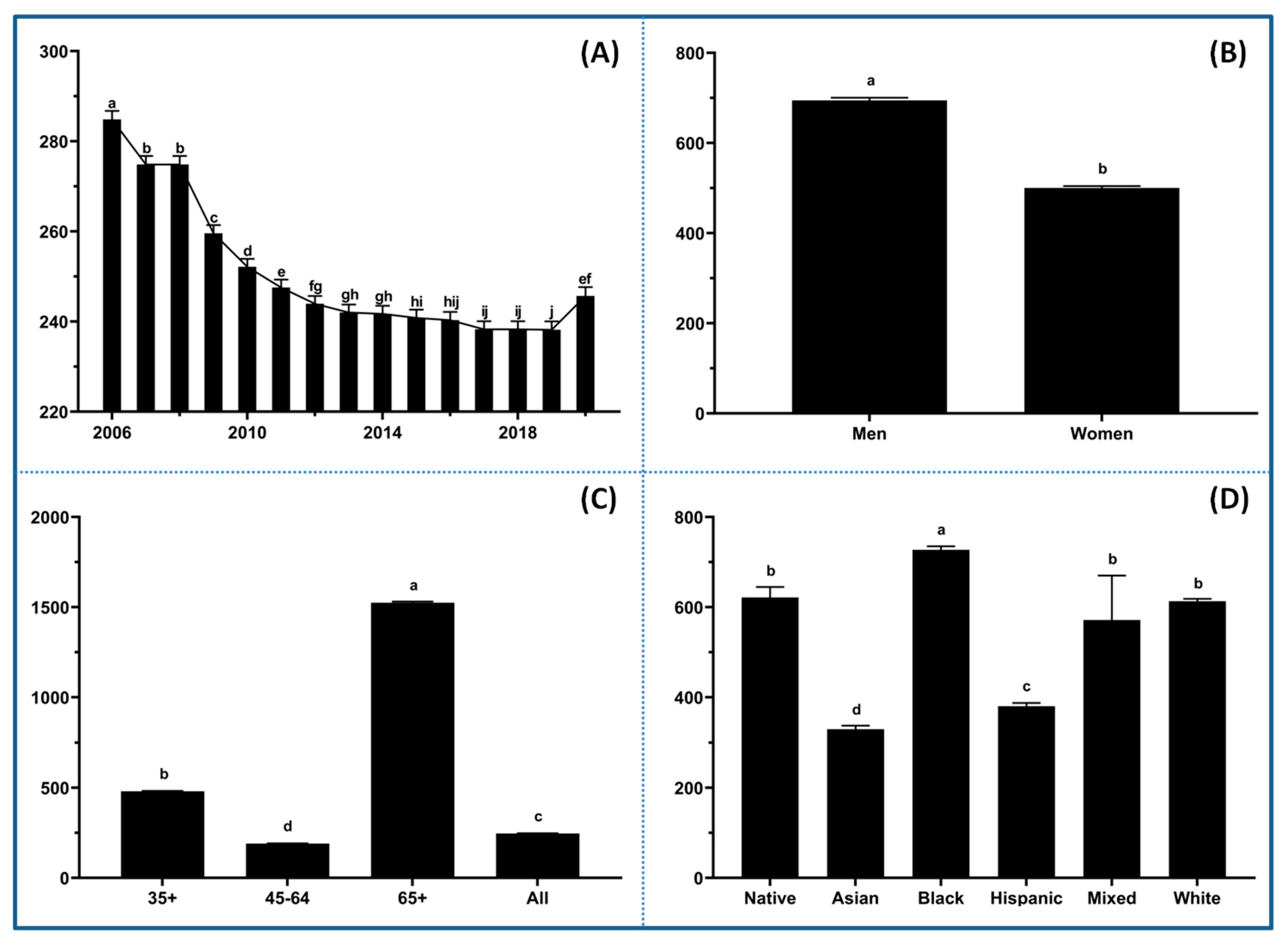
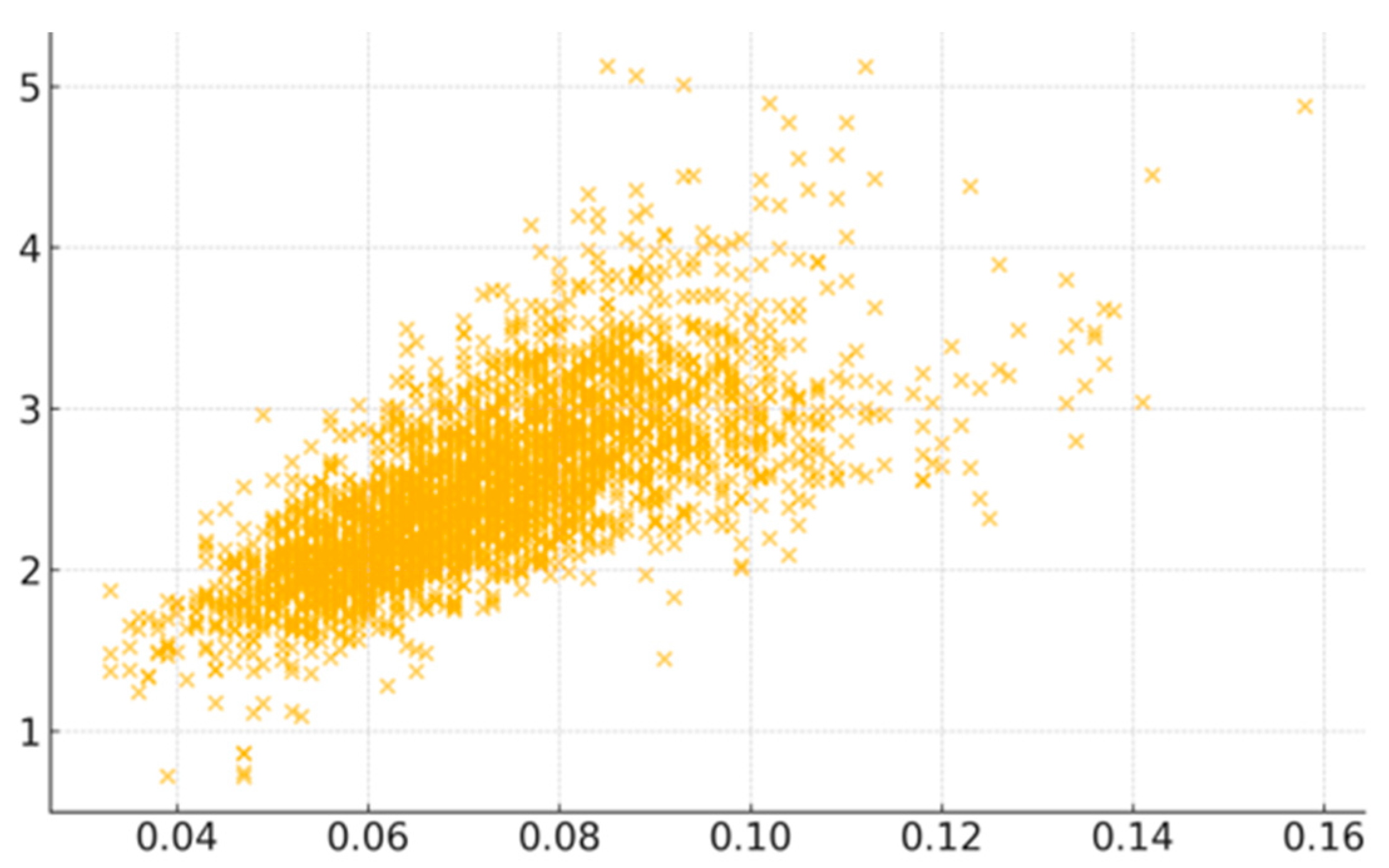
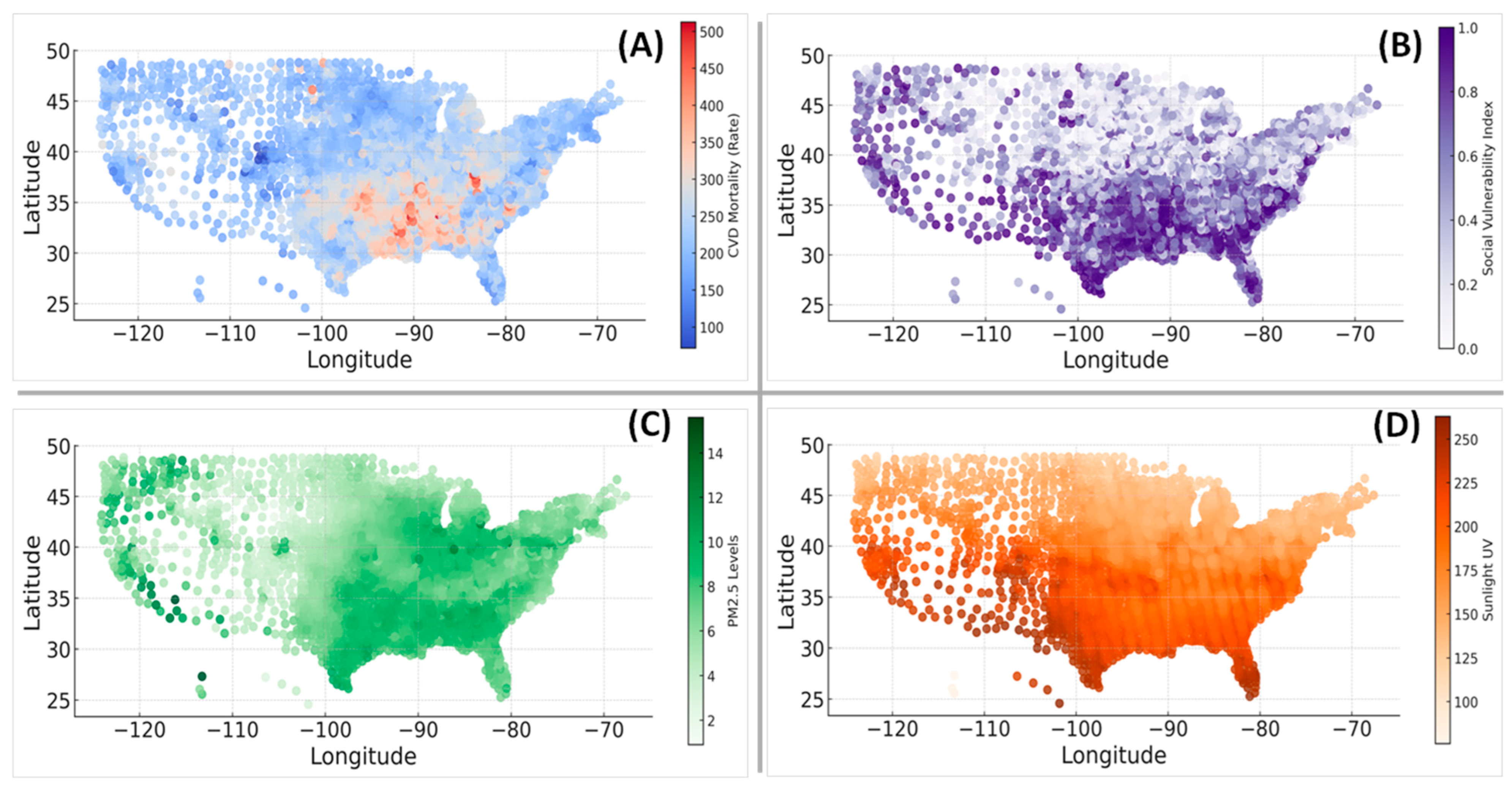
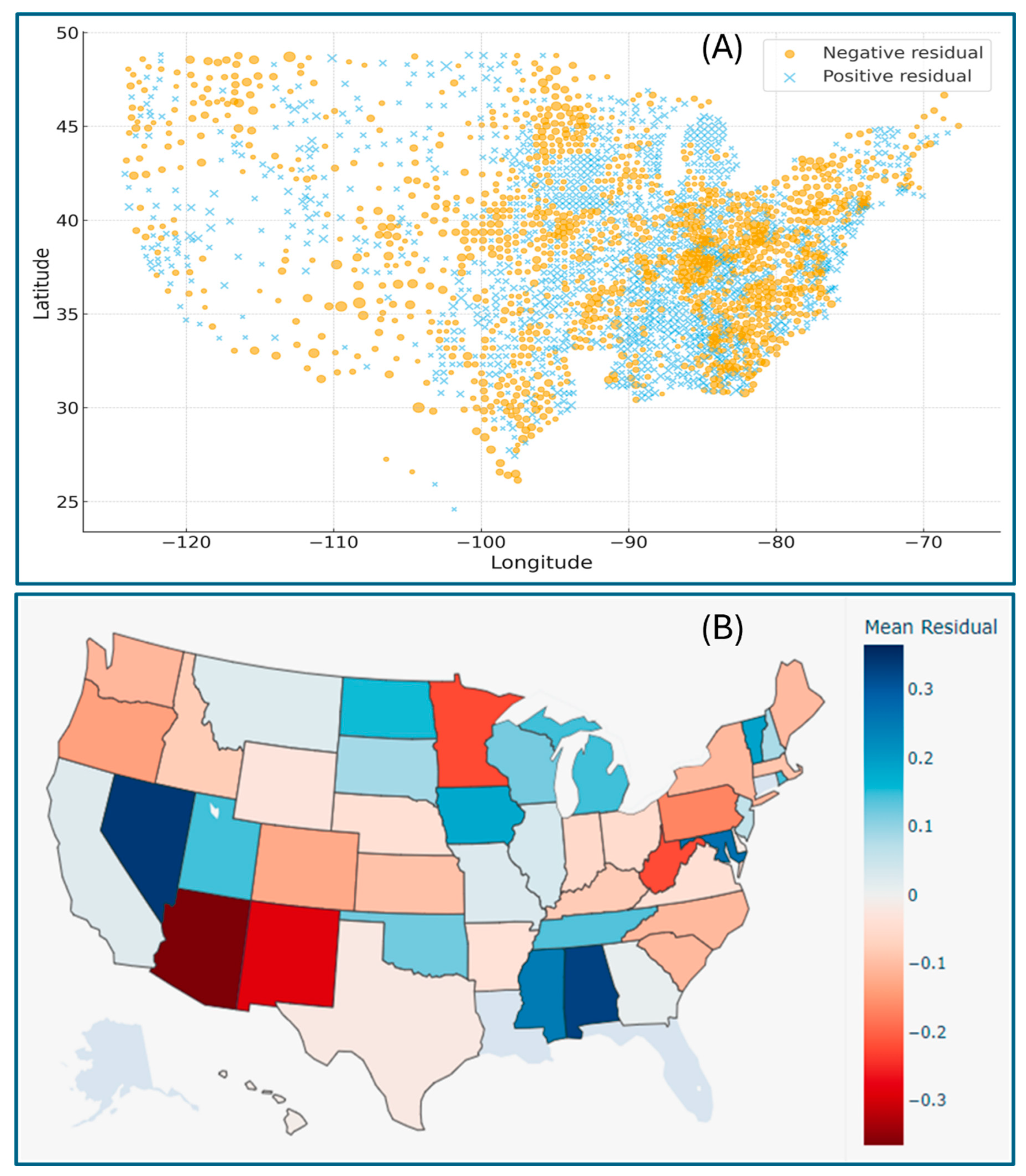
Introduction: Cardiovascular disease (CVD) remains a primary cause of mortality worldwide, with persistent geographic disparities driven by a complex interplay of risk factors. Continual updates of localized variations in CVD mortality are essential to develop targeted interventions for optimizing disease and healthcare management. Methods: This study investigated associations between CVD mortality and a comprehensive set of biological, environmental, behavioral, and socioeconomic factors across all U.S. counties, employing correlation, geospatial visualization, stepwise multiple regression, and machine learning models to evaluate the importance of risk associations. Results: Significant disparities in CVD mortality trend were observed across race, age, sex, and region, with elevated rates among older adults, men, and Blacks, particularly in southeastern states exhibiting severe social vulnerability. Correlation analysis identified disease management (e.g., COPD, hypertension, medication non-adherence), environmental factors (PM2.5), lifestyle behaviors (e.g., smoking, sleep duration), and socioeconomic status (e.g., poverty, single-parent households, education) as important contributors to CVD mortality. Conversely, higher household income, physical activity, and cardiac rehabilitation participation were strong protectors. Multiple regression explained 66.9% variance in CVD mortality, recognizing PM2.5, smoking, and medication non-adherence as top associated factors. Random Forest models underscored COPD’s predictive dominance, followed by medication non-adherence, smoking, and sleep duration. Conclusions: The findings highlight the geospatial connection of risk factors to CVD mortality disparities across U.S. counties. They emphasize the critical importance of data-driven strategies targeting air quality, tobacco control, social inequities, and chronic disease management to mitigate CVD burden and promote health equity.