Article

User Experience Study of the Patient Monitoring Systems Based on Usability Testing and Eye Tracking


1
Department of Medical Device Engineering and Management, Yonsei University College of Medicine, Seoul 06229, Republic of Korea
2
Medical Device Usability Research Center, Gangnam Severance Hospital, Yonsei University College of Medicine, Seoul 06230, Republic of Korea
*
Author to whom correspondence should be addressed.
Healthcare 2024, 12(24), 2573; https://doi.org/10.3390/healthcare12242573

Submission received: 25 October 2024 / Revised: 13 December 2024 / Accepted: 17 December 2024 / Published: 20 December 2024

Abstract

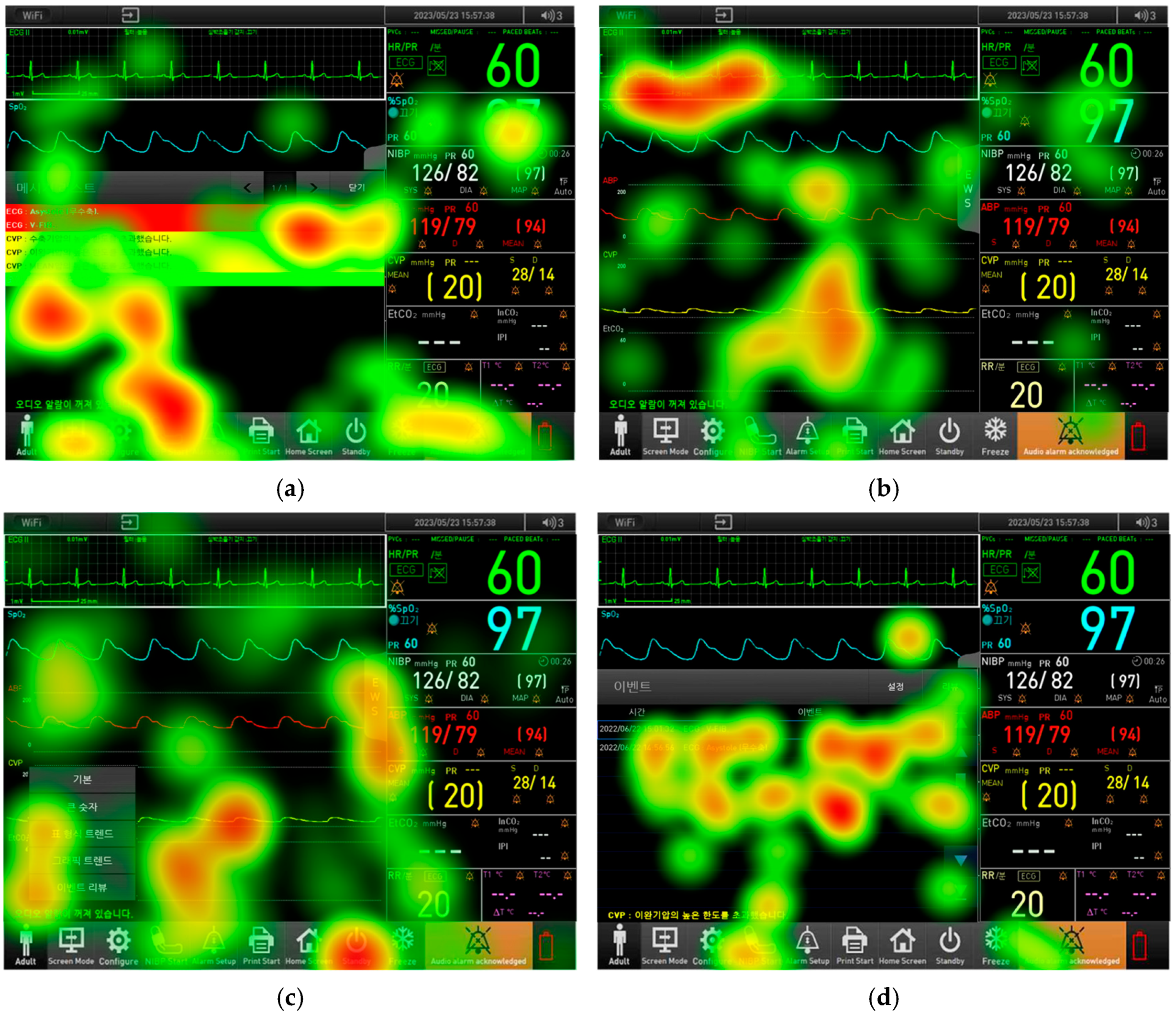
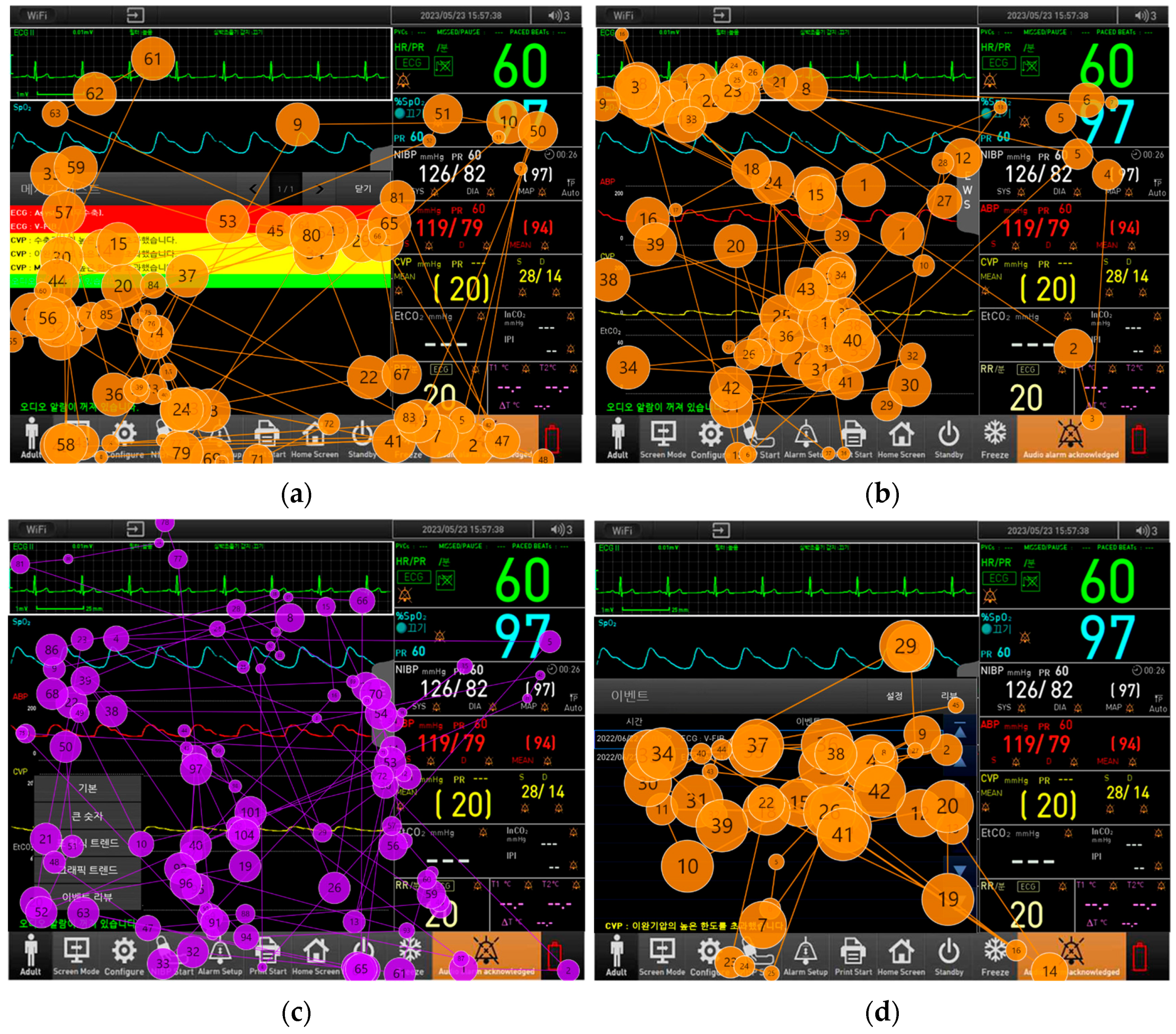
Background/Objectives: The patient monitoring system is a critical tool commonly used in hospitals, making it essential to assess caregivers’ user requirements and satisfaction with its usability. In intensive care units (ICUs), the usability of these systems is closely linked to the work efficiency of key users, such as nurses, and directly impacts patient safety and treatment outcomes. This study evaluates the usability of patient monitoring systems in intensive care units (ICUs), focusing on user requirements and satisfaction among nurses, the primary users. Usability is directly linked to work efficiency and patient safety, with post-marketing surveillance (PMS) data from overseas, highlighting issues such as unrecognized alarms, leading to worsened patient conditions. Methods: This study involved 22 ICU nurses who had used the system for over a year, assessing usability through testing, satisfaction surveys, the Health-ITUES, and eye-tracking analysis. Results: The results showed a high success rate (94%) and positive satisfaction scores (4.15, SD = 0.88), with a Health-ITUES score of 4.13 (SD = 0.78). Eye tracking revealed that some functions, including alarms, were overlooked or not recognized. Conclusions: Recommendations include improving the interface for alarm messages and recording deletion functions to enhance user satisfaction and patient safety.
Keywords: patient monitoring system; usability; Health-ITUES; SUS; eye tracking patient monitoring system; usability; Health-ITUES; SUS; eye tracking