Review

From Wristbands to Implants: The Transformative Role of Wearables in Heart Failure Care

by
Catarina Gregório
1,2,3,4,*,
João R. Agostinho
1,2,3,4,
Joana Rigueira
1,2,3,4,
Rafael Santos
1,2,3,4,
Fausto J. Pinto
1,2,3,4 and
Dulce Brito
1,2,3,4
1
Department of Cardiology, Hospital de Santa Maria (ULSSM), 1649-028 Lisbon, Portugal
2
Centro Académico de Medicina de Lisboa (CAML), 1649-028 Lisbon, Portugal
3
Cardiovascular Center of the University of Lisbon (CCUL@RISE), 1649-028 Lisbon, Portugal
4
Faculdade de Medicina, Universidade de Lisboa, 1649-028 Lisboa, Portugal
*
Author to whom correspondence should be addressed.
Healthcare 2024, 12(24), 2572; https://doi.org/10.3390/healthcare12242572

Submission received: 4 November 2024 / Revised: 6 December 2024 / Accepted: 13 December 2024 / Published: 20 December 2024
(This article belongs to the Special Issue Telehealth and Remote Patient Monitoring)

Abstract

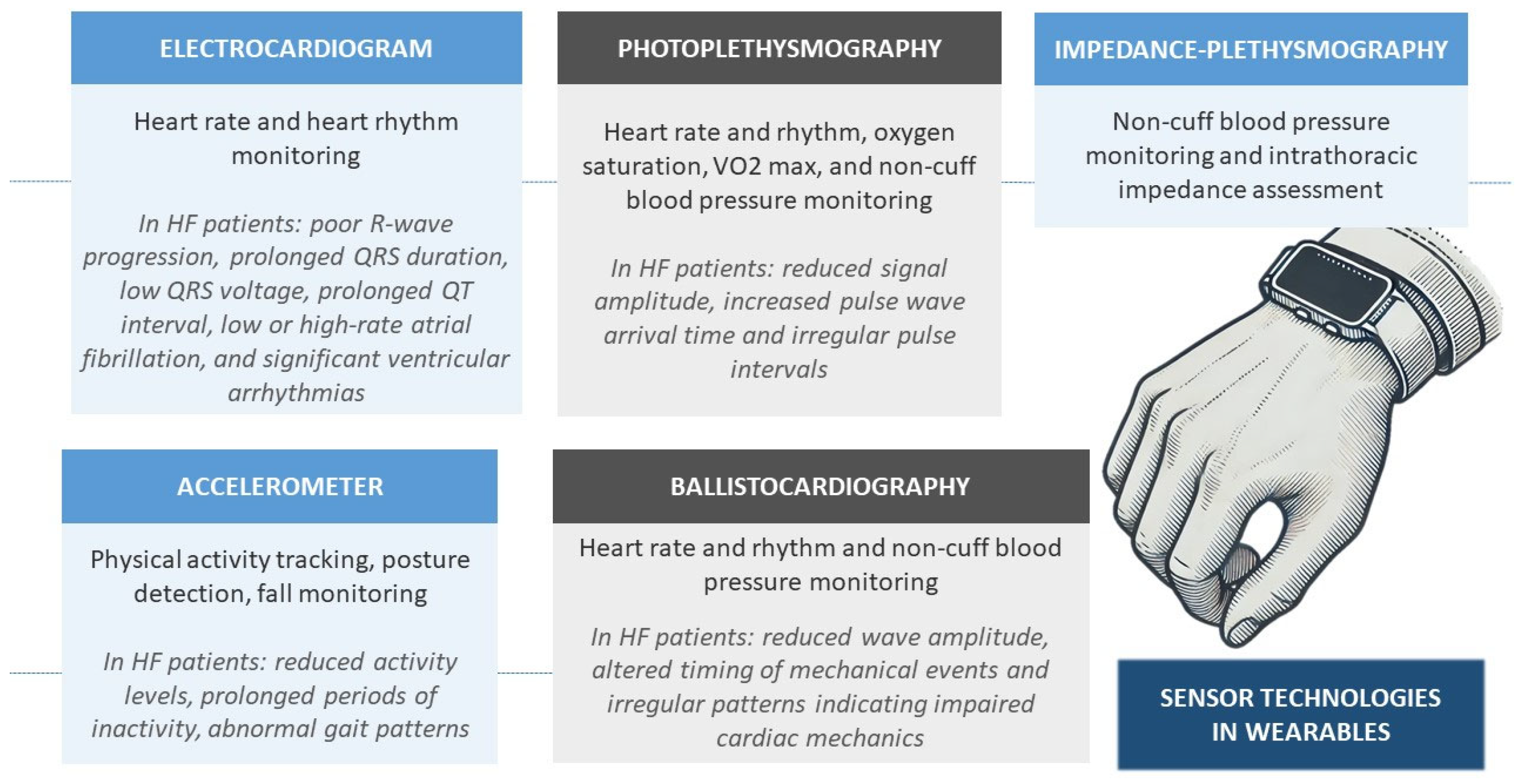
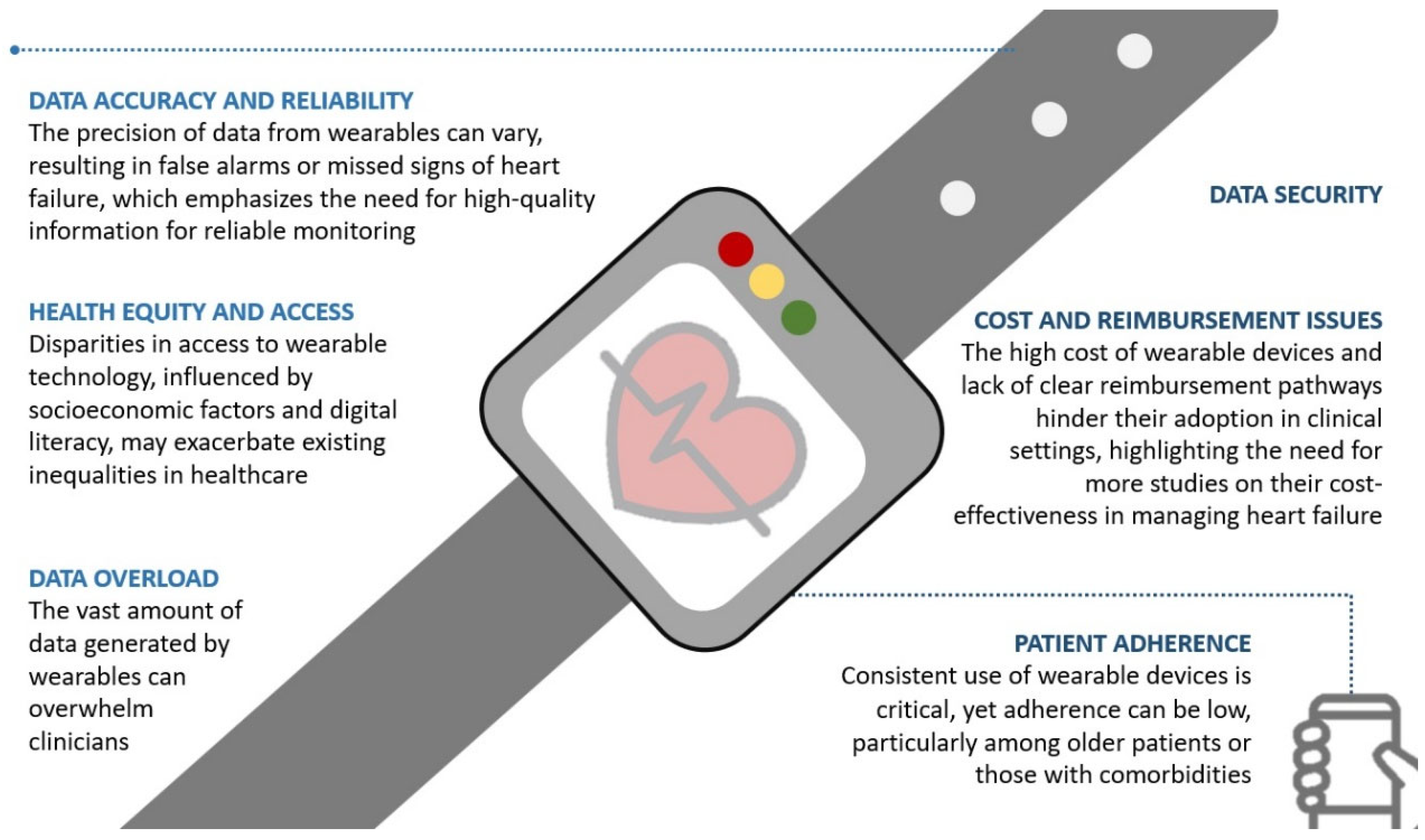
Background: Heart failure (HF) management increasingly relies on innovative solutions to enhance monitoring and care. Wearable devices, originally popularized for fitness tracking, show promise in clinical decision-making for HF. This study explores the application and potential for the broader integration of wearable technology in HF management, emphasizing remote monitoring and personalized care. Methods: A comprehensive literature review was performed to assess the role of wearables in HF management, focusing on functionalities like vital sign tracking, patient engagement, and clinical decision support. Clinical outcomes and barriers to adopting wearable technology in HF care were critically analyzed. Results: Wearable devices increasingly track physiological parameters relevant to HF, such as heart rate, physical activity, and sleep. They can identify at-risk patients, promote lifestyle changes, facilitate early diagnosis, and accurately detect arrhythmias that lead to decompensation. Additionally, wearables may assess fluid status, identifying early signs of decompensation to prevent hospitalization and supporting therapeutic adjustments. They also enhance physical activity and optimize cardiac rehabilitation programs, improving patient outcomes. Both wearable and implanted cardiac devices enable continuous, non-invasive monitoring through small devices. However, challenges like data integration, regulatory approval, and reimbursement impede their widespread adoption. Conclusions: Wearable technology can transform HF management through continuous monitoring and early interventions. Collaboration among involved parties is essential to overcome integration challenges and validate most of these devices in clinical practice.
Keywords: heart failure; wearable devices; cardiac implantable device; remote patient monitoring; telehealth heart failure; wearable devices; cardiac implantable device; remote patient monitoring; telehealth