Article

Comparative Analysis of Korean Nasal Morphology Using Cone-Beam Computed Tomography

1
Department of Oral Anatomy, Dankook Institute for Future Science and Emerging Convergence, Dental College, Dan-Kook University, Cheonan 31116, Republic of Korea
2
Department of Bio Health Convergency Open Sharing System, Dan-Kook University, Cheonan 31116, Republic of Korea
*
Author to whom correspondence should be addressed.
Healthcare 2024, 12(18), 1839; https://doi.org/10.3390/healthcare12181839

Submission received: 9 August 2024 / Revised: 9 September 2024 / Accepted: 12 September 2024 / Published: 13 September 2024
(This article belongs to the Special Issue Innovations in Forensic Medicine)

Abstract

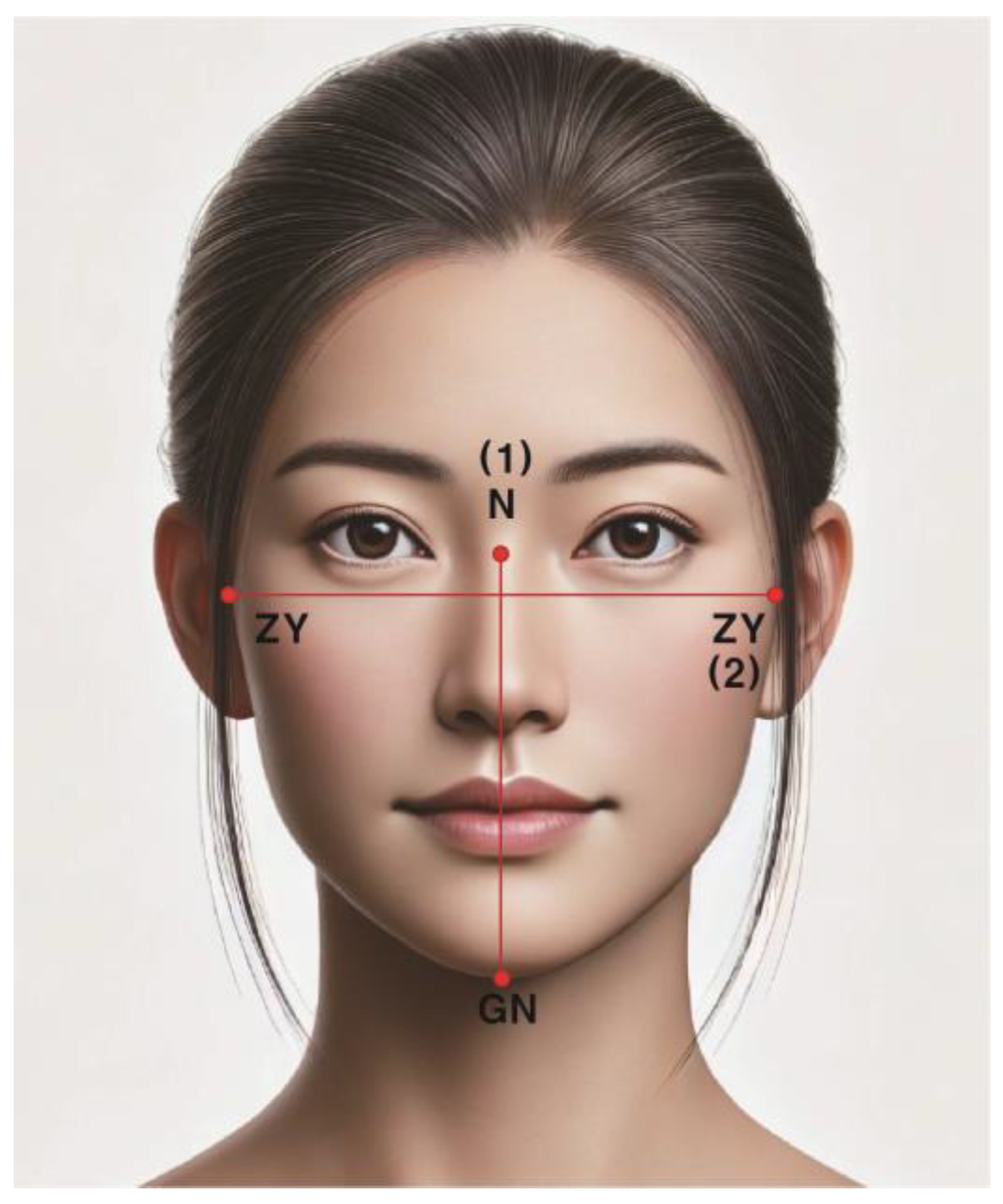
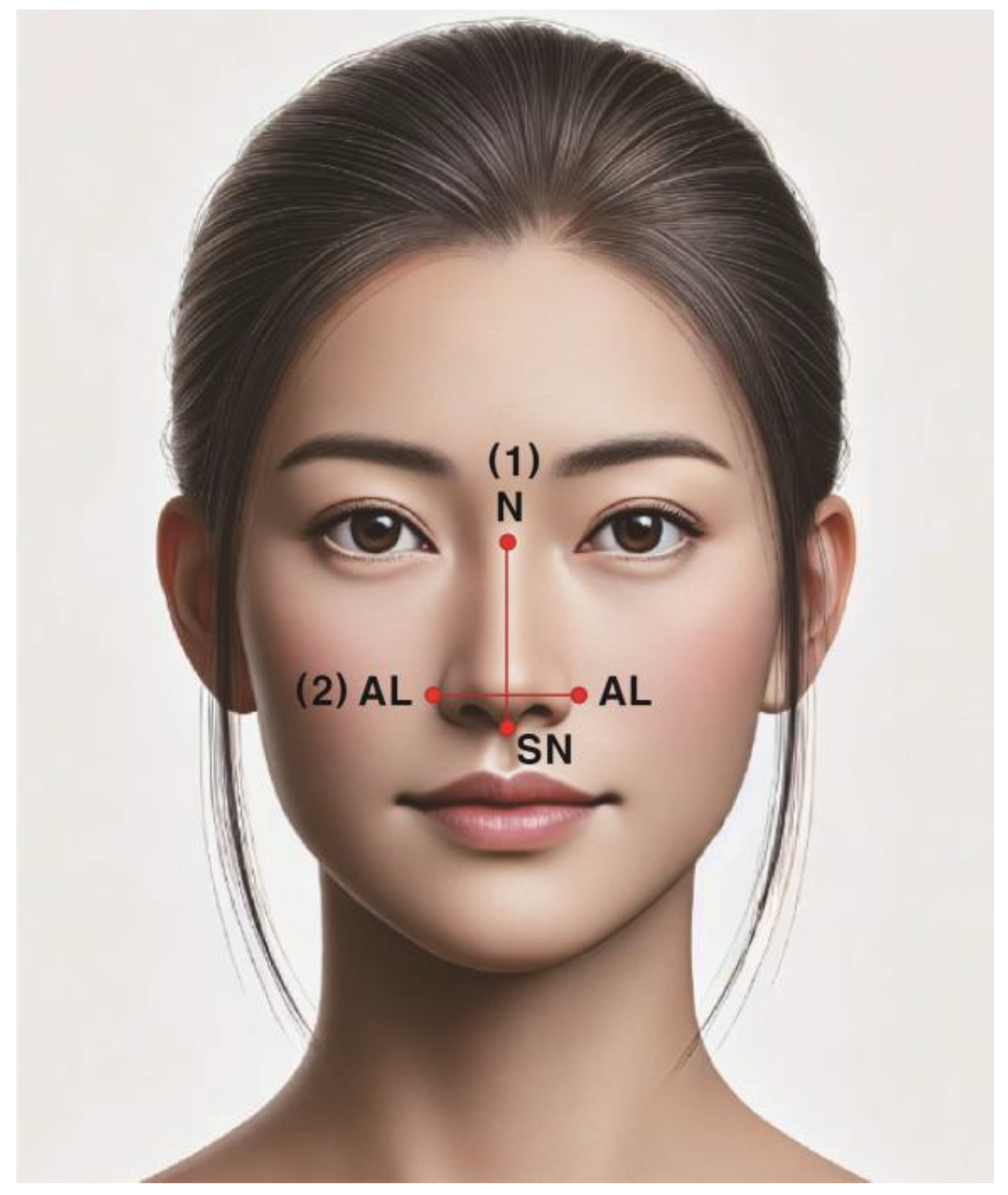
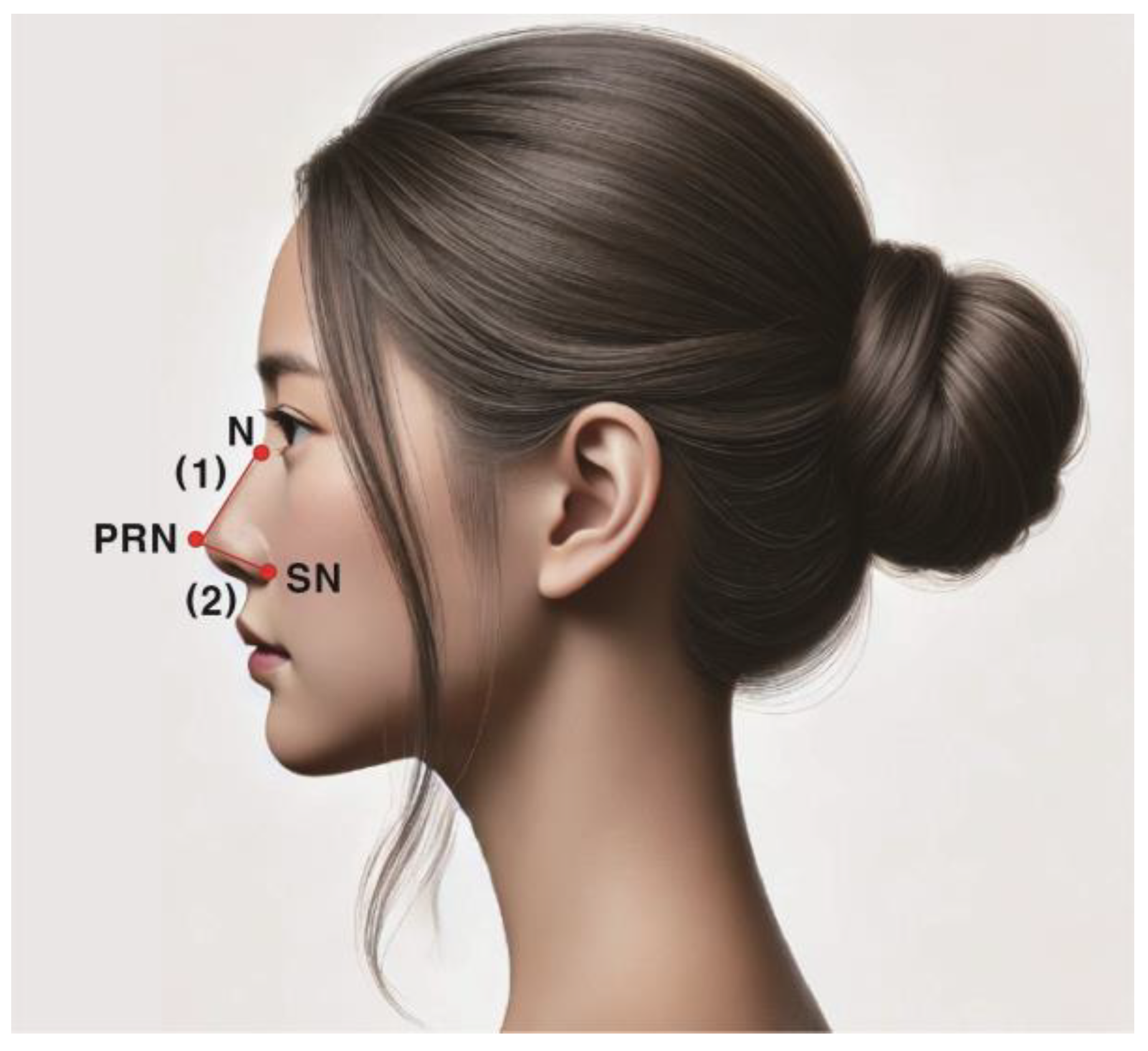
Background/Objectives: Nasal morphology is a significant aspect of facial anatomy and is often used for forensic identification and aesthetic surgery. This study aims to compare nasal dimensions based on sex, facial index (FI), and nasal index (NI) using cone-beam computed tomography (CBCT) and 3D modeling. Methods: To observe differences in nasal dimensions by sex and analyze the relationships between facial shapes (FI) and nasal forms (NI), a total of 100 participants (50 males, 50 females) in their 20s were selected from Dankook University Dental Hospital. CBCT scans were performed, and 3D models were created using Mimics software (version 22.0). The measurement items included the alaria distance between (AL), the distance between N (nasion) and SN (subnasale), the distance between N (nasion) and PRN (pronasale), and the distance between SN (subnasale) and PRN (pronasale). A T-test was used for the sex-based analysis of the nasal dimensions, and the facial index- and nasal index-based nasal dimensions were analyzed using a one-way ANOVA with Scherffe’s post hoc test. Additionally, all the statistical analyses were performed using SPSS software (version 23.0). Results: The results indicated that males generally have larger nasal dimensions than females. Additionally, the mesoprosopic facial type (round face) showed the largest nasal dimensions in the FI classification, while the platyrrhine nasal type (broad and short nose) exhibited the largest dimensions in the NI classification. Conclusions: This study demonstrates that the nasal size varies significantly with sex, facial shape, and nasal form. The findings can contribute to forensic identification and provide valuable data for clinical practices in facial reconstruction and nasal surgery.
Keywords: nasal; 3D modeling; facial index; nasal index; nose nasal; 3D modeling; facial index; nasal index; nose