Review

Nurses’ Role in Obesity Management in Adults in Primary Healthcare Settings Worldwide: A Scoping Review


by
Emilia Piwowarczyk
1,
Maura MacPhee
1,2,* and
Jo Howe
2
1
School of Nursing, University of British Columbia, Vancouver, BC V6T 2B5, Canada
2
Pharmacy School, College of Health and Life Sciences, Aston University, Birmingham B4 7ET, UK
*
Author to whom correspondence should be addressed.
Healthcare 2024, 12(17), 1700; https://doi.org/10.3390/healthcare12171700

Submission received: 6 August 2024 / Revised: 20 August 2024 / Accepted: 23 August 2024 / Published: 26 August 2024

Abstract

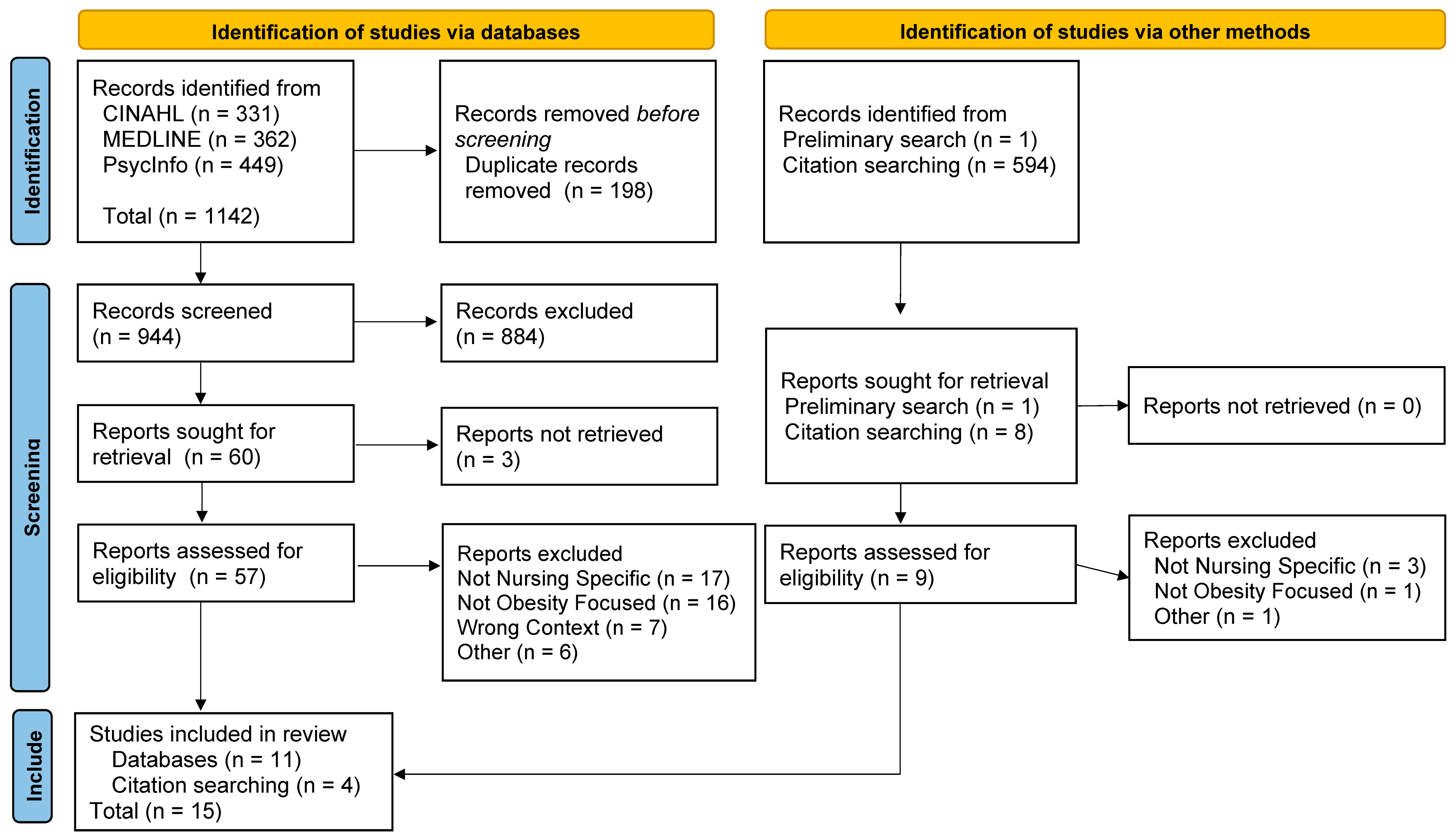
Obesity is a chronic, prevalent, and complex health condition that adversely impairs physical and mental health. The World Health Organization calls for integrating obesity care into existing chronic disease management programs within primary healthcare services. This scoping review aimed to examine registered nurses’ roles in the primary healthcare management of individuals with obesity. A scoping review was conducted using the Johanna Briggs Institute methodology framework. Thematic analysis was used to identify and categorize nurses’ roles in primary healthcare obesity management of adults. Of 1142 documents included in this review, 15 papers met the inclusion criteria. Thematic analysis yielded the following six themes representing nurses’ major roles: patient-centred care, patient assessments, therapeutic interventions, care management, patient education, and professional development. This review identified that the literature on nurses’ roles primarily described their focus on lifestyle interventions (mainly nutrition and physical activity), anthropometric measurements, health planning, goal setting, supportive care, monitoring progress, and arranging follow-up. The Discussion highlights the importance of determining RN knowledge gaps and biases. More research is required to determine the need for additional RN pre-and or post-education related to obesity as a complex chronic disease.
Keywords: obesity; obesity management; adults; nursing; primary healthcare; scoping review obesity; obesity management; adults; nursing; primary healthcare; scoping review