Article

The Efficacy of Machine-Learning-Supported Smart System for Heart Disease Prediction
1
Department of Computer Science and Engineering, BGC Trust University Bangladesh, Chittagong 4381, Bangladesh
2
Centre for Applied Physics and Radiation Technologies, School of Engineering and Technology, Sunway University, Petaling Jaya 47500, Selangor, Malaysia
3
Department of General Educational Development, Faculty of Science and Information Technology, Daffodil International University, DIU Rd, Dhaka 1341, Bangladesh
4
Department of Business Analytics, Sunway University, Petaling Jaya 47500, Selangor, Malaysia
5
Space Science Center, Universiti Kebangsaan Malaysia, Bangi 43600, Selangor, Malaysia
6
Department of Physics, College of Science, Princess Nourah Bint Abdulrahman University, Riyadh 11671, Saudi Arabia
7
Department of Radiology and Medical Imaging, Prince Sattam Bin Abdulaziz University, Alkharj 11942, Saudi Arabia
8
Department of Computing and Information Systems, School of Engineering and Technology, Sunway University, Petaling Jaya 47500, Selangor, Malaysia
*
Author to whom correspondence should be addressed.
Healthcare 2022, 10(6), 1137; https://doi.org/10.3390/healthcare10061137

Submission received: 13 April 2022 / Revised: 13 June 2022 / Accepted: 14 June 2022 / Published: 18 June 2022

Abstract

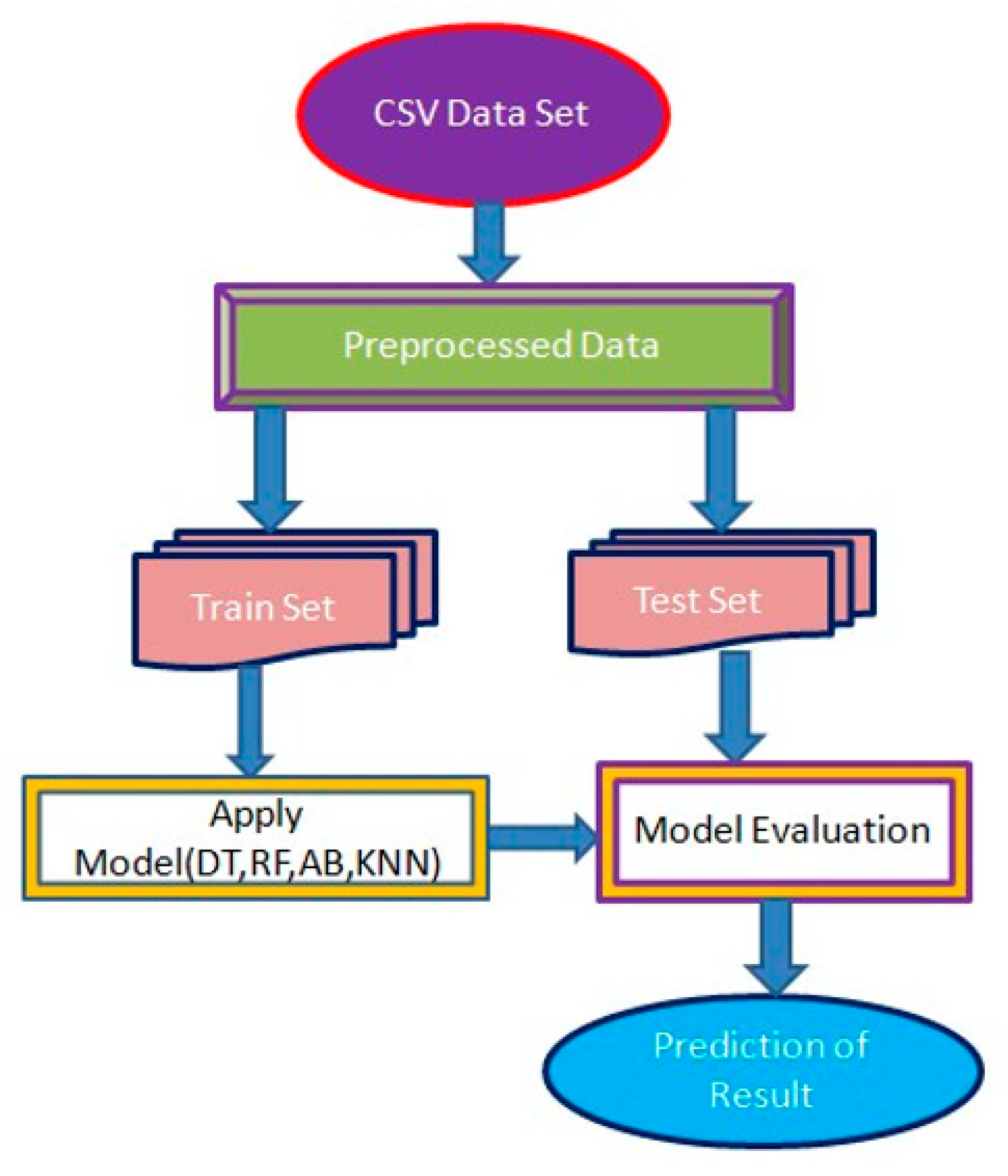
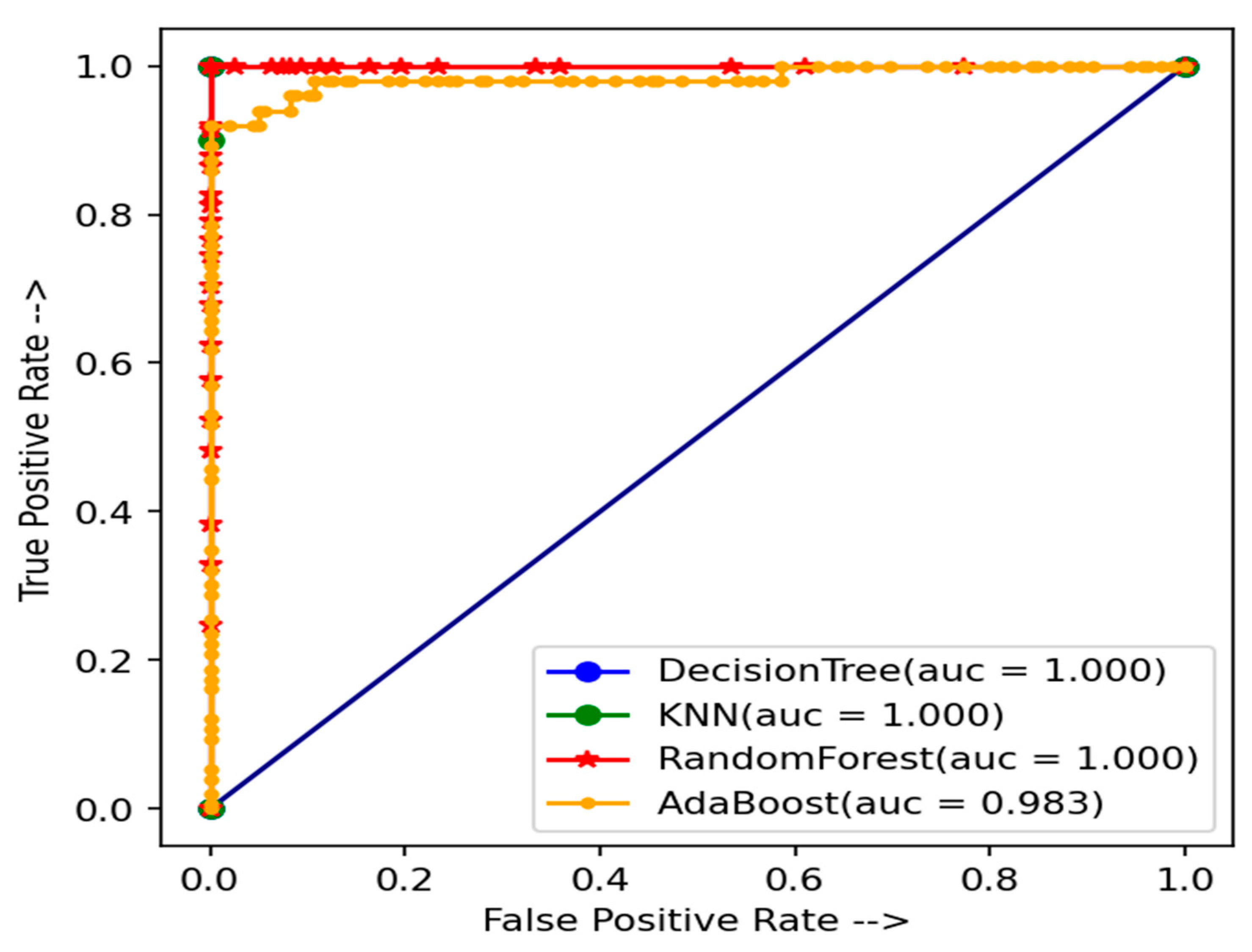
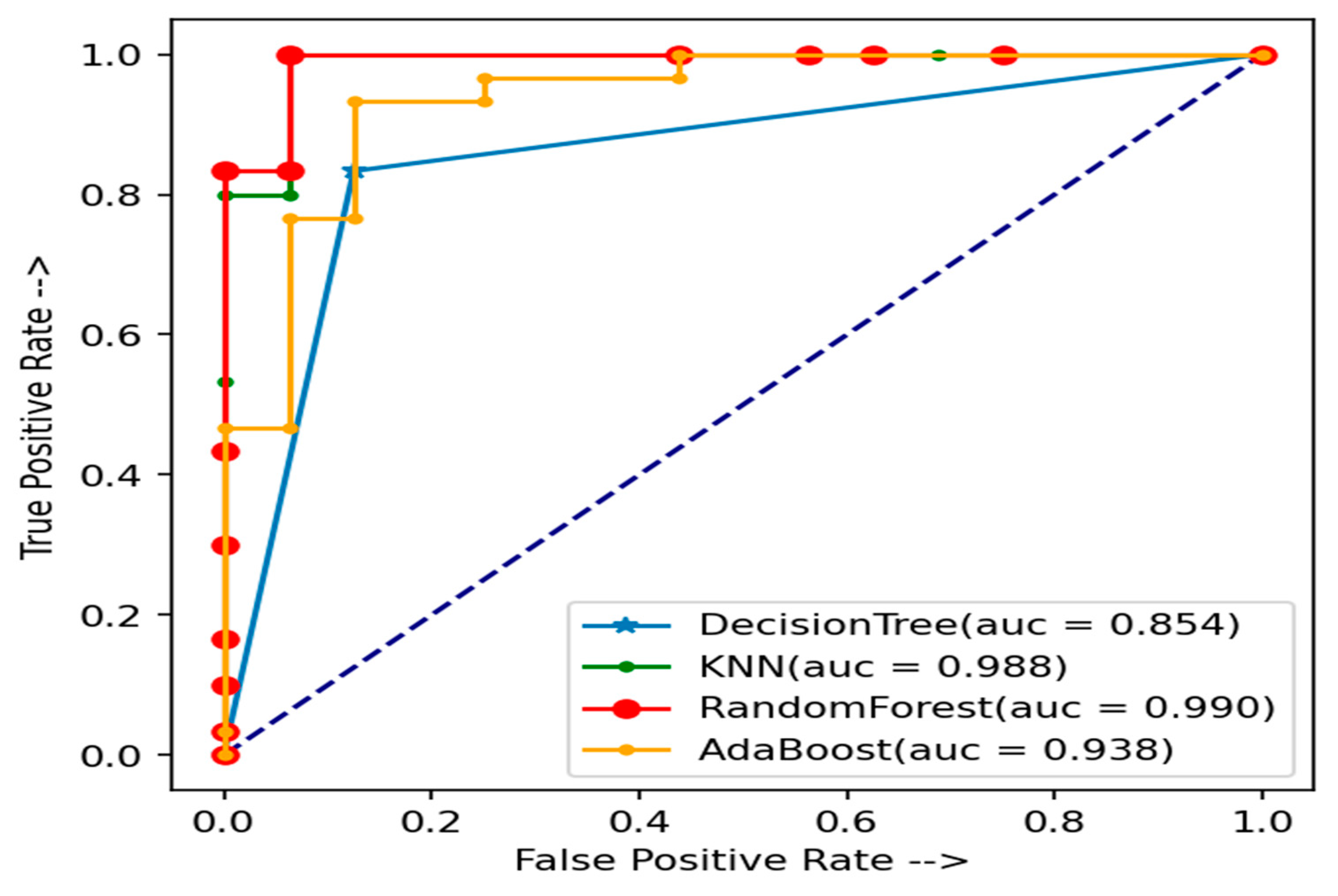
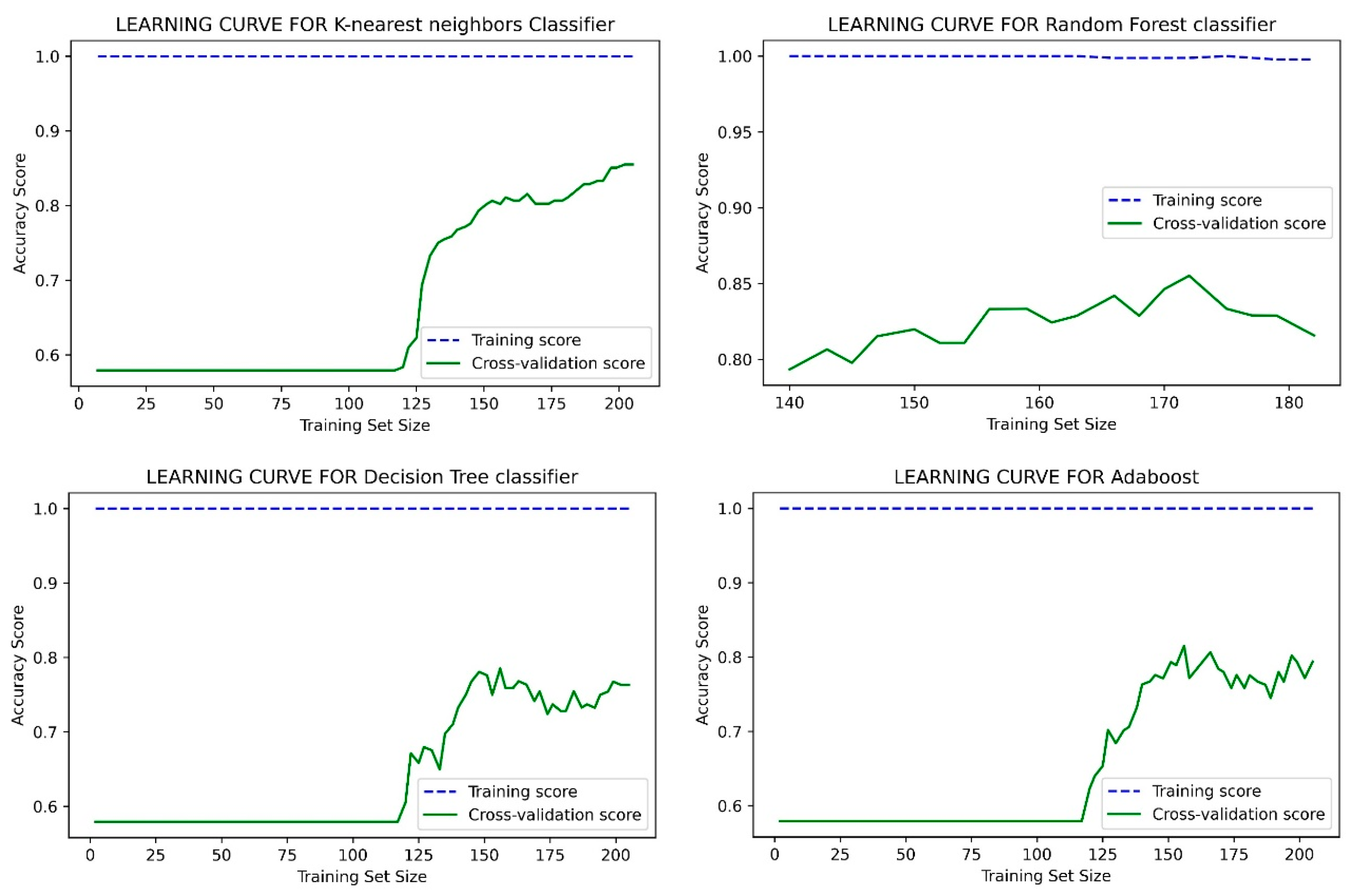
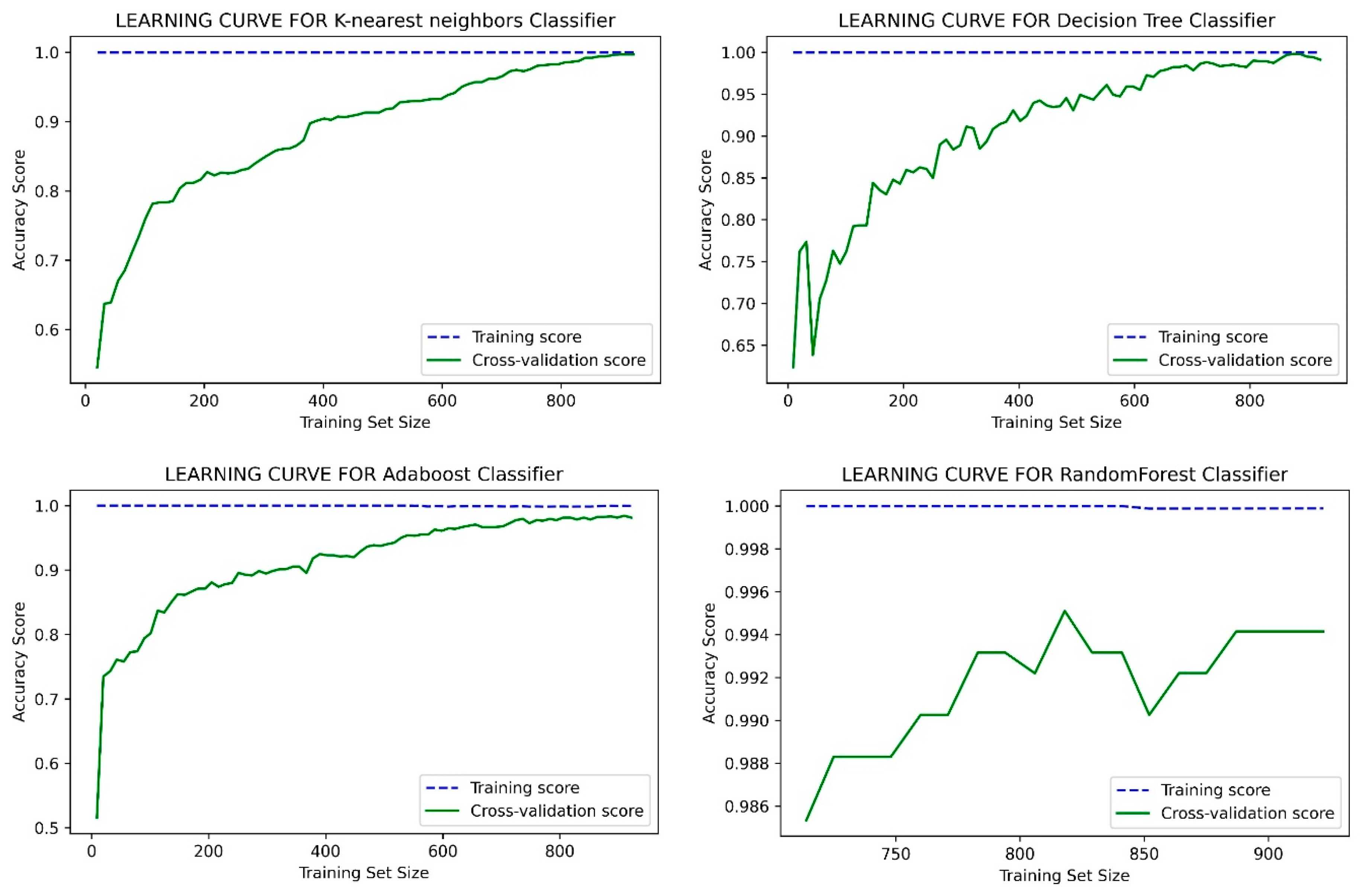
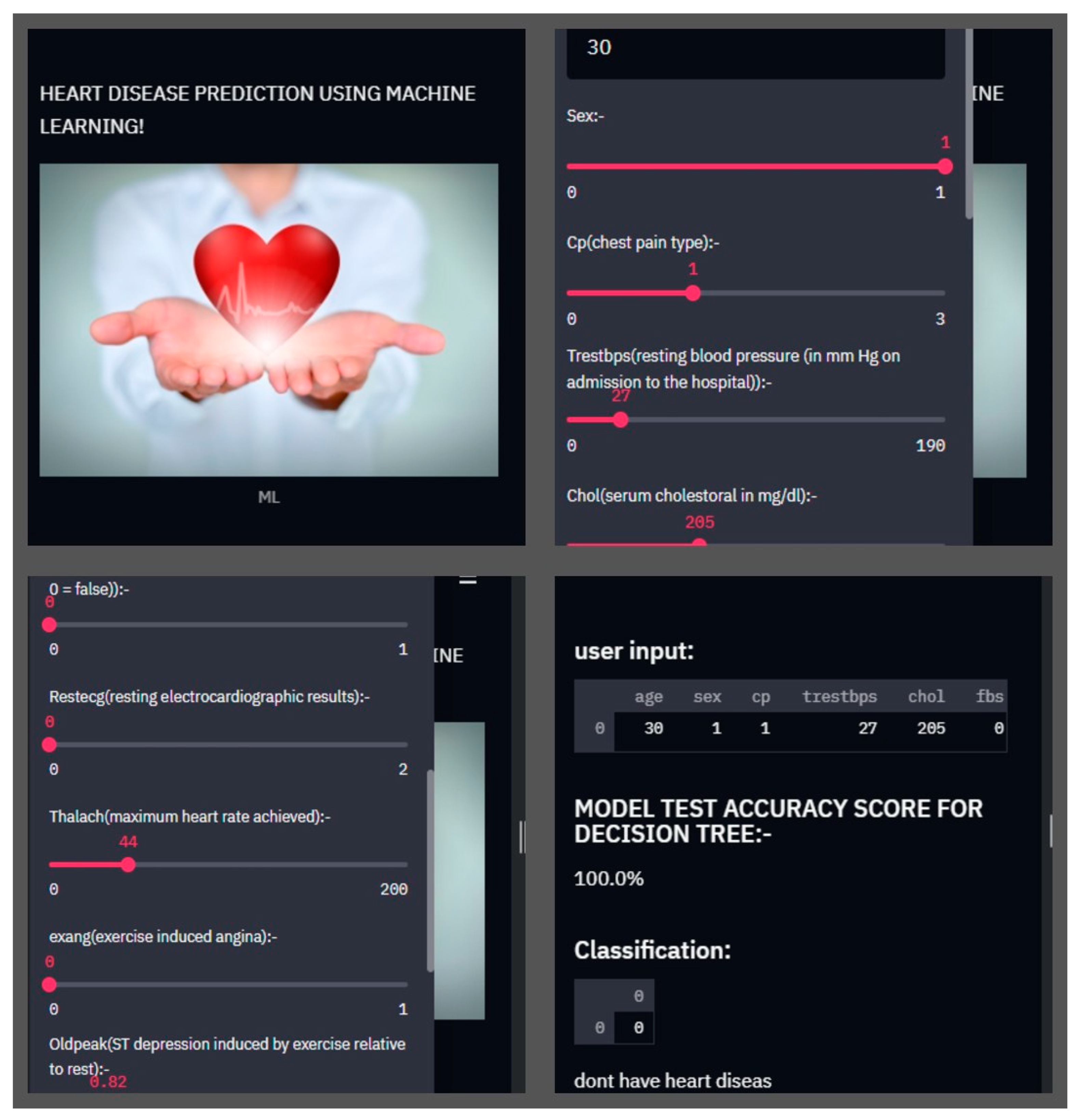
The disease may be an explicit status that negatively affects human health. Cardiopathy is one of the common deadly diseases that is attributed to unhealthy human habits compared to alternative diseases. With the help of machine learning (ML) algorithms, heart disease can be noticed in a short time as well as at a low cost. This study adopted four machine learning models, such as random forest (RF), decision tree (DT), AdaBoost (AB), and K-nearest neighbor (KNN), to detect heart disease. A generalized algorithm was constructed to analyze the strength of the relevant factors that contribute to heart disease prediction. The models were evaluated using the datasets Cleveland, Hungary, Switzerland, and Long Beach (CHSLB), and all were collected from Kaggle. Based on the CHSLB dataset, RF, DT, AB, and KNN models predicted an accuracy of 99.03%, 96.10%, 100%, and 100%, respectively. In the case of a single (Cleveland) dataset, only two models, namely RF and KNN, show good accuracy of 93.437% and 97.83%, respectively. Finally, the study used Streamlit, an internet-based cloud hosting platform, to develop a computer-aided smart system for disease prediction. It is expected that the proposed tool together with the ML algorithm will play a key role in diagnosing heart diseases in a very convenient manner. Above all, the study has made a substantial contribution to the computation of strength scores with significant predictors in the prognosis of heart disease.
Keywords: decision tree; random forest; KNN; AdaBoost; heart disease; prediction; smart system decision tree; random forest; KNN; AdaBoost; heart disease; prediction; smart system