Article

A Dynamic Fuzzy Multi-Criteria Decision-Making Methodology for Hydrocarbon-Bearing Plays Across Full Exploration Stages

1
School of Science, Southwest Petroleum University, Chengdu 610500, China
2
School of Earth Science and Technology, Southwest Petroleum University, Chengdu 610500, China
*
Author to whom correspondence should be addressed.
Mathematics 2026, 14(7), 1160; https://doi.org/10.3390/math14071160
Submission received: 24 February 2026 / Revised: 23 March 2026 / Accepted: 25 March 2026 / Published: 31 March 2026

Abstract

Most of the existing evaluation systems for hydrocarbon-bearing play are using various evaluation indicators and fixed weights, which are not sensitive to the subjective/objective cognition or the exploration stages. We construct a multi-level and multi-type play evaluation criteria system with unified standards, the subjective uncertainty of which is formulated by the fuzziness of the indicators. Then, a full-stage dynamic fuzzy multi-criteria decision-making (MCDM) method is presented for play evaluation, in which a dynamic fuzzy-game model is built to combine the objective Criteria Importance Through Intercriteria Correlation (CRITIC) weights improved by the Theil index and the subjective Analytic Hierarchy Process (AHP) weights. This approach can simulate hesitation and strategic trade-offs in the human mind to balance the subjective and objective information. Thereafter, a stage-aware model is developed for play assessment by using dynamic fuzzy comprehensive evaluation, covering the regional exploration, pre-exploration, and evaluation stages. Using the data from plays at different exploration stages in the Tarim Basin, empirical application shows that the evaluation results are consistent with actual exploration judgment. Sensitivity analysis and comparative experiments verify the rationality of parameter setting and the effectiveness and reliability of the presented method. This study offers a practical MCDM for optimizing plays and guiding exploration decisions, which overcomes the limitations of traditional methods, including the lack of a unified evaluation framework, insufficient utilization and integration of multi-source information, inadequate characterization of phased priorities, and limited representation of fuzziness in evaluation indicators.

1. Introduction

A hydrocarbon-bearing play is a group of traps or reservoirs with similar lithology and geological conditions [1]. High exploration risks and substantial development costs require oil companies to demand greater scientific rigor and accuracy in the evaluation, optimization, and planning of exploration projects. Play evaluation and selection are central to exploration planning and decision-making in oil and gas companies, which improve resource allocation and providing scientifically grounded guidance for exploration strategies [2].
Hydrocarbon-bearing play evaluation is a typical multi-criteria decision-making (MCDM) problem. MCDM assists decision-makers in selecting or ranking alternatives based on qualitative or quantitative criteria assessments [3,4] and is widely used in environmental [5,6], social service [7,8], and management sectors [9]. MCDM methods can be divided into three categories: subjective methods, objective methods, and combined methods. Subjective methods such as AHP [10,11,12] and the Delphi Method [13,14] rely on empirical judgments and often ignore statistical features in data. Objective methods, including Entropy Weight Method (EWM) [15,16] and CRITIC [17,18,19], determine the importance of attributes according to the information content of the data, but depend heavily on the diversity and completeness of the data, resulting in insufficient robustness and poor generalizability. Although the combined method can unite the benefits of subjective and objective weighting methods in information expression, there is strong subjective uncertainty and hesitation in the process of balancing subjective and objective information.
As evaluation problems become more complex and information uncertainty increases, traditional deterministic methods are often inadequate. Based on fuzzy set theory, the fuzzy comprehensive evaluation method can effectively characterize the fuzziness and uncertainty inherent in evaluation information and has therefore been widely applied in many fields. For example, Wang et al. [20] developed a gray-fuzzy comprehensive evaluation model to assess green competitiveness, Hou et al. [21] proposed a hierarchical weight fusion-based FCE method to evaluate cell inconsistency in lithium-ion battery packs, and Zhao et al. [22] constructed a multi-level fuzzy comprehensive evaluation framework to assess regional geothermal resource carrying capacity.
Within play assessment, the evaluation is generally divided into four major components: geological evaluation [23,24,25], resource evaluation [26,27], economic evaluation [28], and risk evaluation [29]. Meanwhile, the key points change along with the progression of exploration stages, and the process exhibits complex uncertainties. The evaluation methods can be categorized into two primary classifications: qualitative assessment and quantitative evaluation [30]. Qualitative evaluation primarily builds on the geological context and integrates experimental data from geology and reservoir petrophysics to qualitatively characterize the conditions for hydrocarbon accumulation [31,32,33,34,35]. Quantitative evaluation assigns weights to the assessment indicators and constructs an evaluation model [36,37]. However, the existing evaluation methodologies still exhibit the following limitations:
  • Evaluation standards are not unified. Typically, differentiated indicator systems are constructed for different exploration stages or play types to reflect actual conditions, but these approaches increase evaluation complexity and limit the comparability of plays across types and exploration stages. It is necessary to construct a unified and comprehensive evaluation index system capable of addressing multiple hierarchical levels and various play types.
  • Qualitative evaluation relies excessively on expert judgment and is susceptible to individual experiential bias. Quantitative approaches usually employ a single weighting method, with weights mostly assigned by subjective weighting methods. Although some studies have integrated subjective and objective information, the fusion coefficients are often determined subjectively, making it difficult to ensure the rationality of the resulting weights. As a result, both qualitative and quantitative evaluations fail to fully utilize the subjective and objective information, and the judgment is sometimes partial.
  • The play to be evaluated can be divided into three stages: regional exploration, pre-exploration and evaluation, which have different evaluation emphases. However, in the existing ‘Play Evaluation Technical Specification’ [38], the evaluation system employs the same indicator weights for all stages, which fails to reflect the variations and priorities of evaluation across different exploration stages.
Definitions of main symbols
SymbolMeaning
nnumber of samples to be evaluated
mnumber of evaluation criteria
X original data matrix
x i j original value of the i-th sample under the j-th criterion
isample index, i = 1 , 2 , , n
jexploration stage index, j = 1 , 2 , 3 corresponds to the regional exploration stage, pre-exploration stage, and evaluation stage respectively
x i j * normalized value of the i-th sample under the j-th criterion
x j set of values of the j-th criterion for all samples
x ¯ j * average normalized value of the j-th criterion
kIndicator index, i = 1 , 2 , , m
T k contrast intensity of the j-th criterion, measured by the Theil index
R k conflict degree of the k-th criterion with the other criteria
r h k correlation coefficient between the h-th and k-th criteria
C k information content of the k-th criterion
ω k o objective weight of the k-th criterion
α j fusion coefficient assigned to subjective weights at stage j
β j fusion coefficient assigned to objective weights at stage j
w j k i weight of the k-th criterion at stage j obtained by the i-th weighting method
w j k s subjective weight of the k-th criterion at stage j, obtained by AHP
w j k o objective weight of the k-th criterion at stage j, obtained by TI-CRITIC
w j k combination weight
cclass-center parameter in the Gaussian membership function
σ dispersion parameter in the Gaussian membership function
μ i k h j membership degree of the i-th sample to the h-th evaluation grade under the k-th criterion at stage j
f i k j membership degree vector of the i-th sample under the k-th criterion at stage j
F i j fuzzy evaluation matrix of the i-th sample at stage j
Z i j comprehensive membership degree vector of the i-th sample at stage j
z i g j comprehensive membership degrees of the i-th evaluation sample with respect to all evaluation grades at stage j, g = 1 , 2 , , 5
w j row vector of relative composite weights of all criteria at stage j
sthe corresponding score vector of the evaluation set, s = 0.1 , 0.3 , 0.5 , 0.7 , 0.9
Based on the above issues, we include some contributions of this article:
  • A multi-level and multi-type comprehensive play evaluation indicator system is established, which provides a unified framework for comparing and evaluating plays across different stages and types, thereby reducing evaluation complexity.
  • A dynamic fuzzy-game combination weighting method is proposed based on exploration stage evolution. It achieves an optimal combination of subjective and objective information through game theory and reduces uncertainty during the fusion process.
  • A stage-aware comprehensive evaluation model is developed for hydrocarbon-bearing plays, which characterizes the fuzziness of indicators and the nonlinear boundary features.
Different from methods such as TOPSIS [39,40] and VIKOR [41], the MCDM method proposed in this paper considers the fuzzy fusion of multi-source weighting information, as well as the stage-specific evaluation priorities and preference differences. The rest of this paper is organized as follows. Section 2 summarizes the existing evaluation index system and constructs a unified evaluation index system suitable for multi-level and multi-type plays. Section 3 proposes a stage-aware play fuzzy comprehensive evaluation model based on the dynamic fuzzy-game combination weighting method and introduces its evaluation process steps in detail. Section 4 carries out an example study on 37 plays in the Tarim Basin, and the actual exploration data verify the scientificity and accuracy of the evaluation model. Section 5 verifies the effectiveness of TI-CRITIC and the evaluation model through parameter sensitivity and a comparative analysis of evaluation results. Section 6 summarizes the work of this paper and prospects the future work.

2. Play Evaluation Criteria System

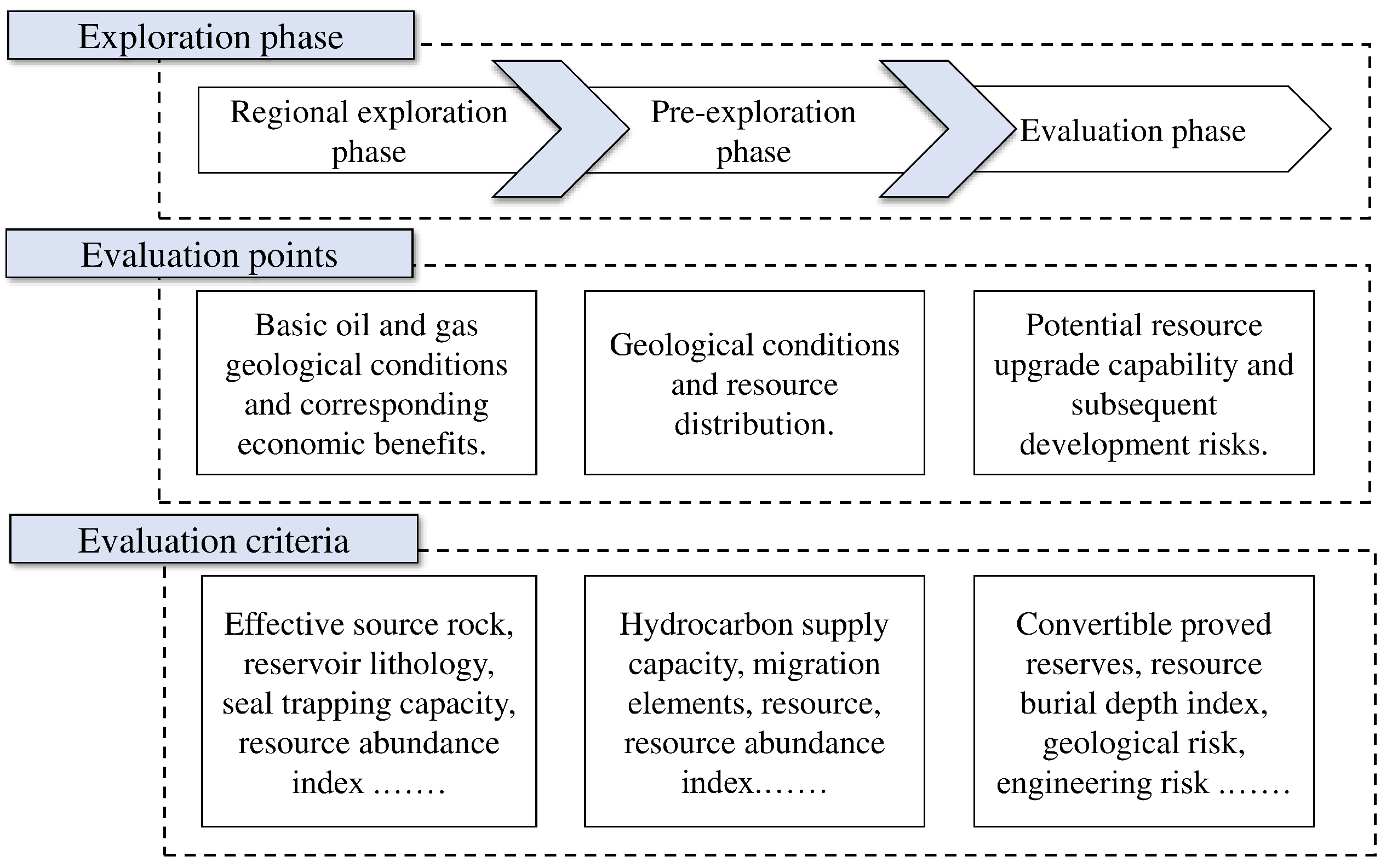
Hydrocarbon-bearing play evaluation primarily encompasses four aspects: geological conditions, resource potential, economic feasibility and risk assessment. Due to differing cognitive tasks across exploration stages, the evaluative focus varies by stage (Figure 1), making it challenging to comprehensively analyze the transition and evolution of evaluation emphasis across stages within a unified framework. We develop a candidate indicator set based on the ‘Play Evaluation Technical Specification’ [38] and extensive baseline studies. Subsequently, a panel of five domain experts, including geological researchers, senior engineers in exploration planning, and reserve evaluation engineers, is invited to screen the key indicators for play evaluation by integrating their professional opinions. Based on this process, a multi-level and multi-type comprehensive play evaluation criteria system is constructed in this section.

2.1. Multi-Level and Multi-Type Play Evaluation Criteria System

In the aforementioned four evaluation dimensions, geological evaluation emphasizes the analysis of structural features and reservoir properties, which is a prerequisite for understanding geological conditions and for resource assessment. Resource assessment analyzes key parameters such as resource scale, providing the quantitative basis for resource forecasting and play potential verification [42]. Economic analysis focuses on cost and profitability metrics, constituting pivotal inputs for exploration investment decisions. Risk assessment quantifies geological and engineering risks and other uncertainties, enabling risk mitigation strategies. Table 1 summarizes the key parameters of play evaluation, which constitute the candidate indicator set for play assessment.
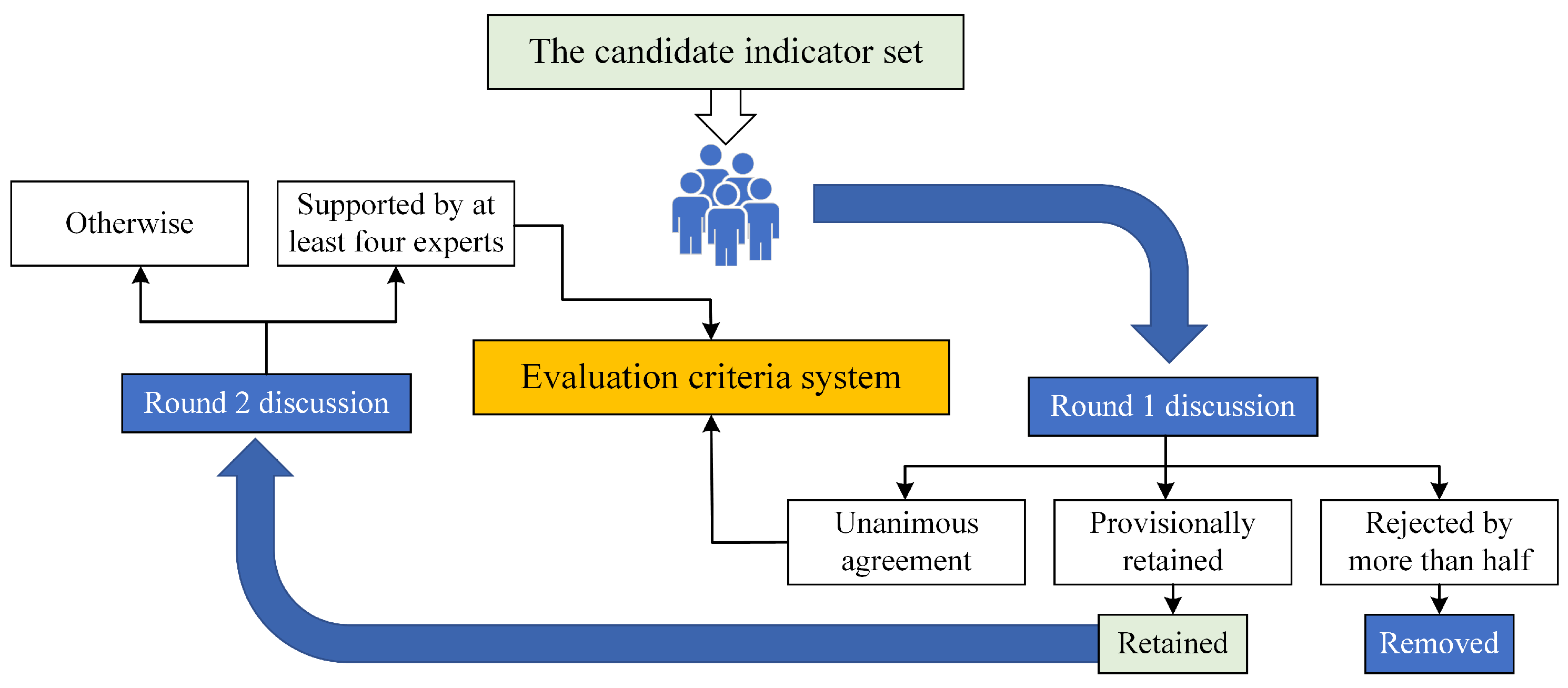
In Table 1, one can see that the four assessment dimensions (geology, resource, economy, and risk) are not mutually independent but correlated. This multidimensional index system comprehensively captures the play characteristics geological conditions to exploration risk, establishing an integrated play evaluation framework. Therefore, based on Table 1, we conduct expert panel discussions to screen the candidate indicators according to four principles, namely scientific relevance, stage adaptability, data availability, and non-redundancy, through a two-round centralized discussion process. In the first round, indicators unanimously supported by all experts are directly retained, those rejected by more than half of the experts are removed, and those supported by more than half but lacking sufficient consensus are provisionally retained for the second round. In the second round, these provisionally retained indicators are re-evaluated collectively, and only those supported by at least four experts are ultimately retained. The indicator screening process is shown in Figure 2. Ultimately, four primary indicators and twelve secondary indicators are retained, and a unified multi-level and multi-type play evaluation criteria system covering ‘Geology-Resource-Economy-Risk’ is established, as detailed in Table 2.

2.2. Rationality of the Play Evaluation Criteria System

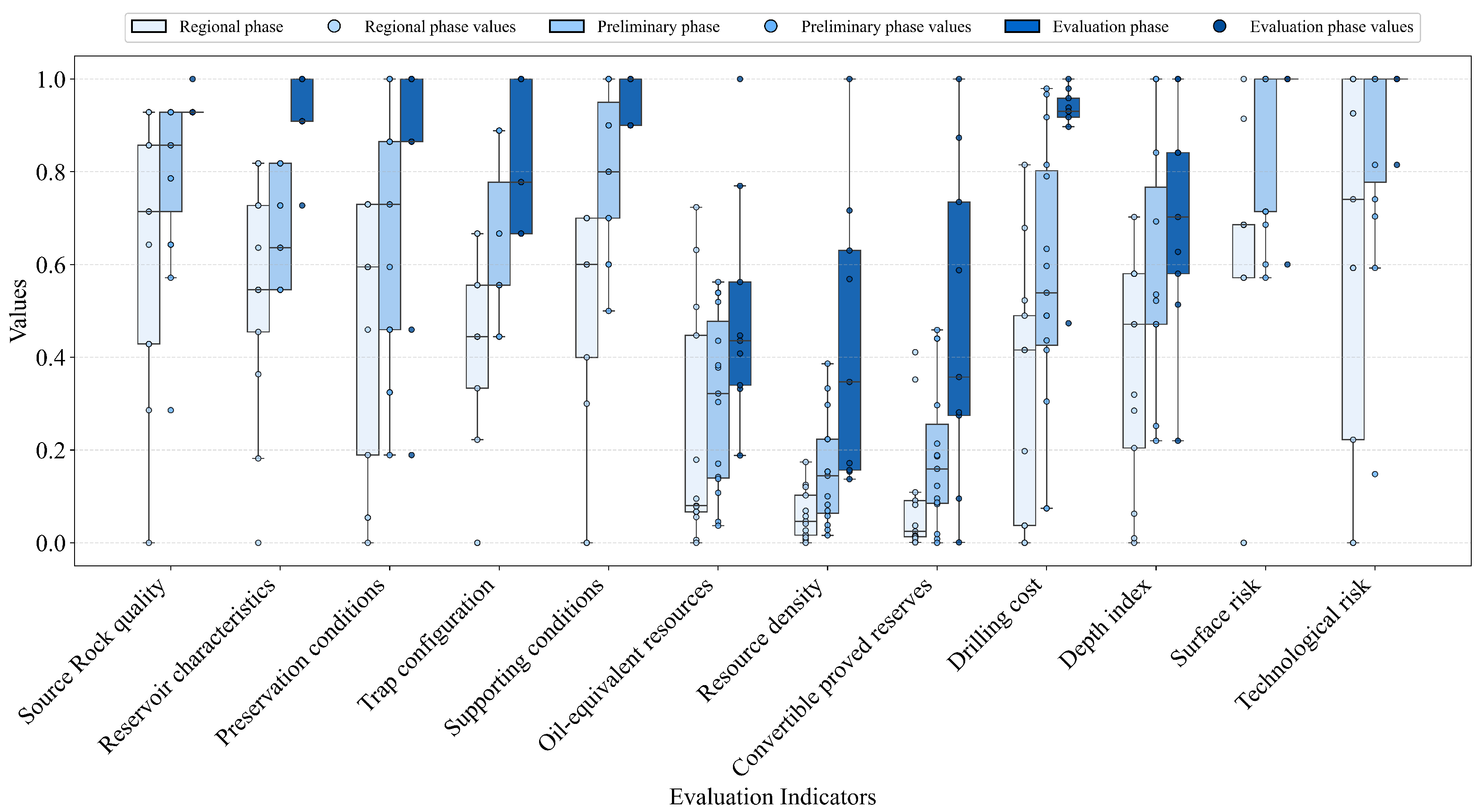
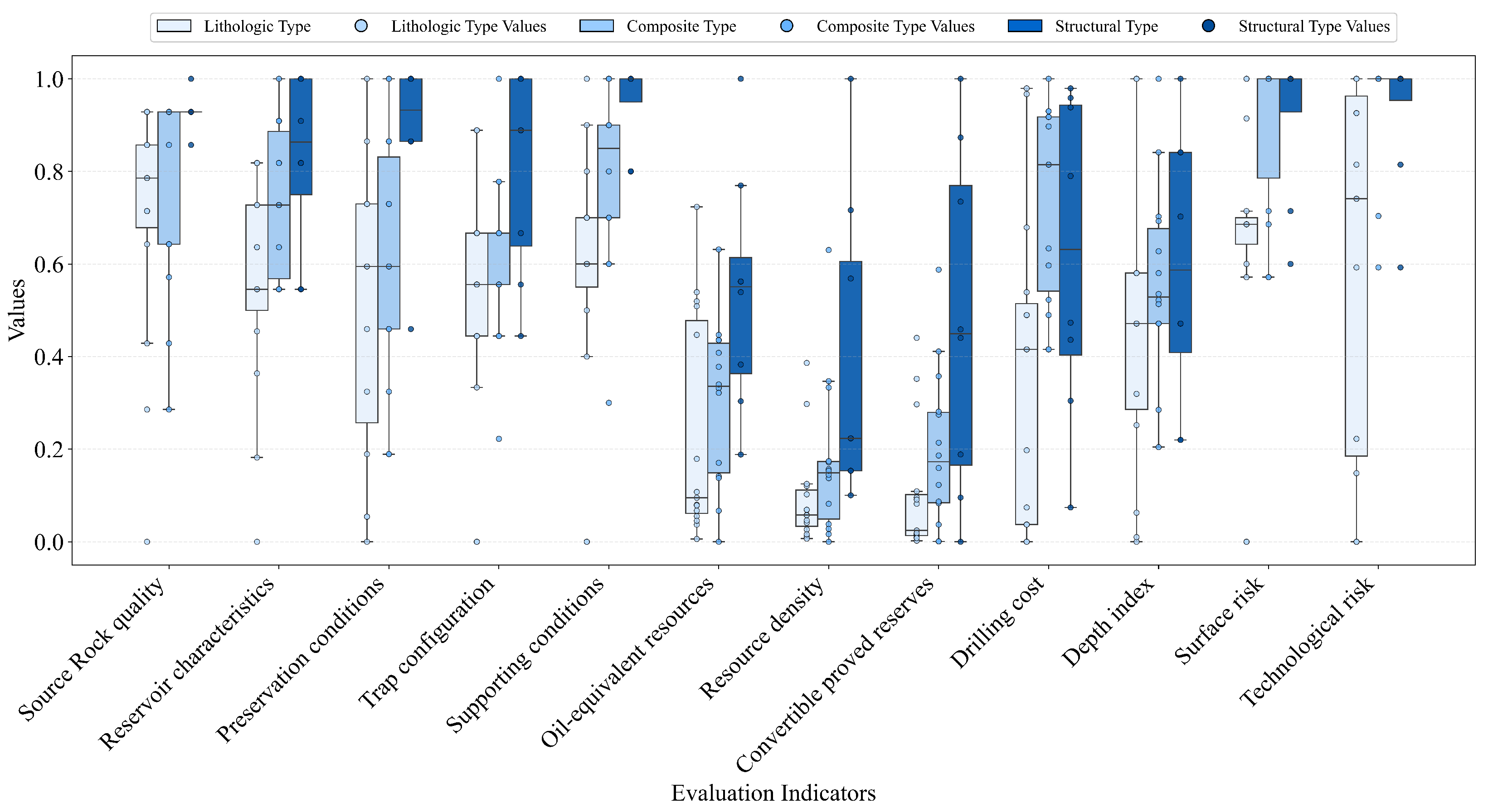
To validate the applicability and representativeness of the evaluation criteria system across multiple levels and types. We select 37 plays in the Tarim Basin and distinguish secondary criteria data of different exploration stages and different types of plays. Then, we use boxplot visualization tools to analyze and compare criteria values so as to intuitively show the central tendency and dispersion of data, revealing the distribution of criteria values under changes in exploration stages and differences in play types.
To ensure comparability across criteria, all indicators are normalized to the unit interval [ 0 , 1 ] using min–max scaling. Box plots in Figure 3 and Figure 4 present the distributions of evaluation indicator values across exploration stages and play types, respectively.
As shown in Figure 3, key indicators such as preservation conditions, trap configuration, and reservoir equivalent show significant differences between regional exploration, pre-exploration, and evaluation stages as the exploration advances. Figure 4 reveals that criteria, including infrastructure readiness, resource density, and convertible proved reserves, have notable differentiation across play types. The comparison shows that the proposed evaluation indicator system is effective and representative. It can characterize the dynamic evolution of exploration stages and the differences in accumulation conditions of play types. However, it should be noted that the current indicator system is largely composed of generic indicators. Although it supports unified evaluation across different exploration stages and play types, it still has limitations in capturing stage-specific dominant factors and the differentiated characteristics of specific play types. In addition, the current visualization analysis is mainly based on the Tarim Basin case, and its applicability to other basins is still constrained by differences in geological background and data conditions; therefore, further targeted verification and adjustment are required.

3. Methodology

The current specification ‘Play Evaluation Technical Specification’ [38] applies the same fixed weights to all exploration stages, neglecting the diversity of information and its stage variability. In actual evaluation:
  • As exploration progresses, the uncertainty of objective information declines and its richness increases; decision preferences should move from subjective to objective weighting;
  • The fusion of subjective and objective weights is a game process between experiential judgment and data preference;
  • Determining the fusion ratio for these weights often relies on subjective judgment, which introduces subjective uncertainty.
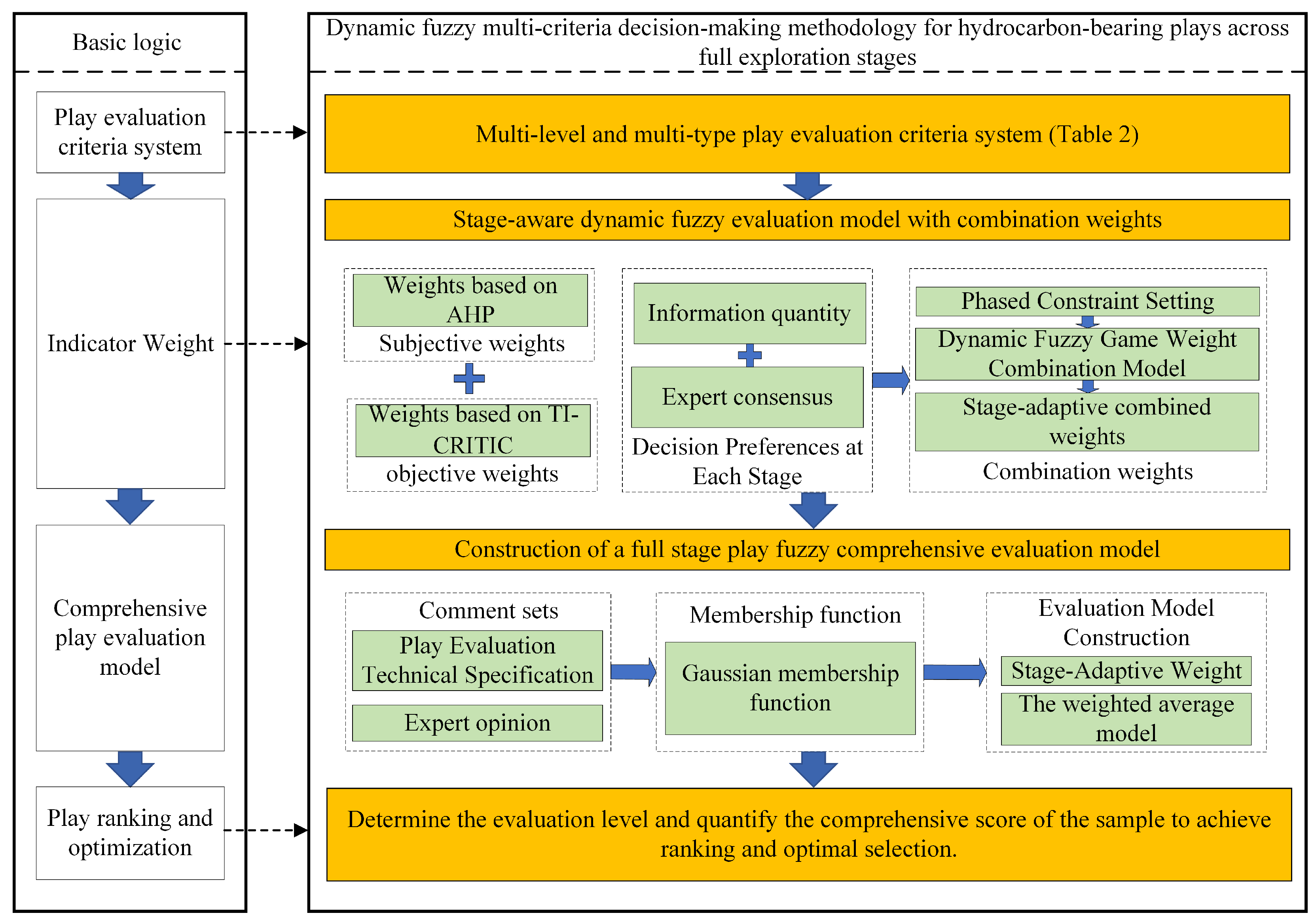
Therefore, we adopt fuzzy and game theories to develop a dynamic fuzzy-game model that reduces subjective uncertainty and allows dynamic adjustment of weights for different stages. We also establish a stage-aware fuzzy comprehensive evaluation model to conduct play evaluation and ranking. The evaluation process is shown in Figure 5.

3.1. Individual Weighting Method for Subjective and Objective Weights

AHP [54] is a subjective weighting method that decomposes complex decision-making problems into multiple hierarchical levels, including the goal, criteria, and alternatives, and can effectively represent subjective experience and expert judgment. Based on AHP, we construct judgment matrices on Saaty’s 1–9 scale and verify their consistency to determine the subjective weights. Table 3 presents Saaty’s 1–9 scaling method, and the detailed AHP procedure can be found in [55].
The CRITIC method is improved in this section to obtain more reasonable objective weights. The CRITIC method [56] determines weights based on both contrast intensity and conflict degree among evaluation criteria [57]. In this method, criterion variability is usually measured by standard deviation. However, since the standard deviation calculation depends on the mean of the data, it is sensitive to outliers. As shown in Figure 3 and Figure 4, the outliers in our data would lead to overestimated variability and impaired indicator weight accuracy. In the field of play evaluation and ranking, outliers in indicator data are often unavoidable due to the complexity, uncertainty, and uncontrollability of geological conditions. We use standard deviation to measure variability, which can easily lead to bias in weight allocation.
Therefore, the Theil index is employed as a substitute for standard deviation to measure criteria variability. Theil index, grounded in information entropy theory, serves as a key metric for assessing income disparity [58,59]. Unlike standard deviation, the Theil index focuses on relative differences, which can capture inequality and distributional asymmetry in the data, and it is less sensitive to outliers. Then we obtain a Theil Index-Criteria Importance Through Intercriteria Correlation (TI-CRITIC) method. The procedural steps of the TI-CRITIC method are as follows:
Step 1 Data preparation and normalization.
There are n samples to be evaluated and m evaluation criteria; the original data matrix X is constructed according to Equation (1).
X = x 11 x 12 x 1 m x 21 x 22 x 2 m x n 1 x n 2 x n m .
Benefit indicators are normalized by Equation (2) and cost indicators by Equation (3), which removes unit discrepancies and yields the evaluation matrix.
For benefit criteria:
x i j * = x i j min x j max x j min x j .
For cost criteria:
x i j * = max x j x i j max x j min x j .
Step 2 Calculate the indicator variability using the Theil index.
The Theil index is used to measure indicator variability. It characterizes the degree of deviation of each indicator from a uniform state according to its value distribution among different evaluation objects, thereby reflecting the discrepancy and variability of the indicator across samples. A larger Theil index indicates a more uneven distribution and more significant differences among samples, which can provide richer discriminatory information and should therefore be assigned a greater weight; conversely, a lower weight is assigned. The computational formula is presented as Equation (4).
T k = 1 n i = 1 n x i k * x ¯ k * log x i k * x ¯ k * ,
Step 3 Measure the conflict between criteria.
The conflict degree between criteria is quantified by computing their correlation coefficients, as shown in Equation (5).
R k = h = 1 m 1 r h k , k = 1 , 2 , , m ,
R k is the quantified conflict result of the k -th criterion with others; r hk indicates the correlation coefficient between the h -th and k -th indicators, computed as shown in Equation (6).
r h k = i = 1 n ( x ih * x ¯ h * ) ( x ik * x ¯ k * ) i = 1 n ( x ih * x ¯ h * ) 2 i = 1 n ( x ik * x ¯ k * ) 2 ,
Step 4 Compute the weight for each criterion.
The information content for each indicator is calculated as in Equation (7). A greater information content indicates more useful information and thus warrants a higher weight. Consequently, the objective weight of the k -th criterion ω k o is calculated according to Equation (8).
C k = T k × R k .
ω k o = C k k = 1 m C k .

3.2. Stage-Aware Dynamic Fuzzy Evaluation Model with Combination Weights

During the integration of multiple information sources, uncertainty mainly arises from decision hesitation and the balancing of information when determining the combination coefficients. To address the issue of subjective uncertainty and to improve the reliability of the fusion parameters, fuzzy and game theory are introduced. The concepts of fuzzy sets and hesitant fuzzy sets, along with their operational rules, are stated as follows.
Definition 1
([60]). Given a reference set X , a fuzzy set (FS) A ˜ on X is in terms of the function μ : X [ 0 , 1 ] . x X , μ ( x ) : signifies the membership grade of x in A ˜ .
Definition 2
([61]). Let X be a non-empty finite set, a hesitant fuzzy set F ˜ on X is then defined as follows:
F ˜ = x , h F ˜ x x X ,
where h F ˜ x is a set of several different values in the interval [0, 1], representing all possible membership degrees of element x X belonging to the set F ˜ . We refer to h F ˜ x as a hesitant fuzzy element (HFE).
Remark 1.
Evidently, HFS is an extension of FS. When the hesitant fuzzy element h ( x ) contains only a single membership value, the hesitant fuzzy set reduces to a classic fuzzy set.
Definition 3
([62]). Given three hesitant fuzzy elements h, h 1 , h 2 and a constant λ, the operational rules of HFEs are as follows:
(1) 
λ h = γ h 1 1 γ λ , λ > 0 ;
(2) 
h λ = γ h γ λ , λ > 0 ;
(3) 
h 1 h 2 = γ 1 h 1 , γ 2 h 2 γ 1 + γ 2 γ 1 γ 2 ;
(4) 
h 1 h 2 = γ 1 h 1 , γ 2 h 2 γ 1 γ 2 .
Remark 2.
When a hesitant fuzzy element has a single membership degree, the same rules apply.
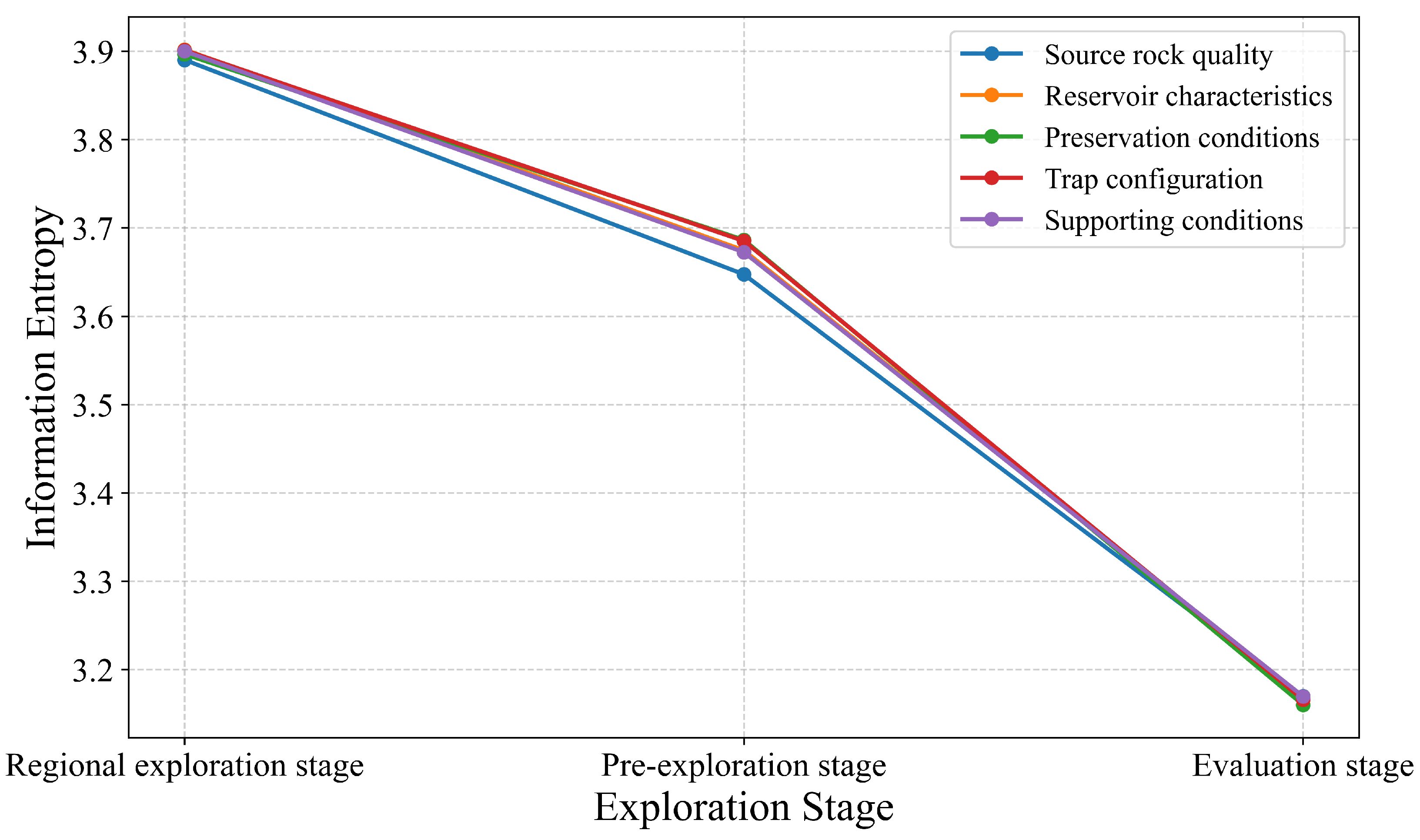
The stage of exploration progress leads to different information quantities, which makes it unreasonable to use a fixed fusion coefficient for subjective and objective weight fusion. We use information entropy to quantify the uncertainty of the evaluation indicators and analyze the dynamic evolution of indicator information uncertainty across different exploration stages. As an example, Figure 6 shows the changes in information entropy along with the exploration stage for the secondary indicators under the primary indicator ‘Geology’ (source rock conditions, reservoir conditions, preservation conditions, trap conditions, and supporting conditions).
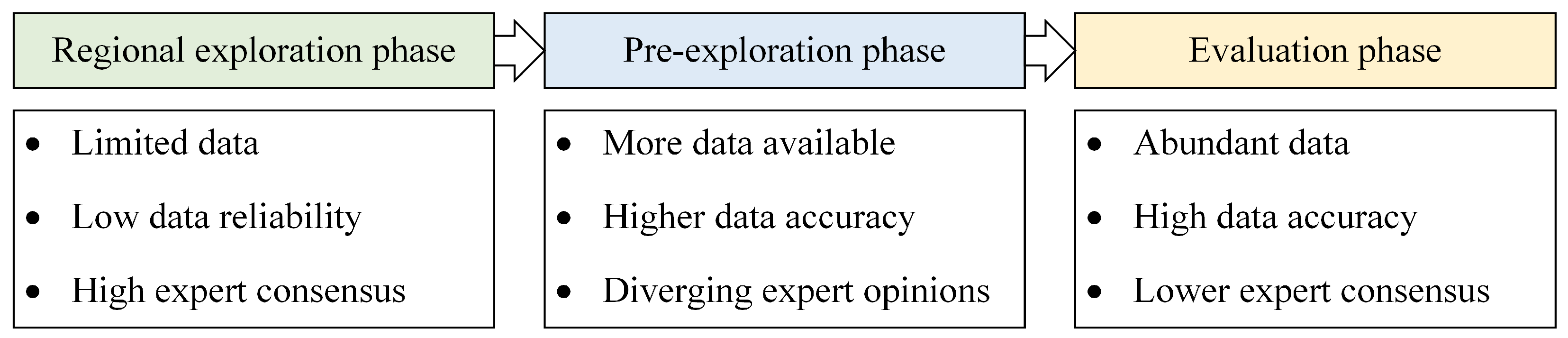
In Figure 6, the information entropy of the secondary geological indicators decreases as the exploration stages progress, objectively reflecting the reduction in information uncertainty and the increase in reliability. The characteristics of the specific stages are shown in Figure 7. The dynamic process of information accumulation during exploration influences the judgment of experts, leading to stage-dependent differences between data quality and expert consensus. Hence, at the early exploration stage (regional exploration, with scarce information), there is a greater tendency to rely on expert-based subjective judgment, while at the late stage (evaluation, with abundant information), the proportion of objective weights should increase.
In summary, in order to take into account the complementary nature of subjective and objective information and the dynamic changes in information caused by the exploration stages. We treat the subjective and objective fusion coefficients at each exploration stage as two HFEs for the indicators, and the scalar multiplication and addition algorithms of hesitant fuzzy elements are introduced to integrate the subjective and objective weights. The preliminary fused weight information of the k-th criterion at stage j is expressed as Equation (9):
w j k = α j ω j k s β j ω j k o = α j ω j k s + β j ω j k o α j ω j k s β j ω j k o
where, ω j k s denotes the subjective weight of the k -th indicator in the j -th stage obtained using the AHP; ω j k s denotes the objective weight of the k -th indicator in the j -th stage obtained by the TI-CRITIC method. here, j = 1 , 2 , 3 corresponds to the regional exploration stage, pre-exploration stage, and evaluation stage respectively; w j k represents the fuzzy fusion information of subjective and objective weights for the k -th indicator in the j -th stage; α j and β j are stage-adaptive adjustment parameters, representing the proportion of subjective and objective weights in different exploration stages. Through the above fusion process, both expert judgment and the objective information reflected by the sample data can be simultaneously taken into account in the evaluation process. To ensure comparability among criteria, the fused weight information is further normalized as Equation (10):
w j k = w j k k = 1 m w j k
On this basis, combining game theory, we form an adaptive dynamic game fusion model. The model takes the minimization of the overall deviation between the combined weights and the original subjective and objective weights as its optimization objective, while parameter constraints are imposed according to the data characteristics of different exploration stages. The optimization model is shown in Equation (11):
consider α j Minimize f ( α j ) = w j k ω j k i 2 , i = s , o ; j = 1 , 2 , 3 subject to α j + β j = 1 α j [ 0 , 1 ] α 1 α 2 α 3
Here, the parameter α j is used to characterize the contribution intensity of the subjective weight at different exploration stages in the combined weighting process. A larger α j indicates that the model tends to rely more on expert experience and decision preferences in the evaluation, whereas a smaller α j suggests that the model places greater emphasis on the objective decision information reflected by data variability and indicator conflict. By solving Equation (11), the adaptive fusion of subjective and objective weight information across different exploration stages can be achieved. Considering that this model is essentially a constrained nonlinear optimization problem with low-dimensional decision variables, the Sequential Quadratic Programming (SQP) algorithm is employed in this study to determine the optimal fusion coefficients and the corresponding combined weights at each exploration stage.
Since evaluation indicators in exploration play assessment exhibit fuzziness and uncertainty, this study incorporates fuzzy theory [60,63], uses membership functions to quantify indicator fuzziness, and constructs a stage-aware dynamic fuzzy evaluation model. The detailed procedure [64] is outlined below:
Step 1 Define the evaluation plays and criteria.
Assume the set of projects under evaluation is U = u 1 , u 2 , , u n comprising n objects to be assessed. The evaluation criteria system is specified in Table 2.
Step 2 Build the evaluation set.
According to their overall performance, plays at various exploration stages are categorized into five classes. Value ranges are designated for each rating level, and the median value of each range serves as the corresponding score. Refer to Table 4 for specifics.
Step 3 Determine the criteria weights.
Based on the methodologies described in Section 3.1, establish the objective and subjective weights for each indicator. Use Equation (11) to determine the combined weight of the secondary indicators. Ultimately, normalize all hierarchical weights to the secondary criteria, satisfying i = 1 m w i j = 1 . Here, w i j represents the relative composite weight of the i -th indicator in the j -th stage, where j = 1 , 2 , 3 corresponds to the regional exploration stage, pre-exploration stage, and evaluation stage respectively.
Step 4 Define the membership functions and build the fuzzy evaluation matrix.
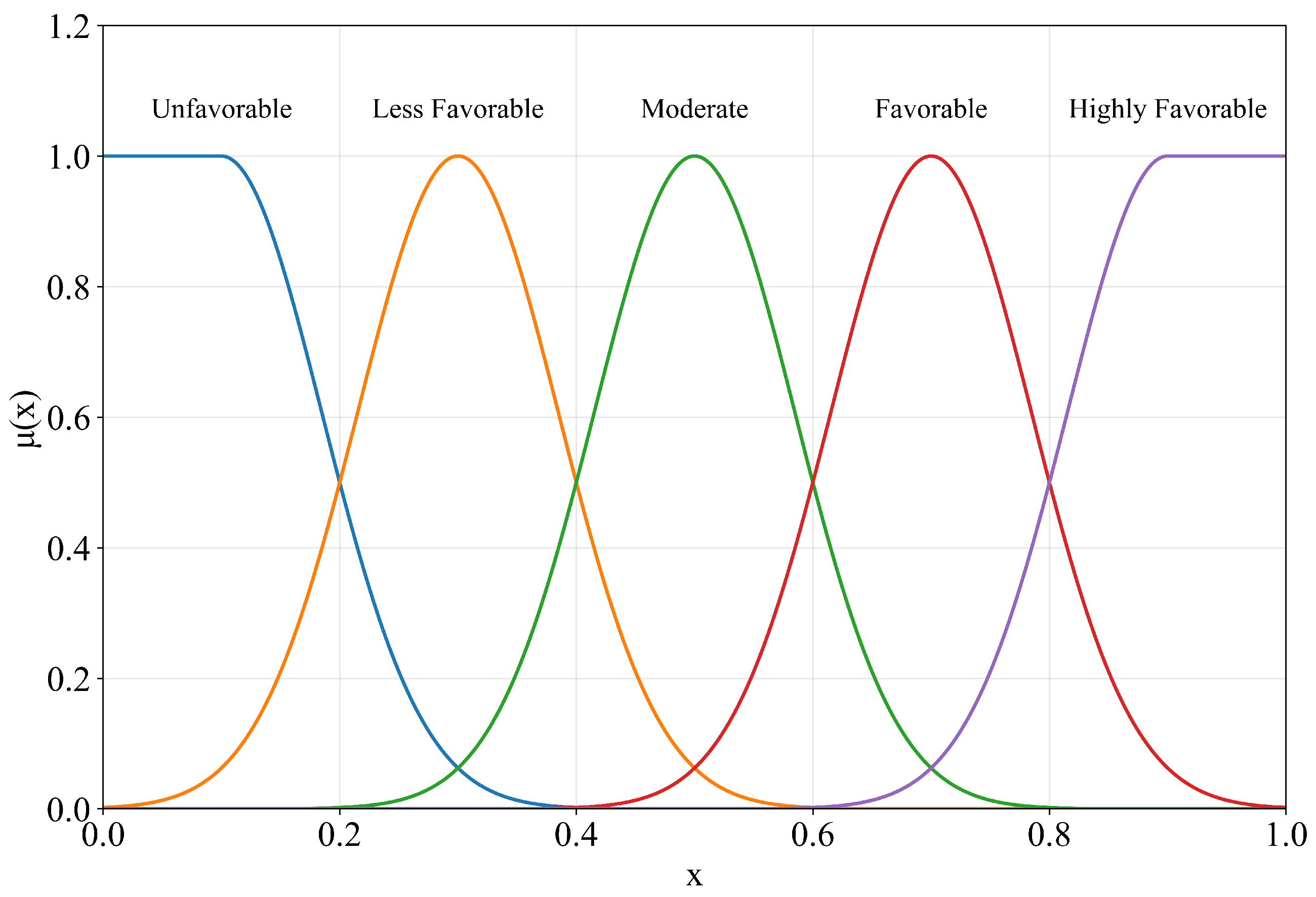
In the play evaluation criteria system, multiple indicators show fuzzy attributes with nonlinear transition features between different classes. Basic triangular and trapezoidal membership functions cannot adequately characterize the complex membership relations of these criteria across classes. Therefore, the Gaussian membership function [65] is selected to characterize the nonlinear features during grade transitions, with their general expression shown in Equation (12).
μ x = e x c 2 2 σ 2 ,
μ x indicates the membership grade for parameter x ; c is the central value determining the position where the membership degree reaches its maximum value of 1; σ denotes the standard deviation.
Define each grade center c i with its respective class scores (Table 3). Implement boundary constraints: when x 0.1 or x 0.9 , force its membership degree to be 1. Owing to the fuzzy transition characteristic between adjacent evaluation grades, and based on expert empirical judgment, the membership degree values of both evaluation grades are set to 0.5 at the boundary division points of adjacent grades. This ensures reasonable overlap, smooth transitions, and discriminative capability of the fuzzy set in boundary regions. Based on this condition, we solve for the standard deviation σ in the Gaussian membership function and obtain σ = 0.0849 . The specific forms of the membership functions for each criterion across different classes are illustrated in Figure 8.
Using Equations (2) and (3) to normalize the indicators and convert all evaluation criteria to benefit indicators. For the i -th object in stage j , the membership degree of its k -th criterion is calculated using Gaussian membership functions. Sum normalization is then utilized to ensure that the sum of all membership degrees equals 1, generating a membership degree vector f i k j = μ i k 1 j , μ i k 2 j , μ i k 3 j , μ i k 4 j , μ i k 5 j . Repeating this procedure for all m evaluation criteria of the i -th evaluation play in stage j finally yields the fuzzy evaluation matrix as shown in Equation (13).
F i j = μ i 11 j μ i 12 j μ i 13 j μ i 14 j μ i 15 j μ i 21 j μ i 22 j μ i 23 j μ i 24 j μ i 25 j μ i m 1 j μ i m 2 j μ i m 3 j μ i m 4 j μ i m 5 j .
Step 5 Conduct dynamic fuzzy comprehensive evaluation.
The weighted average model M + , · is used to compute the comprehensive membership of each evaluation play at different exploration stages. The calculation formula is given in Equation (14).
Z i j = w j · F i j = z i 1 j , z i 2 j , z i 3 j , z i 4 j , z i 5 j ,
The comprehensive score is obtained by weighting the membership degree against the evaluation set scores. Then, evaluation grades are determined from the score intervals, and the evaluation plays are sorted and optimized based on the comprehensive score to support decision-making. The detailed computational formula is shown in Equation (15).
S i j = Z i j · s T ,
The specific algorithm of the stage-aware dynamic fuzzy comprehensive evaluation model is given in Algorithm 1.
Algorithm 1 Stage-aware dynamic fuzzy comprehensive evaluation procedure
1:
Input: Evaluation matrices at different exploration stages { X j } j = 1 3 , criterion-type vector flag _ criteria , subjective weights ω j k s , objective weights ω j k o , evaluation set E, score vector s
2:
Output: Combined weights w j k and comprehensive scores S i j
3:
Step 1: Normalize the evaluation data
4:
for  j = 1 , 2 , 3   do
5:
for  k = 1 , 2 , , m   do
6:
  if  flag _ criteria [ k ] is Benefit then
7:
   Normalize the k-th criterion in X j using Equation (2)
8:
  else
9:
   Normalize the k-th criterion in X j using Equation (3)
10:
  end if
11:
end for
12:
 Obtain the normalized evaluation matrix X ¯ j
13:
end for
14:
Step 2: Determine stage-adaptive fusion coefficients and combined weights
15:
for  j = 1 , 2 , 3   do
16:
 Solve Equation (11) by SQP algorithm to obtain the optimal stage-adaptive fusion coefficients α j and β j
17:
for  k = 1 , 2 , , m   do
18:
  Compute the fused hesitant fuzzy weight information
w j k = α j ω j k s β j ω j k o = α j ω j k s + β j ω j k o α j ω j k s β j ω j k o
19:
end for
20:
for  k = 1 , 2 , , m   do
21:
  Normalize the fused weights through
w j k = w j k k = 1 m w j k
22:
end for
23:
 Obtain the combined weights
24:
end for
25:
Step 3: Construct the fuzzy evaluation matrices
26:
for  j = 1 , 2 , 3   do
27:
for  i = 1 to number _ of _ ows ( X j )  do
28:
  for  k = 1 , 2 , , m   do
29:
   Compute the membership degree vector f i k j using Equation (12)
30:
  end for
31:
  Construct the fuzzy evaluation matrix F i j using Equation (13)
32:
end for
33:
end for
34:
Step 4: Conduct dynamic fuzzy comprehensive evaluation
35:
for  j = 1 , 2 , 3   do
36:
for  i = 1 to number _ of _ rows ( X j )  do
37:
  Compute the comprehensive membership vector Z i j using Equation (14)
38:
  Compute the comprehensive score S i j using Equation (15)
39:
end for
40:
end for
41:
Return: Combined weights w j k and comprehensive scores S i j

4. Case Study

4.1. Case Background

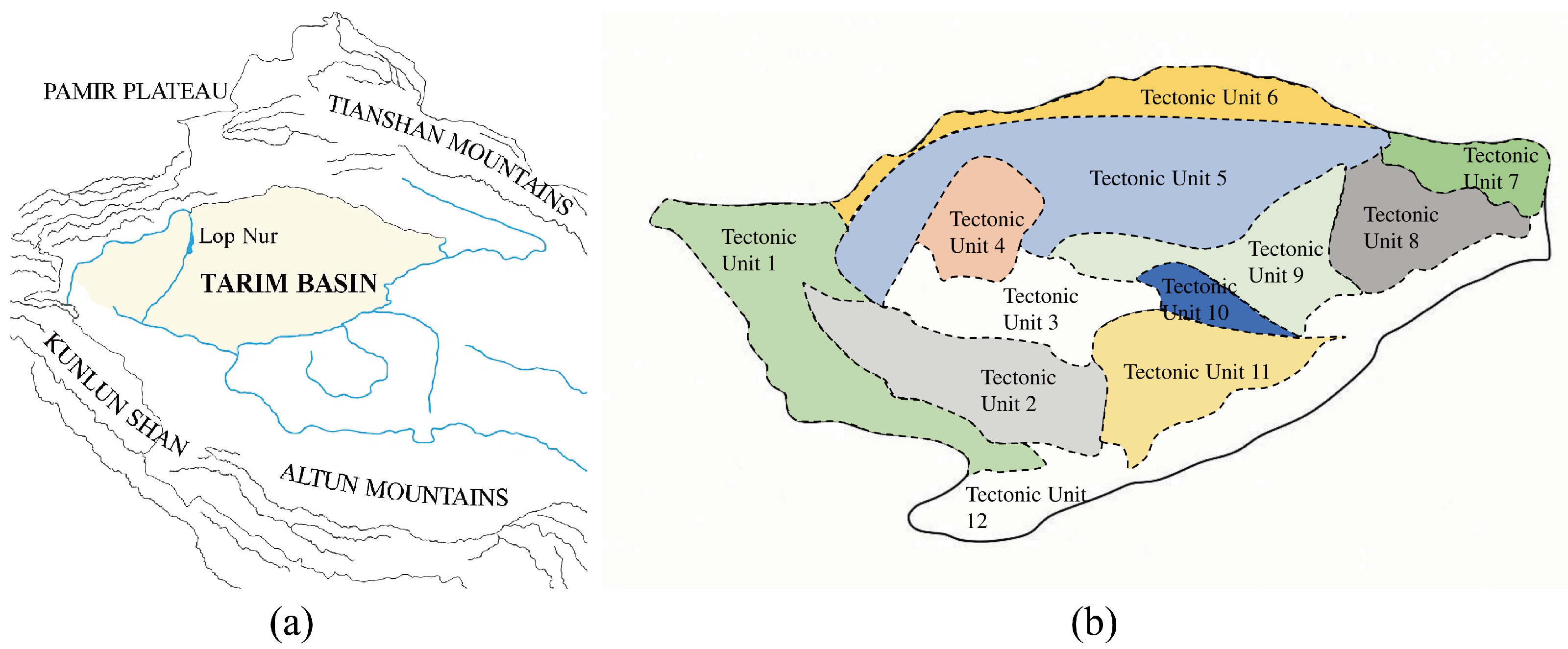
Tarim Basin is located in the southern part of Xinjiang in China and is a typical inland superimposed basin. It has complex reservoir-forming processes characterized by multiple sets of source rocks, multi-stage hydrocarbon generation, multi-stage charging and accumulation, and adjustment. The basin covers approximately 560,000 km2, in which the deep Cambrian to Ordovician marine carbonate sediments are well developed, containing abundant oil and gas resources. As shown in Figure 9, the basin can be divided into several tectonic units.
This section takes the Tarim Basin as the empirical study area. The data mainly come from completed seismic interpretation results, drilling and logging data, integrated geological research results, and relevant exploration evaluation reports. We selected and collected exploration play data, including 13 plays in the regional exploration stage, 15 plays in the pre-exploration stage, and 9 plays in the evaluation stage. A systematic, comprehensive evaluation and ranking of plays at different exploration stages is conducted.

4.2. Evaluation Process and Result Analysis

Using the model presented in Section 3, the fuzzy synthetic evaluation model is utilized for play assessment and optimization. To ensure consistency between the criteria used for indicator screening and weight judgment, the same expert panel is invited to perform pairwise comparisons of the importance of evaluation criteria at different levels and hierarchies in various exploration stages using Saaty’s 1–9 scale method. Following one round of collective discussion, judgment matrices for each exploration stage are constructed separately, thereby determining the subjective weights of the evaluation indicators at each stage.
Taking the secondary criteria corresponding to the first-level criterion ‘Economy’ as an example, Table 5 displays the judgment matrices for two criteria (drilling cost and depth index) in the regional exploration stage. All AHP judgment matrices exhibited C R < 0.1 , satisfying the consistency criterion. The final subjective weights of evaluation criteria at different exploration stages are shown in Table 6. In Table 6, Table 7 and Table 8, the regional exploration stage, pre-exploration stage, and evaluation stage are hereafter denoted as RE, PE, and EV, respectively.
According to the method described in Section 3.1, we first constructed the evaluation matrix and then normalized the data according to the criteria characteristics, converting all metrics into benefit indicators to obtain the normalized evaluation matrix. The comparative intensity of each criterion and the conflict between criteria were further calculated to determine the objective weights of each evaluation criterion. The objective weights of evaluation criteria for different exploration stages are shown in Table 7.
Based on the optimization model shown in Equation (11), the adaptive adjustment parameters for subjective and objective weights applicable to different exploration stages were obtained using optimization algorithms, as detailed in Table 8.
This parameter setting can effectively balance the contribution of subjective and objective factors in different exploration stages, achieving a transition from subjective judgment-dominated to data-driven evaluation. The combination weights of criteria in different exploration stages were obtained, as shown in Table 9.
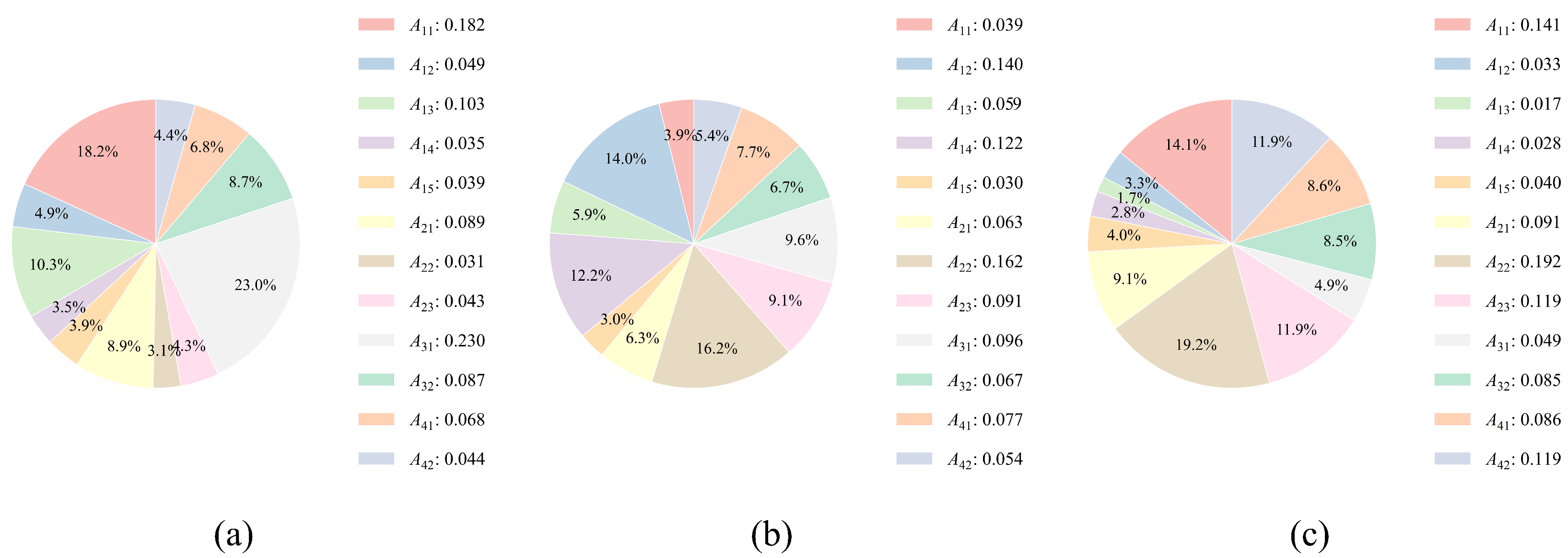
It is found that in the regional exploration stage, the weight of ‘Geology’ is the highest at 0.404, followed by ‘Economy’ at 0.316, while ‘Risk’ has the lowest weight at 0.114. The distribution reflects the emphasis at this stage on an initial understanding of geology and on economic evaluation under a defined geological context. In the pre-exploration stage, ‘Geology’ remains the most significant factor with a weight of 0.391. However, as the regional geological setting becomes better understood, the estimation of resource volume and the evaluation of resource potential gain increasing importance, leading to a rise in the weight of ‘Resource’ to 0.313, making it the second most important criterion. During the evaluation stage, geological conditions are largely established, and the focus shifts toward assessing development feasibility. Consequently, greater emphasis is placed on evaluating resource potential and engineering risks. ‘Resource’ has the largest proportion of 0.4, while the weight of ‘Risk’ increases to 0.224.
Combine the weights of all indicators uniformly at the secondary criteria to obtain the relative comprehensive weights of the 12 secondary criteria in different exploration stages, as shown in Figure 10.
For the normalized evaluation matrix, we apply the Gaussian membership function to obtain the fuzzy evaluation matrix for plays across exploration stages. Comprehensive membership degrees are computed via Equation (14), and composite scores are derived from Equation (15). Mapping these scores to predefined grade intervals yields the classification and ranking of plays for each stage. Differences in key geological parameters can directly affect the hydrocarbon accumulation conditions and resource potential of different plays. For example, parameters such as hydrocarbon generation intensity, reservoir thickness, caprock type, and migration pathway length reflect, respectively, the hydrocarbon supply capacity, the development degree of storage space, the sealing and preservation conditions, and the efficiency of hydrocarbon migration and accumulation. These factors, in turn, indicate the resource potential, storage capacity, and hydrocarbon leakage risk of each play. Therefore, the overall ranking accuracy is verified by comparing with actual exploration data. Detailed evaluation results for plays in the regional exploration stage are shown in Table 10.
In the regional exploration stage, Play 10 attains the top ranking with the highest composite score, reflecting its favorable geological conditions and resource potential. Conversely, Play 11 has the lowest score due to suboptimal geological conditions and constrained exploration potential. The actual exploration data can verify the accuracy of the current ranking results:
  • Play 10 features a relatively complete transport system composed of faults, fractures, and connected pores, with the presence of unconformities. The migration pathway length from source rocks to the traps or reservoirs ranges from 100 m to 400 m . The caprock consists of tight carbonate rocks with strong sealing capacity and low probability of later-stage damage, ensuring excellent preservation conditions. Consequently, Play 10 shows advantages in hydrocarbon generation conditions, transport systems, and preservation conditions, with a reasonable configuration of accumulation elements and a complete petroleum system, resulting in the best overall performance among the plays evaluated in the regional exploration stage. Therefore, this play is classified as ‘Favorable’ with high exploration potential and resource development value.
  • In Play 3, the hydrocarbon transport system features fault-sand conduits, with oil and gas migration pathways ranging from 5000 m to 30,000 m in length, which is adverse to hydrocarbon migration and accumulation. The cap rock is mudstone and may have experienced local disruption during subsequent tectonism. These factors result in Play 3 being categorized as ‘Moderate’, which indicates that a median ranking in the comprehensive assessment is attained.
  • Play 11 features fault zones and a fracture network as the source rock transport elements, hindering hydrocarbon migration. The seal mainly consists of mudstone and exhibits relatively weak sealing capacity, yielding poor preservation. Therefore, the source rock conditions and the preservation conditions are relatively weak. Thus, Play 11 demonstrates the poorest performance in the comprehensive reconnaissance evaluation and is consequently classified as ‘Less Favorable’ with low exploration priority.
In the pre-exploration stage, the evaluation results of plays are shown in Table 11. During this exploration stage, Play 16 ranked first and was rated as ‘Favorable’ due to its superior hydrocarbon generation capacity. In contrast, Play 20 ranked last with overall inferior performance. We prove our results by using the data after some of the plays are actually explored:
  • Play 16 is a confirmed oil and gas play with a good hydrocarbon generation foundation and resource potential. Its hydrocarbon generation intensity is 500 × 10 4   t / km 2 for oil and 65 × 10 8   t / km 2 for gas, indicating good source rock conditions and sufficient supply capacity. The reservoir has a thickness of 300 m and porosity of 10%, showing good storage performance. The caprock is mudstone with relatively weak sealing but less affected by later tectonic activities, resulting in relatively stable preservation conditions. With oil-equivalent resources of 50,000 × 104 t and the resource density of 20 × 10 4   t / km 2 , it has rich hydrocarbon resources. Play 16 scores highest in the pre-exploration stage and is classified as ‘Favorable’, recommended as a priority exploration target to further advance its exploration.
  • Play 27 exhibits reservoir thickness ranging from 20 m to 100 m with porosity varying between 0.8–29%. The lithology is dominated by channel sands, which provide some conditions for primary porosity development and form localized reservoir spaces. However, compared to Play 16, it demonstrates relatively thinner reservoir thickness and limited spatial distribution, resulting in overall inferior reservoir conditions. The mudstone caprock, affected by subsequent tectonic activities, carries certain integrity risks, leading to suboptimal preservation conditions. With oil-equivalent resources of 4400 × 10 4   t and the resource density of 7.47 × 10 4   t / km 2 , Play 18 ranks at an intermediate level during the preliminary exploration stage, demonstrating moderate resource potential. Consequently, Play 27 is classified as ‘Moderate’ based on its comprehensive evaluation.
  • Play 20 is an oil-bearing zone with migration path lengths of 5000 m to 30,000 m from source rocks to traps or reservoirs. The long migration distance causes large energy loss and low migration-accumulation efficiency, which is not conducive to effective hydrocarbon enrichment. The reservoir has a thickness of 150 m and a porosity range of 0.2–5%, showing low porosity and thin-layer characteristics with limited storage space and poor reservoir conditions. The oil-equivalent resources are 39,000 × 104 t, which is relatively large in scale, but the resource density is only 4.96 × 10 4   t / km 2 , at a low level, indicating poor hydrocarbon concentration per unit area. Although it has certain resource potential, the poor reservoir conditions and long migration paths result in its overall low rating as ‘Less Favorable’, which is consistent with current geological understanding.
In the evaluation stage, Table 12 shows the evaluation results of plays. Play 31 achieved the highest composite score, demonstrating significant exploration and development value, thus qualifying as a priority exploration target. In contrast, Play 34 obtained the lowest score, indicating limited exploration potential. We employ actual exploration data for validation:
  • Play 31 is an oil-bearing play with excellent hydrocarbon generation conditions and substantial resource potential. Its hydrocarbon generation intensity reaches 700 × 10 4   t / km 2 , indicating robust petroleum generation capacity. Multiple migration pathways exist, including faults, weathering crusts, and karst fracture-cavity systems. The reservoir exhibits favorable characteristics with a thickness of 150 m to 250 m , 5–100% porosity, and permeability range from 10 m D to 2000 m D , providing ample storage space and efficient flow capacity. The mudstone seal with a thickness of 10 m to 30 m demonstrates stable preservation conditions due to minimal post-depositional tectonic disturbance, ensuring long-term hydrocarbon retention. With oil-equivalent resources of 50,000 × 104 t and the resource density of 83 × 10 4   t / km 2 , the play possesses 40,000 × 104 t convertible proven geological reserves, reflecting strong resource transformation capability and promising exploration prospects. At a drilling cost of ¥6000 per meter, the play offers distinct economic advantages and high investment return potential, justifying its classification as ‘Favorable’.
  • Play 37 demonstrates substantial hydrocarbon generation potential with a yield intensity of 700 × 10 4   t / km 2 . Reservoir characteristics include variable thickness from 30 m to 150 m , 0.8–29% porosity, and permeability range from 0.03 m D to 5283 m D . While the channel sand reservoirs exhibit locally favorable petrophysical properties and flow capacity, the overall reservoir thickness is suboptimal, resulting in limited storage capacity. The mudstone seal with a thickness of 30 m to 90 m provides moderate containment but shows localized integrity breaches due to post-depositional tectonic activity. With 36,627 × 104 t oil-equivalent resources and 14.59 × 10 4   t / km 2 abundance, the play’s convertible proven reserves amount to merely 128 × 10 4   t , reflecting poor transformation efficiency and constrained economic viability. Consequently, Play 37 is classified as ‘Moderate’ based on its intermediate overall ranking.
  • Play 34 has a hydrocarbon generation intensity of 500 × 10 4   t / km 2 , which is relatively low compared to higher-ranked plays. Hydrocarbon migration occurs through pathways extending from 3500 m to 5000 m , creating significant accumulation challenges. The reservoir has a thickness from 50 m to 120 m , porosity from 5% to 100%, and permeability from 10 m D to 2000 m D , reflecting constrained storage potential. The seal formation, composed of interbedded mudstone, silty mudstone and fine sandstone, ranges in thickness from 0 m to 50 m . This composite seal displays unstable containment characteristics with widespread tectonic damage. With oil-equivalent resources of 30,000 × 104 t and the resource density of 13 × 10 4   t / km 2 , its convertible proven reserves are 15,000 × 104 t, ranking low in the evaluation stage. Comprehensive analysis shows weak generation, long migration and poor preservation conditions, resulting in low exploration potential and classification as ‘Moderate’.
The above discussion of representative cases is intended to illustrate and interpret the ranking results. The geological analysis for each stratigraphic unit validates that our evaluation model has reasonable accuracy. The results show good agreement between the evaluation results and actual exploration observations, indicating that the stage-aware dynamic fuzzy comprehensive evaluation model exhibits strong adaptability and scientific soundness across exploration stages.

5. Sensitivity and Comparison Analysis

5.1. Sensitivity Analysis of Parameters

This study uses a Gaussian membership function to characterize indicator fuzziness and nonlinear behavior, as defined in Equation (12). The setting of key parameters affects the discrimination between evaluation grades and the evaluation preference. On one hand, the standard deviation σ controls the distribution width of the membership function, which directly corresponds to the decision-maker’s tolerance in boundary judgments. A larger σ results in a wider curve, a more gradual change in membership degree, and a more blurred transition between adjacent grades. On the other hand, the value of c reflects the decision-maker’s preferred standard for evaluation. For the same evaluation grade, a larger c represents a stricter evaluation standard for that grade, whereas a smaller c corresponds to a more lenient standard.
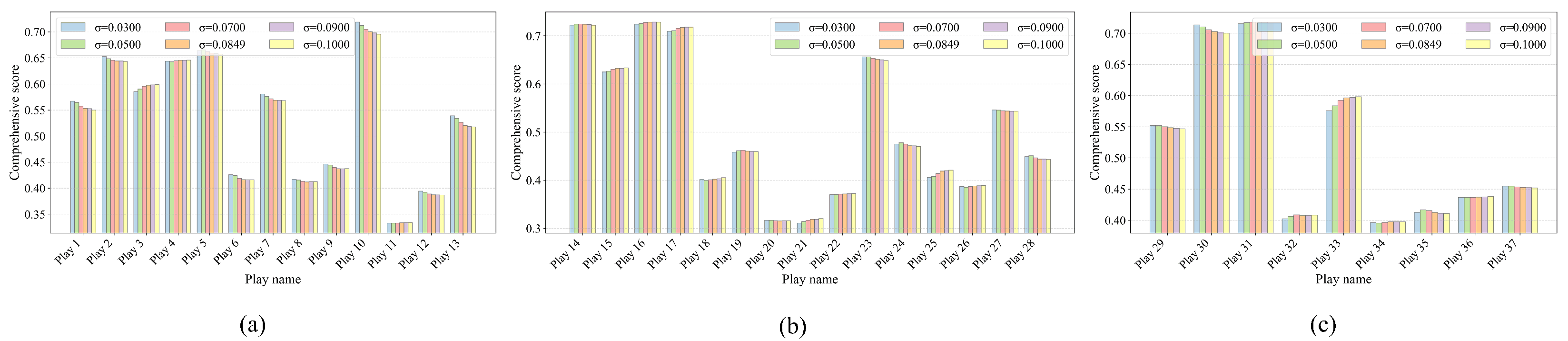
For σ , considering the overlap of adjacent grades during transitions, we vary σ over [ 0.03 , 0.1 ] with a step of 0.02 to examine cases ranging from near independence to full interaction.
As shown in Figure 11, the comprehensive scores of the various plays show relatively little variation under different standard deviation values, and the rankings remain unchanged, indicating that the standard deviation has little impact on the evaluation results. This demonstrates the robustness of our method, reducing subjective bias introduced by differences in decision-makers’ judgment tolerance and safeguarding the stability of the evaluation results. In this paper, we set σ = 0.0849 as the comprehensive scores are at a medium level in all exploration stages, showing good balance.
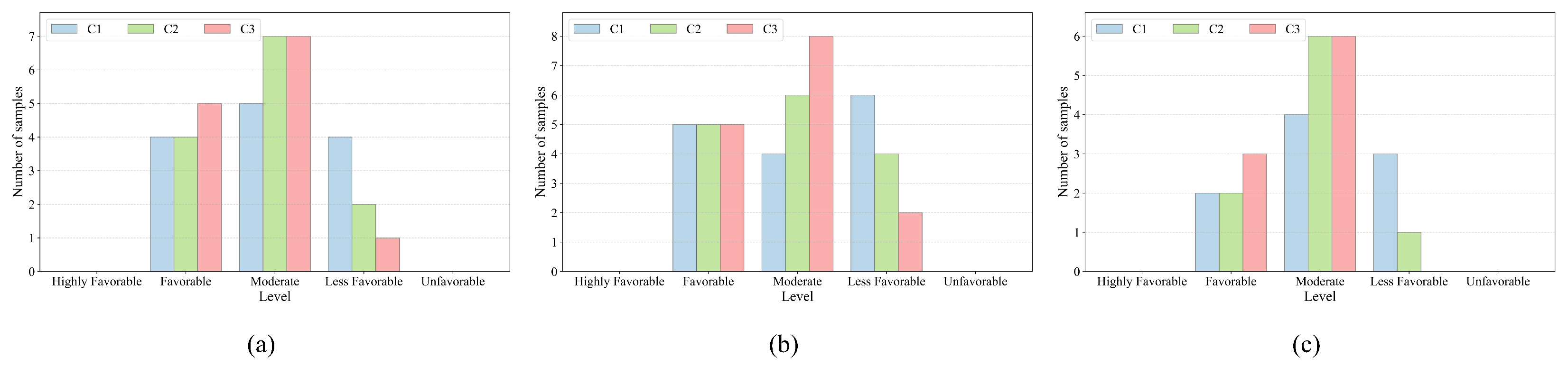
For parameter c, three evaluation preference configurations with different levels of strictness were established by combining expert opinions, reflecting the gradient change of evaluation criteria from strict to relaxed: C 1 = [0.15, 0.35, 0.55, 0.75, 0.95] (strict evaluation criteria); C 2 = [0.1, 0.3, 0.5, 0.7, 0.9] (moderate evaluation criteria, selected as the benchmark in this paper); C 3 = [0.05, 0.25, 0.45, 0.65, 0.85] (relaxed evaluation criteria).
The value of center c has a crucial impact on the grade division of evaluation results (Figure 12). For example, when a relatively strict level center configuration ( C 1 ) is employed, the peak of the membership function shifts toward the upper limit of each evaluation interval, which makes samples at equal indicator values more prone to lower grade assignment and produces a relatively conservative evaluation. Conversely, when a relatively loose evaluation standard ( C 3 ) is applied, the level centers are shifted rearward, lowering the classification threshold and thereby yielding more positive and optimistic rating outcomes. The center value c reflects the decision maker’s intrinsic preference for the standard of a grade, which defines the core position of each grade and influences the classification results.
In summary, the model is relatively sensitive to the central value c, while showing comparative robustness with respect to the standard deviation parameter. Specifically, when the parameter c increases, the grade centers shift as a whole toward higher-value intervals, which raises the threshold for assigning higher grades; as a result, some plays are more likely to be classified into lower grades. Conversely, when c decreases, the grade centers shift toward lower-value intervals, and the threshold for higher-grade assignment is correspondingly reduced, making it easier for plays to receive higher-grade evaluations. This indicates that the model has good stability in ranking results, while being capable of accommodating different preference differences among decision-makers in evaluation criteria. In play evaluation and ranking, the grade classification results may further affect the selection of exploration deployment schemes. Therefore, the model is more suitable for ranking-oriented play evaluation and prioritization. For application scenarios that rely heavily on grade determination, the class centers should be reasonably specified in accordance with actual decision-making needs so as to enhance the scientific validity and applicability of the evaluation results.

5.2. Comparison Analysis

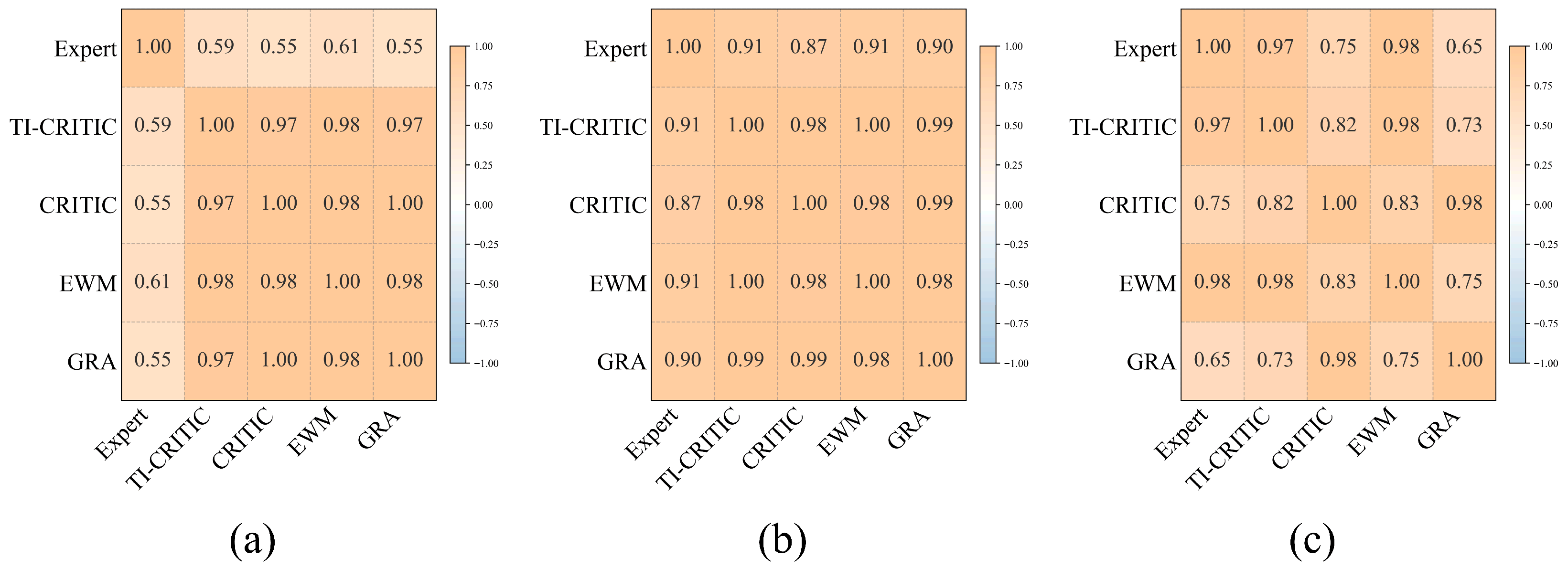
Moreover, a comparative analysis is further conducted in this study. First, under the same evaluation framework and identical input data, we select three objective weighting methods—the traditional CRITIC method [7], the entropy weight method (EWM) [55], and the grey relational degree method (GRA) [36]—to make a comparison. Second, with the weighting scheme kept unchanged, two alternative evaluation frameworks, TOPSIS and VIKOR, are introduced to investigate the influence of different evaluation models on the results. Finally, the model’s quantitative results are compared with the expert results to analyze ranking changes and to test applicability and reliability. To avoid self-validation bias in the evaluation results, three senior engineers with extensive experience in exploration planning are invited to independently rank the selected plays at different exploration stages, who are not part of the expert panel. The final evaluation results for each play are then determined on the basis of a thorough discussion. Pearson correlation analysis is introduced to quantify the strength of the association between the results obtained by different weighting methods and expert evaluation.
Table 13 summarizes the correlation statistics between the proposed method and different weighting methods as well as the expert evaluation results at different exploration stages, including the correlation coefficient r, the 95% confidence interval (CI), and the p-value. As can be seen in Table 13 and Figure 13, in different exploration stages, the rankings produced by different objective weighting methods remain consistent and correlated. The Pearson correlation coefficients between the proposed model and the comparison methods range from 0.733 to 1, with all corresponding p-values greater than 0.05. It proves the rationality of the TI-CRITIC method in this paper in weight allocation and its ability to capture key information features. The results are consistent with the evaluation results of other mainstream objective weighting methods, which further verifies the effectiveness of the method. However, there are certain differences between the ranking results based on various objective weighting methods and the expert experience evaluation results. The fundamental reason is that traditional expert judgment relies on subjective cognition and experience accumulation, underutilizes objective data, and fails to analyze stage-dependent changes in evaluation emphasis when determining weights.
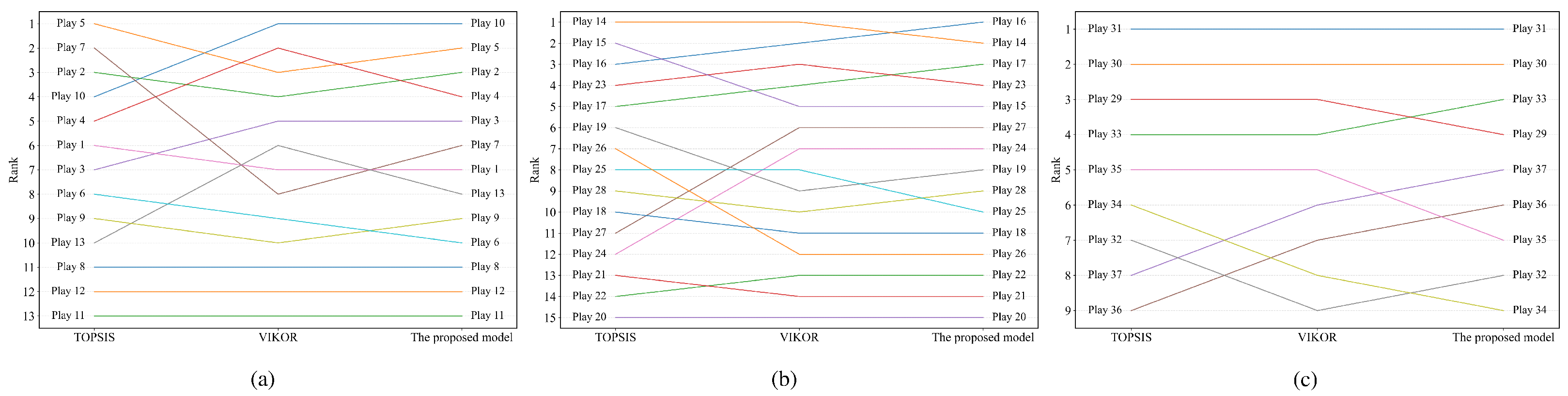
As shown in Figure 14, different evaluation methods exert a significant influence on the ranking results of plays at different exploration stages. This indicates that the priority determination of the same play is sensitive to the evaluation framework and that its ranking result essentially depends on how each method defines optimality. Specifically, TOPSIS uses the distances of alternatives from the positive and negative ideal solutions as the criterion, and places greater emphasis on the overall closeness of a scheme to the ideal state; therefore, it more readily identifies plays with prominent local advantages. VIKOR simultaneously considers group utility and individual regret and is more sensitive to single-indicator shortcomings; it tends to give higher priority to plays with stronger overall coordination. Fuzzy comprehensive evaluation, by contrast, uses membership functions to characterize the fuzziness of indicator values and the boundaries between evaluation grades, thereby reducing the excessive influence of local extreme values while comprehensively utilizing multi-indicator information. Accordingly, the ranking changes shown in the figure directly reflect the differences in how these evaluation mechanisms respond to local advantages, shortcomings, constraints, and fuzzy boundaries. Overall, the proposed fuzzy comprehensive evaluation results differ from both the distance-based preference of TOPSIS and the compromise ranking of VIKOR, and instead form a more adaptive comprehensive discrimination result between overall advantage identification and shortcoming control. Therefore, it is more consistent with the practical characteristics of play evaluation, where multi-indicator coupling, pronounced stage differences, and fuzzy boundaries coexist.
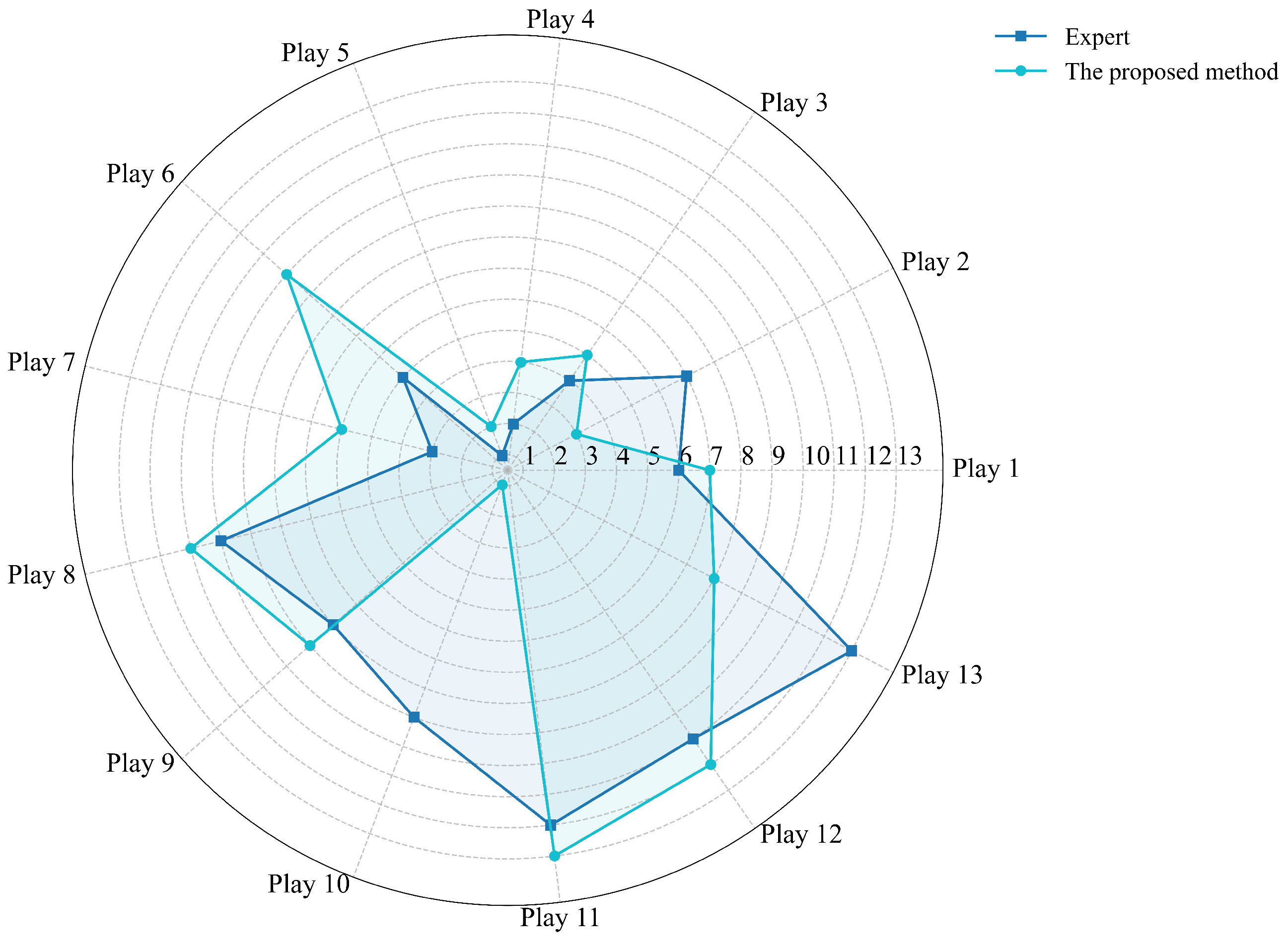
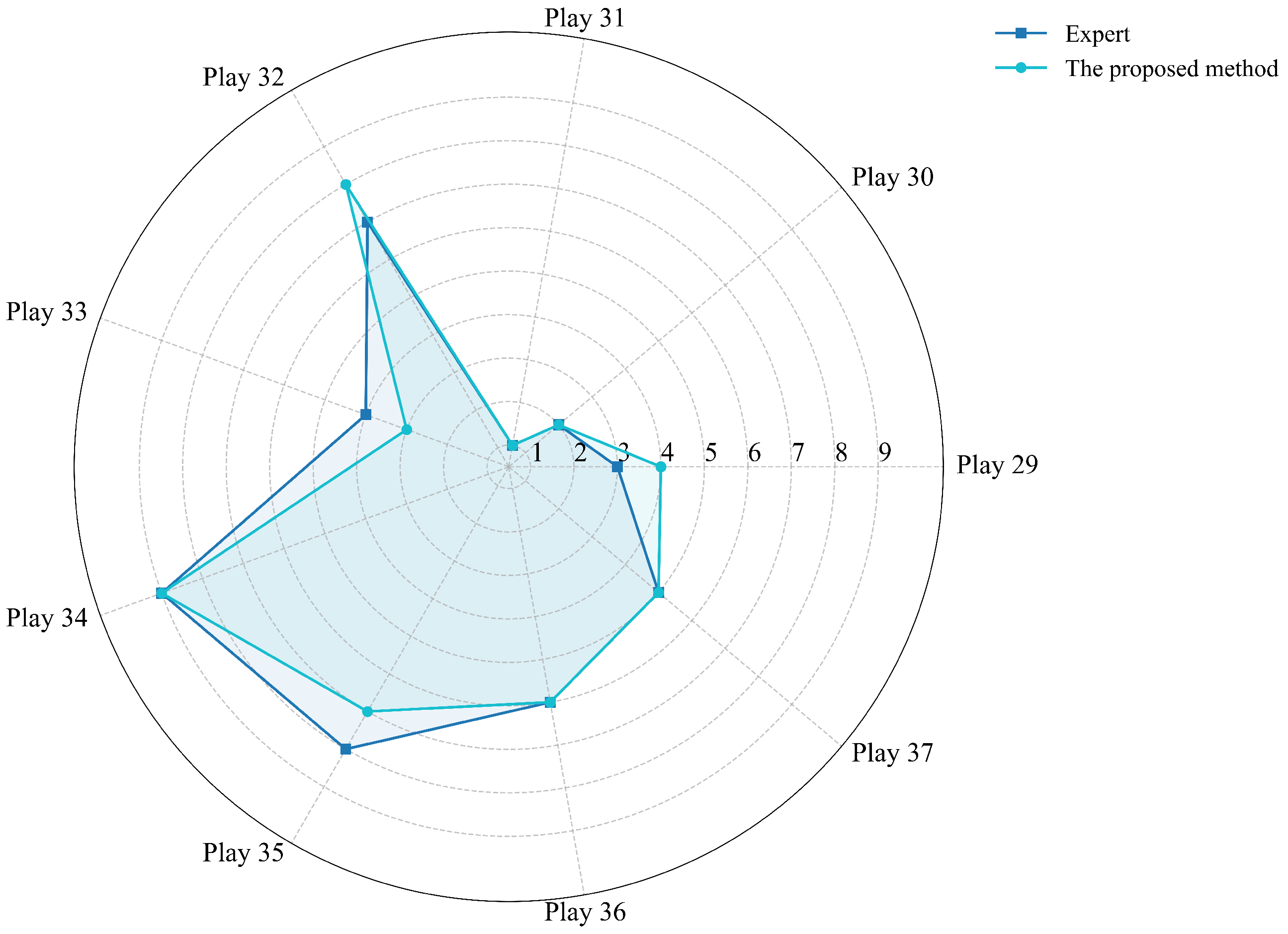
In the regional exploration stage, Figure 15 presents the comparison of the final ranking results. It can be seen from the figure that the ranking of Play 10 has improved from the 9th position in the expert evaluation to the 1st position, with the largest change range; Play 13 has risen from the bottom to the 8th position; Play 7 has dropped by 3 positions; and Play 6 has dropped by 5 positions.
Table 14 lists the normalized data of four first-level indicators for plays with significant ranking changes. As indicated in Table 8, in the regional exploration stage, ‘Geology’ is the most important, followed by ‘Economy’, while the weight of ‘Risk’ is the lowest. Therefore, although Play 10’s geological conditions are slightly inferior to the originally top-ranked Play 5, its significant advantage in economy and lower risks have caused its ranking to rise to first place. Similarly, although Play 13 is inferior to Play 9 in terms of both geological conditions and resource potential, its performance in economy is more outstanding, and its risks are smaller, so its overall advantages outweigh the disadvantages, thus improving its ranking to the original position of Play 9. In addition, the ranking declines of Play 6 and Play 7 are mainly due to their disadvantages in economy and risk assessment. In particular, although Play 7 shows significant advantages in geological conditions and resource potential, its overall ranking declines due to higher engineering risks and lower strategic value evaluation.
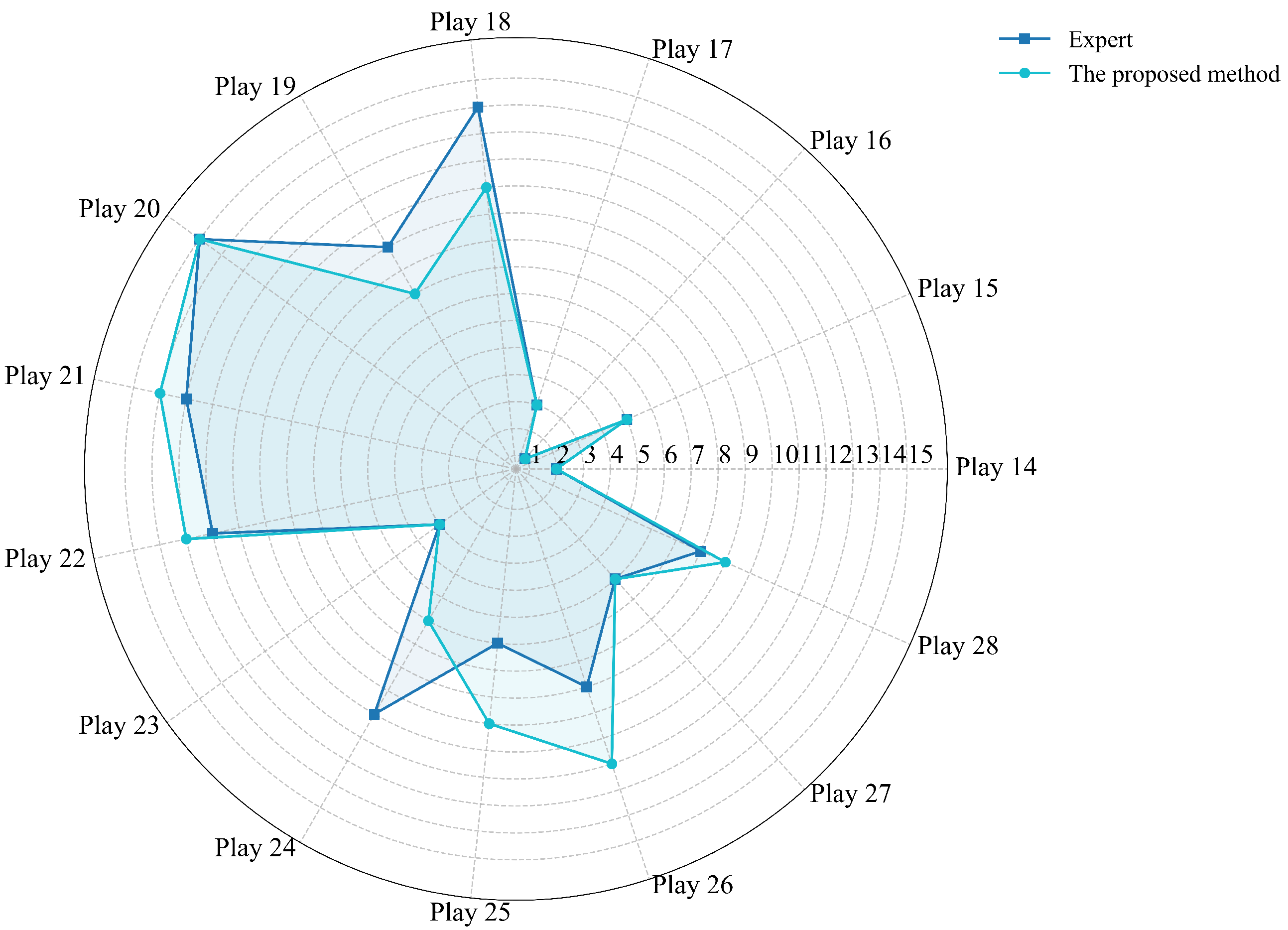
In the pre-exploration stage, the details of the ranking changes of the plays are shown in Figure 16. The ranking of Play 24 rose to 7th place, with a total increase of 4 places, which is the most significant change; Play 18 rose from 14th place in the expert ranking to 11th place, while the ranking of Play 26 dropped by 3 places.
In the pre-exploration stage, geological conditions have the highest weight proportion (0.391), followed by resource potential (0.313), both of which are the core evaluation elements in this stage. The normalized data of the first-level indicators of the plays listed in Table 15 show that the geological conditions of Play 24 are slightly inferior to those of Play 25, but it has advantages in resource potential, strategic value and engineering risk, which leads to the rise of its ranking in the expert evaluation result of Play 25. The geological conditions and resource potential of Play 18 are slightly insufficient compared with Play 24, but its strategic value is slightly better than that of Play 24, which makes its ranking result rise. Concurrently, Play 26’s performance across all four evaluation dimensions remains relatively low, leading to a decline in its current ranking.
In the evaluation stage, the comparison of the ranking results is detailed in Figure 17. The overall ranking of each play in the evaluation stage remains stable, with only individual plays exchanging rankings, and no significant position changes occur.
Taking the ranking exchange between Play 35 and Play 32 as an example. As can be seen from Table 16, Play 35 is better than Play 32 in terms of geological conditions and resource potential. Although it is slightly inferior in strategic value, resource potential is given the highest weight (0.4) in the evaluation stage, which becomes the core evaluation index. The weight of geological conditions is 0.241, which is reduced compared with the regional exploration and preliminary exploration stages, but it is still the secondary core index. Therefore, the advantages of Play 35 in geological conditions and resource potential are highlighted, leading to its rise in ranking.

6. Conclusions

This study proposes a stage-aware fuzzy comprehensive evaluation model for hydrocarbon-bearing plays. In this model, a dynamic game-fuzzy combination weighting method is presented based on stage evolution, which achieves a dynamic balance and integration of subjective and objective weights at different stages. This method captures the hesitation inherent in multi-source information fusion, reduces the subjectivity in setting fusion coefficients, and provides a new perspective for subjective and objective combined weighting. This can better reflect reality and effectively capture stage-dependent differences in evaluation focus. By applying this model to the ranking and grade classification of plays at different exploration stages, it can assist managers in identifying target plays that should be prioritized, closely tracked, or temporarily postponed, thereby supporting exploration deployment and risk classification management.
In the exploration area stage, geology is the most critical core evaluation element, followed by economy, and the importance of risk is the lowest. Although the importance of geology decreases slightly, it is still the most important indicator in the pre-exploration stage; the importance of the resource increases significantly and becomes the second key indicator. In the evaluation stage, the importance of geology further decreases, the resource becomes the core evaluation indicator, and the importance of relative risk increases; the economy becomes the least important indicator. Further sensitivity analysis and comparative research confirm that the TI-CRITIC weighting method proposed in this paper has good effectiveness and provides reliable method support for the multi-stage evaluation of oil and gas plays.
However, this study still has certain limitations. First, the model was validated only in the Tarim Basin, and its applicability under different geological settings and data conditions remains to be tested. Second, TI-CRITIC uses Pearson correlation coefficients to characterize inter-indicator conflict, which limits its ability to capture nonlinear relationships. In addition, the treatment of uncertainty in this study is relatively simple, and its ability to represent more complex fuzzy information is limited.
In future work, we will further conduct case studies in other basins and under different geological settings to systematically examine the applicability, stability, and generalizability of the proposed method. At the methodological level, the current framework will be extended to intuitionistic fuzzy sets, interval-valued intuitionistic fuzzy sets, and spherical fuzzy sets to more comprehensively represent diverse uncertain information. In addition, distance measures and related techniques will be introduced to refine the TI-CRITIC treatment of indicator conflict. We will then compare the evaluation findings with later development results to advance integration between exploration and development.

Author Contributions

Conceptualization, Q.Z.; Methodology, Y.X. and Q.Z.; Validation, Y.X., J.C. and Y.L.; Resources, J.P.; Data curation, J.C. and Y.L.; Writing—original draft, Y.X.; Writing—review and editing, Q.Z.; Supervision, J.P. All authors have read and agreed to the published version of the manuscript.

Funding

This work was supported by the Sichuan Science and Technology Program under the project Intelligent Optimization of Hydraulic Fracturing Engineering Parameters for Horizontal Wells in Unconventional Natural Gas Reservoirs (2025NSFTD0016) and the Open Bidding for Selecting the Best Candidates Project of Southwest Petroleum University (2024CXJB11).

Institutional Review Board Statement

Not applicable.

Informed Consent Statement

Not applicable.

Data Availability Statement

The data that support the findings of this study are not publicly available due to confidentiality agreements with the data provider.

Acknowledgments

The authors are grateful to the support from the Science and Technology Project of Sichuan Province (2025NSFTD0016) and the Open Bidding for Selecting the Best Candidates Project of Southwest Petroleum University (2024CXJB11). The authors sincerely appreciate the valuable comments provided by the anonymous reviewers and extend their gratitude to the editor for their meticulous editing.

Conflicts of Interest

The authors declare no conflicts of interest.

References

  1. Ma, Z.; Chen, H.; Xie, Y.; Zhang, Z.; Yaming, L.; Xiaofa, Y.; Yubing, Z.; Dandan, W. Division and resources evaluation of hydrocarbon plays in Putomayo-Oriente-Maranon Basin, South America. Pet. Explor. Dev. 2017, 44, 247–256. [Google Scholar] [CrossRef]
  2. Zhou, B.; Li, H.; Yun, J.; Xu, Z.; Feng, F. Petroleum accumulation system evaluation of carbonate oil and gas: A case study of Cambrian in Tarim Basin. Pet. Geol. Exp. 2020, 42, 132–138. [Google Scholar] [CrossRef]
  3. Greco, S.; Figueira, J.; Ehrgott, M. Multiple Criteria Decision Analysis; Springer: New York, NY, USA, 2016. [Google Scholar]
  4. Greco, S.; Mousseau, V.; Stefanowski, J.; Zopounidis, C. Intelligent Decision Support Systems; Springer: Cham, Switzerland, 2022. [Google Scholar]
  5. Su, J.; Liu, H.; Chen, Y.; Zhang, N.; Li, J. A novel multi-criteria decision making method to evaluate green innovation ecosystem resilience. Eng. Appl. Artif. Intell. 2025, 139, 109528. [Google Scholar] [CrossRef]
  6. Deveci, K.; Cin, R.; Kagizman, A. A modified interval valued intuitionistic fuzzy CODAS method and its application to multi-criteria selection among renewable energy alternatives in Turkey. Appl. Soft Comput. 2020, 96, 106660. [Google Scholar] [CrossRef]
  7. Krishankumar, R.; Ecer, F. A multi-criteria framework for electric vehicle charging location selection using double hierarchy preferences and unknown weights. Eng. Appl. Artif. Intell. 2024, 133, 108251. [Google Scholar] [CrossRef]
  8. Li, F.; Xie, J.; Lin, M. Interval-valued Pythagorean fuzzy multi-criteria decision-making method based on the set pair analysis theory and Choquet integral. Complex Intell. Syst. 2023, 9, 51–63. [Google Scholar] [CrossRef]
  9. Paul, A.; Shukla, N.; Paul, S.K.; Trianni, A. Sustainable Supply Chain Management and Multi-Criteria Decision-Making Methods: A Systematic Review. Sustainability 2021, 13, 7104. [Google Scholar] [CrossRef]
  10. Saaty, T.L. The Analytic Hierarchy Process: Planning, Priority Setting, Resource Allocation; McGraw-Hill: New York, NY, USA, 1980. [Google Scholar]
  11. Bhaskar, A.S.; Khan, A. Comparative analysis of hybrid MCDM methods in material selection for dental applications. Expert Syst. Appl. 2022, 209, 118268. [Google Scholar] [CrossRef]
  12. Xiao, H.; Zeng, S.; Peng, Y.; Kou, G. A simulation optimization approach for weight valuation in analytic hierarchy process. Eur. J. Oper. Res. 2025, 321, 851–864. [Google Scholar] [CrossRef]
  13. Khodyakov, D.; Grant, S.; Kroger, J.; Gadwah-Meaden, C.; Motala, A.; Larkin, J. Disciplinary trends in the use of the Delphi method: A bibliometric analysis. PLoS ONE 2023, 18, e0289009. [Google Scholar] [CrossRef]
  14. Yang, X.; Xu, Z.; Xu, J. Large-scale group Delphi method with heterogeneous decision information and dynamic weights. Expert Syst. Appl. 2023, 213, 118782. [Google Scholar] [CrossRef]
  15. Qian, B.; Zhu, Y.; Wang, Y.; Yan, F. Can Entropy Weight Method Correctly Reflect the Distinction of Water Quality Indices? Water Resour. Manag. 2020, 34, 3667–3674. [Google Scholar] [CrossRef]
  16. Lu, Y.; Ding, W.; Li, Z. A New EWM-FCM Approach to Optimize the Allocation of Water Ecology Compensation Funds. Water Resour. Manag. 2022, 36, 3779–3795. [Google Scholar] [CrossRef]
  17. Mishra, A.R.; Chen, S.; Rani, P. Multicriteria decision making based on novel score function of Fermatean fuzzy numbers, the CRITIC method, and the GLDS method. Inf. Sci. 2023, 623, 915–931. [Google Scholar] [CrossRef]
  18. Mitra, A. Grading of Raw Jute Fibres Using Criteria Importance through Intercriteria Correlation (CRITIC) and Range of Value (ROV) Approach of Multi-criteria Decision Making. J. Nat. Fibers 2022, 19, 7517–7533. [Google Scholar] [CrossRef]
  19. Li, Y.; Guan, S.; Yin, X.; Wang, X.; Liu, J.; Wong, I.N.; Wang, G.; Chen, F. Measurement of road safety situation by CRITIC-TODIM-NMF: A lesson system of legislation and regulation for the United States. Measurement 2023, 220, 113333. [Google Scholar] [CrossRef]
  20. Wang, C.; Qiu, X.; Shen, H.; Rao, C. Evaluation mechanism of urban green competitiveness via a gray fuzzy comprehensive evaluation model. Ecol. Indic. 2025, 175, 113510. [Google Scholar] [CrossRef]
  21. Hou, J.; Gao, T.; Yang, Y.; Wang, X.; Yang, Y.; Meng, S. Battery inconsistency evaluation based on hierarchical weight fusion and fuzzy comprehensive evaluation method. J. Energy Storage 2024, 84, 110878. [Google Scholar] [CrossRef]
  22. Zhao, G.; Ping, J.; Mei, X.; Leng, W.; Deng, Q.; Fan, X. Prediction of regional hydrothermal geothermal resource carrying capacity based on multi-level fuzzy comprehensive evaluation: A case study of Zhengzhou, China. Case Stud. Therm. Eng. 2025, 75, 107156. [Google Scholar] [CrossRef]
  23. Li, B.; Ran, J.; Tang, T.; Deng, T.; Yang, S.; Lv, H. Application of Main Controlling Factors for Quantitative Evaluation of a Favorable Carbonate Oil- and Gas-Bearing Area in the Pre-exploration Stage: Lianglitage Formation in the Central Uplift Belt of the Tarim Basin. Nat. Resour. Res. 2024, 33, 2645–2659. [Google Scholar] [CrossRef]
  24. Ni, B.; Wang, H.; Li, J.; Sun, K. Analysis of Exploration Potential for Lithologic Hydrocarbon Reservoirs in the Ogaden Basin. J. Chongqing Univ. Sci. Technol. (Nat. Sci. Ed.) 2020, 22, 15–19. [Google Scholar] [CrossRef]
  25. Pei, H.; Qin, Y. Hydrocarbon in the Majunga Basin in East Africa: Geological characteristics and zonation evaluation. Mar. Geol. Front. 2026, 42, 1–10. [Google Scholar] [CrossRef]
  26. Li, G.; Wang, N.; Zhang, K.; Bai, G.; He, Y.; Hu, J.; Meng, Q.; Qiu, H. Analysis of petroleum systems and assessment of petroleum resources in the West Barents Sea Basin, Arctic. J. Geomech. 2023, 29, 174–187. [Google Scholar] [CrossRef]
  27. Song, M.; Wang, Y.; Wang, X.; Hao, X.; Li, Y.; Chen, D.; Wang, D.; Wang, C.; Shi, H.; Zhang, R. Research of “synthem units of exploration” in mature exploration area and its application in the Dongying Sag, Bohai Bay Basin. Oil Gas Geol. 2022, 43, 499–513. [Google Scholar] [CrossRef]
  28. Li, M.; Yan, X.; Liu, C.; Cai, L.; Zhang, P. Research on the Compilation of the Oil and Gas Exploration Industry Standard “Technical Specification for Play Evaluation”. China Stand. 2025, 31, 160–164. [Google Scholar] [CrossRef]
  29. Liu, Z.; Lu, R. Play risk evaluation for hydrocarbon exploration. Pet. Geol. Exp. 2022, 44, 1081–1087. [Google Scholar] [CrossRef]
  30. Hou, L.; Yang, F.; Yang, C.; Yang, H.; Li, Y. Principles andmethods for quantitatively evaluating the efectiveness of conven-tional petroleum zones and traps. Acta Pet. Sin. 2021, 42, 1126–1141. [Google Scholar] [CrossRef]
  31. Zhou, L.; Wang, Y.; Meng, T. Hydrocarbon accumulation conditions and exploration favoring area of Upper Paleozoic in Jiyang Depression. Geol. Rev. 2023, 69, 311–312. [Google Scholar] [CrossRef]
  32. Guo, Z.; Wang, B.; Dong, C.; Li, L.; Pang, Z.; Chen, X.; Ma, D. Geological characteristics of Jurassic coal rock gas and evaluation of favorable zones in the northern structural belt of the Kuqa Depression, Tarim Basin. Nat. Gas Geosci. 2025, 36, 953–972. [Google Scholar] [CrossRef]
  33. Wei, G.; Zhu, Y.; Zheng, J.; Yu, G.; Ni, X.; Yan, L.; Tian, L.; Huang, L. Tectonic-lithofacies paleogeography, large-scale source-reservoir distribution and exploration zones of Cambrian subsalt formation, Tarim Basin, NW China. Pet. Explor. Dev. 2021, 48, 1114–1126. [Google Scholar] [CrossRef]
  34. Wen, L.; Zhang, B.; Jin, Z.; Wu, C.; Wang, X.; Qiu, Y.; Wang, Z.; Li, Y.; Chen, D. Accumulation sequence and exploration domain of continental whole petroleum system in Sichuan Basin, SW China. Pet. Explor. Dev. 2024, 51, 1151–1164. [Google Scholar] [CrossRef]
  35. Hussain, W.; Ehsan, M.; Pan, L.; Wang, X.; Ali, M.; Din, S.U.; Hussain, H.; Jawad, A.; Chen, S.; Liang, H.; et al. Prospect Evaluation of the Cretaceous Yageliemu Clastic Reservoir Based on Geophysical Log Data: A Case Study from the Yakela Gas Condensate Field, Tarim Basin, China. Energies 2023, 16, 2721. [Google Scholar] [CrossRef]
  36. Xie, J.; Qin, Q.; Li, B.; Yang, S.; Cao, Z. Favorable Zone Evaluation of Lianglitage Formation within Pre-Exploration Stage in the Central Uplift of Tarim Basin. Spec. Oil Gas Reserv. 2018, 25, 25–31. [Google Scholar] [CrossRef]
  37. Li, F.; Dou, L.; Shi, B.; Wang, W.; Wen, Z.; Li, Z.; Yang, Z.; Kang, H.; Xu, H.; Hou, P. Evaluation method of benefit exploration for overseas oil and gas projects. Int. Pet. Econ. 2022, 30, 103–109, 113. [Google Scholar] [CrossRef]
  38. Yan, X.; Liu, C.; Cai, L.; Li, S.; Liu, C.; Guo, Y.; Ning, J.; Zhang, P.; Li, M. Specification for Play Evaluation: Q/SH 0770–2020; China Petroleum and Chemical Corporation: Beijing, China, 2020. [Google Scholar]
  39. Al-Abadi, A.M.; Handhal, A.M.; Abdulhasan, M.A.; Ali, W.L.; Hassan, J.; Al Aboodi, A.H. Optimal siting of large photovoltaic solar farms at Basrah governorate, Southern Iraq using hybrid GIS- based Entropy-TOPSIS and AHP-TOPSIS models. Renew. Energy 2025, 241, 122308. [Google Scholar] [CrossRef]
  40. Han, F.; Alkhawaji, R.N.; Shafieezadeh, M.M. Evaluating sustainable water management strategies using TOPSIS and fuzzy TOPSIS methods. Appl. Water Sci. 2025, 15, 4. [Google Scholar] [CrossRef]
  41. Kan, Z.; Wei, Y.; Zhao, T.; Cao, J. Risk evaluation of submarine pipelines in FMEA by combination of gray relation projection and VIKOR method. Ocean Eng. 2024, 302, 117695. [Google Scholar] [CrossRef]
  42. Bian, R. Ideas and methods for shale gas resource and favorable area evaluation in the exploration stage: Taking Wufeng Formation Longmaxi Formation marine shale gas as an example. Mar. Orig. Pet. Geol. 2024, 29, 316–326. [Google Scholar] [CrossRef]
  43. Guo, F.; Zhang, Y.; Wang, X.; Li, G.; Sun, Z. Quantitativeprediction and evaluation of hydrocarbon accumulation plays in Fuyureservoir in Qijia-Gulong sag in Songliao Basin. Pet. Geol. Oilfield Dev. Daqing 2023, 42, 20–29. [Google Scholar] [CrossRef]
  44. Sun, G.; Ma, C.; Zhao, B.; Nie, Z.; Li, Y.; Shao, Z.; Shen, Y.; Li, W. Quantitative evaluation method of the sag, play and trap in Mongolia exploration blocks. Pet. Geol. Oilfield Dev. Daqing 2021, 40, 10–19. [Google Scholar] [CrossRef]
  45. Feng, D.; Liu, C.; Jiang, W.; Gao, X.; Li, P.; Li, B.; Liu, Y.; Zhang, W. Oil and gas resource assessment and exploration targets of low exploration degree basins in the periphery of the Junggar Basin. China Pet. Explor. 2020, 25, 26–38. [Google Scholar] [CrossRef]
  46. Xu, X.; Zhou, Z.; Shou, Z.; Yang, G. Methods and key parameters for oil and gas resource assessment and distribution characteristics of oil and gas resource: A case study of resource assessment of SINOPEC during the 13th Five-Year Plan period. Pet. Geol. Exp. 2023, 45, 832–843. [Google Scholar] [CrossRef]
  47. Song, Z.; Xu, X.; Wang, B.; Zhao, L.; Yang, G.; Qiu, Q. Advances inshale gas resource assessment methods and their future evolvement. Oil Gas Geol. 2020, 41, 1038–1047. [Google Scholar] [CrossRef]
  48. Niu, J.; Jiang, X.; Liu, H.; Jiang, L.; Wu, X. Detailed assessement of a single-combination oil-gas accumulation zone in a mature exploration basin, China. Pet. Explor. Dev. 2013, 40, 28–37. [Google Scholar] [CrossRef]
  49. Wei, D. Potential resources and exploration direction of shale oil and gas in Xinjiang. Geophys. Prospect. Pet. 2024, 63, 1087–1099. [Google Scholar] [CrossRef]
  50. Zhao, Y.; Li, R.; Zhou, Q.; Li, F. Economic evaluation of full-cycle unconventional oil and gas development and key parameters limits. Pet. Geol. Oilfield Dev. Daqing 2025, 44, 81–89. [Google Scholar] [CrossRef]
  51. Song, D.; Han, B.; Song, S. The application of S-curve non-deterministic economic evaluation method in petroleum project investment decision-making. Acta Pet. Sin. 2022, 43, 443–452. [Google Scholar] [CrossRef]
  52. Yan, X.; Liu, C.; Cai, L. A discussion on methodsof play assessment. Oil Gas Geol. 2010, 31, 857–864. [Google Scholar] [CrossRef]
  53. Mohammed, S.; Karam, A.Y.; Abdulla, A.T. A new tool to evaluate the feasibility of petroleum exploration projects using a combination of deterministic and probabilistic methods. In Proceedings of the SPE Middle East Oil & Gas Show and Conference; OnePetro: Richardson, TX, USA, 2007. [Google Scholar]
  54. Liu, Z.; Yin, H.; Li, M.; Zong, F.; Dong, Y. Analysis of Economic Development in Representative Regions of China’s Three Major Economic Belts Using Multi-Source Remote Sensing Data. Geomat. Inf. Sci. Wuhan Univ. 2025, 53, 531–543. [Google Scholar] [CrossRef]
  55. Kong, M.; Ye, X.; Liu, D.; Li, C. Comprehensive evaluation of medical waste gasification low-carbon multi-generation system based on AHP–EWM–GFCE method. Energy 2024, 296, 131161. [Google Scholar] [CrossRef]
  56. Diakoulaki, D.; Mavrotas, G.; Papayannakis, L. Determining objective weights in multiple criteria problems: The CRITIC method. Comput. Oper. Res. 1995, 22, 763–770. [Google Scholar] [CrossRef]
  57. Zhang, Q.; Fan, J.; Gao, C. CRITID: Enhancing CRITIC with advanced independence testing for robust multi-criteria decision-making. Sci. Rep. 2024, 14, 25094. [Google Scholar] [CrossRef] [PubMed]
  58. Wang, J.; Zhu, J.; Luo, X. Research on the Measurement of China’s Digital Economy Development and the Characteristics. J. Quant. Technol. Econ. 2021, 38, 26–42. [Google Scholar] [CrossRef]
  59. Li, S.; Yang, J.; Wei, R.; Qiu, M. The Impact and Mechanism of National Park Construction on County-Level Livelihood and Well-Being—A Case Study in Wuyishan National Park, China. Land 2025, 14, 1521. [Google Scholar] [CrossRef]
  60. Zadeh, L.A. Fuzzy sets. Inf. Control 1965, 8, 338–353. [Google Scholar] [CrossRef]
  61. Torra, V. Hesitant fuzzy sets. Int. J. Intell. Syst. 2010, 25, 529–539. [Google Scholar] [CrossRef]
  62. Xia, M.M.; Xu, Z.S. Hesitant fuzzy information aggregation in decision making. Int. J. Intell. Syst. 2011, 52, 395–407. [Google Scholar] [CrossRef]
  63. Wu, B. Fuzzy Mathematics and Its Economic Analysis; China Standards Press: Beijing, China, 1994. [Google Scholar]
  64. Liu, Y.; Li, W.; Qin, X.; Wang, M.; Song, Y. Performance index evaluation and feedback method for complex equipment based on AHP and fuzzy synthesis. Mech. Des. Res. 2020, 36, 8–14. [Google Scholar] [CrossRef]
  65. Nie, H.; Chen, H. Multi-Sensor Data Fusion Technology Based on NB-IoT Environment Monitoring. Chin. J. Sens. Actuators 2020, 33, 144–152. [Google Scholar] [CrossRef]
Figure 1. Evaluation points of plays in different exploration stages.
Mathematics 14 01160 g001
Figure 2. Indicator screening process.
Mathematics 14 01160 g002
Figure 3. Boxplots of secondary criteria by stage.
Mathematics 14 01160 g003
Figure 4. Boxplots of secondary criteria by type.
Mathematics 14 01160 g004
Figure 5. Evaluation process.
Mathematics 14 01160 g005
Figure 6. Uncertainty evolution of geology sub-criteria at exploration stage.
Mathematics 14 01160 g006
Figure 7. Characteristics of different stages of exploration.
Mathematics 14 01160 g007
Figure 8. Gaussian membership functions for different classes.
Mathematics 14 01160 g008
Figure 9. Schematic diagram of the Tarim Basin: (a) Geographic location map; (b) Structural division map.
Mathematics 14 01160 g009
Figure 10. Relative composite weights of secondary criteria at different exploration stages: (a) weights of criteria in the regional exploration stage; (b) weights of criteria in the pre-exploration stage; (c) weights of criteria in the exploration stage.
Mathematics 14 01160 g010
Figure 11. Play evaluation scores under different standard deviations: (a) Regional exploration stage; (b) Pre-exploration stage; (c) Evaluation stage.
Mathematics 14 01160 g011
Figure 12. Evaluation grades under different central values: (a) Regional exploration stage; (b) Pre-exploration stage; (c) Evaluation stage.
Mathematics 14 01160 g012
Figure 13. Heat map of ranking results in each stage: (a) Regional exploration stage; (b) Pre-exploration stage; (c) Evaluation stage.
Mathematics 14 01160 g013
Figure 14. Ranking results of plays under different evaluation frameworks: (a) Regional exploration stage; (b) Pre-exploration stage; (c) Evaluation stage.
Mathematics 14 01160 g014
Figure 15. Comparison chart of ranking in Regional Exploration Stage.
Mathematics 14 01160 g015
Figure 16. Comparison of the evaluation results of the Pre-exploration Stage.
Mathematics 14 01160 g016
Figure 17. Comparison of the evaluation results of the Exploration Stage.
Mathematics 14 01160 g017
Table 1. Four-dimensional related evaluation parameters (The bold indicators are derived from the ‘Play Evaluation Technical Specification’).
Evaluation DimensionEvaluation CriteriaAuthor(s)
Geology Source rock quality, Reservoir characteristics, Trap conditions, Preservation conditions, and Supporting conditions.[36,38,43]
Source pods, Migration fairways, Trap complexes, Effective reservation,
and Charge alignment.
[2]
Play structure, Source rock, Reservoir, Trap, Preservation, and Migration-
accumulation matching.
[44]
ResourceAccumulation conditions, Resource volume, and Resource density.[45,46,47]
Resource density, Convertible
proved reserves.
[48,49]
Economy Pre-feasibility stage: Investment, Drilling unit cost, and Operating cost; Construction stage: Internal rate of return, Financial net present value, and Investment payback period.[50]
Resource economic value, Investment, Net present value.[51]
Depth index, Resource abundance index.[38]
Risk Geological risks: Hydrocarbon generation and Expulsion risk, Reservoir quality risk, Seal condition risk, Trap effectiveness risk.[29]
Surface risk, Technological risk.[38,52,53]
Table 2. Multi-level and multi-type play comprehensive evaluation criteria system.
Primary CriteriaSecondary CriteriaTypeDescription
Geology ( A 1 ) Source rock
quality ( A 11 )
BenefitThe hydrocarbon generation potential and oil-gas supply capacity of source rocks in specific geological units.
Reservoir characteristics ( A 12 )BenefitCharacteristics of porous medium rocks that store oil and gas.
Preservation conditions ( A 13 )BenefitCombination conditions of geological elements that determine whether hydrocarbon reservoirs can be preserved for a long time after formation.
Trap configuration ( A 14 )BenefitHydrocarbon-trapping configurations.
Supporting conditions ( A 15 )BenefitSynergistic integration level of multifactorial geological parameters.
Resource ( A 2 )  Oil-equivalent resources ( A 21 )BenefitEquivalent quantity of oil and gas at the same energy output.
Resource
density ( A 22 )
BenefitResource concentration per unit area.
Convertible proved reserves ( A 23 )BenefitThe size of economically recoverable reserves with existing technology.
Economy ( A 3 )Drilling cost ( A 31 )CostCost per meter of drilled depth.
Depth index ( A 32 )BenefitBurial depth of underground reservoirs or geological structures.
Risk ( A 4 )Surface risk ( A 41 )CostPotential constraints on exploration activities caused by surface conditions.
Technological
risk ( A 42 )
CostTechnological capability constraints in target reservoir applications.
Table 3. Saaty’s 1–9 scale method.
Scale Definition
1Equal importance between two factors.
3Moderate importance of one factor over another.
5Strong importance of one factor over another.
7Very strong importance of one factor over another.
9Extreme importance of one factor over another.
2, 4, 6, 8Intermediate values between two adjacent judgments.
Table 4. Evaluation set.
ClassUnfavorable (V)Less Favorable (IV)Moderate (III)Favorable (II)Highly Favorable (I)
Value range [ 0 , 0.2 ] ( 0.2 , 0.4 ] ( 0.4 , 0.6 ] ( 0.6 , 0.8 ] ( 0.8 , 1 ]
Score0.10.30.50.70.9
Table 5. Judgment matrix of economy in the regional exploration stage.
Criteria Drilling CostDepth Index
Drilling cost13
Depth index 1 3 1
Table 6. Subjective weights of criteria at different stages of exploration.
Primary CriteriaObjective Weights ω s Secondary CriteriaObjective Weights ω s
RE Stage PE Stage EV Stage RE Stage PE Stage EV Stage
A 1 0.4750.3680.068 A 11 0.5140.1170.055
A 12 0.1220.3240.343
A 13 0.2580.1790.129
A 14 0.0530.3240.129
A 15 0.0530.0560.344
A 2 0.0970.3680.39 A 21 0.5940.1600.122
A 22 0.1570.540.32
A 23 0.2490.2970.558
A 3 0.3380.1690.152 A 31 0.750.6670.25
A 32 0.250.3330.75
A 4 0.090.0950.39 A 41 0.6670.50.25
A 42 0.3330.50.75
Table 7. Objective weights of criteria at different stages of exploration.
Primary CriteriaObjective Weights ω o Secondary CriteriaObjective Weights ω o
RE Stage PE Stage EV Stage RE Stage PE Stage EV Stage
A 1 0.120.4260.335 A 11 0.1440.0710.723
A 12 0.1270.4080.034
A 13 0.2590.1110.044
A 14 0.210.2990.118
A 15 0.260.1110.081
A 2 0.3970.2330.42 A 21 0.350.2480.28
A 22 0.3150.4720.557
A 23 0.3350.280.163
A 3 0.270.1550.13 A 31 0.6270.470.414
A 32 0.3730.530.586
A 4 0.2130.1860.115 A 41 0.3610.7130.5
A 42 0.6390.2870.5
Table 8. Adaptive weighting parameters at different exploration stages.
Stage Regional Exploration StagePre-Exploration StageEvaluation Stage
α j 0.790.580.37
β j 0.210.420.63
Table 9. Combination weights of criteria at different stages of exploration.
Primary CriteriaObjective Weights ω Secondary CriteriaObjective Weights ω
RE Stage PE Stage EV Stage RE Stage PE Stage EV Stage
A 1 0.4040.3910.241 A 11 0.4420.0980.506
A 12 0.120.360.146
A 13 0.2520.1510.069
A 14 0.0860.3130.11
A 15 0.10.0780.169
A 2 0.1660.3130.4 A 21 0.5450.1990.215
A 22 0.1910.5110.46
A 23 0.2640.290.325
A 3 0.3160.1620.135 A 31 0.7240.5840.353
A 32 0.2760.4160.647
A 4 0.1140.1340.224 A 41 0.5990.590.406
A 42 0.4010.410.594
Table 10. Play evaluation results and ranking in the Regional Exploration Stage.
Play NameComprehensive ScoreClassRank
Play 10.553III7
Play 20.644II3
Play 30.596III5
Play 40.644II4
Play 50.661II2
Play 60.415III10
Play 70.568III6
Play 80.411IV11
Play 90.436III9
Play 100.699II1
Play 110.333IV13
Play 120.388IV12
Play 130.519III8
Table 11. Play evaluation results and ranking in the Pre-exploration Stage.
Play NameComprehensive ScoreClassRank
Play 140.723II2
Play 150.63II5
Play 160.73II1
Play 170.719II3
Play 180.404III11
Play 190.462III8
Play 200.317IV15
Play 210.319IV14
Play 220.373IV13
Play 230.653II4
Play 240.474III7
Play 250.419III10
Play 260.387IV12
Play 270.546III6
Play 280.446III9
Table 12. Play evaluation results and ranking in the Evaluation Stage.
Play NameComprehensive ScoreClassRank
Play 290.536III4
Play 300.72II2
Play 310.733II1
Play 320.424III8
Play 330.612II3
Play 340.415III9
Play 350.428III7
Play 360.454III6
Play 370.469III5
Table 13. Correlation analysis results across different exploration stages.
Comparison MethodRegional ExplorationPre-ExplorationEvaluation
r CI p Value r CI p Value r CI p Value
Expert0.588[0.055, 0.860]0.0060.911[0.747, 0.970]0.5820.967[0.845, 0.993]0.917
CRITIC0.967[0.891, 0.990]0.9650.982[0.946, 0.994]0.9990.817[0.333, 0.960]0.213
EWM0.978[0.926, 0.994]0.9930.996[0.989, 0.999]1.0000.983[0.920, 0.997]0.988
GRA0.967[0.891, 0.990]0.9650.986[0.956, 0.995]1.0000.733[0.135, 0.940]0.094
Table 14. Primary indicator data for plays in the Regional Exploration Stage.
Play NameGeologyResourceEconomyRisk
Play 20.6860.09511
Play 50.9180.9390.4770.482
Play 60.6390.0940.2020.181
Play 7110.0040
Play 90.9140.5480.0050
Play 100.8470.0080.8260.949
Play 130.49700.6130.745
Table 15. Primary indicator data for plays in the Pre-exploration Stage.
Play NameGeologyResourceEconomyRisk
Play 180.2460.2130.9871
Play 240.3170.4600.7671
Play 250.3760.2170.4250.432
Play 260.2360.5570.3710.380
Table 16. Primary indicator data for plays in the Evaluation Stage.
Play NameGeologyResourceEconomyRisk
Play 320.1460.190.8531
Play 350.1910.20.7491
Disclaimer/Publisher’s Note: The statements, opinions and data contained in all publications are solely those of the individual author(s) and contributor(s) and not of MDPI and/or the editor(s). MDPI and/or the editor(s) disclaim responsibility for any injury to people or property resulting from any ideas, methods, instructions or products referred to in the content.