
Article

Enhancing Site Selection Decision-Making Using Bayesian Networks and Open Data

Department of Computer Engineering, Dong-A University, Busan 49315, Republic of Korea
*
Author to whom correspondence should be addressed.
Mathematics 2025, 13(24), 3943; https://doi.org/10.3390/math13243943
Submission received: 14 November 2025 / Revised: 7 December 2025 / Accepted: 9 December 2025 / Published: 11 December 2025
(This article belongs to the Section E1: Mathematics and Computer Science)

Abstract

Identifying key factors and analyzing their causal relationships significantly enhance decision-making effectiveness in site selection. Although numerous studies have applied Multi-Criteria Decision-Making (MCDM) methods to site selection, these traditional approaches often overlook or inadequately represent causal interdependencies among factors. This study addresses these limitations by utilizing open data for transparency and employing Bayesian Networks (BN) as a robust probabilistic modeling alternative. BNs effectively represent complex factor interactions, capturing both causal relationships and uncertainties. Experimental evaluations demonstrate that the proposed framework effectively calculates final site suitability probabilities by explicitly considering hierarchical dependencies, offering enhanced decision-making insights.
MSC:
62F15; 68T37; 90B50; 62P12; 68U35

1. Introduction

Site selection constitutes a critical decision-making process significantly influencing the sustainability and operational efficiency of diverse facilities such as landfills, restaurants, and public amenities. Optimal selection processes facilitated by big data analytics can substantially enhance operational effectiveness, reduce costs, and mitigate adverse social and environmental impacts. Conversely, inadequate or poorly informed site selection, often due to limited data-driven insights, can lead to inefficiencies, financial losses, and detrimental societal effects. Therefore, an effective site selection process necessitates a comprehensive and dynamic evaluation of interdependent factors, including social, environmental, technical, and economic dimensions, alongside their intricate interactions.
Traditional Multi-Criteria Decision-Making (MCDM) methodologies, notably the Analytic Hierarchy Process (AHP) and the Technique for Order Preference by Similarity to Ideal Solution (TOPSIS), have been widely utilized for addressing site selection challenges [1,2]. Although structured and systematic, these methodologies exhibit limitations in scalability and flexibility when confronted with the increasing volume, velocity, and variety inherent to big data environments. Specifically, they face exponential computational complexity and restrictive assumptions regarding criteria independence, severely limiting their adaptability in evolving real-time scenarios driven by large-scale data.
To overcome these limitations, Bayesian Networks (BN) have emerged as a promising alternative, capable of explicitly modeling causal relationships and uncertainty among decision criteria [3]. However, current BN applications in site selection often lack transparency and require substantial domain-specific expertise, restricting their broader practical applicability.
In response, this study makes the following contributions:
  • A novel decision-making framework is proposed, explicitly modeling cause-and-effect relationships among site selection factors using Bayesian Networks.
  • A hierarchical BN structure is designed, effectively capturing complex inter-dependencies among factors and enabling dynamic probabilistic inference as new data become available.
  • An implementation using real-world open data validates the framework’s practical efficacy, demonstrating its adaptability to various facility types beyond eco-friendly vehicle charging stations.
The remainder of this paper is structured as follows: Section 2 reviews related works, emphasizing MCDM methods and probabilistic approaches. Section 3 provides theoretical foundations of Bayesian Networks. Section 4 details the proposed methodology, including data preprocessing, BN construction, and validation. Section 5 presents experimental results showcasing the framework’s application. Finally, Section 6 discusses study limitations and suggests avenues for future research.

2. Related Works

This section summarizes related studies on Multi-Criteria Decision-Making (MCDM) and probabilistic approaches.

2.1. Overview of MCDM Methods

Extensive research has explored MCDM techniques for site selection decisions [4]. Many studies particularly emphasize managing uncertainty through probabilistic methods such as Fuzzy Logic and Bayesian Networks (BN). These methods evaluate multiple criteria based on domain expert knowledge to determine optimal site selection.
The Technique for Order Preference by Similarity to Ideal Solution (TOPSIS) and the Analytic Hierarchy Process (AHP) are common statistical MCDM approaches utilized for site selection [5]. However, these approaches encounter challenges when a large number of criteria are involved, significantly increasing computational costs and complicating uncertainty handling [6,7].
In related studies, landfill site selections have been conducted through in-situ geological analyses, combining the Simple Additive Weighting (SAW) and AHP approaches. It has been suggested that the efficacy of these methods depends heavily on domain expertise, factor weight assignments, and the construction of pairwise comparison matrices [6]. Some studies have also applied Geographic Information System (GIS) analysis to identify site determinants and candidate locations, demonstrating the efficacy of Fuzzy AHP in consistently handling factor weights and resolving ambiguity. Nonetheless, a notable limitation is the exponential growth in the pairwise comparison matrix size when considering numerous potential sites [7].
Additionally, the outcomes of these methods can be inconsistent due to incomplete expert knowledge. Methods such as TOPSIS and ELECTRE (ELimination Et Choix Traduisant la REalité) I and II face difficulties in maintaining consistency of judgments [8]. Conversely, ELECTRE III has shown improved consistency by incorporating threshold values to prioritize criteria and assess competitive relationships effectively [4,8]. Comprehensive resources on TOPSIS applications, methodologies, and recent developments are available. Moreover, GIS-MCDM-based decision-making systems have demonstrated their capability for rapid, systematic site evaluation and candidate generation. AHP has also proven effective in ensuring consistency of decision-maker judgments via consistency indices [9].
Overall, these approaches are highly effective when comprehensive data and complete expert knowledge are available. However, difficulties arise when gaps in expert knowledge exist, posing significant challenges for reliable decision-making. Furthermore, although MCDM methods typically involve straightforward modeling, they can become inefficient with numerous criteria and fail to account for causal relationships among factors. In contrast, Probabilistic Graphical Models (PGMs) such as Bayesian Networks (BN) require more modeling effort but excel at handling causal relationships, thus being more suitable for complex real-world problems.

2.2. Probabilistic Approaches

To effectively manage uncertainty alongside expert knowledge, recent studies have proposed integrating fuzzy logic with MCDM approaches. For example, the integration of Spherical Fuzzy Sets (SFS) with AHP for site selection demonstrated quantitative reflection of uncertainty and ambiguity in decision-making [10]. The single fuzzy scale within the AHP method proved concise and effective. Moreover, an integrated SFS-based AHP-TOPSIS model utilized structured weight assignments and consistency indices to clearly represent preference relationships and prioritize alternatives [11]. Nevertheless, these methods lack mechanisms to identify causal relationships or determine directions of influence among variables.
Bayesian Networks (BN) explicitly model causal relationships and are increasingly combined with MCDM methods. For instance, Copula Bayesian Networks (CBN) integrate copula concepts with BN, enabling quantitative analysis of critical criteria through correlation analysis and supporting inference based on new observations. Researchers suggest further integrating advanced fuzzy methods into CBN to better manage linguistic ambiguities and uncertainties.
Additionally, BN combined with GIS approaches incorporate Fuzzy Analytic Hierarchy Process (FAHP) for determining factor weights [12]. These studies recommend positional intelligence methods, such as ensemble learning, to enhance BN model efficiency and address expertise constraints. Furthermore, Fuzzy Bayesian Networks (Fuzzy BN) incorporating Principal Component Analysis (PCA) have been proposed to minimize subjectivity and support effective correlation analysis. These studies advocate for applying MCDM within Fuzzy BN frameworks to tackle uncertainties effectively [13].
In summary, although probabilistic inference methods effectively leverage available data, model creation and inference processes often remain black boxes. Consequently, validating the applicability of generated BN models with real-world data remains challenging.

3. Preliminaries

This section provides definitions of Bayesian Networks (BN) and explains causal relationships within them.

3.1. Bayesian Network

A Bayesian Network (BN) is a probabilistic graphical model (PGM) based on Bayes’ theorem, representing relationships among a set of random variables [14]. It provides a compact representation of joint probability distributions over multiple variables, enabling inference under uncertainty [15]. A BN expresses conditional independencies using Directed Acyclic Graphs (DAGs) and Conditional Probability Tables (CPTs), where nodes represent random variables, and directed edges depict causal or influential relationships.
For instance, if nodes X and Y are present in a BN, an edge X Y indicates that X causally influences Y. In a simple network X Y Z , node X is a root node without parents, Y serves as an intermediate node, and Z is a leaf node representing an ultimate effect.
CPTs illustrate the conditional probability of a variable given its parent nodes, facilitating efficient updating when new evidence is available. These probabilities typically originate from statistical analyses or expert domain knowledge.
Conditional probability quantifies the likelihood of an event given that another event has occurred. If random variables X and Y are independent, their conditional probabilities satisfy the following:
P ( X | Y ) = P ( X ) , P ( Y | X ) = P ( Y )
and thus, their joint probability simplifies to:
P ( X Y ) = P ( X ) P ( Y )
When variables are dependent, the conditional probability P ( X Y ) is formally defined as
P ( X Y ) = P ( X Y ) P ( Y ) , where P ( Y ) > 0 ,
and P ( X Y ) represents the joint probability that both X and Y occur. From this definition, it follows that
P ( X Y ) = P ( X Y ) P ( Y ) = P ( Y X ) P ( X ) .
Bayes’ theorem, crucial for addressing uncertainty, relates prior and posterior probabilities:
P ( X | Y ) = P ( Y | X ) P ( X ) P ( Y )
Here, P ( X | Y ) is the posterior probability, P ( Y | X ) is the likelihood, P ( X ) is the prior probability, and P ( Y ) is the overall probability of Y.

3.2. Generic Types of Cause–Effect Relationships

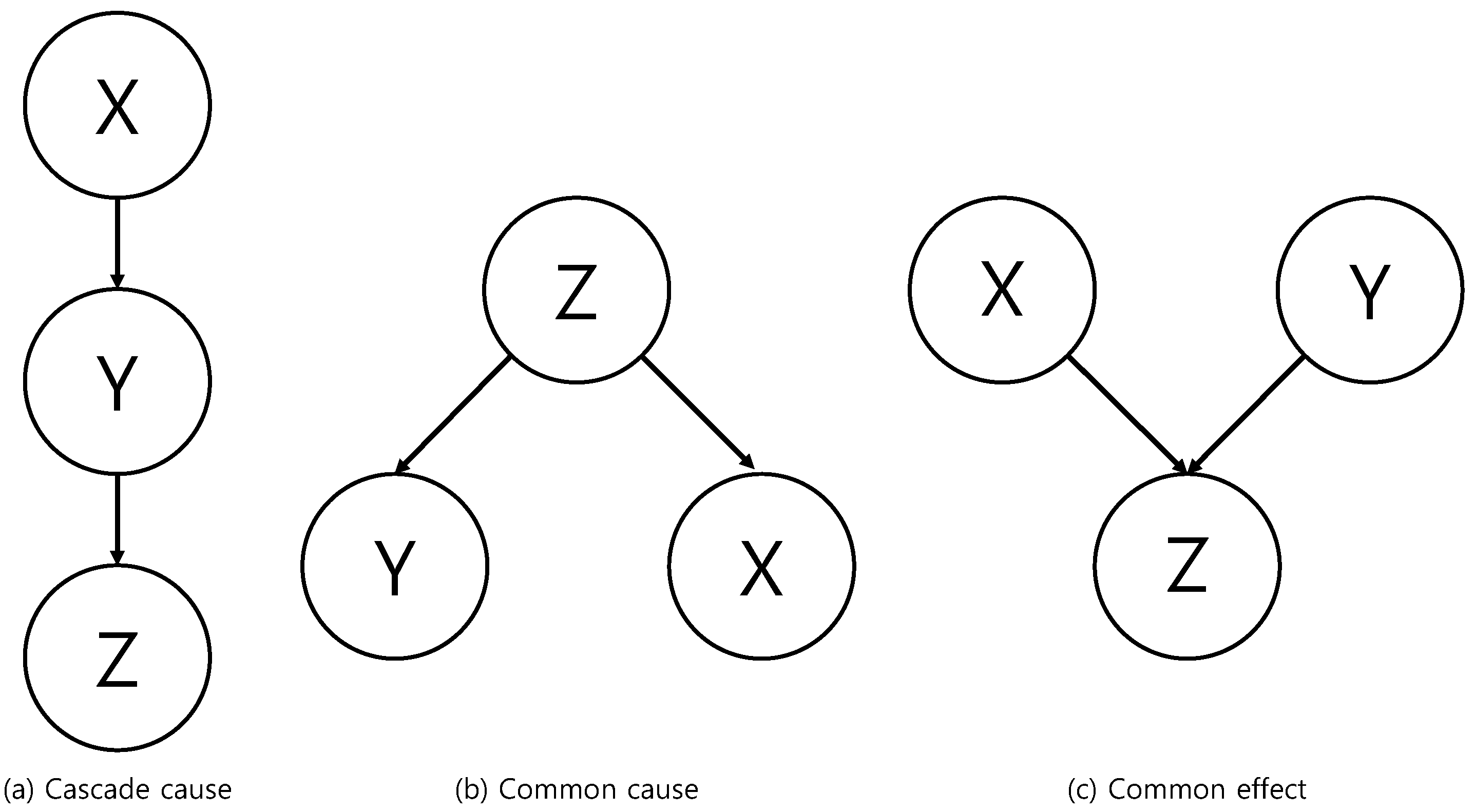
Figure 1 illustrates three general causal structures in Bayesian Networks (BN): Cascade, Common Cause, and Common Effect. Here, X, Y, and Z represent generic random variables in a causal system. Depending on the structure, each variable act as a cause, an effect, or both. The abstract variables allow us to demonstrate how information flows through different causal patterns and how conditional dependencies arise in Bayesian Networks.
Cascade (a) represents sequential causation, where one node directly affects another. Common Cause (b) describes a scenario where multiple nodes depend on a single parent node. Common Effect (c) illustrates two or more nodes jointly influencing a single node.
Conditional independence among variables simplifies inference in BNs [16]. Consider three variables X, Y, and Z.
Cascade (a) has linear dependencies expressed as:
P ( X , Z | Y ) = P ( X , Z , Y ) P ( Y ) = P ( X ) P ( Y | X ) P ( Z | Y ) P ( Y )
= P ( X | Y ) P ( Z | Y )
indicating that X and Z are conditionally independent given Y.
Common Cause (b), characterized by a shared parent node Z, is defined as:
P ( X , Y | Z ) = P ( X , Y , Z ) P ( Z ) = P ( X | Z ) P ( Y | Z ) P ( Z ) P ( Z )
= P ( X | Z ) P ( Y | Z )
Here, X and Y become conditionally independent given Z.
Common Effect (c), involving convergent nodes, introduces dependence between parent nodes when the state of their common child node is known:
P ( X , Y ) = Z P ( X , Y , Z ) = Z P ( X ) P ( Y ) P ( Z | X , Y )
In this situation, variables X and Y become dependent once we condition on Z. To simplify the computation of conditional probabilities, we often marginalize out variables that are not relevant, which is a common technique in Bayesian Networks [17].

4. Proposed Framework

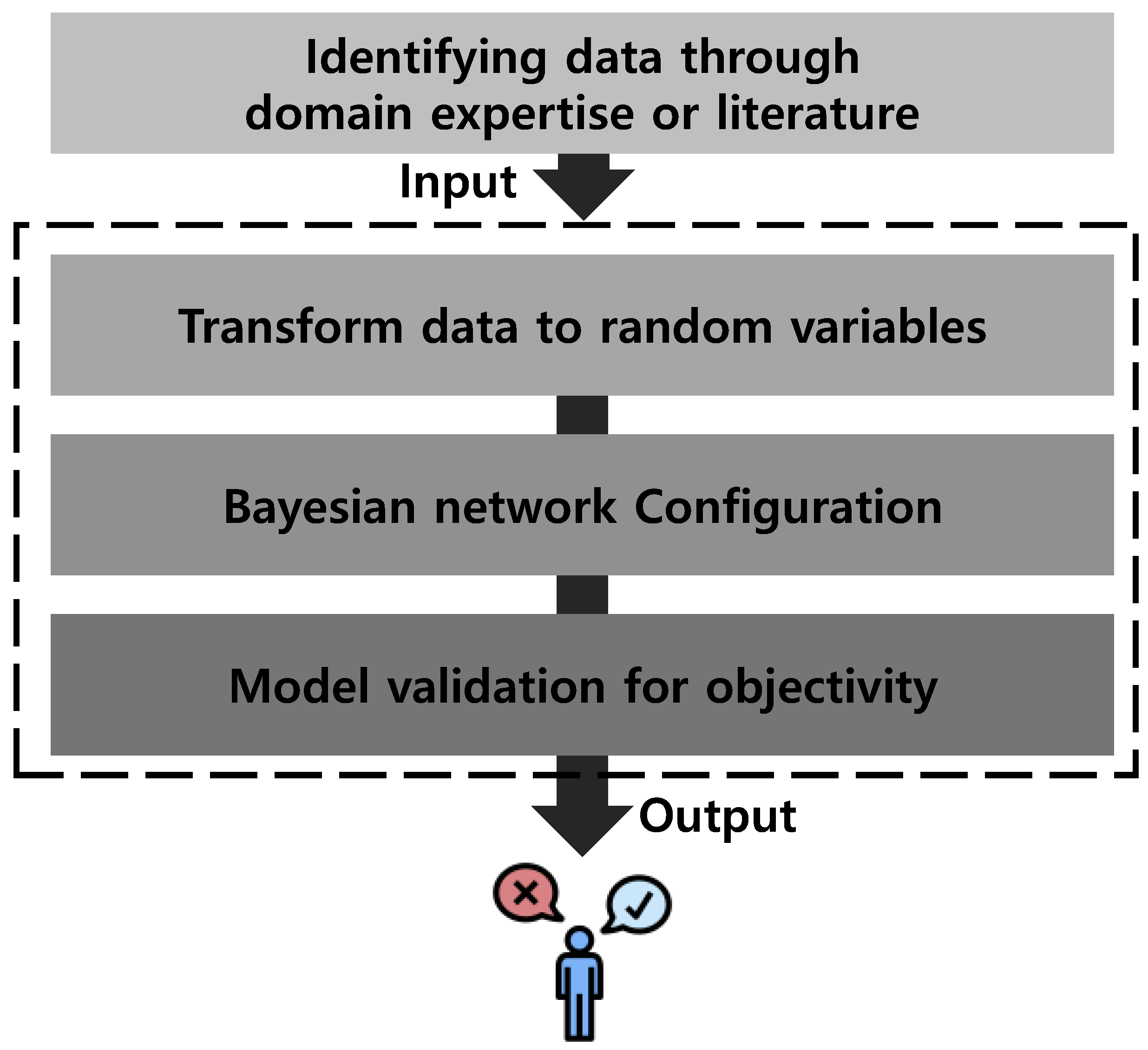
Figure 2 illustrates a structured framework designed to estimate cause-and-effect relationships among multiple factors using open data for effective site selection. Initially, the framework identifies essential pre-factors relevant to site selection. This step utilizes domain-specific expertise or thorough literature reviews to interpret and select pertinent open data. Subsequently, the interpreted data is converted into random variables suitable for probabilistic modeling. A hierarchical Bayesian Network (BN) is then constructed, clearly outlining the cause–effect relationships among these variables. Finally, the framework employs belief propagation combined with sensitivity analysis for robust model validation. This ensures the objectivity and reliability of the site-selection outcomes.

4.1. Probability Transformation Based on Data Types

To determine the probabilities associated with positive or negative outcomes for site selection, an appropriate probability transformation method must be applied according to the nature of the input data. The identified site selection factors typically consist of discrete or continuous data types obtained from open data sources.
Discrete data can be modeled using the PMF of the Bernoulli distribution, as shown in Equation (7). This distribution is suitable when outcomes are binary (positive or negative):
P M F ( x ; p ) = p , if x = 1 1 p , if x = 0
where x represents the binary variable indicating positive (1) or negative (0) outcomes, and p is the probability parameter of the positive outcome.
Continuous data possess infinite value ranges. To manage continuous data, a Bounded Normal Distribution, constrained within the data range [ a , b ] , is utilized. This method leverages thresholds derived from expert knowledge or literature, enabling precise calculation of the probability of an observation belonging to suitable or unsuitable categories. This approach minimizes information loss typically encountered when directly categorizing continuous variables.
The Bounded Normal Distribution is defined in Equation (8):
f ( x ; μ , σ , a , b ) = 1 σ φ x μ σ Φ b μ σ Φ a μ σ , if a x b 0 , otherwise
where x is the continuous random variable, μ and σ denote the mean and standard deviation, respectively, and a and b represent the minimum and maximum bounds of the data range. φ denotes the Probability Density Function (PDF) of the standard normal distribution, and Φ indicates the Cumulative Distribution Function (CDF).
To classify continuous variables, an appropriate threshold identified through expert consultation or literature is applied to the Bounded Normal Distribution’s PDF. Equation (9) demonstrates this classification approach:
P ( x ) = True , if x t h r e s h o l d ( upper threshold ) True , if x t h r e s h o l d ( lower threshold ) False , otherwise
where x is the observed value of the continuous variable, and the t h r e s h o l d denotes the threshold values provided by experts or literature, categorized into upper and lower thresholds depending on the nature of the suitability criteria.
Employing this method enables precise calculation of probabilities from input data, thus effectively supporting the construction of Conditional Probability Tables (CPTs) for Bayesian Networks.
The expert-defined thresholds were established by combining (i) guideline values used in sustainability and infrastructure planning, and (ii) consultation with local domain specialists. Each proposed threshold was compared against the empirical distribution to ensure that the cutoff did not coincide with extreme tails. This prevents the discretization from producing artificial suitability states.

4.2. Construction of Bayesian Network

To effectively leverage the three fundamental BN structures outlined previously (Section 3.2), we propose structuring variable relationships hierarchically to accurately represent the influencing factors in site selection. By utilizing the intrinsic property of BN edges that indicate causal relationships, upper-layer nodes reflect aggregated outcomes from the sub-layers.
Causal Direction Assumptions. The directed edges of the BN were specified based on domain knowledge and prior sustainable site-selection studies. A hierarchical constraint was imposed in which causal influence flows from sub-layer indicators (e.g., pollution, population density, construction cost) to their corresponding criteria (social, environmental, technical, economic), and then from these criteria to the final site-suitability node. This structure reflects standard causal-influence assumptions in decision analysis and prevents feedback relationships that are not supported by observational data. For tractability, sub-layer variables within the same category were treated as conditionally independent, simplifying CPT construction; however, this assumption may not fully capture real-world dependencies such as correlations among pollution metrics.
Hierarchical structuring categorizes outcomes from sub-layers as novel variables, enabling their integration into higher-layer nodes. Consequently, these upper-layer nodes serve as aggregated subsets of the final output node. Such a hierarchical approach simplifies the depiction of inter-variable relationships, effectively reducing their dependencies and significantly diminishing the complexity of the Conditional Probability Tables (CPTs).
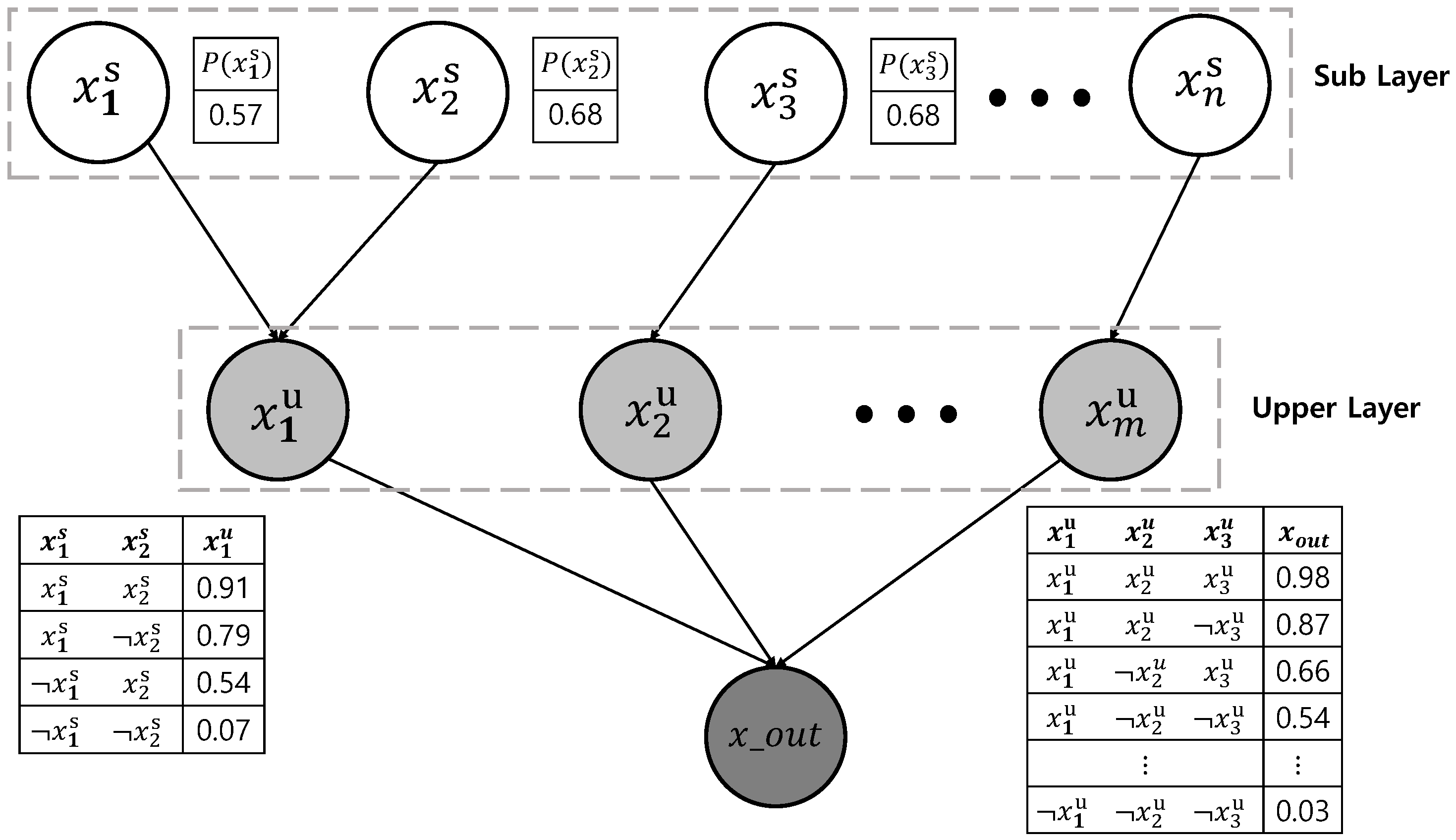
Figure 3 illustrates the hierarchical arrangement and associated structure of CPTs within the Bayesian Network. Sub-layer nodes have conditional probabilities independent of other variables within the same layer and remain unaffected by upper layers. Conversely, upper-layer nodes and the final output node are dependent on sub-layer states, necessitating conditional probabilities based on the observed sub-layer outcomes.
Equation (10) mathematically describes the CPT construction process for hierarchical nodes. For dependent nodes, CPTs are derived by the conditional formulation involving joint probabilities:
C P T = P ( x m u , x 1 s , , x n s ) P ( x 1 s , , x n s ) = P ( x m u ) , ( Upper - layer nodes ) P ( x out , x 1 u , , x m u ) P ( x 1 u , , x m u ) = P ( x out ) , ( Output node )
where P ( x 1 s , , x n s ) denotes the joint probability of sub-layer input nodes connected to upper-layer nodes, and P ( x 1 u , , x m u ) represents the joint probability of upper-layer nodes linked to the output node x out . Here, P ( x out ) signifies the final computed probability (positive or negative outcome) derived through the BN.
Using the chain rule, Bayesian Networks efficiently factorize multivariate probabilities into products of conditional probabilities. Equation (11) represents the general form of this chain rule:
P ( x 1 s , , x n s ) = i = 1 n P ( x i s | x 1 s , , x i 1 s )
where the joint probability is represented as a sequential product of conditional probabilities, allowing for accurate computation of the overall event probability.
Example 1. 
Table 1 illustrates how sub-layer probabilities combine into an upper-layer factor. For the upper-layer social node, given two sub-layer variables ( x 1 = population density, x 2 = road coverage).
Furthermore, Bayesian Networks inherently support probability updating upon the acquisition of new evidence. Hence, the framework can dynamically accommodate additional variables beyond the initial selection, facilitating efficient network restructuring. This adaptability significantly reduces the computational complexity associated with updating and inserting new data, thus enhancing the practicality and scalability of the framework.
Static Bayesian Networks (BNs) were selected over Dynamic Bayesian Networks (DBNs) and machine learning (ML) classifiers because the objective of this study is to construct an interpretable causal model that transparently represents hierarchical cause–effect relationships. DBNs require dense temporal data, which our open datasets do not consistently provide. Likewise, ML classifiers like random forests offer high predictive accuracy but lack interpretability and cannot explicitly encode causal dependencies essential for policy-driven site selection. BNs therefore provide the optimal balance of transparency, uncertainty quantification, and domain-knowledge integration for our decision-support context.

4.3. Model Validation for Objectivity

Sensitivity analysis and belief propagation are critical methodologies for evaluating the reliability and robustness of Bayesian Network (BN) models. These approaches provide insights into the significance of cause–effect relationships, highlighting the influence of specific factors within the model [18]. The proposed framework explicitly incorporates subjective expert judgments during the factor identification and BN construction phases to enhance objectivity.
Sensitivity analysis assesses the impact of individual factors by examining how variations in uncertain variables influence the output of the model. Specifically, it identifies variables with the highest uncertainty impact on the outcome node, examining how changes in these variables affect the results. This analysis is conducted by systematically adjusting thresholds derived from expert opinions or literature to observe resulting changes in outcomes.
Due to inherent difficulties in directly defining explicit functions for outcome nodes f ( x ) in Bayesian Networks, numerical approximation methods such as the Finite Difference Method are employed for sensitivity analysis. The approximation of partial derivatives is expressed as:
f ( x out ) x j s f ( x 1 s , , x j s + ϵ , , x n s ) f ( x 1 s , , x j s ϵ , , x n s ) 2 ϵ
Here, variable x j s is incremented and decremented by a small positive value ϵ , generating two different input vectors. The resulting difference in output values, divided by 2 ϵ , approximates the derivative concerning the variable x j s . Although increasing ϵ enhances approximation accuracy, it simultaneously increases computational costs, indicating a trade-off between accuracy and computational efficiency.
Belief propagation in BN is employed to propagate uncertainties through network nodes, thus facilitating probability updates as new data become available. BN offers two primary propagation methodologies:
  • Forward Propagation: Conditional Probability Tables (CPTs) are calculated based on provided data and prior probabilities. This method determines output variable probabilities based on input variables.
  • Backward Propagation: CPTs are computed using posterior probabilities of known output variables, thus determining input variable probabilities based on output data.
Both propagation methods allow Bayesian Networks to dynamically integrate new information and update probabilistic relationships accordingly.
Belief propagation also supports sensitivity analysis by demonstrating how modifications in causal variables affect outcomes. For example, given probability variables P ( X ) and P ( Y ) , an updated value of P ( X ) can recalibrate the probability distribution of P ( Y ) , thereby illustrating how changes in one variable influence others.
Marginalization inference, essential for analyzing distribution changes based on evidence (observed outcomes), is defined as:
P ( X E ) = Y P ( X , Y E ) , ( Forward Propagation ) Z P ( X Y , E ) P ( Y E ) , ( Backward Propagation )
Here, X denotes the output variable, Y represents input variables, E is evidence, and Z indicates remaining unobserved variables. The term P ( X , Y E ) is the joint probability distribution of X and Y given evidence E. Additionally, P ( Y E ) calculates conditional probabilities based on observed evidence and employs Bayes’ theorem to infer probabilities for unobserved variables.
Through these structured processes, final probabilities indicating positive or negative site selection outcomes can be reliably computed, serving as an essential foundation for informed decision-making in site selection contexts.

5. Case Study: Eco-Friendly Vehicle Charging Stations

This section presents experiments demonstrating the application of the proposed framework to real-world scenarios.

5.1. Selection of Necessary Factors

Table 2 summarizes public datasets and their corresponding causal variables categorized into social, environmental, technical, and economic factors essential for selecting eco-friendly vehicle charging station sites. Social factors include population density, monthly average floating population density, the number of eco-friendly vehicles per charging station, and road coverage data. Environmental considerations encompass air pollution metrics, including ozone, carbon monoxide, nitrogen dioxide levels, and particulate matter concentrations. Technical variables focus on charger capacity, hydrogen fuel supply methods, and the number of vehicles serviced per charging station. Economic aspects address charging station construction costs, average income levels at candidate sites, and anticipated revenue for hydrogen charging stations. All datasets listed can be obtained through publicly accessible open data portals, ensuring transparency and replicability in the analysis.
To ensure the long-term and short-term sustainability of eco-friendly vehicle charging stations (electric, hydrogen), prior factors were identified by domain experts. Each sub-layer utilized open data. The literature defines upper layers as economic, social, technological, and environmental factors crucial for the sustainability of charging station sites [19,20]. Sub-layer variables derived from open data are linked to upper-layer categories based on their characteristics, clearly representing hierarchical cause–effect relationships.

5.2. Data Preprocessing

Before estimating probabilistic distributions, all continuous variables underwent preprocessing. Extreme outliers—defined as observations beyond 1.5 × IQR or obvious data-entry anomalies—were removed. Variables were standardized for exploratory inspection to ensure numerical stability, although BN inference itself uses only the estimated parameters and is therefore scale-invariant. Monthly or annual open-data records were temporally aggregated over multiple years, and the mean, variance, and observed bounds from these aggregated datasets were used to parameterize the bounded normal distributions in Table 3, Table 4, Table 5 and Table 6. This approach smooths short-term noise while retaining long-term variability relevant to site suitability evaluation.
Sensitivity to Threshold Selection. To evaluate robustness, each continuous threshold was perturbed within a ±10–20% range around its reference value. For every perturbed setting, we recalculated posterior suitability probabilities and site rankings. Across all perturbations, the relative ranking of candidate sites remained unchanged, and the posterior suitability of the top-ranked sites varied only marginally (within 10%). These results indicate that the BN outcomes are not overly sensitive to the precise threshold values.

5.3. Probabilistic Modeling Results

We modeled the cause–effect relationships utilizing open data, transforming them into probabilistic variables to construct a Bayesian Network (BN). The collected data were classified into discrete and continuous types, each transformed appropriately following the methods detailed in Section 4.1.
Discrete variables were analyzed using probability mass functions (PMFs), whereas continuous variables employed probability density functions (PDFs). Specifically, continuous data variables were modeled using bounded normal distributions constrained by the identified lower bound (LB) and upper bound (RB), along with expert-defined thresholds.
The probabilistic transformations applied to social, environmental, technological, and economic variables are elaborated in subsequent sections. It should be noted that factor identification and related thresholds might vary according to expert opinions and relevant literature. The resulting DAG should therefore be interpreted as a decision-oriented causal influence model grounded in domain theory, rather than a causal graph inferred from randomized or interventional data.
Note that Table 3 provides a summary of the notation used for probabilistic modeling.

5.3.1. Social Factors Modeling

Table 4 details the probabilistic transformation applied to variables within the social factor category. The interpretation of the probabilistic transformation processes for social variables is as follows:
  • Population Density ( x 1 ): The Probability Density Function (PDF) is characterized by a mean ( μ ) of 24,372 and a standard deviation ( σ ) of 8179, constrained within a data range from 13,242 to 46,577 persons. The expert-defined threshold is 20,000 persons.
  • Monthly Average Floating Population Density ( x 2 ): This PDF exhibits a mean ( μ ) of 441,344 and a standard deviation ( σ ) of 205,145, bounded within the range [121,290, 867,841] persons. A threshold of 400,000 persons was selected based on expert judgment.
  • Number of Eco-friendly Vehicles per Charging Station ( x 3 ): This variable quantifies the maximum number of eco-friendly vehicles per available charging station. The constructed PDF has a mean ( μ ) of 4 and a standard deviation ( σ ) of 173, ranging from 0 to 1942 units. The threshold established by experts is 5 units.
  • Road Coverage ( x 4 ): Road coverage considers a comprehensive calculation involving road capacity, population distribution, and land area, essential for evaluating local traffic conditions around potential charging stations. The associated PDF has a mean ( μ ) of 3.70% and a standard deviation ( σ ) of 1.87%, with a range between 1.29% and 15.34%. The threshold determined through expert analysis is set at 2.9%.

5.3.2. Environmental Factors Modeling

Table 5 summarizes probabilistic modeling for environmental factors, emphasizing air pollution reduction due to charging station installations. The probabilistic transformation processes for environmental variables are interpreted as follows:
  • Nitrogen Dioxide Air Pollution Level ( x 5 ): Primarily emitted from internal combustion engine vehicles, this pollutant poses significant health risks. The constructed PDF has a mean ( μ ) of 0.031292 ppm, a standard deviation ( σ ) of 0.014482 ppm, and a defined range between 0.001 and 0.088 ppm. An expert-based threshold of 0.012 ppm is used.
  • Carbon Monoxide Air Pollution Level ( x 6 ): Generated mainly from fuel combustion, carbon monoxide is a harmful pollutant that requires reduction in ambient air. The PDF is characterized by a mean ( μ ) of 0.441904 ppm and a standard deviation ( σ ) of 0.150112 ppm, with a data range between 0.1 and 1.1 ppm. The threshold value is set at 0.3 ppm.
  • Ozone Air Pollution Level ( x 7 ): Ozone produced by internal combustion vehicles is modeled using a PDF with a mean ( μ ) of 0.011388 ppm, a standard deviation ( σ ) of 0.011069 ppm, and a range between 0.001 and 0.052 ppm. The threshold is established at 0.003 ppm based on expert recommendations.
  • Particulate Matter ( x 8 ): The constructed PDF has a mean ( μ ) of 37.623809 μ g / m 3 , a standard deviation ( σ ) of 19.035647 μ g / m 3 , and a range spanning from 6 to 99 μ g / m 3 . An expert-defined threshold is set at 15 μ g / m 3 .

5.3.3. Technical Factors Modeling

Table 6 summarizes the probabilistic modeling process for technological factors, highlighting the technical suitability of candidate sites for charging station installations. The interpretations for the probabilistic transformation of technological variables are as follows:
  • Charger Capacity ( x 9 ): Charger capacity is treated as discrete data due to distinct categorization into standard capacity ranges. This variable is modeled using a Bernoulli distribution, indicating suitability (True) or unsuitability (False) based on common and most frequently available charger capacities.
  • Hydrogen Fuel Supply Method ( x 10 ): This variable is inherently categorical, reflecting specific hydrogen fuel supply methods. The most stable and advantageous method is identified, and its suitability is modeled through a Bernoulli distribution, yielding binary True or False outcomes.
  • Number of Vehicles Served per Charging Station ( x 11 ): This variable quantifies the potential number of vehicles serviced at candidate sites, based on available parking capacity. The corresponding PDF is defined by a mean ( μ ) of 65.667 vehicles, a standard deviation ( σ ) of 5.1316, and a data range between 50.272 and 85.395 vehicles. An expert-derived threshold of 33.456 vehicles is applied.

5.3.4. Economic Factors Modeling

Table 7 summarizes the probabilistic modeling process for economic factors, emphasizing the installation costs and projected revenues associated with charging stations. The interpretation of probabilistic transformations for economic variables is provided below:
  • Charging Station Construction Cost ( x 12 ): This variable represents the installation cost for the charging station infrastructure. The Probability Density Function (PDF) has a mean ( μ ) of 31,940,000 Korean Won (KRW) (approximately 24,200 USD) and a standard deviation ( σ ) of 13,302,982 KRW, with data ranging between 16,900,000 and 58,000,000 KRW. The expert-defined threshold is set at 35,000,000 KRW.
  • Average Income at Candidate Site ( x 13 ): Reflecting residents’ average annual income at potential locations, this PDF is characterized by a mean ( μ ) of 3021.68 (10,000 KRW), a standard deviation ( σ ) of 753.25 (10,000 KRW), and a range between 1752.97 and 5066.34 (10,000 KRW). An expert-based threshold of 3600 (10,000 KRW) is applied.
  • Expected Revenue of Hydrogen Charging Station ( x 14 ): Representing anticipated operational revenue from the installed hydrogen charging stations, the PDF has a mean ( μ ) of −110,000,000 KRW and a standard deviation ( σ ) of 100,000,000 KRW, with a range from −300,000,000 to 160,000,000 KRW. The threshold value set by experts is 0 KRW. This projection explicitly excludes government subsidies.

5.4. Bayesian Network Construction Results

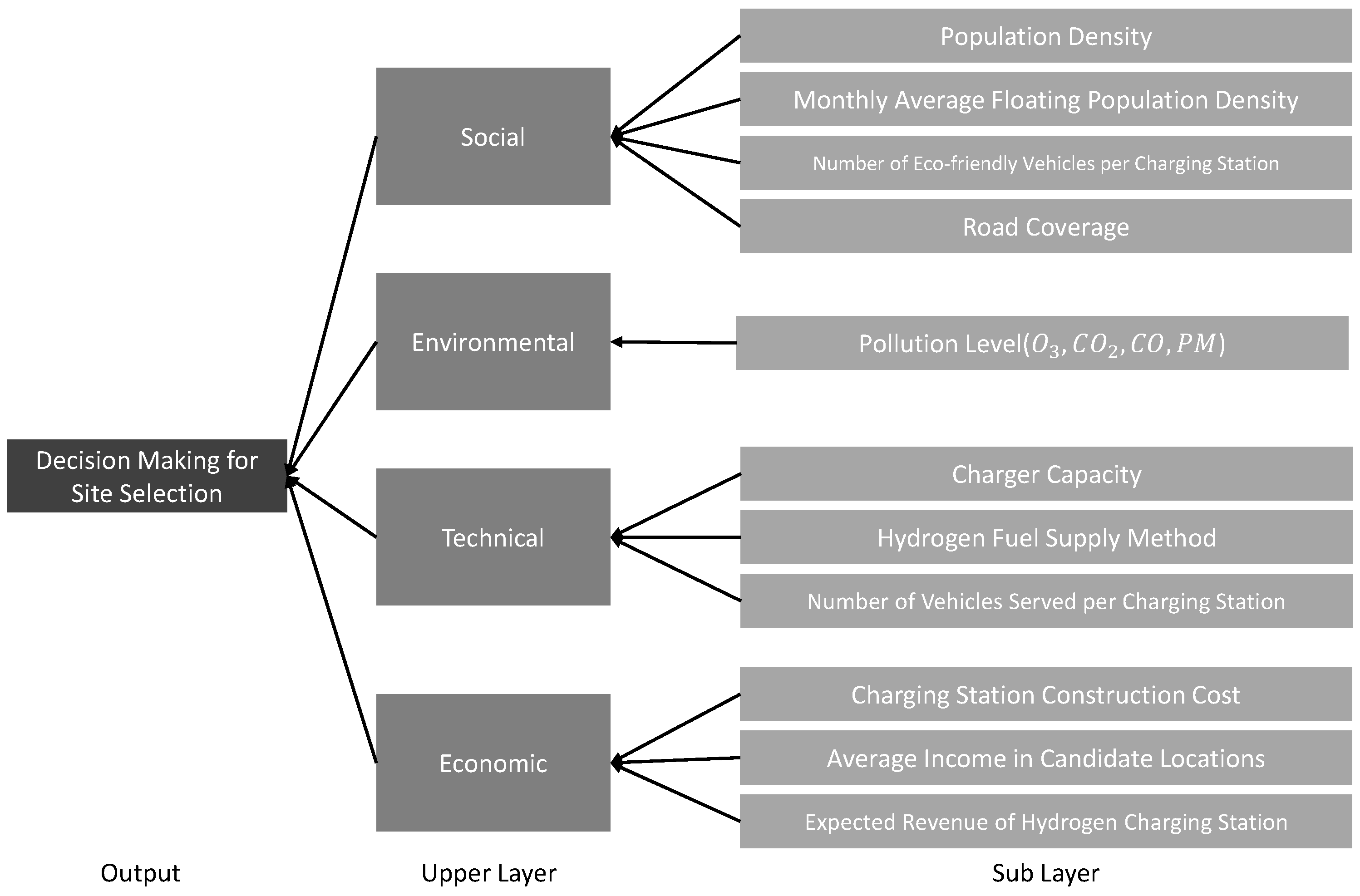
Figure 4 illustrates the hierarchical structure of the Bayesian Network (BN), constructed using derived probabilistic variables. This diagram clearly showcases hierarchical cause–effect relationships among different factor categories, namely social, environmental, technical, and economic. Each sub-layer node connects systematically to its corresponding upper-layer category, effectively modeling causal dependencies and significantly simplifying the construction of Conditional Probability Tables (CPTs). While CPTs at the sub-layer contain independent probability values, nodes at the upper-layer depend on states determined by lower-layer variables. For informed decision-making, optimal probabilities derived from the CPTs were employed, applying a decision threshold exemplarily set at 60%. Moreover, the structured hierarchical representation also allows for assessing individual factor influences, thereby enabling decision-making based on detailed relational insights rather than relying exclusively on aggregated final outcomes.

5.5. Model Validation for Increased Objectivity

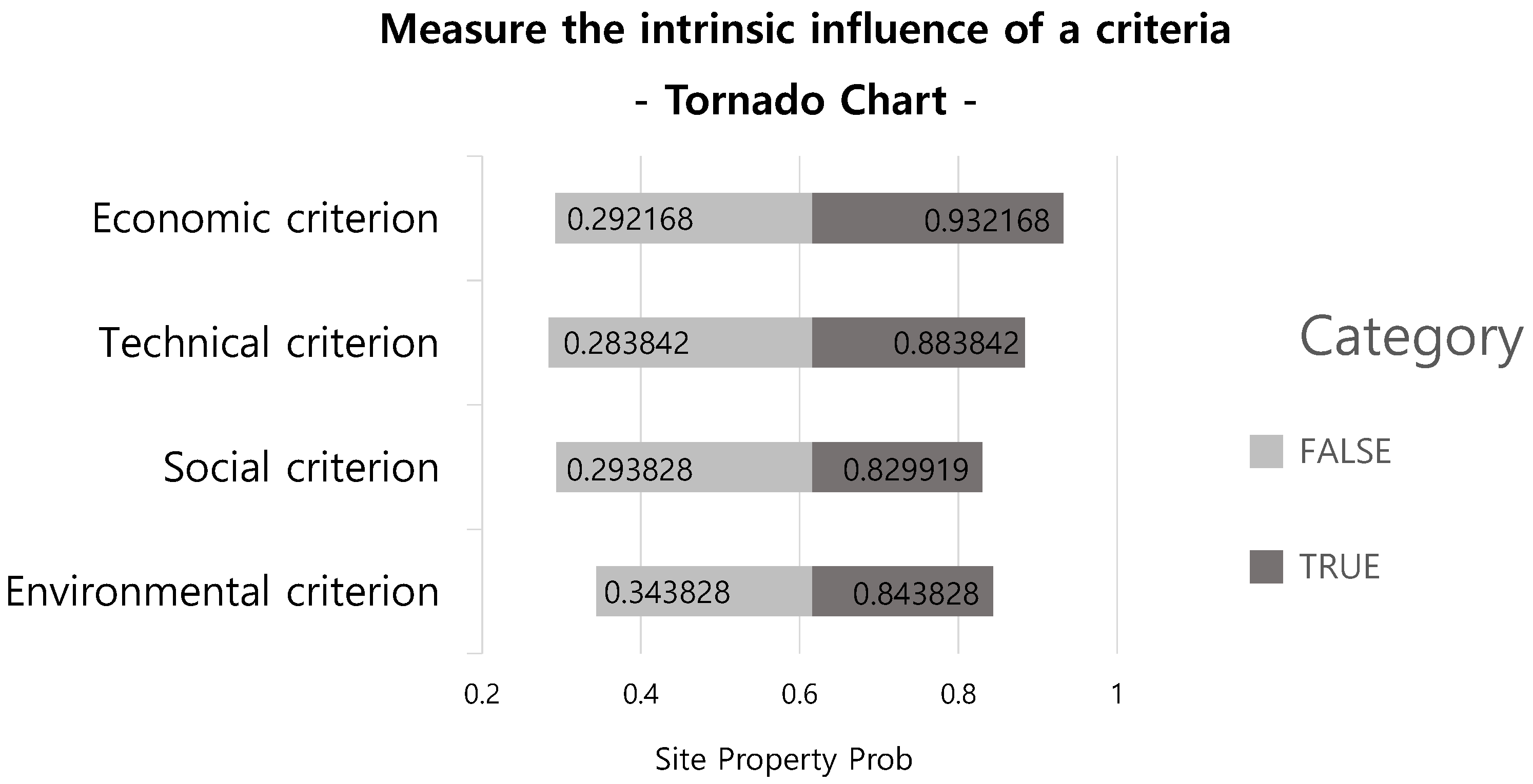
Sensitivity analysis was performed to evaluate the impact of individual factors on candidate site assessments, as visualized by the tornado chart in Figure 5. The variations in outcome values, induced by changes in factor states (TRUE or FALSE), provide insights into underlying dependencies and the relative significance of each criterion.
The analysis revealed that alterations in economic factors produced the largest variation in outcomes (0.64), indicating their highest influence. Technological factors resulted in an outcome variation of 0.6, social factors led to a variation of 0.536, and environmental factors exhibited the smallest impact, with a variation of 0.5. These results demonstrate that while economic factors significantly influence site selection decisions, environmental factors, although important, exert a comparatively smaller effect.
Beyond qualitative sensitivity analysis, we computed quantitative validation metrics to assess the BN’s predictive behavior. Average log-likelihood was calculated on held-out nodes, and posterior suitability probabilities were compared between locations with and without existing charging stations, with installed locations consistently receiving higher predicted suitability ( Δ = X Y ) , indicating effective discrimination between more and less viable sites. These metrics complement the sensitivity analysis and demonstrate predictive consistency despite the absence of explicit ground-truth labels. In addition, because the finite difference method used for sensitivity assessment approximates partial derivatives and introduces numerical error dependent on the step size ϵ , we conducted a stability check by varying ϵ across 0.01, 0.05, 0.1, confirming that the ranking of influential factors remained unchanged. Although theoretical error bounds are challenging to derive for non-linear BNs, this empirical verification supports the robustness of the approximation.
These results are consistent with prior MCDM studies that report economic and technical feasibility as dominant determinants when cost and service-level criteria are included explicitly in evaluation frameworks [6,19,20]. Other studies emphasize environmental priorities more strongly depending on regulatory or policy goals [11]. Thus, the factor influence observed in Busan reflects the local decision context rather than a universal causal pattern. The hierarchical BN framework remains flexible and can incorporate alternative weighting philosophies or policy-driven priorities.

5.6. Site Selection Probability Results

Following the probabilistic transformation, Bayesian Network (BN) construction, and subsequent model validation, candidate sites were assessed utilizing the developed hierarchical cause–effect networks and resulting probability values. Candidate sites analyzed were situated in Busan, South Korea.
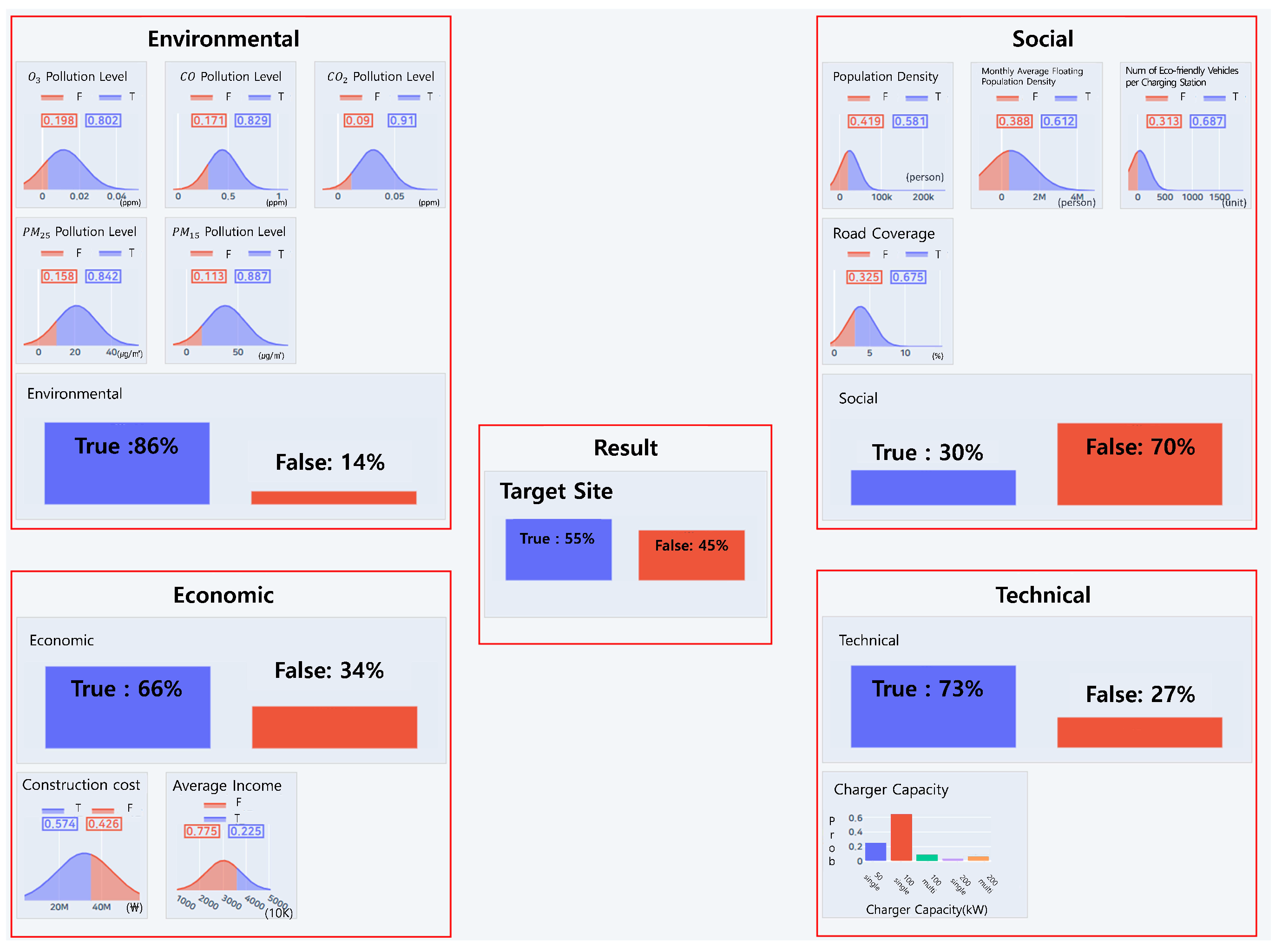
Figure 6 presents the evaluation results for converting an arbitrary parking lot into an electric vehicle (EV) charging station. Decision-makers can utilize these analyses by considering both the final probability outcomes and probabilities at parent nodes within established causal structures. Belief propagation capabilities inherent to Bayesian Networks facilitate structured probability updates in response to new evidence, thereby enhancing the adaptability and robustness of the decision-making framework.
The conducted experiments confirmed the practicality and efficacy of employing open data for Bayesian Network construction. The proposed methodology exhibits broad applicability beyond eco-friendly vehicle charging stations, promoting proactive recognition and management of cause–effect relationships essential for facility sustainability. Furthermore, conducting site suitability analyses prior to actual installations can offer substantial economic advantages, including potential cost reductions and improved resource allocation.

6. Discussion

  • Generalizability. Although the empirical analysis focuses on Busan, the proposed framework is structurally general. The four-step pipeline—factor identification, probabilistic transformation, hierarchical BN construction, and validation—can be reproduced for other cities or infrastructure types by substituting appropriate sub-layer indicators and recalibrating the CPTs. Because the model structure is modular, only the parameterization changes when applying the method to different contexts.
  • Adaptability to Rural and International Contexts. The modular BN structure allows site-selection factors to be replaced with region-specific indicators. For rural regions, factors such as grid connectivity, land availability, and transportation demand may dominate. For international applications, socio-economic and regulatory factors would require recalibration. Only CPT parameters—not the overall framework—must be rewritten, enabling straightforward transferability.
  • Computational Feasibility. The hierarchical structure of the proposed BN significantly reduces computational complexity by limiting parent sets and preventing exponential CPT expansion. Even if additional sub-layer variables or candidate locations are introduced, inference remains tractable because marginalization and belief propagation scale with the number of parents per node rather than total variable count. This makes the framework computationally feasible for larger cities or expanded factor sets.
  • Comparison with Classical MCDM Methods. While AHP, TOPSIS, and Fuzzy MCDM approaches provide structured ranking mechanisms [1,2,5,10,11], they do not incorporate causal relationships or probabilistic uncertainty. When we applied a simplified TOPSIS model using the same factors, the resulting rankings differed from the BN-derived probabilities due to the linear compensatory nature of TOPSIS. BN results instead reflect conditional interactions among factors, which explains discrepancies and highlights the advantage of causal modeling for complex site-selection tasks.

7. Conclusions and Future Work

In this study, we proposed and validated a Bayesian Network (BN)-based framework leveraging open data to enhance transparency and effectiveness in site selection processes. By systematically integrating expert knowledge, relevant literature, and publicly available data, we successfully modeled complex hierarchical cause–effect relationships across social, environmental, technical, and economic factors. The experimental application, focusing on eco-friendly vehicle charging stations in South Korea, demonstrated the framework’s capability to provide comprehensive and objective probabilistic assessments of candidate sites. The results confirm that the hierarchical BN approach effectively captures inter-dependencies among criteria, facilitating informed and robust decision-making. Furthermore, sensitivity analysis highlighted the relative significance of economic factors compared to other criteria, providing valuable insights into the prioritization of resources during the site selection process.
Future studies should address temporal variability inherent in open data, as updates may introduce inconsistencies when multiple factors are considered simultaneously. Strengthening collaboration with local governments and data providers to ensure regular, standardized data updates can further enhance model reliability. Because open data evolve over time and may exhibit temporal dependencies, future work will also explore time-aware probabilistic models—such as Dynamic Bayesian Networks, Hidden Markov Models, and state-space formulations—to increase robustness against volatility in socio-economic and environmental patterns. Additionally, reducing reliance on subjective expert assessments through extended data collection or data-driven parameter learning could improve objectivity. Finally, the adaptability of this framework to diverse facility types and broader geographic contexts should be investigated to validate its generalizability and practical value.

Author Contributions

Conceptualization, J.H.; methodology, J.H., D.K., J.P. and S.C.; software, J.H.; validation, J.H., D.K., J.P. and S.C.; data curation, J.H. and S.C.; writing—original draft preparation, J.H.; writing—review and editing, J.H. and S.C. All authors have read and agreed to the published version of the manuscript.

Funding

This work was supported by the Dong-A University research fund.

Institutional Review Board Statement

Not applicable.

Informed Consent Statement

Not applicable.

Data Availability Statement

The original data presented in this study are publicly available in the Korean Open Data Portal and Busan Metropolitan City open data repositories. All datasets can be accessed through the sources listed in Table 1., e.g., https://www.data.go.kr (accessed on 12 October 2025) and https://data.busan.go.kr (accessed on 12 October 2025), and no proprietary data were used.

Acknowledgments

This work was supported by the Dong-A University research fund.

Conflicts of Interest

The authors declare no conflicts of interest.

Abbreviations

The following abbreviations are used in this manuscript:
BNBayesian Network
PGMProbabilistic Graphical Model
MCDMMulti-Criteria Decision-Making
AHPAnalytic Hierarchy Process
TOPSISTechnique for Order Preference by Similarity to Ideal Solution
GISGeographic Information System
SFSSpherical Fuzzy Sets
CBNCopula Bayesian Network
FAHPFuzzy Analytic Hierarchy Process
PCAPrincipal Component Analysis
PDFProbability Density Function
PMFProbability Mass Function
CPTConditional Probability Table
HMMHidden Markov Model
EVElectric Vehicle

References

  1. Saaty, R.W. The analytic hierarchy process—What it is and how it is used. Math. Model. 1987, 9, 161–176. [Google Scholar] [CrossRef]
  2. Behzadian, M.; Otaghsara, S.K.; Yazdani, M.; Ignatius, J. A state-of the-art survey of TOPSIS applications. Expert Syst. Appl. 2012, 39, 13051–13069. [Google Scholar] [CrossRef]
  3. Pan, Y.; Zhang, L.; Koh, J.; Deng, Y. An adaptive decision making method with copula Bayesian network for location selection. Inf. Sci. 2021, 544, 56–77. [Google Scholar] [CrossRef]
  4. Farahani, R.Z.; SteadieSeifi, M.; Asgari, N. Multiple criteria facility location problems: A survey. Appl. Math. Model. 2010, 34, 1689–1709. [Google Scholar] [CrossRef]
  5. Pathan, A.I.; Girish Agnihotri, P.; Said, S.; Patel, D. AHP and TOPSIS based flood risk assessment—A case study of the Navsari City, Gujarat, India. Environ. Monit. Assess. 2022, 194, 509. [Google Scholar] [CrossRef]
  6. Şener, B.; Süzen, M.L.; Doyuran, V. Landfill site selection by using geographic information systems. Environ. Geol. 2006, 49, 376–388. [Google Scholar] [CrossRef]
  7. Vahidnia, M.H.; Alesheikh, A.A.; Alimohammadi, A. Hospital site selection using fuzzy AHP and its derivatives. J. Environ. Manag. 2009, 90, 3048–3056. [Google Scholar] [CrossRef] [PubMed]
  8. Özcan, T.; Çelebi, N.; Esnaf, Ş. Comparative analysis of multi-criteria decision making methodologies and implementation of a warehouse location selection problem. Expert Syst. Appl. 2011, 38, 9773–9779. [Google Scholar] [CrossRef]
  9. Rikalovic, A.; Cosic, I.; Lazarevic, D. GIS Based Multi-criteria Analysis for Industrial Site Selection. Procedia Eng. 2014, 69, 1054–1063. [Google Scholar] [CrossRef]
  10. Kutlu Gündoğdu, F.; Kahraman, C. A novel spherical fuzzy analytic hierarchy process and its renewable energy application. Soft Comput. 2020, 24, 4607–4621. [Google Scholar] [CrossRef]
  11. Mathew, M.; Chakrabortty, R.K.; Ryan, M.J. A novel approach integrating AHP and TOPSIS under spherical fuzzy sets for advanced manufacturing system selection. Eng. Appl. Artif. Intell. 2020, 96, 103988. [Google Scholar] [CrossRef]
  12. Zhang, Y.; Teoh, B.K.; Zhang, L. Integrated Bayesian networks with GIS for electric vehicles charging site selection. J. Clean. Prod. 2022, 344, 131049. [Google Scholar] [CrossRef]
  13. Xue, J.; Yip, T.L.; Wu, B.; Wu, C.; van Gelder, P. A novel fuzzy Bayesian network-based MADM model for offshore wind turbine selection in busy waterways: An application to a case in China. Renew. Energy 2021, 172, 897–917. [Google Scholar] [CrossRef]
  14. Heckerman, D. A Tutorial on Learning with Bayesian Networks. In Innovations in Bayesian Networks: Theory and Applications; Holmes, D.E., Jain, L.C., Eds.; Springer: Berlin/Heidelberg, Germany, 2008; pp. 33–82. [Google Scholar]
  15. Marcot, B.G.; Penman, T.D. Advances in Bayesian network modelling: Integration of modelling technologies. Environ. Model. Softw. 2019, 111, 386–393. [Google Scholar] [CrossRef]
  16. Kitson, N.K.; Constantinou, A.C.; Guo, Z.; Liu, Y.; Chobtham, K. A survey of Bayesian Network structure learning. Artif. Intell. Rev. 2023, 56, 8721–8814. [Google Scholar] [CrossRef]
  17. Geiger, D.; Verma, T.; Pearl, J. Identifying independence in bayesian networks. Networks 1990, 20, 507–534. [Google Scholar] [CrossRef]
  18. Laskey, K.B. Sensitivity Analysis for Probability Assessments in Bayesian Networks. In Uncertainty in Artificial Intelligence; Heckerman, D., Mamdani, A., Eds.; Morgan Kaufmann: San Francisco, CA, USA, 1993; pp. 136–142. [Google Scholar]
  19. Feng, J.; Xu, S.X.; Li, M. A novel multi-criteria decision-making method for selecting the site of an electric-vehicle charging station from a sustainable perspective. Sustain. Cities Soc. 2021, 65, 102623. [Google Scholar] [CrossRef]
  20. Mishra, A.R.; Rani, P.; Saha, A. Single-valued neutrosophic similarity measure-based additive ratio assessment framework for optimal site selection of electric vehicle charging station. Int. J. Intell. Syst. 2021, 36, 5573–5604. [Google Scholar] [CrossRef]
Figure 1. The three cause–effect types: (a) Cascade cause, (b) Common cause, and (c) Common effect.
Mathematics 13 03943 g001
Figure 2. The proposed framework for assessing the site selection.
Mathematics 13 03943 g002
Figure 3. Example of Bayesian Network Configuration.
Mathematics 13 03943 g003
Figure 4. The hierarchical structure of the Bayesian Network (BN) for our case study.
Mathematics 13 03943 g004
Figure 5. Tornado chart about measurement the intrinsic influence of a criteria.
Mathematics 13 03943 g005
Figure 6. Site-selection inference results for an electric vehicle charging station. The figure shows the posterior probabilities for sub-layer variables (environmental, social, technical, economic) and how these propagate to the final suitability score through belief propagation. Purple colors indicate higher suitability contributions, enabling decision-makers to interpret not only the final result but also its causal components.
Mathematics 13 03943 g006
Table 1. Conditional Probability Table for the Social Node.
x 1 x 2 P ( Social = True )
TT0.91
TF0.79
FT0.54
FF0.07
Table 2. A list of public datasets and corresponding cause–effect variables.
Effect VariablesCausal VariablesDataset Name
SocialPopulation DensityResident Population by Administrative Region/Age Group
Monthly Average Floating Population DensityBusan Metropolitan City Floating Population Data
Number of Eco-friendly Vehicles per Charging StationNationwide Charging Station and Vehicle Status Data
Road CoverageOpenStreetMap API
EnvironmentalOzone Air Pollution LevelMonthly Ozone Air Pollution Levels
Carbon Monoxide Air Pollution LevelMonthly Carbon Monoxide Air Pollution Levels
Nitrogen Dioxide Air Pollution LevelMonthly Nitrogen Dioxide Air Pollution Levels
Particulate MatterMonthly Particulate Matter Air Pollution Levels
TechnicalCharger CapacityNationwide Charging Station Status (Electric, Hydrogen, LPG)
Hydrogen Fuel Supply MethodHydrogen Vehicle Charging Station Status
Number of Vehicles Served per Charging StationBusan Metropolitan City Public Parking Information
EconomicCharging Station Construction CostMinistry of Environment Statistics Data
Average Income in Candidate SiteNationwide Household Income Data
Expected Revenue of Hydrogen Charging StationMinistry of Environment Statistics Data
Table 3. Notation Used for Stochastic Transformation Modeling.
AnnotationDescription
x ¯ Mean of variable x
σ Standard deviation of variable x
R B ( x ) Maximum (right bound) value of data for variable x
L B ( x ) Minimum (left bound) value of data for variable x
t h r e s h o l d Threshold values based on expert judgment or literature
P D F ( x ) Probability density function transformation for variable x
P ( x ) Probabilistic representation of variable x
Table 4. Modeling the Random Variable Transformation for Social Factors.
VariablesProbability Transformation Process
Population Density ( x 1 ) P D F ( x 1 ) = μ x 1 = 24,372 σ = 8179 RB ( x 1 ) < 46,577 LB ( x 1 ) > 13,242 threshold = 20,000
Monthly Average
Floating Population Density ( x 2 )
P D F ( x 2 ) = μ x 2 = 441,344 σ = 205,145 RB ( x 2 ) < 867,841 LB ( x 2 ) > 121,290 threshold = 400,000
Number of Eco-friendly
Vehicles per Charging Station ( x 3 )
P D F ( x 3 ) = μ x 3 = 4 σ = 173 RB ( x 3 ) < 1942 LB ( x 3 ) > 0 threshold = 5
Road Coverage ( x 4 ) P D F ( x 4 ) = μ x 4 = 3.70 σ = 1.87 RB ( x 4 ) < 15.34 LB ( x 4 ) > 1.29 threshold = 2.9
Table 5. Modeling the Random Variable Transformation for Environmental Factors.
VariablesProbability Transformation Process
Nitrogen Dioxide
Air Pollution Level ( x 5 )
P D F ( x 5 ) = μ x 5 = 0.031292 σ = 0.014482 RB ( x 5 ) 0.088 LB ( x 5 ) 0.001 threshold = 0.012
Carbon Monoxide
Air Pollution Level ( x 6 )
P D F ( x 6 ) = μ x 6 = 0.441904 σ = 0.150112 RB ( x 6 ) 1.1 LB ( x 6 ) 0.1 threshold = 0.3
Ozone Air Pollution Level ( x 7 ) P D F ( x 7 ) = μ x 7 = 0.011388 σ = 0.011069 RB ( x 7 ) 0.052 LB ( x 7 ) 0.001 threshold = 0.003
Particulate Matter ( x 8 ) P D F ( x 8 ) = μ x 8 = 37.623809 σ = 19.035647 RB ( x 8 ) 99.0 LB ( x 8 ) 6.0 threshold = 15
Table 6. Modeling the Random Variable Transformation for Technical Factors.
VariablesProbability Transformation Process
Charger Capacity ( x 9 ) P ( x 9 )
Hydrogen Fuel Supply Method ( x 10 ) P ( x 10 )
Number of Vehicles Served per
Charging Station ( x 11 )
P D F ( x 11 ) = μ x 11 = 65.667 σ = 5.1316 RB ( x 11 ) 85.395 LB ( x 11 ) 50.272 threshold = 33.456
Table 7. Modeling the Random Variable Transformation for Economic Factors.
VariablesProbability Transformation Process
Charging Station
Construction Cost ( x 12 )
P D F ( x 12 ) = μ x 12 = 31,940,000 σ = 13,302,982 RB ( x 12 ) 58,000,000 LB ( x 12 ) 16,900,000 threshold = 35,000,000
Average Income in
Candidate Site ( x 13 )
P D F ( x 13 ) = μ x 13 = 3021.68 σ = 753.25 RB ( x 13 ) 5066.34 LB ( x 13 ) 1752.97 threshold = 3600
Expected Revenue of
Hydrogen Charging Station ( x 14 )
P D F ( x 14 ) = μ x 14 = 110,000,000 σ = 100,000,000 RB ( x 14 ) 160,000,000 LB ( x 14 ) 300,000,000 threshold = 0.0
Disclaimer/Publisher’s Note: The statements, opinions and data contained in all publications are solely those of the individual author(s) and contributor(s) and not of MDPI and/or the editor(s). MDPI and/or the editor(s) disclaim responsibility for any injury to people or property resulting from any ideas, methods, instructions or products referred to in the content.