Article

LLE-NET: A Low-Light Image Enhancement Algorithm Based on Curve Estimation

School of Mechanical Engineering and Automation, Beihang University, Beijing 100191, China
*
Author to whom correspondence should be addressed.
Mathematics 2024, 12(8), 1228; https://doi.org/10.3390/math12081228
Submission received: 18 March 2024 / Revised: 13 April 2024 / Accepted: 15 April 2024 / Published: 19 April 2024

Abstract

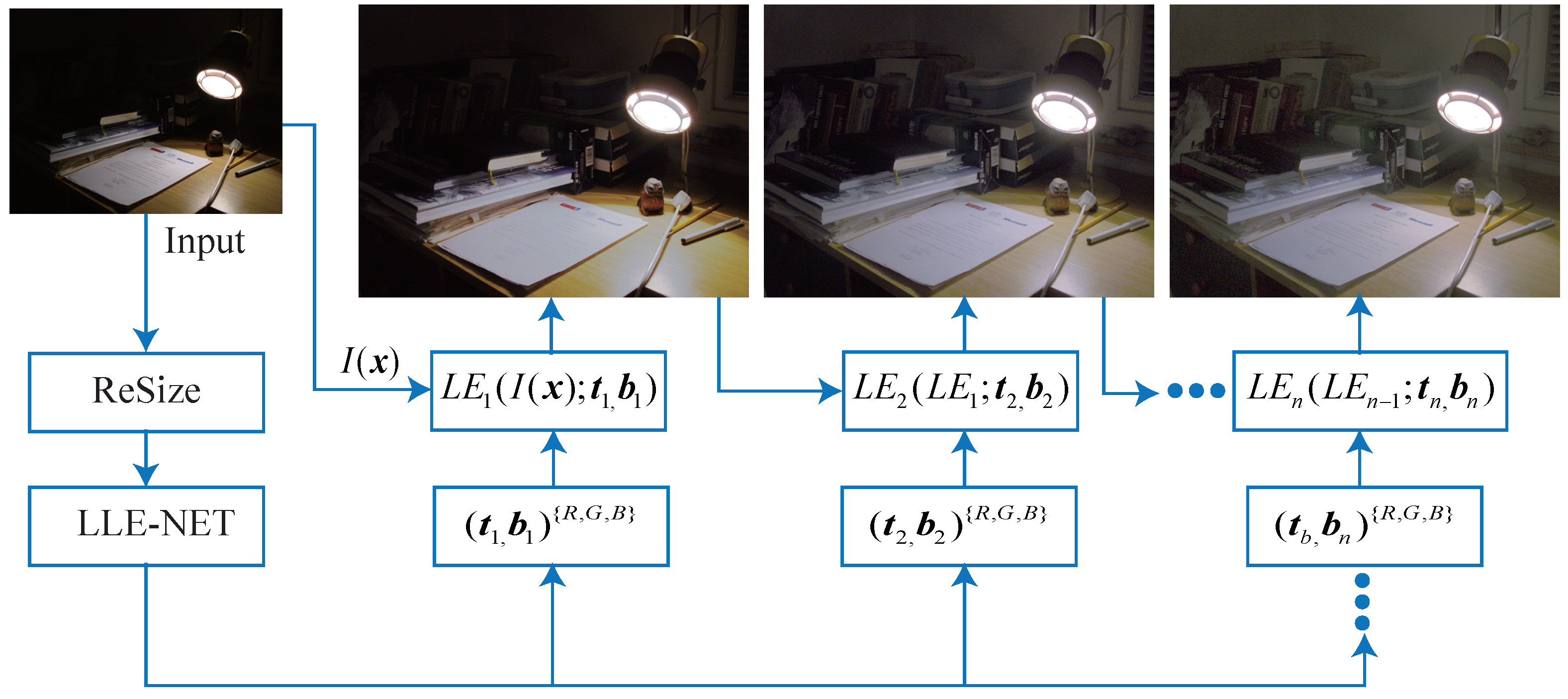
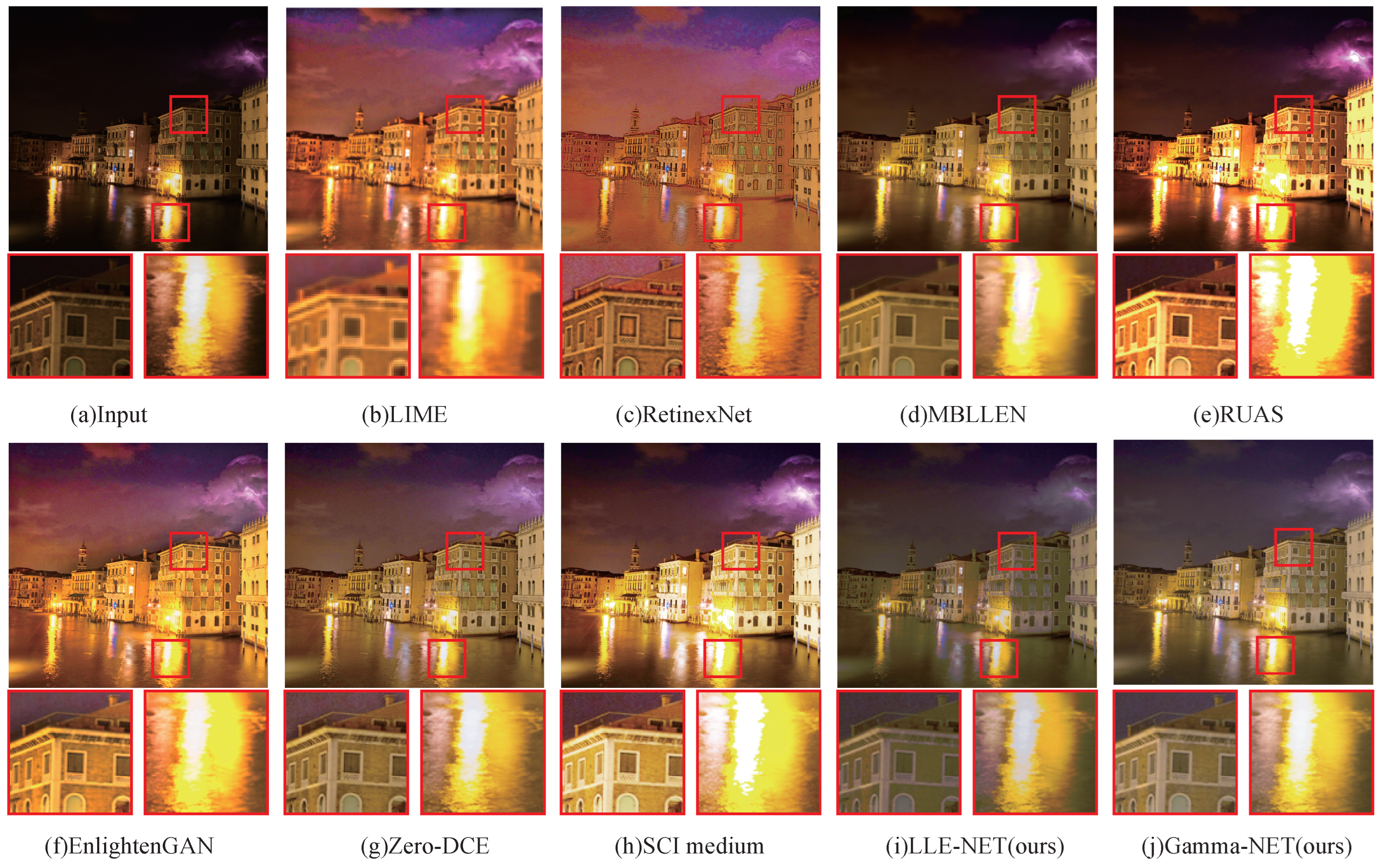
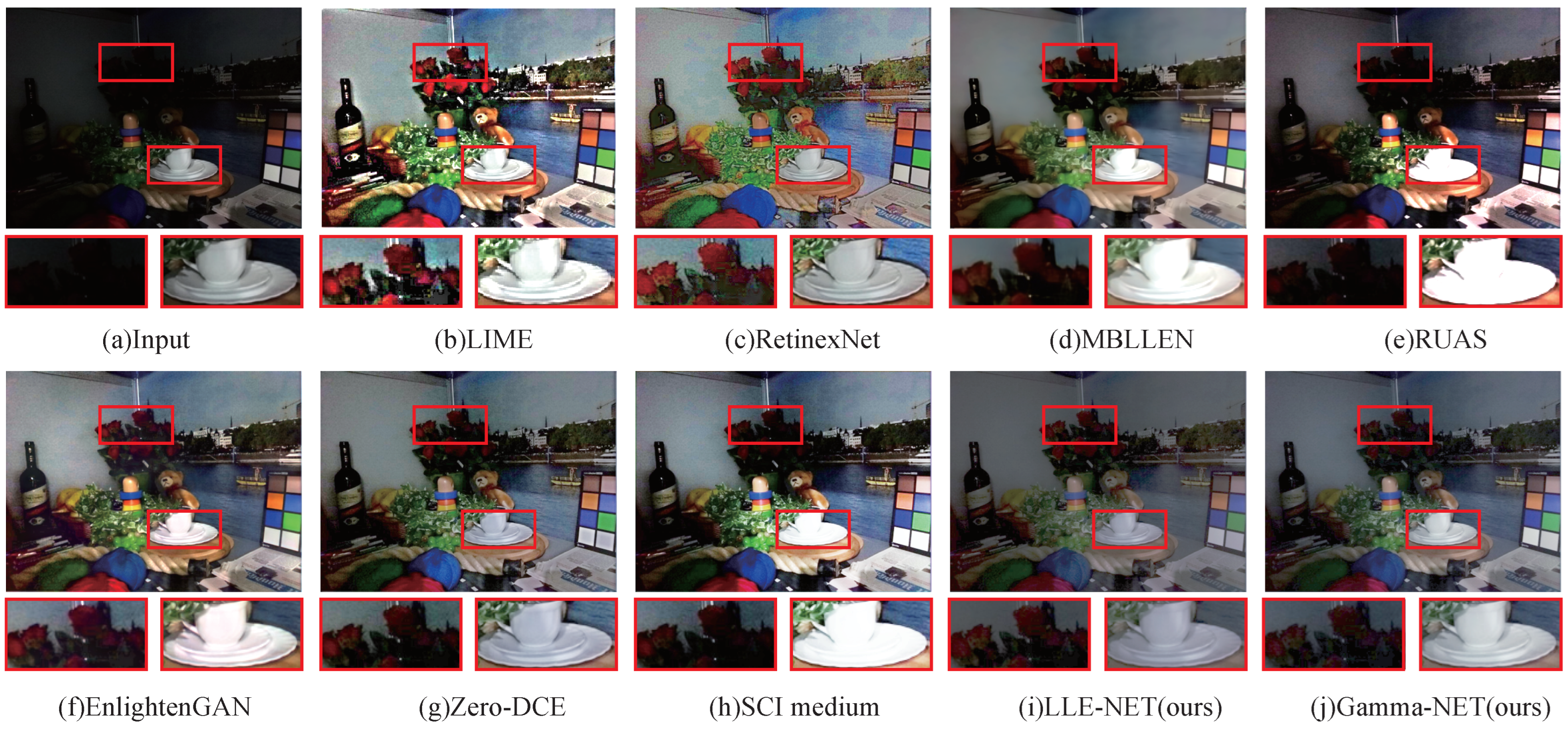
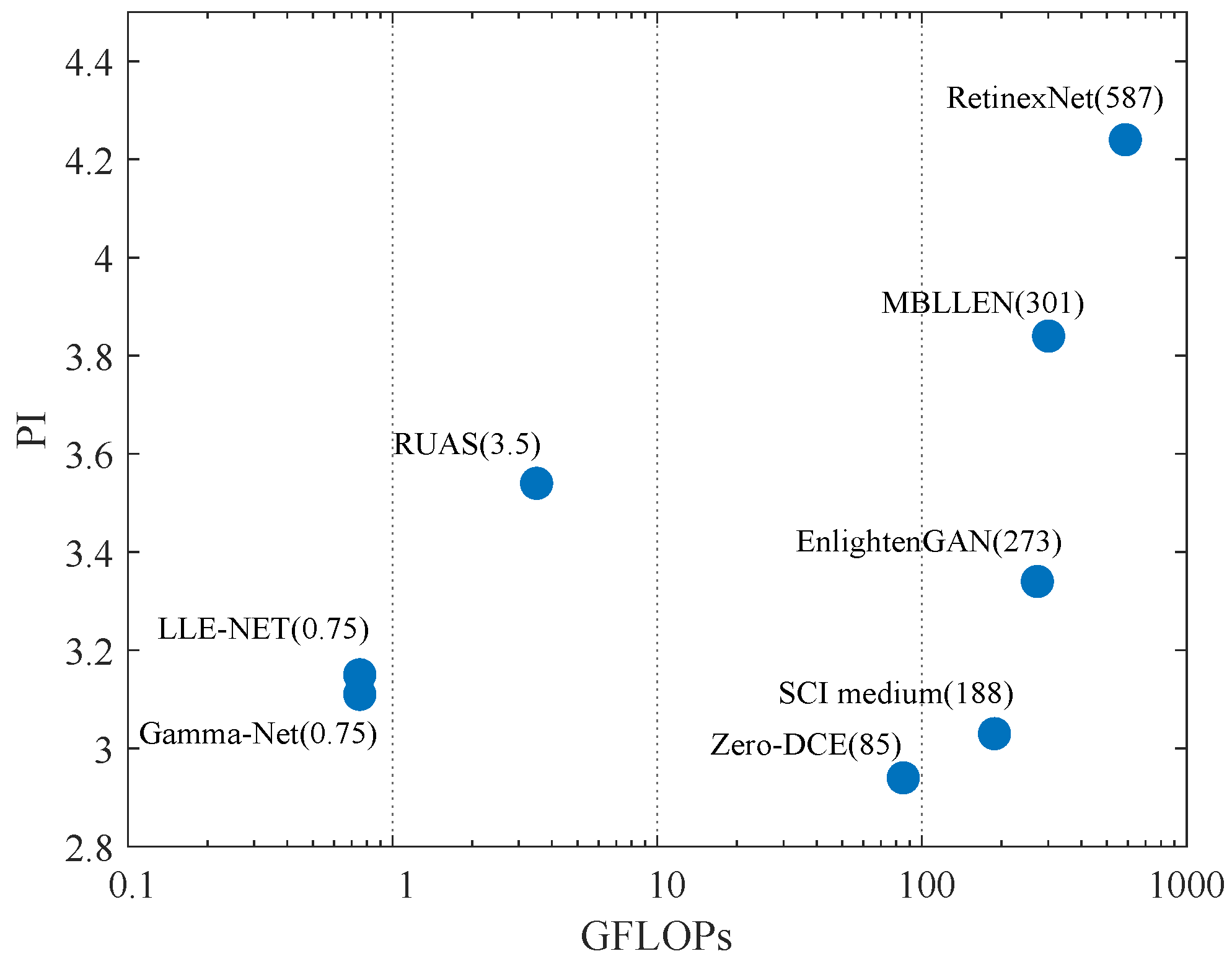
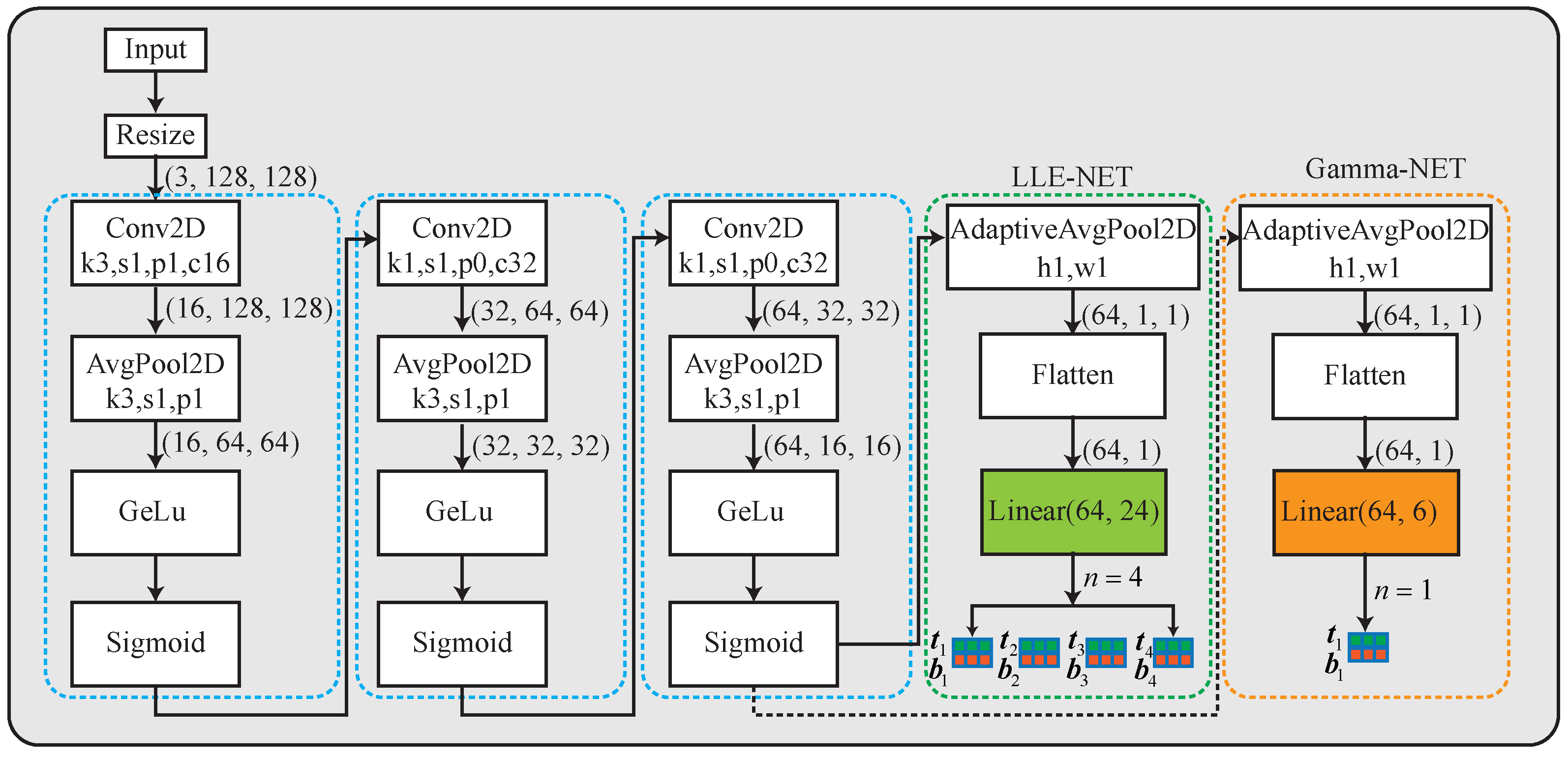
Low-light image enhancement is very significant for vision tasks. We introduce Low-light Image Enhancement via Deep Learning Network (LLE-NET), which employs a deep network to estimate curve parameters. Cubic curves and gamma correction are employed for enhancing low-light images. Our research trains a lightweight network to estimate the parameters that determine the correction curve. By the results of the deep learning network, accurate correction curves are confirmed, which are used for the per-pixel correction of RGB channels. The image enhanced by our models closely resembles the input image. To further accelerate the inferring speed of the low-light enhancement model, a low-light enhancement model based on gamma correction is proposed with one iteration. LLE-NET exhibits remarkable inference speed, achieving 400 fps on a single GPU for images sized 640×480×3 while maintaining pleasing enhancement quality. The enhancement model based on gamma correction attains an impressive inference speed of 800 fps for images sized 640×480×3 on a single GPU.
Keywords: low-light image enhancement; curve enhancement; zero-reference learning low-light image enhancement; curve enhancement; zero-reference learning