


Abstract
Real-world projects encounter numerous issues, challenges, and assumptions that lead to changes in scheduling. This exposure has prompted researchers to develop new scheduling models, such as those addressing constrained resources, multi-skill resources, and activity pre-emption. Constrained resources arise from competition among projects for limited access to renewable resources. This research presents a scheduling model with constrained multi-skill and multi-mode resources, where activity durations vary under different scenarios and allow for partial pre-emption due to resource shortages. The main innovation is the pre-emption of activities when resources are unavailable, with defined minimum and maximum delivery time windows. For this purpose, a multi-objective mathematical programming model is developed that considers Bertsimas and Sim’s robust model in uncertain conditions. The model aims to minimize resource consumption, idleness, and project duration. The proposed model was solved using a multi-objective genetic algorithm and finally, its validation was completed and confirmed. Analysis shows that limited renewable resources can lead to increased activity pre-emption and extended project timelines. Additionally, higher demand raises resource consumption, reducing availability and prolonging project duration. Increasing the upper time window extends project time while decreasing the lower bound pressures resources, leading to higher consumption and resource scarcity.
Keywords:
project scheduling; limited renewable resources; multi-skill resources; partial preemption of multi-mode activities; resource leveling; interval time window MSC:
90B30; 90B50
1. Introduction
Scheduling has an intrinsic impact on the production or manufacturing process, and it is also requisite in optimization engineering. Scheduling is the mechanism of organizing, governing, and optimizing the work and workloads of a project. Ordinarily, a project gets diverse forms in various business, production, management, and engineering. But every project is comprised numerous tasks and each task is fixed with a given start and end time. Each task also requires one or more resources to perform its execution. As resources and time are perpetual, projects demand tight scheduling for diminishing project continuation [1]. An issue that is extremely important in various projects is the possibility of planning and scheduling a project and finally accurately predicting its duration project. For this purpose, various methods for project scheduling have been provided. Comprehensive research has been completed and shows that traditional time-based techniques do not give information about the consumption of resources. These methods cannot consider the resource limitation, and at the same time, provide poor information regarding the project duration [2]. Although companies work in a constrained resource environment, traditional techniques such as the Critical Path Method and the Program Evaluation and Review Technique consider only an unconstrained resource state [3].
One of the important factors is constrained resources. Project scheduling with constrained resources refers to the fact that every activity from start to finish requires finite resources. Therefore, attention should be paid to its consumption so that the project does not incur additional costs. Project scheduling problems with constrained resources seek to minimize the project duration and at the same time try to realize resource limitations and precedence relations between activities. However, the multi-mode situation for activities is a topic that has received attention in recent years and is an appendix to the problem of project scheduling with constrained resources, in which several modes are considered to perform an activity and the activities are not completed only in one mode [4].
In recent decades, research on project scheduling with constrained resources has been very extensive, and the problem of project scheduling with constrained resources has resulted in the creation of many articles that show different optimization procedures [5]. The goal of the project scheduling problem with constrained resources is to minimize the cost or time of the project according to precedence and succession relationships and scarcity of resources. The activities are set in the form of start and end times and resources are allocated to the activities to create a justifiable schedule. Constrained resources in project scheduling issues are based on the fact that there is always competition between resources and projects must compete with each other to obtain better resources. A type of resource in which competitiveness is discussed seriously is renewable resources.
There are different types of project scheduling problems with constrained resources, and multi-skill constrained resources with multi-mode activities is an improved form of it [6]. In this type of problem, in addition to constrained resources, they have different types of skills and do not have one level of skills. On the other hand, activities can be completed in different modes, for example, manual and machine modes. In this type of problem, there may be situations where one activity has excess resources while another activity has a lack of resources. It is here that the concept of resource leveling is proposed in such a way that resources are planned in such a way that excess and lack of resources are minimized, that is, resources for activities should not be in such a way that the excess of resources leads to the lack of resources in other activities [7].
On the other hand, activities can generally be pre-empted, i.e., pre-empted for a period of time and restarted, but a new hypothesis has been proposed in the research literature under the title of partial pre-emption of activities, in which the activities subject to pre-emption are pre-empted for a period and resumed again in such a way that the pre-emption of the activity is not postponed to the next period of time [8], so this concept is considered as the pre-emption of activities, which, despite being widely used in real projects, has not been addressed in research. Another important topic in project scheduling problems that has not been addressed is the time window issue, which is generally assigned to routing and flow shop scheduling problems, while it should also be considered in project scheduling problems. In such a way that the project must be completed in a specific time and of course, if this issue is considered as an interval, it is more appropriate because the time of completion of each activity can be limited in the upper and lower bounds of the interval and from this it should not go beyond this time. In this way, the floating for the project is also determined, and the time for the activities is limited to this period. The discussion of interval time windows is rarely considered in research and can be considered as a new issue in the project scheduling problem.
Regarding the mentioned cases and considering that the combination of the above cases has not been investigated in comprehensive research, and on the other hand, issues such as the interval time window and partial pre-emption of activities are rarely considered in project scheduling problems, this research aims to present a project scheduling model considering the above facts. This research presents a multi-objective project scheduling model that considers Bertsimas and Sim’s robust model in uncertain conditions.
In the current research model, the meaning of resources is human resources.
The structure of this paper is as follows: in Section 2, the review of the literature and the review of past research related to this article is discussed. Further, the literature review is presented and then the research gap is extracted. Section 3 introduces the proposed multi-objective mathematical model. Subsequently, in Section 4 the solving of the multi-objective mathematical proposed model is presented. And finally in Section 5, results and discussion are presented and then the analysis of findings and conclusions are presented.
2. Literature Review
The resource-constrained project scheduling problem (RCPSP) is aimed at finding appropriate start/finish times of activities regarding prerequisite relations and resource constraints. This Non-Deterministic Polynomial Time problem (NP-Hard problem) was first introduced by [9], In the project scheduling literature, standard RCPSP has been the subject of many developments and modifications, for example, the introduction of multiple operating modes for activities, generalized precedence relations, preempted activities, and also other approaches for generalizing the resource constraints.
In this section, a review of the literature regarding the latest research in the field of project scheduling with constrained resources is discussed, which probably has considered at least one of the assumptions in the current research. Based on the literature review completed in this section, the study gap is determined at the end and the focal and neglected parts of the research are identified. These points are shown in Table 1 at the end of this section. The reviewed research covers the period from 2019 to 2023.
Table 1.
Literature Review.
Mejia et al. pay attention to the indicators of justifiability and memory in the scheduling of multi-skill projects with constrained resources and identify them [9]. Moradi et al. consider stable scheduling for multi-mode projects under the determined floating under the uncertainty of the duration of the activity [10]. Hosseinian and Baradaran sought to present a two-stage approach to solve the multi-project scheduling problem with constrained multi-skill resources in the construction industry [11]. Etminani Esfahani et al. provide an efficient modified algorithm for the project scheduling problem with constrained resources [12]. Damci et al. take advantage of the float consumption rates of activities in leveling the resources of construction projects [13]. Ardakani and Dehghani present a multi-objective scheduling model considering multi-mode resource constraints, with the aim of minimizing the construction time and maximizing the net present value of project cash flows [14]. Lotfi et al. consider the problem of balancing the environment, energy, quality, cost, and time under the conditions of constrained resources, taking into account blockchain technology, risk, and robustness in health sector projects [15].
Ramos et al. present a model for the multi-mode resource-constrained project scheduling problem using a multi-start iterated local search algorithm [16]. Liu et al. present a branch-and-bound algorithm for the resource-constrained project scheduling problem of unit capacity considering the transfer time [17]. Zhang et al. investigate the project scheduling problem with complex time constraints in water projects [18]. Dadhich et al. study the distribution and leveling of resources in construction projects [19]. Aristotelous and Nearchou perform resource leveling using hybrid iterated models [20]. Snauwaert and Vanhoucke deal with the classification of the project scheduling problem with constrained resources [21].
Zhao et al. present a project scheduling problem with partially fuzzy activity durations by formulating three types of fuzzy models, namely, cost minimization models, creditability maximization models, and time-cost trade-off models. In this research, a solution framework based on a new operational rule is presented [22]. Nigar et al. deal with the multi-objective dynamic software project scheduling problem. In this research, a new approach to managing the addition of employees is presented [23]. Pierto et al. deal with the use of chat GPT for scheduling construction projects [24]. Cheraghi et al. deal with scheduling and resource management in construction projects [25].
As can be seen in Table 1, none of the above-mentioned researches contain all the assumptions and innovations described. For example, there is rarely any research on the combination of resource leveling and project scheduling considering resource constraints and multi-skill resources, or the multiple-mode status of activities in combination with other cases is rarely considered. Regarding the interval time window, in the above research, it is not possible to find research that deals with this issue, and partial pre-emption is only mentioned in a study by Mejia et al. [9], which is pioneering research in the field of partial pre-emption in activities. As mentioned earlier, resource leveling is rarely considered alongside resource limitation, while it can be said that there is a close relationship between resource limitation and resource leveling in the project scheduling issue, which cannot be neglected. Considering the shortcomings of the previous research, the present research aims to fill the study gaps.
3. The Proposed Multi-Objective Programming Model
In this section, the research model is presented. The model includes a project scheduling model that is subject to resource constraints. In other words, there are a number of activities that allocate a certain amount of resources to each activity, but the resources are limited, that is, the desired resource may not be available in a period. On the other hand, resources are multi-skill and activities can be performed in different situations.
3.1. Assumptions of the Model
The assumptions of the model are as follows:
- The time of activitiesajadis is uncertain.
- Activities can be pre-empted.
- The time window is considered as an interval.
- Resources are constrained.
- Resources are multi-skill.
- The activities are multi-mode.
- Resources can be leveled.
- It is a multi-period project.
- The model is considered as a scenario.
The indices related to the project scheduling model are listed in Table 2.
Table 2.
Indices.
The parameters related to the project scheduling model and the explanations related to the parameters are listed in Table 3.
Table 3.
Parameters.
The Decision Variables related to the project scheduling model and the explanations related to the Decision Variables are listed in Table 4.
Table 4.
Decision Variables.
3.2. Formulation of the Mathematical Model in the Proposed Multi-Objective Programming Model
In this section, the objective functions of the project scheduling model and the limitations of the model are presented according to the assumptions and information in Table 2, Table 3 and Table 4 in Section 3.1.
The Objective functions of the model are as follows:
The above relationship seeks to minimize the consumption of total resources in two days.
The above relationship minimizes the idleness rate of resources.
The above relationship seeks to minimize the total project time.
The constraints of the model are as follows:
The above relationship shows the consumption of resources.
The above relationship shows the total consumption of resources.
The above relationship shows that the consumption of resources cannot be more than the available resources.
The above relationship seeks to minimize the amount of delays.
The above relationship indicates the earliest time to perform the activity.
The above relation calculates the latest time of the activity.
The above relationship shows the earliest time to start the activity.
The above relationship shows the latest activity start time.
The above relation calculates the termination time of an activity.
The above relationship shows the start time of the next activity.
The above relationship states that the end time of the activity cannot end earlier than the lower bound of the delivery deadline.
The above relationship states that the end time of the activity cannot be later than the upper bound of the delivery deadline.
The above relationship guarantees that the total demand for a resource at time t does not exceed its capacity. An activity occupies resources at time t if the activity is running at time t or if the activity has a partial pre-emption at time t and if the resource for this activity cannot be released.
The above relation states that for each precedence and succession constraint, activity j cannot be completed before the completion of the previous activity.
The above relationship shows that a variable is started in a period if it was in progress in the previous period.
The above relationship states that an activity is ended in a period if it has been running in that period.
The above relationship states that a partially pre-empted activity is pre-empted if it was not running at time t while it was running in the periods before and after t.
The above relation states that a continuous activity must be completed at time t if it was running before and after t.
The above relationship shows that the completion time of a project cannot be less than the completion time of any activity.
3.3. Uncertainty Approach
Robust optimization is one of the latest techniques introduced in the field of mathematical modeling and optimization. The main nature of this method is based on the principle that uncertain parameters can be controlled in the mathematical model. The main assumption of mathematical modeling and its optimization in the classical mode is that the value of all parameters is known accurately and definitively. However, in real conditions, some parameters may not be known definitively. Using methods of dealing with uncertainty helps us to model and then optimize various problems that have uncertain parameters. The concept of robustness refers to the fact that due to the changes in uncertain parameters, the value of the objective function also changes and fluctuates. Now, among the different values of this uncertain parameter, one should choose a value that provides the most suitable value of the objective function from the point of view of the decision maker and also the least fluctuation in the value of the objective function. This approach was initially introduced by Soyster and later developed by more researchers such as Bertsimas and Sim.
In robust optimization, very simply, a range of parameters is first introduced. The lower and upper bounds of these parameters can be determined based on numerical estimates. In the next step, the mathematical model is rewritten and a robust model is presented by performing the calculations specified by Bertsimas and Sim. In fact, Bertsimas and Sim proposed a different approach to control the conservatism level of the solution, this approach has the advantage of leading to a linear optimization model, so this approach can be used directly for discrete optimization models. If in the following model:
Assuming that parameters and contain definite numbers and parameters contain uncertain data. Assuming that each of the coefficients is modeled as an independent random variable with symmetric and bounded distribution and takes a value in the interval , where and are the nominal value and the maximum deviation from the nominal value. Also, consider as the set of imprecise parameters in the i-th constraint.
Bertsimas and Sim introduced the parameter for each constraint i, which is called the uncertainty budget, to achieve the robustness of the solution. The parameter takes value in the interval , so that represents the number of imprecise technical coefficients in the i-th limit. The role of parameter Γi in the constraints is to adjust the level of robustness against the level of conservatism of the solution, and the higher it is, the level of conservatism of the solution increases.
Bertsimas and Sim’s robust counterpart for the linear programming model is defined as follows, assuming uncertain technical coefficients:
The role of uncertainty budget in the above model is defined as follows:
- If , the i-th constraint is not protected against uncertainty.
- If , the i-th constraint is completely protected against uncertainty.
- If , the decision maker can make a trade-off between the protection level of the i-th constraint and the degree of conservatism of the solution.
4. Solving Multi-Objective Mathematical Proposed Model
Genetic Algorithm (GA) have been widely used in the last three decades to address multi-criteria decision problems. The basic feature of this algorithm is multiple directional and global searches through maintaining a population of potential solutions from one generation to the next generation. The population-to-population approach is useful when exploring Pareto solutions. Moreover, GAs do not have many mathematical requirements and can handle all types of objective functions and constraints; hence, their use in the multi-objective era is promising (Tavakkoli-Moghaddam. R, 2010 [26]).
4.1. Displaying the Answer in Multi-Objective Genetic Algorithm
In this research, a multi-objective genetic algorithm or Non-dominated Sorting Genetic Algorithm (NSGAII algorithm) is used to solve the three-objective model of this research. The objective functions of the proposed model include minimizing resource consumption, minimizing resource idleness, and minimizing project time. Displaying the answer includes how to draw the answer according to the variables of a model. According to the present problem, which is a multi-objective problem, several objectives are drawn in the form of a chromosome and each decision variable is considered as a gene in this chromosome.
The two objective functions have the nature of integers and the third objective function has the nature of permutation. Therefore, the type of chromosomes used includes integer and permutation chromosomes. Because the variables in the objective functions are of integer type and permutation, the sample of chromosomes that includes the values of resource consumption in the first and second objective functions is as follows:
The first objective function is the minimizing the resource consumption. Table 5 is an example that Display of the integer answer vector for the amount of resource consumption in the first objective function.
Table 5.
Display of the integer answer vector for the amount of resource consumption in the first objective function.
The second objective function is the minimizing the unemployment of resources. Table 6 is an example that Display of the integer answer vector for the amount of resource idleness in the second objective function.
Table 6.
Display of the integer answer vector for the amount of resource idleness in the second objective function.
As it can be seen, the two mentioned chromosomes are integers that can be repeated in every cell, and the Arithmetic method is used for the operation of Crossover and mutation according to the nature of their integers. However, when determining the sequence of performing activities in a specific order, a permutation chromosome should be used. The permutation chromosome for the third objective function in the present research is as follows:
The third objective function is the minimizing the total project time. Table 7 is an example that Display of the permutation answer vector for optimal sequence of activities of a project in the third objective.
Table 7.
Display of the permutation answer vector for optimal sequence of activities of a project in the third objective.
As can be seen, it is not possible to repeat the numbers in the above chromosome because it is permutative and each index in each cell is a sign of performing an activity and shows the sequence of activities. In order to update the above chromosome, crossover, and single-point mutation operations are used. In this way, only two genes are moved with each other so that the updating process takes place. In single-point mutation, a gene is randomly selected and a change is made in it so that the act of mutation is simulated. Finally, after obtaining the best values for the objective functions, that value is placed in the best category and the repetition of the algorithm continues with the end of the determined repetition.
Also, regarding how to deal with unjustified answers, it should be said that the penalty method is used. In order to solve invalid answers, penalty methods and optimal correction of the answer are used. In such a way that if any value in a limit is violated and exceeds the set limit, a penalty is considered in the objective function for that decision variable. Moreover, in the method of optimal modification of the solution using MATLAB software (R2018b), the maximum value of integer variables is equal to the parameter on the right side of the specified limit.
4.2. Analysis
In this section, the findings are analyzed. First, the validation of the model is completed, and then the effect of demand, renewable resources, upper and lower bounds of delivery, and finally uncertainty on the objective functions are investigated. In Table 8, the dimensions of the model are first introduced and then its solution has been completed in different dimensions, the results of which are presented below. The numerical examples presented are based on the research of Ramos et al. [16], Mejia et al. [9], and Liu et al. [17].
Table 8.
Dimensions of the problem.
As it can be seen in Table 8, 20 examples are presented, and based on these 20 examples, the model is validated in such a way that in each example, an increase in dimensions is created compared to the previous example, and naturally this increase should be lead to an increase in the values of the objective functions and calculation time. The result of solving the model in different dimensions is presented in Table 9.
Table 9.
Solving the model in different Dimensions.
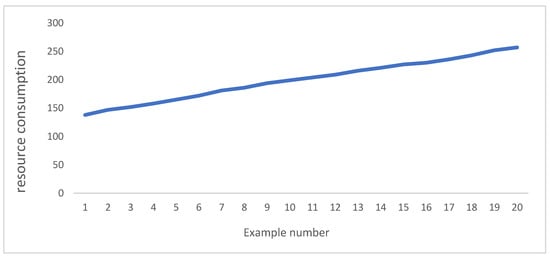
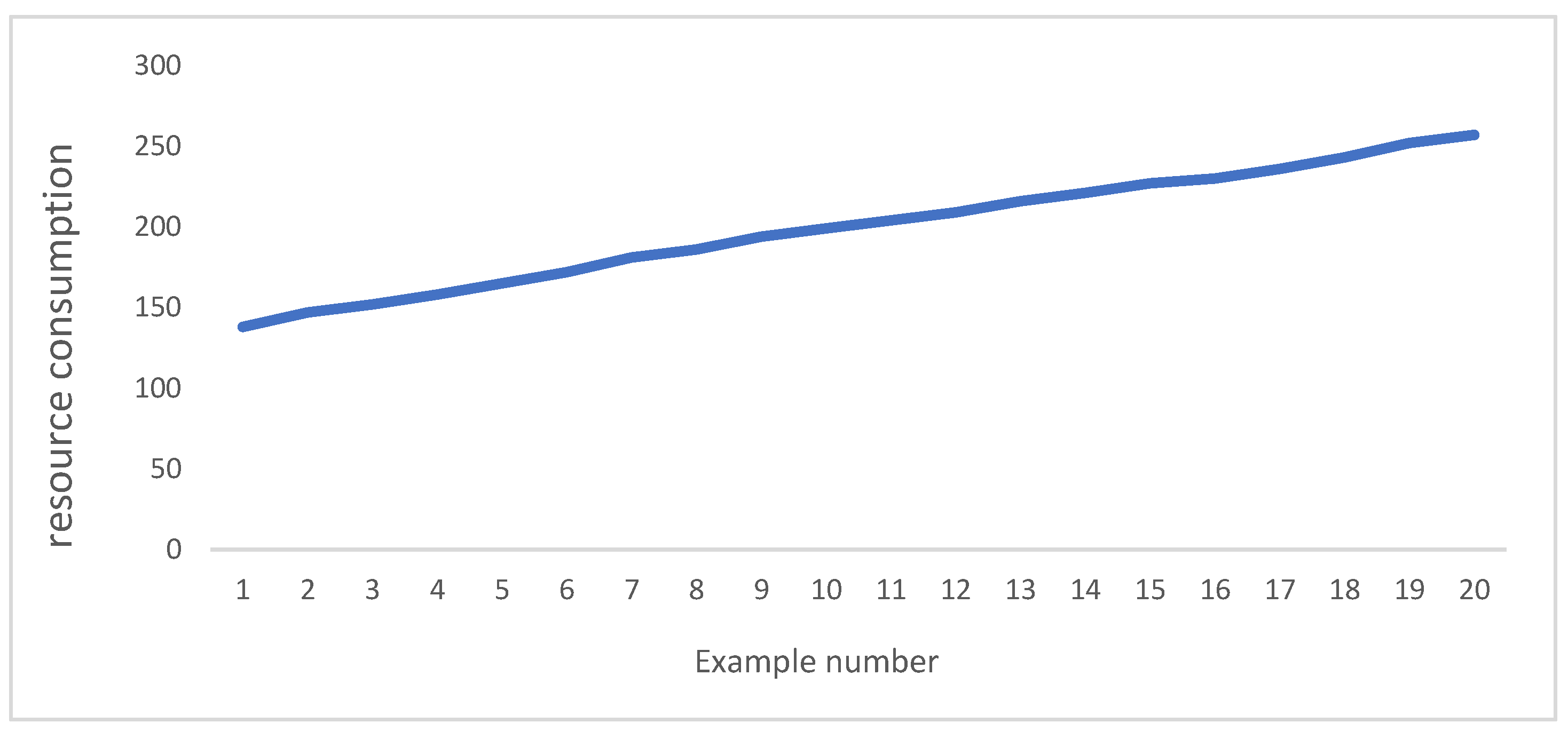
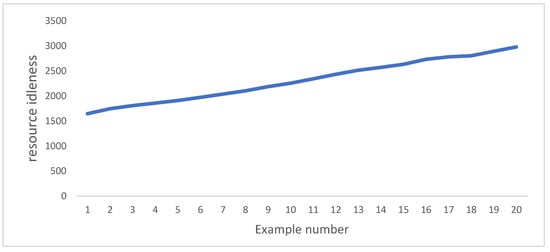
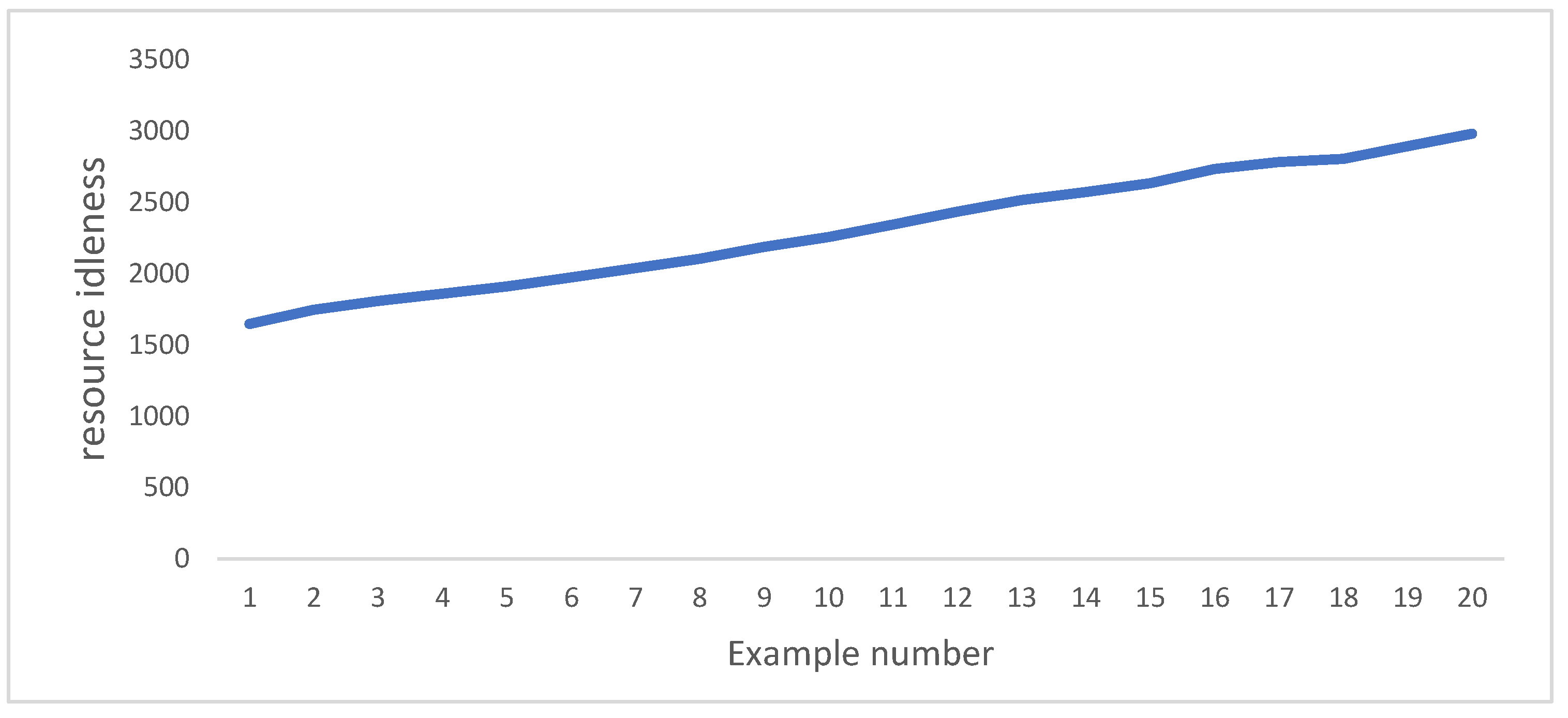
The results of solving the model show that in each example there has been a change and actually an increase compared to the previous problem. In order to better analyze, the graphs of the effect of increasing dimensions on resource consumption, resource idleness, total project time, and problem-solving time are used.
As shown in Figure 1, with the increase in dimensions, resource consumption also increases.
Figure 1.
The effect of increasing dimensions on resource consumption.
As shown in Figure 2, with the increase in dimensions, resource idleness also increases.
Figure 2.
The effect of increasing dimensions on resource idleness.
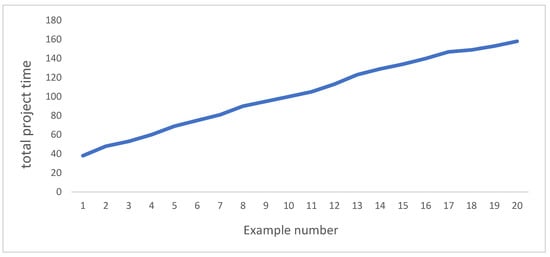
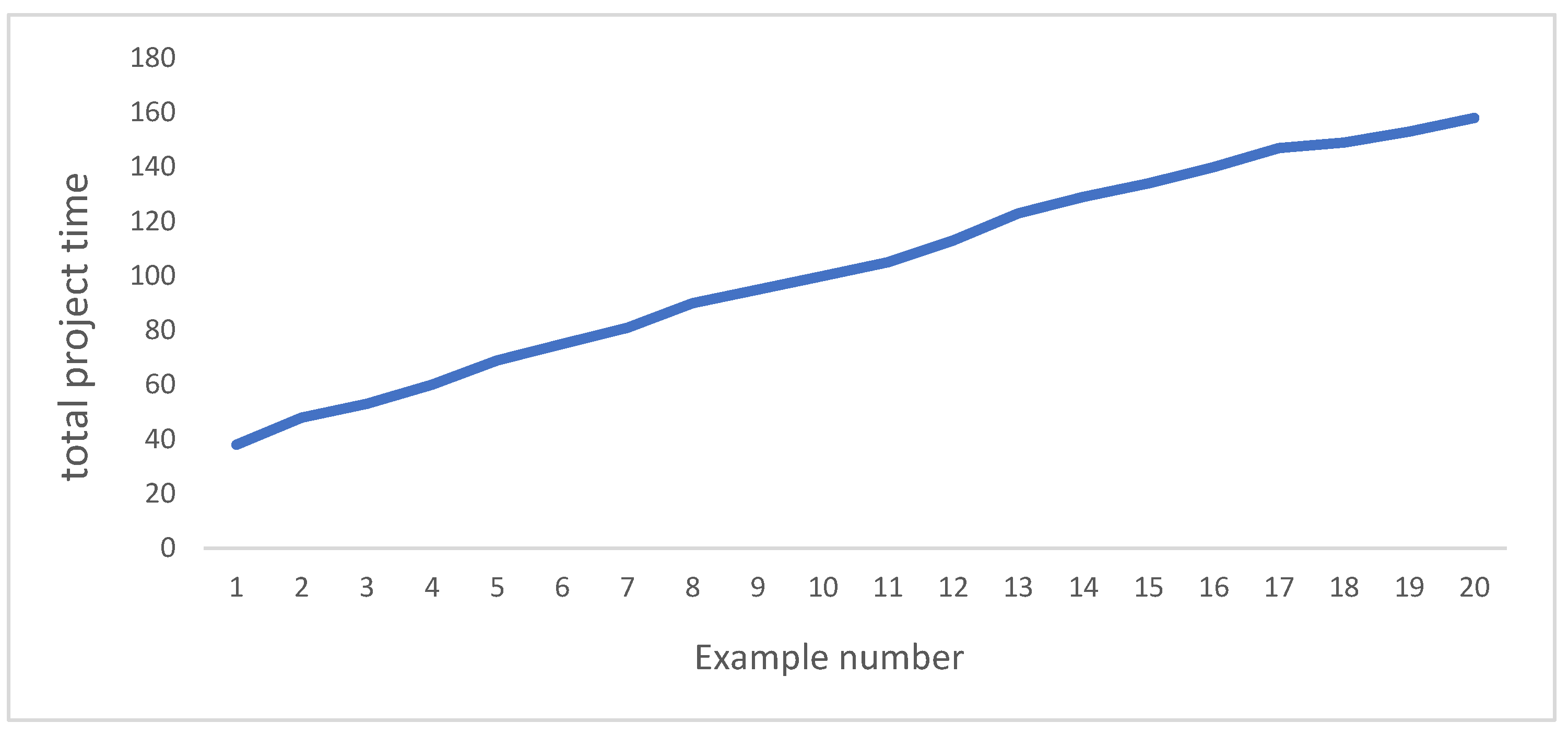
As shown in Figure 3, with the increase in dimensions, the total project time also increases.
Figure 3.
The effect of increasing dimensions on the total project time.
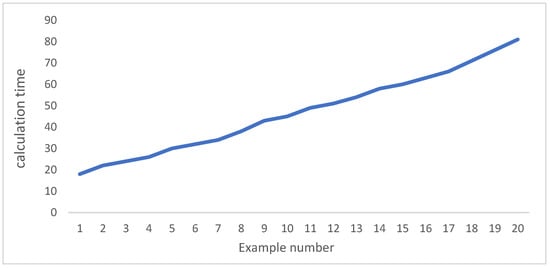
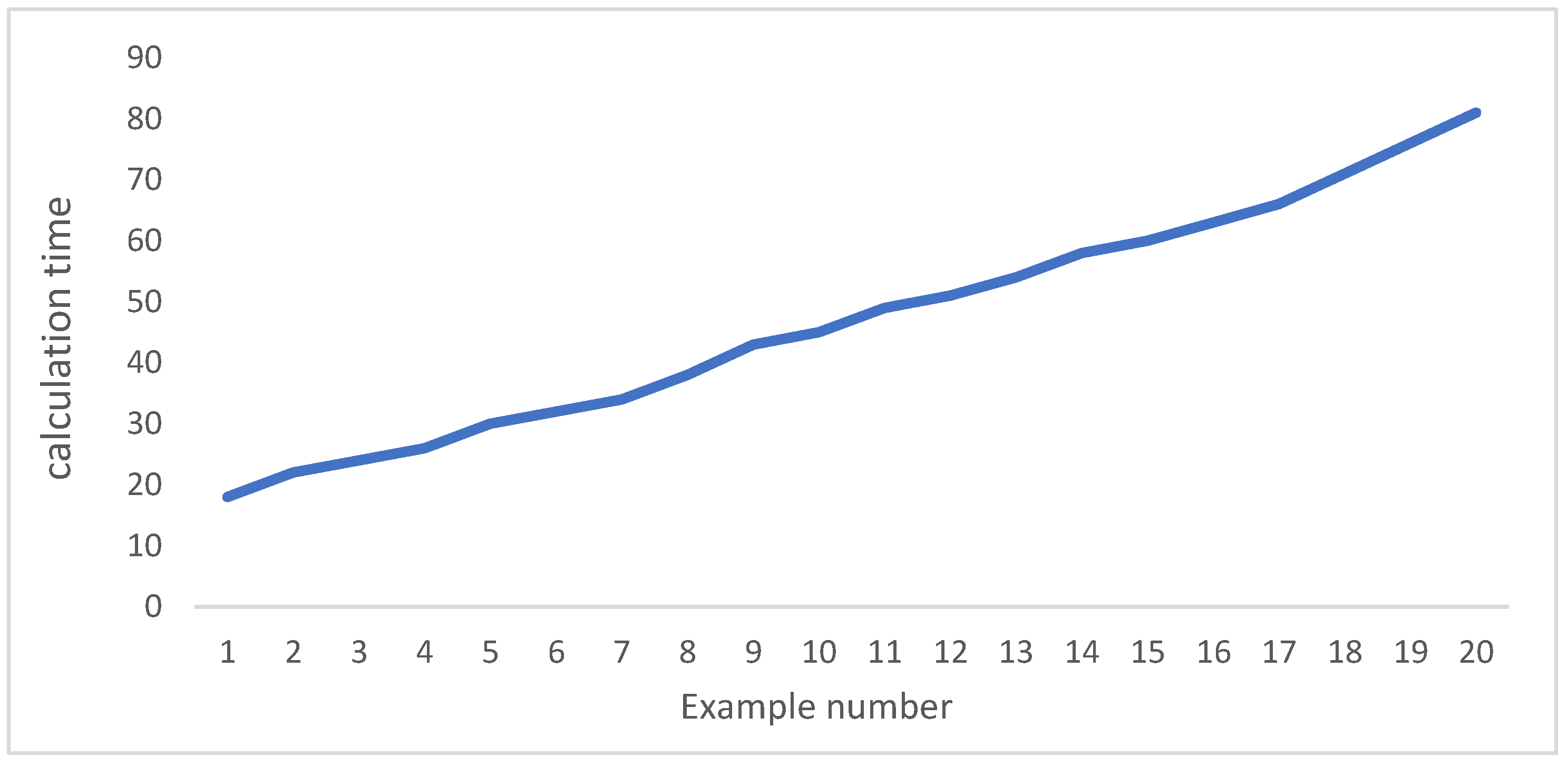
As shown in Figure 4, with the increase in dimensions, the calculation time also increases.
Figure 4.
The effect of increasing dimensions on calculation time.
As it can be seen, all three objective functions as well as the calculation time have increased due to the increase in dimensions, which is the logical result of solving the model in different dimensions, and therefore, based on this, it can be said that the model has the necessary validity. In the following, the effect of renewable resources will be investigated. Considering that renewable resources are considered constrained in this research, therefore, the effect of this restriction on the objective functions should be shown. In Table 10, this review is shown in quantitative and percentage form.
Table 10.
The effect of reducing renewable resources on objective functions.
In the following, the effect of renewable resources, demand, and upper and lower bounds on all three objective functions is investigated. Due to lack of space, in the following, only the relevant Figures are presented and only the table of renewable resources described in the previous section is presented.
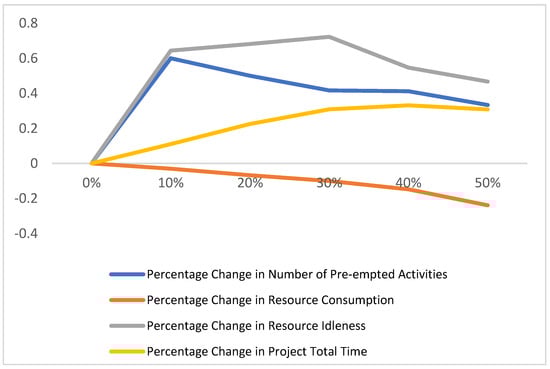
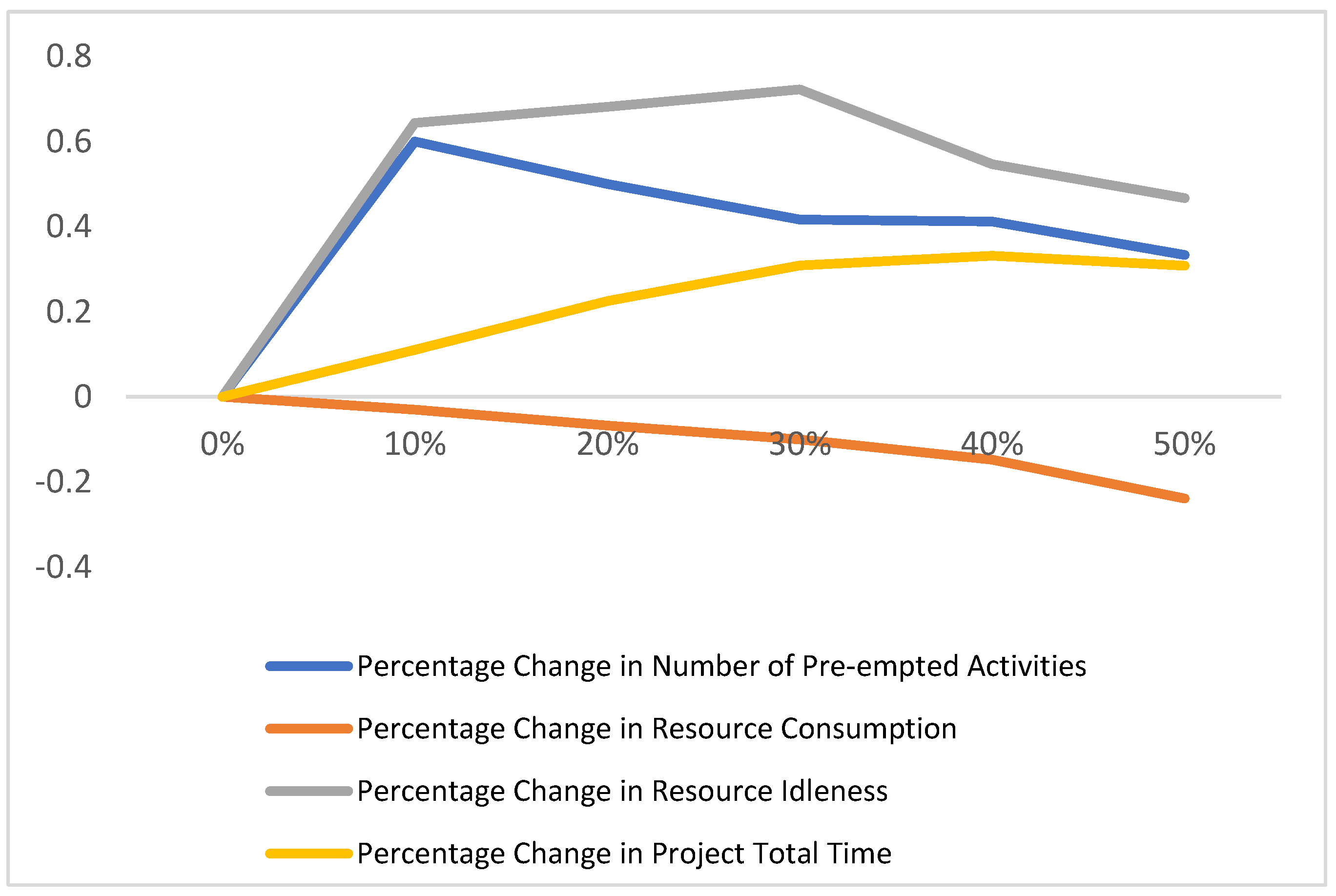
Figure 5 shows the effect of renewable resources on the objective functions. According to the information in table number 10, this diagram was obtained. In fact, by reducing the amount of renewable resources, the percentage of changes is shown in the Number of Pre-empted Activities, Resource Consumption, Resource Idleness, and Project Total Time.
Figure 5.
Effect of renewable resources on objective functions.
As can be seen, the reduction in renewable resources increases the project completion time by 30%, and the reason for this is that due to the lack of resources, more activities are pre-empted. This pre-emption can be seen up to a 40% increase in activities. Although the blue graph shows that this increase is up to 60% at first and then less than 40%. On the other hand, the idleness of resources also increases due to this pre-emption in activities, but the consumption of resources decreases due to the decrease in the number of renewable resources, and this objective function is the only decreasing objective function due to the increase in renewable resources.
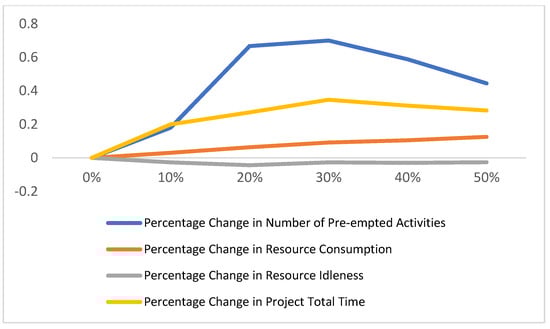
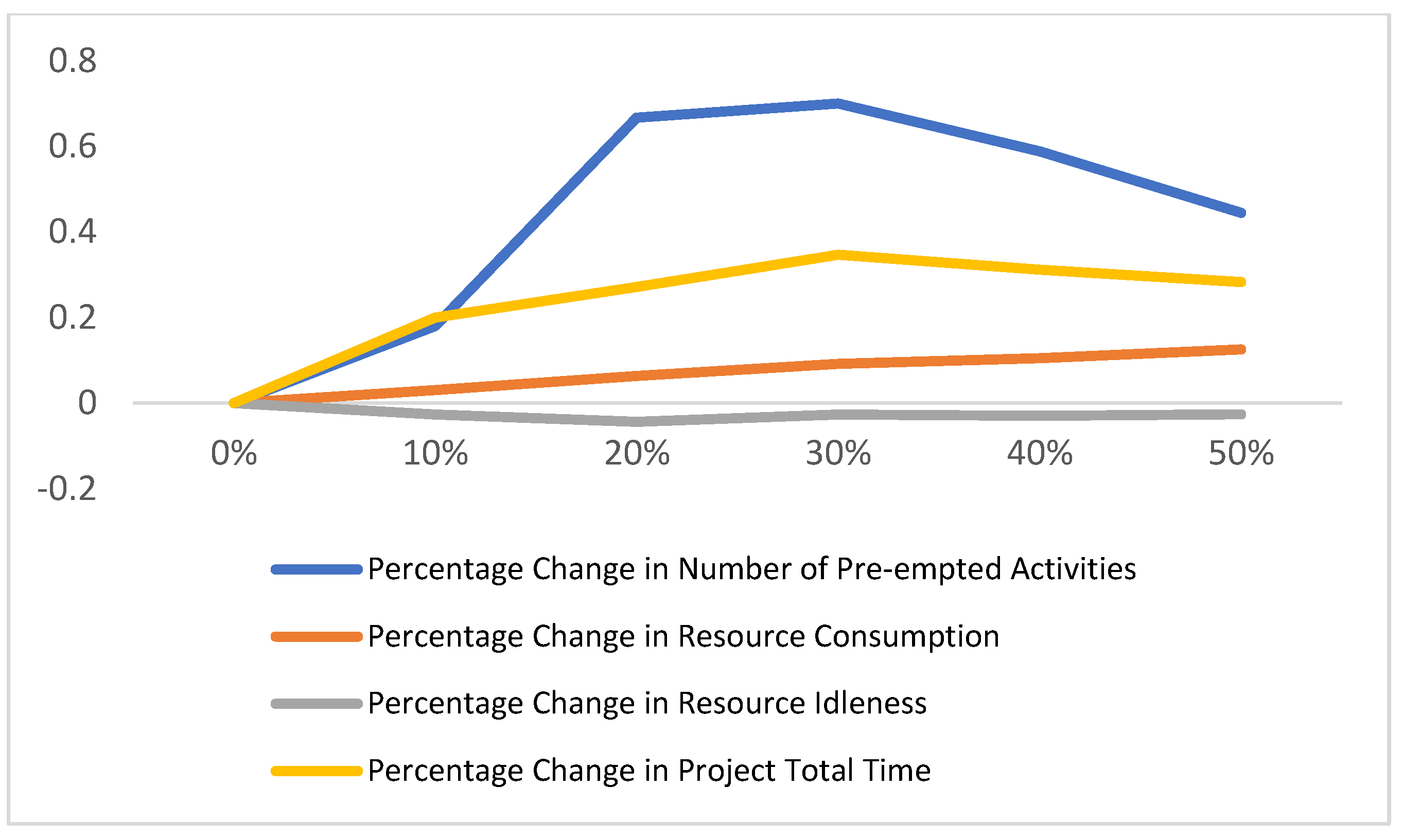
Figure 6 shows the effect of demand on the objective functions. In fact, by increasing the demand for resources, the percentage of changes is shown in the Number of Pre-empted Activities, Resource Consumption, Resource Idleness, and Project Total Time.
Figure 6.
Effect of demand on objective functions.
Figure 6 shows the effect of demand on objective functions. In this section, it is assumed that the demand for resources will increase, this will cause more activities to be pre-empted, because the increase in demand generally leads to a decrease in the available resources, and in fact, the same effect as Figure 5, which shows renewable resources is repeated here. On the other hand, the project completion time increased due to more pre-emptions, but the idleness of resources decreased slightly due to the increase in demand. Resource consumption also increases. Therefore, the demand has a negative effect on the total project time and the consumption of more resources due to the effect it has on the pre-emption of activities.
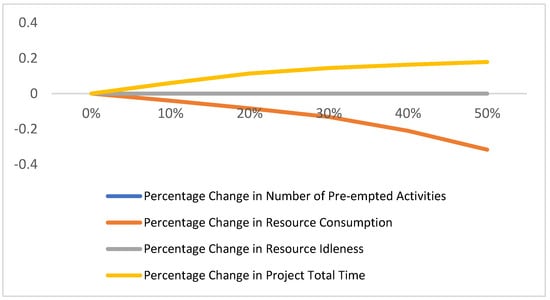
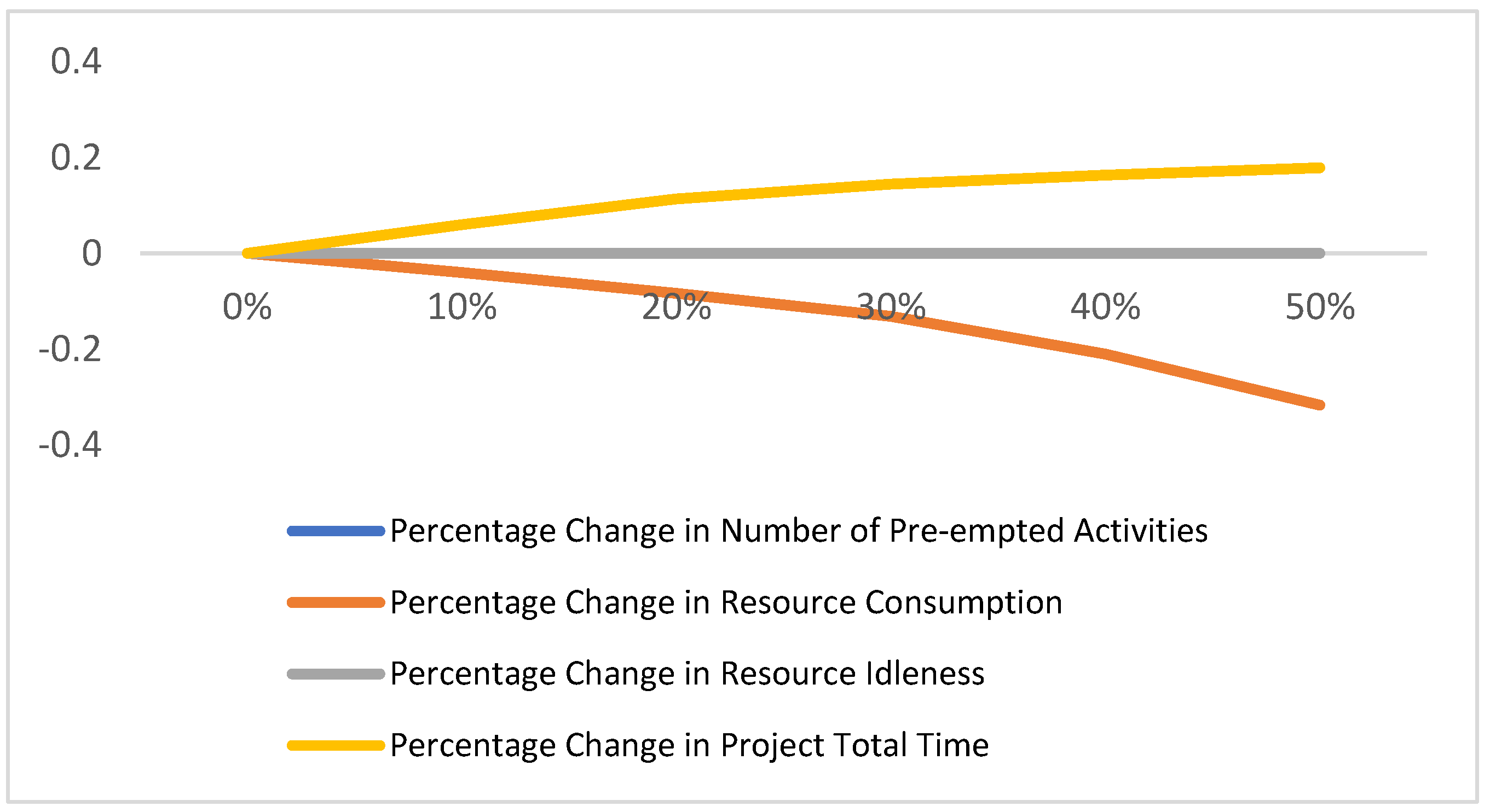
Figure 7 shows the effect of increasing the upper bound on the objective functions. In fact, by increasing the upper bound, the percentage of changes is shown in the Number of Pre-empted Activities, Resource Consumption, Resource Idleness, and Project Total Time. In Figure 7, the maximum delivery time has increased, which increases the total project time, while it has no effect on pre-emption activities, that is, it does not increase it, and on the other hand, it does not cause idleness of resources.
Figure 7.
The effect of increasing the upper bound on the objective functions.
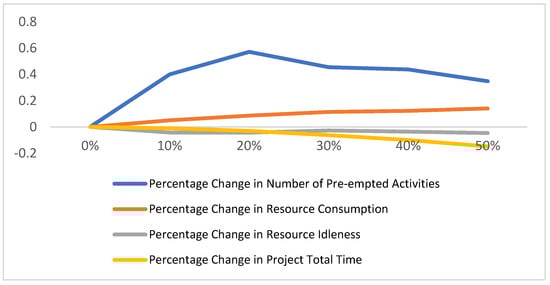
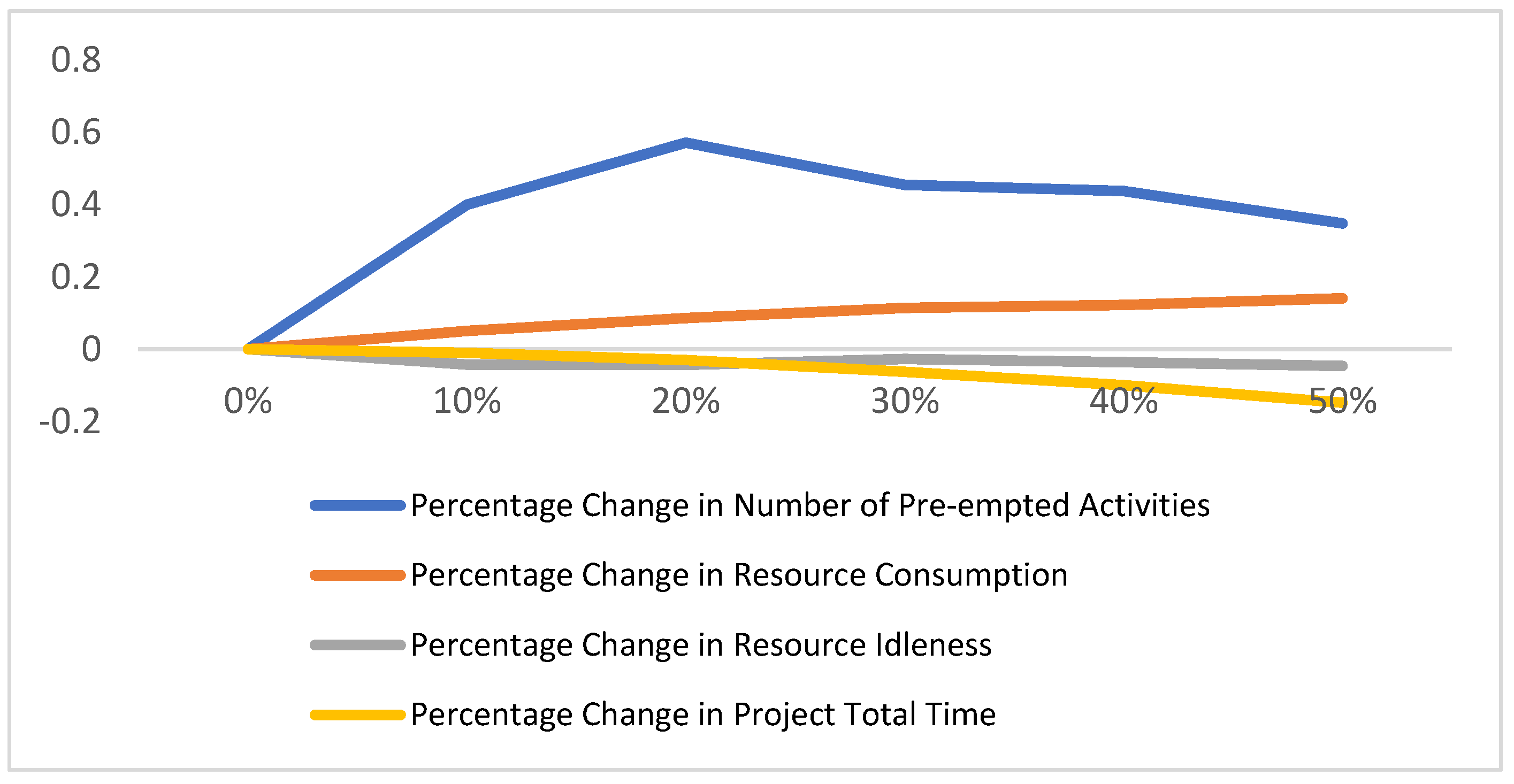
In Figure 7 and Figure 8, the upper and lower bounds, which are one of the innovations of the present research that considers the time window, are analyzed. In the lower bound, the minimum delivery time of activities and projects is proposed, while in the upper bound, the maximum is desired. In Figure 7, the maximum delivery time has increased, which increases the total project time, while it has no effect on pre-emption activities, that is, it does not increase it, and on the other hand, it does not cause idleness of resources. However, it increases resource consumption. While the lower bound, which is the minimum delivery time, if it is reduced, i.e., the requirement for early delivery, causes an increase in the activities with partial pre-emptions, and as a result, the consumption of resources also increases. As a result, the idleness of resources is reduced, and the total time is also reduced. The interesting thing to note is that in case of reduction in renewable resources, the idleness of resources will be affected more than other things. However, in the case of increasing demand and decreasing the lower bound, the number of pre-empted activities shows the greatest reaction. The increase in the number of pre-empted activities affects the project time, but it is the result of increasing the consumption of resources, decreasing the available resources, and increasing the demand.
Figure 8.
The effect of decreasing the lower bound on the objective functions.
In the following, uncertainty will be investigated. The activity time parameter is considered a scenario parameter that is considered under three optimistic, medium, and pessimistic scenarios. In this section, the aim of the research is to find out whether different scenarios have an effect on the goals or not. The results are presented in Table 11.
Table 11.
Time to perform activities under Uncertainty.
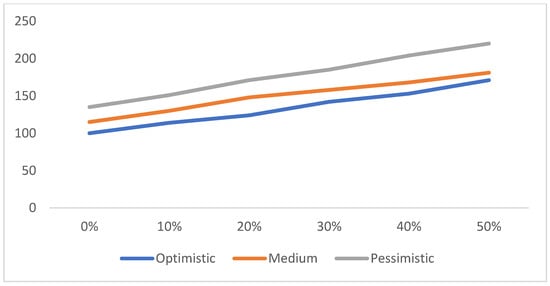
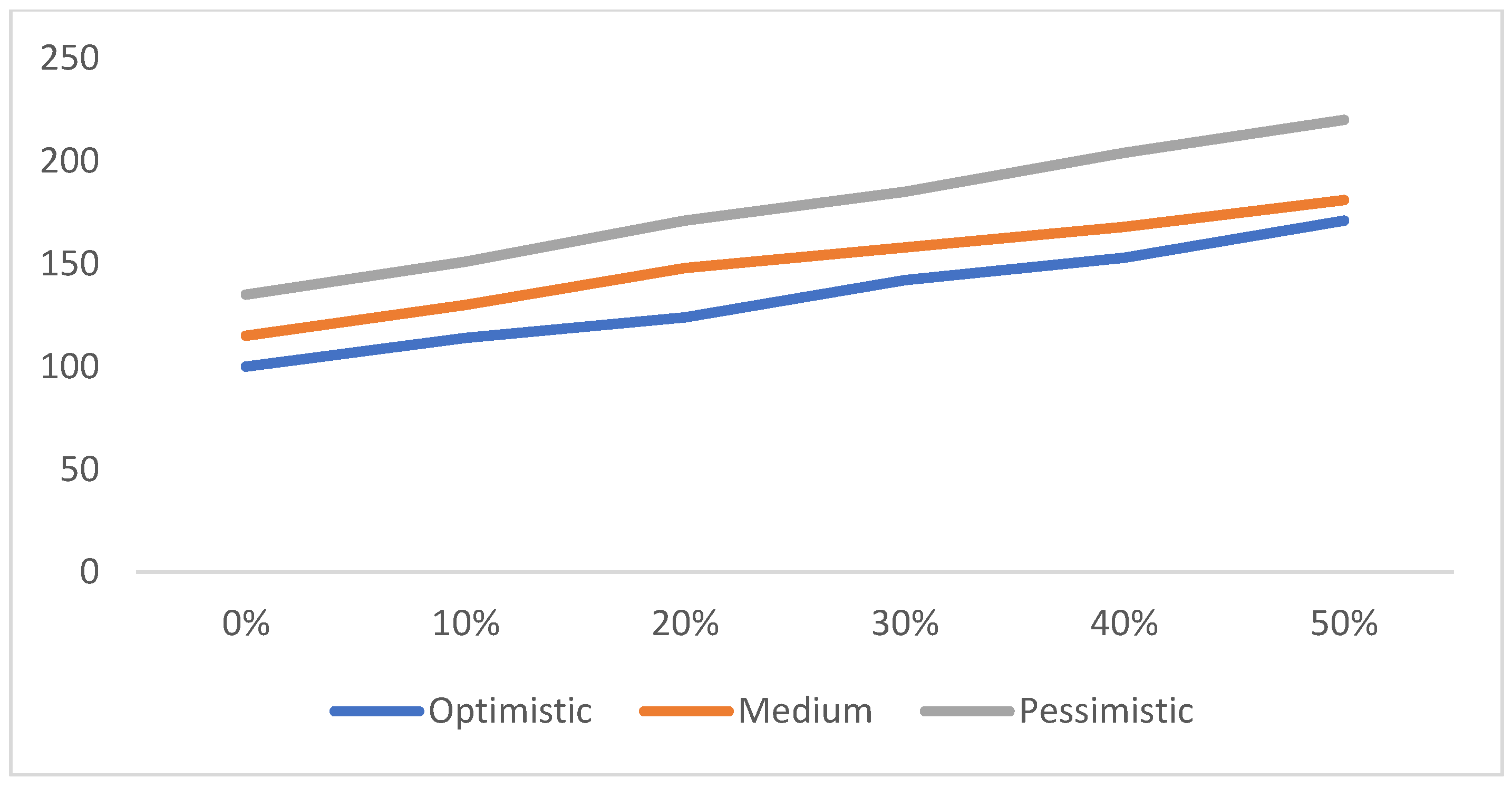
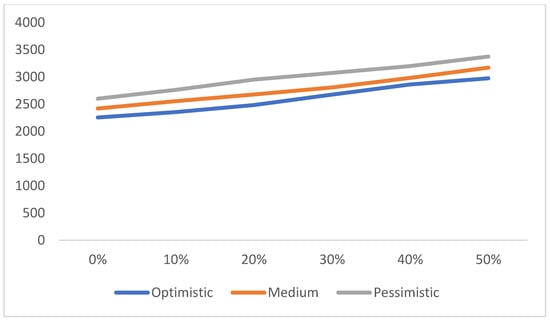
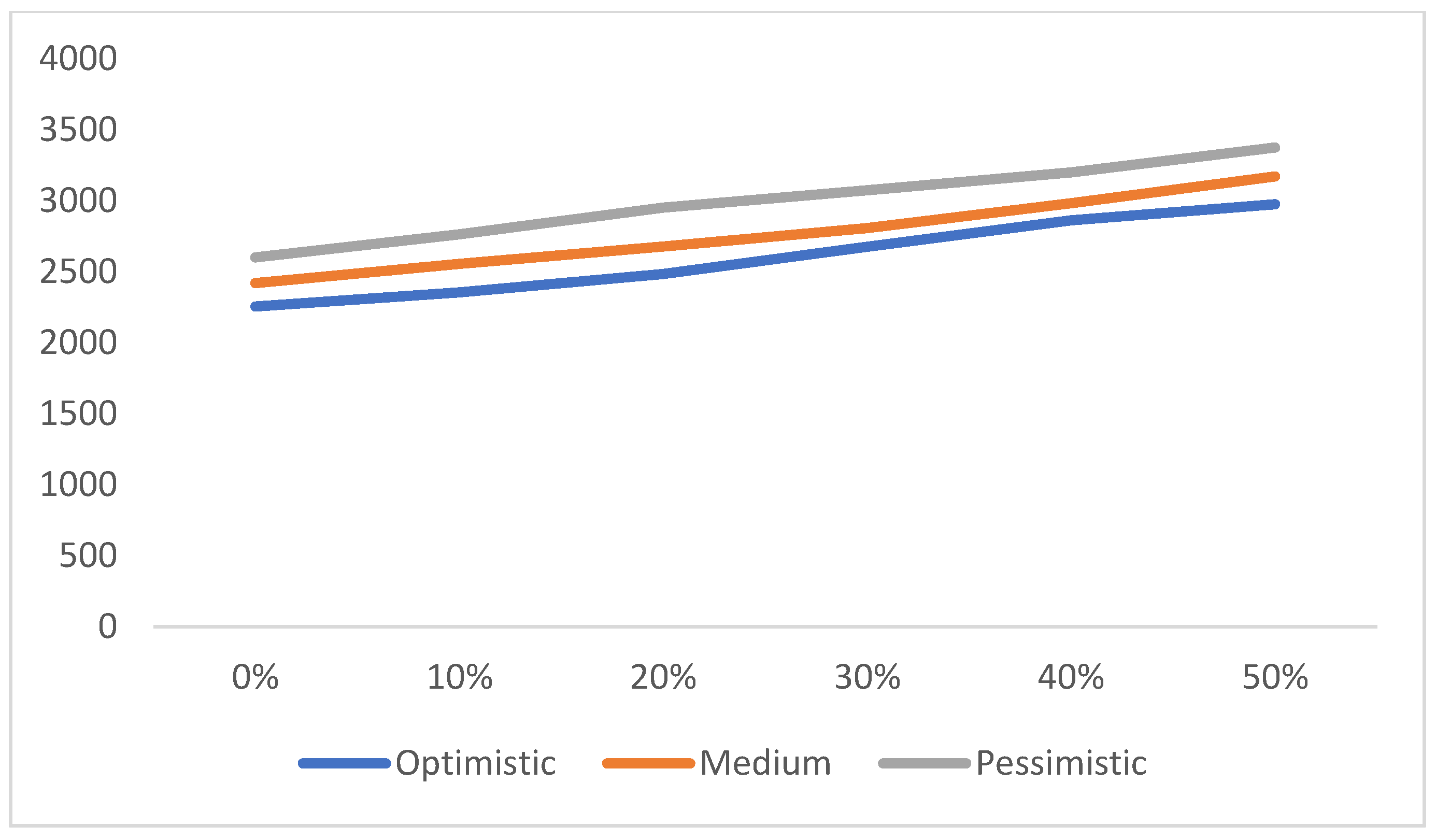
Figure 9 is designed based on the information in Table 11. It shows the Project Total Time under three scenarios.
Figure 9.
Time to complete the project under different scenarios.
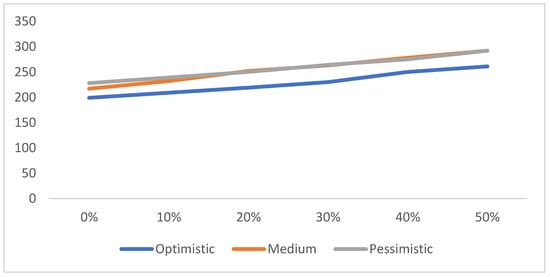
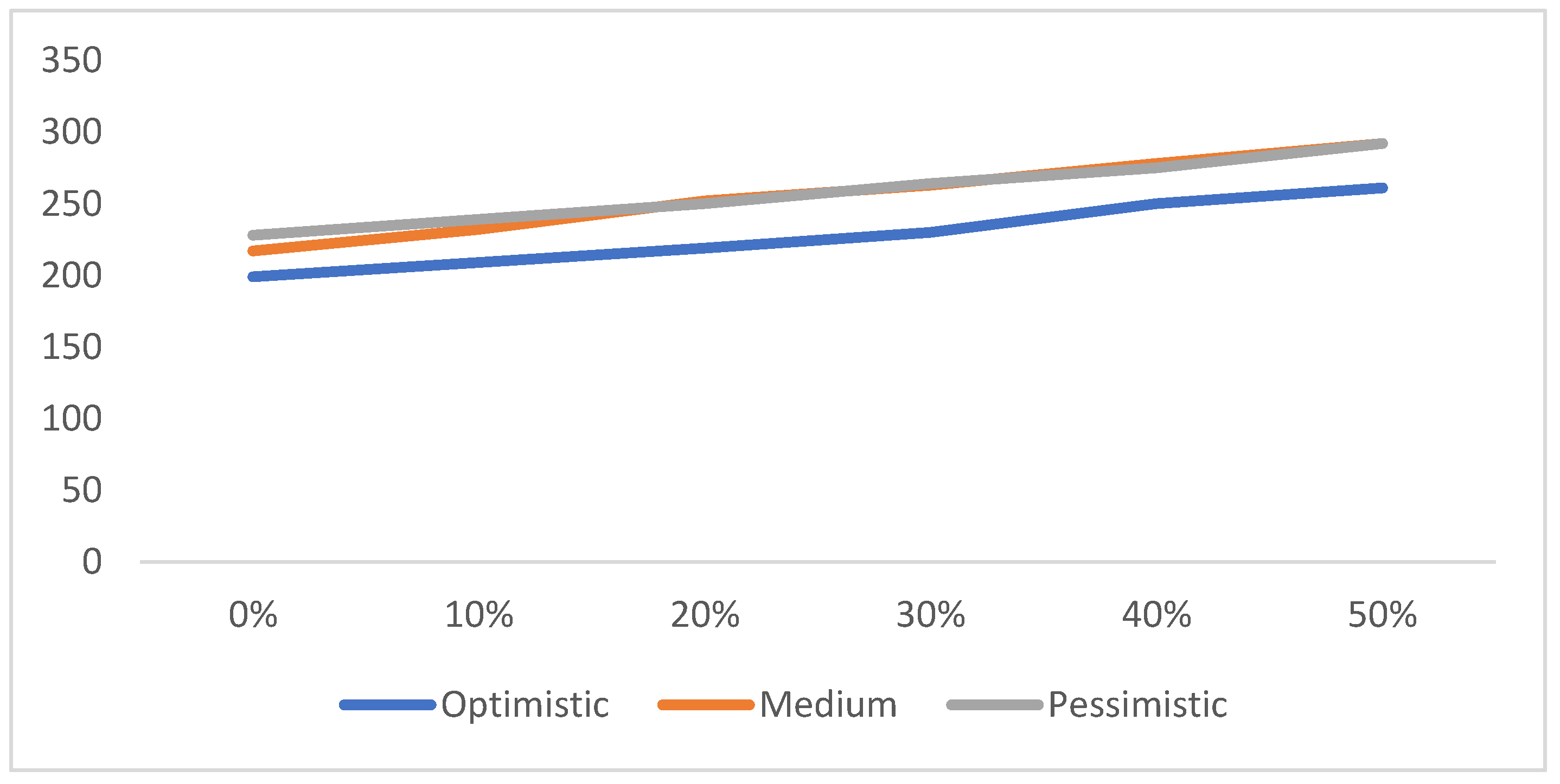
Figure 10 is designed based on the information in Table 11. It shows the Resource consumption under three scenarios.
Figure 10.
Resource consumption under different scenarios.
Figure 11 is designed based on the information in Table 11. It shows the idleness of resources under three scenarios.
Figure 11.
Idleness of resources under different scenarios.
Based on Figure 9, Figure 10 and Figure 11, it can be seen that the time of different scenarios can have an effect on the project completion time, that is, under the optimistic scenario, the project completion time is less than the middle and pessimistic scenarios, even with an increase in the time of activities. It was expected. However, regarding the consumption of resources, there is not much difference between the existing scenarios, although the optimistic scenario is still better than the other two scenarios. The two middle and pessimistic scenarios do not show much difference in terms of resource consumption. Figure 11 shows the idleness of resources under different scenarios, which shows the difference between the three scenarios, and of course, the optimistic scenario is better than the other two scenarios. Therefore, apart from the consumption of resources, it should be said that different scenarios cause changes in the values of the objective functions.
5. Results and Discussion
In today’s world, the implementation and management of projects have changed a lot and unlike the past, they are not managed without considering unpredictable realities. Naturally, every project has lack of resources, increase in time and unpredictable costs. Therefore, finding an optimal project schedule considering different project objectives is vital for managers to achieve stakeholders’ satisfaction [27]. Project managers schedule activities and allocate resources to activities regarding time, cost and quality objectives [28]. Regarding the project schedule, it should be noted that the lack of resources can have a significant effect on the time of the activities, as the results of the present research show that the reduction in resources can significantly reduce the time of the project. In this regard, project planners should pay more attention to reducing resources uctuations in many projects during the planning stage of project management [29]. The reason for that is a partial pre-emption in the activities, so the supply of renewable resources can prevent such a situation from happening. On the other hand, the idleness of resources, which can be detrimental to the project management, occurs due to the pre-emption of activities, and one of the main goals of this research to reduce idleness is resources. On the other hand, demand is a factor affecting the pre-emption of activities in a partial way, that is, it can cause the pre-emption of activity in a specific period, the reason for which is the increase in the need for resources, the consumption of resources, and as a result, the lack of resources. Therefore, project management should not ignore the effect of demand. Another important issue raised in the present research is determining the upper and lower bounds for carrying out activities in such a way that an activity should not be delivered earlier than one time and finished later than another time. This shows that early delivery is not always appropriate in some projects, and the present research also addresses this issue. The results show that the upper bound of the delivery time if increased, cannot lead to an increase in pre-empted activities, while it can increase the consumption of resources, but it does not have an effect on idleness, and it can be said that it only affects the consumption of resources, thus intensifying one goal. Though, if it is necessary to make the delivery earlier, as a result, the activities will be partially pre-empted, and consequently, the consumption of resources, which is one of the objectives of the present research, will be intensified.
Therefore, the management approach in the present research should be to issues such as demand, change in delivery time, and also renewable resources, i.e., these three factors are factors that seriously arouse the sensitivity of the issue and should be considered as serious and effective factors in scheduling a project, and each of them can intensify a goal in its place, even if they do not affect other goals.
In general, projects are delayed for various reasons. one of the ways to reduce the project time is to reduce the time of the project activities. Project experts are usually concerned about satisfying or mitigating delays and achieve this by compressing the schedule to shorten the project duration [30]. But a point that is very important and should be considered is resource limitations and uncertainty.
In fact, it can be said that the current research has succeeded in solving a model that has been neglected in previous research in the field of project planning. For example, the current research has managed to provide a model for project scheduling by considering uncertainty, where resources are limited, and on the other hand, leveling of resources should be completed according to resource constraints. In this paper, resources are not single-skilled, and partial interruption of activities has been implemented as one of the main innovations of this research. The results of this research show that partial pre-emption of multiple-mode activities in a project can be implemented considering other assumptions.
In this paper, the effect of resource constraints and time window, on the project scheduling was investigated despite the partial pre-emption of activities. In general, the addition of resource constraints to a scheduling problem may affect its computational complexity [31]. In the partial pre-emption of activities, it is considered that the activities can be pre-empted in a certain period and the reason is the lack of resources. The results of this research show that the lack of renewable resources has increased the pre-emption of activities, and this increase can naturally affect the total project time. Of course, the effect of increasing interruptions or interrupted activities is only on the project schedule, while resource consumption decreases due to resource limitations. On the other hand, the unemployment of resources, which can lead to an increase and impose more costs for a project, also increases. Therefore, for a project that is implemented with renewable resources, it is necessary that these resources are always available, and its reduction is prevented because it has the greatest effect on all three goals. On the other hand, demand can be increased, although idleness reduces resources, but it increases consumption and on the other hand, it leads to a lack of available resources. This should also be properly managed by the project managers and the demand discussion should be taken seriously as an important issue.
Assuming the existence of an upper bound and a lower bound for the delivery time, it should be noted that the upper bound can lead to a reduction in resource consumption and create more adjustments in resources, while on the other hand, it can increase the total time because total time is a function of delivery time. However, the lower bound is effective on the minimum delivery time, and the more this time decreases, the more pressure is put on the resources, and as a result, it can lead to pre-emption of activities, an increase in resource consumption, and an increase in project time, because the increase in project time depends on the number of pre-empted activities. Finally, the uncertainty in the time of carrying out the activities shows that under different scenarios it is only the consumption of resources that does not show much change between the optimistic and the middle scenario, but the idleness of resources and the project completion time are completely different under different scenarios.
It is suggested that in future research, the risk of activities in partial pre-emption conditions should be taken into consideration. On the other hand, in the future, researchers can consider topics such as skill switches regarding multi-skill problems, as well as the risk of performing activities in different situations. Economic topics such as the current value of the project due to the pre-emption of activities can also be considered in future research.
Author Contributions
Conceptualization, L.H.-M., M.K., N.S.-P. and S.M.S.; methodology, L.H.-M. and M.K.; investigation, N.S.-P. and S.M.S.; visualization, L.H.-M. and M.K.; writing—original draft preparation, N.S.-P. and S.M.S.; writing—review and editing, N.S.-P., M.K. and S.M.S.; supervision, L.H.-M. and S.M.S. All authors have read and agreed to the published version of the manuscript.
Funding
This research received no external funding.
Institutional Review Board Statement
This article does not contain any studies with human participants or animals performed by any of the authors.
Informed Consent Statement
Not applicable.
Data Availability Statement
The datasets generated during and/or analyzed during the current study are available from the corresponding author upon reasonable request.
Conflicts of Interest
The authors declare that there is no conflict of interest regarding the publication of this manuscript.
References
- Shuvo, O.; Golder, S.; Islam, M.R. A hybrid metaheuristic method for solving resource constrained project scheduling problem. Evol. Intell. 2023, 16, 519–537. [Google Scholar] [CrossRef]
- Juan, D.G.-N.; Jose, L.P.-T.; Ospina-Alvarado, A.; Bonilla-Palacios, M. Multipurpose linear programming optimization model for repetitive activities scheduling in construction projects. Autom. Constr. 2019, 105, 102799. [Google Scholar]
- Goncalves, J.F.; Mendes, J.J.M.; Resende, M.G.C. A genetic algorithm for the resource-constrained project scheduling problem. Eur. J. Oper. Res. 2008, 189, 1171–1190. [Google Scholar] [CrossRef]
- Kaiafa, S.; Chassiakos, A.P. A genetic algorithm for optimal resource-driven project scheduling. Procedia Eng. 2015, 123, 260–267. [Google Scholar] [CrossRef]
- Zhang, S. Selection of Multimode Resource-Constrained Project Scheduling Scheme Based on DEA. Method. Sci. Program. 2020, 2020, 1–7. [Google Scholar] [CrossRef]
- Chakrabortty, R.K.; Abbasi, A.; Ryan, M.J. Multi-mode resource-constrained project scheduling using modified variable neighborhood search heuristic. Int. Trans. Oper. Res. 2019, 27, 138–167. [Google Scholar] [CrossRef]
- Yuan, Y.; Ye, S.; Lin, L.; Gen, M. Multi-objective multi-mode resource-constrained project scheduling win prefabricated building construction. Comput. Ind. Eng. 2021, 158, 107316. [Google Scholar] [CrossRef]
- Blazewicz, J.; Lenstra, J.K.; Kan, A.H.G.R. Scheduling subject to resource constraints: Classification and complexity. Discret. Appl. Math. 1983, 5, 11–24. [Google Scholar] [CrossRef]
- Mejia, O.P.; Artigues, C.; Lopez, P.; Mönch, L. Memory and feasibility indicators in GRASP for Multi-Skill Project Scheduling with Partial Preemption. In Proceedings of the XIII Metaheuristics International Conference (MIC 2019), Carthagène des Indes, Colombia, 28–31 July 2019; pp. 153–156, ffhal-02264213ff. [Google Scholar]
- Moradi, H.; Shadrokh, S. A robust scheduling for the multi-mode project scheduling problem with a given deadline under uncertainty of activity duration. Int. J. Prod. Res. 2019, 57, 3138–3167. [Google Scholar] [CrossRef]
- Hosseinian, A.H.; Baradaran, V. A two-phase approach for solving the multi-skill resource-constrained multi-project scheduling problem: A case study in construction industry. Eng. Constr. Arch. Manag. 2021, 30, 321–363. [Google Scholar] [CrossRef]
- Etminani esfahani, A.; Gu, H.; Salehipour, A. An Efficient Relax-and-Solve Algorithm for the Resource-Constrained Project Scheduling Problem. In Proceedings of the 11th International Conference on Operations Research and Enterprise Systems, Online, 3–5 February 2022. [Google Scholar] [CrossRef]
- Damci, A.; Polat, G.; Akin, F.D.; Turkoglu, H. Use of float consumption rate in resource leveling of construction projects. Front. Eng. Manag. 2022, 9, 135–147. [Google Scholar] [CrossRef]
- Davari Ardakani, H.; Dehghani, A. Multi-objective Optimization of Multi-mode Resource-constrained Project Selection and Scheduling Problem Considering Resource Leveling and Time-varying Resource Usage. Int. J. Supply Oper. Manag. 2022, 9, 34–55. [Google Scholar]
- Lotfi, R.; Kargar, B.; Gharehbaghi, A.; Hazrati, H.; Nazari, S.; Amra, M. Resource-constrained time–cost-quality-energy-environment tradeofproblem by considering blockchain technology, risk and robustness:a case study of healthcare project. Environ. Sci. Pollut. Res. 2022, 29, 63560–63576. [Google Scholar] [CrossRef] [PubMed]
- Ramos, A.S.; Miranda-Gonzalez, P.A.; Nucamendi-Guillen, S.; Oiveres-Benitez, E. A Formulation for the Stochastic Multi-Mode Resource-Constrained Project Scheduling Problem Solved with a Multi-Start Iterated Local Search Metaheuristic. Mathematics 2023, 11, 337. [Google Scholar] [CrossRef]
- Liu, Y.; Jin, S.; Zhou, J.; Hu, Q. A branch-and-bound algorithm for the unit-capacity resource constrained project scheduling problem with transfer times. Comput. Oper. Res. 2023, 151, 106097. [Google Scholar] [CrossRef]
- Zhang, S.; Song, X.; Shen, L.; Xu, L. Complicated TimeConstrained Project Scheduling Problems in Water Conservancy Construction. Processes 2023, 11, 1110. [Google Scholar] [CrossRef]
- Dadhich, S.; Nayak, J.G.; Patil, R.N. Studying the distribution and leveling of resources in construction projects. Eur. Chem. Bull. 2023, 12, 1289–1299. [Google Scholar]
- Aristotelous, M.; Nearchou, A.C. Resource Leveling Optimization by Hybrid Metaheuristic. 2023. Available online: https://www.researchsquare.com/article/rs-2635672/v1 (accessed on 26 September 2024).
- Snauwaert, J.; Vanhoucke, M. A classification and new benchmark instances for the multi-skilled resource-constrained project scheduling problem. Eur. J. Oper. Res. 2023, 307, 1–19. [Google Scholar] [CrossRef]
- Zhao, M.; Zhou, J.; Wang, K.; Pantelous, A.A. Project Scheduling Problem With Fuzzy Activity Durations: A Novel Operational Law Based Solution Framework. Eur. J. Oper. Res. 2023, 306, 519–534. [Google Scholar] [CrossRef]
- Nigar, N.; Shahzad, M.K.; Islam, S.; Oki, O.; Lukose, J.M. Multi-Objective Dynamic Software Project Scheduling: A Novel Approach to Handle Employee’s Addition. IEEE Access 2023, 11, 39792–39806. [Google Scholar] [CrossRef]
- Prieto, S.A.; Mengiste, E.T.; García de Soto, B. Investigating the Use of ChatGPT for the Scheduling of Construction Projects. Buildings 2023, 13, 857. [Google Scholar] [CrossRef]
- Cheraghi, E.; Zohrehvandi, S.; Vanhoucke, M.; Tosarkani, B.M. A multiproject scheduling and resource management model in projects construction. Eng. Constr. Arch. Manag. 2023, 30, 1578–1600. [Google Scholar] [CrossRef]
- Tavakkoli-Moghaddam, R. A hybrid genetic algorithm for a bi-objective scheduling problem in a flexible manufacturing cell. Int. J. Eng. 2010, 23, 235–252. [Google Scholar]
- Sadeghi, R.; Heidari, A.; Zahedi, F.; Khordehbinan, M.W.; Khalilzadeh, M. Application of NSGA-II and fuzzy TOPSIS to time–cost–quality trade-off resource leveling for scheduling an agricultural water supply project. Int. J. Environ. Sci. Technol. 2023, 20, 10633–10660. [Google Scholar] [CrossRef]
- Kebriyaii, O.; Heidari, A.; Khalilzadeh, M.; Antucheviciene, J. Application of Three Metaheuristic Algorithms to Time-Cost-Quality Trade-Off Project Scheduling Problem for Construction Projects Considering Time Value of Money, Symmetric and Asymmetric Data in Solution Models. Symmetry 2021, 13, 2402. [Google Scholar] [CrossRef]
- Tran, D.H.D.; Le, H.Q.P.D.; Nguyen, N.T.; Le, T.T.D. Robust forensic-based investigation algorithm for resource leveling in multiple projects. Sci. Iran. 2022, 31, 603–618. [Google Scholar] [CrossRef]
- Banihashemi, S.A.; Khalilzadeh, M. Application of fuzzy BWM-CoCoSo to time–cost–environmental impact trade-off construction project scheduling problem. Int. J. Environ. Sci. Technol. 2023, 20, 1199–1214. [Google Scholar] [CrossRef]
- David, S. Continuous-Time Formulations for Multi-Mode Project Scheduling. Comput. Oper. Res. 2023, 152, 106147. [Google Scholar] [CrossRef]

Disclaimer/Publisher’s Note: The statements, opinions and data contained in all publications are solely those of the individual author(s) and contributor(s) and not of MDPI and/or the editor(s). MDPI and/or the editor(s) disclaim responsibility for any injury to people or property resulting from any ideas, methods, instructions or products referred to in the content. |
© 2024 by the authors. Licensee MDPI, Basel, Switzerland. This article is an open access article distributed under the terms and conditions of the Creative Commons Attribution (CC BY) license (https://creativecommons.org/licenses/by/4.0/).