
Article

Comparative Effects of Esports and Traditional Sports on Motor Skills and Cognitive Performance in Higher Education Students in a Post-Pandemic Context

1
Department of Physical Education and Sport–Physical Therapy, National University of Science and Technology Politehnica Bucharest, 060042 Bucharest, Romania
2
Department of Teacher Training and Social Sciences, National University of Science and Technology Politehnica Bucharest, 060042 Bucharest, Romania
3
Department of Physical Education and Sport, Faculty of Sciences, Physical Education and Informatics, National University of Science and Technology Politehnica Bucharest, Pitesti University Center, 110040 Pitesti, Romania
*
Authors to whom correspondence should be addressed.
Educ. Sci. 2026, 16(2), 222; https://doi.org/10.3390/educsci16020222
Submission received: 15 December 2025 / Revised: 27 January 2026 / Accepted: 29 January 2026 / Published: 2 February 2026

Abstract

Background. The rapid expansion of esports within higher education, accelerated by the COVID-19 pandemic, has raised important questions regarding their impact on students’ physical and psychological development. While traditional sports are well known for their benefits on motor and physical skills, esports primarily engage cognitive processes through sustained interaction with digital environments. This study compares motor skills and cognitive performance among higher education male students participating in esports and traditional sports in a post-pandemic context. Methods. The present study employs a quantitative, comparative, cross-sectional design to examine differences in motor skills (using standardized physical tests) and cognitive performance (focused attention, short-term memory, and information processing speed) between higher education male students engaged in esports and those participating in traditional sports. Results. Male students engaged in traditional sports demonstrated superior motor outcomes, particularly in muscle strength and postural control. Cognitive performance was comparable between groups, with a slight advantage for traditional sports participants in focused attention and processing speed. Conclusions. Although esports may support certain aspects of cognitive performance to a degree comparable with traditional sports, they do not provide equivalent benefits in terms of motor and postural development. These results highlight the importance of maintaining physical activity within university settings and suggest that esports should complement rather than replace traditional sports in higher education programs.

1. Introduction

Over the past few decades, the international academic community has undergone rapid transformation due to the integration of digital technologies, which has fundamentally changed the way students interact and spend their free time (Witkowski, 2012; Archibald, 2024).
One of these remarkable changes is the quick emergence and expansion of esports, which are defined as video games that are competitively organized at a professional or semi-professional level (Jenny et al., 2017). The phenomenon of esports has attracted considerable attention in the academic world, where it has been studied from educational, economic, social, health, competitive, and cultural perspectives (Hamari & Sjöblom, 2017).
At the same time, traditional sports activities—such as athletics, football, basketball, tennis, gymnastics, or university team sports—continue to occupy a central place in student life and in the culture of higher education institutions. These activities represent not only a way of maintaining physical health but also an essential component of the development of social and psychological skills such as cooperation, leadership, and discipline (Bailey, 2006; Pelin et al., 2020). Regular participation in traditional sports contributes to a balanced lifestyle, enhancing stress resistance, self-confidence, and concentration (Eime et al., 2013). Also, in many universities, these activities are carried out in organized competitive contexts, fostering a sense of community and promoting the values of sportsmanship and fair play. In this regard, traditional sports play not only a recreational but also an educational and cultural role, reflecting the traditions and social values of academic communities.
In economic terms, the global esports industry has experienced spectacular growth, generating revenues of over $1 billion in 2021, with estimates that they will reach $1.86 billion by 2025 (Newzoo, 2021). This rapid growth has prompted higher education institutions to incorporate esports into their curricular and extracurricular offerings in an attempt to attract students and improve competition (Pizzo et al., 2018).
The health perspective is also a central aspect of the comparison between esports and traditional sports. Participation in traditional sports is directly associated with multiple physical benefits, including the development of motor skills, improved cardiovascular health, and reduced risk of chronic diseases (Warburton et al., 2006; Griffiths & Nuyens, 2017). Instead, esports, which predominantly involve sedentary activities and prolonged screen exposure, may contribute to developing health problems such as musculoskeletal disorders, eye fatigue, and chronic sedentary behavior (DiFrancisco-Donoghue et al., 2019; Ekefjärd et al., 2024). However, esports strongly promote cognitive skills such as increased attention, rapid reaction time (RT), and information processing under pressure, which may have indirect positive effects on mental health and cognitive performance (Kowal et al., 2018). To further nuance the health-related perspective, it is important to acknowledge that contemporary, evidence-based training approaches in esports increasingly extend beyond purely sedentary gameplay. In particular, immersive virtual reality (VR)–based exergaming interventions, such as rhythm- and movement-oriented games, have been shown to elicit moderate-intensity physical activity while simultaneously engaging attentional control, visuomotor coordination, and executive functions, thereby blurring the traditional distinction between cognitive and physical training. Incorporating this emerging evidence allows for a more balanced conceptualization of esports recognizing that modern e-athlete training can integrate cognitive stimulation with meaningful levels of physical engagement.
From a competitive point of view, both esports and traditional sports share similar aspects: competition, excellence, and the development of individual and collective performance. However, the competitive nature of esports differs significantly by the absence of direct physical activity, emphasizing reaction speed, strategy, and intense mental concentration (Bányai et al., 2020). Therefore, neurocognitive research is essential to assess whether these digital competitive activities can improve or, on the contrary, negatively affect neurocognitive functions such as attention and concentration compared to traditional sports (Boot et al., 2008).
The cultural perspective highlights significant differences between society’s perceptions of esports and traditional sports. In many cultures, traditional sports are seen as manifestations of national identity and tradition, representing values such as fair play, solidarity, and integrity (Weed & Bull, 2009). Esports, as an emergent phenomenon, often face cultural stereotypes, sometimes being negatively perceived as a sedentary and unproductive activity (Kane & Spradley, 2017). However, cultural acceptance of esports is growing rapidly, and universities have a role to play in reconciling these differences by promoting an inclusive and diverse academic culture.
Although research on both esports and traditional sports has expanded considerably in recent years, important gaps in the literature still persist. Much of the existing work approaches these two forms of activity separately, with relatively few studies offering a direct and systematic comparison between them, especially in the context of higher education. Moreover, while the physical benefits of traditional sports are well established and the cognitive demands of esports are increasingly acknowledged, there is limited research that examines cognitive and motor outcomes together within the same analytical framework. In particular, empirical evidence simultaneously addressing attention, concentration, and motor skills among university students remains scarce. In addition, many previous studies rely heavily on self-reported data or theoretical approaches, limiting insight into actual performance differences. Despite the increasing presence of esports in universities, robust empirical evidence to guide educational and health policies remains insufficient.
From a theoretical perspective, the present study is grounded in cognitive load theory and attentional control models, which posit that sustained and selective attention, processing speed, and executive control are shaped by task demands requiring rapid information filtering and decision-making, as is characteristic of esports (Lachowicz et al., 2024), whereas motor learning and embodied cognition frameworks emphasize that repeated physical practice enhances motor coordination, sensorimotor integration, and attentional stability, as typically observed in traditional sports (Lachowicz et al., 2025). Accordingly, attention and concentration are conceptualized as outcomes primarily mediated by executive and perceptual–cognitive mechanisms engaged during high-intensity digital gameplay, while motor skills are viewed as outcomes of physically driven neuro-motor adaptation processes fostered through sustained participation in traditional sports.
Unlike much of the prior literature that investigates traditional sports and esports in isolation, this study provides a direct, side-by-side comparison of motor and cognitive outcomes in students engaged predominantly in either activity type. By assessing both domains within a single empirical framework, the study addresses a key gap in the literature, which has often treated physical and cognitive development as separate or asymmetrically measured constructs.
In addition, many previous studies rely heavily on self-reported data or theoretical discussions, which may not fully capture actual performance-related differences between esports and traditional sports participants. As a result, the distinct ways in which these activities shape students’ cognitive functioning and motor abilities are not yet clearly understood. Furthermore, despite the growing presence of esports in university settings, there is a lack of robust empirical findings that can support informed educational, health, and institutional policy decisions. Addressing these gaps is essential for developing a clearer and more balanced understanding of how both digital and physical forms of sport contribute to students’ overall development in contemporary academic environments.
Given these complex and interconnected perspectives, this paper aims to explore and compare the impact of higher education students’ participation in esports versus traditional sports on both neurocognitive functioning, namely attention and concentration, and motor skills. The study proposes a rigorous empirical analysis that contributes to understanding the role of sports activity in the holistic development of young people, thus providing universities with a scientifically documented basis for the development of educational, social, and health policies. This is achieved by
  • Comparing the influence of esports activities with traditional sports activities on neurocognitive functions (attention and concentration) and motor skills among higher education students.
  • Analyzing whether and how the effects of esports (which involve intense cognitive activity but less physical activity) differ from traditional sports (which involve physical activity and high motor coordination).
  • Identifying the potential benefits or disadvantages of including esports activities in university educational programs compared to traditional sports activities, from the perspective of cognitive development (attention, concentration) and motor performance.
  • Contributing with empirical data to substantiate educational policies regarding the integration of esports and traditional sports in the academic environment.
Based on the articulated theoretical framework and the health-, cognitive-, and motor-related distinctions between traditional sports and esports, the following research questions are proposed:
RQ1: Are there significant differences in attention and concentration performance between higher education students who primarily participate in traditional sports and those who primarily engage in esports?
RQ2: How does participation in traditional sports compared to esports influence motor skill performance among university students?
Through this interdisciplinary approach, the research also aims to provide an in-depth understanding of how the digital environment influences physical and cognitive development, which is essential for the education and well-being of students in the 21st century. This research provides a direct, multidimensional comparison between esports and traditional sports, using objective assessments of both motor and cognitive performance. The findings offer timely and necessary evidence to inform educational and public health decision-making, highlighting that esports may play a complementary role but cannot replace traditional physical activity in supporting students’ holistic development.

2. Materials and Methods

2.1. Participants

The selection of participants was carried out in two stages. In a first phase, 671 higher education students (31.1% girls and 68.9% boys) aged 19–21 years completed a 10-item screening questionnaire on regular participation in esports or traditional sports activities (football, basketball, volleyball). Based on the responses, students who fell into one of the two categories of interest were identified and included in the final sample. Thus, there were selected
  • In total, 31 students consistently participating in Esports (Esports group, denoted by E);
  • In total, 32 students participating in traditional sports activities (traditional sports activities group, denoted by SA).
In total, the final sample included 63 participants (≈9.4% of the initial respondents).
The inclusion criteria used for selection were: (a) age appropriate for students enrolled in bachelor’s/master’s degree programs, (b) complete responses to the screening questionnaire, (c) consistent participation in esports or traditional sports activities, as well as participation in the psychological assessment.
The exclusion criteria were represented by (a) lack of consistent participation in one of the two categories of activities, (b) incomplete responses to the questionnaire, (c) participation in a single activity (either motor tests or psychological tests).
The selected students were informed about the objectives of the study, completed the informed consent, and participated voluntarily. The study was conducted in accordance with the principles of the Declaration of Helsinki and the institutional research ethics guidelines (no. 4012/02.02.2024).

2.2. Study Design

This research was conceived as a comparative study with a quantitative, comparative and cross-sectional design and aimed to investigate the differences between motor skills and psychological dimensions (attention and concentration) related to esports and traditional sports activities among higher education students in the particular post-pandemic context.
The experimental approach consisted of three stages carried out to ensure the smooth conduct of the study:
  • Stage I—The screening and selection process of participants (October–December 2024).
  • Stage II—Assessment of motor skills (quantitative component) (February–March 2025).
For the objective analysis of motor skills, standardized tests validated in the literature were used (Alpha-Fit Test Battery):
  • Muscle strength and speed—assessed by push-ups and standing long jump tests; 10 m sprint test;
  • Coordination and balance—measured by the Flamingo Balance test and bilateral coordination tests;
  • Posture and mobility—analyzed by the Sit and Reach test and static assessment of body posture.
The purpose of this stage was to highlight the differences between the physical development and motor skills of the two categories of participants.
  • Stage III—Assessment of psychological dimensions (March–April 2025)
In order to capture cognitive dimensions, validated psychological instruments were used:
  • Focused attention—tested by CRT (Choice Reaction Time).
  • Short-term memory and information processing speed—tested by MRT (Working Memory Reaction Time).
The scores obtained were compared between the two groups to see whether differences in the type of activity influenced neurocognitive functions.
  • Stage IV—Data analysis
  • Quantitative data were statistically processed by means of SPSS/(software version 26.0; IBM Corp., USA) using descriptive statistics, independent t-tests, and analysis of variance (ANOVA) for group comparisons.
  • Methodological justification
By integrating the two perspectives, the research provides a holistic view of the differences between esports and traditional sports:
  • Standardized tests ensure objectivity and comparability of motor and cognitive performance, bringing depth and context, and highlighting how students perceive the benefits and limitations of each activity.
This approach allows for data triangulation and increases the validity of conclusions, providing a solid basis for interpreting the influence of esports and traditional sports on the physical and psychological health of students.

2.3. Procedure

The research was conducted at the Politehnica Bucharest Center for Research and Innovation in Sport, with the support of the university’s Center for Applied Psychology, over a period of 7 months (October 2024–April 2025). The tests were carried out individually, under controlled environmental conditions (constant temperature, absence of disturbing stimuli, calibrated equipment).
  • Preparatory stage
After obtaining the informed consent of the participants, they were scheduled for testing sessions conducted on two separate days (over a period of ten weeks):
  • Day 1: physical assessment using the Alpha-Fit Test Battery;
  • Day 2: psychological assessment of attention and concentration.
A 48–72 h interval was ensured between the two sessions to prevent fatigue.
  • Physical assessment—Alpha-Fit Test Battery
To measure motor skills, the Alpha-Fit Test Battery adapted for young adults was used. The tests included:
  • Body mass index (BMI)—determined by the weight/height2 ratio;
  • Upper limb strength (40 s push-ups)—maximum number of correctly performed repetitions;
  • Abdominal strength (30 s repetitions)—a standardized sit-up test;
  • Static balance—the Flamingo Balance test is used to measure the duration (in seconds) of holding the single-leg stance;
  • Movement speed—measured by a 20 m sprint race timed with a CASIO HS-80TW-1EF stopwatch;
  • Body posture—visually assessed bilaterally (upper and lower limbs) and scored on a scale of 1 (poor posture) to 5 (correct posture). A rough estimate of the posture and functional mobility of shoulder-neck region. The tester estimates the restrictions of functional movement by observing the final position of the hands against the wall. Result is separately scored for the right and left sides.
Individual results were recorded in standardized sheets. The values obtained (e.g., average BMI = 25.6 ± 3.2) were subsequently used for comparisons between the esports group (E) and the traditional sports activities group (SA).
Psychological assessment—consisted of tests for focused attention, short-term memory, and information processing speed.
Cognitive dimensions were measured by two standardized tests from the CAS++ (Cognitrom Assessment System), a computerized psychological test battery. The Choice Reaction Time (CRT) test and the Working Memory Reaction Time (MRT) test are two standardized psychological instruments validated for the Romanian population. CAS++ is a computerized psychological assessment platform designed for adults. In its current version (V4.0, 2025), the platform offers over 50 psychological tests adapted and calibrated to the Romanian population, which are grouped into several areas: cognitive skills, executive functioning, personality and attitudes, emotions/clinical behaviors, interests and values, non-cognitive skills, and non-psychometric assessment. CAS++ is accredited by the Romanian College of Psychologists for an indefinite period and is used not only in clinical contexts but also in organizational psychology, personnel selection, professional counseling, and career guidance. A recent study (Vasile et al., 2024) used it in research on the performance of young climbers. The tests were administered by personnel licensed to use this psychological test battery.
The advantage of using the computerized CAS++ version lies in the accuracy and standardization of measurement. Unlike traditional paper-based tests, the CAS++ system automatically records reaction times and generates relevant statistical indicators (mean, standard deviation, intraindividual variability), facilitating rigorous quantitative analyses (Cognitrom, 2025). In addition, calibration to the Romanian population and convergent validity with other attention measures (e.g., Vienna Test System tests or WAIS-IV subtests) ensure reliable scientific use (Visu-Petra et al., 2012). The CRT and MRT tests in the computerized battery are standardized instruments that allow for the accurate recording of attentional performance, with millisecond resolution (Cognitrom, 2025). These tests are theoretically based on the PASS (Planning, Attention, Simultaneous, and Successive) components, a model developed by Naglieri and Otero (2024), which conceptualizes intelligence and cognitive functioning as systems of interdependent processes. CRT and MRT particularly reflect the attention component, namely the speed and consistency of information processing.
In the CRT test, the participant must select the correct response from several alternatives, a task that requires selective attention and executive control. Instead, the MRT test assesses the ability to focus and quickly access information from working memory, involving focused attention and the efficiency of successive information processing. Average reaction time and response variability are considered direct indicators of attention stability and efficiency (Leth-Steensen et al., 2000; Visu-Petra et al., 2012).
CRT involves two stimuli and two response modalities. The participant must decide on the relative spatial arrangement of two geometric shapes, which, whenever displayed, are inserted into a set of five elements that include, along with the targets, three distractor shapes. The target shapes can be adjacent or separated by another shape. The response is given by pressing one of two preset keys, depending on the relative position of the neighboring or distant targets. The correctness of responses and reaction times are automatically recorded by the digital testing platform. MRT assesses the time needed for the participant to scan the contents of their long-term memory in order to decide whether a recently displayed stimulus belonged to a previously presented set of multiple items. The test requires the participant to decide as quickly as possible whether various individual letters were or were not presented in a previously displayed set of six letters. The time elapsed between the appearance of the target stimulus and the pressing of the response key, as well as the correctness of the response, are automatically recorded by the testing platform.
Depending on the value obtained, the participant’s performance expressed as a raw score is related to a benchmark built on the following five standardized classes: class 5—very good RT level (better than 93.3% of the population), class 4—good level (better than 69.1% of the population), class 3—medium level (better than 30.9% of the population), class 2—poor level (better than 6.7% of the population), class 1—very poor level (performance at the level of the poorest 6.7% of the population).
Higher reaction time performance (i.e., faster responses) may reflect greater efficiency in basic cognitive processes such as information processing speed and attentional control. However, reaction time should not be interpreted as a direct indicator of general intelligence, as intelligence quotient (IQ) is a multidimensional construct encompassing diverse cognitive abilities, including reasoning, problem-solving, verbal comprehension, and working memory. Accordingly, lower reaction time performance may be associated with reduced efficiency in processing speed or attentional mechanisms, rather than with lower overall intelligence or diminished higher-order cognitive abilities. In order to control cognitive fatigue, each participant had a familiarization session (1–2 tests) before the actual testing began. Prior to the formal testing sessions, participants completed a familiarization phase designed to ensure understanding of task instructions and response requirements and to reduce potential learning effects during data collection. During this phase, participants were allowed to practice each task under the supervision of the examiner until they demonstrated basic procedural comprehension. The familiarization phase was intended solely for instructional purposes; however, its duration and the number of practice trials were not formally standardized or quantitatively recorded across participants.
  • Experimental conditions and control of variables
  • All tests were conducted between 9:00 a.m. and 12:00 p.m. to avoid diurnal variations in performance and depended on the participants’ availability.
  • Participants were asked to avoid strenuous activities and caffeine consumption 24 h prior to testing.
  • The order of tests was identical for all participants (physical tests followed by cognitive tests).
  • All equipment was calibrated daily.
  • Examiners followed a uniform protocol, and the same instructions were communicated to all participants.

2.4. Statistical Analysis

The collected data were coded and entered into the database for statistical analysis. Data analysis was conducted using the Statistical Package for the Social Sciences (SPSS, software version 26.0; IBM Corp., Armonk, NY, USA). All variables obtained from the assessment protocols were processed using standard descriptive and inferential statistical procedures, as detailed below.
The following were calculated:
  • Descriptive indicators: means, standard deviations, coefficients of variation;
  • Comparison tests: t-test for independent samples (esports vs. sports activities), with significance at p < 0.05;
  • Although Shapiro–Wilk tests indicated departures from normality for several variables, independent-samples t-tests were retained due to their documented robustness under moderate normality violations, particularly in balanced group designs. Visual inspection of distributions did not reveal severe deviations. Effect sizes (Cohen’s d) were reported to quantify the magnitude of observed differences, consistent with recommendations for transparent reporting.
  • Correlation analyses (Pearson’s r) to examine the relationships between motor performance and cognitive reaction times.
The results obtained allowed us to determine the physical and cognitive profile specific to each group.

3. Results

Descriptive statistical analysis reveals that both groups (Esports and traditional sports activities) are comparable in terms of age (Table 1 and Table 2); thus, the average age is approximately 19.7 years for the esports group and 19.8 years for the sports group, with low variability (SD < 1).
(a)
Esports group (N = 31):
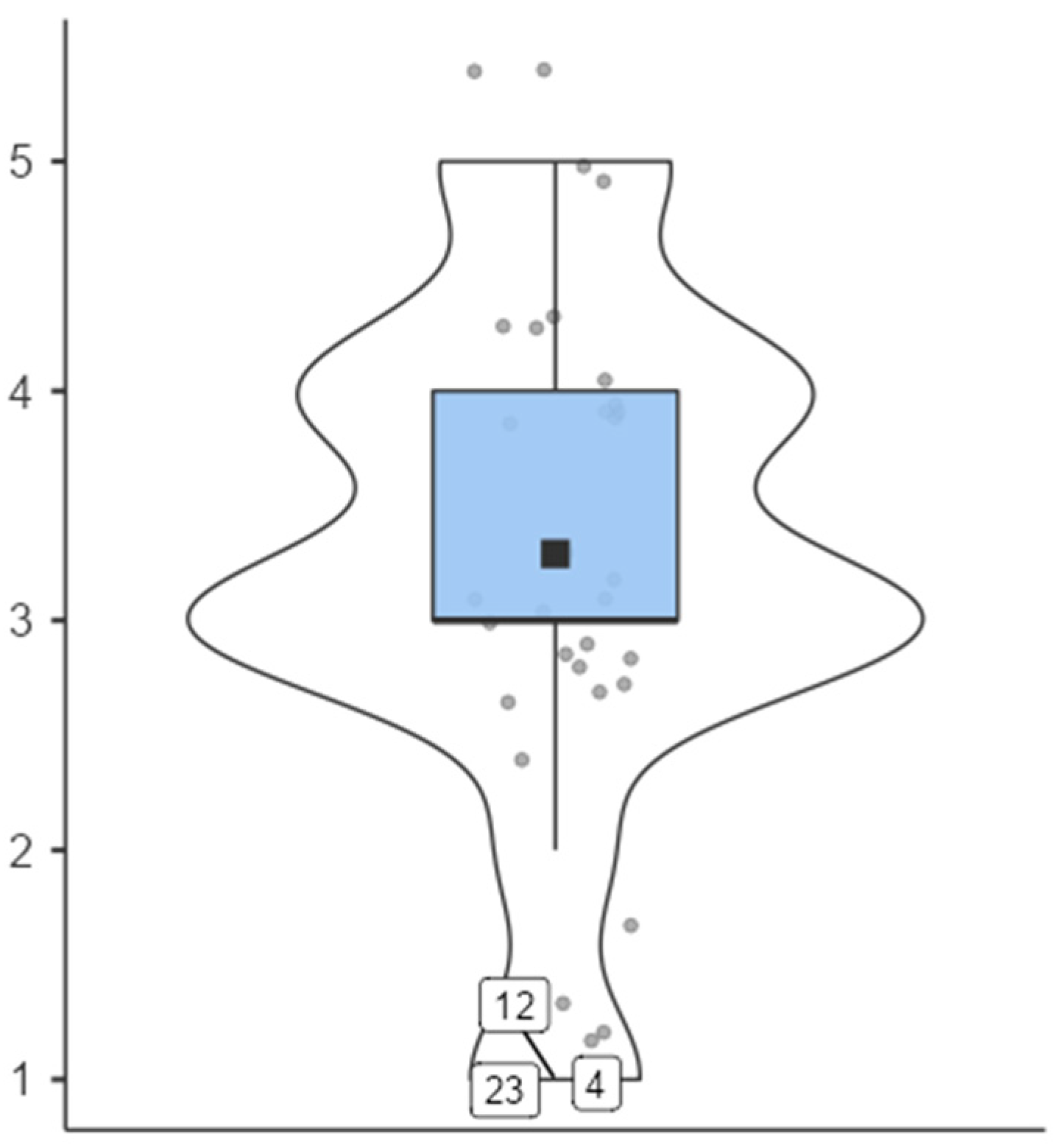
  • The mean score for reaction speed is M = 2.97 (SD = 0.87), indicating a moderate level (Figure 1).
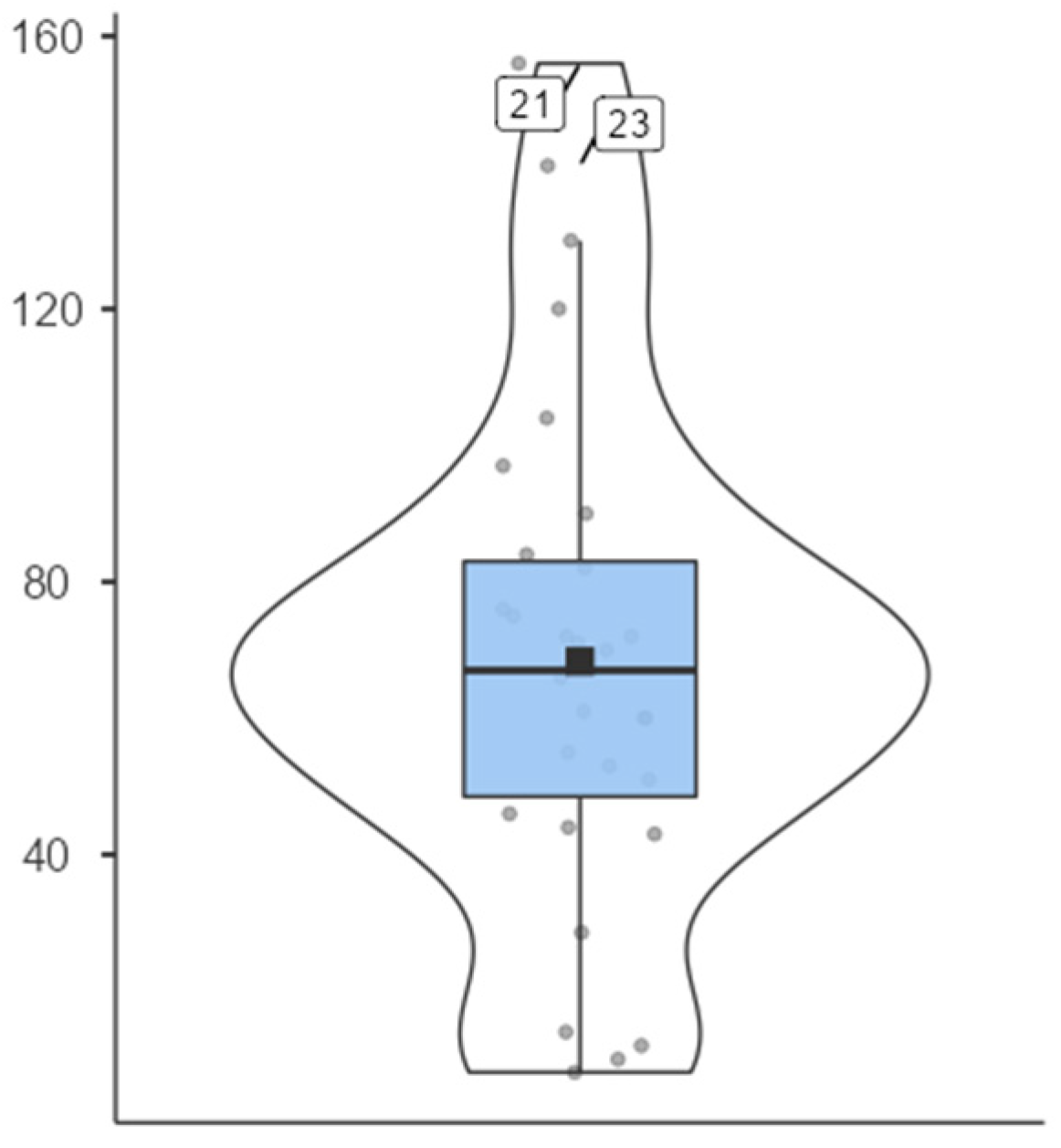
  • Choice reaction time (M = 2.19) and working memory reaction time (M = 3.29) suggest average-to-good cognitive speed, with a slight tendency toward interindividual variability (Figure 2).
  • Posture (right/left) has high means (M = 4.65–4.71), but the distributions are negatively asymmetric (Skewness < −2) and with very high Kurtosis (>3), indicating a concentration of scores at the maximum level—most participants had correct posture.
  • The mean score for balance is 68.3 s (SD = 36.5), which indicates high variability among participants, suggesting that body stability differs considerably.
  • Movement speed (M = 5.29 s) and abdominal strength (M = 21.2 repetitions) are within normal limits, but upper limb strength (push-ups, M = 15.6) is lower compared to the sports group.
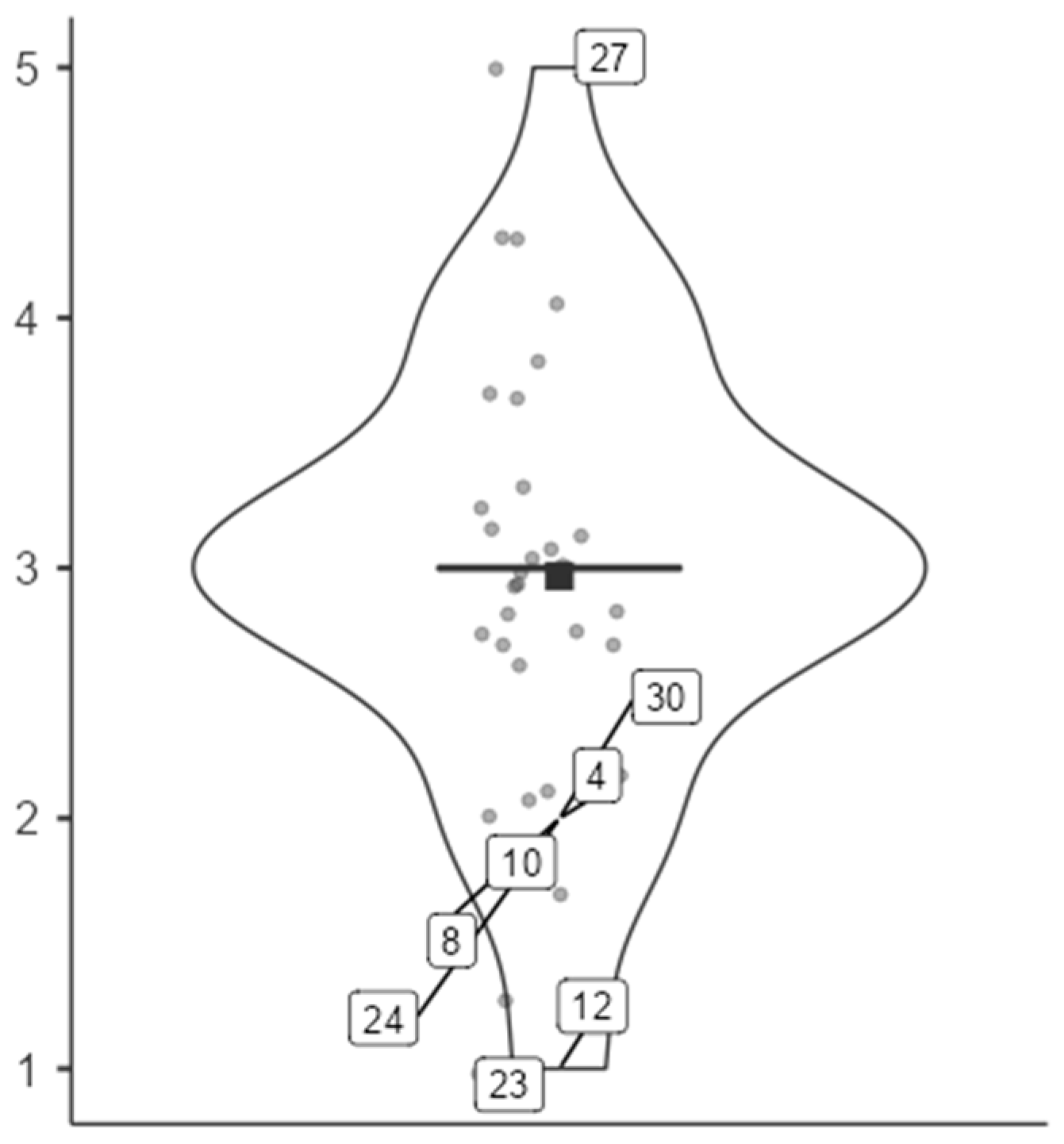
Figure 1. Reaction speed (E).
Education 16 00222 g001
Figure 2. Working memory reaction time (E).
Education 16 00222 g002
(b)
Traditional sports activities group—SA (N = 32):
  • Choice reaction time (M = 2.31) and working memory reaction time (M = 3.44) have values close to those of the esports group, indicating similar cognitive performance for the two groups.
  • Body posture has almost maximum values (M = 4.91 right; M = 4.97 left), reflecting superior postural alignment compared to esports participants.
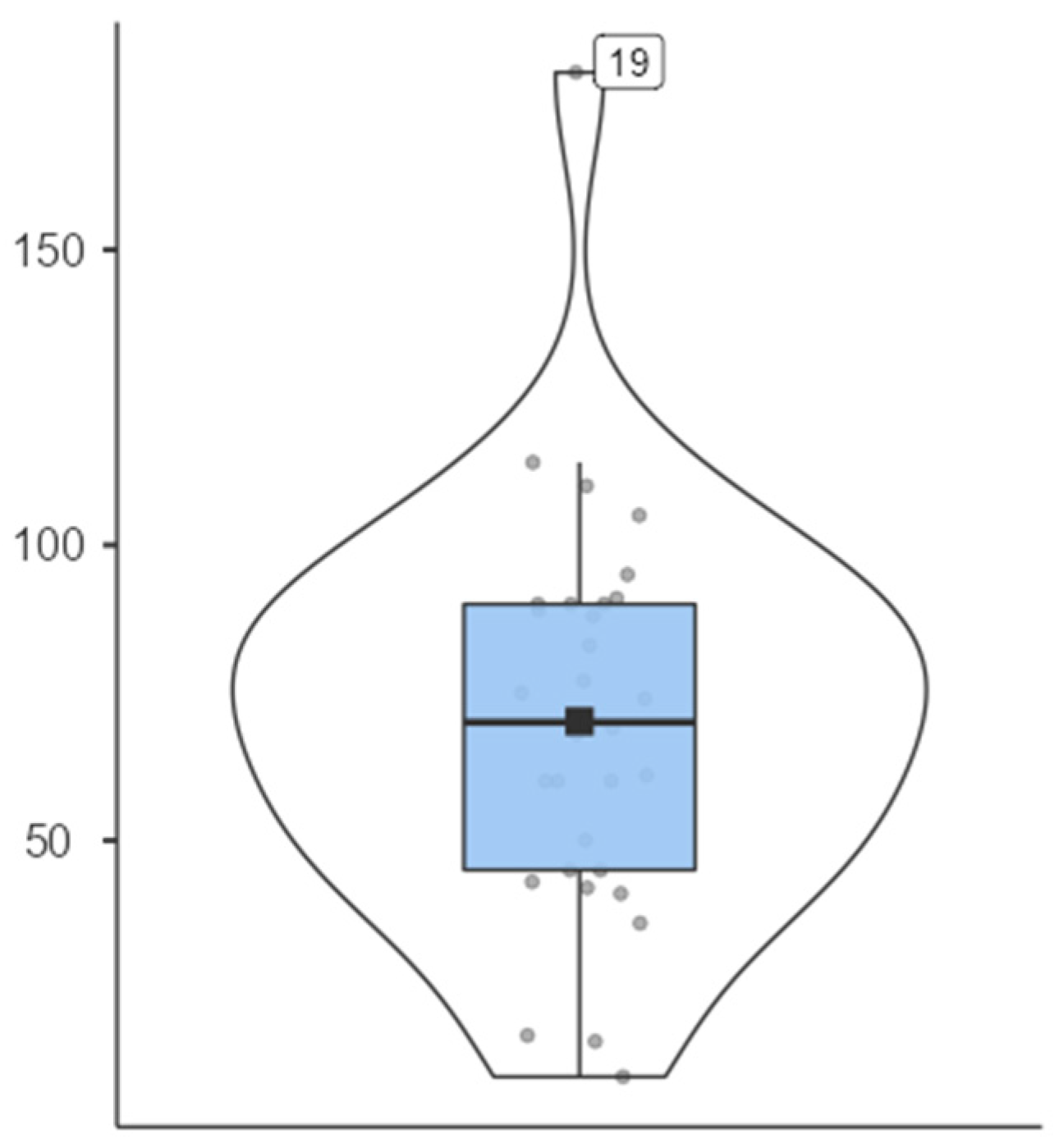
  • Static balance (M = 70.2 s) is slightly better than in the esports group, but the difference is small (≈2 s) (Figure 3 and Figure 4).
  • Average movement speed is slightly higher (M = 5.02 s vs. 5.29 s for the esports group), confirming better motor efficiency in traditional athletes.
  • Abdominal strength (M = 23.2) and upper limb strength (push-ups, M = 18.2) are significantly higher than in the esports group, suggesting better overall physical fitness.
The Shapiro–Wilk test results indicate that:
  • Most variables do not follow a normal distribution (p < 0.05), especially for variables related to posture (W = 0.334–0.544), reaction time, and age.
  • For the E_Balance, E_Speed, E_Sit-ups, SA_Balance, SA_Speed, SA_Sit-ups, SA_Push-ups variables, p > 0.05, which suggests an approximately normal distribution, allowing the use of parametric tests (t-test).
    Figure 3. Static balance (SA).
    Figure 3. Static balance (SA).
    Education 16 00222 g003
    Figure 4. Static balance (E).
    Figure 4. Static balance (E).
    Education 16 00222 g004
    Table 1. Descriptive statistics for E and SA groups.
    Table 1. Descriptive statistics for E and SA groups.
    Variables NMissingMeanMedianStd DevMinMaxSkewnessStd. Error SkewnessKurtosisStd. Error KurtosisShapiro-
    Wilk W
    Shapiro-
    Wilk p
    E_IMC31124.824.52.8419.530−0.213−0.7980.9650.387−0.213−0.798
    E_Reaction speed3112.9730.87515−0.2540.4210.7210.8210.8720.002
    E_CRT3112.1921.01151.020.4210.910.8210.833<0.001
    E_MRT3113.2931.115−0.4650.4210.1250.8210.8870.003
    E_Posture
    Right
    3114.6550.75525−2.270.4214.780.8210.544<0.001
    E_Posture
    Left
    3114.7150.64335−2.080.4213.020.8210.501<0.001
    E_Balance31168.36736.58.11560.470.4210.310.8210.9580.252
    E_Speed3115.295.20.4474.66.110.3230.421−1.020.8210.9460.119
    E_Sit-ups31121.2224.371330−0.1210.421−0.80.8210.970.529
    E_Push-ups31115.6154.189270.9230.4211.170.8210.9180.021
    E_Age31119.7200.65319210.4360.421−0.6120.8210.771<0.001
    AS_IMC32025.325.23.2718.932.50.1760.1420.9780.7470.687
    AS_ Reaction speed3203.1330.907250.01730.414−1.260.8090.833<0.001
    AS_CRT3202.312.50.85914−0.3490.414−0.990.8090.823<0.001
    AS_MRT3203.443.51.13250.02320.414−1.390.8090.856<0.001
    AS_ Posture
    Right
    3204.9150.29645−2.930.41470.8090.334<0.001
    AS_Posture
    Left
    3204.9750.17745−5.660.414320.8090.172<0.001
    AS_Balance32070.27033.6101800.8180.4142.50.8090.9410.078
    AS_Speed3205.0250.424.26.10.5930.4140.6950.8090.9560.207
    AS_Sit-ups32023.2234.4815300.03170.414−1.030.8090.9470.122
    AS_Push-ups32018.2175.0710290.4590.414−0.6050.8090.960.275
    AS_Age32019.8200.80318210.09960.414−0.6920.8090.853<0.001
    Table 2. Comparative values between the Esports (E) group and the traditional sports activities (SA) group.
    Table 2. Comparative values between the Esports (E) group and the traditional sports activities (SA) group.
    VariableM EsportsSD EsportsM SASD SAtpCohen’s d
    0.000
    Interpretation
    Reaction speed2.970.882.970.880.001.000 no difference
    Reaction time—choices2.191.012.310.86−0.510.613−0.13small, insignificant effect
    Reaction time—memory3.291.103.441.13−0.530.596−0.13small, insignificant effect
    Posture—right4.650.764.910.30−1.810.075−0.46medium, insignificant effect
    Posture—left4.710.644.970.18−2.200.031−0.56medium, significant effect
    Balance (s)68.336.570.233.6−0.220.830−0.05no difference
    Speed (s)5.290.455.020.422.470.0160.62medium, significant effect
    Sit-ups/30 s21.24.3723.24.48−1.790.078−0.45medium, insignificant effect
    Push-ups/40 s15.64.1818.25.07−2.220.030−0.56medium, significant effect
  • Information processing speed and reaction time (choices, working memory):
Data analysis did not reveal any statistically significant differences (p > 0.05) between the two experimental groups. The cognitive performance of Esports participants is comparable to that of traditional athletes, suggesting that mental training in esports contributes to maintaining a good level of focused attention and reaction speed. It can be argued that strategic training and decision-making speed in electronic games can help maintain good attentional function and working memory.
  • Body posture:
Data analysis for the two groups shows that there are significant differences for the left posture (p = 0.031, d = −0.56) and almost significant differences for the right one (p = 0.075).
Thus, participants in traditional sports have more correct posture, which reflects the effect of physical exercise on muscle alignment and stability.
  • Physical and motor skills (balance, speed, strength):
    • Balance: No differences were found between groups (p = 0.83), indicating that basic postural stability is comparable, possibly due to the visuo-motor involvement also present in esports.
    • Speed: Significantly better in athletes engaged in traditional sports activities (p = 0.016, d = 0.62).
    • Abdominal and upper limb strength: Insignificant differences for sit-ups (p = 0.078) and significant differences for push-ups (p = 0.030).
Traditional sports activities develop strength and speed more obviously, while esports athletes have poorer overall physical fitness. This shows that traditional sports produce moderate but consistent improvements in physical abilities compared to esports.
  • Non-significant group differences should not be interpreted as evidence of equivalence; rather, they indicate that no statistically detectable differences were observed within the limits of the present sample and analytical approach.
  • Effect size (Cohen’s d):
Values between 0.45 and 0.62 for speed, posture, and push-ups indicate moderate effects that are practically relevant, even if not all of them are statistically significant. This shows that traditional sports produce moderate but consistent improvements in physical abilities compared to esports.
  • Correlation:
Correlational analysis revealed several associations between the motor skills scores and the functional variables analysed. There were positive correlations between motor skills and reaction time (r = 0.65), as well as between skills and variable reaction-memory time (r = 0.84). Also, a positive correlation of low intensity (r = 0.21) was observed between motor skills and reaction speed. Conversely, the relationships between motor skills and postural indicators were very weak or negligible (E_Posture Right: r = 0.08; E_Posture Left: r = −0.02). Overall, the correlation coefficients ranged from negligible values to high values, indicating different degrees of association between the general skills and the analyzed variables.

4. Discussion

This research aimed at comparing cognitive and motor indicators to male students predominantly involved in traditional sports or esports activities. The results obtained indicate differences between the two groups, especially at the level of motor components, while for cognitive variables no robust statistical differences were identified. These findings should be interpreted with caution, taking into account the cross-sectional design of the study, the small sample size and the lack of control over relevant background variables.
In line with the literature (Reardon, 2021; Pluhar et al., 2019), it can be concluded that regular participation in traditional sports contributes to a balanced development of physical and cognitive functions, while esports produce a more pronounced mental specialization, but with obvious motor and postural limitations.
The present study provides a direct comparison of cognitive and motor performance between esports and sport-active (SA) university male students, revealing distinct patterns consistent with prior literature. No significant differences were found for reaction speed or reaction time measures (choice-based and memory-based), supporting earlier findings that esports-related cognitive advantages are largely task- and game-specific rather than transferable to generalized reaction tasks (Boot et al., 2008; Bányai et al., 2020). Although esports have been associated with enhanced attentional control and rapid decision-making within gaming environments, these skills may not generalize to standardized laboratory assessments (Kowal et al., 2018).
In contrast, motor performance outcomes favored SA male students. Significant differences in sprint speed and upper-body muscular endurance (push-ups) align with extensive evidence demonstrating that regular physical training improves neuromuscular efficiency, anaerobic performance, and muscular strength (Warburton et al., 2006; Eime et al., 2013). Similarly, the significant advantage in left-side postural control supports research showing that sport participation enhances postural stability through repeated sensorimotor adaptations (Griffiths & Nuyens, 2017). The absence of a significant difference in static balance is consistent with findings suggesting that balance measures may be less sensitive to training status in young adults (Hrysomallis, 2011).
Non-significant yet moderate effects observed for sit-ups and right-side posture further suggest emerging physical advantages among SA male students, echoing prior studies that report gradual core strength and postural improvements with sustained sports engagement (Pelin et al., 2020). Collectively, these findings reinforce the view that while esports may support cognitive engagement, traditional sports remain superior in promoting motor performance and physical fitness. In line with recent health-oriented reviews (DiFrancisco-Donoghue et al., 2019; Ekefjärd et al., 2024), the results support the integration of esports as a complementary activity rather than a replacement for physical sport within higher education settings.
This applied cross-sectional study examined differences in selected motor and cognitive-related outcomes between male university students engaged in traditional sports and those involved in esports. The results indicate that participation in traditional sports was associated with higher motor performance, particularly in speed, muscular endurance, and postural control, whereas no statistically significant differences were observed between groups in measures of general reaction speed or reaction time.
Esports participation is frequently described in the literature as cognitively demanding, requiring sustained attention, rapid visual information processing, and strategic decision-making (Musick et al., 2021; Miao et al., 2024; Imanian et al., 2025). However, in the present sample, esports participants did not exhibit superior performance in basic reaction-based tasks compared to their sport-active peers. This finding suggests that the cognitive engagement characteristic of esports may be task-specific and not directly reflected in general reaction speed measures, which aligns with previous reports indicating that esports-related cognitive characteristics are often context-dependent rather than generalized (Musick et al., 2021; Miao et al., 2024).
In contrast, students engaged in traditional sports exhibited higher scores in motor-related variables. These group differences are consistent with prior studies reporting associations between regular physical activity and indicators of motor coordination, muscular endurance, and postural control (Yin et al., 2020; Perret & Müller, 2021). The lower motor performance observed among esports participants was correlated with the predominantly sedentary and screen-based nature of esports activities, which has been linked in previous research to reduced musculoskeletal engagement and postural challenges (Rudolf et al., 2022; Lam et al., 2022; King & Esports Medicine Team, 2023).
Importantly, the present findings do not demonstrate that traditional sports improve motor abilities or that esports shape cognitive specialization over time. Rather, they describe performance differences between groups at a single point in time. These differences may reflect self-selection, habitual physical activity levels, training backgrounds, or other lifestyle-related factors rather than consequences of participation in a specific activity modality.
Similarly, while esports have been associated in previous research with socio-cognitive characteristics such as teamwork, communication, and stress regulation (Delello et al., 2025; Pedraza-Ramírez et al., 2025), such dimensions were not directly assessed in this study and therefore cannot be inferred from the present data. The absence of cognitive differences in basic reaction tasks further emphasizes the need to align outcome measures with the specific functional demands of the activity being examined (DiFrancisco-Donoghue et al., 2019; Schary et al., 2022; Luo et al., 2022).
Overall, this comparative analysis indicates that traditional sports participation was associated with stronger motor performance profiles, while esports participation was not associated with differences in basic cognitive reaction measures in this sample of male university students. These findings should be interpreted as descriptive associations rather than evidence of developmental effects, contributing applied comparative data to an emerging research area without implying causality or longitudinal change.
The table below (Table 3) outlines the key variables that distinguish these two forms of competitive activity.
The inclusion of esports-related activities in university programs may offer potential benefits in terms of cognitive development and strategic skill acquisition; however, existing evidence suggests that these activities are unlikely to fully replace the role of traditional sports in supporting physical and postural health (Onate et al., 2023). Given the exploratory nature of the present findings and the limited sample size, broad institutional or curricular changes cannot be inferred. Rather, the results tentatively support the value of considering complementary approaches in which esports-specific mental training is accompanied by regular physical activity, particularly when addressing the educational needs of digitally oriented student populations, without undermining the principles of holistic physical and psychological development (Zhou et al., 2025).
Several methodological and practical challenges were encountered during the conduct of this study. First, participant recruitment proved demanding, as the study required male students with consistent and exclusive engagement in either traditional sports or esports. Although a large number of students were initially screened, only a small proportion met all inclusion criteria, which resulted in a reduced final sample size and limited the feasibility of more complex statistical analyses.
Second, ensuring group comparability posed a challenge. Given the exploratory nature of the study and the constraints of the available sample, it was not possible to apply matching procedures or to statistically control for all potential confounding variables, such as body mass index, prior athletic background, or overall physical activity levels. This limitation required cautious interpretation of group differences and restricted causal inference.
Third, the assessment of cognitive performance presented practical difficulties. Cognitive tasks were administered in controlled settings, but individual differences in task familiarity, motivation, and fatigue may have influenced performance. Although familiarization sessions were conducted, these were not fully standardized or quantified, which may have introduced additional variability.
Fourth, the heterogeneity of esports participation constituted an important challenge. Participants engaged in different game genres with distinct cognitive demands, yet sample size constraints necessitated treating esports participation as a single category. This decision, while methodologically pragmatic, may have reduced sensitivity to genre-specific cognitive effects. The main difficulties encountered in conducting this research included recruiting comparable groups of esports and sport-active students, as participants often differed in training volume and lifestyle habits. Controlling for external factors such as prior physical activity, gaming experience, sleep, and fatigue also proved challenging, as these variables can influence cognitive and motor performance. In addition, ensuring standardized testing conditions and participant motivation across both groups required careful coordination, particularly when assessing performance-based measures.
Limitations. This paper presents several limitations that should be considered when interpreting the results. First of all, the relatively small size and homogeneity of the sample may limit the generalization of the conclusions to more diverse populations of traditional and esports athletes. The cross-sectional design does not allow establishing a causal relationship between the type of activity (traditional sports or esports) and the development of motor or cognitive components but only provides a static picture of athletic performance. Also, external factors such as training level, daily routine, sleep, or previous experience could not be fully controlled, which might have indirectly influenced the measured performance. The tools used to assess cognitive and motor functions may have limited sensitivity, which reduces the accuracy of differentiation between groups, especially in the case of attentional processes. Participants involved in digital competitive activities were broadly categorized as “esports participants.” While this classification was methodologically justified to maintain statistical power and facilitate group-level comparisons, it does not fully capture the heterogeneity inherent to esports engagement. Different game genres (e.g., first-person shooters, multiplayer online battle arenas, real-time strategy games, and sports simulations) are known to place distinct demands on specific cognitive processes, including attentional control, visuospatial processing, reaction speed, and executive functioning. Consequently, treating esports participation as a homogeneous category may have obscured genre-specific cognitive profiles and reduced sensitivity to nuanced cognitive differences. Future research should incorporate game genre, intensity and duration of gameplay, and training modality (e.g., traditional screen-based play versus immersive virtual reality training) as analytical factors to enhance explanatory precision and strengthen the generalizability of findings. An additional limitation concerns the gender composition of the final sample, which consisted exclusively of male participants. Although female students were included in the initial screening phase, none met all inclusion criteria required for the final analytical sample. Consequently, gender effects could not be examined or controlled for in the statistical analyses. The findings should therefore be interpreted as applicable to male higher education students, and future studies should employ recruitment strategies that enable balanced gender representation. At the same time, the low diversity of the types of esports and traditional sports analyzed in this paper restricts the applicability of the results to other disciplines. Overall, these limitations suggest the need for future studies with larger samples, longitudinal designs and more comprehensive measuring instruments.

5. Conclusions

This applied comparative study describes the differences in selected motor and cognitive-related outcomes between male higher education students engaged in traditional sports and those involved in esports activities. Within the limits of this cross-sectional design, the results indicate that students participating in traditional sports exhibit higher levels of motor performance, particularly in speed, muscular endurance, and postural control, whereas no statistically significant differences were observed between groups in general reaction speed or reaction time. These observations suggest that, despite the high cognitive demands associated with esports participation, engagement in esports alone is not associated with measurable advantages in basic reaction-based tasks when compared with traditional sports participation.
Given the modest sample size and single-gender composition, the findings should be interpreted as descriptive rather than explanatory. Non-significant outcomes should not be construed as evidence of equivalence, and the observed group differences may be influenced by self-selection, habitual physical activity levels, or other lifestyle-related factors. Accordingly, the present results do not support causal inferences or theoretical generalizations, but instead contribute applied comparative data to an emerging field of research. From a practical perspective, the findings highlight the continued relevance of traditional sports within the academic environment for supporting physical development, while suggesting that esports may serve a complementary role with respect to specific cognitive or engagement-related dimensions.

Author Contributions

Conceptualization, N.L. and O.P.; methodology, N.L.; software, L.J.F.; validation, O.P., S.H. and N.N.; formal analysis, N.L.; investigation, N.N. and S.H.; data curation, L.J.F.; writing—original draft preparation, N.L.; writing—review and editing, N.L. and S.H.; visualization, O.P.; supervision, N.L.; project administration, N.L.; funding acquisition, All authors have read and agreed to the published version of the manuscript.

Funding

The APC was funded by PubArt.

Institutional Review Board Statement

The study was conducted in accordance with the Declaration of Helsinki, and approved by the Ethics Committee of University of Science and Technology POLITEHNICA Bucharest (protocol no. 4012/02.02.2024).

Informed Consent Statement

Informed consent was obtained from all subjects involved in the study.

Data Availability Statement

Supporting raw data for the conclusions drawn in this article are available from the authors on demand.

Conflicts of Interest

The authors declare no conflicts of interest.

References

  1. Archibald, S. (2024). Examining the impact of Esports program on higher education: A systematic literature review. Issues in Information Systems, 25(3), 459–470. [Google Scholar] [CrossRef]
  2. Bailey, R. (2006). Physical education and sport in schools: A review of benefits and outcomes. Journal of School Health, 76(8), 397–401. [Google Scholar] [CrossRef]
  3. Bányai, F., Griffiths, M. D., Király, O., & Demetrovics, Z. (2020). The psychology of esports: A systematic literature review. Journal of Gambling Studies, 35(2), 351–365. [Google Scholar] [CrossRef] [PubMed]
  4. Boot, W. R., Kramer, A. F., Simons, D. J., Fabiani, M., & Gratton, G. (2008). The effects of video game playing on attention, memory, and executive control. Acta Psychologica, 129(3), 387–398. [Google Scholar] [CrossRef]
  5. Delello, J., McWhorter, R., Yoo, S., Roberts, P., & Adele, B. (2025). The impact of esports on the habits, health, and wellness of the collegiate player. Journal of Intercollegiate Sport, 18(1), 1–22. [Google Scholar] [CrossRef]
  6. DiFrancisco-Donoghue, J., Balentine, J., Schmidt, G., & Zwibel, H. (2019). Managing the health of the eSport athlete: An integrated health management model. BMJ Open Sport & Exercise Medicine, 5(1), e000467. [Google Scholar] [CrossRef]
  7. Eime, R. M., Young, J. A., Harvey, J. T., Charity, M. J., & Payne, W. R. (2013). A systematic review of the psychological and social benefits of participation in sport for adults: Informing development of a conceptual model of health through sport. International Journal of Behavioral Nutrition and Physical Activity, 10, 135. [Google Scholar] [CrossRef]
  8. Ekefjärd, S., Piussi, R., & Hamrin Senorski, E. (2024). Physical symptoms among professional gamers within eSports, a survey study. BMC Sports Science, Medicine and Rehabilitation, 16, 18. [Google Scholar] [CrossRef]
  9. Griffiths, M. D., & Nuyens, F. (2017). An overview of structural characteristics in problematic video game playing. Current Addiction Reports, 4(3), 272–283. [Google Scholar] [CrossRef] [PubMed]
  10. Hamari, J., & Sjöblom, M. (2017). What is eSports and why do people watch it? Internet Research, 27(2), 211–232. [Google Scholar] [CrossRef]
  11. Hrysomallis, C. (2011). Balance ability and athletic performance. Sports Medicine, 41(3), 221–232. [Google Scholar] [CrossRef] [PubMed]
  12. Imanian, M., Khatibi, A., Sousa, C. V., Heydarinejad, S., Veisia, E., & Saemi, E. (2025). Effects of electronic sports on the cognitive skills of attention, working memory, and cognitive flexibility. Perceptual and Motor, 132(2), 585–602. [Google Scholar] [CrossRef]
  13. Jenny, S. E., Manning, R. D., Keiper, M. C., & Olrich, T. W. (2017). Virtual(ly) athletes: Where eSports fit within the definition of “sport”. Quest, 69(1), 1–18. [Google Scholar] [CrossRef]
  14. Kane, D., & Spradley, B. D. (2017). Recognizing esports as a sport. The Sport Journal, 19, 1–10. Available online: https://thesportjournal.org/article/recognizing-esports-as-a-sport/ (accessed on 26 January 2026).
  15. King, D., & Esports Medicine Team. (2023). Q & A: Top esports injuries and how to prevent them. Cleveland Clinic. Available online: https://consultqd.clevelandclinic.org/qa-top-esports-injuries-and-how-to-prevent-them (accessed on 26 January 2026).
  16. Kowal, M., Toth, A. J., Exton, C., & Campbell, M. J. (2018). Different cognitive abilities displayed action video gamers and non-gamers. Computers in Human Behavior, 88, 255–262. [Google Scholar] [CrossRef]
  17. Lachowicz, M., Klichowski, M., Serweta-Pawlik, A., Rosciszewska, A., & Żurek, G. (2025). Effects of short- and long-term virtual reality training on concentration performance and executive functions in amateur esports athletes. Virtual Reality, 29, 91. [Google Scholar] [CrossRef]
  18. Lachowicz, M., Żurek, A., Jamro, D., Serweta-Pawlik, A., & Żurek, G. (2024). Changes in concentration performance and alternating attention after short-term virtual reality training in E-athletes: A pilot study. Scientific Reports, 14(1), 8904. [Google Scholar] [CrossRef] [PubMed]
  19. Lam, W.-K., Liu, R.-T., Chen, B., Huang, X., Yi, J., & Wong, D. W.-C. (2022). Health risks and musculoskeletal problems of elite mobile esports players: A cross-sectional descriptive study. Sports Medicine—Open, 8, 65. [Google Scholar] [CrossRef] [PubMed]
  20. Leth-Steensen, C., Elbaz, Z. K., & Douglas, V. I. (2000). Mean response times, variability, and skew in the responding of ADHD children: A response time distributional approach. Acta Psychologica, 104(2), 167–190. [Google Scholar] [CrossRef]
  21. Luo, Y., Hutchinson, J. C., O’Connell, C. S., & Sha, Y. (2022). Reciprocal effects of esport participation and mental fatigue among Chinese undergraduate students using dynamic structural equation modeling. Psychology of Sport and Exercise, 62, 102251. [Google Scholar] [CrossRef]
  22. Miao, H., He, H., Hou, X., Wang, J., & Chi, L. (2024). Cognitive expertise in e-sport experts: A three-level model meta-analysis. PeerJ, 12, e17857. [Google Scholar] [CrossRef]
  23. Musick, G., Zhang, R., McNeese, N. J., Freeman, G., & Hridi, A. P. (2021). Leveling up teamwork in esports: Understanding team cognition in a dynamic virtual environment. Proceedings of the ACM on Human-Computer Interaction, 5(CSCW1), 49. [Google Scholar] [CrossRef]
  24. Naglieri, J. A., & Otero, T. M. (2024). PASS Theory of Intelligence and its measurement using the Cognitive Assessment System, 2nd edition. Journal of Intelligence, 12(8), 77. [Google Scholar] [CrossRef] [PubMed]
  25. Newzoo. (2021). Newzoo’s global esports and live streaming market report 2021. Available online: https://newzoo.com/resources/trend-reports/newzoos-global-esports-live-streaming-market-report-2021-free-version (accessed on 26 January 2026).
  26. Onate, J. A., Edwards, N. A., Emerson, A., Maymir, C. L., Kraemer, W. J., Fogt, N., Fogt, J. S., & Conroy, S. (2023). Normative performance profiles of college-aged esport athletes in a pilot study. International Journal of Esports, 2023, 75. Available online: https://pmc.ncbi.nlm.nih.gov/articles/PMC10786200/ (accessed on 26 January 2026). [PubMed]
  27. Pedraza-Ramírez, I., Sharpe, B. T., Behnke, M., Toth, A. J., & Poulus, D. R. (2025). The psychology of esports: Trends, challenges, and future directions. Psychology of Sport and Exercise, 81, 102967. [Google Scholar] [CrossRef]
  28. Pelin, F., Radmann, A., Mitrache, G., Ciolcă, C., Predoiu, R., & Săftel, A. M. (2020). The role of physical education activities at motor and psychological levels-teachers’ perception. Discobolul-Physical Education, Sport & Kinetotherapy Journal, 59, 522–532. [Google Scholar] [CrossRef]
  29. Perret, C., & Müller, C. (2021). Physical activity and health promotion in esports and gaming: Challenges of sedentary behaviour and screen time. Frontiers in Sports and Active Living, 3, 693700. [Google Scholar] [CrossRef]
  30. Pizzo, A. D., Na, S., Baker, B. J., Lee, M. A., Kim, D., & Funk, D. C. (2018). eSport vs. sport: A comparison of spectator motives. Sport Marketing Quarterly, 27(2), 108–123. [Google Scholar] [CrossRef]
  31. Pluhar, E., McCracken, C., Griffith, K. L., Christino, M. A., Sugimoto, D., & Meehan, W. P., III. (2019). Team sport athletes may be less likely to suffer anxiety or depression than individual sport athletes. Journal of Sports Science & Medicine, 18(3), 490–496. Available online: https://pmc.ncbi.nlm.nih.gov/articles/PMC6683619/ (accessed on 26 January 2026).
  32. Reardon, C. L. (2021). The mental health of athletes: Recreational to elite. Current Sports Medicine Reports, 20(12), 631–637. [Google Scholar] [CrossRef]
  33. Rudolf, K., Soffner, M., Bickmann, P., Froböse, I., Tholl, C., Wechsler, K., & Grieben, C. (2022). Media consumption, stress and well-being of video game and esports players in Germany: The eSports study 2020. International Journal of Environmental Research and Public Health, 19(4), 2100. [Google Scholar] [CrossRef]
  34. Schary, D. P., Jenny, S. E., & Koshy, A. (2022). Leveling up eSports health: Current status and call to action. International Journal of eSports, 2, 70. [Google Scholar]
  35. Vasile, A. I., Chesler, K., Velea, T., Croitoru, D., & Stănescu, M. (2024). Witty sem system and cognitrom assessment system: Novel technological methods to predict performance in youth rock climbers. Annals of Applied Sport Science, 12(1), 1–16. [Google Scholar] [CrossRef]
  36. Visu-Petra, G., Miclea, M., & Visu-Petra, L. (2012). Reaction time-based detection of concealed information in relation to individual differences in executive functioning. Applied Cognitive Psychology, 26(3), 342–351. [Google Scholar] [CrossRef]
  37. Warburton, D. E. R., Nicol, C. W., & Bredin, S. S. D. (2006). Health benefits of physical activity: The evidence. Canadian Medical Association Journal, 174(6), 801–809. [Google Scholar] [CrossRef]
  38. Weed, M., & Bull, C. (2009). Sports tourism: Participants, policy and providers (2nd ed.). Routledge. [Google Scholar]
  39. Witkowski, E. (2012). On the digital playing field: How we “do sport” with networked computer games. Games and Culture, 7(5), 349–374. [Google Scholar] [CrossRef]
  40. Yin, K., Zi, Y., Zhuang, W., Gao, Y., Tong, Y., Song, L., & Liu, Y. (2020). Linking esports to health risks and benefits: Current knowledge and future research needs. Journal of Sport and Health Science, 9(6), 485–488. [Google Scholar] [CrossRef]
  41. Zhou, X., Hu, Y., Matic, R. M., & Popovic, S. (2025). Esports physical exercise/performance matrix 1.0 country factsheets: Results and analyses from Serbia. Frontiers in Public Health, 12, 1526297. [Google Scholar] [CrossRef]
Table 3. Comparative synthesis.
VariableEsportsTraditional Sports
Attention and focusHigh; develop reaction speed and rapid decision-makingModerate to high; trained through coordination and tactical adaptation
Motor coordinationLimited, predominantly fine (eye-hand)Developed, involving all body segments
Posture and physical fitnessPoor, increased risk of sedentary lifestyleEnhanced, supporting overall health and tone
Social and collaborative developmentHigh in online teams, but with indirect interactionHigh, through direct
contact and group cohesion
Risk of digital addiction or stressHigh, if not regulatedLow, associated with psychological well-being
Disclaimer/Publisher’s Note: The statements, opinions and data contained in all publications are solely those of the individual author(s) and contributor(s) and not of MDPI and/or the editor(s). MDPI and/or the editor(s) disclaim responsibility for any injury to people or property resulting from any ideas, methods, instructions or products referred to in the content.