Article

Research Skills and Academic Literacy in Multilingual Higher Education: The Case of Kazakhstan
by
Lazzat Baimanova
1,
Bella Gazdiyeva
1,*,
Abraham Althonayan
2,
Yekaterina Zhumagulova
1 and
Anar Kalzhanova
1
1
Department of General Linguistics and Literature, Ualikhanov University, Kokshetau 020000, Kazakhstan
2
Brunel Business School, Brunel University London, London UB8 3PH, UK
*
Author to whom correspondence should be addressed.
Educ. Sci. 2026, 16(1), 21; https://doi.org/10.3390/educsci16010021
Submission received: 11 October 2025 / Revised: 19 November 2025 / Accepted: 9 December 2025 / Published: 24 December 2025
(This article belongs to the Special Issue Innovation and Design in Multilingual Education)

Abstract

Developing research skills and academic literacy is essential for student success, yet their progression often varies across multilingual higher education systems. This study investigates these competencies among 692 bachelor’s and master’s students in Kazakhstan’s trilingual higher education context, where Kazakh, Russian, and English serve as languages of instruction. The contributions of multilingual academic practices, language of instruction, reading proficiency in three languages, peer collaboration, teacher facilitation, learner autonomy, and academic performance were examined using hierarchical regression and cumulative logit models. Results show that multilingual academic practices emerged as the strongest and most consistent predictor of both research skills (β = 0.56) and academic literacy (β = 0.69), explaining 38% and 49% of variance respectively and clearly outperforming medium of instruction, single-language reading proficiency, and programme level. Peer collaboration, teacher facilitation, and academic performance emerged as the most powerful predictors of students’ overall self-assessed research competence. The findings position multilingualism as both linguistic and cognitive resource, offering implications for curriculum design, staff training, and multilingual research-based learning in higher education. The study advances international scholarship on multilingual higher education.

1. Introduction

In contemporary times, higher education (HE) plays a pivotal role in equipping students with the necessary skills for academic and professional success. In the context of globalized education, the development of research skills and academic literacy has become a central concern and priority within HE. These competencies are fundamental for preparing Higher Educational Institutions (HEIs) students to think critically, engage actively in scholarly inquiry, and contribute to the creation of transformative knowledge that extends beyond their disciplinary boundaries. Research skills empower students to navigate complex information sources, formulate evidence-based arguments, and develop intellectual autonomy necessary for lifelong learning (Sakkeer, 2023).
In HE, it is common for students to carry out a research project and to write about specific subjects, the final part of their undergraduate programme. Undergraduate research projects often consist of methodology module and several phases in which students have to carry out a literature review, prepare a research plan, collect and analyze their data, and, finally, present the findings in a thesis (Agricola et al., 2018, p. 542).
Academic literacy encompasses a broad range of abilities including critical reading, writing, and communication skills that are indispensable for student success in diverse academic and professional contexts (De Henau, 2024). As HE increasingly embraces inquiry-based and collaborative learning pedagogies, fostering these competencies is vital for equipping students with the tools to meet global academic and societal challenges (Keser Aschenberger & Pfeffer, 2021). It incorporates the ability to read, analyze, synthesize, and use primarily existing materials rather than create new ones. It usually refers to the set of cognitive, linguistic, and social practices that enable individuals to participate effectively in academic and research communities, while research skills help students to conduct systematic investigations and communicate findings effectively. Together, students can represent key indicators of academic success and professional readiness in an increasingly knowledge-driven society. The literacy practices that are valued in the university emerge from specific disciplinary histories, yet students are often expected to master these as if they were common sense and natural (Boughey & McKenna, 2016).
In recent years, especially in Central Asia, the attention of academic society has been directed toward the role of multilingual HE in shaping student’s academic competencies. According to Van der Walt (2013) argued that multilingual HE is strongly connected with processes such as globalisation and internationalisation. Modern multilingual environment offers unique opportunities for cognitive development, intercultural awareness, and broader access to academic discourse. At the same time, it brings some specific challenges related to the acquisition of advanced literacy practices and the mastery of disciplinary research norms. Scholars argue multilingual HE can both support and complicate the process of academic literacy and research skills development, depending on how HEIs structure their instructional and learning practices.
HE in Kazakhstan provides a particularly relevant context for exploring these dynamics. Kazakhstan’s HE context, shaped by multilingualism and multicultural policies, is uniquely positioned for examining the intersection of language and academic development. National reforms actively promote the integration of Kazakh, Russian, English, and other languages, resulting in a complex educational environment that strongly influences students’ research engagement and academic activities (Zhumay et al., 2021; Koptleuova et al., 2023). However, empirical studies investigating the impact of these multilingual practices on research skills and academic literacy in Kazakh HEIs remain limited, with most local research focused on broader language policy or educational reforms, leaving an important gap in the literature (Karabassova, 2020; Yermekova et al., 2024).
According to Dauletkeldyyeva et al. (2024), the implementation of multilingualism is a complex, cross-sectoral issue affecting social, cultural, economic, and educational domains, and plays a key role in supporting the vitality of less widely used languages. Through sociological, statistical, and comparative methods, their study examines how multilingual models and practices are introduced in Kazakhstan’s education system. Its findings demonstrate that multilingualism is essential for both individual and societal development, highlighting the importance of integrating multilingual approaches into educational policy and teacher preparation.
This study seeks to address this gap by analyzing the relationship between multilingual HE, research skills, and academic literacy in Kazakhstani HE. It contains both theoretical and practical research on how multilingual education practices shape students’ acquisition of essential academic competencies; identifies institutional and personal factors that support or hinder this process. The findings contribute to international studies on multilingual HE and provide practical recommendations for enhancing academic literacy and research skills development process using the case of Kazakhstan and comparable multilingual contexts.

Research Questions and Hypotheses

RQ1. To what extent does the language of study (Kazakh, Russian, English) influence students’ autonomy, research preparedness, and confidence in research skills?
H1. 
There is a positive correlation between multilingualism in education and students’ research skills and academic literacy.
H2. 
Students with higher levels of multilingual academic engagement will demonstrate stronger research skills and higher academic literacy.
H3. 
There will be statistically significant differences between language-of-instruction groups in their levels of autonomy, research readiness, and confidence in their skills.
H4. 
The level of academic reading in Kazakh, Russian, and English predicts the level of students’ research skills.
RQ2. Which factors (linguistic background, peer collaboration, teacher facilitation) best predict students’ overall level of research skills and academic literacy in Kazakhstani universities?
H5. 
Linguistic background, peer collaboration, teacher facilitation, and autonomy in learning are the best predictors of students’ self-assessment of their research and academic skills.
RQ3. Is there a correlation between students’ academic performance and their level of self-assessment of research and academic skills?
H6. 
Academic performance is positively associated with students’ self-assessment of their research and academic skills.

2. Literature Review

Nowadays, many challenges are connected with the modern requirements of society in the educational area, but traditional universities have repeatedly been criticized for placing their staff and students isolated from the real world (Rabin et al., 2019; Compagnucci & Spigarelli, 2020; Watson & Watson, 2013). While Kuada (2012) highlights the value of problem-based approaches, recent research from Kazakhstan shows that these approaches require cultural and institutional adaptation. Studies reveal that students enter university from strongly teacher-centred learning traditions and often lack sustained exposure to academic literacy practices in multiple languages (Tajik et al., 2024; Zhumay et al., 2021).
Foundation-level research also demonstrates that students need explicit scaffolding and guided academic socialisation to engage effectively with inquiry-driven tasks (Doebler, 2025). Furthermore, analyses of national education reforms show that pedagogical innovations stall when introduced without sufficient alignment to local teaching cultures, institutional routines, and teachers’ preparedness (Karabassova, 2020).
Developing students’ research abilities requires supportive ecosystems that link schools, universities, and workplaces. Students who are exposed to research will be able to use their research skills in the future to create something new and help society progress. According to Bieschke et al. (1996), more organized assessment of research and the individual competence of research can help students and faculty to improve research involvement.
Moreover, different inquiries demonstrate that a lot of undergraduates need mentorship of their scientific works and institutional support to implement research results effectively. International studies reinforce this point: active and collaborative learning environments foster the habits of mind that underlie research, including problem formulation, critical analysis, and reflection (Banu et al., 2022; Qureshi et al., 2023). Such findings suggest that research skills do not develop in isolation but through carefully structured, interactive pedagogies. However, research skills cannot be fully developed without academic literacy which is the key point to the successful implementation of research results.
Furthermore, academic literacy is now widely understood not merely as mastery of grammar or academic vocabulary but as the ability to participate in disciplinary knowledge-making. Structured debate has been shown to improve critical thinking and writing, particularly in terms of constructing evidence-based arguments and identifying assumptions (Aarar & Pérez Valverde, 2025). Studies on debating in virtual classrooms illustrate that students make measurable progress in their reasoning skills while simultaneously strengthening their capacity to structure academic texts (Aarar & Pérez Valverde, 2025). Moreover, research confirms that collaborative approaches such as peer review, small-group tasks, and dialogic teaching—create fertile ground for the development of academic literacy (Qureshi et al., 2023).
In essence, academic literacy is best cultivated when students are encouraged to argue, reflect, and write in contexts that require the negotiation of meaning. Furthermore, when conducting study of research skills and academic literacy development different factors should be mentioned. It’s necessary to develop students’ research skills and academic literacy taking into account the educational environment which is considered as one of the main factors predicting future success. For this reason, multilingual education should be mentioned since it allows HEIs students and instructors to find and use necessary data in different languages.
Individuals, communities and societies have always been multilingual (Pirhonen, 2023). Increasing migration around the globe in the 21st century has led to multilingual students in more and more classrooms. Most often, the language of instruction is solely the dominant language of the country, not the students’ home languages. Teachers have to ensure that all students can benefit from their instruction which places increasing demands on both teachers and students, so content will be in a multilingual context (Alisaari et al., 2019). According to Albaba (2025), by moving beyond monolingual norms and recognizing linguistic diversity as an asset, educators can enhance cognitive engagement, foster inclusivity, and contribute to decolonizing academic spaces. It is also important to highlight theoretical foundations for the development of these concepts. Vygotsky’s sociocultural theory remains essential for explaining the development of thinking and language in multilingual learners. According to Vygotsky (1978), language mediates cognitive processes, and learning occurs through culturally situated social interaction. Incorporating these classical foundations provides historical continuity and grounds contemporary perspectives in established psychological theory. The work also supports the idea that multilingual cognition emerges through dynamic participation in diverse linguistic environments.
In multilingual contexts, Vygotsky’s ideas extend to how multiple languages mediate cognition. For instance, bilingual learners may leverage their full linguistic repertoire to scaffold understanding, as languages are not isolated silos but interconnected semiotic resources (Lantolf & Poehner, 2014; Swain & Lapkin, 2002). Vygotsky’s emphasis on the social origins of cognition aligns with multilingual classrooms, where peer interactions in diverse languages foster collaborative problem-solving (Donato, 1994).
Complementary to Vygotsky’s approaches is Cummins’s linguistic interdependence hypothesis, which posits that proficiency in one language supports another through a common underlying proficiency. This framework bridges cognitive and educational domains, suggesting that strong home language development bolsters second language acquisition and academic success (Cummins, 2008).
A more recent theoretical advancement is translanguaging theory, proposed by García and Wei (2014), which views multilingualism not as the sum of separate languages but as a dynamic, integrated system. This theory critiques “named languages” as sociopolitical constructs and emphasizes pedagogical translanguaging—strategic classroom practices that encourage code-meshing to support learning (Otheguy et al., 2015). Grounded in Vygotsky’s mediation, translanguaging positions language as a tool for cognitive expansion: by allowing learners to draw on all resources, it extends zone of proximal development, enabling deeper conceptualisation and identity affirmation (Cenoz & Gorter, 2013; Palmer et al., 2014). Recent systematic reviews underscore translanguaging’s role in fostering equitable multilingual pedagogies, particularly in superdiverse settings (Moraru et al., 2025).
Integrating these classics, the theoretical framework here posits multilingual education as a sociocultural process where languages mediate cognitive growth, with translanguaging as a mechanism for leveraging Vygotsky’s zone of proximal development in diverse linguistic ecologies (Lantolf & Poehner, 2011).
However, multilingual HE cannot be fully understood without examining student agency and beliefs. Discourse-analytic work has shown that many first-year university students tend to underestimate their own role in language learning, attributing success to external factors (Pirhonen, 2023). This highlights the importance of pedagogies that explicitly strengthen learner agency and self-efficacy. Assignments that mobilise more than one language—drawing on Kazakh, Russian, and English for different stages of the research and writing process—can support both identity development and academic competence. Related studies on heritage-language collaboration demonstrate how interaction in multiple languages can improve awareness of audience and textual structure (Qian & Daiute, 2025). These mechanisms are directly transferable to multilingual university settings in Kazakhstan, where trilingual policies are a central part of the national agenda.
The growing role of multilingual HE is closely tied to processes of internationalisation and the global dominance of English in academia. In Kazakhstan, this process has particular resonance: English is perceived not only as a language of access to scientific knowledge but also as a symbol of integration into international academic networks. Recent analyses indicate that students frequently interpret the acquisition of English as a forward-looking choice, linked to professional opportunities and academic mobility, while also distancing themselves from post-Soviet educational legacies (Hwami, 2024). From the perspective of the geopolitics of knowledge, such processes can reproduce hierarchies, where knowledge produced in the West is valorised, and local contexts risk being seen merely as recipients (Hwami, 2024). For Kazakhstan, the challenge is therefore to engage critically with international models while ensuring that local epistemologies remain visible and valued.
National policy also reflects this orientation. The current HE strategy prioritizes preparing graduates for participation in the knowledge economy, with strong emphasis on competencies that require well-developed research and academic literacy skills (Begaliyeva et al., 2025). In this respect, language policy and competency development are not parallel concerns but are deeply interconnected. According to Zhumay et al. (2021), “The Republic of Kazakhstan is carrying out a radical modernisation of the education system and actively introducing a multilingualism policy in the educational process” (p. 56). Zhumay et al. (2021) refers to multilingualism as strategically important task of education.
Kazakhstan’s trilingual education policy and English-medium instruction (EMI) initiatives are promoted as key to global competitiveness and graduate employability. At the same time, scholars caution that the wholesale adoption of English risks reinforcing dependence on external centres of knowledge if not critically adapted (Hwami, 2024). Trilingual education (Kazakh, Russian, English) fosters not only multilingual competence but also research mobility and exposure to global academic practices—crucial components of research skills. Also, Kazakhstan has built its education system upon the triple pillars of Kazakh, Russian, and English. Through international integration, the education system has been taking firm steps forward to its internationalisation, in accordance with national and cultural values (Duman, 2024, p. 66).
According to Aminova et al. (2025, p. 25), psychological aspects of bilingualism and multilingualism contribute to cognitive flexibility, meta-linguistic awareness, and cross-cultural understanding of all foundational for developing research thinking and academic literacy. For this reason, the most effective approaches are those that integrate EMI into pedagogies that deliberately foster research skills and academic literacy across all three languages. This alignment ensures that language policy supports, rather than replaces, the broader academic mission of universities.
The reviewed literature converges on several points relevant for Kazakhstan. First, institutional ecosystems that connect schools and universities are vital for developing research competence. Second, dialogic and collaborative pedagogies—debate, peer learning, and joint projects are proven engines of academic literacy. Third, multilingual task design that acknowledges student agency provides both linguistic and epistemic benefits. Finally, internationalisation strategies, including EMI, should be critically adapted to local conditions to avoid reproducing epistemic hierarchies. Together, these findings suggest that Kazakhstan can strengthen its multilingual HE system by embedding research skills and academic literacy as central, rather than peripheral, outcomes.

3. Methods

3.1. Design

The study employed a cross-sectional survey design to examine how linguistic background, instructional factors, and collaborative practices relate to academic literacy, autonomy, and research preparedness among university students in Kazakhstan. Data were collected using an online questionnaire administered via Google Forms in 2025.
The survey was developed in Kazakh and Russian to ensure accurate comprehension for students with different linguistic profiles. Before its launch, a pilot study with 26 students was conducted to refine item wording, test usability, and determine the average completion time. Feedback from the pilot resulted in several adjustments that improved clarity and internal coherence.
Multilingualism in this study was operationalised through three indicators:
  • Language of study (Kazakh, Russian, or English as the medium of instruction);
  • Self-reported language use in academic tasks (reading, writing, searching for sources);
  • Students’ perceptions of how the instructional language supported or constrained academic work (measured by the Language of Study Effects scale).
This approach reflects multilingual practice in Kazakhstani HE rather than only formal proficiency.

3.2. Participants

A total of 803 students initially responded to the survey. After excluding incomplete/declined submissions (n = 84) and doctoral students (n = 27), the final dataset comprised 692 participants, representing national, regional, and private universities across all regions of Kazakhstan (see Table 1). The analytical focus of the study was on bachelor’s and master’s students, as these groups represent the relevant range of research preparedness, being examined avoid potential bias associated with the more advanced research training of doctoral students, their responses were excluded from the final analysis.
To protect anonymity across multiple participating institutions, demographic data were intentionally minimised. Recruitment was carried out through university colleagues and extended professional networks, where the survey link was shared with an invitation to participate anonymously.
Most respondents were bachelor’s students (85.8%), with 14.2% enrolled in master’s programmes. Regional universities accounted for the majority of participants (74%), followed by national (22.6%) and private institutions (3.4%).
In terms of language of study, 43.8% of respondents studied in Kazakh, 41.5% in Russian, and 14.7% in English-medium programmes. However, many students reported regular use of additional languages (e.g., Russian for Kazakh-medm students, Kazakh for Russian-medium students, and foreign languages such as English, German, or Chinese).
Participants represented a broad range of academic disciplines, reflecting the diversity of Kazakhstan’s HE landscape. As shown in the data, the largest proportion of respondents were enrolled in humanities programmes (n = 325), followed by those studying healthcare (n = 219) and business or economics (n = 48). Smaller numbers of participants were pursuing degrees in STEM fields (n = 46) and social sciences (n = 41), while other disciplines such as forestry, agronomy and agriculture for 13 respondents. This disciplinary spread indicates that the sample was primarily composed of students from fields where academic literacy and research skills are integral components of the curriculum, with notable representation from both applied and theoretical domains.

3.3. Instruments

The questionnaire contained 36 closed-ended items divided into thematic sections covering autonomy, research preparedness, collaboration, teacher facilitation, academic literacy, multilingual academic practices, and language-of-study effects. Items were rated on 5-point Likert scales (1 = strongly disagree … 5 = strongly agree), with tailored scales for confidence and collaboration frequency.
Several items were adapted from established instruments on learner autonomy (Benson, 2011), academic literacy (Weideman, 2003), and collaborative learning (Qureshi et al., 2023). Adaptations focused on ensuring relevance to the Kazakhstani HE context, and all adapted items were reviewed during the pilot study for cultural and linguistic appropriateness. The overall questionnaire was designed in direct alignment with the research questions, hypotheses, and key constructs identified in the literature.
The constructs were: Learner Autonomy (5 items)—self-directed goal-setting, monitoring, and use of resources; Research Preparedness & Confidence (7 items)—confidence in designing projects, formulating questions, and locating/evaluating sources; Peer Collaboration (6 items)—frequency and quality of working with classmates and peer review; Teacher Facilitation (4 items)—instructor guidance, modelling of practices, and feedback; Academic Literacy Outcomes (8 items)—paraphrasing, integrating sources, structuring arguments, referencing, and academic integrity; Multilingualism and Language of Study Effects (4 items)—perceptions of how the medium of instruction helps or hinders academic work; Research Activity and Overall Index (2 items)—time on research tasks, number of sources used and global self-rating of skills.

3.4. Procedure

The survey was conducted online and remained open for four weeks. Participants accessed the questionnaire through a secure link distributed through university colleagues, institutional contacts, and extended professional networks. Before beginning the survey, students viewed an information sheet describing the study and submitted informed consent electronically. No identifying data were collected.
Students completed the survey independently on personal devices. Average completion time (determined during piloting) was approximately 15–20 min. Self-report measures are subject to limitations, including potential misestimation of skill level and social desirability bias. These limitations were considered when interpreting the results.
Responses were automatically anonymised and exported to statistical software for analysis. Ethical approval for the study was obtained from the authors’ institutional ethics committee.

3.5. Data Analysis

The data were analysed using a combination of descriptive and inferential statistical procedures in R (version 4.4.3; R Core Team, 2025) using the RStudio environment. Descriptive statistics, including means, standard deviations, and distributional characteristics, were used to describe the sample and summarize the properties of each scale. Internal consistency of the constructs was assessed using Cronbach’s alpha coefficients.
To evaluate the factorial validity of the measurement model, a confirmatory factor analysis (CFA) was conducted, assessing factor loadings, convergent and discriminant validity, as well as composite reliability (ω). The results of the CFA are presented in the Results section. A correlation heatmap was then produced to preliminarily identify associations among the variables. Spearman’s and Pearson’s correlation analyses were applied to examine the relationships between multilingualism, academic literacy, and research skills.
Before conducting the regression analysis, several mixed-effects null models were tested to determine whether the hierarchical structure of the data needed to be taken into account. University type, programme level, and academic programme were treated as random intercepts. Across all cases, the intraclass correlation coefficients (ICC) were extremely low (ICC = 0.01–0.06), and model comparisons using the Akaike Information Criterion (AIC) showed no improvement in model fit (ΔAIC < 2). These results indicate an absence of meaningful clustering; therefore, subsequent analyses were conducted using fixed-effects models.
Hierarchical linear regression models were then used to assess the extent to which multilingualism, language of instruction, academic reading proficiency, and programme level predicted students’ research skills and academic literacy.
Group differences among students enrolled in Kazakh-, Russian-, and English-medium programmes were examined using a one-way analysis of variance (ANOVA).
Finally, a cumulative logit model was constructed to identify the predictors of students’ self-assessed research and academic skills. This variable was measured using a single-item indicator capturing students’ global subjective self-assessment of their research and academic abilities. The model included the following predictors: linguistic background (number of languages used), peer collaboration, teacher facilitation, learner autonomy, and academic performance.

4. Results

The results in this section are organised according to the research questions and hypotheses presented above. Overall, these analyses aim to examine how multilingualism, various learning factors, and students’ academic performance interact with the development of students’ research and academic skills.

4.1. Measurement Model Validation (CFA)

A confirmatory factor analysis (CFA) was conducted using the DWLS estimator, which is appropriate for ordered categorical indicators. The measurement model included four latent constructs: autonomy, research preparedness, peer collaboration, and teacher facilitation. The model demonstrated acceptable fit to the data: χ2(203) = 1660.42, p < 0.01, CFI = 0.92, TLI = 0.91, RMSEA = 0.10 (90% CI: 0.10–0.11), and SRMR = 0.07 (see Table 2). Although the RMSEA value is slightly above the commonly recommended threshold, this is typical for CFA models with categorical indicators and DWLS estimation. Other indices (e.g., GFI = 0.99, CFI and TLI > 0.90, SRMR < 0.08) indicate an overall acceptable model fit.
All factor loadings were statistically significant (p < 0.01), ranging from 0.93 to 1.13, which demonstrates strong relationships between items and their corresponding latent constructs. Convergent validity was supported, with AVE values between 0.59 and 0.81. Discriminant validity was confirmed, as all HTMT ratios were below the recommended cut-off of 0.85. Reliability estimates were satisfactory: McDonald’s ω ranged from 0.84 to 0.93, and Cronbach’s α ranged from 0.83 to 0.91.
Overall, the four-factor measurement model demonstrated strong construct validity and reliability, indicating that the instruments used were appropriate for measuring the targeted dimensions of students’ research and academic competencies.

4.2. Correlation Analysis

Before testing the hypotheses, we examined the overall correlation structure among all continuous study variables. A correlation heatmap was generated to visualise the relationships between predictors and outcome measures and to assess potential multicollinearity (Figure 1).
As shown in Figure 1, the predictors demonstrated low to moderate intercorrelations, indicating the absence of multicollinearity issues. Moderate positive relationships were observed between learner autonomy, peer interaction, and teacher facilitation, on the one hand, and research outcomes, on the other. This suggests that these learning environment factors tend to co-evolve.
In contrast, reading literacy measures (in Kazakh, Russian, and English) demonstrated only weak relationships with research outcomes, suggesting that language reading skills are not strongly associated with self-reported research competencies in this sample.

4.3. Test of Hypotheses

RQ1: To what extent does the language of study (Kazakh, Russian, English) influence students’ autonomy, research preparedness, and confidence in research skills?
H1. 
There is a positive correlation between multilingualism in education and students’ academic literacy and research skills.
Since the correlation heatmap revealed clear positive associations between multilingualism & language of instruction effects, academic literacy, and students’ research skills, it was decided to statistically test these observed relationships. To this end, a Spearman rank-order correlation analysis was conducted, as the distribution of the variables deviated from normality.
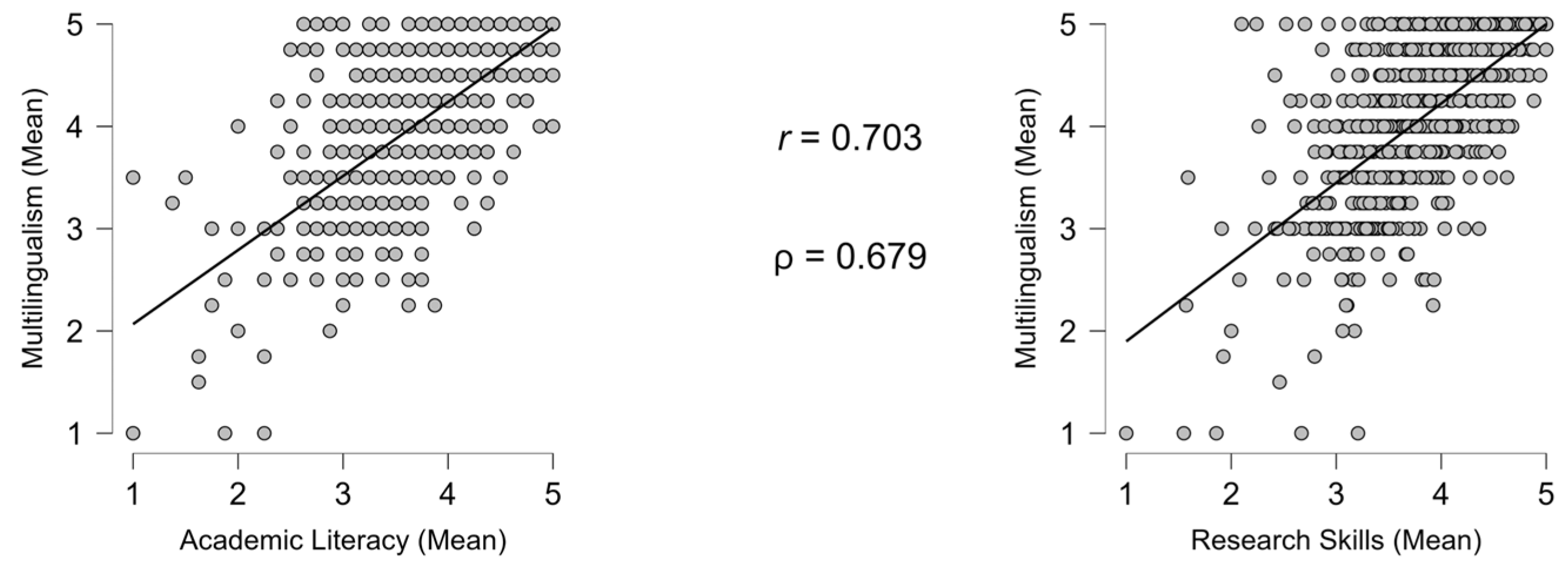
The results revealed strong positive correlation between multilingualism in education and students’ academic literacy (ρ = 0.67, p < 0.001), as well as between multilingualism and research skills (ρ = 0.64, p < 0.01) (Figure 2).
Pearson’s correlation analysis was additionally to confirm the robustness of these associations. The results were consistent with the Spearman analysis: multilingualism correlated positively with academic literacy (r = 0.70, p < 0.01) and research skills (r = 0.65, p < 0.001).
In Figure 2, the data points lie close to the regression line, which confirms the positive correlations identified in the statistical analysis. No substantial outliers or nonlinear patterns were observed, which further supports the stability of this relationship. These results indicate a clear and stable positive association between multilingualism in education, academic literacy, and students’ research skills. Thus, Hypothesis H1 received empirical support.
H2. 
Students with higher levels of multilingual academic engagement will demonstrate stronger research skills and higher academic literacy.
Building on the previously obtained results, we next examined whether multilingual academic engagement predicts students’ levels of research skills and academic literacy.
Before conducting the regression analyses, the homogeneity of language groups by programme level (bachelor’s/master’s degree) was checked. The descriptive statistic is presented in Table 3.
The proportion of undergraduate students differed significantly between the groups: 61.8% of undergraduates studied in English; 85.1% in Kazakh; and 95.1% in Russian. A χ2 test revealed a statistically significant interaction between language and level of instruction (χ2(2) = 69.09, p < 0.001), indicating an imbalance between the groups for this parameter. Therefore, the programme level variable was additionally included in the regression models as a fixed predictor to control for potential confounding effects arising from group imbalance.
To examine the impact of multilingual academic engagement, language of instruction, and academic reading proficiency in Kazakh, Russian, and English on students’ research skills and academic literacy, two sets of hierarchical linear regression models were constructed, including the programme level variable (undergraduate/master’s). The statistical indicators for the comparison of the first set of models are presented in Table 4 (for research skills).
Model 1, which included multilingualism, provided the largest improvement in model fit relative to the null model (ΔF = 412.56, p < 0.001), reducing AIC and BIC most substantially. Adding language of instruction (Model 2), academic reading proficiency in Kazakh, Russian, and English (Model 3), and programmes level (Model 4) did not yield statistically significant improvements.
Although English reading proficiency reached statistical significance in the full model (p = 0.019), its effect was extremely small (β = −0.061) and therefore lacks practical relevance. Model 4 explained 38% of the variance in research skills (R2 = 0.38). Across all models, multilingualism consistently emerged as the only strong and robust predictor of students’ research skills (β = 0.556, p < 0.001) (see Table 5).
Thus, Hypothesis H2 was fully supported: students with higher levels of multi-lingual academic engagement demonstrated substantially higher research skills.
The model also tested Hypothesis H4, which examined of academic reading proficiency in different languages. Although English reading proficiency showed statistical significance in the full model (p = 0.019), its contribution was negligible and did not improve the model fit. Reading proficiency did not add explanatory power beyond multilingualism, and therefore Hypothesis H4 was not supported.
The results of the second series of models showed a similar pattern. Adding multilingualism to the model also led to a significant improvement in model fit compared with the null model, F(1, 690) = 675.83, p < 0.001 (see Table 6).
Multilingualism emerged as the strongest predictor of academic literacy (β = 0.687, p < 0.001), explaining 49% of the variance in the results (R2 = 0.49) (see Table 7).
Adding language of instruction, reading literacy scores, and programme level did not improve the model (all p-values > 0.05). Reading scores in Kazakh and Russian were statistically insignificant (all p-values > 0.65). The programme level showed a marginal trend (β = 0.122, p = 0.057), suggesting a weak tendency for Master’s students to report slightly higher academic literacy, although this effect did not reach statistical significance. The final model (Model 4) explained 49% of the variance in academic literacy.
Consequently, in both sets of regression models, multilingualism in education emerged as the only consistent and significant predictor, whereas the remaining variables did not make a substantial contribution to explaining the variability in research skills and academic literacy. Thus, Hypothesis 2 was empirically supported.
H3. 
There will be statistically significant differences between language of instruction groups in their level of autonomy, readiness for research activities, and confidence in their skills.
Although the language of instruction did not emerge as a significant predictor of research skills or academic literacy in the regression models, assuming that students studying in different language environments may still differ in their levels of autonomy, research readiness, and confidence in their research abilities.
These indicators reflect the affective-motivational and behavioural dimensions of research competence, which may develop differently across educational contexts, even if research skills themselves are not directly influenced by the language of instruction.
Therefore, we further examined whether students differ in these characteristics depending on the language of instruction. To test group differences in autonomy, research readiness, and confidence in their skills, ANOVA was conducted.
The results showed no differences between the groups in students’ autonomy, F(2, 689) = 1.013, p = 0.36 (see Table 8). A small difference was observed for students’ confidence in their research skills and their readiness for research, F(2, 689) = 3.38, p = 0.03 (see Table 8). However, the effect size was extremely small (η2 = 0.009), indicating a lack of practical significance.
The results indicate that the language of instruction does not affect students’ level of autonomy. Students’ readiness for research activities differed slightly across the groups. However, this difference was weak in terms of effect size and lacked substantive significance. Therefore, the language of instruction cannot be considered a factor determining students’ readiness for research activities. Thus, Hypothesis H3 was not supported.
H4. 
The level of academic reading in Kazakh, Russian, and English predicts the level of students’ research skills.
H4 was not supported. As shown in the regression analysis presented above (see results for Hypothesis 2), academic reading proficiency in Kazakh, Russian, and English did not significantly predict students’ research skills after accounting for multilingualism.
RQ2: Which factors (linguistic background, peer collaboration, teacher facilitation) best predict students’ overall level of research skills and academic literacy in Kazakhstani universities?
H5. 
Linguistic background, peer collaboration, teacher facilitation, and autonomy in learning are the best predictors of students’ self-assessment of their research and academic skills.
The next step of our study was to identify the factors that genuinely contribute to students’ self-assessment of their research and academic skills. We assumed that significant predictors of this self-assessment may include the number of languages spoken by the student, peer collaboration, teacher facilitation, and learner autonomy.
To test these assumptions, a cumulative logistic regression model (cumulative logit model) was constructed, in which students’ self-assessment of their research and academic skills was treated as an ordinal dependent variable. The following predictors were included in the model: linguistic background (number of languages spoken), peer collaboration, teacher facilitation, learner autonomy, academic performance.
This approach allowed us to test Hypothesis H5 (regarding the influence of learning environment factors) and Hypothesis H6 (regarding the role of academic performance) within a single integrated model. The results of the analysis are presented in Table 9.
The analysis showed that the strongest and most statistically significant predictor of students’ self-assessment of their research and academic skills was peer collaboration (β = 1.141, p < 0.001). Students who are more actively engaged in collaborative work with their peers tend to rate their research and academic skills higher. Teacher facilitation also made a significant contribution (β = 0.272, p = 0.011).
In contrast, learner autonomy (β = 0.185, p = 0.075) and linguistic background (β = −0.01, p = 0.900) do not demonstrate a significant influence on students’ self-assessment of research and academic skills.
Thus, among the four factors specified in Hypothesis H5, only peer collaboration and teacher facilitation emerged as significant predictors. Therefore, Hypothesis H5 received partial empirical support.
RQ3: Is there a correlation between students’ academic performance and their level of self-assessment of research and academic skills?
H6. 
Academic performance is positively associated with students’ self-assessment of their research and academic skills.
The cumulative logistic regression model showed that academic performance was a statistically significant and fairly strong predictor of students’ self-assessed research and academic skills (β = 0.64, p < 0.001). Students with higher academic performances were substantially more likely to evaluate their research and academic abilities more positively. This finding suggests that academic achievement is closely linked to students’ confidence in their research competences. One possible explanation is that students with higher academic performance typically possess more advanced learning strategies, stronger metacognitive skills, and higher overall academic motivation—all of which may enhance their confidence in research-related abilities. These results provide clear empirical support for Hypothesis H6.
Summarizing the results of the study, we conclude that multilingualism is one of the important factors influencing students’ academic literacy and research skills. In contrast, the primary language of instruction did not demonstrate a significant impact on these outcomes.
Social and pedagogical aspects, particularly peer collaboration and teacher facilitation, also emerged as important predictors of students’ self-assessed research and academic skills. Furthermore, academic performance showed a strong positive association with students’ confidence in their research abilities
Taken together, these results highlight the multifactorial nature of research competence development in a multilingual educational environment. They point to three directions for interpretation. First, how multilingual academic engagement shapes students’ research skills and academic literacy. Second, how pedagogical and institutional factors, especially peer collaboration, teacher facilitation, and academic performance contribute to students’ confidence in their abilities. Third, why the language of instruction and reading proficiency show minimal effects despite their prominence in policy and practice.

5. Discussion

5.1. Research Skills and Academic Literacy in a Multilingual Context

Overall, students reported moderately high self-assessment level of research preparation and academic literacy (M = 3.7), suggesting a favorable trajectory in the development of informed orientations toward research practices and academic standards within the Kazakhstani HE sector. However, the results of the study revealed certain differences between the individual components.
Thus, the indicators of learning autonomy turned out to be relatively high (M = 4.0) and indicate a conscious approach by students to setting goals and managing their own learning. At the same time, collaboration with peers (M = 3.2) and the indicators of critical thinking turned out to be lower, which indicates the predominance of individual forms of work over collective and analytical ones.
Such observations are consistent with international research indicating that in the context of developing multilingual education systems, students most often focus on a deep understanding of the procedural side of research rather than on its epistemological interpretation (Hyland & Jiang, 2019; Lea & Street, 2006). At the same time, it should be noted that students’ self-assessment of their own research capabilities often does not correspond to the level of their actual skills (Labouta et al., 2019).
The present results further indicate a positive association between multilingual learning and students’ academic literacy and research skills. Consistent with prior work, multilingualism appears to serve not only linguistic but also cognitive functions that support analysis, abstraction, and reflective judgment (Dougherty, 2021).
This is compatible with evidence that pedagogies leveraging multiple languages, including translingual approaches, can enhance academic outcomes (Beltran-Palanques et al., 2024) and foster critical language awareness (Sun, 2023). Multilingual students have a more flexible mindset when solving research tasks, as they develop the ability to see the problem through different cultural and linguistic prisms. Accordingly, in the context of Kazakhstan, multilingualism should be considered as a tool that promotes the development of cognitive functions, research skills and academic literacy of students.

5.2. Influence of Institutional and Pedagogical Factors

The results of the ordinal logistic regression analysis demonstrated that peer collaboration and academic performance are the strongest predictors, while teacher facilitation is the moderate predictor of self-assessment level of research skills and academic literacy.
These findings corroborate previous studies emphasizing the effectiveness of research-based learning (RBL) (Healey et al., 2014) and the academic communities-of-practice model (Lave & Wenger, 1991).
Effective pedagogical support through explanation, guided supervision, modeling of research practice, and timely feedback, enables students to internalise academic conventions and research ethics. Despite the presence of collaborative learning elements, such practices have not yet been fully integrated into the learning process. As highlighted by Gillies (2023), Borg and Liu (2013), the successful implementation of collaborative approaches requires not only a shift away from teacher-dominated instruction but also a transformation of educational mindsets, supported by consistent institutional policies and resources.

5.3. Language of Instruction and Multilingualism

According to the conducted research, the language of instruction (Kazakh, Russian, or English) did not emerge as a predictor of research skills or academic literacy; rather, its influence appears to be context-dependent and is overshadowed by stronger predictors such as multilingual academic engagement, peer collaboration, and teacher facilitation. These findings are consistent with studies in multilingual academic literacy (Canagarajah, 2013; Wingate, 2015), which demonstrate that multilingual environments simultaneously enrich and complicate the acquisition of research and academic skills. The trilingual education model in Kazakhstan (Kazakh, Russian, and English) thus presents both opportunities and challenges: on one hand, it broadens linguistic and cognitive horizons; on the other, it calls for comprehensive institutional support to ensure equitable access to academic materials across languages.
The results of this study indicate that strengthening students’ research skills within multilingual HE requires structured facilitation, collaborative learning, and the development of critical academic literacy. Embedding research-oriented tasks into coursework, organizing joint projects, and fostering ethical citation practices can enhance students’ autonomy and scholarly competence.
Furthermore, faculty development in Research-Based Learning (RBL) and scaffolded supervision can improve the quality of research preparation and harmonize student support across institutions. This approach aligns with recommendations emphasizing the importance of professional development opportunities such as courses, seminars, and workshops on the theory and methodology of pedagogical research (Kuchumova & Mukhamejanova, 2025), as well as engagement in collaborative research projects. Insufficient research experience and low academic engagement among instructors hinder the development of students’ research potential and limit the effective implementation of inquiry-based pedagogies.
At the institutional level, it is advisable to establish multilingual academic writing centers and cross-linguistic mentoring programmes aimed at simultaneously enhancing students’ linguistic and academic literacies. This strategy aligns with Tinto’s (1993) model of student integration, which posits that academic development is achieved through the combination of intellectual engagement and social integration within the learning community.

6. Conclusions

This study examined the relationship between multilingual academic practices, teacher facilitation, and the development of research skills and academic literacy in Kazakhstani HE system. Drawing on survey data, the findings provide clear empirical evidence that multilingualism functions as a substantive cognitive and academic resource. Multilingualism demonstrated a strong and consistent association with both research skills and academic literacy, and emerged as a significant predictor in the linear regression models.
Institutional and pedagogical factors proved central to students’ academic development. Peer collaboration, teacher facilitation and academic performance were the most powerful predictors of students’ self-assessment of research and academic skills, underscoring the importance of scaffolded, interactive learning environments.
These findings highlight the need for higher education institutions to integrate multilingualism within research-based pedagogies rather than treat it solely as a policy goal. Targeted faculty development in research-based instruction is also essential for strengthening students’ engagement with academic literacy and inquiry.
Overall, the study contributes to international scholarship on multilingual higher education by demonstrating that multilingual practices play a main role in shaping students’ research readiness when they are supported by facilitative teaching and collaborative learning.
Future research may build on these findings in several important ways. Longitudinal studies would allow scholars to trace how multilingual academic practices shape students’ research skills and academic literacy over time, providing stronger evidence of causal relationships. In addition, qualitative approaches, such as classroom observations, interviews, or student reflective narratives, could offer deeper insights into how learners actually mobilise their linguistic repertoires in research-based activities and how teachers facilitate this process in everyday academic practice. Comparative studies across institutions or countries with different multilingual policies would further clarify the contextual factors that strengthen or limit the impact of multilingualism on academic development. Taken together, these directions would enrich the evidence base and support the design of more effective multilingual, research-oriented pedagogies.

7. Limitations

Several limitations of the study should be acknowledged. Firstly, the findings rely exclusively on self-report data. While self-assessments provide valuable insight into how students perceive their academic and research abilities, they may not fully reflect actual performance or observable behaviour. As noted in previous research, self-reported measures may contain self-serving biases and exaggerations and therefore cannot be treated as perfect indicators of ability (adapted from Labouta et al., 2019). Confidence levels, familiarity with academic genres, and individual attitudes toward self-assessment may influence responses in ways that survey items cannot fully capture. Consequently, the results should be interpreted as indicators of students’ perceptions and confidence rather than direct measures of academic literacy or research competence.
Secondly, multilingualism was operationalised through students’ academic language practices rather than externally assessed proficiency. This aligns with the realities of Kazakhstani HE, where students routinely draw on multiple languages regardless of formal certification. However, because language practices and proficiencies were self-rated, some variability in accuracy is inevitable. Future research could strengthen the robustness of measurement by incorporating complementary indicators, such as brief proficiency assessments or course-level language records, where ethically permissible.
Thirdly, demographic information was intentionally limited to protect anonymity across institutions with differing ethics requirements. Variables such as age were not collected, and programme level was used instead as a practical proxy for academic experience. While this decision facilitated recruitment and ensured confidentiality, it limited the possibility of exploring age-related differences.
Fourthly, the study did not include qualitative or performance-based data, such as interviews, classroom observations, or analysis of students’ written work. The inclusion of these additional methods could have provided a more nuanced, triangulated perspective on how academic literacy and research skills are enacted in practice, especially in multilingual learning environments.
Finally, the cross-sectional design captures associations at a single point in time and does not allow for causal inference or for tracing how research skills, academic literacy, or multilingual practices develop across academic years. Longitudinal and mixed-methods approaches, combining survey data with interviews, classroom observations, or evaluations of students’ final outputs would offer deeper insight into the long-term development of these competencies.
Despite these limitations, the study provides a robust and empirically grounded picture of how multilingual academic environments, instructional support, and collaborative practices intersect with students’ research skills and academic literacy within Kazakhstan’s HE system.

Author Contributions

Conceptualization, L.B. and B.G.; methodology, L.B., B.G. and Y.Z.; formal analysis, B.G. and A.K.; investigation, Y.Z. and A.K.; data curation, A.K. and L.B.; writing-original draft preparation, B.G. and Y.Z.; writing-review and editing, L.B., B.G. and A.A.; visualization, A.K.; supervision, A.A.; project administration and funding acquisition, L.B. All authors have read and agreed to the published version of the manuscript.

Funding

This research was funded by the Ministry of Science and Higher Education of the Republic of Kazakhstan (Grant No. AP26197733, Developing Research Skills through the Study of Communication Strategies for Effective Cross-Cultural Interaction in the Linguistic Space of Kazakhstan, 2025–2027).

Institutional Review Board Statement

The study was conducted in accordance with the Declaration of Helsinki; the study was approved by the Ethics Committee of the Ualikhanov Kokshetau University (Protocol No. 2, date 7 May 2025).

Informed Consent Statement

Informed consent was obtained from all participants involved in the study.

Data Availability Statement

The data presented in this study is available on request from the corresponding author. The dataset is part of an ongoing research project and is therefore not publicly available.

Conflicts of Interest

The authors declare no conflict of interest.

Abbreviations

The following abbreviations are used in this manuscript:
AICAkaike Information Criterion
ANOVAAnalysis of variance
AVEAverage Variance Extracted
CFAConfirmatory Factor Analysis
CFIComparative Fit Index
DWLSDiagonally Weighted Least Squares
EMIEnglish-Medium Instruction
GFIGoodness of Fit Index
HEHigher Education
HEIsHigher Educational Institutions
HTMTHeterotrait–Monotrait Ratio of Correlations
ICCIntraclass correlation coefficients
RBLResearch-based learning
RMSEARoot Mean Square Error of Approximation
SRMRStandardized Root Mean Square Residual
STEMScience, Technology, Engineering, and Mathematics
TLIThe Tucker–Lewis Index

References

  1. Aarar, M., & Pérez Valverde, C. (2025). Enhancing evidence-based writing and critical thinking skills of high school students by implementing a debating-via-zoom approach. Education Sciences, 15(9), 1204. [Google Scholar] [CrossRef]
  2. Agricola, B. T., Prins, F. J., van der Schaaf, M. F., & van Tartwijk, J. (2018). Teachers’ diagnosis of students’ research skills during the mentoring of the undergraduate thesis. Mentoring & Tutoring: Partnership in Learning, 26(5), 542–562. [Google Scholar] [CrossRef]
  3. Albaba, M. B. (2025). Proposing a linguistic repertoires perspective in multilingual higher education contexts. Journal of Learning Development in Higher Education, (36). [Google Scholar] [CrossRef]
  4. Alisaari, J., Heikkola, L. M., Commins, N., & Acquah, E. O. (2019). Monolingual ideologies confronting multilingual realities: Finnish teachers’ beliefs about linguistic diversity. Teaching and Teacher Education, 80, 48–58. [Google Scholar] [CrossRef]
  5. Aminova, L., Saurbayev, R., & Yerekhanova, F. (2025). The psychological aspects of bilingualism and multilingualism: Current issue, challenges, and perspectives. Annali d’Italia, 63, 24–27. [Google Scholar] [CrossRef]
  6. Banu, S. R., Banu, S. B., Chandini, S., Thulasi, V. V. Y. R., Jyothi, M. K., & Nusari, M. S. (2022). Assessment of research skills in undergraduate students. Journal of Positive School Psychology, 6(6), 9579–9586. [Google Scholar]
  7. Begaliyeva, S., Shmakova, E., & Zhunisbayeva, A. (2025). Creation of a collaborative “school-university” environment to support research activities in schools. Education Sciences, 15(1), 100. [Google Scholar] [CrossRef]
  8. Beltran-Palanques, V., Liu, J. E., & Lin, A. M. Y. (2024). Translanguaging in language teacher education. In Z. Tajeddin, & T. S. Farrell (Eds.), Handbook of language teacher education. Springer. [Google Scholar] [CrossRef]
  9. Benson, P. (2011). Teaching and researching: Autonomy in language learning (2nd ed.). Routledge. [Google Scholar] [CrossRef]
  10. Bieschke, K. J., Bishop, R. M., & Garcia, V. L. (1996). The utility of the research self-efficacy scale. Journal of Career Assessment, 4(1), 59–75. [Google Scholar] [CrossRef]
  11. Borg, S., & Liu, Y. (2013). Chinese university teachers’ research engagement. TESOL Quarterly, 47(2), 270–299. [Google Scholar] [CrossRef]
  12. Boughey, C., & McKenna, S. (2016). Academic literacy and the decontextualised learner. Critical Studies in Teaching and Learning (CriSTaL), 4(2), 1–9. [Google Scholar] [CrossRef]
  13. Canagarajah, A. S. (2013). Translingual practice: Global Englishes and cosmopolitan relations. Routledge. [Google Scholar] [CrossRef]
  14. Cenoz, J., & Gorter, D. (2013). Towards a plurilingual approach in English language teaching: Softening the boundaries between languages. TESOL Quarterly, 47, 591–599. [Google Scholar] [CrossRef]
  15. Compagnucci, L., & Spigarelli, F. (2020). The third mission of the university: A systematic literature review. Technological Forecasting and Social Change, 161, 120284. [Google Scholar] [CrossRef]
  16. Cummins, J. (2008). Teaching for transfer: Challenging the two solitudes assumption in bilingual education. In N. H. Hornberger (Ed.), Encyclopedia of language and education. Springer. [Google Scholar] [CrossRef]
  17. Dauletkeldyyeva, A., Smagambet, B., Saliyeva, A., Baigabylov, N., & Jamaliyeva, G. (2024). Models and practices of the introduction of multilingualism (comparative sociological analysis). Social Identities, 30(6), 568–579. [Google Scholar] [CrossRef]
  18. De Henau, J. (2024). Academic skills literature review. Centre for Teaching and Learning, University of Oxford. Available online: https://www.ctl.ox.ac.uk/academic-skills-literature-review (accessed on 16 September 2025).
  19. Doebler, R. (2025). A social practices lens to explore an academic foundation programme in Kazakhstan. In M. Bedeker, T. M. Makoelle, & S. A. Manan (Eds.), Exploring academic writing as social practice. Palgrave Macmillan. [Google Scholar] [CrossRef]
  20. Donato, R. (1994). Collective scaffolding in second language learning. In J. P. Lantolf, & G. Appel (Eds.), Vygotskian approaches to second language research (pp. 33–56). Ablex. [Google Scholar]
  21. Dougherty, J. (2021). Translanguaging in action: Pedagogy that elevates. ORTESOL Journal, 38, 19–32. [Google Scholar]
  22. Duman, S. (2024). Education reforms in Kazakhstan: International integration and nationalization efforts. In B. Akgün, & Y. Alpaydın (Eds.), Global agendas and education reforms. Maarif global education series. Palgrave Macmillan. Available online: https://link.springer.com/chapter/10.1007/978-981-97-3068-1_3 (accessed on 17 September 2025).
  23. García, O., & Wei, L. (2014). Translanguaging: Language, bilingualism, and education. Palgrave MacMillan. [Google Scholar] [CrossRef]
  24. Gillies, R. M. (2023). Using cooperative learning to enhance students’ learning and engagement during inquiry-based science. Education Sciences, 13(12), 1242. [Google Scholar] [CrossRef]
  25. Healey, M., Jenkins, A., & Lea, J. (2014). Developing research-based curricula in college-based higher education. Higher Education Academy (Advance HE). Available online: https://www.advance-he.ac.uk/knowledge-hub/developing-research-based-curricula-college-based-higher-education (accessed on 5 October 2025).
  26. Hwami, M. (2024). A geopolitics of knowledge analysis of higher education internationalisation in Kazakhstan. British Educational Research Journal, 50(2), 676–693. [Google Scholar] [CrossRef]
  27. Hyland, K., & Jiang, F. (2019). Academic discourse and global publishing: Disciplinary persuasion in changing times. Routledge. [Google Scholar] [CrossRef]
  28. Karabassova, L. (2020). Understanding trilingual education reform in Kazakhstan: Why is it stalled? In D. Egéa (Ed.), Education in Central Asia (Vol. 8). Springer. [Google Scholar] [CrossRef]
  29. Keser Aschenberger, F., & Pfeffer, T. (2021). Concept of research literacy in academic continuing education: A systematic review. European Journal of University Lifelong Learning, 5(1), 43–58. [Google Scholar] [CrossRef]
  30. Koptleuova, K., Karagulova, B., Zhumakhanova, A., Kondybay, K., & Salikhova, A. (2023). Multilingualism and the current language situation in the Republic of Kazakhstan. International Journal of Society, Culture & Language, 11(3), 242–257. [Google Scholar] [CrossRef]
  31. Kuada, J. (2012). Research methodology: A project guide for university students. Samfundslitteratur. [Google Scholar]
  32. Kuchumova, G., & Mukhamejanova, D. (2025). Challenges in developing research-based teacher education in Kazakhstan. Education Sciences, 15(10), 1339. [Google Scholar] [CrossRef]
  33. Labouta, H. I., Kenny, N. A., Dyjur, P., Li, R., Anikovskiy, M., Reid, L. F., & Cramb, D. T. (2019). Investigating the alignment of intended, enacted, and perceived learning outcomes in an authentic research-based science program. The Canadian Journal for the Scholarship of Teaching and Learning, 10(3), 3. [Google Scholar] [CrossRef]
  34. Lantolf, J. P., & Poehner, M. E. (2011). Dynamic assessment in the classroom: Vygotskian praxis for second language development. Language Teaching Research, 15(1), 11–33. [Google Scholar] [CrossRef]
  35. Lantolf, J. P., & Poehner, M. E. (2014). Sociocultural theory and the pedagogical imperative in L2 Education: Vygotskian praxis and the research/practice divide (1st ed.). Routledge. [Google Scholar] [CrossRef]
  36. Lave, J., & Wenger, E. (1991). Situated learning: Legitimate peripheral participation. Cambridge University Press. [Google Scholar]
  37. Lea, M. R., & Street, B. V. (2006). Student writing in higher education: An academic literacies approach. Studies in Higher Education, 23(2), 157–172. [Google Scholar] [CrossRef]
  38. Moraru, M., Bakker, A., Akkerman, S., Zenger, L., Smit, J., & Blom, E. (2025). Translanguaging within and across learning settings: A systematic review focused on multilingual children with a migration background engaged in content learning. Review of Education, 13(2), e70069. [Google Scholar] [CrossRef]
  39. Otheguy, R., García, O., & Reid, W. (2015). Clarifying translanguaging and deconstructing named languages: A perspective from linguistics. Applied Linguistics Review, 6(3), 281–307. [Google Scholar] [CrossRef]
  40. Palmer, D. K., Martínez, R. A., Mateus, S. G., & Henderson, K. L. (2014). Reframing the debate on language separation: Toward a vision for translanguaging pedagogies in the dual language classroom. The Modern Language Journal, 98, 757–772. [Google Scholar] [CrossRef]
  41. Pirhonen, H. (2023). University students’ language learner beliefs and identities in the context of multilingual pedagogies in higher education [Doctoral dissertation, University of Jyväskylä]. Available online: http://urn.fi/URN:ISBN:978-951-39-9277-4 (accessed on 17 September 2025).
  42. Qian, Y., & Daiute, C. (2025). Peer collaboration to support Chinese immigrant children’s Chinese heritage language use and learning in New York. Education Sciences, 15(9), 1210. [Google Scholar] [CrossRef]
  43. Qureshi, M. A., Khaskheli, A., Qureshi, J. A., Raza, S. A., & Yousufi, S. Q. (2023). Factors affecting students’ learning performance through collaborative learning and engagement. Interactive Learning Environments, 31(14), 2371–2391. [Google Scholar] [CrossRef]
  44. Rabin, E., Kalman, Y. M., & Kalz, M. (2019). The cathedral’s ivory tower and the open education bazaar—Catalyzing innovation in the higher education sector. Open Learning: The Journal of Open, Distance and e-Learning, 35(3), 203–217. [Google Scholar] [CrossRef]
  45. Sakkeer, V. (2023). Empowering higher education: The vital role of research skills in academic excellence. International Journal of Educational Research and Development, 5(1), 56–58. [Google Scholar]
  46. Sun, Y. (2023). Increasing critical language awareness through translingual practices in academic writing. Journal of English for Academic Purposes, 62, 101229. [Google Scholar] [CrossRef]
  47. Swain, M., & Lapkin, S. (2002). Talking it through: Two French immersion learners’ response to reformulation. International Journal of Educational Research, 37(3–4), 285–304. [Google Scholar] [CrossRef]
  48. Tajik, M. A., Manan, S. A., Arvatu, A.-C., & Shegebayev, M. (2024). Growing pains: Graduate students grappling with English medium instruction in Kazakhstan. Asian Englishes, 26(1), 249–267. [Google Scholar] [CrossRef]
  49. Tinto, V. (1993). Leaving college: Rethinking the causes and cures of student attrition (2nd ed.). University of Chicago Press. [Google Scholar] [CrossRef]
  50. Van der Walt, C. (2013). Multilingual higher education: Beyond English-medium orientations (Vol. 91). Multilingual Matters. [Google Scholar]
  51. Vygotsky, L. S. (1978). Mind in society: The development of higher psychological processes (Vol. 86). Original work was published in 1930–1934. Harvard University Press. [Google Scholar]
  52. Watson, W. R., & Watson, S. L. (2013). Exploding the ivory tower: Systemic change for higher education. TechTrends, 57, 42–46. [Google Scholar] [CrossRef]
  53. Weideman, A. (2003). Assessing and developing academic literacy. Per Linguam, 19(1–2), 55–65. [Google Scholar] [CrossRef]
  54. Wingate, U. (2015). Academic literacy and student diversity: The case for inclusive practice. Multilingual Matters. [Google Scholar]
  55. Yermekova, T. N., Ryskulbek, D., Azimova, G., Kapalbek, B., & Mawkanuli, T. (2024). Language instruction in Kazakhstan’s higher education: A critical examination. Novitas-ROYAL (Research on Youth and Language), 18(1), 190–198. [Google Scholar] [CrossRef]
  56. Zhumay, N., Tazhibayeva, S., Shaldarbekova, A., Jabasheva, B., Naimanbay, A., & Sandybayeva, A. (2021). Multilingual education in the Republic of Kazakhstan: Problems and prospects. Social Inclusion, 9(1), 56–62. [Google Scholar] [CrossRef]
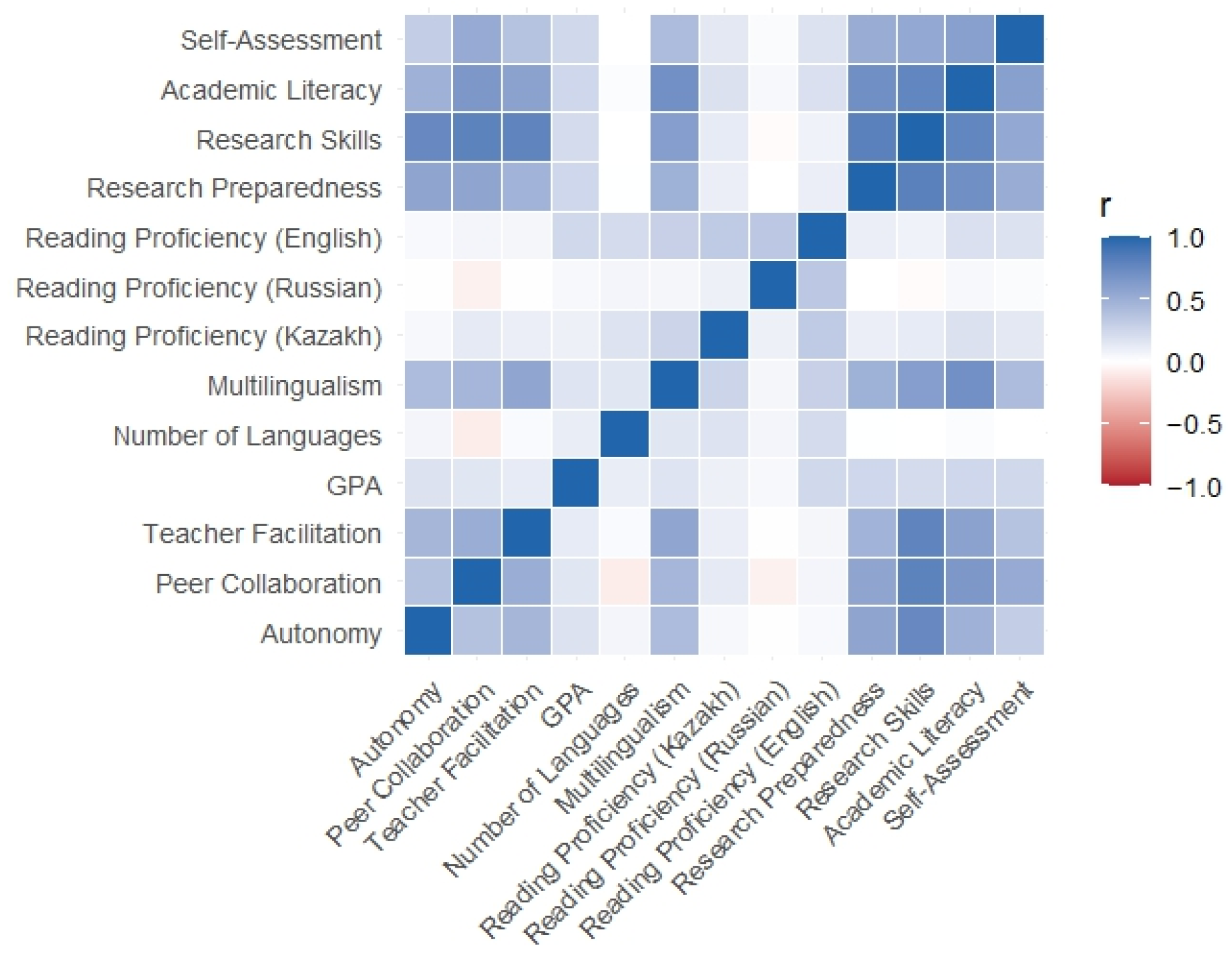
Figure 1. Correlation heatmap of the study variables.
Education 16 00021 g001
Figure 2. Scatter plots showing the relationship between multilingualism (mean score) and academic literacy (mean score) as well as research skills (mean score).
Education 16 00021 g002
Table 1. Distribution of respondents by university type and programme level.
Programme LevelNational Universities
n (%)
Regional Universities
n (%)
Private Universities
n (%)
Total
n (%)
Bachelor90 (13)481 (69.5)23 (3.3)594 (85.8)
Master66 (9.6)31 (4.5)1 (0.1)98 (14.2)
Total156 (22.6)512 (74)24 (3.4)692 (100)
Note. Percentages may not total 100 due to rounding. Source: Authors’ survey (2025).
Table 2. Summary of CFA Results for the Four Latent Constructs.
FactorStandardized Loadings (Range)R2 (Range)AVEReliability (ω)
Autonomy0.96–1.130.50–0.700.600.84
Research Preparedness0.98–1.080.55–0.600.590.90
Peer Collaboration0.93–1.110.51–0.740.640.93
Teacher Facilitation1.00–1.010.69–0.820.810.92
Note. Standardized loadings, R2, AVE, and composite reliability (ω) are reported for each latent construct. AVE ≥ 0.50 indicates adequate convergent validity, and ω ≥ 0.70 reflects acceptable internal consistency.
Table 3. Distribution of students by language of instruction and programme level.
Language of InstructionnBachelor (n, %)Master (n, %)
English10263 (61.8%)39 (38.2%)
Kazakh303258 (85.1%)45 (14.9%)
Russian287273 (95.1%)14 (4.9%)
Total69259498
Table 4. Comparison of Hierarchical Linear Regression Models Predicting Research Skills.
ModelPredictors IncludedAICBICR2ΔFp
Model 0Intercept only1985.141998.87
Model 1+Multilingualism1791.491811.560.37412.56<0.001 ***
Model 2+Language of Instruction1788.131814.530.372.400.092
Model 3+Reading Proficiency (Kazakh, Russian, English)1787.541820.280.382.850.037 *
Model 4+Programmes Level (Bachelor/Master)1789.111828.190.380.690.406
Note. * p < 0.05. *** p < 0.001.
Table 5. Regression coefficients for the full model predicting students’ research skills (Model 4).
PredictorEstimate (β)SEtp
Intercept1.5110.12911.74<0.001 ***
Multilingualism0.5560.02720.10<0.001 ***
Language of Instruction: Kazakh0.0780.0671.160.246
Language of Instruction: Russian0.0400.0750.540.592
Reading Proficiency (Kazakh)−0.0190.027−0.710.478
Reading Proficiency (Russian)−0.0090.023−0.400.684
Reading Proficiency (English)−0.0610.025−2.350.019 *
Programme Level (Master)0.0520.0630.830.406
Note. * p < 0.05. *** p < 0.001. Multilingualism remained the only strong predictor (β = 0.556, p < 0.001). The effect of English reading proficiency, although statistically significant (p = 0.019), was negligible in magnitude (β = −0.061). All other predictors were non-significant.
Table 6. Model Comparison for Predicting Academic Literacy.
ModelPredictors IncludedAICBICR2ΔModel (ANOVA)p
Model 0Intercept only1592.171601.25
Model 1+Multilingualism1121.661135.280.49Model 1 vs. Model 0<0.001 ***
Model 2+Language of Instruction (Kazakh, Russian)1124.731147.420.49Model 2 vs. Model 10.629
Model 3+Reading Proficiency (Kazakh, Russian, English)1130.231166.550.49Model 3 vs. Model 20.921
Model 4+Programme Level (Bachelor/Master)1128.561169.420.49Model 4 vs. Model 30.057
Note. *** p < 0.001. Model 1 shows the largest improvement in fit relative to the null model. Adding Language of Instruction, reading proficiency, or programme level does not significantly improve model fit (all p-values > 0.05). Multilingualism remains the only strong and consistent predictor across all models.
Table 7. Regression coefficients for the full model predicting students’ academic literacy (Model 4).
PredictorEstimate (β)SEtp
Intercept0.9270.1317.046<0.001 ***
Multilingualism0.6870.02824.527<0.001 ***
Language of Instruction: Kazakh−0.0040.069−0.0580.954
Language of Instruction: Russian0.0740.0780.9590.338
Reading Proficiency (Kazakh)0.0200.0270.7130.476
Reading Proficiency (Russian)−0.0070.024−0.3100.757
Reading Proficiency (English)−0.0200.026−0.7490.454
Programme Level (Master)0.1220.0641561.9080.0568
Note. *** p < 0.001.  p < 0.10 (marginal). Model 4 explains approximately 49% of the variance in academic literacy (R2 = 0.49).
Table 8. Results of one-way ANOVA for autonomy and research preparedness by language of instruction (n = 692).
Outcome VariableLanguage of InstructionnMSDdfFpη2
AutonomyKazakh3034.10.82, 6891.010.36
Russian2874.00.7
English1023.91.0
Research Preparedness & ConfidenceKazakh3033.90.72, 6893.380.030.009
Russian2873.70.7
English1023.80.8
Table 9. Ordinal Logistic Regression Predicting Students’ Self-Assessment of Research and Academic Skills (n = 692).
PredictorEstimate (β)SEzp
Number of languages known−0.0110.085−0.130.900
Peer Collaboration1.1410.10311.09<0.001 ***
Teacher Facilitation0.2720.1072.550.011 *
Autonomy0.1850.1041.780.075
Academic performance0.6420.1454.43<0.001 ***
Note. * p < 0.05. *** p < 0.001. Self-assessment measured on a five-level ordered scale (1–5). Model estimated via cumulative logit link.
Disclaimer/Publisher’s Note: The statements, opinions and data contained in all publications are solely those of the individual author(s) and contributor(s) and not of MDPI and/or the editor(s). MDPI and/or the editor(s) disclaim responsibility for any injury to people or property resulting from any ideas, methods, instructions or products referred to in the content.