


Abstract
The phenomenon of underachievement of working-class young people in the English education system reveals long-standing prejudices surrounding English language development. This article reports the findings of a small-scale, qualitative study exploring the power of aesthetic experience in supporting the acquisition and development of the English language in a Further Education (FE) college in England. Findings provide evidence of how engagement with aesthetic experiences enables learners to access new ways of thinking and relate to new and complex ideas and concepts that may once have seemed beyond their reach. Findings also suggest that experimentation with various forms of art, as sources of inspiration, impacts confidence, engagement, and the learners’ experience of education in profound ways. This study challenges hierarchical and class-based socio-political forces which elevate one form of language or expression above another on the grounds that this can cause serious damage to the confidence and self-esteem of learners from lower socio-economic groups. With reference to data from the study and the works of Gadamer, Bernstein, and Dewey, the article concludes that pedagogic engagement through aesthetic experiences in FE can help learners from lower socio-economic groups access their Pedagogic Rights, to which they have been previously denied.
1. Introduction
The General Certificate of Secondary Education (GCSE) is a qualification that students in England, Wales, and Northern Ireland take at age 15–16. GCSEs are graded from 1 to 9, but a ‘standard pass’ is considered to be a Grade 4. Securing a Grade 4 and above, specifically in English and Mathematics, typically affords learners a wider range of opportunities in post-secondary education, in terms of future education and employment pathways. The English Language GCSE re-sit programme in Further Education (FE) is an initiative designed to provide learners with further opportunities to achieve an outcome of Grade 4 or above in their English Language pen and paper exam, if they did not attain that level of pass grade in previous attempts. In theory, any initiative which provides learners with second, third or even fourth chances to achieve their desired outcome on any educational programme can only be thought of as worthwhile and of merit. However, my experiences of teaching on the English Language re-sit programme in a large FE college in London have enabled me to look beyond and behind the surface of this policy and into the deep-rooted prejudices that learners from certain socio-cultural and/or socio-economic backgrounds are confronted with on a regular basis. Indeed, for many learners, this programme feels like a perpetual churn of yearly re-sits in which the student’s grade fails to improve. Students’ confidence in using language declines as a sense of feeling diminished by their experiences of being educated grows. Far from the altruistic policy which well-meaning but perhaps misguided policy makers implemented more than a decade ago, this programme has become for many learners a demoralising, and sometimes even discriminatory, process. Furthermore, for many learners, the programme serves as an experience of repeated disappointment, which further excludes them from the meaningful study of language. The published results of the English Language GCSE re-sit programme in FE in the summer 2025 exam series show that just 20.9% of learners managed to achieve a Grade 4 or above, 10 percentage points lower than in 2019 (Camden, 2025).
This article draws from a PhD research study which focuses on the lived experiences of learners currently studying on the English Language re-sit programme at a large FE College in London. In particular, the experiences of one learner participant, David, are explored in detail in order to more thoroughly demonstrate how the power of aesthetic experience shaped this learner’s interactions with his language education and with his peers. David is an 18-year-old learner who grew up in one of the more socio-economically marginalised parts of East London. He studies Level 2 Plumbing, and because he received an outcome of ‘Unmarked’ in his previous attempt at an English Language GCSE pen and paper examination, he attends English lessons twice per week as he works towards re-sitting this assessment in the next summer exam series. My intention here is to allow for the (often forgotten) voices of students drowned in the din of modern-day educational demands and expectations, to paint the picture of what it means to be a learner retaking English Language GCSEs in FE. Furthermore, this article explores what happens when aesthetic experience is used in language acquisition and development activities as a pedagogy to move beyond the more restrictive and restricting modes of literature synonymous with English Language GCSE curricula, a body of literature that predominantly aligns with white British middle-class culture, themes, values and priorities. In contrast, the purpose of this article is to turn the focus toward literacies directly from the learners’ socio-cultural worlds and their lives outside of education. Through the use of music, song lyrics, image and/or film, this article explores how aesthetic experiences can allow the learner to connect with language on their own terms, in a way which allows them to ‘see themselves’ in their language education, thus enacting Bernstein’s (1996) Pedagogic Rights, in practice.
1.1. Pretty Vacant
During the BBC coverage of the summer 2021 Tokyo Olympic Games, presenter and ex-professional footballer, Alex Scott, was attacked online by a member of the House of Lords, Digby Jones, because she spoke with a regional East London accent. Jones (2021) exclaims, “Enough, I can’t stand it anymore”, before going on to attack Scott for not fully pronouncing the letter ‘g’ at the end of words such as ‘running’ or ‘swimming’. In the same post, Jones goes on to ask, “Can’t someone give these people elocution lessons?” This is, of course, easy to write off as an isolated incident of snobbery, but examples of prejudice around language and how language is used are so prevalent in our society that, unfortunately, this example from Digby Jones is far from isolated. However, more troubling, similar examples of how prejudices around the spoken and written word permeate through our education system are just as easy to locate. Also in 2021, All Saints Academy, a London Secondary School, implemented a school-wide ‘slang ban’ (Booth, 2021), restricting the learners’ idiomatic voice and quite possibly, the voice they use to connect with family and friends and the only voice they have in which they feel fully comfortable expressing themselves and their identity. All Saints Academy’s logic for implementing such a measure was to promote a more ‘proper’ manner of expression amongst their learners. Indeed, discussing the difficulty that many learners have in transitioning into using language in a manner designed to appease Awarding Body (AB) standards, Locke (2015) comments,
“For other children who have been apprenticed into different kinds of literate practice the transition will not be so easy. In many cases, the school may not be sympathetic to their difficulties”.(Locke 2015, p. 28)
The idea of a ‘proper’ or a ‘correct’ method of expression is certainly nothing new. Instances of a person or a group of people attempting to stake a claim over how a form of expression can manifest are ubiquitous throughout history. In 1967 New York, amongst a backdrop of poverty, social neglect, and a lack of opportunity, a new musical genre was born. A genre which, some years later, would become known as Punk. Early punk musicians, such as The Velvet Underground and Iggy and the Stooges, were not attempting to start a movement; rather, they were attempting to find a way for meaningful expression in a musical landscape that had left them feeling excluded and disillusioned. The bold and brave new steps they took in creating music that juxtaposed so violently with both traditional musical conventions and what was considered palatable in popular music at the time drew criticisms from across the world of art and culture and from the mainstream media. Iggy Pop, or James Osterberg Jr., who has since been awarded Commander of the Ordre des Arts et des Lettres by the French Consul general in Miami on behalf of the French government for his contributions to the arts and literature, was, in 1969, described by a Rolling Stone magazine journalist as “subliterate” (Ward, 1969).
Nearly ten years later, a young writer and musician, Richard Hell, released the song Blank Generation. Again, the mainstream media were quick to deride Hell, assuming the song to be an admission of how punk musicians lack intelligence, as the lyrics claim that Hell and his punk counterparts belong to the blank generation, an age of idiocy, devoid of meaningful thought. However, what the word ‘blank’ in Hell’s song really represented was an empty space. A place in the song for each listener to apply their own definition of what punk music and the generation they are a part of means to them. In one simple and purposely subversive line, Richard Hell had defined a movement by not defining it at all. Punk became the music for everyone who valued freedom of expression, even if it meant stepping out of the confines of the traditions and conventions of the arts. This was a movement where the separate and individual identities of each and every human being were seen as something which bound them together, as opposed to acting as a dividing factor. A collective consciousness was born, writers, musicians, visual artists, and film-makers flocked to the scene, arguably creating some of the most valuable contributions to the arts in the last century. This scene became freedom of expression personified, and Punk music quickly became a global phenomenon. Inspired by the song, Blank Generation, the Sex Pistols wrote Pretty Vacant, a song which similarly plays on the fact that Punk musicians were deemed to be unintelligent and unappealing, while subverting the mainstream media’s linear ideologies around intellect, beauty, and style—a song that also provides the inspiration for the title of this article. Of course, the Punk movement is not a standalone case in its fight for freedom of expression and was not the first collective to challenge the societal norms of arts and culture. Writers such as Jack Kerouac, Allen Ginsberg, and William Burrows formed a part of the ‘Beat Generation’. A movement of writers and jazz musicians who rebelled against post-war American conformity to write in their own style, forgoing some of the traditional mechanics of formal prose in favour of capturing a moment in real-time, taking a ‘stream of consciousness’ approach to writing. Similarly, Edouard Manet, Claude Monet, Paul Cezanne, and Berthe Morisot were key figures in the French Impressionist art movement of the early 1860s. These painters did not paint their subjects with a photographic realness but instead merged colours and sensory details, creating a more fragmented perspective for the viewer, as they painted a scene from their own unique ‘impression’. Once again, these artists were excluded from mainstream artistic communities and were barred from all of the major art salons of Paris. Instead, they created their own salon, Salon Des Refuses (Salon of the Refused), and continued to paint in a way which allowed them to access their subjects in a more meaningful and uniquely individual manner.
All of the artists mentioned here are now household names, widely respected in their respective arts. Iggy Pop and Richard Hell are cultural icons in the Punk music scene, still being cited as key influences on young musicians today. Kerouac, Ginsberg, and Burrows are now widely recognised as important contributors to world literature, many of their works being held up as classic works of art today. The Impressionist movement has produced some of the world’s most instantly recognisable and valuable artworks. The works of Claude Monet alone accumulated a record-breaking USD 349.9 million in auction at Sotheby’s (Tully, 2019).
Throughout the ages, many examples can be found where history continually and consistently rejects the notion of change, until finally, change rejects history.
Before exploring the conceptual framework which underpins this research, it is important to outline my positionality within the study, as I consider myself both a researcher and a research participant. Of course, I bring to this research my own experiences of studying for the English Language GCSEs and, therefore, carry my own experiences of being a learner in this Study Programme. Furthermore, having now taught on the same Study Programme for many years as a teacher in FE, my experiences as a learner are seen through a different lens as I am able to view the research problem through an organisational/policy perspective. My approach to ensuring that my positionality in this study does not impact the validity and trustworthiness of the findings is more comprehensively explored in Section 2 of this article.
1.2. A Conceptual Framework
The use of aesthetic experience in language acquisition and development activities is an attempt to ensure that an English Language education is one that liberates and enhances a learner, as any education worthy of its name should endeavour to do. To this end, Bernstein (1996) provides us with a conceptual framework of Pedagogic Rights which can be applied to assist a learner in experiencing education as an emancipatory practice.
This article explores the role that Bernstein’s (1996) conceptual framework of Pedagogic Rights can play in examining the root cause of the frequent disengagement in the study of language in FE. While also measuring how these concepts coincide with others to play a more prominent role in reconnecting learners with language on their own terms, and once more allow them to meaningfully engage with language in an educational environment.
Bernstein offers us insights into three Pedagogic Rights: Enhancement, Inclusion, and Participation. When these rights are effectively enacted for our learners, boundaries to meaningful access to education are removed, and learners can cease to see negative past experiences of education as prisons that define them and/or hold them back. Instead, Bernstein’s (1996, p. 6) Pedagogic Rights encourage learners to see previous barriers and boundaries to their progress as “tension points condensing the past and opening up new possible futures”. Enhancement, the first Pedagogic Right is, “The right to the means of critical understanding and to new possibilities” (Bernstein, 1996, p. 6). The ability to access independent thought and reflection is, in essence, the very least our learners can expect from their education. The right to be given the means to critically understand themselves, their world, and their place in that world, as well as their futures. The Enhancement of our learners is not an act of transmitting knowledge and certainty about the world or various educational concepts. After all, the certainty of any given situation is fluid and will change from one mind to another and from one way of thinking to another. The Enhancement of our learners is a moral act, one of encouraging our learners to question their position in the world they see around them, challenge taken-for-granted assumptions, deepen their understanding of the social structure in which they live and how it is kept in place and give them the courage to challenge the limits that society may have set upon them.
Inclusion is our second Pedagogic Right. Bernstein (1996) explains Inclusion as follows:
“Now this right to be included is complex because to be ‘included’ does not necessarily mean to be absorbed. Thus, the right to be included may also require a right to be separate, to be autonomous.”(Bernstein, 1996, p. 7)
My own experiences, both as a learner and as an educator, have taught me that for any learner to meaningfully engage with any lesson/course content, they first need to be able to establish a sense of inclusion in and with that study programme. As highlighted above, this is more complex than it may seem. To be included is not to be swallowed up in the collective but to have the right to be individual, at times separate, and to realise a sense of autonomy and ownership in education. For autonomy to be present, this must include the learners’ right to be individual with their language and their culture. The notion of inclusion without absorption is not something we can expect learners to achieve simply by creating learning activities which create space to promote the enactment of a learner’s Pedagogic Rights in practice. To truly realise this, organisational culture, systems, and policy need to look beyond their current ‘way of being’ and look to new ways of accommodating diverse learners by promoting the Pedagogic Right of Inclusion in education through and with the learner.
Bernstein’s final Pedagogic Right is Participation. The right to participate can be defined as,
“the right to participate in procedures whereby order is constructed, maintained and changed. It is the right to participate in the construction, maintenance and transformation of order.”(Bernstein, 1996, p. 7)
I see the right of Participation as twofold. In the first instance, this right is an induction into a wider collective, access to concepts that may at one time have seemed out of reach, a sense of togetherness in education. A right that allows a learner to have a deep and meaningful connection with their education. But in addition to this, the right of Participation is the right to reconstruct knowledge, transform concepts into new ways of thinking and knowing, ways more aligned with the learners’ lived experience and socio-cultural world. It is because of this that Bernstein (1996) sees Participation in a political sense. Through Participation, learners have the means to speak and be heard and have a meaningful voice in how their education serves them. Indeed, Dunne (2005) reminds us that a practice is a living and breathing entity and that any practice,
“… stays alive only so long as they sustain a commitment to creatively develop and extend it—sometimes by shifts which at the time may seem dramatic and even subversive”.(Dunne 2005, p. 153)
This article argues that encouraging and enabling learners to re-create knowledge in their own light, as per their own understanding of their world around them, is a key factor in language acquisition and development. Especially in an English Language re-sit programme in FE where, as per learner accounts of experience, past experiences of studying English language may have led to disengagement, disillusionment, and feelings of prejudice and exclusion. This aligns with Gadamer’s theory of a Fusion of Horizons (Gadamer, 2014) which suggests that we, as human beings, can only ever fully comprehend knowledge, in terms of what that knowledge means for us, if we can relate the concept or learning to some aspect of our own lived experience. A theory of a Fusion of Horizons is described by Zimmerman through online content taken from his wider scholarly work which discusses Gadamer’s (2014) approach to understanding hermeneutics, as:
“…the nature of understanding as integrating what is unfamiliar to use into our own familiar context, so when we understand something we fuse someone else’s viewpoint with our own and in this encounter we are transformed because it broadens our mind.”(Zimmerman, 2015, Online, July)
In this sense, enabling a learner access to learning content that directly speaks to them about their own socio-cultural experiences, the world around them and how they see themselves positioned in that world, is by extension allowing a learner access to new concepts and new knowledge, which they can reconstruct, re-create and reimagine in their own consciousness.
Current research in the sector reveals that many other lines of inquiry are engaged in the ongoing debate on the benefits/damages of the GCSE re-sit programme in FE. Hussain (2025) draws attention to how well-meaning but inflexible and misguided policy imperatives and policy processes do unintentional harm to learners and, by extension, to lecturers, managers, and senior leaders. The key issue here is to look at how cultural changes to the structure of how FE colleges operate may enable learners more access to meaningfully engage with language acquisition and development activities in FE and also may open up opportunities for teachers to discover more creative ways to engage learners when they are not too tightly bound to an overly restrictive curriculum. Hussain (2025, p. 218) addresses the policy of GCSE re-sits for all learners who do not achieve a Grade 4 or above in English Language whilst at school. He provides accounts of lived experiences which show that “…the argument for reforming this policy is indisputable”.
Similarly, Ruddle’s (2024) experimentation mirrors this study in some ways by also recognising the restrictive and exclusionary nature of many of the suggested GCSE English Language texts. To overcome this, Ruddle offers learners a selection of texts which they personally hand-picked from books they had read and enjoyed. Although Ruddle reports positive outcomes for learners, it seems that the opportunity for learners to select their own texts and therefore bring their own worlds into the classroom may have been missed. This is directly where and how arts-based learning can play a crucial role in language acquisition and development activities. Of course, it would be impossible for us to know the literacies which would be best used to bring our learners into their language education in a more personal and meaningful way. The learners themselves are best placed to bring these literacies into their education and the arts, through the music they listen to and films that they watch, which provide the vehicle for language acquisition. Barone and Eisner (2012, p. 8) recognise the nuance and individuality of each learner’s lived experience but also highlight that, “for highly nuanced and expressive renderings of human affairs, the arts are of primary importance.” In the context of this article, this leads us to the concept that to truly engage the learner through the language of their own socio-cultural experience, the arts are a heuristic to the discovery of their worlds. Eisner (2002, p. 1) furthers this idea by reflecting that,
“We humans give simultaneously both a personal and a cultural imprint to what we experience; the relation between the two is inextricable”.(Eisner 2002, p. 1)
Our learners’ experience of education is both a personal and a cultural one, but it is also one that often disregards or works in opposition to the cultural experiences which have given their lives meaning. An arts-based approach to language education is a means to connect the two and make the learning in education synonymous with the life experiences of those whom we teach.
In achieving this, we are then encountering emancipatory experiences in education whereby learners move beyond the understanding of learning content, into new understandings about themselves, their worlds, and their futures. This, in turn, creates what Freire (1970, p. 22) refers to as “a pedagogy which must be forged with, not for, the oppressed … and in the struggle this pedagogy will be made and remade.” It is through an arts-based education that learners can make and remake a pedagogy which speaks to them about their lives through the music and art they engage with outside of education. Working towards this shared approach to curriculum design is to have faith in those whom we teach, and without that faith, Freire (1970, p. 64) warns us that “dialogue is a farce which inevitably degenerates into paternalistic manipulation.” Emancipation through education may be lost without the educator having faith in the words and worlds of learners. The arts are a means to connect with these worlds.
This article reflects the events of a research study in which Bernstein’s (1996) conceptual framework of Pedagogic Rights was brought into language acquisition and development activities for a group of learners studying GCSE English Language in FE by using aesthetic experience through the medium of the learners’ own choosing, as a pedagogic intervention. For the purposes of this article, the journey of just one of the research participants will be brought into view more fully, to explore how aesthetic experience re-shaped the educational landscape for this learner. This article is not intended to act as a guide on how to implement Bernstein’s Pedagogic Rights in practice. Indeed, each practitioner will rightly find their own unique ways to enact these rights for their learners. This is simply an account of my experience.
2. Materials and Methods
This study focuses on collecting the accounts of lived experiences of learners carrying out language acquisition and development activities in FE. As such, there is no fixed hypothesis or single determinate truth that is sought as a desired outcome. Outcomes that are unexpected or ambiguous are not ignored but are rather embraced subjectively in an attempt to build a more comprehensive picture of what it means to be a learner studying English Language in FE than that which currently exists. Bassey (1998) refers to this as building ‘fuzzy generalisations’. Bassey’s work provides us with a recognition that research in the social sciences, and, therefore, research in education, is always context dependent. Although ‘fuzzy generalisations’ are less absolute than a single determinate ‘truth’, they are useful in exploring how individual accounts of experience may help to better understand wider, enduring academic issues. Furthermore, these ‘fuzzy generalisations’ can provide teachers and policy makers with possible ways to address complex and long-standing problems in education. The work of Bassey also helps us to see how potential solutions to educational problems have to be tailored to meet the demands of the particular context in which they are to be applied.
As such, the research paradigm which provides this study with a solid base and foundation is one of a constructivist ontological stance and an interpretivist epistemological assumption, as per the definitions of these concepts set out by Scott and Usher (1996). There is also a hermeneutical element to my epistemological assumption, as I embrace my own positionality as an insider within the research problem. I, of course, cannot separate my own experiences of studying language in FE from this study as much as I can separate my experiences of teaching language in FE. This, of course, creates a potential for bias both in how I facilitate language activities and in how I interpret data/learner responses to tasks. There is an emotional investment that I have as a passionate language teacher, which is impossible to ignore. Gadamer (2014) underscores the impossibility of separating a researcher from the research subject because the formation of the understanding of any given situation requires a prior understanding from which meaning can be projected. As such, this study employed the use of Multiple Coders to ensure that my own experiences are not drawn from to create bias or preconceptions. Rather, they are analysed and brought into full view so that I remain open-minded as my own assumptions are put at risk, tested, and challenged. Essentially, this study and the data collected for this study are qualitative in nature, and therefore a constructivist–interpretivist hermeneutic approach is the appropriate paradigm upon which to build my methodology, always cognisant that the lines that separate paradigms are not set in stone and may be blurred if, or when, a paradigm shift is beneficial to the comprehensive collection and/or analysis of data.
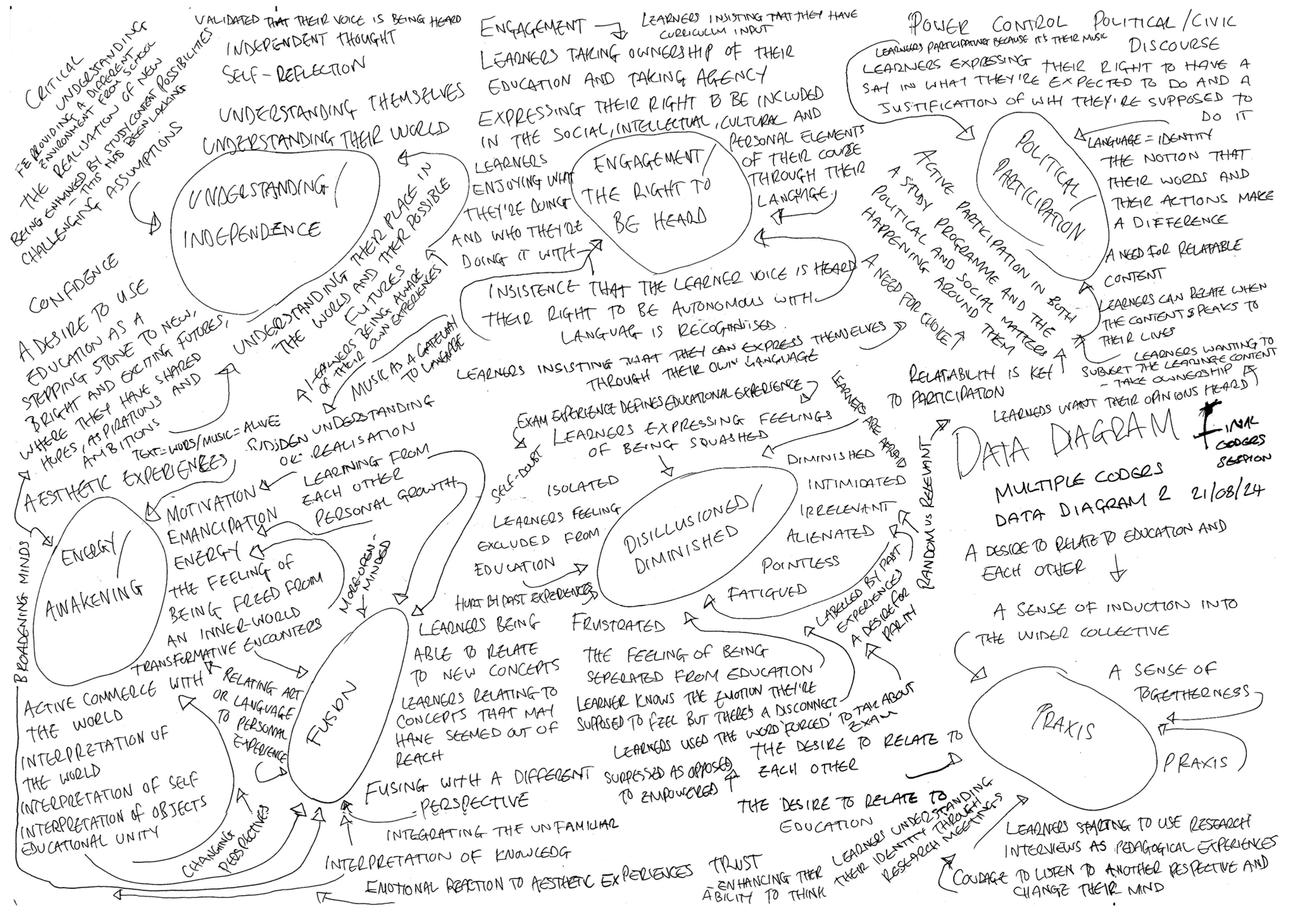
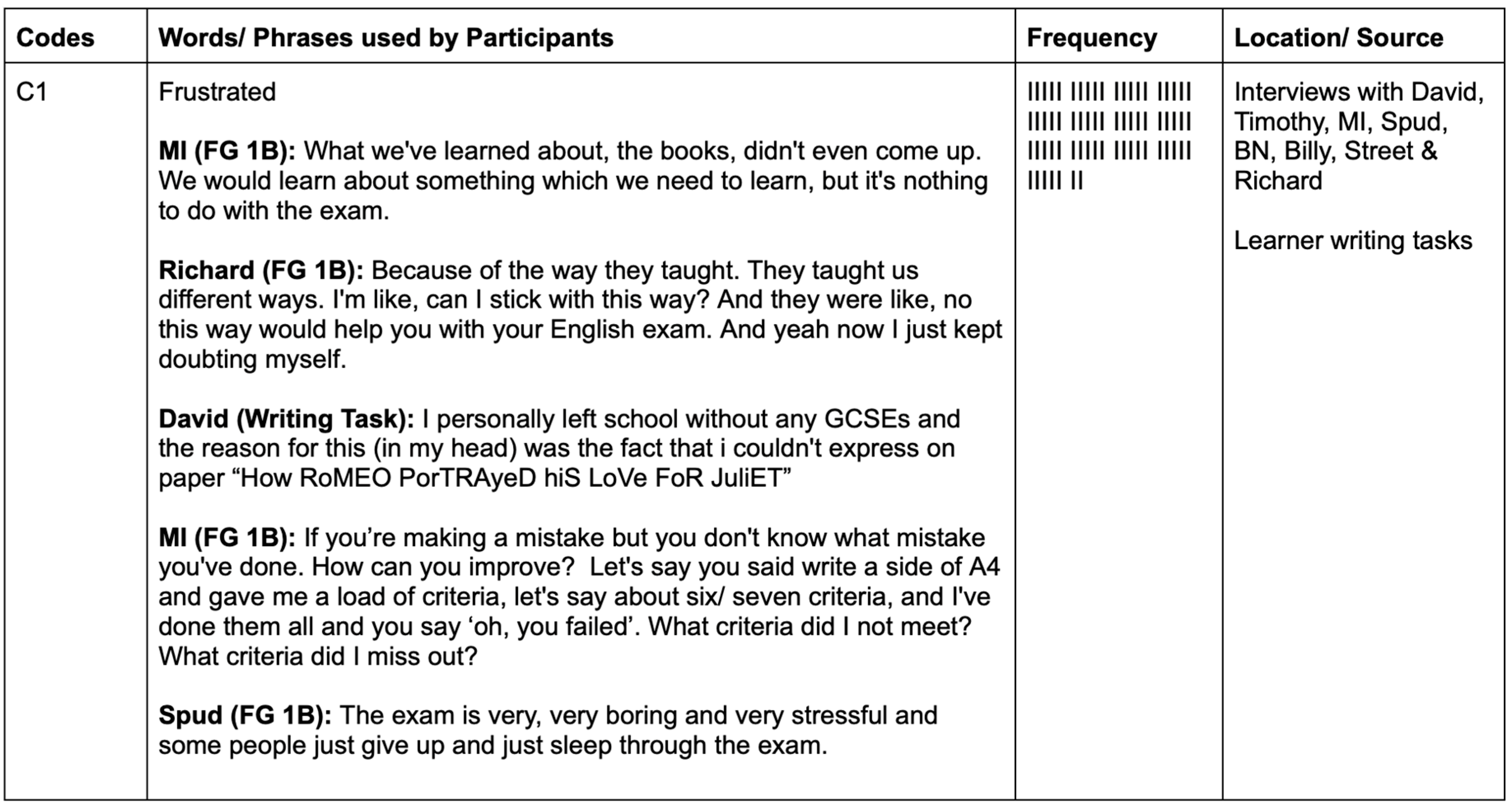
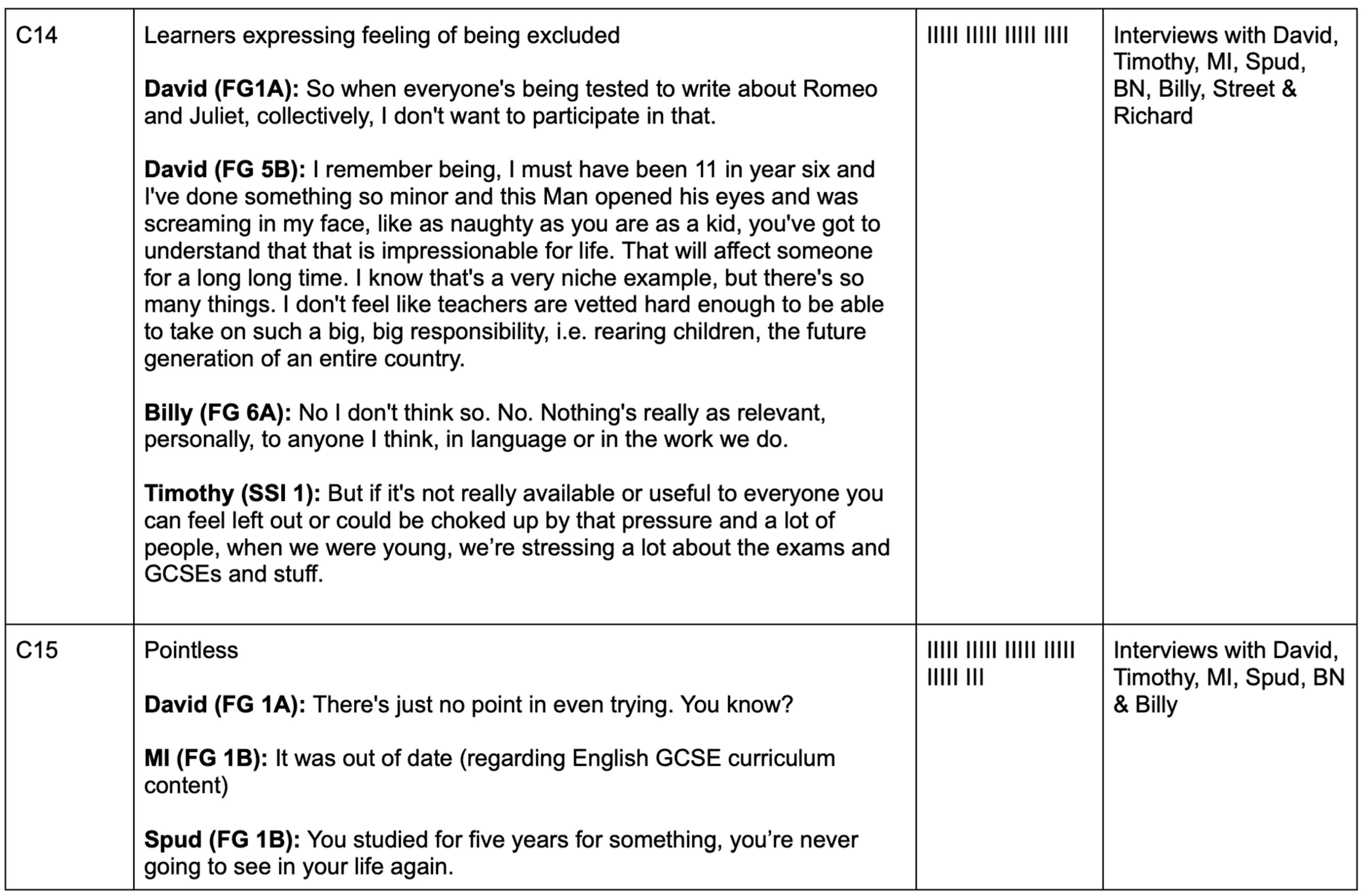
Considering the research paradigm set out above, data collected for this study focus on methods designed to bring the learner’s experience of studying language in FE and the learner’s voice more fully into the light. Therefore, methods consist of a combination of focus groups, semi-structured interviews, English language writing tasks, critical incident analysis, and an in-depth case study of one learner. The focus group meetings provide learners with an opportunity to collectively share their views on studying language in education and to discuss their past experiences. These meetings were always steered with some pre-prepared questions, but ultimately, followed their own natural path, as per the learners’ input. Semi-structured interviews followed a similar pattern with pre-prepared questions that started a conversation, which was often steered by the learner once an idea manifested. The difference here is that these interviews were with learners individually, allowing them to share ideas and/or experiences they may not feel ready or comfortable to share in a group setting. Both the focus group meetings and the semi-structured interviews were recorded and transcribed to allow for repeated and thorough thematic analysis of the data. This study’s approach to thematic analysis was informed by Braun and Clarke’s Reflexive Thematic Analysis model (Braun & Clarke, 2022), which offers a pragmatic and structured approach to analysing qualitative data sets. The outcomes of these discussions and the transcriptions were shared with two Multiple Coders, who helped me to find emerging codes, sub-themes, and themes from within the data. Collectively, we created a spider diagram (see Appendix A) of these codes and themes to provide a visual manifestation of the learners’ stories. Finally, a data frequency table (see Appendix B) was completed to keep track of how often each code or sub-theme emerges and to realise similarities and patterns from within the data sets. The data frequency table also assisted the data analysis process by informing how some codes were mentioned multiple times, and some codes were seldom mentioned. The table also contains examples of learners expressing the ideas related to each theme.
The English Language tasks provided a different method of analysing a learner’s evolving relationship with language, and how the way they use language may have differed when the source or the prompt they engaged with reflected their socio-cultural worlds. Although many of these tasks mirrored the GCSE curriculum/exam structure in what they ask learners to do, learners selected the text themselves and the aesthetic experience prompt was employed as a pedagogic intervention to bring the language task into its own unique living colour, reflecting the learners’ interests and their life outside of education. In practice, learners selected some form of literature to use: a film dialogue, a song, a specific set of lyrics from a song, or sometimes even an image. Although we also experimented with free-writing, more often, I asked the learner to carry out a writing task based on the literature of their own choosing (the aesthetic experience prompt) which incorporated skills synonymous with the English Language GCSE curriculum, analysing how the writer used language and evaluating how successful the writer was in achieving their intention, writing for purpose, creative writing, etc. Then, the learner and I would discuss their responses. The learners’ work was never graded; there was no right or wrong answer or response. There was a sense of freedom of expression and a direct link to the learners’ socio-cultural lives, their past experiences, and their aspirations for the future, through the learning material they had selected.
The results of the focus group meetings, semi-structured interviews, and English language writing tasks for one learner in this study, in particular, are discussed in detail in the next section of this article.
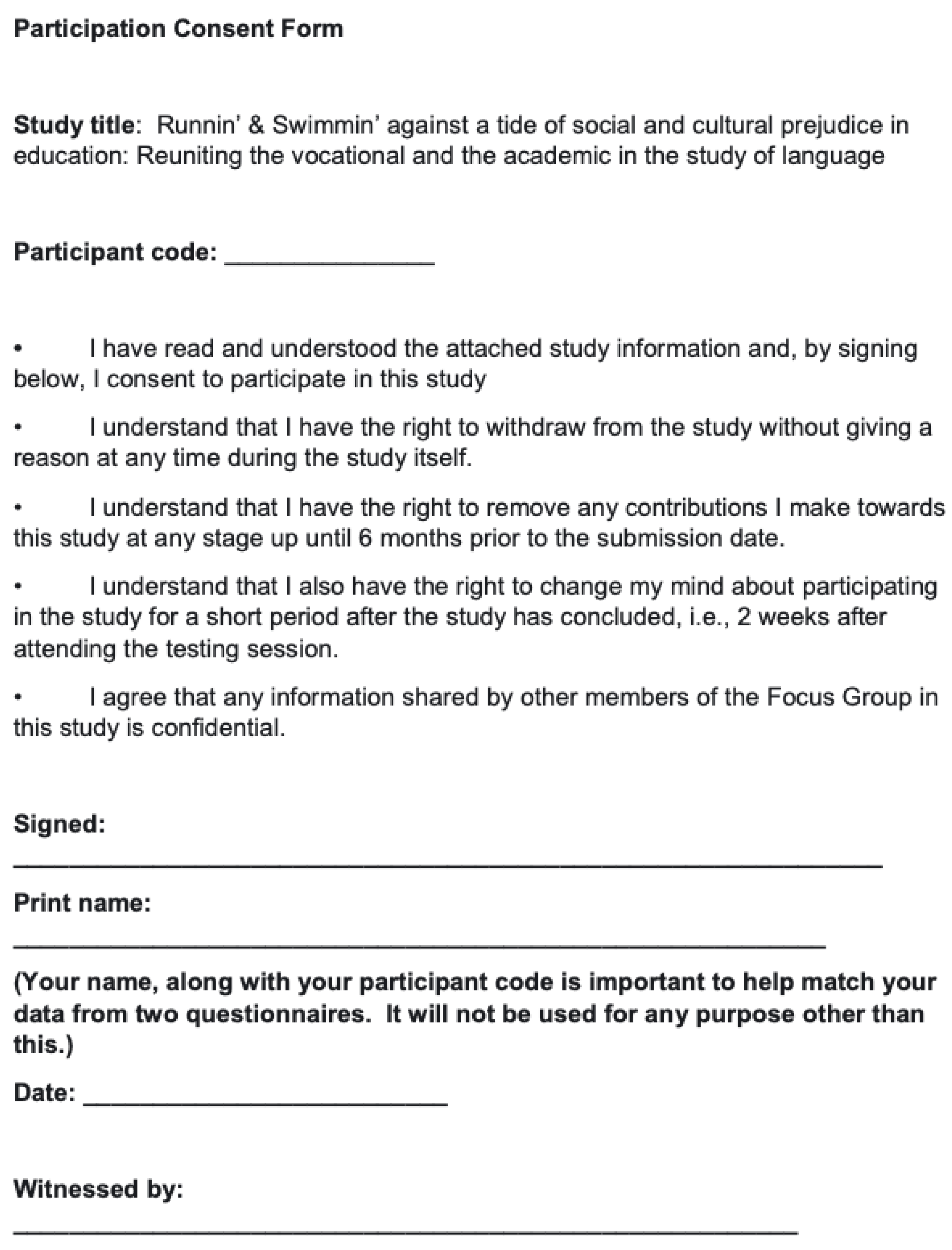
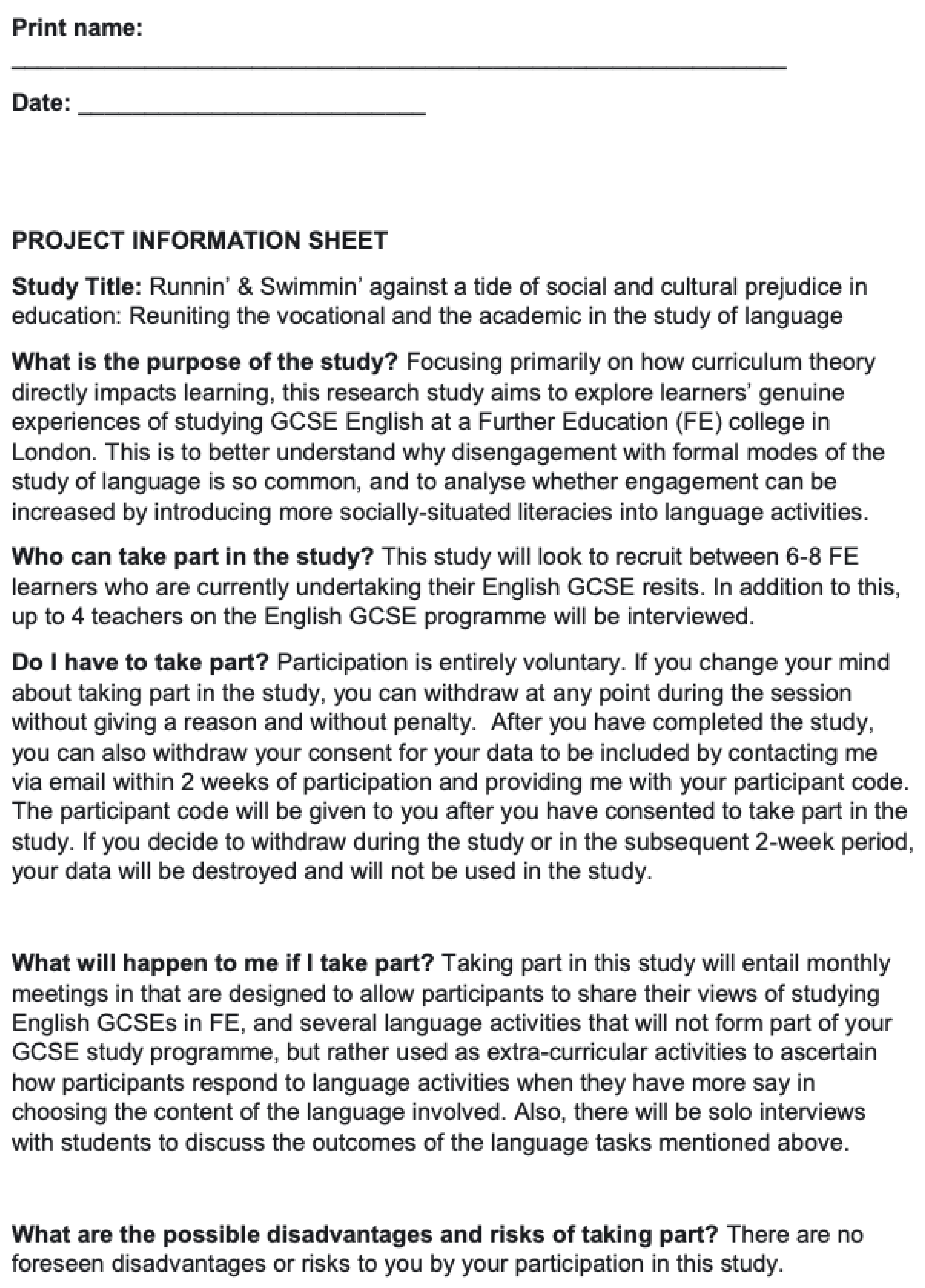
Although this article focuses solely on one learner, the total research population count for this research study was 11. As discussed previously, I included myself in this number as the researcher. For clarity and reassurance, all research methods were informed by the University of Sunderland’s robust ethics approval processes. This process included acquiring informed, written consent from all research participants. The Informed Consent form used for the purposes of this study (see Appendix C) included the details of the study, the participant’s right to leave the study at any time without needing to supply a reason, and who to contact if participants developed any concerns about their participation. I had access to this Study Programme and access to the learner participants through my employment at the college. Furthermore, the validity of the Informed Consent form and permission to conduct this study were approved by the University of Sunderland’s Ethics Committee on 1 November 2022 under Approval Code 011944, ensuring that this study strictly adhered to both national and international guidelines. The names used for participants in this article are pseudonyms, which were selected by the participants themselves. The research methods are also informed by the ways in which I addressed the ontological, epistemological and methodological questions, as set out above.
3. Results
As discussed in the previous section of this article, this study contained a total research population count of 11. However, in order to provide a detailed and thorough example of the challenges, successes, and the nuanced and unique experiences of the research population, an account of one learner’s participation is offered here. My rationale for selecting this particular learner is that experimentation with aesthetic experience led this learner into both emancipatory experiences of education and down unexpected paths, offering balance and showing how powerful this pedagogic intervention can be. The learner comments that give form to this section of the article are taken verbatim from focus group and semi-structured interview transcripts.
3.1. Past Experiences
David was a learner who came from one of the city’s more socio-economically disadvantaged boroughs. Upon entering this study, David reported having had negative experiences of studying English Language both in school and now, alongside his plumbing course, in FE. However, David was a curious learner, a deep thinker, and clearly has an interest in a range of different literacies, especially those he was able to feel a personal resonance with. He told me that he found it “easy to pull from” and write about the texts he engaged with in his personal life because “it’s relatable, it’s current.” In early interviews, David focused heavily on his past experiences and seemed to relate all of those negative experiences of studying language to his present-day English studies. When I asked David how he felt about studying English Language while at school, he replied, “You’re going to school to get it out of the way and then you go and live your normal day-to-day life”. The concept of a separation between a learner’s ‘school life’ and their ‘normal life’ was prevalent across all learner participants. Perhaps this in itself serves as an early reminder of how an education can quickly become an isolating and diminishing experience if the learning content fails to speak to the lives of the learner on a personal level. Dewey (2011) foregrounds that,
“The learning in school should be continuous with that out of school. There should be a free interplay between the two. This is possible only when there are numerous points of contact between the social interests of the one and of the other.”(Dewey 2011, p. 195)
To conclude the same interview, I asked all of the research participants to write down how their experiences of studying English Language throughout their education made them feel, so far. Others wrote down a word or two, including “Isolated”, “Pointless”, and even “discriminated against”. David wrote slightly more as he shared, “I personally left school without any GCSEs and the reason for this (in my head) was the fact that I couldn’t express on paper How RoMEO PorTRAyeD hiS LoVe FoR JuliET”. The interplay between capital and lower-case letters was purposely employed to demonstrate his feelings of disconnection and frustration. In a later interview, David returned to works by Shakespeare, seemingly seeing these works in particular as the epitome of his disconnection with language, as he shared how he felt that he had to “waffle about Romeo and Juliet and use personification and similes here, there and everywhere, when it’s not what’s in my head”, before going on to add that “…there’s just no point in even trying. You know?”
A breakthrough came with David in a later interview. In preparation for this interview, I had asked all research participants to bring with them an example of language they had recently engaged with and in which they had found some sense of meaning and/or enjoyment. Most participants came in ready to share lyrics from songs; David brought with him a book titled, “As a Man thinketh.” For David, this book had introduced him to new concepts. Concepts that held a personal interest for him and ideas that helped him to better understand his world around him and how he saw his place in that world. David shares,
“Well, I mean the book itself has educated me. I agree with that a hundred percent, but this isn’t what I was doing in school, my choice, this is by choice. Because I’ve had a personal piqued interest in this, so I’ve got the motivation and it’s not even an effort to want to read through this and learn the language or just read the book and learn what’s in it.”
This was the first instance of the word choice being mentioned with regard to study content. From here, the idea that there should be more choice, that autonomy in study content was crucial to access to a meaningful connection to a language education, was a recurring theme throughout the study. Furthermore, this element of choice and studying language in a way of their own choosing appealed to every learner participant in the study. Taking ownership of their language education through their own words, which spoke to their own socio-cultural worlds, was the catalyst for engaging with language in an educational setting.
Learning on a deeper level had been realised in this encounter. David’s account of his experiences of reading a chapter of a book he already owned—and probably would have read at some point anyway—may seem fairly insignificant. However, it is the fact that he could discuss the ideas he learned from this book in an educational setting with a teacher and his peers that changed everything for him. Suddenly, his language mattered. His voice mattered. He had concepts and thoughts to share. His peers would hear his words. They would comment on his thoughts, and he would listen to and comment on their thoughts. He might change his mind. They might change their minds. David was enthused to discuss language, to share this experience with me and with his peers, as he told me, “I’ve been amazed and I want to share this information now. Because I want to go and tell my friend, like, ‘Look, read this’”.
This opened up a new world for David. He engaged in language through reading constantly. He brought in new texts to discuss, new ideas and new thoughts to share at each meeting. David found that the most accessible language came to him through song. He brought in song lyrics to discuss and share with his peers, always enjoying the task of making links between the song lyrics and his own lived experiences. When discussing some lyrics written by the rap artist, Dave, David made the observation that, “The language used is language that we know, that we’re aware of and you can dissect and understand the meaning behind it. Yeah, 100%. You know, ironically the first comment on the video on YouTube is, ‘I’d rather study Dave than Shakespeare’. Someone said that!”
3.2. Critical Incident
From here, David’s relationship with language became more established, and he started to view language as something that was essential to him as a person, something innate that assisted him in navigating his world. He shared with me that, now, he felt, “Language is the foundation of everything that humanity does. Language is communication, expression, it’s how moments and memories are shared”. Importantly, David started to take a far greater interest in his language education, attending lessons more frequently and thinking on a deeper level about the types of literature he was asked to read and analyse.
By this time, I had come to expect that David (and other research participants) would bring interesting examples of language from their socio-cultural worlds with them to focus group meetings and semi-structured interviews, and that rich, meaningful discussions would naturally follow. However, the power of aesthetic experience and the subjective freedom which is so inherently connected to it, which had proved so beneficial and conducive to learning so far, showed me how aesthetic experience, so effective in rousing minds to life, could be used not only for good but also for twisting minds and thoughts with manipulative intentions.
This incident happened roughly halfway through the data collection process and took place in a small focus group meeting between myself, David, and another learner participant, Timothy. David asked to start this meeting as he was keen to share the text he had brought for discussion. I expected more song lyrics or ideas of inspiration and emancipation, as per David’s previous input, but this time, I was faced with ideas on, ‘The War on the West’. To my consternation, David had been watching YouTube videos and reading media snippets by right-wing commentator, Douglas Murray. The aspect of the content of the YouTube videos and media which interested David specifically was their insistence that British people should be proud of being British and stop apologising for the wrongdoings of the British Empire (Murray, 2022). David told us, according to what he had read, “We’re feeling guilty for stuff that happened years ago that we didn’t even do, like we weren’t there. It’s just what’s happened in civilization”. He went on to say that, “there seems to be this guilt on Western civilizations that we should be paying reprimands and we should hate ourselves…we’re teaching our kids to feel guilty for being what you’ve inherited and the problem with that is the West has done amazing things for the world. Britain was the first place to abolish slavery. But we’re the first ones apologising for it and things like that”.
David had not shown the slightest inclination to these sorts of ideas or ideologies before. In fact, quite the opposite, David had always shared ideas of empathy, understanding other people’s differing life experiences, and an openness to social progress. In this meeting, I was quickly beginning to understand that any kind of aesthetic experience could lead to accessing other aesthetic experiences; the architecture of discovery had at least two edges. I was the first to respond and, just as I would in any educational setting where potentially harmful ideas had been shared, I explained why such ideas and opinions may be hurtful to others, and I suggested further reading on the subject, looking at it from a different perspective. I shared some ideas opposing the views David had shared, and he listened carefully, acknowledging that what he had brought to the table for debate was a contentious matter. It is worthy noting how the freedom that roused a mind to life could also open up opportunities for less than virtuous ideas to creep in and twist the argument, especially when the sources appear educated and articulate. However, the important thing to remember here was that he brought these ideas to the meeting in the same spirit in which he had brought other ideas to previous meetings, for debate, discussion, and to share and shape his understanding with his peers.
I noted David’s behaviour after he had shared these ideas. He was not fixed, resolute, or unwilling to listen to opposing ideas. He was open, listening intently, and listening carefully, respecting other views. The other learner participant, Timothy, spoke next. It was December, and Timothy had been listening to the song ‘Happy Xmas (War is Over)’ by John Lennon and Yoko Ono. Timothy shared what he heard in the lyrics to this song, how he felt that the world had ignored the anti-war sentiments and, all this time later, we were still making the same mistakes. Again, David was listening carefully to Timothy and processing the ideas that were shared. Then, Timothy related his feelings about this song to the ideas shared previously by David, advocating for a more understanding world where we are able to more fully empathise with the experiences of others, even if we had not had those experiences ourselves. When Timothy finished speaking, David commented, “Timothy had his Christmas song which wouldn’t occur to him at any other time other than a time that war is going on which just took us into a whole entire conversation learning stuff from each other”.
The notion of learning from each other in focus group meetings was, by now, a key aspect of the research study and a frequently identified theme. Through this, we saw elements of the Pedagogic Right of Participation at play as the learners grew in confidence in sharing the literacies of their worlds, shaped their own pathways in our collective explorations of language, and, ultimately, realised their own voice in defining what they wanted their education to be. David, still deep in thought, went on to share,
“Yeah. I’m really appreciating this as a medium to express my views and take part in the research that you’re conducting and I genuinely believe that me and Timothy taking an interest in stuff and expressing our views and learning from all of human history, learning all of the information that we learned so on and so forth, this is new information being born because it’s current day perspectives. This is just happening. And the brains and the attitude and perspectives are changing naturally and my overall point is I do think about this stuff and comprehend it a lot but thinking in your head and just thinking about it is different to having a medium to express it because if I wanted to genuinely talk about this stuff that I’m interested in, this language but without touching on everything, I couldn’t just go to my friends and start pulling out philosophical conversation.”
David had engaged with the potentially harmful views of a right-wing political figure, and he had felt that he needed to explore those views more fully, to find out how he felt about the opinions he had engaged with. However, the safe space we had collectively created through a series of focus group meetings had provided David with a forum in which to share those views in an open space with his peers, without fear of judgment. David did not harbour these views in secret or share them only in an echo chamber where they would be safe from challenge. For David, to bring those views to this focus group meeting showed courage. After sharing his views, he listened thoughtfully and respectfully, first to my response, and then again through Timothy’s aesthetic experience in the form of the John Lennon and Yoko Ono song. Ultimately, by listening to Timothy and the differing perspective he shared, David exhibited courage once more in changing his mind.
This critical incident stands as an example of how aesthetic experience, when employed as a pedagogic intervention and mindfully facilitated, can enable education to serve learners as an emancipatory, democratising, mind-making, and mind-altering experience (Eisner, 2002). By feeling safe to share opinions and openly listen to the opinions of his peers, David saw the other side to the political argument that had seemed so logical when the meeting started. David changed his mind; this took courage, and it happened because he was open to personal growth. As a practitioner researcher, I witnessed democracy in education, in action.
3.3. Dynamic Prisms
The critical incident detailed above was a key moment in this study. Although unexpected, David’s sharing of the views he had been engaging with online, the discussion which followed, and how his opinions had changed through collective discovery, was an example of learners working in an educational environment where they had free access to Bernstein’s Pedagogic Rights. Both David and Timothy felt a sense of individual and collective Inclusion through the act of bringing their language into the meeting for discussion. Participation was present, as demonstrated by how both learners grasped new concepts, but the way they perceived these concepts changed as the meeting progressed. They were reimagining knowledge. Finally, the meeting ended with learners expressing a sense of Enhancement. David’s quote above mentions how he perceived the Focus Group meeting as a space to change his attitudes and perspectives through meaningful discussion with his peers.
David exhibited remarkable personal development throughout the study, as did the other research participants. As a final task, in the latter stages of data collection, I asked all learner participants to bring in an image or an album cover (as the study focused heavily on aesthetic experience through the medium of music) that represented how they felt about taking part in this study. Once again, David’s response was unexpected:
“The album cover I would compare my thoughts to would be Pink Floyds’ Dark Side of The Moon. This is because growing up in my adolescence I had never put any thought into language and would have considered it pretty linear, like the white light that enters the prism; used only to get a single message across to someone or communicate what you want and think. However, growing up and becoming more mature I have developed quite the interest in language and words. Language is the foundation of everything that humanity does. Language is communication, expression, it’s how moments and memories are shared, without language we would still be average primates. I have come to realise that language and the words that we use are actually what shapes our environment, relationships, and future”.
The personal growth and developmental journey that David undertook throughout this study was personified in this quote. For David, language was no longer a mundane, routine, and linear form of communication, a means to an end, the grey, formless line. Now, language is a dynamic, multi-coloured, ever-evolving tool which David could use to navigate his world, positively shape his environment and relationships, and express his aspirations for his future.
Although David’s relationship with language and what he shared throughout this study were all born of his own mind, it is important to note that it was through communication with others, through a sense of being a part of a wider collective, and through collaboration with his peers that light and energy entered David’s experiences of using language in education, in this way. This was Communitas (Bernstein, 1996) in action. Communitas is a unique sense of togetherness, understanding and collective growth. The feeling of enjoying what you are doing and who you are doing it with. Furthermore, Communitas is a key condition necessary for the Pedagogic Right of Inclusion to be enacted for our learners.
4. Discussion
Findings from this study suggest that embedding aesthetic experience in the study of language and in language acquisition and development activities can serve as a powerful pedagogic intervention. To widen the scope of current English Language GCSE curricula based on texts and language experiences of the teacher’s own choosing is well-meaning and effective to some extent, as demonstrated through the work of Ruddle (2024), mentioned previously. However, findings from this study show that for disillusioned learners to once again find a more meaningful engagement in and with the study of language, the literacies of their own socio-cultural worlds can play a crucial and pivotal role in the learning process. This is not an advocacy for the removal or erasure of any texts that are currently widely used in English Language education curricula, but rather an extension of that literature to ensure that all learners feel that their individuality and their own worlds are represented and included in language acquisition and development activities. In the context of this study, the authentic realisation of these learners’ Pedagogic Rights in practice manifested when learners read, analysed, and discussed the aesthetic experiences that spoke to them about their own lived experience.
The past experiences of these learner participants indicate that too often learners are asked to study language that comes from safe middle-class British ideals, a world distinctly different to the one in which our learners live, think, and speak. Well-meaning practitioners, education managers, and policy makers alike can redesign curricula in the name of modernisation or wider representation, but the stakeholders most ideally positioned in finding the types of literature that may most effectively engage learners in truly meaningful language education are the learners themselves. Findings from this study suggest that the learner voice must be given a more prominent role in language education to include the socio-cultural worlds currently out of sight and out of scope in language learning.
As discussed previously, findings from this study reveal how the use of aesthetic experience in the study of language and in language acquisition and development activities can serve as a powerful pedagogic intervention, but can also serve to position Bernstein’s (1996) Pedagogic Rights of Enhancement, Inclusion, and Participation at the front and centre of a learner’s experience of education. Furthermore, when the learners in this study had their Pedagogic Rights enacted in practice, this led to a realisation of Dewey’s Heightened Vitality through experience. Dewey (2005) defines Heightened Vitality as,
“Experience in the degree in which it is experience is heightened vitality. Instead of signifying being shut up within one’s own private feelings and sensations, it signifies active and alert commerce with the world; at its height it signifies complete interpenetration of self and the world of objects and events.”(Dewey 2005, p. 18)
This sense of Heightened Vitality, recognisable by how the learners emerged from their own worlds, into a new and exciting relationship with language education through active and alert commerce with the world and with each other, was prevalent in all learner participants who actively brought their own language into the learning process. Through this study, I have come to realise Dewey’s (2005) Heightened Vitality as the educational ideal. The lighting of a fire within the learner. Freedom of expression in a safe and fertile educational environment which respects, recognises, and foregrounds the notion that learning feels different to every student and the process of learning is an emotional experience.
As mentioned previously, every practitioner will have their own method of realising Bernstein’s (1996) Pedagogic Rights in practice. The intention of this study is not to present a sort of recipe for the effective enactment of learners’ rights. However, through the use of aesthetic experience in open and democratic learning environments, the enactment of a learner’s Pedagogical Rights followed naturally. This entails concepts of individual expression of experience leading to collective growth, the exploration of worlds, and the broadening of minds. These kinds of learning experiences, which aesthetic experience brought to the fore in this study, led directly to learners’ realising a sense of Dewey’s (2005) Heightened Vitality through experience, in their language education.
What is key here, and what aesthetic experience can bring to the surface, is the element of freedom of expression being active in language acquisition and development activities. Learner participants in this study reported finding their language education lacking in inspiration, routine, monotonous, and, in more serious cases, even discriminatory.
Of course, language education should be open to the lives of all learners, regardless of socio-cultural heritage; for a learner to have the opportunity to really exhibit their authentic grasp of language, this study reveals the need for more free interplay between the interests of the learner and the interests of the AB. There need be no dichotomy between the two. To move away from a ‘learn-by-numbers’ language education (which teaches learners how to repeat model answers in pen and paper exam situations but fails to explore what language actually means to each individual learner), this study advocates for a review of GCSE English Language formative assessment processes in FE. Exhibiting skill with language is an art form, and like any art form, this skill is much better suited to a project-based approach to assessment, as opposed to pen and paper exams, which learners in this study found to be restrictive, alienating, and traumatic. Furthermore, the embedding of arts-based activities through aesthetic experience should play a more prominent role in language acquisition and development activities, as well as in-year, ongoing formative assessment. To work towards that emancipatory experience of education mentioned earlier in this article, the learner must integrate their own literacies into learning and assessment processes. This can be achieved by asking learners to actively contribute to the formation of study material, instead of passively being asked to read texts which have little meaning to their lives outside of education. Learners offering the literacies of their socio-cultural worlds, literacies which may be called socially situated, to the learning process allows the educator to embed these literacies into language activities aligned with GCSE criteria, such as language analysis, evaluation of writer’s intentions, and interpreting language. Little imagination is needed to transfer current, commonplace language activities to align with new and different texts. The learners in the present study took a more central role in how their language education was presented to them, in practice.
It is prudent to mention at this stage that this is a study made up of a small sample size of learner participants, all of whom attended the same FE college in East London. Therefore, findings were based on the lived experiences of learners within this specific contextual situation. Despite this, the present study sets the foundation for future research, which would focus on using aesthetic experience in language education on a wider scale, encompassing learners from more diverse locations. Learner participants in this study were all learners who had not achieved a GCSE Grade 4 or above in previous attempts at GCSE English Language pen and paper assessments. Through taking part in this study and through the use of aesthetic experience, these learners exhibited a great deal of skill with language and, beyond that, made a meaningful connection with language that may well last a lifetime. What David’s story exhibited is Bernstein’s Pedagogic Rights in action and how, in the context of this study, this was achieved through the application of arts-based educational practices and Freire’s educational ideals of forging a pedagogy, not for but with the learner. Just as the Punk musicians of the 1960s and 1970s, the Beat Generation writers of the 1950s, and the Impressionist painters of the early 1860s did, these learners demonstrated that language education does not have to look and feel like it always had in the past. These learners and many like them found more freedom of expression in their language education, both conducive to learning and empowering. Freedom of expression in language acquisition and development activities provided these learners with an emancipatory experience of education. At some point, traditional ways of language teaching and assessment must be adapted to incorporate more diverse ways of learning.
5. Conclusions
To conclude this article, I want to make a final point on the importance of including the language of our learners in their language education. The way a learner speaks and thinks, the kinds of language they engage with through film, music, or in conversation with family and friends, all form a learner’s lived experience and sense of identity. When we exclude certain types of literacies from language learning, we are excluding not only the learner’s experience but also the learner themselves, as they are indirectly told that their experience and identity have no place in an English Language classroom. This means that we must never dismiss or diminish any form of socio-cultural or socially situated language or literacies that our learners offer us in the learning process. To do so would be to commit ‘symbolic violence’ (Bourdieu & Passeron, 1977) and would add to the harm and diminishment that many GCSE English Language re-sit students have already experienced through language acquisition and development activities in their education. Every linguistic contribution a learner makes may be the one which sparks their imagination and brings them into a new life full of enriching language experiences both in and outside of education. This language is alive within their own lived experience and has untapped potential in helping the learner to find a meaningful and life-affirming relationship with language and the world they live in.
As mentioned in the first part of this article, history continually and consistently rejects the notion of change until, finally, change rejects history. By enacting Bernstein’s Pedagogic Rights in practice, we are bringing the fundamental elements of education of Enhancement, Inclusion, and Participation into our learners’ experience, and in this way, we can reject what we have come to see as historic but unfortunate ‘norms’ in education move forward into positive and meaningful change.
Funding
This research received no external funding.
Institutional Review Board Statement
The study was conducted in accordance with the Declaration of Helsinki, and approved by the Ethics Committee of The University of Sunderland (approval code 011944, 1 November 2022).
Informed Consent Statement
Informed consent was obtained from all subjects involved in the study.
Data Availability Statement
The data presented in this study are available on request from the corresponding author due to respect for the participants privacy.
Conflicts of Interest
The author declares no conflict of interest.
Appendix A
Figure A1.
Spider diagram containing codes, sub-themes, and themes from the data sets.
Appendix B
Figure A2.
Sample pages from the Data Frequency Table.
Appendix C. Research Information and Consent Form Example
Figure A3.
Informed Consent Form.
References
- Barone, T., & Eisner, E. W. (2012). Arts based research. Sage. [Google Scholar]
- Bassey, M. (1998, August 27–30). Fuzzy generalisations: An approach to building educational theory. British Educational Research Association Annual Conference, The Queen’s University of Belfast, Belfast, Northern Ireland. [Google Scholar]
- Bernstein, B. (1996). Pedagogy, symbolic control and identity. Taylor & Francis Ltd. [Google Scholar]
- Booth, R. (2021). Oh my days: Linguists lament slang ban in London school. The Guardian. Available online: https://www.theguardian.com/education/2021/sep/30/oh-my-days-linguists-lament-slang-ban-in-london-school?CMP=fb_gu&utm_medium=Social&utm_source=Facebook&fbclid=IwAR24WJQdVPn6k3MpfZfWIKOgSeUb6SsBn5dtQPrrplAm515-Qqw1xYo38ls#Echobox=1633018648 (accessed on 20 September 2025).
- Bourdieu, P., & Passeron, J. C. (1977). Reproduction in education, society and culture. Sage. [Google Scholar]
- Braun, V., & Clarke, V. (2022). Thematic analysis: A practical guide. Sage. [Google Scholar]
- Camden, B. (2025). GCSE resits 2025: English and maths pass rates stable amid entries surge. FE Week. Available online: https://feweek.co.uk/gcse-resits-2025-english-and-maths-pass-rates-stable-amid-entries-surge/ (accessed on 20 September 2025).
- Dewey, J. (2005). Art as experience. The Berkeley Publishing Group. [Google Scholar]
- Dewey, J. (2011). Democracy and education. Simon & Brown. [Google Scholar]
- Dunne, J. (2005). Philosophy of education. Routledge. [Google Scholar]
- Eisner, E. W. (2002). The arts and the creation of mind. Yale University Press. [Google Scholar]
- Freire, P. (1970). Pedagogy of the oppressed. Continuum. [Google Scholar]
- Gadamer, H. G. (2014). Truth and method. Bloomsbury Academic. [Google Scholar]
- Hussain, A. (2025). Ticking the box: FE learners’ and lecturers’ lived experiences of GCSE English re-sits [Ph.D. thesis, University of Sunderland]. [Google Scholar]
- Jones, D. (2021). Twitter. Available online: https://mobile.twitter.com/digbylj/status/1421164856527437825?lang=en (accessed on 20 September 2025).
- Locke, T. (2015). Developing writing teachers. Routledge. [Google Scholar]
- Murray, D. (2022). The war on the west. Harper Collins. [Google Scholar]
- Ruddle, M. (2024). Co-curating the curriculum with GCSE English re-sit students. FE Week. Available online: https://feweek.co.uk/co-curating-the-curriculum-with-gcse-english-re-sit-students/ (accessed on 25 June 2024).
- Scott, D., & Usher, R. (1996). Understanding educational research. Routledge. [Google Scholar]
- Tully, J. (2019). Record-breaking $110.7 M. Monet painting leads Sotheby’s imp-mod sale to robust $349.9 M. finish. Art News. Available online: https://www.artnews.com/art-news/market/sothebys-imp-mod-monet-meules-record-12563/ (accessed on 15 August 2025).
- Ward, E. O. (1969). The stooges. The Rolling Stone. Available online: https://www.rollingstone.com/music/music-album-reviews/the-stooges-180002/ (accessed on 15 September 2025).
- Zimmerman, J. (2015). Hermeneutics: A very short introduction. Available online: https://www.youtube.com/watch?v=6wPTV5hyB0Y (accessed on 30 July 2025).
Disclaimer/Publisher’s Note: The statements, opinions and data contained in all publications are solely those of the individual author(s) and contributor(s) and not of MDPI and/or the editor(s). MDPI and/or the editor(s) disclaim responsibility for any injury to people or property resulting from any ideas, methods, instructions or products referred to in the content. |
© 2026 by the author. Licensee MDPI, Basel, Switzerland. This article is an open access article distributed under the terms and conditions of the Creative Commons Attribution (CC BY) license.