


Article

From Framework to Practice: A Study of Positive Behaviour Supports Implementation in Swedish Compulsory Schools

Department of Education, Mid Sweden University, 85170 Sundsvall, Sweden
*
Author to whom correspondence should be addressed.
Educ. Sci. 2025, 15(12), 1621; https://doi.org/10.3390/educsci15121621
Submission received: 17 October 2025 / Revised: 27 November 2025 / Accepted: 28 November 2025 / Published: 2 December 2025

Abstract

Improving the social environment conducive to learning in schools is a critical challenge globally and within the Swedish context, as education systems face persistent issues like a lack of classroom safety and a concurrent crisis in teacher well-being and professional leadership. Therefore, various intervention frameworks are implemented to address the issue. This study investigated how two Swedish compulsory schools implemented the Positive Behaviour Supports (PBS) framework. By combining classroom observations and teacher interviews, the research addresses a gap in existing research that often provides an incomplete view of actual practices. The results, based on observations and interviews with 14 staff members, confirmed that PBS successfully creates a calm and predictable school climate. Teachers consistently maintained a calm demeanour and used clear lesson structures, along with positive feedback. However, the study also revealed a significant gap between the intended proactive nature of PBS and the observed reactive behaviours of teachers. While the framework fostered a shared, collaborative approach among staff, it was inconsistently applied when it came to proactive strategies, such as explicitly teaching social and life skills. The results suggest that future professional development should focus on helping teachers shift from a reactive to a more consistently proactive and positive model of behavioural support.

1. Introduction

Improving the social environment conducive to learning in schools is a critical worldwide challenge (Cahu & Quota, 2019). Contemporary education systems, including those in the Swedish context, face interconnected issues of persistent classroom safety concerns and a crisis in teacher well-being (OECD, 2024). A recent report from the Swedish Schools Inspectorate confirmed that, despite a government mandate for early intervention, students often do not receive the support they are entitled to, and many schools lack sufficient access to student health services (Skolinspektionen, 2024; Skolverket, 2025).
This systemic failure leaves teachers to navigate complex classroom behaviours without adequate resources (Dabrowski et al., 2025; Welton-Mitchell et al., 2025). This instability creates a negative feedback loop: a lack of a social environment conducive to learning contributes to teacher burnout, which, in turn, exacerbates the negative environment. This situation has a detrimental impact on student academic success and engagement (Kuvvetli et al., 2023). In response to these challenges, educational systems seek preventative solutions such as PBS. The PBS framework is defined as a universal, school-wide prevention framework designed to reduce behaviour problems and enhance the learning environment for both students and staff (Horner & Sugai, 2015). Classroom-level PBS is particularly important because students spend the majority of their time in this setting (Oliver et al., 2019).
While the PBS framework is empirically supported, a critical methodological gap persists in the research literature. Much existing research relies heavily on teacher interviews or surveys (Abou Zaid, 2024). While valuable for assessing outcomes, these methods solely fail to capture the nuanced, moment-to-moment dynamics of the classroom (Creswell & Plano Clark, 2017). A change in student behaviour indicates what happened, but not the specific teaching practice or causal mechanism that generated that change (Danermark et al., 2019). This reliance on summative data obscures the essential causal mechanisms—the specific, consistent actions and interactions—central to the framework’s success. Without this granular understanding, it is impossible to determine which specific components of the PBS framework are being implemented consistently, how they are working, and why they are effective.
To fill this methodological void, classroom observation offers a powerful and indispensable research method. This technique provides the most direct data on a teacher’s instructional practices and is considered the gold standard for assessing the quality and consistency of teaching (Klette, 2023; Wragg, 1999). By triangulating this observed data with qualitative teacher interviews (Oliver-Hoyo & Allen, 2006), the CR framework allows us to analyze the three domains of reality simultaneously by, establishing the Empirical reality (observed consistency), exploring the Actual reality (teacher perceptions), and identifying the underlying Real mechanisms (habits, policies) that cause alignment or divergence between belief and practice (Danermark et al., 2019).
This research is important because it provides a granular, evidence-based model for implementing the PBS framework in the Swedish educational system, suggesting a profound need to bridge the gap between policy mandates and on-the-ground reality.

2. Purpose and Research Questions

This study aims to investigate the implementation of the PBS framework within a classroom setting by using direct observation of PBS implementation in Swedish compulsory schools and teacher interviews. Specifically, the study aims to identify the specific teaching practices and interactional processes that influence the fidelity of PBS implementation and contribute to a safe, productive social environment. The following questions will be answered:
-
RQ 1. What is the prevalence and nature of PBS principles as implemented in two Swedish classrooms?
-
RQ 2. How do staff perceive PBS implementation and its reported benefits and challenges?
-
RQ 3. How does classroom PBS implementation align with staff perceptions and experiences?
The results of this study are expected to provide actionable insights for Swedish schools and policymakers, offering a clear view of the specific, day-to-day practices that contribute to a positive school climate. The findings are interpreted through a CR lens, which allows for the identification of the underlying mechanisms that explain the alignment and divergence between teachers’ beliefs and their observed classroom practices, which can ultimately contribute to enhancing teacher well-being and professional efficacy.

3. What Is the PBS Framework, and Why Is It Relevant?

This section first defines the core principles of the Positive Behavior Support (PBS) framework and then clarifies its specific relevance as the subject of the current study.

3.1. What the PBS Framework

Positive Behavior Support (PBS) is accurately described as a comprehensive, function-based framework for understanding and addressing challenging behavior (Freeman et al., 2009; Sugai et al., 2000). The PBS framework has emerged as a significant, evidence-based approach for addressing school challenges by proactively reducing disruptive and disordered behaviour. Its effectiveness is rooted in a shift from reactive punishment to proactive instruction and positive reinforcement.
PBS is fundamentally rooted in the science of applied behavior analysis (ABA), but is distinctly characterized by its holistic, person-centered approach and consideration of context (Horner et al., 2025). The foundational principles guiding the application of PBS include, behavioral Science (Functional Assessment) and lifestyle change and Quality of Life (Reinke et al., 2013). Interventions are organized across three tiers: primary (universal supports), secondary (targeted supports), and tertiary (intensive, individualized supports). Interventions must, therefore, involve modifying the environment, altering antecedents (events that precede the behavior), and teaching replacement skills, rather than focusing solely on the individual in isolation (Sugai et al., 2000).
The use of praise, rewards, and positive feedback is a powerful tool for promoting appropriate behaviour (Caldarella et al., 2015). For example, a teacher who increases their ratio of positive-to-negative interactions can significantly reduce disruptive behaviour and boost student engagement (Cook et al., 2017). Teachers who implement structured frameworks have been observed to increase their praise rates and decrease reprimands, leading to improved student on-task behaviour (Caldarella et al., 2015; Van Camp et al., 2021; Wills et al., 2014). Teachers must establish and maintain clear expectations and structures. Dwarika (2019) observed that teachers who co-constructed rules with students saw students internalize these rules, reducing the need for constant teacher prompting. Clear expectations and structured routines are crucial components of effective implementation.

3.2. Relevance to the Study (Why PBS?)

The classroom is the location where students spend the majority of their time (Oliver et al., 2019). Research consistently shows that what teachers do in their classrooms directly impacts the learning environment and student outcomes (Caldarella et al., 2015; Cook et al., 2017; Lau et al., 2019; Van Camp et al., 2021). Reinke et al. (2013) found a gap between school-wide expectations and a teacher’s consistent application of strategies, such as frequent praise and low reprimands. This suggests that while a school may adopt a high-fidelity PBS framework, a teacher’s direct, moment-to-moment actions in their classroom are what truly influence student behaviour.
Ultimately, the goal of observing teacher behaviour within the PBS framework is to understand and improve the instructional ecology of schools (Algozzine & Algozzine, 2007). By documenting how teachers apply PBS principles—from using specific praise to managing classroom materials—we can identify areas for professional development and provide the ongoing support necessary to help teachers create a positive learning environment that encourages all students to be active, on-task participants in their education (Sailor et al., 2009).

4. Previous Research

This section reviews prior studies that focus on the observation of Positive Behaviour Supports (PBS) in classrooms, which directly inform this study’s investigation into the consistency of teacher implementation (RQ 3). The body of research consistently highlights how teacher actions directly influence the classroom environment, student behaviour, and academic engagement.
Effective PBS implementation hinges on how teachers structure the classroom environment and utilize learning materials. Teachers’ actions in this domain extend beyond their own classrooms, contributing to the overall school climate (Bohanon et al., 2006). This is crucial, as students spend most of their time in the classroom (Oliver et al., 2019). Dwarika (2019) observed that South African teachers employed differentiated activities (like workbooks and group work) to cater to diverse learner needs. This proactive environmental structuring supports engagement and reduces behavioural issues.
In contrast, Lau et al. (2019) found that while most Singaporean teachers maintained good traffic flow, fewer had clearly labelled and organized materials—a key element of classroom structure. This lack of organization correlated with higher rates of disruptive behaviours and lower academic engagement. A core aspect of PBS is how teachers establish and maintain rules, and critically, their interaction style. Dwarika (2019) observed that co-constructing rules with learners led to students internalizing expectations. Reinke et al. (2013) also noted that most teachers had clear, positively stated rules posted. However, a significant body of research indicates that the most impactful teacher action is the ratio of positive to negative interactions. Cook et al. (2017) demonstrated that increased positive interactions led to a significant decrease in disruptive behaviour. Similarly, Caldarella et al. (2015) and Van Camp et al. (2021) found that teachers’ implementation of the PBS-inspired intervention (Class-Wide Function-Related Intervention Teams, CW-FIT) resulted in a substantial increase in praise and a reduction in reprimands.
Conversely, Lau et al. (2019) observed that Singaporean teachers’ use of praise was very low while their rate of reprimands was high, which was directly correlated with frequent disruptive behaviours. Teachers’ use of specific PBS strategies directly impacts students’ behaviour and social skills. The use of praise, rewards, and tokens was identified as a highly effective strategy (Dwarika, 2019). The implementation of structured PBS frameworks has consistently been observed to improve student on-task behaviour and classroom engagement (Caldarella et al., 2015; Wills et al., 2014). Algozzine and Algozzine (2007) found that students in classrooms using a school-wide PBS framework were more likely to raise their hands and pay attention. Rusby et al. (2011) extended these results, observing that positive attention in common areas also contributed to improved student behaviour.
Overall, the observed actions of teachers shape the entire classroom environment. Studies confirm that when teachers implement a school-wide or classroom management framework, it significantly improves the overall classroom environment and leads to a greater use of positive strategies, such as praise (Bohanon et al., 2006; Oliver et al., 2019).
However, Reinke et al. (2013) found a “disparity between school-wide and classroom-level practices,” suggesting that while schools may have a PBS framework, teachers do not always implement key PBS strategies consistently. These observations underscore the vital role of teachers’ consistent and accurate application of PBS principles, particularly the proactive structuring of the environment and maintaining a high ratio of positive-to-negative interactions as the crucial factor directly influencing student behaviour, reducing disruption, and improving academic engagement.

5. Theoretical Framework

This study adopts a critical realist (CR) framework to understand the implementation of the PBS framework, moving beyond a simple description of observable practice to explore the underlying mechanisms that shape it.
Critical realism (CR) is a philosophy of science that suggests a world made up of three connected domains: the Empirical (experiences and observations), the Actual (events and their outcomes), and the Real (underlying structures, mechanisms, and causal powers) (Bhaskar, 2008; Danermark et al., 2019). Applying this framework to PBS framework implementation allows us to address a gap identified in the literature, which often focuses only on the Empirical domain (e.g., survey results, reported outcomes). By combining classroom observations (the Empirical domain) with teacher interviews (exploring experiences in the Actual domain), this research aims to identify the Real mechanisms—such as deeply ingrained teacher habits, cultural expectations of “good” classroom management, and school-level policies—that ultimately cause the observed successes and inconsistencies in PBS framework practice.
This CR approach is essential for understanding why a well-designed framework like PBS might be implemented differently across various classrooms, allowing for more targeted and effective professional development. According to critical realism, the use of quantitative data to identify empirical patterns is the first step in research, providing a surface-level view of social phenomena (Bhaskar, 1979). The qualitative analysis of interviews and field notes allows researchers to uncover the generative mechanisms, such as underlying beliefs and contextual factors, that influence observed behaviours, thereby aligning with the CR goal of explaining the “why” behind the “what” (Danermark et al., 2019).

6. Methodology

This methodology section outlines a structured approach to conducting and analysing the classroom observations and the interviews, integrating established frameworks and validation strategies.

6.1. Design

The data analysis process was guided by a combination of quantitative summarization and qualitative interpretation, allowing for a comprehensive understanding of PBS implementation in the 2025 academic year.

6.1.1. Data Collections

The purpose of this study was to observe and document teachers’ use of PBS strategies in schools. Data was collected during the spring of 2025, at the end of the third year of a five-year project. The research was conducted in two separate schools, identified as School 1 and School 2.
A total of 26 lessons, comprising approximately 23 h of observation, were conducted across the two schools (Table 1). In-class observations utilized a structured observation protocol and focused on documenting teacher interactions with the student (what the staff are doing) and the implementation of PBS principles (Table A1). This data provided direct insight into the specific actions teachers took to manage classroom behaviour, including their use of praise, rewards, corrective statements, and overall classroom management strategies.
To supplement the observational data, interviews were conducted with teachers to provide a deeper understanding of PBS implementation. This study involved 14 staff members across both schools. In School 1, 10 teachers participated in 10 interviews, and in School 2, 4 teachers were interviewed in 3 interviews, for a total of 13 interviews with 14 staff members (Table 1). Each interview took between 15 and 45 min. The interview process utilized a semi-structured format. This format allowed for a guide based on research questions while remaining flexible enough to follow up on emergent topics of interest. In total, the transcribed interview data consists of 4 h and 9 min of interview time, resulting in 149 A4 pages of transcribed material. These interviews explored teachers’ reflections on their use of PBS, offering contextual insights into the observed behaviours and contributing to the thematic interpretation of the data. For anonymity, individual staff members are designated using the notation S1–S14 throughout the results section.

6.1.2. Data Analysis

All completed observation protocols were first reviewed and quantitatively summarized to identify patterns in instructional behaviour, student engagement, and interaction types. Frequencies and distributions of observed categories were calculated to provide an overview of recurring classroom phenomena (see Table A1). This step enabled the identification of dominant practices and outliers across the observed sessions. The data included separate, reflective ‘field notes’ and their role in supporting the interpretation of the observations. These notes provided insights into classroom dynamics that were not fully captured by the structured observation tool, such as tone, atmosphere, and spontaneous interactions. The integration of field notes into the thematic analysis enhanced the depth and credibility of the results (Loughland, 2019).
Following the quantitative overview, the data were subjected to thematic analysis (Braun & Clarke, 2006), a method well suited for identifying and interpreting patterns within qualitative data. The analysis followed a six-phase process: (1) familiarization with the data, (2) generation of initial codes, (3) searching for themes, (4) reviewing themes, (5) defining and naming themes, and (6) producing the report. This approach enabled both inductive and deductive coding, ensuring that emergent themes were grounded in the data while also aligning with the study’s theoretical framework. These interviews explored teachers’ reflections on their use of PBS, offering contextual insights into the observed behaviours and contributing to the thematic interpretation of the data. The integration of two distinct empirical sources—structured classroom observations with field notes, and interviews proved essential for achieving a good understanding of PBS implementation.
Each data type provided unique insights: observations documented behavioural patterns, field notes added contextual depth, and interviews uncovered underlying intentions and reflections. This reflection-practice gap is a key insight that a Critical Realism perspective can explain: the generative mechanisms (teachers’ intentions) are not always fully or consistently realized in practice due to various contextual constraints within the social structure (Bhaskar, 2008). Together, they strengthened the validity of the results and enabled a richer interpretation of the complex classroom dynamic
To ensure analytical rigor, coding was conducted iteratively and collaboratively between the two researchers. Discrepancies in interpretation were discussed and resolved through peer debriefing, and themes were refined to ensure internal coherence and distinctiveness. This process contributed to the trustworthiness of the analysis, addressing criteria such as credibility, dependability, and confirmability (Lincoln & Guba, 1985). Triangulation is used to highlight the congruence between observed behaviours and the participants’ reported experiences and to identify key areas for further development. This approach was used to establish the trustworthiness of the analysis, particularly its credibility and confirmability.

7. Ethical Considerations

This study was conducted with a strong commitment to ethical integrity, particularly in safeguarding the well-being of all participants. As emphasized by Guillemin and Heggen (2012), researchers must critically assess the potential consequences of their inquiries, especially when working with vulnerable populations. Given that the study involved interviews with children aged 9 to 15, a formal ethical review was deemed necessary and was subsequently approved by the Swedish Ethics Review Authority (Ref. Dnr 2024-07334-01).
The ethical review was essential due to the possibility that participants might disclose sensitive personal experiences or encounter emotionally charged topics during the interviews (Allmark et al., 2009). Accordingly, the study design incorporated careful attention to issues of voluntariness, confidentiality, and non-exploitation, in line with the principle that research involving human subjects must avoid causing harm.
Prior to the commencement of classroom observations, researchers visited participating classes to verbally inform both teachers and pupils about the study’s objectives and procedures. Subsequently, all teachers, pupils, and guardians received a written information letter outlining the study’s purpose and implementation, along with a consent form. Written consent was obtained from all participating teachers and from the guardians of all pupils involved in the study.

8. Results

This section presents the study’s results in relation to the research questions. The results are first presented through a succinct overview, followed by the detailed quantitative and thematic analysis of the classroom observations and interview data.
Overall, the results confirm that the PBS framework is effective in establishing a foundational calm and predictable learning environment (RQ1). However, a significant finding is the key divergence between staff’s strong commitment to a proactive, positive approach (RQ2) and the observed tendency towards reactive behavioral correction in the classroom (RQ3).
This section presents a concise overview of the results, detailing them in relation to the research questions and integrating findings from structured classroom observations and teacher interviews. The first RQ, focusing on the prevalence and nature of PBS principles in practice, is addressed by data from the structured classroom observations, which provide data for the Empirical domain (observed events). The second RQ, concerning staff perceptions and reported benefits, is directly addressed by the thematic analysis of the interviews, which explores the Actual domain (experiences and beliefs). The third RQ, addressing alignment between belief and practice, is answered by the triangulated results, which compare these domains to identify the underlying Real mechanisms of success or divergence. The results are presented in a quantitative summary and a thematic analysis, integrating these sources to provide a richer, theoretically grounded understanding of PBS implementation.

8.1. Classroom Observations

To answer the first research question, regarding the prevalence and nature of PBS principles as implemented in the classroom (the Empirical domain), in-class observations documented teacher interactions and the implementation of PBS strategies. Data was first quantified to identify patterns in instructional behaviour and interaction types. Subsequently, a thematic analysis (Braun & Clarke, 2006) was conducted to interpret these quantitative patterns qualitatively, linking the observed Empirical data to the potential Real mechanisms that generate them.
As outlined in Table 1, the distribution of observations varied between the two research sites. School 1, with its larger number of observed lessons, provided a more extensive dataset for analysis. The quantitative analysis of 26 classroom observations revealed a consistent application of foundational PBS principles, particularly concerning lesson structure and behavioural expectations. Key results are summarised in Table 2, providing a clear numerical representation of the prevalence of various practices.

8.1.1. The Quantitative Analysis of Observations

The quantitative analysis revealed several key patterns:
  • Teaching Materials: Books were the most commonly used teaching aids, used in 13 of 26 lessons. In contrast, digital tools like smartboards and projectors, although available in all classrooms, were used in only five lessons. While descriptive, this provides context on the prevailing pedagogical environment, suggesting a reliance on traditional methods that may impact the adoption of technology-supported PBS strategies.
  • Lesson Structure: All 26 lessons had a clear and predictable structure, with a distinct beginning, clear goals, and a conclusion. Instructions were particularly clear in 6 of the 26 lessons, enabling students to follow expectations with minimal prompting from the teacher.
Physical Environment and Rules: In 11 classrooms, behaviour rules were posted on the board in front of the students, with 9 of them strategically placed near the door. However, in 7 of the 26 observations, students could not always see the rules, as they were either absent or located behind the students. It is evident that practices such as clear rules, active supervision, and opportunities for student engagement are consistently present. However, the integration of life skills and the use of separate spaces for self-regulation occur less frequently.
The quantitative analysis of the observation protocols also revealed a critical pattern concerning the core PBS principle of proactive support. The data showed that a high frequency of teacher-initiated interactions was directed at correcting student behaviour rather than providing proactive praise. Corrective statements, such as “Please be quiet” or “Stop that,” occurred more frequently than positive reinforcements. This pattern was consistent across both schools, indicating a prevailing reactive approach to classroom management. This finding, derived from the Empirical domain, provides quantitative evidence for the Divergence finding (RQ3), suggesting that the intended proactive generative mechanism of PBS is being countered by underlying pressures or established habits.

8.1.2. Thematic Analysis of the Observations

The thematic analysis of the data identified three main themes that interpret the quantitative results, shedding light on the nature of PBS implementation in the Empirical domain (RQ1): The Proactive and Consistent Teacher, The Balance Between Tradition and Innovation, and Pathways to Behavioural Integration (Table A2). These themes serve as initial hypotheses for the Real mechanisms driving the observed behaviours.
The Proactive and Consistent Teacher
This theme captures the observed success of PBS in establishing a stable structure. Teachers consistently demonstrated a calm demeanour and delivered clear instructions. This consistent behaviour, observed in 100% of lessons, acts as a functional generative mechanism of the PBS framework, successfully creating the Actual event of a safe and predictable learning environment (as later confirmed by the interviews). The high rate of active supervision (moving, scanning) and positive feedback (96% of lessons) reinforces this theme.
The Balance Between Tradition and Innovation
This theme interprets the tension between established teaching practices (the potential, Real mechanism of traditional habit) and the technical capacity for implementing modern PBS. The reliance on traditional materials (50% use of books vs. 26% use of digital tools) suggests that structural constraints or teacher preference may act as a counter-mechanism that limits the full utilization of available resources to support technology-integrated behavioural strategies.
Pathways to Behavioural Integration
This theme highlights the observed inconsistency in the proactive core of PBS. While teachers are present and active, the data shows that the explicit, proactive instruction of social (85% integration) and life skills (50% integration) is not a fully established practice. This inconsistency in delivering core skills instruction and providing corrective feedback (which was uneven) suggests a gap in implementation fidelity. This finding is crucial as it identifies a key area where the generative mechanism of the PBS framework is being under-realized in the Empirical domain.
To facilitate a more comprehensive understanding of how PBS is implemented in the classroom, we provide a Summary of Classroom Observation (Quantitative and Qualitative) (Table A2), which presents a detailed overview of the results by integrating quantitative data (the Empirical domain) with qualitative themes (interpretive hypotheses for the Real mechanisms) from the observations. Each category pairs numerical data from the 26 observations with a corresponding qualitative theme that interprets the underlying patterns in the context of PBS fidelity (RQ1). The finding that all 26 lessons had a clear, predictable structure, a key element of the PBS framework, is linked to the theme, “The Proactive and Consistent Teacher,” highlighting how this structural consistency acts as a generative mechanism for fostering a secure learning environment.
Furthermore, the observation that books were the main resource in 13 lessons (50%) is linked to the theme, “The Balance Between Tradition and Innovation,” demonstrating how reliance on traditional teaching methods may function as a counter-mechanism that limits the adoption of modern, proactive PBS strategies. The finding that rules were visible in 19 classrooms (73%) but not consistently visible in 7 lessons (27%) is also tied to “The Proactive and Consistent Teacher,” suggesting that while expectations were clearly communicated (the Actual intention), the physical reinforcement (the Empirical manifestation) was not always optimal. The strong presence of “The Proactive and Consistent Teacher” is reinforced by data showing that teachers were consistently calm and active, moving around the classroom in all 26 lessons and providing praise/positive feedback in 25 lessons (96%).

8.2. Interview Data

8.2.1. Thematic Analysis of Interview Data

To answer RQ2, regarding how staff perceive PBS implementation and its reported benefits and challenges, a thematic analysis and quantitative summarization of the interview results were conducted. The thematic analysis of the interviews with 14 teachers and school staff identified three primary themes, each supported by three distinct subcategories, that shed light on the implementation and impact of PBS from a practitioner’s perspective. These themes were developed through a six-phase process of thematic analysis (Braun & Clarke, 2006) and collectively represent the Actual domain of the study (beliefs, perceptions, and reported experiences). The three themes are: Fostering a social environment conducive to learning and the relational foundation of the school, core Pedagogical practices and behavioural strategy, and implementation challenges and conceptual context (Figure 1).
Theme 1: Fostering a Social Environment Conducive to Learning and the Relational Foundation of the School:
This theme encapsulates how PBS creates a unified, safe, and predictable environment, emphasizing that the adult collective’s consistency is the basis for student security and effective engagement.
The interviews consistently underscored the value of PBS as a shared framework for the entire staff. Participants highlighted that when all adults have a common understanding and approach, it reduces conflict among staff and makes collaboration easier. According to an assistant, S1, “when we think alike, it becomes easier to cooperate, and it becomes good, we simply work in the same way”. S4 felt that PBS was a “common project” that provided an opportunity to discuss these matters. A biology teacher, S3, noted that PBS creates “a common understanding for practical things”, like starting and ending lessons. S5 also highlighted the benefit of having “common ground to work from” with colleagues. This collective cohesion is viewed as a crucial generative mechanism of PBS effectiveness.
Staff members widely agreed that clear expectations and predictable structures provide students with a sense of security, which is a critical foundation for learning. One teacher, S7, stated that PBS “can contribute to calm. It can contribute to security. It can contribute to a positive feeling about going to school”. Another teacher, S8, emphasized that these clear expectations give students a “sense of calm at school” because they know what’s expected of them, which in turn helps with study peace. S10 also agreed, saying it leads to “a calmer climate for both students and teachers”. The use of visual aids, like posters, was frequently mentioned as a way to reinforce these clear behavioural guidelines. The consensus was that this structured approach benefits both students and teachers.
The model’s effectiveness is intrinsically linked to the quality of relationships and requires teachers to maintain pedagogical leadership. Staff emphasize that successful intervention requires first building a bank of positive interactions with students, highlighting the strong relational component of the Actual domain. S6 states that “also need to have a bank of positive interactions to be able to give reprimands as well”.
Theme 2: Core Pedagogical Practices and Behavioural Strategies:
This theme focuses on the methods staff employ in their daily work, centered on positive reinforcement, tailored support, and consistent enforcement of behavioural standards.
Positive support, primarily through praise, is identified as the single most important component of the PBS model, as it is a cost-free yet powerful tool for reinforcing desired behaviour. As S3 says, “You can’t be stingy with praise. It costs nothing. It’s the most important part”. According to staff, the application of PBS principles must be individualized, with teachers adjusting support based on the student’s specific needs, such as those with Neuropsychiatric disabilities. A key concern is the need for early intervention to quickly identify and support students who struggle. S2 states that “PBS helps to catch the individual in a completely different way now that you have PBS in your head, especially children with NPF”.
When addressing inappropriate behaviour, staff use their leadership to initiate a pedagogical dialogue, explaining expectations and consequences rather than merely scolding. According to staff member S8, “When correcting a student, it shouldn’t just be that now we scold you… Without trying to be [pedagogical]”. Consistency is considered paramount, with teachers arguing they should not choose their battles; as S7 describes, “I don’t think you should choose your battles”. This theme represents the staff’s theoretical commitment to the proactive generative mechanism of PBS.
Theme 3: Implementation Challenges and Conceptual Context:
Participants identified several challenges that act as counter-mechanisms to effective implementation, primarily related to maintaining momentum and securing the required resources.
The staff’s perception of the model’s originality within the existing educational field:
Staff described PBS implementation as slow and that it sometimes felt like treading on quicksand. S14 noted that sometimes it feels like they are “treading on a quagmire, that we’re not moving forward, and would like to see a bit more tempo in the project”, which affects staff interest, and risks complacency, with some viewing it merely as something one has to do. As S10 noted, “Some just think that yes, something one has to do”. The sustained interest in PBS was perceived as a challenge, with some people noting that a constant reminder and inclusion in the weekly schedule would be necessary. S7 expresses concern about divided interest and offers a solution for maintaining focus, “the interest is two-way, because some staff feel the process is slow… it need to becomes like a point that we bring it up one talk about what is happening at the school”.
Some staff directly identify time as the main missing resource for ongoing work, indicating that the potential for improvement is constrained by a lack of time for review and integration. S10 states, “I absolutely believe we have the ability… But it’s probably more time to be able to. And to go through it more and more”. Others emphasize that PBS relies on collective time for discussion, which is routinely absent from the daily schedule, thus defining time as a necessary, but scarce, resource. S4 clarifies that, “You get the opportunity and time to discuss such things, but you don’t have much time for it in everyday life”.
Some interviewees noted that PBS is nothing new, as it is not a set of new ideas, but rather a formalization of existing pedagogical principles. S11 states, “Actually, this is nothing new, PBS is new as a concept. But it’s not new as a pedagogical viewpoint… it is that one has boiled it down into a sum of both the experiences that exist from the school world for a long time”. These identified challenges, situated in the Actual domain, point to structural and cultural Real mechanisms (lack of time, prior experience, complacency) that inhibit the full realization of the PBS framework.

8.2.2. Quantitative Summarization of Interview Results

To complement the thematic analysis, a quantitative summary of the interviews was conducted by tallying the frequency of key concepts mentioned by participants in response to the core interview questions. The results are presented in Table 3, showing how many of the 14 interviewees mentioned a particular benefit or challenge.
The most frequently cited benefits were the establishment of clear expectations and the promotion of unity/collaboration among staff. Challenges were less frequently mentioned, with the most common being the lack of time and inconsistent interest among staff.

8.3. Triangulated Results

The triangulation of the data from classroom observations (the Empirical domain) and teacher interviews (the Actual domain) directly addresses RQ 3 (alignment between practice and perception) and reveals both congruence and divergence in the implementation of PBS. This comparison is essential for identifying the Real mechanisms that generate these outcomes. The results consistently show that a key strength of PBS is its ability to create a calm and predictable learning environment, which leads to a social environment conducive to learning. However, they also highlight a critical disconnect between the proactive elements of the framework (the Actual ideal) and the reactive behaviours observed in practice (the Empirical reality).

8.3.1. Congruence Between Observed and Reported Data (Identifying Generative Mechanisms)

Congruence was established by identifying instances where the Empirical data (quantitative observations) directly validated the Actual perceptions (qualitative reports). These points identify reliable generative mechanisms of the PBS framework at work:
Social environment conducive to learning: The observations confirmed that all 26 lessons had a clear and predictable structure. This Empirical finding aligns directly with the strongest theme from the Actual domain (interviews), where teachers and staff consistently reported that PBS creates a “calm” and “secure” climate for students. This congruence suggests a strong correlation between the structural implementation of PBS principles and the positive perception of the school environment, confirming that the structural consistency is a reliable generative mechanism.
Effective Teacher–Student Interactions: Observations showed that teachers were consistently calm, active, and provided positive feedback in nearly all lessons (96%). This Empirical data complements the Actual domain results, which emphasized the value of a shared, consistent approach among staff. The observed behaviour reflects the “Proactive and Consistent Teacher” theme and aligns with the relational foundation theme, suggesting that teachers are largely unified in their positive relational and managerial skills.
Challenges with Consistency and Proactive Integration: Both data sources revealed a gap between the intended and actual implementation of PBS. The observations showed that while social skills were integrated into most lessons (85%), the explicit teaching of these skills was less common. This Empirical finding aligns with the Actual domain interviews, where participants noted “mixed staff attitudes” and a feeling of “treading on a quagmire.” This shared perception suggests that structural or cultural counter-mechanisms (e.g., lack of time, training deficit) inhibit the explicit, proactive components of PBS.

8.3.2. Divergence Between Observed and Reported Data (Identifying Counter-Mechanisms)

Divergence was established by identifying direct contradictions between the staff’s reported ideals (Actual domain) and their documented behaviour (Empirical domain). These points isolate powerful Real mechanisms (habits, pressure) that are undermining PBS.
The quantitative analysis of the observations (Empirical domain) showed that corrective, negative statements (“Please be quiet”) occurred more frequently than positive reinforcements. This sharply contrasts with the interview data (Actual domain), where teachers emphasized a desire to have a “bank of positive interactions” and highlighted the importance of a “positive work/school climate.” This divergence indicates that while teachers understand the importance of a positive, proactive approach, their in-the-moment behaviour in the classroom is often more reactive, focusing on immediate behaviour correction. This suggests that deeply ingrained pedagogical habits (a powerful Real mechanism) are overriding the staff’s intellectual commitment to the PBS proactive model.
In conclusion, the triangulation of the data confirms that PBS is successfully fostering a social environment conducive to learning through established structural mechanisms. However, it also highlights key areas for improvement, particularly the need to bridge the gap between teachers’ reported belief in a proactive, positive approach (the Actual domain) and their observed reactive behaviours in the classroom (the Empirical domain). The results suggest that future professional development should focus on practical strategies to shift from a reactive to a more consistently proactive and positive model of behavioural support, thereby overcoming the identified counter-mechanisms.

9. Discussion

The primary finding of this study is the crucial divergence between teachers’ espoused proactive beliefs and their observed reactive practices in the classroom, a key insight provided by our methodological triangulation. This finding confirms and significantly expands upon previous research on the PBS framework, particularly by highlighting the critical role of classroom-level implementation and the nuanced dynamics of teacher practice. The core finding is that PBS successfully fosters a social environment conducive to learning and aligns with and strengthens the existing literature (Bohanon et al., 2006; Oliver et al., 2019) that emphasizes the importance of clear rules and routines (Dwarika, 2019; Reinke et al., 2013). The observation that all 26 lessons had a clear, predictable structure and that teachers were consistently calm supports the notion that a predictable environment is foundational to positive student outcomes. This is consistent with the work of Oliver et al. (2019), which also found that classroom-level systems are a critical part of a school-wide framework.
  • The Power of Triangulation: Unmasking the Proactive–Reactive Gap
  • The study’s use of methodological triangulation, combining direct observation and teacher interviews, successfully addresses a common methodological gap in implementation research (Noble & Heale, 2019). By moving beyond self-reported data, the research provides a more nuanced understanding of PBS effectiveness. The most significant finding from this approach is the divergence between teachers’ reported beliefs (Actual domain) and their observed behaviours (Empirical domain). While teachers articulated a strong belief in the necessity of a positive, proactive approach and building a “bank of positive interactions,” observations revealed that corrective, negative statements occurred more frequently than positive reinforcements. This contradiction establishes the phenomenon that the rest of the discussion analyzes.
  • Understanding the disparity through Critical Realism
The divergence observed is that teachers believe they are proactive (Actual domain, 93% agreement), but are observed as reactive (Empirical domain), which can be powerfully interpreted through the lens of CR (Danermark et al., 2019).
The Real mechanism that generates this divergence is likely a combination of deeply ingrained, traditional disciplinary habits and external structural pressures (e.g., high academic workload, lack of collaborative planning time). This finding resonates with Reinke et al. (2013), who noted a “disparity between school-wide and classroom-level practices” despite schools having a high-fidelity PBS framework in place.
  • The PBS framework itself acts as a generative mechanism intended to produce proactive teaching practices. Where the framework succeeded (Realization), it created the Actual event of a calm school climate. Where it failed (Divergence), the Real mechanism of deeply established, reactive habit was allowed to dominate Empirical observation. The challenge for professional development, therefore, is not to simply introduce the framework (which has been done) but to target and override the Real mechanism of reactive habit.
  • Structural Barriers to Full Integration
The study sheds light on the challenges that prevent the full integration of PBS principles into daily practice, suggesting that the limited success in fully executing the reform is due to practical constraints. The interviews revealed that a lack of collective time and mixed staff attitudes are key barriers to full adoption. This is a vital point for policymakers, as it suggests that government-mandated reforms, such as the “guarantee for early support”, may fail, not due to a flawed concept at the abstract/structural level but because of a lack of practical, on-the-ground support and professional development. The observed failures, such as the infrequency of explicit social and life skills teaching and inconsistent corrective feedback, are examples of contextual constraints that prevent the full enactment of generative mechanisms (Bhaskar, 2008; Danermark et al., 2019). This aligns with the wider finding by Skolinspektionen (2024) that support is not being delivered as intended, with this study providing an empirical, classroom-level explanation.
  • The Work-in-Progress Paradigm
In essence, the study confirms that the proactive paradigm shift envisioned by PBS is a work in progress in these two schools. While the structural elements (clear rules, calm demeanor, lesson structure) are well implemented, the behavioral and relational aspects which rely on consistent, proactive teacher–student interactions require further focus. The results support the idea that for PBS to be truly effective, it must be more than a set of rules and routines; it must become a deeply embedded part of a teacher’s daily practice, supported by continuous training and collaborative school culture.
  • Methodological Limitations and Future Research
This study’s primary strength lies in its mixed-methods design, specifically the triangulation of structured observation and interview data. However, the study has limitations. The observation period was limited to 26 lessons and was conducted by researchers, which introduces the possibility of a Hawthorne effect (where participants change their behaviour due to observation). The purposive sampling of teachers involved in the PBS project limits the generalizability of the results to schools with pre-existing commitment to the framework.
The practical implications for Swedish schools are clear: professional development must move beyond conceptual understanding of PBS and focus explicitly on translating proactive beliefs into observable, moment-to-moment classroom practices. This requires targeted, in-the-moment coaching (e.g., video feedback) that addresses the reactive habits identified as the Real mechanisms of divergence. Future research should focus on longitudinal studies using the CR approach to track how targeted, practice-based coaching influences the frequency of explicit social skills instruction and the positive-to-negative interaction ratio over time.

10. Conclusions

This study investigated the implementation of PBS in Swedish schools by triangulating data from direct classroom observations and teacher interviews, providing a granular view of the framework’s effectiveness. The results demonstrate that while PBS has been successful in establishing a foundational sense of calm and predictability in the school environment, its implementation is not without significant challenges. This study, utilizing a mixed-methods design and interpreted through a CR lens, provides a granular view of the PBS framework implementation in Swedish compulsory schools. The research successfully answered all three questions: RQ 1 revealed that fundamental PBS principles (clear structure, calm demeanour) are highly prevalent, establishing a functional classroom environment. RQ 2 showed that staff conceptually embrace the PBS framework (93–100% agreement), prioritizing relationships and defining their ideal practice as proactive and consistent. RQ 3 identified a critical divergence between this proactive self-perception (Actual domain) and observed practice (Empirical domain), where reactive behavioural correction still prevails (71% of staff report pressure to be reactive).
The primary contribution of this study is the application of the Critical Realist (CR) framework to identify the Real mechanisms underlying the critical divergence observed: the persistent pressure of academic demands and the deep-seated nature of traditional, reactive teaching habits. A key finding is the divergence between teachers’ stated support for a proactive approach and their observed reactive behaviours. Despite understanding the value of positive reinforcement, teachers were more frequently observed using corrective, negative statements, suggesting a need to bridge the gap between theory and practice. The Real mechanism of established habit acts as a counter-mechanism that overrides the intellectual commitment to the proactive goals of PBS. Furthermore, the study underscores practical barriers to full implementation, including a pervasive lack of time for comprehensive staff training and an issue with inconsistent buy-in. These systemic constraints effectively hinder the deeper, more proactive components of PBS, notably the explicit teaching of social and life skills. This finding is consistent with research showing that organizational factors such as demands on time, limited resources, and staff beliefs are often the most problematic barriers that prevent practitioners from moving beyond reactive strategies to fully implement the preventative, skill-building core of the PBS framework (Berg et al., 2024; Sugai & Horner, 2006). To achieve true fidelity, implementation efforts must pivot from teaching the framework’s philosophy to transforming the specific observable actions of the teacher.
To address issues of fidelity and practice, the study recommends Targeted Coaching. This should involve the implementation of specific, in-the-moment coaching (e.g., video feedback) to replace reactive habits with consistent, proactive engagement. This action directly targets the identified Real mechanisms of ingrained teaching habits that cause the divergence between belief and practice. For future research, it is recommended to conduct Longitudinal CR Studies using the CR approach to track how this type of targeted, practice-based coaching influences the frequency of explicit social skills instruction and the positive-to-negative interaction ratio over time. And to address systemic constraints, Time Allocation is crucial. School leadership and policymakers must provide system-level support to free up time for explicit social and life skills instruction and collective staff discussion. This action is necessary to address the issue of inadequate resources, which acts as a systemic counter-mechanism inhibiting full PBS implementation. For future research, the study suggests investigating the Organizational Impact by examining the relationship between allocated collaborative planning time (the Real mechanism) and the fidelity of proactive skills instruction (the Empirical outcome) across multiple schools.
In essence, this research provides a nuanced understanding of PBS in practice, confirming its potential while identifying specific areas for improvement. By focusing on practical strategies to shift from a reactive to a consistently proactive model, Swedish schools can enhance both the learning environment for students and the professional well-being of their teachers, effectively translating policy into observable, high-fidelity practice.

Author Contributions

All authors contributed to the conceptualization, methodology, validation, formal analysis, and data curation. F.A.Z. wrote the original draft, made the review, and edited the draft. F.A.Z. also did the investigation and the visualization, while L.B. supervised the research process. All authors have read and agreed to the published version of the manuscript.

Funding

This research was made possible by funding from Sundsvalls municipality KS-2021-00570 and Mid Sweden University (MIUN 2021/1080).

Institutional Review Board Statement

The study was conducted in accordance with the declaration of Helsinki and ap-proved the Swedish Ethics Review Authority (Ref. Dnr 2024-07334-01).

Informed Consent Statement

Informed consent was obtained from all subjects and their guardians involved in the study.

Data Availability Statement

Unfortunately, data from this study cannot be shared as the respondents are children and no permission has been given to share data further. Furthermore, the study has undergone an extensive ethical review.

Conflicts of Interest

The authors declare no conflicts of interest.

Abbreviations

The following abbreviations are used in this manuscript:
PBSPositive Behaviour Supports
CW-FITClass-Wide Function-Related Intervention Teams
CRCritical realism

Appendix A

Table A1. Summary of the classroom observation.
QuestionSummary of Observation
What teaching materials are used? Do all students have the same teaching materials?In all, 13 use books by both teachers and students, 5 computers and smartboards or projectors, 2 blackboards, 2 cards and pictures, 1 audiobook, 2 notebooks and paper.
Does the lesson have a clear structure?All 26 have a clear structure. Five have a very good structure and the students feel secure in what needs to be done.
Do the students understand what is expected of them?In all 26, the students understand what is expected of them. In 2 of 26, they need to raise their hand. In 6 of 26, the instructions are very clear. In 1, the teacher reminds them often.
Are expectations written in observable, measurable, positively stated, clearly defined terms and are they well visible?In 4, they are not in the classroom. In 2, they are behind students. In 9, they are on the door. Yes, in all 26, the signs in the school are the same and are adapted for age and area.
Are the routines adapted to the expectations?Yes, all the signs in the school are the same and are age and area-appropriate.
Does the teacher seem calm and consistent in delivering corrections? How?The teachers are calm in all lessons but some are more so.
Is the classroom furniture organized so that students are visible all the time and the teacher has easy access to all students, and do the students have the opportunity to collaborate?The furniture in the classroom is well arranged in all classes.
Are there separate spaces for students to self-regulate and/or work independently?No separate spaces exist in 11 of 26. Some teachers do not use them.
Does the teacher often interact with students and provide positive feedback, correction, and error correction?Almost all teachers give feedback, corrections, and error corrections, mostly through encouragement and saying “yes, good…”.
Are there opportunities for the student/class to show their knowledge of the desired behavior?Yes, in all lessons, by the students answering questions, following instructions.
Is the educator actively engaged in supervision in the classroom (i.e., moving, scanning, interacting)?Yes, teachers are actively engaged in classroom supervision, mostly by moving and scanning.
Did the teacher provide students with opportunities to respond and participate?Yes, all teachers provide students with opportunities to respond and participate: 5 give them time, 4 ensure everyone gets to participate.
Does the teacher give effective praise to acknowledge appropriate academic and social behavior?All teachers give praise, more so to students who answer or do things correctly.
Are social skills intentionally taught and modeled in the classroom (e.g., self-regulation, self-awareness, communication, healthy coping strategies, problem-solving, etc.)?In all, 4 of 26 do not teach social skills in the classroom. Most do so by reminding them of expectations. Four also say “wait your turn to talk…”.
Does the teacher integrate behavior and life skill examples from related initiatives (self-regulation skills, bullying prevention skills, coping skills, etc.)?In all, 13 of 26 do not integrate behavior and life skills. Four do so within Self-regulation. Six do so by reminding them of expectations, mostly when a situation arises. (Perhaps this depends on their subject?)
Do the students’ views on the rules matter? Are they clear? Are they meaningful to the students?In 7 of 26, the students cannot always see the rules because they are either not there or are behind students.
Are the classroom expectations the same as school-wide expectations?The expectations are clear in all lessons and are meaningful. All the signs that exist are adapted for the age and area. The same signs for children and the same for teenagers are adapted in all classes.
Does the teacher maximize the simultaneous participation of all students through strategies and questions to get group answers?In all, 19 of 26 teachers maximize students to get group answers. Three do it sometimes or in certain parts of the lesson. Four have art or woodcraft and the students work alone.
Does the teacher give specific feedback and motivate the students?Only 1 does not give specific feedback to students. Most do it through praise.
Does the teacher use different strategies to respond to inappropriate behavior (e.g., planned ignoring, prompting, re-teaching, etc.)?In all, 8 respond to inappropriate behavior by looking at the student, saying the student’s name, talking to the student, or “shh shh SH”. Three do it through ignoring. Two do it preventively by giving instructions and explanations.
Does the teacher give corrective feedback?In all, 8 of 26 teachers do not give proper corrective feedback. Five do it when students fail or cannot answer correctly by rephrasing the question or using other words. Two do it when the student exhibits the correct behavior. One does it by reminding them of expectations.
Table A2. Summary of classroom observation quantitative and qualitative (N = 26 lessons).
Finding CategoryQuantitative Data (N = 26)Qualitative Theme
Lesson StructureAll 26 lessons had a clear, predictable structure (start, goals, conclusion). Five lessons had an exceptionally effective structure that reduced disruptive behavior.The Proactive and Consistent Teacher—Teachers skillfully established a predictable environment, fostering student security and focus.
Teaching MaterialsBooks were the main resource in 13 lessons (50%). Digital tools (smartboards, projectors) were only used in 5 of 19 relevant subjects (19%). Paper and notebooks were primary in 2 lessons, while whiteboards and pictures/cards were each primary in 2 lessons.The Balance Between Tradition and Innovation—A reliance on traditional methods (books, paper) was observed, despite the availability of modern technology.
Rules & ExpectationsRules were visible in 19 classrooms (73%), but in 7 lessons (27%) they were not consistently visible to all students. All 26 lessons had clear, age-appropriate rules. In 6 lessons, instructions were so clear that students needed minimal teacher prompting.The Proactive and Consistent Teacher—Teachers effectively communicated expectations, but the physical reinforcement (visible rules) was not always optimal.
Teacher–Student InteractionTeachers were consistently calm and active, moving around the classroom in all 26 lessons. Praise and positive feedback were given in 25 lessons (96%). All students had opportunities to participate.The Proactive and Consistent Teacher—Teachers demonstrated strong relational and managerial skills, actively engaging with students and providing positive reinforcement.
Behavioral IntegrationSocial skills were integrated into 22 lessons (85%). Life skills were integrated into 13 lessons (50%). Only 4 teachers explicitly taught social skills.Pathways to Behavioral Integration—While teachers were good at correcting behavior, the proactive, explicit teaching and integration of social and life skills were less frequent.
Behavioral CorrectionInappropriate behavior was corrected in 18 lessons (69%). However, in 8 lessons (31%), corrective feedback was not provided. In 5 lessons, teachers used rephrasing to correct academic errors.Pathways to Behavioral Integration—The response to misbehavior was inconsistent; a significant portion of observations lacked clear corrective feedback.
Classroom EnvironmentAll classrooms had good furniture arrangements that allowed for teacher access and student collaboration. In 11 lessons (42%), separate spaces for independent work/self-regulation were not available or used.The Proactive and Consistent Teacher—The physical layout generally supported teacher supervision and peer collaboration, but opportunities for independent work and self-regulation were often overlooked.

References

  1. Abou Zaid, F. (2024). Staff and student perspectives and effects of positive behaviour support: A literature review. Educational Psychology in Practice, 40(2), 125–140. [Google Scholar] [CrossRef]
  2. Algozzine, K., & Algozzine, B. (2007). Classroom instructional ecology and school-wide positive behavior support. Journal of Applied School Psychology, 24(1), 29–47. [Google Scholar] [CrossRef]
  3. Allmark, P., Boote, J., Chambers, E., Clarke, A., McDonnell, A., Thompson, A., & Tod, A. M. (2009). Ethical issues in the use of in-depth interviews: Literature review and discussion. Research Ethics, 5(2), 48–54. [Google Scholar] [CrossRef]
  4. Berg, K. E. C., Lundgren, J. S., & Bernhardsson, S. (2024). Facilitators and barriers for implementing the PALS school-wide positive behavior support model in a Swedish municipality: A focus group study. Scandinavian Journal of Psychology, 65(5), 919–936. [Google Scholar] [CrossRef]
  5. Bhaskar, R. (1979). The possibility of naturalism: A philosophical critique of the contemporary human sciences. Harvester Press. [Google Scholar]
  6. Bhaskar, R. (2008). A realist theory of science (New ed.). Verso. [Google Scholar]
  7. Bohanon, H., Fenning, P., Carney, K. L., Minnis-Kim, M. J., Anderson-Harriss, S., Moroz, K. B., Hicks, K. J., Kasper, B. B., Culos, C., Sailor, W., & Pigott, T. D. (2006). Schoolwide application of positive behavior support in an urban high school: A case study. Journal of Positive Behavior Interventions, 8(3), 131–145. [Google Scholar] [CrossRef]
  8. Braun, V., & Clarke, V. (2006). Using thematic analysis in psychology. Qualitative Research in Psychology, 3(2), 77–101. [Google Scholar] [CrossRef]
  9. Cahu, P. M. M., & Quota, M. B. N. (2019). Does school safety and classroom disciplinary climate hinder learning? Evidence from the MENA region. World Bank. [Google Scholar]
  10. Caldarella, P., Williams, L., Hansen, B. D., & Wills, H. P. (2015). Managing student behavior with class-wide function-related intervention teams: An observational study in early elementary classrooms. Early Childhood Education Journal, 43(3), 357–365. [Google Scholar] [CrossRef]
  11. Cook, C. R., Grady, E. A., Long, A. C., Renshaw, T., Codding, R. S., Fiat, A., & Larson, M. (2017). Evaluating the impact of increasing general education teachers’ ratio of positive-to-negative interactions on students’ classroom behavior. Journal of Positive Behavior Interventions, 19(2), 67–77. [Google Scholar] [CrossRef]
  12. Creswell, J. W., & Plano Clark, V. L. (2017). Designing and conducting mixed methods research (3rd ed.). SAGE. [Google Scholar]
  13. Dabrowski, A., Hsien, M., Van Der Zant, T., & Ahmed, S. K. (2025). “We are left to fend for ourselves”: Understanding why teachers struggle to support students’ mental health. Frontiers in Education, 9, 1505077. [Google Scholar] [CrossRef]
  14. Danermark, B., Ekström, M., Jakobsen, L., & Karlsson, J. C. (2019). Explaining society: Critical realism in the social sciences. Routledge. [Google Scholar]
  15. Dwarika, V. M. (2019). Positive behaviour support in South African foundation phase classrooms: Teacher reflections. South African Journal of Childhood Education, 9(1), e1–e11. [Google Scholar] [CrossRef]
  16. Freeman, R., Lohrmann, S., Irvin, L. K., Kincaid, D., Vossler, V., & Ferro, J. (2009). Systems change and the complementary roles of in-service and preservice training in schoolwide positive behavior support. Springer. [Google Scholar] [CrossRef]
  17. Guillemin, M., & Heggen, K. (2012). The narrative approach as a learning strategy in the formation of novice researchers. Qualitative Health Research, 22(5), 700–707. [Google Scholar] [CrossRef]
  18. Horner, R. H., Dunlap, G., & Sugai, G. (2025). Science, values, systems, and data: The historical foundations of PBS and PBIS. Springer. [Google Scholar] [CrossRef]
  19. Horner, R. H., & Sugai, G. (2015). School-wide PBIS: An example of applied behavior analysis implemented at a scale of social importance. Behavior Analysis in Practice, 8(1), 80–85. [Google Scholar] [CrossRef]
  20. Klette, K. (2023). Classroom observation as a means of understanding teaching quality: Towards a shared language of teaching? Journal of Curriculum Studies, 55(1), 49–62. [Google Scholar] [CrossRef]
  21. Kuvvetli, R., Kuvvetli, M., & KAZU, İ. Y. (2023). The power of positive school climate: A review of its impact on student outcomes and teacher well-being. ResearchGate. Available online: https://www.researchgate.net/publication/369528855_THE_POWER_OF_POSITIVE_SCHOOL_CLIMATE_A_REVIEW_OF_ITS_IMPACT_ON_STUDENT_OUTCOMES_AND_TEACHER_WELL-BEING (accessed on 27 November 2025).
  22. Lau, L. H. S., Moore, D. W., & Anderson, A. (2019). Behavior support strategies in Singapore preschools: Practices and outcomes. Journal of Positive Behavior Interventions, 21(4), 249–258. [Google Scholar] [CrossRef]
  23. Lincoln, Y. S., & Guba, E. G. (1985). Naturalistic inquiry. Sage Publications. [Google Scholar]
  24. Loughland, T. (2019). Classroom observation as method for research and improvement. Springer. [Google Scholar] [CrossRef]
  25. Noble, H., & Heale, R. (2019). Triangulation in research, with examples. Evidence Based Nursing, 22(3), 67–68. [Google Scholar] [CrossRef] [PubMed]
  26. OECD. (2024). PISA 2022 results: Volume II: Learning during—And from—Disruption. OECD Publishing. Available online: https://www.oecd-ilibrary.org/education/pisa-2022-results-volume-ii_a97db61c-en (accessed on 27 November 2025).
  27. Oliver, R. M., Lambert, M. C., & Mason, W. A. (2019). A pilot study for improving classroom systems within schoolwide positive behavior support. Journal of Emotional and Behavioral Disorders, 27(1), 25–36. [Google Scholar] [CrossRef]
  28. Oliver-Hoyo, M., & Allen, D. (2006). The use of triangulation methods in qualitative educational research. Journal of College Science Teaching, 35(4), 42–47. [Google Scholar]
  29. Reinke, W. M., Herman, K. C., & Stormont, M. (2013). Classroom-level positive behavior supports in schools implementing sw-pbis: Identifying areas for enhancement. Journal of Positive Behavior Interventions, 15(1), 39–50. [Google Scholar] [CrossRef]
  30. Rusby, J. C., Crowley, R., Sprague, J., & Biglan, A. (2011). Observations of the middle school environment: The context for student behavior beyond the classroom. Psychology in the Schools, 48(4), 400–415. [Google Scholar] [CrossRef]
  31. Sailor, W., Dunlap, G., Sugai, G., & Horner, R. H. (Eds.). (2009). Handbook of positive behavior support. Springer. [Google Scholar]
  32. Skolinspektionen. (2024). Garantin för tidiga stödinsatser ger inte fler elever stöd. Skolinspektionen. Available online: https://www.skolinspektionen.se/aktuellt/nyheter/garantin-for-tidiga-stodinsatser-ger-inte-fler-elever-stod/ (accessed on 27 November 2025).
  33. Skolverket. (2025). Attityder till skolan. Available online: https://www.skolverket.se/statistik-och-utvarderingar/uppfoljning-och-utvardering/attityder-till-skolan (accessed on 27 November 2025).
  34. Sugai, G., & Horner, R. H. (2006). A promising approach for expanding and sustaining school-wide positive behavior support. School Psychology Review, 35(2), 245–259. [Google Scholar] [CrossRef]
  35. Sugai, G., Horner, R. H., Dunlap, G., Hieneman, M., Nelson, C. M., Scott, T., Liaupsin, C., Sailor, W., Turnbull, A. P., Turnbull, H. R., III, Wickham, D., Wilcox, B., & Ruef, M. (2000). Applying positive behavior support and functional behavioral assessment in schools. Journal of Positive Behavior Interventions, 2(3), 131. [Google Scholar] [CrossRef]
  36. Van Camp, A. M., Wehby, J. H., Copeland, B. A., & Bruhn, A. L. (2021). Building from the bottom up: The importance of tier 1 supports in the context of tier 2 interventions. Journal of Positive Behavior Interventions, 23(1), 53–64. [Google Scholar] [CrossRef]
  37. Welton-Mitchell, C., Schwatka, N. V., Dally, M., Levine, S., & Lopez, I. (2025). Mental health integrated emergency preparedness for the public school workforce. Journal of School Violence, 24(3), 389–401. [Google Scholar] [CrossRef]
  38. Wills, H. P., Iwaszuk, W. M., Kamps, D., & Shumate, E. (2014). CW-FIT: Group contingency effects across the day. Education and Treatment of Children, 37(2), 191–210. [Google Scholar] [CrossRef]
  39. Wragg, E. C. (1999). An introduction to classroom observation (2nd ed.). Routledge. [Google Scholar]
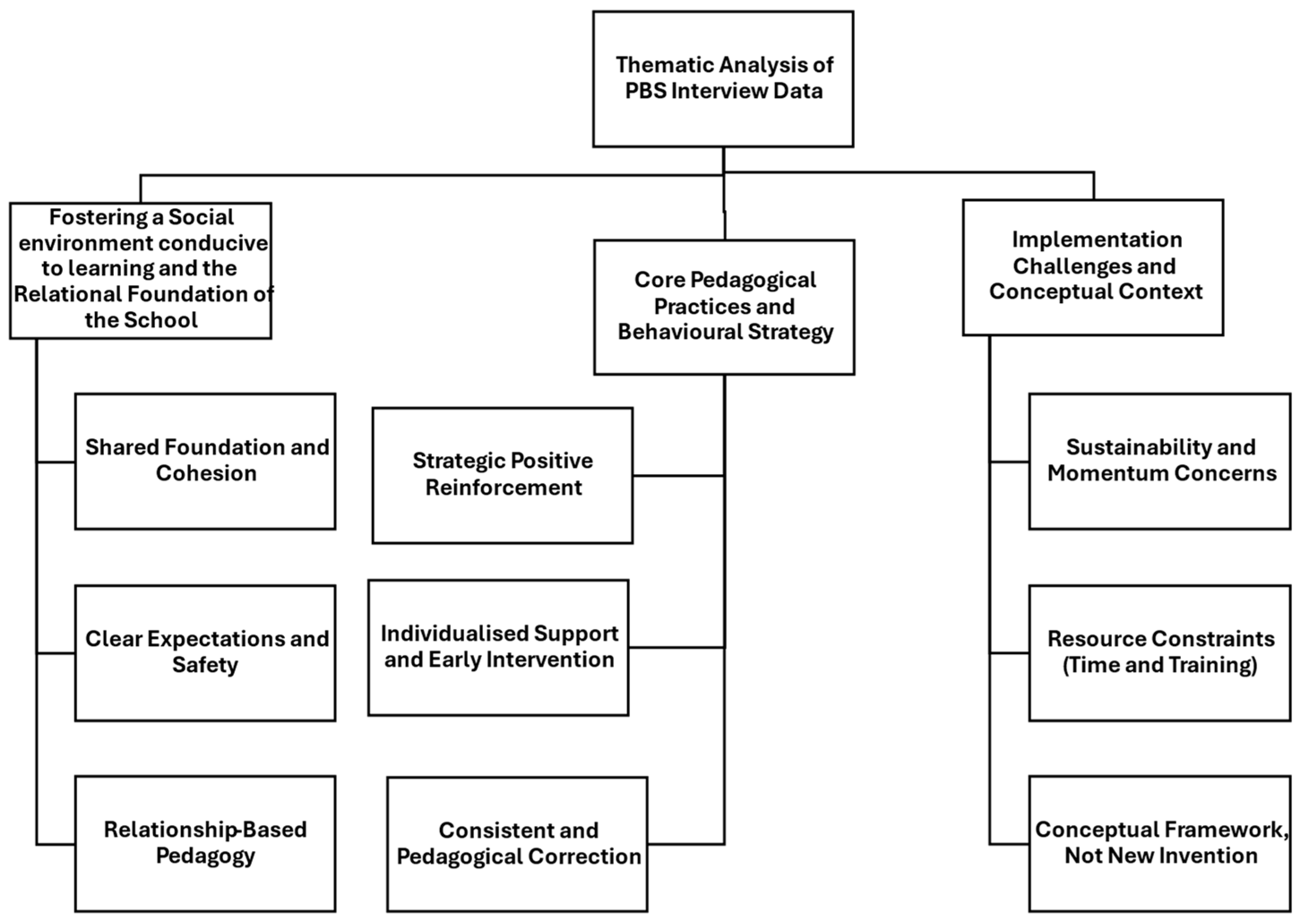
Figure 1. Thematic analysis of PBS interview data. Note. This figure illustrates the hierarchical thematic analysis of interview data regarding PBS, showing the main themes and their respective sub-themes.
Education 15 01621 g001
Table 1. The interview and observation data were collected.
CategorySchool 1School 2Total (Both Schools)
Observation Hours17 lessons (approx. 15 h)9 lessons (approx. 8 h)26 lessons (approx. 23 h)
Interviews10 interviews with 10 teachers3 interviews with 4 teachers13 interviews with 14 teachers
The total staff at the two schools16 teachers 10 teachers 26 teachers
Table 2. Summary of classroom observation results (N = 26 lessons).
PracticeFrequency
Lesson Structure
Clear and predictable structure26/26 (100%)
Teaching Materials
Books used by teachers and students13/26 (50%)
Digital tools (smart boards, projectors) used5/19 (26%) *
Rules and Expectations
Rules are posted visibly in the classroom11/11 (100%) *
Expectations are clear and meaningful26/26 (100%)
Students could not always see the rules7/26 (27%)
Social Skills and Correction
Social skills taught in class22/26 (85%)
Behavioural/life skills integrated13/26 (50%)
Corrective feedback was not given for inappropriate behavior8/26 (31%)
* Calculations exclude 7 lessons that were art, crafts, or sports where these tools are not typically used.
Table 3. Frequency of key concepts mentioned by interviewees (n = 14).
CategoryKey ConceptNumber of Participants Who Mentioned
BenefitsCalm/Calmer climate5
Security4
Clear expectations/Structure6
Unity/Collaboration5
Positive work/School Climate4
Focus on Proactive/Positive Support3
ChallengesLack of time3
Difficulty with change1
Inconsistent interest2
Disclaimer/Publisher’s Note: The statements, opinions and data contained in all publications are solely those of the individual author(s) and contributor(s) and not of MDPI and/or the editor(s). MDPI and/or the editor(s) disclaim responsibility for any injury to people or property resulting from any ideas, methods, instructions or products referred to in the content.


