Article

Visualising the Fluidity of Multilingual and Intercultural Identities of Australian University Students Studying Abroad in China


1
School of International Education, Wuhan University, Wuhan 430072, China
2
Discipline of Chinese Studies, School of Languages and Cultures, Faculty of Arts and Social Sciences, The University of Sydney, Sydney, NSW 2006, Australia
3
Language and Culture Center, Duke Kunshan University, Suzhou 215316, China
*
Author to whom correspondence should be addressed.
Educ. Sci. 2025, 15(12), 1608; https://doi.org/10.3390/educsci15121608
Submission received: 4 September 2025 / Revised: 17 November 2025 / Accepted: 20 November 2025 / Published: 28 November 2025

Abstract

This study explores the fluidity of multilingual and intercultural identities among Australian university students participating in a study abroad (SA) program in China. It pilots a structured analytical framework to analyse visual metaphors created by the participants, examining how Chinese language learners depict their evolving identities, thereby uncovering their fluid nature. An analysis of three case studies of Australian students—one of Chinese heritage, one Australian-born of Serbian heritage, and one Japanese-born who moved to Australia in childhood—illustrates their unique trajectories of identity formation. Multimodal data reveals that while the visual metaphors of all three students point to fluidity, with sub-themes of dynamism, blending, and layeredness, the SA experience triggers diverse individual processes of identity negotiation and transformation. This study contributes to the fields of multilingual and intercultural education and SA through its innovative use of a visual metaphor analysis approach, which effectively captures and decodes the complexities of intercultural development among language learners in an SA environment. The study advocates visual metaphor as a valuable tool for both researching and understanding how multilinguals, especially those whose first and home language is not English, reflect on their multilingual and intercultural identity and experiences.

1. Introduction

In an increasingly globalised world, the study of multilingual and intercultural identity has taken on new importance. Especially in the field of study abroad (SA), as individuals cross borders, their interactions with different languages and cultures shape their sense of self in profound ways (Gill, 2010; Hu & Dai, 2021; Tong et al., 2022; Tong & Tsung, 2022, 2023). Scholars increasingly view the development of multilingual and intercultural identity development as a dynamic, non-liner, and often fluid process, transcending language- and culture-specificity (Henry, 2017; Kim, 2008; Gill, 2010; Hu & Dai, 2021) and characterised by “diversity, hybridity, and integration, or discomfort, fragmentation, and loss” (Henry, 2017, p. 549). Henry (2017) states that a multilingual identity, which involves explicit awareness and application of linguistic repertoires (Haukås et al., 2021), includes more than just the combination of separate linguistic identities. Similarly, intercultural identity is theorised as “an open-ended, adaptive, and transformative self–other orientation” (Kim, 2008, p. 364). It encompasses universal values and worldviews, flexible ways of understanding cultures, and ethical and meaningful ways of being in the world (Gill, 2010). Individuals with a multicultural background have the unique ability to observe their own culture while transcending the limitations of both their own and other cultures, thereby creatively integrating diverse cultural elements (Hu & Dai, 2021). Meanwhile, this engagement with multiple cultures can lead to the erosion of traditional heritage and social dependencies, resulting in psychological stress due to the potential loss of one’s sense of social and cultural identity and group uniqueness (Dai, 2013).
A critical methodological challenge persists: how can we effectively document and analyse these complex, dynamic, often pre-linguistic experiences of the self? While theories describe multilingual identity as transcending language-specific boundaries and intercultural identity as open-ended and integrating diverse cultural orientations, traditional research methods often rely solely on verbal and written data. Such a reliance on language, or “discursive forms of symbolism” (Langer, 1948, pp. 65–66), imposes linear narratives and may fail to capture the full richness of identity negotiation as visual forms can, such as the bodily and emotional aspects of lived linguistic and intercultural experiences which normally pass unconsciously (Busch, 2018). This is especially pertinent when working with multilingual speakers, especially those whose first and home language is not English. Using English or any one language may limit their expressive capacity.
To address this gap, this study introduces a visual metaphor method as its core approach—an innovative approach increasingly recognised as valuable in multilingual identity research (Kalaja & Melo-Pfeifer, 2019). Examining the multilingual and intercultural identity development of Australian university students during a four-week SA program in China for learning Chinese as a second language, the study aims to provide a structured way of documenting and analysing how multilingual university students perceive, express, and navigate their changing identities using visual metaphors during an SA sojourn.

2. Literature Review

2.1. The Visual Metaphor Approach

The use of visual representation to explore and express identity has gained increasing attention in identity research (e.g., Ahn, 2021; Kalaja & Melo-Pfeifer, 2019; Zhang-Wu, 2023). While traditional methods of studying identity—such as interviews or written reflections—rely on verbal articulation, visual representations offer an alternative means of accessing the subtle, non-verbal dimensions of identity. The advantages of using visual methods to study identity are multifold. First, visual representation allows for the expression of abstract and complex concepts that may be difficult to articulate verbally (Ahn & West, 2017; Chik, 2017; Bowen & Max Evans, 2019). Second, visual methods offer a means of engaging with identity in a creative and reflective way. They give individuals more control over how they represent their identities, allowing for a more authentic expression of the self (Melo-Pfeifer & Schmidt, 2019). Moreover, as a form of art-based methodology (Leavy, 2009; Knowles & Cole, 2012), the visual approach has the educational potential of teaching “connection, empathy, feeling, resonance, and self-awareness” (Leavy, 2009, p. viii). The process of creating visual representations can also serve as a form of reflective practice, helping individuals become more aware of the changes occurring in their identity and visualise the invisible aspects of identity formation (Ahn, 2021).
Visual approaches such as drawings, language maps, language portraits and language postcards have been used in the existing literature on multilingual and intercultural identities (e.g., Martin, 2012; Melo-Pfeifer, 2015; Maijala, 2021), but the majority of studies are focused on children in primary and secondary schools (Fisher et al., 2020). For instance, several studies use language portraits or body silhouettes to make student linguistic repertoires visible using colours and shapes that reveal multilingual students’ experiences, practices, and attitudes towards languages (Busch, 2018; Johnsen, 2021; Stavrakaki & Manoli, 2023). These studies found that language portraits reveal students’ awareness of their multilingual repertoires, showing how they associate colours and body placements with cultural identity, emotions, and linguistic skills (Busch, 2018). The portraits highlight students’ negotiation of multiple languages within monolingual expectations, offering educators a powerful tool to make multilingualism visible (Stavrakaki & Manoli, 2023). While these studies are insightful in showcasing the value of visual approaches, this study contributes to the literature by extending these methods to university students in an SA context, focusing on visual metaphors for the fluidity of identities.
One useful way that individuals express their multilingual and intercultural identity through visual representations is by employing visual metaphors, which are considered visual embodiments of metaphorical thoughts or concepts (Refaie, 2003; Gauntlett, 2007). Lakoff and Johnson describe metaphor as “understanding and experiencing one kind of thing in terms of another” (Lakoff & Johnson, 1980, p. 5), which, according to Forceville (2008), effectively captures Black’s (1979) foundational concept that a metaphor initiates an interaction between two distinct domains, often referred to as the source and target domains. In this interaction, attributes or structural relationships from the source are projected onto the target, resulting in a transformation of how the target is perceived or understood (Forceville, 2008). Bowen and Max Evans (2019) suggest that visual metaphors allow individuals to express abstract concepts in more tangible and meaningful ways. For example, students in their study use the image of brains and light bulbs to symbolise knowledge. Visual metaphors can also illustrate the emotional aspects of language and intercultural identity, such as desires and fears (Ahn, 2021). For example, a language learner in Ahn’s (2021) study depicted a dead fish to convey feelings associated with failure in mastering English.

2.2. The Fluidity of Multilingual and Intercultural Identities

A central theme in contemporary research on identity is its fluidity and dynamic nature. A post-modern perspective on identity recognises that learner identity is not fixed but continually evolves and is shaped by historical, social, and cultural influences (Kramsch, 2016; Norton, 2000).
This fluidity of multilingual identity manifests in how learners negotiate their multilingual backgrounds, reflecting the individual’s ongoing engagement with new linguistic influences (Fisher et al., 2020; Pavlenko & Blackledge, 2004). Block (2015) describes the identity transformation that occurs when individuals are exposed to new linguistic environments, noting that students often undergo a process of reconstruction as they incorporate new languages into their repertoire. This process is not always linear; students may oscillate between different identities, using one language in certain contexts while adopting another language in others. This constant negotiation reflects that multilingual identity is shaped by both internal factors (such as motivation and self-concept) and external factors (such as social interactions and cultural expectations) (Fang et al., 2023).
The construction and development of intercultural identity also involve a dynamic process where individuals negotiate, adopt, and blend cultural values, norms, and practices. Scholars like Kramsch and Uryu (2012) describe intercultural identity as existing in a “third space”, where individuals navigate between different cultural contexts and create a hybrid identity that draws from multiple sources. Intercultural identity is also characterised by its openness to change (Gill, 2010). As individuals gain more exposure to different cultures, their identity becomes more flexible and adaptable, allowing them to incorporate new cultural elements into their sense of self. SA programs provide an ideal setting for observing the development of intercultural identity (Tong & Tsung, 2022). For instance, Vande Berg et al. (2012) suggest that students who engage in SA programs often report significant changes in their intercultural identity, particularly as they learn to navigate cultural differences and build relationships with people from diverse backgrounds.
In the context of Australian students studying abroad in China, the contrast between English and Chinese and between Western and Eastern cultures presents an interesting case for exploring multilingual and intercultural identity development (Tong & Tsung, 2022). The challenges of learning Chinese—a language that is structurally and phonetically different from English—combined with the experience of immersing oneself in Chinese culture, offer students an opportunity to renegotiate their linguistic and cultural identities. Students may also experience struggles and cultural dissonance (Jin & O’Regan, 2024), which can trigger a reflective process that leads to identity transformation as students learn to reconcile these differences and adapt to the new cultural setting (Maeder-Qian, 2018).
While the fluidity of multilingual and intercultural identities has been widely acknowledged in the current literature, evidence derived from a visual approach remains relatively limited, especially through the lens of visual metaphor. Some studies have employed visual narratives to collect and analyse data on multilingual lives. For instance, Ibrahim (2019) examined multilingual children’s visual narratives as sites of identity performance, inviting them to create drawings that represented the languages they spoke. These multimodal productions were analysed for content and subsequently through discourse analysis. Melo-Pfeifer and Schmidt (2019) investigated how young refugees in Germany depicted integration in visual narratives, using an “eclectic data analysis procedure” (p. 61) that combined content analysis with visual semiotic analysis, examining how different semiotic resources were used to produce communicative artefacts and events. Similarly, Skinnari (2019) applied dialogical narrative analysis to self-portraits of adolescent English learners, focusing on multi-voicedness to explore both the content and form of their visual stories. The existing body of work utilising visual narratives has been instrumental in demonstrating the multifaceted nature of multilingual identity. However, its analytical focus has largely been on the signified—the people, objects, and activities depicted (the ‘content’)—and the discursive analysis of those elements. This approach can overlook a fundamental dimension of the identity-construction process: the cognitive mapping of complex and abstract conception and experiences of identity onto concrete form. A systematic framework of visual representations that guides the analysis of concept-form mapping is needed.

2.3. Operationalise Visual Metaphor as an Analytical Framework

Visual metaphor provides a robust framework for analysing the visual artefacts produced by individuals. Refaie (2003) argues that visual metaphors should not be solely described in formal terms but rather viewed as representations of metaphorical thoughts or concepts. Therefore, the analysis should shift from a purely formal examination of visual structures and elements to a more conceptual analysis. To delimit and define how the visual metaphor is operationalised in this study, we draw on Bessette and Paris (2020) and Šorm and Steen (2013) to analyse the visual representations of the evolving identities of SA participants.
Refaie’s argument is supported by Bessette and Paris (2020), who outlines five steps to analyse visual metaphors, progressing from a more superficial to a deeper level:
(a)
Emergent analysis: This consists of a preliminary review of the drawings, cataloguing each individual element or characteristic depicted.
(b)
Traits coding: Identifying patterns or common traits among the depicted features within each drawing.
(c)
Holistic coding: Assessing the overall tone and style of the drawing, for instance, whether it appeared positive or negative, constructivist or passive, active or inactive.
(d)
Holistic interpretation: This deeper interpretative step involves asking broader questions, such as “What message does this drawing convey?”
(e)
Textual alignment: Exploring the alignment between textual and visual metaphors to understand their synergy.
These steps roughly overlap with the Model of Visual Metaphor Processing (VMP) (Šorm & Steen, 2013), which consists of three broad categories of processing, namely, incongruity perception, incongruity resolution, and contextual processing. Incongruity refers to a perceived mismatch, unexpected combination, or contrast between two elements that initially seem unrelated (Šorm & Steen, 2013). This dissonance prompts the viewer to make sense of the surprising pairing by finding connections or underlying similarities. The process of resolving incongruity activates deeper cognitive processing, such as drawing on previous knowledge or forming conceptual mappings, which ultimately leads to a richer understanding of the metaphor’s meaning. The three categories of processing are outlined below:
(a)
Incongruity perception: This stage entails analysing basic visual elements like patterns, colours, and contrasts (perceptual analysis), integrating this sensory information with prior knowledge (implicit information integration), and classifying impressions formed in the earlier steps through labelling objects, scenes, and their traits (explicit classification).
(b)
Incongruity resolution: This stage includes conceptual mapping between elements of the source and target domains in the visual, as well as recognition and appreciation of the metaphor.
(c)
Contextual processing: This stage involves considering supplementary information that can aid in interpreting and conceptualising the visual metaphor. This additional information may come from the perceiver’s existing knowledge or from context accompanying the visual metaphor.
While visual methods offer many advantages, they also present certain challenges. One of the main limitations is the subjectivity involved in interpreting visual representations. As noted by Rose (2016), visual metaphors can be open to multiple interpretations, making it difficult for researchers to draw definitive conclusions. In our study, we adopt a reflexive approach to analysis, working closely with participants to ensure that the interpretations align with the participants’ intended meanings. Another challenge is the need for participants to possess a certain level of visual literacy to effectively engage with visual methods. Some individuals may struggle to express their identity visually or may feel uncomfortable creating visual metaphors. To address this, we follow Gauntlett (2007)’s suggestion that researchers provide guidance and support to participants during the creation process, ensuring that they have the tools and confidence to represent their identities visually.
Based on the literature and analytical framework reviewed above, the present study aims to respond to the needs for a more robust and systematic approach to researching visual representations of multilingual and intercultural identity. The critical research gap we identify is the lack of a consistent framework for analysing the metaphorical structure of visual identity representations. By introducing a rigorous visual metaphor analysis, this study offers a novel tool for researchers and educators to capture the dynamic and complex nature of identity transformation during students’ multilingual and intercultural learning experiences. The research focuses on the following question:
Q: How do students’ visual metaphors capture the fluid and evolving nature of multilingual and intercultural identities?
This study proceeds in four main sections. Section 3 (Methodology) outlines the research design, including participant profiles, the collection of visual artefacts, and the analytic procedures grounded in semiotic and visual metaphor theory. Section 4 (Data Analysis) identifies and interprets the visual metaphors used by students, focusing on what kinds of visual elements and metaphorical constructs emerge in their representations of identity. This section highlights patterns of dynamism, hybridity, and cultural layering across participants. Section 5 (Discussion) builds on this analysis by considering how visual methods function as a mode of accessing and expressing identity fluidity. It reflects critically on how visual metaphors allow students to embody movement, transformation, and hybridity in ways that written or verbal methods may not fully capture, while also acknowledging the methodological boundaries and interpretive challenges these approaches entail. Section 6 (Conclusions) synthesises the key insights and reflects on the implications for language education, identity research, and the use of visual methods in intercultural learning contexts.

3. Methodology

This study utilises a qualitative case study approach to explore how Australian university students visually represent the fluidity of their multilingual and intercultural identities following an SA program in China. The case study approach allows for an in-depth analysis of the complex and dynamic nature of identity transformation within a specific cultural and linguistic context.

3.1. Participants

The participants were students from a university in Sydney, Australia, who were enrolled in a unit of study to learn Chinese at a four-week SA program hosted by a university in China. Three students were selected and focused on due to their unique heritage and linguistic profiles: Annie, a non-heritage learner with a Serbian heritage, born and raised in Australia; Jack, a Chinese heritage learner born and raised in Australia; and Hana, a non-heritage learner who was born in Japan and was moved to Australia and raised there during childhood (Table 1). Before joining the SA program, the three learners were situated in a Western society where Chinese language learning and use had to compete with the dominant English language or with their own first languages (Serbian or Japanese). They came from complex and diverse Chinese learning backgrounds, reflecting a wide spectrum of motivations as well as multilingual and intercultural identities. They offer insights into how individuals visualise and conceptualise their evolving identities. A small sample size also allows for a deep, focused exploration of each participant’s experiences and identity development.

3.2. Data Collection

Upon completing the SA program, participants received a Participant Information Statement outlining the focus and procedures of the project before agreeing to take part. They were encouraged to choose the task with which they felt most comfortable from two options designed to elicit their multilingual and intercultural experiences. One option involved writing reflective journal entries, while the other required completing visual representation tasks. For those who selected the visual representation task, we provided a detailed guide sheet (see Appendix A). In addition, one of the authors held in-person meetings to walk participants through the process and address any questions. Participants were then given sufficient time to complete the visual tasks at home without intervention from the researchers.
Each participant was asked to submit three visual artefacts (e.g., drawings, paintings, collages), each representing a different aspect of their identity:
  • A visual representation of their multilingual identity.
  • A visual representation of their intercultural identity.
  • A visual representation depicting the changes they experienced in their identities through the SA program.
These visual artefacts allowed participants to use symbols, metaphors, and imagery to express their multilingual and intercultural identities. Participants also provided written explanations accompanying each artefact and subsequently took part in an individual semi-structured interview. These interviews, conducted after the visual task, invited participants to elaborate on their drawings, clarify intended meanings, and reflect on their language learning and intercultural experiences in China. Interviews were conducted in English, lasted about 60 min, and were audio-recorded and transcribed verbatim for analysis.
This study adhered to ethical guidelines to ensure the protection and well-being of participants. All participants were informed about the purpose of the study, the nature of their participation, and their right to withdraw at any time. They provided written consent before participating in the study. All identifying information was anonymised, and pseudonyms were used in the analysis and reporting of the findings. Visual representations were carefully handled to ensure confidentiality, and participants’ privacy was protected. Aligning with the ethics considerations in doing visual research (Mitchell, 2011; Knowles & Cole, 2012), participants were encouraged to reflect on their identity in ways that felt comfortable to them. The study was approved by the ethics committee at the participants’ university.

3.3. Data Analysis Procedures

This study adopts an operationalised analytical framework for analysing visual metaphors and the accompanying textual data (including written explanations and interviews), as illustrated in Figure 1. The parallels drawn between each stage offer a logical progression that moves from identifying and cataloguing visual elements to interpreting their metaphorical significance in relation to multilingual and intercultural identity within a broader context.
Guided by the framework illustrated in Figure 1, the researchers engaged in the following processes to analyse the data (see details in Appendix B, Appendix C and Appendix D):
(a)
Identifying the basic elements and features of the visuals. This step focused on making a list of the visual elements through emergent analysis and describing their traits. The researchers conceptualised the overall trait of a visual artefact based on the specific traits of each identified element. These steps correspond to the phases of emergent analysis and trait coding, during which researchers identified visual incongruities along with their traits and patterns, as well as to the initial stage of perceiving incongruities in the VMP model.
(b)
Metaphor recognition and construction. This step focused on uncovering the underlying meanings of the metaphorical visual elements. The researchers examined how languages, cultures, identities, and changes were metaphorically expressed. To understand the creators’ intentions behind the drawings, they evaluated the overall tone and style of the artefacts through holistic coding, emphasising how participants depicted the fluidity of their identities using diverse visual styles. Finally, the researchers summarised the overall message of each drawing through holistic interpretation. This corresponds to holistic coding and interpretation when researchers addressed these incongruities by examining the visuals’ underlying meanings, relationships, metaphors, and the creator’s intentions, aligning with the incongruity resolution stage of the VMP model. At this stage, both frameworks emphasise moving beyond individual elements to explore the relationships, coherence, and intended messages within the visual metaphor.
(c)
Checking contextual information. The researchers interpreted the metaphors using participants’ written descriptions and interview data. In this study, textual materials were used to provide context for interpreting visual metaphors, following the approach of Šorm and Steen (2013). This corresponds to textual alignment when researchers contextualised these visual metaphors within the written materials provided by students, reflecting the contextual processing stage of the VMP model.
It is important to acknowledge that these steps are not linear procedures. The analytical process may require researchers to revisit and refine earlier stages based on insights gained in later stages, making this a dynamic, iterative approach. Additionally, the stages in the two frameworks overlap only in a general sense and should not be viewed as strict correspondences. In practice, researchers may find value in flexibly moving between steps as they explore both frameworks to develop a nuanced understanding of visual metaphors.
To enhance trustworthiness, two researchers independently interpreted all visual data. Each first conducted emergent analysis to identify salient visual elements, traits, and compositional patterns, followed by holistic interpretation of tone, coherence, and meaning. The researchers then met to discuss and reconcile discrepancies through negotiated consensus. A third researcher reviewed the agreed-upon coding scheme to ensure consistency and minimise individual bias. This triangulated process strengthened interpretive rigour. Moreover, the original visual artefacts are included in Appendix B, Appendix C and Appendix D to enhance transparency and allow readers to assess the interpretive process and credibility of the analysis.

4. Data Analysis

This section provides the artefacts of each case alongside the researchers’ analysis, following the previously described analytical processes. Detailed analyses for each step are presented in tables found in Appendix B, Appendix C and Appendix D. The subsequent discussion will outline the main points and key characteristics of each case, demonstrating how the fluidity of multilingual and intercultural identities is exhibited through diverse patterns.

4.1. Annie: Continuous Evolution of Dynamic Identities

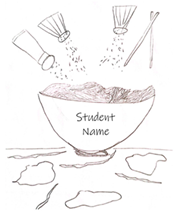
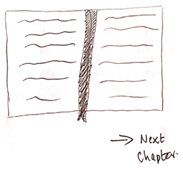
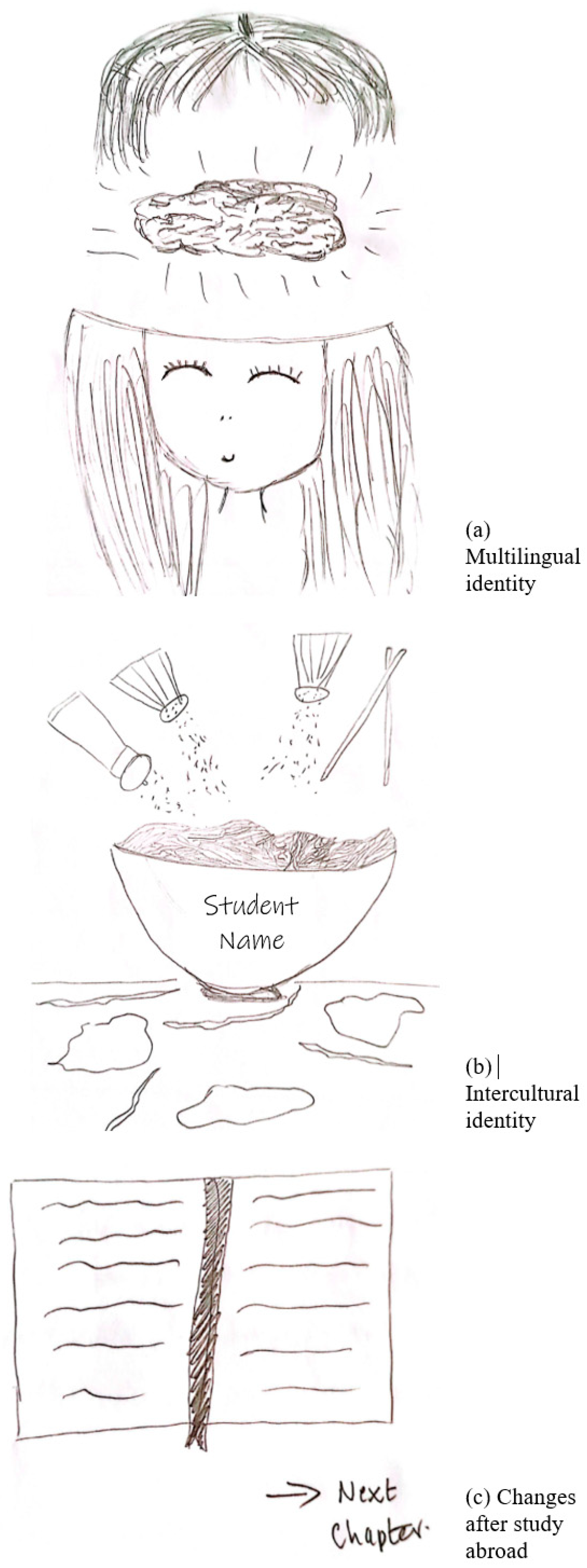
Figure 2 presents the collection of Annie’s three pieces of drawings, one for multilingual identity (Figure 2a), one for intercultural identity (Figure 2b), and another for changes after SA (Figure 2c). Annie’s visual data presents a conceptualisation of identity as evolving and actively shaped by adaptable elements, with dynamism as a central theme. The drawings are snapshots of her identity of an ever-changing state, with Annie exercising agency over its evolution.
In Figure 2a, a floating brain symbolises her multilingual identity, with complex textures and features reflecting the brain’s adaptability as she acquires new languages. This metaphor of an “evolving brain” emphasises growth and change, illustrating how her linguistic identity, like the brain, continuously develops through new learning experiences. The brain’s intricate composition reflects the dynamic nature of multilingual identity, where each language learned and used adds a new piece to her overall self-concept enhancing her sense of self through concrete experiences, or in her own words, “something that has already happened stored in our brain somewhere, which is a memory”. The brain metaphor aligns with Annie’s reflection on how the SA in Beijing shaped her multilingual identity. She emphasises that it has pushed her to speak Chinese to the locals with confidence, and opened her up to “a whole horizon of different people in different worlds.” Such memories of learning and socialising in China enrich her multilingual identities as she sees “a key part of our identity is memories.”
Food is a common marker of identity and belonging. Figure 2b presents a bowl of noodles to symbolise her evolving intercultural identity, capturing a snapshot of a dynamic moment of blending in new seasonings and toppings, which according to Annie represent the languages she speaks, new places she travels to, and new people she meets during intercultural encounters. The splashes of soup and noodles outside the bowl represent cultural elements being added, altered, or even discarded over time. The chopsticks in the drawing symbolise her agency, actively “shaping” or engaging with the contents of the bowl, much like she balances her multicultural influences. This metaphor emphasises Annie’s ability to continually refine and reconstruct her cultural identity, reflecting a flexible and interactive process in which she exercises agency over what is integrated or left out.
A student majoring Chinese and international and comparative literature, Annie’s final drawing (Figure 2c) depicts a book with a bookmark and a caption of “next chapter,” symbolising her SA experience as a significant and lasting influence on her evolving multilingual and intercultural identity journey. The fact that the pages can be flipped over conveys dynamism, suggesting that her identity, like a book, can be revisited and reinterpreted with each new experience. The “next chapter” caption reinforces a forward-looking perspective, indicating her anticipation of future growth and change. However, the drawing itself contained no textual information or symbols specifically tied to Chinese language or culture. This absence may reflect Annie’s perception of her Chinese SA experience as one chapter in a broader and ongoing identity narrative rather than a fixed or culturally bounded event. It aligns with Annie’s broader metaphorical framing across all three artefacts, where she consistently uses dynamic, process-oriented symbols to express identity as a continuous becoming.

4.2. Jack: Blending of Heritage and Western Identities

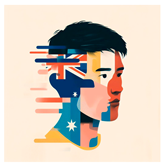
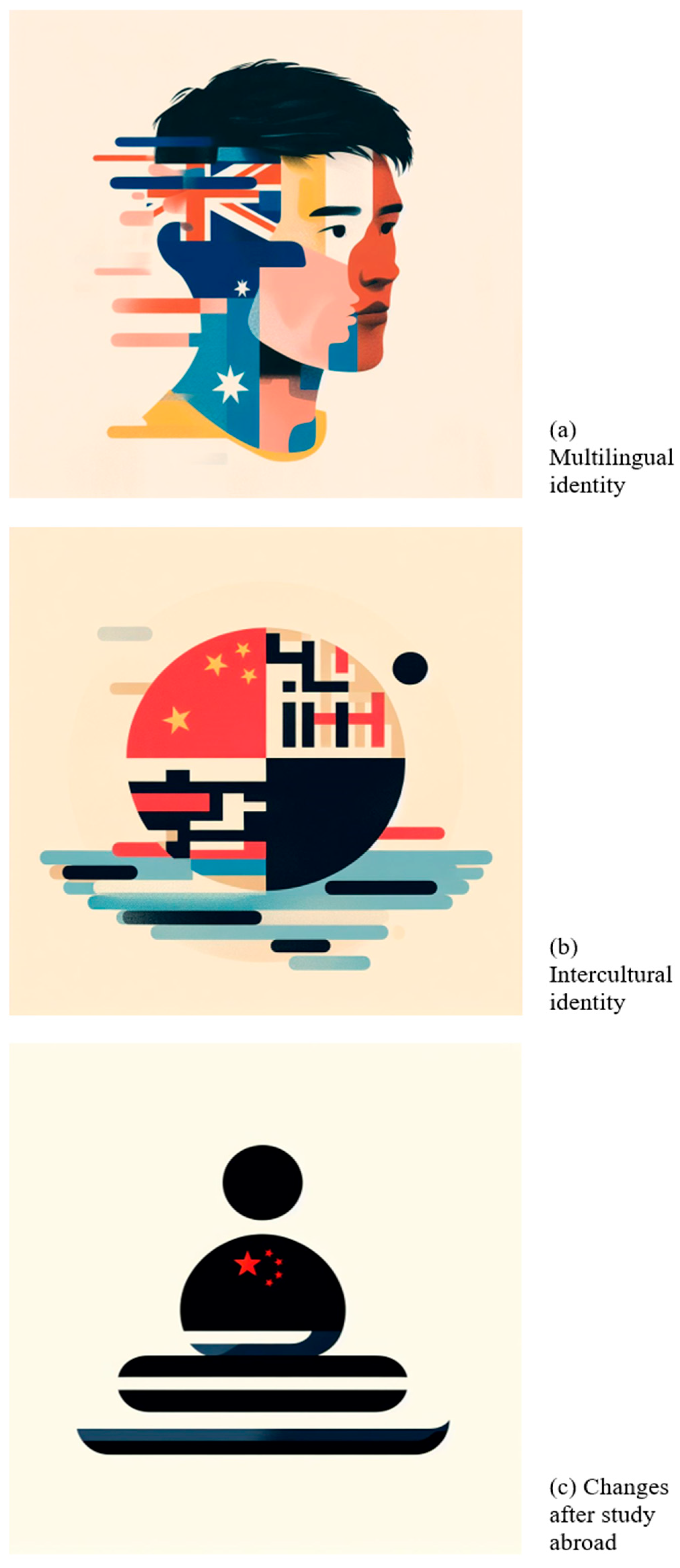
Figure 3a–c presents Jack’s three drawings, illustrating the distinct yet interwoven influences of his Australian and Chinese cultural backgrounds. An Australian-born-Chinese university student who speaks Cantonese and English at home with parents and only began to formally learn Mandarin in the university, Jack exemplifies the hybridity that heritage language learners often navigate when balancing their home languages/culture and the mainstream language/culture. This is especially evident in the abstract and figurative elements of his first two drawings, where the presence of Australian and Chinese cultural symbols varies in prominence, reflecting how each influence can become more pronounced in different contexts.
In Jack’s first drawing (Figure 3a), a layered portrait represents his multilingual identity, featuring vibrant colours and segmented sections with the Australian flag centrally placed, symbolising his comfort and authenticity in English. Jack explains in his written description that he had intentionally excluded Chinese elements, not because his Chinese heritage is unimportant, but rather that English is the language in which he feels most articulate and authentic in expressing complicated thoughts. This absence is telling of his multilingual experience; it reflects a conscious tilt towards English due to proficiency and daily usage outside of home. While English predominates, the segmented and layered design suggests that his linguistic identity is not fixed but rather open to growth: as he puts it, “it’s more fluid so as I improve my [Mandarin], my multilingual identity will also change.”
In the second drawing (Figure 3b), Jack’s intercultural identity is symbolised by a scene that includes the Chinese flag as a dominant element, surrounded by peripheral red and blue stripes representing Australian cultural influence. This composition highlights his Chinese heritage as central to his self-concept, while the surrounding Australian elements indicate a flexible, supportive connection to Australian culture. He explains that Australian culture does not “shape” him with the same “definition” and “intensity” as his Chinese heritage. Instead, it exists around the “edges,” “colouring” his experiences and perspective. These quoted words from Jack’s written description underscore the value of the visual method, which enabled him to translate these abstract perceptions into concrete imagery. Reflecting on the impact of the SA experience on his multicultural identity, he noted that he resonated with Chinese cultural behaviors encountered in Beijing, such as the absence of Western-style small talk, which “made me realise that some parts [of myself] is more Chinese than I think.” However, other daily routines such as food and shopping “reinforced my Western upbringing.” This conflicting self-awareness is reflected in his strategic use of colour and placement in his drawing, which symbolises a hybrid interplay between his Chinese heritage as a core complemented by his Australian identity.
Jack’s final drawing (Figure 3c), a sitting figure with the stars of the Chinese national flag positioned at the heart, featuring a prominent Chinese cultural influence contrasted by an absence of Australian symbol. The drawing shows Jack’s connection to his Chinese heritage in a focused way reinforced by the SA experience, and aligns with his claim that “a very clear self-awareness that I am not an Australian.” The minimalist design of this piece reflects a newfound clarity in his understanding of his heritage, suggesting a reaffirmation of his Chinese roots. Inspired by other multilingual peers in the Beijing SA program and his exposure to what he termed “real Chinese people”—a group he contrasted with Australian-born Chinese who had “lost touch with their Chinese background”—Jack found renewed motivation to improve his Mandarin. He views language as central to reclaiming his heritage, stating: “When I went back to Beijing and I saw […] people there, I really saw myself. My values and thoughts were reflected by most of the people there. […] These experiences reinforced my desire to improve my [Mandarin] in order to understand the culture of China better and to reconnect with this Chinese aspect of myself.”

4.3. Hana: From National to Layered Intercultural Identities

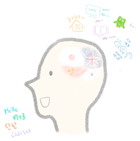
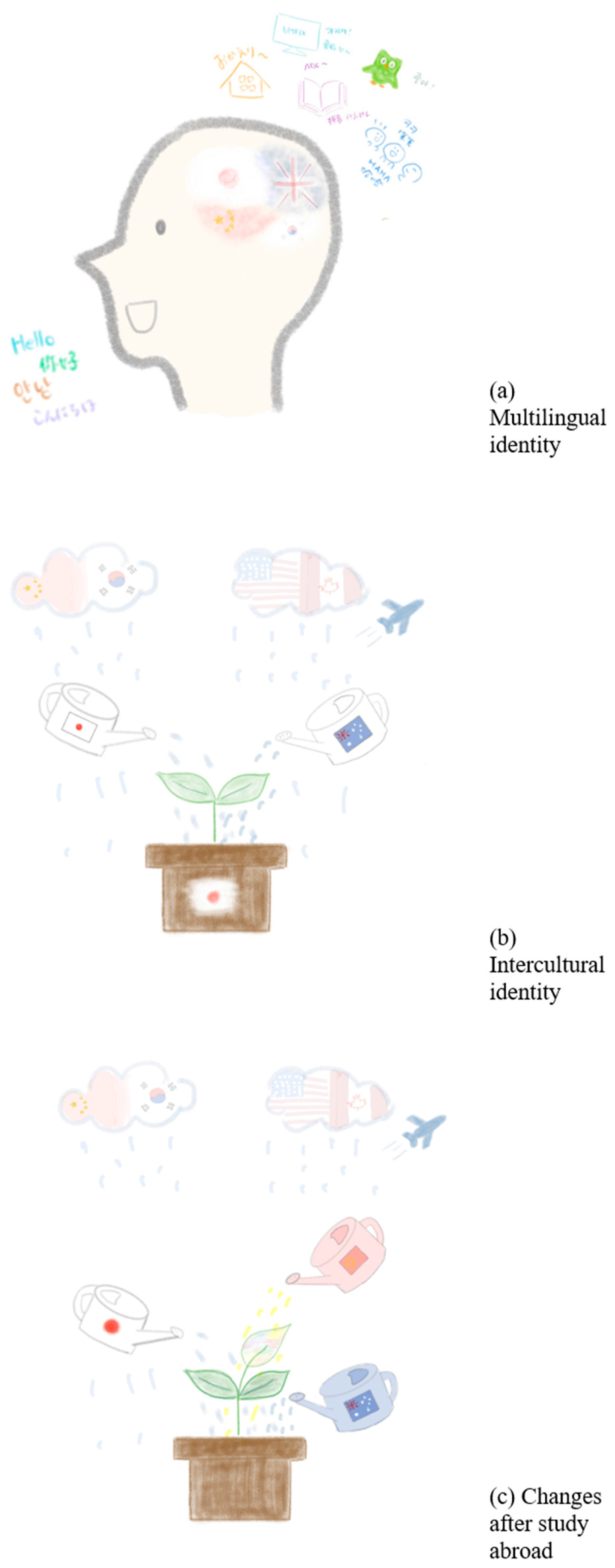
Hana’s visual data illustrates the layered nature of her multilingual and intercultural identities, shaped continuously by her linguistic experiences and cultural influences. Her drawings are presented in Figure 4.
In Figure 4a, Hana depicts a brain composed of four national flags, representing the four languages she speaks: Japanese, English, Korean, and Chinese. This brain metaphor portrays her multilingual identity as a mosaic, with each language contributing a distinct layer associated with specific social realms or activities. The varied sizes of the flags suggest a hierarchy, with Japanese and English as her primary languages, while Korean and Chinese are less dominant but still meaningful. This arrangement reflects the layeredness of her identity, where each language contributes a unique layer, and prominence shifts depending on context.
In Figure 4b, Hana’s intercultural identity is represented as a growing plant rooted in a pot with a Japanese flag, nurtured by direct and indirect influences. Two watering cans labelled with Japanese and Australian flags provide “direct nutrition,” symbolising the immediate, formative impact of these cultures on her identity. Above, clouds with flags of China, Korea, the US, and Canada represent her experiences with these cultures as more distant but still impactful. This metaphor reinforces the layered influences from her heritage Japanese culture, her Australian experiences, and her interactions with other cultures through travel.
Her final drawing (Figure 4c) shows a pot without the Japanese flag, a newly grown colourful leaf, and a prominent addition of the Chinese watering can, symbolising her SA experience in China. The colourful leaf represents her expanded knowledge of Chinese culture, while the absence of the Japanese flag on the pot and the prominence of the Australian and Chinese cans indicates an evolving identity where her relationships with different cultures are negotiated and reconstructed. This shows the fluidity of identity layers, with her SA experience in China heightening her awareness of her intercultural identity, which led to a lessening emphasis on the Japanese aspect of her identity. While her Japanese identity remains unique, her exposure to Chinese culture and the reflection that came with living abroad have allowed other cultural aspects—such as her Australian and Chinese influences—to emerge more prominently in this context.
Hana’s case provides a compelling example of the layeredness of identity development. Each new language acquired, and each cultural experience encountered contributes a new layer to her evolving self-concept. Through these visual metaphors, Hana captures the dynamic layering of her identity, where each new language and cultural experience contributes uniquely, forming a complex, adaptable sense of self.

5. Discussion

This section discusses how the visual metaphors were employed to unpack the complex, often pre-linguistic dimensions of multilingual and intercultural identity. The data showcased the capacity of visual methods to complement the traditional language-based methods by revealing the very bodily, sensory, and spatially organised inner experiences of the self. The following discussion addresses the guiding research question by shifting the focus from the “what” to the “how” in accessing and understanding the fluidity of identity.

5.1. Embodying Fluidity in Visual Metaphor

In this study, participants employed various strategies to represent the concept of fluidity, illustrating the unique power of visual representations. These strategies included the use of symbols (e.g., shining symbols in Figure 2a representing renewability), metaphoric objects (e.g., seasoning and noodles in Figure 2b, book chapters in Figure 2c), colours and patterns (Figure 3a,b and Figure 4a), design styles (e.g., transitioning from complexity in Figure 3a,b to simplicity in Figure 3c), and layered contents (e.g., additional and removed layers in Figure 4c). These visual effects enabled the researchers to identify abstract characteristics such as dynamism, blending, and layeredness, each illustrating different ways in which fluidity is manifested, which can be more challenging to analyse through verbal data alone. The visual data provided a more direct and intuitive understanding of the students’ fluid identities.
Unlike pure verbal narratives, components of these visual representations, such as colour, lines, proportions, present meaning “not sequentially but simultaneously.” That is, as pointed out by Busch (2018), the meaning of individual elements that compose a large symbol “are understood only through the meaning of the whole, through their relations within the total structure” (p. 6). In our data, the participants leverage visual metaphors to effectively unpack and illustrate a non-discursive, condensed symbolism of multilingualism—how diverse languages synthesise to create a coherent, functioning whole, as multilingual individuals possess and draw upon “a complex of specific semiotic resources” (Blommaert, 2010, p. 102) and to accomplish their communicative objectives. The visual data provide valuable evidence of how the participants embody dynamism, blending, and layeredness in their illustration of a complex, evolving intercultural identity as “an open-ended, adaptive, and transformative self–other orientation” (Kim, 2008, p. 364), one that is shaped by a simultaneous understanding of oneself as a unique individual with specific qualities, beliefs, values, and commitments, while also recognising and embracing the cultural influences that shape one’s identity (Gill, 2010).
Several key patterns emerged in the analysis of the participants’ work. First is their employment of metaphors that originated from dynamic bodily and sensory experiences. The use of body image as a frame for metaphor is observed in all three participants’ visual representation of multilingual identity (Figure 2a, Figure 3a and Figure 4a). The “brains” depicted by the three participants are neither unified nor static; rather, they are dynamic, complex, and characterised by diversity or blending, signifying a dynamic perception of multilinguistic repertoires shaping the way they think and function in the world. Annie’s brain is marked by its renewability, symbolised by its shininess, suggesting an openness to continuous growth. Jack’s brain, though dominated by English as represented by the Australian flag, is segmented into stripes, indicating its openness to changes and reconstruction. Hana’s brain is composed of four distinct linguistic influences, each linked to a unique social context or activity, reflecting a balanced coexistence of multiple languages within her identity.
Similarly, regarding intercultural identity (Figure 2b, Figure 3b and Figure 4b), we see more examples of visual metaphors used to convey the inner experiences of self, foregrounding understandings of the dynamic interplays among different cultures and, in turn, their impacts on participants’ senses of identity. Annie’s “bowl of noodles” (Figure 2b) depicted tangible and sensory objects and kinesthetic experiences—the ”splashes of soup” represent the act of “stirring” the noodles and ingredients using chopsticks. Jack’s drawing (Figure 3b), in its deliberate inclusion and exclusion of cultural symbols, reveals a conscious negotiation of his heritage and dominant cultural contexts. Hana’s “growing” orientation is represented by a new leaf (Figure 4b) and contrasting spatial positions of various cultural influences, symbolising an organic, continuous development process.
Second, the visual metaphors chosen by participants not only inherently contain the potential for change and continuous development but also illustrate fluidity through idiosyncratic patterns (Figure 2c, Figure 3c and Figure 4c), echoing the increasingly prominent theme of individual differences in developmental trajectories during SA (Tong & Tsung, 2022, 2023). Annie’s “flipping book” and “next chapter” explicitly frame identity as an ongoing story. Given Annie’s extensive exposure to multiple languages and cultures (including Serbian, French, and Chinese) from a young age, her SA experience in China represents merely one chapter in the ongoing development of her multilingual and intercultural identity. Rather than a transformative turning point, it is an integrated experience that aligns with, but does not radically alter, her existing trajectory. By contrast, Jack’s artefacts indicate the transformative impact of his time in China on his pre-existing identity struggles and negotiations. Jack had just begun his journey of “breaking out of the Western bubble” and seeking to connect with his Chinese heritage by starting to study Mandarin in college one year before his SA experience. The Chinese element in Jack’s Figure 3c, metaphorically represented by a heart, serves as both a spatial metaphor (i.e., central and deep) and a functional metaphor (i.e., heartbeat), reflecting its core role in his current identity. Building upon Figure 3a and Figure 3b, his decision to move the Chinese national flag to the heart of his identity is a significant development. His shift from a segmented, abstract representation (Figure 3b) to a focused, figurative one (Figure 3c) signals a move from complexity to clarity, showing increased attachment to his Chinese identity. For Hana, studying in China goes beyond typical overseas travel. Chinese cultural elements appear twice in her drawing—once as a distant rain cloud, symbolising the underlying influence of previous travel, and again as a coloured watering can nurturing a newly grown leaf, with both colours highlighting their significance. Chinese culture’s influence is thus layered, shaped by spatial and temporal contexts. Interestingly, the Japanese heritage symbol on the pot—the foundation of her identity’s growth—has been removed, suggesting that SA has shifted Hana’s focus from a national identity to a more inclusive “intercultural” identity. Hana’s removal of the Japanese flag from the pot in her final drawing (Figure 4c) is a profound, non-verbal statement about identity re-evaluation as a result of an ongoing development.

5.2. Power and Limitations of Visual Methods for Future Studies

One notable benefit of the visual approach observed in this study is its role in eliciting students’ active reflection on their identities. The process of creating visual artefacts first necessitates our multilingual participants’ engagement in critical reflection, creative thinking, and careful selection (Melo-Pfeifer & Schmidt, 2019) without being limited by any one linguistic system. In this study, the process of visualising their identities empowered the students to contemplate their active and strategic navigation among cultures, emphasising their roles as proactive participants in constructing and adapting their identities. This benefit underscores the significance of intercultural visual art as an interdisciplinary educational model (Bianchi, 2011) and a form of critical pedagogy that enhances self-esteem and empowers multilingual individuals through “multimodal voice” (Melo-Pfeifer & Schmidt, 2019, p. 59). The power of visual approaches in such projects facilitates a shift towards a more inclusive multilingual perspective. This perspective values diverse semiotic resources for meaning-making, including visual modes (Fang et al., 2023), and aligns with current trends in multilingual education, particularly translingual (Quan & Menard-Warwick, 2021) and multimodal perspectives (Tao et al., 2022; Liang, 2019).
While the primary aim of this study is to explore visual metaphor as an analytical framework for research purposes, our findings also suggest the potential for incorporating visual artefacts into language and intercultural education as an innovative pedagogical tool. Such integration can provide critical insights into complex identity dynamics and enable more personalised and culturally responsive support. With proper guidance and support, student-created visual artefacts can spark meaningful discussions among students, educators, and administrators about multilingual and intercultural learning experiences. These discussions, in turn, offer rich opportunities for diverse language and cultural learning tasks, such as presentations, galleries or exhibitions, debates, essay writing, and poster sessions. Future studies should examine the applicability of visual analysis as a structured, innovative framework for assessing and facilitating engaged identity work in multilingual and intercultural classrooms and programs.
Limitations to the visual approach are also evident in this research. The first limitation is reflected in the small amount of data collected with voluntary participant consent. It suggests that not all students were equally comfortable with visual expression of their identities. Another drawback is that some visual artefacts were ambiguous, requiring verbal explanations to clarify their meaning. This reflects a common critique in the literature, such as that raised by Melo-Pfeifer (2015) and Stavrakaki and Manoli (2023), who note that visual data often needs to be supplemented with verbal data to ensure accurate interpretation. In our study, we did not interpret the floating brain in Annie’s Figure 2a as evolving until we associated the shining symbols surrounding it with the idea of “new,” based on Annie’s written description. Similarly, the colouring of the Australian flag in Jack’s Figure 3b is also implicit. This limitation highlights the importance of the “contextual processing” and “textual alignment” steps in the framework for interpreting visual metaphors, as shown in Figure 1.
Another limitation of this research, stemming from data constraints rather than the visual approach itself, is the lack of evidence for the visual narration of events, stories, and interpersonal interactions (e.g., Molinié, 2019). Textual data and interviews on participants’ SA experiences were incorporated in the analysis to make up for this gap. Future studies should consider encouraging participants to depict their participation in social events and interpersonal communication. In addition, using different genres of visual representation, ranging from comics and journal maps, is recommended for in-depth analysis of how students visually narrate their experiences, offering a richer, ongoing depiction of identity development through intercultural interactions. Moreover, the emotional aspects of multilingual and intercultural identities have not been thoroughly examined in this research, which have been an important topic both in multilingual research (Pavlenko, 2006; Fisher et al., 2020) and for the visual methodology (Ahn, 2021; Chik, 2017). Future research could investigate the use of visual approaches in articulating challenges, discomfort, and conflicts experienced during SA programs, and how these approaches can empower students to surmount such difficulties, echoing a therapeutic perspective on intercultural education (Alred, 2002).

6. Conclusions

This study explored how Australian university students from diverse cultural backgrounds represent and negotiate their multilingual and intercultural identities through visual metaphors during SA in China. The analysis of visual artefacts and written descriptions reveals identity not as a static entity but as a fluid, dynamic process characterised by blending, layeredness, and ongoing negotiation. The findings highlight the power of visual approaches to access aspects of identity that are often difficult to articulate verbally. The participants’ metaphors conveyed nuanced experiences of their multilingual selves, facilitating deep reflective engagement and making visible the processes of identity construction and transformation. A key contribution of this study is the structured analytical framework drawn from visual design literature, which provides a systematic and rigorous method for interpreting visual data, moving beyond intuitive interpretation toward reliable analysis. This study reinforces the value of visual methodologies for exploring the complexities of multilingual and intercultural experience, and offers researchers and educators robust avenues for engaging with the multi-layered realities of language learners in an increasingly interconnected world.

Author Contributions

Conceptualization, P.T., X.Z.; methodology, P.T., X.Z., I.S.A.; formal analysis, P.T., I.S.A., X.Z.; investigation, I.S.A.; resources, I.S.A.; data curation, I.S.A.; writing—original draft preparation, P.T.; writing—review and editing, X.Z., I.S.A., P.T.; visualization, P.T.; supervision, P.T.; project administration, P.T.; funding acquisition, X.Z., P.T. All authors have read and agreed to the published version of the manuscript.

Funding

The research results of this article are exclusively sponsored by the Kunshan Municipal Government research funding. Funded project title: Wuhan University-Duke Kunshan University-University of Sydney-Ohio State University Multimodal Intercultural Education Interdisciplinary Innovation Platform.

Institutional Review Board Statement

The study was conducted in accordance with the Declaration of Helsinki and approved by the Ethics Office of the University of Sydney (protocol code 2019/HE000395, with approval granted on 13 June 2019).

Informed Consent Statement

Informed consent was obtained from all subjects involved in the study.

Data Availability Statement

Data is available upon reasonable request from the corresponding author.

Conflicts of Interest

No potential conflict of interest was reported by the authors.

Appendix A. Visual Task Guide

Dear student,
Thank you for participating in this research. The primary aim of this research project is to investigate how international students construct their multilingual and intercultural identities and how these identities evolve over the course of their study abroad experience. By using visual analysis methods, we seek to gain a deeper understanding of the complex interplay between language, culture, and identity.
In this visual narrative task, you are invited to create self-portraits or any other visual representation and key occasions that represent your multilingual and intercultural identity. You will have the flexibility to choose the medium (e.g., drawing, painting, collage) and style that you are most comfortable with. Detailed instructions are shown below:
  • Begin by reflecting on your multilingual and intercultural experiences and how they shape your identity. Here are some questions that may help with your reflections (you do not need to answer these questions at this stage):
    • How have your multilingual experiences before going to [the University] influenced your sense of self and identity?
    • How have your intercultural experiences before going to [the University] influenced your sense of self and identity?
    • How did you try to represent yourself as a multilingual speaker during your study at [the University] and/or in China?
    • How did you represent yourself during intercultural communications at [the University] and/or in China?
    • How do you feel about your multilingual identity at this moment?
    • How do you feel about your intercultural identity at this moment?
    • Can you identify any changes to your multilingual or intercultural identity since you participated in [the University’s] Intensive program?
  • Create a self-portrait or visual representation that represents your multilingual and intercultural identity. You can choose to draw, paint, use symbols, signs, objects, animals, or a combination of these.
  • Accompany your visual representation with a written description explaining the artwork and the symbolism behind your creative choices. You may use any language or a mix of languages that you feel comfortable with.
Post-program interview: At the completion of the visual narrative, you will be invited to participate in a post-program interview to share your experiences and reflections on your multilingual and intercultural identity development.
Thank you again for your contribution.

Appendix B. Detailed Analysis of Annie’s Drawings

Model of Visual Metaphor Processing StagesIncongruent PerceptionIncongruent ResolutionContextual Processing
Analysis StepsEmergent AnalysisTraits CodingHolistic CodingHolistic Interpretation (Metaphor Construction)Textual Alignment
Education 15 01608 i001
  • Floating brain
  • Shining symbols
  • Complexity of the brain texture
Specific traits:
  • This brain can be renewed.
  • This brain has complex composition.
Overall trait:
Multilingual identity as a growing brain (a body part).
Evolving, functioning, compositionalDynamism of identities
Annie employed visual metaphors to convey the concept that identities are dynamic rather than static. In her conceptualisation, dynamism is a salient feature throughout all her pieces. The drawings are only snapshots of an ever-changing state. The evolution of identities stems from their diverse and mutable components, and Annie can exercise agency in changing them.
“The brain evolves as new languages are learnt.”
“We change [as we] discover different parts of ourselves.”
“This portrait shows how I have different parts of myself that each language contributes to, and that each language is its own part of my identity.”
Education 15 01608 i002
  • A bowl with the student’s name on it
  • Noodles in the bowl
  • Seasoning on the top
  • A pair of chopsticks
  • Noodles and sauces scattering around the bowl
Specific traits:
  • The noodles in the container can have different flavours.
  • The flavours can be altered by adding seasoning.
  • The noodles can be stirred and picked up using chopsticks.
  • The contents in the bowl can be discarded.
Overall trait:
Intercultural identity as a container in which things can be included, excluded, and mixed.
Dispersal, flexible, customisable“As a ‘Serb’ born in Australia, I am already quite mixed in cultures, which is shown by the abundant bowl of noodles.”
“The noodles and soup puddles on the table represent the parts of my identity I have chosen to discard or have forgotten over time”
“The seasoning is resemblant of the constant addition with experiences of new cultures.”
Education 15 01608 i003
  • A book with pages
  • A bookmark
  • A caption showing “next chapter”
Specific traits:
  • A book has many pages, each with different content, and the pages can be flipped.
  • A bookmark helps sustain a significant memory.
Overall trait:
Study abroad as a book chapter in a life story.
Transforming, forward-looking“To visualise changes to my identity, it’s first important to think about life as a book where every experience falls under one chapter.”
“The first page of my drawing is the ending of this experience, while the bookmark shows that the reader (me) intends to keep reading to sculpt their perceptions in life.”

Appendix C. Detailed Analysis of Jack’s Drawings

Model of Visual Metaphor Processing StagesIncongruent PerceptionIncongruent ResolutionContextual Processing
Analysis StepsEmergent AnalysisTraits CodingHolistic CodingHolistic Interpretation (Metaphor Construction)Textual Alignment
Education 15 01608 i004
  • Face
  • Colours
  • Australian flag
  • Portrait Segments
Specific traits:
  • The portrait is composed of multiple layers and colours.
  • The Australian flag represents the English language.
  • The Australian flag is immediately noticeable.
  • Part of the portrait is segmented into stripes.
Overall trait:
Multilingual identity as an unstable structure dominated by one language but open to change.
Segmented, colourful, patterned; blending abstract and figurative; weavingBlending of identities
Jack exemplifies the blending of dual cultural influences that heritage learners experience. His drawings capture the interaction of two distinct yet interwoven influences within his identity. This blending is represented by the merging of abstract and figurative elements in his first two drawings. The process remains fluid, and the experience of studying abroad has significantly clarified his cultural identity rooted in Chinese heritage, highlighting the varying contexts in which one influence becomes more pronounced than another.
“My face is composed yet layered, representing the multifaceted nature of my linguistic self.”
“English… is symbolically etched into my very being, as indicated by the prominence of the Australian flag.”
“English is the language in which I feel most articulate and authentic.”
“This portrayal is not static. As my proficiency in Chinese grows, I might find new ways to weave it into the fabric of my identity.”
Education 15 01608 i005
  • Chinese flag
  • The pattern of coloured stripes
  • A sunrise over the blue sea
Specific traits:
  • The Chinese flag represents Chinese cultural influence.
  • The split four-quartered sun with varied patterns signifies cultural diversity.
  • The blue and red stripes in one quarter and in the sea below symbolise Australian culture, though placed more peripherally.
Overall trait:
Intercultural identity as a complex structure dominated by Chinese culture with other cultural influences.
Segmented, colourful, patterned; blending abstract and figurative; weaving“The bold, unmistakable presence of the Chinese flag stands out… This reflects the deep-seated influence of Chinese culture in my life”
“The Australian cultural influence, depicted through the presence of its colours but the absence of a coherent flag, suggests that …it remains a fluid and unstructured part of my identity… it exists around the edges, colouring my experiences and perspective but not forming the core of who I am.
Education 15 01608 i006
  • The shape of a sitting figure
  • The stars of the Chinese national flags at the heart
Specific traits:
  • The design is minimalist and simplistic.
  • The heart region is the most prominent and noticeable part.
  • The heartbeat has a rhythm.
  • The figure resembles a Buddhist sculpture.
Overall trait:
Study abroad as a reaffirmation of his Chinese heritage.
Clear, minimalist“The Chinese stars are placed squarely in the heart region… speaks to how my essence pulsates with the rhythms and tenets of Chinese culture”
“The stark simplicity of the design… reflects a clarity of realisation… of the depth of my Chinese identity.”
“[It] captures the ongoing evolution of my identity as it becomes increasingly informed by my heritage”

Appendix D. Detailed Analysis of Hana’s Drawings

Model of Visual Metaphor Processing StagesIncongruent PerceptionIncongruent ResolutionContextual Processing
Analysis StepsEmergent AnalysisTraits CodingHolistic CodingHolistic Interpretation (Metaphor Construction)Textual Alignment
Education 15 01608 i007
  • A brain composed of four national flags
  • The head speaks four languages
  • Floating images with captions in diverse languages
Specific traits:
  • The four languages, represented by national flags in the brain, influence how the student thinks and speaks.
  • Each language is characterised by a unique social realm or activity.
  • The national flags vary in size.
Overall trait:
Multilingual identity as a mosaic of linguistic uses.
Mosaic,
Hierarchical,
diverse
Layeredness of identities
Hana’s case illustrates the layeredness of her identity development. Acquiring new languages and exposure to different cultures contribute additional layers to her multilingual and intercultural identities. These identities vary in prominence across different contexts. Her experience studying abroad in China enhanced her intercultural identity, resulting in a reduced emphasis on the Japanese aspect of her identity.
“I speak Japanese as my native language and I mainly speak English outside of my house so those two languages are my main language as shown in the representation.”
“I’m learning Korean and Chinese and those two languages are also a part of my multilingual identity although I don’t speak as well as my main languages.”
“I also drew some factors such as environment and motivation that influences my language identity.”
Education 15 01608 i008
  • A pot with a Japanese flag
  • Leaves in the pot
  • Two watering cans with Japanese and Australian flags
  • Two rain clouds imprinted with Chinese, Korean, American, and Canadian flags
  • A plane near the clouds
Specific traits:
  • The pot serves as the foundation for the growth of the leaves.
  • The leaves have the potential to grow and require nutrition.
  • The watering cans provide direct nutrition to the leaves.
  • The rain clouds exert more remote and unpredictable influences.
Overall trait:
Intercultural identity grows under closer and more remote influences
Layered, hierarchical, evolving“Despite my international experience, I still feel like my cultural identity is Japanese.”
“On top of my Japanese cultural, there is Australian culture that shapes who I am and also another Japanese cultural identity that I didn’t realise until I live in foreign country as Japanese.”
“My intercultural identity is also influenced by my travel experience to countries like US, Canada, China and Korea. I think traveling always gives me new sense of cultural identity.”
Education 15 01608 i009
  • A pot without the Japanese flag
  • A newly grown leaf
  • An addition of the Chinese watering can
  • The colouring of the Chinese and Australian cans
Specific traits:
  • The Japanese flag on the pot is removed.
  • The newly grown leaf is colourful.
  • The colouring of the Chinese and Australian watering cans is visually significant.
  • The water from the Chinese can is unique due to its different colour.
Overall trait:
Study abroad adds or removes layers of identities
Adding and removing layers“I was able to improve my Chinese ability and expand my knowledge about Chinese culture and I represent it as a new leaf.”
“Although I always recall my culture identity as Japanese whenever I’m overseas, I first time recognise that Australian culture was also a big part of my identity now by sharing stories in China as an Australian university student.”

References

  1. Ahn, S.-Y. (2021). Visualizing the interplay of fear and desire in English learner’s imagined identities and communities. System, 102, 102598. [Google Scholar] [CrossRef]
  2. Ahn, S.-Y., & West, G. B. (2017). Young learners’ portrayals of ‘good English teacher’ identities in South Korea. Applied Linguistics Review, 9, 225–248. [Google Scholar] [CrossRef]
  3. Alred, G. (2002). Becoming a ‘better stranger’: A therapeutic perspective on intercultural experience and/as education. In M. B. Alred, & M. Fleming (Eds.), Intercultural experience and education (pp. 14–30). Multilingual Matters. [Google Scholar]
  4. Bessette, H. J., & Paris, N. A. (2020). Using visual and textual metaphors to explore teachers’ professional roles and identities. International Journal of Research and Method in Education, 43(2), 173–188. [Google Scholar] [CrossRef]
  5. Bianchi, J. (2011). Intercultural identities: Addressing the global dimension through art education. International Journal of Art & Design Education, 30(2), 279–292. [Google Scholar] [CrossRef]
  6. Black, M. (1979). More about metaphor. In A. Ortony (Ed.), Metaphor and thought (pp. 19–43). Cambridge University Press. [Google Scholar]
  7. Block, D. (2015). Becoming multilingual and being multilingual: Some thoughts. In J. Cenoz, & D. Gorter (Eds.), Multilingual education: Between language learning and translanguaging (pp. 225–237). Cambridge University Press. [Google Scholar]
  8. Blommaert, J. (2010). The sociolinguistics of globalization. Cambridge University Press. [Google Scholar]
  9. Bowen, T., & Max Evans, M. (2019). Shedding light on “knowledge”: Identifying and analyzing visual metaphors in drawings. Metaphor and Symbol, 34(4), 243–257. [Google Scholar] [CrossRef]
  10. Busch, B. (2018). The language portrait in multilingualism research: Theoretical and methodological considerations. Working Papers in Urban Language & Literacies, 236, 1–13. [Google Scholar]
  11. Chik, A. (2017). Beliefs and practices of foreign language learning: A visual analysis. Applied Linguistics Review, 9, 307–331. [Google Scholar] [CrossRef]
  12. Dai, X. (2013). Four perspectives of interpreting intercultural identity. Academic Research, 9, 144–160. [Google Scholar]
  13. Fang, F., Soleimanzadeh, S., Zhang, W. Q., & Shirvan, M. E. (2023). Chinese students’ multilingual identity constructions after studying abroad: A multi-theoretical perspective. System, 115, 103053. [Google Scholar] [CrossRef]
  14. Fisher, L., Evans, M., Forbes, K., Gayton, A., & Liu, Y. C. (2020). Participative multilingual identity construction in the languages classroom: A multi-theoretical conceptualisation. International Journal of Multilingualism, 17(4), 448–466. [Google Scholar] [CrossRef]
  15. Forceville, C. (2008). Metaphor in pictures and multimodal representations. In R. W. Gibbs (Ed.), The Cambridge handbook of metaphor and thought (pp. 462–482). Cambridge University Press. [Google Scholar]
  16. Gauntlett, D. (2007). Creative explorations: New approaches to identities and audiences. Routledge. [Google Scholar] [CrossRef]
  17. Gill, S. (2010). The homecoming: An investigation into the effect that studying overseas had on Chinese postgraduates’ life and work on their return to China. Compare—A Journal of Comparative and International Education, 40(3), 359–376. [Google Scholar] [CrossRef]
  18. Haukås, Å., Storto, A., & Tiurikova, I. (2021). Developing and validating a questionnaire on young learners’ multilingualism and multilingual identity. Language Learning Journal, 49(4), 404–419. [Google Scholar] [CrossRef]
  19. Henry, A. (2017). L2 Motivation and multilingual identities. The Modern Language Journal, 101(3), 548–565. [Google Scholar] [CrossRef]
  20. Hu, Y. T., & Dai, K. (2021). Foreign-born Chinese students learning in China: (Re)shaping intercultural identity in higher education institution. International Journal of Intercultural Relations, 80, 89–98. [Google Scholar] [CrossRef]
  21. Ibrahim, N. (2019). Children’s multimodal visual narratives as possible sites of identity performance. In P. Kalaja, & S. Melo-Pfeifer (Eds.), Visualising multilingual lives: More than words (pp. 33–52). Multilingual Matters. [Google Scholar]
  22. Jin, T. H., & O’Regan, J. P. (2024). “I told them I want to speak Chinese!” The struggle of UK students to negotiate language identities while studying Chinese in China. British Journal of Educational Studies, 72(4), 501–528. [Google Scholar] [CrossRef]
  23. Johnsen, R. V. (2021). ‘Then suddenly I spoke a lot of Spanish’—Changing linguistic practices and heritage language from adolescents’ points of view. International Multilingual Research Journal, 15(2), 105–125. [Google Scholar] [CrossRef]
  24. Kalaja, P., & Melo-Pfeifer, S. (Eds.). (2019). Visualising multilingual lives: More than words. Multilingual Matters. [Google Scholar]
  25. Kim, Y. Y. (2008). Intercultural personhood: Globalization and a way of being. International Journal of Intercultural Relations, 32(4), 359–368. [Google Scholar] [CrossRef]
  26. Knowles, J. G., & Cole, A. L. (Eds.). (2012). Handbook of the arts in qualitative research: Perspectives, methodologies, examples, and issues. SAGE. [Google Scholar] [CrossRef]
  27. Kramsch, C. (2016). Multilingual identity and ELF. In M. Pitzl, & R. Osimk-Teasdale (Eds.), English as a lingua franca: Perspectives and prospects (pp. 179–186). De Gruyter. [Google Scholar]
  28. Kramsch, C., & Uryu, M. (2012). Intercultural contact, hybridity, and third space. In The Routledge handbook of language and intercultural communication (p. 15). Routledge. [Google Scholar]
  29. Lakoff, G., & Johnson, M. (1980). Metaphors we live by. University of Chicago Press. [Google Scholar]
  30. Langer, S. (1948). Philosophy in a new key. A study in the symbolism of reason, rite, and art. New American Library. [Google Scholar]
  31. Leavy, P. (2009). Method meets art: Arts-based research practice. Guilford Press. [Google Scholar]
  32. Liang, M.-Y. (2019). Beyond elocution: Multimodal narrative discourse analysis of L2 storytelling. ReCall, 31(1), 56–74. [Google Scholar] [CrossRef]
  33. Maeder-Qian, J. Y. (2018). Intercultural experiences and cultural identity reconstruction ofmultilingual Chinese international students in Germany. Journal of Multilingual and Multicultural Development, 39(7), 576–589. [Google Scholar] [CrossRef]
  34. Maijala, M. (2021). Multimodal postcards to future selves: Exploring pre-service language teachers’ process of transformative learning during one-year teacher education programme. Innovation in Language Learning and Teaching, 17, 72–87. [Google Scholar] [CrossRef]
  35. Martin, B. (2012). Coloured language: Identity perception of children in bilingual programmes. Language Awareness, 21(1–2), 33–56. [Google Scholar] [CrossRef]
  36. Melo-Pfeifer, S. (2015). Multilingual awareness and heritage language education: Children’s multimodal representations of their multilingualism. Language Awareness, 24(3), 197–215. [Google Scholar] [CrossRef]
  37. Melo-Pfeifer, S., & Schmidt, A. F. (2019). Integration as portrayed in visual narratives by young refugees in Germany. In P. Kalaja, & S. Melo-Pfeifer (Eds.), Visualising multilingual lives: More than words (pp. 53–72). Multilingual Matters. [Google Scholar]
  38. Mitchell, C. (2011). Doing visual research. SAGE. [Google Scholar]
  39. Molinié, M. (2019). From the migration experience to its visual narration in international mobility. In P. Kalaja, & S. Melo-Pfeifer (Eds.), Visualising multilingual lives: More than words (pp. 73–94). Multilingual Matters. [Google Scholar]
  40. Norton, B. (2000). Identity and language learning: Gender, ethnicity and educational change. Pearson Education Limited. [Google Scholar]
  41. Pavlenko, A. (2006). Bilingual minds: Emotional experience, expression, and representation. Multilingual Matters. [Google Scholar]
  42. Pavlenko, A., & Blackledge, A. (2004). Negotiation of identities in multilingual contexts. Multilingual Matters. [Google Scholar]
  43. Quan, T., & Menard-Warwick, J. (2021). Translingual and transcultural reflection in study abroad: The case of a Vietnamese-American student in Guatemala. The Modern Language Journal, 105(1), 355–370. [Google Scholar] [CrossRef]
  44. Refaie, E. E. (2003). Understanding visual metaphor: The example of newspaper cartoons. Visual Communication, 2(1), 75–95. [Google Scholar] [CrossRef]
  45. Rose, G. (2016). Visual methodologies: An introduction to researching with visual materials (4th ed.). SAGE. [Google Scholar]
  46. Skinnari, K. (2019). Looking but not seeing: The hazards of a teacher-researcher interpreting self-portraits of adolescent English learners. In P. Kalaja, & S. Melo-Pfeifer (Eds.), Visualising multilingual lives: More than words (pp. 97–114). Multilingual Matters. [Google Scholar]
  47. Stavrakaki, A., & Manoli, P. (2023). Exploring migrant students’ attitudes towards their multilingual identities through language portraits. Societies, 13(7), 153. [Google Scholar] [CrossRef]
  48. Šorm, E., & Steen, G. (2013). Processing visual metaphor: A study in thinking out loud. Metaphor and the Social World, 3(1), 1–34. [Google Scholar] [CrossRef]
  49. Tao, J., Zhao, K., & Dong, W. (2022). A multimodal analysis of the online translanguaging practices of international students studying Chinese in a Chinese university. Applied Linguistics Review, 15, 1531–1555. [Google Scholar] [CrossRef]
  50. Tong, P., An, I. S., & Zhou, Y. (2022). Developmental ecosystems of study abroad in a turbulent time: An Australian-Chinese’s experience in multilingual Hong Kong. Journal of Multilingual and Multicultural Development, 43(8), 796–812. [Google Scholar] [CrossRef]
  51. Tong, P., & Tsung, L. (2022). Learning Chinese in a multilingual space: An ecological perspective on study abroad. Springer. [Google Scholar]
  52. Tong, P., & Tsung, L. (2023). Different Trajectories of heritage language identity development through short-term study abroad programs: The case of chinese heritage learners. Sustainability, 15(8), 6392. [Google Scholar] [CrossRef]
  53. Vande Berg, M., Paige, R. M., & Lou, K. H. (Eds.). (2012). Student learning abroad: What our students are learning, what they’re not, and what we can do about it (1st ed.). Routledge. [Google Scholar] [CrossRef]
  54. Zhang-Wu, Q. (2023). Asian students in American higher education: Negotiating multilingual identities in the era of superdiversity and nationalism. Language and Intercultural Communication, 23, 253–267. [Google Scholar] [CrossRef]
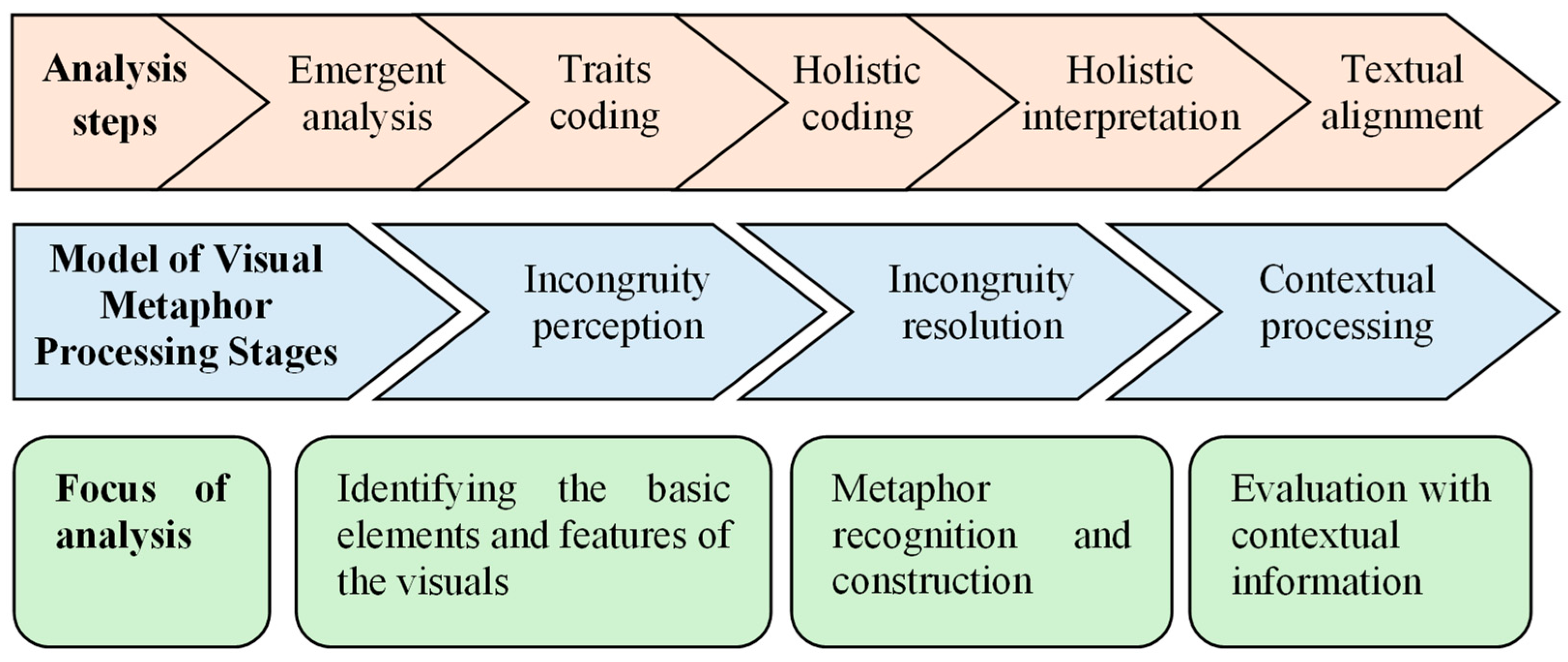
Figure 1. Framework for analysing visual metaphors (adapted from Šorm and Steen (2013) and Bessette and Paris (2020)).
Education 15 01608 g001
Figure 2. Annie’s drawings.
Education 15 01608 g002
Figure 3. Jack’s drawings.
Education 15 01608 g003
Figure 4. Hana’s drawings.
Education 15 01608 g004
Table 1. Background information of the participants.
PseudonymLanguagesCultural HeritagePlace of BirthFirst and Home LanguageDominant Language(s)
AnnieEnglish, Serbian, Mandarin, FrenchSerbianAustraliaSerbianEnglish, Serbian
JackEnglish, Cantonese
Mandarin
ChineseAustraliaCantoneseEnglish
HanaEnglish,
Japanese, Mandarin,
Korean
JapaneseJapanJapaneseEnglish, Japanese
Disclaimer/Publisher’s Note: The statements, opinions and data contained in all publications are solely those of the individual author(s) and contributor(s) and not of MDPI and/or the editor(s). MDPI and/or the editor(s) disclaim responsibility for any injury to people or property resulting from any ideas, methods, instructions or products referred to in the content.