Article

Mobile Money Adoption and Bank Credit Growth: Evidence from Sub-Saharan Africa

by
Justice Mundonde
* and
Patricia Lindelwa Makoni
Department of Finance, Risk Management and Banking, College of Economic and Management Sciences, University of South Africa, Pretoria 0003, South Africa
*
Author to whom correspondence should be addressed.
Economies 2026, 14(7), 256; https://doi.org/10.3390/economies14070256 (registering DOI)
Submission received: 16 March 2026 / Revised: 8 May 2026 / Accepted: 14 May 2026 / Published: 5 July 2026

Abstract

Whether mobile money complements or threatens the banking sector in Sub-Saharan Africa has been a contentious issue. This study aims to empirically investigate the impact of mobile money adoption on bank credit in Sub-Saharan Africa by addressing the question: Does mobile money adoption affect bank credit to the private sector in Sub-Saharan Africa? A quantitative research design was used to answer the research question. The panel Autoregressive Distributed Lag-Pooled Mean Group (ARDL-PMG) model was applied to annual data collected from 2012 to 2024. The study found that mobile money has a positive long-term influence on bank credit growth in SSA. A set of control variables—gross domestic product, the inflation rate, trade openness, and political stability—is also a significant determinant of growth in bank credit to the private sector in SSA. Policy frameworks should facilitate interoperability between mobile money and banks and enhance soft and hard infrastructure that builds trust and confidence in digital finance. Further research can adopt other econometric frameworks and compare the findings with our study.

1. Introduction

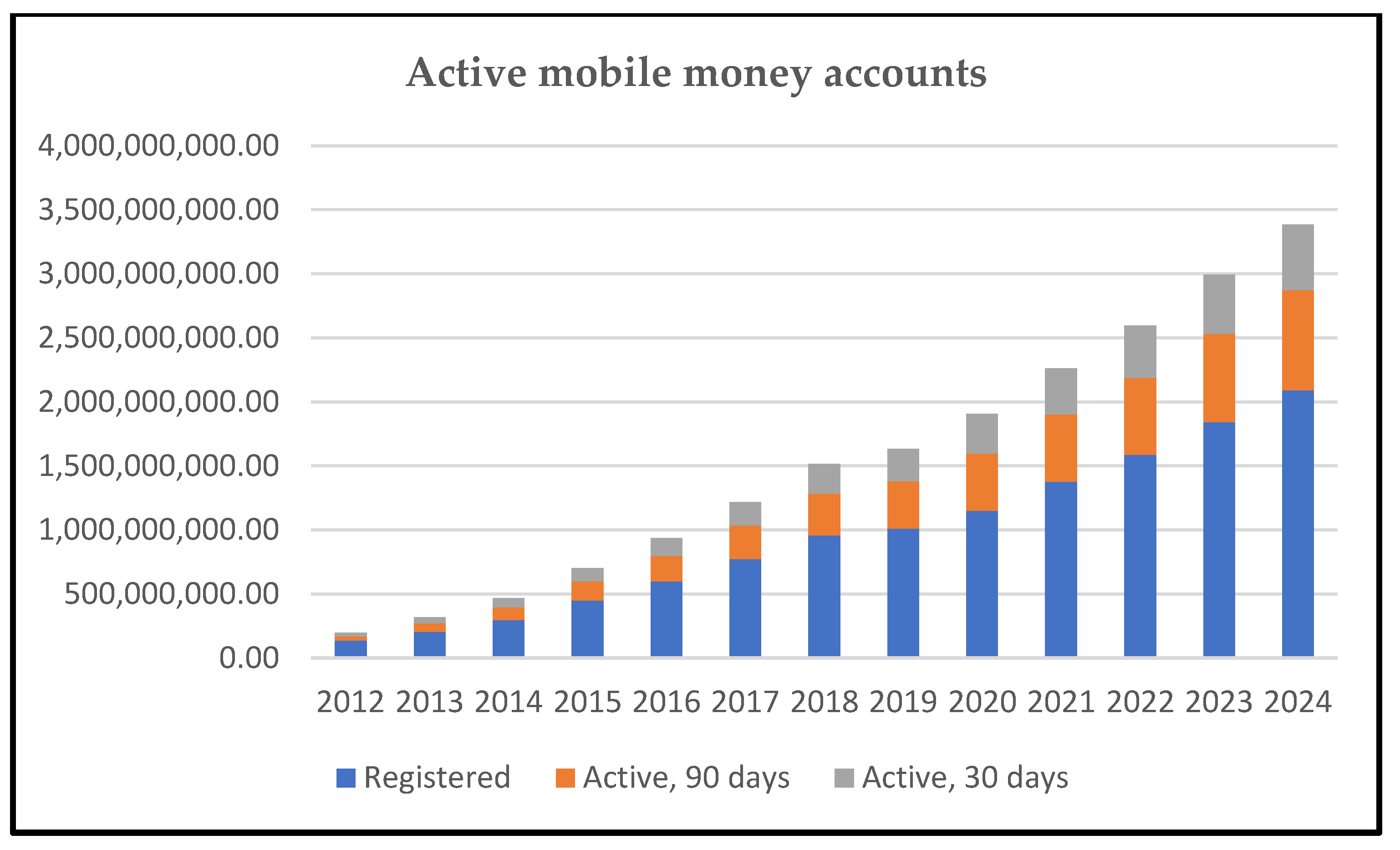
Over the past decade, in Africa’s financial architecture, the advent and growth of mobile money services have become two of the most transformative developments. Initially designed to facilitate person-to-person low-value transactions (Ahiabenu, 2021), mobile money services have evolved into an integrated financial ecosystem, with service coverage that includes international remittances, microinsurance, pension, and other merchant services. In the broad context of the fourth industrial revolution, the (Groupe Speciale Mobile Association [GSMA], 2024) recognizes, in many ways, mobile money as Africa’s stand-out success story. This is because, at an international scale, some of the highest mobile money adoption rates are recorded in Sub-Saharan Africa (SSA). Estimates indicate that SSA has 856 million registered mobile money accounts, with 237 million of these accounts being active. With respect to transaction volumes and value, SSA reports 62 billion and $919 billion, respectively (Groupe Speciale Mobile Association [GSMA], 2024), evidence that higher mobile money adoption is associated with high transaction values in SSA. Figure 1 provides a pictographic image of this association.
According to Tembo (2023) and (Groupe Speciale Mobile Association [GSMA], 2024), as depicted in Figure 2, the West African Economic and Monetary Union (WAEMU) has overtaken the East African Community (EAC) to become Africa’s mobile money powerhouse. Recently, WEMU has recorded very significant growth in the adoption and use of mobile money. Between 2018 and 2022, more than 110 million (60% of the WEMU population) new mobile money accounts were opened across households and firms. In 2006, WEMU adopted the Banque Centrale des États de l’Afrique de l’Ouest (BCEAO), a strategic policy framework that explains the popularity of mobile money as a digital financial service (DFS) (Bokino & Le Heron, 2022; Groupe Speciale Mobile Association [GSMA], 2024). The liberalized policy framework opened the mobile money landscape, firstly from the standpoint of the bank-led model, where e-money services are carried out by either a bank or micro-finance institutions (MFIs) in partnership with a Mobile Network Operator (MNO) or fintech company. Secondly, the non-bank model enabled any legal entity, except banks or payment institutions, to offer financial services as a licensed mobile money issuer (Mbhele, 2021; Mpofu, 2022). The (African Development Bank Group [AfDB], 2012) and Mpofu (2022) stated that the non-bank-led model applies to many African countries, based on its transformational outreach to unbanked populations. This observation is supported by the increase in financial inclusion metrics from 56% to over 71% in WAEMU following the implementation of this policy (Mbhele, 2021; Mpofu, 2022; Groupe Speciale Mobile Association [GSMA], 2024).
Pelletier et al. (2020) noted that the expansion of mobile money coverage has occurred amid longstanding structural weakness in the traditional banking systems. In developing countries in particular, the branch banking business model has limited outreach and, in some cases, even lacks the dynamic capability to change. Geographically, the distribution of branch banking networks is concentrated in large urban cities, where the target market segment is high-net-worth businesses and individuals (Rafaj & Siranova, 2020). Pelletier et al. (2020) adopted a transaction cost theory approach to explain the phenomenon, arguing that the cost of establishing and running a branch-based banking network is inversely associated with the level of economic activity and population density. By implication, the high transaction costs of running a branch-based banking model meant that traditional banks cannot service the bulk of the population in SSA and other developing countries at a profit. The partial coverage by geography and population is a structural weakness in the transitional banking model that has, for a long time, constrained access to financial services, particularly credit (McMillan & Woodruff, 1999; Gosavi, 2018; Pelletier et al., 2020; Aguirregabiria et al., 2024). Other than the distribution of branch networks, high levels of economic informality, the limited or non-existence of collateral, and information asymmetry are cited in Gosavi (2018), Srithirath and Sukcharoensin (2022), and Xu et al. (2020) as constraints limiting the ability of traditional bank models to expand the coverage of credit services. In this context, mobile money has become an innovative financial alternative contributing to efficient financial mediation. It has the potential to enhance liquidity management, encourage savings mobilization, increase the efficiency of payment systems, and reduce information asymmetry (Pelletier et al., 2020). These impacts could, potentially, in turn, affect the availability of credit in the banking sector at least as a theoretical construct. Bank credit growth is a critical component of a healthy economic system. Access to loanable funds fosters private sector investments and long-term economic growth. Atta-Ankomah (2022) further alluded that credit services facilitate household consumption smoothing, especially following a socio-economic shock.
Despite the theoretical intuition that mobile money complements the formal banking system, empirical evidence remains mixed. Some studies argue that through the savings mobilization channel, where small-value informal transactions eventually enter the formal financial channels, mobile money increases the volume of deposits in banking institutions. The (World Bank [WB], 2024) supports this view. In their study, empirical evidence showed that in selected African countries, mobile money facilitated the transition from informal to formal savings channels. Furthermore, Aron (2018) observed that technological innovation in the financial services landscape goes a long way to ameliorate the perennial asymmetric information challenges that constrain bank lending to the collateral-less poor. Sustained use of mobile money services generates a credit footprint that opens a pathway for the registered user to access formal banking services, such as interest-bearing savings accounts, insurance products, and microcredit. From a marketing standpoint, the (OECD, 2024) stated that mobile money technology allows banks to develop large information sets about previously financially excluded segments of the population. Commercial efforts, such as consumer loans, mortgages, and credit card limits, can be targeted more accurately using Big Data Analytics (BDA). However, some view mobile money as an alternative to traditional banking, which could reduce the need for bank deposits and thereby diminish the bank’s role in financial intermediation. In fact, the Aron (2018) cautioned that innovations in financial technology, including mobile money, have the potential to make financial systems less stable and can sometimes trigger or catalyze a financial crisis. Tiriongo and Wamalwa (2020) complement the view of Aron (2018) that mobile money contributes to financial instability through the non-performing loans (NPLs) channel. Their study showed evidence that an increase in the value of mobile money transactions is associated with a 0.07% increase in NPL. Furthermore, Tiriongo and Wamalwa (2020) associated the growth in mobile transactions with the deterioration of capital adequacy and liquidity ratios in Kenya’s banks.
Against the backdrop of an elusive empirical consensus on the relationship between mobile money and bank markets, this study investigates the impact of mobile money adoption on bank credit growth in Africa, utilizing panel data from five regions of the continent. Specifically, the study answers the question: Does mobile money influence bank credit growth in SSA? Ahiabenu (2021), Atta-Ankomah (2022), and Kim and Duvendack (2025) concur that while literature on mobile money is rapidly evolving, its impact on credit growth has not received wider attention. Furthermore, an evidence gap map released by Barry (2019), which reviews existing research on digital financial services, including digital credit, shows that few studies focus specifically on digital credit. Empirical studies tend to focus on how mobile money promotes financial inclusion (Ahmad et al., 2020; Amoah et al., 2020), particularly in terms of immediate financial inclusion indicators, such as access to savings and digital payment instruments. Yet the extent to which mobile money translates into measurable higher-order financial services, such as improvements in bank credit growth in Africa, remains an under-researched area (Atta-Ankomah, 2022). Providing an African perspective on the subject is essential primarily because the relationship between credit markets and mobile money adoption may not be uniform between continents. Variations in institutions, infrastructure, and economic conditions exist. Recognizing how mobile money interacts with banking systems in these different contexts is crucial for developing suitable financial sector policies. Policymakers, central banks, commercial banks, and mobile network operators alike require empirical evidence on whether mobile money enhances or undermines traditional credit intermediation to make informed decisions.
The rest of the paper is organized as follows: Section 2 reviews the theoretical and empirical literature; Section 3 outlines the methodological principles; Section 4 presents and discusses the empirical results; and Section 5 concludes the paper, offering policy recommendations and ideas for future research.

2. Literature Review

Theoretically, the study is founded on the tenets of the Technological Acceptance Model (TAM), which attempts to explain the adoption and acceptance of technology by individuals and organizations. The pioneering work on TAM was proposed by Davis (1989) and holds that perceived usefulness and ease of use explain, to a large extent, the adoption and acceptance of technology. Venkatesh et al. (2003) advanced the Unified Theory of Acceptance and Use of Technology (UTAUT), an extension of the TAM. The essential constructs of the theory are performance expectancy, social influence, effort expectancy, and facilitating conditions. UTAUT views performance expectancy in the context of the user’s belief that the technology will improve their performance. In contrast, effort expectancy speaks to the ease with which the technology can be used. Moreover, facilitating conditions relate to the soft and hard infrastructure that supports the use of technology. At the same time, social influence refers to the societal expectations that influence the persuasion to use technology. The extended adoption and use of mobile money in SSA have been observed to be driven by the factors proposed in TAM models. For instance, Siano et al. (2020) and (Groupe Speciale Mobile Association [GSMA], 2024) observed that hard and soft infrastructure investments in information technology (ICT) in SSA facilitated the adoption and use of mobile money services even in remote and rural Africa. On the other hand, Kitimbo (2021) and Nan et al. (2021) cited the convenience and affordability of mobile money as essential drivers of its use in SSA. Gosavi (2018) and Ahmad et al. (2020) adopted a societal view, stating that mobile money benefits society by providing financial liquidity, promoting financial inclusion for the unbanked, and contributing to a reduction in inequality, especially among women in Africa. Our research extends TAM models by suggesting that mobile money usage, driven by the factors above, has a positive impact on bank credit growth. This occurs through enhanced interoperability, which boosts the liquid financial assets accessible to banks in SSA. The study’s findings will either support or refute the proposed extension of the theory.
Atta-Ankomah (2022) and Kim and Duvendack (2025) observed that, although empirical studies exploring the impact of mobile money on the consumption of other financial services have begun to emerge, this strand of literature is, on average, less visible compared to that on adoption and diffusion. By and large, the literature has given considerable attention to the impact of mobile money on household savings behavior, bank account ownership, and entrepreneurship (Atta-Ankomah, 2022). For instance, Lwanga Mayanja and Adong (2016) reported that, in Uganda, the likelihood of savings increases with the ownership of an active mobile money account, especially for urbanites with access to efficient telecommunications systems. Similarly, Rugemintwari and Sauviat (2018) employed a survey methodology to confirm the hypothesis that the propensity to save for health emergencies increases with the ownership of mobile money accounts among disadvantaged females and other low-income groups in Burkina Faso. In Kenya, a similar finding to Rugemintwari and Sauviat (2018) was reported by Skogqvist (2019). Logistic regression and 2-stage least squares (2SLS) regression were applied to the 2016 financial access survey data, and the findings were that users of mobile money are 1.96 times more likely to purchase a financial savings product, and the propensity to save increases when risk events such as health emergencies are factored in. In terms of the impact of mobile money on either ownership or use of an official bank account, Myeni et al. (2020) showed that in Eswatini, individuals and firms that use mobile money are 19% more likely to have an account with a licensed financial institution. Methodologically, the study employed a quasi-experimental design. However, Myeni et al. (2020) contradict the earlier findings by Batista and Vicente (2013), who used an experimental design and reported that even though the marginal willingness to remit is positively and significantly associated with mobile money, a tendency for mobile money to substitute traditional alternatives for both savings and remittances was observed. Similar findings are reported in Fanta et al. (2016) and Johnson (2016), where mobile money exhibits a substitutionary effect relative to traditional banking services.
While the discussion above demonstrates that the literature on mobile money is undergoing significant evolution, relatively little attention has been given to the impact of mobile money on access to credit, particularly bank loans. An earlier attempt to close this gap was by Nampewo et al. (2016), who applied a vector error correction and Granger causality model to explain the relationship between mobile money and private sector credit growth. Nampewo et al. (2016) provided evidence that in Uganda, a cointegrating relationship exists between mobile money and credit growth. Furthermore, causality runs from mobile money to private sector credit growth, and it is a unidirectional relationship. Our study aims to extend Nampewo et al.’s (2016) analytical approach by adopting a broad SSA perspective, utilizing dynamic panel econometric frameworks to characterize how mobile money influences bank credit. This approach allows the findings to be generalized more effectively than if a single country were used as the unit of analysis.
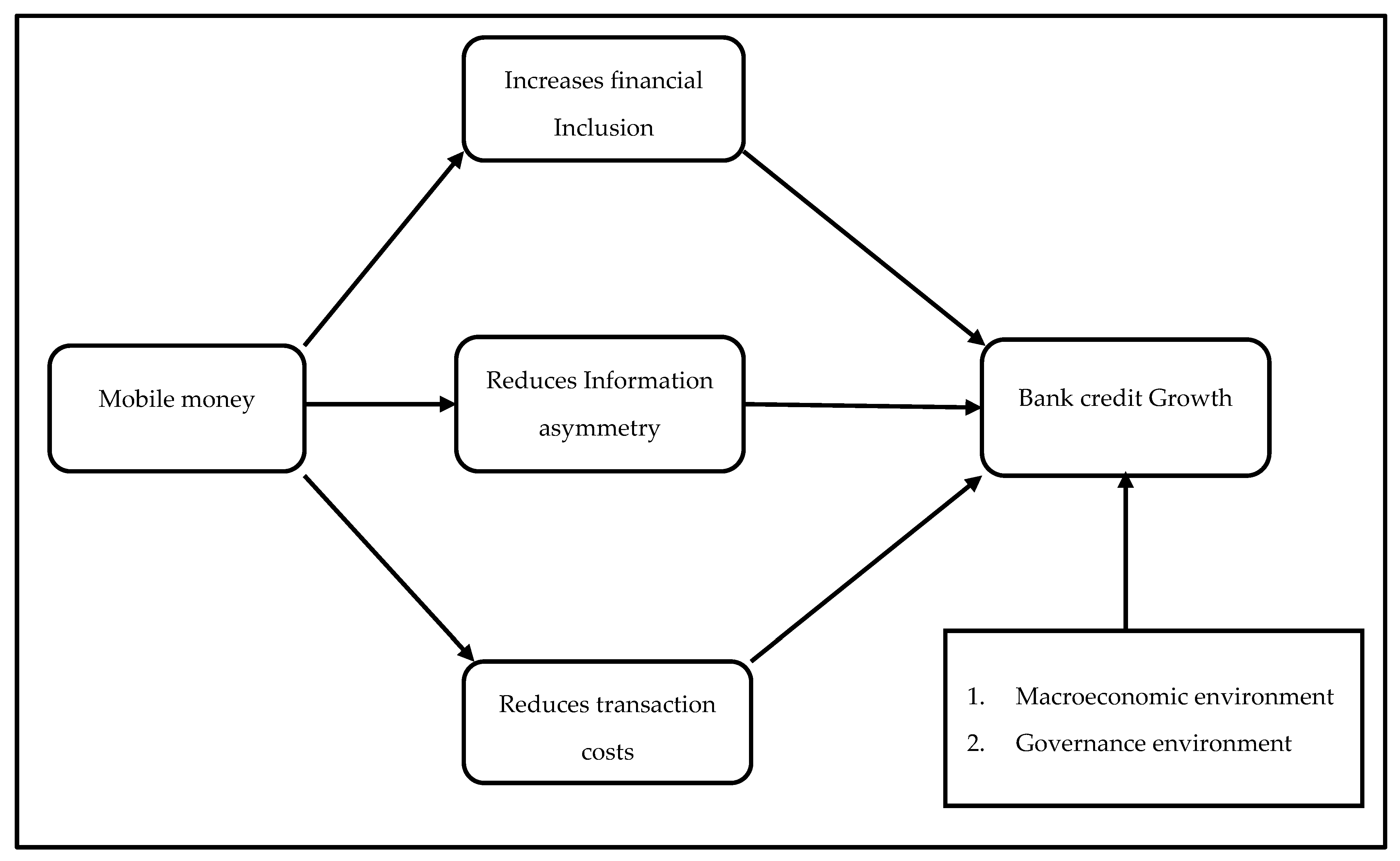
Realizing that, nowadays, banks collaborate with mobile money service providers and offer interest on deposits, Gosavi (2018) answered the question: Can mobile money help firms mitigate the problem of access to finance in Eastern sub-Saharan Africa? The study employed an ordered probit model on the 2013 World Enterprise Survey data. It demonstrated that firms that use mobile money are more likely to secure a line of credit from other enterprises and registered financial institutions, such as banks. Thus, mobile money can not only make financial transactions safer, cheaper, and time-saving but also address the key issue of access to finance for firms (Gosavi, 2018). A recent study by Ahmed and Cowan (2021) employed a difference-in-differences framework to demonstrate that access to credit serves as a channel through which mobile money influences the consumption of healthcare services in the face of adverse shocks in the Kisumu region of Kenya. Ahmed and Cowan (2021) reported a statistically significant impact of mobile money on household decisions to apply for a loan. This finding corroborates an earlier observation in Uganda (Munyegera & Matsumoto, 2018), who used a survey design and concluded that mobile money increases the likelihood of receiving remittances, savings, and ultimately loanable funds consumption. Observations in Gosavi (2018) and Ahmed and Cowan (2021) contradict views from other researchers who have emphasized the substitution effect of mobile money for traditional bank services (Batista & Vicente, 2013; Tiriongo & Wamalwa, 2020). In fact, among other findings, Tiriongo and Wamalwa (2020) reported that mobile money contributes to financial instability through the non-performing loans (NPLs) channel. Their study showed evidence that an increase in the value of mobile money transactions is associated with a 0.07% increase in NPLs. Furthermore, Tiriongo and Wamalwa (2020) associated the growth in mobile transactions with the deterioration of capital adequacy and liquidity ratios in Kenya’s banks. Another interesting finding on mobile money and access to credit is reported in Atta-Ankomah (2022), in a household study in Ghana. Atta-Ankomah (2022) reiterated that the inclusiveness of mobile money in improving access to credit is somewhat debatable, as its impact is influenced by whether households also hold accounts in other financial institutions. The divergence of perspectives underscores the need for comprehensive empirical research. This study aims to bridge the gap by examining the impact of mobile money growth on bank credit allocation in Sub-Saharan Africa. This contributes to a deeper understanding of the changing financial landscape. It moves beyond previous research, which mainly focused on financial inclusion, by answering the question: Does mobile money influence bank credit growth in SSA? Schematically, Figure 3 presents a framework for interrogating the key question that underpins this study. The increase in financial inclusion, the reduction in information asymmetry, and the reduction in transaction costs are positively linked to bank credit growth.
The methodological aspects of the study are discussed in the subsequent section.

3. Methodology

3.1. Data and Variables Description

This research benefited from several publicly accessible data sources. The GSMA provided data on the value of mobile money transactions for five SSA regions: Central Africa, East Africa, North Africa, South Africa, and West Africa. The World Development Indicator (WDI), United Nations Conference on Trade and Development (UNCTD), and the World Governance Indicators (WGIs) databases complement the GSMA data. These databases have underpinned several studies in economics and finance (Tiriongo & Wamalwa, 2020; Manasseh et al., 2026). Unlike Tembo (2023), who preferred quarterly data for econometric analysis, yearly data were extracted for the 13 years between 2012 and 2024 instead. The variables of interest are described as follows: real GDP per capita (expressed in 2010 USD prices), the inflation rate (proxied through the consumer price index (CPI), trade openness (TOP), measured as the sum of exports and imports as a percentage of GDP, and political stability, defined by the World Bank (WB) as the perception on the likelihood politically motivated violence including terrorism. A percentile rank of PS is used in the study. The GSMA defines mobile money MMN as a financial service enabling users to store, send, and receive funds through a mobile phone, without the need for a traditional bank account. This definition is adopted, where mobile money is proxied by the annual value of such transactions. The dependent variable is the value of domestic credit to the private sector by banks (BCP). WB defines BCP as financial resources supplied to the private sector by other depository firms, excluding those from central banks. Lwanga Mayanja and Adong (2016) and Tembo (2023) adopted a similar definition of explanatory and control variables. Stata/SE 14.2 is used to analyze the data. It is important to note that we used a simple average method to generate regional aggregate values for the dependent and control variables. The approach is rationalized on the grounds that the study seeks to capture the average institutional and macroeconomic environment within the regions, rather than the influences of dominant economies or population sizes. Furthermore, simple averages mitigate against the introduction of weighting assumptions that may bias the findings, especially in the absence of reliable weighting variables across countries and time periods.

3.2. Model Specification

Guided by a Hausman test statistic value of 0.26 and a probability value of 0.96, this study applied the panel Autoregressive Distributed Lag (ARDL), pooled mean group (PMG) proposed in Pesaran et al. (1999). The ARDL-PMG uses the lagged variables of the independent and dependent variables as explanatory variables. According to Pesaran et al. (1999), the model allows short-term coefficients and errors to vary across panel groups, while long-term coefficients remain constant (Tembo, 2023). This pooling and averaging allow the ARDL-PMG model to produce reliable estimates of short-term coefficients while preserving homogeneous long-term coefficients (Manasseh et al., 2026; Mundonde & Makoni, 2023). The ARDL-PMG model is advantageous in that it is applicable even in small samples. Furthermore, the model estimates both the short-run and long-run coefficients (Chirwa & Odhiambo, 2020), where variables have mixed integration: I(0) and I(1). Its capacity to generate coefficients for both short- and long-term periods helps reveal the effects of mobile money across various timeframes. Haque et al. (2022) recommend panel unit root testing as an essential pre-estimation check when applying the ARDL-PMG framework. Generally, panel unit root tests are classified into two categories: first-generation and second-generation tests. The first-generation tests assume that regression variables are cross-sectionally independent and have uncorrelated residuals in the error correction model (Chirwa & Odhiambo, 2020; Haque et al., 2022). Typical examples of the first-generation panel unit root tests include those by Breitung, Levin et al., as well as Im et al. (Breitung, 2001; Levin et al., 2002; Im et al., 2003). In contrast to the first-generation panel unit root tests, second-generation tests account for cross-sectional dependence, which is typically a result of standard shocks or unobserved factors affecting panel units. Key contributions in this area include tests by Maddala and Wu (1999), Pesaran et al. (1999), and Chudik and Pesaran (2015), among others. These tests are designed to facilitate inference in the presence of cross-sectional dependence, a common feature in macroeconomic and financial datasets. As stated earlier, the panel has 5 SSA regions, and the model is specified as follows:
l o g B C P i t =   δ 0 + δ 1 B C P i t 1 +   δ 2 l o g M M N i t 1 + δ 3 l o g G D P i t 1 + δ 4 C P I i t 1 + δ 5 T O P i t 1 + δ 6 I Q I i t 1 + i = 0 p δ 1 i   l o g B C P i t 1 + i = 0 q δ 2 i   l o g M M N i t 1 + i = 0 q δ 3 i   l o g G D P t 1 + i = 0 q δ 4 i   C P I i t 1 + i = 0 q δ 5 i   T O P i t 1 + i = 0 q δ 6 i   I Q I t 1 + ε i t
where B C P i t is the level of bank credit to the private sector as % of GDP for the SSA region at time t, M M N i t is the value of mobile money transactions for region i at time t, G D P i t is the per capita gross domestic product for region i at time t, C P I i t is the consumer price index for region i at time t, T O P i t is the degree of trade openness for region i at time t, I Q I i t is the institutional quality variable proxied by political stability for region i at time t, and ε i t is the error term. The respective error correction model (ECM) is specified as:
l o g B C P i t =   δ 0 + i = 0 p δ 1 i   l o g B C P i t 1 + i = 0 q δ 2 i   l o g M M N i t 1 + i = 0 q δ 3 i   l o g G D P t 1 + i = 0 q δ 4 i   C P I i t 1 + i = 0 q δ 5 i   T O P i t 1 + i = 0 q δ 6 i   I Q I t 1 + δ E C T i t 1 + ε i t
Acronyms are defined as in Equation (1). The appropriate lag length is determined using the AIC. After outlining the fundamental principles of the applied econometric framework, the following section presents the empirical findings.

4. Empirical Findings

4.1. Descriptive Statistics

Table 1 shows the descriptive statistics of the variables being analyzed. Between 2011 and 2024, the average value of mobile money transactions was USD 29 billion, with minimum and maximum values of USD 15 billion and USD 216 billion, respectively. The statistics confirm that, as noted by Nampewo et al. (2016), Tiriongo and Wamalwa (2020), and (Groupe Speciale Mobile Association [GSMA], 2024), mobile money services in SSA continue to grow at an exponential rate. The growth in mobile money services in the region is attributed to strategic policy decisions in some of the SSA regional trading blocs (Groupe Speciale Mobile Association [GSMA], 2024). The maximum per capita GDP is USD 6871.72, and the minimum value is USD 1236.97. The standard deviation is USD 1763.92. Generally, this aligns with the purchasing power disparities that characterize the SSA region. Bank credit to the private sector relative to the size of the regional economies had a mean of 39.38% and a standard deviation of 23%. The disparity in regional bank market development is emphasized by the vast difference between the minimum and maximum values of 8.46% and 80.71% (Tembo, 2023). The average trade openness is 21.1, with a standard deviation of 7.6. On the other hand, the political stability index had a mean of 31.94 and a standard deviation of 16.06, indicating that the quality of governance in SSA remains at the infant stage (Mundonde & Makoni, 2023). Most importantly, Table 1 confirms that the data variability is suitable for econometric modeling.
Table 2 presents the correlation matrix of the variables under investigation. The highest linear relationship exists between bank credit and per capita GDP, with a correlation coefficient of 0.7780. Some previous studies have established a significant relationship between the purchasing and the consumption of banking services, including loans (Pham & Nguyen, 2020; Ho & Saadaoui, 2022).
The correlation matrix further provides evidence that mobile money and bank credit growth relate positively with a coefficient of 0.15. The correlation coefficient between bank credit and political stability is 0.63, and between inflation and bank credit is −0.0097. It is worth noting that multicollinearity does not appear to be a concern, as the correlation coefficients among the independent variables are not perfect. The variance inflation factor analysis (VIF) in Table 3 shows that none of the variables has a VIF greater than 10. According to Mundonde and Makoni (2023), multicollinearity becomes a concern once this threshold is broken.

4.2. Cross-Sectional Dependency

Testing for cross-sectional dependency is essential when modeling panel data (Chirwa & Odhiambo, 2020; Haque et al., 2022). Choosing between first-generation and second-generation panel unit root tests is dependent on cross-sectional dependence testing. Although the Frees and Friedman tests could have been used, this study used the widely adopted test in economic and finance studies: Pesaran’s test of cross-sectional independence (Chirwa & Odhiambo, 2020; Haque et al., 2022). Table 4 reports the test results. A probability value greater than 5% indicates that the dataset has no cross-sectional dependence, making the first-generation unit root tests applicable (Chirwa & Odhiambo, 2020; Haque et al., 2022).

4.3. Stationarity Test

The unit root test is performed using the first-generation Im–Pesaran–Shin (IPS) test, and the results are presented in Table 5. The test assumes that countries are independent of each other with some level of heterogeneity expected (Chirwa & Odhiambo, 2020; Haque et al., 2022; Mundonde & Makoni, 2023). The null hypothesis states that the panels have a unit root, whereas the alternative hypothesis suggests the panels are stationary. Table 4 presents evidence of mixed integration, a feature that qualifies the ARDL as an appropriate econometric framework for examining the phenomenon (Chirwa & Odhiambo, 2020; Haque et al., 2022; Mundonde & Makoni, 2023).

4.4. Optimal Lag Selection

The optimal lag structure (p, q, q, q, q, q) is reported in Table 6. The Akaike Information Criterion (AIC) was used to determine the optimal structure. Chirwa and Odhiambo (2020), Haque et al. (2022), and Mundonde and Makoni (2023) used the AIC to determine the lag structure of an ARDL model. The modal lags across SSA regions and variables are retained for further analytics.

4.5. ARDL-PMG Estimation

To manage the risk of spurious regression results and in line with previous studies (Mundonde & Makoni, 2023), we used the Pedroni test prior to estimating the ARDL model to formally confirm the presence or absence of cointegration. With a t-statistic of −2.883 (greater than 1.96) and a corresponding group value of −5.514, the null hypothesis of no cointegration is rejected. The panel ARDL-PMG estimations are reported in Table 7. These findings support the intuition in other studies (Lwanga Mayanja & Adong, 2016; Nampewo et al., 2016; Atta-Ankomah, 2022) that increasing the adoption and use of mobile money in SSA contributes to higher household and firm consumption of higher-order financial services, such as bank credit. Mobile money has a significant and positive relationship at the 1% level of significance to bank credit to the private sector in SSA in the long run. In this respect, our study reports similar findings to those in Nampewo et al. (2016) and Tembo (2023).
The findings can be rationalized based on the interoperability between mobile money platforms and banks, suggesting a direct relationship between mobile money and bank liquidity. Consequently, as the amount of liquid assets increases, there will also be a corresponding growth in funds available for lending businesses, leading to an increase in banks’ private-sector credit. Pelletier et al. (2020) provided evidence that the spill-over effects of mobile money into bank credit markets are more potent when the service is offered by or in conjunction with a bank. Furthermore, mobile money has significantly contributed to reducing information asymmetry, particularly among previously financially marginalized segments of society (Gosavi, 2018; Pelletier et al., 2020; Aguirregabiria et al., 2024). Large volumes of data generated on mobile money platforms create digital footprints that facilitate creditworthiness assessments, enabling banks to offer credit over time. On the other hand, the insignificant short-run coefficient of 0.102 suggests that MMN does not have an immediate impact on BCP. This may reflect the influence of frictional factors like the limited integration between MMN platforms and the formal banking systems in SSA, and the time lag required for digital financial innovations to translate into formal credit expansion.
In addition to mobile money, the primary explanatory variable in our study, evidence suggests that bank credit responds positively to per capita GDP, and the relationship is positive and significant at the 1% level. This observation is not counterintuitive, given the vast amounts of financial and economic literature that support the causality between GDP and credit growth (Pham & Nguyen, 2020; Ho & Saadaoui, 2022). Similarly, the impact of inflation on bank credit is substantial and negative. According to Bodie et al. (2021), inflation hurts investment returns. Consistently high levels of inflation tend to erode the real value of loan returns, increasing uncertainty and credit risks to which banks respond by reducing the supply of loan funds. Evidence further suggests that the credit extended to the private sector by banks in SSA is positively related to improvements in the governance environment, as measured by the percentile ranking of the political stability metric. This finding corroborates Ouedraogo and Sawadogo (2022) and Tembo (2023), who suggest that conflicts and political instability are key factors in explaining systemic banking crises. If not contained, politically related banking crises tend to spill over into neighboring countries (Ouedraogo & Sawadogo, 2022). Regarding the impact of trade openness on bank credit to the private sector, the relationship is significant and positive in the long term. Generally, more open economies are associated with higher imports and exports in goods and services, which tends to create high demand for trade finance. The error correction term in our model falls within the acceptable negative range, confirming the long-term relationship between bank credit, mobile money, GDP, inflation, trade openness, and political instability, which self-correct at a 31% speed of adjustment.

5. Conclusions and Policy Recommendations

This study answered the question: Does mobile money influence bank credit growth in SSA? A panel ARDL-PMG model was estimated, and the findings indicated that in the long run, mobile money is a significant determinant of bank credit to the private sector. Further evidence suggests that the GDP and inflation also influence bank credit growth in the SSA region. The inflation rate has a more substantial influence in the long run than in the short run. The study also showed that the quality of institutions, as measured by the percentile ranking of the political stability index, is a significant determinant of bank credit growth, reflecting the potential for credit market disruption in the event of political turmoil in SSA. The findings of this study have several policy implications. Firstly, having confirmed that mobile money complements the banking sector, stimulating credit growth, the policy frameworks in SSA should focus on promoting interoperability between banks and mobile money operators. Integrating competencies and specialties between the banking and tech sectors is expected to support the development of digital credit projects that can foster credit availability for the financially excluded small businesses in SSA. Secondly, while this is important to the SSA region, this recommendation applies even to other regions such as those in Asia and Latin America, where mobile money adoption is increasing, but the infrastructure gaps persist. It is essential that in these regions, governments seek to expand broadband connectivity and strengthen cybersecurity frameworks in order to build trust and ensure the scalability of digital credit systems. Lastly, since GDP positively correlates with bank credit growth, governments in SSA should promote high-growth impact sectors, such as agriculture and manufacturing, to generate and sustain credit demand. This study contributes to closing the empirical gap on mobile money and bank credit growth in SSA by using a dynamic model that captures both short- and long-term time horizons. This is important given that competing paradigms exist on the effect of mobile money on the banking sector credit growth.

Directions for Future Research

Further research can apply other modeling frameworks not used in this study and compare the findings or even replicate the same study under different theoretical frameworks. In addition, the sample frame can be extended to include other geographical regions not specifically included in this study. This will improve the generalizability of the research findings.


Author Contributions

Conceptualization, J.M.; formal analysis, J.M.; methodology, J.M. and P.L.M.; project administration, P.L.M.; software, J.M.; supervision, P.L.M.; validation, P.L.M.; writing—original draft preparation, J.M.; writing—review and editing, P.L.M. All authors have read and agreed to the published version of the manuscript.

Funding

The research received no external funding. The APC was sponsored by the University of South Africa (UNISA).

Institutional Review Board Statement

Not applicable.

Informed Consent Statement

Not applicable.

Data Availability Statement

The data used in this study is available upon reasonable request from the corresponding author.

Acknowledgments

The Authors appreciate the comments received from the 2026 Digital Technology Conference, CSIR International Conference Centre, Pretoria, South Africa: 24–26 February 2026, where the initial draft paper was presented.

Conflicts of Interest

The authors declare no conflicts of interest.

References

  1. African Development Bank Group. (2012). Economic brief—Mobile money services, regulation and creating an enabling environment in Africa. African Development Bank. Available online: https://www.afdb.org/en/documents/document/economic-brief-mobile-money-services-regulation-and-creating-an-enabling-environment-in-africa-30329?utm_source=chatgpt.com (accessed on 16 November 2025).
  2. Aguirregabiria, V., Clark, R., & Wang, H. (2024). The geographic flow of bank funding and access to credit: Branch networks, local synergies and competition. arXiv. [Google Scholar] [CrossRef]
  3. Ahiabenu, K. (2021, November 25–26). Mapping mobile money loan ecosystem: Insights from Ghana [Conference session]. IEEE 2021 14th CMI International Conference-Critical ICT Infrastructures and Platforms (CMI) (pp. 1–8), Copenhagen, Denmark. [Google Scholar]
  4. Ahmad, A. H., Green, C., & Jiang, F. (2020). Mobile money, financial inclusion and development: A review with reference to African experience. Journal of Economic Surveys, 34(4), 753–792. [Google Scholar] [CrossRef]
  5. Ahmed, H., & Cowan, B. (2021). Mobile money and healthcare use: Evidence from East Africa. World Development, 141, 105392. [Google Scholar] [CrossRef]
  6. Amoah, A., Korle, K., & Asiama, R. K. (2020). Mobile money as a financial inclusion instrument: What are the determinants? International Journal of Social Economics, 47(10), 1283–1297. [Google Scholar] [CrossRef]
  7. Aron, J. (2018). Mobile money and the economy: A review of the evidence. The World Bank Research Observer, 33(2), 135–188. [Google Scholar] [CrossRef]
  8. Atta-Ankomah, R. (2022). Credit for households in Ghana: Has mobile money (momo) improved inclusive access? Scientific African, 16, e01230. [Google Scholar] [CrossRef]
  9. Barry, N. (2019). The digital finance evidence gap map (EGM). Caribou Digital, Supported by the Mastercard Foundation. Available online: https://caribou.global/publications/the-digital-finance-evidence-gap-map-egm/ (accessed on 8 May 2026).
  10. Batista, C., & Vicente, P. C. (2013). Introducing mobile money in rural Mozambique: Evidence from a field experiment. SSRN. Available online: https://doi.org/10.2139/ssrn.2384561 (accessed on 8 May 2026).
  11. Bodie, Z., Kane, A., & Marcus, A. J. (2021). Investments (12th ed.). McGraw-Hill Education. [Google Scholar]
  12. Bokino, R., & Le Heron, E. (2022). Monetary policy committees at the Central Bank of West African States (BCEAO) and the Bank of the Central African States (BEAC). In The future of central banking (pp. 337–359). Edward Elgar Publishing. [Google Scholar] [CrossRef]
  13. Breitung, J. (2001). The local power of some unit root tests for panel data. In Nonstationary panels, panel cointegration, and dynamic panels (pp. 161–177). Emerald Group Publishing Limited. [Google Scholar] [CrossRef]
  14. Chirwa, T. G., & Odhiambo, N. M. (2020). Public debt and economic growth nexus in the Euro area: A dynamic panel ARDL approach. Scientific Annals of Economics and Business, 67(3), 291–310. [Google Scholar] [CrossRef]
  15. Chudik, A., & Pesaran, M. H. (2015). Common correlated effects estimation of heterogeneous dynamic panel data models with weakly exogenous regressors. Journal of Econometrics, 188(2), 393–420. [Google Scholar] [CrossRef]
  16. Davis, F. D. (1989). Perceived usefulness, perceived ease of use, and user acceptance of information technology. MIS Quarterly, 13(3), 319–340. [Google Scholar] [CrossRef] [PubMed]
  17. Fanta, A. B., Mutsonziwa, K., Goosen, R., Emanuel, M., & Kettles, N. (2016). The role of mobile money in financial inclusion in the SADC region. FinMark Trust. [Google Scholar]
  18. Gosavi, A. (2018). Can mobile money help firms mitigate the problem of access to finance in Eastern sub-Saharan Africa? Journal of African Business, 19(3), 343–360. [Google Scholar] [CrossRef]
  19. Groupe Speciale Mobile Association. (2024). The state of the industry report on mobile money 2024. GSMA. Available online: https://www.gsma.com/sotir/wp-content/uploads/2024/03/GSMA-SOTIR-2024_Report.pdf (accessed on 8 May 2026).
  20. Haque, M. A., Biqiong, Z., & Arshad, M. U. (2022). Sources of financial development and their impact on FDI inflow: A panel data analysis of middle-income economies. Economies, 10(8), 182. [Google Scholar] [CrossRef]
  21. Ho, S. H., & Saadaoui, J. (2022). Bank credit and economic growth: A dynamic threshold panel model for ASEAN countries. International Economics, 170, 115–128. [Google Scholar] [CrossRef]
  22. Im, K. S., Pesaran, M. H., & Shin, Y. (2003). Testing for unit roots in heterogeneous panels. Journal of Econometrics, 115(1), 53–74. [Google Scholar] [CrossRef]
  23. Johnson, S. (2016). Competing visions of financial inclusion in Kenya: The rift revealed by mobile money transfer. Canadian Journal of Development Studies/Revue Canadienne d’études du Développement, 37(1), 83–100. [Google Scholar] [CrossRef]
  24. Kim, M., & Duvendack, M. (2025). Digital credit for all? An empirical analysis of mobile loans for financial inclusion in Kenya. Information Technology for Development, 31(3), 559–576. [Google Scholar] [CrossRef]
  25. Kitimbo, A. (2021). Mobile money and financial inclusion of migrants in sub-Saharan Africa. In Research handbook on international migration and digital technology (pp. 251–266). Edward Elgar Publishing. [Google Scholar] [CrossRef]
  26. Levin, A., Lin, C. F., & Chu, C. S. J. (2002). Unit root tests in panel data: Asymptotic and finite-sample properties. Journal of Econometrics, 108(1), 1–24. [Google Scholar] [CrossRef]
  27. Lwanga Mayanja, M., & Adong, A. (2016). A pathway to financial inclusion: Mobile money and individual savings in Uganda. Economic Policy Research Centre. [Google Scholar] [CrossRef]
  28. Maddala, G. S., & Wu, S. (1999). A comparative study of unit root tests with panel data and a new simple test. Oxford Bulletin of Economics and Statistics, 61(S1), 631–652. [Google Scholar] [CrossRef]
  29. Manasseh, C. O., Ngong, C. A., Logan, C. S., Ede, K., & Okanya, O. (2026). Financial technology, innovation, and bank performance nexus: Evidence from ECOWAS member countries. Journal of African Business, 27, 439–457. [Google Scholar] [CrossRef]
  30. Mbhele, S. (2021). Non-bank and bank-led electronic banking policy: A comparative study between Kenya and South Africa [Master’s thesis, University of the Witwatersrand]. [Google Scholar]
  31. McMillan, J., & Woodruff, C. (1999). Interfirm relationships and informal credit in Vietnam. The Quarterly Journal of Economics, 114(4), 1285–1320. [Google Scholar] [CrossRef]
  32. Mpofu, F. Y. (2022). Industry 4.0 in financial services: Mobile money taxes, revenue mobilisation, financial inclusion, and the realisation of sustainable development goals (SDGs) in Africa. Sustainability, 14(14), 8667. [Google Scholar] [CrossRef]
  33. Mundonde, J., & Makoni, P. L. (2023). Public private partnerships and water and sanitation infrastructure development in Zimbabwe: What determines financing? Environmental Systems Research, 12, 14. [Google Scholar] [CrossRef]
  34. Munyegera, G. K., & Matsumoto, T. (2018). ICT for financial access: Mobile money and the financial behavior of rural households in Uganda. Review of Development Economics, 22(1), 45–66. [Google Scholar] [CrossRef]
  35. Myeni, S., Makate, M., & Mahonye, N. (2020). Does mobile money promote financial inclusion in Eswatini? International Journal of Social Economics, 47(6), 693–709. [Google Scholar] [CrossRef]
  36. Nampewo, D., Tinyinondi, G. A., Kawooya, D. R., & Ssonko, G. W. (2016). Determinants of private sector credit in Uganda: The role of mobile money. Financial Innovation, 2(1), 13. [Google Scholar] [CrossRef]
  37. Nan, W., Zhu, X., & Lynne Markus, M. (2021). What we know and don’t know about the socioeconomic impacts of mobile money in Sub-Saharan Africa: A systematic literature review. The Electronic Journal of Information Systems in Developing Countries, 87(2), e12155. [Google Scholar] [CrossRef]
  38. Organisation for Economic Co-Operation and Development. (2024). FinTech lending in Sub-Saharan Africa. OECD Publishing. Available online: https://www.oecd.org/content/dam/oecd/en/topics/policy-sub-issues/digital-finance/FinTech-lending-in-Sub-Saharan-Africa.pdf (accessed on 8 May 2026).
  39. Ouedraogo, S., & Sawadogo, H. (2022). Financial development, financial structure and economic growth in the Sub-Saharan African countries. International Journal of Finance & Economics, 27(3), 3139–3162. [Google Scholar] [CrossRef]
  40. Pelletier, A., Khavul, S., & Estrin, S. (2020). Innovations in emerging markets: The case of mobile money. Industrial and Corporate Change, 29(2), 395–421. [Google Scholar] [CrossRef]
  41. Pesaran, M. H., Shin, Y., & Smith, R. P. (1999). Pooled mean group estimation of dynamic heterogeneous panels. Journal of the American Statistical Association, 94(446), 621–634. [Google Scholar] [CrossRef]
  42. Pham, H. M., & Nguyen, P. M. (2020). Empirical research on the impact of credit on economic growth in Vietnam. Management Science Letters, 10(12), 2897–2904. [Google Scholar] [CrossRef]
  43. Rafaj, O., & Siranova, M. (2020). Growth of city regions and bank branch localization. SHS Web of Conferences, 74, 05019. [Google Scholar] [CrossRef]
  44. Rugemintwari, C., & Sauviat, A. (2018). Does mobile money affect saving behaviour? Evidence from a developing country. Journal of African Economies, 27(3), 285–320. [Google Scholar] [CrossRef]
  45. Siano, A., Raimi, L., Palazzo, M., & Panait, M. C. (2020). Mobile banking: An innovative solution for increasing financial inclusion in Sub-Saharan African countries: Evidence from Nigeria. Sustainability, 12(23), 10130. [Google Scholar] [CrossRef]
  46. Skogqvist, J. M. (2019). The effect of mobile money on savings behaviors of the financially excluded [Master’s thesis, Södertörn University]. [Google Scholar]
  47. Srithirath, V., & Sukcharoensin, P. (2022). Financial literacy, asymmetric information, and credit accessibility: Case study of SMEs in the lao PDR. Development Economic Review, 16(1), 27–52. [Google Scholar]
  48. Tembo, J. (2023). Mobile money and banking development in Sub-Saharan Africa. Scientific Annals of Economics and Business, 70(4), 629–650. [Google Scholar] [CrossRef]
  49. Tiriongo, S., & Wamalwa, P. (2020). The effect of mobile money on banking sector stability in Kenya (KBA Centre for Research on Financial Markets and Policy® Working Paper Series No. 43). Kenya Bankers Association. [Google Scholar]
  50. Venkatesh, V., Morris, M. G., Davis, G. B., & Davis, F. D. (2003). User acceptance of information technology: Toward a unified view. MIS Quarterly, 27, 425–478. [Google Scholar] [CrossRef]
  51. World Bank. (2024). Data from the Global Findex 2021: The impact of mobile money in Sub-Saharan Africa. World Bank. Available online: https://thedocs.worldbank.org/en/doc/63acca3e345e3896403d42c63b886a48-0050062024/original/SSA-Mobile-Money-Note.pdf (accessed on 12 November 2025).
  52. Xu, N., Shi, J., Rong, Z., & Yuan, Y. (2020). Financial literacy and formal credit accessibility: Evidence from informal businesses in China. Finance Research Letters, 36, 101327. [Google Scholar] [CrossRef]
Figure 1. Active mobile money accounts. Source: Author-generated from GSMA data.
Economies 14 00256 g001
Figure 2. Registered mobile money accounts. Source: Author-generated from GSMA data.
Economies 14 00256 g002
Figure 3. Schematic linkage between mobile money and bank credit growth.
Economies 14 00256 g003
Table 1. Descriptive statistics.
VariableObsMeanStd. Dev.MinMax
MMN6529,893,889,732.1048,782,630.6815,031,098.00216,245,313,527.10
BCP6539.3823.188.4680.71
GDP653050.011763.921236.976871.72
CPI658.818.242.4451.62
TOP6521.217.609.6445.14
IQI6531.9416.0617.9470.93
Table 2. Correlation matrix.
BCPMMNGDPINFTOPIQI
BCP1.0000
MMN0.14881.0000
GDP0.7780−0.45521.0000
CPI−0.00970.5473−0.28651.0000
TOP0.0380−0.27750.4644−0.39411.0000
IQI0.6345−0.16860.8013−0.13930.55211.0000
Table 3. Variance inflation analysis.
VariableVIF1/VIF
GDP4.000.249882
IQI3.890.256892
MMN1.880.531987
TOP1.710.586172
CPI1.600.625536
Mean VIF2.62
Table 4. Cross-sectional dependency.
Pesaran’s test of cross-sectional independence statistic−1.793
Pesaran’s test of cross-sectional independence probability value0.0729
Table 5. Stationarity tests.
Im–Persaran–Shin Unit Root Test
VariableAt LevelsAt First DifferenceLevel of Integration
BCP−1.8960−3.210 ***I[1]
MMN−3.8441 ***−4.9610 ***I[0]
GDP−1.9808−3.0527 **I[1]
CPI−2.9230 **−3.4966 ***I[0]
TOP−1.0356−2.9637 **I[1]
IQI−1.9480−4.8261 ***I[1]
*** and ** represent significance at 1% and 5%.
Table 6. AIC lag selection.
REGIONBCDMMNGDPCPITOPIQI
Eastern Africa012010
Middle Africa011100
Northern Africa011212
Southern Africa210221
Western Africa111112
Modal lag011110
Table 7. ARDL-PMG estimates.
VariableLong-Run CoefficientsShort-Run Coefficients
MMN0.190 ***0.102
(0.0257)(0.108)
GDP1.442 ***0.141
(0.308)(0.285)
INF−0.293 ***−0.103 *
(0.0905)(0.0597)
TOP1.124 ***−0.625
(0.297)(0.572)
IQI4.336 ***1.344 **
(0.727)(0.642)
ECT −0.311 *
(0.183)
Constant −9.380 *
(5.442)
Observations6565
***, **, and * represent significance at 1%, 5%, and 10%, respectively.
Disclaimer/Publisher’s Note: The statements, opinions and data contained in all publications are solely those of the individual author(s) and contributor(s) and not of MDPI and/or the editor(s). MDPI and/or the editor(s) disclaim responsibility for any injury to people or property resulting from any ideas, methods, instructions or products referred to in the content.