Article

Policy Alignment Between ECB Unconventional Monetary Policies and China’s Monetary Reforms—A Cross-Region Study

1
School of English and International Studies, Beijing Foreign Studies University, Beijing 100089, China
2
Country and Area Studies Academy, Beijing Foreign Studies University, Beijing 100089, China
*
Author to whom correspondence should be addressed.
Economies 2025, 13(11), 325; https://doi.org/10.3390/economies13110325
Submission received: 3 September 2025 / Revised: 29 October 2025 / Accepted: 6 November 2025 / Published: 12 November 2025
(This article belongs to the Special Issue International Financial Markets and Monetary Policy 2.0)

Abstract

The triple shocks of the financial crisis, sovereign debt crisis, and COVID-19 pandemic have exerted significant impact on the financial markets in the Eurozone. Since the 2008 recession, the European Central Bank (ECB) has implemented an array of unconventional monetary policies (UMPs). These policies aim to address issues such as financing constraints and low inflation rates that the traditional monetary policy framework could not handle. The data indicated that when the ECB implemented its quantitative easing (QE) programs (e.g., the pandemic emergency purchase program), inflation in the Eurozone bounced back. It went up from −0.3% in August 2020 to 5% by December 2021. These measures prevented the pandemic from pushing the economy into a long-lasting deflation pressure. As the world’s second-largest economy, China’s monetary policy decisions play a crucial role in maintaining economic stability and fostering sustainable growth. This study examines ECB’S major unconventional monetary policy measures, evaluates their effects, and explores how these align with China’s monetary policy formulation and reforms. This research can provide useful insights for shaping monetary policy in the Eurozone and emerging economies such as China, especially during times of economic uncertainty.

1. Introduction

The current global economy is marked by uncertainty and notable instability in financial markets, underscoring the crucial role of monetary policy for maintaining economic stability and promoting growth. The subprime mortgage crisis (SMC), which began in the United States (US), rapidly evolved into a global financial crisis in 2008, inflicting severe damage on the world economy. Under various monetary policy transmission mechanisms, conventional monetary policy has failed to produce significant policy effects. To address the crisis on the financial structure and mitigate the market distortions while restoring market confidence and functionality, central banks around the world have to seek for effective monetary control policy, launching a set of unconventional monetary policies (UMPs). The sharp contraction of credit in the Eurozone countries has affected the real economy, deepening the challenges of macroeconomic recession and financial system turbulence, and has simultaneously resulted in economic imbalance (K. Hu & Liu, 2013; K. Hu & Zhong, 2022). The European Central Bank (ECB), is the world’s first central bank to manage a supranational currency, the euro, for the Eurozone. It represents an important milestone in the European integration process (Cabral, 2020), and during the crisis, it has implemented a series of unconventional monetary policies, such as negative interest rate policy (NIRP), quantitative easing (QE) and macroprudential policy over the past nearly two decades in response to the world financial crisis and the European debt crisis. These policies did more than stop the decline. They have helped revive the economic growth, increase inflation levels, and improve financial stability in the Eurozone countries. As the world’s second-largest economy, China’s monetary policies are not just about boosting its own domestic growth; they also play a key role in keeping global finances stable and helping the world economy grow in the long term. However, after years of rapid economic growth, China’s monetary policy now faces a bunch of challenges, such as the need to restructure economics, reducing financial market swings and decreasing financial risk. The ECB’s unconventional approach has been a crucial source of inspiration and reference for China’s own monetary policy reform. Drawing on the experience of ECB and other developed nations with unconventional monetary policy, China accelerated its loan prime rate (LPR) reform starting in 2019. This represents a key step in making interest rates more market-oriented in China.
The economic models of China and the European Union (EU) are indeed different. The Chinese financial system has a higher degree of government involvement, while the Eurozone is more market-driven, and there are also differences in their policiese managing capital flows. However, during the 2008–2012 financial crisis, both the ECB and People’s bank of China (PBOC) faced similar banking crises and capital shortages. This shared need suggests that even with different approaches in normal times, it is valuable for them to learn from each other’s special monetary policies during crises. Both regions have struggled with inefficient policy rate transmission, though for different reasons. Although the ECB introduced its unconventional monetary policy tools after the US Federal Reserve System (US Fed), Bank of England (BoE), and Bank of Japan (BoJ), it possesses a “latecomer advantage”. To be specific, ECB has the ability to learn from these early implementers, and can devise policies that work for all countries in the Eurozone despite their differences.
The ECB’s toolkit, especially its liquidity instruments (e.g., LTROs, QE), together with its macroprudential coordination policies, may offer some valuable reference for the PBOC. Moreover, this study maintains that the ECB’s unconventional monetary policy tools provide adaptable strategies for the PBOC to learn—not copy them directly, but become inspired by the innovative ideas. Therefore, China’s central bank can learn from ECB’s experience of unconventional monetary policy and introduce initiatives to reduce potential risks and foster economic growth more effectively.
Prior studies (e.g., Horvatha & Voslarova, 2017; Mouabbi & Sahuc, 2019; Fang et al., 2023; Pagliari, 2024; R. Y. Chen et al., 2025) have predominantly examined unconventional monetary policies within the Eurozone or China as discrete systems, and our analysis further reveals a significant research gap in cross-regional policy interactions. To date, L. F. Liu et al. (2017) remains the only available study that systematically compares the unconventional monetary policies, with a specific focus on contrasting the ECB’s framework with the PBOC’s structural monetary measures. The current study moves beyond the work of L. F. Liu et al. (2017) by (1) providing the first systematic analysis of post-2020 policy convergence between the ECB and the PBOC, alongside pre-2020 analysis; (2) incorporating new empirical data on the pandemic-era developments; and (3) proposing practical alignment strategies for economic uncertainty.
This study specifically examines the ECB’s unconventional monetary policy practices, and whether they really help the economy. Then, we looked at how these policies are related to China’s own monetary policy reform. Basically, our goal is to determine what lessons policymakers and practitioners in China (also other emerging economies) can learn from the ECB’s approach. These insights can help formulate more effective monetary policy, especially during uncertain economic times or when planning for the future contexts.

2. ECB’s Unconventional Monetary Policy Measures

The eruption of the financial crisis in 2008, followed by the subsequent European sovereign debt crisis in late 2009, placed the Euro area to an unprecedented crisis scenario (H. Wang & Jing, 2019). From then on, the ECB launched an array of unconventional monetary policy measures to tackle the economic crisis and combat the economic depression. This section covers the ECB’s main unconventional policies (see Table 1).

2.1. Long-Term Refinancing Operations

Long-term refinancing operations (LTROs) serve as a measure in the Eurosystem’s open market operations. LTROs adopt a competitive bidding scheme with allocation quantities and variable interest rates being pre-announced to ensure the financing volume meets the liquidity needs of the banking sector (Yang et al., 2012), and this initiative is aimed at helping banks resolve their financing difficulties in maintaining the stability of the financial system. After the outbreak of the financial crisis, the ECB implemented multiple rounds of LTROs.

2.1.1. During the Global Financial Crisis

During the outbreak of the global financial crisis in 2008, the ECB increased the practice of the LTROs. In March 2008, the ECB implemented the LTROs, and extended and relaxed the conditions of the refinancing operation to alleviate the pressure on the liquidity of the banking system, to cope with the financing difficulties and market uncertainties caused by the world financial crisis, and to promote the smooth operation of the credit market. Essentially, by offering multi-year funding, the ECB aimed to calm the markets and avoid a deeper credit freeze.

2.1.2. During the European Sovereign Debt Crisis

During the period of intensification of the European sovereign debt crisis from 2011 to 2012, the ECB again launched several rounds of LTROs, including the 3-year LTROs. The ECB conducted a round of 3-year LTROs in December 2011, and lowered the collateral and margin requirements for Euro area banks’ borrowings. This initiative provided a total of 489 billion euros of 3-year low-interest loans. This round of refinancing operation program was unprecedented, both in terms of its scale and maturity (Huang & Xin, 2015), and this initiative played a positive role in the stability of financial markets in the Euro area. In February 2012, the ECB conducted a second round of 3-year LTROs, with financing amounting to 529.5 billion euros. Additionally, it relaxed the level of eligible collateral in seven countries, including Ireland, Austria, Cyprus, Italy, France, Portugal, and Spain, and more small- and medium-sized banks have received financial support as a result (S. Liu, 2012). These LTROs by the ECB provide longer-term liquidity support for Eurozone banks, promoting economic stability and fostering recovery within this region.
From the above, it can be seen that in order to tackle the financial crisis, the ECB has enacted the LTROs. The ECB has also planned to carry out an in-depth analysis on the design of the new LTROs and the new structural portfolio, but has not yet provided the specific time (Financial World, 2024). By adopting these unconventional monetary policy measures such as LTROs at different stages, the ECB actively responds to the economic challenges it faces, promotes liquidity in the credit market, and ensures the sound operation of the Eurozone financial system.
For China, this actually highlights one thing—using similar tools to address pressures within the banking system may be quite effective, especially when the economy slows down or faces external shocks. But China’s unique financial system and rules mean these tools need customization. Specifically, China might need to adjust LTROs to fit its existing macroprudential policies.

2.2. NIRP Initiatives

The ECB first introduced the NIRP in 2014, and subsequently calibrated their level at different stages. The NIRP in the Euro area is primarily intended to promote economic recovery, boost price and credit activity, and help to reach the moderate inflation target of 2% as quickly as possible (Jiang, 2019).

2.2.1. Initial Implementation of NIRP

In June 2014, the ECB initiated the NIRP by lowering the deposit facility rate to a negative level of −0.1 (European Central Bank, 2014). Under this policy, the commercial banks were required to pay 0.1% interest to the ECB for keeping extra deposits. This move was without precedent. Instead of earning interest on their extra cash deposit at the ECB, the banks now had to pay a “storage fee”, just for keeping money there. The primary purpose of this measure is to encourage banks to increase lending and investment activities, in order to promote economic growth and dampen the risk of deflation.

2.2.2. Extension of the NIRP’s Reach

Back in September 2014, the ECB took its NIRP a step further. It reduced the deposit facility rate from −0.1% to −0.2% and extended the policy to cover more bank deposits. After that, banks were required to pay a higher interest to the central bank for depositing their excess cash. This move was part of a broader initiative to tackle persistently low inflation and slow growth in the Eurozone. This measure pushes commercial banks to actually lend or invest that money, and thus fosters the Eurozone’s economic recovery.

2.2.3. Continuation and Optimization of NIRP

After that first move in 2014, the ECB kept enacting its NIRP and made timely adjustments to the level of negative interest rates based on the economic situation and inflation expectations. Three key factors influence the ECB’s NIRP adjustments: the inflation trends, economic growth expectations, and monetary policy objectives. In December 2015 and March 2016, the ECB continued to lower the deposit facility rate, first down to −0.3% in December 2015, and then to −0.4% by March 2016. In September 2019, ECB reduced the deposit facility rate to a historic low of −0.5%, and indicated that it would continue this approach for the future period of monetary policy.

2.2.4. The Adaption of NIRP During the Epidemic

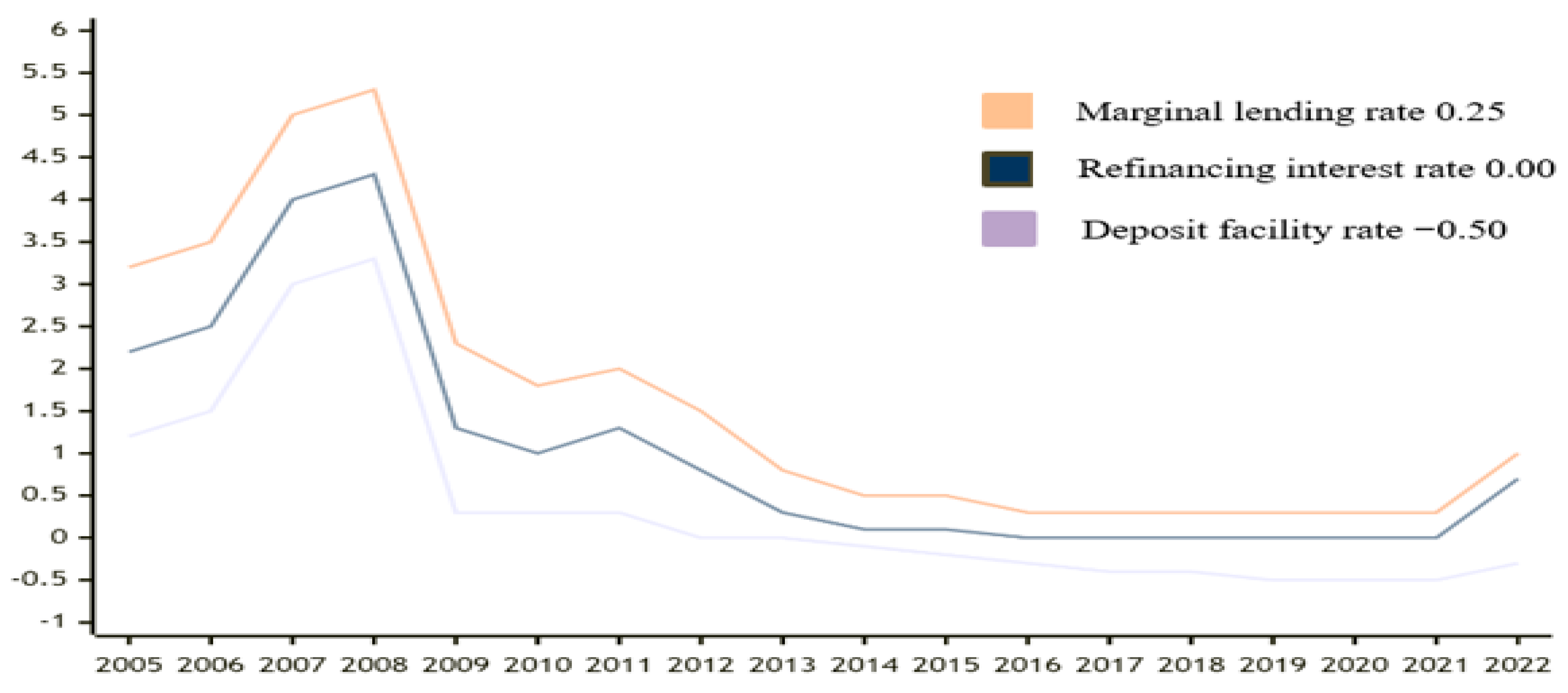
During the COVID-19 epidemic, the ECB continued its NIRP and enacted other unconventional monetary policy measures to cushion the impact of the epidemic on the Euro area economy. In March 2020, the ECB maintained the main refinancing operation (MRO) rate at 0.0%, the marginal lending facility (MLF) rate at 0.25%, and the deposit facility (DF) rate at −0.5% (Figure 1), and provided additional LTROs to support the banking system. ECB’s July 2020 forward guidance stated that it would continue to maintain very low interest rates at a level that would support the recovery of the Euro area economy.
NIRP was introduced to tackle deflationary pressures and stimulate economic activity, and it has been a key factor in stabilizing the Eurozone’s recovery. Its impact is not limited to Europe; it actually offers China some really useful insights for shaping its monetary policy framework. Since China’s financial system is mostly run by state-owned banks, policymakers should not adopt unconventional measures wholesale. Instead, they should adjust existing tools to fit China’s unique situation. When trying out similar monetary policies, China also needs to fully consider potential regional disparities, because what works in one area not necessarily work in another. As China keeps transforming its economy, lessons from the ECB’s NIRP experience can help guide its monetary strategy. The objective is to achieve a balance between boosting growth and keeping the financial system stable.

2.3. QE Policy

The ECB carried out its QE policy at different stages, which is basically a key part of its toolkit for unconventional monetary policy framework. In simple terms, QE works by central banks printing money to buy bonds from the public (Matousek et al., 2019). The objective is to stimulate credit activity and maintain the stability of the financial system by adjusting the monetary policy, and ultimately promoting the economic recovery and growth (W. T. Zhang et al., 2022).

2.3.1. Launching of QE

Back in March 2015, the ECB announced an expanded asset purchase program (APP), basically, the QE program for the Euro area, starting with an initial monthly volume of 60 billion euros. Under this program, the ECB purchased government bonds from all Eurozone member states, as well as other assets such as asset-backed securities (ABS) and covered bonds from financial institutions within the Eurozone region at the time. The primary goal of this measure is to fight off deflation pressures and economic recession in the EU region. Basically, by injecting money into the economy, the ECB was trying to stimulate economic activity, create more jobs, boost growth, and prevent the economy from staying stagnant for too long.

2.3.2. Extending the Scale of QE

Over the following years, the ECB modified its QE program, because the economic conditions and new challenges evolved. It increased the purchasing amounts and extended the timeline. Essentially, these adjustments aim to provide a stronger economic support. In March 2016, the ECB increased its monthly asset purchases to 80 billion euros and it added corporate bonds to the program. Additionally, the ECB announced it would extend QE until December 2017. In March 2019, the ECB paused its plan to end the bond-buying program, extending it until the end of the year. It also clarified that it would maintain low interest rates for years to come.

2.3.3. Enacting QE in Response to Epidemic

When COVID-19 hit Europe, the ECB heightened its QE efforts by enacting more asset purchase programs. It implemented massive new asset-buying programs, including its pandemic emergency purchase progamme (PEPP), to mitigate the economic blow from the pandemic. In March 2020, the ECB launched the PEPP at 750 billion euros (European Central Bank, 2020a), but as the crisis deepened, it was expanded to 1.85 trillion euros (European Central Bank, 2020b). However, as inflation began rising rapidly, the ECB took corresponding actions. In March 2022, it announced the plan to end its QE in the third quarter, and raise interest rates at a later date (W. T. Zhang et al., 2022).
Th ECB’s QE policy has played an important role in enhancing economic growth and keeping financial markets stable. This policy has helped the central bank achieve its macroeconomic targets under different economic conditions. However, when examining inflation fluctuations between 2021 and 2024, it is obvious the policy had clear limitations. While ECB’s QE demonstrated crisis responsiveness, China’s hybrid monetary–fiscal model (e.g., special-purpose bonds) offers an alternative path. For China, the key policy implication is clear: unconventional measures (e.g., macroprudential tools) must align with institutional strengths. This involves prioritizing structural reforms, such as improving state-owned enterprise efficiency over experimental market interventions, while maintaining capital account controls to prevent QE-like spillover effects.

2.4. TLTRO Initiatives

TLTROs are designed to extend the purchase period and expand the range of collateral on the basis of the traditional LTROs, so as to meet the market demand as well as provide long-term liquidity support for the banking system (Su, 2020). The ECB has adopted TLTROs at different stages as an important initiative of its unconventional monetary policy.

2.4.1. Launch of TLTRO Policy

In June 2014, the ECB launched the initial TLTROs to provide financing totaling about 400 billion euros to boost bank lending to the real economy, raise inflation, and reinforce the transmission of the monetary policy within the Euro area. Basically, this was all part of a bigger policy initiative to keep prices stable and support long-term growth in the Eurozone. The programme was expanded in later rounds, which shows the ECB’s commitment to tackling these tough economic issues.

2.4.2. Adjustment of TLTRO Policy Parameters

In the years that followed, the ECB repeatedly adjusted the terms and scale of TLTRO policy, to accommodate different economic environments and financial market conditions. These adjustments included lowering interest rates, extending loan maturities, and refining eligibility conditions to keep the policy effective. The TLTROs II program, implemented in June 2016, provided a financing amount of approximately 740 billion euros. Since then, the ECB has launched a series of quarterly operations (i.e., TLTROs III), starting in September 2019. These operations offer pricing as low as the average deposit facility rate plus 10 basis points (pbs) for eligible loans, along with relaxed lending criteria (European Central Bank, 2019). On 30 April 2020, to encourage banks to lend more to real economy, the ECB adjusted and significantly eased the conditions of TLTROs III’s financing operations (European Central Bank, 2020c). The adjustment aimed at boosting the economy during the economic decline due to the COVID-19 pandemic.

2.4.3. TLTRO Policy Implementation During the Epidemic

During the COVID-19 epidemic, the ECB further fine-tuned its TLTRO policy, expanding both its size and scope to help banks alleviate the financial stress caused by the epidemic. Additionally, the central bank relaxed the conditions for TLTROs III, which involved cutting interest rates, increasing the amount of funding, and extending loan maturities. In 2020, in response to the COVID-19 crisis, the central bank extended the preferential interest rate’s deadline to June 2022, expanded the scale of QE, and implicated the facility at a lower-than-average refinancing rate, aiming to support the borrowing for small- and medium-sized enterprises (SMEs) (Huitong Finance, 2020).
TLTROs, a crucial component of the ECB’s monetary policy toolbox, provide flexible and targeted monetary policy instruments to address the various economic challenges the ECB faces. These operations show how effective sector-specific liquidity injections can be. China can enhance existing tools, such as pledged supplementary lending (PSL) and relending by introducing tiered interest rates for green and technology loans. This approach better matches national priorities. At the same time, China should make it easier for small businesses, especially those in rural areas, to receive support.

3. Policy Effectiveness of the ECB’s Unconventional Monetary Policy

The ECB’s unconventional monetary policy indeed played a crucial role in stabilizing financial markets. However, their influence on inflation between 2022 and 2024 cannot be ignored—this relationship is complex and requires in-depth examination.

3.1. Stabilizing Financial Markets

As far as policy effectiveness is concerned, the ECB’s unconventional monetary policy measures were the key to maintain the stability of financial markets (Huang & Xin, 2015). Faced with heavy market pressure during the financial crisis, the ECB took a range of measures to inject liquidity and stabilize markets, including two rounds of LTROs between 2011 and 2012 that provided banks with around 1 trillion euros in low-cost loans. To keep this support going, the ECB followed up with three rounds of TLTROs in 2014, 2016, and 2019. Together, these liquidity measures helped stabilize the financial markets in the Euro area. During the crisis, markets were filled with uncertainty and panic, leading to sharp fluctuations in the stock and bond markets. By injecting liquidity into banks, the ECB eased the volatility of the financial market and restored confidence in the market. Kremer (2015) constructed a standard macro-financial vector autoregression (VAR) model based on real financial control variables, and found that unconventional policy tools can indeed alleviate financial pressures, but their impact on inflation and economic growth is relatively mild.

3.2. Promoting Economic Recovery and Stimulating Economic Growth

The ECB has provided important support to promote economic recovery and growth through its public and private sector bond purchase programs. By implementing the APP, the ECB has successfully lowered long-term interest rates and financing costs. The central bank’s large-scale bond purchases have caused bond prices to rise and their yields to fall, i.e., lowering long-term interest rates. When this happens, firms and individuals can borrow money at lower costs. Banks are also encouraged to provide more loans and credit support, which gives the economy a double boost—more investment and consumption activity. Real-world data indicates that long-term interest rates in the Euro area have continued dropping since the ECB launched its APP. Take Germany’s 10-year government bond yields (nominal, benchmark) as an example. At the start of 2015, they were approximately 0.5%, but at the end of 2021 they had dropped to around −0.18% (Deutsche Bundesbank, n.d.; SDW series DE10Y, data period 2015–2021). In addition, the ECB’s APP boosted market confidence. Businesses felt more confident; they allocated more funds to investments and spending. The effects of these measures are visible in economic indicators. For instance, the Eurozone’s economy grew from −0.4% in 2013 to 2.4% in 2017, and remained stable after that. Meanwhile, the unemployment rate (seasonally adjusted) dropped from 11.6% in 2014 to 7.4% by 2020 (Eurostat, 2021; series une_rt_m). To understand how QE played a role, Forbes et al. (2017) used a Bayesian vector autoregression (VAR) model. They examined how QE impacted real gross domestic product (GDP) and core consumer purchase index (CPI) in the Eurozone from June 2012 to April 2016. The results indicated that if the ECB had not started QE, these two indicators would have declined by 1.3% and 0.9%, respectively (Forbes et al., 2017). More recently, Basdekis et al. (2023) found that when the ECB expanded its balance sheet and used unconventional policies, companies performed better and economies became more stable. Meanwhile, Rincon and Petrova (2024) used the instrumental variables (IVs) and two-stage least squares (2SLS) model to see how changes in the ECB’s balance sheet size affected key European stock market indices. Their study showed intriguing results: during the sovereign debt crisis, a bigger ECB balance sheet actually made index prices fall. However, during the COVID-19 pandemic, this approach backfired, and prices surged dramatically.

3.3. Boosting Inflation and Preventing Deflation

The ECB’s main goal with unconventional monetary policy measures is to maintain inflation level and avoid deflation. Through the provision of liquidity and interest rate reduction, ECB avoids a continued drop in prices and maintains a stable level of inflation. This is vital for mantaining the stability and sustainable growth of Europe’s economy. According to ECB data, since it started the QE policy in January 2015, inflation in the Euro area has never really reached the 2% target. It has fluctuated over the years but has failed to remain at that level. The only exception happened in July 2022, when harmonized index of consumer prices (HICP) of year-on-year inflation reached a record high of 8.9%, largely due to energy price shocks that added 4.2% to the overall figure. Using the VAR model, Gu (2017) examined the inflation data and related variables in the Euro area from January 2014 to March 2017. The study revealed that the ECB’s interest rate cuts and its implementation of the asset purchase program both played a role in raising prices at the risk of deflation, whereas its practice of the TLTROs did not significantly impact the price level.
Although the non-traditional monetary policy actions taken by the ECB have played a part in raising inflation and preventing deflation, they still face some challenges. The ECB has purchased a large amount of bonds, but the inflation level remains below the target set by the central bank except in mid-2018, and then surged above the target from July 2021 onward. This could be a result of convergence of structural issues faced by the ECB, such as slow economic growth, labor market inflexibility, and global trade unpredictability. The above-mentioned structural challenges are constraining the rate inflation increase and rendering it difficult for the ECB to fully realize its intended inflation target.

3.4. Reducing Debt Cost for Eurozone Member States

Reducing the cost of debt is an important objective within the ECB’s unconventional monetary policy measures. The ECB has stabilized the bond markets of Eurozone member states, and reduced their debt cost by purchasing treasury and other bonds, such as the sovereign debt of Eurozone member states, local government debt, and some institutional debt. These purchases enacted by ECB increased market demand and raised bond prices, and led to a lower level of bond yields. With bond yields falling, Eurozone member states could borrow at more favorable interest rates when issuing bonds, enabling them to raise funds more easily. However, some Eurozone governments chose to expand deficits and debt rather than pursue fiscal consolidation when borrowing conditions were favorable. Through the implication of these measures, ECB successfully reduced the cost of debt, relieved national fiscal pressures, and provided more fiscal flexibility to support economic recovery and structural reforms for the member states across the EU.
Employing event-based regression analysis, scholars have examined the impact of ECB’s unconventional monetary policies during 2007–2012 on the borrowing costs of banks and governments, and observed that the sovereign bond purchase program considerably reduced long-term borrowing costs (Szczerbowicz, 2012). Other studies also found that QE policies effectively alleviate the public debt burden by pushing down long-term government bond yields, thereby reducing debt costs (Driffill, 2016). In addition, prior studies looked into how the ECB’s unconventional monetary policies spilled over into international treasury and securities markets. Results showed that these policy measures exert significantly greater influence compared to others (Rogers et al., 2014; D. L. Chen, 2019; Fausch & Sutter, 2024).

3.5. Promoting the European Integration Process

The ECB’s unconventional monetary policies are closely linked with European integration. These policies impact the progress of the European integration process. By using monetary tools like QE, NIRP, LTROs, and TLTROs, the ECB did not just stabilize the Eurozone economy, it also helped reduce economic gaps between regions. These policies pushed member states to work together on fiscal policies with ECB’s monetary measures, fostering deeper economic interdependence and reinforcing trust in EU and EU institutions like the European Commission and the European Stability Mechanism (ESM). And this interdependence and cooperation actually strengthen political cooperation between member states, promoting deeper European integration.

3.6. The Negative Effects of Unconventional Monetary Policy

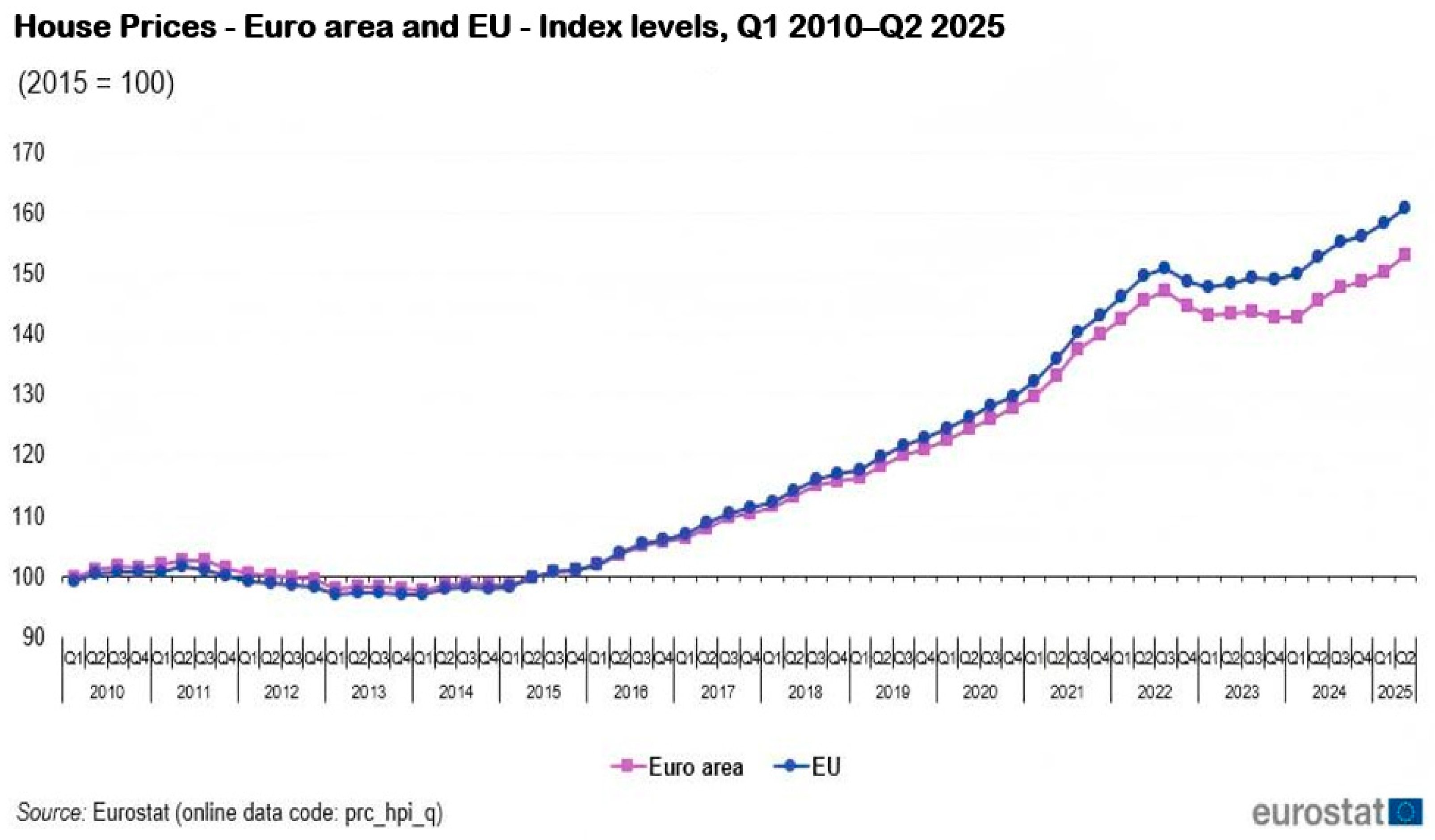
The ECB’s unconventional monetary policies like QE did help stabilize the economy, but they also had some serious side effects. Housing price has risen sharply since QE began in 2015. By 2020, Eurozone and EU housing price indices rose from 100 to 125 and 130, respectively (see Figure 2). This policy has made homeowners richer, but renters and young people trying to buy a house are overwhelmed. Housing prices are surging, making homes increasingly unaffordable for many of them. NIRP have harmed retirees who rely on interest income from savings. LTROs/TLTROs injected liquidity into businesses, but much of it flowed directly into booming sectors like real estate and finance, leaving other areas underfunded.

4. China’s Monetary Policy Situation and Challenges Facing Its Monetary Policy

4.1. China’s Monetary Policy Situation

China is engaged in managing financial risks and keeping the economy stable and busy with structural reforms. The PBOC employs a combination of policy tools. Some of these measures are credit-related, such as reserve ratios and repurchase rates, while others just send signals. Together, they help guide China’s overall economy and how businesses obtain financing at the micro level. Broadly speaking, China’s monetary policy works in two main ways. First, the PBOC uses tools like the 7-day reverse repo rate (R007) and changes reserve requirements to influence borrowing costs. These policies affect companies differently, with their impacts varying depending on the company’s size or its level of debt. Second, China implemented specialized tools like the medium-term lending facility (MLF) and sustainable credit programs. These give extra support to small businesses and eco-friendly industries, helping push toward high-quality growth.

4.2. Challenges Facing China’s Monetary Policy

China’s current monetary policy faces a variety of challenges. Below are the key challenges it faces.

4.2.1. Inflationary Pressure

China faces the challenge of inflationary pressure. High inflation rates would affect economic stability and social stability. The CPI is a key indicator of inflation rate; it shows how prices are trending over time. In China, the CPI has fluctuated greatly in recent years, with food prices jumping up and temporarily pushing inflation higher. Due to COVID-19, China’s CPI increased by 5.4% in January and 5.2% in February 2020—both well above the 3% level that economists consider a warning sign. By March and April, it had eased a bit to 4.3% and 3.3%, respectively, but still stayed above that 3% mark. Then from 2022 to 2023, China became more skilled at managing energy prices and other costs. Thanks to the measures implemented, 2022–2023 CPI stabilized at 2–3%. However, China’s economy has now entered a deflationary phase, with consumer inflation moving around zero (August 2025: +0.3% YoY). Meanwhile, producer prices have been falling continuously for 14 months, with a drop of 4.1% compared to last year. Prices keep dropping because people do not spend enough.
The ECB’s interest rate approach gives us some useful insights, but China’s situation is different from the ECB. Chinese central bank needs to adjust its strategies based on its own economic realities and price trends.

4.2.2. Asset Price Bubbles

China is currently dealing with some serious concerns about asset price bubbles, especially in the real estate sector where price has risen dramatically in some areas. With China’s rapid economic growth, asset prices in the real estate market have risen sharply over the past few decades (prices have come down in recent years due to epidemics and other impacts). If the asset price bubble accumulated in China’s real estate market for a long time, it not only poses threats to financial risks, but also affects economic stability. During the period of 2010 to 2020, China’s housing prices in 82 cities doubled, with Shenzhen taking the lead at a 334.6% increase, followed by Xiamen with an increase of 293.2%; the first-tier cities of Beijing, Guangzhou, Shenzhen rose at a rate of around 180%, and Shanghai’s increase was 138.4% (Interpreting New Perspectives, 2020). In order to effectively deal with the potential risks facing the real estate market, the Chinese government has employed many regulatory measures in past decades, including limiting the number of home purchases and tightening loan conditions. China’s property market has been struggling lately; prices keep dropping because of pandemic fallout and economic slowdown squeezed out some of those housing bubbles. To stabilize the market, the Chinese government has adopted a bunch of relaxed policies to stop this downward trend in housing price: easing home purchase restrictions, reducing mortgage rates, and trimming taxes.
China can learn from the ECB’s approach: use macroprudential tools, like interest rate adjustments or loan-to-value limits, to manage asset bubbles. This could ensure its stability without hampering growth.

4.2.3. Financial System Stability

With the growth of China’s financial markets, its financial risks are gradually increasing. Recent data highlights two major risks for China’s financial stability. First, non-performing loans (NPLs) have been on the rise, hitting 1.67% in 2022. Second, 10-year bond yields have experienced significant volatility, reaching 2.8% in 2024. To tackle these risks, particularly operational ones, China needs to implement standardized approval processes and clearly defined responsibilities (H. L. Liu & Wang, 2009). Consequently, effective financial risk management requires the Chinese government and the central bank to enhance the supervision of financial institutions, and take corresponding measures to maintain the financial market stable.
China takes a strict regulatory approach (e.g., purchase restrictions), but the ECB prefers lighter touch methods, mainly using interest rate adjustments rather than direct bans. As China’s financial markets become more globalized, it might also adopt an approach similar to that of the ECB.

4.2.4. Exchange Rate Stability

Keeping the Renminbi (RMB) stable is a big challenge for China’s monetary policy. To address this issue, the central bank has been actively managing the foreign exchange market while imposing exchange rate limits. For instance, during the 2015 dollar depreciation, China implemented macroprudential tools (like stricter capital controls) to stabilize market conditions. China’s exchange rate also faced some serious problems in 2024, with the RMB/USD exchange rate swinging between 6.3 and 7.2. The PBOC needs to stabilize the markets while clearly signaling its policy stance.

4.2.5. Challenges of Economic Growth Stability

China’s monetary policy is balancing the need for stability and growth. In recent decades, China’s economy has shifted from fast growth to steadier medium–high growth. The data of China’s National Bureau of Statistics (NBS) shows that its GDP growth reached a 30-year low of 6.1% in 2019, held down by an aging demographic and structural adjustments. Then came the pandemic’s impact. In 2020, China’s GDP contracted by 2.2%, marking the first annual decline since 1976. But just a year later, it rebounded back to 8.1%, supported by stimulus measures. China’s economic growth slowed to 5.2% in 2023 as the nation continued its deep structural reforms. Data of Q1 2025 showed an expansion rate of 4.8%. To maintain steady economy growth, the Chinese government and central bank have been actively implementing measures, such as lowering deposit rates and providing liquidity into the market.
The ECB’s experience highlights the need to act rapidly for maintaining stability during major economic transitions. Its approach, by balancing short-term fluctuations with long-term goals through forward-looking policies like inflation targeting, offers valuable lessons for China.

4.2.6. Volatility in International Financial Markets

China’s monetary policy now has to deal with volatility in international financial markets. China’s economy becomes more interconnected with the world’s financial system, and it is experiencing greater spillover effects from the international markets than ever before (D. Wang, 2017). With China’s economy becoming more globalized, its monetary policy will be increasingly influenced by the international market. Many factors, such as the global economic situation, trade frictions, and foreign exchange market fluctuations, may all have an impact on China’s monetary policy.
The ECB’s tools for managing cross-border capital flow and reducing imported financial instability are very useful. China can learn from its experience of dealing with global financial spillovers.

5. Alignment with China’s Monetary Policy Reforms

During the crisis, the ECB implemented a number of unconventional monetary policies that Chinese policymakers can draw insights from as they develop their own monetary policies.

5.1. Utilizing Monetary Policy Tools to Ease Economic Pressure

Dealing with both slowing economic growth and the risk of price falling, the ECB has adopted unconventional monetary policy measures. It lowered the benchmark interest rate to record low and started purchasing bonds. From 2014 to 2023, the ECB maintained their accommodative monetary policy, mainly by consistently cutting benchmark interest rates. This approach made borrowing cheaper for households and businesses, so individuals would increase their spending and businesses would boost their investments. In addition, through the implementation of QE, the ECB managed to reduce market borrowing costs and provide liquidity support. This ensured banks could provide the necessary financing to the real economy, supporting economic recovery and development in the Eurozone. China can draw lessons from ECB’s approach of using diverse monetary tools. By implanting the monetary policy “toolbox”, China can foster the real economy in achieving high-quality development, and effectively address various risks and challenges (Tang & Xu, 2023).
The ECB’s unconventional measures like NIRP and QE offer valuable lessons for China’s monetary policy formulation. For example, China could learn from the ECB’s TLTROs by tweaking its relending tools to target green technology and high-end manufacturing. In addition, the ECB’s PEPP shows that quick, big-scale action works well. China might also consider a tiered approach, especially customized policy tools to deal with different economic shocks.

5.2. Adopting a Flexible Monetary Policy Framework

The ECB’s unconventional monetary policy has a flexible framework in place. One of its big components is TLTROs. Its goal is to stimulate spending, which ultimately helps drive the economy and creates jobs across the Eurozone. China’s central bank can learn from this approach. By adapting the ECB’s flexible framework to China’s own economic needs, policymakers could design tailored monetary policy measures to tackle challenges like slow growth or tight credit condition. The objective is to develope policies that fit China’s specific situation, making them more effective in easing economic pressures. For this to make monetary policy work better, it is important to ensure that unconventional monetary policy integrates closely with the country’s legal and market environment (Cao et al., 2020). The PBOC can draw on international experiences like the TLTROs, basically, providing banks cheap long-term loans to channel money into areas where it is most needed, such as productive sectors of the real economy. This can be realized by providing long-term loans to banks or setting up special credit support programs. Moreover, when monitoring the monetary policy, the ECB should actively explore the innovation of structural monetary policy tools (J. C. Hu et al., 2024) and the flexible mix of structural monetary policy and non-conventional monetary policy tools, in alignment with China’s actual economic conditions and objectives, to optimize its economic policy effects and the economic development. We further recommend that the PBOC incorporates green bonds into eligible collateral assets’ (ECAs) unconventional monetary policy pools, as R. Y. Chen et al.’s (2025) evidence shows this has the dual benefit of improving risk profiles and amplifying environmental impacts.

5.3. Emphasizing the Transmission Mechanism of Monetary Policy

Through bond purchase and provision of cheap funds, among other measures, the ECB tries to channel the stimulus effect of monetary policy to the real economy via the transmission mechanism of monetary policy. The ECB has infused abundant funds into financial institutions, enabling them to more seamlessly extend the necessary financing support to the real economy; the ECB has introduced lower-cost funding options for banks via initiatives like the TLTROs, effectively incentivizing them to expand the scale of loans and credit support. Similarly, China’s central bank needs to keep a close eye on how its polices affect both businesses and everyday citizens. To ensure money flows smoothly through the economy, the PBOC could take several key measures. First, it needs to be ready to act swiftly, injecting liquidity into financial markets when they become volatile. Second, it should adjust reserve requirements strategically. Lastly, the central bank needs to direct credit toward those who actually need it, such as small businesses or green energy projects. By taking these measures, the PBOC can make its policies work for real growth.

5.4. Enhancing Risk Management and Supervision

Risk management and supervision play a crucial role in stabilizing the economic markets. The ECB recognized these policies could actually lower prices, a tendency observed in real-world data from major economies such as US, UK, and EU during the 2010s (Dabrowski, 2023). The ECB’s policy toolkits are quite comprehensive; they combine traditional tools with unconventional ones. It implements intelligent safeguards to prevent risks from spinning out of control, yet it avoids overregulation. This balanced approach to prudential regulation basically gives China a useful roadmap for its monetary policy. One way to enhance risk management for China is to build shared assessment systems, so all these policies work together smoothly instead of conflict with each other. In addition, the PBOC can strengthen risk management through a series of practical measures, such as stricter capital supervision for financial institutions, improved risk assessment tools, enhanced liquidity management, and clearer financial disclosures. Essentially, this involves closing all potential loopholes.
It is important to emphasize that risk management and supervision are not one-time tasks to check off and ignore. Instead, they are ongoing processes that require regular updates. They require constant adjustment and optimization to keep up with the ever-changing economic and financial situation. Consequently, China’s central bank should pay close attention to the changes and emerging risks in the financial market, and take appropriate regulatory countermeasures in a timely manner once the potential risks are found. Meanwhile, the PBOC should maintain close cooperation and exchanges with the international regulators, learn from the global advanced experience in risk management and supervision, and continuously improve the level of China’s financial supervision to ensure the sound operation of the financial market.

5.5. Strengthening International Cooperation and Coordination

The ECB maintains close cooperation with other central banks and international organizations as it implements unconventional monetary policies to address the challenges by the global economy and financial markets. Strengthening international cooperation and coordination is also very important for China’s central bank, especially in the context of the current international trade environment where trade protectionism and global unilateralism are on the rise globally and have become a source of uncertainty in the world economy (Y. Wang, 2007; G. T. Zhang, 2019). China’s central bank should actively promote the regional strategic layout of RMB internationalization, relying on regional economic cooperation mechanisms and platforms, expanding the scope of use of RMB in Asian countries and those along the “Belt and Road”, and forming a regional support point for its internationalization (Zhao & Zhang, 2024). Furthermore, China’s central bank needs to strengthen the links with other national central banks and international organizations, such as the Fed, the ECB, the BoE, the BoJ and other major global central banks. The PBOC can strengthen information exchange with other central banks and international organizations, collaboratively carry out regulatory measures, actively participate in the IMF, the Financial Stability Board (FSB) and other international organizations. The central bank can work with other countries to craft global economic and financial policies, jointly promote the reform of the international financial system, and actively support the stable development of the economies of emerging and developing countries. Finally, the PBOC can boost the internationalization of the RMB by some key measures. This includes expanding its bilateral swap agreements to boost liquidity, providing financing in Renminbi for “Belt and Road” projects, and establishing offshore clearing hubs. Together, these measures are poised to strengthen RMB’s presence and help enhance its role.

5.6. Monitoring Its Potential Negative Impact

The ECB’s unconventional monetary policy provides some valuable insights and lessons for China, but we must also consider its potential drawbacks. First, those unconventional measures could lead to fast rise in asset prices, raising the risk of asset bubbles. If China tries similar monetary policies, it must closely monitor markets such as real estate and the stock market to avoid overheating and, most importantly, to reduce economic risks if the bubbles burst. Second, over-reliance on unconventional monetary policy could lead to structural distortions of the economy, which could in turn weaken the impetus for essential structural reforms and innovation. Therefore, while implementing similar policies to stimulate the economy, China’s central bank should actively promote supply-side structural reforms to enhance endogenous growth drivers. Third, QE is designed to stimulate economic recovery, but the risk of inflation that may be brought about by large-scale monetary injection cannot be ignored. If the pace of economic recovery is slow, QE policy may lead to price increases, which in turn affects the cost of living of residents and the level of consumption, and in the long-run would also affect the stability and growth of the economy. However, although some research indicates that QE can effectively boost spending and prices (e.g., Gagnon, 2016), most studies show that its overall effects are relatively modest (e.g., Greenlaw et al., 2018). Therefore, China’s monetary policymakers need to take cautious approach and consider various factors when implementing QE-like policies. Finally, if China implements something like QE, there is a real risk of money flowing out of the country. This may also increase the pressure of RMB depreciation, thus affecting the stability of China’s financial market. Empirical study on QE found that ECB’s policies (Rogers et al., 2014; D. L. Chen, 2019; Fausch & Sutter, 2024) and other major economies such as U.S., UK, and Japan (Rogers et al., 2014) had important cross-country spillovers. When China sets monetary policies, it must weigh the potential risks and strengthen capital control.
The ECB’S unconventional monetary policies act as an important benchmark and provides valuable insight for China’s monetary policy reform. However, we must not ignore the potential downsides. Unconventional monetary policies can help provide liquidity and reduce liquidity risk, but they do not fundamentally solve the core problem—whether borrowers can pay back their debts (Dong et al., 2015, p. 114). Drawing the lessons from the ECB’s experience is important, but it is crucial to thoroughly evaluate and address these risks to make sure that monetary policy works well and the economy is sustainable.

6. Conclusions

China can benefit from the insights offered by the ECB’s unconventional monetary policies as it carried out its own economic and montary reforms. These approaches offer potential benefits, but they also come with risks. Take the ECB’s 2.6 trillion euros APP from 2015 to 2019 as an example. This initiative succeeded in reducing Germany’s 10-year bond yields by a full 1.2% (120 basis points). China may consider implementing similar QE measures. Its capital controls would likely contain spillover effects, but the downward pressure on foreign exchange reserves should not be overlooked. Another notable example is the ECB’s TLTROs III. This program paid banks −1% interest rate to encourage lending, and stimulated 1.1 trillion euros in bank lending across the Eurozone between 2020 and 2022. China took a comparable approach with its PSL program, injecting 1.8 trillion yuan in 2020 while maintaining stable interbank rates. These examples demonstrate that China can indeed utilize similar monetary tools, like large-scale liquidity support to boost economic growth. It is also important to remember although the tools appear similar, the outcomes may be different due to each country’s own financial characteristics. Overall, China can draw valuable insights from how the ECB handles unconventional monetary policies. By integrating ECB approaches with China’s own developed solutions, policymakers can more effectively tackle economic issues, boost long-term growth, and strengthen market resilience. Turning to the methodological approach, this study employs evidence-driven narratives to illustrate the economic landscape rather than focus primarily on statistical analysis to establish cause and effect. For future research, structural vector autoregression (SVAR) models with sign restrictions (like Jarociński & Karadi, 2020) or local projections (Jordà, 2005) could help to identify unexpected market reactions right after ECB announcements and quantify how these responses ripple through GDP, prices, interest rates, and credit markets. This approach ensures the findings are supported by robust data and advances progress in this field.

Author Contributions

Conceptualization, Z.W. and L.G.; methodology, Z.W. and L.G.; resources, L.G.; data curation, L.G.; writing—original draft preparation, L.G.; writing—review and editing, Z.W., and L.G.; supervision, Z.W.; project administration, Z.W.; funding acquisition, L.G. All authors have read and agreed to the published version of the manuscript.

Funding

This research was supported by the Fundamental Research Funds for the Central Universities, grant number 2025JX090.

Institutional Review Board Statement

Not applicable.

Informed Consent Statement

Not applicable.

Data Availability Statement

The data supporting the conclusions of this article will be made available by the authors on request.

Conflicts of Interest

The authors declare no conflicts of interest.

References

  1. Basdekis, C., Christopoulos, C., Gakias, E., & Katsampoxakis, I. (2023). The effect of ECB unconventional monetary policy on firms’ performance during the global financial crisis. Journal of Risk and Financial Management, 16(258), 258. [Google Scholar] [CrossRef]
  2. Cabral, N. D. C. (2020). The European Monetary Union after the crisis: From a fiscal union to fiscal capacity. Routledge Press. [Google Scholar]
  3. Cao, G. J., Tang, J. Y., & Zhou, L. N. (2020). International comparison of unconventional monetary policy instruments. Financial Accounting, 7, 34–40. [Google Scholar]
  4. Chen, D. L. (2019). Research on regional asymmetric spillovers of unconventional monetary policies of the European Central Bank [Unpublished doctoral dissertation]. Shanghai University of Technology.
  5. Chen, R. Y., Wang, G. Q., Jamil, N., & Iqbal, N. (2025). The green premium of unconventional monetary policy: Evidence from the enlarged collateral framework by the People’s Bank of China. Research in International Business and Finance, 73, 102655. [Google Scholar] [CrossRef]
  6. Dabrowski, M. (2023). Two major economic crises in the early twenty-first century and their impact on Central Bank Independence. Accounting, Economics, and Law: A Convivium, 13(2), 169–215. [Google Scholar] [CrossRef]
  7. Deutsche Bundesbank. (n.d.). Time series: Yield on 10-year federal bonds (Germany). Statistical Database. Available online: https://www.bundesbank.de/en/statistics (accessed on 18 October 2025).
  8. Dong, Y., Guo, Q., & Li, X. Q. (2015). Unconventional monetary policy in the United States: A literature review. Jiangxi Social Science, 5, 110–116+126. [Google Scholar]
  9. Driffill, J. (2016). Unconventional monetary policy in the Euro zone. Open Economies Review, 27(2), 387–404. [Google Scholar] [CrossRef]
  10. European Central Bank. (2014, June 5). Monetary policy decisions. Press Release. Available online: https://www.ecb.europa.eu/press/pr/date/2014/html/pr140605.en.html (accessed on 6 July 2024).
  11. European Central Bank. (2019, June 6). ECB announces details of new targeted longer-term refinancing operations (TLTRO III). Press Release. Available online: https://www.ecb.europa.eu/press/pr/date/2019/html/ecb.pr190606~d1b6e3247d.en.html (accessed on 5 November 2025).
  12. European Central Bank. (2020a, March 18). ECB announces €750 billion Pandemic Emergency Purchase Programme (PEPP). Press Release. Available online: https://www.ecb.europa.eu/press/pr/date/2020/html/ecb.pr200318_1~3949d6f266.en.html (accessed on 19 October 2025).
  13. European Central Bank. (2020b, December 10). Monetary policy decisions. Press Release. Available online: https://www.ecb.europa.eu/press/pr/date/2020/html/ecb.mp201210~8c2778b843.en.html (accessed on 5 November 2025).
  14. European Central Bank. (2020c, April 30). ECB recalibrates TLTRO III to further support bank lending. Press Release. Available online: https://www.ecb.europa.eu/press/pr/date/2020/html/ecb.pr200430~fa46f38486.en.html (accessed on 21 September 2025).
  15. Eurostat. (2021, November 3). September 2021: Euro area unemployment at 7.4% and EU at 6.7%. Database. Available online: https://ec.europa.eu/eurostat/documents/2995521/11563355/3-03112021-AP-EN.pdf/8841353c-11f6-7fab-efef-0e768ab13bfd (accessed on 18 October 2025).
  16. Fang, F., Si, D. K., & Hu, D. B. (2023). Green bond spread effect of unconventional monetary policy: Evidence from China. Economic Analysis and Policy, 80, 398–413. [Google Scholar] [CrossRef]
  17. Fausch, J., & Sutter, D. (2024). Monetary policy spillovers: The impact of ECB conventional and unconventional monetary policies on the Swiss stock market. Applied Economics Letters, 31(2), 122–127. [Google Scholar] [CrossRef]
  18. Financial World. (2024). European Central Bank announces new monetary policy framework that will fully meet banks’ needs for major refinancing operations. Available online: https://usstock.jrj.com.cn/2024/03/14010239842040.shtml (accessed on 14 March 2024).
  19. Forbes, K., Reinhardt, D., & Wieladek, T. (2017). The spillovers, interactions, and (un)intended consequences of monetary and regulatory policies. Journal of Monetary Economics, 85, 1–22. [Google Scholar] [CrossRef]
  20. Gagnon, J. E. (2016). Quantitative easing: An underappreciated success. Policy Briefs 16-4. Available online: https://www.piie.com/publications/policy-briefs/quantitative-easing-underappreciated-success (accessed on 19 October 2025).
  21. Greenlaw, D., Hamilton, J. D., Harris, E., & West, K. D. (2018). A skeptical view of the impact of the Fed’s balance sheet. NBER Working Paper No. W24687. National Bureau of Economic Research. [Google Scholar]
  22. Gu, Y. (2017). An empirical study on the European Central Bank unconventional monetary policy and the price level in the Euro area [Unpublished doctoral dissertation]. Shanghai Jiao Tong University.
  23. Horvatha, R., & Voslarova, K. (2017). International spillovers of ECB’s unconventional monetary policy: The effect on Central Europe. Applied Economics, 49(24), 2352–2364. [Google Scholar] [CrossRef]
  24. Hu, J. C., Xu, H. R., & Shi, H. Y. (2024). Research on the effectiveness of monetary policy interest rate transmission mechanism based on the background of interest rate marketization. Financial Theory Exploration, 4, 63–70. [Google Scholar]
  25. Hu, K., & Liu, D. M. (2013). Transformation and innovation of EU banking regulation and supervision system under the European debt crisis. European Studies, 31(3), 65–84. [Google Scholar]
  26. Hu, K., & Zhong, J. R. (2022). Will European monetary union move towards an optimal currency area?—The self-realization of the optimal currency area from the perspective of the French regulation school. European Studies, 40(4), 53–84. [Google Scholar]
  27. Huang, Y., & Xin, H. P. (2015). The role of the European Central Bank in responding to the European debt crisis: Policies, effectiveness and reflection. In L. Q. Liu (Ed.), Germany and the European Union in the context of the European debt crisis (pp. 177–189). Social Science Literature Publishing House. [Google Scholar]
  28. Huitong Finance. (2020, March 12). The European Central Bank unexpectedly holds interest rates steady, causing the euro to surge by 90 points against the US dollar in short-term trading. Available online: https://baijiahao.baidu.com/s?id=1660970879721446013 (accessed on 9 April 2023).
  29. Interpreting New Perspectives. (2020, October 9). Housing price bubbles and monetary policy: Evidence from the Eurozone. Available online: https://www.163.com/dy/article/FOG6TUQU0541HUWM.html (accessed on 15 October 2022).
  30. Jarociński, M., & Karadi, P. (2020). Decomposing monetary policy surprises—The role of information shocks. American Economic Journal: Macroeconomics, 12(2), 1–43. [Google Scholar]
  31. Jiang, R. S. (2019). A study on the effect of ECB’s negative interest rate policy. International Business, 7, 105–106. [Google Scholar]
  32. Jordà, Ò. (2005). Estimation and inference of impulse responses by local projections. American Economic Review, 95(1), 161–182. [Google Scholar] [CrossRef]
  33. Kremer, M. (2015). Macroeconomic effects of financial stress and the role of monetary policy: A VAR analysis for the Euro area. International Economics and Economic Policy, 13(1), 105–138. [Google Scholar] [CrossRef]
  34. Liu, H. L., & Wang, H. (2009). Financial risk management. China Financial and Economic Publishing House. [Google Scholar]
  35. Liu, L. F., Yin, H. C., & Zhang, J. J. (2017). Development of unconventional monetary policies in the Eurozone and their implications for China. International Financial Research, 3, 35–44. [Google Scholar]
  36. Liu, S. (2012). European debt crisis, past the “peak moment”? World Knowledge, 7, 40–41. [Google Scholar]
  37. Matousek, R., Papadamou, S. T., Šević, A., & Tzeremes, N. G. (2019). The effectiveness of quantitative easing: Evidence from Japan. Journal of International Money and Finance, 99, 102068. [Google Scholar] [CrossRef]
  38. Mouabbi, S., & Sahuc, J. G. (2019). Evaluating the macroeconomic effects of the ECB’s unconventional monetary policies. Journal of Money Credit and Policy, 51(4), 831–858. [Google Scholar]
  39. Pagliari, M. S. (2024). Does one (unconventional)size fit all? Effects of the ECB’s unconventional monetary policies on the Euroarea economies. European Economic Review, 168, 104817. [Google Scholar] [CrossRef]
  40. Rincon, C. J., & Petrova, V. P. (2024). Assessing the impact of the ECB’s unconventional monetary policy on the European stock markets. Journal of Risk and Financial Management, 17, 425. [Google Scholar] [CrossRef]
  41. Rogers, J. H., Scotti, C., & Wright, J. H. (2014). Evaluating asset-market effects of unconventional monetary policy: A multi-country review. Economic Policy, 29(80), 749–799. [Google Scholar] [CrossRef]
  42. Su, N. F. (2020). Monetary policy practices in the Euro area over the past twenty years. Jilin Financial Research, 12, 1–4. [Google Scholar]
  43. Szczerbowicz, U. (2012). The ECB unconventional monetary policies: Have they lowered market borrowing costs for banks and governments? Centre D’Etudes Prospectives et D’Informations Internationales. Working paper. [Google Scholar]
  44. Tang, T., & Xu, R. H. (2023). The relationship implications of fiscal and monetary policy in the Eurozone. Financial Development Research, 6, 63–67. [Google Scholar]
  45. Wang, D. (2017). Global economy in an eventful and changing world—A review of the global economic situation and environment in 2006. Modern Economic Discussion, 1, 11–16. [Google Scholar]
  46. Wang, H., & Jing, H. Y. (2019). Unconventional monetary policies and impacts in advanced economies after the financial crisis. Economic Issues, 4, 25–31. [Google Scholar]
  47. Wang, Y. (2007). Monetary policy: From the old normal to the new normal. Modern Management Science, 3, 115–117. [Google Scholar]
  48. Yang, L., Li, R., & Liang, Q. (2012). Research on the European Central Bank’s long-term refinancing operations policy. International Finance, 9, 29–34. [Google Scholar]
  49. Zhang, G. T. (2019). Uncertain world economy: New changes, new risks, and new opportunities—An analysis of the world economy in 2019. World Economic Studies, 1, 3–17+135. [Google Scholar]
  50. Zhang, W. T., Xu, R. H., & Xiong, W. T. (2022). The impact of quantitative easing on the real economy: A review and reflection. Financial Market Research, 7, 1–11. [Google Scholar]
  51. Zhao, Y., & Zhang, C. Z. (2024). Exploring the road of Renminbi internationalization: Based on the comparison of international currency development paths. Finance Theory and Teaching, 3, 34–39. [Google Scholar]
Figure 1. Changes in the three key interest rates of the European Central Bank. Data is sourced from the ECB official website.
Economies 13 00325 g001
Figure 2. House prices, Euro area and EU aggregates; index levels, Q1 2010–Q2 2025.
Economies 13 00325 g002
Table 1. Main ECB unconventional monetary policy tools (2008–2025).
Tool NameLaunch DateDescription
Negative interest rate policy (NIRP)6 May 2014Initiated NIRP, reducing the deposit facility rate to −0.1%.
9 April 2014Reduced the deposit facility rate to −0.2%.
12 March 2015Lowered the deposit facility rate to −0.3%.
3 October 2016Reduced the deposit facility rate to −0.4%.
9 December 2019Further lowered the deposit facility rate to −0.5%, and introduced the tiered deposit rate system.
22 July 2024Announced the end of the negative interest rate period, setting the deposit rate at 0%, indicating a phased conclusion to unconventional policies.
LTROs (Long-Term Refinancing Operations)28 March 2008Introduced 6-month LTROs.
7 May 2009Announced 1-year LTROs.
3 December 2009Phased out 6-month LTROs and indexed 1-year LTROs.
4 March 2010Phased out 3-month LTROs and indexed 6-month LTROs.
21 December 2011Announced 3-year LTROs.
29 February 2012Introduced a second round of 3-year LTROs.
TLTROs (Targeted Long-Term Refinancing Operations)26 June 2014Launched the initial TLTROs, i.e., TLROs I.
22 June 2016Announced TLROs II
12 September 2019Introduced TLTROs III
12 December 2019Implemented TLTROs III
30 April 2020Recalibrated the TLTROs III by extending the operational timeline and revising eligibility criteria to tackle economic decline resulting from COVID-19.
25 June 2020Implemented TLTROs III.
30 January 2025Launched climate-adjusted TLTROs.
Quantitative Easing (QE)9 March 2015Launched an expanded APP, i.e., the QE program in the Euro area, with 60 billion euros per month.
10 March 2016Increased monthly amount of asset purchases to 80 billion euros.
12 August 2016Extended QE to December 2017, six months beyond market expectations.
18 March 2020Announced PEPP for the first time, with an initial scale of 750 billion euros.
4 June 2020Expanded PEPB to 1.35 trillion euros.
10 December 2020Determine the final total scale to be 1.85 trillion euros.
Disclaimer/Publisher’s Note: The statements, opinions and data contained in all publications are solely those of the individual author(s) and contributor(s) and not of MDPI and/or the editor(s). MDPI and/or the editor(s) disclaim responsibility for any injury to people or property resulting from any ideas, methods, instructions or products referred to in the content.