Article

A Metrics Refinement of EU Fruit Production Economic Assessment †

by
Aleksandra Figurek
1,*,
Elena I. Semenova
2,
Alkis Thrassou
1 and
Demetris Vrontis
1,3,4
1
School of Business, GNOSIS Mediterranean Institute for Management Science, University of Nicosia, Nicosia 1700, Cyprus
2
Department of Economic Relations in Agro-Industrial Complex Organizations, Federal State Budgetary Scientific Institution “Federal Research Center of Agrarian Economy and Social Development of Rural Areas—All Russian Research Institute of Agricultural Economics”, 123007 Moscow, Russia
3
Department of Management Studies, Adnan Kassar School of Business, Lebanese American University, Beirut 1102 2801, Lebanon
4
S P Jain School of Global Management, Singapore Campus, Singapore 119579, Singapore
*
Author to whom correspondence should be addressed.
This paper is extracted partially from the book chapter: Figurek, A., Semenova, E., Rocha, J.M.F., Thrassou, A., Uzunboylu, N. (2024). Economic Indicators in Cereal Production in the EU. In: Galati, A., Vrontis, D., Thrassou, A., Fiore, M. (Eds.) Agribusiness Innovation and Contextual Evolution, Volume II. Palgrave Intersections of Business and the Sciences, in association with Gnosis Mediterranean Institute for Management Science. Palgrave Macmillan, Cham. https://doi.org/10.1007/978-3-031-45742-5_11.
Economies 2024, 12(10), 262; https://doi.org/10.3390/economies12100262

Submission received: 30 July 2024 / Revised: 18 September 2024 / Accepted: 23 September 2024 / Published: 25 September 2024

Abstract

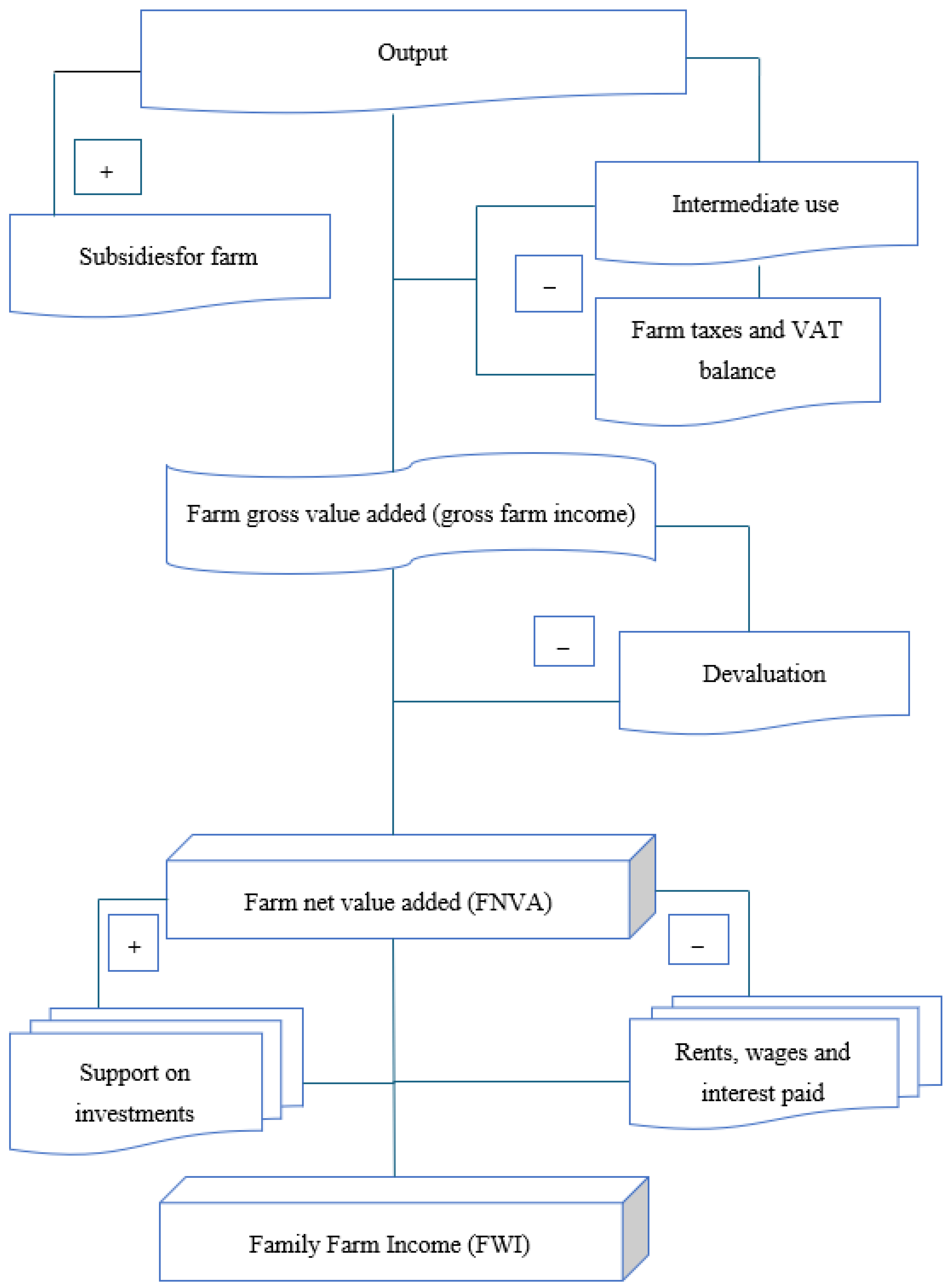
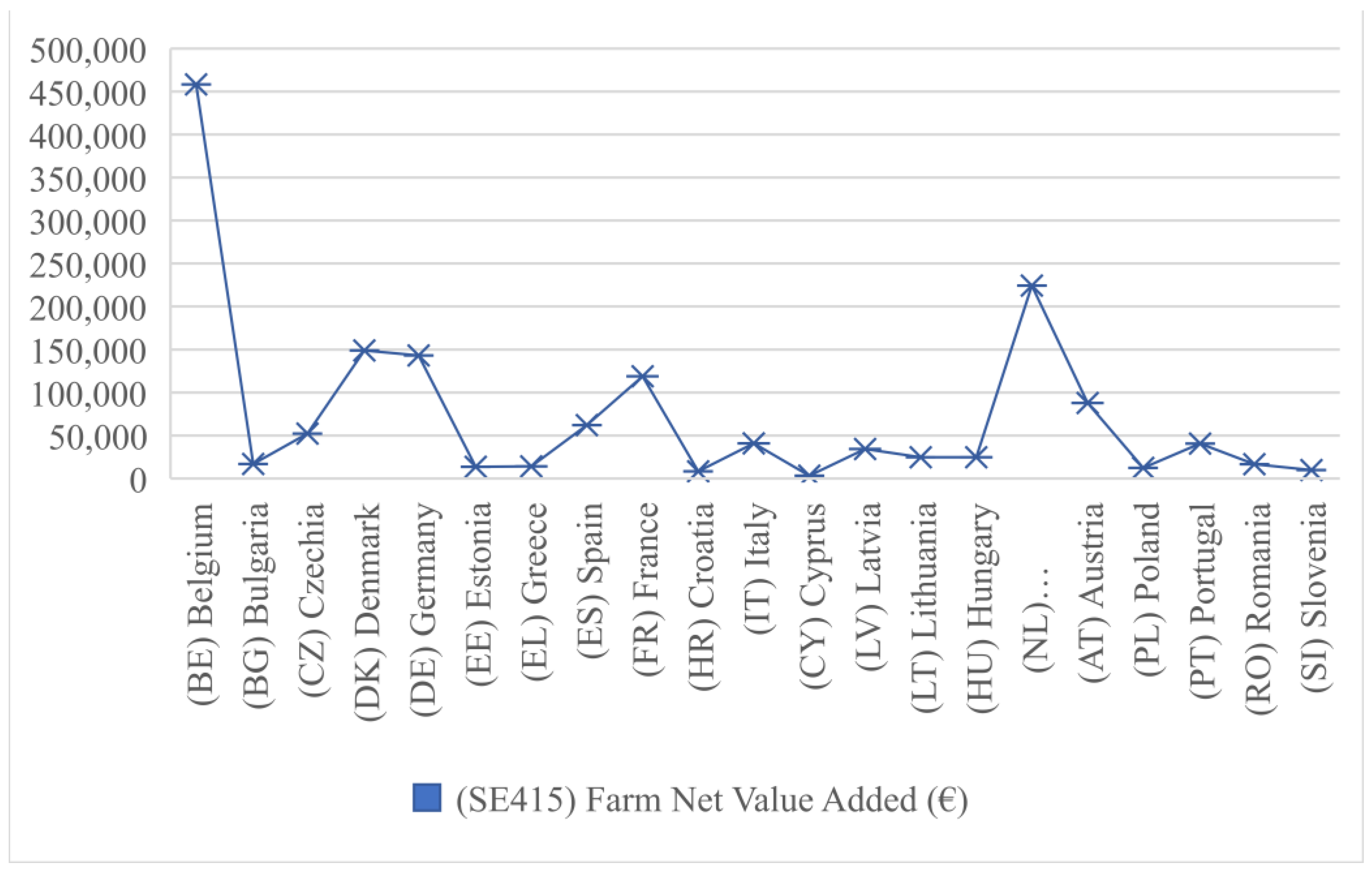
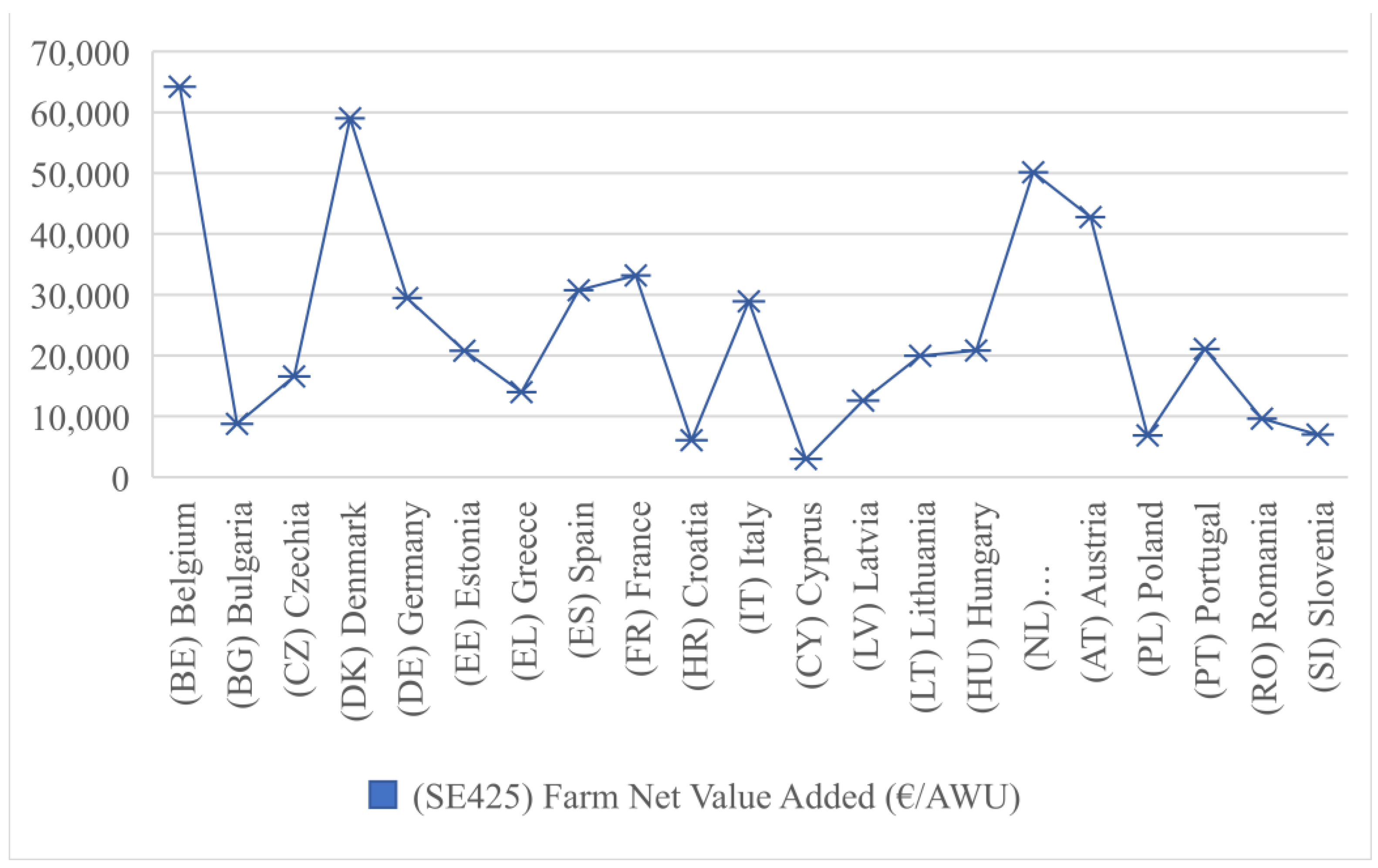
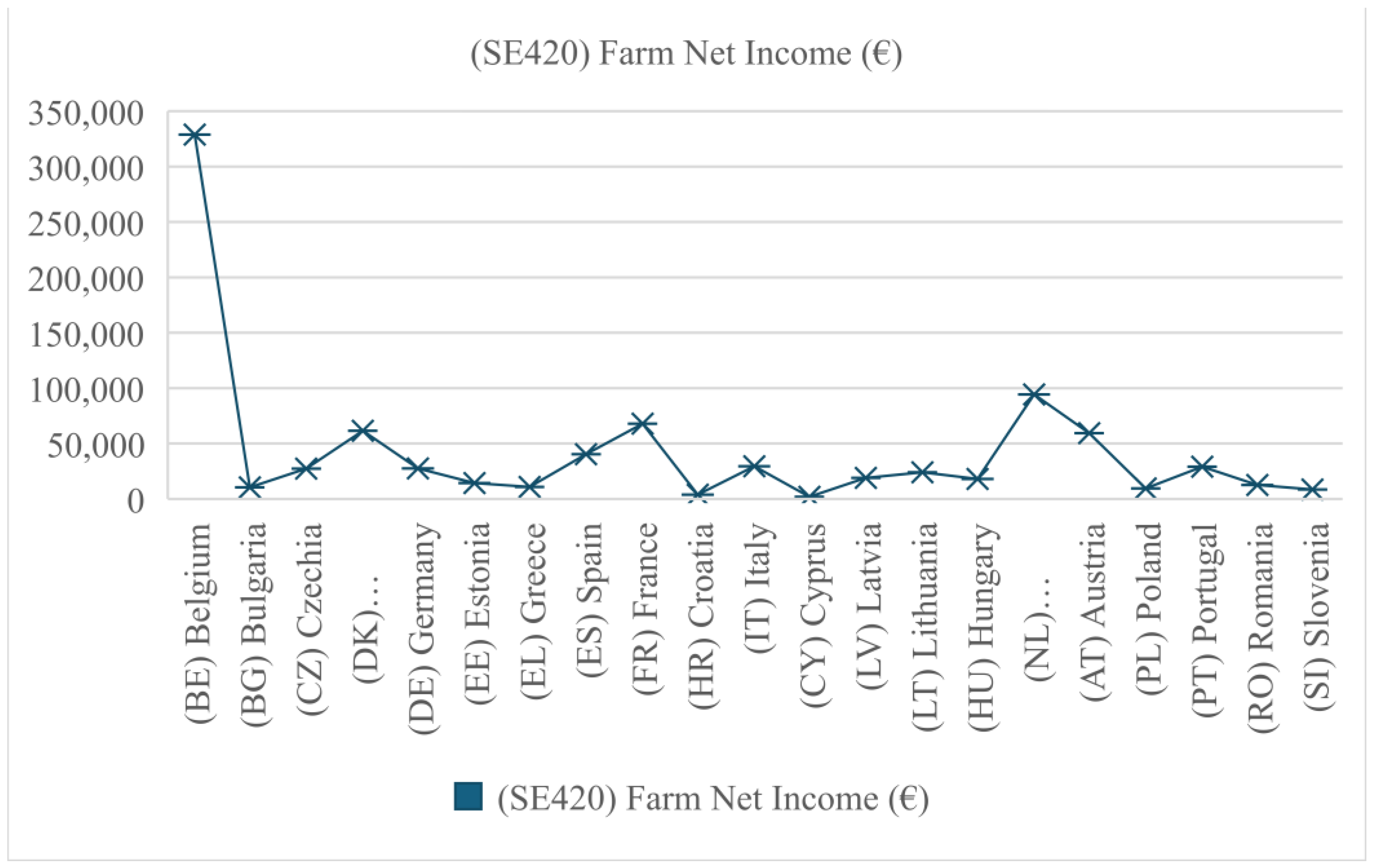
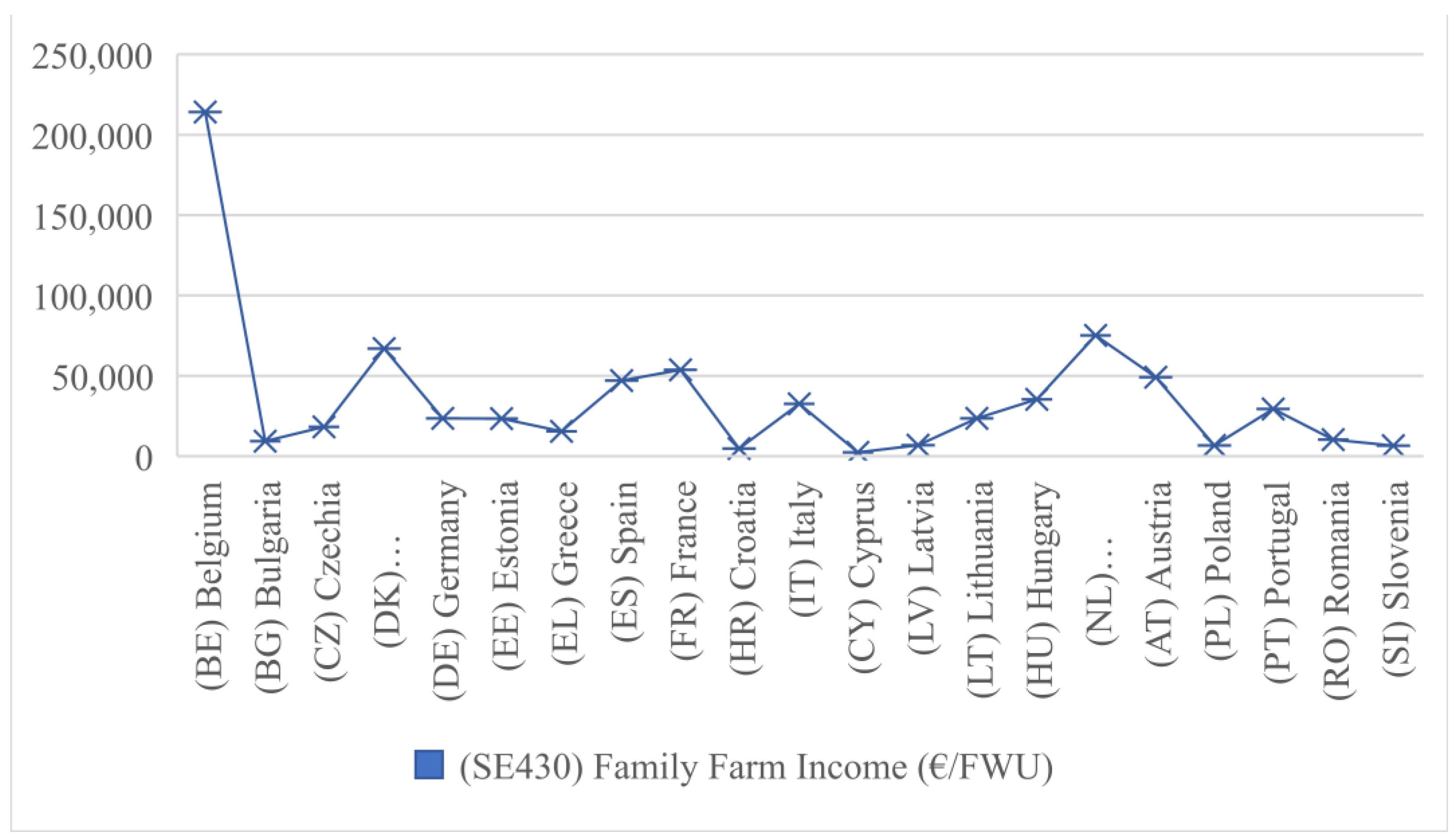
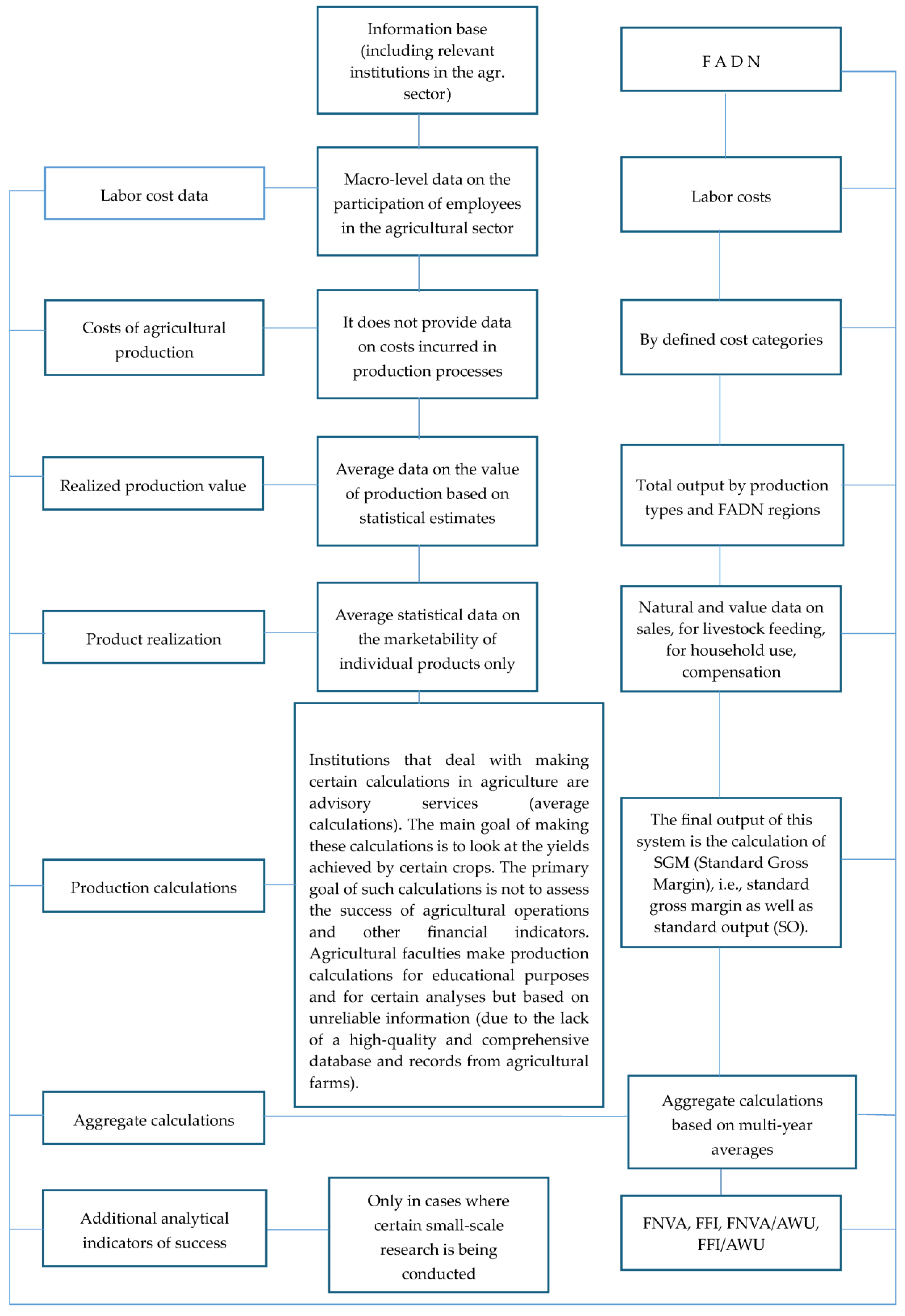
The paper applies the farm accountancy data network (FADN) approach to conduct a comparison analysis of the revenue of EU fruit producers. The study constitutes a significant contribution to the requisite development of more accurate metrics and appropriate approaches, which are necessary for assessing the economic success of EU fruit production in the principal sector of EU agriculture. The metrics used to measure the economic success in fruit production include farm net value added (FNVA), farm net income (FNI), annual working unit (AWU) of FNVA, and farm family income (FFI/FWU). An agricultural farm’s overall productivity can be determined by dividing its entire output (production) by the inputs employed in its operations, such as specific expenses and intermediate consumption. The FADN approach, which tracks the increase in agricultural revenue and assesses the effects of European policies on the agricultural sector, improves monitoring and meeting of performance goals. Finding economic, technological, and other aspects that will improve agricultural farms’ businesses and, by extension, agriculture as a whole will require applying an appropriate methodological approach to portray the actual situation and results of these farms.
Keywords: FADN; fruit production; FNVA; FNI; economic assessment metrics; AWU; agricultural sector FADN; fruit production; FNVA; FNI; economic assessment metrics; AWU; agricultural sector