1. Introduction
There are approximately 62 million cases of diabetes mellitus in the Americas [
1]. In Mexico alone, more than 13 million adults are affected, and this figure is projected to double by 2050 [
2]. According to the 2024 Registered Death Statistics, diabetes was the second leading cause of death in Mexico, accounting for 112,577 deaths [
3]. One of the major complications of hyperglycemia is Diabetic Neuropathy (DN), which affects approximately 50% of patients. It primarily causes loss of sensation in the feet, increasing the risk of unnoticed injuries that may progress to diabetic foot ulcer (DFU) or result in lower-limb amputation [
4].
The risk of injury is primarily associated with poor self-care and inadequate ongoing monitoring. For this reason, the Mexican Diabetes Federation recommends the use of the Wagner scale to assess the severity of foot damage [
5]. Grade 0 on the scale indicates the presence of thick calluses, claw toes, or bony deformities without visible lesions. The occurrence of these signs is closely associated with DN, which leads to alterations in plantar pressure and gait patterns and is considered an early indicator of the risk of developing DFU [
6].
Several studies have evaluated regions of interest (ROIs) on the plantar surface of the foot to measure dynamic gait loads using pressure transducers. The hallux, metatarsal heads, and heel are commonly selected due to their association with injury recurrence, peak plantar pressure (PPP), and PPP repeatability in these regions [
7,
8]. Pressure analysis in these ROIs has led to the identification of two key PPP thresholds for assessing the risk of DFU: 200 kPa when wearing footwear [
9] and values greater than 4.1 kg/cm
2 when barefoot [
10].
Among the wide range of technologies available for plantar pressure monitoring, force-sensitive resistors (FSRs) have been the most widely used in mobile systems due to their practicality, small size, low cost, low energy consumption, suitable operating range, fast response and low hysteresis [
11,
12]. For example, the SuraSole system incorporates FSRs to measure plantar pressure in five specific regions of the foot: the hallux, medial forefoot, lateral forefoot, midfoot, and heel. Data were collected from 150 participants during walking trials and used to compare statistical models with machine learning approaches [
13]. Similarly, a system incorporating eight FSRs connected to an Arduino microcontroller and interfaced with MATLAB was developed to analyze plantar force distribution patterns in the same regions, aiming to identify critical plantar pressure in patients with flat feet [
14].
One study employed an array of 16 FSRs in conjunction with 8 negative temperature coefficient (NTC) sensors. The authors also evaluated the use of piezoelectric sensors and Velostat; however, these were discarded. The system was assessed primarily through heat map visualization, and no further quantitative analysis was reported. The authors indicated that artificial intelligence algorithms would be incorporated in future work to enhance data analysis [
15].
Another alternative is the use of capacitive transducers, which are typically manufactured as application-specific devices. For example, prototypes of general-purpose sensors for plantar pressure monitoring have been developed using common materials such as cotton and conductive silver fabric [
16]. Other approaches employ more specialized composites, such as a PET substrate combined with silver electrodes, to create a sensor with detection ranges of up to 500 kPa that can be applied across various fields [
17]. Alternatively, transducers based on silicone polymers as dielectrics have been reported, exhibiting low hysteresis and linear behavior [
18]. While these fabrication approaches offer fast response times, high precision, and extended sensor lifespans-and even enable advanced capabilities such as shear stress measurement [
19], they are also associated with higher costs, increased development time, and greater system complexity.
One study, in particular, reported the combined use of an accelerometer, gyroscope, and microphone to assess gait patterns, using walking speed and maximum step swing angle as key variables. Although the authors reported no statistically significant differences, they observed distinguishable patterns between non-diabetic individuals and patients with DN [
20].
Regarding data processing, machine learning (ML) techniques and neural networks (NNs) have demonstrated superior performance compared to conventional statistical methods for the classification and early detection of diabetic foot conditions. Several studies report that ensemble-based algorithms like Support Vector Machine (SVM), Random Forest (RF), Logistic Regression (LR), Naive Bayes (NB), Decision Tree (DT), K-Nearest Neighbor (KNN), Extreme Gradient Boosting (XGBoost), Light Gradient Boosting Machine (LightGBM), and Adaptive Boosting (AdaBoost) and, more recently, convolutional neural networks (CNNs), are capable of identifying complex patterns in plantar pressure signals associated with risk states, fatigue, and abnormal postures during daily activities [
13,
17].
To systematically organize and contrast the approaches reported in the literature,
Table 1 presents a comparison of the main studies related to plantar pressure measurement systems based on smart insoles. This synthesis allows the identification of technological trends, integration levels, and recurring limitations, providing a clear reference framework to contextualize and justify the proposal developed in this work.
Within this framework, the present work proposes the development of a smart insole system for the measurement and analysis of plantar pressure, aimed at monitoring plantar pressure distribution and supporting the classification of gait patterns associated with DN. The system incorporates FSR402 force-sensitive resistors integrated into an instrumented insole, connected to a low-power ESP32-C3 Mini microcontroller responsible for signal acquisition and digitization. The data are transmitted wirelessly via Bluetooth Low Energy (BLE) to a mobile application developed for the Android operating system, enabling real-time signal visualization and storage in a relational database (RDB) based on MySQL.
Furthermore, to the best of the authors’ knowledge, this work represents the first study conducted on a Mexican population. In this manner, the proposed methodology enables the development of a specialized CNN capable of identifying patterns associated with DN. This model is implemented within a low-cost architecture, facilitating information management, historical data storage, and diagnostic consultation for users. It is important to note that the proposed system does not provide a direct clinical prediction of DFU risk. Instead, it performs pattern classification of plantar pressure signals associated with diabetic neuropathy, which may support early screening and monitoring strategies.
2. Materials and Methods
This section provides a detailed description of the elements selected for the construction of the proposed system, including the insole materials, different types of transducers, microcontrollers, communication protocols, application design, and CNN configuration.
2.1. Transducers Selection and Placement
Transducer selection was guided by criteria of low cost and ease of integration into portable plantar pressure measurement systems.
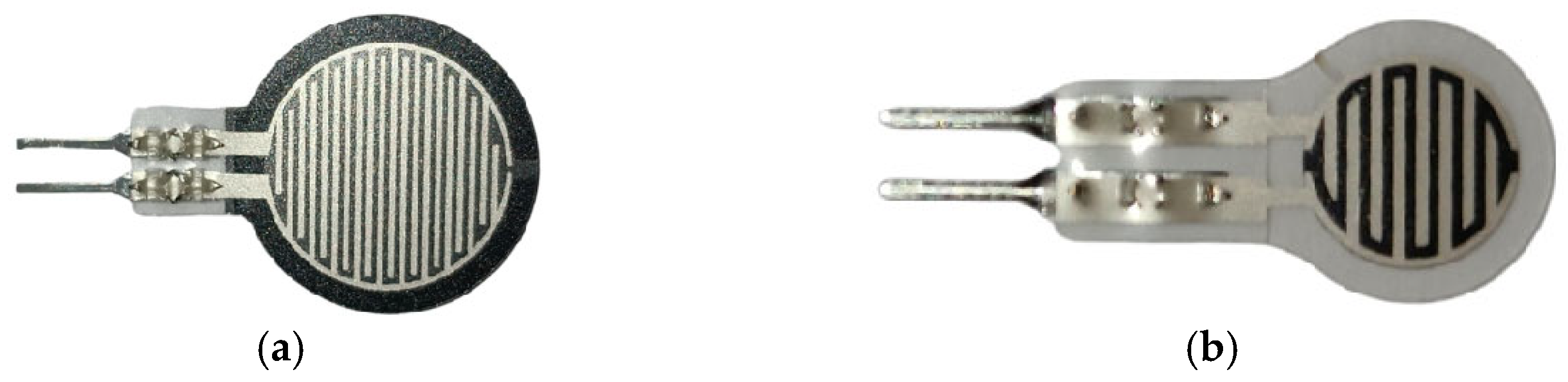
Figure 1 illustrates two commercial sensor models characterized by low hysteresis and adequate dynamic response. Force-sensitive resistors (FSRs) and piezoelectric transducers emerged as the most viable options. However, the existing literature indicates that piezoelectric sensors present limitations in static pressure measurement and exhibit a high signal-to-noise ratio, which restricts their suitability for this application [
15]. In contrast, FSRs demonstrate linear behavior under static loads and offer an active sensing area of 12.7 mm in diameter, load capacity corresponding to a maximum mass of 10 kg, and an operating temperature range of −30 to +70 °C [
24].
Given plantar pressure peaks (PPP) reported in the range of 200–500 kPa [
17], the maximum approximate temperature of the human foot at 37.5 °C, and recommendations for a minimum sensor active area of 5 mm × 5 mm to prevent data loss [
11,
25], the FSR402 sensors meet the requirements for this application.
Sensor placement was defined based on regions exhibiting the highest plantar pressure [
26], which corresponds to areas with the greatest recurrence of lesions in individuals with a history of DFU [
8]. These regions include the heel, midfoot, medial and lateral forefoot, and the hallux [
7,
8,
9,
10].
Additional design considerations included anthropometric characteristics of the target population, such as average foot dimensions in Mexico, 24 cm for women and 27 cm for men, with widths ranging from 9 to 10 cm [
27], as well as the spatial resolution required to adequately capture plantar pressure distributions. Biomechanical studies indicate that the characteristic spatial wavelengths of plantar pressure range between 40 and 70 mm, depending on the anatomical region. Experimental evidence suggests that sensor widths between 1.7 mm and 17.4 mm are sufficient to achieve approximately 90% accuracy in pressure measurement. Consequently, for applications focused on identifying global pressure patterns rather than high-resolution imaging, sparse sensor configurations can provide meaningful biomechanical information [
25].
Furthermore, variability in PPP across individual metatarsal heads necessitates their independent monitoring [
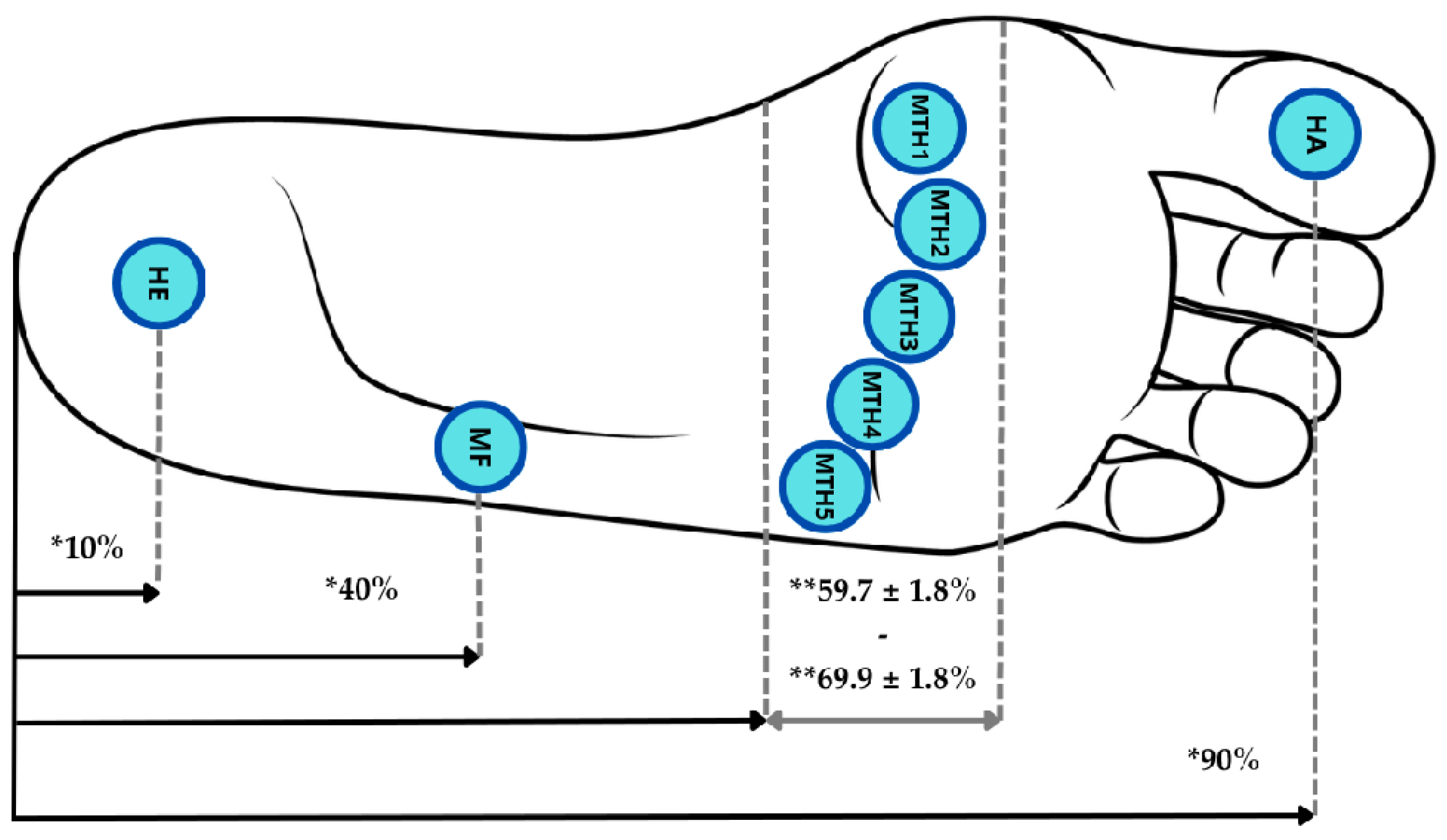
7]. Based on these considerations, an eight FSR configuration was adopted, as illustrated in
Figure 2, balancing spatial coverage, hardware complexity, and the constraints of a portable system, while preserving sensitivity to clinically relevant pressure patterns.
Considering the length of the foot, the heel sensor (HE) was positioned at 10% of the total foot length measured from the posterior edge, while the hallux sensor (HA) was placed at 90% [
19]. Five sensors were distributed across the forefoot at the metatarsal heads (MTH1–MTH5), following the anatomical arc defined by these structures, with normalized positions of 69.3 ± 1.9, 69.9 ± 1.8, 67.7 ± 1.7, 64.0 ± 1.6, and 59.7 ± 1.8, respectively [
28]. Finally, the midfoot sensor (MF) was positioned at 40% of the total foot length.
2.2. Microcontroller and Data Transmission
The system design prioritized low power consumption and reliable wireless data transmission. To this end, several microcontroller (MCU) platforms, including ESP32 [
15], Arduino [
22], and STM32 [
18], were evaluated. The ESP32 C3 Super Mini microcontroller was selected due to its low energy consumption and wireless communication capabilities in the 2.4 GHz band.
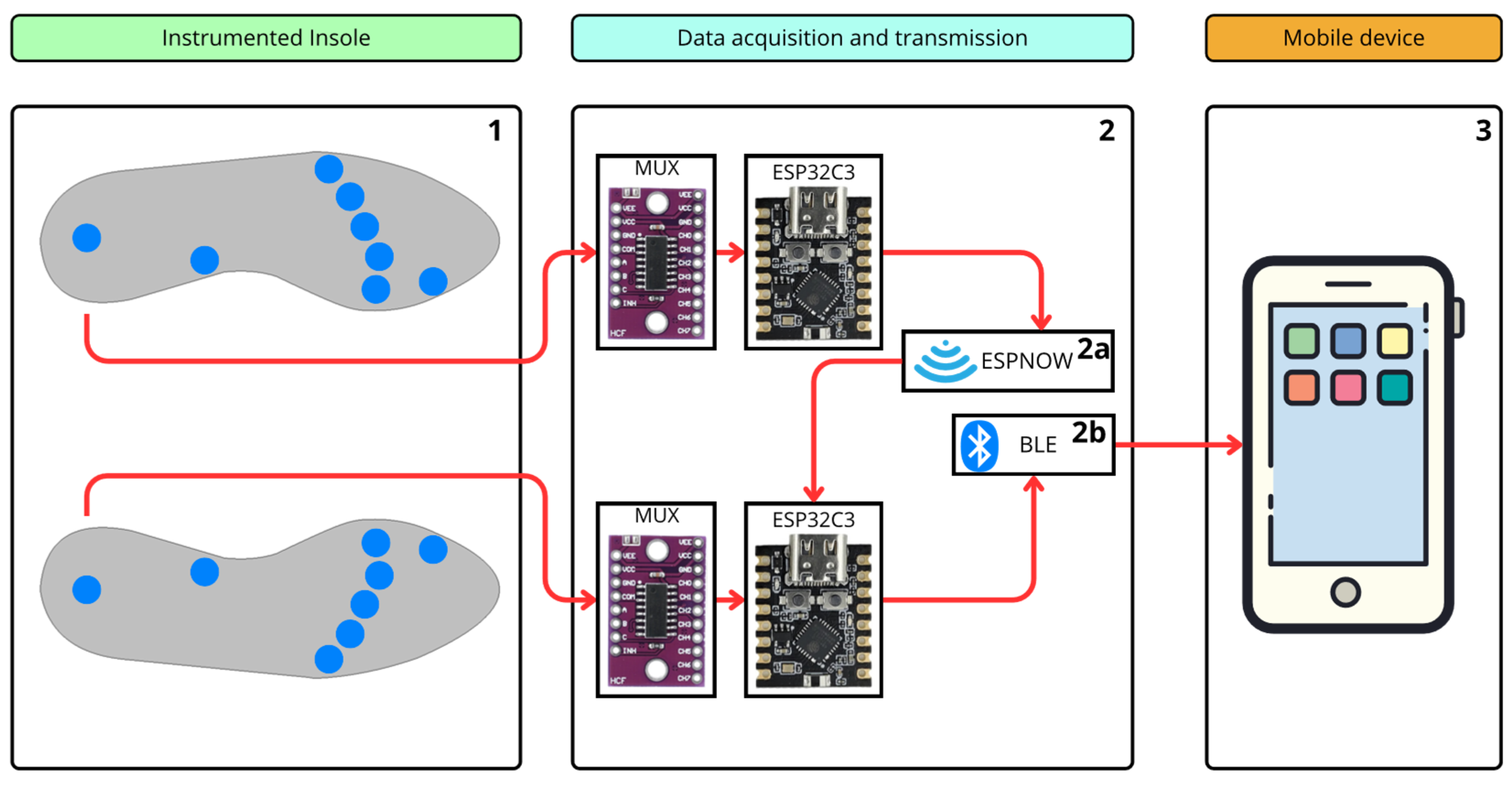
Among the available 2.4 GHz communication protocols, ESP-NOW was employed for communication between ESP32 devices, while Bluetooth Low Energy (BLE) was used for data transmission to the mobile device, thereby facilitating connectivity and ensuring broad compatibility.
A key consideration for data transmission to the mobile device is the Maximum Transmission Unit (MTU) of 23 bytes (20 bytes of payload) supported by BLE versions prior to 4.1. Taking this limitation into account, a configuration of 16 sensors per pair of insoles is desirable, as each FSR measurement requires 2 bytes of storage. Under this scheme, two 16-byte packets are transmitted, minimizing delays and preventing channel saturation while maintaining compatibility with earlier BLE devices.
2.3. Data Acquisition Circuit Design
The FSR402 transducer requires experimental characterization using a voltage divider configuration, as specified in its datasheet. The ESP32 C3 Mini MCU supports a maximum input voltage of 3.3 V at its 12-bit analog-to-digital converter (ADC) inputs, corresponding to a resolution of 0–4095 discrete levels. Additionally, the external resistor value was selected based on commercial availability.
Equation (1) describes the voltage divider relationship:
where V
OUT represents the output voltage of the FSR, R
M is the selected external resistor, V
+ is the supply voltage, and R
FSR corresponds to the variable resistance of the transducer.
The sensor’s operating range was defined to register PPP values between 200 kPa and 600 kPa over an active area of 126.68 mm
2 [
7,
15], corresponding approximately to applied masses between 2.5 kg and 7.74 kg. Although plantar pressure in non-diabetic individuals typically remains below 200 kPa, the design was intended to prevent saturation conditions.
To meet this requirement, a 1 kΩ external resistor (R
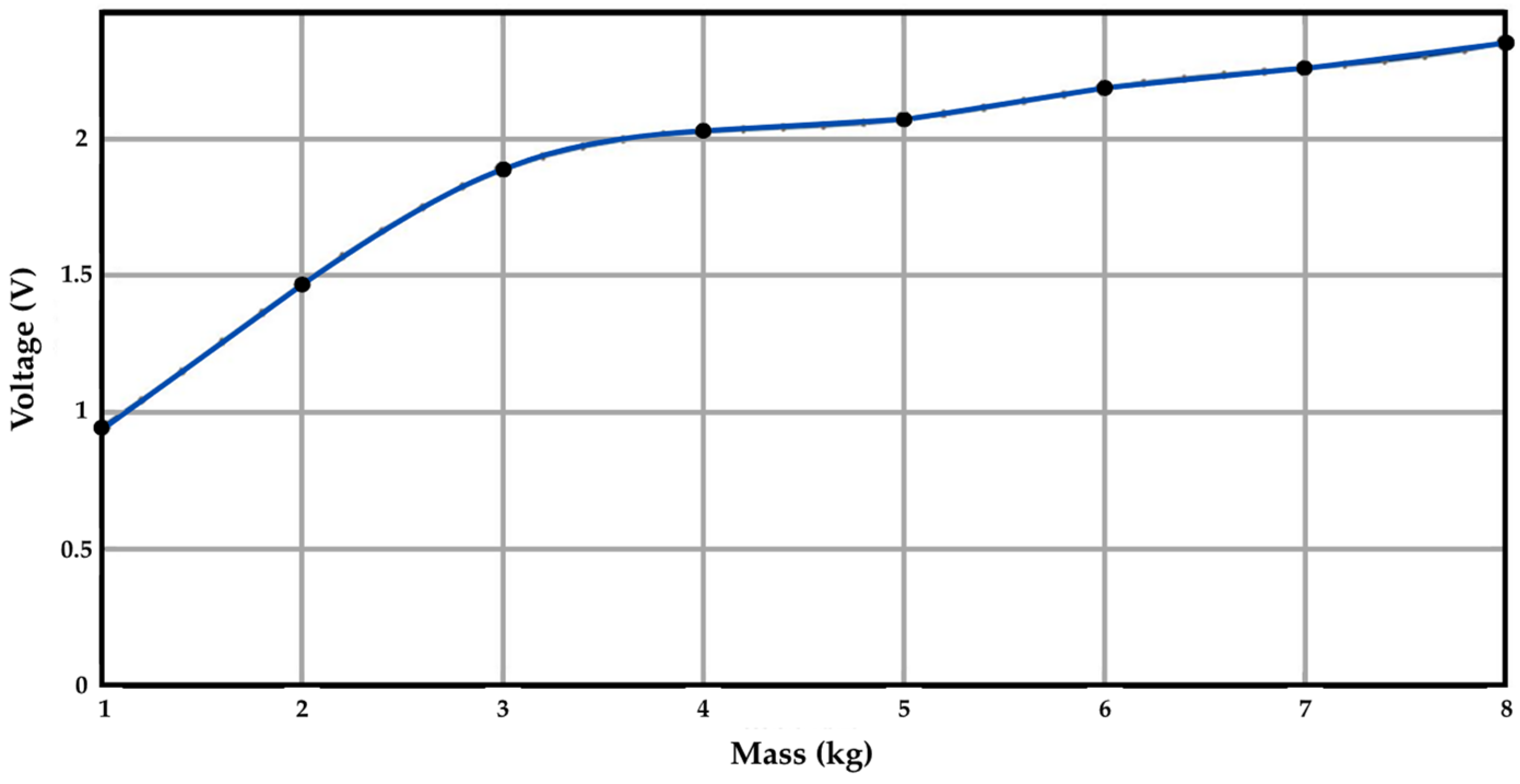
M) was selected. To obtain the response curve, incremental masses of 200 g were sequentially applied until a total of 8 kg was reached. A 3D-printed cylindrical element with a diameter of 12.7 mm was used to ensure that the applied mass was concentrated exclusively on the active area of the sensor. The resulting measurements were converted from ADC values to voltage, yielding the characterization curve shown in
Figure 3.
This process was performed using a single FSR; given that all sensors were sourced from the same manufacturer and model, their behavior was assumed to be sufficiently consistent for this application. The resulting response exhibits a progressive decrease in slope with increasing applied mass, indicating that the configured sensor range is suitable for high-pressure conditions without saturation. This behavior enables the detection of pressure variations even under high-magnitude loading conditions, ensuring stable measurements within the target operating range.
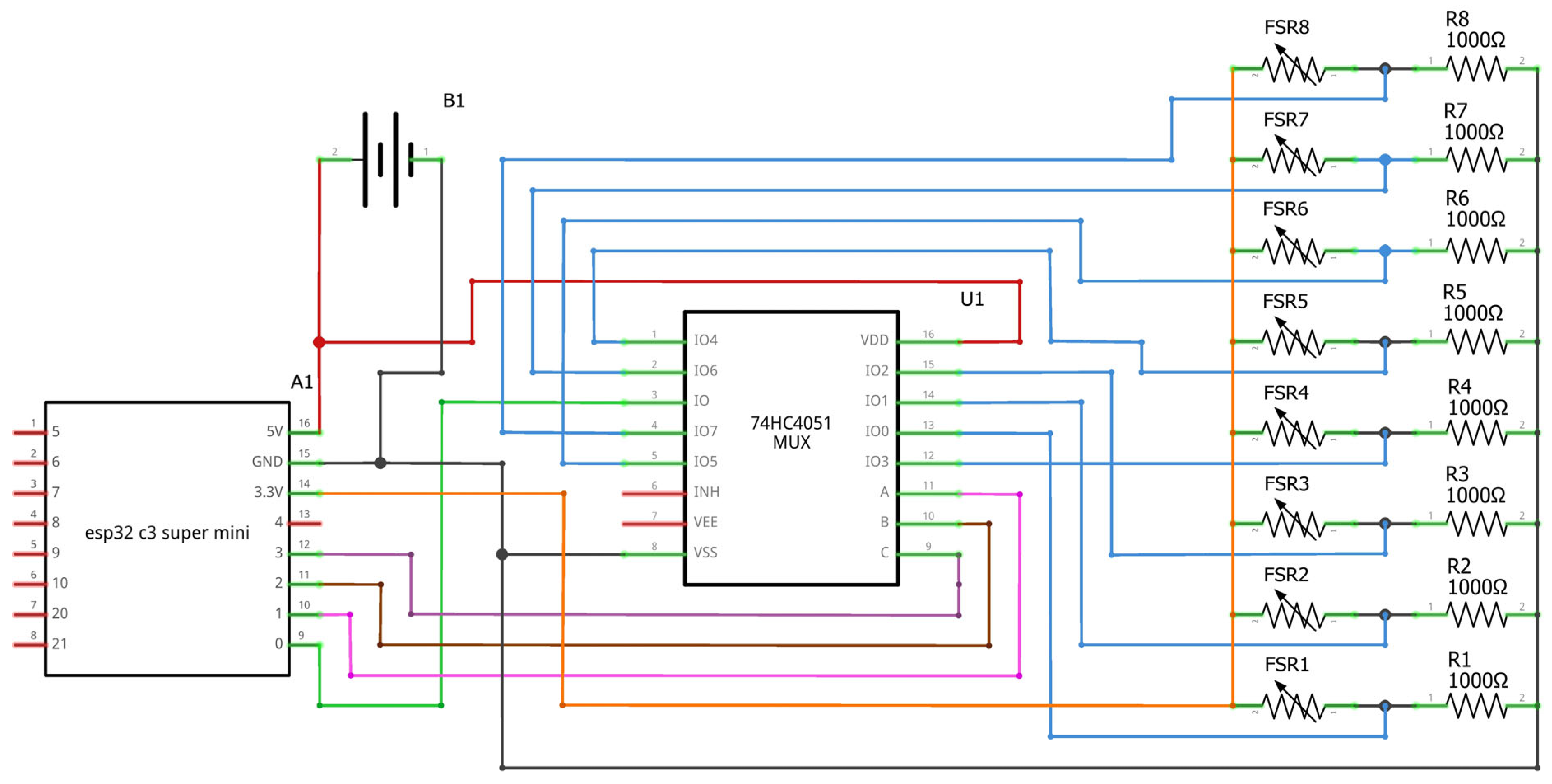
Regarding signal acquisition from the transducers, the ESP32-C3 Mini microcontroller features six analog-to-digital conversion (ADC) channels. To enable sequential reading of the eight FSR sensors, an 8-to-1 analog multiplexer was integrated, specifically the 74HC4051 model, which operates within a voltage range of 2–10 V [
29].
The connection between the sensors and the acquisition board was implemented using a 10-wire flat cable and a connector. Eight lines were allocated for reading the voltages generated by the FSRs in conjunction with the 1 kΩ resistor, while the remaining two lines were used to supply 3.3V (V
+) to the transducers, as shown in
Figure 4.
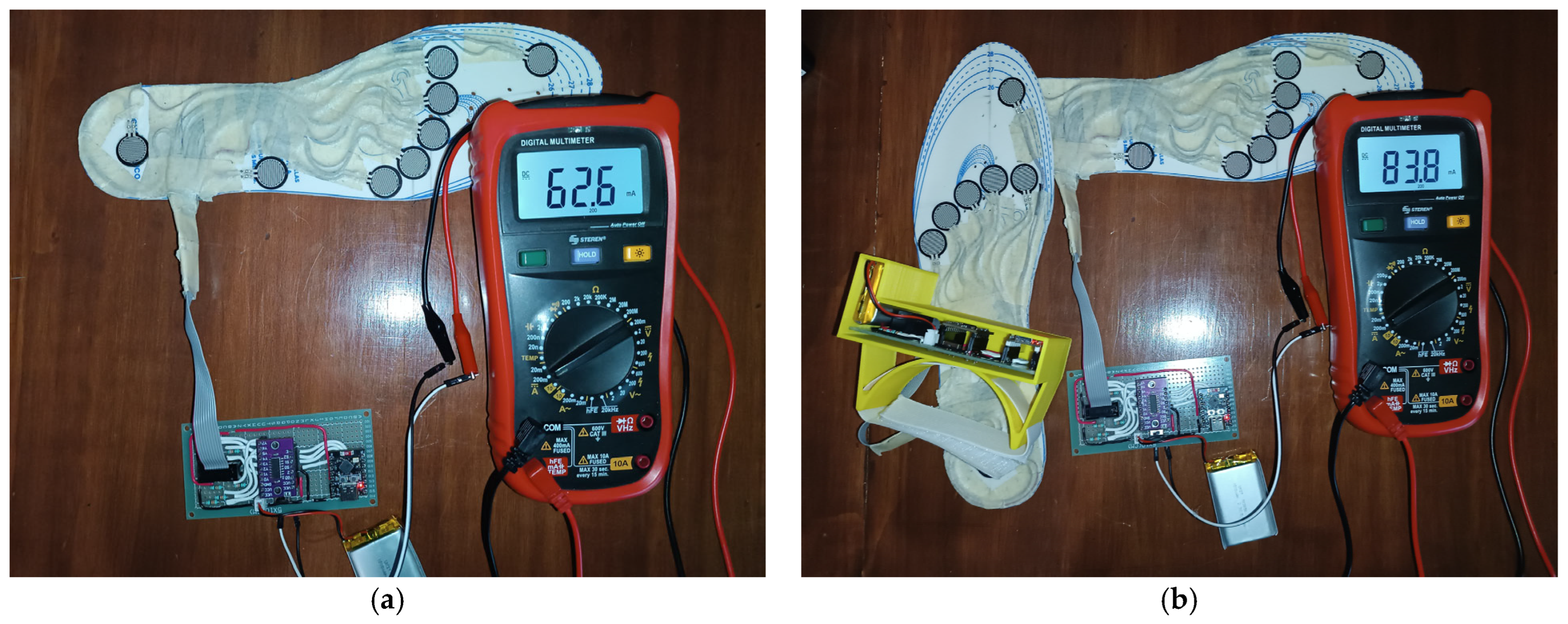
The system’s current consumption was evaluated using a multimeter connected to the right insole during both idle conditions and data transmission tests. The measured current ranges from 62.6 mA to 83.3 mA, as shown in
Figure 5. Considering that the system is powered by a 1000 mAh lithium-polymer (LiPo) battery with a nominal voltage of 3.6 V, an estimated battery life of 10 h can be achieved under continuous operation. The complete data acquisition architecture, including the sensors, multiplexer, and microcontroller, is presented in
Figure 6.
2.4. Design and Fabrication of the Enclosure
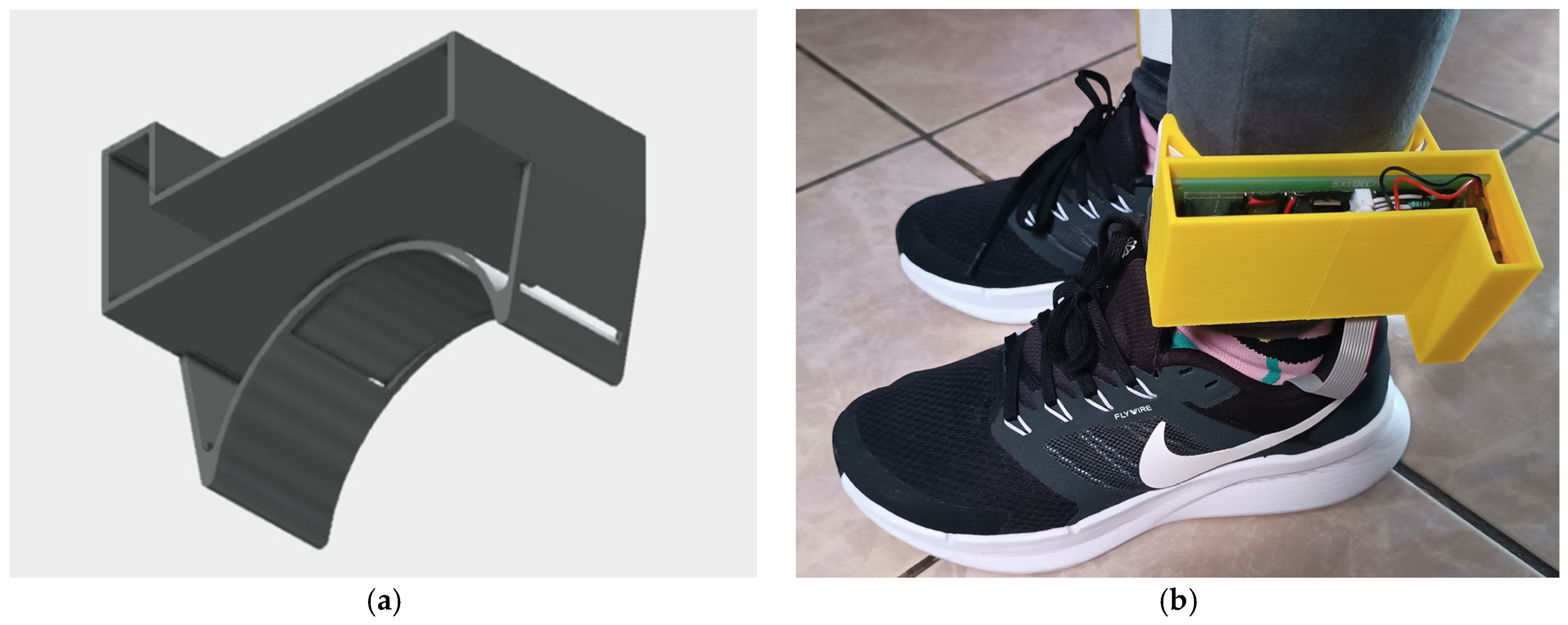
The enclosure dimensions were defined based on the circuit size (50 mm × 100 mm) and standard anthropometric measurements of the Latin American population, including ankle and calf perimeters, ensuring both user comfort and adequate protection of the electronic components. Additionally, sufficient internal space was considered to accommodate the power supply unit (battery). A 3D rendering of the enclosure is presented in
Figure 7. To enhance device stability during walking, an elastic strap with Velcro fastening was incorporated [
27]. This solution was adopted as a provisional approach to facilitate rapid placement and removal of the enclosure. The design was created using Autodesk Inventor 2026.2 (student version), and the enclosure was fabricated via 3D printing using PLA filament on a Bambu Lab A1 printer.
2.5. Relational Database
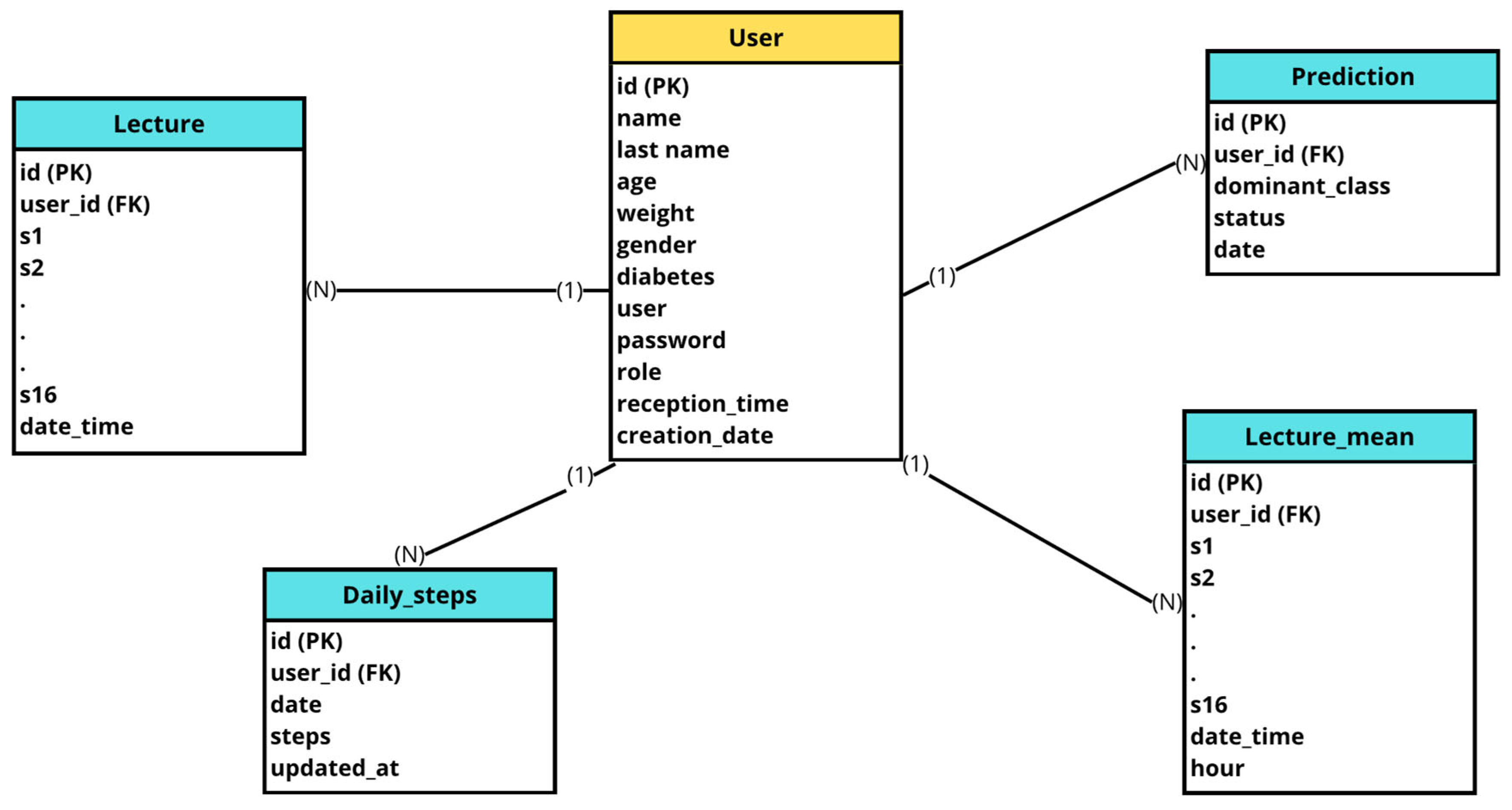
The system employs a MySQL relational database management system to store, manage, and query the data generated by the instrumented insoles and subsequent neural network processing. The database is structured in five main tables interconnected by primary and foreign keys as shown in
Figure 8, which allows for efficient and organized data management.
The User table stores identification and configuration data for each participant, while the Daily Steps table records daily steps associated with each user. Raw plantar pressure measurements acquired from the sensors are stored in the Lecture table, which includes timestamped records and is linked to a trigger that computes 24 h average values. These values are stored in the Lecture Mean table to optimize historical data queries. Results generated by the convolutional neural network are stored in the Prediction table, which records the predominant class and diagnosed state for each user. This relational structure ensures full data traceability from signal acquisition to long-term storage and diagnostic output, facilitating integration with the mobile application and server-side processing services.
2.6. Software Architecture for Mobile Application
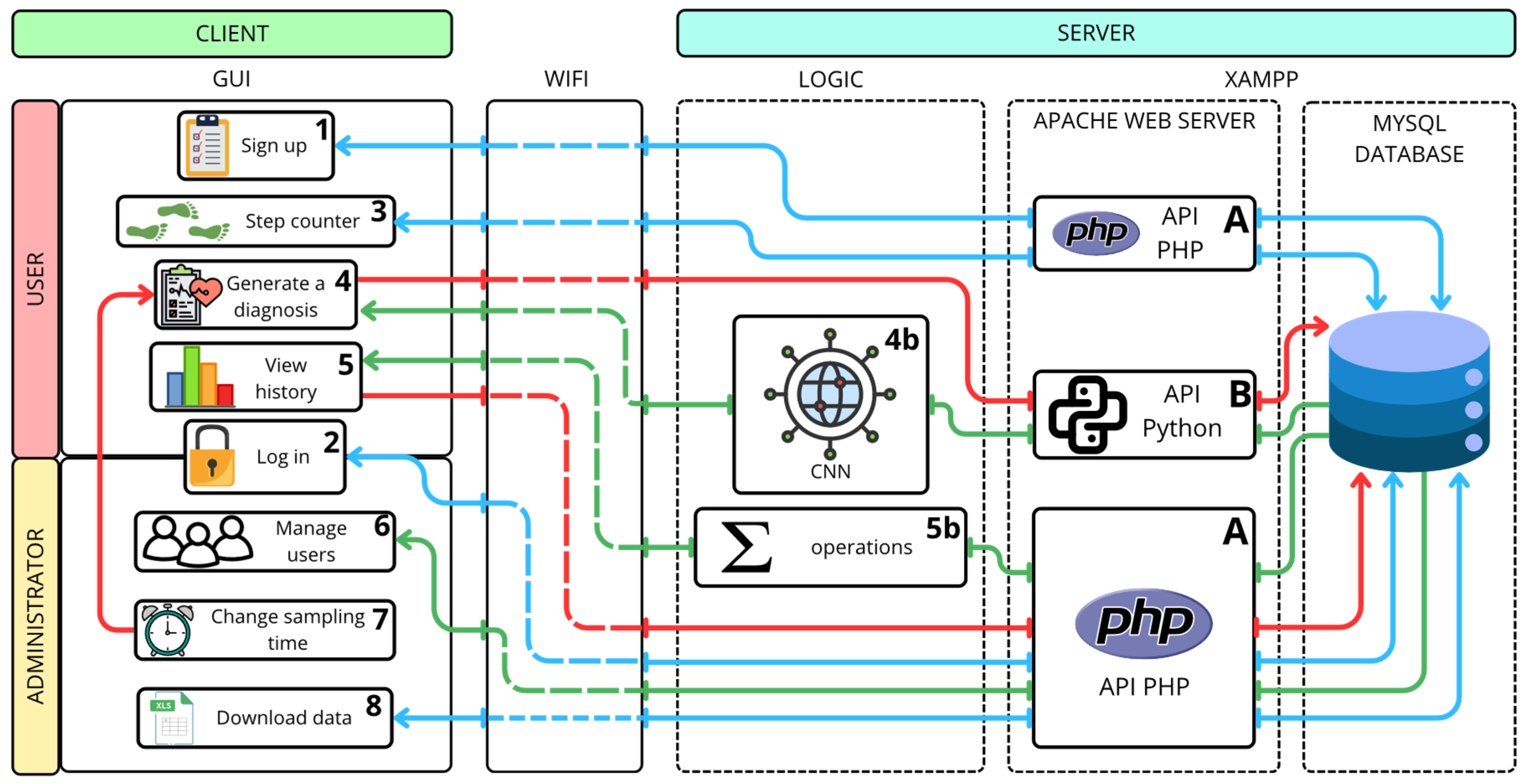
The mobile application was developed using the Android Studio Otter 2025.2.1 environment and the Kotlin programming language, following a two-tier client–server software architecture, as shown in
Figure 9. In this architecture, the client runs on the user’s mobile device, while the server handles processing tasks and data storage within a MySQL relational database (RDB). The client supports two distinct access profiles: a user mode, focused on real-time data visualization and historical data consultation; and an administrator mode, intended for user management and system parameter configuration.
New users begin with the registration module (1), where identification data and access credentials are entered. After registration, access is granted through the login module (2). Upon successful authentication, users access the main interface (3), which displays daily step counts. From this screen, users can access the acquisition and diagnosis module (4), enabling connection to the instrumented insoles, real-time visualization of plantar pressure data, and CNN-based diagnosis generation (4b). The system also includes a historical data visualization module (5), which allows users to query average sensor measurements over user-defined date ranges using aggregation operations (5b).
The administrator profile provides a main screen (6) that lists registered users and their associated information. From this interface, system operating parameters, such as test duration (7), can be modified, and each user’s plantar pressure data can be downloaded in spreadsheet format (8).
Communication between the client application and the database is implemented through an Apache web server deployed in the XAMPP 8.2.12.0 environment, enabling data exchange via Application Programming Interfaces (APIs). Two APIs were employed: (A) a PHP-based API responsible for user management and sensor data transmission to the MySQL database, and (B) a Python 3.10 based API responsible for data processing, CNN interaction, and automated diagnosis generation based on stored data.
2.7. Convolutional Neural Network Configuration
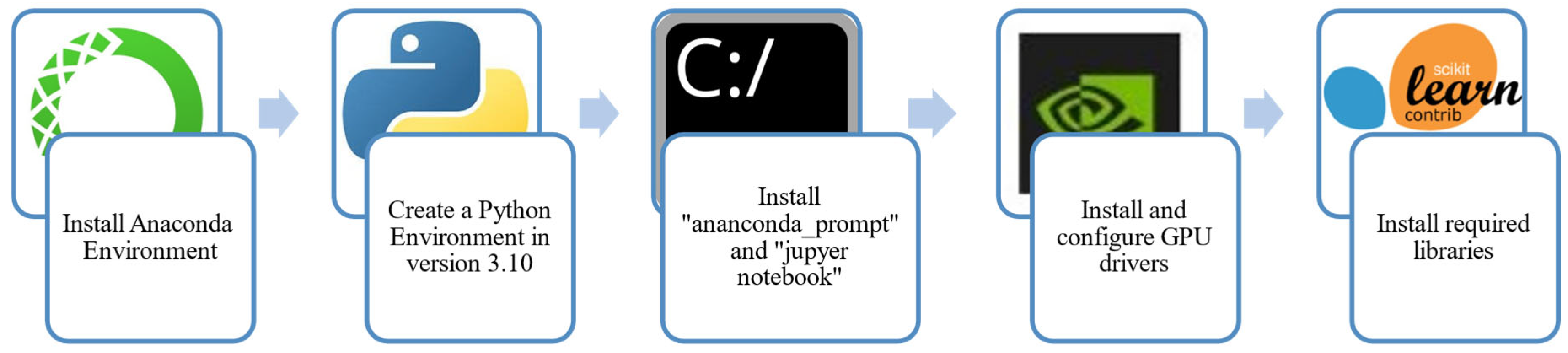
The workflow used to develop and train the CNN using a graphics processing unit (GPU) is summarized in
Figure 10. Training was conducted on a workstation with the following specifications: AMD Ryzen 7 7800X3D processor (8 cores, 16 threads), 32 GB DDR5 RAM at 6000 MHz, NVIDIA RTX 4060 GPU with 8 GB dedicated memory, and 512 GB NVMe M.2 storage.
The development framework was set up by installing Anaconda Navigator and creating a Python 3.10 environment to ensure compatibility with the required libraries. TensorFlow 2.10.0 and scikit-learn 1.2.0 libraries were used for data processing and model development, while NumPy 1.23.5 and Matplotlib 3.7.0 were employed for data handling and visualization. GPU drivers and the Jupyter Notebook 7.5.5 environment were then configured using Anaconda Prompt. NVIDIA development packages were installed to enable CUDA acceleration during CNN training.
Prior to training the CNN, multiple configurations were evaluated through a grid search to assess their impact on model accuracy. To this end, a testing framework was implemented to systematically vary the hyperparameters described in
Table 2. All configurations were trained using plantar pressure recordings from 43 participants, including 18 non-diabetic subjects (10 women and 8 men, age 62.9 ± 7.6 years) and 25 diabetic subjects (6 women and 19 men, age 64.8 ± 9.8 years).
Table 3 presents the clinical criteria used for participant inclusion and labeling in the study [
30].
A subject-wise data partitioning strategy was applied, in which each sample corresponded to the complete time series from a single patient. The data were randomly shuffled in each trial and subsequently divided into 70% (31 subjects) for training and 30% (12 subjects) for validation, ensuring that time series from the same subject were not split. This approach prevents data leakage and enables a more realistic evaluation of model performance.
3. Results
3.1. System Construction
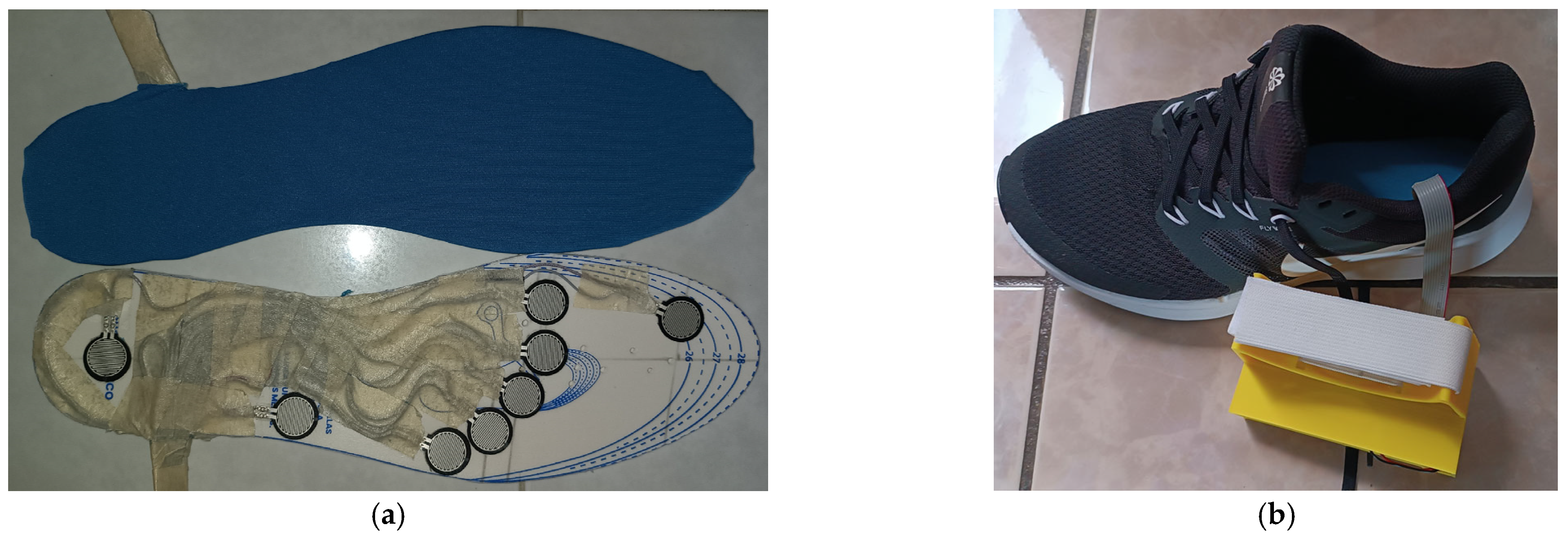
The system was fabricated by integrating eight FSR402 sensors into a commercial polyvinyl chloride (PVC) insole with a cotton cover, positioning each sensor at the previously defined anatomical locations in
Section 2.1. Electrical connections were implemented using flexible flat cables to facilitate assembly and minimize user discomfort, while ensuring compatibility with different types of footwear. Subsequently, the wiring and sensors were covered with a nylon-based Lycra layer.
Figure 11 shows the final construction of a pair of instrumented insoles, as well as the complete system integrated into commercial running footwear.
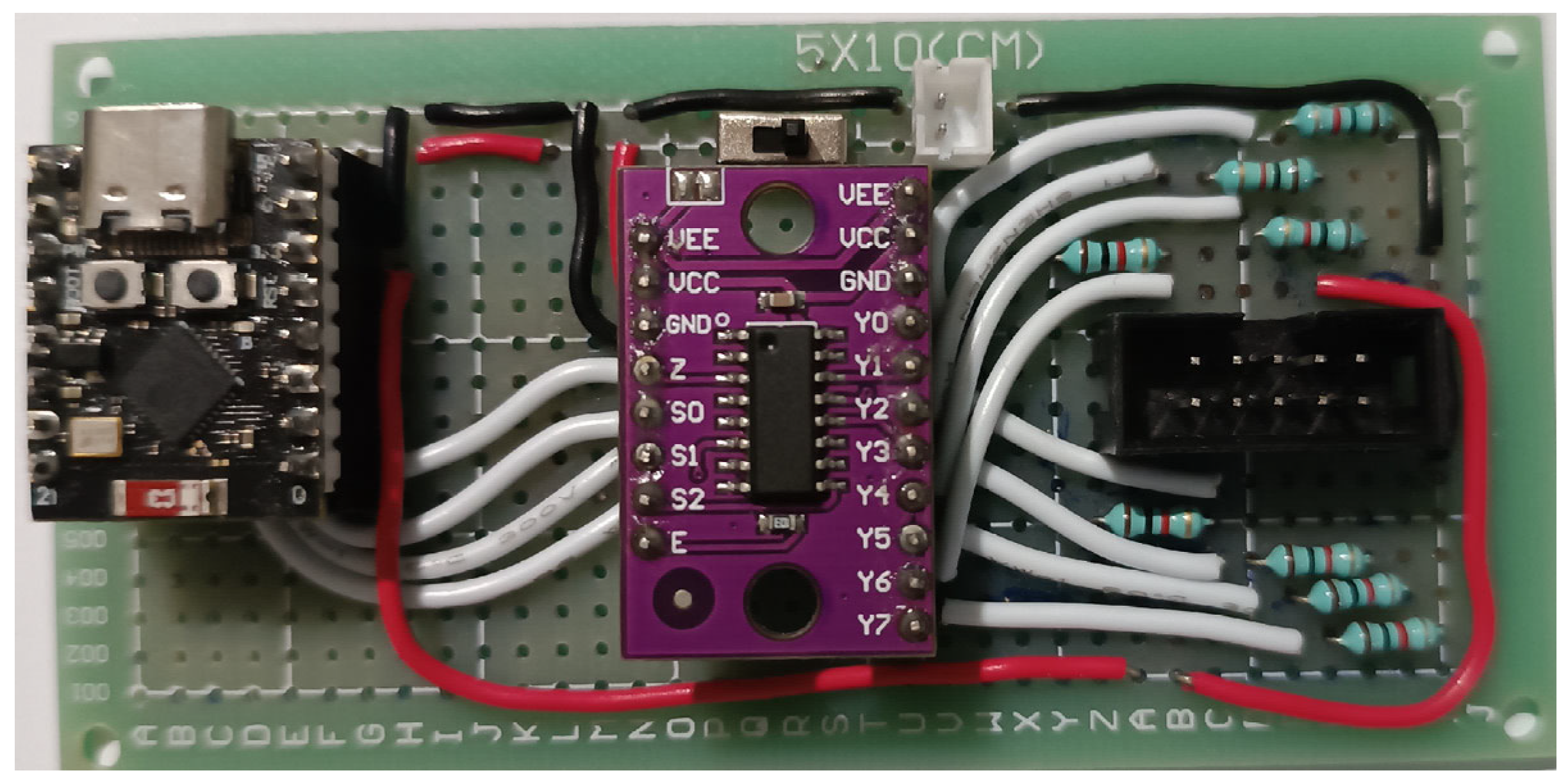
The data acquisition circuit was assembled on a 50 mm × 100 mm perforated board, as shown in
Figure 12. Female headers were soldered to allow removal of the microcontroller (MCU) and the multiplexer in case of failure, while the remaining components were soldered directly onto the board. Sensor connections were routed toward the multiplexer to enable sequential data acquisition.
3.2. Convolutional Neural Network Validation
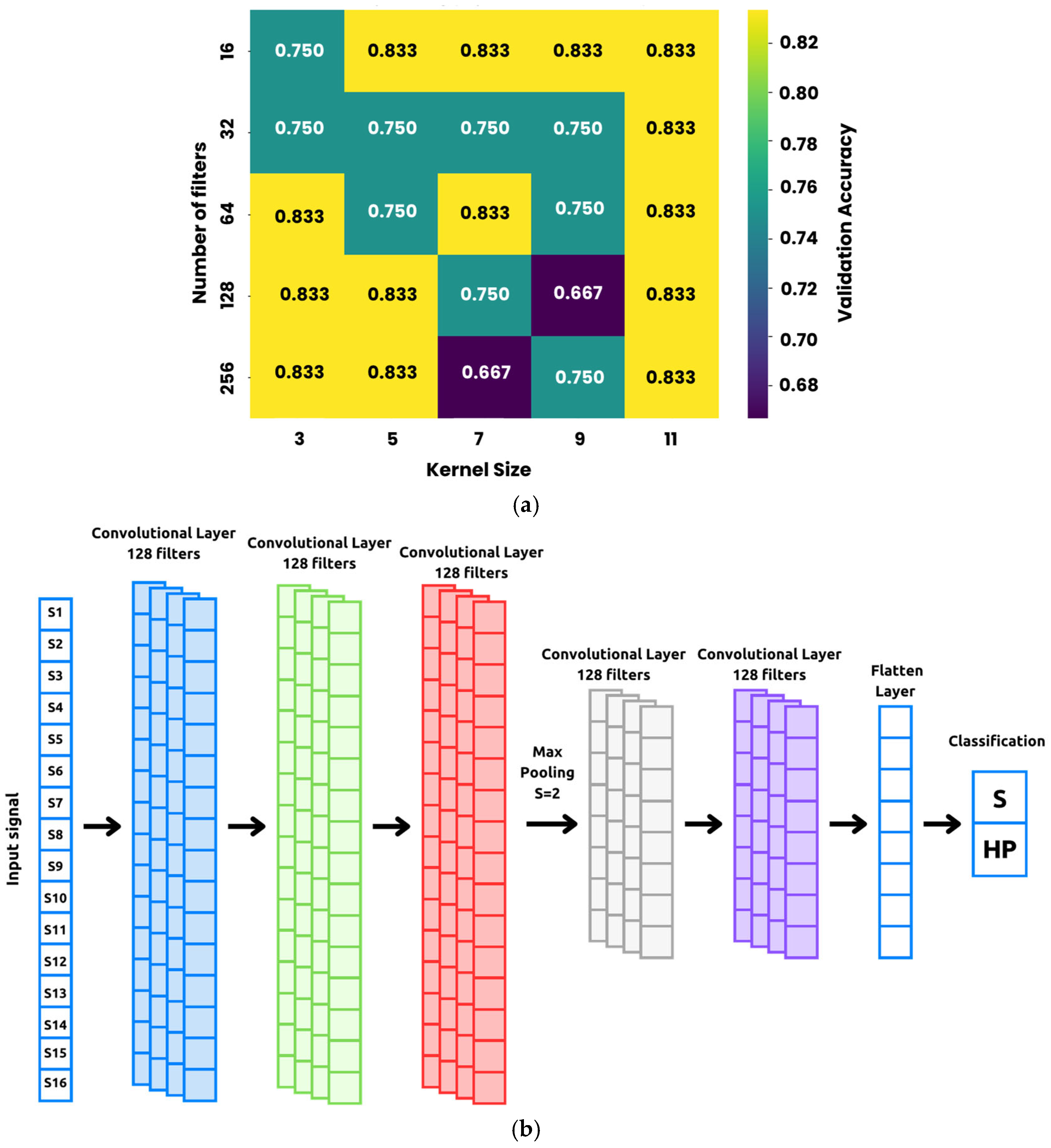
During training, the input vectors (S1–S16) were treated as a multivariate signal within a 30 s acquisition window. The heat map in
Figure 13a illustrates model accuracy under different hyperparameter configurations, showing improved performance when using a kernel size of 11 and more than 64 filters. Based on these results, the best-performing configuration was selected, and a MaxPooling layer was introduced after the third convolutional layer, as shown in
Figure 13b. This addition reduces spatial redundancy and enhances robustness to small variations in foot position within the insole.
Due to the limited dataset size and interindividual variability, the validation loss remained relatively stable, with occasional spikes. This behavior reflects rapid convergence followed by small oscillations attributable to subject-specific gait patterns. To address this variability, a checkpointing strategy was implemented. A training session of 30 epochs was conducted, during which the model weights corresponding to the highest validation accuracy were automatically stored. These weights were then used to initialize subsequent training sessions, rather than relying on random initialization.
This procedure was repeated for a total of five training sessions. Given the dataset size, the validation metrics are highly sensitive to small changes in classification outcomes; misclassifying even one or two additional samples can lead to noticeable fluctuations in accuracy. Therefore, these variations are interpreted as a consequence of the inherent variability in gradient-based optimization, rather than as an indicator of sustained improvements in model generalization.
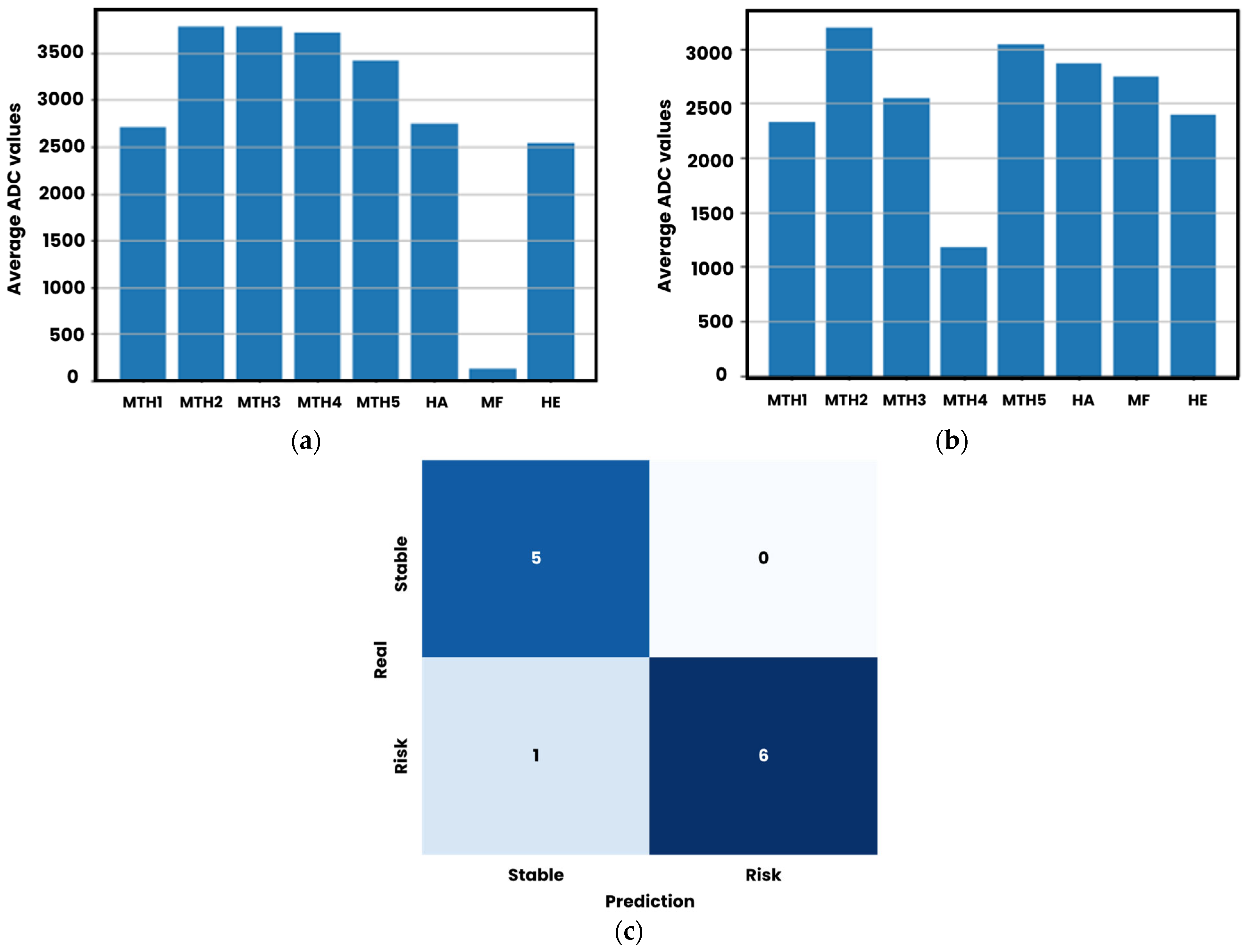
Figure 14a,b present the mean plantar pressure distributions of two diabetic participants who were incorrectly classified as stable. In the case of P017, the sensor associated with the midfoot recorded ADC values near zero, while a similar situation is observed in P020 with the MTH4 sensor. These substantially lower readings compared to the remaining sensors likely contributed to the misclassification. As noted by Nieman et al. [
30], plantar pressure distribution can vary significantly between individuals; therefore, such anomalies may be associated with suboptimal sensor placement due to footwear or anatomical differences.
To enhance system reliability, several mitigation strategies can be considered, including implementation of mechanical constraints to ensure consistent sensor positioning and the application of user-specific normalization to reduce interindividual variability. The confusion matrix in
Figure 14c summarizes the final CNN performance, achieving accuracy, recall, and an F1 score of 92%. Model evaluation was performed using a randomly selected 30% subset of the dataset, ensuring that the results provide a more representative estimate of real-world performance.
3.3. System Performance Evaluation
The system was validated using data from eight volunteers, including both non-diabetic individuals and diabetic patients with confirmed diabetic neuropathy. Participants’ characteristics are summarized in
Table 4. The inclusion and exclusion criteria were consistent with those presented in
Table 3, based on diagnostic protocols used by healthcare professionals in Mexico.
Experimental tests were conducted using 30 s acquisition windows at a sampling frequency of 20 Hz. During each trial, participants walked on a flat, uniform surface at a self-selected speed, allowing the recording of gait patterns representative of real-world conditions. Tests affected by wireless transmission interruptions, acquisition failures in the MCU, improper insole placement, or interruptions in walking within the specified time period were deemed invalid and excluded from the analysis. Conversely, a trial was considered valid when participants completed the 30 s walking period without interruption and with properly positioned insoles, resulting in 600 readings successfully stored in the database.
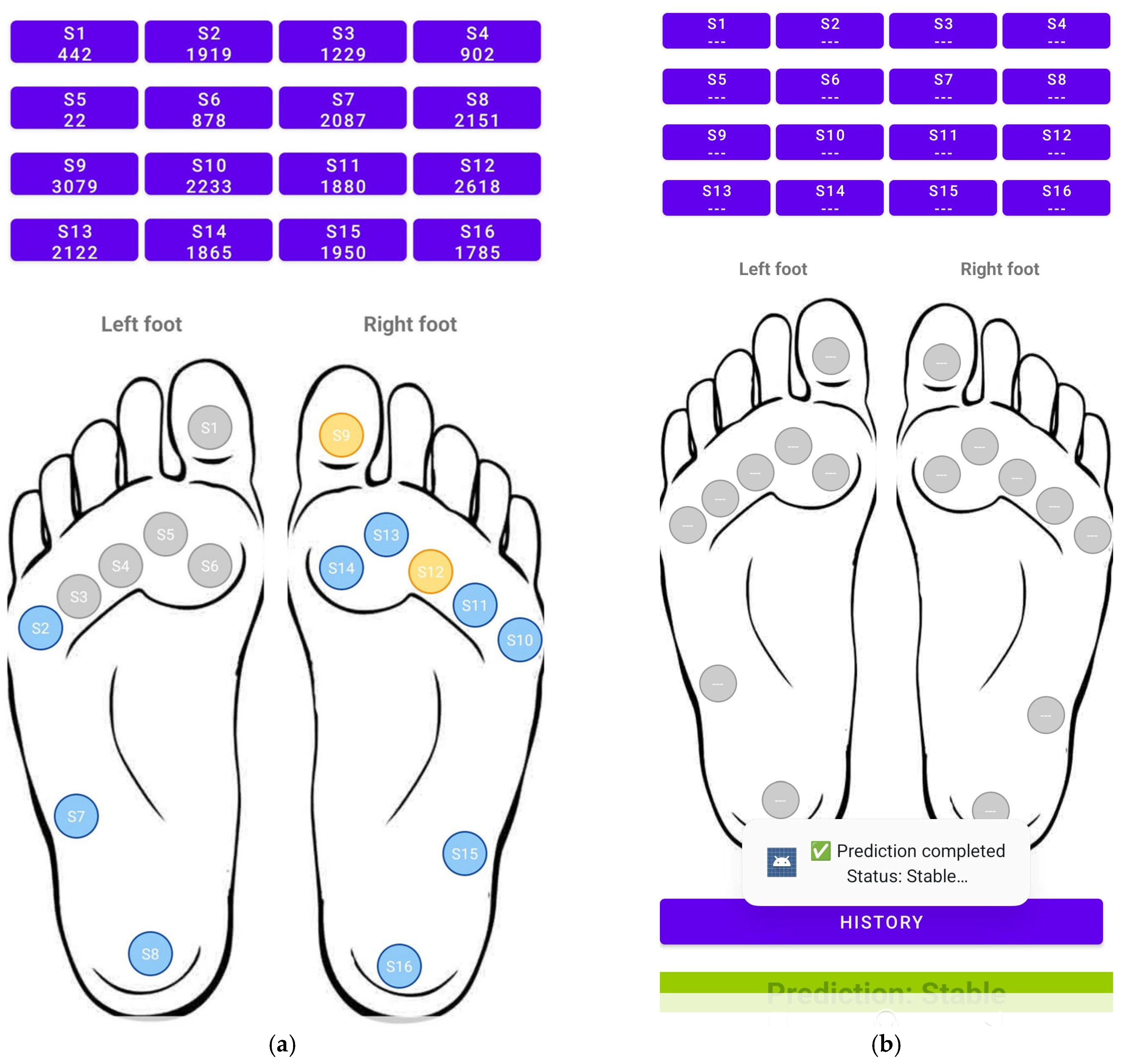
Figure 15a shows the main interface for pressure signal acquisition, where the process begins by scanning for devices via BLE. From which the user selects the instrumented insole pair, identifiable by name or, if necessary, by MAC address.
Once the connection is established and data acquisition begins, the interface displays the pressure status of each region using a predefined color code: gray for pressures below 77.5 kPa, blue for values between 77.5 and 250 kPa, yellow for values above 250 kPa and below 400 kPa, and red for critical levels exceeding 400 kPa. Additionally, the ADC readings from each transducer are displayed in real time within the corresponding fields.
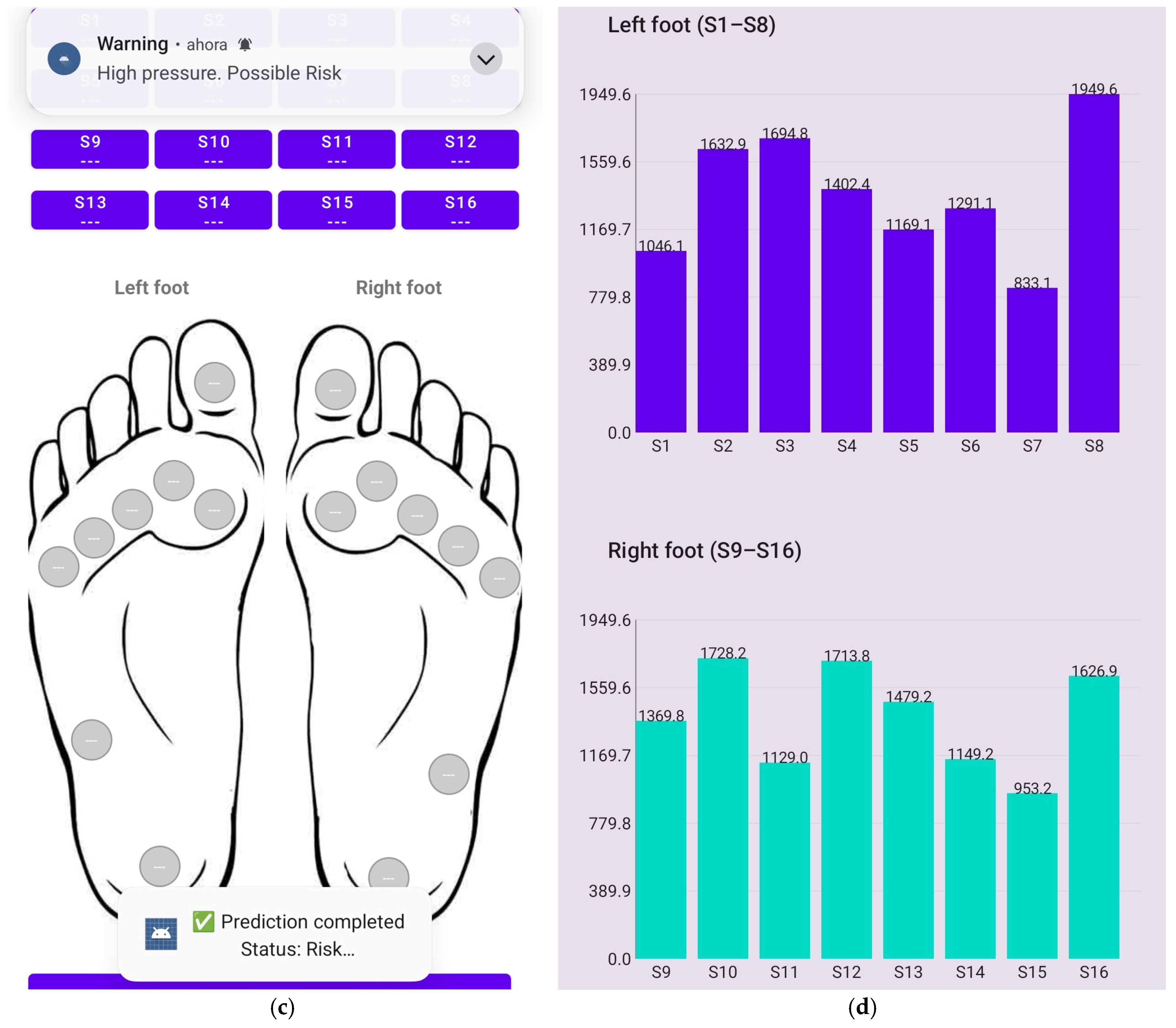
At the end of the acquisition period, the system displays the prediction generated by the CNN. Depending on the classification outcome, the scenarios illustrated in
Figure 15b,c are presented. In cases classified as stable, the result is displayed on the screen only; in contrast, when a risk condition is detected, the system additionally shows a notification to the user. Finally, access to the historical data allows users to review stored results. As shown in
Figure 15d, the interface displays either the average sensor readings (ADC values) corresponding to the most recent test or the average of the measurements recorded within a user-defined date range.
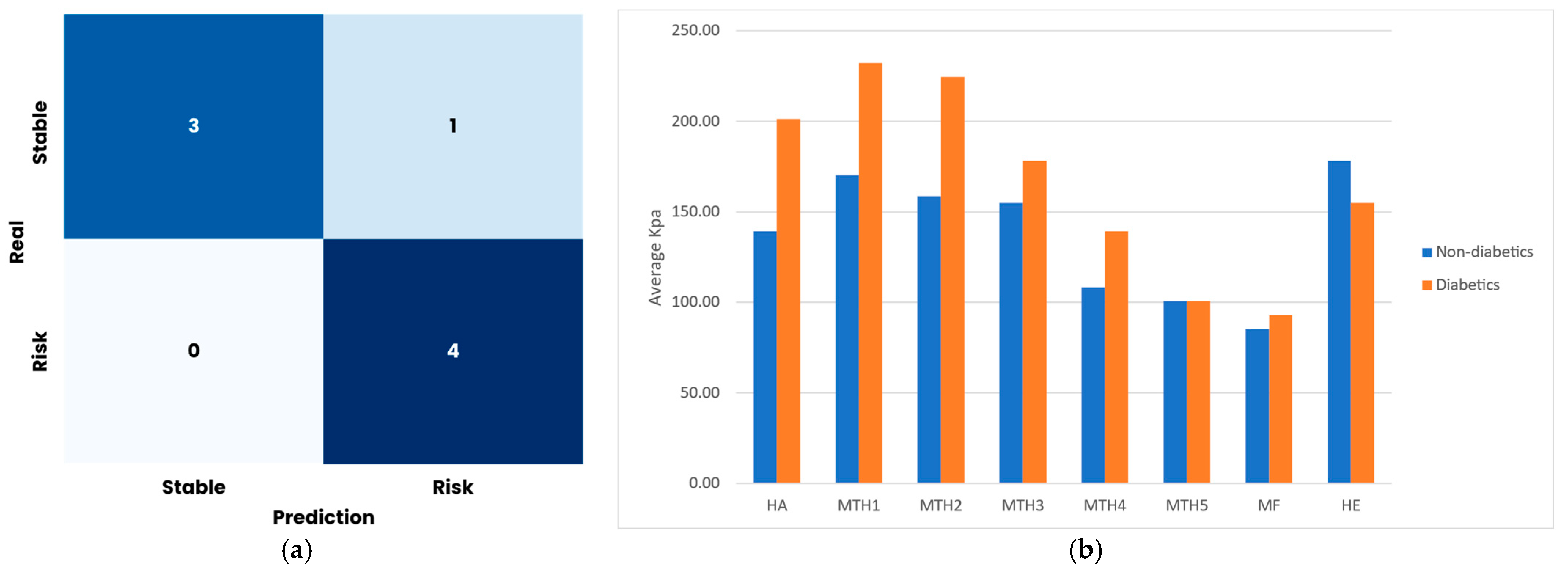
The diagnoses generated for the eight volunteers achieved an accuracy and recall of 88%, with an F1 score of 87%. The confusion matrix presented in
Figure 16a indicates the presence of one false positive, suggesting a bias toward classifying non-diabetic individuals as at risk. In this case, the misclassified participant had a body mass index (BMI) greater than 30, indicating obesity. Additionally, the shoe size used during the test was 25 MX (25 cm), which is relatively small in relation to body weight, resulting in increased plantar pressure.
Figure 16b presents the comparison of average plantar pressure distributions obtained from the group of eight participants, including both non-diabetic individuals and diabetic patients. The observed patterns indicate that non-diabetic subjects generally exhibit lower and more evenly distributed plantar pressure values, particularly across the metatarsal and hallux regions.
In contrast, diabetic participants show a consistent increase in plantar pressure, especially in the metatarsal heads (MTH1–MTH4), where average values rise from approximately 154–170 kPa in non-diabetic individuals to 178–232 kPa in diabetic patients. This corresponds to relative increases of approximately 36% in MTH1 and 41% in MTH2, highlighting a pronounced elevation of forefoot loading.
A similar trend is observed in the hallux region, where pressure increases from approximately 139 kPa to 201 kPa, representing an increase of about 44%. These findings suggest that elevated forefoot loading constitutes a characteristic pattern associated with diabetic neuropathy.
The false-positive case can be interpreted within this framework. Although the subject had no clinical diagnosis of diabetes, the plantar pressure values, particularly in the metatarsal region (MTH1–MTH5), exceeded 200 kPa and overlapped with the range observed in diabetic participants. This indicates that the CNN model primarily relies on pressure magnitude and spatial distribution patterns, which may lead to misclassification when non-diabetic individuals present biomechanical characteristics similar to those of diabetic subjects.
Additionally, external factors such as footwear influence the measured distribution. In this case, the use of running shoes with a thick heel sole reduced the relative contribution of the heel sensor, further increasing the relative dominance of forefoot pressures and reinforcing the pattern associated with diabetic conditions.
3.4. Prototype Cost
The estimated cost of manufacturing a pair of prototype insoles was approximately USD 48. This estimate includes only the hardware components directly integrated into the system, such as the microcontroller, the multiplexer, and the FSR sensors. The computing resources used for model training and server-side execution were not included in the cost analysis.
This cost is within an acceptable range considering that 34.5% of the Mexican population earns the minimum wage (USD 530 to USD 542) or less [
31].
4. Discussion
The obtained results demonstrate the feasibility of a smart insole system based on force-sensitive resistors (FSRs) for plantar pressure measurement and its analysis using convolutional neural networks. The effective integration of the transducers into a commercial insole, combined with the use of flexible wiring and textile covering materials, enabled the development of a functional system compatible with conventional footwear. This approach is consistent with previous studies aiming to provide portable solutions suitable for daily use.
However, while many prior works focus primarily on sensor design or controlled laboratory evaluation, the implemented architecture emphasizes system-level integration and real-world applicability. In contrast to systems evaluated exclusively under fully controlled laboratory conditions, the proposed approach enables wireless acquisition and transmission of plantar pressure data in real-world environments. The tests were conducted in common settings frequently visited by the volunteers, such as their workplaces (office environments) or, in the case of older adults, their homes.
These tests were conducted under conditions without abrupt terrain variations and in scenarios where participants did not remain standing for prolonged periods. Under these conditions, no participants reported discomfort during the trials, even when usage time was extended up to 20 min. However, feedback regarding the enclosure design was received: two participants reported discomfort, as their calf circumference exceeded the dimensions considered in the original design. Therefore, ensuring that both the insole and the enclosure do not cause injury due to their construction remains a priority for future work. In this regard, the use of flexible materials such as thermoplastic polyurethane (TPU) has been proposed for component fabrication.
The selection of FSR402 enabled adequate coverage of the proposed plantar pressure range, especially in regions where PPP values exceeding 200 kPa have been reported. While other studies have proposed sensor arrays with higher spatial density, often aiming at high-resolution pressure mapping, the results obtained in this work indicate that a discrete and strategically distributed configuration can provide representative information on plantar pressure patterns, while maintaining reduced system complexity and cost.
As demonstrated, this pressure threshold should be interpreted with caution. Factors such as BMI and footwear type may contribute to a more accurate assessment of pressure patterns associated with early-stage diabetic neuropathy and diabetic foot. Despite these variables, the system suggests that anthropometric considerations of the Mexican population were appropriately adapted for the volunteers included in this study.
Regarding data processing, the selected convolutional neural network (CNN) achieved performance metrics comparable to those reported in the recent literature, with an average accuracy of 88%, a recall rate of 88%, and an F1 score of 87%. The results indicate that combining efficient instrumentation with a properly tuned model can yield competitiveness. Unlike traditional statistical approaches, the use of CNNs enabled the capture of nonlinear patterns present in plantar pressure signals, highlighting the relevance of deep learning methods for identifying patterns associated with diabetic neuropathy.
CNN performance during full-system validation suggests the potential incorporation of footwear type and BMI as significant variables. Under this premise, it may be feasible to cluster non-diabetic individuals and patients with DN based on these factors, thereby reducing classification bias in obese participants and improving robustness against biomechanical variations caused by different footwear types. Such an approach could facilitate system deployment under less controlled real-world conditions. However, this strategy would require a substantially larger dataset and increased computational resources to implement clustering followed by CNN retraining.
Regarding data transmission, system performance during participant testing demonstrated stable communication via Bluetooth Low Energy (BLE). By excluding tests affected by communication interruptions or improper insole use, the integrity of the dataset was preserved. Compared to solutions that rely on fixed stations or external acquisition platforms, the proposed architecture enhances portability and facilitates access to historical measurement data, which is advantageous for patient follow-up.
The monitoring provided by the system enables the computation of daily average plantar pressure values. This time interval reduces sensitivity to isolated events, providing a more representative indicator of typical plantar pressure behavior. In contrast, longer aggregation intervals may overlook relevant changes in pressure patterns. The use of daily averages supports the identification of early trends over time, while maintaining statistical stability and facilitating data management and visualization.
Finally, the estimated cost of the prototype represents a significant advantage of the proposed system. At approximately USD 48 per pair of insoles, the system is considerably more affordable than other reported solutions. This feature is especially relevant in contexts with a high prevalence of diabetes and limited economic resources, as it promotes the adoption of screening technologies.
The system also presents opportunities for improvement. The use of a perforated prototyping board for the data acquisition circuit introduces limitations in terms of noise reduction and long-term robustness. Implementing a printed circuit board (PCB) with surface-mount components could enhance the electrical performance and reliability of the system. Furthermore, the ergonomics of the electronic enclosure can be optimized to improve comfort during prolonged use, based on participant feedback. Overall, the results and their analysis confirm that the proposed system constitutes a functional, low-cost, and technically sound solution for plantar pressure measurement and intelligent analysis using neural networks. This contributes to the development of portable tools for detecting biomechanical alterations associated with diabetic neuropathy and diabetic foot complications.
5. Conclusions
In this work, the development and validation of a smart insole system for plantar pressure measurement and automatic analysis of pressure patterns associated with diabetic neuropathy were presented. The system integrates FSR402 force-sensitive resistors distributed across key anatomical regions of the foot, a data acquisition system based on an ESP32-C3 Mini microcontroller, and a wireless transmission scheme using Bluetooth Low Energy, enabling portable and real-time monitoring suitable for daily use.
The experimental results demonstrate that the proposed instrumentation is capable of reliably capturing plantar pressure values within clinically relevant ranges associated with DN patients, while maintaining stable data acquisition and transmission during gait. From a biomechanical perspective, the analysis of the collected data revealed distinguishable pressure patterns between non-diabetic and diabetic participants. Diabetic subjects exhibited consistently higher plantar pressures in the forefoot region—especially in the metatarsal heads (MTH1–MTH4) and the hallux—exhibiting that elevated forefoot loading constitutes a characteristic marker associated with diabetic neuropathy.
The implemented convolutional neural network (CNN) achieved competitive performance, with an average accuracy and recall of 88% and an F1-score of 87%, demonstrating its capability to classify plantar pressure patterns between non-diabetic and diabetic individuals. These results indicate that the combination of low-cost sensing hardware and deep learning techniques can effectively identify relevant biomechanical patterns, supporting its use as a screening tool.
However, the analysis also revealed that certain anthropometric and external variables significantly influence system performance. In particular, body mass index (BMI) and footwear type emerged as relevant factors affecting plantar pressure distribution. A false-positive case observed during validation demonstrated that non-diabetic individuals with elevated BMI may present pressure magnitudes comparable to those of diabetic participants, leading to misclassification. This finding highlights that the CNN primarily relies on pressure intensity and spatial distribution, rather than clinical status.
The overall system architecture, including a mobile application for real-time visualization, database storage, and historical data analysis, provides a comprehensive platform for continuous monitoring and longitudinal follow-up. Additionally, the estimated low cost of the prototype (approximately USD 48) supports its potential implementation in resource-limited settings, where the prevalence of diabetes poses a significant public health challenge.
Future work will focus on improving system robustness and classification reliability by integrating additional variables such as BMI and footwear type into the predictive model, as well as optimizing hardware design through the implementation of a dedicated printed circuit board (PCB) and enhanced ergonomic components. Furthermore, expanding the dataset and conducting validation with a larger population will be essential to improve model generalization and strengthen the clinical applicability of the proposed system.
Author Contributions
Conceptualization, C.M.-M., J.A.R.-C., V.L.-C., M.C.-B. and J.M.-M.; methodology, V.L.-C. and M.C.-B.; software, J.A.R.-C., C.M.-M. and M.C.-B.; validation, V.L.-C., J.A.R.-C. and M.C.-B.; formal analysis, C.M.-M., J.A.R.-C. and J.M.-M.; investigation, J.M.-M., J.A.R.-C., C.M.-M., V.A.G.-P. and M.C.-B.; data curation, J.A.R.-C. and C.M.-M.; writing—original draft, C.M.-M., J.A.R.-C., V.L.-C. and M.C.-B.; writing—review and editing, V.A.G.-P., C.M.-M., J.M.-M. and M.C.-B.; visualization, J.M.-M. and V.A.G.-P.; supervision, M.C.-B., V.L.-C. and C.M.-M.; project administration, C.M.-M. and M.C.-B. All authors have read and agreed to the published version of the manuscript.
Funding
This research received no external funding.
Institutional Review Board Statement
The study was approved by the Institutional Review Board of the Technological Institute of Chilpancingo (protocol code 23930.25-P 05/02/26).
Informed Consent Statement
Informed consent was obtained from all subjects involved in the study.
Data Availability Statement
Conflicts of Interest
The authors declare no conflicts of interest.
References
- Organización Mundial de la Salud. Diabetes. Available online: https://www.who.int/es/news-room/fact-sheets/detail/diabetes (accessed on 22 October 2025).
- International Diabetes Federation. Mexico Diabetes Report 2000–2050. Available online: https://diabetesatlas.org/data-by-location/country/mexico/ (accessed on 30 October 2025).
- Instituto Nacional de Estadística y Geografía. Estadísticas de Defunciones Registradas (EDR). 2025. Available online: https://www.inegi.org.mx/contenidos/saladeprensa/boletines/2025/edr/EDR2024-def_CP.pdf (accessed on 1 December 2025).
- Jiang, X.; Deng, F.; Rui, S.; Ma, Y.; Wang, M.; Deng, B.; Wang, H.; Du, C.; Chen, B.; Yang, X.; et al. The Evaluation of Gait and Balance for Patients with Early Diabetic Peripheral Neuropathy: A Cross-Sectional Study. Risk Manag. Healthc. Policy 2022, 15, 543–552. [Google Scholar] [CrossRef]
- Federación Mexicana de Diabetes ¿Cómo Empieza El Pie Diabético? Available online: https://fmdiabetes.org/como-empieza-el-pie-diabetico/ (accessed on 22 October 2025).
- Wrobel, J.S.; Najafi, B. Diabetic Foot Biomechanics and Gait Dysfunction. J. Diabetes Sci. Technol. 2010, 4, 833–845. [Google Scholar] [CrossRef]
- García-Madrid, M.; García-Álvarez, Y.; Sanz-Corbalán, I.; Álvaro-Afonso, F.J.; López-Moral, M.; Lázaro-Martínez, J.L. Predictive Value of Forefoot Plantar Pressure to Predict Reulceration in Patients at High Risk. Diabetes Res. Clin. Pract. 2022, 189, 109976. [Google Scholar] [CrossRef]
- Petersen, B.J.; Rothenberg, G.M.; Lakhani, P.J.; Zhou, M.; Linders, D.R.; Bloom, J.D.; Wood, K.A.; Armstrong, D.G. Ulcer Metastasis? Anatomical Locations of Recurrence for Patients in Diabetic Foot Remission. J. Foot Ankle Res. 2020, 13, 1. [Google Scholar] [CrossRef] [PubMed]
- Jones, P.; Davies, M.J.; Khunti, K.; Fong, D.T.P.; Webb, D. In-Shoe Pressure Thresholds for People with Diabetes and Neuropathy at Risk of Ulceration: A Systematic Review. J. Diabetes Complicat. 2021, 35, 107815. [Google Scholar] [CrossRef] [PubMed]
- Abbott, C.A.; Chatwin, K.E.; Rajbhandari, S.M.; John, K.M.; Pabbineedi, S.; Bowling, F.L.; Boulton, A.J.M.; Reeves, N.D. Site-Specific, Critical Threshold Barefoot Peak Plantar Pressure Associated with Diabetic Foot Ulcer History: A Novel Approach to Determine DFU Risk in the Clinical Setting. Medicina 2022, 58, 166. [Google Scholar] [CrossRef]
- Abdul Razak, A.H.; Zayegh, A.; Begg, R.K.; Wahab, Y. Foot Plantar Pressure Measurement System: A Review. Sensors 2012, 12, 9884–9912. [Google Scholar] [CrossRef]
- Castro-Martins, P.; Marques, A.; Coelho, L.; Vaz, M.; Baptista, J.S. In-Shoe Plantar Pressure Measurement Technologies for Diabetic Foot: A Systematic Review. Heliyon 2024, 10, e29672. [Google Scholar] [CrossRef]
- Agrawal, D.K.; Jongpinit, W.; Pojprapai, S.; Usaha, W.; Wattanapan, P.; Tangkanjanavelukul, P.; Vitoonpong, T. Smart Insole-Based Plantar Pressure Analysis for Healthy and Diabetic Feet Classification: Statistical vs. Machine Learning Approaches. Technologies 2024, 12, 231. [Google Scholar] [CrossRef]
- Faiz, M.; Imtiaz, T.; Zafar, B.; Shamim, F.; Khan, S.; Abid, H. Smart Foot Insole for Reducing the Risk of Foot Ulcers in Diabetic Patients by Measuring Plantar Pressure. Pak. J. Rehabil. 2024, 13, 88–98. [Google Scholar] [CrossRef]
- Khandakar, A.; Mahmud, S.; Chowdhury, M.E.H.; Reaz, M.B.I.; Kiranyaz, S.; Mahbub, Z.B.; Ali, S.H.M.; Bakar, A.A.A.; Ayari, M.A.; Alhatou, M.; et al. Design and Implementation of a Smart Insole System to Measure Plantar Pressure and Temperature. Sensors 2022, 22, 7599. [Google Scholar] [CrossRef]
- Zhang, Q.; Wang, Y.L.; Xia, Y.; Wu, X.; Kirk, T.V.; Chen, X.D. A Low-Cost and Highly Integrated Sensing Insole for Plantar Pressure Measurement. Sens. Biosens. Res. 2019, 26, 100298. [Google Scholar] [CrossRef]
- Tian, Y.; Zhang, L.; Zhang, C.; Bao, B.; Li, Q.; Wang, L.; Song, Z.; Li, D. Deep-Learning Enabled Smart Insole System Aiming for Multifunctional Foot-Healthcare Applications. Exploration 2023, 4, 20230109. [Google Scholar] [CrossRef] [PubMed]
- Luna-Perejón, F.; Salvador-Domínguez, B.; Perez-Peña, F.; Corral, J.M.R.; Escobar-Linero, E.; Morgado-Estévez, A. Smart Shoe Insole Based on Polydimethylsiloxane Composite Capacitive Sensors. Sensors 2023, 23, 1298. [Google Scholar] [CrossRef] [PubMed]
- Tang, J.; Bader, D.L.; Moser, D.; Parker, D.J.; Forghany, S.; Nester, C.J.; Jiang, L. A Wearable Insole System to Measure Plantar Pressure and Shear for People with Diabetes. Sensors 2023, 23, 3126. [Google Scholar] [CrossRef] [PubMed]
- Tian, T.; Wang, C.; Xu, Y.; Bai, Y.; Wang, J.; Long, Z.; Wang, X.; Zhou, L. A Wearable Gait Analysis System Used in Type 2 Diabetes Mellitus Patients: A Case–Control Study. Clin. Cosmet. Investig. Dermatol. 2021, 14, 1799–1808. [Google Scholar] [CrossRef]
- Ye, Z.; Li, X.; Zhao, K.; Zhan, W.; Zhang, Q.; Lei, L.; Yang, M.; Liu, M.; Zhang, X. Sensitive and Reliable Wireless Monitoring of Foot Pressure and Temperature for Diabetic Foot Ulcer Management and Prevention. Sens. Actuators A Phys. 2025, 387, 116411. [Google Scholar] [CrossRef]
- Ghazi, R.F.; Chiad, J.S.; Abdulghani, F.M. Design and Manufacturing a Smart Shoe for Diabetic Foot Ulcer Monitoring and Prediction System Using Internet-of-Things Technology. J. Braz. Soc. Mech. Sci. Eng. 2024, 46, 83. [Google Scholar] [CrossRef]
- Moulaei, K.; Malek, M.; Sheikhtaheri, A. A Smart Wearable Device for Monitoring and Self-Management of Diabetic Foot: A Proof of Concept Study. Int. J. Med. Inform. 2021, 146, 104343. [Google Scholar] [CrossRef]
- Interlink Electronics. FSR 402 Data Sheet, 4th ed.; Interlink Electronics, Inc.: Fremont, CA, USA, 2013; Available online: https://cdn-shop.adafruit.com/datasheets/FSR400Series_PD.pdf (accessed on 8 November 2025).
- Pataky, T.C. Spatial Resolution in Plantar Pressure Measurement Revisited. J. Biomech. 2012, 45, 2116–2124. [Google Scholar] [CrossRef]
- Ramanathan, A.K.; Kiran, P.; Arnold, G.P.; Wang, W.; Abboud, R.J. Repeatability of the Pedar-X® in-Shoe Pressure Measuring System. Foot Ankle Surg. 2010, 16, 70–73. [Google Scholar] [CrossRef] [PubMed]
- Chaurand, R.Á.; Prado León, L.R.; González Muñoz, E.L. Dimensiones Antropométricas de Población Latinoamericana, 2nd ed.; Universidad de Guadalajara: Guadalajara, Mexico, 2007. [Google Scholar]
- Forghany, S.; Bonanno, D.R.; Menz, H.B.; Landorf, K.B. An Anatomically-Based Masking Protocol for the Assessment of in-Shoe Plantar Pressure Measurement of the Forefoot. J. Foot Ankle Res. 2018, 11, 31. [Google Scholar] [CrossRef] [PubMed]
- Semiconductors, N.X.P. 74HC4051; 74HCT4051 8-Channel Analog Multiplexer/Demultiplexer. 2016. Available online: https://cdn.sparkfun.com/assets/learn_tutorials/5/5/3/74HC_HCT4051.pdf (accessed on 4 November 2025).
- Niemann, U.; Spiliopoulou, M.; Szczepanski, T.; Samland, F.; Grützner, J.; Senk, D.; Ming, A.; Kellersmann, J.; Malanowski, J.; Klose, S.; et al. Comparative Clustering of Plantar Pressure Distributions in Diabetics with Polyneuropathy May Be Applied to Reveal Inappropriate Biomechanical Stress. PLoS ONE 2016, 11, e0161326. [Google Scholar] [CrossRef]
- Torres-Machorro, A.; Ruben-Castillo, C.; Torres-Roldán, J.F.; Miranda-Gómez, F.; Catrip-Torres, J.; Hinojosa, C.A.; De Revisión, A. Estado Actual, Costos Económicos y Sociales Del Pie Diabético y Las Amputaciones En La Población Mexicana. The Economic and Social Costs of the Diabetic Foot and Its Amputations. Current Situation in the Mexican Population. Rev. Mex. Angiol. 2020, 48, 53–64. [Google Scholar] [CrossRef]
Figure 1.
Transducers considered for the construction of the insole: (a) short-version FSR402 transducer (Interlink Electronics, Inc. Fremont, CA, USA); (b) polyvinylidene fluoride (PVDF) piezoelectric transducer.
Figure 1.
Transducers considered for the construction of the insole: (a) short-version FSR402 transducer (Interlink Electronics, Inc. Fremont, CA, USA); (b) polyvinylidene fluoride (PVDF) piezoelectric transducer.
Figure 2.
Placement of transducers based on * foot length and ** insole length.
Figure 2.
Placement of transducers based on * foot length and ** insole length.
Figure 3.
Output voltage (V) versus applied mass (kg).
Figure 3.
Output voltage (V) versus applied mass (kg).
Figure 4.
Designed data acquisition circuit.
Figure 4.
Designed data acquisition circuit.
Figure 5.
Current consumption test for the system: (a) idle system current consumption; (b) data transmission current consumption.
Figure 5.
Current consumption test for the system: (a) idle system current consumption; (b) data transmission current consumption.
Figure 6.
Data acquisition architecture.
Figure 6.
Data acquisition architecture.
Figure 7.
Designed enclosure: (a) 3D view of the enclosure; (b) enclosure containing the electronic circuit, worn by a female participant.
Figure 7.
Designed enclosure: (a) 3D view of the enclosure; (b) enclosure containing the electronic circuit, worn by a female participant.
Figure 8.
Entity–relationship diagram of the MySQL database.
Figure 8.
Entity–relationship diagram of the MySQL database.
Figure 9.
Software architecture of Android mobile application.
Figure 9.
Software architecture of Android mobile application.
Figure 10.
Configuration process of the computing system for local CNN programming and training.
Figure 10.
Configuration process of the computing system for local CNN programming and training.
Figure 11.
Designed insole; (a) PVC insole with FSR402 sensors attached in regions of interest; (b) insole used in commercial running footwear.
Figure 11.
Designed insole; (a) PVC insole with FSR402 sensors attached in regions of interest; (b) insole used in commercial running footwear.
Figure 12.
Electronic circuit built on a perforated board.
Figure 12.
Electronic circuit built on a perforated board.
Figure 13.
Procedure and results of CNN parameter selection; (a) Heat map generated with 5 convolutional layers; (b) Selected CNN configuration.
Figure 13.
Procedure and results of CNN parameter selection; (a) Heat map generated with 5 convolutional layers; (b) Selected CNN configuration.
Figure 14.
Representative false-negative classification example; (a) Average plantar pressure distribution for participant P017 (left foot); (b) Average plantar pressure distribution for participant P020 (right foot); (c) Confusion matrix obtained during CNN validation.
Figure 14.
Representative false-negative classification example; (a) Average plantar pressure distribution for participant P017 (left foot); (b) Average plantar pressure distribution for participant P020 (right foot); (c) Confusion matrix obtained during CNN validation.
Figure 15.
Screens displayed in the application to generate a diagnosis; (a) Initial interface during data collection; (b) Risk-free diagnosis; (c) Risk diagnosis and notification; (d) Daily history generated for the user.
Figure 15.
Screens displayed in the application to generate a diagnosis; (a) Initial interface during data collection; (b) Risk-free diagnosis; (c) Risk diagnosis and notification; (d) Daily history generated for the user.
Figure 16.
Validation results of the complete system; (a) Confusion matrix for the eight validated patients; (b) Pressure comparison between non-diabetic patients with normal body mass index and obesity.
Figure 16.
Validation results of the complete system; (a) Confusion matrix for the eight validated patients; (b) Pressure comparison between non-diabetic patients with normal body mass index and obesity.
Table 1.
Comparative table of studies reported in the literature.
Table 1.
Comparative table of studies reported in the literature.
| Reference | Type of Sensors | Platform | Communication
Protocol | Data Analysis |
|---|
| [13] | FSR | SuraSole | Bluetooth | Compare 9 ML models |
| [14] | FSR | Arduino Nano | USB (Serial Port) | Find Plantar Pressure Peak |
| [15] | FSR and Temperature | ESP32 TinyPico | BLE | Pressure map |
| [16] | Capacitive | PIC | USB (Serial Port) | Comparison with other capacitive sensors |
| [17] | Capacitive | Arduino Mega | Wireless | 1D CNN |
| [18] | Capacitive | STM32 | Bluetooth | Comparison with FSR |
| [19] | Capacitive (TRIPS; shear and pressure) | DAQ (own design) | Wireless | Comparison with XSENSOR system |
| [20] | Film pressure, microphone, accelerometer, and gyroscope. | Gaitboter | Wireless | One-way ANOVA |
| [21] | FSR (own design) | US Keysight | PT-Reciprocal Scaling Symmetry | Comparison with commercial sensors |
| [22] | FSR, Humidity/Temperature and oxygen | Arduino Mega | Wireless (Wi-Fi) | Comparison to find critical thresholds |
| [23] | FSR and Humidity/Temperature | Arduino LilyPad | Bluetooth | Comparison with Pedar system |
Table 2.
Hyperparameters varied to identify the optimal CNN configuration.
Table 2.
Hyperparameters varied to identify the optimal CNN configuration.
| Hyperparameters | Considered Values |
|---|
| Kernel size | 3 | 5 | 7 | 9 | 11 |
| Number of filters | 16 | 32 | 64 | 128 | 256 |
| Number of convolutional layers | 2 | 3 | 4 | 5 | 7 |
| Batch size | 2 | 4 | 8 | 16 | 32 |
Table 3.
Inclusion and exclusion criteria for study participants.
Table 3.
Inclusion and exclusion criteria for study participants.
| Group | Inclusion | Exclusion |
|---|
| Non-Diabetic Group | Absence of macroangiopathy, skin or lower-limb defects, and sensorimotor neuropathy. | History of diabetes mellitus, amputations, spinal deformities, foot ulcers, heart failure, and myocardial infarction. |
| Diabetic Group | Presence of diabetes mellitus (diagnosed by a healthcare professional), peripheral sensory neuropathy with impaired proprioception, loss of thermal discrimination, and negative response to the 10 g Semmes–Weinstein monofilament test. | Presence of neuropathic ulcerations, cutaneous defects, advanced-stage macroangiopathy, lower-limb paralysis, limb amputation or deformity, heart failure stage III or IV (New York Heart Association classification), and myocardial infarction within the previous 12 weeks. |
Table 4.
Data of the participants involved in the validation tests.
Table 4.
Data of the participants involved in the validation tests.
| Diagnose | Sex | Number of
Participants | Age | Weight (kg) | Height (cm) | BMI |
|---|
| Nondiabetic | Male | 2 | 47–54 | 57–85 | 152–168 | 20.9–27.4 |
| Female | 2 |
| Diabetic with DN | Male | 1 | 50–63 | 63–120 | 150–160 | 23.9–44.4 |
| Female | 3 |
| Disclaimer/Publisher’s Note: The statements, opinions and data contained in all publications are solely those of the individual author(s) and contributor(s) and not of MDPI and/or the editor(s). MDPI and/or the editor(s) disclaim responsibility for any injury to people or property resulting from any ideas, methods, instructions or products referred to in the content. |



 ,
,