
Novel Technologies for Diagnosis of Conveyor Belt Looseness via Motor Current Signature Analysis



Abstract
1. Introduction
- Experimental investigation of short-duration motor current spikes caused by conveyor belt looseness, establishing their physical origin, electromechanical interpretation, and diagnostic relevance.
- Proposition, for the first time worldwide, of Consolidated Spectral Kurtosis technology for the diagnosis of conveyor belt looseness via motor current data.
- Proposition, for the first time worldwide, of spectral Cross-Correlation technologies for the diagnosis of conveyor belt looseness via motor current data.
- Comparison of the proposed technologies.
- Investigate theoretically and experimentally the short-duration current spikes induced by conveyor belt looseness and establish their physical and electromechanical basis.
- Apply the proposed technologies for diagnosing looseness-induced spikes in motor current signals.
- Perform experimental validation of the proposed technologies on an industrial conveyor system.
- Compare the diagnostic effectiveness of the proposed technologies.
2. Materials and Methods
2.1. Theoretical Analysis
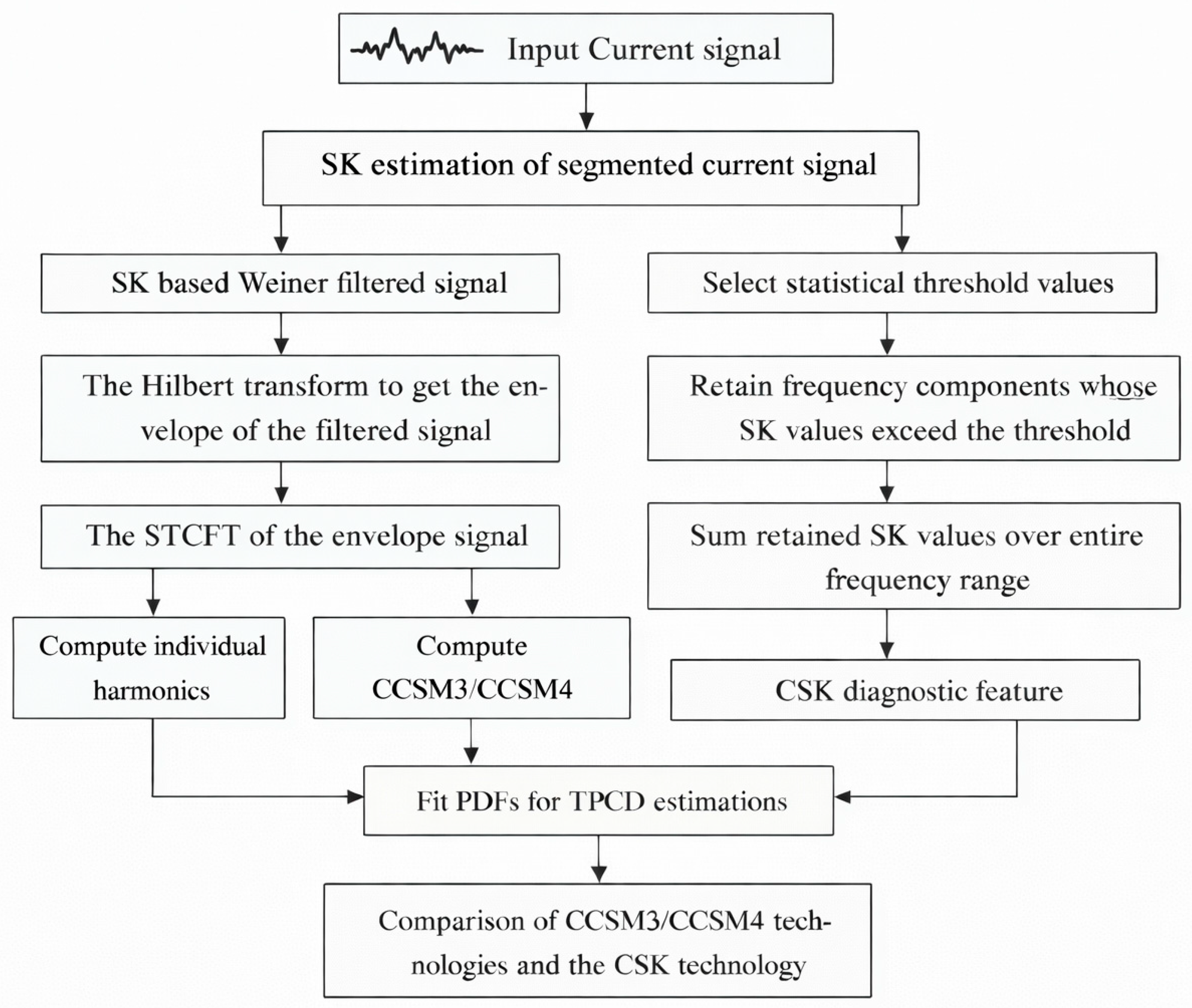
2.2. Methodology
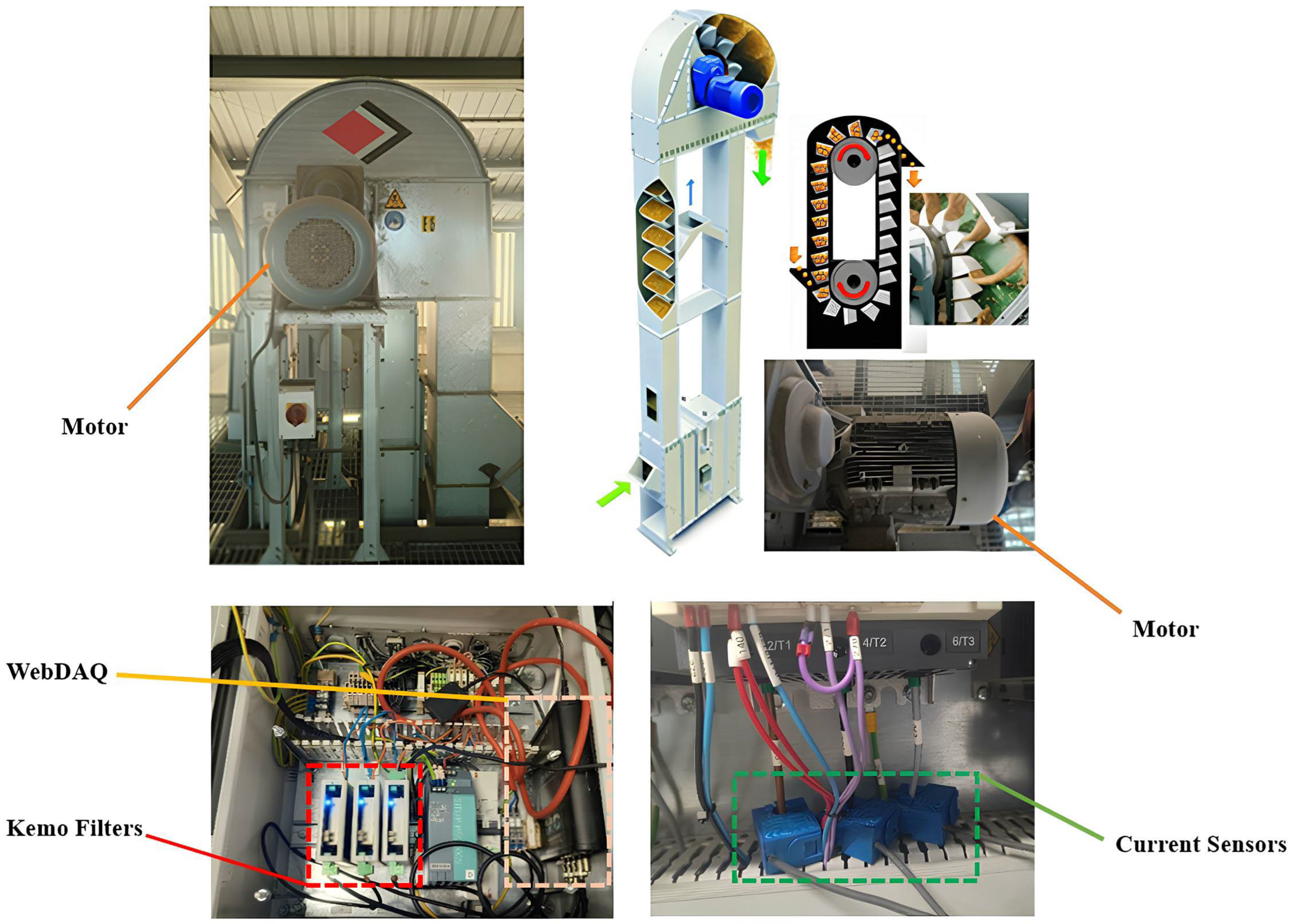
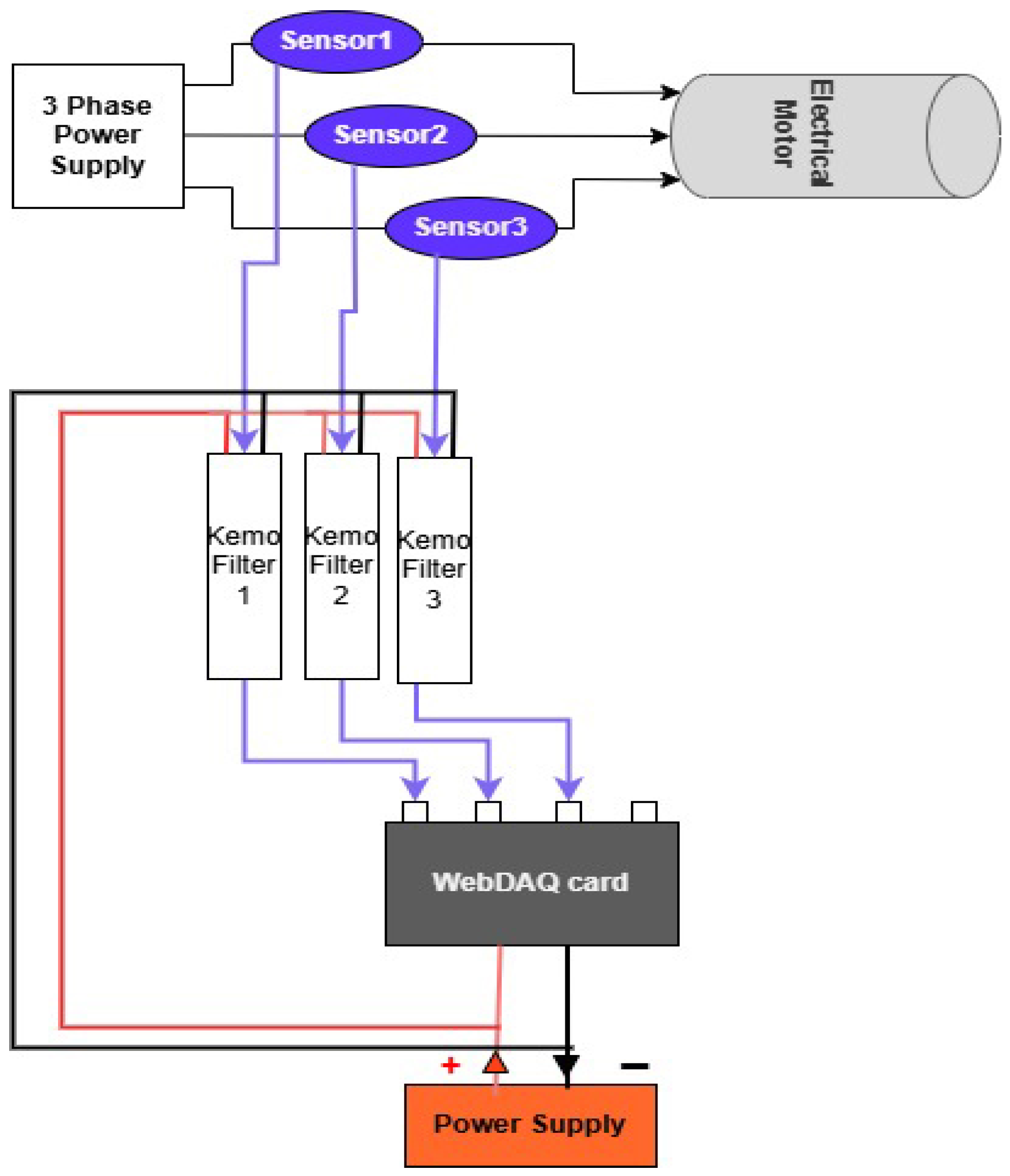
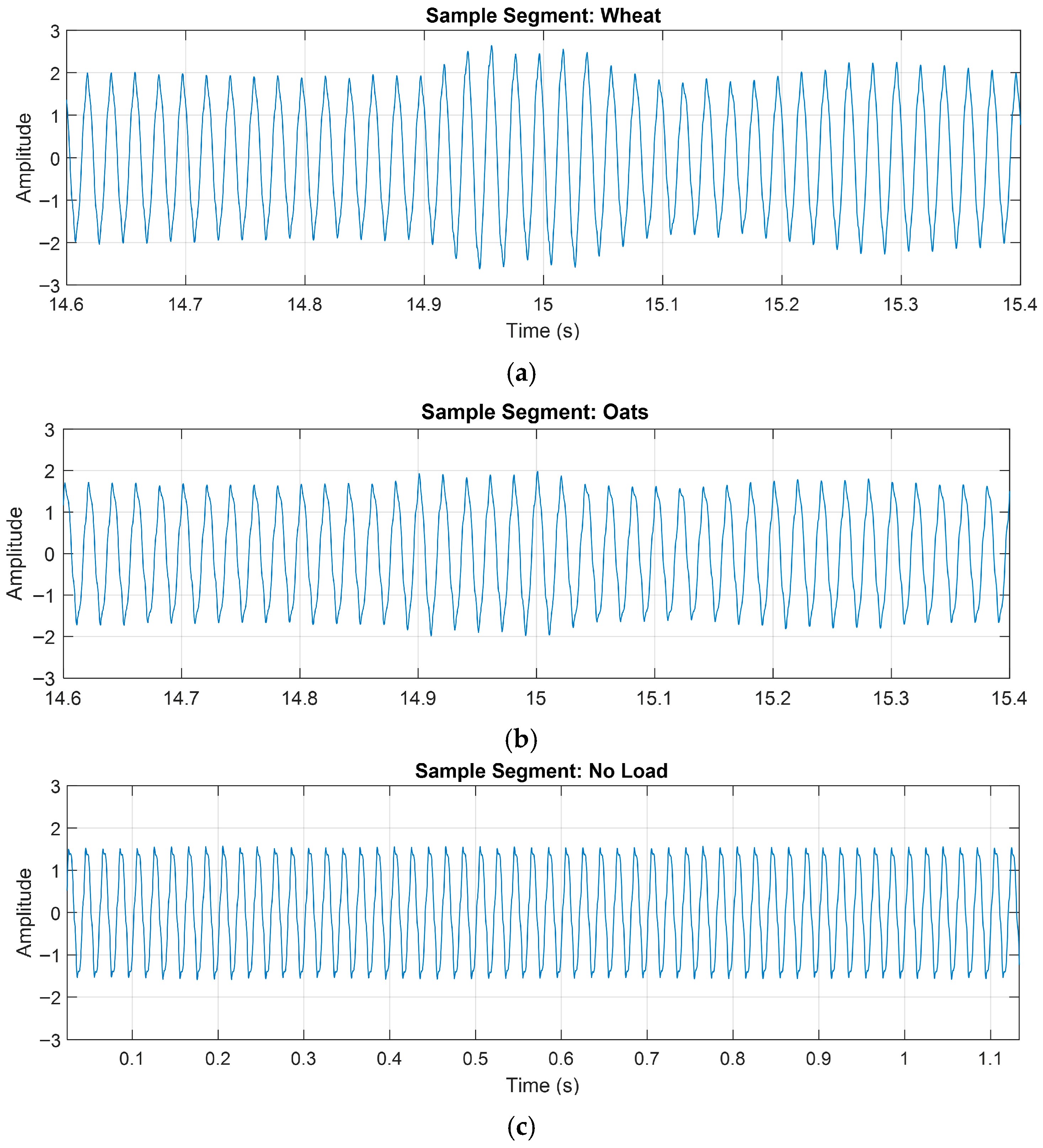
3. Experimental Setup
4. Results and Discussion
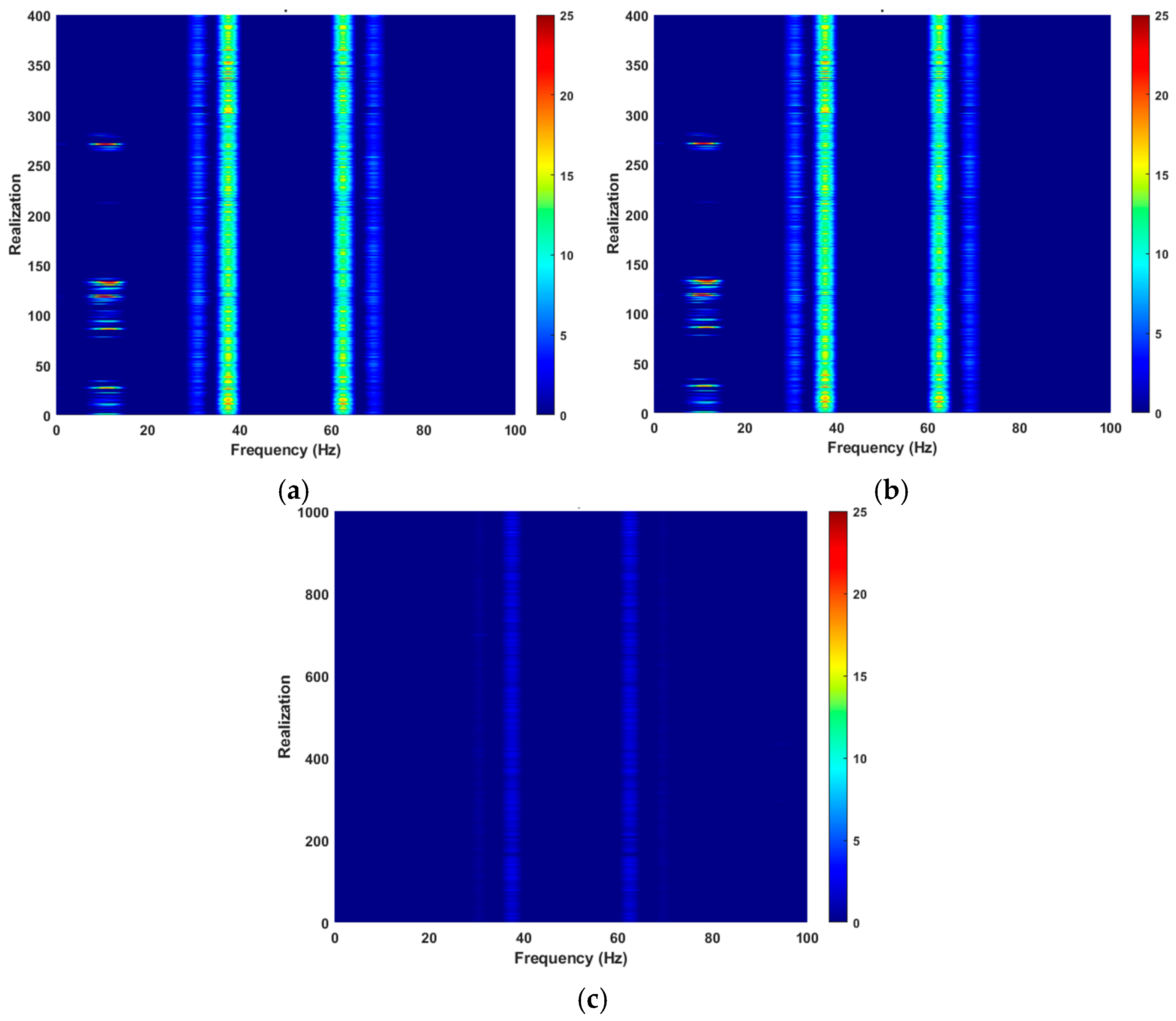
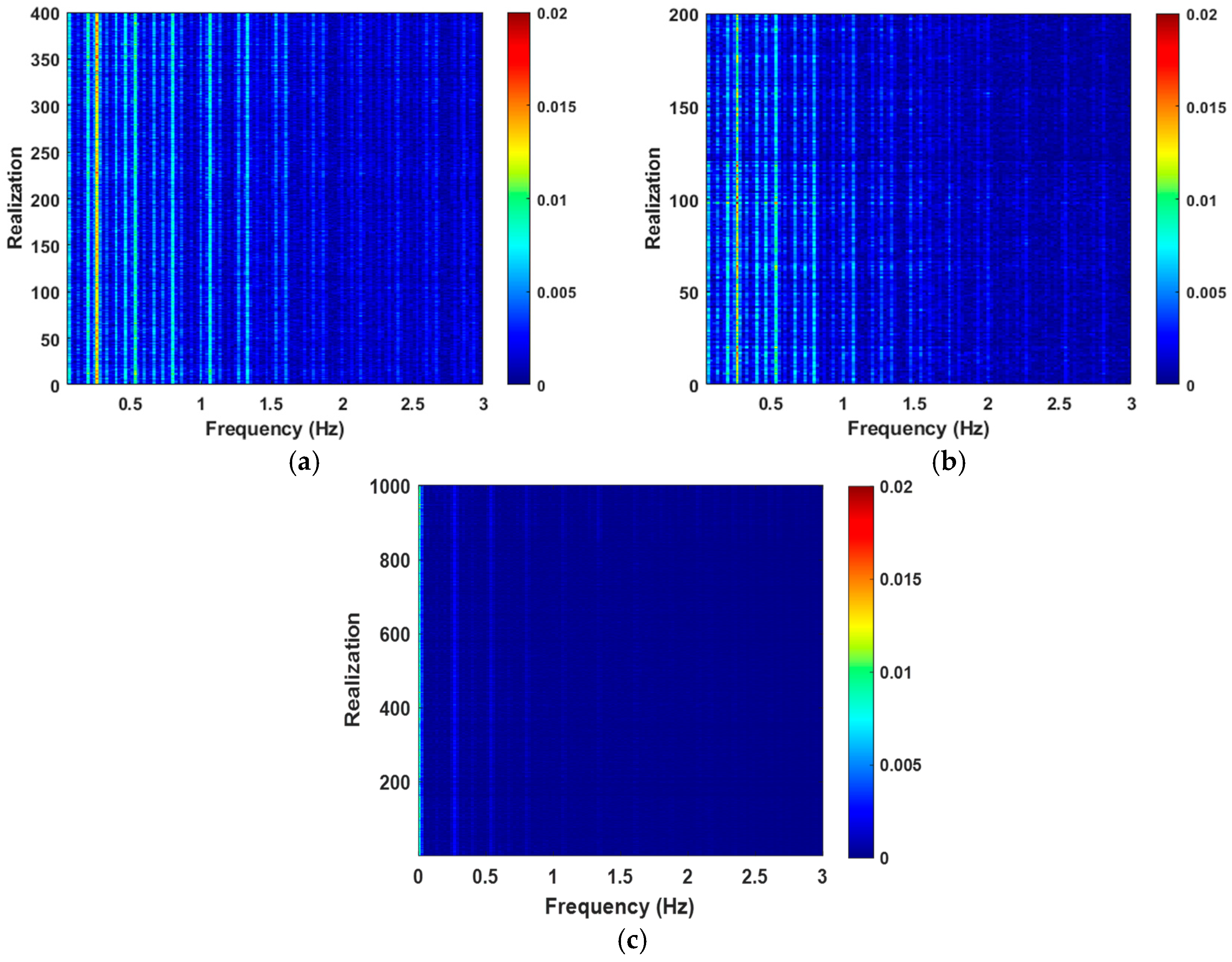
4.1. Spectral Kurtosis Results
4.2. Diagnostic Technology Results
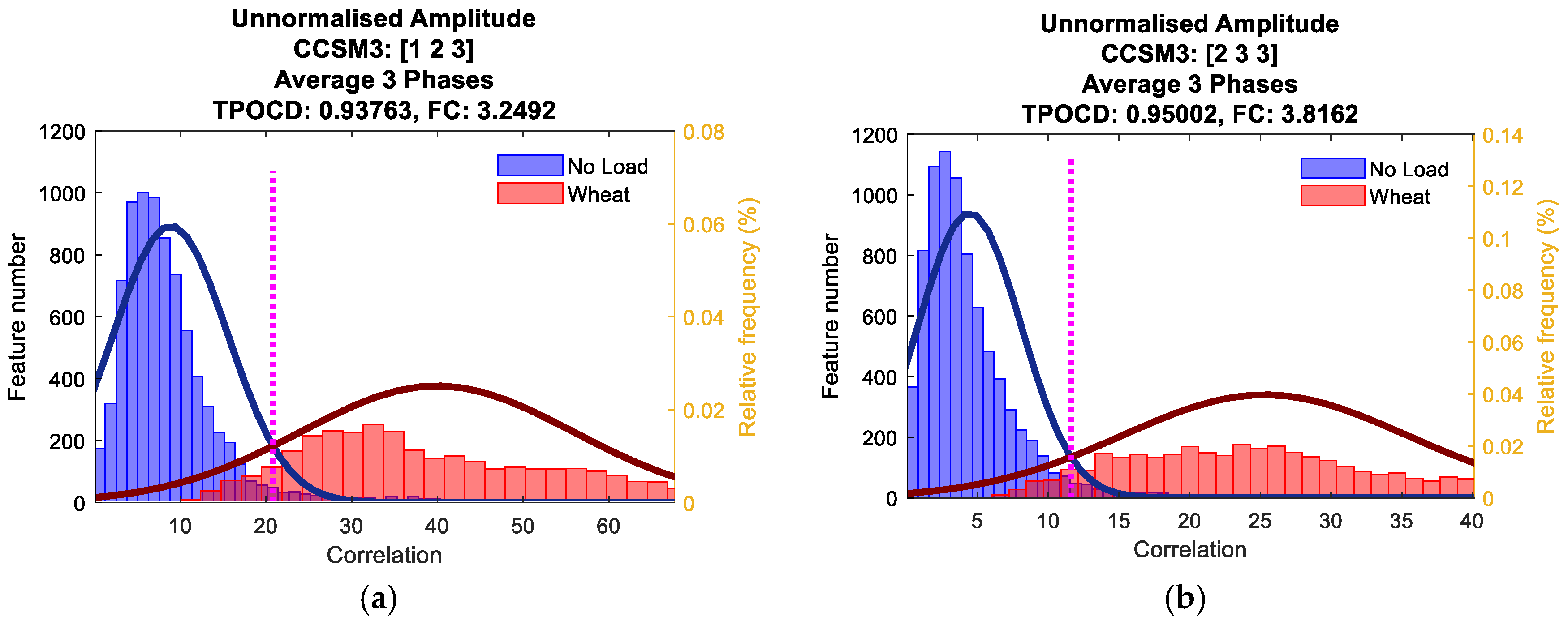
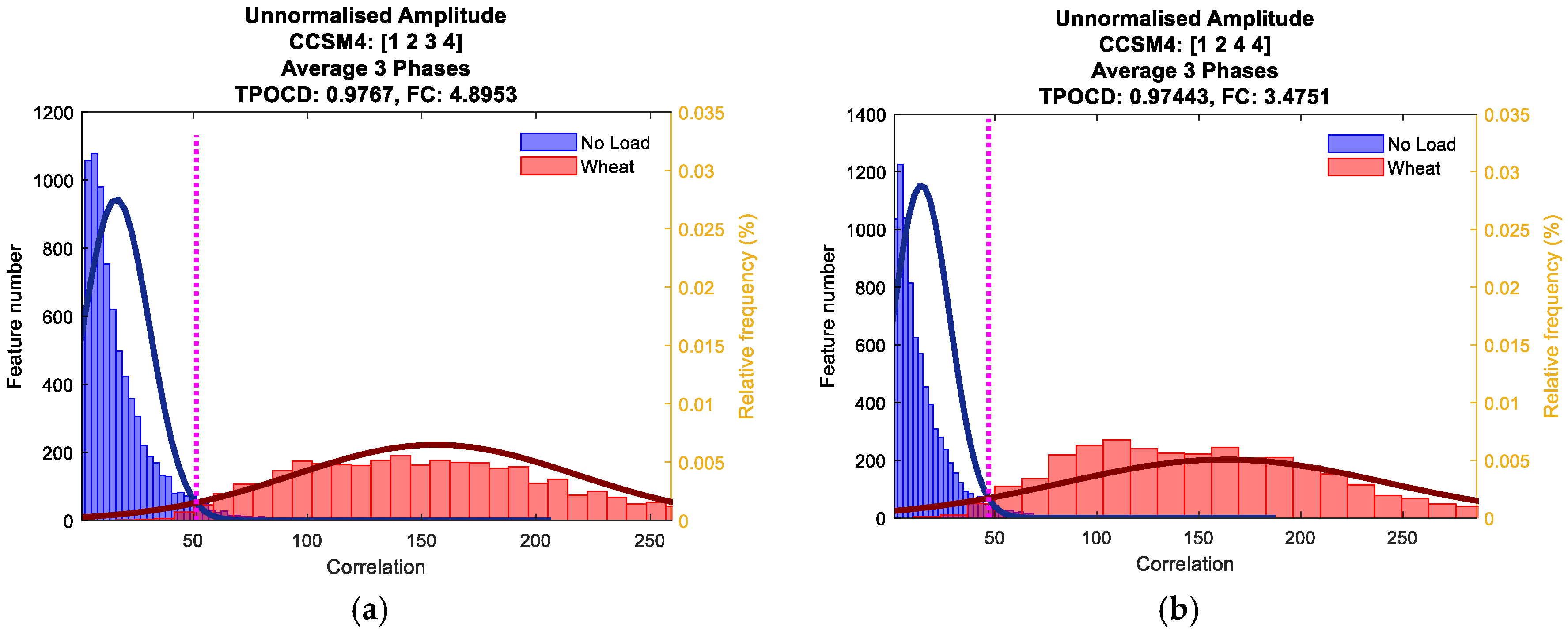
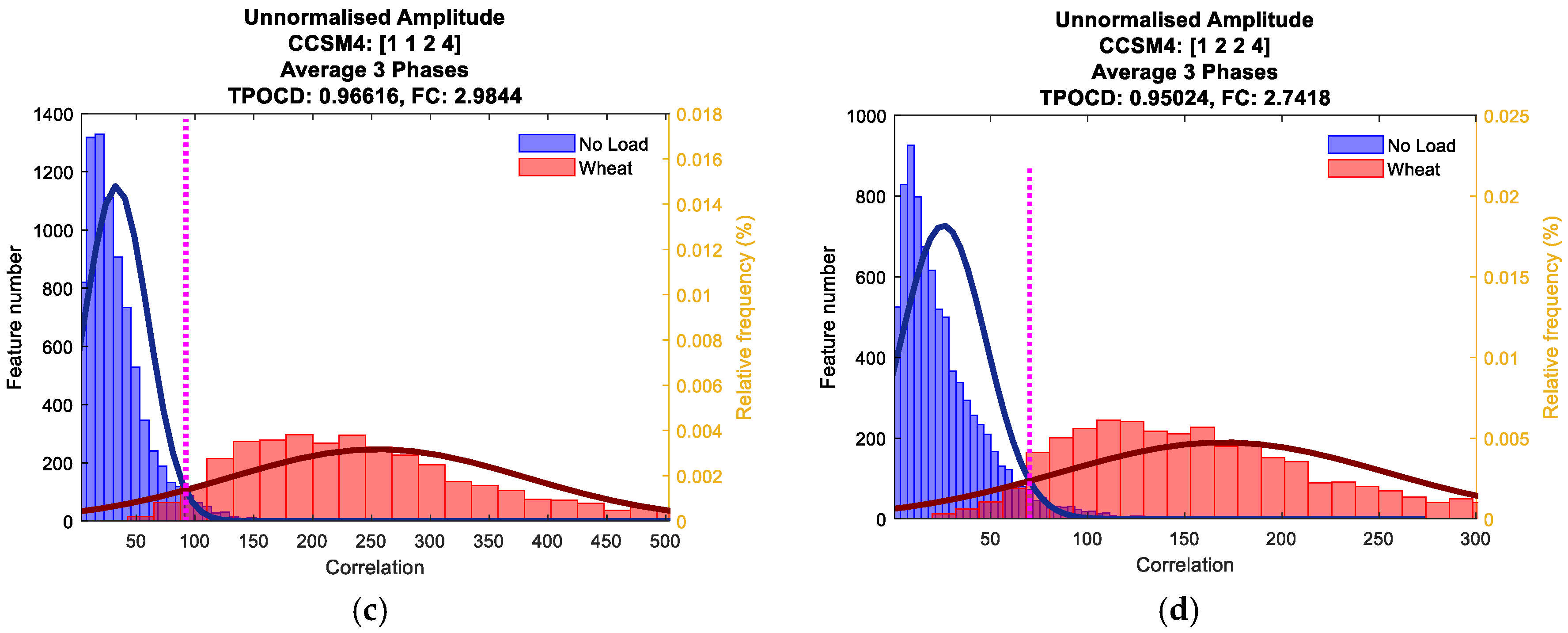
4.2.1. The Cross Correlation of Spectral Moduli of Orders 3 and 4 (CCSM3, CCSM4)
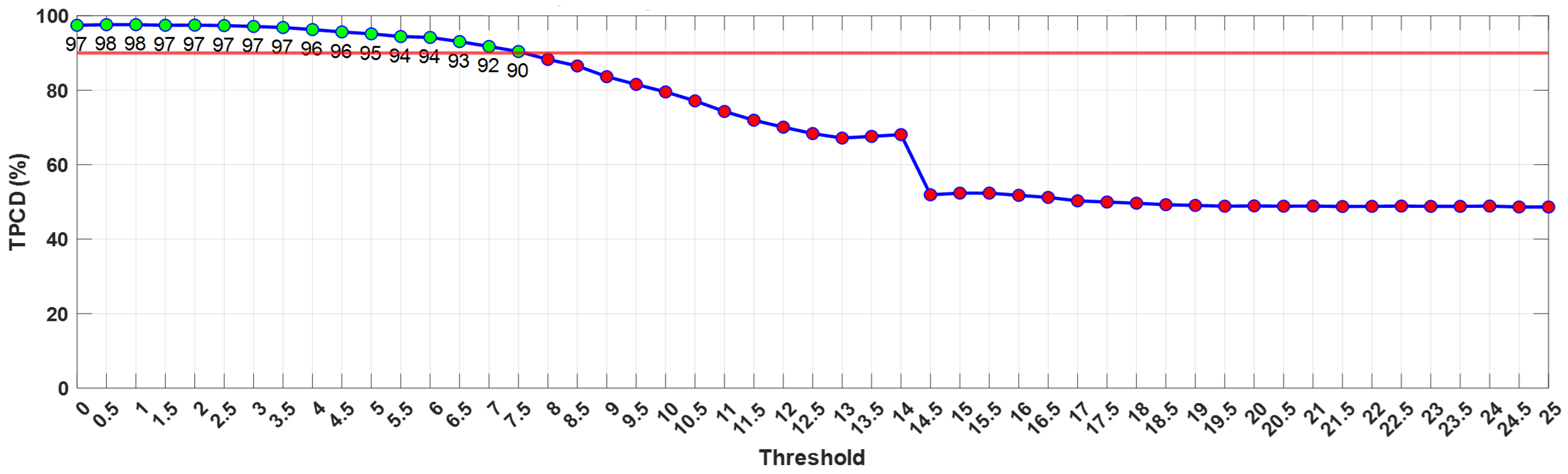
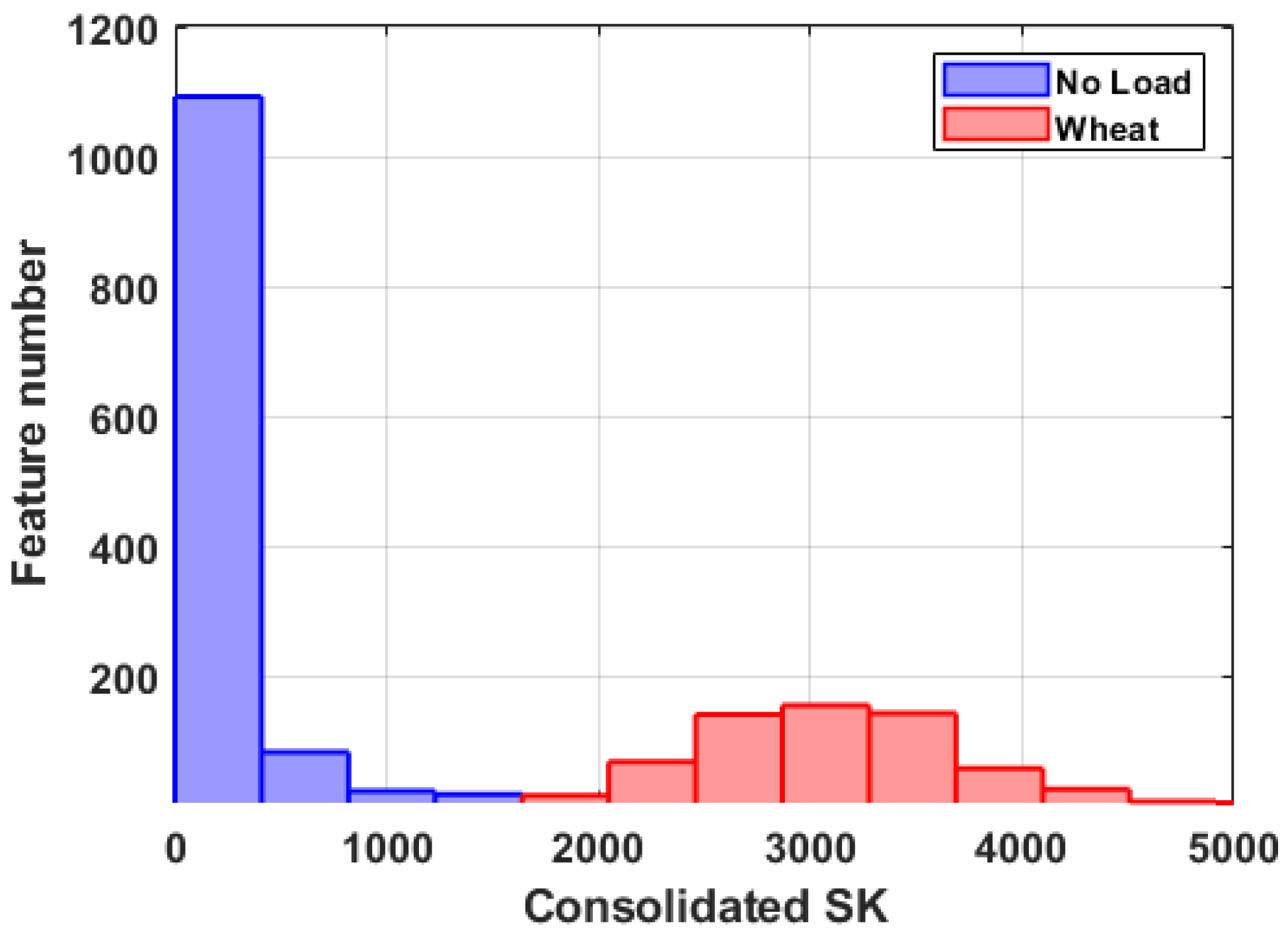
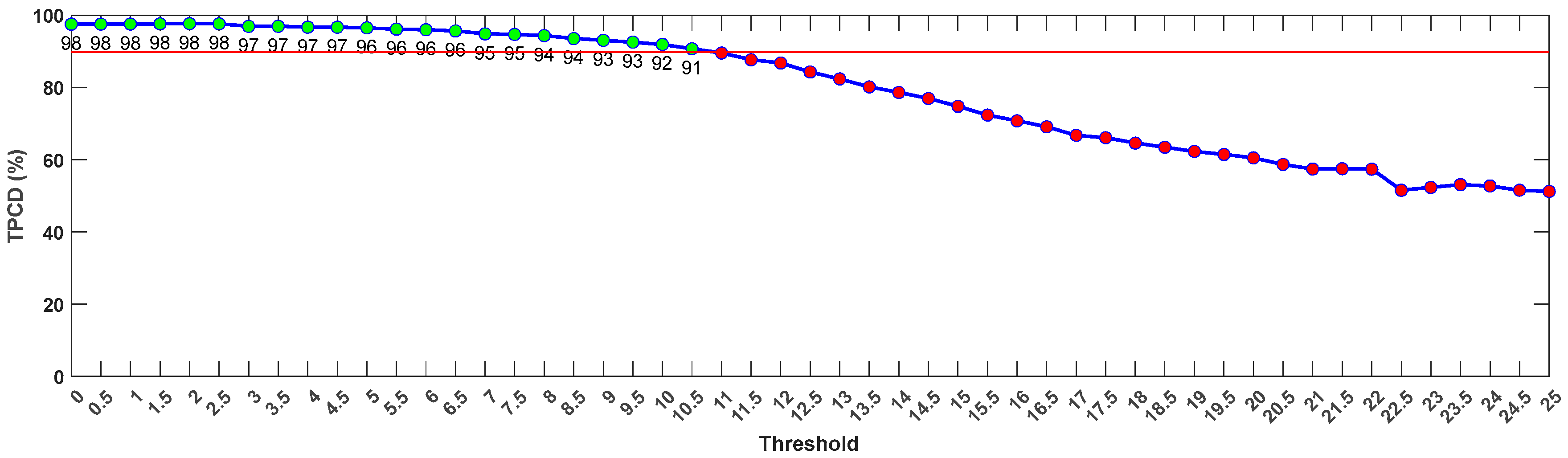
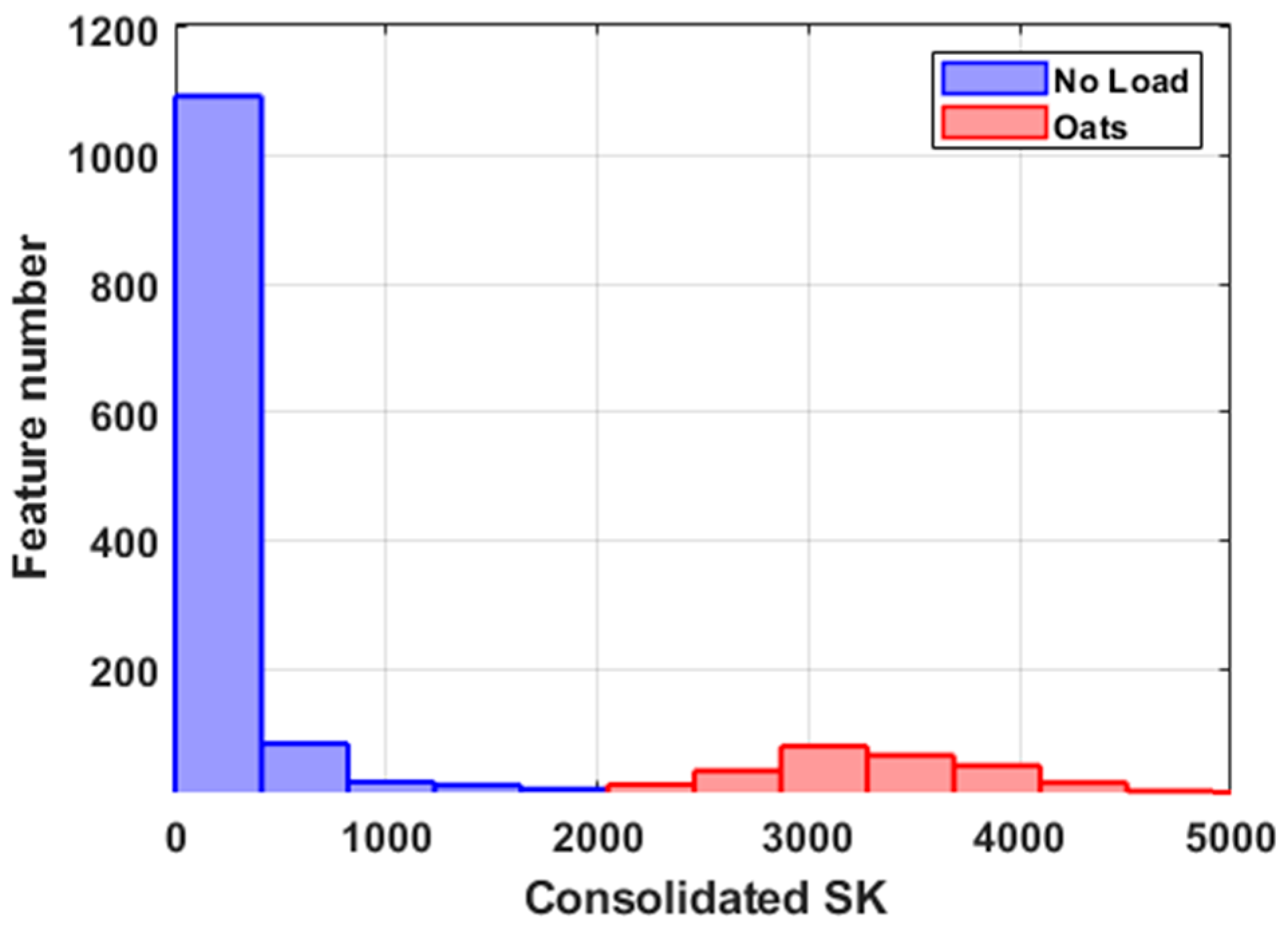
4.2.2. The Consolidated Spectral Kurtosis (CSK) Technology
5. Conclusions
6. Future Work
- Prove the effectiveness of the proposed technologies for other motor current diagnostic applications, including other conveyor faults such as a belt misalignment, pulley defects, and rolling-element bearing faults.
- Combine the proposed technologies by an optimal technology fusion.
- Investigate the detailed mechanics of the belt–pulley interaction and contact phenomena in conveyor systems and integrate these insights with the proposed motor current diagnostic technologies.
- Experimentally validate the proposed diagnostic technologies on other conveyor systems operating with different belt materials, operational speeds, and loading conditions.
- Investigate real-time implementation of the proposed technologies for online monitoring of industrial conveyor systems.
- Include controlled laboratory-based experiments to further investigate the physical mechanisms of slip–reengagement dynamics and to validate the performance of the CCSM and the CSK technologies under systematically varied operating conditions.
Author Contributions
Funding
Institutional Review Board Statement
Informed Consent Statement
Data Availability Statement
Acknowledgments
Conflicts of Interest
Abbreviations
| AE | Acoustic Emission |
| AI | Artificial Intelligence |
| CCSM | Cross-Correlation of Spectral Moduli |
| CCSM3 | Cross-Correlation of Spectral Moduli of Order 3 |
| CCSM4 | Cross-Correlation of Spectral Moduli of Order 4 |
| CSK | Consolidated Spectral Kurtosis |
| IEPE | Integrated Electronics Piezo-Electric |
| IoT | Internet of Things |
| NDT | Non-Destructive Testing |
| Probability Density Function | |
| SE | Squared Envelope |
| SK | Spectral Kurtosis |
| STCFT | Short-Time Chirp Fourier Transform |
| STFT | Short-Time Fourier Transform |
| TPCD | Total Probability of Correct Diagnosis |
References
- Bortnowski, P.; Kawalec, W.; Król, R.; Ozdoba, M. Types and causes of damage to the conveyor belt—Review, classification and mutual relations. Eng. Fail. Anal. 2022, 140, 106520. [Google Scholar] [CrossRef]
- Li, W.; Wang, Z.; Zhu, Z.; Zhou, G.; Chen, G. Design of online monitoring and fault diagnosis system for belt conveyors based on wavelet packet decomposition and support vector machine. Adv. Mech. Eng. 2013, 5, 797183. [Google Scholar] [CrossRef]
- Alharbi, F.; Luo, S.; Zhang, H.; Shaukat, K.; Yang, G.; Wheeler, C.A.; Chen, Z. A brief review of acoustic and vibration signal-based fault detection for belt conveyor idlers using machine learning models. Sensors 2023, 23, 1902. [Google Scholar] [CrossRef]
- Hou, Y.F.; Meng, Q.R. Dynamic characteristics of conveyor belts. J. China Univ. Min. Technol. 2008, 18, 629–633. [Google Scholar] [CrossRef]
- Bortnowski, P.; Gładysiewicz, L.; Król, R.; Ozdoba, M. Models of transverse vibration in conveyor belt—Investigation and analysis. Energies 2021, 14, 4153. [Google Scholar] [CrossRef]
- Mahmood, M.S.; Shareef, I.R. Applications of artificial intelligence for smart conveyor belt monitoring systems: A comprehensive review. J. Eur. Syst. Autom. 2024, 57, 1195. [Google Scholar] [CrossRef]
- Farhat, M.H. Novel fault diagnosis of a conveyor belt mis-tracking via motor current signature analysis. Sensors 2023, 23, 3652. [Google Scholar] [CrossRef]
- Andrejiova, M.; Grincova, A.; Marasova, D. Measurement and simulation of impact wear damage to industrial conveyor belts. Wear 2016, 368–369, 400–407. [Google Scholar] [CrossRef]
- Guo, X.; Liu, X.; Zhou, H.; Stanislawski, R.; Królczyk, G.; Li, Z. Belt tear detection for coal mining conveyors. Micromachines 2022, 13, 449. [Google Scholar] [CrossRef]
- Zeng, F.; Yan, C.; Wu, Q.; Wang, T. Dynamic behaviour of a conveyor belt considering non-uniform bulk material distribution for speed control. Appl. Sci. 2020, 10, 4436. [Google Scholar] [CrossRef]
- Abdullahi, A.O. Innovative conveyor belt monitoring via current signals. Electronics 2023, 12, 1804. [Google Scholar] [CrossRef]
- He, D.; Pang, Y.; Lodewijks, G.; Liu, X. Healthy speed control of belt conveyors on conveying bulk materials. Powder Technol. 2018, 327, 408–419. [Google Scholar] [CrossRef]
- Tupkar, R.; Kumar, D.; Sakhale, C.; Shelare, S. Optimizing belt tension and stretch dynamics: A modeling approach for medium-duty conveyor systems. Eng. Res. Express 2025, 7, 025413. [Google Scholar] [CrossRef]
- Zakharov, A.Y.; Erofeeva, N.V. Vibration of the belt and workflows of the conveyor. Vestn. Kuzbass State Tech. Univ. 2015, 112, 78–83. [Google Scholar]
- Rao, D.S. The Belt Conveyor: A Concise Basic Course, 3rd ed.; CRC Press: Boca Raton, FL, USA, 2020. [Google Scholar]
- Hills, P.W. Condition monitoring keeps conveyors conveying. In Proceedings of Beltcon 15, Johannesburg, South Africa, 2–3 September 2009; South African Institute of Materials Handling: Johannesburg, South Africa, 2009; pp. 2–3. [Google Scholar]
- Horihata, S.; Kitagawa, H.; Shirakawa, Y. Conveyor-belt diagnostic system using time-frequency analysis. In Advances in Manufacturing: Decision, Control and Information Technology; Springer: London, UK, 1999; pp. 123–132. [Google Scholar] [CrossRef]
- Patel, T.H. Novel technology based on the spectral kurtosis and wavelet transform for rolling bearing diagnosis. Int. J. Progn. Health Manag. 2013, 4, 1–8. [Google Scholar] [CrossRef]
- Gelman, L.; Patel, T.H. Novel intelligent data processing technology, based on nonstationary nonlinear wavelet bispectrum, for vibration fault diagnosis. IAENG Int. J. Comput. Sci. 2023, 50, 1–6. [Google Scholar]
- Dwyer, R. Detection of non-Gaussian signals by frequency domain kurtosis estimation. In Proceedings of the IEEE International Conference on Acoustics, Speech, and Signal Processing (ICASSP), Boston, MA, USA, 14–16 April 1983. [Google Scholar] [CrossRef]
- Nita, G.M. Spectral kurtosis statistics of transient signals. Mon. Not. R. Astron. Soc. 2016, 458, 2530–2540. [Google Scholar] [CrossRef]
- Murray, B. Vibration diagnostics of rolling bearings by novel nonlinear non-stationary wavelet bicoherence technology. Eng. Struct. 2014, 80, 514–520. [Google Scholar] [CrossRef]
- Combet, F.; Gelman, L. Optimal filtering of gear signals for early damage detection based on the spectral kurtosis. Mech. Syst. Signal Process. 2009, 23, 652–668. [Google Scholar] [CrossRef]
- Wang, Y.; Liang, M.; Xiang, J.; Wang, X. Spectral kurtosis for fault detection, diagnosis, and prognostics of rotating machines: A review with applications. Mech. Syst. Signal Process. 2016, 66–67, 679–698. [Google Scholar] [CrossRef]
- Wang, T.; Chu, F.; Han, Q. Compound faults detection in gearbox via meshing resonance and spectral kurtosis methods. J. Sound Vib. 2017, 392, 367–381. [Google Scholar] [CrossRef]
- Wang, Z.; Wang, J.; Du, W. A novel fault diagnosis method of gearbox based on maximum kurtosis spectral entropy deconvolution. IEEE Access 2019, 7, 29520–29532. [Google Scholar] [CrossRef]
- Wang, C.; Gan, M.; Zhu, X. Identification of planetary gearbox weak compound fault based on parallel dual-parameter optimized resonance sparse decomposition and improved MOMEDA. Measurement 2020, 165, 108079. [Google Scholar] [CrossRef]
- Kong, Y.; Chen, Z.; Zhang, X.; Hu, N. Fault feature extraction of planet gear in wind turbine gearbox based on spectral kurtosis and time wavelet energy spectrum. Front. Mech. Eng. 2017, 12, 406–419. [Google Scholar] [CrossRef]
- Liu, H.; Han, M.; Zhang, X. Adaptive spectral kurtosis filtering based on Morlet wavelet and its application for signal transients detection. Signal Process. 2014, 96, 118–124. [Google Scholar] [CrossRef]
- Rahmoune, C.; Benazzouz, D. Early detection of pitting failure in gears using a spectral kurtosis analysis. Mech. Ind. 2012, 13, 245–254. [Google Scholar] [CrossRef]
- Shanbr, S.; Ding, K.; Gu, F.; Ball, A. Detection of natural crack in wind turbine gearbox. Renew. Energy 2018, 118, 172–179. [Google Scholar] [CrossRef]
- Gelman, L.; Chandra, N.H.; Kurosz, R.; Pellicano, F.; Barbieri, M.; Zippo, A. Novel spectral kurtosis technology for adaptive vibration condition monitoring of multi-stage gearboxes. Insight Non-Destr. Test. Cond. Monit. 2016, 58, 409–416. [Google Scholar] [CrossRef]
- Gelman, L.; Persin, G. Novel fault diagnosis of bearings and gearboxes based on simultaneous processing of spectral kurtoses. Appl. Sci. 2022, 12, 9970. [Google Scholar] [CrossRef]
- Hashim, S.; Shakya, P. A spectral kurtosis-based blind deconvolution approach for spur gear fault diagnosis. ISA Trans. 2023, 142, 492–500. [Google Scholar] [CrossRef] [PubMed]
- Kolbe, S. Novel adaptation of the spectral kurtosis for vibration diagnosis of gearboxes in non-stationary conditions. Insight Non-Destr. Test. Cond. Monit. 2017, 59, 434–439. [Google Scholar] [CrossRef]
- Ciszewski, T. Current-based higher-order spectral covariance as a bearing diagnostic feature for induction motors. Insight Non-Destr. Test. Cond. Monit. 2016, 58, 431–434. [Google Scholar] [CrossRef]
- Gryllias, K.C. Local Damage Diagnosis in Gearboxes Using Novel Wavelet Technology. Insight Non-Destr. Test. Cond. Monit. 2010, 52, 437. [Google Scholar] [CrossRef]
- Gelman, L.; Ottley, M. New processing techniques for transient signals with non-linear variation of the instantaneous frequency in time. Mech. Syst. Signal Process. 2006, 20, 1254–1262. [Google Scholar] [CrossRef]
- Braun, S. The optimal usage of the Fourier transform for pattern recognition. Mech. Syst. Signal Process. 2001, 15, 641–645. [Google Scholar] [CrossRef]
- Gelman, L.; Kırlangıç, A.S. Novel vibration structural health monitoring technology for deep foundation piles by non-stationary higher order frequency response function. Struct. Control Health Monit. 2020, 27, e2526. [Google Scholar] [CrossRef]
- Ao, S.I.; Gelman, L.; Karimi, H.R.; Tiboni, M. Advances in Machine Learning for Sensing and Condition Monitoring. Appl. Sci. 2022, 12, 12392. [Google Scholar] [CrossRef]
- Zhao, D. Vibration health monitoring of rolling bearings under variable speed conditions by novel demodulation technique. Struct. Control Health Monit. 2021, 28, e2672. [Google Scholar] [CrossRef]
- Petrunin, I. Novel health monitoring technology for in-service diagnostics of intake separation in aircraft engines. Struct. Control Health Monit. 2020, 27, e2479. [Google Scholar] [CrossRef]
- Kripak, D.A. Condition Monitoring Diagnosis Methods of Helicopter Units. Mech. Syst. Signal Process. 2000, 14, 613–624. [Google Scholar] [CrossRef]
- Klepka, A. Triple correlation for detection of damage-related nonlinearities in composite structures. Nonlinear Dyn. 2015, 81, 453–468. [Google Scholar] [CrossRef][Green Version]





| The Total Probabilities of Incorrect Diagnosis | |||||
|---|---|---|---|---|---|
| The Wheat Loading | The Oat Loading | ||||
| CCSM3 (2, 3, 3) | CSK | Gain | CCSM3 (2, 3, 3) | CSK | Gain |
| 5% | 2.39% | 2.09 | 21.13% | 2.34% | 9.03 |
| CCSM4 (1, 2, 3, 4) | CSK | Gain | CCSM4 (1, 2, 3, 4) | CSK | Gain |
| 2.33% | 2.39% | - | 16.6% | 2.34% | 7.09 |
| Criterion | CSK | CCSM | Computational Load/Effectiveness |
|---|---|---|---|
| Pre-Processing | SK | STCFT + SK | CCSM is heavier |
| Post-SK Processing | Thresholding + SK summation | SK filtering + enveloping + harmonic selection + cross-correlations | CCSM is heavier |
| Dimensionality After Post-Processing | Single CSK scalar | Multi-frequency CCSM vector | CCSM is heavier |
| Computational Growth | Linear with frequency bins | Linear with frequency bins × segments | CCSM is heavier |
| Scalability (Large-Scale Monitoring) | High (lightweight post-SK stage) | Moderate (heavy post-SK stage) | CSK is more scalable |
| Real-Time Feasibility | Shorter post-SK processing chain | Additional higher-order correlation stage increases latency | CSK is more time-efficient |
| Online Implementation Platform | Suitable for standard industrial monitoring platforms | More suitable for high-performance computing platforms | CSK is easy for an online implementation |
Disclaimer/Publisher’s Note: The statements, opinions and data contained in all publications are solely those of the individual author(s) and contributor(s) and not of MDPI and/or the editor(s). MDPI and/or the editor(s) disclaim responsibility for any injury to people or property resulting from any ideas, methods, instructions or products referred to in the content. |
© 2026 by the authors. Licensee MDPI, Basel, Switzerland. This article is an open access article distributed under the terms and conditions of the Creative Commons Attribution (CC BY) license.
Share and Cite
Gelman, L.; Mondal, D.; Wright, D. Novel Technologies for Diagnosis of Conveyor Belt Looseness via Motor Current Signature Analysis. Technologies 2026, 14, 214. https://doi.org/10.3390/technologies14040214
Gelman L, Mondal D, Wright D. Novel Technologies for Diagnosis of Conveyor Belt Looseness via Motor Current Signature Analysis. Technologies. 2026; 14(4):214. https://doi.org/10.3390/technologies14040214
Chicago/Turabian StyleGelman, Len, Debanjan Mondal, and Dean Wright. 2026. "Novel Technologies for Diagnosis of Conveyor Belt Looseness via Motor Current Signature Analysis" Technologies 14, no. 4: 214. https://doi.org/10.3390/technologies14040214
APA StyleGelman, L., Mondal, D., & Wright, D. (2026). Novel Technologies for Diagnosis of Conveyor Belt Looseness via Motor Current Signature Analysis. Technologies, 14(4), 214. https://doi.org/10.3390/technologies14040214