Article

A Benchmarking Framework for Cost-Effective Wearables in Oncology: Supporting Remote Monitoring and Scalable Digital Health Integration


1
Department Engineering Science, Guglielmo Marconi University, 00193 Rome, Italy
2
Department of Medicine, Surgery and Dentistry, University of Salerno, Via S. Allende, 84081 Baronissi, Italy
3
Department of Engineering for Innovation, University of Salento, 73100 Lecce, Italy
4
Department of Industrial Engineering, University of Florence, 50139 Florence, Italy
5
Department of Experimental Medicine, University of Salento, 73100 Lecce, Italy
*
Author to whom correspondence should be addressed.
Technologies 2026, 14(1), 24; https://doi.org/10.3390/technologies14010024 (registering DOI)
Submission received: 6 November 2025 / Revised: 20 December 2025 / Accepted: 29 December 2025 / Published: 1 January 2026

Abstract

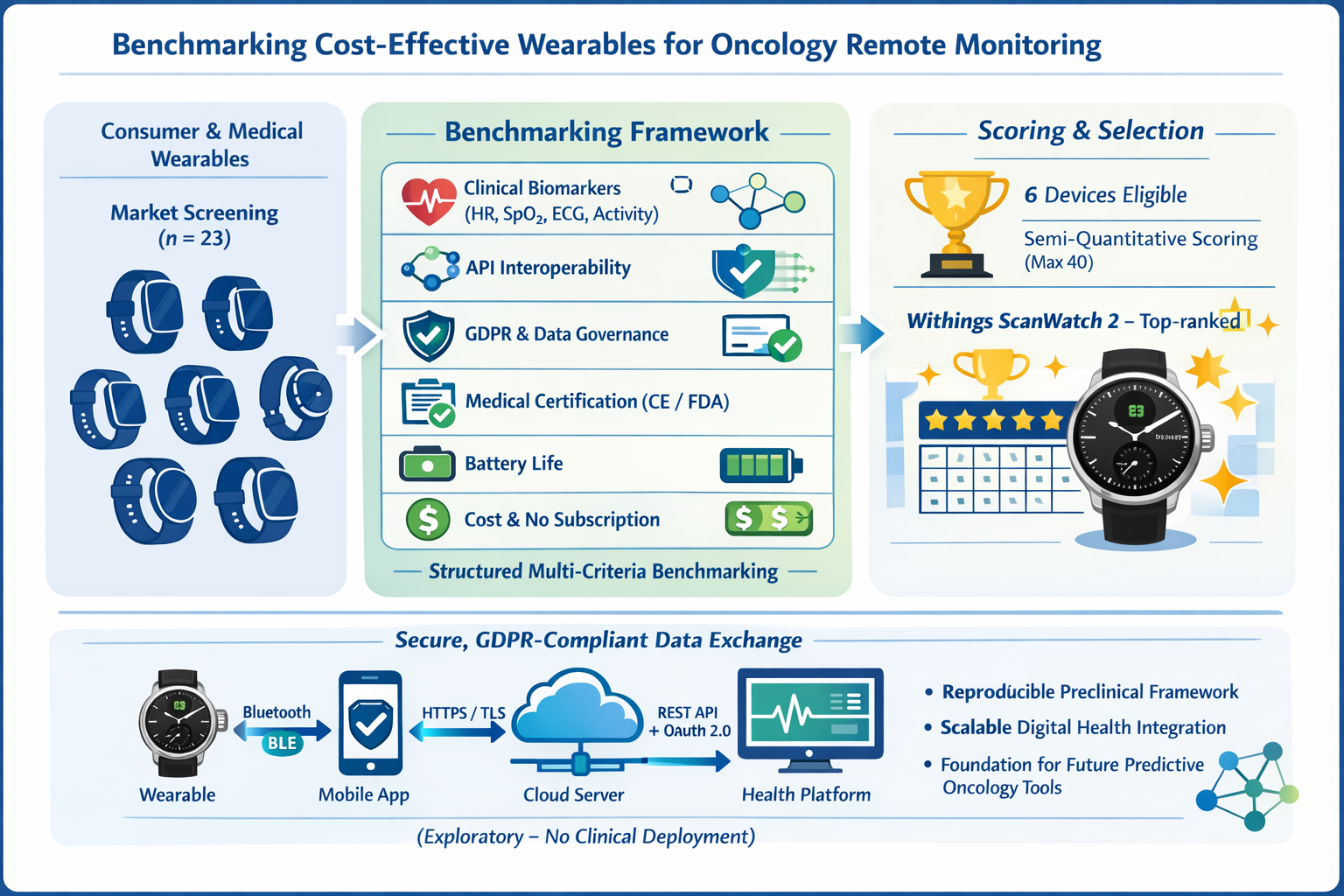
Wearable technologies are increasingly integrated into digital health systems to support continuous remote monitoring in oncology; however, the lack of standardized and reproducible criteria for device selection limits their scalable and regulation-compliant adoption in clinically oriented infrastructures. This study proposes a preclinical benchmarking framework for the systematic evaluation of commercially available wearable devices for oncology applications. Devices were assessed across six predefined dimensions: biometric data acquisition, application programming interface-based interoperability, regulatory compliance, battery autonomy, cost, and absence of mandatory subscription fees. From an initial pool of 23 devices, a stepwise screening process identified 6 eligible wearables, which were compared using a semi-quantitative weighted scoring system. The benchmarking analysis identified the Withings ScanWatch 2 as the highest-ranked device, achieving a score of 37/40 and representing the only solution combining medical-grade certification for selected functions, extended battery life (up to 30 days), declared General Data Protection Regulation-compliant data governance, and fully accessible application programming interfaces. The remaining devices scored between 17 and 23 due to limitations in certification, battery autonomy, or data accessibility. This work introduces a reproducible preclinical benchmarking methodology that supports transparent wearable device selection in oncology and provides a foundation for future scalable digital health integration under appropriate regulatory and interoperability governance.

Graphical Abstract

1. Introduction

1.1. Digital Health and Telemedicine in Oncology

Cancer remains a major global health concern, with 19.3 million new cases reported in 2020 and an estimated 28.4 million annual cases projected by 2040 [1]. While advancements in early detection and treatment have improved survival rates, leading to an increasing number of long-term cancer survivors [2], the growing population of patients places a significant burden on healthcare systems. This often results in suboptimal or delayed care and support for patients and their caregivers [3]. Emerging digital health technologies offer the potential to address this burden by leveraging innovation to improve care quality, accessibility, and cost-effectiveness [4].
These technologies span hardware and software solutions—including smartphone applications, electronic health records, wearable devices, decision support systems, and AI-driven diagnostic tools [5]. These tools enable remote patient monitoring, provide decision-making resources, and enhance patient–clinician communication [6,7]. Recognizing their potential, integrating digital health technologies into national health systems has become a global priority.
In oncology care, where patients often experience high symptom burdens due to disease progression or treatment side effects, digital health technologies facilitate the collection of patient-generated data, including patient-reported outcomes. This overcomes the limitations of traditional clinician-led symptom monitoring, which often underreports symptoms [8]. Routine assessments via these technologies improve symptom management, enhance resource utilization, and boost patients’ quality of life compared to standard clinical assessments [8]. Moreover, digital tools promote equity in cancer care by extending access to rural, remote, or socioeconomically disadvantaged populations, addressing geographical and financial disparities in care delivery [9,10]. These tools also support patient education, fostering better compliance with care pathways and empowering self-management [6,11]. For example, chatbot-based tools have been developed to help cancer patients navigate complex genetic information and make informed decisions [12].
Despite their advantages, adoption rates for digital health technologies remain limited, particularly in cancer care [8,13]. Successful implementation requires the incorporation of patient perspectives into digital tool design. Participatory design approaches have been shown to improve acceptance and long-term engagement, particularly among populations with ongoing healthcare needs such as cancer patients. Large-scale surveys confirm that capturing patient needs is essential for developing effective and user-centered digital health technologies [14,15,16]. Similar considerations have also been highlighted in the context of cognitive impairment, where digital health solutions must address specific usability and accessibility standards defined collaboratively by patients, caregivers, and healthcare professionals [17].
Telemedicine has emerged as a key component within digital health, enabling remote patient monitoring through wearable devices and smart healthcare infrastructures. Its primary aim is to improve access to care, facilitate timely interventions, and support chronic disease management, ultimately enhancing quality of life for patients. Known as a form of eHealth, telemedicine utilizes information and communication technologies to deliver care at a distance. The SARS-CoV-2 pandemic significantly accelerated its adoption, although its sustained implementation remains limited.
In oncology, telemedicine plays a critical role in long-term follow-up care, particularly for Adolescent and Young Adult (AYA) cancer survivors and patients in remote areas. It addresses care delivery gaps in access and facilitates more efficient communication among clinicians and patients. For example, tele-oncology services reduce travel burdens, saving time, effort, and costs [18].
Despite its benefits, telemedicine faces challenges such as cost-related barriers to technological infrastructure and concerns over data privacy. However, reported levels of patient satisfaction with telemedicine remain consistently high. In radiation oncology, studies have shown no statistically significant differences in satisfaction between telemedicine and in-office visits. Metrics like appointment experience, physician communication, and care quality received comparable ratings across both modes [19].
This comprehensive overview highlights telemedicine’s potential to enhance care accessibility and patient-reported satisfaction. However, addressing logistical [19], financial [20], economic and data governance barriers is crucial to ensure the widespread and sustainable adoption of these transformative technologies. Despite the rapid expansion of digital health and wearable-based solutions in oncology, a systematic and reproducible methodology for selecting wearable devices that simultaneously addresses clinical relevance, regulatory compliance, technical interoperability, and economic sustainability remains lacking. Existing studies predominantly focus on clinical feasibility, usability, or outcome associations, often considering single devices or isolated technical aspects, without providing an integrated selection framework suitable for scalable digital health infrastructures.
In this context, the novelty of the present work lies in the development of a preclinical benchmarking methodology that jointly integrates regulatory, technical, economic, and interoperability constraints into a structured and reproducible evaluation framework for wearable devices in oncology. Rather than proposing a new wearable technology or reporting clinical outcomes, this study addresses a methodological gap by supporting transparent device selection and system-level integration within oncology-oriented digital health ecosystems.

1.2. Devices in Healthcare and Oncology

Wearable technologies are increasingly recognized as part of a broader healthcare transformation, bridging the gap between consumer electronics and clinically meaningful health monitoring [16].
Wearable devices, including fitness trackers and smartwatches, are instrumental in enabling continuous physiological monitoring, promoting a proactive approach to preventive care. User studies in clinical populations have shown that the uptake of wearables is influenced not only by data accuracy but also by factors such as comfort, usability, and perceived transparency in data handling [21]. This monitoring provides real-time data accessible to both patients and healthcare providers, facilitating timely health interventions. However, challenges regarding the data validity and measurement reliability remain, as device performance may be affected by software updates or discontinuation. To ensure reliable data for both manufacturers and research institutions, a standardized assessment framework for wearable accuracy is essential.
In today’s context, smartphones and consumer wearables, like Garmin and Apple Watch, have become embedded in daily routines, encouraging healthier lifestyles [22]. These devices, popular among the general population and increasingly among cancer patients, support continuous physiological monitoring, motivating individuals through everyday integration. Their widespread use in clinical trials highlights their feasibility and accessibility for health data acquisition [23], potentially transforming patient care and medical research. However, to fully harness these technologies in clinical settings, establishing standardized measurement protocols for patient metrics is critical, ensuring that the data is both reliable and medically valuable. This standardization could effectively enable the integration of consumer-grade technologies into clinical practice, enhancing patient outcomes and advancing personalized medicine [24].
The oncology field, in particular, may benefit from wearables’ objective and data-driven approach to reporting symptoms and physiological parameters, potentially improving long-term quality of life [25]. Wearables offer numerous advantages, such as passive, continuous, and remote monitoring of symptoms, cost-effectiveness, daily medication reminders, and community support [26]. They monitor key metrics—including physical activity, sleep quality, and heart rate -that aid patients and physicians in tracking symptoms and managing side effects [27]. Physical activity metrics, measured in steps or calories per day/hour, can help predict the severity of chemotherapy side effects and support emotional and physical well-being [25]. Apps use these metrics to generate graphs that track patients’ progress and treatment responses, enabling physicians to easily review patient history and adjust medications and behaviors accordingly.
To observe the global evolution of wearable technology, the annual publication volume on wearables and health-related research since 2000 provides valuable insights. The data indicate a consistent increase over the past 22 years, with publications growing from 616 studies in 2000 to over 52,000 in the latest reporting year. This growth trend continued annually until a decline observed in 2021 and 2022, likely due to pandemic-related restrictions that limited research involving human participants. This pattern is also reflected in recent systematic reviews which highlight the increasing application of wearable technologies in oncology, particularly in treatment monitoring and rehabilitation [25,28].
The commercial market for wearable devices has experienced continuous growth since 2013, with a progressive increase in the number of devices released each year. Initial years saw modest launches—only three devices in 2013—but by 2022, this number had grown to fifteen newly introduced models. Key players over the years include major technology and health-focused companies such as Fitbit, Apple, Samsung, Garmin, and Philips. More recently, brands like Amazfit and Xiaomi have gained prominence, with Amazfit in particular increasing its number of launched devices significantly from 2017 onward. The year 2022 saw the highest volume of commercial launches, suggesting that innovation and market demand have accelerated in the post-pandemic period. This trend is consistent with market projections estimating the global wearable technology market will grow from USD 139 billion in 2022 to over USD 540 billion by 2030, with a Compound Annual Growth Rate (CAGR) of 18.5%.
Over the entire 2013–2022 period, a total of eighty-six devices were introduced by twenty-six manufacturers. Fitbit and Apple consistently released products across multiple years, while Amazfit has emerged as a dominant player, especially from 2016 onward. Other noteworthy contributors include Empatica, Philips, and Samsung, the latter maintaining a continuous presence in the commercial market.
In terms of market penetration and user adoption, some brands clearly stand out. Among the most frequently used and commercially significant devices are those by Amazfit (sixteen devices), Fitbit (eleven), and Apple (ten), followed by Samsung (eight), Garmin (seven), Xiaomi (seven), and Philips (five). These manufacturers offer a wide range of models catering to various user needs, from general fitness tracking to advanced health monitoring. For instance, Amazfit’s diverse product line includes models like the Bip, GTR, GTS, T-Rex, and Falcon, while Fitbit is known for popular models such as Charge, Versa, Ionic, and Sense. Apple’s offerings span from the original Apple Watch to the Watch Ultra, reflecting the company’s incremental innovation and feature enhancement strategy. Wearables such as these have also been shown to be viable tools for supporting cancer survivors in promoting physical activity and improving self-management, though adherence and sustained engagement remain challenging [29].
The evolution of the market reflects not only increased consumer interest but also ongoing technological innovation. As new sensors and health-tracking features are integrated into commercial wearables, the market becomes more dynamic and competitive. This trend is mirrored in the research landscape as well: advancements in wearable computing are closely linked to academic output. Recent findings suggest that wearable-enabled remote monitoring systems have the potential to transform clinical workflows and support personalized care, especially in oncology [28]. As noted by Amorim et al. [30], the introduction of advanced functionalities in wearables is likely to foster further scientific exploration and publication activity, indicating a virtuous cycle between commercial innovation and scholarly attention.
Overall, the evolution of wearable technology publications and market trends underscores the field’s long-term development potential. Future research will likely increase with the expansion of wearable capabilities and the easing of pandemic-related restrictions, paving the way for enhanced personalized healthcare applications and expanded clinical integration of wearable devices.
Wearable devices, such as Fitbit bands and Apple Watches, are increasingly being developed and adopted worldwide. These consumer-grade health monitoring tools are designed to measure and record physiological factors, including physical activity, heart rate, skin temperature, and blood oxygen levels [31,32,33]. They often sync with smartphones via companion applications, enabling near real-time data analysis. Marketed to promote healthy living, wearable devices have found applications in chronic disease management, surgical care, and oncology. Unlike self-reported activity assessments, wearables provide objective and continuous data, making them valuable for monitoring patient health and improving clinical outcomes.
In oncology, wearable devices are particularly promising for tracking physical activity and physiological parameters before, during, and after cancer treatments. Preoperative monitoring through wearables can help identify surgical risks and support rehabilitation programs, which improve patient fitness before surgery. Studies have shown that lower step counts tracked by devices like Fitbit correlate with higher surgical risks, including complications and unplanned readmissions. Similarly, during postoperative recovery, wearable devices enable clinicians to track recovery progress. Metrics such as daily step counts have been linked to lower complication rates reduced hospital stays, and improved treatment compliance [34].
Wearables also play a critical role in managing symptoms and enhancing adherence to treatment. By tracking activity levels during chemotherapy or radiation therapy, these devices can help identify patients at higher risk for adverse outcomes, such as hospitalization or treatment interruptions. Continuous activity tracking facilitates timely interventions, allowing clinicians to address complications as they arise and improve overall treatment outcomes. Additionally, wearable devices empower patients to engage in self-management by providing timely feedback on physical activity and biochemical changes. This feedback helps patients monitor their progress and participate actively in their care.
Cancer survivors have also benefited significantly from wearable technology, recent reviews indicate that activity monitoring through wearables positively impacts physical activity levels, reduces disease symptoms, and enhances overall health [24]. For example, studies involving lung cancer patients have shown that lower step counts are associated with poorer health outcomes and increased depression. Similarly, in patients undergoing outpatient cancer treatments, activity levels measured by wearable devices shown to predict hospitalization risks and treatment completion rates [24].
Wearable devices are relatively low-cost, user-friendly, and designed for long-term data collection with rechargeable features. They enable continuous, unobtrusive monitoring, allowing clinicians and patients to access near real-time health data. These devices also support behavioral insights, as the data they provide can be used to create personalized care plans and interventions. Despite these advantages, challenges remain. Standardized and validated metrics linking wearable data with clinical outcomes and quality-of-life indicators are still needed, and the accuracy of certain measurements, such as step counts, may vary with device type and user conditions.
Overall, wearable devices represent a powerful tool for improving patient outcomes in oncology and beyond. By supporting longitudinal health monitoring, personalized interventions, and long-term management, wearable technology is poised to transform patient care, enhancing quality of life and advancing medical research. Future advancements in wearable applications and technology will likely further expand their role in healthcare [35].
Wearable devices, such as Fitbit bands and Apple Watches, are increasingly being developed and adopted worldwide. These consumer-grade digital health tools are designed to measure and record physiological factors, including physical activity, heart rate, skin temperature, and blood oxygen levels [36]. They often sync with smartphones via companion applications, enabling near real-time data analysis. Marketed to promote healthy living, wearable devices have found applications in chronic disease management, surgical care, and oncology. Unlike self-reported activity assessments, wearables provide objective, passive, and continuous data streams, making them valuable for monitoring patient health and improving medical outcomes.

2. Materials and Methods

2.1. Objective and Device Selection Criteria

The objective of this study is to develop a benchmarking framework for the evaluation of wearable devices capable of acquiring biometric data relevant to oncology and transmitting them securely to healthcare providers. The framework aims to identify devices that comply with predefined technical, clinical, regulatory, and economic requirements, and are suitable for integration within modular and interoperable digital health infrastructures. The selection of devices was based on a structured set of inclusion criteria reflecting clinical relevance, regulatory compliance, technical interoperability, economic sustainability in oncology care. The following conditions were required for inclusion:
Clinical relevance: Devices had to measure core physiological parameters relevant to oncology monitoring, including heart rate, oxygen saturation (SpO2), electrocardiogram (ECG), blood pressure, respiratory indicators and/or physical activity.
Manufacturer reliability: Only devices produced by established vendors offering technical documentation, maintenance, and long-term ecosystem support were retained.
Data protection and GDPR compliance: Devices were included only if they guaranteed secure data collection, encrypted transmission, user consent management, and storage within the European Union or under explicit EU data residency and legal conformity.
Economic sustainability: Devices requiring mandatory subscription plans, recurring licensing fees, or pay-per-use access to APIs or cloud data were excluded. Preference was given to one-time purchase solutions with unrestricted access to collected data.
Wearability and continuous monitoring: Only wearable devices enabling non-invasive, continuous monitoring during daily life and treatment cycles were included. Non-wearable solutions were excluded due to limited usability in home settings and inability to provide uninterrupted data streams.
Following the application of these criteria, the initial list of 23 devices was progressively reduced to six wearable devices meeting all inclusion requirements. The selection process is summarized in Table 1.

2.2. Selection Workflow and Data Sources

The benchmarking analysis followed a systematic multi-phase workflow. First, a market survey was conducted to identify commercially available wearable devices, including consumer-grade and medical-grade technologies. Information was collected from manufacturer documentation, technical specifications, user manuals, regulatory declarations, data governance policies, and direct correspondence with vendors.
For each device, data were extracted regarding: (i) sensor type, biometric accuracy, connectivity protocols; (ii) availability and documentation of APIs and SDKs; (iii) data processing, storage location, encryption and consent procedures; (iv) certification status as a medical device; (v) user comfort, battery life, and operational reliability based on user reports.
Devices that met the minimum data requirements and provided API accessibility were advanced to full assessment. Those failing to meet GDPR or technical requirements were excluded.

2.3. Comparative Evaluation and Integration Feasibility

The six wearable devices that met all inclusion criteria were subsequently subjected to a structured comparative performance assessment using a semi-quantitative scoring system. Each device was evaluated across six predefined parameters considered essential for clinical deployment in oncology: medical certification, API interoperability, GDPR compliance, battery autonomy, cost sustainability, and absence of mandatory subscription fees. To enhance objectivity and reproducibility, each criterion was assigned a scoring range based on its clinical and regulatory relevance. Medical Certification, API Availability, and GDPR Compliance—being the most critical for healthcare adoption—were weighted with higher maximum scores (9, 8 and 8 points, respectively). The remaining criteria—Battery Life, Cost, and Subscription Requirement—were evaluated on a 1–5 scale. This scoring approach produced a maximum overall score of 40 points per device, enabling standardized benchmarking rather than purely descriptive comparison. The results of this assessment are summarized in Table 2. To address regulatory precision, medical certification was interpreted at feature level rather than assuming whole-device approval, as most consumer wearables receive CE/FDA clearance for specific functions (e.g., ECG-based atrial fibrillation detection) rather than for comprehensive diagnostic use. Certification levels were verified through manufacturer documentation, regulatory databases (e.g., EUDAMED, FDA 510(k)), and declared intended medical use.
Specifically, the scoring ranges were defined as follows:
  • Medical Certification (0–9): 0 = no certification; 3–5 = device with partial or feature-specific clearance (e.g., CE/FDA approval limited to one function such as ECG-based AF detection, wellness classification for other metrics); 6–8 = CE-MDR Class IIa/IIb or FDA medical device clearance for clinically relevant physiological monitoring, with declared intended use; 9 = full CE/FDA approval covering clinically relevant monitoring functions with clear regulatory class specification and intended medical purpose.
  • API Availability (0–8): 0 = no developer access; 8 = fully open, well-documented API with access to raw biometric data.
  • GDPR Compliance (0–8): 0 = non-compliant/no data governance; 4 = unclear or unverifiable; 8 = full compliance with EU-based servers and data processing agreements.
  • Battery Life (1–5): 1 = ≤1 day; 5 = ≥15 days of continuous use.
  • Cost (1–5): 1 = >€500; 5 = <€200.
  • Subscription Requirement (1–5): 1 = mandatory subscription to access data; 5 = no subscription required.

3. Results

The benchmarking analysis identified the Withings ScanWatch 2 as the most suitable device for integration into a digital health infrastructure supporting oncology care due to its combination of extended battery life, medical-grade certification, GDPR-compliant data governance, and robust API-based interoperability. The evaluation compared six wearable devices across key dimensions, including biometric monitoring capabilities, data accessibility, regulatory compliance and cost-effectiveness.

3.1. Device Performance Overview

Withings Scanwatch 2 emerged as the most appropriate solution, standing out for its combination of extended battery life (up to 30 days), medical-grade certification (Class IIa under EU MDR 2017/745), GDPR-compliant data management, and an open, scalable API. In particular, it features a medical-grade ECG sensor and oxygen saturation (SpO2) measurement capabilities, making it suitable for projects requiring reliable and clinically validated biometric monitoring. Certified as a medical device, the ScanWatch 2 ensures full GDPR compliance, with data securely stored on servers located in Europe. Its battery life—lasting up to 30 days on a single charge—far exceeded that of the other devices evaluated. Additionally, the Withings API offers straightforward access to biometric data and supports up to 5000 users under a free plan, making it suitable for scalable and compliant digital health deployments without recurring costs.
Apple Watch Series 7 GPS is a technologically advanced smartwatch with sensors for ECG, heart rate monitoring, and SpO2. However, its battery life, limited to approximately one day, poses a significant drawback for continuous monitoring scenarios. The device’s HealthKit framework provides a robust API, but questions surrounding GDPR compliance of Apple’s data handling practices remain unresolved. Despite these challenges, its strong market presence and technical capabilities make it a competitive option for general-purpose applications.
Fitbit Sense 2 offers sensors for ECG and SpO2 monitoring, paired with a proprietary operating system. While its API is comprehensive, it comes with a disclaimer advising against use in medical applications, limiting its utility in healthcare-specific projects. The device’s six-day battery life is commendable, but its reliance on non-EU-based servers raises GDPR compliance concerns. These factors collectively reduce its suitability for the project’s stringent requirements.
Devices such as the Samsung Galaxy Watch4 Classic, Google Pixel Watch, and Asus VivoWatch SP were evaluated but ultimately deemed unsuitable due to significant limitations in API accessibility, data sharing, regulatory certification, or compliance with data protection regulations—all factors that compromised their integration potential for scalable digital health projects.
The Samsung Galaxy Watch4 Classic, a Wear OS-based smartwatch, supports ECG and SpO2 monitoring. However, access to biometric data is highly restricted, as it is only available to authorized partners through Samsung’s Privileged Health SDKs. Additionally, its limited three-day battery life and lack of clear GDPR compliance further reduced its suitability.
Similarly, the Google Pixel Watch shares many of the same limitations. While it also runs on Wear OS and provides some biometric data through Google Fit APIs, it excludes access to ECG data. Moreover, the device’s one-day battery life and potential concerns regarding GDPR compliance, due to Google’s data handling policies, make it an impractical choice for this type of project.
The Asus VivoWatch SP includes sensors for monitoring heart rate and blood pressure, and offers an extended battery life of up to 14 days. However, it lacks API access for third-party integration, which significantly limits its usefulness in contexts that require external data accessibility. Additionally, the absence of clear guarantees regarding GDPR compliance raises further concerns.

3.2. Exploratory Integration Scenario

Following the identification of the Withings ScanWatch 2 as the most suitable device for continuous biometric monitoring, this section describes an exploratory integration scenario with a cloud-based health big data platform. The overall data exchange architecture is illustrated in Figure 1, showing the flow from wearable acquisition to secure cloud storage and API-level data retrieval. The aim is to test the technical feasibility of connecting a consumer-grade wearable to a scalable digital health infrastructure using standardized communication protocols.
Withings offers clinically oriented wearable devices (smartwatches, ECG-enabled sensors) and non-wearable tools (blood pressure monitors, smart scales, thermometers). Only wearable devices were included in the integration workflow because they support passive and continuous data collection, which is essential in oncology monitoring. These devices acquire physiological data such as heart rate, HRV/ECG, peripheral oxygen saturation (SpO2), activity level, sleep stages and body weight, and transfer them via Bluetooth Low Energy (BLE) to the Withings mobile application. Once synchronized, data are securely uploaded to Withings cloud servers through HTTPS/TLS. From here, 3 possible data access paths exist:
  • Open RESTful API access (used in this study): provides JSON-formatted biometric data and supports webhooks for event-based notifications, OAuth 2.0 authentication and GDPR-compliant consent management.
  • Proprietary SDK or closed ecosystem (used in other platforms such as Apple HealthKit or Samsung Health): requires vendor-specific developer accounts and does not always allow access to raw physiological data.
  • Devices where no API access is available and data remain confined within the vendor’s ecosystem.
The health big data platform functions as a data consumer, subscribing to specific biometric event notifications. Upon notification, the platform retrieves new measurements via secure HTTPS and OAuth 2.0 token exchange, normalizes data through ETL pipelines and stores them in scalable cloud-based databases. The architecture supports both real-time data streaming and retrospective analytics, such as trend analysis, risk stratification and toxicity prediction. This exploratory scenario confirms that consumer-grade wearables—when equipped with open APIs, encrypted data transfer and transparent data governance—can be technically integrated into digital health platforms used for oncology monitoring. Such configurations enable automated data ingestion, reduce manual data entry, and offer a foundation for advanced analytics and future applications in predictive modeling and digital health ecosystems.

4. Discussion

The benchmarking results indicate that, despite the rapid evolution of the consumer wearable market, only a limited number of devices currently meet the combined requirements of clinical reliability, technical interoperability and regulatory compliance needed for integration into oncology care workflows. Among the evaluated devices, the Withings ScanWatch 2 achieved the highest score within the proposed benchmarking framework, as it met all predefined assessment criteria, including medical certification for selected functions, extended battery life, declared GDPR-compliant data handling, and the availability of a developer API. These features make it a potentially suitable option for continuous physiological monitoring in oncology, although further clinical validation would still be required. It should also be acknowledged that GDPR compliance was assessed based on publicly available privacy policies and vendor documentation, rather than formal legal or cybersecurity audits; accordingly, compliance is interpreted as declared rather than independently verified.
A key finding of this comparative analysis is the evident trade-off between technological complexity and clinical readiness. Devices such as the Apple Watch Series 7 and Fitbit Sense 2 demonstrate advanced biosensing capabilities, yet lack certified medical validation or transparent data handling frameworks. This reflects a broader limitation of the consumer-grade wearables market, where innovation frequently outpaces regulatory assurance. In contrast, the ScanWatch 2 provides a balanced integration of reliability and compliance, representing a more sustainable and scalable option for clinical environments.
The exploratory integration with a standards-based health big data platform further confirmed the feasibility of connecting consumer-grade wearable devices to modular, interoperable digital infrastructures. The tested architecture supports secure data acquisition via RESTful APIs, OAuth 2.0 authentication and GDPR-compliant cloud storage. Through this configuration, biometric data streams from the ScanWatch 2 can be incorporated into distributed analytics platforms and electronic health systems, enabling automated data collection and reducing clinical workload.
This alignment between device capabilities and system infrastructure demonstrates the viability of hybrid architectures that bridge consumer technologies with clinical ecosystems. Even in the absence of proprietary integration pathways, standardized access to raw biometric data enables automation, patient engagement and improved continuity of data-driven decision-making.
From an economic perspective, the proposed solution is characterized by high scalability and cost-effectiveness. The pricing model of the ScanWatch 2—without obligatory subscription fees and with free API access for up to 5000 users—reduces economic barriers typically associated with digital health adoption, making it particularly suitable for healthcare systems with limited resources.
Overall, the combined findings of the benchmarking process and the system integration assessment highlight the value of a structured, multi-criteria framework for selecting wearable technologies in oncology. Building on this foundation, further opportunities emerge concerning predictive analytics and the potential implementation of digital twin approaches in cancer care.

Future Perspectives

In future oncology applications, wearable devices, predictive analytics and artificial intelligence may evolve from simple remote monitoring tools to enablers of proactive and personalized care models. Rather than presenting established results, these technologies should be considered as potential developments that build upon the interoperability framework explored in this study.
Digital twin technologies, although not implemented in the present work, represent a future direction rather than a current outcome [23,37]. Their feasibility will depend on the availability of robust and interoperable system architectures capable of integrating continuous physiological data from wearables with AI-based predictive models [38]. In this vision, wearable devices—such as fitness trackers and smartwatches—could provide the real-time physiological input required to update virtual patient-specific models over time, supporting simulation of treatment response, toxicity prediction, or early clinical deterioration.
If properly validated, real-time data collected from wearable sensors (heart rate, physical activity, blood oxygen saturation, HRV, sleep) could be used not only for monitoring but also to anticipate events such as chemotherapy-related side effects, post-surgical complications, or hospital admissions. Integration with Remote Patient Monitoring (RPM) systems, telemedicine services and AI-driven analytics may enable a shift from reactive to predictive oncology.
Similarly, smart healthcare systems and IoMT infrastructures could, in future scenarios, support secure, GDPR-compliant cloud data storage combined with predictive analytics, allowing healthcare providers to identify patterns of decline or treatment response before they manifest clinically. Machine Learning and Deep Learning models—such as recurrent neural networks or CNNs—might be applied to wearable-derived time-series and imaging data to train risk prediction tools for oncology patients.
Natural Language Processing (NLP) could complement these models by analyzing clinical notes and patient histories, and when combined with wearable data, it may contribute to the development of more accurate and individualized prediction models.
Overall, while current results demonstrate the feasibility of data acquisition and integration from wearables, the implementation of full predictive models and digital twins remains a future objective. These technologies will require prospective validation, ethical and regulatory frameworks, and integration with electronic health records to become clinically actionable in oncology to ensure accountability and patient safety.

5. Conclusions

This study proposed a comprehensive benchmarking methodology to evaluate wearable devices suitable for continuous biometric monitoring in oncology, with particular attention to affordability, technical integration, and regulatory compliance. From an initial pool of 23 commercially available devices, a stepwise selection process identified 6 wearable devices meeting all inclusion criteria, which were subsequently evaluated using a semi-quantitative scoring system with a maximum score of 40. Among the six devices analyzed, the Withings ScanWatch 2 emerged as the only solution that fulfilled all the predefined criteria, offering a compelling combination of medical-grade certification, extended battery life, secure and transparent data management, and open API accessibility.
The exploratory integration scenario with a cloud-based health data platform suggested the technical feasibility of connecting consumer-grade wearable devices to secure, modular, and interoperable digital infrastructures. Although this was not a full clinical deployment, the test confirmed that standardized APIs, encrypted data transfer, and GDPR-aligned data governance can enable preliminary interoperability between wearable devices and health analytics platforms. Within this configuration, physiological data can be ingested, normalized, and made available for real-time or retrospective analysis, thereby supporting early clinical decision-making and remote patient management.
The proposed evaluation and integration framework offers a scalable and replicable model for the inclusion of wearable technologies within oncology-oriented digital health ecosystems. Rather than providing a definitive solution, it establishes a methodological foundation that aligns device capabilities, system architecture, and clinical requirements. The comparative analysis showed that the remaining devices achieved scores ranging between 17 and 23 points, primarily due to limitations in regulatory certification, battery autonomy, or data accessibility. This approach may facilitate the development of personalized and data-driven healthcare strategies while maintaining economic sustainability and regulatory compliance.
While digital twin applications were not implemented in this study, the technical infrastructure described—based on continuous data acquisition, standardized interoperability, and secure cloud-based processing—may serve as a prerequisite for future patient-specific predictive models. Further research should focus on clinical validation, integration with electronic health records, and the translation of wearable-derived metrics into physiologically meaningful digital representations of oncology patients.

6. Limitations

This study presents a structured and reproducible framework for selecting wearable technologies in oncology; however, several limitations must be acknowledged to ensure an appropriate interpretation of the results.
First, the evaluation relied exclusively on technical documentation, regulatory certificates, privacy policies and published validation studies. No bench testing, protocol-based validation (e.g., comparison with clinical gold standards), or assessment of battery endurance under continuous clinical use was performed. Consequently, device performance, signal quality and adherence in real-world oncology settings were not empirically verified. The reported specifications should therefore be considered as preclinical benchmarking rather than experimental validation.
Second, although the adoption of a semi-quantitative scoring system improves transparency and comparability, it still involves a degree of subjectivity, as weighting and scoring are based on expert-driven judgments rather than clinical outcome data. Parameters such as long-term adherence, patient comfort and usability were inferred from literature and manufacturer specifications rather than measured directly.
Third, GDPR compliance and data protection aspects were assessed using publicly available privacy policies and vendor documentation, without formal cybersecurity audits or legal evaluation of data processing agreements. Thus, the actual level of regulatory alignment may vary across healthcare systems and jurisdictions.
Fourth, the integration scenario was exploratory and involved only one device (Withings ScanWatch 2) within a simulated digital health infrastructure. No interoperability testing was performed with electronic health record (EHR) systems, oncology information systems or hospital IT environments, and scalability across multiple centers was not evaluated.
Finally, future-oriented concepts such as AI-driven predictive models and digital twin applications were discussed conceptually but not implemented or validated in this study. Their translation into clinical practice will require prospective trials, ethical and legal approvals, standardized data-sharing frameworks, and robust validation of model accuracy and safety.

Author Contributions

Conceptualization, B.B., C.P. (Chiara Parretti), and C.P. (Claudio Pascarelli); methodology, B.B. and G.A.; validation, R.B. and A.C.; formal analysis, B.B. and C.P. (Chiara Parretti); investigation, B.B. and C.P. (Claudio Pascarelli); resources, A.C.; data curation, C.P. (Chiara Parretti); writing—original draft preparation, B.B. and C.P. (Chiara Parretti); editing, M.G.; visualization, C.P. (Claudio Pascarelli); supervision, G.A. and R.B.; project administration, A.C. All authors have read and agreed to the published version of the manuscript.

Funding

This research received no external funding.

Institutional Review Board Statement

This study did not involve human subjects or the use of personal health data. All analyses were based on publicly available technical documentation and anonymized API frameworks. Therefore, ethical approval and informed consent were not required, in accordance with institutional guidelines and the Declaration of Helsinki.

Informed Consent Statement

Not applicable.

Data Availability Statement

The original contributions presented in this study are included in the article, further inquiries can be directed to the corresponding author.

Acknowledgments

The authors would like to express their sincere gratitude to Almaviva Digitaltec for sharing their experience and insights gained through the OncologIA project. OncologIA is an industrial research and experimental development initiative aimed at applying innovative ICT technologies in the field of oncological medicine. The project was co-funded by the Apulia Region under the European Regional Development Fund (ERDF) Operational Programme Puglia 2014–2020.

Conflicts of Interest

The authors declare no conflicts of interest.

References

  1. Sung, H.; Ferlay, J.; Siegel, R.L.; Laversanne, M.; Soerjomataram, I.; Jemal, A.; Bray, F. Global Cancer Statistics 2020: GLOBOCAN Estimates of Incidence and Mortality Worldwide for 36 Cancers in 185 Countries. CA Cancer J. Clin. 2021, 71, 209–249. [Google Scholar] [CrossRef]
  2. Leach, C.R.; Weaver, K.E.; Aziz, N.M.; Alfano, C.M.; Bellizzi, K.M.; Kent, E.E.; Forsythe, L.P.; Rowland, J.H. The complex health profile of long-term cancer survivors: Prevalence and predictors of comorbid conditions. J. Cancer Surviv. 2015, 9, 239–251. [Google Scholar] [CrossRef]
  3. Prager, G.W.; Braga, S.; Bystricky, B.; Qvortrup, C.; Criscitiello, C.; Esin, E.; Sonke, G.S.; Martínez, G.A.; Frenel, J.S.; Karamouzis, M.; et al. Global cancer control: Responding to the growing burden, rising costs and inequalities in access. ESMO Open 2018, 3, e000285. [Google Scholar] [CrossRef]
  4. Shaffer, K.M.; Turner, K.L.; Siwik, C.; Gonzalez, B.D.; Upasani, R.; Glazer, J.V.; Ferguson, R.J.; Joshua, C.; Low, C.A. Digital health and telehealth in cancer care: A scoping review of reviews. Lancet Digit. Health 2023, 5, e316–e327. [Google Scholar] [CrossRef]
  5. Unsworth, H.; Dillon, B.; Collinson, L.; Powell, H.; Salmon, M.; Oladapo, T.; Ayiku, L.; Shield, G.; Holden, J.; Patel, N.; et al. The NICE Evidence Standards Framework for digital health and care technologies—Developing and maintaining an innovative evidence framework with global impact. Digit Health 2021, 7, 20552076211018617. [Google Scholar] [CrossRef]
  6. Kemp, E.; Trigg, J.; Beatty, L.; Christensen, C.; Dhillon, H.M.; Maeder, A.; Williams, P.A.H.; Koczwara, B. Health literacy, digital health literacy and the implementation of digital health technologies in cancer care: The need for a strategic approach. Health Promot. J. Austr. 2021, 32, 104–114. [Google Scholar] [CrossRef]
  7. Pan, L.C.; Wu, X.R.; Lu, Y.; Zhang, H.Q.; Zhou, Y.L.; Liu, X.; Liu, S.L.; Yan, Q.Y. Artificial intelligence empowered digital health technologies in cancer survivorship care: A scoping review. Asia Pac. J. Oncol. Nurs. 2022, 9, 100127. [Google Scholar] [CrossRef] [PubMed]
  8. Parikh, R.B.; Basen-Enquist, K.M.; Bradley, C.; Estrin, D.; Levy, M.; Lichtenfeld, J.L.; Malin, B.; McGraw, D.; Meropol, N.J.; Oyer, R.A.; et al. Digital Health Applications in Oncology: An Opportunity to Seize. J. Natl. Cancer Inst. 2022, 114, 1338–1339. [Google Scholar] [CrossRef] [PubMed]
  9. Arora, S.; Ryals, C.; Rodriguez, J.A.; Byers, E.; Clewett, E. Leveraging Digital Technology to Reduce Cancer Care Inequities. Am. Soc. Clin. Oncol. Educ. Book 2022, 42, 559–566. [Google Scholar] [CrossRef] [PubMed]
  10. Morris, B.B.; Rossi, B.; Fuemmeler, B. The role of digital health technology in rural cancer care delivery: A systematic review. J. Rural Health 2022, 38, 493–511. [Google Scholar] [CrossRef]
  11. Osborn, J.; Ajakaiye, A.; Cooksley, T.; Subbe, C.P. Do mHealth applications improve clinical outcomes of patients with cancer? A critical appraisal of the peer-reviewed literature. Support. Care Cancer 2020, 28, 1469–1479. [Google Scholar] [CrossRef]
  12. Siglen, E.; Vetti, H.H.; Lunde, A.B.F.; Hatlebrekke, T.A.; Strømsvik, N.; Hamang, A.; Hovland, S.T.; Rettberg, J.W.; Steen, V.M.; Bjorvatn, C. Ask Rosa—The making of a digital genetic conversation tool, a chatbot, about hereditary breast and ovarian cancer. Patient Educ. Couns. 2022, 105, 1488–1494. [Google Scholar] [CrossRef]
  13. Jimenez, G.; Spinazze, P.; Matchar, D.; Koh Choon Huat, G.; van der Kleij, R.; Chavannes, N.H.; Car, J. Digital health competencies for primary healthcare professionals: A scoping review. Int. J. Med. Inform. 2020, 143, 104260. [Google Scholar] [CrossRef]
  14. Madanian, S.; Nakarada-Kordic, I.; Reay, S.; Chetty, T. Patients’ perspectives on digital health tools. PEC Innov. 2023, 2, 100171. [Google Scholar] [CrossRef] [PubMed]
  15. Woudstra, K.; Reuzel, R.; Rovers, M.; Tummers, M. An Overview of Stakeholders, Methods, Topics, and Challenges in Participatory Approaches Used in the Development of Medical Devices: A Scoping Review. Int. J. Health Policy Manag. 2023, 12, 6839. [Google Scholar] [CrossRef] [PubMed]
  16. Dunn, J.; Runge, R.; Snyder, M. Wearables and the medical revolution. Pers. Med. 2018, 15, 429–448. [Google Scholar] [CrossRef] [PubMed]
  17. Stamer, T.; Traulsen, P.; Rieken, J.; Schmahl, T.; Menrath, I.; Steinhäuser, J. Determinants of the implementation of eHealth-based long-term follow-up care for young cancer survivors: A qualitative study. BMC Cancer 2024, 24, 1159. [Google Scholar] [CrossRef]
  18. Shaverdian, N.; Gillespie, E.F.; Cha, E.; Kim, S.Y.; Benvengo, S.; Chino, F.; Kang, J.J.; Li, Y.; Atkinson, T.M.; Lee, N.; et al. Impact of Telemedicine on Patient Satisfaction and Perceptions of Care Quality in Radiation Oncology. J. Natl. Compr. Canc. Netw. 2021, 19, 1174–1180. [Google Scholar] [CrossRef]
  19. Lin, C.C.; Dievler, A.; Robbins, C.; Sripipatana, A.; Quinn, M.; Nair, S. Telehealth In Health Centers: Key Adoption Factors, Barriers, And Opportunities. Health Aff. 2018, 37, 1967–1974. [Google Scholar] [CrossRef]
  20. Pascarelli, C.; Colucci, C.; Mitrano, G.; Corallo, A. Business Models in Digital Health: Bibliometric Analysis and Systematic Literature Review. In Proceedings of the 2023 IEEE Symposium on Computers and Communications (ISCC), Gammarth, Tunisia, 9–12 July 2023; pp. 1–4. [Google Scholar]
  21. Stavropoulos, T.G.; Lazarou, I.; Diaz, A.; Gove, D.; Georges, J.; Manyakov, N.V.; Pich, E.M.; Hinds, C.; Tsolaki, M.; Nikolopoulos, S.; et al. Wearable Devices for Assessing Function in Alzheimer’s Disease: A European Public Involvement Activity About the Features and Preferences of Patients and Caregivers. Front. Aging Neurosci. 2021, 13, 643135. [Google Scholar] [CrossRef]
  22. Brooke, S.M.; An, H.S.; Kang, S.K.; Noble, J.M.; Berg, K.E.; Lee, J.M. Concurrent Validity of Wearable Activity Trackers Under Free-Living Conditions. J. Strength Cond. Res. 2017, 31, 1097–1106. [Google Scholar] [CrossRef]
  23. Beauchamp, U.L.; Pappot, H.; Holländer-Mieritz, C. The Use of Wearables in Clinical Trials During Cancer Treatment: Systematic Review. JMIR mHealth uHealth 2020, 8, e22006. [Google Scholar] [CrossRef]
  24. van den Brink, W.; Bloem, R.; Ananth, A.; Kanagasabapathi, T.; Amelink, A.; Bouwman, J.; Gelinck, G.; van Veen, S.; Boorsma, A.; Wopereis, S. Digital Resilience Biomarkers for Personalized Health Maintenance and Disease Prevention. Front. Digit. Health 2020, 2, 614670. [Google Scholar] [CrossRef]
  25. Chow, R.; Drkulec, H.; Im, J.H.B.; Tsai, J.; Nafees, A.; Kumar, S.; Hou, T.; Fazelzad, R.; Leighl, N.B.; Krzyzanowska, M.; et al. The Use of Wearable Devices in Oncology Patients: A Systematic Review. Oncologist 2024, 29, e419–e430. [Google Scholar] [CrossRef]
  26. Rama, E.; Zuberi, S.; Aly, M.; Askari, A.; Iqbal, F.M. Clinical Outcomes of Passive Sensors in Remote Monitoring: A Systematic Review. Sensors 2025, 25, 3285. [Google Scholar] [CrossRef]
  27. Pappot, H.; Steen-Olsen, E.B.; Holländer-Mieritz, C. Experiences with Wearable Sensors in Oncology during Treatment: Lessons Learned from Feasibility Research Projects in Denmark. Diagnostics 2024, 14, 405. [Google Scholar] [CrossRef] [PubMed]
  28. Liao, Y.; Thompson, C.; Peterson, S.; Mandrola, J.; Beg, M.S. The Future of Wearable Technologies and Remote Monitoring in Health Care. Am. Soc. Clin. Oncol. Educ. Book 2019, 39, 115–121. [Google Scholar] [CrossRef]
  29. Keats, M.R.; Yu, X.; Sweeney Magee, M.; Forbes, C.C.; Grandy, S.A.; Sweeney, E.; Dummer, T.J.B. Use of Wearable Activity-Monitoring Technologies to Promote Physical Activity in Cancer Survivors: Challenges and Opportunities for Improved Cancer Care. Int. J. Environ. Res. Public Health 2023, 20, 4784. [Google Scholar] [CrossRef] [PubMed]
  30. Amorim, V.J.; Oliveira, R.A.; da Silva, M.J. Recent trends in wearable computing research: A systematic review. arXiv 2020, arXiv:2011.13801. [Google Scholar] [CrossRef]
  31. Fuller, D.; Colwell, E.; Low, J.; Orychock, K.; Tobin, M.A.; Simango, B.; Buote, R.; Van Heerden, D.; Luan, H.; Cullen, K.; et al. Reliability and Validity of Commercially Available Wearable Devices for Measuring Steps, Energy Expenditure, and Heart Rate: Systematic Review. JMIR mHealth uHealth 2020, 8, e18694. [Google Scholar] [CrossRef] [PubMed]
  32. Cloß, K.; Verket, M.; Müller-Wieland, D.; Marx, N.; Schuett, K.; Jost, E.; Crysandt, M.; Beier, F.; Brümmendorf, T.H.; Kobbe, G.; et al. Application of wearables for remote monitoring of oncology patients: A scoping review. Digit. Health 2024, 10, 20552076241233998. [Google Scholar] [CrossRef]
  33. Collier, L.; Grimshaw, S.L.; Stolper, J.; Passmore, E.; Ball, G.; Elliott, D.A.; Conyers, R. Scoping review of the utilization of wearable devices in pediatric and young adult oncology. Npj Digit. Med. 2025, 8, 488. [Google Scholar] [CrossRef]
  34. Kane, W.J.; Hassinger, T.E.; Myers, E.L.; Chu, D.L.; Charles, A.N.; Hoang, S.C.; Friel, C.M.; Thiele, R.H.; Hedrick, T.L. Wearable technology and the association of perioperative activity level with 30-day readmission among patients undergoing major colorectal surgery. Surg. Endosc. 2022, 36, 1584–1592. [Google Scholar] [CrossRef] [PubMed]
  35. Birla, M.; Rajan, R.; Roy, P.G.; Gupta, I.; Malik, P.S. Integrating Artificial Intelligence-Driven Wearable Technology in Oncology Decision-Making: A Narrative Review. Oncology 2025, 103, 69–82. [Google Scholar] [CrossRef] [PubMed]
  36. Doherty, C.; Baldwin, M.; Keogh, A.; Caulfield, B.; Argent, R. Keeping Pace with Wearables: A Living Umbrella Review of Systematic Reviews Evaluating the Accuracy of Consumer Wearable Technologies in Health Measurement. Sports Med. 2024, 54, 2907–2926. [Google Scholar] [CrossRef]
  37. Pellegrino, G.; Gervasi, M.; Angelelli, M.; Corallo, A. A Conceptual Framework for Digital Twin in Healthcare: Evidence from a Systematic Meta-Review. Inf. Syst. Front. 2025, 27, 7–32. [Google Scholar] [CrossRef]
  38. Okegbile, S.D.; Cai, J.; Niyato, D.; Yi, C. Human Digital Twin for Personalized Healthcare: Vision, Architecture and Future Directions. IEEE Netw. 2023, 37, 262–269. [Google Scholar] [CrossRef]
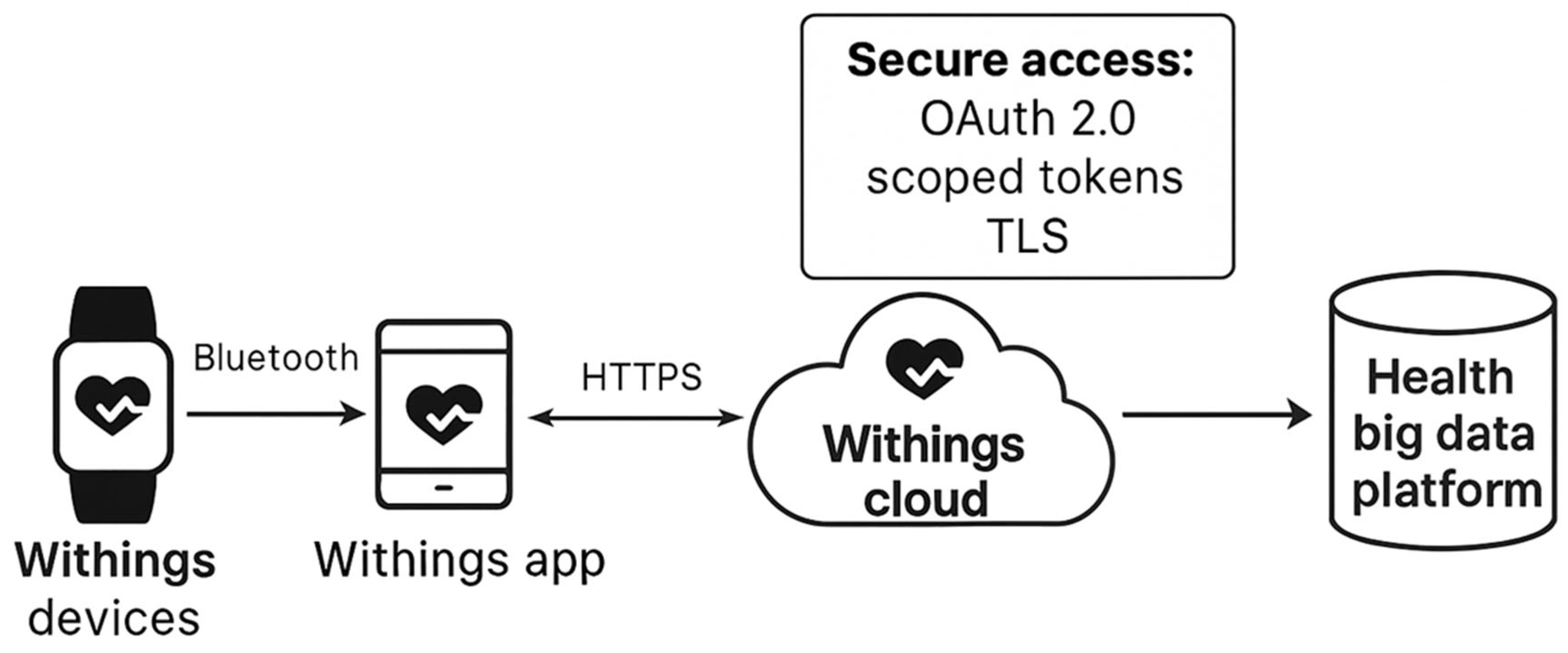
Figure 1. Secure integration workflow. Data are transmitted from the wearable to the Withings app via Bluetooth, then encrypted via HTTPS/TLS to the vendor cloud. Access by the health data platform is performed through OAuth 2.0 token-based authentication, using scoped permissions and GDPR-compliant cloud storage. The diagram highlights secure API access rather than only raw data transmission.
Technologies 14 00024 g001
Table 1. Caption. Stepwise selection process for wearable devices, showing inclusion criteria, progressive filtering, and final identification of the most suitable device for oncology-related monitoring.
StepInclusion CriterionDescriptionDevices Remaining
1Initial device poolDevices identified from market analysis, literature and manufacturer data23
2Clinical relevanceMust measure oncology-related biomarkers: HR, SpO2, ECG, BP, respiratory rate or physical activity23 → 15
3Manufacturer reliabilityOnly established vendors with technical support, documentation, and stable ecosystem15 → 12
4GDPR-compliant data governanceSecure data handling, encryption, EU data storage or EU data residency guarantees12 → 9
5Economic sustainabilityDevices with mandatory subscriptions or pay-per-use data access excluded9 → 8
6Wearability and continuous monitoringOnly wearable devices retained → non-wearables excluded8 → 6
7Final comparative assessmentEvaluation of API integration, battery life, medical certification, interoperability and scalability6 → 1
OutcomeFinal selected deviceWithings ScanWatch 2—best balance of medical-grade certification, battery life, GDPR compliance and open API1
Table 2. Comparative scoring matrix of wearable devices (maximum score = 40).
DeviceMedical Cert. (0–9)API (0–8)GDPR (0–8)Battery (1–5)Cost (1–5)Subscription (1–5)Total (su 40)
Withings ScanWatch 288853537
Fitbit Sense 226433523
Apple Watch Series 737412522
Samsung Galaxy Watch423424520
Google Pixel Watch13413517
Asus VivoWatch SP41243519
Disclaimer/Publisher’s Note: The statements, opinions and data contained in all publications are solely those of the individual author(s) and contributor(s) and not of MDPI and/or the editor(s). MDPI and/or the editor(s) disclaim responsibility for any injury to people or property resulting from any ideas, methods, instructions or products referred to in the content.