
Big Geodata Technology: Carbon Supply–Demand Balance Analysis of Ecological Service Systems




Abstract
1. Introduction
1.1. Research Background
1.2. Advances in Research: Domestic (China) and Global Perspectives
2. Materials and Methods
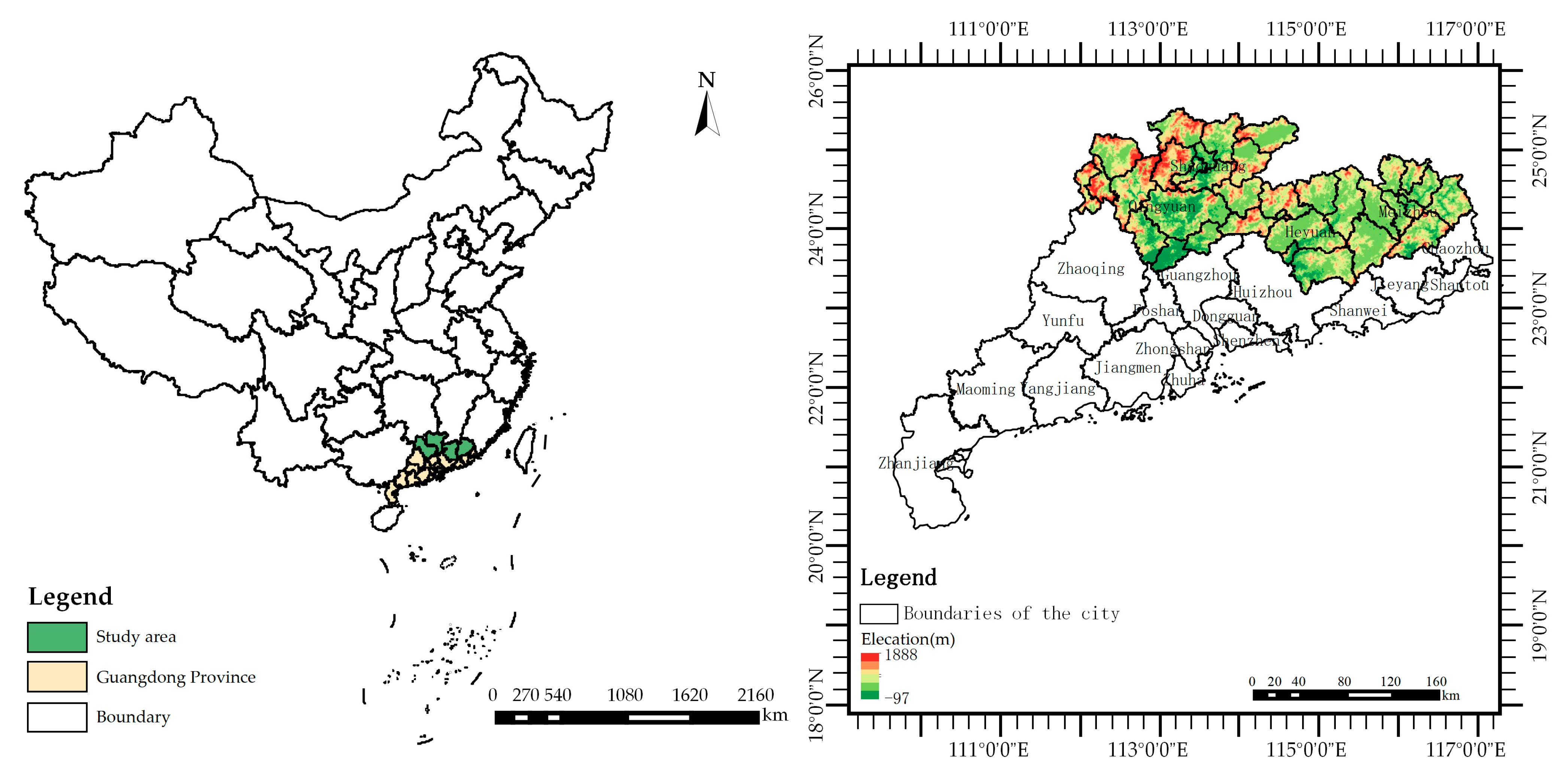
2.1. Geographic and Socioeconomic Characteristics of the Study Region
2.2. Approaches to Quantifying the Supply and Demand of Carbon Sequestration Services
2.3. Big Geodata Technology and ArcGIS-Based Visualization Analysis Methods
- Spatial Data Loading and Visualization
- 2.
- Spatial Analysis and Modeling
- 3.
- Visualization and Interpretation of Results
3. Results and Discussions
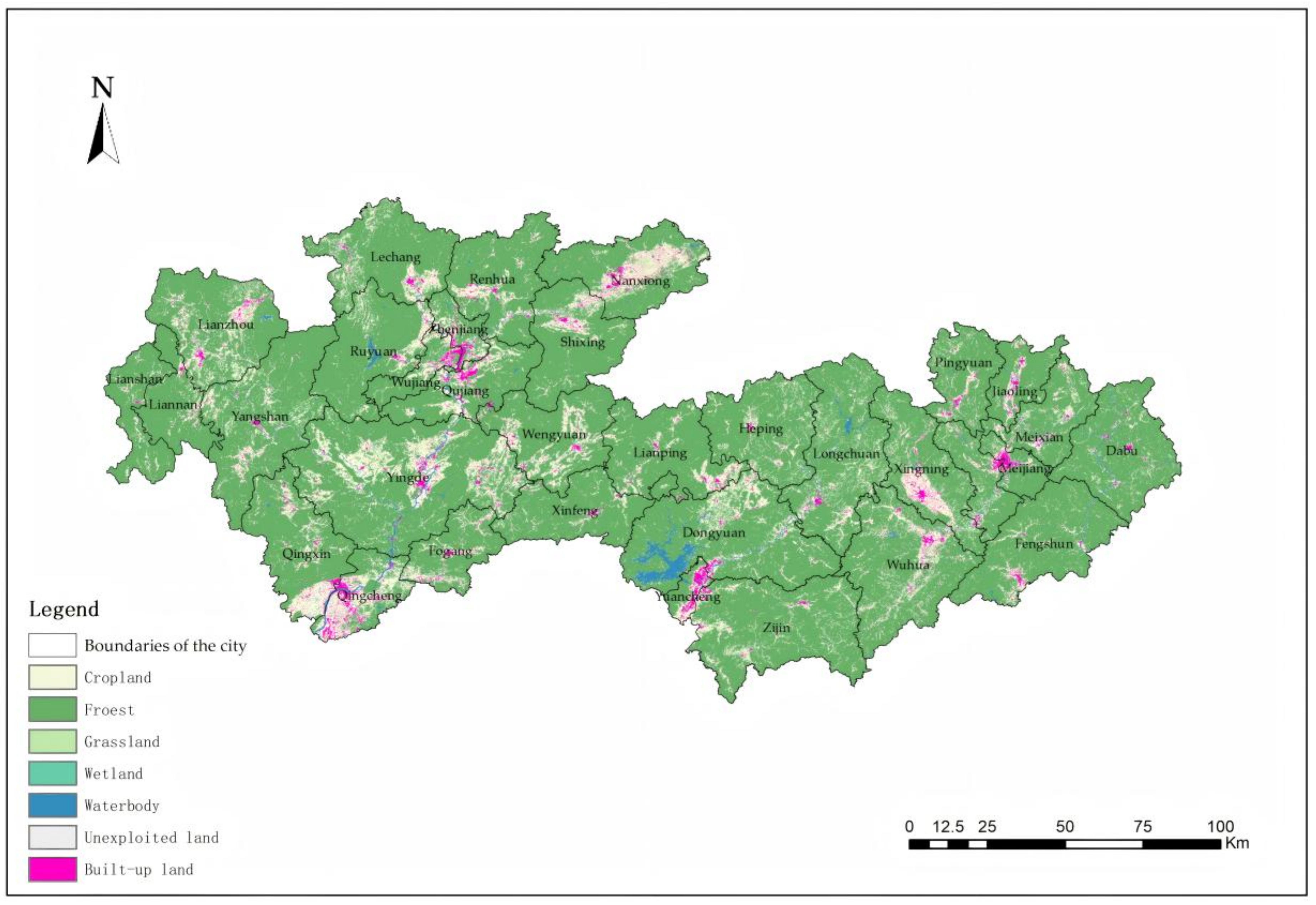
3.1. Supply–Demand Characteristics of Carbon Sequestration Services
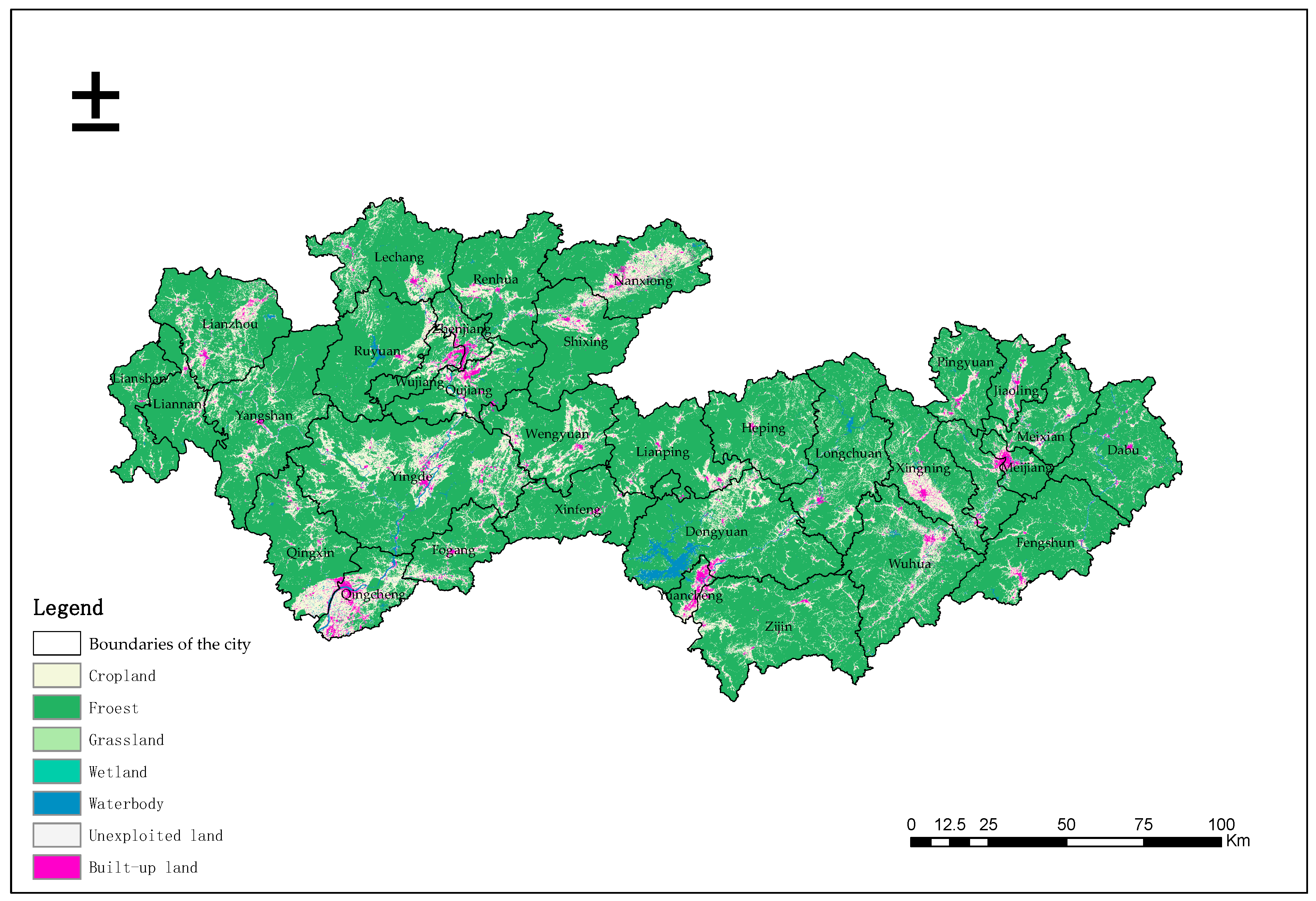
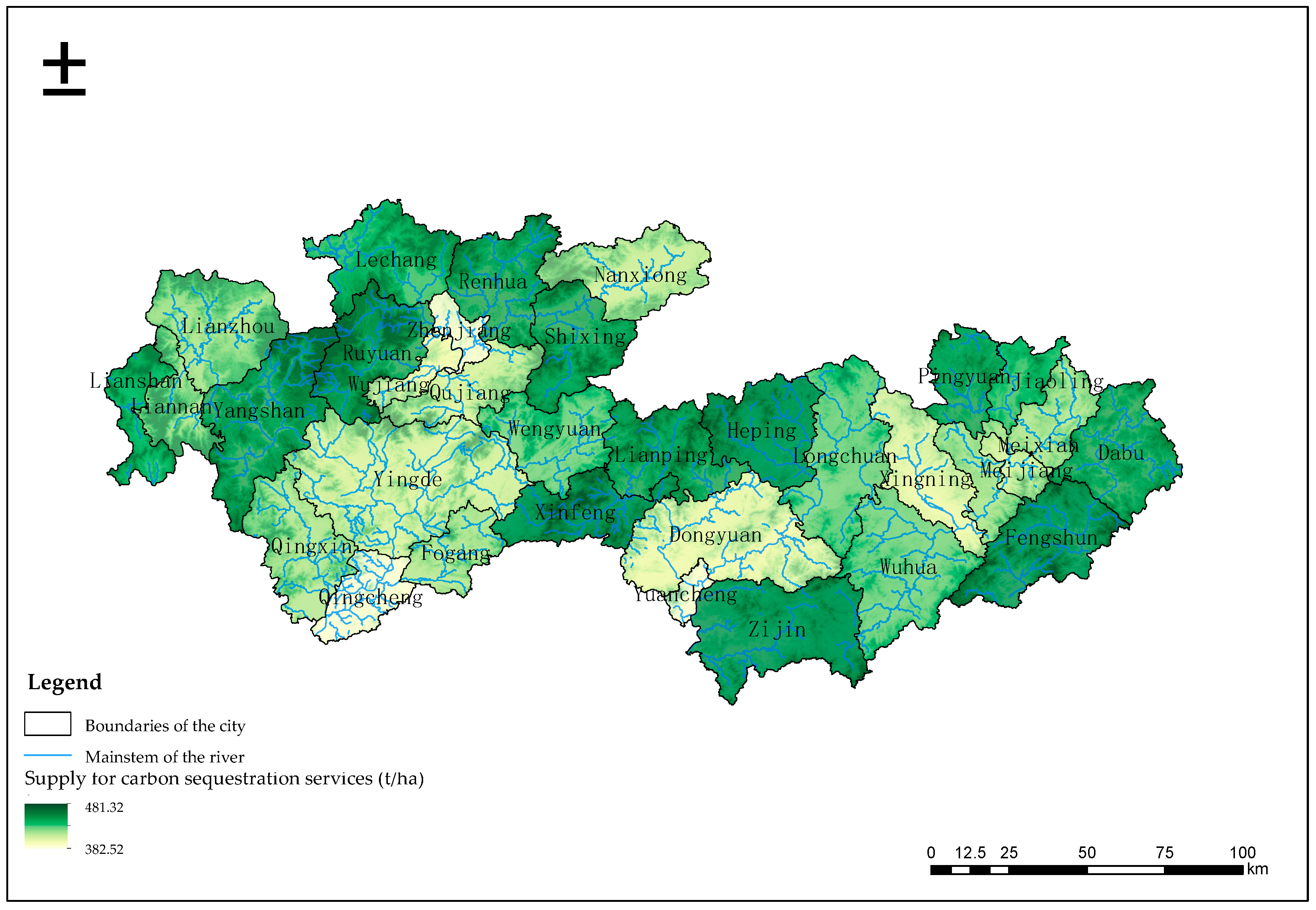
3.2. Carbon Sequestration Service Supply
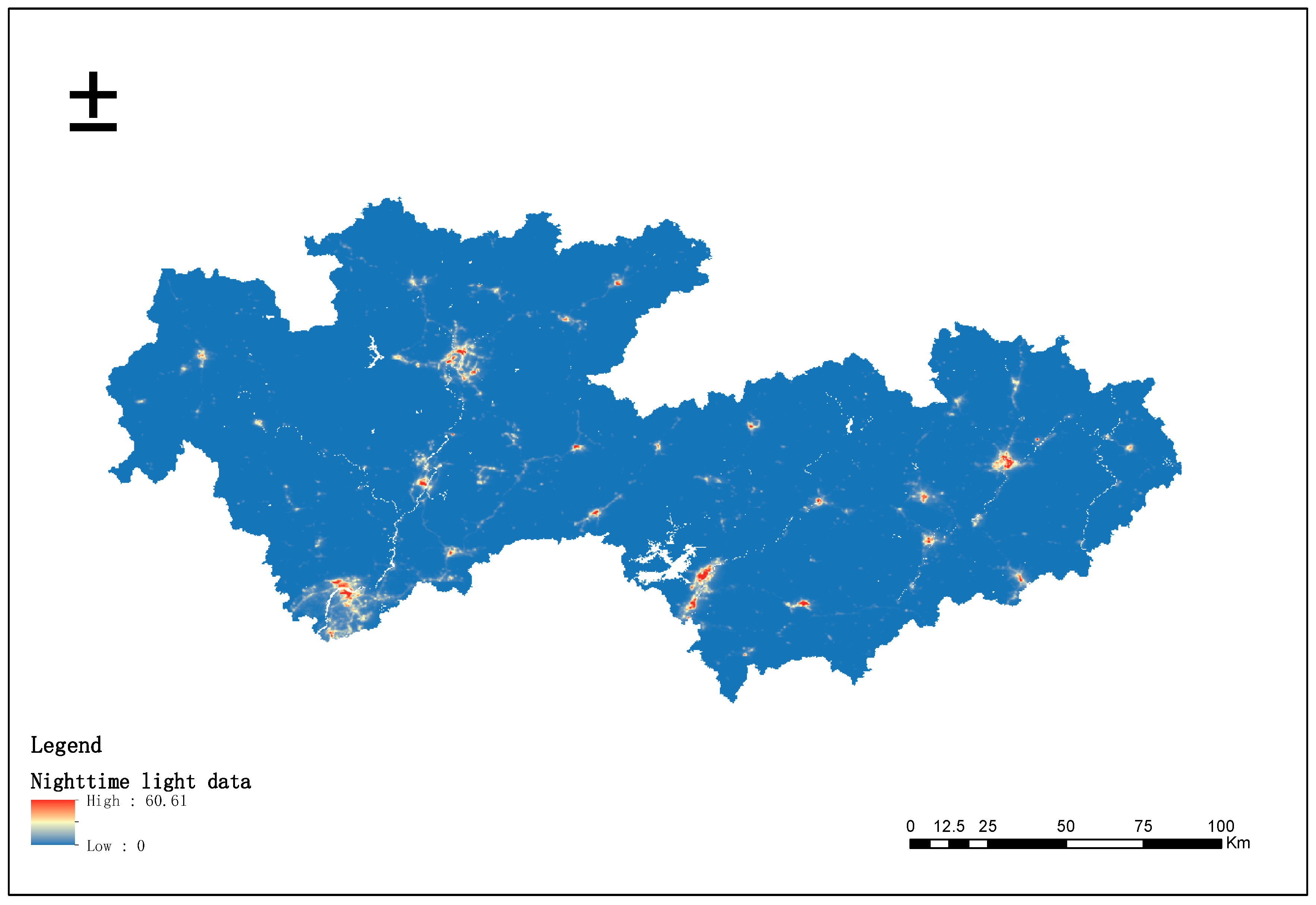
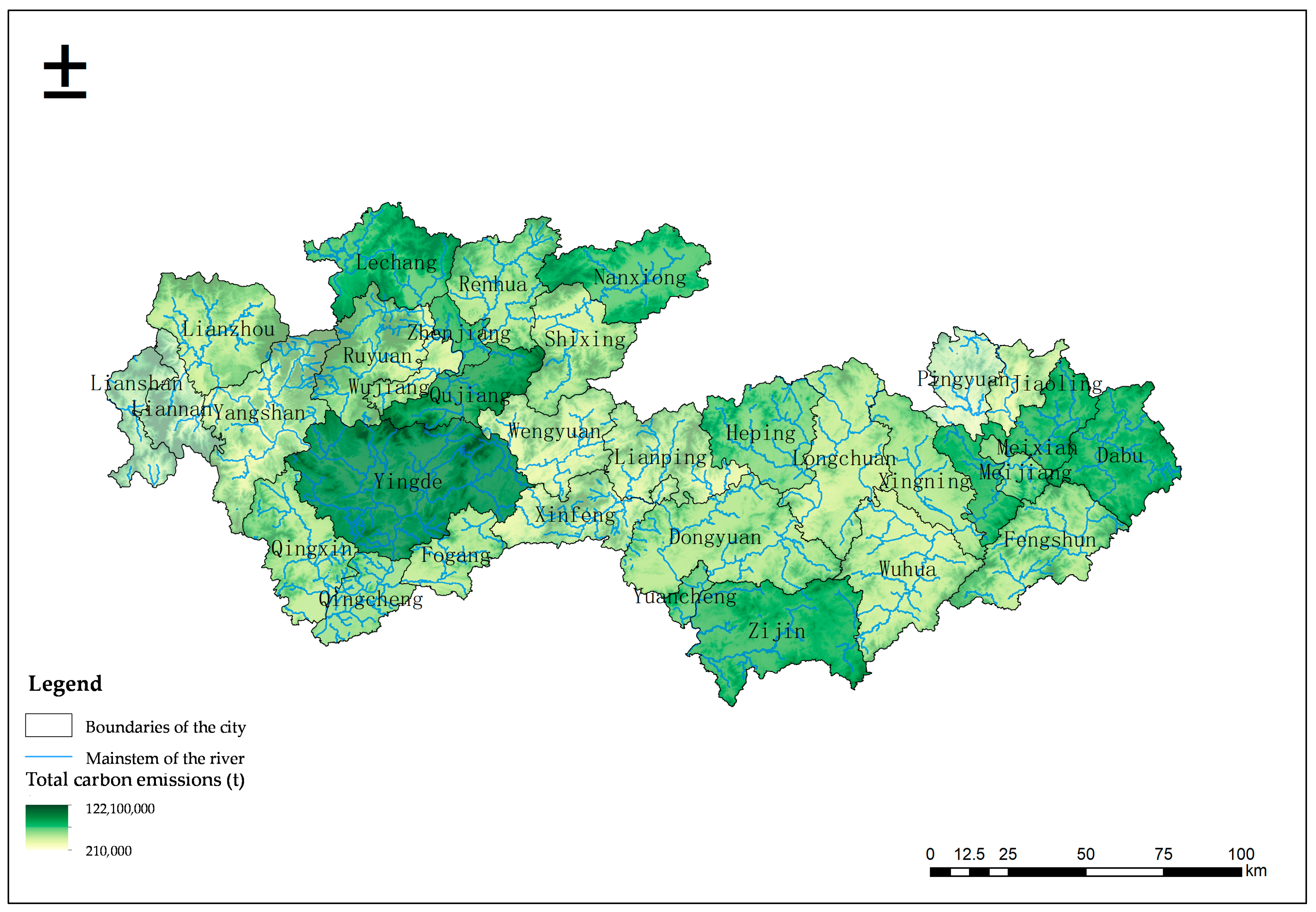
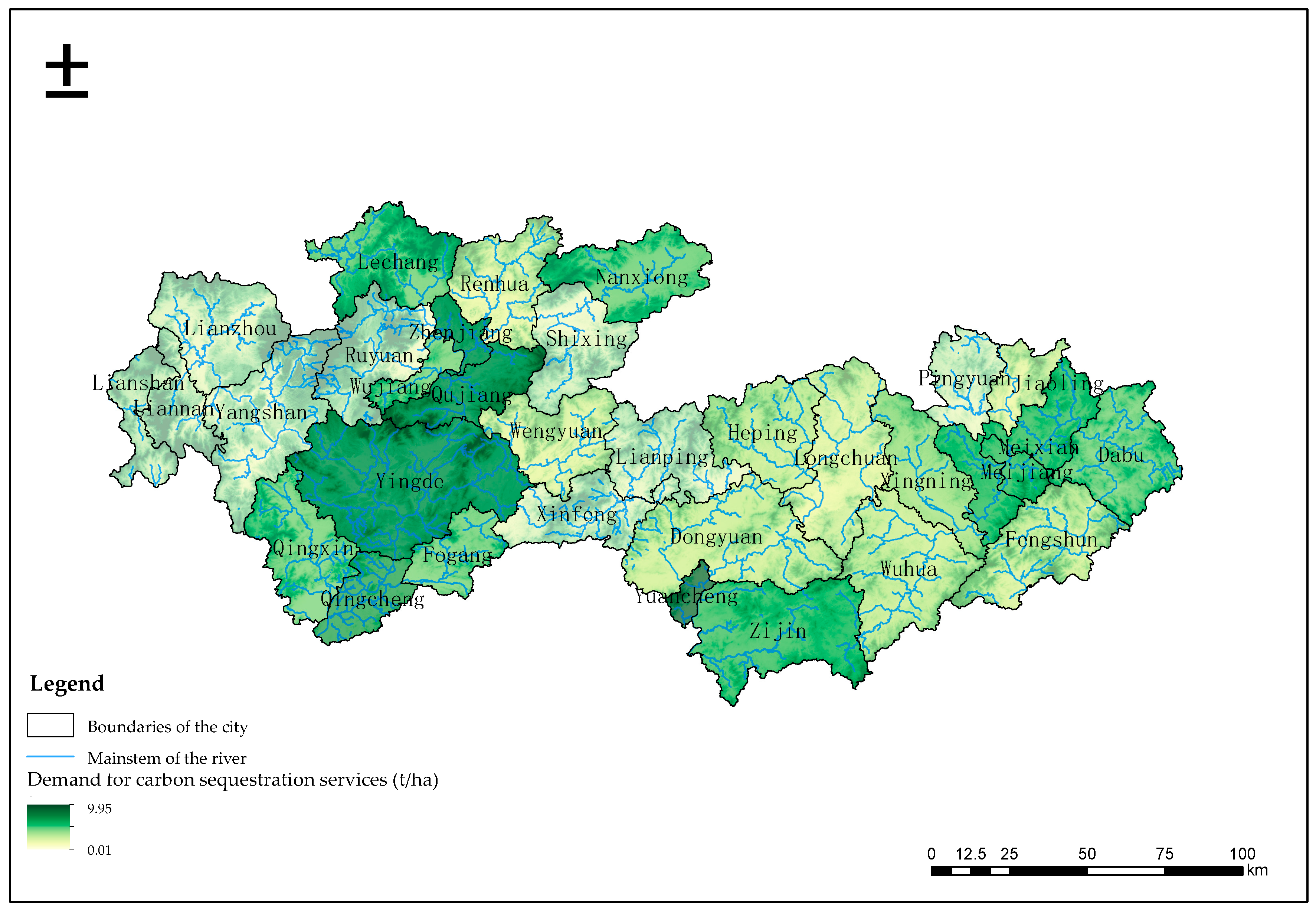
3.3. Carbon Sequestration Service Demand
4. Conclusions and Prospects
4.1. Conclusions
- Supply Characteristics of Carbon Sequestration Services: The supply of carbon sequestration services in the ecological development zone of northern Guangdong exhibited significant spatial disparities. The western region, dominated by extensive forests and grasslands, demonstrated a high carbon sequestration capacity, forming contiguous high-value zones. In contrast, the southern region showed a more fragmented, patchy distribution, although several counties also displayed relatively high supply values. With the acceleration of urbanization, some high-value areas have contracted, particularly around urban peripheries and in the eastern region, where the supply of carbon sequestration services has significantly declined.
- Demand Characteristics of Carbon Sequestration Services: Demand for carbon sequestration services was concentrated mainly in urban areas and along transportation corridors with dense populations and frequent economic activities. Nighttime light data, used as a proxy for human activity intensity, effectively reflected regional demand patterns. Urban and eastern areas, characterized by higher population densities and industrial activity, exhibited significantly higher demand for carbon sequestration services compared to other regions.
- Influencing Factors and Driving Mechanisms: The study further examined the main factors influencing the supply–demand relationship of carbon sequestration services, including natural factors (such as elevation, slope, and vegetation cover) and socioeconomic factors (such as population size, GDP, and land-use change). Using the Geodetector model, the study quantified the explanatory power of each factor on the spatial distribution of the carbon sequestration service supply–demand matching index. The results indicated that land-use change and urbanization are the key factors shaping the supply–demand balance. As the extent of urban built-up land continues to increase, ecological land and cultivated lands have been reduced correspondingly, leading to a decline in their capacity to provide carbon sequestration services.
- Optimization and Regulation of Territorial Space: Based on these findings, the study proposed optimization and regulation strategies for territorial space guided by the matching relationship between ecosystem service supply and demand. Specific regulatory strategies were proposed for both urban and rural areas to promote the coordinated development of ecosystem service supply and demand and improve residents’ well-being.
4.2. Prospects
- Enhancement of Data Precision and Timeliness: The current research primarily relies on remote sensing imagery and socioeconomic statistical data, which have certain limitations in precision and timeliness. Future studies should incorporate higher-resolution remote sensing images and real-time monitoring data to improve the accuracy, timeliness, and reliability of ecosystem service supply–demand assessments.
- Multi-Scenario Simulation and Prediction: Although this study simulated territorial space development under different development scenarios, future uncertainties—such as climate change and policy adjustments—may have profound impacts on the supply–demand relationship of ecosystem services. Therefore, future research should strengthen multi-scenario simulations and predictions to account for these potential changes and assess their impacts on the supply–demand balance of ecosystem services.
- Cross-Regional Collaboration and Policy Support: Given the spatial spillover effects of ecosystem services, optimizing and regulating a single region in isolation often fails to achieve optimal results. Future research should expand toward cross-regional collaborative optimization and regulation to explore mechanisms for matching ecosystem service supply and demand across regions. Meanwhile, stronger policy support plays a crucial role in promoting territorial space optimization and enhancing ecosystem services, highlighting the need for continued development and refinement of relevant governance policies.
- Public Participation and Educational Promotion: Effective management and protection of ecosystem services require broad public participation and support. Future research should emphasize mechanisms that promote public awareness and conservation consciousness regarding the value of ecosystem services. Simultaneously, educational campaigns and related initiatives should be used to guide the public toward adopting green and low-carbon lifestyles, thereby jointly promoting the sustainable development of regional ecosystems.
Author Contributions
Funding
Institutional Review Board Statement
Informed Consent Statement
Data Availability Statement
Acknowledgments
Conflicts of Interest
Abbreviations
| LULC | Land use and land cover |
| IEA | International Energy Agency |
| HWPs | Harvested wood products |
| GDP | Gross Domestic Product |
References
- Zhang, J.; Wang, M.; Liu, K.; Chen, S.; Zhao, Z.a. Social-ecological system sustainability in China from the perspective of supply-demand balance for ecosystem services. J. Clean. Prod. 2025, 497, 145039. [Google Scholar] [CrossRef]
- Kyoto Protocol to the United Nations Framework Convention on Climate Change. Available online: https://legal.un.org/avl/pdf/ha/kpccc/kpccc_e.pdf (accessed on 16 November 2025).
- 7. d Paris Agreement. Available online: https://treaties.un.org/doc/Publication/MTDSG/Volume%20II/Chapter%20XXVII/XXVII-7-d.en.pdf (accessed on 16 November 2025).
- The European Green Deal. Available online: https://ec.europa.eu/info/strategy/priorities-2019-2024/european-green-deal_en (accessed on 16 November 2025).
- Yang, B.; Chen, P.; Dong, K.; Sun, J. Construction of Territorial Space Planning System under the Background of Ecological Civilization. China City Plan. Rev. 2019, 4, 16–23. [Google Scholar] [CrossRef]
- Luo, Y.; Zhang, Y.; Ma, S.; Hou, C.; Zhang, L. Spatial-temporal pattern and supply-demand balance of land use carbon sequestration from a low-carbon perspective: A case study of Guizhou Province. Ecol. Indic. 2025, 175, 113602. [Google Scholar] [CrossRef]
- Global Carbon Budget. Available online: https://globalcarbonbudget.org/ (accessed on 21 December 2025).
- Tian, S.; Wu, W.; Chen, S.; Li, Z.; Li, K. Global mismatch between ecosystem service supply and demand driven by climate change and human activity. Environ. Sci. Ecotechnol. 2025, 26, 100573. [Google Scholar] [CrossRef] [PubMed]
- Gao, J.; Wang, L. Embedding spatiotemporal changes in carbon storage into urban agglomeration ecosystem management—A case study of the Yangtze River Delta, China. J. Clean. Prod. 2019, 237, 117764. [Google Scholar] [CrossRef]
- Shi, X.; Zhou, Z.; Yu, Z. Carbon emissions from agricultural land use in China: Spatio-temporal dynamics and pathways to neutrality. Front. Environ. Sci. 2025, 13, 1455151. [Google Scholar] [CrossRef]
- Wang, Z.; Zhou, R.; Rui, J.; Yu, Y. Revealing the impact of urban spatial morphology on land surface temperature in plain and plateau cities using explainable machine learning. Sustain. Cities Soc. 2025, 118, 106046. [Google Scholar] [CrossRef]
- Li, Y.; Wang, H.; Zhang, L.; Yang, Y.; Zhao, Z.; Jiang, X. Revealing Multiscale Characteristics of Ecosystem Service Flows: Application to the Yangtze River Economic Belt. Land 2025, 14, 2076. [Google Scholar] [CrossRef]
- Xing, X.; Wang, Q.; Meng, F.; Liu, P.; Huang, L.; Zhuo, W. Assessing the Land Use-Carbon Storage Nexus Along G318: A Coupled SD-PLUS-InVEST Model Approach for Spatiotemporal Coordination Optimization. Land 2025, 14, 2067. [Google Scholar] [CrossRef]
- Pang, Q.; Xu, J.; Zhou, Y.; He, M. Spatial mismatch and drivers of carbon sequestration services supply-demand in China. Ecol. Indic. 2025, 173, 113389. [Google Scholar] [CrossRef]
- Song, C. Advance in Research on Carbon Cycling in Wetlands. Geogr. Sci. 2003, 23, 622–628. [Google Scholar] [CrossRef]
- Liu, W.; Wang, X.; Lu, F.; Ouyang, Z. Estimation of Carbon Storage and Carbon Sequestration Capacity of Global Forest Ecosystems and Their Regional Characteristics. Chin. J. Appl. Ecol. 2015, 26, 2881–2890. [Google Scholar] [CrossRef]
- Xiu, Q.; Lu, Z.; Xiu, Y.; Lin, Z.; Yang, R. Research on the Spatial Flow of Ecosystem Services in Guangdong Province Based on Supply-Demand Relationships. Acta Ecol. Sin. 2025, 45, 5753–5768. [Google Scholar] [CrossRef]
- Zhao, Y.; Ning, S.; Yan, A.; Jiang, P.; Ren, H.; Li, N.; Huo, T.; Sheng, J. Analysis of Carbon Emissions and Ecosystem Service Value Caused by Land Use Change, and Its Coupling Characteristics in the Wensu Oasis, Northwest China. Agronomy 2025, 15, 2307. [Google Scholar] [CrossRef]
- Liu, J.; Jin, B.; Dong, J.; Ding, G. Integrating InVEST and MaxEnt Models for Ecosystem Service Network Optimization in Island Cities: Evidence from Pingtan Island, China. Sustainability 2025, 17, 8470. [Google Scholar] [CrossRef]
- Xu, Y.; Wang, M.; Tang, W.; Li, S.; Ai, W.; Xu, W.; Xu, D.; Liu, C.; Sun, J.; Cui, W. Territorial spatial carbon balance governance from a spatially refined perspective: Incorporating sub-regional differences in spatial driving effects into zoning regulation. Environ. Impact Assess. Rev. 2026, 117, 108222. [Google Scholar] [CrossRef]
- Garza, G. Global economy, metropolitan dynamics and urban policies in Mexico. Cities 1999, 16, 149–170. [Google Scholar] [CrossRef]
- Guttenberg, A.Z. Land, space and spatial planning in three time regions. In Proceedings of the European Conference on Spatial Information Theory, Marciana Marina, Italy, 19–22 September 1993; pp. 284–293. [Google Scholar]
- Koomen, E.; Rietveld, P.; de Nijs, T. Modelling land-use change for spatial planning support. Ann. Reg. Sci. 2008, 42, 1–10. [Google Scholar] [CrossRef]
- Fang, Y.; Cao, L.; Tang, Q.; Zhang, L.; Guo, X. Assessment and driving mechanisms for the supply–demand of ecosystem services in the central plains urban agglomeration, China: A water-soil-food-carbon nexus perspective. Ecol. Indic. 2025, 171, 113218. [Google Scholar] [CrossRef]
- Lv, L.; Han, X.; Zhu, J.; Liao, K.; Yang, Q.; Wang, X. Spatial drivers of ecosystem services supply-demand balances in the Nanjing metropolitan area, China. J. Clean. Prod. 2024, 434, 139894. [Google Scholar] [CrossRef]
- Xiong, S.; Yang, F.; Li, J.; Xu, Z.; Ou, J. Temporal-spatial variation and regulatory mechanism of carbon budgets in territorial space through the lens of carbon balance: A case of the middle reaches of the Yangtze River urban agglomerations, China. Ecol. Indic. 2023, 154, 110885. [Google Scholar] [CrossRef]
- Chuai, X.; Huang, X.; Wang, W.; Zhao, R.; Zhang, M.; Wu, C. Land use, total carbon emissions change and low carbon land management in Coastal Jiangsu, China. J. Clean. Prod. 2015, 103, 77–86. [Google Scholar] [CrossRef]
- Guangdong Province Statistical Yearbook—2025; National Bureau of Statistics of China: Beijing, China, 2025. Available online: https://stats.gd.gov.cn/ (accessed on 21 December 2025).
- Seto, K.C.; Shepherd, J.M. Global urban land-use trends and climate impacts. Curr. Opin. Environ. Sustain. 2009, 1, 89–95. [Google Scholar] [CrossRef]
- Kashiwagi, H. Atmospheric carbon dioxide and climate change since the Late Jurassic (150Ma) derived from a global carbon cycle model. Palaeogeogr. Palaeoclimatol. Palaeoecol. 2016, 454, 82–90. [Google Scholar] [CrossRef]
- Jiang, Y.; Long, Y.; Liu, Q.; Dowaki, K.; Ihara, T. Carbon emission quantification and decarbonization policy exploration for the household sector—Evidence from 51 Japanese cities. Energy Policy 2020, 140, 111438. [Google Scholar] [CrossRef]
- Falahatkar, S.; Rezaei, F.; Afzali, A. Towards low carbon cities: Spatio-temporal dynamics of urban form and carbon dioxide emissions. Remote Sens. Appl. Soc. Environ. 2020, 18, 100317. [Google Scholar] [CrossRef]
- Sun, W.; Huang, C. How does urbanization affect carbon emission efficiency? Evidence from China. J. Clean. Prod. 2020, 272, 122828. [Google Scholar] [CrossRef]
- Ramachandra, T.V.; Aithal, B.H.; Sreejith, K. GHG footprint of major cities in India. Renew. Sustain. Energy Rev. 2015, 44, 473–495. [Google Scholar] [CrossRef]
- Zhong, L.; Lin, M.; Zhou, R. Spatial Pattern Analysis of Ecosystem Services in Foshan City Based on the InVEST Model. Ecol. Sci. 2020, 39, 16–25. [Google Scholar] [CrossRef]
- Zheng, J.; Xie, B.; You, X. Spatiotemporal Evolution Characteristics of Habitat Quality in Guangdong Province Based on Land Use Change. Acta Ecol. Sin. 2022, 42, 6997–7010. [Google Scholar] [CrossRef]
- Li, L. Construction and Spatiotemporal Evolution Analysis of Ecological Security Patterns Based on the Supply and Demand of Ecosystem Services. Master’s Thesis, East China University of Technology, Fuzhou, China, 2024. [Google Scholar] [CrossRef]
- Al-Kaisi, M.; Grote, J. Cropping Systems effects on improving Soil Carbon Stocks of exposed Subsoil. Soil Sci. Soc. Am. J. 2007, 71, 1381–1388. [Google Scholar] [CrossRef]
- Steenwerth, K.; Belina, K.M. Cover crops enhance soil organic matter, carbon dynamics and microbiological function in a vineyard agroecosystem. Appl. Soil Ecol. 2008, 40, 359–369. [Google Scholar] [CrossRef]
- Chuai, X.; Huang, X.; Lai, L.; Wang, W.; Peng, J.; Zhao, R. Land use structure optimization based on carbon storage in several regional terrestrial ecosystems across China. Environ. Sci. Policy 2013, 25, 50–61. [Google Scholar] [CrossRef]
- Nie, X.; Lu, B.; Chen, Z.; Yang, Y.; Chen, S.; Chen, Z.; Wang, H. Increase or decrease? Integrating the CLUMondo and InVEST models to assess the impact of the implementation of the Major Function Oriented Zone planning on carbon storage. Ecol. Indic. 2020, 118, 106708. [Google Scholar] [CrossRef]
- Wang, J.W. Research on the Spatio-Temporal Evolution of the Supply and Demand Pattern of Ecosystem Services in Dandong. Master’s Thesis, Liaoning Normal University, Dalian, China, 2022. [Google Scholar] [CrossRef]
- Pan, B.; Wang, Q.; Diao, Z.; Li, J.; Liu, W.; Gao, Q.; Shu, Y.; Du, J. Landscape Patterns and Carbon Emissions in the Yangtze River Basin: Insights from Ensemble Models and Nighttime Light Data. Atmosphere 2025, 16, 1173. [Google Scholar] [CrossRef]
- Xu, J.; Kii, M.; Okano, Y.; Chou, C.-C. Future Scenarios of Global Urban Expansion and Carbon Emissions with National Heterogeneity: A Mixed-Effects Model Based on Urban Nighttime Lights. Remote Sens. 2025, 17, 3251. [Google Scholar] [CrossRef]
- Chen, F.; Chen, Q.; Yin, K.; Li, L. District-Level Spatial Distribution of Carbon Emissions Derived from Nighttime Light Data: A Case Study of Xi’an City, China. Reg. Sci. Environ. Econ. 2025, 2, 14. [Google Scholar] [CrossRef]





| Data Name | Data Description | Data Source |
|---|---|---|
| Land-Use Data | Used for calculating the supply and demand of multiple ecosystem services and simulating future land-use changes. | Chinese Academy of Sciences Resource and Environmental Science Data Center (http://www.resdc.cn/DOI; accessed on 16 November 2025) |
| Nighttime Light Data | Primarily used to calculate carbon sequestration service demand in the northern Guangdong development region. | Chinese Academy of Sciences Resource and Environmental Science Data Center (http://www.resdc.cn/DOI; accessed on 16 November 2025) |
| Region | Land Area (10,000 km2) | Population (10,000 Persons) | Carbon Emission (t) |
|---|---|---|---|
| Qingyuan City | 1.90 | 398.90 | 46,088,254.10 |
| Shaoguan City | 1.84 | 334.91 | 40,435,735.31 |
| Heyuan City | 1.57 | 283.70 | 19,509,525.97 |
| Meizhou City | 1.58 | 384.16 | 16,071,644.74 |
| Land Cover Type | Lucode | Aboveground Carbon Stock (t/ha) | Belowground Carbon Stock (t/ha) | Soil Carbon Stock (t/ha) | Dead Organic Matter Carbon Stock (t/ha) |
|---|---|---|---|---|---|
| Cropland | 10 | 16.44 | 4.11 | 10.84 | 0 |
| Forest | 20 | 19.99 | 5.00 | 19.57 | 0 |
| Grassland | 30 | 2.12 | 9.55 | 9.99 | 0 |
| Waterbody | 60 | 0 | 0 | 0 | 0 |
| Undeveloped Land | 70 | 18.32 | 1.83 | 0.84 | 0 |
| Built-up Land | 80 | 1.14 | 0.11 | 17.97 | 0 |
| High Supply Scenario (2024) | Low Supply Scenario (2024) | ||
|---|---|---|---|
| County | Carbon Supply (t/ha) | County | Carbon Supply (t/ha) |
| Xinfeng County, Shaoguan | 481.32 | Wujiang District, Shaoguan | 440.17 |
| Fengshun County, Meizhou | 476.18 | Dongyuan County, Heyuan | 436.32 |
| Heping County, Heyuan | 475.18 | Zhenjiang District, Shaoguan | 419.19 |
| Zijin County, Heyuan | 474.98 | Yuancheng District, Heyuan | 386.79 |
| Dabu County, Meizhou | 472.54 | Qingcheng District, Qingyuan | 382.52 |
| High Demand Scenario (2024) | Low Demand Scenario (2024) | ||
|---|---|---|---|
| County | Carbon Supply (t/ha) | County | Carbon Supply (t/ha) |
| Xinfeng County, Shaoguan | 481.32 | Wujiang District, Shaoguan | 440.17 |
| Fengshun County, Meizhou | 476.18 | Dongyuan County, Heyuan | 436.32 |
| Heping County, Heyuan | 475.18 | Zhenjiang District, Shaoguan | 419.19 |
| Zijin County, Heyuan | 474.98 | Yuancheng District, Heyuan | 386.79 |
| Dabu County, Meizhou | 472.54 | Qingcheng District, Qingyuan | 382.52 |
Disclaimer/Publisher’s Note: The statements, opinions and data contained in all publications are solely those of the individual author(s) and contributor(s) and not of MDPI and/or the editor(s). MDPI and/or the editor(s) disclaim responsibility for any injury to people or property resulting from any ideas, methods, instructions or products referred to in the content. |
© 2025 by the authors. Licensee MDPI, Basel, Switzerland. This article is an open access article distributed under the terms and conditions of the Creative Commons Attribution (CC BY) license.
Share and Cite
Hsu, W.-L.; Luo, Z.; Ouyang, Z.; Dong, Z.; Liu, H.-L. Big Geodata Technology: Carbon Supply–Demand Balance Analysis of Ecological Service Systems. Technologies 2026, 14, 18. https://doi.org/10.3390/technologies14010018
Hsu W-L, Luo Z, Ouyang Z, Dong Z, Liu H-L. Big Geodata Technology: Carbon Supply–Demand Balance Analysis of Ecological Service Systems. Technologies. 2026; 14(1):18. https://doi.org/10.3390/technologies14010018
Chicago/Turabian StyleHsu, Wei-Ling, Ziwei Luo, Zhiyong Ouyang, Zuorong Dong, and Hsin-Lung Liu. 2026. "Big Geodata Technology: Carbon Supply–Demand Balance Analysis of Ecological Service Systems" Technologies 14, no. 1: 18. https://doi.org/10.3390/technologies14010018
APA StyleHsu, W.-L., Luo, Z., Ouyang, Z., Dong, Z., & Liu, H.-L. (2026). Big Geodata Technology: Carbon Supply–Demand Balance Analysis of Ecological Service Systems. Technologies, 14(1), 18. https://doi.org/10.3390/technologies14010018