1. Introduction
The state revenue agenda prioritizes taxes as a primary source of revenue, yet corporate tax avoidance remains a challenge. The Tax Justice Network estimates that Indonesia loses approximately US
$4.86 billion annually due to tax evasion/avoidance. Other estimates indicate the potential losses associated with corporate tax avoidance are substantial. A widely highlighted pattern is the shifting of profits by multinational corporations to affiliated entities in lower-tax jurisdictions (
Farooq & Abdel Zaher, 2020), in line with the trend of cross-border tax strategies (
Suh et al., 2019). At the macro level, Indonesia’s tax revenue realization, which has repeatedly fallen below target over a prolonged period, further reinforces the urgency of tax compliance issues. The government responded by strengthening regulations and sanctions to suppress tax evasion (
Khuong et al., 2019), including pushing for stricter enforcement (
Warih, 2019), because taxes are positioned as a dominant contributor to state revenue (
Argilés-Bosch et al., 2021) and are the focus of many contemporary tax-accounting studies (
Dyreng et al., 2019).
This conflict of interest can be explained through agency theory, where companies, as taxpayers, view taxes as a burden that reduces the wealth and welfare of their owners (
Dyreng et al., 2019), thus creating incentives to minimize tax payments (
Tang, 2020), even by exploiting existing regulatory loopholes. From the government’s perspective, taxes are positioned as a financing instrument for state administration, so policies and regulations are directed towards maximizing revenue (
Widiatmoko & Mulya, 2021). Under the pressure of these conflicting interests, companies exploit fiscal reconciliation and regulatory loopholes, which in practice can be linked to accounting tax decision-making (
Kim & Lee, 2021) and corporate tax planning strategies. Tax avoidance is then understood as an effort to minimize the tax burden by exploiting regulatory weaknesses (
Novita & Herliansyah, 2019); normatively, it does not always violate the law, but substantively, it can be viewed as disobedience (
Alfina et al., 2018) and is considered problematic from an ethical and tax administration perspective.
The phenomenon of transfer pricing is an important entry point because tax avoidance practices are often carried out through cross-jurisdictional affiliate transactions, including in countries characterized by tax havens (
Fernández-Rodríguez et al., 2019), which facilitates the intention to shift profits (
Kim & Im, 2016) and creates room for tax aggressiveness (
Khan et al., 2017). In Indonesia, this phenomenon is reflected in various media highlights regarding transfer pricing practices and their impact on the domestic tax base (
Tempo, n.d.; accessed on 7 April 2026), including indications of widespread practices in the export sector (
Ortax, n.d.; accessed on 7 April 2026). The development of tax disputes related to transfer pricing is also increasingly depicted in international statistics (
OECD, 2020). However, a scientific gap that has emerged is that discussions of transfer pricing often stop at its relationship with tax avoidance, while the pathway by which transfer pricing is “translated” into performance achievements (profitability) requires a more explicit explanation of the mechanisms through which corporate tax behavior is conducted.
The CSR phenomenon demonstrates a distinct dynamic in its relationship to tax avoidance. Several findings position CSR as a signal of compliance and ethical orientation that suppresses tax aggressiveness (
Hasseldine & Morris, 2013) and reduces involvement in tax haven activities (
Col & Patel, 2019). Conversely, CSR is also positioned as a reputational tool that has the potential to mask tax avoidance practices (
Sikka, 2012), and companies engaging in tax avoidance may even increase CSR to manage reputational risk (
Huseynov & Klamm, 2012). Other findings confirm that the CSR–tax avoidance relationship can veer in different directions depending on the context and governance (
Lanis & Richardson, 2015). Thus, the gap in CSR variables lies in the inconsistent direction of the relationship and the need for modeling that positions tax avoidance as a channel that explains how CSR ultimately associates with performance outcomes.
The phenomenon of ownership structure, particularly institutional and managerial ownership, is related to monitoring and incentive functions. Institutional ownership is seen as enhancing oversight because institutions play a greater role in disciplining management (
Maharani & Suardana, 2014), in line with the argument that institutional investors can suppress opportunistic behavior. However, the drive to fulfill shareholder interests from a stakeholder perspective can also encourage a preference for tax efficiency, so the pressure to avoid taxes does not always weaken. Empirical evidence shows mixed results: there are insignificant findings between institutional ownership and tax avoidance (
Arianti, 2020), but there are also positive findings (
Kovermann & Velte, 2019). With managerial ownership, the relationship with performance is also not always linear; positive findings on firm value have emerged (
Putranto & Kurniawan, 2018), but the relationship can weaken at certain ownership levels (
Chen et al., 2007) and even exhibit nonlinear patterns (
Cui & Mak, 2002). The gap in ownership variables lies in the instability of findings across studies and the need to test whether the effect of ownership on profitability works through the tax avoidance channel, rather than just through operational efficiency or investment decisions.
The phenomenon of earnings management is also relevant because this practice has the potential to directly overlap with tax strategies. A positive relationship between earnings management and tax avoidance has been found in various contexts (
S. Wang & Chen, 2012) and is reinforced by additional evidence (
Irawan et al., 2020). A positive correlation has also been reported in other studies (
Delgado et al., 2023). However, contradictory results have also emerged, namely a negative relationship between earnings management and tax avoidance under certain conditions (
Hong et al., 2022). The gap in earnings management variables lies in the differing direction of findings and the need for a framework that assesses its ultimate consequences on profitability through the tax avoidance channel.
The tax avoidance channel is crucial because its implications for profitability are also ambivalent. Several studies show a positive correlation between tax avoidance and profitability (
Zhu et al., 2019), in line with the argument that tax efficiency increases after-tax profits. However, tax avoidance can also undermine long-term profitability through political costs, reputational risks, and financing constraints (
Dyreng et al., 2008). These differing findings reinforce the need for modeling that does not force a direct relationship but instead examines tax avoidance as a bridging mechanism between a firm’s strategic determinants and profitability.
The novelty of this study lies in the simultaneous integration of five heterogeneous determinants—spanning transaction manipulation (transfer pricing), social legitimation (CSR), internal governance (managerial ownership), external monitoring (institutional ownership), and earnings strategy (earnings management)—within a single mediation framework applied exclusively to Indonesian manufacturing MNCs. Unlike prior mediation studies that examine a single determinant in isolation (
V. Ratnawati et al., 2018;
Zhu et al., 2019), this study tests the full architecture of agency, stakeholder, and planned behavior mechanisms concurrently, providing a more ecologically valid picture of the tax avoidance process in emerging-market MNCs. Moreover, the predominantly null findings constitute a theoretically meaningful contribution: they reveal that mediation pathways documented in OECD country studies are attenuated or absent in the Indonesian institutional context—a finding with direct implications for tax enforcement reform and governance policy. The emergence of significant direct effects from institutional ownership on profitability further enriches the governance performance literature in emerging markets (
Bui & Pham, 2021;
Liu, 2025;
Brockman, 2024).
This study addresses three explicit research questions: RQ1: Do transfer pricing, CSR, managerial ownership, institutional ownership, and earnings management exert significant direct effects on tax avoidance and profitability in Indonesian listed MNCs? RQ2: Does tax avoidance function as a significant mediating mechanism between the five strategic determinants and firm profitability in the Indonesian manufacturing context? RQ3: What institutional and contextual factors explain the observed pattern of (non-)significance in the Indonesian MNC environment, and what are the implications for tax policy and corporate governance? The objectives of the analysis are to examine the effects of transfer pricing, CSR, ownership structure, and earnings management on profitability through tax avoidance, considering the institutional environment specific to Indonesian multinational manufacturing companies listed on the IDX during 2018–2023.
2. Theoretical Framework
Agency theory explains the consequences of the separation of ownership and control, when managers act as agents who carry out the interests of the principal but still have opportunistic incentives (
Crowther & Ortiz Martinez, 2007;
Eisenhardt, 1989). In the Indonesian MNC context, a principal–agent–principal chain operates: controlling block-holders (founding families or the state) may benefit from tax avoidance through after-tax profit extraction, while minority shareholders bear the reputational and regulatory risks. This configuration anchors the hypotheses related to transfer pricing, managerial ownership, and earnings management, where the divergence of incentives between controllers and minority investors shapes the behavioral disposition toward tax planning (
Farooq & Abdel Zaher, 2020;
Khan et al., 2017).
Stakeholder theory views a company as an aggregation of groups and individuals that influence or are influenced by corporate activities (
Freeman, 1999). This perspective generates contrasting predictions for the CSR–tax avoidance relationship: firms with genuine stakeholder accountability face reputational constraints that suppress aggressive tax behavior (
Hasseldine & Morris, 2013;
Lanis & Richardson, 2015), while firms using CSR instrumentally may pursue parallel tax avoidance as a legitimation shield (
Col & Patel, 2019;
Goerke, 2019). Stakeholder theory further predicts that institutional ownership, as an external governance stakeholder, should reduce tax aggressiveness through enhanced monitoring of managerial discretion (
Chen et al., 2007). The context dependence of these effects in emerging markets—where CSR may serve symbolic functions rather than reflecting substantive behavioral constraints (
Bui & Pham, 2021)—is explicitly incorporated into the theoretical framework.
The Theory of Planned Behavior (
Ajzen, 2020) positions intention as the primary determinant of behavior, shaped by attitudes, subjective norms, and perceived behavioral control. In the earnings management–tax avoidance pathway, this theory frames the deliberate coordination of accrual-based reporting and tax planning as an intentional behavioral strategy driven by management’s attitude toward fiscal optimization, the perceived normative acceptance of such practices within the firm’s institutional environment, and management’s perception of its capacity to implement both strategies simultaneously (
Sulistomo & Prastiwi, 2011;
Bosnjak et al., 2020).
Based on these three theoretical foundations, tax avoidance is positioned as a mechanism that connects transaction strategies (transfer pricing), legitimacy and social accountability (CSR), monitoring mechanisms (managerial and institutional ownership), and earnings strategy (earnings management) to firm profitability. The integration of Agency Theory, Stakeholder Theory, and the Theory of Planned Behavior is not merely additive: it reflects the multi-layered governance structure of Indonesian MNCs, where agency conflicts at multiple principal levels, stakeholder legitimation pressures, and planned behavioral strategies operate simultaneously. This theoretical synthesis generates distinct and contrasting predictions for each determinant’s pathway through tax avoidance, enabling a more precise and theoretically grounded interpretation of the empirical findings, including the predominantly null mediation results.
Hypotheses are organized in three conceptually coherent blocks following
Hayes (
2018) mediation analysis conventions: Block A tests the direct effects of the five determinants on tax avoidance (H1–H5); Block B tests their direct effects on profitability (H6–H10 and H11); and Block C tests the mediated indirect effects through tax avoidance (H12–H16). This structure mirrors the causal chain from determinants → mediator → outcome and eliminates the ordering anomaly present in the original submission (H11 has been repositioned to its correct location after H10).
Transfer pricing is understood as a practice that can facilitate profit shifting through intra-group transactions, potentially lowering reported taxable income (
Taylor & Richardson, 2012;
OECD, 2015,
2020). Empirical evidence from OECD contexts supports this relationship (
Bartelsman & Beetsma, 2003), though Indonesian evidence is mixed given enforcement heterogeneity and data availability constraints on transfer pricing measurement.
H1. Transfer Pricing has an effect on Tax Avoidance.
CSR can be negatively related to tax avoidance when CSR reflects compliance and ethical commitment, making companies more likely to comply with tax laws (
Hasseldine & Morris, 2013). However, CSR can also be understood as a reputational tool potentially used to disguise tax avoidance practices (
Sikka, 2012). Other evidence suggests that companies with higher CSR engagement are less likely to engage in tax avoidance in certain contexts (
López-González et al., 2019). This diversity of arguments guides the examination of the effect of CSR on tax avoidance.
H2. Corporate Social Responsibility has an effect on Tax Avoidance.
Within the agency framework, managerial ownership alters agents’ incentives and can influence risk preferences and tax-saving strategies (
Crowther & Ortiz Martinez, 2007). Empirical findings show mixed results on the relationship between managerial ownership and tax avoidance, so its influence needs to be tested specifically within the context of the model used (
Jamei, 2017).
H3. Managerial Ownership has an effect on Tax Avoidance.
Institutional ownership is generally viewed as a monitoring mechanism that can influence or direct corporate policy. The literature cited shows varying findings regarding the effect of institutional ownership on tax avoidance, with some supporting the effect and others finding no significant effect (
V. S. A. Ratnawati et al., 2018). Therefore, this relationship is tested as a hypothesis.
H4. Institutional Ownership has an effect on Tax Avoidance.
Earnings management is seen as one way that companies can practice tax avoidance. A positive association between earnings management and tax avoidance was reported in a study that examined the relationship between the two in the context of tax reporting and strategy (
S. Wang & Chen, 2012). Other findings also indicate a positive relationship between earnings management and tax avoidance (
Abubakar et al., 2021).
H5. Earnings Management has an effect on Tax Avoidance.
Tax avoidance can impact profitability because a reduced tax burden has the potential to increase after-tax profits (
Zhu et al., 2019;
Khuong et al., 2019). However, tax avoidance can also entail reputational, regulatory, and agency costs that erode profitability over time (
F. Wang et al., 2020;
Sikka & Willmott, 2013). The direction of the effect is therefore theoretically ambiguous and context-dependent.
H11. Tax Avoidance has a significant effect on Profitability.
Multinational corporations can exploit differences in tax rates across jurisdictions, potentially impacting profitability through tax efficiency and profit allocation (
Awodiran, 2014). When transfer pricing is used opportunistically, its impact on profitability becomes an issue that needs to be examined (
Awodiran, 2014).
H6. Transfer Pricing has an effect on the Profitability Ratio.
CSR is understood as a company’s efforts to operate ethically and sustainably while considering its impact on society and the environment. Empirical evidence shows that CSR can increase profitability in various contexts (
Aupperle et al., 1985), and several studies have found a positive relationship between CSR and profitability (
Cho et al., 2019). Positive findings have also been demonstrated across specific industry and country contexts (
Zieliński & Jonek-Kowalska, 2021).
H7. Corporate Social Responsibility has an effect on the Profitability Ratio.
Managerial ownership is often associated with agent–principal alignment and potential performance improvements (
Rappaport, 1986). Empirical evidence supports the effect of managerial ownership on profitability in certain contexts, but other results show variation or are insignificant (
Ayem & Seldis, 2023).
H8. Managerial Ownership has an effect on Profitability Ratio.
Institutional ownership can strengthen monitoring and thus potentially impact profitability. Empirical findings indicate an effect of institutional ownership on profitability in certain contexts (
Jiambalvo et al., 2002), but some findings are inconsistent (
Rachmawati & Saputra, 2019).
H9. Institutional Ownership has an effect on Profitability Ratio.
Earnings management can correlate with profitability because adjusting earnings reporting can improve observed performance in a given period, although it can have long-term consequences (
Wardani & Kusuma, 2012). This variation in findings makes the direct effect of earnings management on profitability still relevant to testing.
H10. Earnings Management has an effect on Profitability Ratio.
Transfer pricing plays a significant role in tax avoidance by multinational corporations (
Bartelsman & Beetsma, 2003). Differences in tax rates across jurisdictions strengthen the incentive to use transfer pricing as a tax-minimizing strategy, which may in turn affect profitability through changes in the after-tax income available for distribution and reinvestment (
OECD, 2020;
Awodiran, 2014).
H12. Transfer Pricing affects the Profitability Ratio through Tax Avoidance.
CSR can suppress tax avoidance when it encourages compliance (
Hasseldine & Morris, 2013), thus impacting profitability through changes in the tax burden. Conversely, CSR can be a tool to conceal tax avoidance (
Sikka, 2012), which alters performance consequences. This relationship is also influenced by variations in the context of CSR and tax behavior (
Lanis & Richardson, 2015).
H13. Corporate Social Responsibility influences the Profitability Ratio through Tax Avoidance.
The effect of managerial ownership on profitability is not always straightforward and can be mediated by strategic decisions such as tax avoidance. Evidence of profitability being influenced by managerial ownership is shown in specific contexts, while tax avoidance can be a revenue-enhancing strategy in developing countries (
Marwat et al., 2023).
H14. Managerial Ownership influences the Profitability Ratio through Tax Avoidance.
Institutional ownership has the potential to influence profitability (
Jiambalvo et al., 2002), but this influence can be strengthened or weakened through tax avoidance as an intermediary mechanism (
Zhu et al., 2019). In certain contexts, tax avoidance is also positioned as a revenue-enhancing strategy (
Marwat et al., 2023).
H15. Institutional Ownership influences the Profitability Ratio through Tax Avoidance.
Earnings management is related to tax avoidance through reporting management and tax strategies (
S. Wang & Chen, 2012). Other evidence also shows a relationship between earnings management and tax avoidance (
Irawan et al., 2020); so, profitability implications can arise through changes in tax burden and reporting quality.
H16. Earnings Management affects the Profitability Ratio through Tax Avoidance.
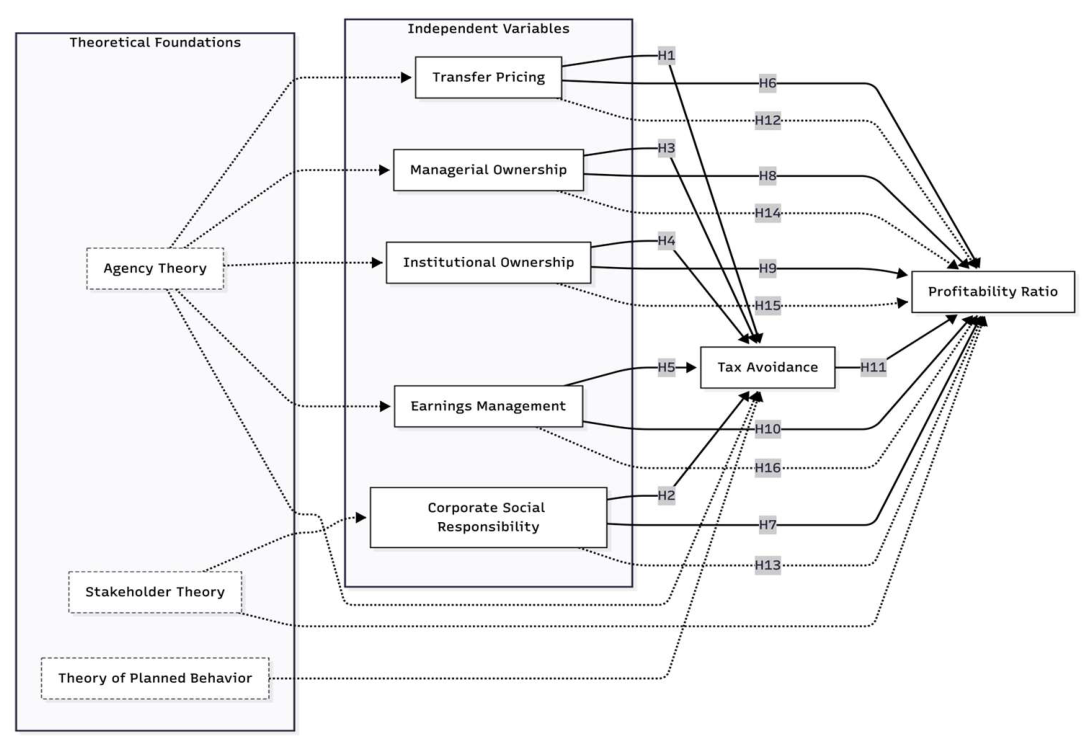
Figure 1 presents the research framework developed in this study. It illustrates the theoretical foundations, the direct relationships among the independent variables, tax avoidance, and profitability ratio, as well as the proposed mediating effects of tax avoidance.
As shown in
Figure 1, the model integrates Agency Theory, Stakeholder Theory, and the Theory of Planned Behavior to explain the relationships among the study variables. The framework also highlights tax avoidance as a mediating variable linking transfer pricing, corporate social responsibility, managerial ownership, institutional ownership, and earnings management to profitability ratio.
3. Materials and Methods
This study uses a quantitative approach with an explanatory design to test the causal relationship between transfer pricing, corporate social responsibility (CSR), ownership structure (managerial ownership and institutional ownership), earnings management, tax avoidance, and profitability. The explanatory design is appropriate because the study seeks to estimate directional effects within a theoretically pre-specified mediation model, rather than to explore patterns inductively (
Sugiyono, 2016;
Hayes, 2018;
Baron & Kenny, 1986). The mediation framework is operationalized through two sequential panel regression models: Model 1 regresses tax avoidance (GAAP ETR) on the five independent variables and control variables, and Model 2 regresses profitability (NPM) on tax avoidance, the five independent variables, and control variables. Mediation (indirect) effects are tested using the Sobel test. Panel model selection follows the sequential Chow–Hausman–Lagrange Multiplier procedure. All continuous variables were winsorized at the 1st and 99th percentiles following
Dyreng et al. (
2019) and
F. Wang et al. (
2020) to mitigate the influence of extreme observations. Negative GAAP ETR values are retained as they carry informational content about tax loss carrybacks (
Graham et al., 2014). Control variables in the extended specification include: firm size (ln total assets), firm age (years listed), financial leverage (total liabilities/total assets), capital intensity (fixed assets/total assets), sales growth ((Sales_t − Sales_{t − 1})/Sales_{t − 1}), and year fixed effects (2019–2023 dummies), consistent with
Kovermann and Velte (
2019) and
Sulfia and Rusmanto (
2024).
Table 1 presents the operationalization of all research variables used in this study.
The population comprises manufacturing companies listed on the Indonesia Stock Exchange (IDX) during the 2018–2023 period. The sample was selected using purposive sampling with three criteria: (1) classified as a multinational corporation (MNC) with cross-border affiliated transactions disclosed in annual reports; (2) listed continuously on the IDX throughout the full 2018–2023 observation window; and (3) annual reports provide sufficient disclosure for all five independent variable constructs. These criteria yielded 31 firms and 186 firm-year observations (T = 6, N = 31), consistent with prior Indonesian MNC tax studies (
Irawan et al., 2020;
Yusri et al., 2022). Statistical power analysis (G*Power 3.1) confirms adequate power (1 − β ≥ 0.80) for the observed effect sizes under α = 0.05.
Table 2 summarizes the sample selection criteria applied.
The data used are secondary data obtained from company publications (financial reports and disclosure information required for indicator calculations), then compiled into a company-year panel database. Data processing is carried out through data cleaning stages, filtering according to sample criteria, handling outliers, and calculating proxy variables according to operational definitions before estimating the panel data regression model (
Winarno, 2015).
The econometric specification is structured into two model blocks to capture the mediation mechanism, namely (i) Model 1 which regresses tax avoidance (GAAP ETR) on transfer pricing, CSR, managerial ownership, institutional ownership, and earnings management, and (ii) Model 2 which regresses profitability (NPM) on all explanatory variables along with tax avoidance to assess the role of the mediation channel, so that the test structure is in line with the logic of the indirect path where corporate governance and policy characteristics shape tax behavior which subsequently has implications for performance. Estimation is carried out using multiple linear regression with panel data because there is more than one independent variable and the data are a combination of time series and cross section (
Winarno, 2015). Estimator determination considers three alternatives—the Common Effects Model (CEM) with the assumption of constant intercept and slope between individuals and between time periods (
Sakti, 2018), the Fixed Effect Model (FEM) which allows for constant differences between objects while the regression coefficients are considered the same (
Sakti, 2018), and the Random Effect Model (REM) which views intercept differences as originating from random error components between objects and between time periods (
Winarno, 2015)—with model selection carried out in stages through the Chow Test to determine the CEM versus the FEM at the probability criterion α = 0.05 (H0: CEM; Ha: FEM), the Hausman Test to determine the REM versus the FEM at the probability criterion α = 0.05 (H0: REM; Ha: FEM), and the Lagrange Multiplier Test to determine the CEM versus the REM if needed at a later stage, so that the final estimator in each model is determined based on the results of the series of tests to be consistent with the data structure and the assumptions met (
Winarno, 2015).
5. Discussion
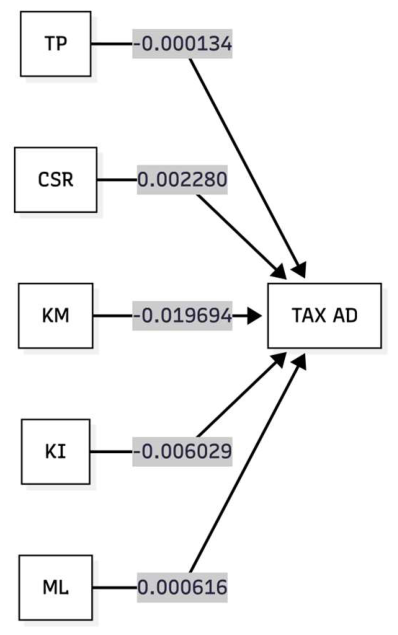
Empirical findings indicate that transfer pricing had no significant effect on tax avoidance across the periods before, during, or after COVID-19. This null finding is interpreted through three interrelated institutional mechanisms specific to the Indonesian context. First, regulatory enforcement: Indonesia’s PMK-213/PMK.03/2016 mandates transfer pricing documentation, yet enforcement capacity remains uneven across taxpayer segments, creating compliance behavior without generating sufficient variation in GAAP ETR to detect a statistically significant relationship (
Sikka & Willmott, 2013). Second, measurement constraints: the related-party receivables proxy captures only one channel of intra-group profit shifting and may understate transfer pricing intensity relative to intangibles or debt-based channels (
Taylor & Richardson, 2012;
OECD, 2020). Third, sample selection: the 31-firm MNC sample, while theoretically coherent, may exhibit less variance in transfer pricing intensity than a broader population would reveal. These findings contrast with OECD country evidence (
Bartelsman & Beetsma, 2003), suggesting that institutional enforcement quality constitutes a first-order boundary condition for the transfer pricing–tax avoidance relationship.
Regarding the CSR–tax avoidance pathway, the estimation results do not show a consistently significant effect across periods. This finding is consistent with institutional theory in emerging markets: CSR disclosures in developing economies often serve symbolic legitimation functions rather than reflecting substantive behavioral constraints on tax strategies (
Col & Patel, 2019;
Goerke, 2019;
Bui & Pham, 2021). This contrasts with developed-market evidence (
Lanis & Richardson, 2015;
Hasseldine & Morris, 2013), supporting the view that the CSR–tax avoidance nexus is context-contingent rather than universal. Information quality constraints documented in emerging capital markets (
Brockman, 2024;
Pham & Westerholm, 2013) may further attenuate the signaling value of CSR disclosures as credible governance signals to external stakeholders.
Ownership-based governance mechanisms exhibit relatively similar null patterns in determining tax avoidance. Managerial ownership did not significantly influence tax avoidance across all periods, consistent with Indonesia’s concentrated ownership environment where founding-family or state block-holders exert direct control, rendering the marginal influence of minority managerial ownership on tax decisions relatively limited (
Farooq & Abdel Zaher, 2020). The non-significance of institutional ownership on GAAP ETR similarly reflects the attenuated monitoring efficacy of institutional shareholders in high-political-risk, low-transparency markets (
Liu, 2025;
Khan et al., 2017). These findings advance international accounting research by delineating the institutional boundary conditions under which agency and stakeholder theory predictions hold for tax avoidance behavior.
Unlike other variables, earnings management exhibits a periodic dynamic with respect to tax avoidance: it is insignificant during and after COVID-19, but has an effect before the pandemic. This pattern is consistent with the argument that prior to the crisis, reporting flexibility provides greater room to align accrual and tax strategies (
S. Wang & Chen, 2012), allowing earnings management and tax avoidance to operate as a policy package to maximize short-term financial results (
Irawan et al., 2020;
Delgado et al., 2023). The agency framework strengthens the explanation that managers may be motivated to meet principals’ expectations through engineering accounting and tax policies, especially when monitoring and perceived risk are lower (
Shafai et al., 2018;
Tjondro & Permata, 2019).
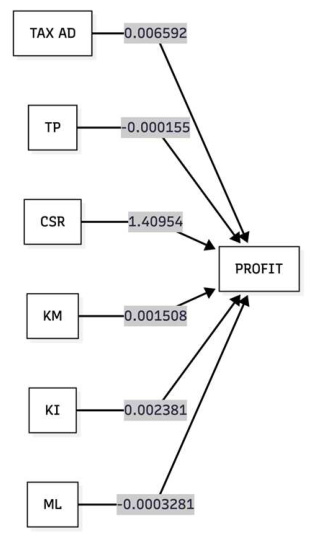
In the profitability model, the results provide stronger and more differentiated evidence. Transfer pricing does not significantly impact profitability, consistent with the tax avoidance model findings. CSR exerts a significant positive effect on profitability (β = 1.40954,
p = 0.024), consistent with the reputation and stakeholder value hypothesis (
Cho et al., 2019;
Zieliński & Jonek-Kowalska, 2021): CSR investment translates into reputational capital, customer loyalty, and reduced stakeholder conflict costs that enhance net profit margins. Most notably, institutional ownership exerts a significant positive effect on profitability (β = 0.002381,
p = 0.047), consistent with the monitoring hypothesis (
Chen et al., 2007;
Bricker & Markarian, 2015): institutional investors improve firm performance by reducing managerial opportunism and enhancing strategic decision quality. This constitutes the study’s most robust empirical finding.
Regarding the tax avoidance–profitability relationship, the aggregate results are directionally positive (β = 0.006592) and approach significance (
p = 0.002 in the partial
t-test), consistent with the after-tax cash flow retention hypothesis (
Zhu et al., 2019). However, the Sobel mediation test confirms that tax avoidance does not function as a significant mediating channel for any of the five determinants, indicating that the direct effects of determinants on profitability are not transmitted through the tax avoidance pathway in this institutional context. This pattern is consistent with information quality constraints (
Pham & Westerholm, 2013) and enforcement gaps that limit the behavioral variation necessary for mediation to operate.
Finally, the indirect path test confirms that tax avoidance does not mediate the relationships between transfer pricing–profitability, CSR–profitability, managerial ownership–profitability, institutional ownership–profitability, or earnings management–profitability. The absence of mediation across all five pathways reinforces the view that, in the Indonesian institutional context, tax avoidance does not function as a reliable channel through which strategic firm-level decisions translate into profitability outcomes. This is attributable to (i) weak enforcement reducing tax avoidance incentive variation; (ii) concentrated ownership limiting the monitoring-to-tax-behavior transmission; and (iii) information quality constraints attenuating the signaling value of CSR and governance disclosures (
Brockman, 2024). These findings advance the international tax avoidance literature by delineating the institutional boundary conditions under which the mediation framework applies.
6. Conclusions
This study examined the mediation role of tax avoidance in the relationships between five strategic determinants—transfer pricing, CSR, managerial ownership, institutional ownership, and earnings management—and profitability, using panel data from 31 Indonesian manufacturing MNCs over 2018–2023 (186 firm-year observations). The analysis yields three principal findings: (1) None of the five determinants significantly influences GAAP ETR, indicating that strategic firm-level characteristics do not reliably predict tax avoidance behavior in Indonesian MNCs. (2) In the profitability model, institutional ownership (β = 0.002381, p < 0.05) and CSR (β = 1.40954, p < 0.05) exert significant direct effects, while the overall model is jointly significant (F-test, p = 0.013, R2 = 27.4%). (3) Tax avoidance does not significantly mediate any of the five determinant–profitability relationships, as confirmed by non-significant Sobel test statistics across all five indirect paths.
This study makes three specific contributions to the literature. First, it provides the first comprehensive five-determinant simultaneous mediation test in the Indonesian MNC context, extending the theoretical reach of tax avoidance research beyond OECD settings. Second, it demonstrates that the agency, stakeholder, and planned behavior mechanisms generating significant effects in developed markets are attenuated in Indonesia’s institutional environment—a finding that advances our understanding of boundary conditions in international tax research. Third, the results carry direct policy relevance: the non-effectiveness of existing governance mechanisms in shaping tax behavior suggests that regulatory reform should prioritize mandatory transfer pricing disclosures, enhanced Directorate General of Taxes enforcement capacity, and CSR accountability frameworks rather than relying solely on market-based governance. The significant positive effect of institutional ownership on profitability further supports policies that strengthen institutional investor activism and minority shareholder protections.
Mediation tests confirm that tax avoidance does not act as a significant intervening variable in any of the five determinant–profitability pathways, indicating that the institutional context of Indonesian MNCs attenuates the mediation channels commonly documented in developed-market studies. Future research should (1) replicate the analysis with larger samples as IDX disclosure requirements mature under the OECD’s CbCR framework; (2) adopt cash ETR or Book-Tax Difference (BTD) as co-primary tax avoidance measures to address GAAP ETR limitations; (3) investigate the moderating roles of political connections (
Liu, 2025) and institutional quality (
Bui & Pham, 2021); and (4) extend the analysis to an ASEAN-wide MNC panel for cross-country comparative analysis of institutional boundary conditions.