

Review

Earnings Management Revisited: A Synthesis of Theory, Evidence, and Measurement from the 100 Most Influential Studies


Faculty of Business Studies, Arab Open University, Madinah 42242, Saudi Arabia
Int. J. Financial Stud. 2026, 14(6), 161; https://doi.org/10.3390/ijfs14060161
Submission received: 9 April 2026 / Revised: 25 May 2026 / Accepted: 26 May 2026 / Published: 10 June 2026

Abstract

This paper provides a theory-informed synthesis of earnings management research through a review of the 100 most cited studies in the accounting literature. Rather than functioning as a purely bibliometric review, the study integrates theoretical, empirical, methodological, and survey-based contributions to examine how influential research has conceptualized, measured, and interpreted earnings management. Citation data were collected from Web of Science and Google Scholar as of 5 January 2025 using predefined search criteria, filtering procedures, and classification protocols. While citation counts are used to identify influential studies, they are not treated as direct indicators of research quality due to concerns regarding citation bias, publication visibility, and proxy limitations. The review organizes the literature around major themes, including corporate governance, audit quality, managerial incentives, institutional environments, market reactions, and regulatory change. The analysis highlights enduring debates concerning proxy validity, endogeneity and identification challenges, the distinction between statistical detection and economic significance, and the trade-off between accrual-based and real earnings management. The synthesis also incorporates emerging research streams involving family firms, gender diversity, ESG reporting, textual analysis, and AI-assisted analytics within broader agency and institutional theory perspectives. A central contribution of the paper is the development of an integrative analytical framework linking proxy validity, strategic substitution between reporting mechanisms, and institutional constraints within a unified interpretation of earnings management behavior. The review shows that advances in empirical design, textual analysis, machine learning, and predictive analytics extend rather than replace foundational insights, while persistent limitations in causal inference and measurement remain unresolved. Overall, the findings suggest that earnings management is best understood as a strategic response to incentives, monitoring, and institutional constraints rather than as a uniform indicator of opportunistic behavior. The paper concludes by outlining future research directions focused on theory-driven empirical design, methodological triangulation, AI-assisted detection approaches, and improved measurement frameworks across diverse reporting environments.

1. Introduction

Earnings management remains one of the most extensively studied yet conceptually contested topics in accounting research. Its importance stems from its implications for financial reporting quality, corporate governance effectiveness, and capital market efficiency. Despite decades of empirical and theoretical inquiry, the literature has not converged on a unified interpretation of earnings management. Instead, ongoing debates persist regarding whether observed earnings management reflects opportunistic managerial behavior, efficient contracting responses, or limitations inherent in empirical measurement (Healy & Wahlen, 1999; Dechow et al., 2012; McNichols, 2000; Kothari et al., 2016). More recent research reinforces this ambiguity by showing that commonly used proxies often capture both reporting discretion and underlying economic conditions (Dechow et al., 2012; Hribar et al., 2014). Recent studies further suggest that earnings management increasingly occurs within more complex reporting environments characterized by ESG disclosures, integrated reporting practices, and AI-assisted financial analytics, thereby expanding both the opportunities and detection challenges associated with managerial discretion (Chouaibi & Zouari, 2022; Kolsi et al., 2023; Moradi & Mennati, 2024; Alahdal et al., 2025).
This paper provides a theory-informed synthesis of the 100 most cited studies in earnings management research. Unlike purely bibliometric reviews that emphasize citation mapping or publication trends, the study develops an integrative analysis of how influential research has conceptualized, measured, and interpreted earnings management across different institutional and methodological settings. A central contribution of the paper is the explicit classification of studies into theoretical, empirical, methodological, and survey-based contributions. This distinction is important because influential studies contribute to the literature in fundamentally different ways. Foundational theoretical studies such as Dye (1988), Schipper (1989), and Ronen (2008) develop conceptual frameworks grounded in agency theory and information economics, whereas empirical studies test these frameworks using observable proxies. Methodological contributions, by contrast, focus on the design, refinement, and limitations of these proxies (Jones, 1991; Dechow et al., 1995; Stubben, 2010). By distinguishing among these forms of contribution, the paper avoids conflating theoretical development, empirical evidence, and methodological innovation within a single narrative framework. More importantly, the review develops an integrative perspective linking proxy validity, strategic substitution among reporting mechanisms, and institutional constraints within a unified interpretation of earnings management behavior.
At its core, earnings management refers to managerial discretion exercised within the boundaries of accounting standards to influence reported earnings. Although such discretion is inherent in accrual accounting, it raises important concerns regarding transparency, comparability, and reporting reliability (Healy & Wahlen, 1999). A central issue in the literature is whether earnings management proxies capture economically meaningful distortions or merely reflect normal business activities and measurement noise. This distinction has major implications for interpreting empirical findings and evaluating governance and regulatory mechanisms (Dechow et al., 2012; Kothari et al., 2016; Owens et al., 2017). Relatedly, the literature increasingly recognizes that empirical estimates of earnings management may be affected by endogeneity, omitted variable bias, and identification problems, complicating attempts to distinguish intentional manipulation from underlying firm performance and economic fundamentals. Recent evidence additionally suggests that sustainability-oriented disclosures and digital reporting technologies may create new channels through which managerial discretion can be exercised or concealed (Grimaldi et al., 2020; Garanina, 2024; K. Ali et al., 2025).
The development of earnings management research is closely tied to changes in regulatory and institutional environments. Major regulatory interventions, including the Sarbanes–Oxley Act of 2002 and the Dodd–Frank Act of 2010, altered managerial incentives, monitoring intensity, and reporting practices. Prior research documents that stronger regulatory scrutiny contributed to a shift from accrual-based earnings management toward real activities manipulation, reflecting substitution effects rather than a reduction in overall managerial discretion (Cohen et al., 2008; Zang, 2012; Gunny, 2010). Subsequent research further suggests that regulatory changes often reshape the form of earnings management without eliminating its underlying economic incentives (Francis et al., 2016; Badertscher et al., 2013). Recent cross-country evidence additionally indicates that regulatory effectiveness depends heavily on institutional enforcement quality, investor protection, and disclosure regimes, particularly within emerging and mixed-governance economies (Almubarak et al., 2023; Moharram et al., 2026).
Methodologically, the literature has evolved from early accrual-based detection models toward more sophisticated approaches addressing identification, endogeneity, and measurement error. Foundational models such as Jones (1991) and Dechow et al. (1995) enabled large-sample empirical analysis but were later criticized for their limited ability to isolate intentional manipulation from firm fundamentals (McNichols, 2000). In response, subsequent research introduced alternative proxies, performance-matched models, and stronger identification strategies, including natural experiments and instrumental variable approaches (Kothari et al., 2005; Dechow et al., 2012). More recent work also employs machine learning and textual analysis to enhance the detection and interpretation of earnings management (Brown et al., 2020; Hammami & Hendijani Zadeh, 2022). Nevertheless, methodological advances have not fully resolved persistent concerns regarding proxy contamination, causal inference, and the interpretation of economically meaningful manipulation.
Rather than providing a descriptive summary of prior studies, this paper organizes the literature around several core debates that define the field. These include the distinction between statistical detection and economic significance, the validity and interpretation of earnings management proxies, the trade-off between accrual-based and real earnings management, and the extent to which governance and audit mechanisms constrain or reshape managerial reporting behavior. The analysis also considers how institutional environments influence both the form of earnings management and the interpretation of empirical evidence. By structuring the review around these debates, the paper moves beyond descriptive categorization toward a more analytical evaluation of how methodological choices, institutional context, and reporting incentives shape empirical conclusions within the earnings management literature.
A further contribution of the study is the integration of foundational research with more recent developments. Early studies established the conceptual and empirical foundations of the field, while subsequent research refined these insights through improved measurement techniques, institutional analysis, and stronger identification strategies (Dechow et al., 2012; Kothari et al., 2016). Rather than replacing foundational insights, contemporary developments extend them while simultaneously exposing persistent tensions concerning measurement validity, causality, and reporting incentives. Emerging research involving ESG reporting, AI-assisted analytics, and digital disclosure systems increasingly challenges conventional assumptions regarding how earnings management should be detected, interpreted, and regulated.
The central research question guiding this study is: How has influential earnings management research evolved conceptually, empirically, and methodologically, and what unresolved debates continue to shape the interpretation of earnings management evidence? To address this question, the study relies on citation data obtained from Web of Science and Google Scholar as of January 2025. The sample consists of the Top 100 most cited studies identified using predefined search criteria related to earnings management. While citation counts are used to identify influential contributions, they are not interpreted as measures of research quality because citation-based rankings may reflect publication age, journal visibility, database coverage, and field-specific citation practices (Bornmann & Daniel, 2008). Where citation counts differed between databases, Google Scholar rankings were used as the primary benchmark, while Web of Science data were employed to verify broader citation visibility and interdisciplinary coverage. A detailed explanation of the search strategy, screening procedures, inclusion criteria, and classification framework is provided in the methodology section to improve transparency and replicability.
Table 1 presents a summary classification of the Top 100 most cited studies by contribution type, distinguishing among theoretical, empirical, methodological, and survey/review-based contributions. Because many influential studies contain multiple dimensions, each study was classified according to its dominant scholarly contribution. This distinction facilitates a more precise synthesis of the literature by differentiating conceptual development, empirical testing, and methodological innovation. For readability and presentation purposes, the complete list of the Top 100 most cited studies, including detailed bibliographic information and citation rankings, is provided in Appendix A.
The remainder of the paper is structured as follows. Section 2 reviews the literature and develops the principal thematic and methodological debates surrounding earnings management research. Section 3 presents the review methodology and classification framework. Section 4 provides the descriptive and interpretive analysis of the sample. Section 5 synthesizes the main findings and discussion emerging from the literature. The final section concludes by outlining the study’s implications, limitations, unresolved controversies, and future research directions.

2. Literature Review of Earnings Management

2.1. Historical Overview of Earnings Management Research

Earnings management research has evolved through several distinct phases reflecting shifts in theoretical perspectives, empirical methods, regulatory environments, and methodological priorities. Early research emerged primarily from concerns regarding managerial discretion in financial reporting rather than from a unified theoretical framework. Foundational contributions such as Healy (1985) and Healy and Wahlen (1999) linked earnings management to agency theory, emphasizing how information asymmetry, contractual incentives, and monitoring limitations shape managerial reporting behavior. These studies established the conceptual foundations of the field while motivating the development of empirical proxies designed to detect earnings manipulation.
The 1990s marked a major methodological turning point with the introduction of accrual-based detection models, particularly the Jones (1991) model and its later extensions (Dechow et al., 1995). These models enabled large-sample empirical analysis but also introduced a limitation that continues to shape the literature: the difficulty of distinguishing intentional manipulation from underlying economic performance and normal accrual processes (McNichols, 2000; Dechow et al., 2012). As a result, methodological debates increasingly shifted from detection alone toward questions concerning proxy validity, interpretation, and causal identification.
The early 2000s represent a second major phase characterized by heightened attention to governance, auditing, and regulatory oversight following corporate scandals such as Enron and WorldCom. Research during this period emphasized the role of monitoring mechanisms in constraining earnings management while simultaneously recognizing that such mechanisms may alter the form of manipulation rather than eliminate it entirely (Cohen et al., 2008). This period also contributed to a more nuanced conceptualization of earnings management as a strategic and context-dependent behavior rather than as a uniform indicator of managerial opportunism.
A particularly important development during this phase was the distinction between accrual-based and real earnings management. Roychowdhury (2006) introduced empirical measures of real activities manipulation, while subsequent research demonstrated that managers strategically trade off between these forms depending on monitoring intensity, reporting incentives, and regulatory constraints (Zang, 2012). This insight fundamentally reshaped the literature by suggesting that observed declines in accrual-based earnings management may reflect substitution toward less detectable reporting strategies rather than genuine improvements in reporting quality.
More recent research extends these foundations by incorporating stronger identification strategies, institutional analysis, and advances in data analytics. Studies such as Dechow et al. (2012) and Kothari et al. (2016) refined detection approaches, while others employed textual analysis and machine learning techniques to improve measurement and interpretation (Brown et al., 2020; Hammami & Hendijani Zadeh, 2022). At the same time, concerns regarding endogeneity, omitted variable bias, reverse causality, and measurement contamination remain central to the interpretation of empirical findings (Owens et al., 2017). Recent studies further suggest that managerial discretion increasingly extends beyond traditional accrual choices toward sustainability narratives, integrated reporting practices, and non-financial disclosures that are more difficult to evaluate using conventional accounting-based proxies (Chouaibi & Zouari, 2022; Kolsi et al., 2023; Moradi & Mennati, 2024).
Overall, the historical evolution of earnings management research reflects a progression from detection-oriented approaches toward a broader perspective integrating theory, measurement, institutional context, and causal interpretation. Rather than converging on a single explanation, the literature increasingly emphasizes unresolved tensions concerning proxy validity, economic significance, and strategic adaptation, all of which continue to shape contemporary research in the field.

2.2. Thematic Synthesis

The thematic analysis of the Top 100 studies reveals several interconnected domains that have shaped the development of earnings management research. Among these, corporate governance, institutional variation, audit quality, managerial incentives, market reactions, and regulatory adaptation emerge as the most influential and persistent areas of inquiry.

2.2.1. Corporate Governance and Earnings Management

Corporate governance remains one of the most extensively examined determinants of earnings management. Empirical evidence suggests that governance mechanisms such as board independence, audit committee effectiveness, and ownership structure influence managerial reporting behavior (Klein, 2002; Xie et al., 2003). However, the literature does not support the conclusion that stronger governance fully eliminates earnings management. Instead, governance mechanisms appear to constrain accrual-based manipulation while potentially increasing reliance on real activities manipulation or disclosure-based strategies (Cohen et al., 2008; Zang, 2012). This substitution effect implies that governance primarily affects the form, visibility, and detectability of earnings management rather than its underlying economic existence.
Recent research further emphasizes that governance effectiveness depends heavily on institutional context, enforcement intensity, and the surrounding information environment (Armstrong et al., 2014; Larcker et al., 2007). Contemporary studies additionally suggest that governance increasingly interacts with ESG disclosure quality and sustainability-oriented oversight mechanisms. While stronger ESG environments may improve transparency and external monitoring (Kolsi et al., 2023; Moharram et al., 2026), other studies caution that sustainability disclosures may also facilitate impression management when governance quality and enforcement credibility remain weak (K. Ali et al., 2025; Garanina, 2024).

2.2.2. Global and Institutional Variation in Earnings Management

Cross-country variation has become central to understanding the institutional determinants of earnings management. Studies such as Leuz et al. (2003) demonstrate that earnings management tends to be more prevalent in environments characterized by weaker investor protection and lower enforcement credibility. Similarly, Kim and Yi (2006) show that ownership structures and business group affiliations shape reporting incentives across institutional settings.
A major debate within this literature concerns whether measured earnings management reflects managerial opportunism or broader institutional constraints. Evidence increasingly suggests that commonly used proxies capture not only firm-level incentives but also country-level characteristics, including legal systems, cultural norms, enforcement quality, and financial reporting traditions (Yu, 2008). More recent research extends this perspective by incorporating sustainability reporting frameworks and ESG-oriented disclosure environments. Chouaibi and Zouari (2022), for example, show that corporate social responsibility practices significantly influence real earnings management within European ESG settings, while Almubarak et al. (2023) demonstrate that ESG performance and financial distress interact differently across emerging-market environments.

2.2.3. Audit Quality and Monitoring Mechanisms

Audit quality occupies a central position within the earnings management literature, although its effectiveness remains contested. Early studies indicate that higher-quality auditors, particularly Big 4 firms, are associated with lower levels of accrual-based earnings management (Becker et al., 1998). However, subsequent evidence suggests that stronger audit scrutiny may induce substitution toward less detectable forms of manipulation, particularly real earnings management (Chi et al., 2011). These findings imply that audit quality affects the composition and visibility of reporting discretion rather than eliminating it entirely.
Recent research further emphasizes the importance of institutional environment, litigation risk, auditor incentives, and client characteristics in shaping audit effectiveness (Francis et al., 2016). Methodological developments additionally suggest that audit quality assessment increasingly depends on the ability to evaluate non-financial disclosures and textual reporting consistency alongside traditional accounting indicators. The growing use of textual analysis and machine learning techniques in detecting financial misreporting further indicates that audit evaluation may gradually move beyond conventional accrual-based approaches toward more integrated analytical frameworks (Brown et al., 2020; Hammami & Hendijani Zadeh, 2022).

2.2.4. Managerial Incentives and Strategic Behavior

Managerial incentives remain central to theoretical explanations of earnings management. Agency theory predicts that managers engage in earnings manipulation to maximize personal utility under conditions of information asymmetry and contractual pressure (Dye, 1988). Empirical evidence broadly supports this perspective while demonstrating that managerial behavior is highly strategic and context dependent. Studies such as Bergstresser and Philippon (2006), Badertscher (2011), and Cohen et al. (2008) show that managers adjust reporting strategies according to compensation incentives, market pressures, financing needs, and expected detection risk.
A continuing debate concerns whether earnings management reflects opportunistic behavior or rational adaptation under reporting constraints. Recent research increasingly interprets managerial reporting decisions as optimization choices within constrained reporting environments rather than purely opportunistic actions (Kothari et al., 2016). Contemporary studies additionally suggest that managerial incentives increasingly extend beyond short-term financial outcomes toward sustainability performance, ESG ratings, reputational legitimacy, and stakeholder expectations (Moharram et al., 2026; K. Ali et al., 2025).

2.2.5. Market Reactions and Information Environment

The relationship between earnings management and market outcomes remains complex and highly context-dependent. Early conceptual work suggests that investors penalize firms perceived as engaging in earnings manipulation (Schipper, 1989). However, subsequent research demonstrates that market reactions depend heavily on credibility, transparency, materiality, and perceived reporting intent. Evidence from Hribar et al. (2006) and Nelson et al. (2002) indicates that investors do not respond uniformly to earnings management, but instead evaluate whether reported earnings provide useful information regarding future performance.
Recent studies suggest that some forms of earnings management may be interpreted as informative signals when they reflect managerial expectations regarding future cash flows and long-term performance (Dechow et al., 2012). At the same time, more complex forms of manipulation may contribute to mispricing and delayed market adjustment. Contemporary evidence further indicates that investors increasingly incorporate ESG disclosures, sustainability performance indicators, and textual reporting quality into assessments of financial reporting credibility (Grimaldi et al., 2020; Garanina, 2024).

2.2.6. Regulatory Strategic Adaptation

Regulatory interventions are frequently intended to reduce earnings management, yet the literature suggests that their effects are adaptive rather than purely restrictive. Studies such as Guenther (1994) and Ahmed et al. (1999) show that firms alter reporting behavior in response to changes in accounting rules, tax systems, and enforcement regimes. Evidence from Cohen et al. (2008) demonstrates that regulatory tightening following the Sarbanes–Oxley Act reduced accrual-based earnings management while simultaneously increasing real activities manipulation. This substitution effect highlights the adaptive nature of managerial reporting behavior.
Subsequent research further emphasizes that regulatory effectiveness depends heavily on enforcement quality, institutional environment, and unintended economic consequences (Christensen et al., 2016). More recent studies additionally show that evolving ESG disclosure regulations and sustainability reporting standards increasingly influence managerial reporting adaptation. Alahdal et al. (2025), for example, argue that ESG-oriented reporting environments simultaneously create monitoring opportunities and new forms of reporting discretion.

2.3. Methodological Overview and Measurement Challenges

The methodological evolution of earnings management research reflects increasing awareness of measurement, identification, and causal inference challenges. Early accrual-based models provided a foundation for empirical analysis but were later criticized for their limited ability to isolate discretionary reporting behavior from underlying firm fundamentals (McNichols, 2000). Subsequent research introduced refinements including performance matching, modified accrual models, alternative proxies, and stronger identification strategies (Kothari et al., 2005; Dechow et al., 2012).
Recent methodological developments increasingly employ natural experiments, instrumental variables, textual analysis, machine learning, and artificial intelligence to improve the detection of abnormal reporting behavior and financial misreporting (Brown et al., 2020; Hammami & Hendijani Zadeh, 2022). Moradi and Mennati (2024) additionally demonstrate how corporate culture and linguistic reporting characteristics influence financial reporting quality within textual-analysis frameworks. Nevertheless, important concerns remain unresolved, including endogeneity, omitted variable bias, simultaneity, reverse causality, proxy contamination, algorithmic interpretability, and the distinction between predictive accuracy and causal explanation. Accordingly, the recent literature increasingly emphasizes theory-informed empirical design, methodological triangulation, and stronger causal identification strategies rather than reliance on any single proxy or statistical specification.

2.4. Synthesis of Key Debates

The earnings management literature is characterized by several enduring debates cutting across thematic and methodological domains. First, disagreement persists regarding whether commonly used proxies capture economically meaningful manipulation or merely statistical irregularities. Second, the validity and interpretation of earnings management measures remain contested, particularly in institutionally diverse settings. Third, the trade-off between accrual-based and real earnings management highlights the importance of strategic substitution effects in interpreting empirical findings. Fourth, substantial debate continues regarding the effectiveness of governance, auditing, and regulation, with evidence suggesting that these mechanisms reshape rather than eliminate managerial discretion. Finally, persistent concerns regarding endogeneity, proxy validity, and causal identification continue to constrain definitive interpretation of empirical evidence.
More recent debate additionally concerns whether ESG disclosure practices, sustainability reporting environments, and digital reporting systems enhance transparency or instead create alternative channels for impression management and disclosure manipulation (Chouaibi & Zouari, 2022; Moharram et al., 2026; Alahdal et al., 2025). Taken together, these debates indicate that earnings management is best understood as a strategic and context-dependent phenomenon shaped by incentives, monitoring systems, institutional environments, and reporting constraints rather than as a uniformly observable form of opportunistic behavior.

3. Research Methodology

This study adopts a structured and theory-informed review design to synthesize the 100 most cited studies in earnings management research. Rather than functioning as a purely bibliometric investigation focused on citation mapping or network analysis, the review develops an integrative synthesis of how influential studies have conceptualized, measured, and interpreted earnings management across different institutional, regulatory, and methodological settings. The methodological framework was designed to balance analytical depth with transparency and replicability while recognizing the limitations inherent in citation-based review methodologies.
The methodological design was informed by recent developments in structured literature synthesis and evidence-based accounting reviews, emphasizing transparency in database selection, screening procedures, classification protocols, and coding frameworks. Accordingly, the study adopts a theory-informed analytical synthesis approach rather than a purely quantitative bibliometric design. This approach is particularly appropriate for earnings management research because the field remains characterized by persistent disagreement regarding proxy validity, causal interpretation, and the distinction between statistical detection and economically meaningful manipulation.
The sample selection process relied primarily on citation data obtained from Web of Science and Google Scholar. These databases were selected because they provide complementary coverage of peer-reviewed journal articles, books, review papers, and influential working papers frequently cited within accounting and finance research. The search process was conducted during January 2025, with citation counts finalized on 5 January 2025 to ensure consistency in ranking and classification.
To improve methodological transparency and reproducibility, the search process relied on structured keyword combinations applied across Web of Science and Google Scholar databases. Representative search strings included: (‘earnings management’ OR ‘earnings manipulation’) AND (‘accruals’ OR ‘discretionary accruals’ OR ‘real earnings management’ OR ‘financial reporting quality’), as well as extended combinations involving governance, auditing, regulation, and reporting quality. Additional searches incorporated terms such as ‘real activities manipulation,’ ‘income smoothing,’ ‘audit quality,’ and ‘corporate governance’ to capture influential studies connected to broader earnings management debates. Search queries were refined iteratively to improve relevance and reduce unrelated financial reporting studies.
Several inclusion criteria were applied during the screening process. First, studies were required to make a direct and substantive contribution to earnings management research rather than merely referencing earnings management as a secondary issue. Second, studies are needed to demonstrate substantial scholarly influence within the accounting and finance literature. Third, the review prioritized studies contributing conceptually, empirically, methodologically, or synthetically to major debates in the field, including proxy validity, managerial incentives, governance effectiveness, institutional variation, regulatory adaptation, and the distinction between real and accrual-based earnings management.
Several exclusion criteria were also implemented. Studies focused primarily on unrelated dimensions of financial reporting without substantive engagement with earnings management were excluded, as were conference papers, editorials, teaching cases, and studies lacking sufficient scholarly influence or thematic relevance. Duplicate records identified across databases were manually reconciled to ensure consistency in citation rankings and bibliographic information. Where citation counts differed between databases, Google Scholar rankings were used as the primary benchmark because of their broader interdisciplinary coverage, while Web of Science data were used to verify citation consistency and journal-indexing reliability. The initial database search generated approximately 1240 records across both databases before screening and duplicate reconciliation. After removing duplicate records, non-peer-reviewed material, conference proceedings, editorials, unrelated financial reporting studies, and studies lacking substantive engagement with earnings management, approximately 286 studies remained for detailed evaluation. Citation rankings, thematic relevance, and scholarly influence criteria were subsequently applied to identify the final Top 100 studies included in the review sample. Figure 1 summarizes the study identification, screening, exclusion, and final selection procedures used in constructing the review sample.
The final sample consists of the Top 100 most cited studies identified through the screening and ranking process. However, citation frequency is not interpreted as a direct indicator of intrinsic research quality or theoretical superiority. Citation-based rankings are influenced by factors such as publication age, journal visibility, database coverage, language concentration, and cumulative advantage effects (Bornmann & Daniel, 2008). Consequently, the analysis should be interpreted as reflecting patterns of scholarly influence and intellectual visibility rather than normative assessments of research importance.
After sample selection, each study was classified into one of four primary contribution categories: theoretical, empirical, methodological, or survey/review-based. Theoretical studies were defined as works primarily developing conceptual explanations of earnings management behavior and reporting incentives. Empirical studies focused on hypothesis testing using observable data and statistical analysis. Methodological studies emphasized measurement design, proxy development, model specification, or identification strategies. Survey and review-based studies synthesized prior literature through narrative reviews, conceptual integration, or meta-analysis.
The classification process followed a structured coding approach based on the dominant contribution of each study rather than all dimensions potentially present within a single paper. Because many influential studies simultaneously contain conceptual, empirical, and methodological elements, studies were coded according to their primary research objective and principal scholarly contribution. Where classification ambiguity existed, greater emphasis was placed on the study’s central analytical orientation rather than on secondary methodological or conceptual components. To improve classification consistency, all studies were re-evaluated during the revision process to ensure alignment between each study’s dominant analytical contribution and its assigned category. Particular attention was given to hybrid studies containing overlapping empirical and methodological components.
The analytical stage combined descriptive synthesis with thematic and conceptual interpretation. The literature was organized around recurring domains, including corporate governance, audit quality, managerial incentives, institutional environments, market reactions, regulatory adaptation, and methodological development. Rather than providing a purely descriptive summary, the analysis focused on identifying enduring debates and unresolved tensions concerning proxy validity, causal inference, economic significance, and strategic substitution between accrual-based and real earnings management.
The study additionally incorporates a historically informed perspective by examining how earnings management research evolved across major regulatory and methodological periods. Particular attention was given to shifts associated with the development of accrual-based detection models, post-Enron governance reforms, the emergence of real earnings management research, and recent advances in causal identification and predictive analytics. More recent developments involving ESG disclosure environments, sustainability reporting, AI-assisted analytics, and textual-analysis approaches were also incorporated to evaluate how evolving disclosure systems influence contemporary interpretations of earnings management behavior.
Several methodological limitations should be acknowledged explicitly. First, citation-based selection inherently favors older publications that have had more time to accumulate citations, potentially underrepresenting newer research streams, particularly studies published after 2020 involving ESG reporting, sustainability disclosure, and AI-assisted analytics. Second, database coverage and citation practices may bias visibility toward English-language publications, highly ranked journals, and established publication networks. Third, although the study adopts a structured coding framework, classification decisions inevitably involve interpretive judgment, particularly for hybrid studies combining conceptual, empirical, and methodological contributions. Fourth, the review does not employ advanced bibliometric techniques such as co-citation network analysis because its primary objective is analytical synthesis rather than quantitative science mapping. Finally, emerging machine learning and predictive analytics approaches may themselves introduce concerns regarding algorithmic interpretability, model overfitting, and the distinction between predictive accuracy and causal explanation.
Despite these limitations, the methodological framework contributes to the literature by integrating citation-based identification with theory-informed thematic interpretation, methodological evaluation, and institutional analysis. More specifically, the review seeks to connect debates concerning proxy validity, strategic substitution between reporting mechanisms, institutional constraints, and evolving disclosure environments within a unified analytical framework.

4. Analysis

This section provides a descriptive and interpretive analysis of the Top 100 most cited studies in earnings management research using the information summarized in Table 2 and Table 3. The purpose of the analysis is not to equate citation frequency with intrinsic research quality, but rather to examine how influential contributions are distributed across time periods and publication outlets and how these patterns reflect broader developments in theory, methodology, regulation, and institutional context. By situating influential studies within their temporal and institutional environments, the analysis complements the thematic synthesis developed in the previous section and provides additional insight into the evolution of research priorities within the earnings management literature.
Consistent with prior citation-based research, citation patterns are interpreted cautiously because they reflect not only intellectual contribution but also factors such as publication timing, journal visibility, database coverage, cumulative recognition effects, and disciplinary citation practices (Bornmann & Daniel, 2008). Accordingly, the analysis should be understood as examining patterns of scholarly influence and visibility rather than establishing definitive rankings of theoretical or empirical importance.
Table 2 presents the distribution of the Top 100 studies by publication year, reporting both the number of studies appearing in the sample and their corresponding citation-rank positions. The distribution is uneven, with a substantial concentration of influential studies occurring between the late 1990s and the late 2000s. Years such as 1998, 2005, 2006, and 2008 exhibit particularly high frequencies of Top 100 publications. These periods coincide with major methodological innovations, regulatory reforms, and shifts in research focus, suggesting that influential earnings management research has historically intensified following institutional shocks, governance failures, and changes in reporting regulation rather than through linear theoretical progression alone.
The concentration of studies during the late 1990s reflects the consolidation of empirical earnings management research following the widespread adoption of accrual-based detection models. Foundational contributions during this period, including Burgstahler and Dichev (1997), Teoh et al. (1998a), and Healy and Wahlen (1999), contributed to the expansion of benchmark-based and accrual-based approaches to identifying earnings management. These studies marked an important transition from conceptual discussion toward systematic empirical investigation while also generating enduring concerns regarding proxy validity and interpretation.
A second period of strong clustering, particularly between 2005 and 2008, corresponds to a major shift in the literature toward governance, auditing, regulatory oversight, and real earnings management. Studies such as Roychowdhury (2006), Cohen et al. (2008), and Van Tendeloo and Vanstraelen (2008) reflect this transition by examining how managerial reporting behavior adapts to increased monitoring intensity and regulatory scrutiny. This period is closely associated with the aftermath of major corporate scandals and the implementation of the Sarbanes–Oxley Act, which intensified scholarly interest in governance effectiveness, audit quality, and reporting incentives.
Although post-2017 studies are less visible within the Top 100 sample, this pattern should not be interpreted as evidence of declining research importance after this period. Rather, it reflects the cumulative nature of citation accumulation and the time required for newer studies to achieve comparable scholarly visibility. Emerging research streams involving ESG reporting, sustainability disclosure, textual analysis, and machine learning approaches are therefore likely underrepresented despite their growing influence within contemporary accounting research.
Importantly, years with fewer Top 100 entries should not be interpreted as periods of reduced research activity. Citation-based samples are inherently affected by time-related bias because more recent studies have had less opportunity to accumulate citations. Consequently, the temporal distribution primarily reflects long-term scholarly influence rather than the total volume of research produced during any given period. Nevertheless, the observed clustering provides useful evidence that influential earnings management research tends to emerge during periods characterized by methodological innovation, regulatory change, and renewed scholarly attention to unresolved conceptual issues.
Table 3 complements the temporal analysis by examining the distribution of the Top 100 studies across publication outlets. The sample is overwhelmingly composed of peer-reviewed journal articles, with only a limited number of book-length contributions. The distribution across journals is highly concentrated, with a relatively small number of outlets accounting for a substantial proportion of the sample. The Accounting Review, the Journal of Accounting and Economics, and the Journal of Financial Economics together represent a significant share of the Top 100 studies, indicating that these journals have played a central role in shaping earnings management research.
This concentration is analytically important because it reflects the role of leading journals as institutional platforms shaping research agendas, methodological standards, and the visibility of specific research themes. The prominence of both accounting and finance journals also highlights the interdisciplinary nature of earnings management research, which spans financial reporting, governance, investor behavior, auditing, and market efficiency. At the same time, the presence of influential studies in auditing, ethics, governance, and international accounting journals demonstrates that important contributions are not confined exclusively to dominant outlets.
The concentration of publications within highly visible journals should also be interpreted in light of cumulative advantage effects. Studies published in widely recognized outlets are more likely to accumulate citations due to greater visibility, incorporation into academic curricula, and integration into subsequent review articles. This dynamic reinforces the importance of distinguishing scholarly visibility from intrinsic theoretical or empirical quality and further supports cautious interpretation of citation-based rankings.
Taken together, the evidence from Table 2 and Table 3 demonstrates that influential earnings management research is both temporally and institutionally concentrated. Periods of high publication frequency correspond closely with major developments in theory, methodology, regulation, and governance, while a relatively small number of journals serve as central dissemination platforms for influential research. At the same time, more recent developments involving ESG disclosure, sustainability reporting, textual analysis, and AI-assisted analytics suggest that contemporary earnings management research is becoming increasingly interdisciplinary and less dependent on traditional accrual-based paradigms alone.
Several interpretive limitations should nevertheless be acknowledged. Citation counts are influenced by publication age, journal prominence, database indexing practices, and field-specific citation behavior, which may bias representation against newer or regionally focused research streams. In addition, temporal clustering may underrepresent emerging themes that have not yet accumulated sufficient scholarly visibility to enter the Top 100 sample. Consequently, the descriptive patterns identified in this section should be interpreted as indicators of intellectual influence and dissemination patterns rather than as normative evaluations of research quality or conceptual importance.

5. Findings and Discussion

This section synthesizes the principal findings emerging from the analysis of the 100 most cited studies in earnings management research while integrating their broader theoretical and methodological implications. Rather than treating individual themes as isolated streams of evidence, the discussion emphasizes the interconnected nature of managerial incentives, institutional constraints, governance systems, regulatory environments, and reporting mechanisms. Across the literature, three recurring issues consistently shape interpretation: the economic significance of earnings management, the validity of commonly used measurement proxies, and the strategic trade-off between alternative forms of reporting discretion.
A central finding throughout the literature is that earnings management is best understood as a strategic response to incentives and monitoring conditions rather than as a uniform or static reporting behavior. Foundational theoretical studies, including Dye (1988), Schipper (1989), and Ronen (2008), conceptualize reporting choices as outcomes of information asymmetry, contractual frictions, and imperfect enforcement structures. The empirical literature largely supports this perspective by demonstrating that managers adjust reporting strategies according to compensation incentives, market pressures, financing needs, regulatory scrutiny, and expected detection risk. Studies such as Bergstresser and Philippon (2006), Cohen and Zarowin (2010), Badertscher (2011), and Zang (2012) collectively suggest that managers select among alternative reporting mechanisms in ways consistent with constrained optimization behavior rather than purely mechanical opportunism.
The evidence on corporate governance reinforces this interpretation. Studies including Klein (2002), Xie et al. (2003), Davidson et al. (2005), and Bédard et al. (2004) consistently report that stronger governance mechanisms are associated with lower levels of accrual-based earnings management. However, the literature also demonstrates that governance quality does not eliminate managerial discretion altogether. Instead, governance mechanisms appear to influence the visibility, composition, and detectability of manipulation. Consequently, lower measured accrual manipulation should not automatically be interpreted as evidence of higher reporting quality because managers may shift toward less observable forms of reporting discretion when monitoring intensity increases.
Recent research further extends this interpretation by demonstrating that governance effectiveness increasingly interacts with sustainability-oriented disclosure environments and broader stakeholder expectations. Kolsi et al. (2023), for example, find that stronger ESG performance is associated with lower earnings management within US commercial banks, whereas K. Ali et al. (2025) and Garanina (2024) caution that sustainability disclosures may also create opportunities for impression management when external monitoring remains weak. These findings suggest that governance effectiveness increasingly depends not only on traditional board and audit structures but also on the credibility and consistency of broader disclosure systems.
Institutional and cross-country variation constitutes another major theme in the literature. Studies such as Leuz et al. (2003), Jeanjean and Stolowy (2008), Kim and Yi (2006), and Ding et al. (2007) demonstrate that earnings management varies systematically across legal systems, investor protection regimes, enforcement environments, ownership structures, and cultural settings. These findings support institutional theory perspectives emphasizing that reporting behavior is shaped not only by firm-level incentives but also by broader institutional structures and enforcement credibility. At the same time, this literature raises important methodological concerns because cross-country differences in measured earnings management may partly reflect variation in reporting systems and proxy performance rather than pure differences in managerial opportunism.
This institutional interpretation becomes increasingly relevant within contemporary reporting environments characterized by ESG disclosure regimes and sustainability reporting standards. Chouaibi and Zouari (2022) show that corporate social responsibility practices significantly influence real earnings management within European ESG contexts, while Almubarak et al. (2023) demonstrate that ESG performance and financial distress interact differently across emerging-market environments. These findings indicate that institutional variation increasingly extends beyond traditional accounting regulation toward broader disclosure and transparency systems.
The literature on audit quality similarly highlights the adaptive nature of managerial reporting behavior. Early evidence, including Becker et al. (1998), suggests that higher-quality auditing constrains accrual-based manipulation. However, subsequent studies complicate this conclusion by showing that increased audit scrutiny often results in substitution toward real earnings management. Chi et al. (2011), in particular, provide evidence that stricter monitoring may reduce observable accrual manipulation while increasing operational forms of earnings management that are more difficult to detect ex post. This substitution effect implies that audit quality alters the form and visibility of reporting discretion rather than necessarily reducing its overall economic magnitude.
Methodological developments further reinforce this point. Brown et al. (2020) demonstrate that textual-analysis approaches may reveal forms of misreporting not fully observable through conventional accrual-based models, while Hammami and Hendijani Zadeh (2022) show that machine learning techniques can improve earnings management prediction accuracy. Nevertheless, these approaches introduce additional concerns regarding interpretability, data-selection bias, overfitting, and the distinction between predictive performance and causal explanation. Consequently, the literature increasingly emphasizes methodological triangulation and stronger identification strategies rather than reliance on any single earnings management proxy.
The relationship between earnings management and market reactions is similarly nuanced. Studies such as Nelson et al. (2002), Hribar et al. (2006), and Degeorge et al. (1999) collectively indicate that investors do not respond uniformly to earnings management behavior. Market reactions depend heavily on transparency, reporting credibility, perceived managerial intent, and expectations regarding future performance. In some settings, earnings smoothing may be interpreted as informative when investors believe managers possess credible private information regarding long-term performance stability. In other cases, manipulation increases information risk and contributes to valuation discounts. This evidence suggests that statistical detection of earnings management does not necessarily imply economically meaningful distortion or immediate market penalties.
Recent studies additionally indicate that investors increasingly evaluate credibility using both financial and non-financial disclosure signals. Sustainability engagement, ESG disclosure quality, and broader reporting transparency increasingly influence perceptions regarding earnings persistence and long-term firm value (Grimaldi et al., 2020; Moharram et al., 2026). As a result, market reactions to earnings management are becoming progressively embedded within wider corporate communication and stakeholder information environments.
Regulatory and tax-related studies further support the conclusion that earnings management adapts to changes in reporting constraints. Research by Ahmed et al. (1999), Guenther (1994), and Cohen et al. (2008) demonstrates that regulation and enforcement reforms alter the timing, location, and composition of earnings management rather than eliminating it entirely. This pattern became particularly evident following the Sarbanes–Oxley Act, where tighter constraints on accrual manipulation coincided with increased reliance on real earnings management. The broader implication is that regulatory effectiveness cannot be evaluated solely through reductions in abnormal accrual measures because managers may strategically reallocate reporting discretion across alternative channels.
The distinction between accrual-based and real earnings management therefore remains one of the most influential insights in the literature. Roychowdhury (2006), Gunny (2010), Dechow and Skinner (2000), and Zang (2012) collectively demonstrate that these forms of manipulation operate as strategic substitutes with different operational costs, detection risks, and economic consequences. This insight has important implications for both theory and empirical design because it indicates that earnings management should be conceptualized as a multidimensional portfolio of reporting choices rather than as a single observable construct.
More recent developments involving sustainability reporting, integrated disclosure systems, and digital communication platforms further broaden this interpretation. Moradi and Mennati (2024), for example, show that organizational culture and textual-reporting characteristics influence financial reporting quality, suggesting that managerial discretion increasingly operates across interconnected financial, linguistic, reputational, and institutional dimensions. Similarly, Alahdal et al. (2025) argue that ESG-oriented reporting environments simultaneously strengthen transparency expectations while also creating new opportunities for strategic disclosure management.
Across all thematic domains, the literature reveals persistent methodological tensions that remain unresolved despite substantial advances in empirical design. The reviewed studies consistently show that earnings management is not directly observable, requiring researchers to rely on imperfect proxies vulnerable to misspecification, measurement error, and interpretive ambiguity. Although the literature has evolved from traditional accrual-based models toward more sophisticated approaches involving real activities manipulation, textual analysis, machine learning, and stronger identification strategies, concerns regarding endogeneity, omitted variables, reverse causality, and proxy contamination remain pervasive. As a result, many influential studies contribute less by offering definitive causal conclusions and more by clarifying the conditions, incentives, institutional environments, and reporting mechanisms under which earnings management occurs.
Taken together, the evidence demonstrates that earnings management research is characterized more by productive theoretical and methodological debate than by definitive consensus. The literature consistently shows that managerial reporting behavior is shaped by incentives, monitoring intensity, institutional environments, reporting technologies, and evolving disclosure systems. At the same time, interpretation of empirical evidence remains constrained by persistent measurement and identification challenges. The most influential contributions in the literature have therefore advanced the field not by fully resolving these tensions, but by refining theoretical understanding, improving methodological approaches, and clarifying the mechanisms through which managerial reporting behavior influences financial reporting outcomes across changing institutional and reporting environments.

6. Conclusions

This review synthesized the 100 most cited studies in earnings management research to examine how the field has evolved conceptually, empirically, and methodologically. The evidence consistently suggests that earnings management is best understood as a strategic response to incentives, monitoring intensity, institutional constraints, and reporting flexibility rather than as a uniform indicator of opportunistic behavior. Importantly, this understanding emerges from the combined contributions of theoretical, empirical, methodological, and survey-based research developed across several decades.
A central contribution of this review is its explicit distinction among different forms of scholarly contribution within the earnings management literature. The analysis demonstrates that progress in the field has resulted not only from empirical evidence, but also from continuing interaction between conceptual development, methodological refinement, and institutional analysis. Foundational theoretical studies explain why managers engage in reporting discretion under conditions of information asymmetry and contractual pressure, while subsequent empirical and methodological studies reveal how such behavior varies across governance structures, regulatory systems, and reporting environments.
Several broad conclusions emerge from the synthesis. First, governance, auditing, and regulation influence earnings management primarily by altering the form and visibility of managerial discretion rather than eliminating it entirely. Stronger monitoring mechanisms are frequently associated with lower accrual-based manipulation, yet evidence consistently indicates that managers may substitute toward less detectable forms of reporting discretion, particularly real earnings management. Second, institutional context plays a fundamental role in shaping both managerial incentives and the interpretation of earnings management proxies. Cross-country differences in enforcement quality, investor protection, governance systems, and disclosure environments significantly influence observed reporting behavior. Third, the distinction between accrual-based and real earnings management remains one of the literature’s most important insights because it demonstrates that managerial reporting behavior involves strategic trade-offs among alternative reporting mechanisms.
The review also highlights important methodological implications. Although the literature has evolved from traditional accrual-based models toward stronger identification strategies, textual analysis, and machine learning approaches, earnings management remains inherently difficult to observe directly. Consequently, no single proxy provides a sufficient basis for inference, and empirical interpretation continues to depend heavily on model specification, institutional context, and measurement assumptions. Persistent concerns regarding endogeneity, proxy validity, and causal inference therefore remain central to the literature despite substantial methodological progress.
Several unresolved controversies continue to shape the field. One major debate concerns whether lower measured earnings management necessarily reflects higher reporting quality or merely substitution toward alternative forms of discretion. Additional debate surrounds the growing role of sustainability disclosure and broader non-financial reporting systems, which may simultaneously enhance transparency while also creating new opportunities for strategic disclosure behavior.
The findings additionally carry practical implications for regulators, auditors, investors, and standard setters. The evidence suggests that improving reporting quality requires more than stricter accounting standards alone because managerial incentives adapt to changing reporting constraints. Effective oversight therefore depends on the interaction of governance quality, enforcement credibility, institutional transparency, and broader monitoring mechanisms.
Several limitations should nevertheless be acknowledged. Because the review relies on citation-based selection, it emphasizes influential and foundational studies while potentially underrepresenting newer research streams that have not yet accumulated comparable citation visibility. Citation rankings may also reflect publication age, journal prominence, and database coverage rather than purely theoretical or empirical importance.
Future research should continue developing theory-informed empirical designs capable of distinguishing economically meaningful manipulation from statistical irregularities and underlying business conditions. Additional attention is also needed regarding how evolving reporting technologies, textual-analysis tools, AI-assisted analytics, and sustainability-oriented disclosure systems influence both the execution and detection of earnings management across diverse institutional environments.
Overall, the earnings management literature has matured into a conceptually rich and methodologically sophisticated field characterized by continuing debate rather than definitive consensus. The central challenge is no longer simply detecting earnings management, but understanding how managerial reporting behavior interacts with incentives, governance structures, institutional systems, and evolving disclosure environments. By integrating insights across these domains, this review provides a more coherent analytical foundation for future research and for efforts aimed at improving financial reporting quality in increasingly complex reporting settings.

Funding

This research received no external funding.

Institutional Review Board Statement

Not applicable.

Informed Consent Statement

Not applicable.

Data Availability Statement

The original contributions presented in this study are included in the article. Further inquiries can be directed to the author.

Conflicts of Interest

The author declares no conflicts of interest.

Appendix A

Appendix A provides the complete list of the Top 100 most cited studies together with citation rankings and publication details to enhance transparency and facilitate future replication and extension of the review process.
Table A1. Top 100 Most Cited Studies Included in the Review and Their Classification by Contribution Type.
Study No.CitesAuthorsTitleYearContribution Type
115836Dechow, P.M., Sloan, R.G. and Sweeney, A.P.Detecting earnings management (Dechow et al., 1995) 1995Methodological
213981Jones, J.J.Earnings management during import relief investigations (Jones, 1991) 1991Methodological
310532Healy, P.M. and Wahlen, J.M.A review of the earnings management literature and its implications for standard setting (Healy & Wahlen, 1999) 1999Survey/Review-Based
48182Roychowdhury, S.Earnings management through real activities manipulation (Roychowdhury, 2006)2006Empirical
57567Klein, A.Audit committee, board of director characteristics, and earnings management (Klein, 2002)2002Empirical
67372Leuz, C., Nanda, D. and Wysocki, P.D.Earnings management and investor protection: an international comparison (Leuz et al., 2003)2003Empirical
76489Burgstahler, D. and Dichev, I.Earnings management to avoid earnings decreases and losses (Burgstahler & Dichev, 1997) 1997Survey/Review-Based
85820Becker, C.L., DeFond, M.L., Jiambalvo, J. and Subramanyam, K.R.The effect of audit quality on earnings management (Becker et al., 1998) 1998Empirical
95501Schipper, K.Earnings management (Schipper, 1989)1989Theoretical
104857Xie, B., Davidson III, W.N. and DaDalt, P.J.Earnings management and corporate governance: the role of the board and the audit committee (Xie et al., 2003) 2003Empirical
114464Cohen, D.A., Dey, A. and Lys, T.Z.Real and accrual-based earnings management in the pre-and post-Sarbanes-Oxley periods (Cohen et al., 2008) 2008Empirical
124321Degeorge, F., Patel, J. and Zeckhauser, R.Earnings management to exceed thresholds (Degeorge et al., 1999) 1999Empirical
133954Teoh, S.H., Welch, I. and Wong, T.J.Earnings management and the long-run market performance of initial public offerings (Teoh et al., 1998a) 1998Empirical
143732Cohen, D.A. and Zarowin, P.Accrual-based and real earnings management activities around seasoned equity offerings (Cohen & Zarowin, 2010)2010Empirical
153641Zang, A.Y.Evidence on the trade-off between real activities manipulation and accrual-based earnings management (Zang, 2012)2012Empirical
163625Bergstresser, D. and Philippon, T.CEO incentives and earnings management (Bergstresser & Philippon, 2006)2006Empirical
173522Teoh, S.H., Welch, I. and Wong, T.J.Earnings management and the underperformance of seasoned equity offerings (Teoh et al., 1998b)1998Empirical
183502Dechow, P.M. and Skinner, D.J.Earnings management: Reconciling the views of accounting academics, practitioners, and regulators (Dechow & Skinner, 2000)2000Theoretical
192657Frankel, R.M., Johnson, M.F. and Nelson, K.K.The relation between auditors’ fees for nonaudit services and earnings management (Frankel et al., 2002)2002Empirical
202511Burgstahler, D.C., Hail, L. and Leuz, C.The importance of reporting incentives: Earnings management in European private and public firms (Burgstahler et al., 2006)2006Empirical
212357Kasznik, R.On the association between voluntary disclosure and earnings management (Kasznik, 1999)1999Methodological
222321Bédard, J., Chtourou, S.M. and Courteau, L.The effect of audit committee expertise, independence, and activity on aggressive earnings management (Bédard et al., 2004)2004Empirical
232313Cheng, Q. and Warfield, T.D.Equity incentives and earnings management (Cheng & Warfield, 2005)2005Empirical
242222Peasnell, K.V., Pope, P.F. and Young, S.Board monitoring and earnings management: do outside directors influence abnormal accruals? (Peasnell et al., 2005) 2005Empirical
252176Gunny, K.A.The relation between earnings management using real activities manipulation and future performance: Evidence from meeting earnings benchmarks (Gunny, 2010)2010Empirical
262108Yu, F.F.Analyst coverage and earnings management (Yu, 2008)2008Empirical
271791McNichols, M.F.Research design issues in earnings management studies (McNichols, 2000)2000Empirical
281668McNichols, M. and Wilson, G.P.Evidence of earnings management from the provision for bad debts (McNichols & Wilson, 1988)1988Methodological
291656Rangan, S.Earnings management and the performance of seasoned equity offerings (Rangan, 1998)1998Empirical
301563Nelson, M.W., Elliott, J.A. and Tarpley, R.L.Evidence from auditors about managers’ and auditors’ earnings management decisions (Nelson et al., 2002)2002Methodological
311529Ahmed, A.S., Takeda, C. and Thomas, S.Bank loan loss provisions: a reexamination of capital management, earnings management and signaling effects (Ahmed et al., 1999)1999Empirical
321524Phillips, J., Pincus, M. and Rego, S.O.Earnings management: New evidence based on deferred tax expense (Phillips et al., 2003)2003Empirical
331442Chung, R., Firth, M. and Kim, J.B.Institutional monitoring and opportunistic earnings management (Chung et al., 2002)2002Methodological
341418Davidson, R., Goodwin-Stewart, J. and Kent, PInternal governance structures and earnings management (Davidson et al., 2005)2005Empirical
351409Abdul Rahman, R. and Haneem Mohamed Ali, F.Board, audit committee, culture and earnings management: Malaysian evidence (Abdul Rahman & Haneem Mohamed Ali, 2006)2006Empirical
361379Dechow, P.M., Richardson, S.A. and Tuna, I.Why are earnings kinky? An examination of the earnings management explanation (Dechow et al., 2003)2003Empirical
371376Barton, J. and Simko, P.J.The balance sheet as an earnings management constraint (Barton & Simko, 2002)2002Empirical
381360Prior, D., Surroca, J. and Tribó, J.A.Are socially responsible managers really ethical? Exploring the relationship between earnings management and corporate social responsibility (Prior et al., 2008)2008Empirical
391359McNichols, M.F. and Stubben, S.R.Does earnings management affect firms’ investment decisions? (McNichols & Stubben, 2008)2008Empirical
401348Ewert, R. and Wagenhofer, A.Economic effects of tightening accounting standards to restrict earnings management (Ewert & Wagenhofer, 2005)2005Theoretical
411320Beneish, M.D.Detecting GAAP violation: Implications for assessing earnings management among firms with extreme financial performance (Beneish, 1997)1997Empirical
421312Dye, R.A.Earnings management in an overlapping generations model (Dye, 1988)1988Theoretical
431296Beatty, A.L., Ke, B. and Petroni, K.R.Earnings management to avoid earnings declines across publicly and privately held banks (Beatty et al., 2002)2002Empirical
441292Jeanjean, T. and Stolowy, H.Do accounting standards matter? An exploratory analysis of earnings management before and after IFRS adoption (Jeanjean & Stolowy, 2008)2008Empirical
451274Cornett, M.M., Marcus, A.J. and Tehranian, H.Corporate governance and pay-for-performance: The impact of earnings management (Cornett et al., 2008)2008Empirical
461256Erickson, M. and Wang, S.W.Earnings management by acquiring firms in stock for stock mergers (Erickson & Wang, 1999)1999Empirical
471231Beneish, M.D.Earnings management: A perspective (Beneish, 2001)2001Theoretical
481209Van Tendeloo, B. and Vanstraelen, A.Earnings management under German GAAP versus IFRS (Van Tendeloo & Vanstraelen, 2005)2005Empirical
491174Ronen, J.Earnings management (Ronen, 2008)2008Survey/Review-Based
501150Lang, M., Raedy, J.S. and Wilson, W.Earnings management and cross listing: Are reconciled earnings comparable to US earnings? (Lang et al., 2006)2006Empirical
511128Park, Y.W. and Shin, H.H.Board composition and earnings management in Canada (Park & Shin, 2004) 2004Empirical
521117Dechow, P. M., Hutton, A. P., Kim, J. H. and Sloan, R. G.Detecting earnings management: A new approach (Dechow et al., 2012)2012Methodological
531101McVay, S.E.Earnings management using classification shifting: An examination of core earnings and special items (McVay, 2006)2006Methodological
541058Caramanis, C. and Lennox, C.Audit effort and earnings management (Caramanis & Lennox, 2008)2008Empirical
551045Guidry, F., Leone, A.J. and Rock, S.Earnings-based bonus plans and earnings management by business-unit managers (Guidry et al., 1999)1999Empirical
561022Myers, J.N., Myers, L.A. and Skinner, D.J.Earnings momentum and earnings management (Myers et al., 2007)2007Empirical
571020Lin, J.W. and Hwang, M.I.Audit quality, corporate governance, and earnings management: A meta-analysis (Lin & Hwang, 2010)2010Survey/Review-Based
581014Herawaty, V.Peran praktek corporate governance sebagai moderating variable dari pengaruh earnings management terhadap nilai perusahaan (Herawaty, 2008)2008Empirical
591009Ali, A. and Zhang, W.CEO tenure and earnings management (A. Ali & Zhang, 2015)2015Empirical
601002Liu, Q. and Lu, Z.J.Corporate governance and earnings management in the Chinese listed companies: A tunneling perspective (Liu & Lu, 2007)2007Empirical
61997Chen, K.C. and Yuan, H.Earnings management and capital resource allocation: Evidence from China’s accounting-based regulation of rights issues (K. C. Chen & Yuan, 2004)2004Empirical
62984Cornett, M.M., McNutt, J.J. and Tehranian, H.Corporate governance and earnings management at large US bank holding companies (Cornett et al., 2009)2009Empirical
63982Prawitt, D.F., Smith, J.L. and Wood, D.A.Internal audit quality and earnings management (Prawitt et al., 2009) 2009Empirical
64973Chih, H.L., Shen, C.H. and Kang, F.C.Corporate social responsibility, investor protection, and earnings management: Some international evidence (Chih et al., 2008)2008Empirical
65973Lo, K., Ramos, F. and Rogo, REarnings management and annual report readability (Lo et al., 2017)2017Empirical
66945Jiang, J.X., Petroni, K.R. and Wang, I.Y.CFOs and CEOs: Who have the most influence on earnings management? (Jiang et al., 2010)2010Empirical
67928Marrakchi Chtourou, S., Bedard, J. and Courteau, LCorporate governance and earnings management (Marrakchi Chtourou et al., 2001) 2001Empirical
68902Richardson, V.J.Information asymmetry and earnings management: Some evidence (Richardson, 2000)2000Empirical
69902Siregar, S.V. and Utama, S.Type of earnings management and the effect of ownership structure, firm size, and corporate-governance practices: Evidence from Indonesia (Siregar & Utama, 2008)2008Empirical
70898Jaggi, B., Leung, S. and Gul, F.Family control, board independence and earnings management: Evidence based on Hong Kong firms (Jaggi et al., 2009)2009Empirical
71897Hribar, P. and Craig Nichols, D.The use of unsigned earnings quality measures in tests of earnings management (Hribar & Craig Nichols, 2007) 2007Methodological
72865Perry, S.E. and Williams, T.H.Earnings management preceding management buyout offers (Perry & Williams, 1994)1994Empirical
73857Chen, H., Chen, J.Z., Lobo, G.J. and Wang, Y.Effects of audit quality on earnings management and cost of equity capital: Evidence from China (H. Chen et al., 2011)2011Empirical
74852Dhaliwal, D.S., Gleason, C.A. and Mills, L.F.Last-chance earnings management: using the tax expense to meet analysts’ forecasts (Dhaliwal et al., 2004)2004Empirical
75836DuCharme, L.L., Malatesta, P.H. and Sefcik, S.E.Earnings management, stock issues, and shareholder lawsuits (DuCharme et al., 2004)2004Empirical
76826Pourciau, S.Earnings management and nonroutine executive changes (Pourciau, 1993)1993Empirical
77817Badolato, P.G., Donelson, D.C. and Ege, M.Audit committee financial expertise and earnings management: The role of status (Badolato et al., 2014) 2014Empirical
78813Kang, S.H. and Sivaramakrishnan, K.Issues in testing earnings management and an instrumental variable approach (Kang & Sivaramakrishnan, 1995) 1995Methodological
79806Louis, H.Earnings management and the market performance of acquiring firms (Louis, 2004)2004Empirical
80806Stubben, S.R.Discretionary revenues as a measure of earnings management (Stubben, 2010)2010Methodological
81788Gunny, K.A.What are the consequences of real earnings management? (Gunny, 2005)2005Empirical
82779Badertscher, B.A.Overvaluation and the choice of alternative earnings management mechanisms (Badertscher, 2011)2011Empirical
83771Peasnell, K.V., Pope, P.F. and Young, S.Detecting earnings management using cross-sectional abnormal accruals models (Peasnell et al., 2000)2000Methodological
84758Guenther, D.A.Earnings management in response to corporate tax rate changes: Evidence from the 1986 Tax Reform Act (Guenther, 1994)1994Empirical
85750Siregar, S.V.N. and Utama, S.Pengaruh struktur kepemilikan, ukuran perusahaan, dan praktik corporate gorvernance terhadap pengelolaan laba (earnings management) (Siregar & Utama, 2006)2006Empirical
86743Kim, J.B., Chung, R. and Firth, M.Auditor conservatism, asymmetric monitoring, and earnings management (Kim et al., 2003)2003Empirical
87742Sáenz González, J. and García-Meca, E.Does corporate governance influence earnings management in Latin American markets? (Sáenz González & García-Meca, 2014)2014Empirical
88722Yang, J.S. and Krishnan, J.Audit committees and quarterly earnings management (Yang & Krishnan, 2005) 2005Empirical
89716Hazarika, S., Karpoff, J.M. and Nahata, R.Internal corporate governance, CEO turnover, and earnings management (Hazarika et al., 2012)2012Empirical
90704Raman, K. and Shahrur, H.Relationship-specific investments and earnings management: Evidence on corporate suppliers and customers (Raman & Shahrur, 2008)2008Empirical
91700Chung, R., Firth, M. and Kim, J.B.Earnings management, surplus free cash flow, and external monitoring (Chung et al., 2005)2005Empirical
92694Barton, J.Does the use of financial derivatives affect earnings management decisions? (Barton, 2001)2001Empirical
93674Koh, P.S.On the association between institutional ownership and aggressive corporate earnings management in Australia (Koh, 2003)2003Empirical
94674Chi, W., Lisic, L.L. and Pevzner, M.Is enhanced audit quality associated with greater real earnings management? (Chi et al., 2011)2011Empirical
95673Kim, J.B. and Yi, C.H.Ownership structure, business group affiliation, listing status, and earnings management: Evidence from Korea (Kim & Yi, 2006)2006Empirical
96670Ding, Y., Zhang, H. and Zhang, J.Private vs state ownership and earnings management: Evidence from Chinese listed companies (Ding et al., 2007)2007Empirical
97661Van Tendeloo, B. and Vanstraelen, A.Earnings management and audit quality in Europe: Evidence from the private client segment market (Van Tendeloo & Vanstraelen, 2008)2008Empirical
98641Han, J.C. and Wang, S.W.Political costs and earnings management of oil companies during the 1990 Persian Gulf crisis (Han & Wang, 1998)1998Empirical
99636Hribar, P., Jenkins, N.T. and Johnson, W.B.Stock repurchases as an earnings management device (Hribar et al., 2006)2006Empirical
100626Aharony, J., LIN, C.J. and Loeb, M.P.Initial public offerings, accounting choices, and earnings management (Aharony et al., 1993)1993Empirical
Note: Citation counts were obtained from Web of Science and Google Scholar as of 5 January 2025. Studies were ranked based on combined citation visibility and subsequently classified into theoretical, empirical, methodological, and survey-based categories using predefined coding criteria. Contribution categories are analytically indicative and not always mutually exclusive.

References

  1. Abdul Rahman, R., & Haneem Mohamed Ali, F. (2006). Board, audit committee, culture and earnings management: Malaysian evidence. Managerial Auditing Journal, 21(7), 783–804. [Google Scholar] [CrossRef]
  2. Aharony, J., Lin, C. J., & Loeb, M. P. (1993). Initial public offerings, accounting choices, and earnings management. Contemporary Accounting Research, 10(1), 61–81. [Google Scholar] [CrossRef]
  3. Ahmed, A. S., Takeda, C., & Thomas, S. (1999). Bank loan loss provisions: A reexamination of capital management, earnings management and signaling effects. Journal of Accounting and Economics, 28(1), 1–25. [Google Scholar] [CrossRef]
  4. Alahdal, W. M., Pandey, D. K., Sahu, M., Nguyen, T., & Hashim, H. A. (2025). Environmental, social and governance and earnings management research: Current trends and future research. Accounting Research Journal, 38(3–4), 527–550. [Google Scholar] [CrossRef]
  5. Ali, A., & Zhang, W. (2015). CEO tenure and earnings management. Journal of Accounting and Economics, 59(1), 60–79. [Google Scholar] [CrossRef]
  6. Ali, K., Arslan, H. M., Mubeen, M., Azeem, H., Zhen-Yu, Z., Yushi, J., & Miao, M. (2025). From reporting to responsibility: Investigating the influence of sustainability disclosure on earnings management. Environment, Development and Sustainability, 27(12), 30431–30464. [Google Scholar]
  7. Almubarak, W. I., Chebbi, K., & Ammer, M. A. (2023). Unveiling the connection among ESG, earnings management, and financial distress: Insights from an emerging market. Sustainability, 15(16), 12348. [Google Scholar] [CrossRef]
  8. Armstrong, C. S., Guay, W. R., & Weber, J. P. (2014). The role of information and financial reporting in corporate governance and debt contracting. Journal of Accounting and Economics, 58(2–3), 197–223. [Google Scholar]
  9. Badertscher, B. A. (2011). Overvaluation and the choice of alternative earnings management mechanisms. The Accounting Review, 86(5), 1491–1518. [Google Scholar] [CrossRef]
  10. Badertscher, B. A., Katz, S. P., & Rego, S. O. (2013). The separation of ownership and control and corporate tax avoidance. Journal of Accounting and Economics, 56(2–3), 228–250. [Google Scholar] [CrossRef]
  11. Badolato, P. G., Donelson, D. C., & Ege, M. (2014). Audit committee financial expertise and earnings management: The role of status. Journal of Accounting and Economics, 58(2–3), 208–230. [Google Scholar] [CrossRef]
  12. Barton, J. (2001). Does the use of financial derivatives affect earnings management decisions? The Accounting Review, 76(1), 1–26. [Google Scholar] [CrossRef]
  13. Barton, J., & Simko, P. J. (2002). The balance sheet as an earnings management constraint. The Accounting Review, 77(s-1), 1–27. [Google Scholar]
  14. Beatty, A. L., Ke, B., & Petroni, K. R. (2002). Earnings management to avoid earnings declines across publicly and privately held banks. The Accounting Review, 77(3), 547–570. [Google Scholar] [CrossRef]
  15. Becker, C. L., DeFond, M. L., Jiambalvo, J., & Subramanyam, K. R. (1998). The effect of audit quality on earnings management. Contemporary Accounting Research, 15(1), 1–24. [Google Scholar] [CrossRef]
  16. Beneish, M. D. (1997). Detecting GAAP violation: Implications for assessing earnings management among firms with extreme financial performance. Journal of Accounting and Public Policy, 16(3), 271–309. [Google Scholar] [CrossRef]
  17. Beneish, M. D. (2001). Earnings management: A perspective. Managerial Finance, 27(12), 3–17. [Google Scholar] [CrossRef]
  18. Bergstresser, D., & Philippon, T. (2006). CEO incentives and earnings management. Journal of Financial Economics, 80(3), 511–529. [Google Scholar] [CrossRef]
  19. Bédard, J., Chtourou, S. M., & Courteau, L. (2004). The effect of audit committee expertise, independence, and activity on aggressive earnings management. Auditing: A Journal of Practice & Theory, 23(2), 13–35. [Google Scholar]
  20. Bornmann, L., & Daniel, H. D. (2008). What do citation counts measure? A review of studies on citing behavior. Journal of Documentation, 64(1), 45–80. [Google Scholar] [CrossRef]
  21. Brown, N. C., Crowley, R. M., & Elliott, W. B. (2020). What are you saying? Using topic to detect financial misreporting. Journal of Accounting Research, 58(1), 237–291. [Google Scholar] [CrossRef]
  22. Burgstahler, D. C., & Dichev, I. (1997). Earnings management to avoid earnings decreases and losses. Journal of Accounting and Economics, 24(1), 99–126. [Google Scholar] [CrossRef]
  23. Burgstahler, D. C., Hail, L., & Leuz, C. (2006). The importance of reporting incentives: Earnings management in European private and public firms. The Accounting Review, 81(5), 983–1016. [Google Scholar] [CrossRef]
  24. Caramanis, C., & Lennox, C. (2008). Audit effort and earnings management. Journal of Accounting and Economics, 45(1), 116–138. [Google Scholar] [CrossRef]
  25. Chen, H., Chen, J. Z., Lobo, G. J., & Wang, Y. (2011). Effects of audit quality on earnings management and cost of equity capital: Evidence from China. Contemporary Accounting Research, 28(3), 892–925. [Google Scholar] [CrossRef]
  26. Chen, K. C., & Yuan, H. (2004). Earnings management and capital resource allocation: Evidence from China’s accounting-based regulation of rights issues. The Accounting Review, 79(3), 645–665. [Google Scholar] [CrossRef]
  27. Cheng, Q., & Warfield, T. D. (2005). Equity incentives and earnings management. The Accounting Review, 80(2), 441–476. [Google Scholar] [CrossRef]
  28. Chi, W., Lisic, L. L., & Pevzner, M. (2011). Is enhanced audit quality associated with greater real earnings management? Accounting Horizons, 25(2), 315–335. [Google Scholar] [CrossRef]
  29. Chih, H. L., Shen, C. H., & Kang, F. C. (2008). Corporate social responsibility, investor protection, and earnings management: Some international evidence. Journal of Business Ethics, 79, 179–198. [Google Scholar] [CrossRef]
  30. Chouaibi, Y., & Zouari, G. (2022). The effect of corporate social responsibility practices on real earnings management: Evidence from a European ESG data. International Journal of Disclosure and Governance, 19(1), 11–30. [Google Scholar] [CrossRef]
  31. Christensen, H. B., Hail, L., & Leuz, C. (2016). Capital market effects of securities regulation: Prior conditions, implementation, and enforcement. Review of Financial Studies, 29(11), 2885–2924. [Google Scholar] [CrossRef]
  32. Chung, R., Firth, M., & Kim, J. B. (2002). Institutional monitoring and opportunistic earnings management. Journal of Corporate Finance, 8(1), 29–48. [Google Scholar] [CrossRef]
  33. Chung, R., Firth, M., & Kim, J. B. (2005). Earnings management, surplus free cash flow, and external monitoring. Journal of Business Research, 58(6), 766–776. [Google Scholar] [CrossRef]
  34. Cohen, D. A., Dey, A., & Lys, T. Z. (2008). Real and accrual-based earnings management in the pre-and post-Sarbanes-Oxley periods. The Accounting Review, 83(3), 757–787. [Google Scholar] [CrossRef]
  35. Cohen, D. A., & Zarowin, P. (2010). Accrual-based and real earnings management activities around seasoned equity offerings. Journal of Accounting and Economics, 50(1), 2–19. [Google Scholar] [CrossRef]
  36. Cornett, M. M., Marcus, A. J., & Tehranian, H. (2008). Corporate governance and pay-for-performance: The impact of earnings management. Journal of Financial Economics, 87(2), 357–373. [Google Scholar] [CrossRef]
  37. Cornett, M. M., McNutt, J. J., & Tehranian, H. (2009). Corporate governance and earnings management at large US bank holding companies. Journal of Corporate Finance, 15(4), 412–430. [Google Scholar] [CrossRef]
  38. Davidson, R., Goodwin-Stewart, J., & Kent, P. (2005). Internal governance structures and earnings management. Accounting & Finance, 45(2), 241–267. [Google Scholar] [CrossRef]
  39. Dechow, P. M., Hutton, A. P., Kim, J. H., & Sloan, R. G. (2012). Detecting earnings management: A new approach. Journal of Accounting Research, 50(2), 275–334. [Google Scholar] [CrossRef]
  40. Dechow, P. M., Richardson, S. A., & Tuna, I. (2003). Why are earnings kinky? An examination of the earnings management explanation. Review of Accounting Studies, 8, 355–384. [Google Scholar] [CrossRef]
  41. Dechow, P. M., & Skinner, D. J. (2000). Earnings management: Reconciling the views of accounting academics, practitioners, and regulators. Accounting Horizons, 14(2), 235–250. [Google Scholar] [CrossRef]
  42. Dechow, P. M., Sloan, R. G., & Sweeney, A. P. (1995). Detecting earnings management. The Accounting Review, 70(2), 193–225. [Google Scholar] [CrossRef]
  43. Degeorge, F., Patel, J., & Zeckhauser, R. (1999). Earnings management to exceed thresholds. The Journal of Business, 72(1), 1–33. [Google Scholar] [CrossRef] [PubMed]
  44. Dhaliwal, D. S., Gleason, C. A., & Mills, L. F. (2004). Last-chance earnings management: Using the tax expense to meet analysts’ forecasts. Contemporary Accounting Research, 21(2), 431–459. [Google Scholar]
  45. Ding, Y., Zhang, H., & Zhang, J. (2007). Private vs state ownership and earnings management: Evidence from Chinese listed companies. Corporate Governance: An International Review, 15(2), 223–238. [Google Scholar] [CrossRef]
  46. DuCharme, L. L., Malatesta, P. H., & Sefcik, S. E. (2004). Earnings management, stock issues, and shareholder lawsuits. Journal of Financial Economics, 71(1), 27–49. [Google Scholar] [CrossRef]
  47. Dye, R. A. (1988). Earnings management in an overlapping generations model. Journal of Accounting Research, 26(2), 195–235. [Google Scholar] [CrossRef]
  48. Erickson, M., & Wang, S. W. (1999). Earnings management by acquiring firms in stock for stock mergers. Journal of Accounting and Economics, 27(2), 149–176. [Google Scholar] [CrossRef]
  49. Ewert, R., & Wagenhofer, A. (2005). Economic effects of tightening accounting standards to restrict earnings management. The Accounting Review, 80(4), 1101–1124. [Google Scholar] [CrossRef]
  50. Francis, J. R., Michas, P. N., & Yu, M. D. (2016). Office size of Big 4 auditors and client restatements. Contemporary Accounting Research, 30(4), 1626–1661. [Google Scholar]
  51. Frankel, R. M., Johnson, M. F., & Nelson, K. K. (2002). The relation between auditors’ fees for nonaudit services and earnings management. The Accounting Review, 77(s-1), 71–105. [Google Scholar]
  52. Garanina, T. (2024). CSR disclosure and state ownership: Implications for earnings management and market value. Journal of Accounting in Emerging Economies, 14(3), 513–547. [Google Scholar] [CrossRef]
  53. Grimaldi, F., Caragnano, A., Zito, M., & Mariani, M. (2020). Sustainability engagement and earnings management: The Italian context. Sustainability, 12(12), 4881. [Google Scholar] [CrossRef]
  54. Guenther, D. A. (1994). Earnings management in response to corporate tax rate changes: Evidence from the 1986 Tax Reform Act. The Accounting Review, 69, 230–243. [Google Scholar] [CrossRef]
  55. Guidry, F., Leone, A. J., & Rock, S. (1999). Earnings-based bonus plans and earnings management by business-unit managers. Journal of Accounting and Economics, 26(1–3), 113–142. [Google Scholar]
  56. Gunny, K. A. (2005). What are the consequences of real earnings management? University of California. [Google Scholar]
  57. Gunny, K. A. (2010). The relation between earnings management using real activities manipulation and future performance: Evidence from meeting earnings benchmarks. Contemporary Accounting Research, 27(3), 855–888. [Google Scholar] [CrossRef]
  58. Hammami, A., & Hendijani Zadeh, M. (2022). Predicting earnings management through machine learning ensemble classifiers. Journal of Forecasting, 41(8), 1639–1660. [Google Scholar] [CrossRef]
  59. Han, J. C., & Wang, S. W. (1998). Political costs and earnings management of oil companies during the 1990 Persian Gulf crisis. The Accounting Review, 73, 103–117. [Google Scholar] [CrossRef]
  60. Hazarika, S., Karpoff, J. M., & Nahata, R. (2012). Internal corporate governance, CEO turnover, and earnings management. Journal of Financial Economics, 104(1), 44–69. [Google Scholar] [CrossRef]
  61. Healy, P. M. (1985). The effect of bonus schemes on accounting decisions. Journal of Accounting and Economics, 7(1–3), 85–107. [Google Scholar] [CrossRef]
  62. Healy, P. M., & Wahlen, J. M. (1999). A review of the earnings management literature and its implications for standard setting. Accounting Horizons, 13(4), 365–383. [Google Scholar] [CrossRef]
  63. Herawaty, V. (2008). Peran praktek corporate governance sebagai moderating variable dari pengaruh earnings management terhadap nilai perusahaan. Jurnal Akuntansi Dan Keuangan, 10(2), 97–108. [Google Scholar]
  64. Hribar, P., & Craig Nichols, D. (2007). The use of unsigned earnings quality measures in tests of earnings management. Journal of Accounting Research, 45(5), 1017–1053. [Google Scholar] [CrossRef]
  65. Hribar, P., Jenkins, N. T., & Johnson, W. B. (2006). Stock repurchases as an earnings management device. Journal of Accounting and Economics, 41(1–2), 3–27. [Google Scholar] [CrossRef]
  66. Hribar, P., Kravet, T., & Wilson, R. (2014). A new measure of accounting quality. Review of Accounting Studies, 19(1), 506–538. [Google Scholar] [CrossRef]
  67. Jaggi, B., Leung, S., & Gul, F. (2009). Family control, board independence and earnings management: Evidence based on Hong Kong firms. Journal of Accounting and Public Policy, 28(4), 281–300. [Google Scholar] [CrossRef]
  68. Jeanjean, T., & Stolowy, H. (2008). Do accounting standards matter? An exploratory analysis of earnings management before and after IFRS adoption. Journal of Accounting and Public Policy, 27(6), 480–494. [Google Scholar] [CrossRef]
  69. Jiang, J. X., Petroni, K. R., & Wang, I. Y. (2010). CFOs and CEOs: Who have the most influence on earnings management? Journal of Financial Economics, 96(3), 513–526. [Google Scholar] [CrossRef]
  70. Jones, J. J. (1991). Earnings management during import relief investigations. Journal of Accounting Research, 29(2), 193–228. [Google Scholar] [CrossRef]
  71. Kang, S. H., & Sivaramakrishnan, K. (1995). Issues in testing earnings management and an instrumental variable approach. Journal of Accounting Research, 33(2), 353–367. [Google Scholar] [CrossRef]
  72. Kasznik, R. (1999). On the association between voluntary disclosure and earnings management. Journal of Accounting Research, 37(1), 57–81. [Google Scholar] [CrossRef]
  73. Kim, J. B., Chung, R., & Firth, M. (2003). Auditor conservatism, asymmetric monitoring, and earnings management. Contemporary Accounting Research, 20(2), 323–359. [Google Scholar] [CrossRef]
  74. Kim, J. B., & Yi, C. H. (2006). Ownership structure, business group affiliation, listing status, and earnings management: Evidence from Korea. Contemporary Accounting Research, 23(2), 427–464. [Google Scholar] [CrossRef]
  75. Klein, A. (2002). Audit committee, board of director characteristics, and earnings management. Journal of Accounting and Economics, 33(3), 375–400. [Google Scholar] [CrossRef]
  76. Koh, P. S. (2003). On the association between institutional ownership and aggressive corporate earnings management in Australia. The British Accounting Review, 35(2), 105–128. [Google Scholar] [CrossRef]
  77. Kolsi, M. C., Al-Hiyari, A., & Hussainey, K. (2023). Does environmental, social, and governance performance mitigate earnings management practices? Evidence from US commercial banks. Environmental Science and Pollution Research, 30(8), 20386–20401. [Google Scholar] [CrossRef] [PubMed]
  78. Kothari, S. P., Leone, A. J., & Wasley, C. E. (2005). Performance matched discretionary accrual measures. Journal of Accounting and Economics, 39(1), 163–197. [Google Scholar] [CrossRef]
  79. Kothari, S. P., Mizik, N., & Roychowdhury, S. (2016). Managing for the moment: The role of earnings management via real activities versus accruals in SEO valuation. The Accounting Review, 91(2), 559–586. [Google Scholar] [CrossRef]
  80. Lang, M., Raedy, J. S., & Wilson, W. (2006). Earnings management and cross listing: Are reconciled earnings comparable to US earnings? Journal of Accounting and Economics, 42(1–2), 255–283. [Google Scholar] [CrossRef]
  81. Larcker, D. F., Richardson, S. A., & Tuna, I. (2007). Corporate governance, accounting outcomes, and organizational performance. The Accounting Review, 82(4), 963–1008. [Google Scholar] [CrossRef]
  82. Leuz, C., Nanda, D., & Wysocki, P. D. (2003). Earnings management and investor protection: An international comparison. Journal of Financial Economics, 69(3), 505–527. [Google Scholar] [CrossRef]
  83. Lin, J. W., & Hwang, M. I. (2010). Audit quality, corporate governance, and earnings management: A meta-analysis. International Journal of Auditing, 14(1), 57–77. [Google Scholar] [CrossRef]
  84. Liu, Q., & Lu, Z. J. (2007). Corporate governance and earnings management in the Chinese listed companies: A tunneling perspective. Journal of Corporate Finance, 13(5), 881–906. [Google Scholar] [CrossRef]
  85. Lo, K., Ramos, F., & Rogo, R. (2017). Earnings management and annual report readability. Journal of Accounting and Economics, 63(1), 1–25. [Google Scholar] [CrossRef]
  86. Louis, H. (2004). Earnings management and the market performance of acquiring firms. Journal of Financial Economics, 74(1), 121–148. [Google Scholar] [CrossRef]
  87. Marrakchi Chtourou, S., Bedard, J., & Courteau, L. (2001). Corporate governance and earnings management. SSRN. [Google Scholar] [CrossRef]
  88. McNichols, M. F. (2000). Research design issues in earnings management studies. Journal of Accounting and Public Policy, 19(4–5), 313–345. [Google Scholar] [CrossRef]
  89. McNichols, M. F., & Stubben, S. R. (2008). Does earnings management affect firms’ investment decisions? The Accounting Review, 83(6), 1571–1603. [Google Scholar] [CrossRef]
  90. McNichols, M. F., & Wilson, G. P. (1988). Evidence of earnings management from the provision for bad debts. Journal of Accounting Research, 26, 1–31. [Google Scholar] [CrossRef]
  91. McVay, S. E. (2006). Earnings management using classification shifting: An examination of core earnings and special items. The Accounting Review, 81(3), 501–531. [Google Scholar] [CrossRef]
  92. Moharram, A. H., Alahdal, W. M., Adnan, S. M., Hussainey, K., & Hashim, H. A. (2026). The effect of ESG disclosure on firm performance: Does earnings management matter? Business Strategy and the Environment. [Google Scholar] [CrossRef]
  93. Moradi, A., & Mennati, V. (2024). The impact of corporate culture on financial reporting quality: A textual analysis approach. Financial Accounting Research, 16(3), 115–148. [Google Scholar]
  94. Myers, J. N., Myers, L. A., & Skinner, D. J. (2007). Earnings momentum and earnings management. Journal of Accounting, Auditing & Finance, 22(2), 249–284. [Google Scholar]
  95. Nelson, M. W., Elliott, J. A., & Tarpley, R. L. (2002). Evidence from auditors about managers’ and auditors’ earnings management decisions. The Accounting Review, 77(s-1), 175–202. [Google Scholar] [CrossRef]
  96. Owens, E. L., Wu, J. S., & Zimmerman, J. L. (2017). Idiosyncratic shocks to firm underlying economics and abnormal accruals. The Accounting Review, 92(2), 183–219. [Google Scholar] [CrossRef]
  97. Park, Y. W., & Shin, H. H. (2004). Board composition and earnings management in Canada. Journal of Corporate Finance, 10(3), 431–457. [Google Scholar] [CrossRef]
  98. Peasnell, K. V., Pope, P. F., & Young, S. (2000). Detecting earnings management using cross-sectional abnormal accruals models. Accounting and Business Research, 30(4), 313–326. [Google Scholar] [CrossRef]
  99. Peasnell, K. V., Pope, P. F., & Young, S. (2005). Board monitoring and earnings management: Do outside directors influence abnormal accruals? Journal of Business Finance & Accounting, 32(7–8), 1311–1346. [Google Scholar] [CrossRef]
  100. Perry, S. E., & Williams, T. H. (1994). Earnings management preceding management buyout offers. Journal of Accounting and Economics, 18(2), 157–179. [Google Scholar] [CrossRef]
  101. Phillips, J., Pincus, M., & Rego, S. O. (2003). Earnings management: New evidence based on deferred tax expense. The Accounting Review, 78(2), 491–521. [Google Scholar] [CrossRef]
  102. Pourciau, S. (1993). Earnings management and nonroutine executive changes. Journal of Accounting and Economics, 16(1–3), 317–336. [Google Scholar] [CrossRef]
  103. Prawitt, D. F., Smith, J. L., & Wood, D. A. (2009). Internal audit quality and earnings management. The Accounting Review, 84(4), 1255–1280. [Google Scholar] [CrossRef]
  104. Prior, D., Surroca, J., & Tribó, J. A. (2008). Are socially responsible managers really ethical? Exploring the relationship between earnings management and corporate social responsibility. Corporate Governance: An International Review, 16(3), 160–177. [Google Scholar] [CrossRef]
  105. Raman, K., & Shahrur, H. (2008). Relationship-specific investments and earnings management: Evidence on corporate suppliers and customers. The Accounting Review, 83(4), 1041–1081. [Google Scholar] [CrossRef]
  106. Rangan, S. (1998). Earnings management and the performance of seasoned equity offerings. Journal of Financial Economics, 50(1), 101–122. [Google Scholar] [CrossRef]
  107. Richardson, V. J. (2000). Information asymmetry and earnings management: Some evidence. Review of Quantitative Finance and Accounting, 15, 325–347. [Google Scholar] [CrossRef]
  108. Ronen, J. (2008). Earnings management. Springer. [Google Scholar]
  109. Roychowdhury, S. (2006). Earnings management through real activities manipulation. Journal of Accounting and Economics, 42(3), 335–370. [Google Scholar] [CrossRef]
  110. Sáenz González, J., & García-Meca, E. (2014). Does corporate governance influence earnings management in Latin American markets? Journal of Business Ethics, 121, 419–440. [Google Scholar] [CrossRef]
  111. Schipper, K. (1989). Earnings management. Accounting Horizons, 3(4), 91. [Google Scholar]
  112. Siregar, S. V. N., & Utama, S. (2006). Pengaruh struktur kepemilikan, ukuran perusahaan, dan praktik corporate gorvernance terhadap pengelolaan laba (earnings management). The Indonesian Journal of Accounting Research, 9(3). Available online: https://ijar-iaikapd.or.id/index.php/ijar/article/view/161 (accessed on 10 March 2026).
  113. Siregar, S. V. N., & Utama, S. (2008). Type of earnings management and the effect of ownership structure, firm size, and corporate-governance practices: Evidence from Indonesia. The International Journal of Accounting, 43(1), 1–27. [Google Scholar] [CrossRef]
  114. Stubben, S. R. (2010). Discretionary revenues as a measure of earnings management. The Accounting Review, 85(2), 695–717. [Google Scholar] [CrossRef]
  115. Teoh, S. H., Welch, I., & Wong, T. J. (1998a). Earnings management and the long-run market performance of initial public offerings. The Journal of Finance, 53(6), 1935–1974. [Google Scholar] [CrossRef]
  116. Teoh, S. H., Welch, I., & Wong, T. J. (1998b). Earnings management and the underperformance of seasoned equity offerings. Journal of Financial Economics, 50(1), 63–99. [Google Scholar] [CrossRef]
  117. Van Tendeloo, B., & Vanstraelen, A. (2005). Earnings management under German GAAP versus IFRS. European Accounting Review, 14(1), 155–180. [Google Scholar] [CrossRef]
  118. Van Tendeloo, B., & Vanstraelen, A. (2008). Earnings management and audit quality in Europe: Evidence from the private client segment market. European Accounting Review, 17(3), 447–469. [Google Scholar] [CrossRef]
  119. Xie, B., Davidson, W. N., III, & DaDalt, P. J. (2003). Earnings management and corporate governance: The role of the board and the audit committee. Journal of Corporate Finance, 9(3), 295–316. [Google Scholar] [CrossRef]
  120. Yang, J. S., & Krishnan, J. (2005). Audit committees and quarterly earnings management. International Journal of Auditing, 9(3), 201–219. [Google Scholar] [CrossRef]
  121. Yu, F. F. (2008). Analyst coverage and earnings management. Journal of Financial Economics, 88(2), 245–271. [Google Scholar] [CrossRef]
  122. Zang, A. Y. (2012). Evidence on the trade-off between real activities manipulation and accrual-based earnings management. The Accounting Review, 87(2), 675–703. [Google Scholar] [CrossRef]
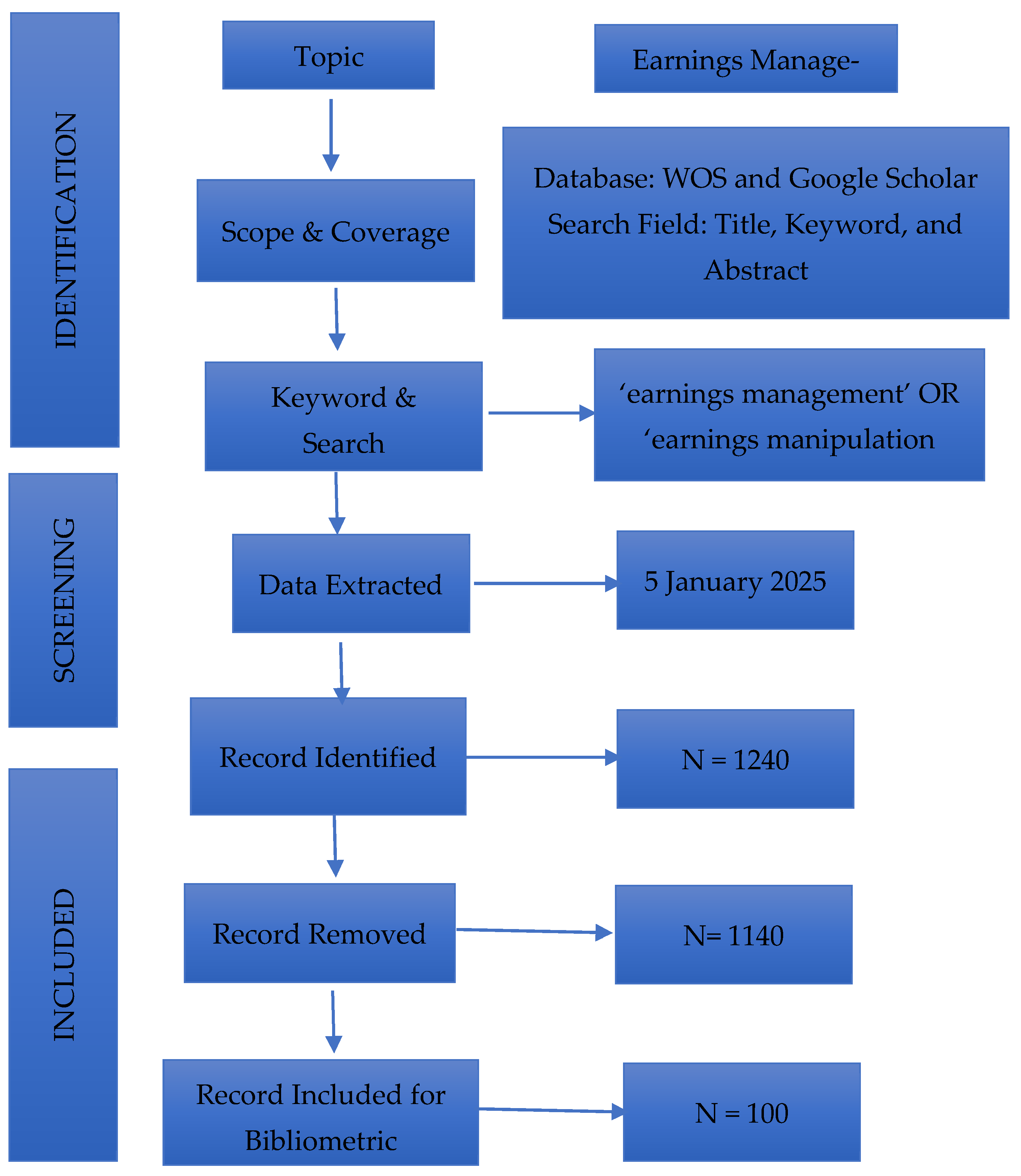
Figure 1. Study Selection and Screening Process.
Ijfs 14 00161 g001
Table 1. Summary Classification of the Top 100 Most Cited Studies in Earnings Management Research by Contribution Type.
Contribution TypeDefinitionNumber of StudiesStudies Included in the Classification
TheoreticalStudies primarily focused on developing conceptual, analytical, or theoretical frameworks explaining earnings management behavior, incentives, and reporting choices.5Dye (1988); Schipper (1989); Beneish (2001); Dechow and Skinner (2000); Ewert and Wagenhofer (2005)
EmpiricalStudies empirically examining determinants, consequences, institutional variation, governance mechanisms, market effects, incentives, and regulatory dimensions of earnings management using observable data and statistical analysis.78Roychowdhury (2006); Klein (2002); Leuz et al. (2003); Cohen et al. (2008); Zang (2012); Bergstresser and Philippon (2006); Teoh et al. (1998a); Gunny (2010); Yu (2008); Jeanjean and Stolowy (2008); Becker et al. (1998); Cheng and Warfield (2005); Jaggi et al. (2009); Chi et al. (2011); Badertscher (2011); and related empirical studies within the Top 100 sample (See Appendix A).
MethodologicalStudies contributing primarily to the development, refinement, validation, or critique of earnings management proxies, abnormal accrual models, research design, and identification approaches.13Jones (1991); McNichols and Wilson (1988); Kang and Sivaramakrishnan (1995); Peasnell et al. (2000); Hribar and Craig Nichols (2007); McVay (2006); Stubben (2010); Dechow et al. (2012); Nelson et al. (2002); Kasznik (1999); Chung et al. (2002); Dechow et al. (1995).
Survey/Review-BasedStudies synthesizing prior literature through narrative reviews, conceptual surveys, or meta-analytical approaches.4Healy and Wahlen (1999); Burgstahler and Dichev (1997); Ronen (2008); Lin and Hwang (2010)
Note: Citation counts were obtained from Web of Science and Google Scholar as of 5 January 2025. Studies were identified using predefined search criteria related to earnings management and subsequently screened according to relevance and citation visibility. Contribution categories were assigned using a structured coding framework, distinguishing among theoretical, empirical, methodological, and survey/review-based studies. The complete list of the Top 100 most cited studies is presented in Appendix A.
Table 2. Annual Distribution of the Top 100 Most Cited Studies in Earnings Management Research.
YearNumber of Items in Top 100Rank
1988228, 39
198919
199112
1993274, 97
1994266, 81
199521, 76
199727, 40
199858, 13, 14, 29, 98
199963, 11, 21, 31, 43, 54
2000417, 27, 67, 83
2001348, 65, 91
200266, 19, 30, 33, 36, 42
200365, 10, 32, 35, 84, 89
2004622, 50, 58, 73, 75, 78
2005823, 24, 34, 38, 47, 79, 87, 88
200694, 15, 20, 37, 49, 52, 86, 93, 100
2007457, 61, 68, 96
20081312, 26, 41, 44, 45, 46, 51, 55, 56, 64, 69, 94, 99
2009359, 62, 71
2010516, 25, 60, 63, 80
2011377, 85, 95
2012318, 53, 90
2014282, 92
2015170
2017172
Note: The table reports the annual distribution of the Top 100 most cited studies included in the review. Citation-rank positions refer to overall ranking within the complete sample and do not imply within-year quality comparisons.
Table 3. Journal Distribution of the Top 100 Most Cited Studies in Earnings Management Research.
JournalNumber of ArticlesRanking of Articles
The Accounting Review211, 12, 18, 19, 20, 23, 30, 32, 36, 38, 42, 44, 52, 58, 62, 80, 81, 85, 91, 98, 99
Journal of Accounting and Economics154, 6, 7, 16, 31, 43, 49, 54, 56, 66, 70, 72, 74, 82, 100
Journal of Financial Economics105, 14, 15, 26, 29, 46, 63, 73, 78, 90
Journal of Accounting Research72, 21, 28, 39, 53, 68, 76
Contemporary Accounting Research78, 25, 75, 77, 84, 93, 97
Journal of Corporate Finance510, 33, 50, 59, 61
Accounting Horizons43, 9, 17, 95
Journal of Accounting and Public Policy427, 40, 41, 71
Corporate Governance: An International Review245, 96
European Accounting Review247, 94
International Journal of Auditing260, 87
Journal of Business Ethics264, 92
The Journal of Business111
The Journal of Finance113
Auditing: A Journal of Practice & Theory122
Journal of Business Finance & Accounting124
Accounting & Finance134
Review of Accounting Studies135
Managerial Auditing Journal137
Managerial Finance148
Jurnal Akuntansi Dan Keuangan155
Journal of Accounting, Auditing & Finance157
Review of Quantitative Finance and Accounting167
The International Journal of Accounting169
Accounting and Business Research183
The Indonesian Journal of Accounting Research186
Journal of Business Research188
The British Accounting Review189
Available at SSRN165
Disclaimer/Publisher’s Note: The statements, opinions and data contained in all publications are solely those of the individual author(s) and contributor(s) and not of MDPI and/or the editor(s). MDPI and/or the editor(s) disclaim responsibility for any injury to people or property resulting from any ideas, methods, instructions or products referred to in the content.


