1. Introduction
Corporate governance refers to the set of policies, structures, and practices via which firms are directed and controlled within a framework of transparency, accountability, and ethical corporate conduct (
Jesover & Kirkpatrick, 2005;
Brahma et al., 2021;
Albitar et al., 2020). In recent years, effective corporate governance has become an increasingly prominent global concern, driven by external market pressures such as intensifying competition and stricter regulatory requirements, as well as by its anticipated influence on financial performance (
Al-Msiedeen et al., 2024;
Tan & Zhu, 2022).
Naciti et al. (
2022),
Albitar et al. (
2020), and
Claessens and Yurtoglu (
2013) argue that corporate governance has become a fundamental pillar of contemporary business operations and is critical to both financial performance and long-term sustainability.
There has been considerable academic debate regarding the relationship between corporate governance and firm financial performance, with most studies reporting either positive or neutral results (
Saha & Khan, 2024;
Błach et al., 2025;
Farooq et al., 2025b). Scholars have observed that improvements in financial efficiency and firm value are often associated with robust governance structures, like board independence, effectiveness of audit committees, and strong protection of shareholder rights (
Alabdullah et al., 2022;
Tan & Zhu, 2022;
Garad et al., 2021). Conversely, financial distress, inefficiencies, and corporate failures are frequently linked to weak governance arrangements (
Yousaf et al., 2024;
Hazami-Ammar & Gafsi, 2021).
The relationship between corporate governance and financial performance is grounded in several well-established theoretical perspectives. Agency theory explains governance mechanisms as instruments designed to mitigate conflicts of interest between managers and shareholders (
Angwaomaodoko, 2025;
Kim & Li, 2021). In contrast, stewardship theory posits that managers, when granted autonomy and trust, may act as responsible stewards of organisational interests (
Owolabi et al., 2022). Stakeholder theory further broadens the governance perspective by incorporating the interests of a wider range of stakeholders, including employees, creditors, and society, thereby emphasising long-term sustainability and value creation (
Muhammed et al., 2026;
Golubeva, 2021).
A substantial body of research has examined the relationship between governance quality and financial performance, often demonstrating a positive association with return on assets, return on equity, and overall firm value (
Gidage et al., 2025;
Kim & Li, 2021;
Al-ahdal et al., 2020;
Alareeni & Hamdan, 2020;
Albitar et al., 2020).
Fariha et al. (
2022) and
Garad et al. (
2021), for instance, suggest that effective board structures, stronger shareholder rights, and well-functioning audit committees enhance firm performance. However, other studies have reported non-linear or mixed effects, indicating that excessive governance constraints may, in some contexts, hinder managerial discretion and innovation (
Kyere & Ausloos, 2021;
Ahmad et al., 2021;
Puni & Anlesinya, 2020). The effectiveness of governance mechanisms may therefore vary across industries and institutional environments (
Kyere & Ausloos, 2021).
Bibliometric analyses provide valuable insights into publication patterns, citation trajectories, influential contributions, and major thematic areas within a research field (
Hassan & Duarte, 2024). In line with this objective, the present study adopts the PRISMA guidelines to conduct a bibliometric systematic literature review of research on corporate governance and financial performance. This approach makes it possible to identify both foundational contributions and emerging streams of scholarship, including those that incorporate ESG into governance frameworks across different national contexts. Recent studies indicate a notable shift in emphasis towards ESG-related dimensions of corporate activity, reflecting an evolving research agenda within the field (
Chopra et al., 2024).
Despite the substantial volume of academic work on the topic, limited consensus exists regarding the effectiveness of corporate governance across different governance philosophies, economic systems, and legal environments (
Chopra et al., 2024). This review integrates theoretical and empirical perspectives with bibliometric evidence to provide a more comprehensive understanding of corporate governance research. Although strong governance structures are often associated with improved financial outcomes, their effectiveness is not universal and remains highly context dependent. The growing importance of ESG considerations, technological change, and regulatory modernisation further highlights the dynamic and evolving nature of research on corporate governance (
Chopra et al., 2024;
Yeoh, 2022).
To address these gaps, the study adopts a bibliometric–systematic literature review (B-SLR) approach, combining systematic review techniques with bibliometric analysis to provide a structured overview of the research landscape, identify major themes and trends, and propose directions for future research. By addressing these gaps, the study seeks to develop an up-to-date understanding of the link between governance and a firm’s financial performance for both academic researchers and business practitioners.
The primary objective of this study is to identify the most influential authors, citations, publications, institutions, sources, frequently used keywords, and countries/regions in the context of corporate governance and financial performance.
The remaining section of this article is organised as follows:
Section 2 discusses the methodology, including the bibliometric–systematic literature review approach and data collection procedures.
Section 3 presents the results of the bibliometric analysis, while
Section 4 discusses the main findings.
Section 5 concludes the study, while
Section 6 outlines its limitations and suggests directions for future studies.
2. Material and Equipment
This study adopts a bibliometric–systematic literature review (B-SLR) approach guided by the PRISMA framework, combining quantitative bibliometric techniques with a structured qualitative synthesis of the literature. This integrated approach enables both the representation of the structure and an in-depth interpretation of research findings (
Dhlamini, 2026). The bibliometric analysis informed the systematic review by identifying influential publications, thematic clusters, and major research trends, which in turn guided the selection, categorisation, and synthesis of the literature. Conversely, insights derived from the systematic review facilitated the interpretation and validation of patterns identified through the bibliometric analysis. The bibliometric component focuses on analysing publication patterns, citation structures, co-authorship networks, and keyword co-occurrences to identify influential studies, major contributors, and dominant research themes. The bibliometric analysis helps visualise the authors and references by identifying and mapping through co-citation analysis (
Vătavu et al., 2022). In their study,
Donthu et al. (
2021) mention meta-analysis and systematic literature review as methodological options, but they base their studies on bibliometric analysis, the application of which, especially in economic analyses, is quite new. It is precisely this that enables the development of this research area. In parallel, the systematic review component applies a thematic synthesis approach, allowing for the structured examination of selected studies to interpret findings, compare results across contexts, and identify research gaps (
Marzi et al., 2025).
Daiser et al. (
2017) also analysed corporate governance processes using the method of systematic literature review and thereby helped research in the field with their recommendations.
Lobonț et al. (
2023) also examined the relationship between public policies for EU member states using this type of analysis of the literature, highlighting fiscal policy and entrepreneurial activity.
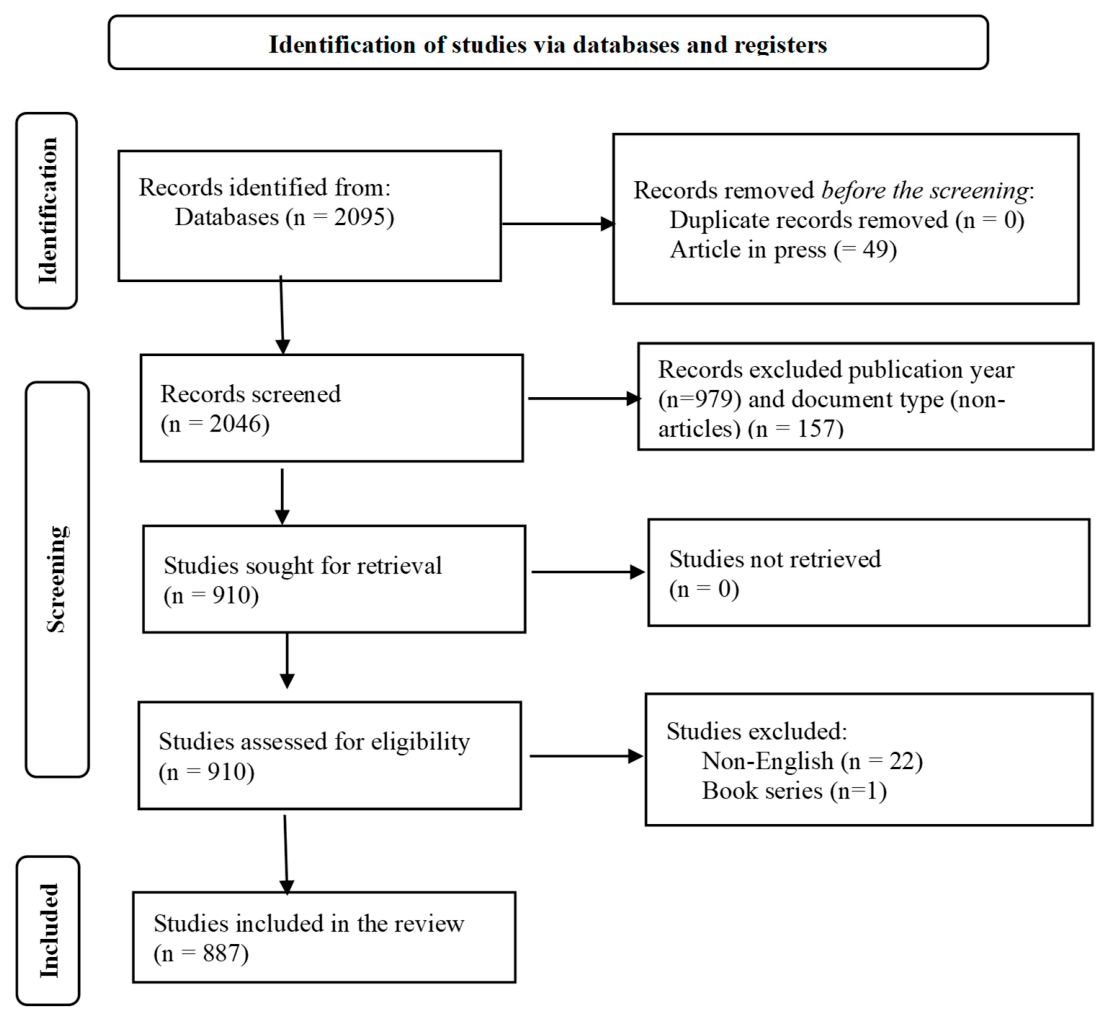
The study follows the four key stages of the PRISMA framework: identification, screening, eligibility, and inclusion (
Chali & Lakatos, 2024). In the identification stage, a comprehensive search was conducted in the Scopus database using the keywords “corporate governance” AND “financial performance” in titles, abstracts, and keywords for publications between 2020 and September 2025. This initial search yielded 2095 documents.
Data from the resulting corpus of 887 published articles—including authors, title, year, source title, citation count, author affiliations, abstracts, and keywords—were extracted and exported as a CSV file on 3 September 2025. We used VOSviewer version 1.6.20 to perform the bibliometric analysis in accordance with the four stages outlined in the PRISMA flow diagram (
Figure 1).
In the identification stage, the research question was defined, and relevant studies were located through a systematic and comprehensive search process. In the screening stage, studies identified in the initial search were assessed according to these criteria. This stage typically involved screening titles and abstracts, followed by full-text assessment of studies that appeared to meet the inclusion criteria. In the eligibility stage, the quality and relevance of the selected articles were further evaluated in relation to the review question. Finally, the bibliometric–systematic literature review incorporated only those studies that met the eligibility requirements. The data were then extracted, analysed, synthesised, and reported.
In the first stage, a search strategy was developed to identify relevant studies by establishing precise inclusion and exclusion criteria. A search string based on the predefined keywords “Corporate Governance” AND “Financial Performance” was used to retrieve the relevant literature. The inclusion criteria covered Scopus-indexed articles, full-text availability, online accessibility, publication in English, and relevance to the research topic. The exclusion criteria, presented in
Table 1, comprised books, conference proceedings, non-English publications, and grey literature, such as industry reports, government documents, and other non-peer-reviewed materials that did not meet the inclusion criteria. The exclusion of conference papers, books, and non-English publications was intended to ensure greater consistency in quality, peer-review standards, and comparability across the studies included in the review.
The second phase involved collecting documents from the Scopus database using the selected keywords. Scopus was chosen due to the extensive coverage of its peer-reviewed and high-quality journals, particularly in the fields of business, finance, and corporate governance (
Chali & Lakatos, 2024). It is widely recognised in bibliometric and systematic literature reviews for its comprehensive indexing, reliable citation data, and compatibility with bibliometric software such as VOSviewer. The choice of the specific VOSviewer network analyses employed in this study was both theoretically and methodologically grounded in the need to capture multiple dimensions of the research field, thereby ensuring the robustness and interpretability of the bibliometric results.
Only relevant empirical studies published between 2020 and September 2025 were included in the analysis. Although the purpose was to capture recent developments in the literature on corporate governance and performance, this time restriction ensured that the review focused on the most current body of research available at the time of analysis. Of the 2095 documents initially identified through the search, duplicates, non-academic publications, and non-English records were excluded. Following this process, a final sample of 887 articles was retained for analysis. As shown in
Figure 1, the literature screening and selection process followed the PRISMA flow diagram.
Bibliographic data extracted from the retrieved studies, including information on authors, countries/regions, institutions, journals, and citations, were imported into VOSviewer to construct network visualisation maps. Complementing the bibliometric analysis, the systematic review component involved a structured thematic synthesis of the selected studies. Overall, the B-SLR approach adopted in this study goes beyond descriptive analysis by combining bibliometric evidence with systematic qualitative synthesis, allowing for a comprehensive understanding of the relationship between corporate governance and financial performance and the identification of key directions for future research.
3. Results
This B-SLR analysis examines research on corporate governance and firm financial performance, with particular emphasis on its major contributions, dominant themes, and broader implications.
3.1. Most Cited Articles
Table 2 shows the top 10 most influential sources with Publication year, Author(s), DOI, source, and major findings, along with the total citations of those articles on corporate governance and financial performance published between the period of 2020 and 2025.
The most highly cited article in the dataset, with 1131 citations, is that of
Alareeni and Hamdan (
2020), published in the journal Corporate Governance. Their study found that ESG disclosure has a positive effect on firm performance, while CSR disclosure positively affects ROA and ROE. In addition, corporate governance disclosure was shown to have a positive effect on ROA and Tobin’s Q, but a negative effect on ROE. The second most cited study, by
Kyere and Ausloos (
2021), with 689 citations, suggests that corporate governance mechanisms exert a variable effect on financial outcomes, benefiting some firms while constraining others.
The third most cited study,
Brahma et al. (
2021), with 654 citations, reports that gender diversity enhances firm performance. A particularly noteworthy finding is that the appointment of three or more female board members leads to stronger performance improvements than the appointment of two or fewer. The study further indicates that post-appointment financial performance is influenced by additional factors, including the age and educational background of female board members.
Tan and Zhu (
2022), the fourth most cited study, with 594 citations, identified a clear positive association between corporate green innovation and ESG ratings, driven by lower financial constraints and greater managerial awareness of environmental issues. In a similar vein,
Albitar et al. (
2020), the fifth most cited article, with 558 citations, argue that ESG disclosure constitutes an important strategic mechanism through which managers may achieve superior financial outcomes.
Bătae et al. (
2021), the sixth most cited study, with 536 citations, examined the relationship between corporate governance and financial performance and found an inverse association between improvements in the corporate governance system and financial performance.
Al-ahdal et al. (
2020), the seventh most cited study, with 524 citations, reported that board and management accountability, together with audit committee effectiveness, exert only a modest positive effect on firm performance as measured by ROE and Tobin’s Q. They also found that transparency and disclosure made no positive contribution and, in the case of Tobin’s Q, were associated with a negative effect.
Kim and Li (
2021), the eighth most cited study, with 462 citations, found that ESG practices have a significant positive effect on the profitability of large firms. Similarly,
Ahmad et al. (
2021), the ninth most cited study, with 416 citations, showed that firms with strong ESG performance financially outperform those with lower ESG engagement. However, the individual effects of the different ESG dimensions on financial performance remain inconclusive. Their findings also indicate that firm size acts as an intervening variable in the relationship between ESG and financial performance. By contrast,
Puni and Anlesinya (
2020), the tenth most cited study, with 405 citations, examined firm financial performance and reported that employee representation on the board, including both internal and external members, improves profit margins. At the same time, factors such as larger board size, a higher frequency of board meetings, and shareholder concentration were found to enhance financial performance, whereas one of the board committees appeared to reduce it.
Overall, these highly cited studies highlight the central role of corporate governance and ESG practices in shaping financial performance. Although ESG and governance-related disclosures are often associated with improved financial outcomes, their effects are not uniform across firms, sectors, or institutional settings. Differences in governance systems, firm characteristics, and regulatory environments suggest that no single governance model is universally effective. Most highly cited studies report a positive association, while the presence of mixed and non-linear findings indicates that the effectiveness of corporate governance is contingent on institutional conditions, firm-specific characteristics, and regulatory frameworks. This points to a maturing field in which simple linear assumptions are increasingly being replaced by more nuanced and context-dependent interpretations. Accordingly, future studies ought to continue to examine the connection between governance and financial sustainability in a more context-sensitive manner.
VOSviewer was used to visualise the co-authorship networks of scholars on corporate governance and financial performance (
Effah et al., 2023). The network is composed of multiple clusters representing collaborative research relationships. The largest cluster is centred around data indicating a strong pattern of scholarly collaboration and intellectual influence, closely related to the work of
Brahma et al. (
2021),
Velte (
2023), and
Puni and Anlesinya (
2020). Smaller clusters, including that of
Birindelli et al. (
2024), may reflect more specialised lines of inquiry or research concentrated within geographical contexts. Overall, the network visualisation illustrates an evolution in authors’ collaboration patterns between 2020 and 2025, pointing to increasing international cooperation in research on corporate governance and financial performance.
3.2. Leading Publication Author(s)
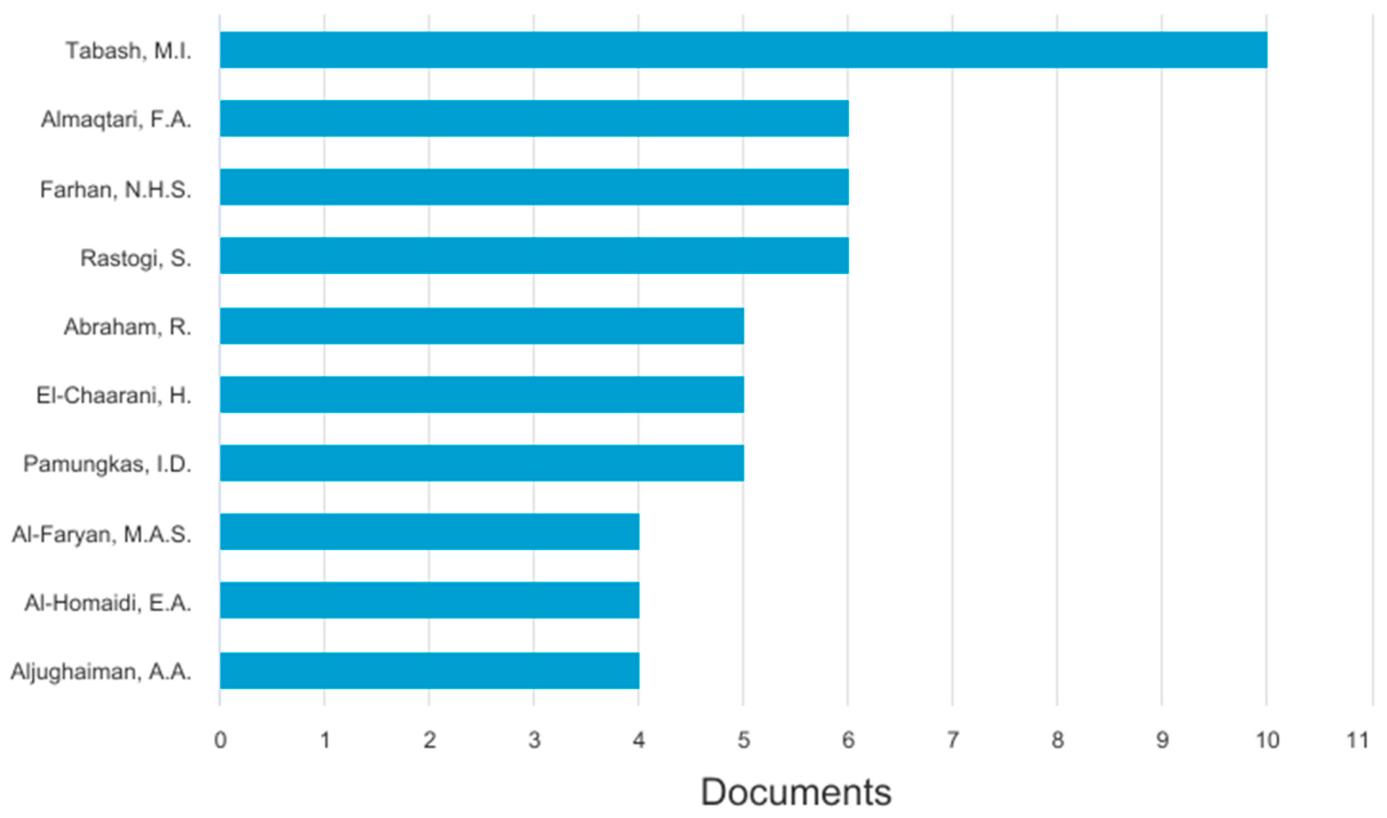
Figure 2 presents the most influential authors on corporate governance and financial performance between 2020 and 2025. Tabash, M.I., is the most prolific author, with 10 publications, followed by Almaqtari, F.A. (6), Farhan, N.H.S. (6), and Rastogi, S. (6). A relatively small number of authors also suggests a degree of knowledge centralisation, whereby a limited group of contributors exerts substantial influence over research agendas and methodological approaches. At the same time, this pattern reflects the presence of strong collaborative networks, particularly in the context of emerging and developing markets, which are increasingly becoming important focal areas in corporate governance research.
However, as illustrated in
Figure 2, the most highly cited studies predominantly report a positive relationship between corporate governance practices—particularly ESG-related practices and board characteristics—and financial performance, albeit with some inconsistencies. This suggests that, although corporate governance practices may enhance firm performance, their effectiveness is contingent upon specific firm-level and institutional factors. Moreover, the concentration of publications among a relatively small number of key authors points to the existence of influential research clusters that play an important role in advancing knowledge and shaping future research directions in the field of corporate governance and financial performance.
3.3. International Co-Authorships Linkage
The bibliometric analysis of international research collaboration illustrates the global structure of scholarship on corporate governance and firm financial performance.
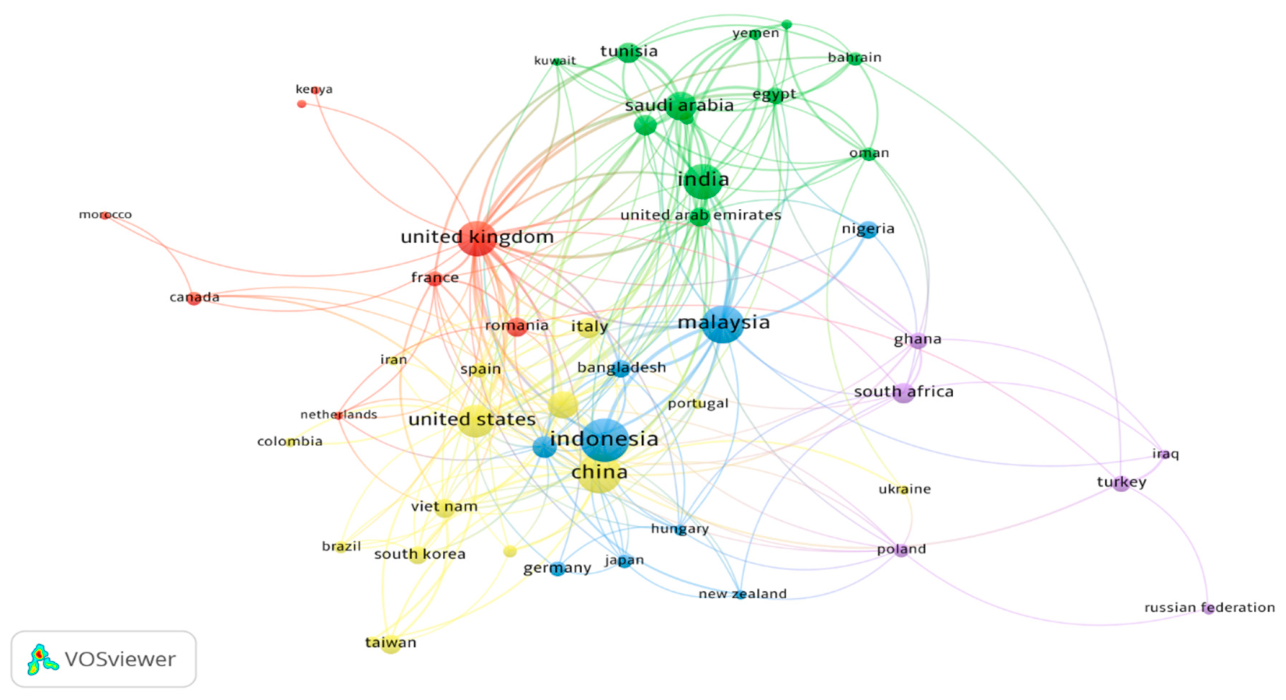
Figure 3 presents the international co-authorship network, highlighting collaborative relationships within the research community in this field. The United Kingdom, shown in red, occupies a leading position with an extensive global collaboration network. China, the United States, India, Malaysia, and Saudi Arabia also demonstrate broad and influential research connections. Other countries/regions with relatively strong collaborative networks include Australia, the United Arab Emirates, Pakistan, South Africa, and Germany, all of which make important contributions to the development of the knowledge base.
The network analysis further reveals several distinct country/region-level collaboration clusters in research on corporate governance and firm financial performance. As indicated in blue, countries/regions such as Indonesia, India, the United Kingdom, Saudi Arabia, and Hungary maintain influential collaborative ties with Malaysia. China, shown in yellow, appears at the centre of strong collaborative relationships with Pakistan, Vietnam, and South Korea. The purple cluster reflects cooperation among South Africa, Ghana, Turkey, and Poland, while the green cluster highlights significant collaboration among India, Saudi Arabia, Egypt, Bahrain, Kuwait, and Tunisia. Overall,
Figure 3 demonstrates that Asian countries/regions have made a particularly significant contribution to research on corporate governance and financial performance.
The thickness of the connecting lines (link strength) indicates the extent of research collaboration between countries/regions. The size of each node represents the relative contribution of each country/region to the global body of publications, with larger nodes indicating stronger participation in international research networks. Similar colours denote closely related collaboration clusters or shared research interests. The figure was generated using VOSviewer.
The network structure demonstrates a relatively high level of international collaboration, with a small number of central countries/regions acting as major hubs. This suggests that knowledge production in the field is concentrated around key contributors who facilitate global research linkages. At the same time, the presence of smaller and less connected clusters points to regionally focused or emerging research streams, thereby highlighting opportunities for broader international collaboration. The fragmentation of thematic areas and the existence of loosely connected clusters further suggest that the field still lacks a high degree of theoretical integration. Institutions in developing regions, in particular, may benefit from stronger collaboration with established research centres to enhance knowledge exchange, improve research quality, and increase global visibility. Future research should seek to bridge these gaps by developing more integrated frameworks that combine corporate governance, financial performance, and sustainability dimensions.
3.4. Top 10 Countries/Regions
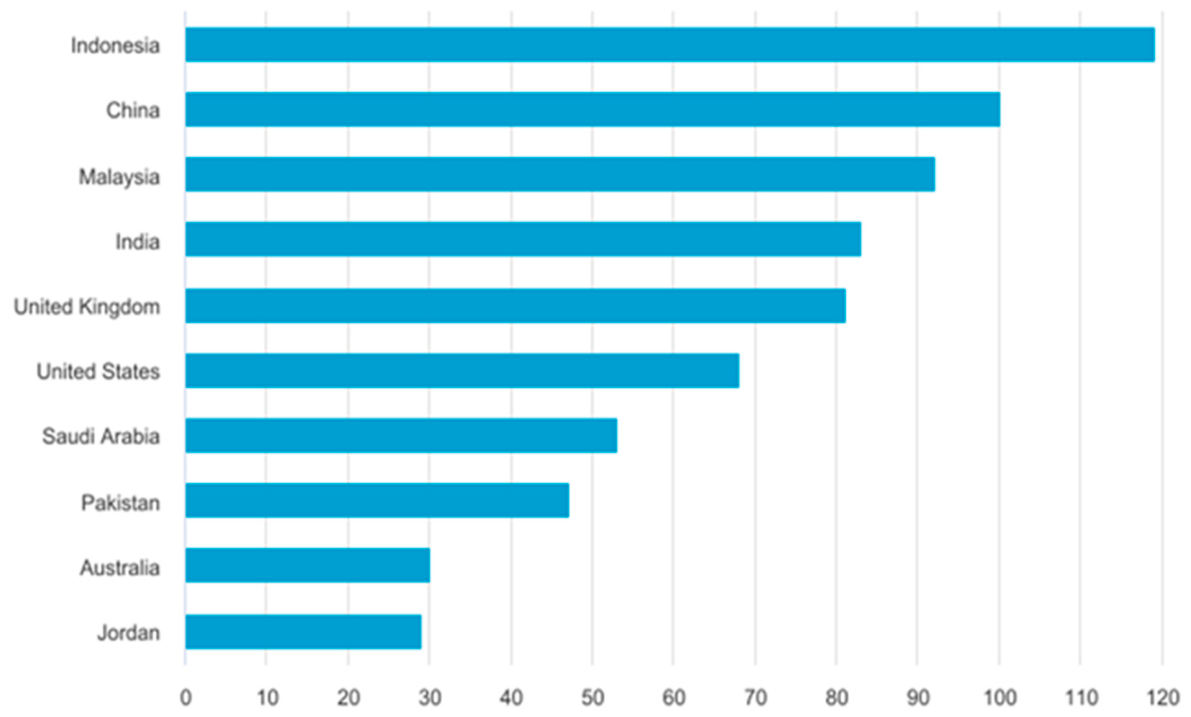
Figure 4 presents the top 10 countries/regions by author affiliation in publications on corporate governance and financial performance. Indonesia ranks first with 119 documents, followed by China with 100 and Malaysia with 92. India ranks fourth with 83 publications. The remaining countries/regions are the United Kingdom (81), the United States (68), Saudi Arabia (53), Pakistan (47), Australia (30), and Jordan (29). The dominance of these countries/regions in publication output may reflect not only growing academic interest but also the increasing importance of corporate governance reforms and ESG adoption in emerging markets. Higher research productivity in these regions may be associated with evolving institutional frameworks, regulatory changes, and efforts to improve transparency and investor confidence. However, publication volume does not necessarily imply stronger governance outcomes, as differences in legal systems, enforcement mechanisms, and market maturity continue to shape the effectiveness of governance practices.
3.5. Network Analysis of Co-Occurrences
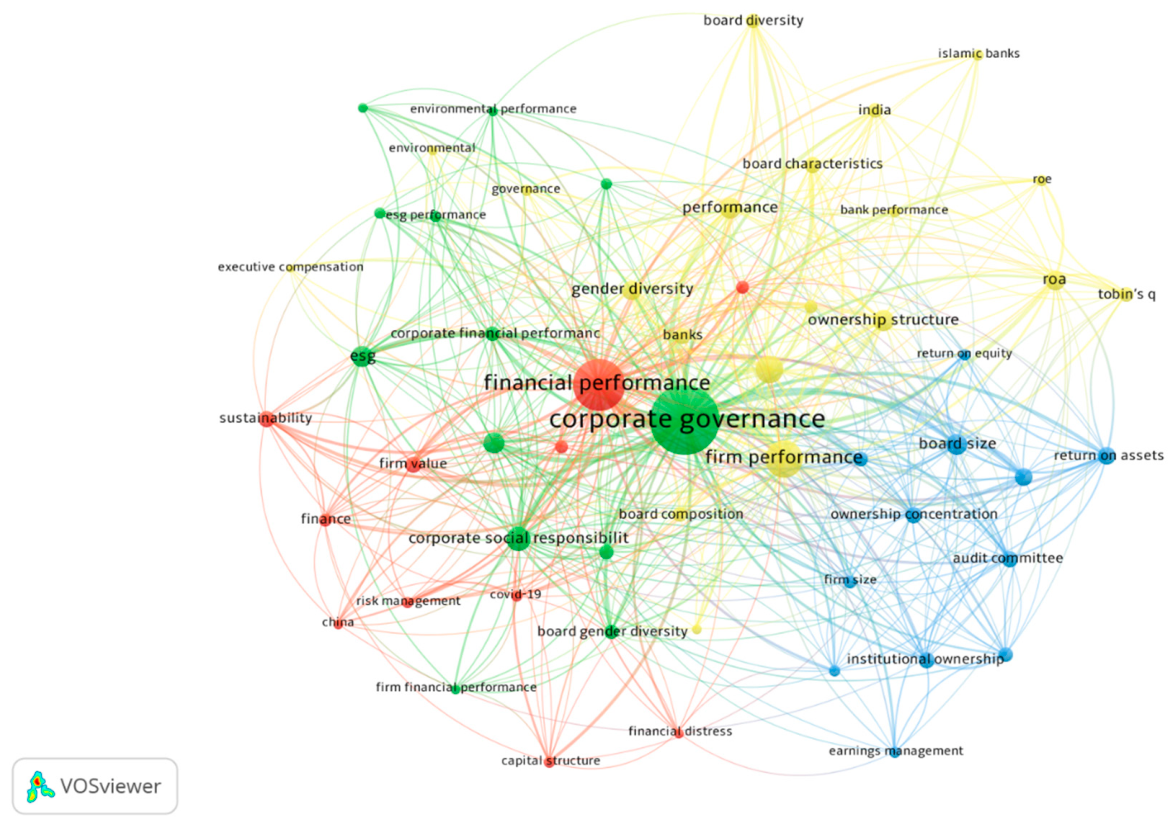
Figure 5 represents the co-occurrence network obtained by using VOSviewer. This bibliometric network consists of nodes and edges. The circular nodes represent keyword frequency, with larger nodes indicating more frequently occurring keywords (
Donthu et al., 2021;
Van Eck & Waltman, 2014). The edges, in turn, represent the links between nodes and the strength of their associations (
Qorri & Felföldi, 2024). Greater edge thickness indicates a stronger relationship between keywords (
Van Eck & Waltman, 2014). In addition, node colour denotes the cluster to which each keyword belongs (
Khan et al., 2022), while the spatial proximity of nodes reflects the closeness of their relationships (
Qorri & Felföldi, 2024).
Figure 5 identifies four clusters automatically generated by VOSviewer. The most prominent cluster, shown in green, is centred on the keyword “corporate governance” and is linked to terms such as “corporate social responsibility,” “ESG,” “agency theory,” “board gender diversity,” and “ESG performance.” The second cluster, shown in red, is organised around “financial performance” and exhibits strong connections with “corporate governance,” as well as with “firm value,” “good corporate governance,” “sustainability,” and “finance.” The third cluster, shown in yellow, is centred on “firm performance” and is associated with “corporate governance,” “ownership structure,” “board of directors,” “gender diversity,” and “board diversity.” The fourth cluster, shown in blue, is structured around “board size” and is linked to “corporate governance,” “firm performance,” “board independence,” “return on equity,” “gender diversity,” and “financial performance.” This clustering pattern indicates the presence of several core themes within the field, with “corporate governance” serving as an integrative concept across all clusters. For instance, clusters linking corporate governance with ESG, corporate social responsibility, and sustainability indicate a growing shift towards stakeholder-oriented and sustainability-driven governance frameworks. Similarly, clusters centred on board characteristics and ownership structures suggest a continued emphasis on agency theory and internal governance mechanisms. The findings, therefore, suggest that corporate governance provides the principal conceptual foundation connecting major research themes such as ESG, firm performance, and board-related characteristics.
The strong interconnections among keywords such as “ESG,” “corporate social responsibility,” and “financial performance” indicate a growing research emphasis on sustainability-oriented corporate governance models. Moreover, the proximity of keywords within the clusters suggests a high degree of thematic integration, as these concepts are increasingly examined in combination rather than in isolation. In addition, emerging themes such as ESG integration and digital governance appear to offer promising directions for future research.
Table 3 presents the 10 most frequently used keywords in the literature on corporate governance and financial performance, based on 129 keywords grouped into four colour-coded clusters. The terms “corporate governance” and “firm performance” emerge as the most prominent keywords, occurring 526 and 288 times, respectively, with total link strengths of 1095 and 608. The grouping of keywords into distinct clusters reflects the emergence of interconnected research streams within the field.
The frequency and total link strength of the leading keywords confirm that research in this field is strongly concentrated on the relationship between corporate governance and firm performance indicators. The prominence of terms such as “corporate governance,” “financial performance,” and “firm performance” points to a well-established core within the literature, while the presence of keywords such as “ESG,” “ownership structure,” and “gender diversity” reflects emerging and evolving lines of inquiry.
4. Discussion
Importantly, the two components are closely integrated. By integrating bibliometric results of the co-authorship, keyword co-occurrence, and citation analyses, the systematic review provides a deeper interpretation of these patterns by examining the content of the literature. This study moves beyond a purely descriptive mapping of the literature and offers important insights into the structural evolution of research on corporate governance and financial performance. This combined approach demonstrates that the relationship between corporate governance and financial performance cannot be fully understood through quantitative mapping alone. Instead, it requires a systematic interpretation of empirical evidence across different contexts, governance mechanisms, and methodological approaches, thereby enhancing robustness, transparency, and explanatory. Articles were grouped according to key dimensions such as governance mechanisms (board characteristics, ownership structure, ESG practices), performance measures (ROA, ROE, Tobin’s Q), and institutional contexts (developed versus emerging markets). This process enabled the synthesis of empirical findings, identification of consistencies and contradictions, and exploration of context-specific effects.
Corporate governance: The primary purpose of corporate governance is to ensure that directors and managers act in the best interests of investors and creditors (
Younas, 2022). This perspective is rooted in agency theory, which explains the relationships among managers, owners, and creditors, whose objectives may often diverge. While managers are expected to maximise shareholder value, they may also seek to advance their own interests (
Farooq et al., 2025a;
Sarhan & Al-Najjar, 2023;
Albitar et al., 2020). This divergence gives rise to conflicts of interest commonly referred to as agency conflicts.
Research on corporate governance has intensified, particularly since 2020, with 50 related studies identified in 2025 alone. An analysis of these studies reveals a range of independent variables used as proxies for corporate governance, including ownership structure (
Boshnak, 2025;
Damisa et al., 2024;
Bhakar et al., 2024;
Alodat et al., 2022), board characteristics (
Abu Khalaf et al., 2025;
Handayati et al., 2025;
Alodat et al., 2022;
Fariha et al., 2022;
Farooq et al., 2022), audit committee independence (
Bukari et al., 2024;
Fariha et al., 2022;
Al-Jalahma, 2022), audit committee size (
Jeyhunov et al., 2025;
Ahmed et al., 2024;
Farooq et al., 2022), board independence (
Bukari et al., 2024;
Farooq et al., 2022;
Guluma, 2021), board size (
Jeyhunov et al., 2025;
Bukari et al., 2024;
Yadav & Prashar, 2023;
Farooq et al., 2022;
Guluma, 2021), board gender diversity (
Farooq et al., 2025b;
Ahmed et al., 2024;
Saona et al., 2024;
Yadav & Prashar, 2023), and board remuneration (
Farooq et al., 2025b;
Yahaya, 2025;
Saona et al., 2024). In addition, CEO duality has been examined by
Javed et al. (
2025),
Bukari et al. (
2024),
Yadav and Prashar (
2023), and
Yu (
2023). Consistent with the bibliometric findings, the systematic review shows that the most frequently examined governance dimensions include board size, board independence, gender diversity, and ownership.
Overall, the analysis suggests that the governance characteristics most strongly associated with corporate financial performance include board independence, board size, gender diversity, audit committee independence, board remuneration policies, and ownership structure. These mechanisms are often associated with improved financial outcomes, as they enhance monitoring, accountability, and strategic decision-making. However, the systematic comparison of studies highlights important inconsistencies and non-linear relationships. These variations can be attributed to differences in institutional contexts, particularly between developed and emerging markets, where governance effectiveness is shaped by regulatory quality, market maturity, and enforcement mechanisms. In addition, the impact of governance mechanisms varies depending on their type; for example, board-related characteristics tend to influence monitoring and advisory functions, while ownership structures and ESG disclosure practices affect transparency, stakeholder engagement, and long-term value creation.
Firm Performance: Firm performance remains a central concern for investors, creditors, and management alike. An examination of published studies across the sample of 887 articles indicates that firm financial performance is most measured using ROA (return on assets), ROE (return on equity), and Tobin’s Q, although the choice of proxy may influence reported outcomes. Specifically, 266 articles (30%) use Tobin’s Q as a proxy for firm performance; 222 articles (25%) use ROA; and 142 articles (16%) use ROE, while the remaining 29% employ combined proxies, such as ROA together with ROE or Tobin’s Q. This methodological variation may contribute to inconsistencies across studies and underscores the importance of context-sensitive interpretation.
Tobin’s Q is a financial ratio that assesses firm performance by comparing a company’s market value with the replacement cost of its assets (
Alareeni & Hamdan, 2020;
Al-ahdal et al., 2020). A higher Tobin’s Q indicates that the market assigns a value to the firm that exceeds the replacement cost of its assets, thereby suggesting strong growth potential (
Al-ahdal et al., 2020). Conversely, a lower Tobin’s Q may discourage investors if the firm’s market valuation appears weak relative to its asset base (
Aibar-Guzmán et al., 2024). Several studies have employed Tobin’s Q as a measure of firm performance, including
Alshdaifat et al. (
2025),
Aibar-Guzmán et al. (
2024),
Boshnak (
2025),
Alareeni and Hamdan (
2020),
Guluma (
2021), and
Al-ahdal et al. (
2020).
Return on equity measures the rate of profit generated for shareholders relative to their invested capital (
Farooq et al., 2025a). A high ROE generally indicates effective profit generation and may therefore increase investor confidence, whereas a low ROE may signal inefficiencies associated with firm strategy or intense competitive pressures within the industry (
Alshehri, 2024). ROE has been widely used as a proxy for firm performance in studies such as
Farooq et al. (
2025b),
Boshnak (
2025),
Alshehri (
2024), and
Alareeni and Hamdan (
2020).
The findings of this bibliometric review reveal several important patterns in research on corporate governance and financial performance. The growth in publication output and citation frequency suggests increasing scholarly interest in the impact of governance structures on firm financial outcomes. The most highly cited sources and influential authors indicate that a relatively limited number of key contributions continue to shape the dominant research agenda in this field.
In line with the bibliometric trends, the systematic review also identifies a growing emphasis on ESG integration as a central component of modern corporate governance. The bibliometric evidence further highlights the growing importance of ESG criteria as integral components of contemporary corporate governance models. The increasing concentration of studies on environmental, social, and governance factors points to a broader shift towards more sustainability-oriented approaches to financial performance (
Abu Khalaf et al., 2025).
Ahmad et al. (
2021) suggest that firms with strong ESG practices are more likely to achieve long-term financial success while also strengthening investor confidence.
The international co-authorship network demonstrates the existence of extensive global collaboration in corporate governance research. Countries/regions such as Malaysia, Indonesia, the United Kingdom, China, and the United States have developed strong collaborative ties, reflecting substantial international knowledge exchange. The visible presence of emerging economies within these networks further underscores the global relevance of governance practices in enhancing financial performance.
The keyword co-occurrence analysis identifies the central themes in the literature on corporate governance. The prominence of terms such as “corporate governance,” “financial performance,” and “firm performance” indicates a strong and well-established connection between governance mechanisms and financial outcomes. In addition, the emphasis on ownership structure, board size, and gender diversity illustrates the multidimensional nature of governance effectiveness.
The funding analysis suggests that government bodies and universities constitute the principal sources of support for research in this field. The geographical concentration of funding also points to differing national priorities regarding governance reform and financial accountability. Further investigation is needed to better understand funding disparities and their implications for innovation in governance research across different economic contexts. At the same time, several gaps and inconsistencies remain in the literature. Further research is needed to examine the long-term effects of key governance mechanisms on organisational financial performance. Moreover, although recent developments in governance and digital strategy have attracted increasing attention, these areas remain underexplored. In particular, the roles of emerging technologies such as blockchain, artificial intelligence, and big data in corporate governance continue to represent important avenues for future investigation.
Agnese et al. (
2025) suggest that artificial intelligence enhances board monitoring through real-time data analytics and decision support systems, whereas
Kourabas and Tsang (
2025) concluded that although the board may utilise AI to mitigate institutional failures, individual directors retain accountability for the final decisions rendered by the board. In addition, blockchain-based ownership structures can improve transparency and accountability but also introduce new governance, coordination, and regulatory challenges that warrant further investigation (
Aro et al., 2024). On the other hand, a study by
Caldarelli (
2025) demonstrates that blockchain integration markedly improves auditability and stakeholder trust, yet it also introduces new complexities regarding decision-making authority and legal compliance.
In conclusion, the bibliometric analysis demonstrates that international collaboration and thematic diversity, particularly in relation to ESG integration, constitute some of the most significant emerging trends in corporate governance research. Addressing the identified research gaps will contribute to a more nuanced understanding of governance structures and their financial implications, thereby assisting both academics and practitioners in designing governance systems that support sustained financial success. The findings further suggest that strengthening international research collaboration, especially by linking institutions in developing regions with established global partners, alongside the adoption of advanced governance practices and ESG-integrated managerial approaches, may simultaneously enhance knowledge exchange, research quality, institutional visibility, firm-level financial performance, long-term sustainability, and competitive advantage.
5. Conclusions
This study provides a PRISMA-guided bibliometric–systematic literature review of the relationship between corporate governance and financial performance, based on 887 Scopus-indexed articles published between 2020 and September 2025. By integrating bibliometric mapping with systematic thematic synthesis, the study offers a comprehensive overview of the intellectual structure, dominant research streams, and evolving priorities in this field. This methodological design is particularly appropriate for the present topic because the literature on corporate governance and financial performance is both extensive and conceptually fragmented. The Bibliometric–Systematic Literature Review approach, therefore, enables the study not only to map the intellectual and thematic structure of the field but also to interpret the substantive findings and identify policy-relevant patterns in a more integrated and rigorous manner. The findings show that corporate governance is generally associated with improved financial performance, particularly through mechanisms such as ESG disclosure, board diversity, board independence, audit committee effectiveness, ownership structure, and board size. At the same time, the review confirms that these relationships are not uniform; rather, they are shaped by firm-specific characteristics, institutional environments, regulatory quality, and the performance indicators employed.
The results carry important implications for policymakers. First, governance regulation should move beyond formal compliance and place greater emphasis on the effectiveness and quality of governance practices. Policies that promote transparent disclosure, credible ESG reporting, independent oversight, board diversity, and robust audit structures may contribute to stronger accountability and more sustainable financial outcomes. Second, the context-dependent nature of the evidence suggests that corporate governance reforms should not rely on a one-size-fits-all model. Regulatory frameworks need to reflect differences in legal systems, market maturity, ownership structures, and enforcement capacity, particularly in emerging and developing economies where governance institutions are still evolving. Third, the growing prominence of ESG-related research indicates that policymakers should continue strengthening the integration of sustainability considerations into corporate governance standards, while also improving the comparability and reliability of non-financial disclosures.
The findings are also relevant for corporate practitioners and market participants. For boards and senior managers, governance should be viewed not merely as a compliance obligation but as a strategic mechanism for enhancing resilience, strengthening investor confidence, and supporting long-term value creation. Effective governance arrangements can improve monitoring, reduce agency conflicts, support better risk management, and facilitate more balanced decision-making. For investors, creditors, and other stakeholders, the review highlights the importance of considering governance quality and ESG practices alongside conventional financial indicators when evaluating firm performance and long-term prospects. However, because governance effects vary across contexts, such assessments should remain sensitive to industry conditions, institutional settings, and firm-specific characteristics.
The B-SLR further points to the growing importance of digital governance and emerging technologies. Artificial intelligence, blockchain, and data-driven monitoring systems may strengthen transparency, auditability, and board oversight, but they also introduce new challenges related to accountability, legal responsibility, and regulatory adaptation. Policymakers and practitioners should therefore approach technological innovation in governance with a balanced perspective: encouraging its potential to improve oversight and disclosure while ensuring that responsibility for strategic decisions remains clearly assigned and appropriately regulated.
Overall, this study demonstrates that research on corporate governance and financial performance is becoming more interdisciplinary, internationally connected, and sustainability-oriented. Its contribution lies not only in mapping the development of the literature but also in clarifying the practical significance of governance mechanisms for policy design, managerial decision-making, and stakeholder evaluation. The evidence suggests that well-designed, context-sensitive governance systems can support stronger financial performance and more sustainable corporate development. Future research should continue to examine these relationships across diverse institutional environments, longer time horizons, and emerging governance technologies to deepen understanding of how corporate governance can best contribute to resilient and responsible firm performance.
6. Limitations and Future Suggestions
This review focuses exclusively on studies published in recent years and draws on literature from journals indexed in the Scopus database, while excluding grey literature and publications in non-indexed journals. In addition, only English-language publications were included, which may have affected the analysis of the ten most active countries/regions, institutions, and authors.
A further limitation concerns how documents are counted across countries/regions, authors, and institutions. Scopus bases its analysis on the number of distinct affiliations appearing in each document. As a result, a publication authored by multiple individuals sharing the same country/region affiliation is counted only once for that country/region. By contrast, a publication involving authors from different countries/regions is counted separately for each country/region represented. This approach may inflate the apparent research output of countries/regions with higher levels of international collaboration, even when authors from those countries/regions are not the primary or corresponding authors. Hence, we recommend that future studies try to analyse from various perspectives, like fractional counting.
Another limitation stems from the methodological heterogeneity of the studies included in the review, including issues such as endogeneity, sample selection bias, and the limited differentiation of contextual factors. These factors may affect the comparability of findings across studies and should therefore be considered when interpreting the results.
Moreover, the search query was intentionally designed to focus on the intersection between corporate governance and financial performance. As both concepts are broad and multifaceted, it is difficult to ensure the complete inclusion of all potentially relevant literature. Nevertheless, every effort was made to capture the most pertinent studies while minimising the inclusion of irrelevant findings.