Article

Biodiversity Mutual Funds and ETFs: Characteristics, Performance, Risk, and Fees

1
School of Business, Clark University, Worcester, MA 01610, USA
2
School of Business, University of Dundee, Dundee DD1 4HN, UK
*
Author to whom correspondence should be addressed.
Int. J. Financial Stud. 2026, 14(5), 117; https://doi.org/10.3390/ijfs14050117
Submission received: 16 February 2026 / Revised: 31 March 2026 / Accepted: 8 April 2026 / Published: 5 May 2026

Abstract

This paper provides an exploratory analysis of biodiversity-themed funds and offers early evidence on their characteristics, performance, risk, fees, and sustainability metrics. Using a sample of 24 open-end biodiversity funds (18 mutual funds and 6 ETFs), we find that these funds are predominantly European-domiciled equity funds, recently launched, small in size, and generally receive high sustainability ratings. However, both active and passive funds underperform their benchmarks over their short track records and charge higher fees than comparable funds, consistent with the early-stage development of this segment. We also examine fund manager characteristics and find no consistent relationship with performance. Our results highlight the need for greater fee transparency, and clearer communication of sustainability–return trade-offs.

1. Introduction

The rise of sustainable investing has intensified attention to environmental considerations within financial markets. While climate risk has long been the primary focus of sustainable finance (Bolton & Kacperczyk, 2021, 2023; Pereira et al., 2023; Kruttli et al., 2025), biodiversity—an essential component of natural capital—is increasingly recognized as a material financial risk (Garel et al., 2024; Giglio et al., 2023; Flammer et al., 2025; Gjerde et al., 2026). Biodiversity loss threatens the ecosystem services that underpin economic activity, including pollination, water purification, and soil fertility (Daily et al., 2000; Heal, 2000; Rockstrom et al., 2009; Steffen et al., 2015). As a result, biodiversity poses both physical risk via ecosystem degradation and transition risk from emerging biodiversity-related regulation (Gjerde et al., 2026). Recognizing this, investors and regulators have begun incorporating biodiversity considerations into disclosure and physical risk frameworks (Garel et al., 2026).
Despite this growing awareness, biodiversity conservation remains severely underfunded relative to climate initiatives (Barbier et al., 2018; Pereira et al., 2023; Flammer et al., 2025). The funding imbalance is substantial: while the European Union alone spent over €200 billion on climate mitigation from 2014–2020, global biodiversity finance totals only $4–10 billion annually (Pereira et al., 2023). This disparity highlights a structural gap in environmental financing and poses a challenge for integrated climate–nature strategies.
Reflecting this gap, biodiversity-related risks have only recently begun to receive systematic attention in financial markets. Recent research documents that biodiversity-related risks are increasingly financially material, influencing equity prices, firm risk, and investor behavior in response to biodiversity policy events, disclosure initiatives, and firms’ dependence on natural capital (Giglio et al., 2023; Garel et al., 2024, 2026; Gjerde et al., 2026; Flammer et al., 2025). These studies underscore the growing financial materiality of biodiversity risk and the need for investment vehicles that target nature-positive outcomes.
In response, the asset management industry has begun launching biodiversity-labeled mutual funds and ETFs. Despite their increasing policy relevance, however, this segment remains largely unexamined in the literature. Existing studies primarily focus on firm-level biodiversity exposure or policy-driven market effects, leaving open fundamental questions about the structure, risk-return characteristics, and sustainability credentials of biodiversity-labeled funds.
This paper addresses this gap by conducting one of the first exploratory analyses of biodiversity-themed funds. Our sample comprises 24 open-end biodiversity funds, 18 mutual funds and 6 ETFs, either pure-play1 or strongly thematic funds. We examine their structural characteristics, performance and risk profiles, fees, sustainability ratings, and fund manager characteristics.
Our findings reveal several stylized facts. Biodiversity funds are domiciled in Europe and are mostly launched between 2022 and 2023. They are small in size and generally receive high sustainability ratings (e.g., EU Sustainable Finance Disclosure Regulation, Morningstar Sustainability Rating, Morningstar Low Carbon Designation). As documented in Section 3, their financial performance has lagged their benchmarks with consistently negative alphas, low information ratios, and negative or low Sharpe ratios. Their fees are significantly higher than those of traditional equity funds, raising concerns about cost efficiency. While most managers are male with extensive experience, the representation of female managers is higher than average.
Our paper contributes to the literature in two ways. First, we extend the emerging literature on biodiversity-related financial risk by shifting the analysis from the firm level to the fund level, providing early evidence on biodiversity-themed investment vehicles. Second, we contribute to the broader ESG investing literature by examining a more narrowly defined environmental investment theme, offering new insights into how sustainability objectives are translated into investment products.
The remainder of the paper is organized as follows. Section 2 reviews the literature. Section 3 presents data and empirical results, including the key information, sustainability ratings, risk profiles, performance, fees and fund managers. Section 4 concludes.

2. Literature Review

Our paper contributes to the growing literature on biodiversity-related financial risk. Prior studies show that biodiversity exposure is financially material at the firm level. Firms with larger biodiversity footprints experience negative market reactions to major biodiversity policy announcements and disclosure initiatives (Garel et al., 2024); biodiversity-related physical and transition risks are priced in equity markets (Giglio et al., 2023); and firms with greater dependence on natural capital face elevated downside risk and increased engagement from institutional investors (Garel et al., 2026). Complementing these findings, Flammer et al. (2025) develop a theoretical and empirical framework for biodiversity finance, highlighting rising shareholder activism and heightened scrutiny of biodiversity-exposed firms, while survey evidence from Gjerde et al. (2026) shows that corporate executives increasingly view nature-related risks as financially material, particularly when linked to regulatory and legal exposures.
Despite these advances, existing research has focused almost exclusively on corporate-level biodiversity risk. We extend this emerging literature by shifting the analysis to the fund level, providing early evidence on biodiversity-themed mutual funds and ETFs. Specifically, we document the structure, sustainability characteristics, early risk–return performance, fee structures, and manager attributes of biodiversity-labeled investment vehicles. In doing so, we offer new insights into how biodiversity-related risks and objectives are translated into investable products.
Our study also contributes to the broader literature on ESG investing by moving beyond aggregate ESG classifications to focus on a more narrowly defined environmental investment theme. Evidence at the firm level generally suggests that companies with strong ESG or CSR performance deliver higher, or at least not lower, returns, particularly during periods of market stress (Albuquerque et al., 2020; Bae et al., 2021; Berg et al., 2022; Ding et al., 2021; Garel & Petit-Romec, 2021; Kempf & Osthoff, 2007; Lins et al., 2017).
At the fund level, however, the evidence is more mixed. Some studies find no significant performance differences between sustainable and conventional funds, including during the COVID-19 crisis (see Bauer et al., 2005; Hamilton et al., 1993; Pavlova & de Boyrie, 2022; Renneboog et al., 2008; Schroder, 2004; Statman, 2000). In contrast, other studies document outperformance among SRI, ESG or CSR funds (Gil-Bazo et al., 2010; Reddy et al., 2017), particularly during market downturns (F. Fang & Parida, 2022; Omura et al., 2021; Pastor & Vorsatz, 2020). Additional evidence points to state-dependent performance, whereby SRI or CSR funds tend to underperform in normal times but outperform during crisis (Nofsinger & Varma, 2014; Dong et al., 2019). Related work also shows that ESG and SRI funds tend to charge higher fees (Benson et al., 2021; Bialkowski & Starks, 2016) and exhibit lower turnover or more concentrated portfolios (Amel-Zadeh & Serafeim, 2018; Gibson et al., 2020; Pastor et al., 2021). By focusing on biodiversity-specific funds, our analysis sheds light on whether and how these documented patterns extend to a more targeted and emerging segment of sustainable finance.
Taken together, our findings bridge the gap between firm-level biodiversity risk and its manifestation in investment products. By providing early evidence on biodiversity-themed funds, a distinct and emerging segment within environmental investing, we lay the groundwork for future research on biodiversity risk pricing, portfolio construction, and the role of nature-focused financial innovation in capital markets.

3. Data Analysis

In this paper, we identify a total of 24 open-end biodiversity funds, either pure-play or with a strong thematic focus, 18 mutual funds and 6 ETFs. We collect fund data from FT.com, Morningstar.com, and the official websites of the funds. The availability and type of information vary across funds, as some variables may not be publicly disclosed or not applicable to all funds.2

3.1. Key Characteristics

We report funds’ type, whether they are actively or passively managed, inception data, domicile, and size in Table 1.
Among the eighteen biodiversity mutual funds, seventeen are actively managed and one is passively managed. For the six ETFs, two are active and four are index. All of these funds are equity funds domiciled in Europe. Most mutual funds were launched between 2022 and 2023, and the launches have significantly slowed in 2024 and 2025.
Actively managed pure-play or thematically focused biodiversity mutual funds remain small, ranging from $5.46 million to $264.27 million in asset under management (AUM), with an average size of $68.48 million. The largest among them is the AXA World Funds—ACT Biodiversity A Capitalisation, which holds $264.27 million in AUM as of 30 June 2025. This stands in stark contrast to the much larger average size of actively managed sustainable mutual funds, which is $4.1 billion (F. Fang & Parida, 2022). The only passively managed biodiversity mutual fund is much larger with assets of $1.89 billion compared with the actively managed ones. The average fund size of the ETFs is $88.20 million, including 2 active funds and 4 index funds.
These characteristics are consistent with the early-stage development of biodiversity-themed funds, which remain small in scale and concentrated in specific regions. This is consistent with the recent emergence of biodiversity finance and growing attention to nature-related risks in financial markets (e.g., Flammer et al., 2025; Garel et al., 2026).

3.2. Sustainability Ratings

We present the funds’ classifications of the EU Sustainable Finance Disclosure Regulation (SFDR)3, as well as their Morningstar Sustainability (Globe) Rating4 and Morningstar Low Carbon Designation (LCD)5 in Table 2. All biodiversity mutual funds are classified under Article 9 of the EU SFDR, except for two, which are classified under Article 8.6 For biodiversity ETFs, all fall under Article 8, except for one, which is classified under Article 9. Most funds, where data are available, have received 3 to 5 globes in the Morningstar Globe Rating, indicating strong ESG practices, and hold the Morningstar LCD. Collectively, these funds are ESG-aligned, aiming to generate a positive societal or environmental impact through sustainable investment, with a non-financial objective at the core of their mandate.
This pattern reflects the explicit environmental objectives and screening strategies of biodiversity-themed funds, which emphasize nature-related outcomes, and is consistent with the broader ESG investing literature (e.g., Pastor et al., 2021).

3.3. Risk, Return, and Fees

In this section, we study the biodiversity funds’ expense ratio, risk and performance measures, as presented in Table 3.
The biodiversity funds in our sample, all of which are all equity funds, charge relatively high fees on average. Active biodiversity mutual funds have an average expense ratio of 1.12%, higher than the 0.64% for actively managed equity mutual funds in 2024 (2025 Investment Company Fact Book) and the 0.97% for actively managed broader sustainable mutual funds (F. Fang & Parida, 2025). The single index biodiversity mutual fund charges 0.07%, versus the 0.05% average for index equity mutual funds in 2024 (2025 Investment Company Fact Book). The two active biodiversity ETFs in our sample have an average expense ratio of 0.64%, compared with 0.44% for actively managed equity ETFs in 2024 (2025 Investment Company Fact Book). Passively managed biodiversity ETFs charge an average of 0.14%, higher than the 0.05% for index equity ETFs in 2024 (2025 Investment Company Fact Book) but lower than the 0.38% for sustainable index funds (F. Fang & Parida, 2025).
This finding is consistent with prior studies documenting higher fees among ESG and sustainable funds, which are often attributed to higher research, screening, and engagement costs (Benson et al., 2021; Bialkowski & Starks, 2016).
Biodiversity funds are relatively new and therefore have a limited history and track record. The one-year and three-year net returns, alpha ( α ), beta ( β ), information ratio (IR), Sharpe Ratio, and standard deviation are obtained from FT.com and supplemented, where available, with information from fund disclosures, as reported in Table 3. These risk and performance metrics are calculated by FT.com based on each fund’s stated benchmark and historical return data.7 For completeness, we present the standard definitions of these performance measures below.
A fund j ’s one-year and three-year risk-adjusted return α and β are estimated by regressing its daily returns over the past 12 or 36 months on the corresponding daily returns of its benchmark (Sharpe, 1964; Lintner, 1965; Mossin, 1966), as shown in Equation (1).
r j , t =   α j +   β j r b , t +   ε j , t
where r j , t is the return of fund j on day t , and r b , t is the return of benchmark b on day t .
A fund j ’s information ratio (IR), another metric of risk-adjusted performance relative to a benchmark (Treynor & Black, 1973), is calculated as its excess return over its benchmark divided by its tracking error, defined as the standard deviation of their return differences, as shown in Equation (2).
I n f o r m a t i o n   R a t i o j =   r j , t r b , t ¯ S t d ( r j , t r b , t )  
Sharpe ratio, a measure of a fund’s performance relative to a risk-free asset (Sharpe, 1966), is computed as the fund’s excess return over the risk-free rate divided by the standard deviation of its returns, as shown in Equation (3).
S h a r p e   R a t i o j =   r j , t r f , t ¯ S t d ( r j , t r f , t )  
where r j , t is the return of fund j on day t , and r f , t is the risk-free rate on day t .
Given that most of the mutual funds in our sample were established between 2022 and 2023, only ten out of eighteen mutual funds and one out of six ETFs have a track record of three years. Six mutual funds use the MSCI All Country World Index (ACWI)8 as their benchmark, three use the Morningstar Global Target Market Exposure (TME) Index9, and two use the MSCI World Index10. For ETFs, six different benchmarks are used: MSCI ACWI, Morningstar Global TME Index, Morningstar US Large-Mid Cap Index11, Morningstar Developed Europe (DM Eur) TME Index12, Morningstar Developed Eurozone (Dev Ezn) TME Index13, and Morningstar Global Consumer Cyclical (Gbl Cons Cyc) TME Index14.
Across all available data, both actively and passively managed funds underperform their respective benchmarks, with consistently negative alphas; though the degree of underperformance is less pronounced for ETFs than for mutual funds. For mutual funds, one-year alphas range from –23.58% to –5.79%, with an average of –12.89%, while three-year alphas are even lower, between –38.96% and –7.77%, with an average of –16.15%. For ETFs, one-year alphas range from –9.45% to –0.60%, with an average of –3.92%, and the sole ETF with three-year data shows an alpha of –5.41%. Relative to broader sustainable funds, this underperformance is substantially more pronounced: sustainable active mutual funds exhibit alphas ranging from –0.38% to –0.26% during 2018–2022, while sustainable index mutual funds show alphas between –0.29% and –0.15% over the same period (F. Fang & Parida, 2025).
These findings extend the literature on sustainable and ESG funds, which generally documents negative alphas, by showing that biodiversity-themed funds exhibit larger negative alphas and more pronounced underperformance relative to their benchmarks (e.g., Renneboog et al., 2008; F. Fang & Parida, 2025).
The IRs reinforce this underperformance: mutual funds exhibit one-year IRs between –2.63 and –1.00 (average –1.94), and three-year IRs from –2.13 to –1.19 (average –1.62); ETFs show one-year IRs between –2.25 and –0.33 (mean of –1.16), with the single three-year IR at –0.86. Sharpe Ratios tell a similar story: the average one-year and three-year Sharpe Ratios for mutual funds are –0.16 and –0.25, respectively, while ETFs have an average one-year Sharpe Ratio of 0.29 and a three-year Sharpe Ratio of –0.37.
We also explore the funds’ Morningstar Star ratings, which provide a quantitative assessment of a fund’s past performance and range from one to five stars, with higher ratings indicating better risk-adjusted historical returns relative to category peers. Most funds receive one to three stars, where available, indicating average or below average performance.
Overall, these results indicate that biodiversity funds have experienced economically significant underperformance over their relatively short track records.

3.4. Fund Managers

In this subsection, we examine fund manager characteristics including gender composition and professional experience, and explore their potential association with fund performance.
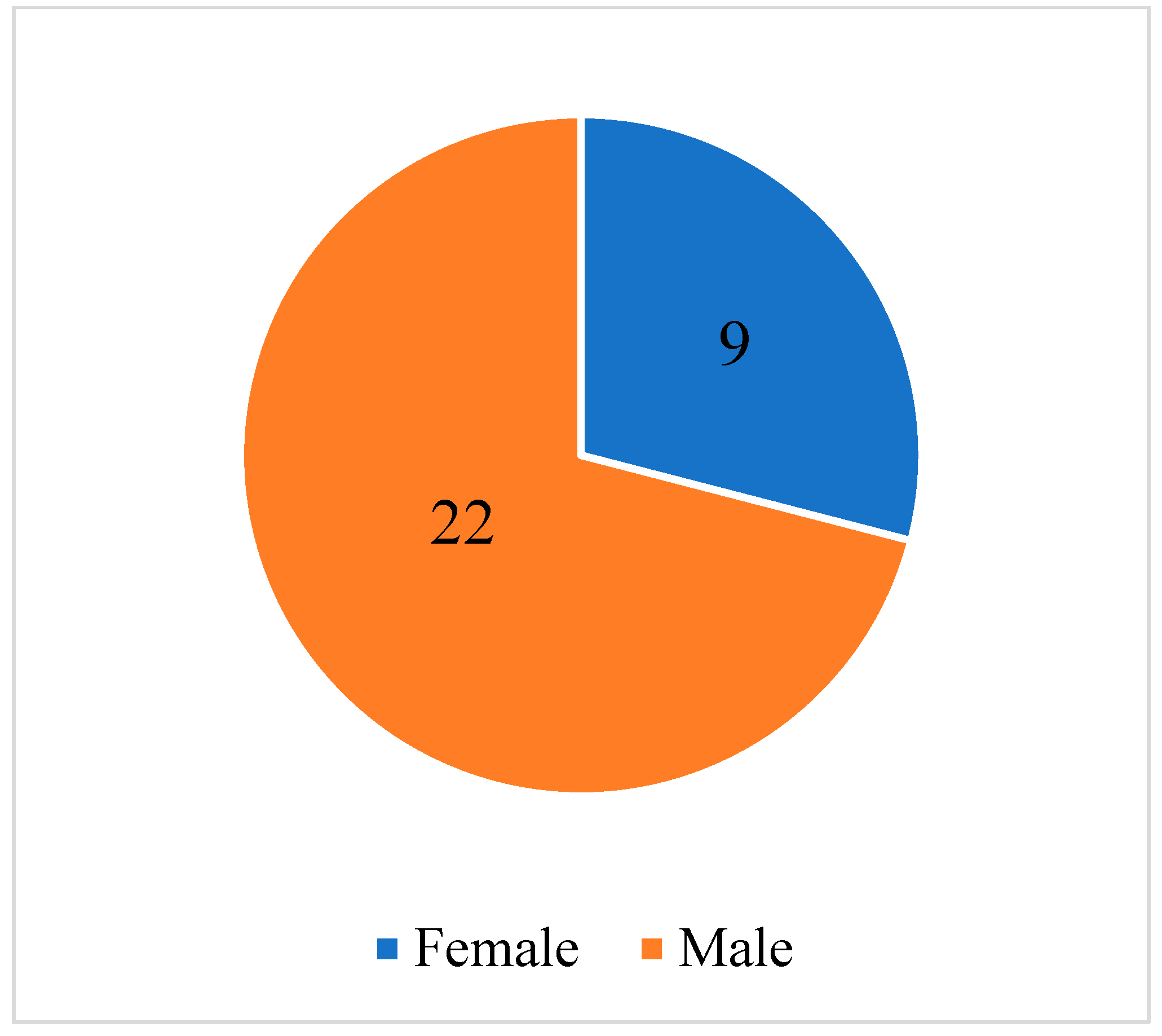
Among managers with available gender data, 29% are female and 71% are male, as shown in Figure 1. This female representation is notably higher than the broader mutual fund industry: as of the end of 2024, women account for only 11% of portfolio managers in the US and 12.9% globally,15 and 10.9% of US equity funds managers are female (Clare et al., 2022). The relatively higher representation of women in biodiversity funds is noteworthy given the historically male-dominated nature of the asset management industry.
We further examine descriptively whether gender diversity is associated with fund performance. Prior literature provides somewhat mixed evidence on this relationship. For example, Barber and Odean (2000) find that female investors achieve higher risk-adjusted returns than males; while other studies (Bliss & Potter, 2002; Atkinson et al., 2003; Clare, 2017; Clare et al., 2022) find no significant differences. For the eight mutual funds in our sample with at least one female manager, the average one-year alpha is –11.11%, and the average three-year alpha is –11.36%, both higher than the corresponding averages for all mutual funds (–12.89% and –16.15%), although still negative. Similarly, the average IRs (one-year of –1.89 and three-year of –1.66) are broadly in line with the full-sample averages (–1.94 and –1.62, respectively). The average one-year Sharpe Ratio is −0.14 and the average three-year Sharpe Ratio is −0.08, both higher than the corresponding averages for all mutual funds (–0.16 and –0.25, respectively). Overall, these results do not provide strong evidence that gender diversity is systematically associated with fund performance. Given the small number of funds with female managers in our sample, these findings should be interpreted with caution.
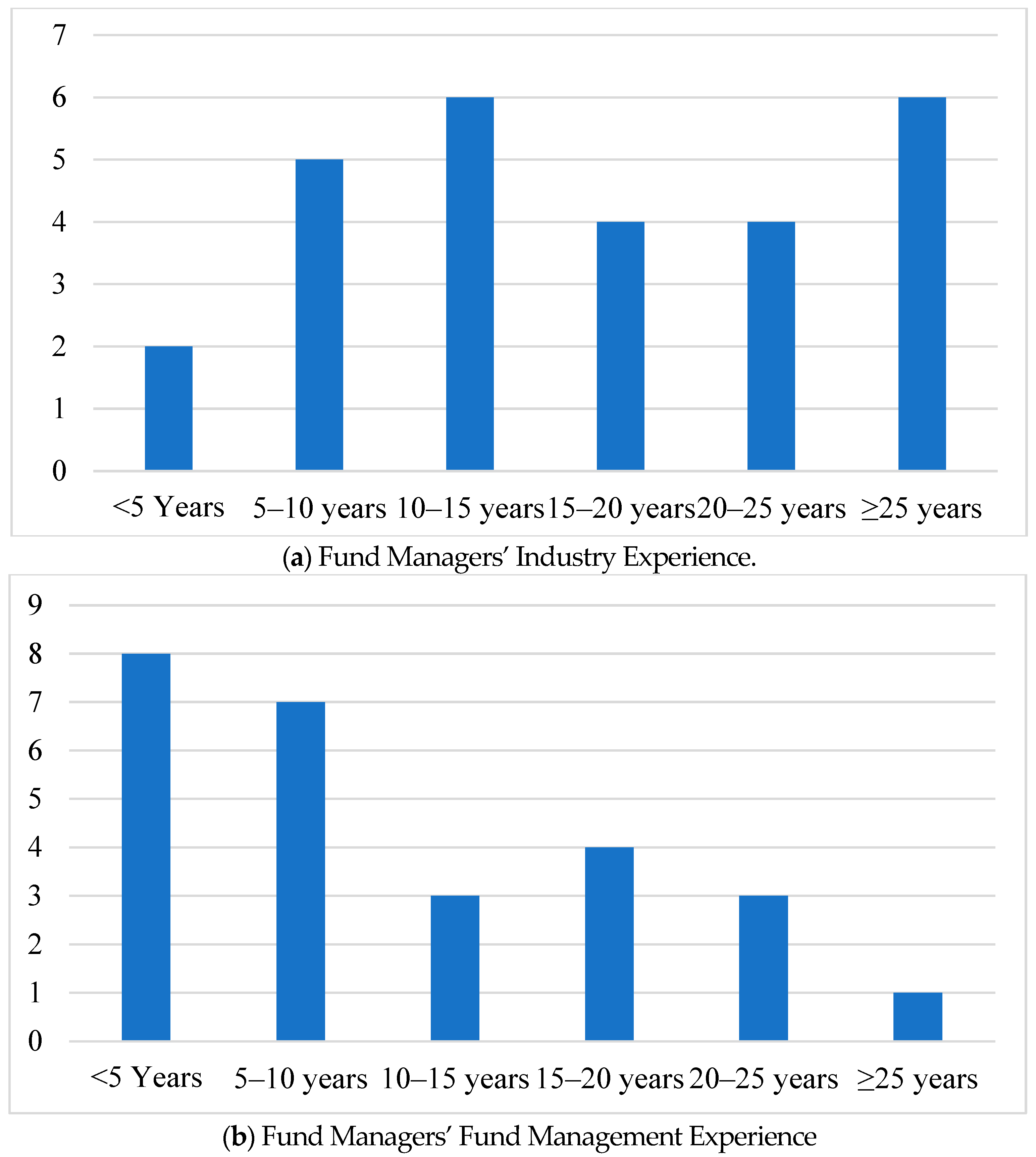
We next consider manager experience. Managers in our sample have, on average, 16 years of experience in the financial industry and 10.3 years in fund management roles (as in Figure 2), substantially longer than the 6.8-year average for US equity mutual fund managers (Clare et al., 2022). Prior studies provide mixed evidence on the relationship between experience and fund performance. Clare (2017) and Clare et al. (2022) document a positive association between manager experience and performance for US equity mutual funds, whereas Porter and Trifts (2012) report a negative relationship, and Y. Fang and Wang (2015) report no significant relationship for Chinese open-end equity funds. Despite the relatively high level of experience, biodiversity-themed funds exhibit weak performance overall. This suggests that manager experience alone may not be sufficient to offset the challenges associated with investing in an emerging and specialized investment theme. At the same time, given the short track records of these funds, it remains difficult to draw definitive conclusions about the role of experience in shaping performance outcomes.
Finally, several managers are associated with multiple funds in the sample, suggesting that their expertise is recognized within the industry and valued across different investment vehicles. However, the limited sample size and data availability constrain our ability to conduct formal tests of the relationship between manager characteristics and fund performance. Accordingly, our analysis remains descriptive and aims to provide preliminary insights into this emerging segment.

4. Conclusions

Biodiversity loss is an increasingly material financial risk, yet biodiversity-themed funds remain nascent. Our evidence shows that these funds—recently launched, European-domiciled, small in scale, and highly rated on sustainability metrics—are managed primarily by experienced male professionals. They charge above-average fees and have underperformed their benchmarks over their limited track records.
These patterns highlight the early-stage development of biodiversity finance. Investor interest and regulatory attention are rising, but market penetration, track records, and product maturity remain limited. The elevated fees and weak performance suggest that current offerings may not yet deliver strong risk-adjusted returns, though this may reflect short time series, unfavorable market conditions, or the costly nature of thematic research and engagement. While current offerings have yet to prove their cost-effectiveness, they represent an important initial step in integrating biodiversity into investment practice. As data availability improves, disclosure standards evolve, and biodiversity becomes more explicitly integrated into risk management frameworks, these funds may grow into more effective vehicles for managing nature-related risk and channeling capital toward biodiversity-positive outcomes. In this sense, the current generation of biodiversity funds should be viewed not as a mature asset class but as an evolving frontier within sustainable finance—one with significant potential as the field advances.
Our findings carry several policy implications. First, the relatively high fees and weak performance of biodiversity-themed funds raise concerns about cost efficiency and investor protection, highlighting the need for greater transparency in fee structures and benchmark selection. Second, the combination of high sustainability ratings and weak financial performance underscores the importance of setting appropriate investor expectations. Policymakers and industry participants may consider enhancing disclosures to clarify potential trade-offs between sustainability objectives and financial performance, thereby better informing investors.
Despite these contributions, this study has several limitations that also suggest directions for future research. First, the sample size is relatively small, reflecting the early-stage development of biodiversity-themed funds. Second, data availability for certain fund characteristics, particularly at the portfolio level, is limited, constraining the scope of empirical analysis. Third, the short track records of these funds restrict our ability to assess long-term performance and risk dynamics. As this market develops and more data become available, future studies could examine longer-term performance and further explore the role of manager characteristics, portfolio composition, and investment strategies using more comprehensive empirical approaches.

Author Contributions

Conceptualization, F.F. and D.L.; methodology, F.F. and D.L.; validation, F.F. and D.L.; formal analysis, F.F. and D.L.; data curation, F.F.; writing—original draft preparation, F.F. and D.L.; writing—review and editing, F.F. and D.L.; visualization: F.F.; funding acquisition: D.L. All authors have read and agreed to the published version of the manuscript.

Funding

Di is grateful for financial support from the National Natural Science Foundation of China, grant number 71991473.

Institutional Review Board Statement

Not applicable.

Informed Consent Statement

Not applicable.

Data Availability Statement

Publicly available datasets were analyzed in this study. The data can be found here: https://www.ft.com/ (accessed in 3 July 2025); https://www.morningstar.com/ (accessed in 5 August 2025).

Acknowledgments

During the preparation of this work, the authors used ChatGPT (version 5, 5.1, 5.2 and 5.4) in order to improve readability. After using this tool, the authors reviewed and edited the content as needed and take full responsibility for the content of the publication.

Conflicts of Interest

The authors declare no conflicts of interest.

Notes

1
A pure-play biodiversity fund is an investment fund that focuses exclusively or predominantly on companies whose core business activities directly contribute to the preservation, restoration, or sustainable use of biodiversity and natural ecosystems.
2
For example, the risk, return, and sustainability data of some funds are not available.
3
The SFDR was introduced by the European Commission as part of its Action Plan on Sustainable Finance, establishing mandatory ESG disclosure requirements for asset managers and other participants in financial markets.
4
The Morningstar Sustainability Rating, or Globe Rating, is designed to measure how well investments address ESG challenges, with five globes indicating the most sustainable funds.
5
According to Morningstar, the LCD indicates that a portfolio’s holdings are generally aligned with the transition to a low-carbon economy.
6
A fund is classified as an article 8 fund if it “promotes, among other characteristics, environmental or social characteristics, or a combination of those characteristics” (light green). A fund is classified as an article 9 fund if it “has sustainable investment as their objective” (dark green).
7
Due to data limitations, our analysis relies on descriptive comparisons of reported performance metrics from FT.com, as we do not have access to the underlying time-series return data.
8
The MSCI ACWI represents large- and mid-cap equities across 23 developed markets and 24 emerging markets countries. See https://www.msci.com/documents/10199/a71b65b5-d0ea-4b5c-a709-24b1213bc3c5 (accessed on 2 February 2026) for the index factsheet.
9
The Morningstar Global TME Index tracks the performance of large- and mid-cap equities across developed and emerging markets. See https://indexes.morningstar.com/indexes/details/morningstar-global-target-market-exposure-FS0000DQH7?currency=USD&variant=TR&tab=overview (accessed on 2 February 2026) for more information.
10
The MSCI World Index represents large- and mid-cap stocks across 23 developed markets. See https://www.msci.com/documents/10199/4db922ce-68d2-446d-2f9e-4ed408a9db29(accessed on 2 February 2026) for the index factsheet.
11
The Morningstar US Large-Mid Cap Index tracks the performance of large- and mid-cap US equities. See https://indexes.morningstar.com/indexes/details/morningstar-us-large-mid-cap-FSUSA0AOJD?currency=USD&variant=TR&tab=overview (accessed on 2 February 2026) for details.
12
The Morningstar DM Eur TME Index tracks the performance of large- and mid-cap equities across developed European markets. See https://indexes.morningstar.com/indexes/details/morningstar-developed-europe-target-market-exposure-FS0000DPNZ?currency=EUR&variant=NR&tab=overview (accessed on 2 February 2026) for more information.
13
The Morningstar Dev Ezn TME Index measures the performance of large- and mid-cap equities across developed Eurozone markets.
14
The Morningstar Gbl Cons Cyc TME Index measures the performance of consumer cyclical stocks in the Morningstar Global Target Market Exposure Index. See https://indexes.morningstar.com/indexes/details/morningstar-global-consumer-cyclical-target-market-exposure-FS0000GTAV?currency=USD&variant=TR&tab=overview (accessed on 2 February 2026) for more information.
15
See article titled “Women Account for a Smaller Percentage of Managers Today, Compared With 2002” published on https://www.morningstar.com/sustainable-investing/women-account-smaller-percentage-managers-today-compared-with-2002 (accessed on 14 October 2025).

References

  1. Albuquerque, R. A., Koskinen, Y., Yang, S., & Zhang, C. (2020). Resiliency of environmental and social stocks: An analysis of the exogenous COVID-19 market crash. The Review of Corporate Finance Studies, 9(3), 593–621. [Google Scholar] [CrossRef]
  2. Amel-Zadeh, A., & Serafeim, G. (2018). Why and how investors use ESG information: Evidence from a global survey. Financial Analysts Journal, 74(3), 87–103. [Google Scholar] [CrossRef]
  3. Atkinson, S. M., Baird, S. B., & Frye, M. B. (2003). Do female fund managers manage differently? The Journal of Financial Research, 26(1), 1–18. [Google Scholar] [CrossRef]
  4. Bae, K.-H., El Ghoul, S., Gong, Z. J., & Guedhami, O. (2021). Does CSR matter in times of crisis? Evidence from the COVID-19 pandemic. Journal of Corporate Finance, 67, 101876. [Google Scholar] [CrossRef]
  5. Barber, B. M., & Odean, T. (2000). Trading is hazardous to your wealth: The common stock investment performance of individual investors. The Journal of Finance, 55(2), 773–806. [Google Scholar] [CrossRef]
  6. Barbier, E. B., Burgess, J. C., & Dean, T. J. (2018). How to pay for saving biodiversity. Science, 360(6388), 486–488. [Google Scholar] [CrossRef]
  7. Bauer, R., Koedijk, K., & Otten, R. (2005). International evidence on ethical mutual fund performance and investment style. Journal of Banking & Finance, 29(7), 1751–1767. [Google Scholar] [CrossRef]
  8. Benson, N. U., Bassey, D. E., & Palanisami, T. (2021). COVID pollution: Impact of COVID-19 pandemic on global plastic waste footprint. Heliyon, 7(2), e06343. [Google Scholar] [CrossRef]
  9. Berg, F., Koelbel, J. F., Pavlova, A., & Rigobon, R. (2022). ESG confusion and stock returns: Tackling the problem of noise (Working Paper). NBER. [Google Scholar]
  10. Bialkowski, J., & Starks, L. T. (2016). SRI funds: Investor demand, exogenous shocks and ESG profiles (Working Paper). Department of Economics and Finance, University of Canterbury. [Google Scholar]
  11. Bliss, R. T., & Potter, M. E. (2002). Mutual fund managers: Does gender matter? The Journal of Business and Economic Studies, 8(1), 1–15. [Google Scholar]
  12. Bolton, P., & Kacperczyk, M. (2021). Do investors care about carbon risk? Journal of Financial Economics, 142(2), 517–549. [Google Scholar] [CrossRef]
  13. Bolton, P., & Kacperczyk, M. (2023). Global pricing of carbon-transition risk. Journal of Finance, 78(6), 3677–3754. [Google Scholar] [CrossRef]
  14. Clare, A. (2017). The performance of long-serving fund managers. International Review of Financial Analysis, 52, 152–159. [Google Scholar] [CrossRef]
  15. Clare, A., Sherman, M., Sullivan, N. O., Gao, J., & Zhu, S. (2022). Manager characteristics: Predicting fund performance. International Review of Financial Analysis, 80, 102049. [Google Scholar] [CrossRef]
  16. Daily, G. C., Soderqvist, T., Aniyar, S., Arrow, K., Dasgupta, P., Ehrlich, P. R., & Walker, B. (2000). The value of nature and the nature of value. Science, 289(5478), 395–396. [Google Scholar] [CrossRef]
  17. Ding, W., Levine, R., Lin, C., & Xie, W. (2021). Corporate immunity to the COVID-19 pandemic. Journal of Financial Economics, 141(2), 802–830. [Google Scholar] [CrossRef]
  18. Dong, X., Feng, S., Parida, S., & Wang, Z. (2019). Corporate social responsibility exposure and performance of mutual funds. The Journal of Investing ESG Special Issue, 28(2), 53–65. [Google Scholar] [CrossRef]
  19. Fang, F., & Parida, S. (2022). Sustainable mutual fund performance and flow in the recent years through the COVID-19 pandemic. International Review of Financial Analysis, 84, 102387. [Google Scholar] [CrossRef]
  20. Fang, F., & Parida, S. (2025). Do active sustainable equity funds outperform their passive peers? Evidence from the COVID-19 pandemic. Journal of Risk and Financial Management, 18(10), 530. [Google Scholar] [CrossRef]
  21. Fang, Y., & Wang, H. (2015). Fund manager characteristics and performance. Investment Analysts Journal, 44(1), 102–116. [Google Scholar] [CrossRef]
  22. Flammer, C., Giroux, T., & Heal, G. M. (2025). Biodiversity finance. Journal of Financial Economics, 164, 103987. [Google Scholar] [CrossRef]
  23. Garel, A., & Petit-Romec, A. (2021). Investor rewards to environmental responsibility: Evidence from the COVID-19 crisis. Journal of Corporate Finance, 68, 101948. [Google Scholar] [CrossRef]
  24. Garel, A., Romec, A., Sautner, Z., & Wagner, A. F. (2024). Do investors care about biodiversity? Review of Finance, 28(4), 1151–1186. [Google Scholar] [CrossRef]
  25. Garel, A., Romec, A., Sautner, Z., & Wagner, A. F. (2026). Firm-level nature dependence. Review of Finance, 30(1), 231–272. [Google Scholar]
  26. Gibson, B., Glossner, S., Kruger, P., Matos, P., & Tom, S. (2020). Responsible institutional investing around the world (Swiss Finance Institute Research Paper). Swiss Finance Institute. [Google Scholar]
  27. Giglio, S., Kuchler, T., Stroebel, J., & Zeng, X. (2023). Biodiversity risk (Working Paper). NBER. [Google Scholar]
  28. Gil-Bazo, J., Ruiz-Verdú, P., & Santos, A. A. P. (2010). The performance of socially responsible mutual funds: The role of fees and management companies. Journal of Business Ethics, 94(2), 243–263. [Google Scholar] [CrossRef]
  29. Gjerde, S., Sautner, Z., Wagner, A. F., & Wegerich, A. (2026). Corporate nature risk perceptions. Review of Finance, 30(1), 11–42. [Google Scholar]
  30. Hamilton, S., Jo, H., & Statman, M. (1993). Doing well while doing good? The investment performance of socially responsible mutual funds. Financial Analysts Journal, 49(6), 62–66. [Google Scholar] [CrossRef]
  31. Heal, G. (2000). Nature and the marketplace: Capturing the value of ecosystem services. Island Press. [Google Scholar]
  32. Kempf, A., & Osthoff, P. (2007). The effect of socially responsible investing on portfolio performance. European Financial Management, 13(5), 908–922. [Google Scholar] [CrossRef]
  33. Kruttli, M. S., Tran, B. R., & Watugala, S. W. (2025). Pricing Poseidon: Extreme weather uncertainty and firm return dynamics. The Journal of Finance, 80(2), 783–832. [Google Scholar] [CrossRef]
  34. Lins, K. V., Servaes, H., & Tamayo, A. (2017). Social capital, trust, and firm performance: The value of corporate social responsibility during the financial crisis. The Journal of Finance, 72(4), 1785–1824. [Google Scholar] [CrossRef]
  35. Lintner, J. (1965). The valuation of risk assets and the selection of risky investments in stock portfolios and capital budgets. The Review of Economics and Statistics, 47(1), 13–37. [Google Scholar] [CrossRef]
  36. Mossin, J. (1966). Equilibrium in a capital asset market. Econometrica, 34(4), 768–783. [Google Scholar] [CrossRef]
  37. Nofsinger, J., & Varma, A. (2014). Socially responsible funds and market crisis. Journal of Banking & Finance, 48(C), 180–193. [Google Scholar]
  38. Omura, A., Roca, E., & Nakai, M. (2021). Does responsible investing pay during economic downturns: Evidence from the COVID-19 pandemic. Finance Research Letters, 42, 101914. [Google Scholar] [CrossRef] [PubMed]
  39. Pastor, L., Stambaugh, R. F., & Taylor, L. A. (2021). Sustainable investing in equilibrium. Journal of Financial Economics, 142(2), 550–571. [Google Scholar] [CrossRef]
  40. Pastor, L., & Vorsatz, M. B. (2020). Mutual fund performance and flows during the COVID-19 crisis. The Review of Asset Pricing Studies, 10(4), 791–833. [Google Scholar] [CrossRef]
  41. Pavlova, I., & de Boyrie, M. E. (2022). ESG ETFs and the COVID-19 stock market crash of 2020: Did clean funds fare better? Financial Research Letters, 44, 102051. [Google Scholar] [CrossRef]
  42. Pereira, C. C., Fernandes, G. W., Negreiros, D., Kenedy-Siqueira, W., Fernandes, S., & Fearnside, P. (2023). Hope for funding biodiversity efforts. Science, 382(6669), 383–384. [Google Scholar] [CrossRef]
  43. Porter, G. E., & Trifts, J. (2012). The best mutual fund managers: Testing the impact of experience using a survivorship bias free dataset. Journal of Applied Finance, 22(1), 105–117. [Google Scholar]
  44. Reddy, K., Mirza, N., Naqvi, B., & Fu, M. (2017). Comparative risk-adjusted performance of Islamic, socially responsible and conventional funds: Evidence from United Kingdom. Economic Modelling, 66(C), 233–243. [Google Scholar] [CrossRef]
  45. Renneboog, L., Ter Horst, J., & Zhang, C. (2008). The price of ethics and stakeholder governance: The performance of socially responsible mutual funds. Journal of Corporate Finance, 14(3), 302–322. [Google Scholar] [CrossRef]
  46. Rockstrom, J., Steffen, W., Noone, K., Persson, A., Chapin, & Foley, J. A. (2009). A safe operating space for humanity. Nature, 461, 472–475. [Google Scholar] [CrossRef]
  47. Schroder, M. (2004). The performance of socially responsible investments: Investment funds and indices. Financial Markets and Portfolio Management, 18(2), 122–142. [Google Scholar] [CrossRef]
  48. Sharpe, W. F. (1964). Capital asset prices: A theory of market equilibrium under conditions of risk. The Journal of Finance, 19(3), 425–442. [Google Scholar]
  49. Sharpe, W. F. (1966). Mutual fund performance. The Journal of Business, 39(1), 119–138. [Google Scholar] [CrossRef]
  50. Statman, M. (2000). Socially responsible mutual funds. Financial Analysts Journal, 56(3), 30–39. [Google Scholar] [CrossRef]
  51. Steffen, W., Richardson, K., Rockstrom, J., Cornell, S. E., Fetzer, I., & Sorlin, S. (2015). Planetary boundaries: Guiding human development on a changing planet. Science, 347(6223), 1259855. [Google Scholar] [CrossRef]
  52. Treynor, J. L., & Black, F. (1973). How to use security analysis to improve portfolio selection. The Journal of Business, 46(1), 66–88. [Google Scholar] [CrossRef]
Figure 1. Gender Distribution of Fund Managers.
Ijfs 14 00117 g001
Figure 2. Fund Manager Experience.
Ijfs 14 00117 g002
Table 1. Key Characteristics. This table presents biodiversity funds’ key information, including their type, management style (active or passive), inception date, domicile, and size, as of 30 June 2025.
Panel A Mutual Funds
Fund NameTypeActive or PassiveInception DateDomicileSize (Millions)
ASN BiodiversiteitsfondsEquityActiveMay 2020Netherlands$24.37
M&G (lux) Nature and Biodiversity Solutions FundEquityActiveNovember 2020Luxembourg$12.12
Echiquier Climate & Biodiversity Impact EuropeEquityActiveDecember 2020France$63.46
BNP Paribas Funds Ecosystem RestorationEquityActiveMay 2021Luxembourg$33.21
Swiss Life Funds (LUX) Equity Environment & Biodiversity ImpactEquityActiveAugust 2021Luxembourg$239.60
UBAM—Biodiversity RestorationEquityActiveSeptember 2021Luxembourg$46.19
Aviva Investors Natural Capital Global Equity FundEquityActiveNovember 2021Luxembourg$42.90
AXA World Funds—ACT Biodiversity A CapitalisationEquityActiveApril 2022Luxembourg$264.27
Principal Global Sustainable Food and Biodiversity FundEquityActiveJuly 2022Ireland$7.77
Willerfunds—Private Suite—Lombard Odier Natural CapitalEquityActiveJuly 2022Luxembourg$40.54
Robeco Biodiversity FundEquityActiveOctober 2022Luxembourg$7.40
Tocqueville Biodiversity ISREquityActiveNovember 2022France$182.56
Pictet-Regeneration FundEquityActiveDecember 2022Luxembourg$76.16
Redwheel Biodiversity FundEquityActiveSeptember 2023Luxembourg$18.64
Global Fund—Ofi Invest Biodiversity Global EquityEquityActiveNovember 2023Luxembourg$93.70
Mirova Biodiversity Solutions Equity FundEquityActiveDecember 2023Luxembourg$5.46
Prestige Luxembourg Uzes BiodiversiteEquityActiveMarch 2024Luxembourg$5.80
Northern Trust World Natural Capital Paris-Aligned Equity Index FundEquityPassiveDecember 2023Ireland$1892.30
Panel B ETFs
Fund NameTypeActive or PassiveInception DateDomicileSize
(Millions)
Ossiam Food for Biodiversity UCITS ETFEquityActiveDecember 2020Ireland$1.77
AXA IM ACT Biodiversity Equity UCITS ETFEquityActiveAugust 2022Ireland$430.20
BNP Paribas Easy ESG Eurozone Biodiversity Leaders PAB UCITS ETFEquityPassiveAugust 2022Luxembourg$63.32
Xtrackers USA Biodiversity Focus SRI UCITS ETFEquityPassiveSeptember 2023Ireland$9.65
Xtrackers Europe Biodiversity Focus SRI UCITS ETFEquityPassiveSeptember 2023Ireland$8.97
Xtrackers World Biodiversity Focus SRI UCITS ETFEquityPassiveSeptember 2023Ireland$15.29
Table 2. Sustainability Rating. This table presents the funds’ classification of the EU Sustainable Finance Disclosure Regulation (SFDR), their Morningstar Sustainability (Globe) Rating and Morningstar Low Carbon Designation (LCD).
Panel A Mutual Funds
Fund NameSFDR
Classification
Morningstar
Sustainability (Globe) Rating
Morningstar Low-Carbon Designation
ASN BiodiversiteitsfondsArticle 9--
M&G (lux) Nature and Biodiversity Solutions FundArticle 9Ijfs 14 00117 i001No Designation
Echiquier Climate & Biodiversity Impact EuropeArticle 9--
BNP Paribas Funds Ecosystem RestorationArticle 9Ijfs 14 00117 i002No Designation
Swiss Life Funds (LUX) Equity Environment & Biodiversity ImpactArticle 9Ijfs 14 00117 i003Ijfs 14 00117 i005
UBAM—Biodiversity RestorationArticle 9Ijfs 14 00117 i001Ijfs 14 00117 i005
Aviva Investors Natural Capital Global Equity FundArticle 9Ijfs 14 00117 i001Ijfs 14 00117 i005
AXA World Funds—ACT Biodiversity A CapitalisationArticle 9Ijfs 14 00117 i001Ijfs 14 00117 i005
Principal Global Sustainable Food and Biodiversity FundArticle 9--
Willerfunds—Private Suite—Lombard Odier Natural CapitalArticle 9Ijfs 14 00117 i004Ijfs 14 00117 i005
Robeco Biodiversity FundArticle 9Ijfs 14 00117 i003Ijfs 14 00117 i005
Tocqueville Biodiversity ISRArticle 9Ijfs 14 00117 i004Ijfs 14 00117 i005
Redwheel Biodiversity FundArticle 8--
Global Fund—Ofi Invest Biodiversity Global EquityArticle 8Ijfs 14 00117 i004Ijfs 14 00117 i005
Pictet-RegenerationArticle 9Ijfs 14 00117 i001Ijfs 14 00117 i005
Mirova Biodiversity Solutions Equity FundArticle 9--
Prestige Luxembourg Uzes BiodiversiteArticle 9--
Northern Trust World Natural Capital Paris-Aligned Equity Index FundArticle 9--
Panel B ETFs
Fund NameSFDR
Classification
Morningstar
Sustainability (Globe) Rating
Morningstar Low-Carbon Designation
Ossiam Food for Biodiversity UCITS ETFArticle 9-Ijfs 14 00117 i005
AXA IM ACT Biodiversity Equity UCITS ETFArticle 8Ijfs 14 00117 i004Ijfs 14 00117 i005
BNP Paribas Easy ESG Eurozone Biodiversity Leaders PAB UCITS ETFArticle 8Ijfs 14 00117 i001Ijfs 14 00117 i005
Xtrackers USA Biodiversity Focus SRI UCITS ETFArticle 8Ijfs 14 00117 i001-
Xtrackers Europe Biodiversity Focus SRI UCITS ETFArticle 8--
Xtrackers World Biodiversity Focus SRI UCITS ETFArticle 8--
Table 3. Expense Ratio, Performance and Risk. This table presents the biodiversity funds’ expense ratio, performance and risk metrics, including Morningstar Star Rating, one-year and three-year Alpha (α), Beta (β), Information ratio, Sharpe ratio, and Standard deviation of the net return, as of 31 July 2025.
Panel A Mutual Funds
Fund NameExpense Ratio (%)Morningstar Star RatingOne-Year as of 31 July 2025Three-Year as of 31 July 2025Benchmark
Net Ret (%)Alpha (α, %)Beta (β, %)IRSharpe RatioStD (%)Net Ret (%)Alpha (α, %)Beta (β, %)IRSharpe RatioStD (%)
ASN Biodiversiteitsfonds2.14-−1.30-----+1.00------
M&G (lux) Nature and Biodiversity Solutions Fund2.04Ijfs 14 00117 i006−1.74−15.1+1.18−2.39−0.4612.69−4.61−16.06+1.16−1.7−0.4615.01MSCI World Index
Echiquier Climate & Biodiversity Impact Europe0.50Ijfs 14 00117 i007+4.29-----+0.90------
BNP Paribas Funds Ecosystem Restoration2.02Ijfs 14 00117 i008−6.99−23.58+1.26−2.00−0.9314.73−21.65−38.97+1.70−1.82−1.0124.55MSCI ACWI
Swiss Life Funds (LUX) Equity Environment & Biodiversity Impact0.27Ijfs 14 00117 i007+3.59−11.20+0.96−2.18−0.3910.68+4.22−7.77+1.10−1.21+0.0512.34Morningstar Global TME Index
UBAM—Biodiversity Restoration1.78Ijfs 14 00117 i007+3.19−10.16+0.96−1.61−0.3410.00+2.75−8.43+1.06−1.19−0.0412.17MSCI ACWI
Aviva Investors Natural Capital Global Equity Fund0.78Ijfs 14 00117 i009+13.54---+0.5310.51+8.84---+0.3613.89MSCI ACWI
AXA World Funds—ACT Biodiversity A Capitalisation1.76Ijfs 14 00117 i006+4.30−11.02+1.15−1.96−0.1413.98−2.40−14.82+1.20−2.13−0.3614.57MSCI ACWI
Principal Global Sustainable Food and Biodiversity Fund1.91--------------
Willerfunds—Private Suite—Lombard Odier Natural Capital1.15-+1.11−13.83+1.14−2.63−0.4012.50−0.49−10.83+1.01−1.67−0.2612.19Morningstar Global TME Index
Robeco Biodiversity Fund0.98--------------
Tocqueville Biodiversity ISR0.86-+2.40------------
Pictet-Regeneration1.11-+2.41−12.30+1.28−1.46−0.1115.69------MSCI ACWI
Redwheel Biodiversity Fund0.96-+3.68−12.35+1.15−2.02−0.2812.46------MSCI ACWI
Global Fund—Ofi Invest Biodiversity Global Equity0.96-+11.10−5.79+1.13−1.00+0.2412.13------Morningstar Global TME Index
Mirova Biodiversity Solutions Equity Fund0.11-−0.57−13.52+0.98−2.11−0.5811.03------MSCI World Index
Prestige Luxembourg Uzes Biodiversite1.00Ijfs 14 00117 i008+11.90------------
Northern Trust World Natural Capital Paris-Aligned Equity Index Fund0.07-+20.85---+0.9810.53-------
Panel B ETFs
Fund NameExpense Ratio (%)Morningstar Star RatingOne-Year as of 31 July 2025Three-Year as of 31 July 2025Benchmark
Net Ret (%)Alpha (α, %)Beta (β, %)IRSharpe RatioStD (%)Net Ret (%)Alpha (α, %)Beta (β, %)IRSharpe RatioStD (%)
Ossiam Food for Biodiversity UCITS ETF0.75%Ijfs 14 00117 i006−0.93−9.45+0.88−1.37−0.709.77+0.05−5.41+1.02−0.86−0.3710.42Morningstar Gbl Cons Cyc TME Index
AXA IM ACT Biodiversity Equity UCITS ETF0.53%-+11.46−5.31+1.07−2.25+0.2412.30------MSCI ACWI
BNP Paribas Easy ESG Eurozone Biodiversity Leaders PAB UCITS ETF0.35%-+14.82−3.06+0.97−1.12+0.8410.51------Morningstar Dev Ezn TME Index
Xtrackers USA Biodiversity Focus SRI UCITS ETF0.30%-+14.22−2.35+0.97−0.95+0.4015.14------Morningstar US Large-Mid Cap Index
Xtrackers Europe Biodiversity Focus SRI UCITS ETF0.30%-+12.56−0.60+1.00−0.33+0.5510.04------Morningstar DM Eur TME Index
Xtrackers World Biodiversity Focus SRI UCITS ETF0.30%-+14.13−2.76+1.04−0.94+0.4212.42------Morningstar Global TME Index
Note: “-” denotes unavailable data. Missing values reflect data unavailability from the source, primarily due to incomplete reporting or the lack of sufficient data to compute certain risk-adjusted performance metrics (e.g., alpha, beta, information ratio, and Sharpe ratio).
Disclaimer/Publisher’s Note: The statements, opinions and data contained in all publications are solely those of the individual author(s) and contributor(s) and not of MDPI and/or the editor(s). MDPI and/or the editor(s) disclaim responsibility for any injury to people or property resulting from any ideas, methods, instructions or products referred to in the content.