


Abstract
This study examines how geographic distance to Vietnam’s centralized securities regulator—the State Securities Commission (SSC)—influences firm-level stock price crash risk. In emerging markets characterized by weak governance, corruption, and political connections, distance can erode monitoring effectiveness and heighten managerial incentives to conceal bad news. Using data on Vietnamese listed firms from 2010 to 2024, we find a robust positive association between a firm’s distance to the SSC headquarters in Hanoi and its future crash risk. The effect is stronger for non-state-owned enterprises (non-SOEs) and in provinces with high corruption, but disappears in SOEs and in more transparent regions, where state-related networks provide insulation from weak formal institutions. Exploiting the 2019 Securities Law as a quasi-natural experiment, we show that the distance effect was more pronounced before the reform, suggesting that improved formal regulation can partially offset geographically induced monitoring frictions. Additional tests reveal that the effect is amplified among firms listed on the Ho Chi Minh Stock Exchange (HOSE) and those with higher financial leverage. Our findings provide novel evidence on the spatial dimension of regulatory enforcement in emerging markets. We highlight geographic distance as a significant but previously overlooked source of crash risk, with implications for regulators in designing risk-based supervision and for investors in pricing location-driven risks.
1. Introduction
In recent decades, stock markets have emerged as significant drivers of economic growth, particularly in emerging economies like Vietnam. Since joining the World Trade Organization (WTO) in 2007 and deepening economic integration, Vietnam has witnessed remarkable development in its stock market, marked by an increasing number of listed firms and a rising market capitalization. As of 2024, the Ho Chi Minh Stock Exchange (HOSE) and the Hanoi Stock Exchange (HNX) have become key financial hubs, hosting over 700 listed companies with a combined market capitalization approximating 90% of the national GDP. Both exchanges operate under the oversight of the State Securities Commission (SSC), a government agency under the Ministry of Finance, which is tasked with issuing regulations, monitoring compliance, and imposing sanctions to ensure market transparency and stability.
The SSC’s headquarters in Hanoi introduces a critical geographic dimension, as most listed firms, especially those on HOSE, are located far away, predominantly in Ho Chi Minh City or other regions across the country. This distance may weaken regulatory oversight and influence firms’ risk management practices. Unlike the U.S., where markets exhibit lower volatility and stronger enforcement, Vietnam’s stock market is characterized by higher volatility, reduced transparency, significant political influence, and weaker regulatory enforcement. Zingales (2009) highlights that, while political power in developed countries resides in elected parliaments, in developing nations like Vietnam, it is dispersed across various governmental ministries and agencies. This dispersion, coupled with weak legal systems, often allows SOEs or large conglomerates to exert influence. D. Chen et al. (2011) suggest that SOEs leverage political connections to enhance transparency in financial reporting, potentially mitigating monitoring challenges. Conversely, Hutton et al. (2009) argue that weak governance in corrupt regions increases managers’ incentives to conceal information, particularly in privately owned firms lacking state support. Sequeira and Djankov (2014) further explore how corruption shapes firm behavior, using bribe payment data to show that firms adapt to corruption’s price effects by reorganizing production. Fisman and Svensson (2007) add that higher bribe payments and tax rates correlate negatively with firm growth, implying that corruption poses substantial risks to firms’ future prospects. In the Vietnamese context, Tam (2025) found that, prior to the 2019 Securities Law, weak enforcement and opaque disclosure standards heightened crash risk.
These insights underscore how regional corruption levels and business ownership types (SOEs versus non-SOEs) influence managerial behavior. Building on this, we conduct subsample analyses to investigate whether corruption, central government influence, recent legal reforms, and the dual-exchange system moderate the relationship between geographic distance and stock price crash risk, contributing to the corporate governance literature in Vietnam. To assess a firm’s location in a region less influenced by political power, we use informal charges, proxied by the Informal Charges Index from the Provincial Competitiveness Index (PCI), as an indicator of local corruption that shapes disclosure practices and governance (Viet Nam Chamber of Commerce and Industry [VCCI] & US Agency for International Development [USAID], 2024). As a transitional emerging market with unique economic and institutional features, Vietnam remains underexplored in this regard, particularly concerning institutional reforms like the 2019 Securities Law, which offers a natural setting to examine geographic distance’s impact on stock prices.
Stock price crash risk (SPCR), characterized by a sudden and extreme drop in stock prices due to the release of hoarded negative information, threatens both individual investors and market stability. Events like the 2008 global financial crisis, U.S. tariff hikes in 2018, and the COVID-19 pandemic have exposed the Vietnamese market’s vulnerability. SSC reports indicate a rise in disclosure violations from 15 cases in 2015 to 45 in 2020, with most involving firms distant from the SSC headquarters, raising questions about whether geographic distance is a structural risk factor, especially given the SSC’s limited oversight capacity. Financial theory posits that crash risk arises from managers withholding bad news for personal gain (L. Jin & Myers, 2006). When regulatory monitoring is ineffective, managers delay negative disclosures, exacerbating information asymmetry between insiders and investors. Geographic distance increases monitoring costs and limits access to timely firm-level data, enabling such behavior. Empirical studies by J. B. Kim et al. (2011b) and Hutton et al. (2009) confirm that lower transparency, particularly under weak oversight, elevates crash risk. While Fama and French (1993) emphasized internal factors like leverage and firm size, and J. Chen et al. (2001) and Frank and Goyal (2009) linked high leverage to default risk and reduced investment capacity, Barberis et al. (2005) noted that large firms, often with significant institutional ownership, are more susceptible to macroeconomic shocks. However, these studies predominantly focus on developed markets with robust monitoring systems, unlike Vietnam.
Research on stock price crash risk in Vietnam remains scarce. Recent studies, such as Dang and Nguyen (2021), show that strong internal governance, particularly effective audit committees, mitigates crash risk among non-financial firms on Vietnamese exchanges. Dinh and Tran (2023) find that higher stock liquidity reduces crash risk, suggesting informational efficiency as a protective factor, while Vo (2020) indicates that increased foreign ownership correlates with higher crash risk, reflecting information asymmetry in emerging markets. The interplay of geographic distance with political connections, central government influence, legal reforms, and the dual-exchange system of HOSE and HNX remains underexplored. Globally, research has focused on firm-specific fundamentals (e.g., leverage, profitability) or market factors (e.g., liquidity, volatility), with few addressing spatial regulatory dimensions, mostly in developed economies. Xu et al. (2014) document how excessive perks in SOEs encourage managers to hide unfavorable information, increasing crash risk, while Hatane et al. (2019) highlight that robust governance enhances firm stability. Hutton et al. (2009) and J. B. Kim et al. (2011a) further link financial opacity and tax avoidance to higher crash risk.
In Vietnam, the uneven geographic distribution of listed firms (where HOSE-listed companies dominate the South and HNX-listed firms cluster in the North) provides a unique context to test whether geographic distance influences managerial behavior and elevates stock price crash risk. This study offers three contributions. First, it extends the framework of Kubick and Lockhart (2016), which highlights distance’s role in limiting soft information and raising investigative costs under the “constrained cop” and “differentially informed criminal” hypotheses, by incorporating local institutional factors like political connections, SOEs influence, and recent reforms. This enriches the understanding of SPCR through an institutional and environmental lens in emerging markets. Second, it advances research on regulatory oversight and managerial behavior previously centered on themes like corporate social responsibility (Dang & Nguyen, 2021) or default risk (Liao et al., 2024) by emphasizing proximity to the SSC, revealing that in emerging markets, “distance” encompasses political and regulatory dimensions, offering policy insights. Third, it examines whether the 2019 Securities Law, with its enhanced transparency and enforcement provisions, moderates the distance-SPCR relationship, an untested empirical question. By comparing HOSE and HNX, the study illuminates how market structures and firm characteristics interact with regulatory enforcement, enriching local financial governance literature. Although this study is conducted in the context of Vietnam, its findings have strong potential for application to other emerging markets with similar institutional and geographical characteristics. Countries such as Indonesia, the Philippines, Thailand, Pakistan, and Bangladesh share several key features with Vietnam: (1) their centralized stock exchanges are located in one or two major cities while the majority of listed firms are headquartered in distant provinces; (2) institutional enforcement remains limited and information asymmetry between regulators and firms is high; (3) rapid economic development is accompanied by increasing financial liberalization; and (4) economic activity is geographically dispersed.
Given these similarities, the positive association between geographic distance from the securities regulator and stock price crash risk is likely to arise in these markets as well. Accordingly, regulators in such countries may consider establishing additional regional supervisory offices or modernizing monitoring systems to mitigate information and enforcement disadvantages caused by geographic separation. Doing so could enhance market stability and broaden investor protection across emerging economies.
Advanced methods like propensity score matching (PSM), lagged variables, and endogeneity checks bolster result credibility. Findings suggest that enhancing SSC’s monitoring capacity and considering firm-specific and geographic contexts can mitigate SPCR, providing implications for SSC, HOSE, HNX, and investors integrating geographic factors into risk assessments. The analysis draws on a panel dataset of 7772 firm-year observations from 693 listed firms between 2010 and 2024, using DUVOL and NCSKEW as crash risk proxies.
The remainder of the paper is organized as follows: Section 1 discusses the institutional background of the State Securities Commission (SSC). Section 2 and Section 3 review the literature on the SSC and crash risk, and Section 4 presents hypothesis development. Section 5 describes the data and identification methodology. Section 6 reports estimation results of the relationship between SSC distance and crash risk measures, including robustness tests. Section 7 concludes with a discussion and policy implications.
2. Institutional Framework and Regulatory Landscape
2.1. The Architecture of Vietnam’s Capital Market
2.1.1. State-Led Development and Market Genesis
The genesis of Vietnam’s capital market represents a distinct case of state-led financial engineering, born from the Đổi Mới (Renovation) economic reforms. In the early 1990s, the Vietnamese government identified the establishment of a securities market as a strategic imperative to mobilize capital beyond traditional bank-based financing, thereby fueling national development. This initial phase was characterized by central planning, with government bodies like the State Bank of Vietnam (SBV) spearheading research and design efforts.
This top-down approach culminated in a pivotal strategic choice: the establishment of the State Securities Commission (SSC) under Government Decree No. 75/CP on 28 November 1996 a full three years before the market commenced operations. This “regulation-before-market” model stands in stark contrast to the organic evolution observed in many Western economies, where regulatory frameworks often develop reactively. This deliberate sequencing reflects Vietnam’s socialist-oriented market economy and embedded the regulator at the core of market creation, shaping its institutional trajectory from the outset.
The market officially launched with the opening of the Ho Chi Minh City Securities Trading Center (now HOSE) in July 2000, followed by the Hanoi Securities Trading Center (now HNX) in March 2005. Its growth has been remarkable, expanding from a mere handful of listed companies to over 700 by 2019, a trajectory mirroring the nation’s rapid economic expansion. Figure 1 illustrates the substantial growth in listed companies and market capitalization from 2015 onward.
Figure 1.
Fluctuations of listed companies on HOSE and HNX and number of shares (2015–2025).
2.1.2. The State Securities Commission (SSC): Mandate, Structure, and Constrained Autonomy
The SSC is formally tasked with a broad mandate, including advising the Ministry of Finance (MoF) on securities law, regulating market operations, licensing securities businesses, and ensuring compliance. Its organizational evolution reveals a persistent tension between operational necessity and political oversight. A critical juncture occurred in 2004 when the SSC was formally merged into the MoF. This integration streamlined policy proposals but also formalized its subordinate position within the state apparatus (Viet Nam Chamber of Commerce and Industry [VCCI] & US Agency for International Development [USAID], 2019).
Under the Securities Law of 2019, the State Securities Commission (SSC) is mandated to oversee licensing, supervision, inspection, and enforcement across the national securities market. This centralized regulatory model, typical of Vietnam’s administrative structure, concentrates authority at the federal level. Historically, oversight relied heavily on on-site inspections and manual verification of corporate disclosures as a practice that persisted until the digital transition following the 2019 Law’s implementation in 2021 (OECD, 2022).
In this context, geographic distance between firms and regulators may exacerbate monitoring costs and reduce inspection frequency, particularly for firms located far from major administrative hubs. International assessments often highlight that Vietnam’s historical supervisory capacity and inter-agency coordination have faced resource and logistical constraints typical of emerging markets. These institutional features suggest that regulatory oversight may vary systematically based on proximity, reinforcing the validity of distance-based measures in empirical analysis. Crucially, while geographic factors such as terrain ruggedness (Nunn & Puga, 2012) and railway accessibility determine physical access, they are unlikely to directly influence stock price crash risk, except through their impact on monitoring intensity and the information environment. This institutional setting provides a robust basis for using geographic instruments to identify the causal effect of regulatory distance on stock price crash risk.
2.1.3. The Drive for Modernization: Recent Reforms and the Pursuit of Emerging Market Status
A primary driver of recent regulatory activity is the strategic goal of upgrading Vietnam’s stock market from “frontier” to “emerging” status by global index providers like FTSE Russell and MSCI. This ambition has catalyzed a wave of reforms aimed at aligning the market with international standards.
Key changes include the Securities Law of 2019 (Law No. 54/2019/QH14), which came into force in 2021 to improve transparency and investor safeguards. More significantly, the Amended Securities Law (Law No. 56/2024/QH15), effective 1 January 2025, introduced a more robust framework. It expanded the SSC’s powers to suspend or cancel offerings for misinformation, enhanced enforcement against market manipulation, and granted foreign investors automatic status as Professional Securities Investors (PSIs). Additionally, Circular No. 68/2024/TT-BTC addressed the pre-funding requirement for trading, a key hurdle for foreign investment.
These reforms highlight a tension between the dual objectives of market development (attracting investment) and risk management (protecting investors). The targeted “checklist” approach prioritizes reforms visible to foreign investors and index providers. Consequently, less visible but critical domestic supervisory challenges such as the on-the-ground monitoring of geographically distant firms may remain unaddressed, suggesting the “spatial effect” investigated in this paper is likely to persist.
2.2. A Comparative Analysis of Regulatory Oversight
To fully appreciate the institutional context, it is necessary to benchmark the SSC’s capabilities against its regional peers. This perspective reveals that its challenges stem not merely from frontier market status, but from specific lags in development, technological capacity, and enforcement robustness.
2.2.1. Benchmarking the SSC: A Multi-Jurisdictional Perspective
The U.S. SEC serves as a useful, albeit aspirational, benchmark. It functions as a fully independent federal agency, led by five presidentially appointed, Senate-confirmed commissioners, ensuring a degree of political neutrality. Its vast resources support advanced technological infrastructure, most notably the Electronic Data Gathering, Analysis, and Retrieval (EDGAR) system, which provides a centralized, real-time repository of corporate filings, alongside sophisticated data analytics for enforcement.
A more relevant comparison as shown in Table 1, however, is with regulators in fellow ASEAN emerging markets. The Securities Commission Malaysia (SC), for instance, demonstrates a higher level of regulatory maturity. It is a self-funded statutory body with a comprehensive structure that includes a dedicated Audit Oversight Board (AOB) to ensure high-quality financial reporting. The SC has been at the forefront of financial innovation, establishing clear regulatory frameworks for equity crowdfunding (ECF), peer-to-peer (P2P) financing, digital asset exchanges (DAX), and, most recently, the tokenization of capital market products. Its adoption of the XBRL common reporting platform further enhances data accessibility and analysis. Similarly, the Securities and Exchange Commission, Thailand (SEC), has been proactive in modernizing its legal framework to align with international standards and address the complexities of digital finance. It has issued specific regulations governing digital asset businesses, defined the status of “investment companies” to prevent regulatory arbitrage, and employed a “regulatory guillotine” project to review and streamline outdated rules, reducing the compliance burden on the private sector.
Table 1.
Comparative Analysis of Securities Regulators: Vietnam, U.S., Malaysia, and Thailand.
This comparative analysis demonstrates that while all emerging markets face challenges, the SSC lags its regional peers in key areas of technological adoption and regulatory innovation. This lag amplifies the importance of traditional, physical-based monitoring, making geographical proximity a more potent factor.
2.2.2. Enforcement Realities in a Frontier Market
The SSC’s enforcement actions primarily consist of administrative sanctions, such as monetary fines, for violations related to information disclosure and corporate governance. For instance, in a 2024 case, Quoc Te Holding Joint Stock Company was fined a total of 377.5 million VND for multiple infractions, including late disclosure of financial reports, publishing incorrect profit figures, and violating regulations on related-party transactions. Similarly, Dua Fat Group JSC was sanctioned in 2025 for late and incomplete disclosures. These actions, while necessary, reflect a focus on relatively straightforward compliance breaches rather than complex market fraud.
The scale of these enforcement activities stands in stark contrast to that of its regional counterparts. In 2023 alone, the SC Malaysia initiated 19 new investigations, imposed 140 administrative sanctions with penalties totaling RM19.53 million (approximately 104 billion VND), and secured court-ordered civil penalties of RM4.81 million. It also froze and seized approximately RM100 million in assets related to a single money laundering investigation. This quantitative disparity starkly illustrates the resource and capacity gap between the two regulators.
A fundamental constraint on the SSC is its stated lack of independent investigative power. Unlike regulators that can conduct their own comprehensive investigations into complex fraud, the SSC often must refer suspicious cases to other state authorities, such as the police. This structural limitation fragments the enforcement process, creates delays, and weakens the overall deterrent effect of its oversight activities. The following table summarizes these key institutional differences, providing a clear rationale for why geographical distance is hypothesized to be a particularly powerful explanatory variable for firm behavior in Vietnam.
3. Theoretical Foundations and Literature Review
3.1. Regulatory Proximity, Information Environment, and Crash Risk
Stock price crashes impose substantial costs on investors and undermine market stability, particularly in emerging markets where information asymmetry is severe. In Vietnam, several high-profile crashes of large HOSE-listed firms headquartered far from Hanoi illustrate this vulnerability: the 2022 crashes of FLC Group and Louis Holdings (both based in the South) wiped out more than 90% of their market value within weeks after prolonged concealment of negative information was revealed (Dinh & Tran, 2023). Similarly, the 2023–2024 bond and margin-call scandals primarily involved southern real-estate giants located over 1500 km from the SSC headquarters. These events raise a critical question: why do large, seemingly well-monitored firms repeatedly experience extreme price drops?
Vietnam features a distinctive North–South geographic layout with an uneven distribution of firms, where most economically significant companies are concentrated in Ho Chi Minh City and the southern provinces. In contrast, the State Securities Commission (SSC) operates through a single headquarters located in Hanoi, creating a structural imbalance in regulatory oversight and enforcement capacity.
In an emerging market where political influence and corruption remain present, such geographic distance increases monitoring costs, limits direct information collection, reduces the frequency of onsite inspections, and restricts access to local soft information. These constraints weaken enforcement effectiveness and allow managers to withhold bad news for longer periods. Once the accumulated negative information is eventually released, it can trigger severe stock price crashes.
Although this mechanism has been discussed in some international literature, empirical evidence in the context of emerging markets like Vietnam is still scarce. Thus, Vietnam offers a suitable empirical setting to establish a causal link between regulatory distance and firm-level stock price crash risk. The next sections synthesize theoretical and empirical literature to construct a clear, logical framework connecting geographical distance from a regulator to firm-level stock price crash risk. The argument posits that in the specific institutional context of Vietnam, regulatory distance exacerbates information asymmetries, which in turn facilitates the managerial behavior that leads to crashes.
3.2. The Economics of Regulatory Distance and Supervisory Intensity
A growing body of literature establishes geographical distance as a potent proxy for monitoring costs and supervisory intensity. The foundational work by Kedia and Rajgopal (2011) demonstrates that resource-constrained regulators are more likely to initiate enforcement actions against geographically proximate firms, as proximity lowers the costs of investigation, travel, and information acquisition. It also increases the likelihood of local whistleblowing, further deterring misconduct.
However, the standard interpretation that distance directly causes opacity may be overly simplistic when applied to an emerging market like Vietnam. The Vietnamese landscape is characterized by a complex interplay of informal institutions, political connections, and regional disparities that potentially mediate this relationship. Therefore, while geographical distance is a significant predictor, its effect is likely channeled and amplified by these distinct, market-specific factors. Furthermore, we propose incorporating mediating variables such as the role of social networks and political patronage (which may substitute for formal oversight), regional differences in social trust and capital, and the quality of local infrastructure (which may mitigate effective distance). These factors are essential for a nuanced understanding of corporate governance dynamics in emerging Southeast Asia.
3.3. Information Asymmetry and the Bad News Hoarding Hypothesis
The central theoretical mechanism linking weak oversight to crash risk is the agency-based view of information opacity. Seminal work by L. Jin and Myers (2006) posits that a significant asymmetry exists between corporate insiders and outside investors. Driven by incentives related to career preservation and compensation, managers are motivated to conceal “bad news,” leading to stock overvaluation. When this accumulated negative information is eventually revealed, it triggers a substantial price decline (Hutton et al., 2009).
Managers withhold bad news for various reasons, including financial reporting opacity (Hutton et al., 2009), tax avoidance (J. B. Kim et al., 2011a), and opportunistic behavior (J. B. Kim et al., 2011b). Factors like managerial ownership and anti-takeover protections (Bhargava et al., 2017) can further incentivize concealment.
The effectiveness of a regulator lies in its ability to disrupt this process by increasing the perceived cost of non-disclosure (McClellan, 2025). Robust oversight reduces a manager’s ability to hoard bad news undetected. Conversely, weak or distant supervision creates an environment where such behavior is less costly (J. Y. Jin & Liu, 2024). Geographical distance from the SSC headquarters directly contributes to this weakness by increasing communication costs and reducing the frequency of inspections, thereby exacerbating information asymmetry.
Recent empirical work in Vietnam validates the critical role of information asymmetry in driving crash risk. Studies show that CSR disclosure reduces crash risk by enhancing the information environment (Cao et al., 2023), and that asymmetry is a key channel through which foreign investor actions (Vo, 2020) and CEO power (Tran et al., 2023) affect crash risk. This evidence strongly suggests that information asymmetry is the primary channel through which the effect of regulatory distance is transmitted.
3.4. The Primacy of External Monitoring in a Weak Governance Environment
The impact of regulatory distance is magnified by Vietnam’s distinctive corporate governance landscape. In principle, robust internal governance can substitute for external oversight. However, Vietnam’s system exhibits features that limit internal monitoring effectiveness, making external monitoring paramount.
A defining feature is high ownership concentration, with many firms controlled by founding families or the state. The state often holds substantial stakes in listed firms, particularly large ones. In contrast, non-SOEs typically lack political connections and state patronage, making them more vulnerable to weak institutional environments. This increases their demand for stronger external monitoring to mitigate managerial incentives to conceal information (Ha & Frömmel, 2020).
Recently, as technological advancement has accelerated, a growing body of research has examined how digital tools may attenuate the sensitivity of firms to geographic distance in developed markets. Similarly, Hategan et al. (2022) find that during the COVID-19 period, the adoption of remote monitoring technologies, implemented to overcome constraints on in-person engagement, enhanced audit effectiveness across the EU, investigate how the auditors identified the impact of COVID-19 on the companies’ annual financial statements and considered this impact as a key audit matters in the reports issued and the factors that influenced their reporting.
In emerging Asian markets, however, geographic information asymmetry remains pronounced. Su et al. (2024) document that the role of the geographic distance of independent directors in stock price crash risk was explored in China. Martin (2025) report comparable patterns in Indonesia, where centralized oversight by OJK in Jakarta results in significantly higher bad news withholding among firms located outside Java. Their findings also examine the impact of recent regulatory reforms introduced by OJK on the capital market and indicate that enhanced disclosure requirements, digital reporting systems, and simplified compliance procedures significantly improve market transparency, operational efficiency, and investor protection, particularly for retail investors. Ma et al. (2021) observe that the direct effect of the pandemic on the Chinese market is the most prominent, and government policies can significantly reduce the negative impact of the pandemic on SMEs indirectly, yet substantial distance-related disparities persisted for firms located farther away.
For these firms, greater distance from the SSC exacerbates crash risk. Managers in highly corrupt regions or in private firms face stronger incentives to engage in bribery to conceal adverse information, heightening the likelihood of sudden price crashes when the news is revealed. In this environment, the SSC plays the primary, and often sole, role in constraining managerial opportunism. The system relies heavily on this external mechanism to protect minority shareholders. Consequently, any factor that undermines the SSC’s effectiveness such as geographic distance, which raises supervisory costs removes a critical layer of discipline. This disproportionately increases the likelihood of bad news hoarding and subsequent crashes. The combination of a centralized, constrained regulator and weak internal governance creates a setting where the shadow of regulatory proximity is highly salient.
4. Research Hypothesis
In this study, we examine some hypotheses about a positive relationship between regulatory distance and stock price crash risk in Vietnam, with particular attention to how political connections, state ownership, corruption, and recent legal reforms shape this association in Vietnam. Prior studies in developed markets emphasize that geographic proximity to regulators reduces investigation costs and strengthens monitoring. For example, Kedia and Rajgopal (2011) highlight that weak enforcement environments increase managers’ incentives to conceal adverse information. However, because institutional contexts differ significantly between developed and emerging markets (La Porta et al., 1998), we propose a distinct mechanism tailored to Vietnam. Political connections and corruption play a prominent role in shaping corporate behavior. Faccio (2006) and Fan et al. (2007) show that politically connected firms benefit from preferential treatment, while D. Chen et al. (2011) and Ang et al. (2013) find that SOEs enjoy implicit guarantees that weaken disciplinary mechanisms. Moreover, weak governance and high corruption heighten incentives for managers to hide bad news (Hutton et al., 2009; Bushman et al., 2004), and firms adapt differently to such environments (Sequeira & Djankov, 2014). Thus, the relationship between proximity to the SSC and crash risk may be mediated by distinctive characteristics of emerging markets such as political influence and corruption intensity.
Turning to the regulatory capacity of the SSC, institutional constraints further exacerbate monitoring challenges. Although the SSC was granted financial autonomy in 2009, it remains fiscally dependent on the Ministry, resulting in budget limitations, lack of advanced technology (e.g., AI or remote surveillance systems), and the inability to establish regional offices (World Bank, 2010). This creates supervisory gaps, particularly for firms listed on the Ho Chi Minh City Stock Exchange (HOSE), nearly 1700 km from the SSC headquarters in Hanoi. Limited inspection frequency in these regions allows managers to conceal negative information and manipulate data, reinforcing “informed crime” behavior. Meanwhile, the SSC’s enforcement capacity remains constrained by scarce resources and weak infrastructure (International Finance Corporation, 2011). Consequently, these institutional insights and prior empirical evidence guide the development of our testable hypotheses.
Hypothesis 1.
The regulatory distance between firms and SSC headquarters is positively related to stock price crash risk.
Furthermore, the institutional and corporate governance context in Vietnam is quite distinct. A key feature is the high concentration of ownership, as many Vietnamese firms are either family-founded or state-controlled. In listed firms, the state often retains substantial ownership, becoming either the controlling shareholder or one of the largest shareholders, particularly in large firms (World Bank, 2006). It is also common for state-owned enterprises (SOEs) to appoint the Chief Executive Officer (CEO) as the Chairman of the Board immediately after listing (World Bank, 2006). This duality entrenches managerial power and reinforces political connections, allowing SOEs to benefit from state patronage and shielding them from weak institutional environments compared to non-SOEs. In contrast, managerial entrenchment is also significant in non-SOEs and family firms, where ineffective board structures and concentrated ownership exacerbate agency conflicts. Prior studies suggest that CEO ability is correlated with the riskiness of corporate decisions, and highlight that family members serving simultaneously as CEOs and board chairmen increase firm risk by consolidating control rather than aligning shareholder interests.
Institutional heterogeneity across provinces further complicates this setting. Following policy reforms, Tuyen et al. (2016) observed substantial variation in compliance with legal frameworks and law enforcement across formal institutions. Evidence from the Provincial Competitiveness Index (PCI) report by Viet Nam Chamber of Commerce and Industry (VCCI) and US Agency for International Development (USAID) (2019) similarly shows that governance quality remains uneven across regions. By the end of 2024, Vietnam consisted of 63 provinces, but only a subset achieved notable reductions in corruption through improvements in the investment climate, business environment, and economic governance, while others lagged behind. Firms located in low-corruption provinces operate in more transparent environments, which reduces managerial incentives to conceal information. These insights extend the literature on corporate governance and disclosure (Leuz et al., 2003; L. Jin & Myers, 2006) by demonstrating that the effect of regulatory distance on crash risk depends on institutional characteristics particularly salient in emerging Asian markets.
Against this backdrop, we also examine the moderating effect of legal reforms. The 2019 Securities Law, effective from 1 January 2021, introduced comprehensive changes aimed at improving the quality of Vietnam’s stock market. These include stricter requirements for timely disclosure, harsher penalties for violations, and enhanced monitoring capacity of the SSC through technological upgrades and new clearing and settlement regulations. According to Baker McKenzie (2024), the law introduced new provisions on private placements, strengthened public firms’ accountability, and raised the maximum penalty for market manipulation to VND 3 billion, thereby reducing systemic risk by promoting transparency. This effect is analogous to the Sarbanes–Oxley Act (SOX) of 2002 in the U.S., which reduced crash risk by constraining earnings management (Hutton et al., 2009). In the Vietnamese context, the law addressed prior weaknesses such as weak enforcement and opaque disclosure, both of which had contributed to higher crash risk before 2019. The World Bank (2023) reports that the law improved the market transparency index, with disclosure violations declining from 45 cases in 2020 to around 30 cases in 2023, particularly among firms located farther from the SSC due to enhanced electronic supervision and remote inspections. Moreover, Dinh and Tran (2023) show that following the reform, stock liquidity increased and crash risk decreased among non-SOEs, as the law required stricter periodic financial reporting, thereby limiting managerial incentives to conceal bad news (L. Jin & Myers, 2006). We therefore argue that such legal reforms attenuate the effect of geographic distance on crash risk. Accordingly, our second hypothesis investigates whether these institutional and legal changes strengthen or weaken the relationship identified in the first hypothesis.
Hypothesis 2a.
The effect of regulator distance on crash risk is stronger for non-SOEs and regions with high local corruption.
Hypothesis 2b.
The effect of regulator distance on crash risk no longer exists after the implementation of the Securities Law 2019.
5. Data and Methodology
5.1. Data Source
Data for this study were collected from multiple reliable sources, including weekly stock price data from the official websites of the Hanoi Stock Exchange (HNX), the Ho Chi Minh City Stock Exchange (HOSE), and Investing.com, as well as firm-level financial data from Fiinpro, covering the fiscal years from 2010 to 2024. This extended time frame enables a long-term analysis that captures both the development and volatility of Vietnam’s stock market. Vietnam’s capital market remains relatively small and is predominantly regulated by a single authority (as the SSC) with limited involvement from other supervisory bodies. Accordingly, this study includes firms across all sectors to more comprehensively reflect the characteristics of the Vietnamese market and to avoid overlooking sector-specific dynamics. To enhance the reliability of the stock price crash risk measurement, we exclude firms with fewer than 30 trading weeks and insufficient observations with crash risk measures and control variables, as insufficient trading frequency may undermine the stability of the analysis. Based on the filtered sample, we collect detailed firm-level data spanning from 2010 to 2024, focusing on key variables related to stock prices, financial performance, and corporate governance. After removing observations with missing or extreme values (outliers), we construct an unbalanced panel consisting of 693 firms, yielding 7772 firm-year observations. Table 2, Panel A details our sample selection procedures. These firms are classified according to the Industry Classification Benchmark (ICB), encompassing a wide range of industries. Panel B presents our sample distribution by industries. The unbalanced nature of the dataset reflects the actual dynamics of Vietnam’s stock market, where the number of listed firms and trading frequency vary significantly across sectors and geographic regions.
Table 2.
Distribution of the sample.
5.2. Measures of Crash Risk
In this study, we utilize two established measures of crash risk, consistent with prior research (J. Chen et al., 2001; L. Jin & Myers, 2006; J. B. Kim et al., 2011a, 2011b). Initially, we calculate weekly returns for each firm and year to identify firm-specific factors influencing crash risk. A firm’s weekly abnormal returns are defined as Wj,t = ln(1 + εj,t), where εj,t is the residual term estimated from the following firm-specific regression of weekly raw returns:
where Rj,t is the return on individual stock j in week t and Rm,t is the return of the Vietnam equity market index (HOSE is VNINDEX and HNX is HNX-index) in week t.
Rj,t = αj + β1Rm,t−2 + β2Rm,t−1 + β3Rm,t + β4Rm,t+1 + β5Rm,t+2 + εj,t
The first measure of crash risk is firm-specific negative conditional skewness (NCSKEW). Following J. Chen et al. (2001) and J. B. Kim et al. (2011a, 2011b), we estimated as the residuals from the market model to measure negative conditional skewness as the third moment of firm-specific weekly returns and scaled by the standard deviation of firm-specific weekly returns for each stock and each year. Specifically, NCSKEW for each firm j in year t is calculated by the cube of the standard deviation:
If the distribution of residual returns is negatively skewness (i.e., higher NCSKEW), it indicates a greater likelihood of extreme negative returns, reflecting higher stock price crash risk. Conversely, a positive skewness distribution (i.e., lower NCSKEW) suggests a higher probability of potential stock price increases.
The second measure is DUVOL, which is also referred to as the down-to-up volatility ratio measured over the entire fiscal year (An & Zhang, 2013; Y. Kim et al., 2014). Following J. Chen et al. (2001) and J. B. Kim et al. (2011b), we estimate the standard deviations of firm-specific weekly returns during the up weeks when the firm-specific weekly returns are above its annual mean and during the down weeks when the firm-specific weekly returns are below its annual mean. We then calculate DUVOL which is the logarithm of the ratio of the standard deviation on down weeks to the standard deviation on up weeks (An & Zhang, 2013). In this setting, DUVOL measures the relative volatility of negative residual returns compared to positive residual returns. A higher DUVOL indicates that the volatility of downside is greater than upside, suggesting that earnings tend to fluctuate more during price declines, reflecting higher stock price crash risk. More precisely, DUVOL is calculated as follows:
where nu and nd denote the number of up and down weeks that firm j has over a fiscal year t, respectively.
5.3. Measures of SSC Distance
We measure proximity to SSC enforcement as the distance between the firm’s headquarters and the SSC headquarters. In Vietnam, the headquarters of the SSC is located in Hanoi, serving as the central authority for regulating and supervising the securities market. To determine the geographic location of listed firms, business address data were manually collected from Vietstock.vn, a reliable source that provides comprehensive and accurate company information. Based on this data, the geographic distance (in kilometers) from each firm’s headquarters to the SSC headquarters was calculated using Google Maps, ensuring measurement precision. This approach allows for a clear depiction of the spatial distribution of firms across the country, ranging from those located near Hanoi, such as those listed on the Hanoi Stock Exchange (HNX), to those situated farther away, including firms on the Ho Chi Minh City Stock Exchange (HOSE).
Following the proximity measure proposed by Kedia and Rajgopal (2011), we employ the variable ln(SSCdtc) is the natural logarithm of the distance (in kilometers) from the SSC headquarters to each firm’s registered headquarters. The use of the natural logarithm helps mitigate the influence of outliers and captures the potential nonlinear relationship between distance and stock price crash risk. Second, the firms are located farther than 500 km from the SSC headquarters (SSC distance > 500 km dummy = 1) as the primary indicators for assessing the effect of geographic distance. The 500 km threshold is grounded in institutional constraints rather than arbitrary discretization. Given the highly centralized structure of the SSC and its historical reliance on on-site inspections, monitoring firms beyond this radius typically necessitates multi-day travel and significantly higher coordination costs. This creates a discrete escalation in enforcement frictions. In the context of Vietnam’s transportation infrastructure, this distance represents a critical operational boundary, separating firms accessible for same-day inspections from those requiring multi-day missions. Consequently, the 500 km threshold effectively captures a hard policy limit to centralized regulatory capacity. To enhance reliability, we cross-checked the address data and corrected any inconsistencies, ensuring the measure accurately reflects firms’ geographic proximity to the SSC. This methodology is not only contextually appropriate but also provides a solid foundation for testing the hypothesis that greater distance from the SSC is associated with increased crash risk due to weaker regulatory oversight.
5.4. Control Variables
We further introduce a set of firm-level control variables to account for the influence of company- and industry-specific characteristics, thereby ensuring a comprehensive and accurate analysis of stock price crash risk. Specifically, the control variables include FIRMSIZE, DA, MB, TAT, and ROA, which are designed to capture firm size, financial leverage, market-to-book ratio, asset utilization efficiency, and return on assets, respectively. These variables are constructed following established methodologies in prior literature (Dai et al., 2019; Y. Kim et al., 2014; Lee, 2016). Incorporating these variables not only allows us to control for internal firm characteristics but also enables a more precise estimation of the relative effect of geographic distance to the SSC within the Vietnamese market context. This is particularly important in the study of stock price crash risk, as firm-level factors such as leverage and size may interact with weaker regulatory oversight associated with greater geographic distance. We lag all control variables to mitigate but not eliminate potential endogeneity concerns due to reverse causality. We include industry fixed effects and year fixed effects to control for time-invariant industry characteristics and common macroeconomic shocks. Appendix A provides detailed explanations and definitions of the variables used in this analysis.
5.5. Empirical Design
We investigate the impact of the distance to SSC headquarters on stock price crash risk by estimating the following model:
where i and t refer to stock i and year t, respectively. CRASHRISKi,t represents one of two empirical measures of crash risk for firm i in year t (NCSKEWt and DUVOLt). ln(SSCdtc)i,t−1 and SSC distance > 500 km dummyi,t−1 are employed as the primary measure of proximity to SSC enforcement for firm i in year t − 1. Control is a vector of control variables discussed above, α is the parameter to be estimated, θn is the industry fixed effect, δt is the year fixed effect, and ε is the error term. All variables are summarized in Appendix A.
6. Results and Discussion
6.1. Descriptive Statistics
Table 3 reports the descriptive statistics for the variables used in our main regression models. The two crash risk measures, NCSKEWt and DUVOLt, are similar in distribution. The means of NCSKEWt and DUVOLt are negative at −0.393 and −0.295, respectively. These results are much higher than in previous studies, such as the Vietnam-based study by Vo (2020) that reports mean values of NCSKEW(0.168) and DUVOL(0.052) in the period 2007–2015. It indicates that stock price crash risk in the Vietnam market is more negative because this market has become increasingly volatile (e.g., COVID-19 and the 2022 liquidity crisis in Vietnam). The average distance to the SSC is about 910 km; approximately 63.5% of firms are located farther than 500 km from the SSC headquarters (SSC distance > 500 km dummy). The results also indicate that 45.4% of firms are listed at HNX (EX = 0.454), with the remainder at HOSE.
Table 3.
Summary statistics.
6.2. Baseline Regression
This section empirically investigates the relationship between the distance from firms to the headquarters of the SSC and stock price crash risk. Following previous studies, we control for other determinants of crash risk (J. Chen et al., 2001; Hutton et al., 2009; J. B. Kim et al., 2011a, 2011b). We employ a high-dimensional fixed effects regression model using independent and dependent variables measured at the lagged in time to examine the future effect of distance on crash risk. All variables are lagged by one year relative to the crash risk variables. We also control for lagged crash risk in the regression to address reverse causality.
Table 4 presents the regression results for Equation (4) with two main variables ln(SSCdtc)t−1 and SSC distance > 500 km dummyt−1, respectively. Columns (1), (2), (3) and (4) report the regression outcomes with year and industry fixed effects, examining the impact of geographical distance to the SSC headquarters on stock price crash risk using two measures, DUVOLt and NCSKEWt. We observe that ln(SSCdtc)t−1 and SSC distance > 500 km dummyt−1 are positively associated with greater volatility of down weeks relative to up weeks (DUVOLt, Column (1) and Column (3), coefficients = 0.00962 (0.0480), p-value < 0.010), and positively associated with negative conditional skewness of the weekly stock return distribution (NCSKEWt, Column (2) and Column (4), coefficients = 0.0187 (0.0906), p-value < 0.010). For each one-unit increase in ln(SSCdtc)t−1, DUVOLt increases by 0.00962 units, and NCSKEWt increases by 0.0187 units. This suggests that geographical distance amplifies stock price crash risk across both dimensions. First, it indicates a rise in negative skewness (DUVOL), reflecting stronger adverse market reactions to negative news. Second, it highlights an increase in left-skewed stock returns (NCSKEW), suggesting a higher probability of crash events. Additionally, the effect of the lagged dependent variable is found to be insignificant, suggesting limited “inertia,” meaning that crash risk does not entirely recur across years but is instead contingent on factors such as supervisory oversight. Furthermore, the lagged variables of some control variables also exhibit a positive influence on crash risk, as they are statistically significant. This result strongly supports the hypothesis that greater regulatory distance from the SSC increases risk. Overall, we interpret the results in Table 4 as evidence supporting our Hypothesis 1 that companies located farther from the SSC are at a higher risk of stock price crashes.
Table 4.
Regression of Crash Risk on SSC Distance.
Table 5 presents the results of additional regressions segmented by firm type: State-Owned Enterprises (SOEs) and Non-State-Owned Enterprises (Non-SOEs). The sample consists of 237 firm-year observations for SOEs and 7534 for non-SOEs. Regarding the first variable of interest, ln(SSCdtc)t−1, the coefficients for SOEs are −0.0279 (t = −1.03) and −0.0839 (t = −1.52). Both coefficients are negative but statistically insignificant. This suggests that the geographical distance to SSC is not associated with stock price crash risk for SOEs. This finding is potentially attributable to the extensive political connections and implicit government backing that SOEs enjoy, which may insulate them from the weakened monitoring associated with greater physical distance. In contrast, for non-SOEs (columns 3 and 4), the coefficients on ln(SSCdtc)t−1 are 0.00915 *** (t = 2.65) and 0.0185 *** (t = 3.06). Both are positive and statistically significant at the 1% level, indicating that a greater distance to the SSC is associated with significantly higher stock price crash risk.
Table 5.
The influence of the nature of business.
This result is consistent with Hypothesis H2a, positing that the effect of geographical distance is concentrated in non-SOEs. The lack of a governmental “safety net” may encourage managers at these firms to hoard more bad news, increasing the likelihood of a future crash. The results in Panel B, which employs the SSC distance > 500 km dummyt−1, reinforce these findings. The coefficients for non-SOEs in columns (7) and (8) are notably larger than their continuous-variable counterparts in columns (3) and (4). This suggests that the effect on crash risk is not just linear but is particularly pronounced for firms beyond the 500 km threshold, providing stronger support for our hypothesis. The impact of regulatory distance is distinctly evident for non-SOEs (positive and significant) while being absent for SOEs. This stark contrast highlights the role of state-affiliated networks in mitigating supervisory risk and, consequently, crash risk. Overall, the consistent results across both crash risk measures enhance the reliability of our conclusions. For further analysis, a potential avenue is to examine the moderating effect of local corruption.
To measure local corruption, we employ the Informal Charges Index (ICI) from the Provincial Competitiveness Index (PCI). This index serves as a proxy for local corruption in Vietnam, as it directly captures the prevalence of informal charges and small bribes that firms must pay to local officials as a common manifestation of corruption in the business environment (Nguyen et al., 2024). The ICI measures the frequency and extent of these unofficial payments (e.g., “grease money” for administrative procedures). A lower ICI score indicates a higher level of corruption. The index is constructed from survey responses on the proportion of firms reporting that they must pay bribes or unofficial fees (Bai et al., 2019). The ICI is particularly suitable for our study for several reasons. First, it is a well-established tool for provincial-level research in Vietnam, where petty corruption significantly impacts firm growth (and is negatively correlated with growth, as shown by Fisman and Svensson (2007). Second, it has been widely adopted in prior studies examining corporate investment, dividend policy, and business risk, ensuring comparability.
Table 6 presents the results of additional regressions segmented by the regional level of corruption: low ICI and high ICI with the two main independent variables, ln(SSCdtc)t−1 and SSC distance > 500 km dummyt−1, respectively. The low-ICI sub-sample comprises firms located in provinces with high corruption, defined as those with an ICI below the 75th percentile (as derived from the summary statistics). The high-ICI sub-sample consists of the remaining firms. The results provide further support for Hypothesis H2a. The impact of geographical distance is pronounced and statistically significant only in regions with a low ICI (regions with high levels of local corruption). In contrast, we find no significant effect for firms in low-corruption regions (high ICI). This result carries important implications for the Vietnamese market context. We posit that this occurs because weak monitoring from the distant SSC is amplified by pervasive informal charges. In high-corruption environments, the need to manage these illicit payments may incentivize managers to engage in bad news hoarding to avoid legal or administrative scrutiny (L. Jin & Myers, 2006). Conversely, in low-corruption regions, the insignificant coefficients suggest that greater transparency and more effective regulatory enforcement mitigate the motive for bad news hoarding, regardless of geographical distance (Viet Nam Chamber of Commerce and Industry [VCCI] & US Agency for International Development [USAID], 2024).
Table 6.
The influence of local corruption.
Furthermore, we proceed to segment the sample by period. From 2010 to 2024, the Securities Law 2019 of Vietnam (Law No. 54/2019/QH14, effective from 1 January 2021) represents a significant milestone in refining the institutional framework, enhancing market supervision, and improving transparency in the securities market. This legislation strengthens market discipline, curtails fraudulent practices, and bolsters the SSCs’ and investors’ control capabilities. It introduces higher administrative penalties, expands the scope of punishable offenses, and empowers the SSC to suspend trading, revoke licenses, and refer cases for criminal investigation. Before the Securities Law 2019, enforcement measures were relatively lenient, lacking sufficient deterrence, while information disclosure suffered from numerous gaps, inconsistencies, and inadequate oversight of audits (news). This law constitutes an institutional shock, which we utilize as a demarcation point in our analysis. Given its effective date of 1 January 2021, the sample is divided into two periods: the pre-law period from 2010 to 2020, and the post-law period from 2021 onward.
Table 7 presents the results of subsample analysis based on the time periods before and after the Securities Law 2019. Regression results for the pre-law period and post-law period. As anticipated, during the pre-law period, when the legislation was not yet in effect, two distance variables ln(SSCdtc)t−1 and SSC distance > 500 km dummyt−1 are positive across all specifications and statistically significant. Notably, the coefficients in columns (5) and (6) are substantially larger than those in columns (1) and (2), indicating that during the period of weaker supervision, companies located farther from the SSC faced a significantly higher crash risk. These findings support Hypothesis H2b, indicating that before the 2019 Securities Law, firms located farther from the SSC faced higher crash risk due to weaker oversight and greater information asymmetry. The subsample analysis combining institutional reforms and geographic factors strengthens result reliability and confirms the 2019 Law’s effectiveness in enhancing supervisory capacity. This temporal perspective also illustrates how regulatory improvements mitigate distance-related risks over time, offering practical implications for market stability and policy design.
Table 7.
The influence of Securities Law 2019.
6.3. Robustness Tests
Although the estimated results investigating the relationship between the distance from companies to the SSC and crash risk are significant and align with all hypotheses, they may be subject to bias due to endogeneity. Therefore, we employ multiple endogeneity tests and subsample analyses to validate the hypothesis and determine whether the results are consistent with the notion that geographical distance has a positive impact on stock price crash risk.
6.3.1. Instrumental Variables
To further address endogeneity concerns, we employ an instrumental-variable (IV) two-stage least-squares (2SLS) approach. For the instrumental variable, we use two historical-geographic instruments for firm headquarters distance from regulatory authorities. First, terrain ruggedness is measured as the province-level mean of the Terrain Ruggedness Index (TRI) (Nunn & Puga, 2012), obtained from the global raster dataset (in kilometers, logged). Rugged terrain historically discouraged settlement and industrial development outside major urban centers, making firms more likely to locate farther from regulatory hubs, while being plausibly exogenous to contemporary corporate governance and crash risk after controlling for current economic conditions. Second, distance to colonial-era railway infrastructure (Railway) is calculated as the Euclidean distance (in kilometers, logged) from each firm headquarters to the nearest railway line which preserves the core French Indochina network. Proximity to historical railways shaped early urbanization and firm clustering near regulatory centers but is unrelated to modern disclosure practices or bad-news hoarding. The 2SLS-IV regression results are presented in Table 8. The first-stage regression results confirm that Terrain Ruggedness Index and distance to colonial-era railway have a significant positive relationship with regulatory distance. Both instruments satisfy relevance (first-stage Kleibergen-Paap F-statistic = 1968.33) and exogeneity (Hansen J p-value = 0.411). The second-stage results show that the coefficients of the instrumented regulatory distance are positive and significant at the 1% level across all two measures of SPCR. That is, the positive relationship between regulatory distance and SPCR in the baseline regression is unaffected by potential endogeneity issues.
Table 8.
Two-stage least square regression.
6.3.2. Interaction Term Analysis
We differ from these studies in that we examine the differential impact of the distance to the SSC on stock price crash risk between the two exchanges, HOSE and HNX, through the interaction variable ln(SSC_Exchange)t−1. These findings are consistent with prior evidence of exchange-level heterogeneity in other markets. For example, Choi and Jung (2021) documents significant differences between the main board (KRX) and the junior board (KOSDAQ) in South Korea. In the Vietnamese context, the pronounced geographic clustering of firms across HOSE and HNX and combined with the highly centralized location of the SSC in Hanoi, creates an even sharper regulatory distance gradient, amplifying the effects observed in our study.
Table 9 reports the regression results examining the relationship between stock price crash risk (DUVOLt and NCSKEWt) and the variable ln(SSCdtc)t−1, along with its interaction term ln(SSC_Exchange)t−1, constructed using the dummy variable EX (HNX = 1, HOSE = 0). The results show that greater distance to the SSC significantly increases crash risk, particularly for HOSE-listed firms. The interaction coefficients (−0.0074 for DUVOLt and −0.0239 for NCSKEWt) are both negative and significant, indicating that EX weakens the distance effect. Specifically, when EX = 0 (HOSE), ln(SSCdtc)t−1 is positive and significant (0.0107 * and 0.0252 *), implying that crash risk rises with distance. When EX = 1 (HNX), the marginal effects become negligible (0.0033 and 0.0013), suggesting that distance has little influence on crash risk for HNX firms. Overall, the results highlight that geographic distance matters mainly for HOSE due to its greater separation from the SSC and potential differences in supervision, transparency, and firm size. Control variables such as MB and ROA remain significant, supporting model robustness.
Table 9.
Interaction term analysis.
6.3.3. Additional Control Variables
Following J. B. Kim et al. (2011a, 2011b) and many subsequent crash risk studies, we control for market-wide stock return volatility (including new control variables HNX-index volatility (MVHNX) and VN-Index volatility (MVHOSE)) because periods of high market volatility are associated with higher crash risk across all firms. We also include annual GDP growth (GDP) to control for macroeconomic conditions that may simultaneously affect managerial incentives to withhold bad news and the likelihood of stock price crashes (Callen & Fang, 2013; Andreou et al., 2017). The inclusion of GDP growth and market volatility mitigates concerns that our results are driven by time-varying macroeconomic conditions or aggregate market sentiment. Table 10 presents the outcomes of the additional control variables. The coefficient of two distance measures remain significantly positive. Importantly, our main results remain robust after controlling for annual GDP growth and market volatility, suggesting that geographic proximity captures a distinct monitoring channel beyond aggregate economic and market conditions. The results further confirm the robustness of the conclusion.
Table 10.
Additional control variables.
6.3.4. Quantile Regressions
The quantile regression results indicate that the positive relationship between geographic distance and crash risk is statistically insignificant in the lower tail of the distribution, but becomes progressively stronger and more significant at the median and, notably, in the upper tail. This pattern is consistent with bad-news-hoarding theory, which posits that greater physical distance intensifies managerial incentives to conceal unfavorable information rather than increasing transparency uniformly. The positive, increasing, and statistically significant coefficients at higher quantiles offer more compelling evidence than mean-based (OLS) estimates, showing that distance amplifies crash risk precisely in the region of the distribution that is most economically relevant—the extreme right tail. Table 11 presents the quantile regression results. Finally, the finding that distance is insignificant in the lower quantiles yet large and highly significant in the upper quantiles provides strong support for our hypotheses. These enhancements reassure us that our findings are not driven by omitted macro shocks or model misspecification.
Table 11.
Quantile regressions.
6.3.5. Extension of Windows
The extension of the window period is incorporated alongside the objective of testing the robustness of the results, while also uncovering lagged effects from the independent variables that may not manifest immediately and reducing noise from short-term fluctuations, thereby enhancing the model’s reliability. Throughout the study, we lag ln(SSCdtc) and other control variables to closely observe their effects. However, selecting a one-year time lag between the dependent and independent variables may be inadequate for examining the long-run effect of ln(SSCdtc) on crash risk, as the distance to the supervisory authority does not produce immediate impacts but becomes evident only after several years. Following the approach of Callen and Fang (2013), we extend the evaluation period to three years ahead to further test the predictive power of ln(SSCdtc). If ln(SSCdtc) serves as an effective tool for forecasting future risk trends, this relationship may persist over a longer duration. Additionally, this extended window allows for a more comprehensive assessment of cumulative supervisory effects, accounting for potential delays in regulatory responses or firm adjustments, which could provide deeper insights into the sustained influence of geographical distance on crash risk dynamics.
The results of Table 12 reported in Columns (1) and (2) show that ln(SSCdtc) in year t − 1 has a significant impact on NCSKEW and DUVOL in year t + 1, and Columns (1) and (2) show that ln(SSCdtc) in year t−1 has a significant impact on NCSKEW and DUVOL in year t + 2. Overall, these results demonstrate that the distance from a company to the headquarters of the SSC in the past can predict future stock price crash risk. This provides stronger evidence of causality compared to a contemporaneous relationship, as the risk manifests after the distance factor has already been established. Greater distance leads to a decline in supervisory effectiveness or information access, and these consequences do not occur immediately but rather after a time lag. Furthermore, this lagged effect underscores the cumulative nature of regulatory oversight challenges, suggesting that prolonged exposure to reduced supervision may amplify vulnerabilities, thereby reinforcing the temporal dimension of the causal mechanism linking distance to crash risk.
Table 12.
Extended window approach.
6.3.6. Propensity Score Matching Approach
We employ PSM to address potential endogeneity concerns (Rosenbaum & Rubin, 1984). The PSM facilitates a fair comparison between the treated and untreated groups by pairing observations based on the propensity score, which represents the probability of receiving treatment. This approach enables PSM to control for bias arising from differences in baseline characteristics between the treatment and control groups. Additionally, PSM enhances the validity of causal inference by balancing covariates that might otherwise confound the estimated treatment effect, thereby providing a more robust framework for assessing the impact of the treatment variable in observational data. To use PSM, we first run logit regression where the dependent variable is the indicator variable indicating whether the distance from the company to SSC headquarters is greater than 500 km with data spanning from 2010 to 2024. We match the firms based on their distance to the SSC was greater than or less than 500 km using control variables, industry, and year as confounding variables. We then match each component in one-to-one using nearest neighbor matching.
Table 13 presents the results of the regression analysis of the matched observations. Columns (1) and (2) present the one-to-one matching results for NCSKEWt and DUVOLt, respectively. The coefficients maintain statistical significance across all analysis methods. The results indicate that companies located more than 500 km from the SSC exhibit a higher stock price crash risk, whether measured by DUVOLt or NCSKEWt. This relationship remains consistent even after controlling for confounding factors through PSM and baseline variables, further reinforcing the argument regarding the adverse impact of geographical distance from the supervisory center. Additionally, characteristics such as ROA, MB, and FIRMSIZE also demonstrate significant influences on crash risk, highlighting the multifaceted nature of factors contributing to financial vulnerability in these firms. This finding underscores the importance of integrating spatial and financial dimensions in assessing crash risk, suggesting potential policy implications for enhancing regional oversight mechanisms.
Table 13.
Propensity score matching approach.
6.3.7. Subsample Analysis Results: High vs. Low GDP Growth
Moreover, Table 14, the regression analysis reveals a more pronounced positive correlation between the distance and SPCR after conducting subsample analyses to examine whether the distance effect becomes more pronounced during periods of economic downturn (i.e., low GDP growth), the results reveal that the positive association between geographic distance and crash risk strengthens considerably in low-growth periods, particularly for the simple distance measure. This finding aligns with the notion that regulatory enforcement becomes more costly and less effective during economic recessions especially given that the SSC is fully dependent on the Ministry of Finance, thereby amplifying the incentives for distant firms to conceal negative information. The stronger effect observed during weak economic conditions supports the hypothesis that physical distance imposes higher enforcement costs on regulators, and such costs become binding when financial resources are constrained.
Table 14.
High vs. Low GDP growth subsample.
From a policy perspective, our evidence suggests that regulators in emerging markets should consider reinforcing regional supervisory offices or investing in remote-monitoring technologies to prevent oversight gaps during periods of macroeconomic stress. This effect is particularly salient in a context such as Vietnam, where regulatory capacity is limited and becomes especially fragile when economic growth slows as an issue less pronounced in developed markets with stronger institutional infrastructures.
6.3.8. Subsample Analysis Results: Stock Exchange Effects
In this section, we segment the sample by geographical region, effectively corresponding to the two primary stock exchanges, to assess the robustness of the results concerning the relationship between geographical distance and crash risk, specifically testing whether this relationship varies across exchanges and is more pronounced on the HOSE. In Vietnam, the HOSE is the largest stock exchange in terms of market capitalization and liquidity, hosting nearly 400 listed companies, which account for approximately 90% of the market’s total capitalization. Although HOSE features prominent large enterprises such as Vingroup, FPT, and Vietcombank, the majority of its listed companies are located at a significant distance from the SSC. Particularly during global financial crises, inflation, recessions, or policy shocks such as the Trump administration’s imposition of import tariffs in 2018, the stocks of large companies on HOSE tend to be highly sensitive to market conditions, exhibiting more pronounced price volatility. Barberis et al. (2005) argue that large-cap stocks, often included in market indices (e.g., VN30, SandP 500) and attracting substantial institutional investment, exhibit higher comovement with the market. When the market reacts negatively to macroeconomic events, these large-cap stocks are more likely to experience heavy sell-offs, resulting in greater price volatility. In contrast, smaller companies are typically less directly affected by global policies and exhibit lower volatility during macroeconomic shocks. In Vietnam, small and medium-sized enterprises are predominantly listed on the Hanoi Stock Exchange (HNX), with a greater concentration in Hanoi and the northern region, where proximity to the SSC may mitigate some of the distance-related oversight challenges faced by HOSE-listed firms. This spatial distribution further underscores the potential heterogeneity in crash risk dynamics, suggesting that the interplay between firm size, market exposure, and geographical distance warrants deeper investigation to refine our understanding of supervisory effectiveness across Vietnam’s exchange landscape.
Table 15 also presents the results of the subsample analysis, for the HNX exchange, columns (1), (2), (5) and (6) show no statistical significance, whereas for the HOSE exchange, columns (3), (4), (7) and (8) report statistically significant results with coefficients of 0.0086 for DUVOLt and 0.023 for NCSKEWt. These findings suggest that, on the HOSE exchange, distance exerts a positive and statistically significant effect on crash risk (both DUVOLt and NCSKEWt), indicating that greater distance from the SSC is associated with higher crash risk. In contrast, on the HNX exchange, due to the relatively large number of listed firms located near the SSC, the impact on crash risk is diluted, which may lead to statistically insignificant results, precluding a clear conclusion about the relationship. This disparity indicates that the adverse effect of being distant from the regulatory authority (SSC) is predominantly observed on the HOSE exchange, which aligns with the reality that most companies listed on HOSE are located farther from the SSC compared to those on HNX. The heightened sensitivity to supervision and transparency on HOSE may be attributed to a greater presence of institutional investors and higher liquidity.
Table 15.
Subsample analysis: Stock exchange effects.
The coefficients in columns (7) and (8) are substantially higher than their counterparts in columns (3) and (4). Specifically, the coefficient of the DUVOLt variable in column (7) is 80.71% greater, while the NCSKEWt coefficient is 79.27% higher. These findings support the initial hypothesis that most firms listed on the HOSE exchange are located more than 500 km away from the SSC, thereby experiencing a stronger effect on crash risk. In addition, this disparity may reflect the influence of factors such as transportation costs, limited access to information from the SSC, and reduced regulatory oversight due to geographical distance, all of which contribute to an increased level of crash risk for firms situated farther away.
6.3.9. Subsample Analysis: LEV Effects
Table 16 presents the results for subsamples of degree of financial leverage (DA). To examine the impact of distance on stock price crash risk across groups with varying levels of leverage, consistent with our hypothesis, we find that the relationship between the distance and crash risk is more pronounced for firms with higher levels of financial leverage. The firms were classified into low (high) leverage categories based on whether their debt-to-asset ratio (DA) was the sample mean of DA. The results were adjusted for year and industry effects to enhance reliability and account for potential confounding factors. Specifically, for the low-leverage group, columns (1), (2), (5) and (6) report that ln(SSCdtc)t−1 and SSC distance > 500 km dummyt−1 exhibit regression coefficients of 0.0091 (0.0416) for DUVOLt and 0.00945 (0.00873) for NCSKEWt, both of which are statistically significant. This indicates that, for firms with lower leverage, a greater distance from the SSC is associated with an increased stock price crash risk, with statistical significance at the 5% and 10% level. For the high-leverage group, columns (3) and (4) in both panels reveal regression coefficients of 0.0187 (0.0519) for DUVOLt and 0.0169 (0.0863) for NCSKEWt, demonstrating a positive and statistically significant impact of distance, similar to the low-leverage group. The coefficients of the stock price crash risk variables with the dummy distance variable are all larger than those with the main distance variable, indicating that the greater the distance, the more pronounced the impact on crash risk. Potential reasons for this include the fact that high leverage increases the risk of bankruptcy and diminishes the firm’s ability to maintain stable investment levels (Frank & Goyal, 2009). Additionally, this relationship may be exacerbated by the pressure to meet debt obligations, which could incentivize management to withhold negative information, further amplifying the likelihood of crash events, as supported by subsequent studies on financial distress and market dynamics. Therefore, the coefficients for the high-leverage group are slightly larger, suggesting that firms with higher leverage are even more vulnerable to the lack of supervision. This vulnerability may stem from a stronger incentive among these firms to conceal financial risks, thereby supporting the hypothesis that greater distance from the SSC amplifies crash risk. Additionally, the robustness of these findings is reinforced by the inclusion of firm-specific controls, such as size and profitability, which further isolate the effect of distance. The differential impact across leverage groups also highlights the potential role of financial structure in moderating the relationship between regulatory distance and crash risk, warranting further investigation into regulatory oversight mechanisms and their effectiveness across diverse firm profiles.
Table 16.
Subsample analysis: LEV effects.
7. Conclusions
This study investigates the impact of geographic distance from a centralized regulator on firm-level stock price crash risk in the context of an emerging market. Our empirical analysis, conducted on a large panel of Vietnamese listed firms from 2010 to 2024, provides robust and consistent evidence that firms located farther from the State Securities Commission (SSC) headquarters in Hanoi face a significantly higher risk of experiencing a stock price crash.
Our findings are woven into a cohesive narrative that highlights the unique institutional vulnerabilities of a transitional economy. We argue that in an environment characterized by weak internal corporate governance, particularly in non-SOEs, or the external business environment has high levels of corruption and changes in legislation, the external regulator becomes the “monitor of last resort.” The effectiveness of this crucial monitor, however, is degraded by physical distance not only due to costs and logistical challenges of supervising remote firms but also due to specific external factors from emerging markets, especially for a regulator with constrained resources and a centralized structure. This problem is compounded by an underdeveloped local information ecosystem. Unlike in developed markets, where a vibrant local press and a dispersed community of financial analysts might fill the supervisory gap left by a distant regulator, such alternative mechanisms are weaker in provincial Vietnam. This creates a “monitoring vacuum” for geographically distant firms, providing corporate insiders with greater opportunity and incentive to engage in the bad news hoarding behavior that precipitates stock price crashes.
The empirical results strongly support this narrative. The positive relationship between distance and crash risk is not only statistically significant but also economically meaningful. The effect is amplified not only for non-SOEs and companies in high-corruption regions but also for companies with high leverage and for those listed on the larger, more distant Ho Chi Minh Stock Exchange, where the consequences of monitoring failures are more severe. Furthermore, our analysis of the 2019 Securities Law as a quasi-natural experiment shows that formal institutional improvements can partially mitigate the risks associated with distance, though they do not eliminate them. Critically, our core finding remains robust even after controlling for time-varying local institutional quality using the Provincial Competitiveness Index, lending strong support to the conclusion that pure geographic distance, and the monitoring frictions it creates, is a distinct and potent risk factor.
This study has significant implications for multiple stakeholders. For policymakers and regulators like the SSC, our findings suggest that a one-size-fits-all supervisory approach is inadequate in a geographically diverse country. We recommend the development of a geographically-weighted, risk-based supervision model. Under such a model, firms located beyond a certain distance threshold (e.g., >500 km) or in provinces with low institutional quality (low PCI scores) would be automatically flagged for more frequent and intensive oversight, including both off-site data analysis and on-site inspections. To overcome the tyranny of distance, regulators should prioritize investments in remote surveillance technologies and consider establishing well-resourced regional enforcement units strategically located to reduce monitoring frictions for geographically distant firms, rather than merely expanding presence in existing economic centers.
For investors, this research identifies a previously underappreciated and unpriced risk factor. Regulatory distance should be incorporated into risk management models and valuation frameworks. A “distance discount” or a higher required rate of return may be warranted for firms located far from the center of regulatory power, particularly those that also exhibit other risk factors like high leverage or opaque financial reporting.
For firms located in the geographic periphery, our findings highlight a significant challenge in accessing capital markets. To counteract the negative perceptions associated with their location, these firms should proactively adopt higher standards of transparency and corporate governance, thereby signaling their quality to investors and reducing the information asymmetry that their distance from the regulator creates.
Our study nonetheless has several limitations. Although the robustness tests implemented in this paper help mitigate endogeneity concerns, persistent and unobservable differences in firms’ compliance cultures may still jointly influence both headquarters location decisions and crash risk. Moreover, data availability remains restrictive: archival information on firms’ location histories prior to the establishment of the SSC and systematic enforcement records from the SSC are still limited, which constrains our ability to employ granular enforcement microdata or conduct formal mediation analyses. These limitations present promising avenues for future research, which we intend to address as further data become available. While our empirical analysis is centered on Vietnam, the identified mechanism as spatial frictions in centralized securities regulation carries broader implications for other emerging economies. Regulatory landscapes with similar centralized structures, such as Indonesia (overseen by the OJK in Jakarta) or India (regulated by SEBI in Mumbai), present fertile ground for future research to test the external validity of our findings. Given that such institutional frameworks are prevalent across developing financial systems, this study offers foundational insights into the political economy of spatial regulation, suggesting that geographic barriers remain a critical determinant of enforcement efficacy even in an increasingly digital era.
In conclusion, this paper demonstrates that even in an increasingly digital and interconnected world, geography remains a fundamental determinant of corporate behavior and risk, especially where institutional foundations are still developing. The shadow of regulatory proximity is long, and understanding its reach is critical for building more stable and transparent capital markets in emerging economies.
Author Contributions
Conceptualization, T.N.A.N.; Methodology, T.N.A.N.; Software, T.N.A.N.; Validation, T.N.A.N.; Formal analysis, H.J.; Investigation, T.N.A.N.; Resources, T.N.A.N.; Data curation, T.N.A.N.; Writing—original draft, T.N.A.N.; Writing—review and editing, H.J.; Visualization, H.J.; Supervision, H.J.; Project administration, H.J.; Funding acquisition, H.J. All authors have read and agreed to the published version of the manuscript.
Funding
This study was supported by the Research Program funded by the SeoulTech (Seoul National University of Science and Technology).
Institutional Review Board Statement
Not applicable.
Informed Consent Statement
Not applicable.
Data Availability Statement
The data presented in this study are available on request from the corresponding author.
Conflicts of Interest
The authors declare no conflict of interest.
Appendix A. Variable Definitions
Table A1.
Variable definitions.
Appendix B. Summary Statistics for Treated and Matched Firms
Table A2.
Summary statistics for treated and matched firms.
Appendix C. Robust Models for Outliers
Winsorizing and trimming are two data processing techniques used to mitigate the influence of outliers in a dataset. Both approaches aim to improve data quality and enhance the robustness of statistical analyses, which is particularly important for ensuring reliable regression or propensity score matching (PSM) results, especially when the data exhibit skewed distributions or contain extreme values.
The estimation results with the winsorized samples are reported in Columns (1) and (2) and for the trimmed samples in Columns (3) and (4). The analysis confirms that the relationship between regulatory distance to SSC’s headquarters and crash risk remains positive and statistically significant, providing evidence that the results are not driven by outliers. Furthermore, a comparison of the coefficients with the baseline regression results in Table 4 indicates that the latter findings cannot be attributed to outliers.
Table A3.
Winsorizing and trimming analysis.
References
- An, H., & Zhang, T. (2013). Stock price synchronicity, crash risk, and institutional investors. Journal of Corporate Finance, 21, 1–15. [Google Scholar] [CrossRef] [Scilit]
- Andreou, P. C., Louca, C., & Petrou, A. P. (2017). CEO age and stock price crash risk. Review of Finance, 21(3), 1287–1325. [Google Scholar] [CrossRef] [Scilit]
- Ang, J. S., Ding, D. K., & Thong, T. Y. (2013). Political connection and firm value. Asian Development Review, 30(2), 131–166. [Google Scholar] [CrossRef] [Scilit]
- Bai, J., Jayachandran, S., Malesky, E. J., & Olken, B. A. (2019). Firm growth and corruption: Empirical evidence from Vietnam. The Economic Journal, 129(618), 651–677. [Google Scholar] [CrossRef] [Scilit]
- Baker McKenzie. (2024, July 24). Annual sustainability report 2024. Baker McKenzie. [Google Scholar]
- Barberis, N., Shleifer, A., & Wurgler, J. (2005). Comovement. Journal of Financial Economics, 75, 283–317. [Google Scholar] [CrossRef] [Scilit]
- Bhargava, R., Faircloth, S., & Zeng, H. (2017). Takeover protection and stock price crash risk: Evidence from state antitakeover laws. Journal of Business Research, 70, 177–184. [Google Scholar] [CrossRef] [Scilit]
- Bushman, R. M., Piotroski, J. D., & Smith, A. J. (2004). What determines corporate transparency? Journal of Accounting Research, 42(2), 207–252. [Google Scholar] [CrossRef] [Scilit]
- Callen, J. L., & Fang, X. (2013). Institutional investor stability and crash risk: Monitoring versus short-termism? Journal of Banking & Finance, 37(8), 3047–3063. [Google Scholar] [CrossRef] [Scilit]
- Cao, T., Nguyen, H., Nguyen, K., & Nguyen, L. (2023). Information asymmetry on the link between corporate social responsibility and stock price crash risk. Cogent Economics & Finance, 11(1), 2230727. [Google Scholar] [CrossRef] [Scilit]
- Chen, D., Li, J., Liang, S., & Wang, G. (2011). Macroeconomic control, political costs and earnings management: Evidence from Chinese listed real estate companies. China Journal of Accounting Research, 4(3), 91–106. [Google Scholar] [CrossRef] [Scilit]
- Chen, J., Hong, H., & Stein, J. C. (2001). Forecasting crashes: Trading volume, past returns, and conditional skewness in stock prices. Journal of Financial Economics, 61(3), 345–381. [Google Scholar] [CrossRef] [Scilit]
- Choi, S., & Jung, H. (2021). Director liability reduction and stock price crash risk: Evidence from Korea. International Review of Finance, 21, 1492–1502. [Google Scholar] [CrossRef] [Scilit]
- Dai, J., Lu, C., & Qi, J. (2019). Corporate social responsibility and stock price crash risk: Evidence from China. Sustainability, 11, 448. [Google Scholar] [CrossRef] [Scilit]
- Dang, V. C., & Nguyen, Q. K. (2021). Internal corporate governance and stock price crash risk: Evidence from Vietnam. Journal of Sustainable Finance & Investment, 14(1), 24–41. [Google Scholar] [CrossRef] [Scilit]
- Dinh, N. B., & Tran, H. N. S. (2023). Stock liquidity and stock price crash risk: Evidence from Vietnam. Cogent Business & Management, 10(3), 1–14. [Google Scholar] [CrossRef] [Scilit]
- Faccio, M. (2006). Politically connected firms. American Economic Review, 96(1), 369–386. [Google Scholar] [CrossRef] [Scilit]
- Fama, E. F., & French, K. R. (1993). Common risk factors in the returns on stocks and bonds. Journal of Financial Economics, 33(1), 3–56. [Google Scholar] [CrossRef] [Scilit]
- Fan, J. P. H., Wong, T. J., & Zhang, T. (2007). Politically connected CEOs, corporate governance, and post-IPO performance of China’s newly partially privatized firms. Journal of Financial Economics, 84(2), 330–357. [Google Scholar] [CrossRef] [Scilit]
- Fisman, R., & Svensson, J. (2007). Are corruption and taxation really harmful to growth? Firm level evidence. Journal of Development Economics, 83(1), 63–75. [Google Scholar] [CrossRef] [Scilit]
- Frank, M. Z., & Goyal, V. K. (2009). Capital structure decisions: Which factors are reliably important? Finance Management, 38(1), 1–37. [Google Scholar] [CrossRef] [Scilit]
- Ha, P. V., & Frömmel, M. (2020). Political connection heterogeneity and firm value in Vietnam. Cogent Business & Management, 7(1), 1738202. [Google Scholar] [CrossRef] [Scilit]
- Hatane, S. E., Supangat, S., Tarigan, J., & Jie, F. (2019). Does internal corporate governance mechanism control firm risk? Evidence from Indonesia’s three high-risk sectors. Corporate Governance: The International Journal of Business in Society, 19(6), 1362–1376. [Google Scholar] [CrossRef] [Scilit]
- Hategan, C., Pitorac, R., & Crucean, A. C. (2022). Impact of COVID-19 pandemic on auditors’ responsibility: Evidence from European listed companies on key audit matters. Managerial Auditing Journal, 37(7), 886–907. [Google Scholar] [CrossRef] [Scilit]
- Hutton, A. P., Marcus, A. J., & Tehranian, H. (2009). Opaque financial reports, R2, and crash risk. Journal of Financial Economics, 94(1), 67–86. [Google Scholar] [CrossRef] [Scilit]
- International Finance Corporation. (2011). Vietnam corporate governance project (Newsletter No. 2). World Bank Group. [Google Scholar]
- Jin, J. Y., & Liu, Y. (2024). The impact of stock price crash risk on bank dividend payouts. Journal of Risk and Financial Management, 17, 209. [Google Scholar] [CrossRef] [Scilit]
- Jin, L., & Myers, S. C. (2006). R2 around the world: New theory and new tests. Journal of Financial Economics, 79(2), 257–292. [Google Scholar] [CrossRef] [Scilit]
- Kedia, S., & Rajgopal, S. (2011). Do the SEC’s enforcement preferences affect corporate misconduct? Journal of Accounting and Economics, 51(3), 259–278. [Google Scholar] [CrossRef] [Scilit]
- Kim, J. B., Li, Y., & Zhang, L. (2011a). CFOs versus CEOs: Equity incentives and crashes. Journal of Financial Economics, 101(3), 713–730. [Google Scholar] [CrossRef] [Scilit]
- Kim, J. B., Li, Y., & Zhang, L. (2011b). Corporate tax avoidance and stock price crash risk: Firm-level analysis. Journal of Financial Economics, 100(3), 639–662. [Google Scholar] [CrossRef] [Scilit]
- Kim, Y., Li, H., & Zhang, L. (2014). Corporate tax avoidance and stock price crash risk: Firm-level analysis. Journal of Financial Economics, 100(3), 639–662. [Google Scholar] [CrossRef] [Scilit]
- Kubick, T. R., & Lockhart, G. B. (2016). Proximity to the SEC and stock price crash risk. Financial Management, 45(2), 341–367. [Google Scholar] [CrossRef] [Scilit]
- La Porta, R., Lopez-de-Silanes, F., Shleifer, A., & Vishny, R. W. (1998). Law and finance. Journal of Political Economy, 106(6), 1113–1155. [Google Scholar] [CrossRef] [Scilit]
- Lee, C. M. C. (2016). Behavioral finance: Theories and evidence. Annual Review of Financial Economics, 8, 1–25. Available online: https://www.cannonfinancial.com/uploads/main/Behavioral_Finance-Theories_Evidence.pdf (accessed on 10 November 2025).
- Leuz, C., Nanda, D., & Wysocki, P. D. (2003). Earnings management and investor protection: An international comparison. Journal of Financial Economics, 69(3), 505–527. [Google Scholar] [CrossRef] [Scilit]
- Liao, J., Zhan, Y., & Yuan, Y. (2024). Top management team stability and corporate default risk: The moderating effects of industry competition and strategic deviance. Managerial and Decision Economics, 45(2), 809–827. [Google Scholar] [CrossRef] [Scilit]
- Ma, Z., Liu, Y., & Gao, Y. (2021). Research on the impact of COVID-19 on Chinese small and medium-sized enterprises: Evidence from Beijing. PLoS ONE, 16(12), e0257036. [Google Scholar] [CrossRef] [Scilit]
- Martin, K. (2025). The impact of recent OJK regulations on transparency, efficiency, and investor protection in Indonesia’s capital market. Anthology: Inside Intellectual Property Rights, 3(2), 21–40. [Google Scholar]
- McClellan, M. (2025). AI and financial fragility: A framework for measuring systemic risk in deployment of generative AI for stock price predictions. Journal of Risk and Financial Management, 18(9), 475. [Google Scholar] [CrossRef] [Scilit]
- Nguyen, T. M., Tran, Q. T., & Truong, T. T. T. (2024). Local corruption and corporate investment in an emerging market. Asia and the Global Economy, 4(2), 100087. [Google Scholar] [CrossRef] [Scilit]
- Nunn, N., & Puga, D. (2012). Ruggedness: The blessing of bad geography in Africa. The Review of Economics and Statistics, 94(1), 20–36. [Google Scholar] [CrossRef] [Scilit]
- OECD. (2022). OECD Review of the corporate governance of state-owned enterprises in Viet Nam. OECD Publishing. [Google Scholar] [CrossRef] [Scilit]
- Rosenbaum, P. R., & Rubin, D. B. (1984). Reducing bias in observational studies using subclassification on the propensity score. Journal of the American Statistical Association, 79(387), 516–524. [Google Scholar] [CrossRef]
- Sequeira, S., & Djankov, S. (2014). Corruption and firm behavior: Evidence from African ports. Journal of International Economics, 94(2), 277–294. [Google Scholar] [CrossRef] [Scilit]
- Su, K., Yang, R., Cui, Q., & Wang, T. (2024). The geographic distance of independent directors and stock price crash risk: Evidence from China. Research in International Business and Finance, 69, 102270. [Google Scholar] [CrossRef] [Scilit]
- Tam, N. T. (2025). Discussion on the securities law 2019: Amended and supplemented in 2024 of Vietnam regarding the regulations on the conditions for the initial public offering of shares compared to the regulations of some countries in the region. Edelweiss Applied Science and Technology, 9(3), 2227–2235. [Google Scholar] [CrossRef] [Scilit]
- Tran, O. T. K., Nguyen, A. H. V., Nguyen, P. Y. N., & Duong, K. D. (2023). CEO overpower and stock price crash risk: Evidence from family businesses in Vietnam. Journal of Eastern European and Central Asian Research (JEECAR), 10(3), 425–438. [Google Scholar] [CrossRef] [Scilit]
- Tuyen, T. Q., Huong, V. V., Tinh, D. T., & Hiep, T. D. (2016). Corruption, provincial institutions and manufacturing firm productivity: New evidence from a transitional economy. Estudios De Economía, 43(2), 199–215. [Google Scholar] [CrossRef] [Scilit]
- Viet Nam Chamber of Commerce and Industry (VCCI) & US Agency for International Development (USAID). (2019, May 5). The provincial competitiveness index (PCI) 2019. Available online: https://pcivietnam.vn/uploads//VN-Bao-cao-dai-PCI/Bao-cao-PCI-2019.pdf (accessed on 6 August 2025).
- Viet Nam Chamber of Commerce and Industry (VCCI) & US Agency for International Development (USAID). (2024, May 6). The provincial competitiveness index (PCI) 2024. Available online: https://pcivietnam.vn/uploads//VN-Bao-cao-dai-PCI/Layout-PCI-2024_VN.pdf (accessed on 6 August 2025).
- Vo, X. V. (2020). Foreign investors and stock price crash risk: Evidence from Vietnam. International Review of Finance, 20(4), 993–1004. [Google Scholar] [CrossRef] [Scilit]
- World Bank. (2006). Vietnam business: Vietnam development report 2006. 34474-VN. World Bank. Available online: https://openknowledge.worldbank.org/handle/10986/8314 (accessed on 6 August 2025).
- World Bank. (2010). Vietnam partnership report 2010: Stabilizing the macro-economy and focusing and sustainable development. Available online: http://documents.worldbank.org/curated/en/828691468328531013 (accessed on 6 August 2025).
- World Bank. (2023). Vietnam macro monitoring, September 2023. World Bank Group. Available online: https://openknowledge.worldbank.org/handle/10986/36645 (accessed on 6 August 2025).
- Xu, N., Li, X., Yuan, Q., & Chan, K. C. (2014). Excess perks and stock price crash risk: Evidence from China. Journal of Corporate Finance, 25, 419–434. [Google Scholar] [CrossRef] [Scilit]
- Zingales, L. (2009). The future of securities regulation. Journal of Accounting Research, 47(2), 391–425. [Google Scholar] [CrossRef] [Scilit]
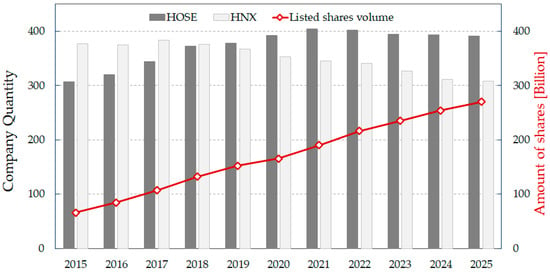

Disclaimer/Publisher’s Note: The statements, opinions and data contained in all publications are solely those of the individual author(s) and contributor(s) and not of MDPI and/or the editor(s). MDPI and/or the editor(s) disclaim responsibility for any injury to people or property resulting from any ideas, methods, instructions or products referred to in the content. |
© 2026 by the authors. Licensee MDPI, Basel, Switzerland. This article is an open access article distributed under the terms and conditions of the Creative Commons Attribution (CC BY) license.