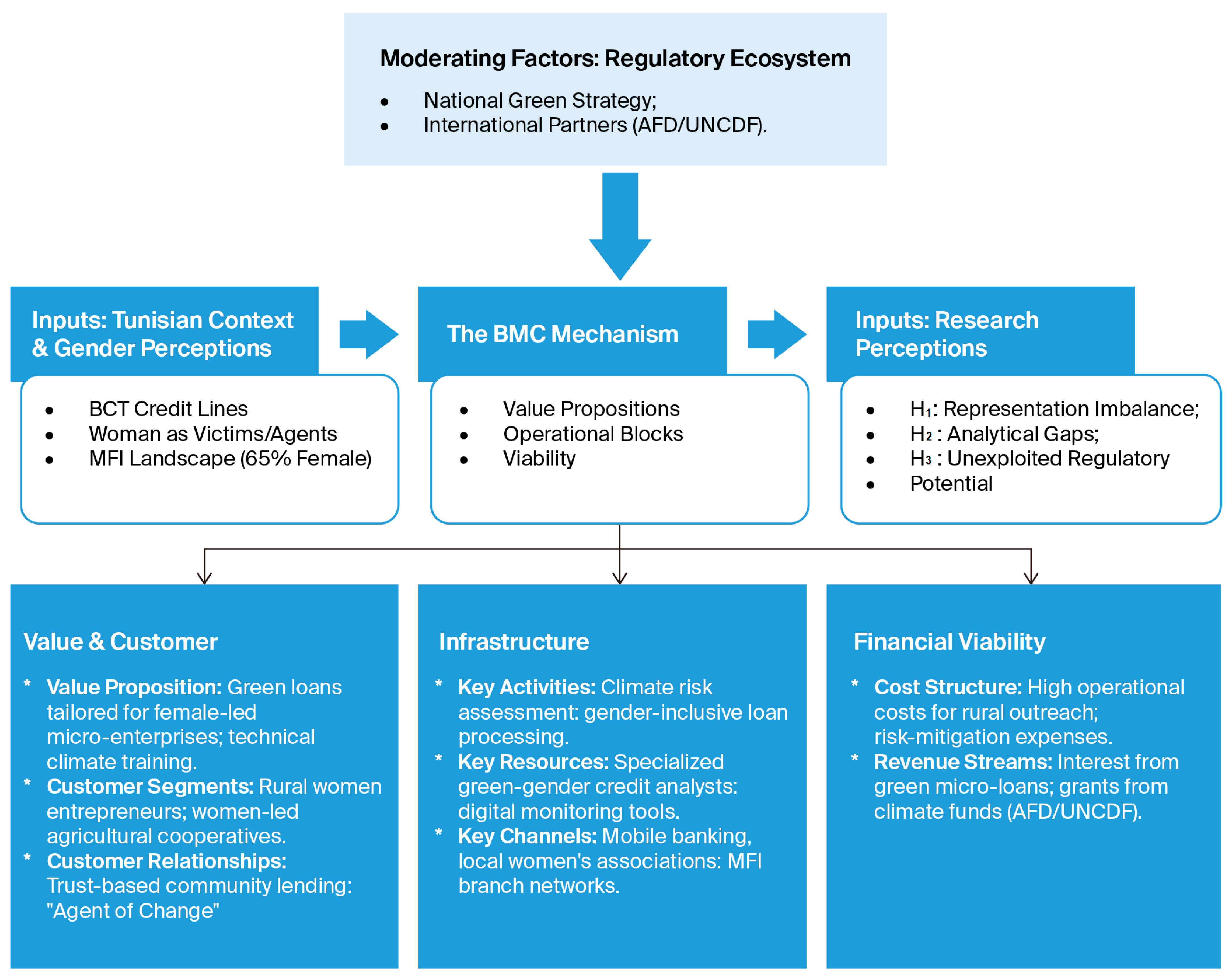

A Review of Gender-Inclusive Green Microfinance Business Models in Tunisia: A Business Model Canvas Perspective

Abstract
1. Introduction
- 1.
- How do Tunisian stakeholders perceive green microfinance products?
- 2.
- How do microfinance institutions and their agents perceive and manage the integration of environmental and gender criteria into their activities?
- 3.
- What is the role of gender in shaping demand, impact, and the design of green microfinance business models?
- 4.
- What barriers and levers (particularly in terms of business model development) are considered necessary to achieve an inclusive and sustainable green microfinance sector in Tunisia?
2. Literature Review
2.1. The Intersection of Green Finance and Gender
2.2. Microfinance in Tunisia: Historical Roots and Gender Perspective
2.3. The Emergence of Green Microfinance: Linking Finance and Sustainability
2.4. Identified Research Gap: The Trilateral Integration
3. Theoretical and Analytical Framework
3.1. Conceptual Foundation: The Gender–Environment–Finance Nexus
3.2. Analytical Framework: The Business Model Canvas
- (1)
- It provides a comprehensive overview of how value is generated for stakeholders, integrating financial, social, and environmental aspects.
- (2)
- It enables the definition of key activities, resources, and partners to provide female customer segments with green products while controlling costs and generating revenue.
- (3)
- It enables consideration of the most appropriate distribution channels and customer relationships to reach, engage, and retain women in disadvantaged areas (Ghatode & Nimbarte, 2025).
3.3. Integrated Framework and Research Propositions
4. Systematic Review Methodology
4.1. Research Design
4.2. PICOS (Population, Intervention, Comparison, Outcome, Study Type) Criteria
- -
- Population (P): Actors in the Tunisian financial and social ecosystem directly involved in microfinance, green finance, and/or gender, including microfinance clients (borrowers and savers), credit agents, MFI managers and executives, regulators, and policymakers in these sectors.
- -
- Phenomenon of interest (I): Perceptions, attitudes, beliefs, social representations, lived experiences, and declared knowledge on the nexus between green finance, microfinance, and gender. Debates on the economic models, products, and processes of this nexus are also covered.
- -
- Comparison (C): The Tunisian context; this includes studies conducted in Tunisia based on Tunisian data or whose analyses and conclusions are directly and substantially relevant to Tunisia.
- -
- Outcomes (O): Qualitative (themes, narratives, discourse) and/or quantitative (frequencies, scores, correlations) results reporting on perception data or analyzing business models from this perspective.
- -
- Nature of studies (S): Qualitative, quantitative, or mixed empirical studies, theoretical journal articles, meta-analyses, and gray literature (theses, non-governmental organization reports, working papers, institutional case studies) that have been published. According to best practices, editorials, non-peer-reviewed articles, and simple descriptions of projects without analysis were excluded.
4.3. Data Sources
4.4. Search Strategy
- -
- ENDA Inter-Arabe institutional website (Microfinance Institution): 15 documents;
- -
- Portal of the Central Bank of Tunisia: 8 documents;
- -
- AFD (French Development Agency) website: 12 documents.
- -
- Articles without available abstracts;
- -
- Studies before 2010;
- -
- Documents not peer-reviewed (except institutional literature);
- -
- Studies without a specific focus on Tunisia;
- -
- Works that do not mention gender or environmental dimensions.
4.5. Study Selection
4.6. Data Extraction
4.7. Data Synthesis
5. Results
5.1. Study Selection and Corpus Characteristics
5.2. Analysis of Perceptions Using the Business Model Canvas
5.3. Verification of Themes and Confirmation of Hypotheses
- -
- The analysis supports H1. The representation of women in the research focuses on their vulnerability and domestic role (“guardians”), with their entrepreneurial potential in the green economy underemphasized.
- -
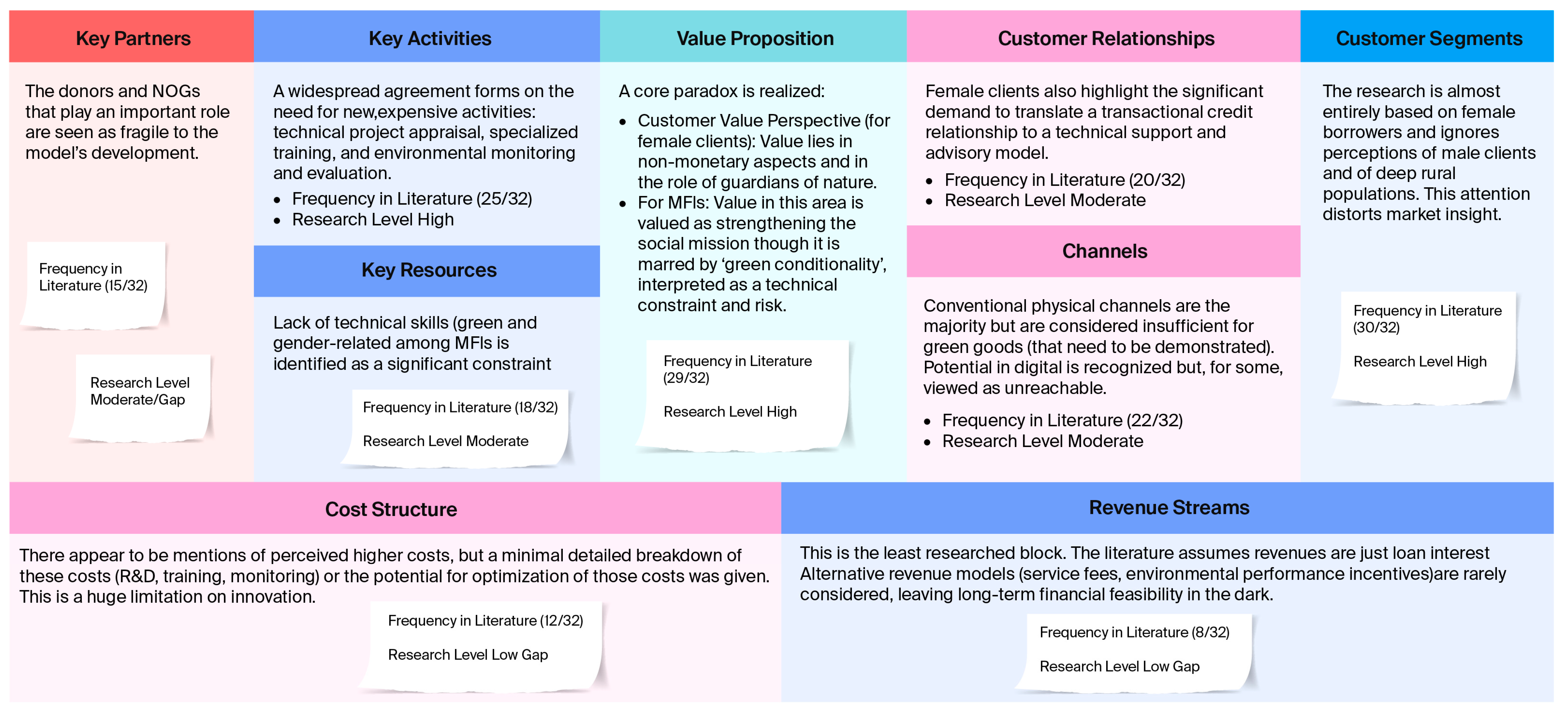
- The visual mapping of the BMC (Figure 2) empirically confirms hypothesis H2. It reveals that while customer segments (particularly women) and value propositions are relatively well covered, key operational blocks remain virtually empty in the literature, particularly revenue streams and cost structure for gendered green products. This lack of research on sustainable business models (on the revenue side) and their financial viability (on the cost side) constitutes the central operational gap identified, confirming that the literature neglects to analyze business models in their entirety and from a gender perspective.
- -
- H3 is validated. The regulatory framework is considered an essential lever, but it remains too weak, unclear, or insufficiently incentivizing to truly trigger innovation in business models and absorb the perceived costs and risks. Stakeholders are calling for more ambitious and better-targeted policies.
5.4. Prospective Review: Limitations and Future Directions
- -
- Geographical and demographic bias: Over-representation of coastal/urban population and female clients, ignoring rural regions, and intra-household dynamics.
- -
- Methodological Constraints: Prevalence of survey and perceptual studies, without many longitudinal, impact-focused, or participatory co-design methods.
- -
- Thematic Gaps: There is a lack of studies of sustainable revenue models beyond interest, digital delivery channels, and the application of fintech/blockchain to transparency and inclusion.
- -
- Longitudinal and Impact Research: Establish integrated measurement frameworks and long-term socioeconomic and environmental metrics.
- -
- Expanded Scope: Conduct comparative regional research and explicitly include male clients and spouses to understand household dynamics.
- -
- Innovation in Design: Explore blended finance, green micro-insurance, and accessible digital channels (mobile platforms, agent banking).
- -
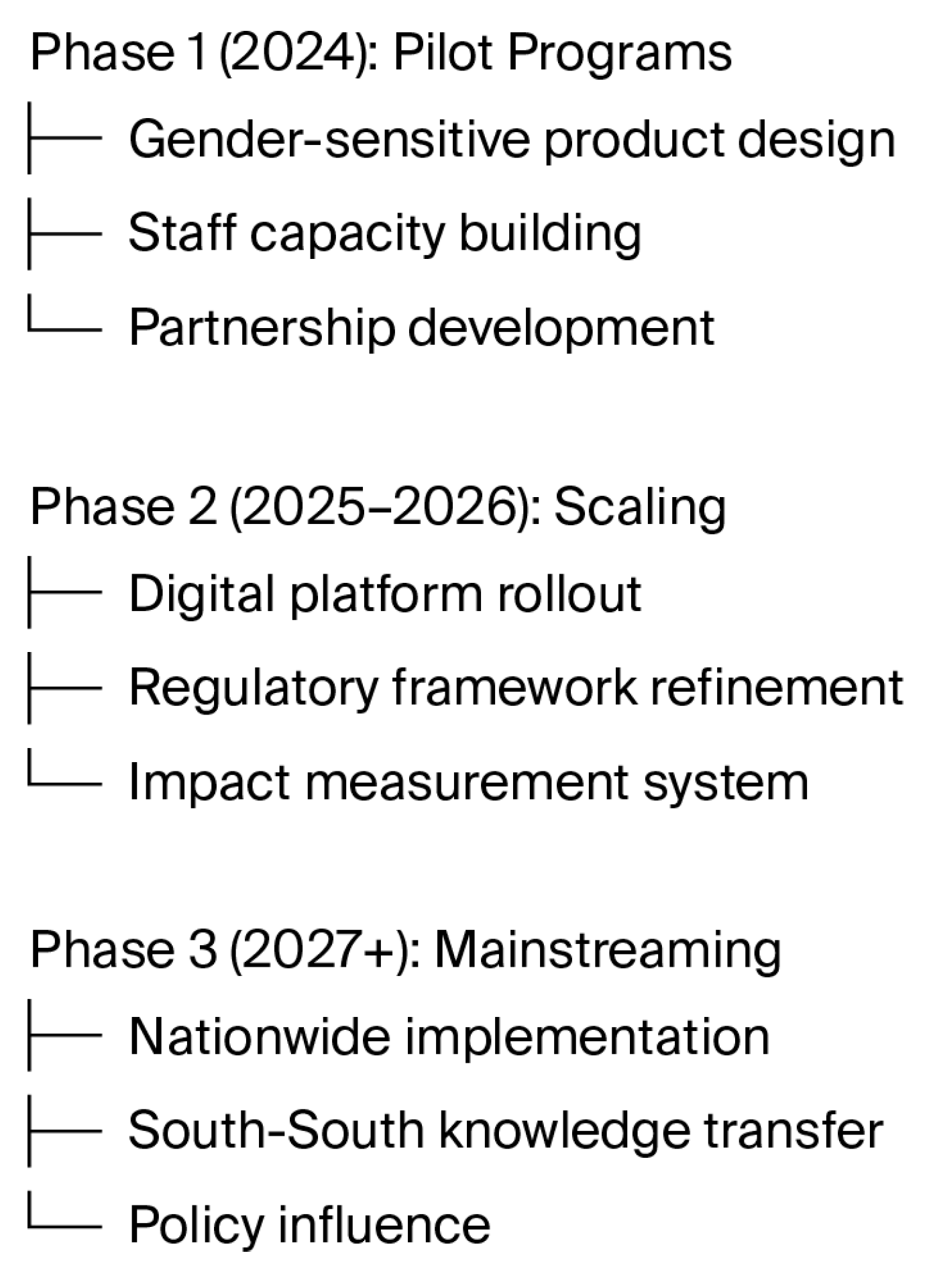
- Policy and Ecosystem Analysis: Evaluate regulatory tools (e.g., sandboxes, guarantee funds) and facilitate south–south knowledge transfer (e.g., from Morocco, Bangladesh).
6. Discussion
6.1. A Conceptual Innovation: The BMC–Gender–Green Finance Nexus
6.2. International Comparison: Structural Similarities and Tunisian Specificities
- Similarities with Bangladesh and Morocco: The paradox of women being both vulnerable and agents of ecological transition, which was validated in this study (H1), has also been observed by Nawaz (2015) and Ma et al. (2025) in Bangladesh and in green microfinance programs in Morocco (Nach, 2025). Similarly, the perceived higher risk and costs for MFIs are a recurring obstacle, as highlighted by Perrin and Hyland (2023) in their international review.
- Specific features in Tunisia: Our BMC analysis reveals that the scarcity of technical partners (“Key Partners”) is a major obstacle in Tunisia, unlike in more developed ecosystems such as Morocco (Zouitini et al., 2024), where partnerships between MFIs, green tech, and cooperatives are more established. Furthermore, the under-representation of male and deep rural segments (H2) in the Tunisian literature contrasts with Indian and Mexican studies, which emphasize intra-household dynamics and male perceptions of green credit.
6.3. Towards a Renewed Gendered and Green Value Proposition
6.4. The Catalytic Role of a Favorable Ecosystem and Partnerships
6.5. Implications for Public Policy and MFI Practice
6.6. Bridging the Gap Between Current and Ideal Business Models
7. Conclusions
7.1. Strategic Priorities for Stakeholders
7.2. Limitations and Future Research Prospects
Funding
Institutional Review Board Statement
Informed Consent Statement
Data Availability Statement
Conflicts of Interest
Abbreviations
| Abbreviation | Full Name |
| AFD | French Development Agency |
| BASE | Bielefeld Academic Search Engine |
| BMC | Business Model Canvas |
| CASP | Critical Appraisal Skills Programme |
| CBT | Central Bank of Tunisia |
| IDRC | International Development Research Centre |
| JBI | Joanna Briggs Institute |
| MFI | Microfinance Institution |
| NGO | Non-Governmental Organization |
| PICOS | Population, Intervention, Comparison, Outcome, Study type |
| PRISMA | Preferred Reporting Items for Systematic Reviews and Meta-Analyses |
| SDGs | Sustainable Development Goals |
| UNCDF | United Nations Capital Development Fund |
Appendix A
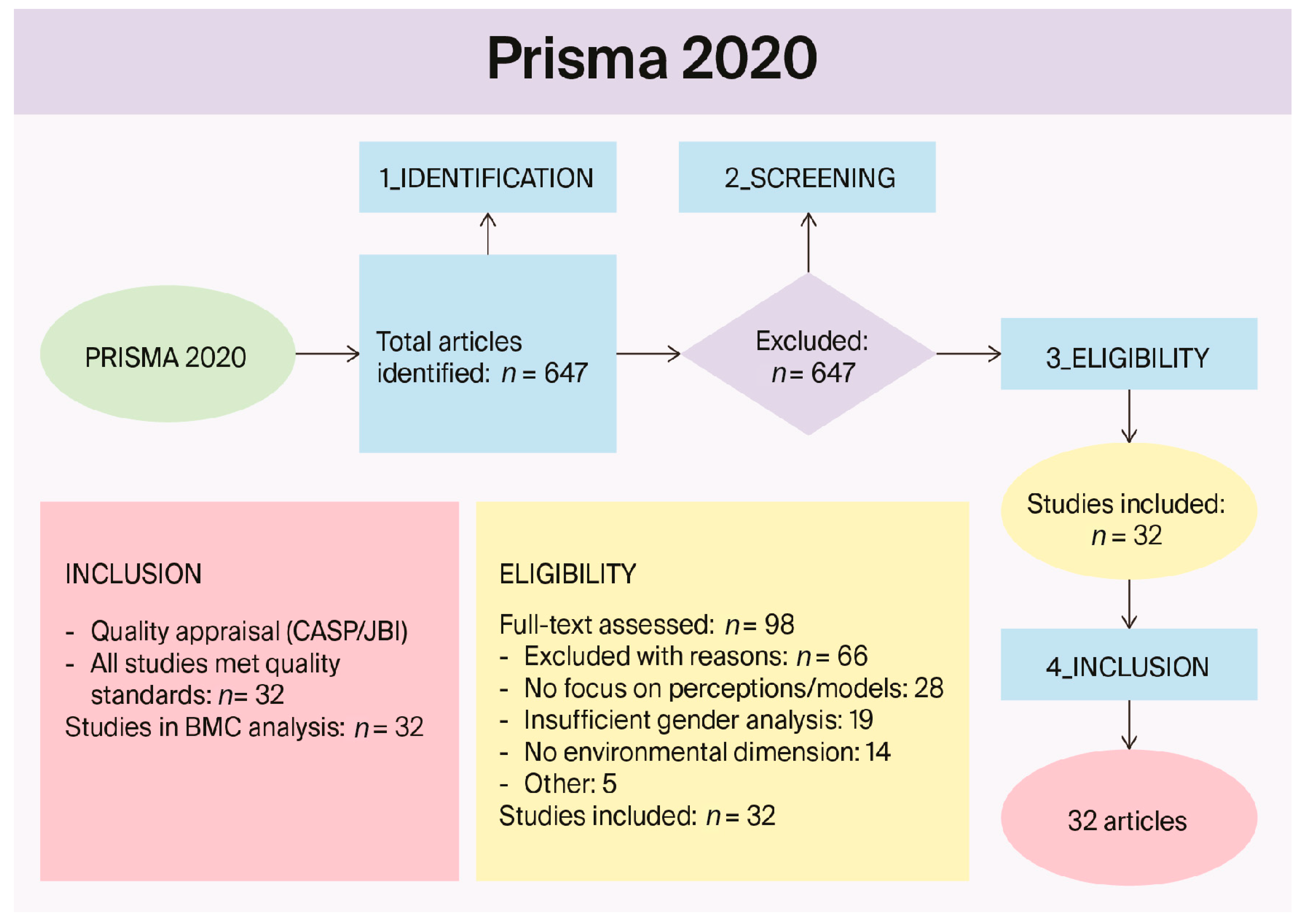
- 1
- Identification
- -
- Database searching: n = 612
- -
- Other sources: n = 35
- ➔
- Total articles identified: N = 647
- 2
- Screening
- -
- Duplicates removed: n = 124
- ➔
- Titles/abstracts screened: n = 523

- Excluded: n = 425

- 3
- Eligibility
- -
- Full-text assessed: n = 98
- -
- Excluded with reasons: n = 66

- Studies included: n = 32
- 4
- Inclusion
- -
- Quality appraisal (CASP/JBI)
- -
- All studies met quality standards: n = 32

- Studies in BMC analysis: n = 32
- ➔
- A total of 32 articles selected for synthesis analysis after full reading.
| 1 | The PRISMA process is presented in detail in Appendix A. |
References
- Abbas, S., Dastgeer, G., Nasreen, S., Kousar, S., Riaz, U., Arsh, S., & Imran, M. (2024). How financial inclusion and green innovation promote green economic growth in developing countries. Sustainability, 16(15), 6430. [Google Scholar] [CrossRef]
- Abdel Azziz, S. A., Ghoneim, H., & Ghazy, N. (2024). Microfinance as a catalyst for women’s empowerment and human capital: Insights from middle east and north Africa. Cureus Journal of Business and Economics, 2, es44404-025-09213-9. [Google Scholar] [CrossRef]
- Abdelkader, I. B. (2022). Social and financial performance of microfinance institutions and its drivers: Evidence from MENA region. Strategic Change, 32(1), 43–52. [Google Scholar] [CrossRef]
- Agarwal, B. (2010). Gender and green governance. Oxford University Press. [Google Scholar] [CrossRef]
- Alqatan, A., Talbi, N., Behbehani, H., Ben Belgacem, S., Arslan, M., & Sbeiti, W. (2025). Dynamic interaction between microfinance and household well-being: Evidence from the microcredit progressive model for sustainable development. Econometrics, 13(1), 12. [Google Scholar] [CrossRef]
- Amayed, Y. (2024). Energy transition and sustainability in Tunisia towards a resilient and low-carbon economic model (pp. 127–152). IGI Global. [Google Scholar] [CrossRef]
- Ammeri, A., Selmi, S., Aljuaid, A. M., & Hachicha, W. (2024). The mutual interaction of supply chain practices and quality management principles as drivers of competitive advantage: Case study of Tunisian agri-food companies. Sustainability, 17(21), 9429. [Google Scholar] [CrossRef]
- Aromataris, E., Cindy, S., Craig, L., Timothy, H. B., Miloslav, K., Yuri, J., Catrin, E., Ross-White, A., Lucylynn, L., Matthew, S., Alexa, M., Zoe, J., & Zachary, M. (2022). JBI series paper 2: Tailored evidence synthesis approaches are required to answer diverse questions: A pragmatic evidence synthesis toolkit from JBI. Journal of Clinical Epidemiology, 150, 196–202. [Google Scholar] [CrossRef] [PubMed]
- Barguellil, A., & Bettayeb, L. (2020). The impact of microfinance on economic development: The case of Tunisia. International Journal of Development and Sustainability, 12(4), 1–43. Available online: https://ccsenet.org/journal/index.php/ijef/article/view/0/42275 (accessed on 1 November 2025). [CrossRef]
- Bel Hadj, M. K., & Landolsi, M. (2024). Nexus between women’s financial empowerment, and digital financial literacy: The case of green microfinance in Tunisia. Edelweiss Applied Science and Technology, 8(6), 279–286. [Google Scholar] [CrossRef]
- Bel Hadj, M. K., & Omri, A. (2024). The role of microfinance in improving living standards: Evidence from Tunisia. Poverty & Public Policy, 16(1), 69–93. [Google Scholar] [CrossRef]
- Ben Belgacem, I., Barhoumi, E. M., Bahadur, I. M., & Okonkwo, P. C. (2025). The role of positive energy communities in accelerating the adoption of renewable energies: Case study, Tunisia. Resources, 14(5), 68. [Google Scholar] [CrossRef]
- Ben Delhouma, A., & Sdiri, H. (2024). Customer environmental pressure, environmental initiatives and innovation as pathways to overcoming operational obstacles: The critical role of gender diversity. International Journal of Innovation Studies, 9(4), 326–342. [Google Scholar] [CrossRef]
- Ben Salem, A., Malek, A., & Chka, H. (2020). Profile of women entrepreneurs in Tunisia and their choice of entrepreneurial career: An exploratory study. Journal of Enterprising Culture, 28(3), 281–303. [Google Scholar] [CrossRef]
- Ben Youssef, A. (2025). Tunisia’s energy transition: The key role of small businesses. Available online: https://theforum.erf.org.eg/2025/02/17/tunisias-energy-transition-the-key-role-of-small-businesses/ (accessed on 4 November 2025).
- Berguiga, I., & Ader, P. (2024). Hurdles to financing micro-entrepreneurs in MENA countries prior and during COVID-19. Economic Notes, 53(2), e12235. [Google Scholar] [CrossRef]
- Borgi, H., Mabrouk, F., Bousrih, J., & Mekni, M. M. (2023). Environmental change and inclusive finance: Does governance quality matter for African countries? Sustainability, 15(4), 3533. [Google Scholar] [CrossRef]
- Bouzaabia, K., & Ben Salem, A. (2025). The impact of TQM on green performance: The mediating role of green innovation. International Journal of Quality & Reliability Management, 42(9), 2587–2604. [Google Scholar] [CrossRef]
- Braun, V., & Clarke, V. (2006). Using thematic analysis in psychology. Qualitative Research in Psychology, 3(2), 77–101. [Google Scholar] [CrossRef]
- Braun, V., & Clarke, V. (2019). Reflecting on reflexive thematic analysis. Qualitative Research in Sport, Exercise and Health, 11(4), 589–597. [Google Scholar] [CrossRef]
- Braun, V., & Clarke, V. (2022). Thematic analysis: A practical guide. Sage Publications. Available online: https://uk.sagepub.com/en-gb/eur/thematic-analysis/book248481 (accessed on 30 October 2025).
- CBT. (2021). Report on inclusive and sustainable finance in Tunisia. Central Bank of Tunisia. Available online: https://www.bct.gov.tn/bct/siteprod/index.jsp (accessed on 10 October 2025).
- Chenguel, M. B., & Mansour, N. (2024). Green finance: Between commitment and illusion. Competitiveness Review, 34(1), 179–192. [Google Scholar] [CrossRef]
- Day, R., Mohamed-Brahmi, A., Aribi, F., & Jaouad, M. (2025). Sustainable goat farming in southeastern Tunisia: Challenges and opportunities for profitability. Sustainability, 17(8), 3669. [Google Scholar] [CrossRef]
- Dhaouadi, L., Besser, H., Karbout, N., Khaldi, R., Haj-Amor, Z., Maachia, S., & Ouassar, F. (2022). Environmental sensitivity and risk assessment in the Saharan Tunisian oasis agro-systems using the deepest water table source for irrigation: Water quality and land management impacts. Environment, Development and Sustainability: A Multidisciplinary Approach to the Theory and Practice of Sustainable Development, 24(9), 10695–10727. [Google Scholar] [CrossRef]
- Echavarren, J. M. (2023). The gender gap in environmental concern: Support for an ecofeminist perspective and the role of gender egalitarian attitudes. Sex Roles, 89, 610–623. [Google Scholar] [CrossRef]
- Emara, N., & Mohieldin, M. (2020). Financial inclusion and extreme poverty in the MENA region: A gap analysis approach. Review of Economics and Political Science, 5(3), 207–230. [Google Scholar] [CrossRef]
- Erdoğdu, A., Dayi, F., Özbek, A., Ganji, F., & Benek, A. (2025). The role of green finance in investing in environmentally friendly technologies: Risks and returns. Sustainability, 17(21), 9652. [Google Scholar] [CrossRef]
- Essaber, S., Essayem, A., & Baccouche, I. (2023). Catalyzing climate finance for climate actions in MENA countries: A holistic view of Egypt, Morocco, and Tunisia. In Digital economy, energy and sustainability. Green energy and technology. Springer. [Google Scholar] [CrossRef]
- Fersi, M., & Boujelbène, M. (2021). Financial and social efficiency analysis of Islamic microfinance institutions. International Journal of Emerging Markets, 18(4), 931–957. [Google Scholar] [CrossRef]
- Fersi, M., & Boujelbène, M. (2022). Overconfidence and credit risk-taking in microfinance institutions: A cross-regional analysis. International Journal of Organizational Analysis, 30(6), 1672–1693. Available online: https://www.emerald.com/ijoa/article-abstract/30/6/1672/146957/Overconfidence-and-credit-risk-taking-in?redirectedFrom=fulltext (accessed on 15 October 2025). [CrossRef]
- Fersi, M., Boujelbéne, M., & Arous, F. (2023). Microfinance’s digital transformation for sustainable inclusion. European Journal of Management and Business Economics, 32(5), 525–559. [Google Scholar] [CrossRef]
- Fitouri, M., & Zouaoui, S. (2024). The impact of micro finance institutions on the development of female entrepreneurship evidence from Tunisia. Journal of Global Entrepreneurship Research, 14(1), 1–18. Available online: https://ideas.repec.org/a/spr/jglont/v14y2024i1d10.1007_s40497-024-00412-5.html (accessed on 15 October 2025). [CrossRef]
- Ghatode, J., & Nimbarte, G. (2025). Global research pathways in rural microinance: A bibliometric study based on web of science and Scopus database. Future Business Journal, 11(1), 60. Available online: https://link.springer.com/article/10.1186/s43093-025-00484-z (accessed on 15 October 2025). [CrossRef]
- Halouani, N. (2025). Microfinance as a catalyst for sustainable development: A cross-national comparative study of the environmental and social impacts. Sustainability, 17(10), 4286. [Google Scholar] [CrossRef]
- Joaqui-Barandica, O., Heredia-Carroza, J., López-Estrada, S., & Agheorghiesei, D.-T. (2025). Mapping trends in green finance: A bibliometric and topic modeling analysis. International Journal of Financial Studies, 13(3), 137. [Google Scholar] [CrossRef]
- Kacem, S. (2018). Why are we going to Green microfinance in Tunisia? Environmental Economics, 9(4), 1. [Google Scholar] [CrossRef]
- Kamaldeen, M., Najjar, D., & Bryan, E. (2024). Strengthening women’s resilience and participation in climate governance in the agrifood sector through public policies: A strategic review of literature. Climate and Development, 16(6), 1–14. Available online: https://www.tandfonline.com/doi/citedby/10.1080/17565529.2023.2253773?scroll=top&needAccess=true (accessed on 5 October 2025).
- Khanchel, I., Bentaleb, D., & Khiari, C. (2025a). Loan repayment and female borrowers in African microfinance institutions. Afro-Asian Journal of Finance and Accounting, 15(3), 302–324. [Google Scholar] [CrossRef]
- Khanchel, I., Lassoued, N., & Khiari, C. (2025b). Tripartite dynamics: Financial inclusion, microfinance, and financial technology. Encyclopedia of Monetary Policy, Financial Markets and Banking, 4, 204–214. [Google Scholar] [CrossRef]
- Khemili, H., & Belloumi, M. (2018). Social security and fighting poverty in Tunisia. Economies, 6(1), 12. [Google Scholar] [CrossRef]
- Lachal, J., Revah-Levy, A., Orri, M., & Moro, M. R. (2017). Metasynthesis: An original method to synthesize qualitative literature in psychiatry. Frontiers Psychiatry, 8, 269. [Google Scholar] [CrossRef]
- Ledgerwood, J. (2013). The new microfinance handbook: A financial market system perspective. World Bank Publications. Available online: https://www.dai.com/news/world-bank-publishes-new-microfinance-handbook (accessed on 5 October 2025).
- Long, H. A., French, D. P., & Brooks, J. M. (2020). Optimising the value of the critical appraisal skills programme (CASP) tool for quality appraisal in qualitative evidence synthesis. Research Methods in Medicine & Health Sciences, 1(1), 31–42. [Google Scholar] [CrossRef]
- Ma, S., Jeroen, W., Grazia, P., Peter, L., & Han, V. D. (2025). Women’s vulnerabilities to climate insecurity and violence: Household-level evidence from Bangladesh. Rural Sociology, 90(3), e70022. [Google Scholar] [CrossRef]
- Mahjoub, L. B., & Amara, I. (2020). The impact of cultural factors on shareholder governance and environmental sustainability: An international context. World Journal of Science, Technology and Sustainable Development, 17(4), 367–385. [Google Scholar] [CrossRef]
- Maina, P., & Parádi-Dolgos, A. (2024). The effectiveness of climate adaptation finance and readiness on vulnerability in African economies. Climate, 12(5), 59. [Google Scholar] [CrossRef]
- Mansour, N. (2023). Green banks in Tunisia: Issues and challenges. Journal of Infrastructure Policy and Development, 7(2), 2099. [Google Scholar] [CrossRef]
- Mighri, Z. A., & Sghaier, A. (2019). A proposal of a microcredit granting model for the microfinance associations in Tunisia. Iranian Economic Review, 23(2), 259–296. Available online: https://ideas.repec.org/a/eut/journl/v23y2019i2p259.html (accessed on 5 October 2025).
- Nach, H. (2025). A Delphi study investigating the development of the Moroccan fintech ecosystem: Key challenges and opportunities. FinTech, 4(4), 66. [Google Scholar] [CrossRef]
- Najjar, D., & Baruah, B. (2023). Even the goats feel the heat: Gender, livestock rearing, rangeland cultivation, and climate change adaptation in Tunisia. Climate and Development, 16(6), 526–539. [Google Scholar] [CrossRef]
- National Agency for Energy Management. (2022). Gradual integration of climate finance into the portfolios of financial institutions. National Agency for Energy Management. Available online: https://www.anme.tn/sites/default/files/2025-03/pmr-integration-finance-climat-institutions-financieres-2020.pdf (accessed on 5 October 2025).
- Nawaz, F. (2015). Microfinance, financial literacy, and household power configuration in rural Bangladesh: An empirical study on some credit borrowers. Voluntas, 26, 1100–1121. [Google Scholar] [CrossRef]
- Okoli, C. (2015). A guide to conducting a standalone systematic literature review. Communications of the Association for Information Systems, 37, 879–910. [Google Scholar] [CrossRef]
- Osterwalder, A., & Pigneur, Y. (2010). Business model generation: A handbook for visionaries, game changers, and challengers. John Wiley & Sons. Available online: https://www.wiley.com/en-us/Business+Model+Generation%3A+A+Handbook+for+Visionaries%2C+Game+Changers%2C+and+Challengers-p-9780470876411 (accessed on 2 October 2025).
- Page, M. J., McKenzie, J. E., Bossuyt, P. M., Boutron, I., Hoffmann, T. C., Mulrow, C. D., Shamseer, L., Tetzlaff, J. M., Akl, E. A., Brennan, S. E., Chou, R., Glanville, J., Grimshaw, J. M., Hróbjartsson, A., Lalu, M. M., Li, T., Loder, E. W., Mayo-Wilson, E., McDonald, S., … McGuinness, L. A. (2021). The PRISMA 2020 statement: An updated guideline for reporting systematic reviews. BMJ, 372, n71. Available online: https://www.bmj.com/content/372/bmj.n71 (accessed on 1 October 2025). [CrossRef] [PubMed]
- Perrin, C., & Hyland, M. (2023). Gendered laws and women’s financial inclusion (Policy Research Working Paper; 10282). World Bank. Available online: http://hdl.handle.net/10986/38562 (accessed on 10 October 2025).
- Roodman, D. (2012). Due diligence: An impertinent inquiry into microfinance. Brookings Institution Press. Available online: https://www.cgdev.org/publication/9781933286488-due-diligence-impertinent-inquiry-microfinance (accessed on 10 October 2025).
- Sabry, M. I. (2025). The development of Tunisia’s green transition, actors’ interests, and policy coalitions’ power dynamics. The Extractive Industries and Society, 24, 101738. [Google Scholar] [CrossRef]
- Salwin, M., Jacyna-Gołda, I., Kraslawski, A., & Waszkiewicz, A. E. (2022). The use of business model canvas in the design and classification of product-service systems design methods. Sustainability, 14(7), 4283. [Google Scholar] [CrossRef]
- Samer, S., Majid, I., Rizal, S., Muhamad, M. R., & Rashid, N. (2015). The impact of microfinance on poverty reduction: Empirical evidence from Malaysian perspective. Procedia-Social and Behavioral Sciences, 195, 721–728. [Google Scholar] [CrossRef]
- Shiva, V. (2016). Staying alive: Women, ecology, and development. North Atlantic Books. Available online: https://www.northatlanticbooks.com/shop/staying-alive/ (accessed on 10 October 2025).
- Thomas, J., & Harden, A. (2008). Methods for the thematic synthesis of qualitative research in systematic reviews. BMC Medical Research Methodoly, 8, 45. [Google Scholar] [CrossRef] [PubMed]
- Toukabri, M., & Kalai, L. (2024). How does sustainability leadership improve climate change reporting? The choices associated with a sustainable board—A management perspective. Mitigation and Adaptation Strategies for Global Change, 29, 65. [Google Scholar] [CrossRef]
- Trabelsi, E. (2024). Transition to sustainable environment and economic growth in Tunisia: An ARDL approach. World Development Sustainability, 4, 100165. [Google Scholar] [CrossRef]
- Yoshida, Y., Sitas, N., Mannetti, L., O’Farrell, P., Arroyo-Robles, G., Berbés-Blázquez, M., González-Jiménez, D., Nelson, V., Niamir, A., & Harmáčková, Z. V. (2024). Beyond Academia: A case for reviews of gray literature for science-policy processes and applied research. Environmental Science & Policy, 162, 103882. [Google Scholar] [CrossRef]
- Zineelabidine, M., Nafssi, F., & Ayass, H. (2024). The determinants of the efficiency of microfinance institutions in Africa. Journal of Risk and Financial Management, 17(8), 318. [Google Scholar] [CrossRef]
- Zouitini, I., El Hafdaoui, H., Chetioui, H., Tardif, P.-M., & Makhtari, M. (2024). Determinants of sustainable entrepreneurship in Morocco: The role of entrepreneurial orientation, financial literacy, and inclusion. Journal of Risk and Financial Management, 17(12), 548. [Google Scholar] [CrossRef]



| Dimension | Key Reality | Implication for Green–Gender Microfinance |
|---|---|---|
| Climate Vulnerability | High risk of water scarcity, desertification, coastal erosion (Ben Belgacem et al., 2025). | Increases demand for adaptive, green livelihoods, especially among resource-dependent populations. |
| Microfinance Sector | A clientele that is ~65% female (National Agency for Energy Management, 2022); dominance of actors such as ENDA Inter-Arabe. | Provides a direct channel to women but may reinforce traditional roles rather than entrepreneurial agency. |
| Green Finance Policy | National Green Finance Strategy (2018); CBT guidelines and credit lines (CBT, 2021). | Creates a top-down enabling framework, yet is perceived as complex and risky by MFIs (Fersi & Boujelbène, 2022). |
| Socioeconomic Landscape | High unemployment, regional disparities, large informal sector. | Underscores the need for financial products that address both poverty and environmental resilience. |
| Database | Search Keywords | Filters Applied | Period | Number of Results |
|---|---|---|---|---|
| Scopus | (“climate finance” OR “sustainable finance” OR “environmental finance”) AND (“microfinance” OR “micro loan”) AND (“gender” OR “women”) AND (“Tunisia”) | Articles in English | 2010–2024 | 187 |
| Web of Science | (“green finance” OR “climate finance” OR “sustainable finance” OR “environmental finance”) AND (“microfinance”) AND (“gender” OR “women”) AND (“Tunisia”) | Research articles | 2010–2024 | 92 |
| Google Scholar | (“finance verte” OR “microfinance” OR “genre” OR “green finance”) AND (“microfinance” OR “gender” OR “Tunisia”) | First 200 results by relevance | No limitation | 200 |
| BASE | (“finance verte” OR “Green Finance”) AND (“microfinance”) AND (“Tunisia”) | Free access | 2010–2024 | 45 |
| IDRC Digital Library | “Tunisia” AND “microfinance” AND “green” | Research document | 2010–2024 | 28 |
| CAIRN | “microfinance” AND “environment” | Articles in French | 2010–2024 | 37 |
| Revues.org | “microfinance” AND “Tunisie” AND “Verte” | Humanities and social sciences | 2010–2024 | 23 |
| ID | Author(s) Year | Objective | Methodology | Participants | Key Findings on Perceptions |
|---|---|---|---|---|---|
| 1 | Najjar and Baruah (2023) | Analyzing the impact of microfinance on the adoption of sustainable practices | Mixed | 150 farmers (60% women) | Positive perception of green loans but technical concerns |
| 2 | Fersi and Boujelbène (2022) | Exploring MFIs’ perceptions of climate products | Qualitative | 5 MFI directors | Perceived high-risk but mission-critical opportunity |
| 3 | Kacem (2018) | Examining the role of green MF in empowerment | Mixed | 80 female clients | Green MF is perceived as empowering but complex |
| 4 | Khemili and Belloumi (2018) | Identifying the factors driving the adoption of green practices | Quantitative | 25 MFIs | Costs are perceived as the main obstacle |
| 5 | Bel Hadj and Landolsi (2024) | Analyzing gender differences in access | Focus groups | 8 groups | Women perceive more cultural barriers |
| 6 | Abdelkader (2022) | Understanding MFI strategies | Qualitative | 3 case studies | Perceived increased credit risk, but diversification possible |
| 7 | Fitouri and Zouaoui (2024) | Exploring the potential of green microcredit | Action research | 30 project leaders | Green MF considered a lever, but support was needed |
| 8 | Fersi and Boujelbène (2021) | Analyzing the integration of environmental concerns | Document analysis + interviews | 10 CSR managers | Environment perceived as a secondary issue |
| 9 | Bel Hadj and Omri (2024) | Studying customer perceptions | Qualitative phenomenological | 25 customers (15 Female/10 Male) | Positive perception of environmental impact |
| 10 | Berguiga and Ader (2024) | Analyzing green innovation capabilities | Longitudinal | Secondary data + interviews | Innovations perceived as costly |
| 11 | Mahjoub and Amara (2020) | Exploring the influence of cultural factors | Ethnography | 6 months of observation | Social norms perceived as barriers |
| 12 | Abdelkader (2022) | Analyzing the role of regulation | Policy analysis | 5 regulators | Perceived potential but stability concerns |
| 13 | Borgi et al. (2023) | Assessing perceptions of climate resilience | Quantitative | 120 rural clients | Perceived need for climate-adapted products |
| 14 | Maina and Parádi-Dolgos (2024) | Exploring the adoption of green technologies | Mixed | 8 MFIs + 45 clients | Initial cost perceived as a major barrier |
| 15 | Amayed (2024) | Analyzing RE financing in MF | Case study | 3 solar projects | Perceived long-term profitability |
| 16 | Trabelsi (2024) | Examining the link between inclusion and transition | Qualitative comparative | 12 sector experts | Perceived synergy between social and ecological objectives |
| 17 | Dhaouadi et al. (2022) | Assessing environmental risk management | Survey | 18 MFIs | Risks perceived as poorly managed |
| 18 | Kamaldeen et al. (2024) | Measuring differentiated impact according to gender | Quantitative | 200 customers (100 Male/100 Female) | Women perceive more social benefits |
| 19 | Ben Salem et al. (2020) | Studying adaptation in MF | Participatory action research | 4 rural communities | Perceived vulnerability differs according to gender |
| 20 | Essaber et al. (2023) | Exploring impact measurement | Qualitative | 15 MF managers | Perceived complexity of impact measurement |
| 21 | Abbas et al. (2024) | Assessing training needs | Focus groups + survey | 75 credit officers | Perceived need for technical training |
| 22 | Chenguel and Mansour (2024) | Analyzing strategic partnerships | Multi-case study | 10 partnerships | Perceived added value of partnerships |
| 23 | Fersi et al. (2023) | Examining the link between digitalization and ecology | Mixed | 150 digital customers | Perceived ease of digital processes |
| 24 | Mighri and Sghaier (2019) | Assessing the sustainability of projects | Longitudinal | 30 projects over 3 years | Perceived viability dependent on support |
| 25 | Ammeri et al. (2024) | Identify customer expectations | Qualitative | 40 customer interviews | High expectations for technical support |
| 26 | Ben Delhouma and Sdiri (2024) | Analyzing the role of cooperatives | Case study | 5 cooperatives | Female leadership perceived as a facilitator |
| 27 | Abdel Azziz et al. (2024) | Studying the financing of organic farming | Mixed | 80 organic farmers | Perceived risks but attractive premium prices |
| 28 | Barguellil and Bettayeb (2020) | Measuring social impact | Quantitative | 300 beneficiaries | Perceived improvement in living conditions |
| 29 | Toukabri and Kalai (2024) | Analyzing communication strategies | Content analysis | 15 Microfinance campaigns | Environmental message poorly perceived |
| 30 | Emara and Mohieldin (2020) | Developing performance indicators | Delphi | 20 experts | Perceived difficulty of quantitative measurement |
| 31 | Zineelabidine et al. (2024) | Exploring demand for climate insurance | Qualitative | 8 focus groups | Highly perceived climate risk |
| 32 | Mansour (2023) | Analyzing the governance of green MFIs | Benchmarking | 12 leading MFIs | Perceived commitment of management is crucial |
| BMC Block | Current State | Innovative Model |
|---|---|---|
| Value Proposition | Centered on credit access; “green conditionality” perceived as an additional constraint; women are framed primarily as vulnerable beneficiaries. | A “Green Capabilities” Approach: Hybrid products combining financing, simplified technical training, and technology access, valuing women’s role as ecological actors and entrepreneurs. |
| Revenue Streams | Near-exclusive reliance on loan interest, perceived as risky for green activities with uncertain returns. | Diversified and Blended Model: Interest income + result-based premiums for environmental outcomes + fees for advisory services + blended finance (grants, impact investment). |
| Channels | Traditional physical channels (branches, agents) are ill suited for technical advice; digital channels are under-exploited and perceived as inaccessible for many rural women. | Hybrid Advisory Channels: Credit agents trained as green advisors + adapted digital platforms (mobile, low-tech) + local demonstration sites via partnerships (NGOs, cooperatives). |
| Customer Relationships | Transactional, focused on financial compliance and repayment. | Advisory and Support-Based: Long-term relationships providing continuous technical assistance, peer mentoring, and adaptive support for green project implementation. |
| Cost Structure | Perceived as prohibitively high (product development, training, monitoring, risk premium), deterring MFI investment. | Shared and Supported Costs: Costs shared through strategic partnerships (e.g., with tech providers, NGOs); partially absorbed by public/donor-backed guarantee funds and technical assistance grants. |
| Key Activities | Traditional credit management, with limited capacity for green project appraisal or gender-sensitive support. | Integrated Green–Gender Activities: Technical project evaluation, development of gender-sensitive training modules, environmental and social impact monitoring, partnership management. |
| Key Resources | Lack of internal human resources with green tech and gender expertise; limited financial slack for innovation. | Enhanced Human and Financial Capital: Hybrid-trained staff (finance, environment, gender); access to concessional funding lines and impact capital; robust network of technical partners. |
| Key Partners | Fragile, ad hoc alliances with donors and NGOs; limited engagement with green tech players or women’s collectives. | Strategic Ecosystem Partnerships: Formalized alliances with women’s cooperatives, green technology suppliers, research institutes, and public agencies for shared value creation. |
| Regulatory and Ecosystem Role | Perceived as a potential but underused lever; frameworks are insufficiently incentivizing or tailored. | Catalytic Enabling Environment: Regulatory sandboxes for innovation, gender-sensitive green finance targets, integrated reporting standards, and public co-investment in risk-sharing facilities. |
Disclaimer/Publisher’s Note: The statements, opinions and data contained in all publications are solely those of the individual author(s) and contributor(s) and not of MDPI and/or the editor(s). MDPI and/or the editor(s) disclaim responsibility for any injury to people or property resulting from any ideas, methods, instructions or products referred to in the content. |
© 2026 by the author. Licensee MDPI, Basel, Switzerland. This article is an open access article distributed under the terms and conditions of the Creative Commons Attribution (CC BY) license.
Share and Cite
Mansour, N. A Review of Gender-Inclusive Green Microfinance Business Models in Tunisia: A Business Model Canvas Perspective. Int. J. Financial Stud. 2026, 14, 19. https://doi.org/10.3390/ijfs14010019
Mansour N. A Review of Gender-Inclusive Green Microfinance Business Models in Tunisia: A Business Model Canvas Perspective. International Journal of Financial Studies. 2026; 14(1):19. https://doi.org/10.3390/ijfs14010019
Chicago/Turabian StyleMansour, Nadia. 2026. "A Review of Gender-Inclusive Green Microfinance Business Models in Tunisia: A Business Model Canvas Perspective" International Journal of Financial Studies 14, no. 1: 19. https://doi.org/10.3390/ijfs14010019
APA StyleMansour, N. (2026). A Review of Gender-Inclusive Green Microfinance Business Models in Tunisia: A Business Model Canvas Perspective. International Journal of Financial Studies, 14(1), 19. https://doi.org/10.3390/ijfs14010019