


Abstract
This study examined how ESG has influenced credit growth across MENA countries/regions and investigated the extent to which bank size and Islamic banking influence this relationship. Using panel data from 42 listed banks across 10 MENA countries (367 bank-year observations from 2010–2023), the analysis employs quantile regression to capture heterogeneous effects across different levels of credit growth. The findings showed that ESG disclosure has a significant positive influence on credit growth across most quantiles, except at the (25th) quantile where the effect was insignificant. Bank size moderated this relationship, it weakens the ESG effect at the (10th) quantile but enhances it at the (25th, 50th, 75th) quantiles. Although the relationship remained positive at the (90th) quantile, the impact slightly declined, suggesting diminishing marginal gains for larger banks. Islamic banks strengthened the ESG disclosure and credit growth relationship at (10th and 25th, 90th) quantiles but weakened it at the median quantiles. Overall, the results demonstrate that the effect of ESG disclosure on credit growth is heterogeneous and highly dependent on bank characteristics, offering meaningful implications for policymakers and banking practitioners in adapting ESG strategies to enhance credit growth across different quantiles.
1. Introduction
Bank credit growth is fundamental to financial intermediation and overall economic development, as it underpins investment, consumption, and societal welfare. Broader credit accessibility allows firms to enhance productive capacity, fosters entrepreneurial activity, and supports job creation and income growth, thereby advancing inclusive economic development (Beck & Levine, 2004). In the Middle East and North Africa (MENA) region, where banks are the primary financial intermediaries, credit growth has shown a strong association with macroeconomic dynamics. Recently, sustainability considerations have added an additional layer to credit allocation processes, as banks increasingly incorporate Environmental, Social, and Governance (ESG) factors into risk evaluations and strategic policies. Consequently, ESG disclosure has emerged as a key mechanism for signaling sustainability commitments, risk management orientation, and informing long-term lending strategies.
Despite these developments, the impact of ESG disclosure on credit growth varies across banks due to differences in governance effectiveness, strategic priorities, operational frameworks, and institutional environments. In the MENA region, Islamic and conventional banks may incorporate ESG practices differently, partly due to Shari’ah-driven ethical requirements (Dusuki & Abdullah, 2007), while bank size shapes the resources available to implement ESG initiatives. Furthermore, as regulators and financial markets heighten expectations for sustainability alignment, ESG disclosure has increasingly become linked to banks’ competitive positioning and resilience strategies, particularly for banks seeking to sustain investor confidence and comply with international reporting standards such as GRI, SASB, and IFRS-S1/S2 (A. Buallay et al., 2023). These dynamics underscore the expanding role of ESG not merely as a transparency mechanism but as a strategic factor influencing credit allocation, reinforcing the need for empirical examination of how ESG practices shape credit growth in the MENA context.
Building on this rationale, the study examined the influence of ESG disclosure on credit growth across MENA region, emphasizing the moderating effects of Islamic banking and bank size. In recent years, banks in the region have begun reporting ESG activities more actively in response to regulatory initiatives, stakeholder expectations, and growing investor attention. This shift toward ESG-oriented practices has enhanced institutional credibility, mitigated reputational and financial risks, and aligned banking activities with long-term stability goals (El-Khoury et al., 2023; Dimapilis, 2024). Drawing on panel data from 42 banks in the MENA region, comprising 367 bank-year observations between 2010 and 2023. The larger number of observations reflects the multiple years of data that were collected for each bank. Quantile regression is employed to capture the heterogeneous effects of ESG disclosure across the credit growth distribution, allowing the analysis to reveal how ESG practices influence credit expansion differently across banks and performance levels. This approach provides empirical insights into the conditional role of ESG in shaping bank-level credit dynamics.
This study represents the first rigorous quantile-based examination of the impact of ESG disclosure on bank-level credit growth in the MENA region, explicitly accounting for heterogeneity in banks’ ESG integration and reporting practices. While prior research has primarily focused on ESG effects at the loan level, borrower-specific indicators, or overall financial performance (Abdelsalam et al., 2023; Bressan, 2024), empirical evidence remains limited regarding how ESG disclosure influences aggregate bank credit growth, particularly in regions characterized by dual banking systems and distinct institutional environments such as the MENA region. Consequently, the mechanisms through which ESG practices translate into overall lending expansion, and how these effects vary across banking system type and bank size, remain underexplored. This gap is particularly significant given that Islamic and conventional banks may adopt and implement ESG practices differently. The study further investigates these dynamics by incorporating the moderating role of Islamic banking, operationalized as a binary variable distinguishing Shari’ah-compliant from conventional banks, and by examining bank size as a moderator, reflecting how scale and resource availability shape ESG effectiveness. By shifting the analytical focus from borrower-level outcomes to the broader dynamics of credit growth, incorporating distributional heterogeneity, and situating the analysis within the MENA institutional context, this study provides novel empirical insights into how ESG disclosure drives bank-level credit expansion.
From a practical perspective, this research provides valuable insights for policymakers, regulators, and banking institutions. It informs the design of ESG disclosure frameworks and related policies that enhance ESG integration, accountability, and decision-making within banking operations. Banks can adopt ESG-aligned credit strategies to mitigate financial and reputational risks while promoting long-term stability. Integrating ESG considerations into lending and financing activities enables banks to identify new business opportunities, strengthen risk management, improve competitiveness, and support resilient economic development. Islamic banks can operationalize ESG principles in accordance with Shari’ah guidelines, translating ethical and social commitments into concrete lending practices that foster stakeholder trust. Promoting ESG-informed financing enhances transparency, accountability, and sustainable value creation, while also providing avenues for future research on the interplay between ESG disclosure and credit dynamics, especially in emerging markets and Islamic finance contexts.
The structure of this paper is as follows: Section 2 presents the theoretical framework and reviews the literature. Section 3 explained the methodology applied in the study. Section 4 and Section 5 present results and discussion and robustness checks. These are followed by Section 6 provides the study’s conclusions, highlights policy implications, acknowledges limitations, and proposes areas for future research.
2. Literature Review
2.1. Stakeholder Theory
Stakeholder theory highlights that firms must manage the interests of diverse stakeholders, including shareholders, customers, regulators, employees, and society, to preserve legitimacy and achieve sustainable outcomes (Freeman, 1984; Gilbert & Rasche, 2008). In the banking sector, ESG disclosure serves as a strategic tool that can directly affect credit growth by influencing stakeholder perceptions and behaviors. By promoting transparency, ESG practices signal accountability and responsiveness, reducing information asymmetry and mitigating perceived operational and financial risks. This risk reduction encourages banks to expand credit and implement proactive lending strategies (A. M. Buallay, 2020; Oikonomou et al., 2014). Moreover, robust ESG disclosure strengthens banks’ reputations and fosters trust among depositors, investors, and regulators, which can improve access to long-term funding, lower the cost of capital, and support greater lending capacity (Poursoleyman et al., 2022; Bressan, 2024).
Incorporating ESG criteria into credit assessments enables banks to allocate capital toward sustainable and resilient sectors, reinforcing portfolio stability and shaping the broader financial ecosystem (Arnone et al., 2024; Cao et al., 2024). Within Islamic banking, these mechanisms are further amplified, as Shari’ah-compliant principles of ethical lending, social accountability, and risk-sharing are inherently aligned with ESG objectives, allowing Islamic banks to convert ESG disclosure into tangible credit growth (Bayoud et al., 2012; Abbas & Ali, 2022).
By demonstrating a commitment to stakeholder welfare, Islamic banks can offer favorable financing terms, reduce risk exposure, and attract long-term deposits and institutional investors who prioritize sustainability and ethical conduct. This alignment enhances banks’ reputations, strengthens stakeholder trust, and supports the sustainable expansion of credit, illustrating the practical mechanisms through which ESG disclosure influences bank-level lending behavior in both conventional and Islamic banking contexts.
2.2. The Resource-Based View (RBV) Theory
The Resource-Based View (RBV) highlights that firms achieve competitive advantage and superior performance by leveraging valuable, rare, inimitable, and non-substitutable internal resources and capabilities (Wernerfelt, 1984; Barney, 1991). In the banking sector, bank size serves as a proxy for the availability of organizational resources and the strategic capacity required to implement ESG initiatives effectively (Capron & Hulland, 1999). Larger banks generally possess more advanced risk management systems, robust governance structures, and sophisticated technological infrastructure, enabling them to operationalize ESG principles efficiently and incorporate ESG considerations into lending decisions (Hart, 1995; Teece et al., 1997). This enhanced capability allows larger banks to translate ESG disclosure into greater credit growth by extending loans with greater confidence, allocating capital strategically, and managing ESG-related risks.
In contrast, smaller banks often encounter significant resource constraints that limit their ability to implement ESG initiatives beyond regulatory compliance. Restricted financial, technological, and human resources reduce the scope for embedding ESG into strategic decision-making and operational processes, thereby constraining the effectiveness of ESG disclosure in driving credit growth (Cornett et al., 2016). By connecting ESG adoption to internal capabilities, RBV explains the heterogeneity in ESG effectiveness across banks of different sizes and provides a theoretical foundation for hypothesizing that bank size moderates the ESG–credit growth relationship.
By synthesizing Stakeholder Theory and RBV theory, this framework further explains how ESG practices influence credit growth, highlighting the moderating roles of bank size and Islamic banking orientation. Larger banks, with greater resources and capabilities, can implement ESG strategically, enhancing credit growth and attracting socially responsible investors and customers (Fernando et al., 2017). Islamic banks, guided by Shari’ah principles emphasizing ethical conduct, social responsibility, and environmental stewardship, can achieve stronger ESG alignment, integrating ESG into lending decisions more effectively and potentially outperforming conventional banks in translating disclosure into credit growth (Nizam et al., 2019).
2.3. Theoretical Framework and Research Hypotheses
2.3.1. Environmental, Social, and Governance Disclosure and Credit Growth
ESG disclosure indicates the communication of information related to environmental impacts such as resource usage, waste management, and pollution controls, alongside social initiatives including impacts on the community’s workplace conditions, and other social effects, and governance practices encompassing transparency, board diversity, and interactions with shareholders (Ribando & Bonne, 2010). Banks have increasingly adopted ESG strategies to enhance corporate image, engage responsible investors, manage risk exposure, and align with global sustainability goals. A strong ESG profile generally indicates lower financing risks, as it reflects a proactive stance toward environmental and social challenges and signals a bank’s long-term resilience and responsible management (Friede et al., 2015; Lisin et al., 2022).
Although prior studies have examined the effects of ESG on financial performance, stability, stock returns, and lending behaviors (Bătae et al., 2020; Abdelsalam et al., 2023; Loan et al., 2024; Mallek et al., 2024), the existing literature provides limited understanding of how ESG disclosure influences aggregate bank-level credit growth. Empirical evidence suggests that robust ESG engagement can enhance financial performance (Ben Ali & Chouaibi, 2024), strengthen stability and financing capacity during periods of economic volatility (Ayadi et al., 2010; Abdelsalam et al., 2023), and facilitate larger loan sizes, lower collateral requirements, and reduced borrowing costs (Qian et al., 2023). Banks with strong ESG reputations also tend to hold larger shares of consumer and commercial lending portfolios and extend financing preferentially to borrowers with credible sustainability practices (Bressan, 2024; Houston & Shan, 2022).
While prior research highlights the potential benefits of ESG disclosure for financial performance, stability, and lending behavior, its effects are not always positive. Empirical evidence indicates lower returns when ESG intensity exceeds certain thresholds (J. Wang et al., 2024), reduced lending activity during periods of financial stress (Danisman & Tarazi, 2024), and potential declines in performance due to increased costs and opportunity trade-offs (Nareswari et al., 2023). Environmental disclosures have been linked to adverse firm-level outcomes (Saygili et al., 2022), and some studies report no significant relationship between ESG disclosure and financial performance (Lamanda & Tamásné Vőneki, 2024). These mixed findings suggest that the influence of ESG on lending behavior is complex, contingent on contextual factors, and may vary across banks. In the banking sector, this complexity is particularly pronounced. The extent to which ESG disclosure translates into bank-level credit growth depends on bank-specific characteristics, such as size, governance capacity, and resource availability, as well as broader institutional and regional factors. In the MENA region, banks operate within diverse institutional environments and dual banking systems, which shape the mechanisms through which ESG practices affect credit allocation. Consequently, understanding these dynamics is essential for identifying the conditions under which ESG contributes to expanded lending, informing regulatory and strategic decision-making, and guiding banks seeking to embed sustainability into their credit strategies.
Despite the increasing recognition of ESG’s relevance for bank performance and lending behavior, empirical evidence on its direct impact on credit growth at the bank level remains limited, especially in regions characterized by both conventional and Islamic banking and diverse institutional environments, such as the MENA region. Understanding these mechanisms is essential for evaluating ESG’s influence on lending practices, informing policy development, and guiding banks in implementing sustainable finance strategies. Accordingly, the present study employs a distribution-sensitive approach to examine how ESG disclosure impacts bank-level credit growth across different quantiles. Based on this framework, the following hypothesis is proposed:
H1.
There is a positive relationship between ESG disclosure and credit growth.
2.3.2. Moderating Role of Bank Size on ESG Disclosure and Credit Growth
Due to economies of scale, larger banks generally have more resources to invest more heavily in ESG initiatives (Taliento et al., 2019). Higher ESG scores enhance transparency and foster trust among depositors. Since sustainability reporting involves substantial costs, larger banks allocate more funds for collecting and disclosing ESG data than smaller banks (Azmi et al., 2021).
Prior studies indicate that larger banks tend to integrate and disclose ESG practices due to their financial capacity, positively impacting stock returns (La Torre et al., 2020; Mallek et al., 2024). Larger banks can leverage their scale to expand activities and enhance performance; they also face higher ESG-related costs (Goddard et al., 2004; García-Herrero et al., 2009). Larger banks are better positioned to manage these costs, benefiting from their substantial resources. Michael et al. (2023) further demonstrates a positive association between bank size and the diversity of ESG activities and overall performance, suggesting that larger banks tend to allocate considerable resources to ESG initiatives to comply with evolving investor and regulatory requirements. However, larger banks often engage toward non-lending activities, such as improving investment products, issuing green bonds, or enhancing risk management. While these initiatives enhance ESG performance metrics, they contribute less to credit growth compared to smaller banks, which helps explain the negative effect of ESG on credit growth (Ibrahim, 2016; Aysan & Ozturk, 2018).
In contrast, smaller banks often prioritize cost control and may engage in informal sustainability activities, as formal ESG reporting can be expensive (Baumann-Pauly et al., 2013). Although smaller banks can adopt ESG practices more flexibly, their limited resources may constrain the sustainability of such initiatives over the long term (J. Wang et al., 2013; Orazalin, 2019; Zaiane & Ellouze, 2023). Conversely, ESG adoption in smaller banks can be particularly advantageous, as they are more visible in local markets, respond quickly to specific customer needs, and focus on mission-driven goals such as SME or green financing. Consequently, smaller banks tend to focus on cost efficiency and performance gains through targeted CSR initiatives rather than broad-scale ESG reporting (Baumann-Pauly et al., 2013; Rahat & Nguyen, 2023; Mallek et al., 2024; Zaiane & Ellouze, 2023).
Although no prior studies have directly examined bank size as a moderator of the ESG–credit growth relationship, theoretical reasoning suggests that larger banks can adopt ESG strategically due to abundant resources, whereas smaller banks benefit by focusing on targeted, high-impact ESG activities that directly enhance credit growth or operational efficiency. Nonetheless, the allocation of resources toward non-lending ESG activities in larger banks may constrain incremental credit growth, resulting in heterogeneous effects across bank sizes. These mechanisms imply that bank size conditions both the direction and magnitude of the ESG–credit growth relationship, thereby providing a clear causal rationale for bank size as a moderating variable. Despite these theoretical insights, empirical evidence on the moderating role of bank size in this context remains limited. Accordingly, the following hypothesis is proposed:
H2.
Bank size moderates the relationship between ESG disclosure and credit growth.
2.3.3. Moderating Role of Islamic Banks in ESG Disclosure and Credit Growth
Based on Shari’ah principles, Islamic finance emphasizes ethical behavior, social justice, and sustainability, aligning well with ESG criteria (Khan & Bhatti, 2018). Sustainability is crucial for maintaining long-term credibility and viability in banking, with Islamic banks focusing on stakeholder interests to improve ESG scores and financial performance (Al-Jalahma et al., 2020). However, integrating ESG practices into Islamic banking presents challenges and opportunities, potentially enhancing financial performance and stakeholder engagement.
Prior studies have shown that Islamic banks disclose more sustainability information than conventional banks (Naser et al., 2006; Jan et al., 2019). While ESG has been seen to improve financial performance (Zafar et al., 2022), some research has suggested that ESG disclosure may negatively affect financial outcomes due to differing stakeholder expectations (Li et al., 2018). Expanding ESG disclosures in Islamic banks may lead to higher credit risks and loan/financing losses, thereby affecting capital adequacy. Islamic banks positively impact credit growth compared to conventional banks, which can raise financial stability concerns due to higher credit risks and potential loan or financing defaults. (Foos et al., 2010; Abbas & Ali, 2022). The non-profit, loss-sharing nature of Islamic banking has contributed to higher credit growth relative to conventional banks (Abedifar et al., 2013). Conversely, Nobanee and Ellili (2016) found that conventional banks experienced a more favorable impact from sustainability practices than Islamic banks. ESG adoption in the Islamic banking sector has remained low, as the framework’s complexity across different industries makes evaluating ESG risks and impacts challenging (Muhamad et al., 2022).
Despite the increasing focus on ESG in conventional financial institutions (Azmi et al., 2021; Bătae et al., 2021), empirical evidence on ESG in Islamic banks remains limited, particularly regarding the potential moderating influence of Shari’ah principles on the relationship between ESG disclosure and credit growth. This gap is notable given the distinct institutional characteristics of Islamic banking. From a theoretical perspective, Shari’ah-compliant governance structures and operational frameworks influence managerial incentives, stakeholder engagement, and risk-sharing mechanisms, thereby shaping how ESG initiatives are translated into lending decisions. By prioritizing ethical conduct, social responsibility, and stakeholder welfare, Islamic banks may be more capable of converting ESG disclosure into lending outcomes that support sustainable credit growth. Collectively, these institutional attributes imply that Islamic banking orientation alters both the strength and the direction through which ESG disclosure affects bank-level credit growth, providing a clear theoretical rationale for its role as a moderating variable in the ESG–credit growth nexus. Accordingly, the following hypothesis is proposed:
H3.
Islamic banks moderate the relationship between ESG disclosure and credit growth.
3. Methodology and Empirical Approach
3.1. Data and Sample
The present study was based exclusively on secondary data from multiple credible sources to ensure robustness and comprehensive coverage. Bank-specific financial data were sourced from the Bank Focus database; macroeconomic variables were obtained from the World Bank’s World Development Indicators (WDI); and ESG scores from Bloomberg, which compiles data from annual corporate reports, sustainability reports, and related corporate disclosures.
The study focuses on the period 2010–2023 to capture major regulatory and structural shifts in the MENA banking sector and the progressive adoption of ESG disclosure. The period is divided into three phases: (i) 2010–2015, reflecting post-financial crisis recovery and Basel III implementation (Jalloul & Haque, 2025); (ii) 2016–2019, marked by ESG mainstreaming aligned with global frameworks such as the Paris Agreement and SDGs (Kotsantonis & Pinney, 2022; El-Khoury et al., 2023); and (iii) 2020–2023, encompassing post-pandemic resilience, digital transformation, and institutionalization of ESG reporting, including GCC Exchanges unified ESG metrics and UN Principles for Responsible Banking adoption (Agbakwuru et al., 2025; Alexander, 2023; UNEP FI, 2024). Data after 2023 were excluded due to incomplete standardization, while the period 2010–2023 provides sufficient longitudinal variation to robustly analyze ESG–credit growth dynamics.
The study concentrated on the MENA region due to its combination of oil and non-oil economies and its mix of conventional and Islamic banking institutions, highlighting the heterogeneity of the regional banking sector. The MENA region context is particularly compelling due to its ongoing financial restructuring, increasing competition among banks, and a distinctive mix of institutional frameworks (Abuzayed et al., 2012; Elfeituri & Vergos, 2019). This combination makes the region an ideal setting to examine the association between ESG adoption and lending/financing behavior across various banking models and economic environments.
The study sample comprises 42 banks, including 12 Islamic and 30 conventional banks, across 10 MENA countries: Bahrain, Jordan, Kuwait, Lebanon, Malta, Morocco, Oman, Qatar, Saudi Arabia, and the United Arab Emirates. Banks were selected based on the following criteria:
- Availability and reliability of ESG and financial data in the Bloomberg database throughout the study period.
- Presence of ESG reporting frameworks or regulatory requirements that enable meaningful analysis of ESG practices.
- Availability of officially audited annual financial statements.
- A minimum of three consecutive years of data during the study period (2010–2023).
Although the final sample consists of 42 banks and 367 bank-year observations, this reflects the deliberate application of strict data-quality criteria designed to ensure consistency in ESG and financial reporting over the study period. Similar to prior empirical studies on MENA banking and ESG, the use of a moderate-N panel is common, largely due to the uneven and often incomplete availability of standardized ESG disclosures across banks and years. As a result, the selected sample represents the most robust and methodologically defensible set of banks for conducting a longitudinal analysis of the ESG–credit growth nexus.
This selection ensures data consistency and enables the analysis of ESG disclosure in relation to credit growth over the study period. The final dataset comprises a panel spanning 13 years (T = 13) with 367 bank-year observations, capturing variations in reporting coverage across banks and years. This structure supports robust implication using quantile regression, which is well-suited for moderate-N panel datasets (Koenker & Hallock, 2001). Resampling and sensitivity analyses further confirmed the stability of estimates across quantiles. While formal power analysis for quantile regression is challenging, the robustness of the quantile regression results was verified through simulation-based resampling, with consistent coefficients across repeated samples providing strong support for the reliability of the estimates despite the moderate sample size (Benoit & Van den Poel, 2009). Table 1 presents the distribution of Islamic and conventional banks by countries.
Table 1.
Number of sample banks in the MENA region.
To strengthen the methodological rigor, the present study clarifies the econometric justification for employing quantile regression as the primary estimation technique. Bank credit growth is inherently dynamic and path-dependent, where past lending conditions influence current credit growth, necessitating the inclusion of a lagged dependent variable to capture persistence effects (Arellano & Bond, 1991). While dynamic panel GMM is traditionally recommended to address endogeneity arising from such lag structure (Blundell & Bond, 1998), it assumes homogeneity throughout the conditional distribution of the dependent variable and focuses exclusively on average effects. However, recent evidence suggests that ESG performance may exert heterogeneous effects on lending behavior across low-, moderate-, and high-credit-growth banks, making mean-based estimators inadequate (Koenker & Hallock, 2001). Therefore, quantile regression is methodologically superior for this research context as it allows estimating heterogeneous ESG and credit growth relationships across the entire distribution, accommodates outliers, and relaxes the assumption of normally distributed residuals, which is common in banking data. To address concerns regarding dynamic bias and potential endogeneity, a one-step System GMM estimation is additionally conducted as a robustness test, following the approach of (Alghafes et al., 2024), enabling verification of instrument validity and ensuring consistent estimators. This dual-method approach improves empirical robustness and aligns the study with contemporary panel econometric practices in banking and ESG research. All quantile regression and System GMM estimations were conducted using STATA 17 (StataCorp. 2021. Stata Statistical Software: Release 17. College Station, TX: StataCorp LLC.)
Multicollinearity diagnostics were conducted using Variance Inflation Factors (VIF) to validate the estimated regression outcomes. This test examines the degree of linear association among the explanatory variables to confirm that none are perfectly collinear, thereby supporting the reliability of the model specification (O’brien, 2007; Hair et al., 2019). Across all estimations, VIF values were below the critical threshold of 5, indicating that multicollinearity was not a concern. Detailed VIF results are presented in Tables 6–9.
Table 2 outlines the detailed summary of all variables and data sources used in the analysis.
Table 2.
Definition of Variables.
3.2. Variable Measurement
3.2.1. Dependent Variable
The dependent variable, credit growth, was calculated as net loans over the GDP deflator, which tracks inflation or deflation. The model incorporated lagged credit growth to reflect the persistence and evolution of credit growth across time, reflecting how past lending trends influence current outcomes, as carried out in previous studies (De Haas & Van Lelyveld, 2010; Foos et al., 2010). A positive credit growth ratio indicates increased loans/financing, while a negative ratio signals a decline. Examining credit growth helps assess the effect of ESG reporting on loan/financing growth and identifies unprofitable investments that may harm total loans/financing (Nizam et al., 2019).
Credit growth is inherently dynamic because past lending decisions influence current and future lending outcomes. Banks’ credit portfolios evolve due to path-dependent lending behavior, capital allocation constraints, and regulatory requirements, resulting in persistence in credit growth rates (Arellano & Bond, 1991; De Haas & Van Lelyveld, 2010). The use of the lagged dependent variable allows the model to control for this autocorrelation and ensures that the measured effects of ESG disclosure, bank size, and Islamic banking reflect incremental changes beyond the influence of historical lending trends. Neglecting this dynamic structure can bias coefficient estimates and misrepresent the true determinants of credit growth (Blundell & Bond, 1998; Alghafes et al., 2024).
3.2.2. Independent Variable
The independent variable, ESG disclosure, was determined using the three pillars—environmental, social, and governance which were combined to form an overall ESG disclosure score (A. Buallay, 2019). ESG disclosure was sourced from the Bloomberg database, which includes 120 indicators. The Environmental pillar covers innovation, emissions, waste management, and resource utilization. The Social pillar includes labour, individual rights, product accountability, and community involvement. The Governance pillar covers management, stakeholder rights, and social responsibility strategy. The overall ESG score is calculated as a weighted average of the three pillars, each evaluated on a scale from 0 to 100 (Menicucci & Paolucci, 2023).
The present study acknowledges that ESG scoring methodologies may vary across providers and that data coverage in emerging markets, including the MENA region, can be uneven. Nevertheless, Bloomberg has been widely recognized in literature for providing a highly comprehensive ESG database, especially for publicly listed firms, including financial institutions. Several recent studies (Friede et al., 2015; Fatemi et al., 2018; A. Buallay, 2019) have employed Bloomberg ESG scores as credible proxies to capture banks’ environmental, social, and governance performance in both developed and emerging markets, supporting the reliability of this source.
3.2.3. Moderating Variables
The research focused on the moderating roles of Islamic banks and bank size in shaping the influence of ESG disclosure on credit growth. Islamic banks, governed by Shari’ah principles, prioritize ethical finance, risk-sharing, and social responsibility, consistent with ESG values. However, their ESG practices may differ from conventional banks due to Shari’ah compliance (Dusuki & Abdullah, 2007). Bank size reflects an institution’s financial capacity, which affects its ability to adopt and sustain ESG initiatives (Bolibok, 2024). As a moderating variable, bank size captures variations in financial resources, risk-bearing capacity, and institutional strength that may shape how ESG disclosure influences credit growth.
Following previous studies, bank size is measured by total assets (Cooper et al., 2019; Ibrahim, 2020; Albaity et al., 2021), while heterogeneity across bank types is captured through a dummy variable distinguishing Islamic banks (1) from conventional banks (0). This approach controls for institutional differences and enables the assessment of whether Islamic banking characteristics significantly moderate the relationships under study (Abedifar et al., 2013; Beck et al., 2013; Albaity et al., 2022). The study focuses on individual bank-level relationships across the MENA region rather than aggregating performance by countries or constructing sectoral indices; each bank contributes equally to the analysis. This approach preserves variations across banks, ensures methodological transparency, and avoids disproportionate influence from larger institutions, while enabling a robust assessment of the moderating roles of Islamic banking and bank size in the ESG–credit growth relationship. Data for both variables were extracted from the BankFocus database.
Banks were classified as Islamic or conventional using multiple criteria. The BankFocus “Specialization” field provides an initial indication of Islamic status. A bank was classified as Islamic if it held a Shari’ah-compliant license, maintained a Shari’ah Supervisory Board, or derived significant revenue from Islamic financial products (e.g., Murabaha, Ijara, Musharakah, Mudarabah, Sukuk). Conventional banks were defined as those without Shari’ah-compliant licenses or Islamic offerings. Classification was further verified using regulatory lists from MENA central banks to ensure accuracy.
3.2.4. Control Variables
The present study’s control variables consisted of bank-specific and macroeconomic variables as follows:
Bank-Specific Variables
Lagged deposits: measured by the proportion of total customer deposits to total liabilities, their impact on credit growth has been mixed. Some studies have found a positive relationship, as banks depend on deposits for lending/financing (Beatty & Liao, 2011; Ibrahim, 2016), while others have suggested a negative impact when banks allocate deposits to non-lending/non-financing activities to mitigate credit risk (Berrospine & Edge, 2010; Cucinelli, 2016).
Solvency: defined as the ratio of total liabilities to total assets, solvency reflects a bank’s financial strength. While some studies have linked higher solvency to increased credit growth due to greater investment in loans/financing (Foos et al., 2010), others have suggested a negative relationship as banks have diversified to reduce credit risk (De Haas & Van Lelyveld, 2010).
Equity: expressed as the rate of equity growth divided by the GDP deflator, equity influences credit growth. Higher capitalization supports credit growth to meet regulatory capital requirements (Foos et al., 2010; Sobarsyah et al., 2020; Albaity et al., 2022). However, highly capitalized banks may adopt risk-averse strategies, limiting credit growth (Cucinelli, 2016), while lower-capitalized banks face lending/financing restrictions (Abbas & Ali, 2022).
Macro-Economic Variables
GDP: measured by the annual GDP growth ratio from the World Bank’s World Development Indicators Database, GDP has positively influenced loan growth, contributing to economic expansion (Bikker & Metzemakers, 2005; Albaity et al., 2022).
Inflation: Measured by the consumer price index from the World Bank’s WDI, rising inflation reduces borrowers’/customers’ repayment ability, leading to lower credit growth as banks mitigate default risks. Thus, inflation and credit growth typically move in opposite directions during economic downturns (Cucinelli, 2016; Albaity et al., 2022).
Oil rent: defined as the value of oil production minus production costs, oil rent data is sourced from the World Bank’s World Development Indicators. Higher oil rents have boosted GDP growth, supporting credit growth (World Bank, n.d.; Aimer, 2018).
3.3. Data Analysis Method
This study utilized quantile regression, a method developed by Koenker and Bassett (1978), to investigate the impact of ESG disclosure on bank credit growth, while considering moderating variables such as Islamic banks and bank size. Quantile regression is particularly suitable as it provides robust coefficient estimates in the existence of non-normal distributions and outliers (Zhu et al., 2016; Salari et al., 2021) and allows the exploration of heterogeneous ESG effects across the full distribution of credit growth, which average-based methods cannot capture. Furthermore, it has facilitated a nuanced understanding of the conditional distribution of credit growth by estimating effects at multiple points (Mallek et al., 2024).
The selected quantiles—10th, 25th, 50th, 75th, and 90th, were intended to capture the full distribution of credit growth performance across banks, from the lower to the upper tail. The 10th and 90th quantiles represented extreme performers, enabling the identification of nonlinear or asymmetric ESG effects on banks with notably low or high credit growth. The 25th and 75th quantiles capture moderately low and high performers, highlighting potential differences in ESG effects across these groups. The 50th quantiles (median) represented a midpoint for understanding the average relationship. The selection of these five quantiles offered a practical balance between analytical depth and interpretability, enabling the study to comprehensively examine how the influence of ESG disclosure differs among banks with low, moderate, and high credit growth. For instance, banks with high credit growth may be more aggressive in pursuing ESG-aligned lending/financing strategies to enhance reputational capital and attract responsible investors, while low credit growth banks might adopt a more conservative stance toward ESG integration due to capital constraints or risk aversion (Wu & Shen, 2013; Mallek et al., 2024). Therefore, the relationship between ESG and credit growth was unlikely to be uniform across the distribution, justifying quantile regression techniques to uncover these nuanced patterns.
A one-step System GMM estimator was applied as a robustness test (Arellano & Bover, 1995; Blundell & Bond, 1998), to mitigate dynamic panel bias arising from the inclusion of the lagged dependent variable (Nickell, 1981). While more advanced methods such as GMM-based quantile regression or instrumental variable quantile regression (IV-QR), can address endogeneity more directly (Chernozhukov & Hansen, 2006; Galvao et al., 2013), these techniques require longer time series and strong instruments, which are typically unavailable for MENA banking datasets due to shorter historical coverage, inconsistent reporting, and limited disclosure of ESG and financial indicators across banks.
Islamic banks are included as a moderator because their Shari’ah-compliant principles emphasizing ethical finance, social justice, and risk-sharing, may amplify or constrain the effects of ESG on credit growth relative to conventional banks (Khan & Bhatti, 2018). Bank size captures the financial capacity to implement ESG initiatives, which may differentially affect lending/financing behavior across banks of varying sizes (Zhu et al., 2016; Wu & Shen, 2013).
Overall, the quantile regression technique was both methodologically sound and theoretically justified, enabling the exploration of the heterogeneous effects of ESG on credit growth across the entire distribution, while remaining robust to outliers and non-normality (Davino et al., 2013; Zhu et al., 2016). The coefficient plots across quantiles, presented with confidence intervals, clearly illustrated where ESG has stronger or weaker impacts, making the findings more interpretable and policy-relevant in diverse banking environments in the MENA region.
3.4. Study Model
The present study employs the quantile regression (QR) approach developed by Koenker and Bassett (1978) to investigate the impact of ESG disclosure on bank credit growth (CG) across different points of the conditional distribution. The baseline model is specified as:
where is the θ-th quantile regression function. is the constant; represents the credit growth of bank i in countries j during year t and its one-year lagged value. is the combined score for environmental, social, and governance factors in the model. The refers to natural logarithm of bank’s total assets, LAGDEP is the one-year lag of deposits, IS refer to Islamic banks, where 1 for Islamic bank and zero otherwise, SOL refers to the solvency rate, EQ indicates the bank’s equity, ID is the identification bank code, ΔGDP is the growth rate of GDP, INF indicates the inflation rate, and OR stands for the oil rent rate. refers to the error term at the θ-th quantile. This quantile regression model examines the relationship between CG and ESG, along with the moderating effect of and IS between CG and ESG.
The statistical software in conducting this empirical research was STATA 17 (StataCorp. 2021. Stata Statistical Software: Release 17. College Station, TX, USA: StataCorp LLC.)
4. Results and Discussion
4.1. Descriptive Statistics and Correlation Analysis
Table 3 provides country-level descriptive statistics. Qatar had the highest mean credit growth (0.142%), while Lebanon had the lowest (0.012%). Jordan led in ESG scores (37.087), whereas Kuwait had the lowest rate (19.279). Malta had the highest mean for lagged deposits and bank size (0.890), while Kuwait had the smallest (0.728). Malta also led in solvency (0.911), while Saudi Arabia had the lowest rate (0.846). Oman had the highest equity mean (0.108), while Lebanon had the lowest rate (0.013). Bank size ranged from 17.572 (highest) in Morocco to 15.369 (lowest) in Malta. Malta had the highest GDP (5.593) for macroeconomic factors, while Lebanon had the lowest (−1.380). Lebanon also recorded the highest inflation (33.993), with Qatar indicating the lowest (1.295). Kuwait recorded the highest oil rent (44.290), while Lebanon and Malta had the lowest (0).
Table 3.
Country-wise descriptive statistics.
The correlation matrix results are shown in Table 4. The results show that ESG disclosure was positively and insignificantly related to credit growth (r = 0.022), indicating that these variables were not linearly related. Similarly, ESG disclosure was significantly and positively correlated with bank size (r = 0.268, p < 0.01), suggesting that larger banks could better integrate and disclose ESG practices. Conversely, the correlation between ESG and Islamic bank status was negative but insignificant (r = −0.088), indicating that Islamic and conventional banks exhibited comparable levels of ESG reporting. Overall, all correlation coefficients remained below 0.7, indicating that multicollinearity posed no concern and confirming the robustness of the regression analysis.
Table 4.
Pearson Correlation Matrix Analysis.
4.2. Endogeneity Test
To assess whether ESG disclosure is exogenous or endogenous in explaining bank credit growth, the Durbin–Wu–Hausman (DWH) and Wu-Hausman F tests were conducted, as reported in Table 5. The results indicate that ESG disclosure and the interaction terms (ESG × Size and ESG × Islamic Bank) reject the null hypothesis (all p-values < 0.001), suggesting that ESG disclosure is endogenous in this context. Endogeneity may arise from reverse causality (e.g., banks with higher credit growth may disclose more ESG information), omitted variables, or measurement error. Diagnostic tests confirm the validity and consistency of the instruments: Hansen J-tests (Hansen, 1982) indicate that the instruments are valid, and Arellano–Bond tests (Arellano & Bond, 1991) reveal first-order serial correlation (AR(1)) as expected, but no second-order serial correlation (AR(2)), supporting consistent estimation. These diagnostic checks reinforce the reliability and validity of the main results, providing further confidence in the reported relationships between ESG disclosure and bank credit growth across the MENA region. Hence, to address this concern and further enhance the robustness of the findings, an additional analysis using the Generalized Method of Moments (GMM) was performed.
Table 5.
The results of the endogeneity test.
4.3. Empirical Results
4.3.1. ESG Disclosure and Credit Growth Findings
Our quantile regression results reveal heterogeneous effects of ESG disclosure on bank credit growth across the distribution of credit growth. As shown in Table 6 and Figure A1, ESG disclosure is positive and significant at the lower (10th) quantile, is insignificant at the (25th) quantile, and displays progressively stronger positive effects at higher quantiles (50th, 75th, and 90th). This pattern suggests that banks with stronger credit performance derive greater measurable benefit from ESG disclosure compared with those at the lower end of the credit growth distribution. Specifically, the relatively weak or insignificant effects at the lower quantile (25th) likely reflect structural constraints faced by lower-performing banks, such as limited institutional capacity, weaker ESG infrastructures, or slower adoption of stakeholder-responsive practices. The findings supported H1 and aligned with prior studies (Wu & Shen, 2013; Rahat & Nguyen, 2023), which suggests that ESG practices influence a bank’s reputation, strengthen stakeholder trust, and improve liquidity, enabling higher credit growth through increased investor confidence and risk mitigation (Berger & Bouwman, 2009; Houston & Shan, 2022).
Table 6.
ESG’s role in shaping credit growth.
Importantly, these interpretations are based on the observed coefficient patterns across quantiles and do not assume causal mechanisms beyond what the data supports. Rather than indicating that ESG initiatives are ineffective at lower performance levels, the quantile patterns highlight that the magnitude of association between ESG disclosure and credit growth varies by underlying bank performance, consistent with theoretical frameworks that emphasize heterogeneous capacity to benefit from ESG-related transparency.
From a Stakeholder Theory perspective, banks with higher ESG disclosure signals responsiveness to stakeholder concerns, reduces perceived risk, and increases accountability. Stakeholders exert pressure on banks to report ESG performance in annual reports, which reinforces financial stability and lending capacity, thereby fostering sustainable credit growth (A. M. Buallay, 2020). Conversely, at the lower quantiles, banks may exhibit weaker ESG disclosure due to less intense stakeholder pressure or because they serve markets or sectors with lower ESG expectations. These banks face fewer direct demands from key stakeholders to disclose ESG information, resulting in limited transparency. Overall, the findings validate the study’s objectives by demonstrating that ESG disclosure is associated with credit growth in a manner that varies across bank performance levels, with higher-performing banks typically better equipped with strong governance structures and more responsive to stakeholder expectations regarding sustainability and risk management.
Among the control variables, lagged deposits demonstrated a significant positive effect with credit growth at the (10th, 50th, 75th, and 90th) quantiles, indicating banks’ reliance on deposits for lending/financing (Ibrahim, 2016). However, the lack of significance and a negative sign at the 25th quantiles may have reflected short-term inefficiencies or deposit instability among lower-performing banks. Solvency positively impacted the median quantile (50th) onward, suggesting that well-diversified banks faced lower insolvency risks and experienced higher credit growth (Foos et al., 2010). Equity exhibited a significant positive effect with credit growth, as well-capitalized banks can mitigate defaults and improve liquidity (Foos et al., 2010; Sobarsyah et al., 2020). Bank size influenced credit growth positively at lower quantiles but negatively at higher ones, indicating that large banks initially engage in riskier lending/financing but reduce credit growth at higher quantiles (Le et al., 2019; Ho et al., 2021). Islamic banks revealed a heterogeneous effect: it showed a statistically significant negative association with credit growth at the (10th) quantile but turned significantly positive at upper (highest) quantiles (25th to 90th). At the (10th) quantile, their negative impact was driven by Shari’ah-related constraints, higher transaction costs, and limited liquidity tools, constraining credit growth in underperforming banks (Chong & Liu, 2009; Beck et al., 2013). However, their stronger capital positions, effective risk management, and customer trust at higher quantiles enabled Islamic banks to expand credit growth, reflecting their superior stability and performance (Abedifar et al., 2013; Sobarsyah et al., 2020).
For macroeconomic factors, GDP positively impacted credit growth at lower quantiles but negatively impacted it at the median (50th) and upper (highest) (75th) quantiles, suggesting economic growth boosts lending/financing. However, alternative financing reduces reliance during expansions (Albaity et al., 2023). High GDP growth can also decrease deposit supply, affecting long-term credit growth (Nizam et al., 2019). Inflation showed negative and significant effects with credit growth across all quantiles, supporting that rising prices reduced borrowers’/customers’ ability to repay and increased lending/financing rates, undermining bank stability (Awdeh et al., 2024; Kashif et al., 2016). Oil rent significantly boosted credit growth, but overreliance on natural resources can hinder financial sector development, which aligned with the oil curse hypothesis (Sweidan & Elbargathi, 2022).
4.3.2. How Bank Size Moderates the Relationship Between ESG and Credit Growth
Table 7 and Figure A2 present the quantile regression results examining the moderate effect of bank size on the relationship between ESG disclosure and bank credit growth. The results indicate that bank size weakens the positive impact of ESG at the lowest quantile (10th), whereas at the (25th, 50th, and 75th) quantiles, bank size strengthens this association. At the highest quantile (90th), the moderating effect remains significantly positive, although the coefficient diminishes, suggesting that the largest banks derive smaller incremental benefits from ESG adoption on credit growth. These findings support H2, indicating that bank size moderates the ESG–credit growth relationship.
Table 7.
Moderating effect of Bank Size on ESG and credit growth.
At lower quantiles, smaller banks, particularly those with constrained resources, may achieve greater benefits from ESG initiatives when these efforts are strategically embedded rather than pursued solely for compliance. ESG adoption in smaller banks can generate inconsistent advantages due to their higher visibility in local markets, responsiveness to niche demands, and alignment with mission-driven objectives such as SME financing or green finance. This interpretation aligns with prior research, which suggests that smaller banks emphasize cost efficiency and performance gains through targeted sustainability practices (Rahat & Nguyen, 2023; Mallek et al., 2024; Zaiane & Ellouze, 2023).
In contrast, at the median and upper quantiles (25th, 50th, and 75th), larger banks improved the positive relationship between ESG disclosure and credit growth, reflecting their superior financial resources, operational capacity, and stakeholder engagement mechanisms. This observation aligns with prior studies, which indicate that larger banks with moderate to high credit growth benefit more from ESG practices by integrating them into lending and financing strategies to enhance performance and resilience (J. Wang et al., 2013; Cornett et al., 2016; Orazalin, 2019).
At the 90th quantile, the moderating effect is still positive but smaller (0.00019) than at the 75th quantile, meaning the strengthening effect of bank size on the relationship between ESG disclosure and credit growth starts to decline for the very largest banks. This observation aligns with prior research, which suggests that the largest banks often channel ESG initiatives toward non-lending activities, such as enhancing investment products, issuing green bonds, or strengthening risk management frameworks (Ibrahim, 2016; Aysan & Ozturk, 2018). While these activities improve ESG performance metrics, they contribute less directly to credit growth, providing a likely explanation for the reduced effect of ESG on lending and financing in larger banks. It should be emphasized that these findings reflect quantile-specific effects and do not indicate a generalizable pattern of ESG adoption or impact among large banks. The moderation analysis demonstrates that the effect of bank size varies across the credit growth distribution, and such variations should be interpreted in the context of the empirical estimates rather than as intrinsic characteristics of bank types.
Consistent with the RBV, larger banks can leverage their financial, technological, and governance resources to integrate ESG principles into core operations, thereby enhancing lending efficiency, credit growth, profitability, and long-term competitiveness (Hart, 1995; Teece et al., 1997; Taskın, 2015; Cornett et al., 2016). In contrast, smaller banks, with limited resources, may implement ESG mainly for regulatory compliance rather than as a tool for strategic growth, reducing their impact on credit growth. Notably, even larger banks may, at certain points, experience a decrease in credit growth despite high ESG disclosure, potentially due to resource allocation toward ESG initiatives that generate reputational benefits but do not immediately translate into additional lending (Cao et al., 2024; AlHamrani et al., 2025). These findings demonstrate that bank size heterogeneously moderates the ESG–credit growth relationship across performance levels, capturing nonlinear effects consistent with RBV and providing both theoretical support and practical insights for banking strategy and policy design.
4.3.3. How Islamic Banks Moderate the Relationship Between ESG and Credit Growth
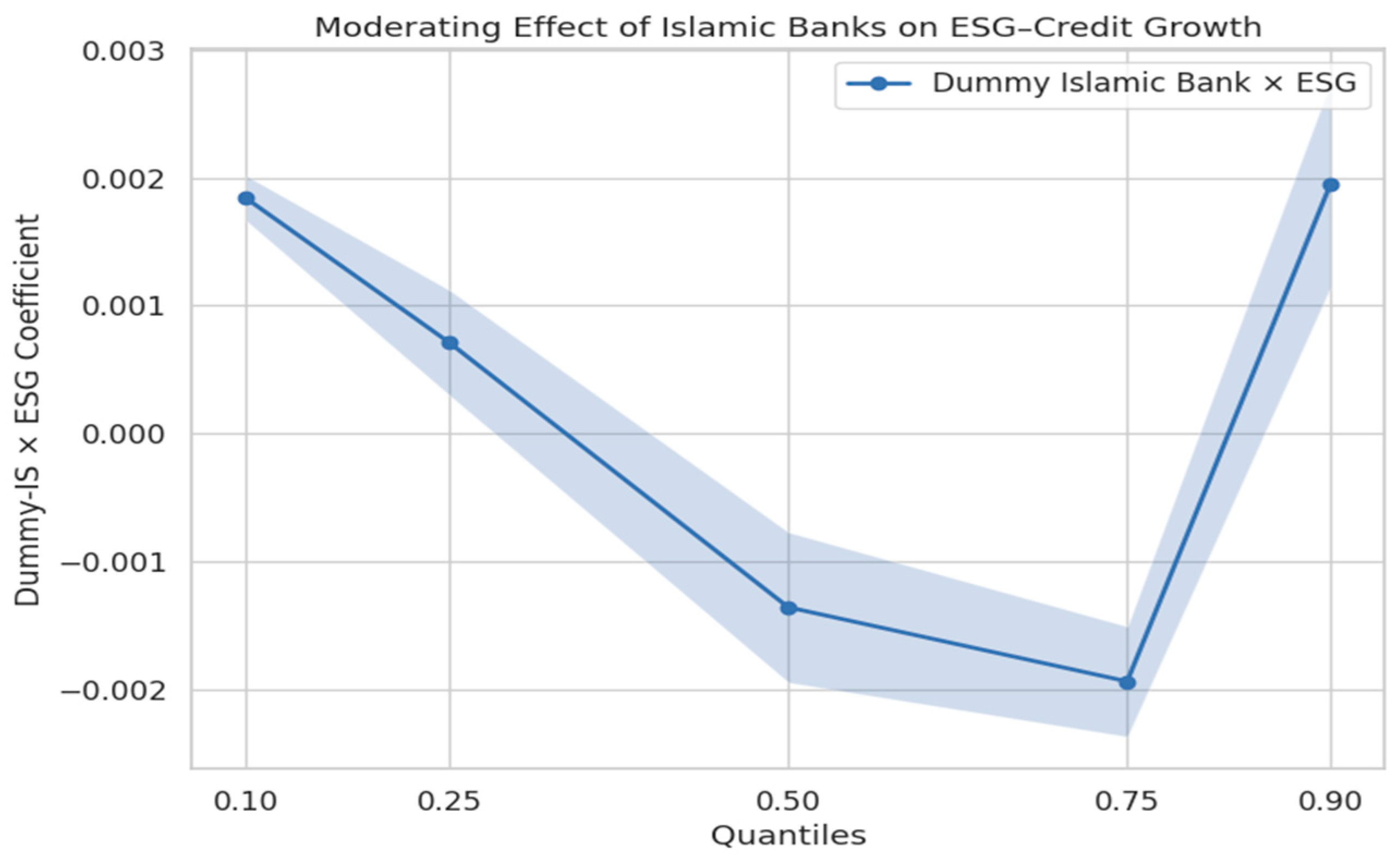
Table 8 and Figure A3 present the quantile regression estimates examining the moderating effect of Islamic banks on the relationship between ESG disclosure and credit growth. The results reveal a heterogeneous pattern across quantiles. Specifically, at the lower quantiles (10th and 25th) and the upper quantile (90th), Islamic banks strengthen the positive relationship between ESG disclosure and credit growth, indicating that ESG practices are associated with relatively higher credit expansion for Islamic banks at these performance levels. These findings support H3 and are consistent with prior studies, which states that ESG adoption can positively impact the financial performance of Islamic banks (Jan et al., 2019; Nizam et al., 2019).
Table 8.
Moderating effect of Islamic banks on ESG and credit growth.
In contrast, at the median (50th) and upper (75th) quantiles, Islamic banks appear to weaken the positive relationship between ESG disclosure and credit growth. This aligns with Nobanee and Ellili (2016), who observed that conventional banks generally report higher levels of sustainability practices than Islamic banks. For Islamic banks, greater ESG disclosure may be linked to increased loan and financing losses as well as higher credit risk, which can adversely affect capitalization. This effect may stem from stricter compliance requirements or more conservative investment strategies that slow the translation of ESG initiatives into expanded lending. Furthermore, the pattern may reflect operational challenges in implementing ESG practices beyond ethical or Shari’ah-aligned intentions, potentially due to limited integration of ESG principles into day-to-day banking operations (Abedifar et al., 2013; Basher et al., 2017). As a result, shareholders of Islamic banks may prioritize other performance objectives over sustainability investments, which can moderate the impact of ESG on financial outcomes.
This heterogeneous behavior supports Stakeholder Theory, illustrating how Islamic banks’ balance ethical commitments with financial risk in alignment with their growth capacity. By embedding Shari’ah-compliant finance alongside ESG principles, Islamic banks can strengthen stakeholder trust, attract long-term deposits, and enhance lending capacity, ultimately contributing to credit growth (Bayoud et al., 2012; Abbas & Ali, 2022). At the median quantile, however, mid-tier Islamic banks may face competing stakeholder demands, limiting their ability to fully translate ESG practices into enhanced trust and credit expansion (Alghafes et al., 2024). Overall, these findings highlight that the impact of ESG disclosure on credit growth is context- and performance-level dependent in Islamic banking, reflecting heterogeneous capabilities, strategic priorities, and operational integration of ESG principles.
These quantile-specific patterns must be interpreted strictly with reference to the estimated coefficients and should not be generalized as intrinsic attributes of Islamic banks. The results demonstrate that the effect of ESG disclosure on credit growth varies across different performance levels within Islamic banks, reflecting heterogeneous capacities to translate sustainability commitments into lending outcomes. In addition, the core effects of ESG disclosure and the control variables remain stable and consistent with the results presented in Table 6.
5. Robustness Checking
To control endogeneity and dynamic panel effects, a robustness check was carried out using the one-step System Generalized Method of Moments (GMM) approach, as developed by Arellano and Bover (1995) and Blundell and Bond (1998). This approach effectively mitigates unobserved heterogeneity and dynamic panel bias through internal instruments generated from the lagged values of the regressors. The System GMM estimator is particularly well-suited for panel datasets with a small-time dimension (T) and a larger cross-section (N), which aligns with the present study’s sample structure (N = 42, T = 13). By incorporating internal instruments, the estimator controls both unobserved heterogeneity and autocorrelation. The results of this robustness test, reported in Table 9, confirmed the key findings of the quantile regression analysis. Specifically, ESG disclosure remained positively and significantly associated with bank credit growth, consistent with the results in Table 6 at the median quantile (50th). Moreover, the result supported the moderating effect of bank size, reaffirming the findings from Table 7 that larger banks strengthened the ESG-credit growth linkage at the median quantile (50th). Similarly, the GMM estimation validated the moderating influence of Islamic banks, confirming the results from Table 8, where Islamic banks weaken the positive relationship between ESG and credit growth at the median quantile (50th). These findings from the robustness testing reinforced the validity of the present study’s quantile-based estimates and mitigated concerns regarding potential endogeneity bias.
Table 9.
GMM estimator of ESG and moderating effects of bank size, Islamic banks on ESG and credit growth.
6. Conclusions, Limitations and Opportunities for Future Research
This study examined the effect of ESG on credit growth and the moderating effects of bank size and Islamic banks using a sample of 42 MENA region banks spanning 2010 to 2023. The findings revealed a generally positive relationship between ESG disclosure and credit growth across most quantiles, except for the (25th) quantile, where the effect is insignificant. Bank size weakened this link at the (10th) quantile but strengthened it at the remaining quantiles (25th, 50th, 75th) quantile, with smaller banks benefiting at the lowest quantiles and larger banks amplifying the effect at higher quantiles. Although the relationship remained positive at the (90th) quantile, the impact slightly declined, indicating that larger banks gain smaller incremental benefits from ESG adoption on credit growth. Furthermore, Islamic banks strengthened the ESG disclosure and credit growth relationship at the lower (10th and 25th) quantiles and upper (highest) (90th) quantiles but weakened it at the median (50th and 75th) quantiles, suggesting that the shareholders prioritized sustainability investments, impacting financial returns. Overall, these findings highlight the heterogeneous effects of ESG disclosure and underscore the need for differentiated strategies that consider bank size, performance, and business model.
Although individual bank identities cannot be disclosed due to confidentiality considerations, the findings remain highly actionable. Management teams can benchmark their own bank’s credit growth relative to the relevant quantiles and regions, thereby enabling the design and implementation of ESG strategies aligned with operational capacity. Similarly, regulators may employ quantile-based insights to develop differentiated, evidence-based support programs tailored to banks’ performance profiles.
The study’s findings have several practical implications for regulators, policymakers, and bank managers. For regulators, banks exhibiting lower credit growth may require targeted interventions, including ESG-related training, preferential liquidity, and incentives for ESG-compliant lending, alongside tiered ESG disclosure requirements proportional to institutional capacity. Mid- and high-performing banks should be encouraged to adopt ESG frameworks as growth-enhancing strategies, supported by best-practice sharing, benchmarking, and participation in international initiatives such as the UN Principles for Responsible Banking (PRB) to enhance transparency, credibility, and stakeholder confidence Islamic banks should operationalize ESG in accordance with Shari’ah principles, translating ethical commitments into concrete lending practices to bolster stakeholder trust and improve credit outcomes. Larger banks experiencing temporary declines in credit growth should focus on monitoring ESG implementation and aligning initiatives with core operational priorities to maximize incremental benefits.
For bank managers, ESG should be leveraged strategically to support lending expansion, enhance risk management, and enhance reputational capital. Lower-performing banks should prioritize targeted, high-impact, low-cost initiatives, such as ESG-linked SME financing, green loans, or community engagement, rather than full-scale ESG programs. Moderate- to high-growth banks should integrate ESG into core operations to generate sustained value, while smaller banks may focus on niche, high-impact initiatives, and larger banks concentrate ESG resources in high-performing areas to avoid diluting impact. Banks should regularly monitor ESG performance metrics to identify bottlenecks where ESG adoption may hinder credit growth and adjust processes accordingly. Collaboration with other banks and regular monitoring of ESG metrics can enhance implementation efficiency and credit growth.
These recommendations translate the observed heterogeneity in ESG–credit growth relationships into evidence-based strategies for banks and regulators. They are grounded in the Stakeholder Theory, as ESG practices help meet stakeholder expectations, reduce perceived risks, and enhance trust, translating into greater credit capacity. They are also consistent with the RBV, given that banks with greater financial, technological, and governance resources can leverage ESG initiatives to achieve competitive advantage and long-term resilience. Implementing such differentiated, quantile-informed strategies can enhance transparency, accountability, and financial performance in MENA region banks, while supporting inclusive economic growth aligned with ESG principles.
The present study had one key limitation related to the availability and consistency of ESG data across banks in the MENA region, which may affect the comparability of ESG scores and the generalizability of our findings. Future research could address this limitation by exploring alternative measures or proxies for credit growth and ESG performance such as annual loan growth rate, credit-to-deposit ratio (CDR) growth, ESG sub-components or green bonds issuance. Comparing GCC and non-GCC sub-regions, and incorporating other moderators such as customer satisfaction, political risk, or the regulatory environment, and categorizing ESG into different levels (e.g., high vs. low) could provide a more nuanced understanding of how ESG’s affects credit growth across bank types and across different credit growth quantiles. Such approaches would help validate and extend the findings observed in the present study, particularly the differential effects of ESG across small, medium, and very large banks.
Author Contributions
Conceptualization, A.A. (Aysha Alhamrani); methodology, A.A. (Aysha Alhamrani) and M.A.; software, M.A.; validation, A.A. (Aysha Alhamrani) and M.A.; formal analysis, A.A. (Aysha Alhamrani); investigation, A.A. (Aysha Alhamrani); resources, A.A. (Aysha Alhamrani); data curation, A.A. (Aysha Alhamrani) and M.A.; writing—original draft preparation, A.A. (Aysha Alhamrani); writing—review and editing, A.A. (Aysha Alhamrani), A.A. (Atif Awoad) and M.A.; visualization, A.A. (Atif Awoad) and M.A.; supervision, A.A. (Atif Awoad) and M.A.; project administration, A.A. (Atif Awoad) and M.A. All authors have read and agreed to the published version of the manuscript.
Funding
This research received no external funding.
Institutional Review Board Statement
Not applicable.
Informed Consent Statement
Not applicable.
Data Availability Statement
The original contributions presented in this study are included in the article. Further inquiries can be directed to the corresponding author.
Conflicts of Interest
The authors declare no conflicts of interest.
Appendix A
Figure A1.
Graphical presentation of the quantile regression for the effect of ESG on credit growth.
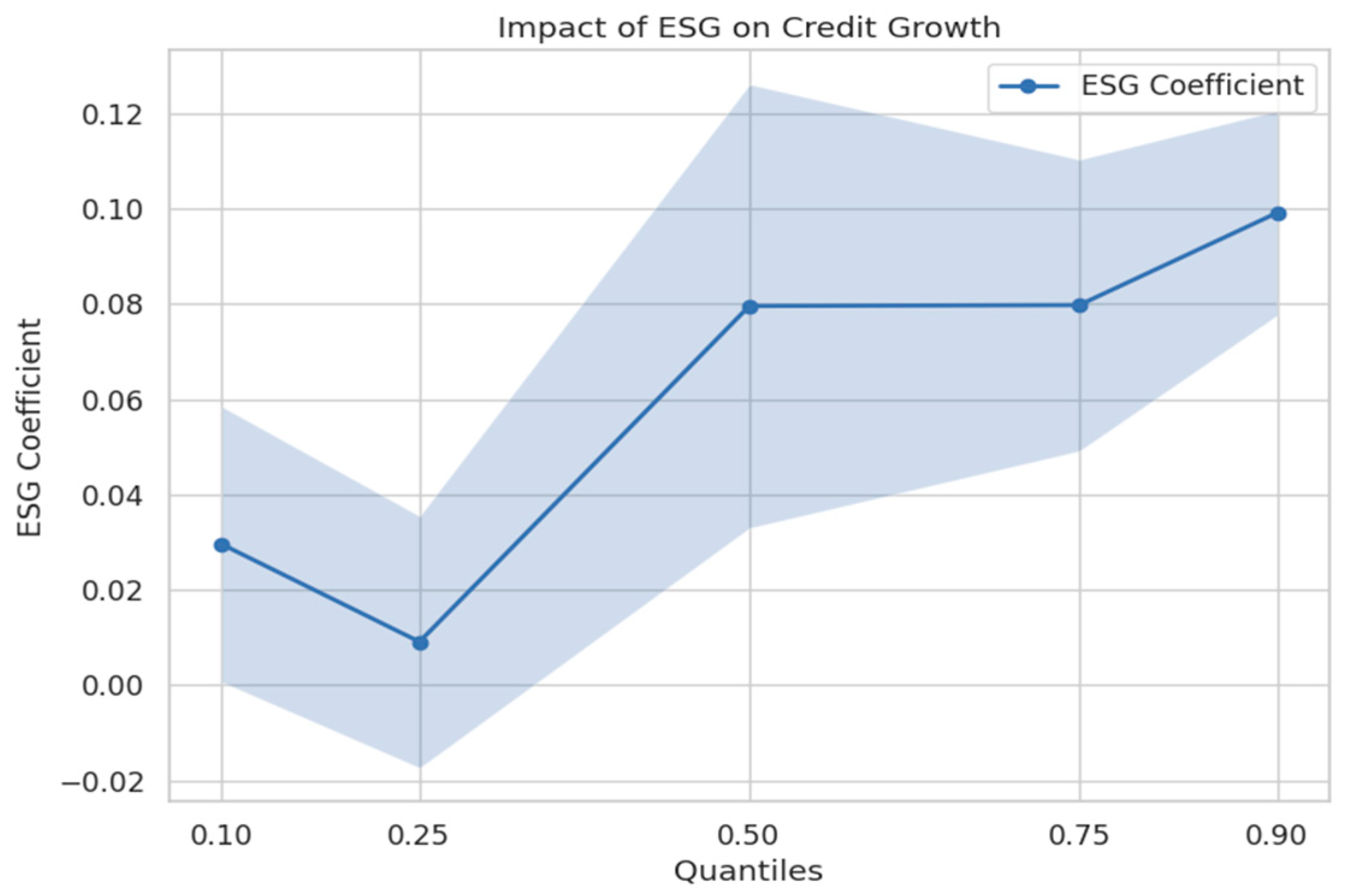
Figure A2.
The graphical representation of the quantile regression for the moderating effect of bank size on ESG and credit growth.
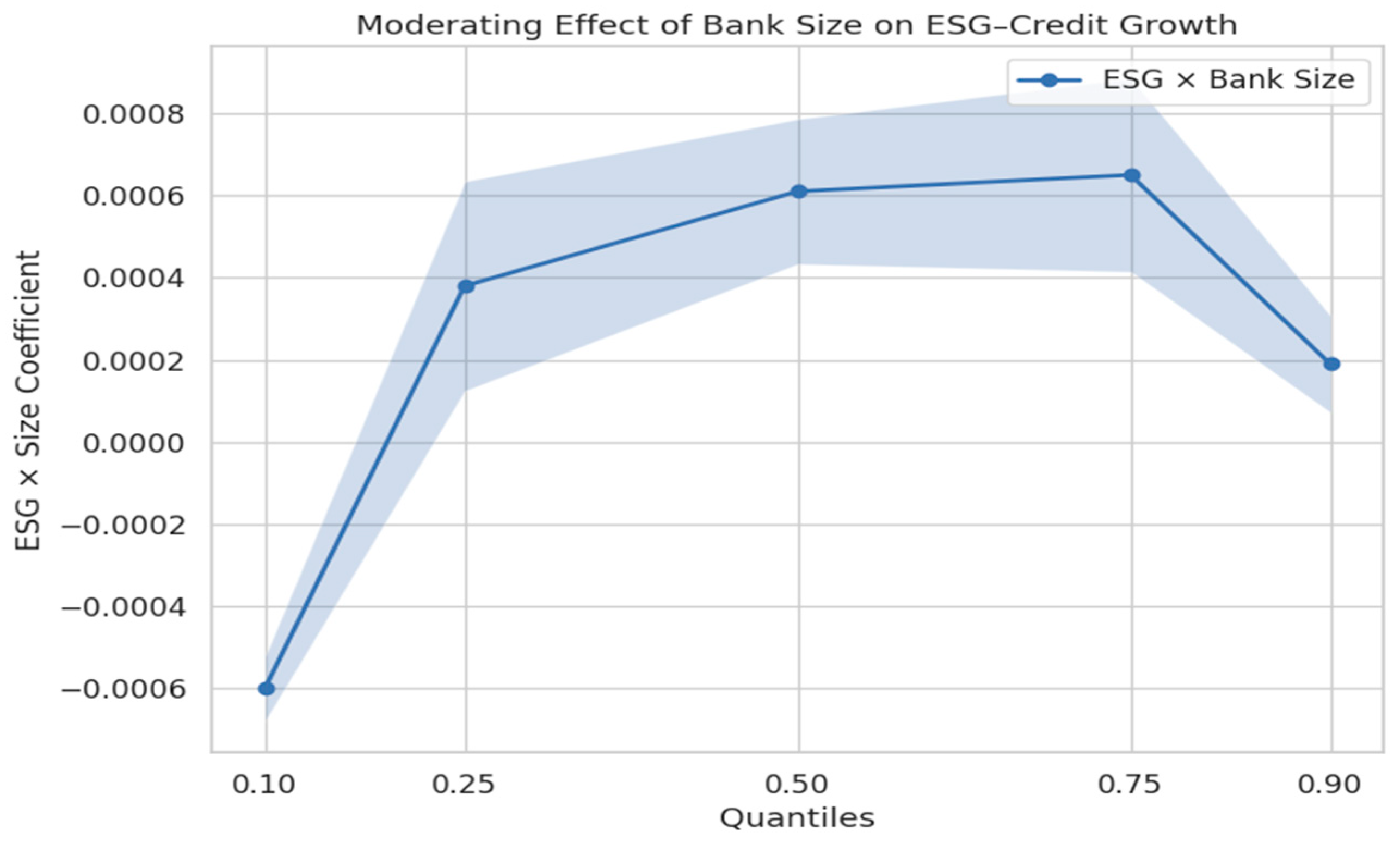
Figure A3.
The graphical representation of the quantile regression of the moderating effect of Islamic banks on ESG and credit growth.
References
- Abbas, F., & Ali, S. (2022). Economics of loan growth, credit risk and bank capital in Islamic banks. Kybernetes, 51(12), 3591–3609. [Google Scholar] [CrossRef] [Scilit]
- Abdelsalam, O., Azmi, W., Disli, M., & Kowsalya, V. (2023). Bank lending cyclicality and ESG activities: Global evidence. Finance Research Letters, 58, 104541. [Google Scholar] [CrossRef] [Scilit]
- Abedifar, P., Molyneux, P., & Tarazi, A. (2013). Risk in Islamic banking. Review of Finance, 17(6), 2035–2096. [Google Scholar] [CrossRef] [Scilit]
- Abuzayed, B., Al-Fayoumi, N., & Gharaibeh, H. (2012). Competition in MENA countries banking markets. International Journal of Financial Services Management, 5(3), 272–301. [Google Scholar] [CrossRef] [Scilit]
- Agbakwuru, V., Delimatsis, P., & Haight, B. W. (2025). A Comparative Analysis of ESG Reporting in Nigeria and Other African Countries. Penn St., Journal of Law & International Affairs, 13, 1. Available online: https://insight.dickinsonlaw.psu.edu/jlia/vol13/iss1/4 (accessed on 13 November 2025).
- Aimer, N. M. (2018). Estimating the impact of oil rents on the economic growth of the OPEC countries. European Journal of Management and Marketing Studies, 3(1). [Google Scholar] [CrossRef]
- Albaity, M., Noman, A. H. M., & Mallek, R. S. (2021). Trustworthiness, good governance and risk taking in MENA countries. Borsa Istanbul Review, 21(4), 359–374. [Google Scholar] [CrossRef] [Scilit]
- Albaity, M., Noman, A. H. M., Mallek, R. S., & Al-Shboul, M. (2022). Cyclicality of bank credit growth: Conventional vs Islamic banks in the GCC. Economic Systems, 46(1), 100884. [Google Scholar] [CrossRef] [Scilit]
- Albaity, M., Shah, S. F., Al-Tamimi, H. A. H., Rahman, M., & Thangavelu, S. (2023). Country risk and bank returns: Evidence from MENA countries. The Journal of Economic Asymmetries, 28, e00329. [Google Scholar] [CrossRef] [Scilit]
- Alexander, C. (2023). How MENA banks are bridging gaps to progress their ESG performance. Ernst & Young. Available online: https://www.ey.com/en_pk/services/sustainability/how-mena-banks-are-bridging-gaps-to-progress-their-esg-performance (accessed on 13 November 2025).
- Alghafes, R., Karim, S., Aliani, K., Qureishi, N., & Alkayed, L. (2024). Influence of key ESG factors on Islamic banks’ financial performance: Evidence from GCC countries. International Review of Economics & Finance, 96, 103629. [Google Scholar] [CrossRef] [Scilit]
- AlHamrani, A. R., Awad, A., & Albaity, M. (2025). Unveiling the impact of ESG disclosure on bank credit growth: A new perspective. Economic Research-Ekonomska Istraživanja, 38(1), 269–309. [Google Scholar] [CrossRef] [Scilit]
- Al-Jalahma, A., Al-Fadhel, H., Al-Muhanadi, M., & Al-Zaimoor, N. (2020, November 8–9). Environmental, social, and governance (ESG) disclosure and firm performance: Evidence from GCC banking sector. 2020 International Conference on Decision Aid Sciences and Application (DASA) (pp. 54–58), Sakheer, Bahrain. [Google Scholar]
- Arellano, M., & Bond, S. (1991). Some tests of specification for panel data: Monte Carlo evidence and an application to employment equations. The Review of Economic Studies, 58(2), 277–297. [Google Scholar] [CrossRef] [Scilit]
- Arellano, M., & Bover, O. (1995). Another look at the instrumental variable estimation of error-components models. Journal of Econometrics, 68(1), 29–51. [Google Scholar] [CrossRef] [Scilit]
- Arnone, M., Laureti, L., Costantiello, A., Anobile, F., & Leogrande, A. (2024). The access to credit in the context of the ESG framework at global level. Preprints. [Google Scholar] [CrossRef] [Scilit]
- Awdeh, A., El Moussawi, C., & Hamadi, H. (2024). The impact of inflation on bank stability: Evidence from the MENA banks. International Journal of Islamic and Middle Eastern Finance and Management, 17(2), 379–399. [Google Scholar] [CrossRef] [Scilit]
- Ayadi, R., Llewellyn, D. T., Schmidt, R. H., Arbak, E., & Pieter De Groen, W. (2010). Investigating diversity in the banking sector in Europe: Key developments, performance and role of cooperative banks. [Google Scholar]
- Aysan, A. F., & Ozturk, H. (2018). Does Islamic banking offer a natural hedge for business cycles? Evidence from a dual banking system. Journal of Financial Stability, 36, 22–38. [Google Scholar] [CrossRef] [Scilit]
- Azmi, W., Hassan, M. K., Houston, R., & Karim, M. S. (2021). ESG activities and banking performance: International evidence from emerging economies. Journal of International Financial Markets, Institutions and Money, 70, 101277. [Google Scholar] [CrossRef] [Scilit]
- Barney, J. (1991). Firm resources and sustained competitive advantage. Journal of Management, 17(1), 99–120. [Google Scholar] [CrossRef] [Scilit]
- Basher, S. A., Kessler, L. M., & Munkin, M. K. (2017). Bank capital and portfolio risk among Islamic banks. Review of Financial Economics, 34, 1–9. [Google Scholar] [CrossRef] [Scilit]
- Baumann-Pauly, D., Wickert, C., Spence, L. J., & Scherer, A. G. (2013). Organizing corporate social responsibility in small and large firms: Size matters. Journal of Business Ethics, 115, 693–705. [Google Scholar] [CrossRef] [Scilit]
- Bayoud, N. S., Kavanagh, M., & Slaughter, G. (2012). Factors influencing levels of corporate social responsibility disclosure by Libyan firms: A mixed study. International Journal of Economics and Finance, 4(4), 13–29. [Google Scholar] [CrossRef] [Scilit]
- Bătae, O. M., Dragomir, V. D., & Feleagă, L. (2020). Environmental, social, governance (ESG), and financial performance of European banks. Accounting and Management Information Systems, 19(3), 480–501. [Google Scholar] [CrossRef] [Scilit]
- Bătae, O. M., Dragomir, V. D., & Feleagă, L. (2021). The relationship between environmental, social, and financial performance in the banking sector: A European study. Journal of Cleaner Production, 290, 125791. [Google Scholar] [CrossRef] [Scilit]
- Beatty, A., & Liao, S. (2011). Do delays in expected loss recognition affect banks’ willingness to lend? Journal of Accounting and Economics, 52(1), 1–20. [Google Scholar] [CrossRef] [Scilit]
- Beck, T., Demirgüç-Kunt, A., & Merrouche, O. (2013). Islamic vs. conventional banking: Business model, efficiency and stability. Journal of Banking & Finance, 37(2), 433–447. [Google Scholar] [CrossRef] [Scilit]
- Beck, T., & Levine, R. (2004). Stock markets, banks, and growth: Panel evidence. Journal of Banking & Finance, 28(3), 423–442. [Google Scholar] [CrossRef] [Scilit]
- Ben Ali, A., & Chouaibi, J. (2024). Mediating effect of ESG performance on executive incentive compensation-financial performance relationship: Evidence from MENA banking sector. Corporate Governance: The International Journal of Business in Society, 24(2), 439–461. [Google Scholar] [CrossRef] [Scilit]
- Benoit, D. F., & Van den Poel, D. (2009). Benefits of quantile regression for the analysis of customer lifetime value in a contractual setting: An application in financial services. Expert Systems with Applications, 36(7), 10475–10484. [Google Scholar] [CrossRef] [Scilit]
- Berger, A. N., & Bouwman, C. H. (2009). Bank liquidity creation. The Review of Financial Studies, 22(9), 3779–3837. [Google Scholar] [CrossRef] [Scilit]
- Berrospine, J. M., & Edge, R. M. (2010). The effects of bank capital on lending: What do we know? And what does it mean? International Journal of Central Banking, 6(4), 5–54. [Google Scholar]
- Bikker, J. A., & Metzemakers, P. A. (2005). Bank provisioning behaviour and procyclicality. Journal of International Financial Markets, Institutions and Money, 15(2), 141–157. [Google Scholar] [CrossRef] [Scilit]
- Blundell, R., & Bond, S. (1998). Initial conditions and moment restrictions in dynamic panel data models. Journal of Econometrics, 87(1), 115–143. [Google Scholar] [CrossRef] [Scilit]
- Bolibok, P. M. (2024). Does firm size matter for ESG risk? Cross-sectional evidence from the banking industry. Sustainability, 16(2), 679. [Google Scholar] [CrossRef] [Scilit]
- Bressan, S. (2024). Environmental, social, and governance scores and loan composition inside United States banks. Sustainability, 16(18), 8075. [Google Scholar] [CrossRef] [Scilit]
- Buallay, A. (2019). Is sustainability reporting (ESG) associated with performance? Evidence from the European banking sector. Management of Environmental Quality: An International Journal, 30(1), 98–115. [Google Scholar] [CrossRef] [Scilit]
- Buallay, A., Al Marri, M., Nasrallah, N., Hamdan, A., Barone, E., & Zureigat, Q. (2023). Sustainability reporting in banking and financial services sector: A regional analysis. Journal of Sustainable Finance & Investment, 13(1), 776–801. [Google Scholar]
- Buallay, A. M. (2020). Sustainability reporting and bank’s performance: Comparison between developed and developing countries. World Review of Entrepreneurship, Management and Sustainable Development, 16(2), 187–203. [Google Scholar] [CrossRef] [Scilit]
- Cao, Q., Zhu, T., & Yu, W. (2024). ESG investment and bank efficiency: Evidence from China. Energy Economics, 133, 107516. [Google Scholar] [CrossRef] [Scilit]
- Capron, L., & Hulland, J. (1999). Redeployment of brands, sales forces, and general marketing management expertise following horizontal acquisitions: A resource-based view. Journal of Marketing, 63(2), 41–54. [Google Scholar] [CrossRef] [Scilit]
- Chernozhukov, V., & Hansen, C. (2006). Instrumental quantile regression inference for structural and treatment effect models. Journal of Econometrics, 132(2), 491–525. [Google Scholar] [CrossRef] [Scilit]
- Chong, B. S., & Liu, M. H. (2009). Islamic banking: Interest-free or interest-based? Pacific-Basin Finance Journal, 17(1), 125–144. [Google Scholar] [CrossRef] [Scilit]
- Cooper, E., Henderson, C., & Kish, A. (2019). Corporate social responsibility and financial stability: Evidence from the troubled asset relief program. Managerial Finance, 45(8), 1111–1128. [Google Scholar] [CrossRef] [Scilit]
- Cornett, M. M., Erhemjamts, O., & Tehranian, H. (2016). Greed or good deeds: An examination of the relation between corporate social responsibility and the financial performance of US commercial banks around the financial crisis. Journal of Banking & Finance, 70, 137–159. [Google Scholar] [CrossRef] [Scilit]
- Cucinelli, D. (2016). Can speed kill? The cyclical effect of rapid credit growth: Evidence from bank lending behavior in Italy. The Journal of Risk Finance, 17(5), 562–584. [Google Scholar] [CrossRef] [Scilit]
- Danisman, G. O., & Tarazi, A. (2024). ESG activity and bank lending during financial crises. Journal of Financial Stability, 70, 101206. [Google Scholar] [CrossRef] [Scilit]
- Davino, C., Furno, M., & Vistocco, D. (2013). Quantile regression: Theory and applications. John Wiley & Sons. [Google Scholar]
- De Haas, R., & Van Lelyveld, I. (2010). Internal capital markets and lending by multinational bank subsidiaries. Journal of financial Intermediation, 19(1), 1–25. [Google Scholar] [CrossRef] [Scilit]
- Dimapilis, M. (2024, February 27). The state of ESG reporting in the Middle East. Available online: https://www.azeusconvene.com/esg/articles/esg-reporting-in-the-middle-east (accessed on 27 February 2025).
- Dusuki, A. W., & Abdullah, N. I. (2007). Why do Malaysian customers patronise Islamic banks? International Journal of Bank Marketing, 25(3), 142–160. [Google Scholar] [CrossRef] [Scilit]
- Elfeituri, H., & Vergos, K. (2019). Is the MENA banking sector competitive? Journal of Banking Regulation, 20, 124–135. [Google Scholar] [CrossRef] [Scilit]
- El-Khoury, R., Nasrallah, N., & Alareeni, B. (2023). ESG and financial performance of banks in the MENAT region: Concavity–convexity patterns. Journal of Sustainable Finance & Investment, 13(1), 406–430. [Google Scholar]
- Fatemi, A., Glaum, M., & Kaiser, S. (2018). ESG performance and firm value: The moderating role of disclosure. Global Finance Journal, 38, 45–64. [Google Scholar] [CrossRef] [Scilit]
- Fernando, C. S., Sharfman, M. P., & Uysal, V. B. (2017). Corporate environmental policy and shareholder value: Following the smart money. Journal of Financial and Quantitative Analysis, 52(5), 2023–2051. [Google Scholar] [CrossRef] [Scilit]
- Foos, D., Norden, L., & Weber, M. (2010). Loan growth and riskiness of banks. Journal of Banking & Finance, 34(12), 2929–2940. [Google Scholar] [CrossRef] [Scilit]
- Freeman, R. B. (1984). Longitudinal analyses of the effects of trade unions. Journal of labor Economics, 2(1), 1–26. [Google Scholar] [CrossRef] [Scilit]
- Friede, G., Busch, T., & Bassen, A. (2015). ESG and financial performance: Aggregated evidence from more than 2000 empirical studies. Journal of Sustainable Finance & Investment, 5(4), 210–233. [Google Scholar] [CrossRef] [Scilit]
- Galvao, A. F., Lamarche, C., & Lima, L. R. (2013). Estimation of censored quantile regression for panel data with fixed effects. Journal of the American Statistical Association, 108(503), 1075–1089. [Google Scholar] [CrossRef] [Scilit]
- García-Herrero, A., Gavilá, S., & Santabárbara, D. (2009). What explains the low profitability of Chinese banks? Journal of Banking & Finance, 33(11), 2080–2092. [Google Scholar] [CrossRef] [Scilit]
- Gilbert, D. U., & Rasche, A. (2008). Opportunities and problems of standardized ethics initiatives–a stakeholder theory perspective. Journal of Business Ethics, 82, 755–773. [Google Scholar] [CrossRef] [Scilit]
- Goddard, J., Molyneux, P., & Wilson, J. O. (2004). The profitability of European banks: A cross-sectional and dynamic panel analysis. The Manchester School, 72(3), 363–381. [Google Scholar] [CrossRef] [Scilit]
- Hair, J. F., Black, W. C., Babin, B. J., & Anderson, R. E. (2019). Multivariate data analysis (8th ed.). Cengage Learning. [Google Scholar]
- Hansen, L. P. (1982). Large sample properties of generalized method of moments estimators. Econometrica: Journal of the Econometric Society, 50(4), 1029–1054. [Google Scholar] [CrossRef] [Scilit]
- Hart, S. L. (1995). A natural-resource-based view of the firm. Academy of Management Review, 20(4), 986–1014. [Google Scholar] [CrossRef] [Scilit]
- Ho, T. H., Le, T. D., & Nguyen, D. T. (2021). Abnormal loan growth and bank risk-taking in Vietnam: A quantile regression approach. Cogent Business & Management, 8(1), 1908004. [Google Scholar] [CrossRef] [Scilit]
- Houston, J. F., & Shan, H. (2022). Corporate ESG profiles and banking relationships. The Review of Financial Studies, 35(7), 3373–3417. [Google Scholar] [CrossRef] [Scilit]
- Ibrahim, M. H. (2016). Business cycle and bank lending procyclicality in a dual banking system. Economic Modelling, 55, 127–134. [Google Scholar] [CrossRef] [Scilit]
- Ibrahim, M. H. (2020). Islamic banking and bank performance in Malaysia: An empirical analysis. Journal of Islamic Monetary Economics and Finance, 6(3), 487–502. [Google Scholar] [CrossRef] [Scilit]
- Jalloul, R., & Haque, M. (2025). Systemic risk and commercial bank stability in the Middle East and North Africa (MENA) region. Risks, 13(7), 120. [Google Scholar] [CrossRef] [Scilit]
- Jan, A., Marimuthu, M., Hassan, R., & Mehreen. (2019). Sustainable business practices and firm’s financial performance in Islamic banking: Under the moderating role of Islamic corporate governance. Sustainability, 11(23), 6606. [Google Scholar] [CrossRef] [Scilit]
- Kashif, M., Iftikhar, S. F., & Iftikhar, K. (2016). Loan growth and bank solvency: Evidence from the Pakistani banking sector. Financial Innovation, 2, 22. [Google Scholar] [CrossRef] [Scilit]
- Khan, A. Q., & Bhatti, A. A. (2018). Islamic banking and finance: A new paradigm in international relations. Journal of Islamic Business and Management, 8(1), 85–101. [Google Scholar] [CrossRef] [Scilit]
- Koenker, R., & Bassett, G., Jr. (1978). Regression quantiles. Econometrica: Journal of the Econometric Society, 46(1), 33–50. [Google Scholar] [CrossRef] [Scilit]
- Koenker, R., & Hallock, K. F. (2001). Quantile regression. Journal of Economic Perspectives, 15(4), 143–156. [Google Scholar] [CrossRef] [Scilit]
- Kotsantonis, S., & Pinney, C. (2022). The ESG integration paradox. Journal of Applied Corporate Finance, 34(2), 20–35. [Google Scholar]
- Lamanda, G., & Tamásné Vőneki, Z. (2024). Is ESG disclosure associated with bank performance? Evidence from the Visegrad Four countries. Management of Environmental Quality: An International Journal, 35(1), 201–219. [Google Scholar] [CrossRef] [Scilit]
- La Torre, M., Mango, F., Cafaro, A., & Leo, S. (2020). Does the ESG index affect stock return? Evidence from the Eurostoxx50. Sustainability, 12(16), 6387. [Google Scholar] [CrossRef] [Scilit]
- Le, T. D., Tran, S. H., & Nguyen, L. T. (2019). The impact of multimarket contacts on bank stability in Vietnam. Pacific Accounting Review, 31(3), 336–357. [Google Scholar] [CrossRef] [Scilit]
- Li, Y., Gong, M., Zhang, X. Y., & Koh, L. (2018). The impact of environmental, social, and governance disclosure on firm value: The role of CEO power. The British Accounting Review, 50(1), 60–75. [Google Scholar] [CrossRef] [Scilit]
- Lisin, A., Kushnir, A., Koryakov, A. G., Fomenko, N., & Shchukina, T. (2022). Financial stability in companies with high ESG scores: Evidence from North America using the Ohlson O-Score. Sustainability, 14(1), 479. [Google Scholar] [CrossRef] [Scilit]
- Loan, B. T. T., Anh, T. T. L., & Hoang, T. (2024). ESG disclosure and financial performance: Empirical study of Vietnamese commercial banks. Banks and Bank Systems, 19(1), 208–220. [Google Scholar] [CrossRef] [Scilit]
- Mallek, R. S., Albaity, M., Ur-Rehman, I., & Thangavelu, S. (2024). The puzzle of convex/concave ESG returns and large banks in MENA region countries. Borsa Istanbul Review. [Google Scholar]
- Menicucci, E., & Paolucci, G. (2023). ESG dimensions and bank performance: An empirical investigation in Italy. Corporate Governance: The International Journal of Business in Society, 23(3), 563–586. [Google Scholar] [CrossRef] [Scilit]
- Michael, J., Awad, A. B., & Khalaf, B. A. (2023). Exploring environmental, social, and governance and bank performance in the Gulf Cooperation Council region. Corporate Law & Governance Review, 5(2), 192–200. [Google Scholar]
- Muhamad, S. F., Zain, F. A. M., Samad, N. S. A., Rahman, A. H. A., & Yasoa, M. R. (2022, November). Measuring sustainable performance of Islamic banks: Integrating the principles of environmental, social and governance (ESG) and Maqasid Shari’ah. In IOP conference series: Earth and environmental science (Vol. 1102, No. 1, p. 012080). IOP Publishing. [Google Scholar]
- Nareswari, N., Tarczyńska-Łuniewska, M., & Al Hashfi, R. U. (2023). Analysis of environmental, social, and governance performance in Indonesia: Role of ESG on corporate performance. Procedia Computer Science, 225, 1748–1756. [Google Scholar] [CrossRef] [Scilit]
- Naser, K., Al-Hussaini, A., Al-Kwari, D., & Nuseibeh, R. (2006). Determinants of corporate social disclosure in developing countries: The case of Qatar. Advances in International Accounting, 19, 1–23. [Google Scholar] [CrossRef] [Scilit]
- Nickell, S. (1981). Biases in dynamic models with fixed effects. Econometrica: Journal of the Econometric Society, 49(6), 1417–1426. [Google Scholar] [CrossRef] [Scilit]
- Nizam, E., Ng, A., Dewandaru, G., Nagayev, R., & Nkoba, M. A. (2019). The impact of social and environmental sustainability on financial performance: A global analysis of the banking sector. Journal of Multinational Financial Management, 49, 35–53. [Google Scholar] [CrossRef] [Scilit]
- Nobanee, H., & Ellili, N. (2016). Corporate sustainability disclosure in annual reports: Evidence from UAE banks: Islamic versus conventional. Renewable and Sustainable Energy Reviews, 55, 1336–1341. [Google Scholar] [CrossRef] [Scilit]
- O’brien, R. M. (2007). A caution regarding rules of thumb for variance inflation factors. Quality & Quantity, 41(5), 673–690. [Google Scholar] [CrossRef] [Scilit]
- Oikonomou, I., Brooks, C., & Pavelin, S. (2014). The effects of corporate social performance on the cost of corporate debt and credit ratings. Financial Review, 49(1), 49–75. [Google Scholar] [CrossRef] [Scilit]
- Orazalin, N. (2019). Corporate governance and corporate social responsibility (CSR) disclosure in an emerging economy: Evidence from commercial banks of Kazakhstan. Corporate Governance: The International Journal of Business in Society, 19(3), 490–507. [Google Scholar] [CrossRef] [Scilit]
- Poursoleyman, E., Mansourfar, G., Homayoun, S., & Rezaee, Z. (2022). Business sustainability performance and corporate financial performance: The mediating role of optimal investment. Managerial Finance, 48(2), 348–369. [Google Scholar] [CrossRef] [Scilit]
- Qian, K., Shi, B., Song, Y., & Wu, H. (2023). ESG performance and loan contracting in an emerging market. Pacific-Basin Finance Journal, 78, 101973. [Google Scholar] [CrossRef] [Scilit]
- Rahat, B., & Nguyen, P. (2023). Does ESG performance impact credit portfolios? Evidence from lending to mineral resource firms in emerging markets. Resources Policy, 85, 104052. [Google Scholar] [CrossRef] [Scilit]
- Ribando, J. M., & Bonne, G. (2010). A new quality factor: Finding alpha with ASSET4 ESG data. Starmine Research Note. Thomson Reuters. [Google Scholar]
- Salari, T. E., Roumiani, A., & Kazemzadeh, E. (2021). Globalization, renewable energy consumption, and agricultural production impacts on ecological footprint in emerging countries: Using quantile regression approach. Environmental Science and Pollution Research, 28(36), 49627–49641. [Google Scholar] [CrossRef] [Scilit]
- Saygili, E., Arslan, S., & Birkan, A. O. (2022). ESG practices and corporate financial performance: Evidence from Borsa Istanbul. Borsa Istanbul Review, 22(3), 525–533. [Google Scholar] [CrossRef] [Scilit]
- Sobarsyah, M., Soedarmono, W., Yudhi, W. S. A., Trinugroho, I., Warokka, A., & Pramono, S. E. (2020). Loan growth, capitalization, and credit risk in Islamic banking. International Economics, 163, 155–162. [Google Scholar] [CrossRef] [Scilit]
- Sweidan, O. D., & Elbargathi, K. (2022). The effect of oil rent on economic development in Saudi Arabia: Comparing the role of globalization and the international geopolitical risk. Resources Policy, 75, 102469. [Google Scholar] [CrossRef] [Scilit]
- Taliento, M., Favino, C., & Netti, A. (2019). Impact of environmental, social, and governance information on economic performance: Evidence of a corporate’ sustainability advantage’ from Europe. Sustainability, 11(6), 1738. [Google Scholar] [CrossRef] [Scilit]
- Taskın, D. (2015). The relationship between CSR and banks’ financial performance: Evidence from Turkey. Yaşar Üniversitesi E-Dergisi, 10(39), 21–30. [Google Scholar] [CrossRef] [Scilit]
- Teece, D. J., Pisano, G., & Shuen, A. (1997). Dynamic capabilities and strategic management. Strategic Management Journal, 18(7), 509–533. [Google Scholar] [CrossRef] [Scilit]
- United Nations Environment Programme Finance Initiative (UNEP FI). (2024). Principles for responsible banking signatories. Available online: https://www.unepfi.org/banking/bankingprinciples/ (accessed on 27 November 2025).
- Wang, J., Ma, J., Li, X., & Wang, C. (2024). Nonlinear impact of economic policy uncertainty on corporate ESG performance: Regional, industrial and managerial perspectives. International Review of Financial Analysis, 97, 103772. [Google Scholar] [CrossRef] [Scilit]
- Wang, J., Song, L., & Yao, S. (2013). The determinants of corporate social responsibility disclosure: Evidence from China. Journal of Applied Business Research, 29(6), 1833. [Google Scholar] [CrossRef] [Scilit]
- Wernerfelt, B. (1984). A resource-based view of the firm. Strategic Management Journal, 5(2), 171–180. [Google Scholar] [CrossRef] [Scilit]
- World Bank. (n.d.). Metadata glossary. Available online: https://databank.worldbank.org/metadataglossary/adjusted-net-savings/series/NY.GDP.PETR.RT.ZS (accessed on 27 November 2025).
- Wu, M. W., & Shen, C. H. (2013). Corporate social responsibility in the banking industry: Motives and financial performance. Journal of Banking & Finance, 37(9), 3529–3547. [Google Scholar] [CrossRef] [Scilit]
- Zafar, M. B., Sulaiman, A. A., & Nawaz, M. (2022). Does corporate social responsibility yield financial returns in Islamic banking? Social Responsibility Journal, 18(7), 1285–1310. [Google Scholar] [CrossRef] [Scilit]
- Zaiane, S., & Ellouze, D. (2023). Corporate social responsibility and firm financial performance: The moderating effects of size and industry sensitivity. Journal of Management and Governance, 27(4), 1147–1187. [Google Scholar] [CrossRef] [Scilit]
- Zhu, H., Duan, L., Guo, Y., & Yu, K. (2016). The effects of FDI, economic growth and energy consumption on carbon emissions in ASEAN-5: Evidence from panel quantile regression. Economic Modelling, 58, 237–248. [Google Scholar] [CrossRef] [Scilit]

Disclaimer/Publisher’s Note: The statements, opinions and data contained in all publications are solely those of the individual author(s) and contributor(s) and not of MDPI and/or the editor(s). MDPI and/or the editor(s) disclaim responsibility for any injury to people or property resulting from any ideas, methods, instructions or products referred to in the content. |
© 2026 by the authors. Licensee MDPI, Basel, Switzerland. This article is an open access article distributed under the terms and conditions of the Creative Commons Attribution (CC BY) license.