


Abstract
Investor sentiment has increasingly been recognized as a behavioural factor influencing asset prices beyond traditional rational asset pricing models, yet evidence from South Africa’s property remains limited. This study investigates the short-run and long-run relationship between investor sentiment and FTSE/JSE-listed property indices, to determine the influence of sentiment on property index pricing within the South African context. Using monthly data for selected JSE/FTSE property indices, a composite investor sentiment index was constructed through a principal component analysis (PCA) of multiple market-based sentiment proxies. Consequently, a Vector Error Correction Model (VECM) was estimated to examine both the long-run and short-run relationships, integrated with the VEC Granger causality tests to determine the direction of influence between variables. The findings report a novel relationship between investor sentiment and the FTSE/JSE property indices, as they provide new insights at the disaggregated level, which is overlooked in the literature. In the short run, the findings suggest that market psychology drives short-term property price adjustments. Moreover, in the long run, the relationship remains significant, indicating that this effect persists, underscoring the enduring influence of sentiment on market valuation. Additionally, the Granger causality results indicate uni-directional relationships, where investor sentiment drives listed property pricing and macroeconomic variables, reinforcing its predictive role. The study concludes that investor sentiment is a key determinant of South Africa’s listed property market, consistent with the rationale of behavioural finance theory, and underscores that investment decisions within this market are substantially influenced by investor psychology, contributing to property market volatility.
1. Introduction
Sentiment can be defined as the collective perception that investors have about “financial assets and financial markets” independently of fundamental information (Rupande et al., 2019). Investment decisions, influenced by investor behaviour, can consequently be considered as irrational and are inherently influenced by behavioural biases, resulting in trades occurring purely on sentiment (Clayton et al., 2008). Therefore, investor behaviour is evidently driven by sentiment (Raissi & Missaoui, 2015). Investor sentiment, as a component of behavioural finance, has been predominantly influencing and shaping decision-making dynamics within the South African property market.
Property investment is often assumed to be a rational process, aimed at achieving optimal portfolio decisions based on risk–return considerations (Gallimore & Gray, 2002). However, based on the premises of the Bounded Rationality Theory on economic behaviour, empirical evidence suggests that property investment decisions are also evidently subject to and influenced by factors such as investor sentiment, leading investors to “satisfice” rather than optimize (de Bruin & Flint-Hartle, 2003). An overreliance on investor sentiment may result in mispricing property assets and contribute to property market inefficiencies (Lowies et al., 2015). Mispriced property assets consequently may attract more irrational and noise-trading investors, intensifying market volatility (Ling et al., 2010). In the context of South Africa’s property market, a comprehensive understanding of investor sentiment’s impact is crucial for informing market participants and guiding policymaking to support more informed and strategic property investment decisions. Despite the growing interest in investor sentiment across various markets and stakeholders, research on its impact on the South African property market remains limited, highlighting a critical gap in knowledge (Muzindutsi et al., 2023).
Muzindutsi et al. (2023) empirically evaluated the South African Listed Property Index (J253) and the Amalgamated Banks of South Africa (ABSA) housing price indices (HPI) and found that investor sentiment reportedly has a statistically significant relationship with the performance of the South African property market, particularly in terms of volatility and returns. While the literature has explored various factors affecting property investment, it largely overlooks the specific role of investor sentiment in shaping the performance of FTSE/JSE-listed property indices at a disaggregated level. Yet South African listed property has become an increasingly important component of a balanced investment portfolio, highlighting the importance of comparing different markets (Bradfield et al., 2015). This gap in the literature stresses the need for a deeper examination of the relationship between investor sentiment and FTSE/JSE property index pricing. Investor sentiment may indirectly undermine portfolio diversification through behavioural tendencies such as herding, which can increase portfolio risk, heighten volatility, and reduce capital preservation, especially in volatile market conditions or within certain economic environments (Messaoud & Ben Amar, 2025).
This study aims to empirically evaluate the influence of investor sentiment on the South African property market by analyzing its impact on the four FTSE/JSE property indices. Specifically, this study seeks to examine the short- and long-run dynamics, as well as the direction of the relationship between investor sentiment and the performance of the FTSE/JSE property indices. To achieve these primary objectives, the following three research questions will be addressed: (1) How do JSE-listed property prices respond to changes in investor sentiment in the short run? (2) Does investor sentiment have a positive or negative relationship with JSE-listed property prices in the long run? (3) Is there a uni-directional or bi-directional relationship between investor sentiment and JSE-listed property prices?
Filling this gap is vital for investors, policymakers, and market analysts, as it can provide deeper insights into the role of sentiment, especially its irrational constituent, in shaping market behaviour (Pham et al., 2025). Such insights may facilitate more informed decision-making in an increasingly volatile market environment and limit the participation of irrational investors.
2. Literature Review
2.1. Theoretical Conceptualization
During the past several decades, behavioural finance has gained increasing prominence by offering alternative explanations to traditional finance theories in understanding investor behaviour and market dynamics (Sajid & Bhardwaj, 2021). Developing a comprehensive understanding of these contrasting theoretical perspectives is crucial for recognizing the distinct behavioural traits of investors and for identifying the underlying psychological drivers of market volatility in the property market. This shift in the literature has encouraged an exploration of the psychological underpinnings of investor decision-making through behavioural theories such as Prospect Theory.
The Prospect Theory empirically illustrates how individuals make decisions under risk, with losses having a stronger effect on decision-making than gains of equal size (Kahneman & Tversky, 1979). Specifically, the behavioural consequence of loss aversion, a key component of the theory, suggests that investors tend to be risk-averse when facing potential losses but can become risk-seeking when attempting to recover prior losses (Tversky & Kahneman, 1992). Consequently, this theory thus supports the notion that investors make investment decisions based on a subjective “reference point” which varies according to individual perceptions, circumstances, and judgement (Levy, 1992). In the context of the FTSE/JSE property indices, investors might anchor their expectations to previous index highs or their initial investment price in specific property holdings as reference points, subjective to their own judgement. Referring to the idea of subjective reference points, investors’ loss aversion gives rise to negative market sentiment when the perceived threat of loss is high, as investors become more risk-averse and cautious (Moodley et al., 2024). On the other hand, when potential gains are likely and the probability of losses is low, sentiment becomes more positive, encouraging risk-taking. Both outcomes are shaped by behavioural biases, emotions, and individual beliefs. In the South African property market, this asymmetry can significantly impact trading volumes and price volatility within the FTSE/JSE property indices. This is confirmed by the findings of Muzindutsi et al. (2023), who found that investor sentiment has a significant impact on listed property returns and volatility, particularly under different market regimes. Their findings highlight that sentiment effects are more pronounced in bullish conditions and contribute to asymmetries in return behaviour, suggesting that investor behaviour deviates from the predictions of purely rational asset pricing models (Muzindutsi et al., 2023). These findings provide empirical support for the behavioural consequences predicted by the Prospect Theory.
Clearly, this theory challenges the Expected Utility Theory, a traditional finance theory that suggests investors will make rational decisions to purely maximize their utility (Muhammad & Maheran, 2009). Expected Utility Theory, with its focus on rational actors, struggles to account for the impact of subjective factors like sentiment. The Expected Utility Theory consider four perspectives, namely the following: “Descriptive Perspective”, which aims to explain how individuals make rational decisions in the presence of risk; “Predictive Perspective”, which focuses on forecasting decision-making behaviour; “Postdictive Perspective”, which assumes that human behaviour can be rationalized as optimal; and the “Prescriptive Perspective”, which advises how individuals ideally make decisions (Schoemaker, 1982). An empirical study on the South African property market, undertaken by Lowies et al. (2015), found that property fund managers place a greater importance on making investment decisions based on market fundamentals rather than market sentiment, evidently concluding that housing prices are influenced more by macroeconomic fundamentals than by sentiment. This aligns with the Descriptive Perspective of the Expected Utility Theory, as it reflects how decisions are made in practice. However, when fundamental information is incomplete, managers rely on “personal and private network sources”, which deviates from the Predictive Perspective, as possible heuristic behaviour becomes evident, rather than consistently relying on market fundamentals for their decisions. Deviations from the Postdictive Perspective are also evident, as choices are influenced by subjective knowledge rather than purely rational calculation (Lowies et al., 2015). Insufficiencies in market fundamentals thus result in deviations and highlight the limits of rational decision-making assumed by utility maximization, underscoring the relevance of behavioural theories, such as Prospect Theory, which account for the influence of biases, heuristics, and sentiment on investment behaviour. This highlights that the Prospect Theory provides a valuable alternative explanation of deviations in property market performance, as it accounts for the irrational behaviour.
Building upon the insights of the Prospect Theory, it is also important to consider the underlying cognitive limitations that contribute to these behavioural patterns. The Bounded Rationality Theory argues that individuals have constraints, such as time constraints, incomplete information, and finite cognitive resources, in information-processing capabilities (Simon, 1972). Property investment decisions are limited by these constraints, meaning that investors often demonstrate Bounded Rationality by making satisficing decisions, which prioritize satisfactory outcomes over theoretically optimal ones due to cognitive and informational limitations (de Bruin & Flint-Hartle, 2003). This is further confirmed through findings by Oladeji et al. (2020), who demonstrate that only a subset of macroeconomic indicators significantly influences FTSE/JSE-listed property returns, while others show limited or no predictive power, highlighting the challenges investors face in comprehensively interpreting market-relevant information. Consequently, their investment decisions in JSE-listed property stocks may be based on simplified heuristics, such as relying on past performance or mimicking the behaviour of other investors, rather than on complex financial modelling (Lowies et al., 2016). This reliance on heuristics and satisficing behaviour, driven by Bounded Rationality, can contribute to the sentiment-driven price fluctuations observed in the FTSE/JSE property indices, potentially intensifying the behavioural patterns highlighted by Prospect Theory, such as loss aversion in response to market downturns (Lowies et al., 2016). This perspective is further supported by a study conducted by Lin et al. (2008) on the U.S REIT property market, which empirically found a positive linear relationship between investor sentiment and REIT returns, especially accurate for small-cap REITs. It was evident that, as sentiment becomes more bullish, REIT returns increase concurrently, and vice versa (Lin et al., 2008). This study supports the notion that investor decisions are subject to behavioural constraints that limit rational decision-making within the property market.
The Bounded Rationality Theory clearly challenges the Efficient Market Hypothesis (EMH) that has historically dominated financial theory. Its foundational assumption is based on rationality. According to Fama (1970), the EMH consists of three foundational arguments: first, it is assumed that investors act rationally, which leads to security prices being rational; second, all investment decisions are based on all available information; and third, the main motive behind every decision is self-interest. Empirical evidence supports these theoretical predictions. A recent study by Kwakye and Chan (2025) evaluated the relationship between a constructed sentiment index and South African house prices. This study empirically concluded that sentiment has a statistically insignificant effect on house prices in the short and long run; however, cointegration is present, indicating a long-run association without a strong long-run influence (Kwakye & Chan, 2025). These findings suggest that property investor behaviour in South Africa tends to be more motivated by rationality than psychological drivers such as sentiment. However, the study found that lagged sentiment values resulted in changes in prices, highlighting the importance of closely observing the impact of investor sentiment’s influence on the property market, since lingering behavioural effects are a possibility (Kwakye & Chan, 2025).
2.2. Empirical Review
2.2.1. Investor Sentiment and Property Markets
Clearly, the literature highlights a fundamental contradiction regarding the traditional or behavioural perspectives that determine price and return dynamics within the property market, consequently emphasizing the need for empirical comparisons to identify practical decision-making patterns across different property markets. Table 1 provides a clear comparable framework summarizing the existing empirical studies, providing insight into the possible directions of this study.
Table 1.
Empirical evidence on investor sentiment in property markets.
Evidently, the empirical evidence on investor sentiment’s influence on property and real estate market returns undoubtedly yields mixed results depending on market types and sentiment measures. Several studies (Muzindutsi et al., 2023; Lin et al., 2008; Nguyen et al., 2024; Hui et al., 2017) find that investor sentiment has a positive significant impact on the returns of property and real estate markets. Conversely, other studies (Lam & Hui, 2018; Hui et al., 2017; Saydometov et al., 2020) report a negative relationship, while some studies (Lowies et al., 2015; Kwakye & Chan, 2025) suggest that investor sentiment has minimal to no impact. Lastly, a few studies (Cheung & Lee, 2021; Chiang & Tsai, 2023) do not explicitly report the direction of the relationship but still confirm that investor sentiment has a significant influence on property and real estate returns.
2.2.2. Empirical Methodologies
As shown in Table 2, in the South African context, empirical evidence on the relationship between investor sentiment and listed property market pricing remains limited.
Table 2.
Methodological approaches in prior studies.
Accordingly, the variables applied do not fully capture the complexity of FTSE/JSE-listed property indices, particularly the dynamic, bi-directional interactions with investor sentiment. Furthermore, prior research often relies on single-proxy sentiment measures, excludes macroeconomic controls, and fails to capture the short- and long-run dynamics of the relationship. To address these gaps, the study constructs an augmented market-wide investor sentiment index using principal component analysis (PCA). Multiple proxies are incorporated, including the share turnover, equity issue ratio, advance/decline ratio, rand/dollar bid–ask spread, South African Volatility Index (SAVI), CNN Fear and Greed Index, and Consumer Confidence Index (CCI). PCA is particularly suitable because it reduces dimensionality, generating a variable that accurately reflects investor sentiment in the South African listed property market (Moodley et al., 2024). Another shortcoming of the existing South African literature is its use of outdated data, with the latest sample period ending in 2020, which limits its relevance for analyzing recent property market dynamics and changing investor behaviour during crisis periods such as COVID-19. By using monthly data from March 2015 to March 2025, this study ensured that the analysis reflects updated market conditions. This study employed VAR and, when deemed necessary, VECMs to determine the relationship between investor sentiment and FTSE/JSE-listed property indices. Unlike ARDL or the single-equation regression models implemented by Kwakye and Chan (2025), Nguyen et al. (2024), Cheung and Lee (2021), and Lin et al. (2008), VAR treats all variables as endogenous, allowing for bi-directional causality and capturing the impact of investor sentiment on property pricing in the short and long run. This advantage is evident especially when cointegration is present, which is essential for understanding persistent trends in property markets influenced by investor behaviour. Such findings are supported by Hui et al. (2017). In comparison, GARCH-type models, applied by Muzindutsi et al. (2023), primarily focus on volatility dynamics rather than the interdependencies between variables, which goes against the primary objective of this study, since it limits the ability to purely analyze the causal relationships between sentiment and pricing. Therefore, the use of VAR/VECM is methodologically more suitable for answering the study’s research questions, enabling a comprehensive and nuanced analysis of investor sentiment’s role in South African listed property markets.
Collectively, even though the increased interest in behavioural finance theories has become noticeable, the understanding thereof in terms of its effect on the property market, especially in South Africa, is underdeveloped. Noticeably, the existing literature particularly conducted on investor sentiment’s impact on the South African property market has conflicting findings. Kwakye and Chan (2025) concluded that the impact is statistically insignificant, whereas Muzindutsi et al. (2023), however, argue that the relationship is significant. Furthermore, existing empirical studies have largely overlooked the short- and long-run dynamics of investor sentiment, limiting the understanding of how these effects evolve over time. Moreover, recent studies omit the impact of investor sentiment on the FTSE/JSE-listed property market within South Africa, with a specific focus on the property indices, leaving a gap in the literature. These gaps underscore the need for a comparative analysis between investor sentiment and JSE property index performance, as understanding this relationship can support more informed and strategic property investment decisions in South Africa.
3. Methodology
3.1. Study Design and Context
This study adopts a quantitative research approach, since secondary time series data were used. A quantitative research approach deals with numerical and measurable data, employing a structured and objective approach to examine relationships and trends within a dataset (Maree et al., 2025). The primary objective of this study was to analyze the influence of investor sentiment on the South African property market. Accordingly, a quantitative approach was well suited, as it facilitates the estimation of econometric models, such as Vector Autoregression (VAR), using numerical data derived from FTSE/JSE property indices and investor sentiment proxies.
3.2. Empirical Study
The empirical portion of this research study encompassed the following methodology elements:
3.2.1. Secondary Data
The secondary data employed in this study comprised monthly data spanning from the period of March 2015 to March 2025, providing 10 years of data and 120 observations, which meets the requirements for the econometric models used.
The selection of the sample periods follows studies by Chiang and Tsai (2023) and Saydometov et al. (2020), who advocate for the use of at least 10 years of data to ensure robustness of the VAR methodology. Moreover, the sample period was selected based on the premise that one of the property indices included in the study only has data available from March 2015. Additionally, the sample captures significant recent economic events such as COVID-19. All variables used in the study were obtained from the Bloomberg database terminal. The construction of the variables used in the study is presented below:
Property Variables Used
- FTSE/JSE Property indices
The study used FTSE/JSE property indices such as JSE SA REIT, JSE SA Listed Property, the JSE Capped Property Index, and JSE Real Estate Investment and Services. The FTSE/JSE property indices were sourced from the IRESS database.
- JSE SA REIT (J803)—JSE REIT
In 2013, Property Loan Stock and Property Unit Trust were converted into REIT structures (JSE, 2017). The REIT index serves as a benchmark of the SA REIT industry. These indices provide property investment exposure to investors without the “large initial capital outlay” (JSE, 2017). These indices also provide the investor income from property leases, providing relative stable income streams (JSE, 2017).
- 2.
- JSE SA Listed Property (J253)—JSE LIST
The J253 is an index that tracks the performance of the top 20 liquid companies within the ICB Real Estate Industry (35) that are primarily listed on the JSE, which allows investors to gain exposure while maintaining a well-diversified portfolio (JSE, 2017).
- 3.
- JSE Capped Property Index (J254)—JSE CAP
The J254 index is comparable to the J253 index in that both follow the performance of the top 20 liquid companies within the ICB Real Estate Industry (35). However, the J254 index includes a capping methodology of 15% at each quarterly review (JSE, 2017).
- 4.
- JSE Real Estate Investment and Services—JSE RIS
The FTSE/JSE Real Estate Investment and Services index provides access to a diversified portfolio of stocks, making it attractive to investors looking for broad market exposure (Investing.com, 2025).
Investor Sentiment Proxies
A review of empirical studies identifies two main approaches to quantifying investor sentiment: direct and indirect measures. Direct sentiment indicators encompass market-derived sentiment, social media sentiment, media sentiment, and other non-fundamental sentiment measures. Indirect measures, on the other hand, generally rely on survey-based assessments. Among these alternatives, market-based sentiment is the most commonly applied in financial market research. According to Baker and Wurgler (2006), aggregate market sentiment provides a more accurate representation of investor mood than either individual sentiment indicators or survey-based measures. This perspective is supported by several studies, which demonstrate that comprehensive, market-wide sentiment indices outperform isolated proxies and alternative sentiment indicators (Brown & Cliff, 2004; Beer & Zouaoui, 2013).
Consequently, this study employs the market-wide investor sentiment index developed by Moodley et al. (2025a), as it is the newly formulated investor sentiment index for the South African market. However, the sentiment index is augmented for the sample period of this study. The proxy used in the newly constructed market-wide investor sentiment index includes the share turnover ratio, equity issue ratio, advance/decline ratio, rand/dollar bid–ask spread, South African Volatility Index (SAVI), CNN Fear and Greed Index, and the South African Consumer Confidence Index (CCI). Table 3 provides the description of each proxy:
Table 3.
Investor sentiment proxies.
Market Proxy
The FNB house pricing index was used as the market proxy to benchmark property index performance, distinguish sentiment-driven sector effects from broader market trends, and ensure econometric validity in return comparisons and causal modelling. The FNB house pricing index data were sourced from Quantec EasyData.
3.3. Empirical Model
3.3.1. Principle Component Analysis
This study applied the principal component analysis (PCA) approach introduced by Baker and Wurgler (2006) to construct a composite index of investor sentiment, since investor sentiment is not directly measurable. The constructed investor sentiment index includes proxies such as the equity issue ratio, share turnover ratio, and advance/decline ratio as proposed by Baker and Wurgler (2006). Additionally, to enhance both the robustness and contextual relevance of this index, supplementary proxies such as the rand/dollar bid–ask spread, the South African Volatility Index (SAVI), the CNN Fear and Greed Index, and the South African Consumer Confidence Index (CCI) are also incorporated into the study, drawing on the methodological approach used and introduced by Moodley et al. (2025b).
This approach expands and revises the sentiment index proposed by Muguto et al. (2019), resulting in an augmented market-wide investor sentiment index that can “capture foreign investor sentiment and general consumers in the South African financial market” (Moodley et al., 2024).
The resulting sentiment index was formulated as follows:
The first step involved standardizing the proxies used to measure investor sentiment (Moodley et al., 2024). Baker and Wurgler (2006) note that the principal component analysis (PCA) technique is derived from variance, which can be affected by differences in measurement units. Therefore, standardizing the proxies helps to remove inconsistencies in measurement scales, ensuring that variables with larger numerical ranges do not disproportionately influence those with smaller ranges. Following Kassambara (2017), the standardized proxies were given by the following:
where μ represents the mean and σ the standard deviation of the variable. The standardizing of the variables using the z-score transformation resulted in a variable with a mean of 0 and a standard deviation of 1.
To ensure that the sentiment proxies captured purely behavioural factors and were not confounded by macroeconomic risk influences, each proxy needs to be first orthogonalized against key macroeconomic variables (Moodley et al., 2024). The macroeconomic factors considered include inflation, short-term interest rate (91-day treasury bill rate), and long-term interest rate (10-year government bond yield). These variables were chosen on the premise that other variables do not include or fit our sample period:
where is the intercept, is inflation, is short-term interest rate, and is long-term interest rate. The control variables included in the study, such as inflation, short-term interest rate (91-day treasury bill rate), and long-term interest rate (10-year government bond yield), were sourced from SARB. The control variable, short-term interest (91-day treasury bill rate), is given in weekly data and needs to be converted into monthly data in Excel.
Thirdly, the residuals were subsequently extracted, and a principal component analysis (PCA) was performed. As noted by Baker and Wurgler (2006), some sentiment proxies may require longer periods to fully reflect investor sentiment. To address this, the study applied the Varimax rotation method to refine the PCA matrix. Thereafter, the first principal component was estimated using both the current and one-period-lagged values. The resulting correlations were evaluated, and the component with the highest correlation was selected for further analysis. The market-wide investor sentiment index was thus given as follows:
where Sturn is share turnover, Eissue is the equity issue ratio, AdvDec is the advance/decline index, R/$BidAsk is the rand/dollar bid–ask spread, SAVI is the South African Volatility Index, CNN is the CNN Fear and Greed Index, and CCI is the Consumer Confidence Index.
3.3.2. VAR Model
This study’s empirical objectives investigated the short- and long-run relationship between investor sentiment and JSE-listed property index pricing. To achieve these objectives, the Vector Autoregressive model (VAR) and, where appropriate, Vector Error Correction Model (VECM) will be employed. The VAR (Vector Autoregression) model is an econometric tool used to capture the linear interdependencies among multiple time series variables (Asteriou & Hall, 2023). The reduced-form VAR model, originally developed by Sims (1980), is appropriate for this research, as it treats all variables as endogenous and allows each to be explained by its own lagged values and the lagged values of other variables in the system (Asteriou & Hall, 2023). The reduced VAR depicts the following: y (JSE property indices) is influenced by past values of x (investor sentiment and macroeconomic control variables), but x is again influenced by past values of y. Thus, VAR depicts the interrelationship between variables, addressing the study’s first and second empirical objectives.
The reduced form of the VAR model is given as follows:
If cointegration is evident, the VECM should be employed, since the VAR model assumes that x and y are stationary and that the errors are uncorrelated white noise (Asteriou & Hall, 2023).
The VECM regression equation is as follows:
The use of VAR offers a method to evaluate the “direction of causality” (Asteriou & Hall, 2023). This further justifies the use of the model, since the third empirical objective entails the examination of the direction of the relationship between investor sentiment and JSE-listed property index pricing.
3.3.3. Granger Causality Test
To achieve the last empirical objective, which is to examine the direction of the relationship between investor sentiment and JSE-listed property index pricing, the Granger causality test was conducted. The Granger causality test depicts the following: a variable y is said to Granger-cause x if the inclusion of past values of y improves the predictive accuracy of x, holding all other factors constant (Asteriou & Hall, 2023). This test is thus appropriate, as it determines whether historical values of one variable provide statistically significant information about the future values of another.
3.3.4. Preliminary and Diagnostic Tests
The following preliminary and diagnostic tests were conducted to support the decision regarding the relevant empirical models chosen, such as unit root and stationarity tests, including the Augmented Dickey–Fuller (ADF) and Phillips–Perron tests and cointegration tests, specifically the Johansen test.
4. Empirical Results
4.1. Preliminary Tests
4.1.1. Descriptive Statistics
In Table 4, descriptive statistics are presented for the different JSE/FTSE property indices, the derived investor sentiment index, the macroeconomic control variables, as well as the market proxy (FNB-house pricing index). The JSE_RIS index recorded the highest average price among the JSE/FTSE property indices, at 1249.35, and the highest median value, at 1184.490. This suggests that, relative to its peers, the JSE_RIS represents property stocks with consistently higher valuations. Additionally, the JSE_RIS index exhibits the highest standard deviation among the property indices, indicating that its prices are the most volatile during the sample period. This suggests that, while its typical prices are relatively high, they also experience substantial fluctuations over time. The JSE/FTSE property indices and the market proxy (FNB) were positively skewed. The positive skewness indicates that the index prices were generally more positive than negative, suggesting that the indices and the market proxy experienced a predominance of positive price levels in their distributions. The macroeconomic variables, however, were negatively skewed. The derived investor sentiment index indicates both a positive maximum (3.7309) and a negative minimum (−2.9987), indicating that it reflects shifts in both optimistic and pessimistic market-wide sentiment. This highlights the index’s effectiveness and robustness as a constructed measure (Moodley et al., 2024).
Table 4.
Descriptive statistics.
4.1.2. Unit Root and Stationarity Test
Table 5 reports the results of the Augmented Dickey–Fuller (ADF) and Phillips–Perron (PP) tests, which were conducted to examine the presence of unit roots and the stationarity of the series. The ADF test statistics at the level of all variables fail to reject the null hypothesis of a unit root, suggesting that the variables are non-stationary in their level form, as the p-values for all the variables exceeded 0.05. Similarly, at first difference, the ADF test statistics are more negative than the corresponding critical values at the various significance levels. Consequently, at first difference, the ADF test indicates that the null hypothesis for the JSE/FTSE property indices, the investor sentiment index, and the macroeconomic variables can be rejected in favour of the alternative hypothesis. Moreover, the PP test confirms that these variables are stationary at first difference, as the PP test statistic is more negative than the associated critical values.
Table 5.
Unit root and stationarity test.
However, the ADF and PP tests produced slightly different results for the market proxy (FNB-house pricing index). The Phillips–Perron test statistic is significant at the 5% level, allowing the null hypothesis to be rejected at this level and suggesting that the series is stationary. At first difference, the variable becomes stationary at a higher level of significance (1%), and the p-values fall below 0.01. However, Leybourne and Newbold (2002) provide evidence that PP tests can suffer from serious size distortions in finite samples, even under ideal conditions, which undermines their reliability in small to moderate empirical datasets. Given that my sample is finite and may present similar challenges, the ADF test offers a more conservative and potentially more reliable inference in this context. Consequently, this study relies on the ADF test results for unit root inference for the market proxy (FNB) variable. Accordingly, the study finds that the closing prices of JSE/FTSE property indices, the investor sentiment index, and the macroeconomic variables are all integrated at an order of I(1). This satisfies the prerequisite for applying the Johansen cointegration test, which requires variables to be non-stationary in levels but stationary in first differences. Consequently, the study proceeds with the Johansen cointegration framework to examine the relationships among variables.
4.1.3. Johansen Cointegration Test
Before conducting the Johansen cointegration test, the optimal lag length for the VAR model was determined. Selecting the appropriate lag is essential because the Johansen test is based on a VAR framework in levels, and the lag length affects the accuracy and reliability of the cointegration results (Asteriou & Hall, 2023). Accordingly, Asteriou and Hall (2023) argue that too few lags may under-specify the model, while too many lags can over-parameterize it, reducing efficiency. To identify the optimal lag, multiple selection criteria, including the Akaike Information Criterion (AIC), Schwarz information criterion (SC), Hannan–Quinn Criterion (HQ), and the Likelihood Ratio (LR) test, were employed using Eviews. However, the final decision on the optimal lag length will be based solely on the Schwarz information criterion (SC). Koehler and Murphree (1987) highlight that, while both the Akaike Information Criterion (AIC) and SC provide systematic approaches for model order selection, SC imposes a more substantial penalty for model complexity, thereby reducing the risk of overfitting. Given that this study’s sample size consists of 120 observations, over-parameterization could significantly reduce the estimation efficiency and distort inference (Koehler & Murphree, 1987). The SC’s tendency to favour more parsimonious models is particularly appropriate in this context, ensuring that the chosen lag structure balances model fit with simplicity. Thus, while alternative criteria such as the AIC may suggest longer lag structures, the final model specification will be determined solely by the SC, consistent with best practices for moderate sample sizes and robust estimation. In Table 6, the SC concluded that the appropriate lag length for this model is 1.
Table 6.
VAR lag order selection criteria.
This lag selection was used as an input for the Johansen cointegration test to determine the presence of long-run relationships among the variables, which in turn guides the choice between a standard VAR and a VECM. Accordingly, a VAR(1) structure was estimated for the purpose of the cointegration analysis, meaning that each variable includes its own first lag and the first lag of all other variables.
The trace statistic results in Table 7 test the null hypothesis of most r cointegrating equations against the alternative of more than r. The null hypothesis is rejected when the trace statistic exceeds the 5% critical value, indicating the existence of at least one additional cointegrating vector.
Table 7.
Johansen unrestricted cointegration rank test (trace).
As shown in Table 7, the null hypothesis of no cointegration (r = 0) is rejected, with a trace statistic of 270.7052 exceeding the 5% critical value of 197.3709 (p = 0.0000). Similarly, the null hypotheses of at most one (r ≤ 1), two (r ≤ 2), and three (r ≤ 3) cointegrating equations are rejected at the 5% level, as their trace statistics (201.3752, 145.5304, and 99.1748) exceed the respective critical values (159.5297, 125.6154, and 95.7537). The null hypotheses of at most four (r ≤ 4) cointegrating equations, however, cannot be rejected (trace = 62.4248 < critical value = 69.8189, p = 0.1686), indicating four cointegrating equations in the system. This finding implies four distinct long-run equilibrium relationships among the endogenous variables. The relatively large eigenvalues associated with these vectors (0.4471, 0.3795, 0.3271, and 0.2696) further confirm strong and stable long-run associations. Given the consistent rejection of the null up to r = 3 and its non-rejection at r = 4, the result of four cointegrating vectors is robust within the model specification.
4.2. Empirical Model Results
4.2.1. Investor Sentiment Index Estimation
The investor sentiment index (SENTt) is derived using principal component analysis (PCA) on the lagged values of selected sentiment indicators. Lagged variables were employed, as they marginally enhance the explanatory power of the first principal component, increasing the variance explained from 39.41% (see Table A1 in Appendix A) to 39.60% (see Table A2 in Appendix A), thereby providing a more representative measure of prevailing investor sentiment. Refer to Appendix A, Table A2; the first four principal components explain 84.37% of the total variation in sentiment over the sample period, confirming the robustness of the constructed index. Table A2 clearly indicates that the share turnover (0.5205), rand/dollar bid–ask spread (0.5331) and SAVI (0.5508) exhibit the strongest associations with the first principal component (PC1). Conversely, the CNN Fear and Greed Index, CCI, and equity issue ratio report negative correlations with PC1. As a result, increasing values of the advance/decline ratio, share turnover, rand/dollar bid–ask spread, and SAVI increase the value of the first principal component. Contrarily, the increasing values of the CCI, equity issue ratio, and the CNN Fear and Greed Index decrease the value of the first principal component. This indicates that the constructed investor sentiment index effectively reflects both optimistic and pessimistic market sentiments. Additionally, the eigenvalue of the first principal component (2.77) is positive and exceeds one, consistent with the findings of Baker and Wurgler (2006), thereby reinforcing the robustness of the PCA results. All subsequent observations are consequently utilized in the analysis, including descriptive statistics, correlation assessments, and regression modelling.
The first principal component, denoted as , is derived from the current values and expressed as follows:
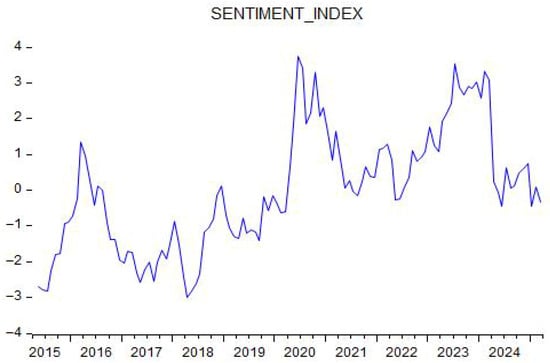
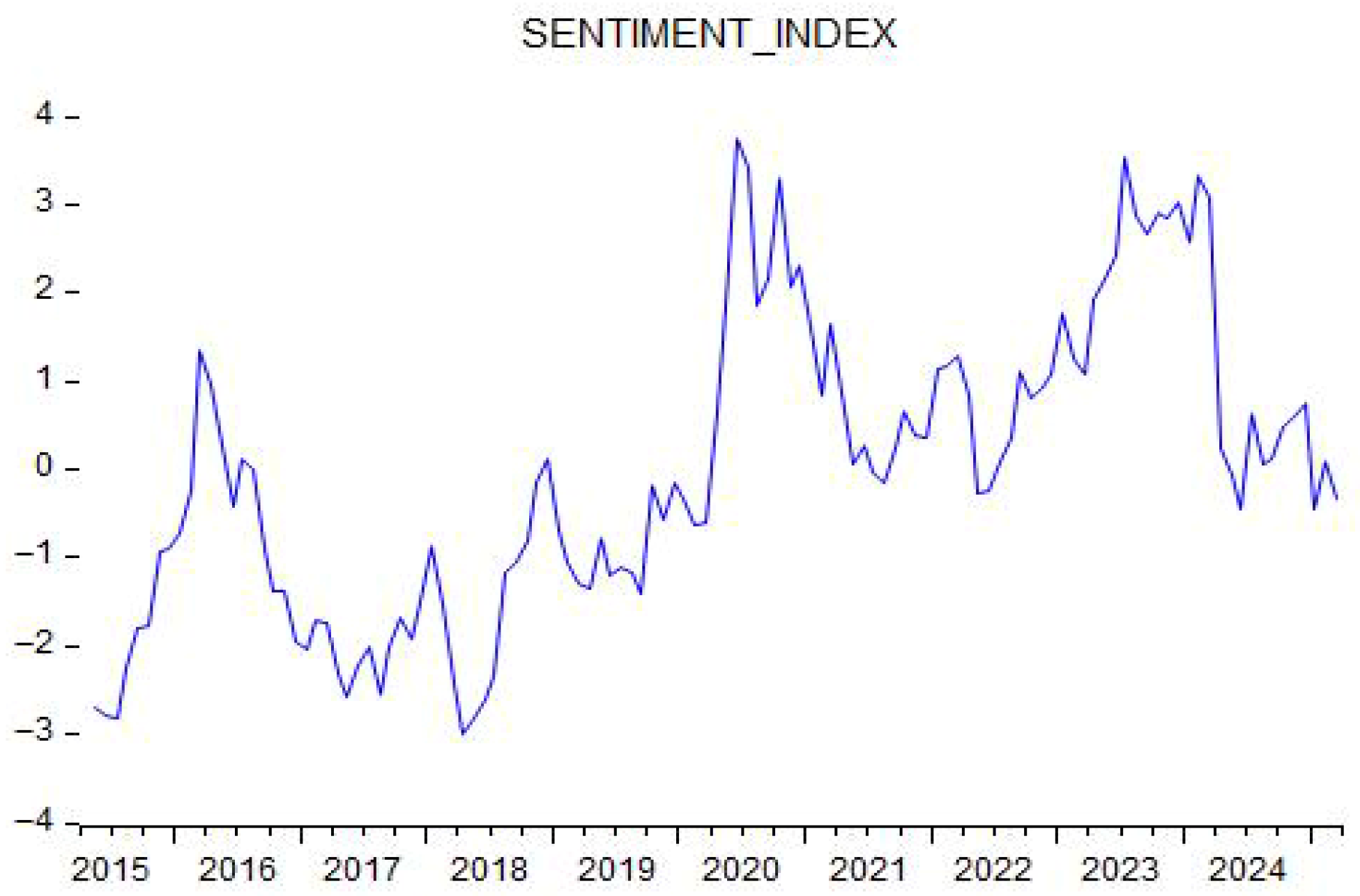
Figure 1 below presents the graphical plot of the newly constructed market-wide investor sentiment index, derived from the first principal component. The index displays a noticeable volatility clustering, evident in the spikes and fluctuations of sentiment over the selected sample period. The sentiment index notably corresponds with historical patterns of market bubbles and crashes, as reported in the South African sentiment indices used by Muguto et al. (2019), Moodley et al. (2024), and Muzindutsi et al. (2023). Evidently, it captures both positive and negative shifts in market sentiment, reflecting the fluctuations within the sentiment index and confirming its robustness as a measure of investor sentiment. These findings align with the descriptive statistics captured in Table 4. From Figure 1, the sentiment index indicates a significant decline in sentiment from early 2020, due to the COVID-19 pandemic (Muzindutsi et al., 2023). This sudden decline reflects a heightened market uncertainty, liquidity constraints, and consequently declining investor confidence during the first stages of the global health crisis, which triggered widespread risk aversion and a broad re-pricing of assets across financial markets (Ashraf, 2020). A sudden decline in sentiment in 2024 is evident, and this is likely linked to the political uncertainty that emerged in South Africa when the ruling African National Congress (ANC) lost its parliamentary majority and coalition negotiations commenced (Nwokora et al., 2024).
Figure 1.
Sentiment index. Source: Author’s own estimation (2025).
4.2.2. Pre Diagnostic Checks
To evaluate the robustness of the model, two sets of diagnostic tests, Part A and Part B, are conducted, each using different lag lengths to test for heteroskedasticity and autocorrelation.
Part A: Lag length of 1
VEC Residual Heteroskedasticity Tests (Levels and Squares)
Using a lag length of 1, as suggested by Table 6, the joint VEC test has a probability value of 0.0185. The VEC Residual Heteroskedasticity test does reject the null hypothesis of homoskedasticity, as the joint p-value of 0.0185 is less than the 5% significance level. This suggests that the model residuals contain heteroskedasticity.
The VEC Residual Serial Correlation LM tests for both panels, in Table 8, do reject the null hypothesis of no serial correlation, as all p-values for the variables are less than the 5% significance level. This indicates that the model residuals contain serial correlation.
Table 8.
VEC Residual Serial Correlation LM tests.
Part B: Lag length of 4
VEC Residual Heteroskedasticity Tests (Levels and Squares)
The joint VEC test has a probability value of 0.3287. The VEC Residual Heteroskedasticity test does not reject the null hypothesis of homoskedasticity, as the joint p-value of 0.3287 exceeds the 5% significance level. This suggests that the model residuals are free from heteroskedasticity.
The VEC Residual Serial Correlation LM tests for both panels, as seen in Table 9, do not reject the null hypothesis of no serial correlation, as all p-values for the variables exceed the 5% significance level. This indicates that the model residuals are free from serial correlation.
Table 9.
VEC Residual Serial Correlation LM tests.
In conclusion, a lag length of four will be used in the empirical models to ensure that the model is well-specified, free from residual autocorrelation, heteroskedasticity, and capable of capturing the underlying short- and long-run dynamics.
4.2.3. Empirical Models
Vector Error Correction Model (VECM)
The Vector Error Correction Model (VECM) results, in Table 10 below, reveal a significant short-run relationship between investor sentiment and the FTSE/JSE property indices. Specifically, investor sentiment exhibits a statistically significant relation with the JSE REIT and JSE RIS indices at the 1% and 5% significance levels, as reflected by their respective short-run coefficients of 1.84 and 2.24. The significant short-run relationship, particularly with the JSE REIT and JSE RIS indices, suggests that fluctuations in market sentiment can quickly translate into changes in property valuations as investors respond to evident optimism or pessimism (Moodley et al., 2025b). This finding is consistent with Muzindutsi et al. (2023), who reported that sentiment-driven behaviour in South African property markets tends to amplify volatility during uncertain periods. In addition, the quick response of prices to sentiment highlights the cyclical nature of property markets in relation to wider macroeconomic conditions. This finding is supported by Cheung and Lee (2021) and Ling et al. (2015), who show that investor psychology interacts with liquidity and price dynamics in self-reinforcing feedback loops. In contrast, sentiment levels in the JSE Cap and JSE-listed markets were not sufficiently pronounced to generate a significant impact on index prices, suggesting that investor behaviour in these segments was largely rational and less influenced by noise traders (Moodley et al., 2024). Moreover, the investor sentiment index’s error correction term, with a t statistic of 2.93 exceeding the 5% critical value, indicates that short-term fluctuations in sentiment can lead to temporary mispricing within the property market. As sentiment is inherently driven by investor psychology, such deviations prevent the market from fully reverting to its classical long-run equilibrium (Shiller, 2003).
Table 10.
Vector Error Correction Model (VECM).
The long-run results of the VECM reveal that investor sentiment is statistically significant in explaining variations in South African listed property indices, as seen in the t statistic of 1.85 exceeding the 10% critical value. The results indicate that investor sentiment exerts both immediate and persistent effects on the South African listed property market. This aligns with the behavioural finance framework discussed in the literature review, particularly the principles of Prospect Theory and Bounded Rationality (Kahneman & Tversky, 1979; Simon, 1972), which argue that investors’ decisions are influenced by emotional and cognitive biases rather than purely rational evaluation. These results align with earlier research showing that investor sentiment can meaningfully predict how the property market performs (Muzindutsi et al., 2023; Lin et al., 2008; Nguyen et al., 2024; Hui et al., 2017). The significant relationship between investor sentiment and property indices suggests that shifts in market confidence influence how capital is allocated across the real estate sector. Consequently, as suggested by Ling et al. (2014), sentiment-induced mispricing can distort resource allocation within property markets. Investor sentiment can evidently lead to persistent overvaluation or undervaluation in real estate markets due to illiquidity and limits to arbitrage. These sentiment-driven deviations from fundamentals can distort capital allocation, leading to excessive investment during optimistic periods and constrained activity when sentiment turns negative (Ling et al., 2014). Similarly, Clayton et al. (2008) argue that such sentiment-driven mispricing persists in illiquid property markets, where limited arbitrage opportunities prevent rapid price correction. Conversely, short-term interest rates exert a significant long-run effect on the JSE/FTSE property indices. Consequently, controlling for these macroeconomic variables was essential for isolating sentiment as a determinant of JSE property index prices. This reversion to fundamentals aligns with the weak-form efficiency of the EMH, where prices eventually reflect all past information and behavioural anomalies are arbitraged away (Fama, 1970).
Granger Causality Test (VEC Granger Causality/Block Exogeneity Wald Test)
In Table 11 below, the results of the VEC Granger causality/Block Exogeneity Wald tests indicate a series of uni-directional causal relationships among the selected JSE/FTSE property indices, market proxies, and macroeconomic variables. Specifically, JSE REITs Granger-cause the market proxy (FNB), as the null hypothesis of no causality is rejected at the 5% significance level (p < 0.05). The reverse causality from FNB to JSE REITs is not statistically significant, suggesting a uni-directional effect from JSE REITs to the market proxy. Similarly, JSE RIS Granger-causes JSE REITs, CPI Granger-causes the sentiment index, and JSE CAP Granger-causes both JSE REITs and the market proxy (FNB), with all null hypotheses of no causality rejected at the 5% level (p < 0.05) and no evidence of reverse causality. The analysis further shows that long-term interest rates Granger-cause short-term interest rates, while the reverse relationship is not significant, indicating a uni-directional influence. In addition, the market proxy (FNB) Granger-causes long-term interest rates, JSE-listed properties Granger-cause the market proxy (FNB), and short-term interest rates Granger-cause CPI, with all tests rejecting the null hypothesis of no causality at the 5% level (p < 0.05).
Table 11.
Granger causality test (VEC Granger causality/Block Exogeneity Wald test).
Importantly, the sentiment index emerges as a key driver within the system. The sentiment index is found to Granger-cause JSE REITs, JSE CAP, JSE RIS, short-term interest rates, and the market proxy (FNB), again with no significant reverse effects. This implies that past changes in investor sentiment contain predictive information about future property pricing. In other words, trends in sentiment statistically explain changes in property index pricing over time. The uni-directional Granger causality from the sentiment index to property indices suggests that investor sentiment has predictive information for asset prices, suggesting that sentiment may influence market dynamics independently of economic fundamentals (Muzindutsi et al., 2023). Consequently, investor sentiment can elevate returns and reduce conditional volatility in certain property segments, while periods of heightened uncertainty may trigger mass investor redemptions, highlighting its potential to both stabilize and destabilize property index pricing (Muzindutsi et al., 2023). Furthermore, the interaction between investor sentiment, property prices, and market liquidity may create a self-reinforcing feedback loop within the FTSE/JSE-listed property market. Rising sentiment can drive increased trading and elevate index prices, while declining sentiment may amplify selling pressures, contributing to both price persistence and heightened volatility (Ling et al., 2015). According to the Efficient Market Hypothesis (EMH), asset prices should reflect all available information; however, if sentiment variables significantly forecast pricing, it implies that prices temporarily deviate from fundamentals due to irrational or sentiment-driven trading behaviour (Baker & Wurgler, 2006). Evidently, the Granger causality between the sentiment index and respective variables provides evidence consistent with behavioural finance of market inefficiencies. Notably, the Granger causality test aligns with theories such as Prospect Theory and Bounded Rationality. The uni-directional causality aligns with Prospect Theory (Kahneman & Tversky, 1979; Tversky & Kahneman, 1992), which posits that investor decisions are shaped by asymmetrical risk perceptions. Periods of declining sentiment may trigger loss aversion and heightened risk aversion, while improving sentiment may encourage speculative or risk-seeking behaviour (Tversky & Kahneman, 1992). Within the South African property market context, this behavioural asymmetry could explain the cyclical nature of property index responses to shifts in sentiment. Furthermore, the results can be interpreted through the lens of Bounded Rationality (Simon, 1972), where investors operate under informational and cognitive limitations. The observed sensitivity of property indices to sentiment may thus reflect the reliance on heuristics or simplified market cues during periods of uncertainty (de Bruin & Flint-Hartle, 2003; Oladeji et al., 2020). In practice, this behavioural bias may amplify volatility within the property market, as investors collectively react to market sentiment rather than fundamental valuations. These findings are consistent with prior studies that report a significant predictive influence of sentiment on property market performance (Muzindutsi et al., 2023; Lin et al., 2008; Chiang & Tsai, 2023; Cheung & Lee, 2021). These findings imply that similar mechanisms may operate within the FTSE/JSE-listed property indices, highlighting sentiment’s potential to both stabilize and destabilize index pricing. These behavioural mechanisms provide a theoretical foundation for understanding why sentiment influences property indices in the short run and long run, highlighting the importance of incorporating psychological factors when analyzing property market dynamics.
Collectively, these results indicate that all significant causal relationships in this study are uni-directional. The rejection of the null hypotheses at the 5% significance level provides robust evidence that certain financial and macroeconomic variables exert a predictive influence over others, while no bi-directional causality is detected. This finding further justifies the study’s objective of exclusively examining the effect of investor sentiment on property indices, since the lack of a bi-directional relationship suggests that market sentiment influences property performance but is not itself shaped by property price movements.
5. Conclusions
The primary aim of this study was to examine the influence of investor sentiment on the pricing of JSE-listed property indices. The study primarily focused on the directional and dynamic relationships between sentiment and sectoral property indices. This aim was important in understanding whether behavioural factors, as captured through sentiment measures, contribute significantly to property market movements beyond traditional macroeconomic determinants. Assessing the influence of investor sentiment enables researchers and market participants to more accurately interpret property price dynamics, anticipate market fluctuations, enhance risk management, and develop more informed investment strategies. The study utilized monthly data to capture both the long- and short-run relationships across variables by employing a Vector Error Correction Model (VECM) and a Granger causality test.
The empirical results revealed a series of uni-directional causal relationships among the selected JSE/FTSE property indices, the market proxy (FNB), and macroeconomic variables. Notably, investor sentiment was found to Granger-cause the JSE REIT index, JSE Capped Property Index, JSE Real Estate Investment and Services, short-term interest rates, and the market proxy, underscoring sentiment’s role as a leading indicator of property market movements. The results, additionally, indicate a strong short-term relationship between investor sentiment and the FTSE/JSE property indices, implying that market psychology plays a key role in immediate property price movements. Furthermore, the persistence of this relationship in the long term highlights the lasting impact of investor sentiment on property market valuations.
Theoretically, the findings reinforce behavioural finance theories such as the Prospect Theory (Kahneman & Tversky, 1979), which posit that investor sentiment and cognitive biases can cause predictable, non-fundamental fluctuations in asset prices. Empirically, the results contribute to a limited body of South African literature linking investor sentiment to property market dynamics through advanced time series models like the VECM, offering robust evidence of sentiment’s predictive power. Compared to prior studies, these findings are largely consistent with international research (Muzindutsi et al., 2023; Lin et al., 2008; Nguyen et al., 2024; Hui et al., 2017).
The study’s results have several implications for emerging investors, policymakers, and market analysts. Understanding the influence that sentiment has on the property market provides an opportunity for property investors to anticipate short-term and long-term property price movements and manage risk exposure during periods of excessive optimism or pessimism. Furthermore, the long-run sentiment influence implies that mispricing, within the property market, may continue over extended periods, affecting expected returns, portfolio diversification strategies, and risk management. This finding suggests that sentiment indicators can serve as valuable supplementary tools for market analysts that forecast property market movements and for managing cyclical risk exposure, especially within Regulation 28-compliant portfolios. From a policy standpoint, the findings indicate that financial stability and investor confidence are strongly connected. When negative sentiment persists, whether due to economic shocks, political uncertainty, or global risks, it can heighten volatility in the property market and discourage new investment. This highlights the need for regulators and policymakers, such as the South African Reserve Bank, to include sentiment measures in their market monitoring processes. Improving transparency, strengthening disclosure standards, and promoting investor education could help limit the spread of fear or overreaction during market downturns. Moreover, recognizing the behavioural factors that drive market cycles can guide the development of countercyclical policies designed to restrict excessive optimism in booms and reduce panic during downturns.
Although this study offers important insights and highlights its unique contribution to the discussion on investor sentiment and property market performance, it does have some limitations. The analysis focuses specifically on the pricing of the FTSE/JSE property indices rather than returns to examine how sentiment affects overall market levels. While using index prices provides valuable information on aggregate market behaviour, future studies could build on this work by using returns-based measures, which would capture relative changes over time and offer a more dynamic view of sentiment-driven fluctuations. Additionally, because this study is limited to the South African listed property market, further research could expand the scope to other emerging markets, enhancing the generalizability and comparative richness of the findings. Moreover, the analysis can be further enhanced by conducting portfolio efficiency tests to determine the diversification perspectives of the South African property market.
Collectively, this study provides compelling evidence that investor sentiment is a significant driver of South Africa’s listed property market. By integrating behavioural finance perspectives, it enriches both theory and practice, offering a more holistic understanding of how psychology shapes property market performance.
Author Contributions
Conceptualization, F.M.; methodology, C.N. and F.M.; software, F.M.; validation, S.F.-S.; formal analysis, C.N.; investigation, C.N.; resources, C.N.; data curation, F.M.; writing—original draft preparation, C.N.; writing—review and editing, C.N., S.F.-S. and F.M.; visualization, C.N.; supervision, S.F.-S. and F.M.; project administration, S.F.-S. and F.M. All authors have read and agreed to the published version of the manuscript.
Funding
This research received no external funding.
Institutional Review Board Statement
Not applicable.
Informed Consent Statement
Not applicable.
Data Availability Statement
The data presented in this study are available on request from the corresponding author due to a paid subscription which limits the dissemination of data.
Conflicts of Interest
The authors declare no conflicts of interest.
Appendix A
Table A1.
Principal component analysis results.
Table A2.
Principal component analysis results.
References
- Ashraf, B. N. (2020). Stock markets’ reaction to COVID-19: Cases or fatalities? Research in International Business and Finance, 54, 101249. [Google Scholar] [CrossRef] [Scilit] [PubMed]
- Asteriou, D., & Hall, S. G. (2023). Applied econometrics (4th ed.). Bloomsbury Publishing. [Google Scholar]
- Baker, M., & Stein, J. C. (2004). Market liquidity as a sentiment indicator. Journal of Financial Markets, 7, 271–299. [Google Scholar] [CrossRef] [Scilit]
- Baker, M., & Wurgler, J. (2006). Investor sentiment and the cross-section of stock returns. The Journal of Finance, 61(4), 1645–1680. [Google Scholar] [CrossRef] [Scilit]
- Beer, F., & Zouaoui, M. (2013). Measuring stock market investor sentiment. Journal of Applied Business Research, 29(1), 51. [Google Scholar] [CrossRef] [Scilit]
- Bradfield, D., Gopi, Y., & Tshivhinda, J. (2015). The role of South African property in balanced portfolios. South African Journal of Accounting Research, 29(1), 51–70. [Google Scholar] [CrossRef] [Scilit]
- Brown, G. W., & Cliff, M. T. (2004). Investor sentiment and the near-term stock market. Journal of Empirical Finance, 11, 19–27. [Google Scholar] [CrossRef] [Scilit]
- Cheung, K. S., & Lee, J. (2021). The effect of sentiment on commercial real estate returns: Investor and occupier perspectives. Journal of Property Investment & Finance, 39(6), 561–589. [Google Scholar] [CrossRef] [Scilit]
- Chiang, S. L., & Tsai, M. S. (2023). Analyses for the effects of investor sentiment on the price adjustment behaviors for stock market and REIT market. International Review of Economics & Finance, 86, 425–439. [Google Scholar] [CrossRef] [Scilit]
- Clayton, J., Ling, D. C., & Naranjo, A. (2008). Commercial real estate valuation: Fundamentals versus investor sentiment. The Journal of Real Estate Finance and Economics, 38, 5–37. [Google Scholar] [CrossRef] [Scilit]
- de Bruin, A., & Flint-Hartle, S. (2003). A bounded rationality framework for property investment behaviour. Journal of Property Investment & Finance, 21(3), 271–284. [Google Scholar] [CrossRef] [Scilit]
- Fama, E. (1970). Efficient capital markets: A review of theory and empirical work. The Journal of Finance, 25(2), 383–417. [Google Scholar] [CrossRef] [Scilit]
- Gallimore, P., & Gray, A. (2002). The role of investor sentiment in property investment decisions. Journal of Property Research, 19(2), 111–120. [Google Scholar] [CrossRef] [Scilit]
- Hengelbrock, J., Theissen, E., & Westheide, C. (2013). Market response to investor sentiment. Journal of Business Finance & Accounting, 40(7–8), 901–917. [Google Scholar] [CrossRef] [Scilit]
- Hui, E. C. M., Dong, Z., Jia, S., & Lam, C. H. L. (2017). How does sentiment affect returns of urban housing? Habitat international, 64, 71–84. [Google Scholar] [CrossRef] [Scilit]
- Investing.com. (2025). FTSE/JSE real estate investment and services. Available online: https://www.investing.com/indices/ftse-jse-re-investment-and-services (accessed on 26 August 2025).
- JSE (Johannesburg Stock Exchange). (2017). Property. Available online: https://www.jse.co.za/property (accessed on 22 May 2025).
- Junaeni, I. (2020). Analysis of factors that influence decision making invest in capital markets in millennial generations. International Journal of Accounting & Finance in Asia Pacific, 3(3), 11–24. [Google Scholar]
- Kahneman, D., & Tversky, A. (1979). Prospect theory: An analysis of decision under risk. Econometrica, 47(2), 263–292. [Google Scholar] [CrossRef] [Scilit]
- Kassambara, A. (2017). Practical guide to principal component methods in R: PCA, M (CA), FAMD, MFA, HCPC, factoextra (Vol. 2). Sthda. [Google Scholar]
- Koehler, A. B., & Murphree, E. S. (1987). A comparison of the Akaike and schwarz criteria for selecting model order. Journal of the Royal Statistical Society Series, 37(2), 187–195. [Google Scholar] [CrossRef] [Scilit]
- Kwakye, B., & Chan, T. H. (2025). Market sentiment in emerging economies: Evidence from the South African property market. International Journal of Housing Markets and Analysis, 18(3), 757–771. [Google Scholar] [CrossRef] [Scilit]
- Lam, C. H. L., & Hui, E. C. M. (2018). How does investor sentiment predict the future real estate returns of residential property in Hong Kong? Habitat International, 75, 1–11. [Google Scholar] [CrossRef] [Scilit]
- Levy, J. S. (1992). An introduction to prospect theory. Political Psychology, 13(2), 171–186. Available online: https://www.jstor.org/stable/3791677 (accessed on 23 March 2025).
- Leybourne, S., & Newbold, P. (2002). On the size properties of Phillips-Perron Tests. Journal of Time Series Analysis, 20(1), 51–61. [Google Scholar] [CrossRef] [Scilit]
- Lin, C. Y., Rahman, H., & Yung, K. (2008). Investor sentiment and REIT returns. The Journal of Real Estate Finance and Economics, 39, 450–471. [Google Scholar] [CrossRef] [Scilit]
- Ling, D. C., Naranjo, A., & Scheick, B. (2010). Investor sentiment and asset pricing in public and private markets. RERI WP, 170, 1–48. Available online: https://www.reri.org/research/article_pdf/wp170.pdf (accessed on 7 April 2025).
- Ling, D. C., Naranjo, A., & Scheick, B. (2014). Investor sentiment, limits to arbitrage and private market returns. Real Estate Economics, 42(3), 531–577. [Google Scholar] [CrossRef] [Scilit]
- Ling, D. C., Ooi, J. T. L., & Le, T. T. T. (2015). Explaining house price dynamics: Isolating the role of nonfundamentals. Journal of Money, Credit and Banking, 47(1), 87–125. [Google Scholar] [CrossRef] [Scilit]
- Liu, Y. H., Dai, S. R., Chang, F. M., Lin, Y. B., & Lee, N. R. (2020). Does the investor sentiment affect the stock returns in Taiwan’s stock market under different market states? Journal of Applied Finance and Banking, 10(5), 41–59. [Google Scholar]
- Lowies, G. A., Hall, J. H., & Cloete, C. E. (2015). The role of market fundamentals versus market sentiment in property investment decision-making in South Africa. Journal of Real Estate Literature, 23(2), 297–314. [Google Scholar] [CrossRef] [Scilit]
- Lowies, G. A., Hall, J. H., & Cloete, C. E. (2016). Heuristic-driven bias in property investment decision-making in South Africa. Journal of Property Investment & Finance, 34(1), 51–67. [Google Scholar] [CrossRef] [Scilit]
- Maree, K., Pieterson, J., & Rajab, P. (2025). The quantitative research process. In K. Maree (Ed.), First steps in research (pp. 206–218). Van Schaik Publishers. [Google Scholar]
- Messaoud, D., & Ben Amar, A. (2025). Herding behaviour and sentiment: Evidence from emerging markets. EuroMed Journal of Business, 20(2), 552–573. [Google Scholar] [CrossRef] [Scilit]
- Moodley, F., Ferreira-Schenk, S., & Matlhaku, K. (2024). Effect of market-wide investor sentiment on South African government bond indices of varying maturities under changing market conditions. Economies, 12(10), 265. [Google Scholar] [CrossRef] [Scilit]
- Moodley, F., Ferreira-Schenk, S., & Matlhaku, K. (2025a). Determinants of South African asset market co-movement: Evidence from investor sentiment and changing market conditions. Risks, 13(1), 14. [Google Scholar] [CrossRef] [Scilit]
- Moodley, F., Ferreira-Schenk, S., & Matlhaku, K. (2025b). The effects of investor sentiment on stock return indices under changing market conditions: Evidence from South Africa. International Journal of Financial Studies, 13(2), 70. [Google Scholar] [CrossRef] [Scilit]
- Muguto, H. T., Rupande, L., & Muzindutsi, P. F. (2019). Investors sentiment and foreign financial flows: Evidence from South Africa. Zbornik Radova Ekonomskog Fakulteta u Rijeci, 37(2), 473–498. [Google Scholar] [CrossRef] [Scilit]
- Muhammad, N. M. N., & Maheran, N. (2009). Behavioural finance vs. traditional finance. Advance Management Journal, 2(6), 1–10. [Google Scholar]
- Muzindutsi, P. F., Apau, R., Muguto, L., & Muguto, H. T. (2023). The impact of investor sentiment on housing prices and the property stock index volatility in South Africa. Real Estate Management and Valuation, 31(2), 1–17. [Google Scholar] [CrossRef] [Scilit]
- Nguyen, N. T., Tuan Nguyen, A., & Nguyen, D. T. (2024). The growth of the real estate corporate bond market in Vietnam: The role of investor sentiment. Review of Behavioral Finance, 16(4), 712–732. [Google Scholar] [CrossRef] [Scilit]
- Nwokora, Z., Pak, A., & Pelizzo, R. (2024). The conditional effects of party system change on economic growth in Africa. Acta Politica, 27, 1–28. [Google Scholar] [CrossRef] [Scilit]
- OECD. (2022). Consumer Confidence Index (BCI). Available online: https://www.oecd.org/en/data/indicators/consumer-confidence-index-cci.html (accessed on 26 August 2025).
- Oladeji, J., Yacim, J., Wall, K., & Zulch, B. (2020). Macroeconomic leading indicators of listed property price movements in Nigeria and South Africa. Acta Structilia, 27(2), 93–119. [Google Scholar] [CrossRef] [Scilit]
- Pham, Q., Pham, H., Pham, T., & Tiwari, A. K. (2025). Revisiting the role of investor sentiment in the stock market. International Review of Economics & Finance, 100, 104089. [Google Scholar] [CrossRef] [Scilit]
- Rahman, M. L., & Shamsuddin, A. (2019). Investor sentiment and the price-earnings ratio in the G7 stock markets. Pacific-Basin Finance Journal, 55, 46–62. [Google Scholar] [CrossRef] [Scilit]
- Raissi, N., & Missaoui, S. (2015). Role of investor sentiment in financial markets: An explanation by behavioural finance approach. International Journal of Accounting and Finance, 5(4), 362–401. [Google Scholar] [CrossRef] [Scilit]
- Rupande, L., Muguto, H. T., & Muzindutsi, P. F. (2019). Investor sentiment and stock return volatility: Evidence from the Johannesburg stock exchange. Cogent Economics & Finance, 7(1), 1600233. [Google Scholar] [CrossRef] [Scilit]
- Sajid, M., & Bhardwaj, R. S. (2021). Literature review of behavioral finance: Then and now. Elementary Education Online, 20(1), 2782. [Google Scholar]
- Saydometov, S., Sabherwal, S., & Aroul, R. R. (2020). Sentiment and its asymmetric effect on housing returns. Review of Financial Economics, 38(4), 580–600. [Google Scholar] [CrossRef] [Scilit]
- Schoemaker, P. J. H. (1982). The expected utility model: Its variants, purposes, evidence and limitations. Journal of Economic Literature, 20(2), 529–563. Available online: https://www.jstor.org/stable/2724488 (accessed on 18 April 2025).
- Shiller, R. J. (2003). Measuring bubble expectations and investor confidence. The Journal of Psychology and Financial Markets, 1(1), 49–60. [Google Scholar] [CrossRef] [Scilit]
- Simon, H. A. (1972). Theories of bounded rationality. Decision and Organization, 1(1), 161–176. [Google Scholar]
- Sims, C. A. (1980). Macroeconomics and reality. Econometrica, 48(1), 1–48. [Google Scholar] [CrossRef] [Scilit]
- Tversky, A., & Kahneman, D. (1992). Advances in prospect theory: Cumulative representation of uncertainty. Journal of Risk and Uncertainty, 5(4), 297–323. [Google Scholar] [CrossRef] [Scilit]

Disclaimer/Publisher’s Note: The statements, opinions and data contained in all publications are solely those of the individual author(s) and contributor(s) and not of MDPI and/or the editor(s). MDPI and/or the editor(s) disclaim responsibility for any injury to people or property resulting from any ideas, methods, instructions or products referred to in the content. |
© 2025 by the authors. Licensee MDPI, Basel, Switzerland. This article is an open access article distributed under the terms and conditions of the Creative Commons Attribution (CC BY) license (https://creativecommons.org/licenses/by/4.0/).