Article

Determinants of M&A Acquisition Premiums on the European Market in the Period of 2009 to 2022

1
Department of Strategy, Finance & Innovation, International School of Management, Campus Cologne, Im MediaPark 5c, 50667 Cologne, Germany
2
Department of Economics and Quantitative Methods, International School of Management, Campus Cologne, Im MediaPark 5c, 50667 Cologne, Germany
3
Department of Strategy, Finance & Innovation, International School of Management, Campus Dortmund, Otto-Hahn. Str. 19, 44227 Dortmund, Germany
4
Department of Financial Engineering, Vilnius Gediminas Technical University, Saulėtekio al. 11, 10223 Vilnius, Lithuania
*
Author to whom correspondence should be addressed.
Int. J. Financial Stud. 2025, 13(4), 204; https://doi.org/10.3390/ijfs13040204
Submission received: 9 September 2025 / Revised: 5 October 2025 / Accepted: 28 October 2025 / Published: 3 November 2025

Abstract

This study analyzes the development and determinants of control premiums in mergers and acquisitions in the European market from 2009 to 2022 (i.e., stock volatility, liquidity via money supply, sectoral growth, transaction volume, market capitalization, free cash flows, presence of a toehold, public listing, cross-border transactions, payment types, and sectoral relatedness), whereby control premiums represent the premium that buyers pay above the current market value of a company to gain control. The empirical analysis implements linear as well as quantile regression analyses. Results reveal that the average and median premiums fluctuated notably between 2009 and 2022, with the lowest premiums paid in 2009 and the highest in 2022. Factors such as the volatility of the stock market, capital liquidity, and deal activity within certain sectors have a consistently significant influence on the level of premiums if a longer period of analysis is selected. Cross-border status, payment structure, stock market listing of the acquiring company, and the build-up of a toehold influence the premiums paid in shorter- and longer-term analyses. In contrast, neither the market capitalization nor the free cash flow of the target company has a significant influence on the premiums paid.

1. Introduction

Mergers and acquisitions (M&A) are among the most visible manifestations of strategic decisions at the highest corporate level. M&A deals give acquirers immediate access to technologies, distribution channels, and new products that might otherwise be difficult to develop. They also offer the opportunity to significantly strengthen the market position (Schweitzer & Koscher, 2023). Accordingly, M&A is often referred to as the supreme discipline of corporate management (Dreher & Ernst, 2022, p. 15).
In 2009, due to the repercussions of the financial crisis, the global mergers and acquisitions market slumped by almost 29% year-on-year to a total transaction volume of USD 2187 billion, its lowest level since 2004. In 2021, it reached its all-time high with a total transaction volume of USD 5236 billion. Finally, in 2022, following the Russian attack on Ukraine, the market then collapsed again by over 35% to a total value of USD 3384 billion (Institute for Mergers, Acquisitions and Alliances, 2024a).
The period from 2009 to 2022 covers the phase following the global financial crisis (Bundeszentrale für politische Bildung, 2024), for which complete market data is available. Incidentally, in 2022 the Ukraine war started, marking a definitive incision in the economic development across Europe. Thus, this period captures the situation in the aftermath of the financial crisis very well. Even though the financial crisis started in the United States in 2006/2007, there had been a delay before it reached the European markets and developed from a banking crisis into a financial crisis (Welfens, 2009). Thus, selecting 2009 as the starting point of the analysis ensures that the frame of reference is set after the major brunt of the financial crisis in Europe.
Choosing the period from 2009 to 2022 offers another legislative advantage. The EU Commission regulation No. 802/2004 issued in 2004 that regulates mergers and acquisitions in the European Union has only been amended once, in 2013. Otherwise, it is superseded by the replacement regulation No. 2023/914 issued in 2023. Other EU guidelines relevant for M&A processes were issued in 2004 (horizontal mergers and acceptable remedies), 2005 (restrictions directly related and necessary to concentrations), 2008 (non-horizontal mergers), and 2024 (relevant market). Thus, aside from the 2013 amendment, the regulatory framework across the period of study remained constant (Daly et al., 2024), at least for those deals taking place within the borders of the European Union.
Transaction premiums, takeover premiums, or control premiums are a central element of M&A transactions. They represent the premium that a buyer pays over and above the current market value of the target company to gain control of said company (Finnerty & Emery, 2004). The premium compensates the previous owners for the loss of control and reflects the bidding company’s expectations regarding future synergies and growth potential (Madura et al., 2012). The amount of the transaction premiums paid can vary considerably and even be negative (Weitzel & Kling, 2017). The control premium is calculated as follows (Eichner, 2019):
Control Premium = Acquisition price Market value of the company Market value of the company
Premiums offered by the various bidders vary depending on the different net synergy potentials that the bidders hope to achieve and the resulting subjective company values (D. Gupta & Gerchak, 2002; Hofmann, 2005; Madura et al., 2012).
It should be noted that the premium is paid in advance, but net synergy effects must first be generated. This means that the amount of the premium paid can also be used as an indicator of the risk of failure of mergers and acquisitions (Harford et al., 2012; Sirower, 2001, p. 137). Accordingly, understanding the development of these premiums and their determinants is a crucial part of the evaluation and planning of takeovers (Finnerty & Emery, 2004).
Shareholders of the acquiring company accept control premiums since M&As are intended to create added value in the future. This contrasts with the fact that more than half of all transactions fail (Schweitzer & Koscher, 2023). Despite the many articles focusing on mergers and acquisitions, acquiring companies often pay too much for target companies (Bower, 2001). As the transaction premiums play a decisive role in the final purchase price, understanding their dynamics is essential to the success of future M&A deals.
Following the deliberation of the Corporate Finance Institute (2025), the types of synergies that investors hope to produce can be summarized into three broad classes: cost, revenue, and financial synergies. Each of the three classes contains additional types of synergies as follows:
  • Cost Synergies:
  • Merging supply chains;
  • Merging sales and marketing departments and linking endeavors;
  • Joined research and development departments;
  • Saving on wages and salaries for unrequired staff;
  • Closing of redundant facilities;
  • Wider access to intellectual property;
  • Revenue Synergies:
  • Access to patents and other intellectual property;
  • Development of complementary products, geographies, and customer bases;
  • Financial Synergies:
  • Tax benefits;
  • Increased debt structuring opportunities;
  • Reduction of overall costs of equity.
M&A activities are no longer only of great relevance in the United States but also in Europe. With around a third of the global transaction volume, the European market is the second largest M&A market in the world after North America. With 21,528 transactions and a volume of USD 2354 billion in 2022, the European market was only just behind the North American market, which recorded 24,787 transactions and a volume of USD 2378 billion (Institute for Mergers, Acquisitions and Alliances, 2024b, 2024c).
Despite these comparable figures, there is a clear discrepancy in the intensity of research. North American M&A activities, especially those in the United States, have been studied much more extensively than European ones. This also applies, in particular, to the development and determinants of transaction premiums. While there is already some work on the topic in the United States (Madura et al., 2012), the change in transaction premiums over time in Europe has not yet been adequately addressed. This research gap needs to be closed to gain a holistic understanding of the M&A landscape and M&A activities.
In addition, currently no studies exist that examine the development of transaction premiums after the financial crisis, in particular with a focus on the European market. The crisis had a profound impact on the M&A market, including takeover premiums, as economic conditions changed and regulatory requirements, especially for banks, were tightened (Maslak & Senel, 2022). A detailed understanding of the development of premiums for this period is therefore of significant importance.
At the same time, numerous studies have already looked at company- and deal-specific factors influencing takeover premiums. However, there are only a few studies to date that deal with the macroeconomic and industry-specific determinants of takeover premiums (Madura et al., 2012). Even rarer are studies that combine both aspects.
Consequently, this paper adds to the current literature in the following way. It provides an insight into the development and determinants of transaction premiums in Europe between 2009 and 2022. Even though the financial crisis did start in the US, it had a profound effect on the European financial system. This study thereby captures the market dynamics following the impactful global financial crisis and its potential disruptions of the European financial markets. By incorporating macroeconomic and industry-specific variables into the model, it also adopts a more sophisticated approach than previous studies. Additionally, it is the first article to focus on M&A premiums in the European market following the crisis. While it primarily adopts the perspective of acquiring firms, some results still can benefit acquired firms as well. In summary, the article answers the following research question:
How did transaction premiums develop in Europe in the period from 2009 to 2022, and what were the determinants of premium dynamics?
To this end, the following Section 2 reflects the theoretical background and presents a discussion of the current research on control premiums. Based on these findings, the research methodology is developed in the Section 3, and research results are presented and discussed in the Section 4. The Section 5 concludes by deducing practical recommendations and discussing limitations.

2. Literature Review

This section summarizes key studies and findings that deal with the dynamics and determinants of control premiums. The research findings are structured according to macroeconomic, sector-specific, deal-specific, target-specific, and acquiring company-specific factors that influence the level of premiums.
In their seminal work, Madura et al. (2012) study the extent to which industry-specific and macroeconomic factors influence merger premiums over time. Their study combined multiple factors, offering a holistic approach compared to preceding studies. In addition, the cross-industry development of transaction premiums during the study period was examined, and industry comparisons were made. They come to the conclusion that the average and median transaction premium fluctuated greatly between 1986 and 2007. The median transaction premium paid was around 28% in 1986 and over 50% in 1992. The results of their study indicate as well that takeover premiums increased in the presence of stronger market growth, a higher degree of market concentration (Gorton et al., 2009), a higher research and development intensity, and lower heterogeneity of performance in the market segment. Furthermore, macroeconomic factors like capital liquidity and gross domestic product (GDP) volatility also influence takeover premiums. The premiums were higher with greater liquidity and higher GDP volatility (Madura et al., 2012).
Simonyan (2014) found that stock market volatility also leads to higher transaction premiums. He argues that market mispricing, which is characterized by periods of over- and undervaluation of the stock market, has a significant impact on mergers and acquisitions.
In Simonyan’s work, phases of market overvaluation are associated with many transactions and a tendency towards lower premiums, as potential buyers want to pay less to compensate for the overvaluation of the target companies. In addition, the takeover premium may be lower during these periods because takeover premiums may already be priced into the share prices or valuations of the target companies, as there are many takeovers (Simonyan, 2014). Where market mispricing is often measured in the literature by the ratio of market value to book value, Simonyan (2014) uses investor sentiment as a more suitable indicator. He finds that takeover premiums are higher in times of investor pessimism (market undervaluation) and lower in times of investor optimism (market overvaluation). The article refers to the negative relationship between investor sentiment and stock market volatility argued by Lee et al. (2002). Accordingly, periods of higher market volatility are associated with investor pessimism, and this in turn with market undervaluation and thus also with higher transaction premiums paid.
In their article, Diebold and Yilmaz (2008) examine the relationship between the volatility of macroeconomic fundamentals, e.g., GDP volatility, and the volatility of stock markets. They considered more than 40 countries, spread globally, in the period from 1983 to 2002, finding that there exists a positive correlation between the volatility of macroeconomic fundamentals and stock market volatility. Macroeconomic volatility causes stock market volatility and not vice versa.
Madura et al. (2012), Simonyan (2014), and Gorton et al. (2009) all examined the US market for the period between 1983 and 2007. It remains to be clarified to what extent the results of the studies also apply to the European market and to the period after the financial crisis.
Neither of the three cited studies considered the extent to which deal activity within an industry influences the purchase price. In addition to synergy generation, competition is a reason for paying a transaction premium, as it may indicate greater competition.
Another determinant to be considered is the size of the target company, measured by its equity value. Alexandridis et al. (2013) came to the conclusion that lower premiums are paid in larger deals. Their article examines mergers and acquisitions in the United States. It remains important to examine whether and to what extent the size of the target company also influences the transaction premium in Europe to obtain a complete picture of the M&A market.
Baldi and Salvi (2022) examined 403 completed takeovers of listed companies worldwide between 2007 and 2015, with 13% of acquiring and 4% of target companies coming from Europe. However, their work should not be considered holistic, as it does not consider macroeconomic or industry-specific determinants (Baldi & Salvi, 2022). They found that overly confident, cash-generating acquirers tend to pay higher premiums. In addition, higher premiums would be paid for larger target companies. The latter contradicts the findings of Alexandridis et al. (2013). Consequently, there is all the more reason to re-examine the influence of the size of the target company on the transaction premium.
In the 1980s, Jensen (1986) and Lehn and Poulsen (1989) studied agency costs of free cash flows (FCF) and their influence on the transaction premium. Jensen (1986) hypothesized a positive relationship between the takeover premiums and the free cash flow of the target company. Lehn and Poulsen (1989), expanding the study, found that higher free cash flows of the target company are associated with higher takeover premiums. In contrast, Bugeja and Walter (1995) found for the Australian market that there is a negative relationship between the free cash flow of the target company and the transaction premium paid.
Information asymmetry and uncertainty play a central role in M&A transactions, with Li and Tong (2018) investigating how information uncertainty about the target company influences the takeover price and, in particular, the transaction premium. This aspect has also been addressed by other studies (Cheng et al., 2016; Dionne et al., 2010; Raman et al., 2013). All of these studies come to the conclusion that high information uncertainty has a positive impact on the transaction premium paid.
A key instrument for reducing this uncertainty is the acquisition of a minority stake before the acquisition or merger, known as a toehold. By acquiring a toehold, the potential acquirer can gather valuable information about the target company before the actual takeover that would otherwise not be accessible (Lacerda et al., 2021). Bris (2002) investigated why, despite the expected positive effects, only a few bidding companies acquire a toehold before a planned acquisition. He reasons that by acquiring a toehold, acquiring companies have the opportunity to acquire shares in the target company at a favorable price before the price of the target company increases due to the announcement of the takeover. Consequently, the takeover premium usually decreases with the size of the toehold, since the discovery of the toehold by the market leads to an increase in the share price of the target company. The difference between the offer price of the bidding company and the share price of the target company prior to the announcement of the takeover, i.e., the transaction premium, is also reduced.
Eichner (2019) investigated the factors influencing takeover premiums in public takeovers. The focus was on both the strategic considerations of the buyers and the financial characteristics of the target companies. He examined the European market in the period from 2005 to 2016 and came to the conclusion that cross-border transactions lead to higher takeover premiums. This is because foreign buyers are often willing to pay an additional price to penetrate new geographical markets. Mateev and Andonov (2016) examined the issue explicitly and, like Eichner (2019), came to the conclusion that cross-border M&A (CBM&A) leads to higher premiums than national M&A.
Goergen and Renneboog (2004) investigated how takeover announcements affect the share prices of the companies involved and which other factors influence these effects. In particular, they investigated whether hostile takeovers trigger greater price reactions than friendly takeovers and what role the payment method plays. However, contrary to Eichner’s research results, a key finding of the study was that the premiums paid for domestic takeovers were on average higher than those for cross-border takeovers. This was mainly attributed to the fact that the sample of domestic M&As contained a higher proportion of takeovers of British target companies (46% of domestic takeovers compared to 28% of cross-border takeovers), for which higher premiums were generally paid.
García-Gómez et al. (2023) came to the conclusion that Asian companies pay on average twice as high transaction premiums as European companies. It therefore needs to be clarified whether CBM&A, regardless of the origin of the acquirer, entails significantly higher premiums compared to domestic M&A for European target companies.
Payment methods in M&A transactions have also been examined in many studies with different objectives. Ismail and Krause (2010) came to the conclusion that shares were used more frequently as a means of payment for lower premiums.
de la Bruslerie (2013) examined the relationship between payment method and premium in M&A in detail. The results of his research indicate that there is a positive correlation between the proportion of cash payments and the amount of the takeover premium. He assumes that premiums are higher in cash transactions primarily because the future return on cash is expected to be lower than that of the company shares that could alternatively be obtained. The conclusion, however, is insufficient. It needs to be supplemented to the extent that the shareholders of the target company initially incur costs and expenses due to the reinvestment of the cash received, which the higher premium is intended to cover.
The offer of a cash transaction is also considered a positive signal from the buyer, as it indicates confidence in the takeover. The management of the bidding company is particularly keen to pay in cash if it assumes that its shares will be worth more after the transaction than before. Accordingly, the target company would prefer to pay in shares after the cash offer to participate in the expected profits. To accept the cash payment, the target company could then demand a higher transaction premium (Palmer, 2021).
Perafán-Pena et al. (2022) investigated how the relationship between industries (of acquiring and target companies) changes the influence of profit management of target companies on the premiums offered by buyers. They studied the extent to which bidders can see through potentially biased financial reports of target companies. Consequently, they come to the conclusion that profit management leads to less increased premiums in takeovers between companies in the same industry rather than in takeovers between companies in different industries.

3. Methodology

3.1. Deduction of the Research Hypotheses

Based on the results of the preceding section, potential determinants are selected and corresponding research hypotheses are formulated.
Stock market volatility is a crucial factor in determining takeover premiums, as it reflects the level of uncertainty and risk associated with the general economic situation and market participants’ expectations (Simonyan, 2014). Stock market volatility goes hand in hand with macroeconomic volatility (Diebold & Yilmaz, 2008). It is expected that the latter negative effects will be overshadowed by the stock market volatility effects leading to the first research hypothesis:
H1. 
Higher stock market volatility will lead to higher control premiums.
Capital liquidity refers to the availability of funds on the capital markets. In phases of high liquidity, it is likely that companies are willing and able to pay higher premiums, as financing for takeovers is more easily accessible (Dass et al., 2016; Massa & Xu, 2013). At the same time, higher capital liquidity can lead to higher economic growth prospects, which in turn can increase the expected synergies (Madura et al., 2012). The second hypothesis is as follows:
H2. 
Higher capital liquidity will lead to higher control premiums.
Expected synergies and the demand for target companies are particularly pronounced in sectors with strong growth prospects. The growth rate of an industry serves as an indicator of future profitability, expansion potential, the reduction of redundant processes, or other synergies (Miller & Segall, 2017, pp. 8–10; Piesse et al., 2006). In Europe before the financial crisis, synergies were considered to be the strongest driver of mergers and acquisitions (Goergen & Renneboog, 2004). A higher premium can therefore be more easily justified when industry growth is high (Madura et al., 2012), leading to the following hypothesis:
H3. 
Higher industry growth rates lead to higher control premiums.
Higher transaction premiums can be expected to go along with higher deal activity since competition is stronger (Hofmann, 2005; Madura et al., 2012). However, in concentrated industries, few companies control a large market share, which can increase competition among bidders. As there are fewer available targets, bidders may be more willing to pay higher premiums to secure a strategic position or prevent competitors from gaining an advantage (Hoberg & Phillips, 2010). Thus, while the actual influence of deal activity remains ambivalent, the hypothesis is formulated positively as follows:
H4. 
Higher deal activity leads to higher control premiums.
The size of the target company, measured by its market equity value, could be directly related to the amount of the premium paid (Eaton et al., 2021). Larger companies tend to have a stronger market position, while smaller target companies offer greater development opportunities and thus higher synergy potential overall (Hofmann, 2005). It is assumed that the latter effect outweighs the former, leading to the following hypothesis:
H5. 
A lower market capitalization leads to higher control premiums.
Companies with high FCF could be more attractive takeover targets and demand higher transaction premiums (Okofo-Dartey & Kwenda, 2021). Unlike intrinsic equity value, market capitalization is not calculated using FCF. Nevertheless, the higher FCF could be priced into the market capitalization, at least in part, which could lead to an insignificant influence on the transaction premium.
H6. 
A higher FCF leads to higher control premiums.
The percentage share that the acquiring company already holds in the target company before the transaction could influence the amount of the premium paid. One of the reasons is that Mueller and Sirower (2003), as well as others, showed that the existing shareholder structure and their expected gains impact the size of premiums paid. This leads to the following hypothesis:
H7. 
A higher stock share of the acquiring company leads to lower control premiums.
Whether the acquiring company is listed on the stock market could influence its ability and willingness to pay a premium. Listed companies may be willing and able to pay higher premiums due to easier access to capital markets and thus to fresh capital (Baldi & Salvi, 2022). Wang et al. (2021) illustrate a similar effect by comparing public and private companies.
H8. 
Listed companies pay higher control premiums compared to private companies.
Cross-border transactions entail additional risks and complexities, such as cultural differences or regulatory hurdles, but offer the opportunity to penetrate new markets. It is also reasonable to assume that information insecurity could be higher for foreign acquiring companies. Information uncertainty usually goes hand in hand with higher transaction premiums paid (Li & Tong, 2018).
H9. 
Cross-border transactions lead to higher control premiums.
The type of payment, cash, shares, or a combination, can influence the premium (Palmer, 2021). It is assumed that a partial cash payment already leads to higher premiums than a full payment in shares. It is also assumed that an all-cash payment will result in even higher premiums than a mixed payment.
H10. 
A higher share of cash payment leads to higher control premiums.
In the context of transactions in which the two companies come from related industries, it is assumed that acquiring companies understand the target companies better and therefore have a lower level of information uncertainty. Furthermore, intra-industry deals reduce the perceived market volatility (Fung & Loveland, 2025). Consequently, the final hypothesis is as follows:
H11. 
Intra-industry transactions lead to lower control premiums than extra-industry transactions.
In summary, the resulting model will encompass the following eleven independent variables and estimate their impact on the acquisition premium:
  • Transaction volume;
  • Stock Market Volatility;
  • Growth rate of money supply M3;
  • Growth rate of the respective sector;
  • Market capitalization;
  • Free cash flows;
  • Share of stocks held before the deal;
  • Public listing;
  • Cross-border transaction;
  • Type of payment;
  • Relatedness of the two involved sectors.

3.2. Data Sources

Data for this study was obtained from the London Stock Exchange Group (LSEG) Workspace. The use of this source ensures high quality and reliability of the data, as LSEG is a leader in financial data provision. The “Deal Screener” tool (code: DSCREEN) was used to select the transactions to be analyzed and to obtain basic data on transaction premiums paid, deal specific, target company-specific and acquiring company-specific information. The transaction premium used in this study is calculated using the enterprise value four weeks before the deal is announced. Where deal-specific data has not been available, i.e., stock market volatility, the growth rate of M3, and the sectoral growth rate, data for the highest frequency consistently available has been implemented for the two growth rates. For the stock market volatility, preliminary testing and other studies (Madura et al., 2012) have revealed that quarterly data is best suited for the analysis. However, to test for the robustness of the results, annual stock market volatility data has been considered as well.
The data on sector growth was collected in the form of indices using the LSEG Workspace tool “undefined Industry” (code: INDUS), except for the “STOXX Europe 600 Real Estate EUR Price Index,” which could also be found in the LSEG Workspace, but using the search bar and not the INDUS tool.
It should be noted that the indices are not a perfect tool for measuring sector growth. They only represent the performance of the share prices of a selection of companies within a sector. The growth of the industry as a whole could therefore deviate from the growth of the index. This may happen if there are large, industry-relevant, private companies that are not included in the index and if companies in the respective index are over- or undervalued.
In addition, share prices are influenced by macroeconomic developments, which are themselves part of the determinants examined in this thesis. Preliminary tests, however, indicate no strong correlation that a determinant would have to be excluded. Furthermore, despite their shortcomings, the indices are suitable instruments that at least partially reflect the development of sector growth. The values for sector activity were recorded analogously with the help of “Deal Screener”.
Historical performance data of the “STOXX Europe 600 EUR Price Index” from 2009 to 2022 was used to calculate the volatility of the equity market. The index appears particularly suitable as it tracks the performance of the prices of the 600 largest listed companies in Europe and therefore provides a comprehensive picture of the performance of the overall equity market.
Historical data for the standardized money supply M3 are used to measure capital liquidity. The ten largest currency areas in Europe, measured by the M3, are considered, and other currencies are ignored. Russia is excluded as a currency area due to a lack of data on the one hand and the unreliability of the limited data available on the other.
The FCF was calculated by adding the net operating cash flow and the net investment cash flow. The annual sector growth and the annual growth in capital liquidity were calculated using a linear growth rate. The value for capital liquidity is the sum of all M3. Equity market volatility is based on historical share price data from the “STOXX Europe 600 EUR Price Index,” whereby the standard deviation of daily returns over a specific period was used as a measure of volatility and calculated. Volatility was calculated on a monthly, quarterly, and annual basis. The market capitalization of the target companies was calculated using the premium paid from the equity value offered for 100% of the shares. It was divided by “(1 + premium%)”. The division is used to calculate the market capitalization adjusted for options four weeks before the takeover.

4. Results and Discussion

4.1. Descriptives and Data Pre-Processing

The data set of M&A transactions comprises a total of 1322 mergers and acquisitions that were announced between 9 January 2009 and 20 December 2022. One of the transactions had to be omitted from the data set. The transaction in question had an equity value of zero and a transaction premium of 2.55%.
The programs StataNow/BE 18.5 as well as SPSS 27 were used for the following calculations.
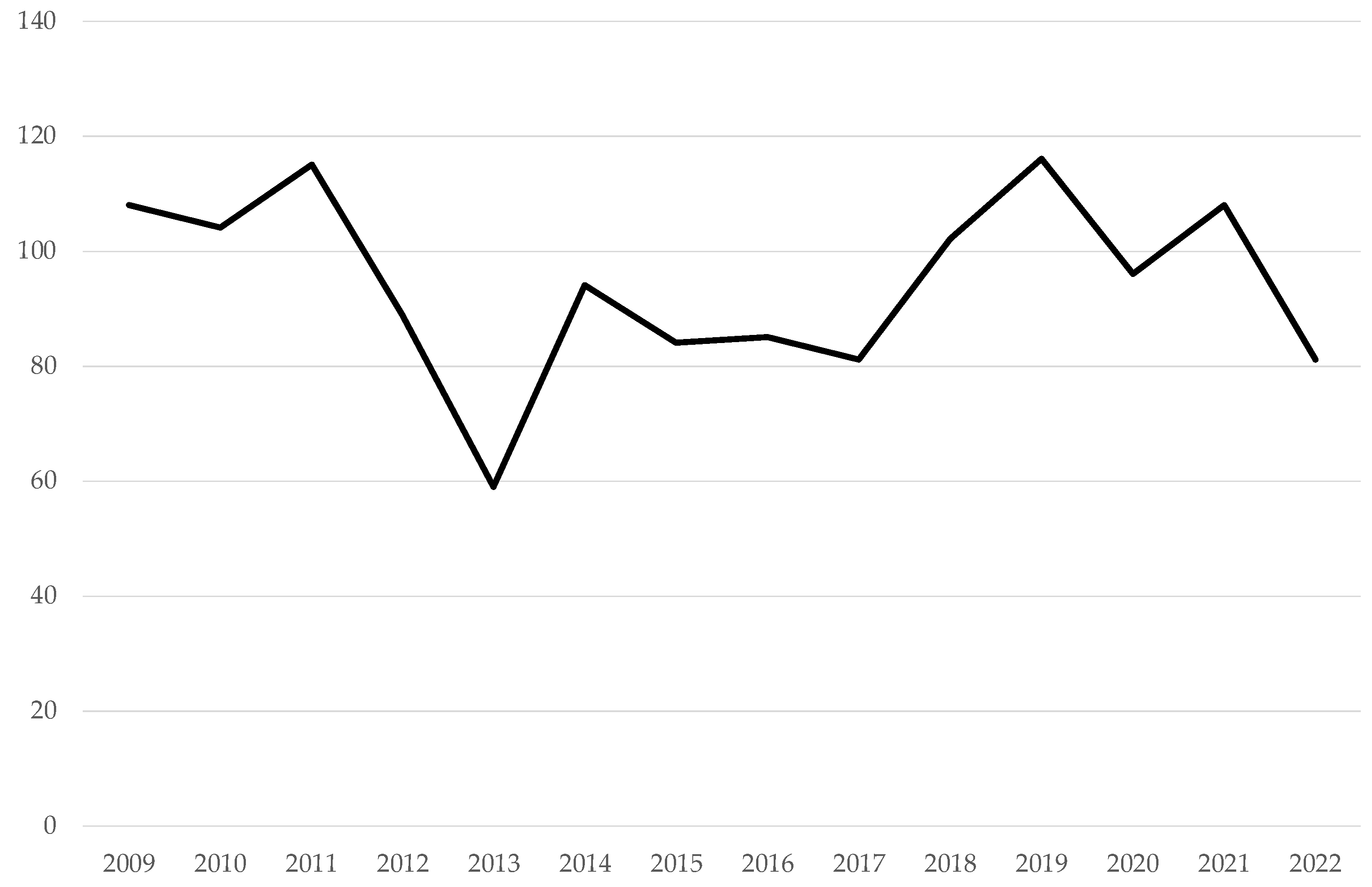
Figure 1 illustrates the dynamics of the number of M&A transactions per year. It remains constant at between 81 and 116, except in 2013. The average number of transactions is thus 94.42.
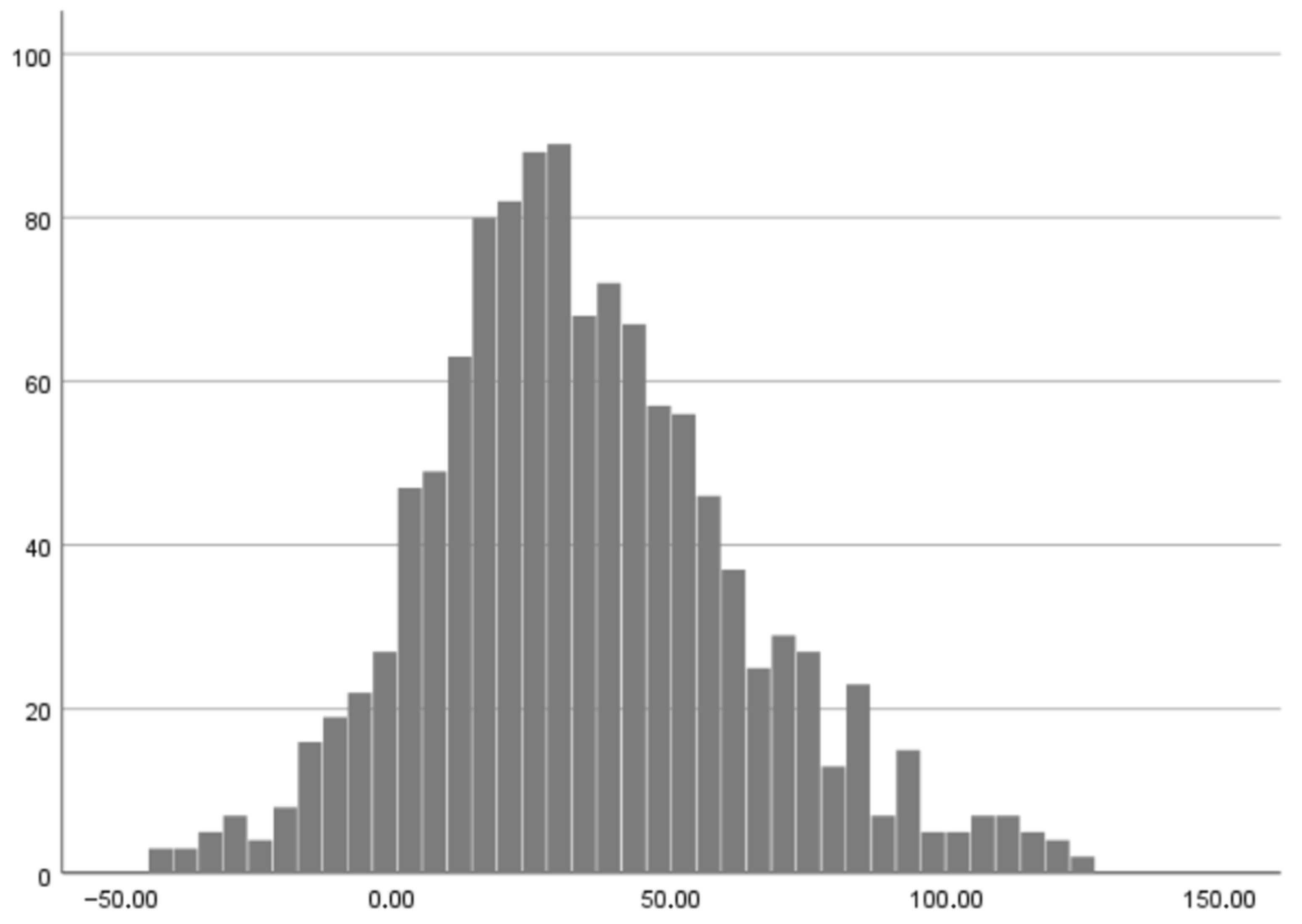
The data was trimmed for 10% of outliers by the 5% and 95% percentiles, measured by the transaction premium. This truncation was necessary since extreme outliers led to a skewness of 12.6 and a kurtosis of 235.26. Outliers included extremes of up to −99.88% on the lower end and 2452.52% on the upper end. Consequently, the data cannot be considered to be normal enough for the execution of a linear regression estimation. After truncating the data, the minimum transaction premium amounted to −31.11%, and the maximum premium amounted to 113.24%. The alternative to truncating the data would be the use of a truncated regression approach (A. Gupta & Misra, 2007), which might bias the results even more since a changed underlying distribution is assumed (Amemiya, 1973).
Figure 2 presents a histogram of the calculated control premiums after truncation of the data set.
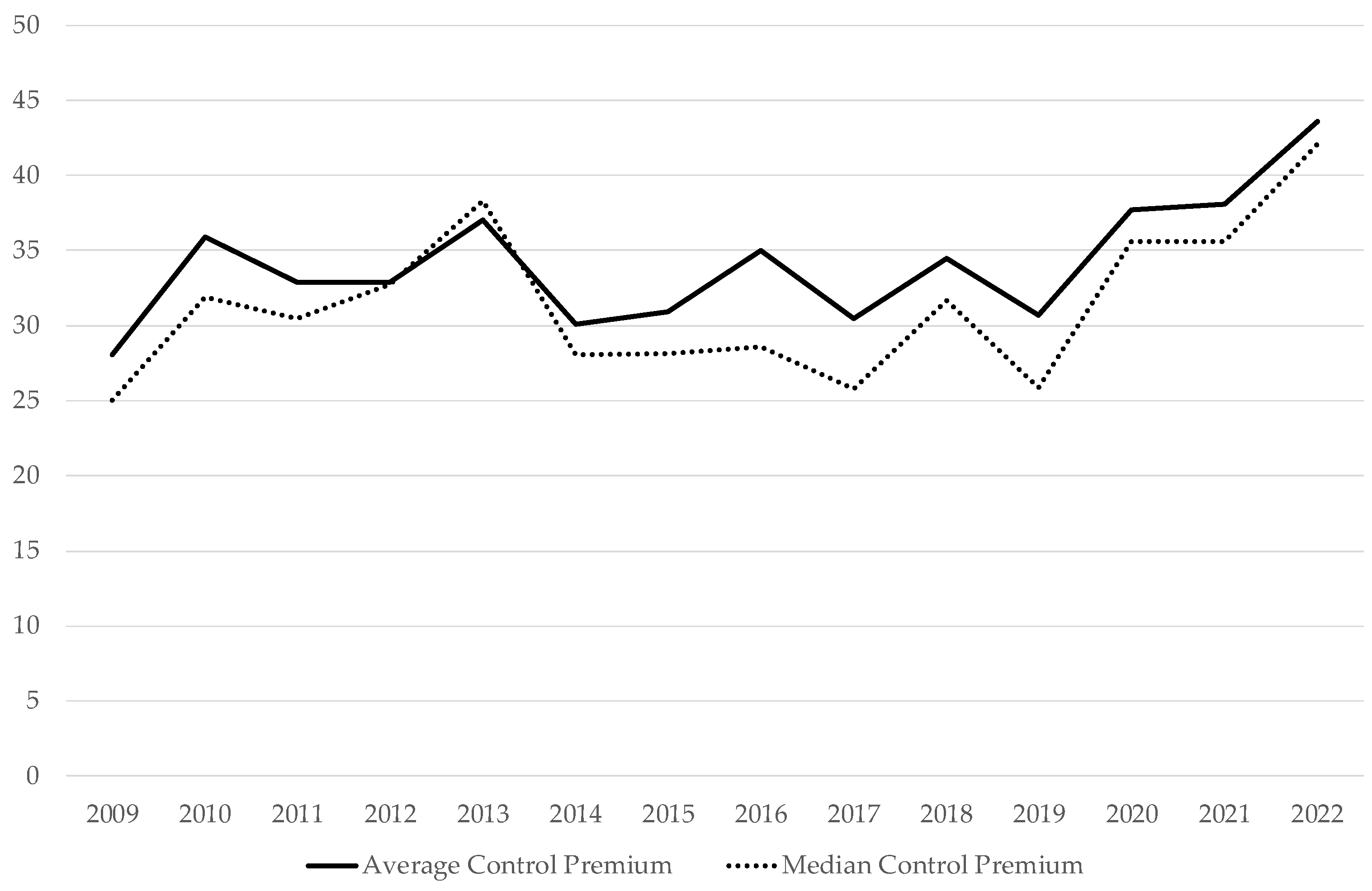
Figure 3 illustrates the development of the average and median transaction premiums paid over the period under study. Only after the COVID-19 crisis in 2020 did the control premiums start to significantly increase and leave the ten percent point corridor they fluctuated in the preceding years. Figure 3 further implies that during different sub-periods, particular structures can be detected that validate splitting up the data into three distinct subsets.
Thee amendment to the EU regulation of M&A deals as of 2013 has already been introduced in the introduction. To account for potential effects of these legislative changes aside from the full period, two subperiods are considered as well. Thus, the period of 2009 to 2022 is split into the sub-periods of 2009 to 2013 and 2014 to 2022.
In the years from 2009 to 2013, the consequences of the financial economic crisis can be observed, which led to comparatively strongly fluctuating control premiums. The following years, from 2014 to 2018, are marked by a relative calm economically as well as regarding the control premiums, which shows in a reduced volatility. During this period the corridor of fluctuations reduces to only five percentage points. Finally, starting in 2019, a continuous upward trend can be observed that coincides with the economic downturn at the end of 2019 and the economic repercussions of the COVID-19 crisis. Consequently, the second subperiod, 2014 to 2022, is further split into two subperiods, 2014 to 2018 and 2019 to 2022.
Only in 2013 is the median larger than the mean. This indicates that even though the 10% truncated data is used, there is still a distinct level of skewness left in the data, with upwards outliers biasing the results. Another potential reason for this effect might be an immediate shock resulting from the changes in the EU regulations.
Table 1 summarizes the descriptives for those additional variables that will be used as independent variables in the context of the analysis in the following section.
Finally, the variables were then tested for correlations to ensure that the variables FCF and market capitalization, as well as the M3 growth rate and the sectoral growth rate, did not correlate strongly. In both cases the correlation remained below a critical value of 0.5 (Wooditch et al., 2021). In the second case, it was even insignificant. Therefore, adjustments to the model were not deemed necessary, particularly since all variance inflation factors in the analysis reported values smaller than 2.

4.2. Discussion of the Empirical Results

The regression results presented in Table 2 report the coefficients for the regressions conducted. A total of five models has been estimated. Model I is the base model implemented with the full scope of available data. To test the robustness of the results of the base model, a quantile regression model, Model II, has been estimated. Additionally, the observed time horizon has been split into three subperiods. The split is motivated by the preceding discussion of the development of premiums over the time horizon as well as the political and economic developments in this period.
The quantile regression has been estimated to test for robustness of the linear model by assessing potential non-linearities and structural peculiarities. Here, a standard quantile regression has been implemented working with the 50% quantile, i.e., the median. As compared to mean-based linear regressions, quantile regressions provide more reliable results in the presence of outliers and can be used for nonlinearities in the relations as well as, to a certain degree, for non-normality of the data.
Models III through V illustrate the regression results for the three sub-periods determined in the previous section.
Abbreviations for the variables used are explained in the list of abbreviations at the end of the article. Significance levels are expressed using asterisks.
Focusing on the full data set, i.e., Model I, first, quarterly share volatility turned out to be a weakly significant factor in determining transaction premiums. If the data set is split up, however, it emerges that only in the first years did it play a relevant role. Starting from 2014, it becomes insignificant, and in the last period, it even becomes negative. Thus, in general, H1 is supported by the results of the regression analyses. The positive sign furthermore indicates that companies are willing to pay higher premiums when market uncertainties increase. This result is consistent with the findings of Simonyan (2014), who also found a positive influence of market volatility on takeover premiums. In the later years, when the coefficient becomes insignificant and negative, it seems to indicate a shift in market dynamics. Investors no longer react to market uncertainty or even adapt to it, since from the COVID-19 crisis onwards, extreme market uncertainties became the new normal.
In addition, stock market volatility is generally associated with negative investor sentiment and therefore also with undervaluation (Lee et al., 2002; Simonyan, 2014). Turned around, this can also provide a rationalization of the development in later years when overvaluation of companies considerably increased (Lansing, 2020).
If quarterly market volatility is replaced with annual market volatility, it consistently loses its significance. One reason may be that one year is too long since there can be volatile and less volatile phases that cancel each other out. Monthly data seems unsuitable as it could easily be distorted by one-off events lasting only a few days.
The previous year-on-year change in the M3 money supply initially shows no significant effect on the transaction premium, even when the time horizon is disaggregated. However, in the case of a quantile regression, the coefficient turns significant. This indicates that the variable explains changes in the transaction premium well, but effects are not linear. Since annual growth rates are used, which are identical for all transactions during the particular year, the variable captures part of the time-fixed effects. With a logarithmically increasing money supply during the last few years, this can in part provide an explanation for the observed results.
Consequently, the results are only partially consistent with those of Madura et al. (2012). Where the effects in the US are linear, in Europe they are also positive, but their mechanism functions inherently differently from the US.
Changes in the money supply do not have an immediate effect on the behavior of companies. It takes time for an increase or decrease in the money supply to flow through the banking system into the real economy, where it influences investment and purchasing decisions. Accordingly, the previous year’s change in the M3 money supply may be a more suitable measure for determining capital liquidity than the change in the current year. Implementing it with a lag of one year nevertheless affects the regression results only marginally.
Additionally, the change in the M3 money supply is no perfect measure of the change in capital liquidity. With a more suitable measure, results might have turned out differently. Finally, industry-specific and macroeconomic factors are the same for most companies in a given period and are therefore unable to be a good individual determinant. In summary, the second hypothesis is only partially supported. It can be noted that an alternative model has been estimated, not reported herein, excluding the M3 money supply, which indicates only marginal effects on the other coefficients.
Sectoral growth has a significantly negative influence on transaction premiums. Accordingly, H3, that high-growth sectors attract higher premiums, must be rejected. The existence of a significant negative relationship between the variables would indicate that acquiring companies expect lower synergy effects with greater industry growth. This result contradicts the study by Madura et al. (2012) and seems unintuitive from a market perspective. Instead, an alternative explanation could be that as sector growth is measured by price-return indices of the respective sectors, a better performance of these indices means a higher valuation of the companies included in them on the market. This valuation could also be an overvaluation. Overvaluations generally negatively affect the transaction premium (Simonyan, 2014). One argument in favor of this rationalization comes from the first part and the discussion of H3, where it is argued that in the later years, investors perceive companies to be overvalued and thus react to it accordingly. Accordingly, the results of this study are in line with Simonyan’s (2014) findings while contesting Madura et al. (2012). Industry overvaluation leads to lower transaction premiums in the respective industry.
The overall number of transactions per respective sector has a positive influence on the transaction premiums. This supports H4 that higher deal activity within an industry indicates greater competition among acquirers, which in turn results in higher premiums. This effect has received little attention in the literature, which becomes understandable when the data set is split up. In this case, all coefficients become insignificant, indicating that the effects are highly dependent on the respective period of study. It is noted that a year-by-year breakdown could lead to distortions, especially as fluctuations in individual years could potentially be random. Here as well, an additional model has been estimated, omitting the variable. Again, the results were only marginally impacted by this omission.
The market capitalization of the target company shows no significant impact on the transaction premium. This finding contradicts the results of Baldi and Salvi (2022), who identified a positive relationship between the size of the target company and the premiums. It also contradicts Alexandridis et al. (2013), who found a negative relationship between the size of the target company and the premiums. Overall, the ambivalence of the results suggests that the relationship between market capitalization and transaction premium could vary depending on the period under investigation and the market studied. Consequently, H5 has to be rejected.
The free cash flow of the target company also has no significant influence on the premiums paid. Accordingly, acquiring companies do not appear to value the free cash flow available significantly more or less than investors on the capital market. This is in contradiction to Jensen’s theory and the results of Lehn and Poulsen, who assumed or established a positive effect of free cash flow on premiums (Jensen, 1986; Lehn & Poulsen, 1989). Consequently, H6 has to be rejected as well. For the last subsample, the FCF could not be considered, as it correlates too strongly with market capitalization.
The buildup of a toehold by the acquiring company prior to the takeover shows a negative, significant effect on the transaction premium. Even though the coefficients vary in size, both the significance and the negative sign remain consistent across all five models. This confirms H7 that a toehold reduces the need to pay a high premium, as the toehold can reduce competition, information uncertainty, and information asymmetry. The result is consistent with the research by Bris (2002) and Bugeja and Walter (1995). Their conclusions thus still hold true in the European market and for the period after the financial crisis, i.e., a long time after their studies.
The stock market listing of the acquiring company also has a significant influence on the premium amount, except for the last sub-period. It turns out that in Europe, private companies pay significantly lower premiums than listed acquirers. This suggests that listed companies are often willing and able to pay higher premiums due to easier access to capital markets and the associated ability to raise new capital. The stock market listing status of an acquiring company could therefore have a similar effect to a high free cash flow of the acquiring company, according to Baldi and Salvi, or to higher capital liquidity at the macroeconomic level (Baldi & Salvi, 2022; Madura et al., 2012). Overall, it can be concluded that easier access to capital by the acquiring companies leads to higher premiums. In summary, H8 can be supported, even though the results for the most recent years indicate that it needs to be closely observed as to its continuing relevance.
Cross-border transactions have a significantly positive impact on transaction premiums. This result is in line with the studies by Eichner (2019) and Mateev and Andonov (2016) and supports the assumption that foreign investors are willing to pay an additional premium to open up new markets. Thus, H9 is supported.
At the same time, information uncertainty could be even greater in a CBM&A than in domestic transactions, although this effect is likely to be minimized by the megatrends of globalization and digitalization. The result also suggests that Goergen and Renneboog (2004)’s findings on this topic were indeed distorted, as they themselves suspected.
The payment method also has a significant influence on the amount of the transaction premiums. Deals that are settled in cash have higher premiums, which is consistent with the findings of de la Bruslerie (2013). H10 is therefore confirmed.
The results also indicate that Palmer’s (2021) assumption that the offer of a cash transaction is interpreted by the seller as a positive signal from the buyer holds true, as it indicates confidence in the acquisition.
The relationship between the industries has a consistently negative impact on the transaction premiums paid. Takeovers between companies in the same industry therefore tend to have lower premiums. One reason is that acquiring companies are in a better position to see through target companies and thus reduce information uncertainties. The result is in line with the research of Perafán-Pena et al. (2022), although their research explicitly focused on target companies that distorted financial reports through profit management. The results also support H11.
Combining the results of the regression analyses, as detailed above, with the development of the number of M&A transactions, as displayed in Figure 1, offers additional insights on the effect of the regulatory changes taking place in 2013. After 2013, the overall model quality decreased, and few of the chosen impact factors remained significant. One way to explain this may be that transaction premiums started to follow different rules than in the years before the regulatory change. If the mechanics behind M&A transaction premiums change, it seems only reasonable to assume that at least in the initial period after the change, M&A deals become harder to evaluate for the accompanying institutions. Thus, the regulatory changes are one critical aspect explaining the drop in transactions in 2013. Another explanation could be overall higher market heterogeneity. While coefficients increased in the periods following 2013, the standard errors thereof increased more strongly. With reduced coefficients of determination, the overall model quality, however, decreased as well.
In summary, it is hardly surprising that macroeconomic and industry-specific factors are more suitable determinants in the long term than in the short term. These factors only change over time, while deal- and target-specific factors relating to acquiring companies can even differ on a daily or even hourly basis. Secondly, the factors themselves only change slowly over time.
Finally, the majority of the preceding discussion interpreted the results from the perspective of the acquiring firm. Aside from this being the primary research objective of this study, the majority of the selected impact factors cannot directly be influenced by the acquired company. Assuming that the acquired company is trying to actively counter acquisitions, the results indicate three aspects to assure higher expected transaction premiums and thus decrease the likelihood of a successful acquisition. Most pronounced would be a close monitoring of stockholders to avoid or counteract the establishment of hostile toeholds. The relevance of a public listing decreased in recent decades, as the results for the three sub-periods indicate. The free cash flows neither in Model I nor in the sub-period models turn out significant, with negligible coefficients. Thus, changes, e.g., to the investment structure, which might impact free cash flows, will have no consistent impact.

5. Conclusions

5.1. Main Insights

The results of the study confirm all the postulated hypotheses except for H3, H5 and H6. As discussed above, the reason H3 cannot be confirmed might be found in the chosen measurement method. Since the hypotheses were deduced from studies focusing on M&A deals in the United States before the global financial crisis, two main conclusions can be made.
First, the dynamics driving M&A acquisition premiums in the United States and Europe seem to follow mostly comparable patterns. Thus, results gained in the United States can, to some degree, be transferred to Europe and European deals, though tentatively.
Second, the results from most of the cited studies stem from before the financial crisis. Since the majority of hypotheses could be confirmed, the assumption arises that the financial crisis did not disrupt the European financial markets in a significant fashion, at least insofar as M&A transactions are concerned. Consequently, insights from before the financial crisis can be transferred to the current situation.
The study thus answered the research question posed in the introduction, and since it applies to European M&A deals and premiums, it offers a first post-crisis view for Europe and its multiple member countries.

5.2. Practical Recommendations

Overall, the results of this study contribute to a more profound understanding of transaction premiums and thus the dynamics of the M&A landscape in Europe and enable comparisons to be made in future studies. Some practical implications for M&A stakeholders can be derived from the research results, especially for entrepreneurs and shareholders who are interested in a sale.
If the sale does not have to take place at short notice, they should aim to initiate it at a time when there is a high level of capital liquidity. This suggests that it can be worthwhile to plan the sale of a company over the long term.
The effects of stock market volatility can be ignored by shareholders of companies interested in selling, as it is quite possible that the positive effect that this volatility has on premiums occurs due to the undervaluation of target companies on the market. This would not result in a higher sales price overall, but only a higher premium, while for sellers, the actual selling price is the decisive factor.
At the same time, entrepreneurs and shareholders interested in selling should approach listed companies wherever possible, as they often pay higher premiums. Foreign acquiring companies and companies from unrelated sectors also regularly pay higher premiums to enter a new market. Prospective sellers should avoid investors establishing a toehold if they are not interested in a strategic alliance but, above all, in a high selling price.
Conversely, companies interested in acquisitions should establish a toehold, as it can reduce information uncertainty and often reduce the number of rivaling offers. In addition, the toehold should be built up as secretly as possible. In this way, company shares can be acquired at the actual market price before it rises due to the assumption of a takeover and without having to pay a premium.
Every M&A deal takes place under unique conditions. The recommendations set out here are derived from the findings of this analysis and should be applied with caution. It is essential to analyze the individual circumstances of a transaction to make an informed decision that considers the specific strategic objectives of each stakeholder.
Due to the constantly changing market environment, transaction premiums and their determinants will continue to change and adapt. Accordingly, new work on this topic will continue to be necessary in the future.
The results, i.e., in particular, the split into three sub-periods, illustrated that after the regulatory changes in 2013, the mechanism underlying the determination of transaction premiums seems to inherently change. Consequently, institutions accompanying M&A endeavors should not trust pre-2013 insights from outside Europe to hold and help in evaluating the developing premiums in Europe post-2013 as well.

5.3. Limitations and Outlook

This study is not free of limitations. One major limitation concerns the use of the M3 money supply as an indicator of capital liquidity. M3 was chosen because of its importance for the monetary policy of the European Central Bank. Nevertheless, it is an imperfect measure of actual capital liquidity. Changes in the money supply often have a delayed effect on the economy so that their influence on M&A transactions appears to be particularly small in the short term. The empirical analysis also indicates that the influence of the M3 money supply on transaction premiums only becomes significant in the quantile regression. It should also be noted that there was a distortion in the measurement of the M3 change in 2008, i.e., for the first previous year, as the first available data point for Norway was not 31 December 2007, but 31 January 2008.
A more suitable measure may be the change in loans granted to companies. However, data is neither freely nor consistently available for all currency areas in Europe, nor for the ten largest currency areas. However, the Bank of England and the ECB provide suitable data (Bank of England, 2023; Europäische Zentralbank, 2024). As the euro and pound sterling are by far the most important currencies in Europe, and companies from other countries can also borrow in these currencies, the cumulative change in loans issued to companies in both currencies would certainly have been a more suitable measure of capital liquidity. If this data had been used, the significance of capital liquidity as a determinant of transaction premiums would also have become clear in the OLS regression.
Another point of criticism is the use of price performance indices to measure sectoral growth. The indices reflect the performance of listed companies, meaning that the overall growth of an industry may not be adequately reflected. It should be noted that large, unlisted companies can also influence sectoral growth, even if they are not included in the indices. Furthermore, share prices can be influenced by macroeconomic and many other factors and by themselves are only a poor approximation of actual sectoral market growth. A future study would thus have to implement the actual sectoral growth rate according to the industry code for the industry that the deal takes place in.
In addition, the available data had to be limited to public takeovers. Accordingly, it cannot be assumed with certainty that the results of this study also apply to takeovers of non-listed companies. An examination of the sub-periods with median regressions would also have been interesting to see to what extent the determinants change. However, an additional investigation of this kind would have gone beyond the scope of this study.
Finally, the study works under the assumption that except for the amendment to the regulation issued in 2013, the legislative framework regarding M&A deals remains constant across the period of study. While it is indirectly introduced into the analysis by splitting up the period of study, a future study might delve deeper into regulatory aspects and their impact on M&A activities and, in particular, the height of premiums being paid.
Along the same lines, Europe, as compared to the United States, is not a monolithic political entity. While the European Union might provide regulatory guidelines to its member states, the actual handling of M&A deals in those countries might differ. Additionally, with the UK leaving the European Union, it is beyond the scope of EU regulations. Thus, a more detailed and comparative study of the major European countries might shed additional light on the dynamics of M&A deals and acquisition premiums in Europe.
Another potential for future research can be found in an expansion of the study into emerging markets. This could go along with a more comparative perspective where differences between the US, Europe, emerging markets, etc., are considered in more detail.
Following up on the distinct changes following the regulatory changes in Europe in 2013, the results indicate the necessity of a more profound analysis of the issue to determine insight on the changed system underlying transaction premiums. Aside from a pure quantitative study, this would require qualitative insights from stakeholders at the different levels of M&A deals.
Finally, the focus of this study has been primarily on the acquiring firm. Another quite relevant research objective can be found from the perspective of the acquired company and the ways it can drive up transaction premiums or, in general, avoid a hostile acquisition.
Overall, the study provides some insights despite its limitations. However, in future work, especially when investigating macroeconomic and industry-specific determinants, the errors mentioned should be avoided, and more suitable measurement instruments for industry growth and capital liquidity should be selected.

Author Contributions

Conceptualization, M.B., J.K.P. and J.S.; methodology, M.B. and J.K.P.; validation, M.B. and J.K.P.; formal analysis, M.B. and J.S.; investigation, M.B.; data curation, M.B.; writing—original draft preparation, M.B., J.K.P. and K.T.; writing—review and editing, M.B., J.K.P., J.S. and K.T.; visualization, J.K.P. and K.T. All authors have read and agreed to the published version of the manuscript.

Funding

This research received no external funding.

Institutional Review Board Statement

Not applicable.

Informed Consent Statement

Not applicable.

Data Availability Statement

The raw data supporting the conclusions of this article will be made available by the authors on request.

Conflicts of Interest

The authors declare no conflicts of interest.

Abbreviations

The following abbreviations are used in this manuscript:
Stock VolYear-on-year quarterly stock volatility
M3GrowthGrowth rate of the money supply M3
SectGrowthSectoral growth rate
Trans0922Overall transaction volume in 2009–2022 in the respective industry
Trans0913Overall transaction volume in 2009–2013 in the respective industry
Trans1418Overall transaction volume in 2014–2018 in the respective industry
Trans1922Overall transaction volume in 2019–2022 in the respective industry
MarketCapMarket capitalization
FCFFree cash flows
HeldShare of stocks held at the time of acquisition
PublicAcquired company being publically listed
CBMACross-border transaction
PayType of payment (cash or mixed)
RelatedRelatedness of the sectors of both parties

References

  1. Alexandridis, G., Fuller, K. P., Terhaar, L., & Travlos, N. G. (2013). Dear size, acquisition premia and sharholder gains. Journal of Corporate Finanace, 20(April), 1–13. [Google Scholar] [CrossRef]
  2. Amemiya, T. (1973). Regression analysis when the dependent variable is truncated normal. Econometrica, 41(6), 997–1016. [Google Scholar] [CrossRef]
  3. Baldi, F., & Salvi, A. (2022). Disentangling acquisition premia: Evidence from the global market for corporate control. Financial Research Letters, 48, 102885. [Google Scholar] [CrossRef]
  4. Bank of England. (2023). Businesses’ finance raised. Available online: https://www.bankofengland.co.uk/statistics/visual-summaries/businesses-finance-raised (accessed on 26 August 2025).
  5. Bower, J. L. (2001). Not all M&As are alike–and that matters. Harvard Business Review, 79(3), 92–101. [Google Scholar]
  6. Bris, A. (2002). Toeholds, takeover premium, and the probability of being acquired. Journal of Corporate Finanace, 8(3), 227–253. [Google Scholar] [CrossRef]
  7. Bugeja, M., & Walter, T. (1995). An empirical analysis of some determinants of the target shareholder premium in takeovers. Accounting and Finance, 35(2), 33–60. [Google Scholar] [CrossRef]
  8. Bundeszentrale für Politische Bildung. (2024). Die Finanzkrise von 2007/2008 und ihre folgen. Available online: https://www.bpb.de/themen/wirtschaft/finanzwirtschaft/524122/die-finanzkrise-von-2007-2008-und-ihre-folgen/ (accessed on 26 August 2025).
  9. Cheng, P., Li, L., & Tong, W. H. (2016). Target information asymmetry and acquisition price. Journal of Business Finance & Accounting, 43(7–8), 976–1016. [Google Scholar] [CrossRef]
  10. Corporate Finance Institute. (2025). What are synergies? Revenue, cost, and financial synergies explained. Available online: https://corporatefinanceinstitute.com/resources/valuation/types-of-synergies (accessed on 26 August 2025).
  11. Daly, K., Spinks, S., & Todorova, I. (2024). Merger control laws and regulations European Union 2024. ICLG. Available online: https://iclg.com/practice-areas/merger-control-laws-and-regulations/european-union (accessed on 26 August 2025).
  12. Dass, N., Huang, S., Maharjan, J., & Nanda, V. (2016). The role of stock liquidity in mergers and acquisitions: Evidence from the a quasi-natural experiment (China international conference in finance papers No. 391). Available online: https://www.cicfconf.org/sites/default/files/paper_391.pdf (accessed on 26 August 2025).
  13. de la Bruslerie, H. (2013). Crossing takeover premiums and mix of payment: An empirical test of contractual setting in M&A transactions. Journal of Banking & Finance, 37(6), 2106–2123. [Google Scholar] [CrossRef]
  14. Diebold, F., & Yilmaz, K. (2008). Macroeconomic volatility and stock market volatility, world-wide (NBER working paper No. 14269). National Bureau of Economic Research. [Google Scholar] [CrossRef]
  15. Dionne, G., La Haye, M., & Bergerès, A. (2010). Does asymmetric information affect the premium in mergers and acquisitions? Canadian Journal of Economics, 48(3), 819–852. [Google Scholar] [CrossRef]
  16. Dreher, M., & Ernst, D. (2022). Mergers & acquisitions: Understanding M & A processes for large- and medium-sized companies. Springer. [Google Scholar]
  17. Eaton, G. W., Liu, T., & Officer, M. S. (2021). Rethinking measures of mergers & acquisitions deal premiums. Journal of Financial and Quantitative Analysis, 56(3), 1097–1126. [Google Scholar] [CrossRef]
  18. Eichner, K. (2019). Optimizing takeover premiums in M & A: The impact of target characteristics and strategic considerations. M & A Review, 30, 24–31. [Google Scholar]
  19. Europäische Zentralbank. (2024). Adjusted loans vis-a-vis euro area NFCs reported by MFIs excl. ESCB in the euro area (annual growth rate). Euro area (changing composition). Available online: https://data.ecb.europa.eu/data/datasets/BSI/BSI.M.U2.N.A.A20T.A.I.U2.2240.Z01.A (accessed on 26 August 2025).
  20. Finnerty, J. D., & Emery, D. R. (2004). The value of corporate control and the comparable company method of valuation. Financial Management, 33(1), 91–99. [Google Scholar]
  21. Fung, S., & Loveland, R. (2025). Intra-industry transfers of implied volatility information around mergers and acquisitions. The Journal of Futures Markets. Online First. [Google Scholar] [CrossRef]
  22. García-Gómez, C. D., Farinha, J., Demir, E., & Díez-Esteban, J. M. (2023). M & A premiums: Why do Asian companies bid higher? The role of economic, political, and cultural factors (SSRN working paper No. 4585914). Social Sciences Research Network. [Google Scholar] [CrossRef]
  23. Goergen, M., & Renneboog, L. (2004). Shareholder wealth effects of European domestic and cross-border takeover bids. European Financial Management, 10, 9–45. [Google Scholar] [CrossRef]
  24. Gorton, G., Kahl, M., & Rosen, R. J. (2009). Eat or be eaten: A theory of mergers and firm size. The Journal of Finance, 64(3), 1291–1344. [Google Scholar] [CrossRef]
  25. Gupta, A., & Misra, L. (2007). Deal size, bid premium, and gains in bank mergers: The impact of managerial motivations. The Financial Review, 42(3), 373–400. [Google Scholar] [CrossRef]
  26. Gupta, D., & Gerchak, Y. (2002). Quantifying operational synergies in a merger/acquisition. Management Science, 48, 517–533. [Google Scholar] [CrossRef]
  27. Harford, J., Humphery-Jenner, M., & Powell, R. (2012). The sources of value destruction in acquisitions by entrenched managers. Journal of Financial Economics, 106(2), 247–261. [Google Scholar] [CrossRef]
  28. Hoberg, G., & Phillips, G. (2010). Product market synergies and competition in mergers and acquisitions: A text-based analysis. The Review of Financial Studies, 23(10), 3773–3811. [Google Scholar] [CrossRef]
  29. Hofmann, E. (2005). Realisierung von synergien und vermeidung von dyssynergien. Controlling-Zeitschrift Für Erfolgsorientierte Unternehmenssteuerung, 17, 483–489. [Google Scholar]
  30. Institute for Mergers, Acquisitions and Alliances. (2024a). Value of mergers and acquisitions (M & A) deals worldwide from 2017 to May 2023, by region (in billion U.S. dollars). Available online: https://www.statista.com/statistics/985996/global-value-of-merger-and-acquisition-deals/ (accessed on 26 August 2025).
  31. Institute for Mergers, Acquisitions and Alliances. (2024b). Value of mergers and acquisitions (M & A) transactions worldwide from 1985 to May 2024 (in billion U.S. dollars). Available online: https://www.statista.com/statistics/267369/volume-of-mergers-and-acquisitions-worldwide/ (accessed on 26 August 2025).
  32. Institute for Mergers, Acquisitions and Alliances. (2024c). Volume of mergers and acquisitions (M & A) deals worldwide from 2017 to May 2023, by region. Available online: https://www.statista.com/statistics/986014/global-volume-of-merger-and-acquisition-deals/ (accessed on 26 August 2025).
  33. Ismail, A., & Krause, A. (2010). Determinants of the method of payment in mergers and acquisitions. The Quarterly Review of Economics and Finance, 50(4), 471–484. [Google Scholar] [CrossRef]
  34. Jensen, M. C. (1986). Agency costs of free cash flow, corporate finance, and takeovers. The American Economic Review, 76(2), 323–329. [Google Scholar]
  35. Lacerda, J., Pereira, P. J., & Rodrigues, A. (2021). Toehold acquisitions as option games. Economic Letters, 209, 110093. [Google Scholar] [CrossRef]
  36. Lansing, K. J. (2020). Assessing recent stock market valuation with macro data. San Francisco Federal Reserve Bank Economic Letters. Available online: https://www.frbsf.org/research-and-insights/publications/economic-letter/2020/10/assessing-recent-stock-market-valuation-with-macro-data/ (accessed on 26 August 2025).
  37. Lee, W. Y., Jiang, C. X., & Indro, D. C. (2002). Stock market volatility, excess returns, and the role of investor sentiment. Journal of Banking & Finance, 26(12), 2277–2299. [Google Scholar] [CrossRef]
  38. Lehn, K., & Poulsen, A. (1989). Free cash flow and stockholder gains in going private transactions. The Journal of Finance, 44(3), 771–787. [Google Scholar] [CrossRef]
  39. Li, L., & Tong, W. H. (2018). Information uncertainty and target valuation in mergers and acquisitions. Journal of Empirical Finance, 45, 84–107. [Google Scholar] [CrossRef]
  40. Madura, J., Ngo, T., & Viale, A. M. (2012). Why do merger premiums vary across industries and over time? The Quarterly Review of Economics and Finance, 52(1), 49–62. [Google Scholar] [CrossRef]
  41. Maslak, G. D., & Senel, G. (2022). Bank consolidation and systemic risk: M & A during the 2008 financial crisis. Journal of Financial Services Research, 63(2), 201–220. [Google Scholar] [CrossRef]
  42. Massa, M., & Xu, M. (2013). The value of (stock) liquidity in the M&A market. Journal of Financial and Quantitative Analysis, 48(5), 1463–1497. [Google Scholar] [CrossRef]
  43. Mateev, M., & Andonov, K. (2016). Do cross-border and domestic bidding firms perform differently? New evidence from continental Europe and the UK. Research in International Business and Finance, 37, 327–349. [Google Scholar] [CrossRef]
  44. Miller, E. L., Jr., & Segall, L. N. (2017). Mergers and acquisitions: A step-by-step legal and practical guide. Wiley. [Google Scholar]
  45. Mueller, D. C., & Sirower, M. L. (2003). The causes of mergers: Tests based on the gains to acquiring firms’ shareholders and the size of premia. Managerial and Decision Economics, 24(5), 373–391. [Google Scholar] [CrossRef]
  46. Okofo-Dartey, E., & Kwenda, F. (2021). The free cash flow hypothesis and M&A transactions by acquirers from the market. The Journal of Developing Areas, 55(2), 45–58. [Google Scholar] [CrossRef]
  47. Palmer, B. (2021). What investors can learn from M & A payment methods. Available online: https://www.investopedia.com/articles/financial-theory/11/ma-payment-reveals-alot.asp (accessed on 26 August 2025).
  48. Perafán-Pena, H. F., Gill-De-Albornoz, B., & Giner, B. (2022). Earnings management of target firms and deal premiums: The role of industry relatedness. The British Accounting Review, 54(2), 101038. [Google Scholar] [CrossRef]
  49. Piesse, J., Lee, C. F., Lin, L., & Kuo, H. C. (2006). Merger and acquisition: Definitions, motives, and market responses. In C. F. Lee, & A. C. Lee (Eds.), Encyclopedia of finance (pp. 541–554). Springer. [Google Scholar] [CrossRef]
  50. Raman, K., Shivakumar, L., & Tamayo, A. (2013). Target’s earnings quality and bidders’ takeover decisions. Review of Accounting Studies, 18(4), 1050–1087. [Google Scholar] [CrossRef]
  51. Schweitzer, L., & Koscher, E. (2023). Mergers and acquisitions. In S. O. Idowu, R. Schmidpeter, N. Capaldi, L. Zu, M. Del Baldo, & R. Abreu (Eds.), Encyclopedia of sustainable management (pp. 2362–2365). Springer. [Google Scholar] [CrossRef]
  52. Simonyan, K. (2014). What determines takeover premia: An empirical analysis. Journal of Economiccs and Business, 75, 93–125. [Google Scholar] [CrossRef]
  53. Sirower, M. L. (2001). Der synergie-effekt: Chancen und risiken von fusionen für unternehmen und anleger. FinanzBuch Verlag. [Google Scholar]
  54. Wang, H., Gu, J., & Jiang, L. (2021). High-premium M&A, financial performance and reduction of major shareholders. In J. Xu, F. P. García Márquez, M. Hassan, G. Duca, A. Hajiyev, & F. Altiparmak (Eds.), Proceedings of the fifteenth international conference on management science and engineering management (pp. 385–398). Springer. [Google Scholar] [CrossRef]
  55. Weitzel, U., & Kling, G. (2017). Sold below value? Why takeover offers can have negative premiums. Financial Management, 47(2), 421–450. [Google Scholar] [CrossRef]
  56. Welfens, P. (2009). The transatlantic banking crisis: Lessens and EU reforms (IZA Policy Paper No. 2). Institute for the Study of Labor (IZA). [Google Scholar]
  57. Wooditch, A., Johnson, N. J., Solymosi, R., Ariza, J. M., & Langton, S. (2021). A beginner’s guide to statistics for criminology and criminal justice using R. Springer. [Google Scholar]
Figure 1. Number of M&A Transactions per year.
Ijfs 13 00204 g001
Figure 2. Histogram Control Premiums.
Ijfs 13 00204 g002
Figure 3. Historical Development of Control Premiums.
Ijfs 13 00204 g003
Table 1. Descriptives of the Independent Variables.
VariableMinimumMaximumAverageStandard DeviationFrequencyScale
Stock Vol0.00710.01740.01070.0041QuarterlyMetric
M3Growth−0.02960.19720.04940.0843AnnualMetric
SectGrowth−0.40120.35930.08700.2005AnnualMetric
MarketCap1.040172,784.74611477.26915642.1296DealMetric
FCF−1910.620019,389.0000104.44721149.0639DealMetric
Held0.000050.00004.175510.8476DealMetric
Public0.00001.00000.5337-DealBinary
CBMA0.00001.00000.6657-DealBinary
Pay0.00001.00000.8343-DealBinary
Related0.00001.00000.3848-DealBinary
Table 2. Estimation Results.
Model I
2009–2022
Model II
2009–2022
Model III
2009–2013
Model IV
2014–2018
Model V
2019–2022
Stock Vol365.254 *
(197.655)
383.233 *
(218.800)
646.344 *
(319.273)
405.846
(475.156)
−263.154
(424.166)
M3Growth17.772
(11.704)
25.509 **
(12.957)
19.708
(15.248)
18.009
(31.881)
0.330
(53.031)
SectGrowth−8.476 **
(4.059)
−8.523 *
(4.493)
−7.220
(6.017)
−1.856
(9.266)
−24.309 ***
(8.405)
Trans09220.024 **
(0.012)
0.018
(0.013)
---
Trans0913--0.043
(0.057)
--
Trans1418---0.066
(0.053)
-
Trans1922----0.117
(0.080)
MarketCap−0.000
(0.000)
−0.000
(0.000)
−0.000
(0.000)
−0.000
(0.000)
0.000
(0.000)
FCF0.001
(0.001)
0.001
(0.001)
0.003
(0.002)
0.000
(0.003)
-
Held−6.969 ***
(2.136)
−8.025 ***
(2.364)
−2.537
(3.132)
−6.510 *
(3.901)
−13.025 ***
(4.315)
Public7.578 ***
(1.842)
7.510 ***
(2.039)
13.734 ***
(3.003)
8.705 ***
(3.170)
1.972
(3.490)
CBMA4.875 ***
(1.768)
4.359 **
(1.957)
7.451 ***
(2.770)
5.586 *
(3.057)
0.442
(3.477)
Pay13.822 ***
(2.598)
17.411 ***
(2.875)
9.306 **
(4.098)
14.117 ***
(4.362)
19.445 ***
(5.270)
Related−3.088 *
(1.637)
−1.754
(1.812)
−4.718 *
(2.630)
−0.444
(2.775)
−2.343
(3.271)
Constant11.462 ***
(3.698)
6.257
(4.094)
6.283
(6.394)
6.363
(6.759)
22.591 ***
(7.223)
R20.0720.0500.1220.0700.091
F8.35 ***-5.15 ***2.75 ***3.46 ***
N11891189418415356
* indicates a p-value of less than 10%, ** indicates a p-value of less than 5%, and *** indicates a p-value of less than 1%.
Disclaimer/Publisher’s Note: The statements, opinions and data contained in all publications are solely those of the individual author(s) and contributor(s) and not of MDPI and/or the editor(s). MDPI and/or the editor(s) disclaim responsibility for any injury to people or property resulting from any ideas, methods, instructions or products referred to in the content.