Abstract
This paper explores how credit risk management and human capital development sustain financial stability in microfinance institutions. Both qualitative and quantitative research methods allow this study to investigate credit risk management strategies while examining policies for inclusivity plus incentive plans along with debt portfolio selection efficiency. This research emphasizes that financial operations depend on skilled employees who require motivating interventions alongside training programs while developing ethical practices. The research discovers that organizations with strong credit risk management frameworks along with dedicated personnel achieve enhanced financial performances and reduced default incidents. This study confirms that microfinance institutions need both superior risk management along with human resource development systems to achieve sustainable development. This study enriches economic development research by demonstrating that implementing an equal mixture of financial and human resources produces successful economic results.
1. Introduction
The microfinance system is facing an increase in NPL rates due to the over-indebtedness of economic agents and an oversupply of credit, driven by high competition and the entry of commercial banks into the microenterprise segment. This phenomenon is reflected in the increase in the number of financial offices nationwide. Many financial institutions use strategies to hide real levels of NPL, which can be detrimental in adverse economic contexts. The research proposes “NPL disclosure” (Non-Performing Loans), which involves managing credit risk with truthful financial information, avoiding misrepresentation to ensure the sustainability of the credit service. The structure of this study includes the problem statement, theoretical framework, methodology and fieldwork. Credit risk is a common challenge for financial institutions, exacerbated by over-indebtedness and poor risk rating. The entry of commercial banks into new segments without adequate expertise also contributes to this problem. The 13% growth in the number of Microfinance Institutions (MFIs) branches since December 2015 illustrates the expansion of the credit supply (Table 1) (Gambetta Podesta, 2015). Micro- and Small-Enterprise Development Institutions (MSEDIs) specialize in credit services for small and microenterprises. Table 2 shows that, at the national level, the departments where growth in the number of offices was observed are Lima, which in 2014 had 433 offices and increased to 472; Junín from 86 to 106; Puno from 86 to 105; Cusco from 85 to 103; and Arequipa from 137 to 146. Table 3 shows that at the MFI level, the increase in the number of clients per office was 10% compared to December 2014.
Table 1.
Increase in number of MFI offices December 2014 vs. December 2015.
Table 2.
Comparative table of number of offices by department 2014–2015.
Table 3.
Increase in the number of MFI borrowers December 2014 vs. December 2015.
The increase in non-performing loans in the financial system is influenced by the international crisis, especially affecting microenterprises, which are key suppliers for exporting companies. Financial institutions have to be very careful when it comes to its lending standards with a view of recovering the outstanding balances on the loans. Although NPL levels in the Peruvian financial system have increased slightly since 2015, they remain below the sector average, thanks to strategies that increase lending and mask NPLs (Table 4). ASBANC and Diario Gestión stoke the financial institutions and evaluate the NPLs, considering only loans over 30 days past due that do not reveal the real scenario (Asociación de Bancos del Perú, 2023). The research aims to report NPLs in order to improve the sustainability of the Banco Financiero–Huancayo branch in the microfinance sector, proposing strategies to improve the quality of the portfolio. Managers, for example, are frequently unable to decipher actual financial implications because NPL reports are frequently masked. The main conclusion that could be introduced from the above discussion is that the high level of NPLs is primarily due to the institution and not the environment.
Table 4.
Non-performing loans by type of credit November and December 2015.
The risk management model is crucial for the proper management of credit risk in financial institutions. This model encompasses not only the credit policy, but also technology and human talent, with the objective of mitigating borrowers’ default losses (Jordán Bucheli & Román Ferrand, 2004). However, many financial institutions have other techniques of camouflaging their real NPLs, which are financially destructive in unfavorable economic environments. The concept of “NPL disclosure” refers to the management of credit risk using truthful financial information, avoiding misrepresentations that may distort the financial reality of the institution. This approach seeks to ensure the sustainability of credit service in the long term. Concerning Banco Financiero, it has been established that the NPL ratio declared to the regulators is overstated, as what they consider are the NPLs is the past due and judicial portfolio as opposed to the official NPL ratio. This stresses the need to report NPLs in the sense that decisions which are made amid this form of encumbrance are potentially damaging on the stability of the institution. In other words, it has implemented strategies to improve its presence in the market and has developed indicators to disclose NPLs in its MSE portfolio (Micro and Small Enterprises, an important segment in the product portfolio of Banco Financiero, which includes microcredits and other financial services adapted to the needs of these companies), achieving an NPL ratio of 6.96% at the end of 2015, although the disclosed ratio would be 15.96% (Intrisano & Micheli, 2015). This underlines the need to bring order when it comes to portfolio management so as to exclude adverse repercussions to the profitability and stability of the institution.
- RQ1.
- To what extent is the efficiency of the credit technology related to the reduction in NPLs in the Banco Financiero–Huancayo branch in the microfinance sector during the 2015 period?
- RQ2.
- To what extent is human talent related to the Banco Financiero–Huancayo branch in the microfinance sector during the 2015 period?
- RQ3.
- To what extent is the implementation of the credit policy related to the reduction in NPLs in the Banco Financiero–Huancayo branch in the microfinance sector in the period of 2015?
In light of the aforementioned aspects, the main goal of this study is to clarify the relationship between the credit risk management model and NPL disclosure in the microfinance sector during the 2015 period at the Banco Financiero–Huancayo branch in order to suggest sustainable strategies. The analysis of this case along 2014 and 2015 is relevant because it provides a historical basis for understanding the evolution of the credit risk management model in the microfinance sector. The choice of this particular time frame was made due to the availability of easily accessible and trustworthy data, which have made possible to conduct thorough research connecting the credit risk management model and NPL disclosure, a critical component for the financial viability of any entity.
Although the data analyzed corresponds to the period 2014–2015 and the institution under study has changed its business model, the relevance of the research lies in its ability to draw lessons applicable to other microfinance institutions operating under similar conditions. In addition, the review of historical trends provides a framework for assessing credit risk mitigation strategies in different economic cycles. This perspective allows the study’s findings to be extrapolated to similar contexts in emerging markets.
It should be noted that this study was limited to that period due to the challenge of obtaining more recent data, since the company changed its corporate name and its financial product offerings, which currently do not include microenterprise credit. Nevertheless, the research is valuable because it enables the examination of trends and the derivation of conclusions that are applicable in comparable situations.
With the all the above, the following are the specific objectives that are combined to realize this general objective.
- O1.
- Explain to what extent the efficiency of the lending technology is related to the reduction in NPLs in the Banco Financiero–Huancayo branch in the microfinance sector during the 2015 period.
- O2.
- Explain the extent to which human talent is related to NPL disclosure in the Banco Financiero–Huancayo branch in the microfinance sector during the 2015 period.
- O3.
- Explain the extent to which the application of the credit policy is related to the reduction in NPLs in the Banco Financiero–Huancayo branch in the microfinance sector during the 2015 period.
The justification for the research is based on several key aspects. From a scientific–theoretical point of view, the results can be generalized and incorporated into scientific knowledge, filling cognitive gaps and enabling timely and efficient decision making in situations of certainty, uncertainty and risk. Furthermore, it is highlighted that a common mistake in microfinance is to focus only on loans, ignoring other products such as savings and insurance, which is crucial for the survival and growth of the micro-entrepreneur (Cull et al., 2014). From a practical–empirical point of view, the research is based on the authors’ experience in key roles within the Banco Financiero–Huancayo branch, observing ethical irregularities that affect the variables studied. This highlights the need to disclose NPLs in order to achieve sustainability. Methodologically, validated and reliable methods are used that can be applied to other institutions with similar problems. It is proposed to disclose NPLs using a linear regression model to forecast and improve the credit risk management model. The authors recognize the importance of the robustness testing of regression models. While this study prioritized the practical interpretation of the relationship between variables, future research can incorporate multicollinearity diagnostics by calculating the variance inflation factor (VIF) and heteroscedasticity tests such as the Breusch–Pagan test. These tests would allow for a more robust statistical validation of the proposed model. The importance of the research lies in identifying factors such as the efficiency of credit technology, human talent and credit policies that influence NPLs. The aim is to improve the credit risk management model in order to achieve sustainability and anticipate the increase in NPLs. The scope is limited to the Banco Financiero–Huancayo branch in 2015, due to time, resource and information access restrictions.
Having introduced the topic and its relevance, posed the research questions and established the objectives of this study, a brief description of the structure of this article follows. In the next section, the background of this study is observed, where the literature on NPLs and their management is reviewed. This is followed by the theoretical framework, which defines creative accounting and its impact on enterprises, highlighting the importance of credit management in microenterprises. Next, in the methodology section, the research method is justified and the choice of research subjects, data collection methods and the main instruments of data analysis are discussed. In the results section, the findings of this study are presented, the relationship between credit policies and NPL clearance is analyzed and the efficiency of credit technology and human talent is discussed. The discussion interprets the results in the context of the theoretical framework, addresses the practical implications for financial institutions and points out the limitations of this study along with suggestions for future research. Finally, the conclusions summarize the key findings and offer recommendations for improving credit risk management and financial sustainability.
2. Materials
2.1. Background to the Study
A review of the topic and research problem leads to the understanding that while there are no previous studies that are similar to the current study, there are related studies that identify the NPL ratio as a key consideration by financial institutions. Previous studies have addressed the importance of the NPL ratio on the stability of the microfinance sector. For example, Cull et al. (2014) examined how adequate portfolio management and transparency in the disclosure of non-performing loans affect the sustainability of MFIs. Likewise, research such as Jordán Bucheli and Román Ferrand (2004) has highlighted the situation, trends and possibilities of microfinance. These references reinforce the relevance of this study’s analysis. Non-performing loans distort the financial system and cause insolvency and bankruptcy, where the volume is high and sustained for a long period (Estupiñán Gaitán & Estupiñán Gaitán, 1998). Internationally, it has been examined, for instance, how the Enron and Parmalat corporations applied impressive accounting methods while such strategies looked rather as fraud (Rodríguez et al., 2010). These practices took advantage of legal vistas to prepare and disseminate financial statements, which did not portray the actual position, an aspect that gives a vice of no ethics and morals to the professionals involved. Creative accounting, defined as the manipulation of accounts to suit the wishes of the company, represents a danger to the accounting profession, as it compromises the reliability of information used by investors and managers in decision making (Abed et al., 2022a) (Table 5).
Table 5.
Account manipulation practices.
It is widely recognized that creative accountability has been perceived as those which are legal, but present in the shadowy region between the lawful and ethical territory to paint a picture of the company rather than showing the real one (Chen et al., 2020). This indicates that creative accounting does not always have a negative aspect since it is about choosing accounting choices that are favorable to the shareholders (Michulek et al., 2024). However, the problem arises when these choices are used to favor spurious interests of managers, leading to conflicts of interest and information asymmetry (Abed et al., 2022b). The following distinct approaches to the treatment of creative accounting concepts are identified:
- Creative accounting. This includes fraudulent preparations, which make it possible to modify or alter the final value of the asset and the profit and loss statement.
- Regulatory flexibility. This is the concept of maneuvering the figures by using the flexibility of existing accounting rules.
- Lack of standards. This relates to the lack of accounting standards for the treatment of reality, identifying the existence of a lack of regulations that is dangerous for users of financial information.
Examples of these practices are exemplified in Enron and Parmalat companies. Many business giants including the Enron, that was once a gas company, used accounting manipulation to hide serious loss. Parmalat, an Italian dairy company, also collapsed because of financial fraud that concealed losses through deceptive financial operations. These cases highlight how creative accounting has become embedded in the accounting language of public and private institutions, generating debates about its existence and the choices practitioners have between following rules or engaging in fraud.
Managers of these institutions engage in manipulations of the accounts in order to present more positive financial reports than they deserve. Some of them are the pro-forma practices of adjusting items such as target loans, balance growth and accounting NPLs, among others, to achieve monthly targets and avert balance loss. However, they cause problems in the medium term, as was evidenced by the Enron and Parmalat case: an uncontrolled increase in NPLs and even the bankruptcy of the institution. The desire to achieve set goals encourages superiors to approve techniques that mask NPLs by taking advantage of weaknesses in credit management regulations and policies. This not only influences the ethical and moral standards of the staff, but it also leads to staff discharge and or the non-renewal of contracts whenever NPLs are recorded. Specifically, for microenterprise lending programs, it is crucial to keep the portfolio value effective and manage NPLs so that the long-term sustainable business model is achieved (Padilla-Angulo et al., 2022). This suggests that the level of NPLs has to be measured clearly, as well as what their effect on the institution is and the correct lending procedures. Non-performing loans should, therefore, be recognized as an expense which, if allowed to spiral, becomes a liability to the sustainability of the institution. The aspect of NPLs in credit programs for microenterprises presents characteristics that lend themselves to confusion (Padilla-Angulo et al., 2022). In this sense, strategies are suggested that can help microenterprise credit programs control NPLs:
- Measure NPLs in such a way that they present a clear picture of the quality of a portfolio and the level of risk.
- Understand how NPLs affect a credit institution, especially the costs of NPLs and their impact on the institution’s financial situation.
- Understand that NPLs are like a cost with the peculiarities of a hidden enemy that contributes to the income of an institution’s assets or suddenly bursts out of control.
- Accepting that the causes that borrowers cite as excuses for not repaying loans on time are reasonable and it is often within the capacity of the credit program to correct them through appropriate credit methodologies (borrower selection, collateral requirements, terms, amounts, also incentives for timely repayment), effective information systems and an intolerance of late payments, which introduces the principles and image of the institution.
Portfolio quality is critical in determining the effectiveness of a credit program, especially in the microenterprise sector. Although there is no globally acceptable level of NPLs, it is crucial to reduce NPLs along with other costs to ensure the success of the program. In banking today, the aim is to manage and grow the portfolio in a healthy way in order to generate income to cover costs and ensure long-term sustainability. Nevertheless, NPL management receives inadequate attention and the poor management of this factor can result in serious loss. Staff who are competent, ethical and committed is of key importance for the success and sustainability of the organization.
The financial system plays a crucial role in the economy by facilitating the efficient flow of financial resources between surplus and deficit agents, thus allowing access to business and consumption opportunities (Aguilar et al., 2004). During the 1990s, a rapid growth of financial activities was observed in Peru, reflected in a significant increase in the banking system’s loans as a percentage of GDP and an increase in household indebtedness. However, this growth was affected by reduced liquidity and increased NPLs due to international financial crises and natural phenomena such as the El Niño phenomenon. Credit risk, as estimated by non-performing loans, reduced the quality of the banking portfolio as they rose by nearly 30% over the duration between 1997 and 2001. In order to avoid such risks, it is advised that financial institutions implement sound policies, especially where there is an upswing in NPL rates since this destroys portfolio quality. In addition, a more comprehensive approach to NPL analysis is recommended, considering not only book NPLs, but also the heavy portfolio, which includes refinanced and rescheduled loans, to obtain a more accurate picture of the financial situation. In this line, Aguilar et al. (2004) points out that the microeconomic factors and the macroeconomic factors contribute to the rise of the NPL ratio in the Peruvian microenterprise sector. In the Junín–Huancayo region, the diversity of economic activities and the privileged geographical location offer a particular context for the analysis of NPLs. The financial institutions must have contingencies in their credit manuals and policies to face natural disasters and political or economic changes. A lack of supervision and non-disclosure with credit risk models can aggravate NPLs, negatively affecting organizations. However, institutions such as Banco de Crédito del Perú (BCP), Banco Bilbao Vizcaya Argentaria (BBVA), Interbank, and Scotiabank, which comply with their organizational mission and vision, maintain NPL rates below the market average and achieve long-term sustainability.
2.2. Theoretical Framework
The research approach is both quantitative and qualitative, addressing credit or insolvency risk, which relates to uncertainty about a firm’s ability to meet its financial obligations, including interest payments and the repayment of liabilities. Financial risk arises primarily from fixed financial obligations and its impact is greater with the larger debt relative to the size of the institution and with the higher interest rate. This may cause the market value of the institution’s investment to be arbitrary (Mehrotra & Sergeyev, 2020). Borrowing risk is associated with the economic risk because a firm’s worth through its assets and service affect its credit worthiness. Two companies of the same size and with the same debt ratio may have different levels of financial risk. However, short-term debts are relatively risky because they attract variable rates of interest, contrasted with long-term debts that have fixed rates (Mehrotra & Sergeyev, 2020). The credit risk management model is essential for financial institutions, as credit risk is inherent in all their operations. This model considers not only the credit policy, but also technology and human resources, with the objective of avoiding losses due to customer defaults. However, where economic circumstances are unfavorable, such implicit models that mask the actual levels of NPLs, may be unwelcome to the health of the institutions. In this framework, the dimensions of the credit risk management model are (i) the efficiency of credit technology; (ii) human talent; and (iii) the implementation of credit policies. The credit assessment must be rigorous from the first loan, regardless of the amount requested, to ensure a quality portfolio. This assessment includes both the applicant’s Willingness to Pay (Non-Financial Assessment) and Ability to Pay (Financial Assessment) (Salas & Saurina, 2002). Based on the analysis and interpretation of these aspects, the credit conditions are established. In the context of credit risk management models, credit technology is considered as a key dimension, with indicators such as a qualitative analysis, quantitative analysis and credit destination.
The authors of the reference (Marchenko et al., 2022) emphasize the importance of updating the qualitative analysis at each new credit application or when significant changes occur in the business or its environment. This analysis should include assessing the client’s payment of NPLs and gathering information through third parties, such as suppliers and neighbors, to obtain a complete picture of the applicant’s business liability and personal aspects. In addition, it is recommended to interview the spouse involved in the credit operation and to validate at least two of the three references indicated by entering them into the assessment system. It is important to have the client’s rating as good, fair or bad depending on the feedback given. A poor rating results in the rejection of the application and the registration of the customer in the Internal Risk Register (IRC) with a negative record. The qualitative analysis is composed of internal and external filters, considering aspects such as personal references, the customer’s experience, willingness to provide information and accept conditions, the location of their home and business, and credit and commercial references. Environmental conditions, which could include marital harmony and the health of the loan recipients, should also be taken into account.
The quantitative analysis will provide the financial and economic situation in which the business unit finds itself through the analysis and evaluation of the commercial movement (Barker & Penman, 2020). This includes the elaboration and evaluation of the Financial Statements, Balance Sheet (the picture at the time of the evaluation) and Income Statement or Profit and Loss Statement. These are the ones that determine the cost structure of the business and the Cash Flow which, added to the evaluation of the family unit, will result in the feasibility and conditions of the credit on the basis of the determination of the Monthly Family Quota/Surplus. Also, according to (Barker & Penman, 2020), uncertainty defines the role of accrual accounting as a distinctive source of information for investors when investment outcomes are uncertain, improving communication under uncertainty.
The type of product to be granted depends on the purpose of the credit requested, which should be clearly specified in the Policies and Procedures Manual. It is necessary to specify whether it is necessary to receive money for a business acquisition that is beneficial for the company or for consumption, which would not be listed in the applicant’s business activities. Several risks relating to the specific use of the loan include an inability to identify the purpose of the capital procured, the diversion of the funds to other non-productive uses, sharing of the money, involving the funds in illegal or high-risk activities and the purchase of other items that are not in the business (Chen et al., 2020). The credit proposal should be clear and detailed, considering ratio analysis to explain the business situation and the relationship between the financial statement accounts obtained in the field assessment. In addition, it should include the advisor’s recommendation on the destination of the credit, detailing the investment to be made, the percentage financed and the perception of the client’s willingness to pay. It is also important to detail the causes of past NPLs for future loan recommendations. In the current context, financial institutions are re-evaluating their analysis of credit applications due to the increase in NPLs, which has led the risk area to play a more proactive role in mitigating risks and controlling the sales area’s anxiety to reach targets. This is part of the strategies to make the Banco Financiero–Huancayo branch sustainable.
2.2.1. Human Talent and Its Indicators
Organizational growth is a doctrine that seeks to change the structures, beliefs and values of people in organizations, adapting to rapid changes in all areas (Aguinis et al., 2021). This organizational change arises from the need to modify management strategies to improve the organizational climate, change the culture and reduce the impact of business processes, ensuring the effective involvement of employees in organizational goals. Human talent plays a crucial role in this transformation and leadership is fundamental to achieving the company’s goals as leaders know the characteristics and competencies of their employees and can assess the impact of change (Mulyaseva & Wisesa, 2024).
Motivation is crucial for organizations, as well applied it can increase productivity and improve the work performance of individuals, resulting in better results. That task is crucial for reaching any organizational objectives and outcomes; its effects are visible in the list of daily tasks for employees. Motivation also influences work behavior and it is necessary for companies to reinforce this tool through training, non-monetary incentive programs and effective communication by leaders, who must provide the necessary support and confidence for decision making (Galli, 2020).
Training, from the perspective of learning theories, seeks to optimize work competencies and the organizational performance. This process allows the employees to make the best of themselves and be able to address their responsibilities in the company, which is important for organizational change, particularly in developing autonomy and the skills of continued learning (Ismael et al., 2021). Behavioral management models, based on quality principles, emphasize the importance of employee participation and training to improve organizational processes and personal development (Deming, 1982; Juran & Gryna, 1993). Training is seen as a learning tool that positively impacts the organizational performance, promoting continuous learning through organizational culture and the design of smart organizations (Imai, 1986; Ouchi, 1981; Senge, 1990). In addition, an approach to developing work competencies is proposed, taking into account the considerations of the various schools of human relations (Nonaka & Konno, 1998; McClelland, 1973; Maslow, 1970). Management must organize training strategies to improve the competencies of all workers, which implies organizational change (Herzberg, 1966; Garavan & McGuire, 2001). This is especially relevant in the context of Latin American organizations, where training programs are guided by the growth of labor competencies (Abramo, 1997).
Performance is the actions, values or behaviors contemplated that are significant for the institution’s objectives and can be evaluated in terms of each individual’s competencies and their degree of collaboration with the companies. Vuong and Nguyen (2022) specify and emphasize that the performance evaluation is a systematic assessment of each employee in terms of the activities they perform, the goals they want to achieve, the competencies they provide and their capacity for expansion and growth. He also reiterates that it is a methodology that works to judge or appreciate the importance, excellence and struggle of a person. In today’s human talent management, performance appraisal is the rating that internal and external customers assign to the individual competencies of a person with whom they have working partnerships and provides data and information regarding their performance and individual competencies to seek continuous and permanent improvement (Efendi, 2021). The evaluation provides for the performance of all employees, both internal and external, interpreted as the extent to which they meet the requirements of their workplace. Performance appraisal is a structural and systematic approach to assess, evaluate and intervene on attributes, behaviors, partnerships, as well as the degree of scarcity, according to how productive the employee is and how to optimize his or her sustainable benefit (Lavanya et al., 2024). It is clear that performance appraisal will be a continuous and systematic action. Performance appraisal allows for the implementation of new compensation policies; therefore, a performance appraisal brings benefits for the appraiser as well as for the appraised and can also recognize people who need to improve their performance and can be promoted according to their performance (Vuong & Nguyen, 2022). The focus is on optimizing human relations and appreciating productivity and opportunities for subordinates.
2.2.2. Implementation of Credit Policies and NPL Synchronization
As we have seen in the previous section, the Human Talent dimension is very important for the sustainability of any organization with its three indicators (motivation, training and performance) and plays a key role in the sustainability of NPLs because it is the most important human resource for the achievement of organizational objectives. Since, nowadays, the cornerstone or the foundation of the sales areas are the advisors, every day there is a large number of young advisors with a university and technical education level, given by the oversupply in the financial market, meaning that financial organizations are able to have their own training and outsourcing schools, with the aim of training them, taking into account their youth and attitude as they aspire to a better quality of life, at the levels of education, remuneration, promotions and a good working environment, which financial institutions offer them. The objective of the research is to look for strategies and suggestions for financial institutions so that they can give opportunities to people with passion for their work, with ethics and morals, in order to achieve sustainability over time and a good quality of portfolio. Regarding the application of credit policies, six key indicators are considered: segmentation (risk scoring), credit exceptions, admission profiles, financial products, types of guarantees and credit modality (Rasel & Win, 2020). It is noted that these policies correspond with the Bank’s strategic directions, made with the goal to obtain the optimal ratio between risk and profit. The Microfinance and MSE Credit Manual establishes the reference framework to regulate credit operations, ensuring that the strategic objectives and current regulations are met.
NPL disclosure refers to the management of credit risk through the use of truthful financial information, avoiding misrepresentations that may distort the economic reality of an entity. This must be carried out for the sustainability of the credit service because displaying negative aspects of human’s economic situation must be fixed and regulated. In a financial context, disclosure is instrumental so that the services provided in other counties remain sustainable for the clients. In Peru and worldwide, certain financial institutions have suffered losses because of the mismanagement of the NPL, hence the need to carry it out properly. A spike in the non-performing loans for SME and consumers’ credit is a cause of concern because of its impact on the economy (George & Mallery, 2011). This phenomenon is partly due to the fall in private and public investment, which generates unemployment and affects business sales. Similarly, negative effects arising from natural occurrences inclusive of the coastal El Niño phenomenon have been felt. Smaller institutions are trying to sell their non-performing portfolios in markets where they have little presence to mitigate these effects. The deterioration in payments within the small and medium-sized enterprise (SME) segment is one of the causes of the increase in non-performing loans. Financial institutions have built up buffers of provisions, capital and high profit margins to cope with potential losses from this deterioration. However, NPLs could continue to increase once the rescheduling deadlines for those affected by the El Niño phenomenon come to an end, especially if debtors fail to recover. Failures observed in some organizations including Enron and Banco del Trabajo due to the non-disclosure of indicators have prompted their collapse. The Microfinance and MSE Credit Policy is fundamental to the Bank’s credit risk management, being mandatory in all lending operations and aligned with the regulatory principles of the Superintendency of Banking and Insurance and the directives of the Integral Risk Management Committee of the Banco Financiero.
3. Methods
3.1. Characteristics of the Study
This is an applied piece of research to analyze the influence of the credit risk management model on NPL reconciliation to achieve sustainability in the Banco Financiero–Huancayo branch in the microfinance sector during the 2015 period. It is a quantitative research and the strategy of the quantification of the variables was used from the Likert-type attitude scale, in order to measure each of the variables and dimensions. It is correlational, as it expresses the behavior of one variable in relation to another (credit risk management model and the NPL disclosure), indicating that one variable is related to another, without necessarily showing causality. In the research, the population is made up of 18 collaborators that group the staff of the retail banking business area of the Huancayo branch of Banco Financiero. This study focuses on a single branch due to the accessibility of detailed and verified data, which allows for an in-depth assessment of the credit risk management model in a controlled environment. While this may limit the generalizability of the results, the strategies analyzed are representative of microfinance dynamics in similar contexts. Future research could extend the sample to multiple branches or institutions to further validate the findings.
Due to the size of the population, the research was census-based. In other words, 100% of the units of analysis were considered. The instrument development matrix presented in Appendix A (Table A1) was developed based on previous experience. It includes dimensions, indicators and items. The attitude scale has the characteristics of validity and reliability. For validity, the instrument was submitted to the opinion of three experts in different scientific disciplines (A, B, and C) who gave their opinion on its applicability after corrections were made. The selection process of experts was based on their track record and knowledge of credit risk management within the microfinance sector. However, it is recognized that there is a need to further detail the selection criteria and to incorporate more qualitative feedback from these experts, which could enrich the interpretation of the results. It is recommended that further studies include structured interviews or focus groups with sector specialists. The scores obtained were as follows (Table 6).
Table 6.
Expert opinion.
To indicate the reliability of the instrument, a pilot test was carried out on 11 assessors and has been processed with SPSS version 22.0, finding Cronbach’s Alpha of 0.9891 which means the high level of reliability of the instrument. In this regard, according to George and Mallery (2011), the following values of Cronbach’s alpha coefficients are suggested as the general criteria:
- -
- Coefficient alpha > 0.9 is excellent.
- -
- Coefficient alpha > 0.8 is good
- -
- Coefficient alpha > 0.7 is acceptable.
- -
- Coefficient alpha > 0.6 is questionable.
- -
- Coefficient alpha > 0.5 is poor.
- -
- Coefficient alpha < 0.5 is unacceptable.
To strengthen the validity of the findings, future versions of this study can include confidence intervals for the estimated coefficients, as well as statistical significance tests (such as t-statistics and p-values). The inclusion of these metrics will provide greater certainty about the reliability of the estimates and their impact on credit risk management. The technique used is survey and observation, which characterizes an observational study in which the researcher sought to collect data by means of a questionnaire and record card. The data collection instruments were the attitude scale and the record card, which contained a set of items to be answered on a Likert-type attitude scale and to be filled in after verifying the documentary source. In other words, in order to know the factors that determine the honesty of NPLs in the microfinance sector, it is necessary to know the response of the respondents to the items shown in Appendix A (Table A1), with the possible answers being:
- -
- Strongly disagree.
- -
- Disagree.
- -
- Neutral.
- -
- Agreed.
- -
- Strongly agree.
3.2. Case of Application
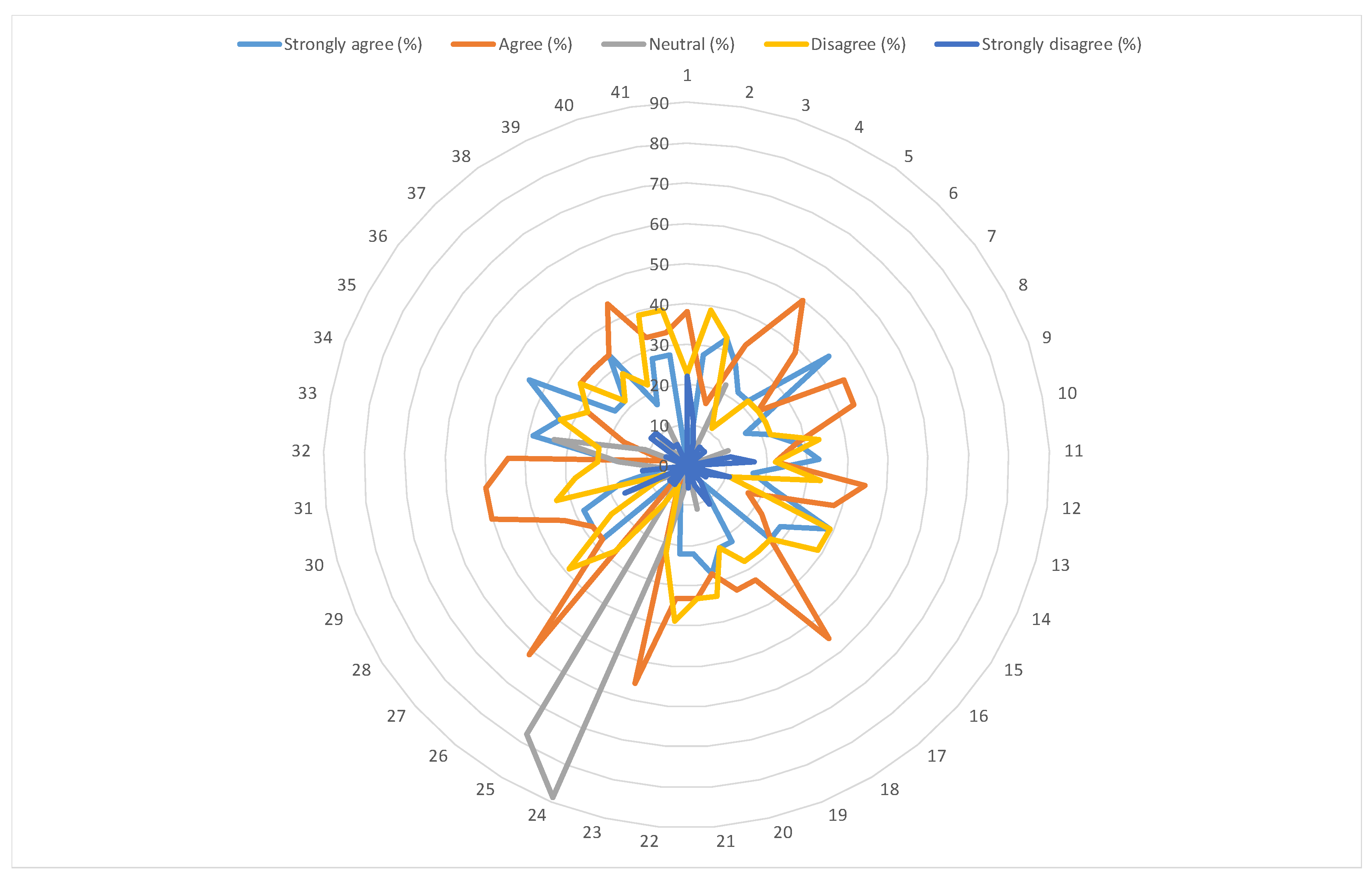
After obtaining the data from the fieldwork, the data were processed using statistical techniques such as tabulation, descriptive statistics and inferential statistics. The tabulation technique was carried out using the statistical program SPSS, version 22.0, assigning codes to the components of the scales established for each data collection instrument to facilitate the counting of the data (frequencies): (i) Descriptive statistics, using frequency tables with respect to the frequency of responses per scale. (ii) Inferential statistics, using Kendall’s Tau b hypothesis test, appropriate for ordinal scale qualitative data and the number of units of analysis presented. It is recognized that Kendall’s Tau-b measures association and does not imply a causal relationship. However, this coefficient is useful to establish significant correlations in exploratory studies. For future research, it is suggested to complement this analysis with structural regression models or quasi-experimental experiments that allow causality to be inferred with greater certainty. Among the factors that are related to the NPL rate disclosure evaluated in the research are the efficiency of the credit technology, human talent and the application of credit policies. Using attitude scales, the results are shown in Figure 1. The numerical data can be found in Appendix A (Table A2).
Figure 1.
Responses per item in percentage terms (source: own elaboration).
A radial chart structure was selected for Figure 1 to improve the reading comprehension. The outer numbers in the chart correspond to particular questions that readers can find additional details about in Appendix A. The visual shows the way different categories distribute their responses clearly. Basically, data points categorized as “strongly disagree” appear primarily in the inner part of the chart area because the percentage is small. The majority of responses fall into “neutral” categories with slight exceptions that produce a few specific peaks. The percentage figures between “strongly agree” and “disagree” responses display a matching pattern, thus showing balanced proportions between these two endpoints. Agree responses demonstrate the most prevalent distribution across the entire sample due to widespread respondent agreement. The radial presentation method gives a complete picture of the data distribution through a visual comparison of participant response patterns. Particularizing to numbers, the percentage of NPLs per portfolio shows that 38% of the portfolios have average NPLs of 0.01 (1%) and 22% have average NPLs of 0.02 (2%). Only 5.56% of portfolios have average NPLs of 0.05 or 5%. It can be observed that portfolio NPLs are no more than 6%. Similarly, the percentage of written-off loans per portfolio can be stated, where 44.44% of the portfolios can be observed to have written-off an average of 0.02 (2%) and 22% show 0.01 (1%). Only 5.56% of portfolios have written-off 0.05 or 5% of loans. It can be seen that the percentage of written-off loans is not more than 6%. The percentage of refinanced credits per portfolio is observed to be 50% of the portfolios that have refinanced, on average, 0.01 (1%) and 22% show 0.03 (3%). Only 5.56% of portfolios have written-off an average of 0.04 or 4%. It can be observed that the percentage of refinanced loans is not more than 6%. Similarly, the percentage of rescheduled credits per portfolio observes that 50% of the portfolios rescheduled, on average, 0.02 (2%) and 33% shows 0.01 (1%). Only 16.67% of portfolios rescheduled 0.03 or 3% of loans. It can be seen that the percentage of rescheduled loans is not more than 17%. The percentage of credits with wildcard fees per portfolio can be observed to be 61% of the portfolios that opted for wildcard fees of, on average, 0.01 (1%), 16.67% for 0.02 (2%) and 11% for shows 0.04 (4%). Only 5.56% of portfolios opted for the wildcard fee with an average of 0.04 or 4%. It can be observed that the percentage of credits with wildcard fees is not more than 6%. Apparently, from the above figures, it can be deduced that NPLs are normal or healthy; however, when NPLs are for disclosure, the average tends to rise significantly. Additionally, 66.66% of the portfolios have NPL rates of 8%, 13% and 14% (22.22% each) and 93.64% of loans exceed rates of 5%.
3.3. Hypothesis Testing Process
The general hypothesis of this research establishes that the credit risk management model is significantly related to the NPL reconciliation in the Banco Financiero–Huancayo branch in the microfinance sector during the period of 2015. The specific hypotheses are as follows: (H1) The efficiency of credit technology is significantly related to NPL disclosure in the Banco Financiero–Huancayo branch in the microfinance sector during the period of 2015. (H2) Human talent is significantly related to NPL disclosure in the Banco Financiero–Huancayo branch in the microfinance sector period of 2015. (H3) The application of the credit policy is significantly related to NPL disclosure in the Banco Financiero–Huancayo branch in the microfinance sector 2015 period. As for the identification and classification of the variables, the Credit Risk Management Model is the associated variable and, as a supervisory variable, NPL disclosure (Estupiñán Gaitán & Estupiñán Gaitán, 1998). The following table (Table 7) shows the operationalization of the variables.
Table 7.
Operationalization of variables.
Having stated the study hypothesis, it will now be statistically proven according to the results obtained.
3.3.1. Testing of the General Hypothesis
The hypothesis states that the credit risk management model is significantly related to the NPL rate at the Banco Financiero–Huancayo branch in the microfinance sector during the period of 2015. The null hypothesis (H0) indicates that there is no such relationship, while the alternative hypotheses (H1, H2 and H3) suggest that there is a significant relationship. The level of theoretical significance used is α = 0.05, which implies a 95% confidence level. To test this hypothesis, Kendall’s Tau b correlation coefficient was used. The decision rule is to reject the null hypothesis when the observed significance “ρ” is less than α. In this case, the observed significance value of Kendall’s Tau b coefficient was ρ = 0.000, which is less than α = 0.05, leading us to reject the null hypothesis and accept that there is a significant relationship between the credit risk management model and NPL disclosure. Table 8 shows the correlation test for 18 credit portfolios that are the units of analysis, where it is observed that ρ = 0.000 and there is a very high negative correlation (rs = −0.871 **) between the variable credit risk management model and NPL disclosure.
Table 8.
Kendall’s Tau b correlation test: credit risk management model and NPL disclosure.
As the observed significance value of Kendall’s Tau b coefficient ρ = 0.000 is less than the theoretical significance value α = 0.05, the null hypothesis is rejected. This means that the credit risk management model is significantly related to the disclosure of the NPL in the Banco Financiero–Huancayo branch in the microfinance sector period of 2015, as shown in Table 8. It is logical since in the branch we improve the credit risk management model before improving the disclosure of the NPL; otherwise it would be the reverse. The aim of this research is to fully apply the credit risk management model without taking advantage of or exceeding the famous exceptions of the loopholes that are found, or so-called strategies, to make the NPLs as transparent and truthful as possible so that they can be corrected in time, use improvement tactics, have a good portfolio quality and be sustainable over time. In the same way, it is explained in terms of the reality of the branch and also occurs in many entities in the financial system.
3.3.2. Testing of the First Specific Hypothesis
The hypothesis posed suggests that the efficiency of credit technology is significantly related to NPL disclosure in the Banco Financiero–Huancayo branch in the microfinance sector during the period of 2015. The null hypothesis (H0) states that there is no such relationship, while the alternative hypothesis (H1) indicates that there is a significant relationship. The level of theoretical significance used is α = 0.05, which implies a 95% confidence level. To test this hypothesis, Kendall’s Tau b correlation coefficient was used. The decision rule is to reject the null hypothesis when the observed significance “ρ” is less than α. In this case, the observed significance value of Kendall’s Tau b coefficient was ρ = 0.000, which is less than α = 0.05, leading us to reject the null hypothesis and accept that there is a significant relationship between the efficiency of credit technology and NPL disclosure. Table 9 shows the correlation test for 18 credit portfolios that are the units of analysis, where it is observed that ρ = 0.000 and there is a very high negative correlation (rs = −0.673 **) between the variables of the credit technology efficiency and NPL disclosure.
Table 9.
Kendall’s Tau b correlation test of credit technology efficiency and NPL disclosure.
As the observed significance value of Kendall’s Tau b coefficient ρ = 0.000 is less than the theoretical significance value α = 0.05, the null hypothesis is rejected. This means that the efficiency of credit technology is significantly related to NPL disclosure in the Banco Financiero–Huancayo branch in the microfinance sector period of 2015, as shown in Table 9. This is logical since it is one of the dimensions of the credit risk management model, where the dynamics are the same as the comment in Table 9 (if the credit risk management model is improved in the branch, it will improve NPL clearance or, otherwise, it would be the opposite). The aim of this research is to fully apply the credit risk management model without taking advantage of or exceeding the famous exceptions of the gaps that are found, or so-called strategies, to make the NPLs as transparent and truthful as possible so that they can be corrected in time, use improvement tactics, have a good portfolio quality and be sustainable over time. In the same way, this is explained in the reality of the branch and also occurs in many entities in the financial system.
3.3.3. Testing of the Second Specific Hypothesis
The hypothesis posed suggests that human talent is significantly related to NPL clearance in the Banco Financiero–Huancayo branch in the microfinance sector during the period of 2015. The null hypothesis (H0) states that there is no such relationship, while the alternative hypothesis (H2) indicates that there is a significant relationship. The level of theoretical significance used is α = 0.05, which implies a 95% confidence level. To test this hypothesis, Kendall’s Tau b correlation coefficient was used. The decision rule is to reject the null hypothesis when the observed significance “ρ” is less than α. When analyzing this case, a calculated significance value using Kendall’s Tau b coefficient was ρ = 0.000 and less than an α = 0.05 significance level to reject the null hypothesis and confirm the existence of a significant correlation between human talent and NPL disclosure. Table 10 shows the correlation test for 18 credit portfolios that are the units of analysis, where it is observed that ρ = 0.000 and there is a very high negative correlation (rs = −0.672 **) between the variables of the human talent model and NPL disclosure.
Table 10.
Kendall’s Tau b correlation test for human talent and NPL disclosure.
As the observed significance value of Kendall’s Tau b coefficient ρ = 0.000 is less than the theoretical significance value, α = 0.05, the null hypothesis is rejected. This means that human talent is significantly related to NPL disclosure in the Banco Financiero–Huancayo branch in the microfinance sector period of 2015, as show in Table 10. This is logical since it is one of the dimensions of the credit risk management model, where the dynamics are the same as the comment in Table 10 (if in the branch we improve the credit risk management model beforehand, its will improve the disclosure of the NPLs or, otherwise, it would be the reverse). The aim of this research is to fully apply the credit risk management model without taking advantage of or exceeding the famous exceptions of the gaps that are found, or so-called strategies, to make the NPLs as transparent and truthful as possible so that they can be corrected in time, use improvement tactics, have a good portfolio quality and be sustainable over time. In the same way, this is explained from the reality of the branch and also occurs in many entities in the financial system.
3.3.4. Testing of the Third Specific Hypothesis
The hypothesis posed suggests that the application of a credit policy is significantly related to NPL disclosure in the Banco Financiero–Huancayo branch in the microfinance sector during the period of 2015. The null hypothesis (H0) states that there is no such relationship, while the alternative hypothesis (H3) indicates that there is a significant relationship. The level of theoretical significance used is α = 0.05, which implies a 95% confidence level. To test this hypothesis, Kendall’s Tau b correlation coefficient was used. The decision rule in this kind of test is to reject the null hypothesis if the observed significance, “ρ” is less than α. In this case, the observed significance value of Kendall’s Tau b coefficient was ρ = 0.001, which is less than α = 0.05, leading us to reject the null hypothesis and accept that there is a significant relationship between the implementation of a credit policy and NPL disclosure. Table 11 shows the correlation test for 18 credit portfolios that are the units of analysis, where it is observed that ρ = 0.001 and there is a very high negative correlation (rs = −0.652 **) between the variables of credit policy implementation and NPL disclosure.
Table 11.
Kendall’s Tau b correlation test for credit policy and NPL disclosure.
As the observed significance value of Kendall’s Tau b coefficient ρ = 0.000 is less than the theoretical significance value α = 0.05, the null hypothesis is rejected. This means that the application of the credit policy is significantly related to the disclosure of the NPLs in the Banco Financiero–Huancayo branch in the microfinance sector period of 2015, as shown in Table 11. This is logical since it is one of the dimensions of the credit risk management model, where the dynamics are the same as the comment in Table 11 (if in the branch we improve the credit risk management model, the credit risk management model will improve NPL clearance or, otherwise, it would be the opposite). The aim of this research is to fully apply the credit risk management model without taking advantage of or exceeding the famous exceptions of the gaps that are found, or so-called strategies, to make the NPLs as transparent and truthful as possible so that they can be corrected in time, use improvement tactics, have a good portfolio quality and be sustainable over time. In the same way, this is explained from the reality of the branch and also occurs in many entities in the financial system.
4. Results
4.1. Organization, Analysis and Interpretation of Results
The results obtained for the variables and dimensions are presented below. With regard to the efficiency of the lending technology, it can be seen that 44% of employees believe that it has a low efficiency. Only 27.78% believe that the efficiency is high. With regard to the results of the credit technology efficiency dimension, according to the research, 44% of the employees think that it is low, since in the Huancayo Branch of Banco Financiero, the indicators that make up the credit technology efficiency (qualitative analysis, quantitative analysis and credit destination) are low and comply with the standards set by supervisory and regulatory bodies, but there are always gaps where our eagerness to exceed the indicators leads us to use inappropriate strategies (employees with more than one year’s seniority), which in turn leads to serious problems later on; 27% of employees think that it is low. Additionally, 78% of the employees think that it is high because they are new employees with less than one year of seniority in the institution and they are unaware of the bad practices already mentioned in this research (they are junior employees and/or do not pass the three-month probationary period). We already know that the staff turnover rate in banking is very high.
With regard to human talent, it can be seen that 44% of employees are not committed. Only 55.55% believe that the human talent is committed (33.33% are committed and 22.22% are very committed). With regard to the results of the human talent dimension, according to the research, 44% of the employees are not committed because in the Huancayo Branch of Banco Financiero, the indicators that make up human talent (motivation, training and performance) are not met by employees who were hired with experience and higher levels (senior). The banking business is influenced by the constant micro and macro changes in the economy, especially in terms of microenterprise banking, but the institution has a bad interpretation of them and neglects them, which is the reason for the increase in NPLs and the lack of commitment and identification with the institution. In total, 55.55% of the employees think that they are committed and these are the new employees, because the institution has a “training school” program, where the institution invests in the mentioned indicators of human talent. This program lasts a whole month at the headquarters of the main office in Lima, is all paid for and consists of three months of inductions with a tutor and three months of probation, also accompanied by their mentor. Then they neglect them due to the mentioned indicators, as indicated in previous lines, bringing as a consequence that other financial entities hire them or make them better offers. Due to the lack of institutional culture on the part of the collaborator, they resign (taking with them the know-how and the managed portfolio). This is the reason for the rotation of personnel and the increase in NPLs.
With regards to the results of the dimension of the application of credit policies, according to the research, 38.89% of the employees think it is bad because in the Huancayo Branch of Banco Financiero, the indicators that make up the application of credit policies (Segmentation, Credit Exceptions, Admission Profile, Financial Products, Types of Guarantees and Credit Modality) comply with the regulations of supervisory and regulatory bodies, but there are always gaps where our vehemence to overcome the indicators leads us to use inappropriate strategies, the well-known “exceptions” (employees with more than one year of seniority), which bring serious problems later. On the other hand, 22.22% of the employees think it is excellent because they are new with less than one year of working in the institution and are unaware of the unsuitable strategies already mentioned in this research (they are junior employees and/or do not pass the three-month trial period). We know that the staff turnover rate in banking is very high due to dismissals or resignations, leaving the portfolio they were managing to deteriorate.
Regarding the credit risk management model, it can be observed that 44.44% of employees perceive the model as being of average effectiveness, 38.89% as effective and 16.67% as very effective. It is reiterated that the above figures appear to show healthy NPLs, but when facing the disclosure of NPLs, the average tends to rise significantly. An average NPL of 9% is observed for the 18 loan portfolios studied and there is considerable variation between the rates presented by the different portfolios (deviation of 0.027), from which it can be deduced that there are employees who are very committed to managing their portfolio, but also those who do not give due importance to maintaining a portfolio within the healthy risk limits. This is reinforced when looking at the reported NPL rate, where 22.22% of the portfolios have NPL rates of 6% and 7% and a worrying 16.67% of the portfolios have an average NPL rate of 13%. In addition, 96% of loans exceed the 5% rate considered healthy for the system.
4.2. Scientific Contribution of Research (Scientific Output)
The scientific contribution of the research focuses on the development of a credit risk management model, represented by the equation ND = r (ET, HT, CP), where ND is NPL disclosure and ET, HT and CP are the dimensions of the credit technology efficiency, human talent and credit policy enforcement, respectively. The proposed stochastic model suggests that NPL disclosure would absorb the impact of each of these dimensions, with the specific equation:
ND = −0.006ET − 0.13HT − 0.06CP + 0.184.
4.2.1. Efficiency of Lending Technology (ET)
The proposed Credit Risk Management Model includes the creation of credit committees to set limits on the efficiency dimension of credit technology. These committees will review the correct application of qualitative and quantitative analysis and the destination of credit. The research suggests the implementation of a Head of Risk, Collections and Recoveries, with an analyst and/or supervisor in each business area branch, as currently, everything is centralized in Lima and approvals are completed via email. Credit proposals, restructured credits and those in NPLs should be evaluated and ratified by the aforementioned areas. The committees are structured as follows:
- Committee A: Includes the proposing advisor with original NPLs of no more than 3%, Head of Committee and two senior executives. They analyze loans up to s/. 45,000, with total indebtedness not exceeding s/. 20,000. Approvals must be ratified by the Head of Credit after on-site visits.
- Committee B: Advisors with original NPLs of more than 3% cannot present credits of more than s/. 5000. Smaller credits will be visited by the Risk Analyst. They must present proposals in an enlarged committee.
- Committee C: Advisors with original NPLs of more than 5% are not allowed to submit loans. They will be assessed by the Risk Analyst and 10% of their portfolio will be audited. It is proposed to create a Portfolio Quality Committee to improve practices.
- Committee D: Includes the proposer advisor with original NPLs of no more than 3%, Committee Head, Risk Analyst and others. They analyze loans up to s/. 60,000. Approvals must be ratified by the Risk Analyst.
- Committee E: similar to Committee D, but with loans of up to s/. 120,000 with collateral. Approvals must be ratified by the Risk Supervisor.
4.2.2. Human Talent (HT)
When talking about human talent in any public or private institution, the right thing to do is to motivate and train so that the performance of each employee is subsequently measured and this will be reflected in the profitability of the company or in the achievement of objectives. In the case of the Banco Financiero–Huancayo branch, in the microfinance sector, unfortunately, this is not the case, which is the result of the high personnel turnover (unmotivated). This research is proposed in a generic way with the ideal that every collaborator longs for or desires and that every institution should at least provide. This research proposes the creation of a credit risk model (a written policy of human talent). Even if an efficient technology and credit policy can be innovated, the human factor is the main base, as it is responsible for its adequate application. For this reason emphasis is placed on all the training and motivations of a risk assessment for a model for the management of the loan portfolio and the implementation of a Credit Risk Management culture by senior management to ensure operational results in line with institutional objectives, becoming a key success factor in the creation of added economic value for the Retail Banking Divisional Management of Banco Financiero. The participation of all areas involved in the risk management process (business, risk, recovery and collection) will help in the correct execution of their activities. It is necessary and essential to disseminate the existing tools of the Banco Financiero–Huancayo branch of the microfinance sector in the 2015 period so that all staff are aware of and identify with the achievement of the institution’s objectives.
4.2.3. Implementation of Credit Policies (CP)
The proposed policies to improve credit management and recovery focus on establishing clear criteria for the granting of loans, ensuring their recovery through adequate collateral and a rigorous analysis of applicants’ repayment capacity. These policies include:
- Age and Honesty Requirements: applicants must be over 18 years of age and of known honesty.
- Age Limits for Loans: loans are granted to natural persons up to the age of 62, with exceptions evaluated by the credit committee.
- Interest rate: determined by the credit line and the intermediation margin, set by the business area.
- Capacity and Moral of Payment: applicants must demonstrate capacity and moral of payment through a socio-economic study.
- Microenterprise Focus: a loan is given to the microenterprise sector with credit restrictions and you cannot use personal collateral.
- Loan terms: short-, medium- and long-term terms are established according to the nature of the investment.
- Collateral: mortgage, pledge and fiduciary guarantees are accepted, with specific criteria for each type of guarantee and a credit/collateral ratio.
These policies aim at making it possible for loans to be provided in a reckless manner where the security provided is adequate to cover the risk on credit, hence reducing NPLs and making the institution financially stable.
4.3. Loan Portfolio Management Model
The steps for the implementation of the risk management model are now defined. The next steps consist of selecting the explanatory variables of a client’s ability to repay a loan from the loan evaluation and granting procedure. The steps that can be analyzed from the moment the loan is promoted until it is approved and disbursed are observed. The construction of a model requires a previous analysis of the following steps, which the business area must comply with to the letter and they must also constantly reinforce human talent to generate a risk culture (in training, motivation and measurable performance). The process of promoting, evaluating and granting a loan in the Huancayo Branch of Banco Financiero, specifically in the microfinance sector, is structured in six key steps (Table 12).
Table 12.
Process of promotion, evaluation and granting of credit.
This elaborate procedure aims at exercising prudent and efficient credit control which will reduce risks and enhance the financial stability of the institution.
5. Discussion
Creative accounting has become part of the accounting language in both public and private institutions, spanning economic, financial and managerial sectors. There are a number of situations related to creative accounting, some positive and some negative. However, as other scholars have pointed out, the only ethical choice for a professional is to adhere to the rules or otherwise commit fraud. The issue comes into play when companies and or management use wrong strategies in order to achieve a rosy short-term balance sheet. This can lead to practices such as the over-indebtedness and over-valuation of assets, creating a vicious cycle from the field consultant to the divisional manager. On the other hand, organizations implementing microenterprise credit programs recognize that financial viability and the ability to cover costs with revenues are essential for long-term sustainability (Yemelyanov et al., 2020). However, many institutions do not have adequate strategies in place to attract passive products that capitalize their portfolios to the level necessary to meet the demand for credit. For these institutions to be viable, it is crucial to maintain asset values, reduce costs and increase revenues, which implies managing portfolios with low levels of NPLs. High NPL rates are costly, reduce interest income and can erode assets. Also, the role of the financial system cannot be underestimated since it ensures the efficient mobilization of financial resources from those who have a surplus to those who have a deficiency. The sustainability of the financial system also depends on having motivated, trained and committed human talent, as a lack of skilled staff can deteriorate the portfolio and increase NPL rates, putting the stability of the institution at risk (Aguilar & Camargo, 2002). This study contributes to the debate on sustainability in microfinance by integrating credit risk management with human talent development. To extend this framework, future research could compare the results with established models in the literature on financial sustainability in microfinance, such as those of Cull et al. (2018), or studies on the regulation and performance of MFIs in Latin America. Credit risk management in microfinance is not only a local challenge, but also an issue of international relevance. According to recent studies (Cull et al., 2018), the growth of microfinance in emerging markets has raised concerns about the stability of financial institutions and their resilience to economic shocks (Hossain et al., 2021). In addition, the regulation of the sector varies significantly across countries, which influences NPL levels and the adoption of risk mitigation strategies. Previous research has analyzed these factors from different perspectives: some authors argue that strict regulation and advanced credit assessment methodologies reduce NPLs (Mehrotra & Sergeyev, 2020), while others argue that excessive controls can limit financial inclusion and the competitiveness of the sector (George & Mallery, 2011). This study contributes to that debate by providing empirical evidence on how the credit risk management model and human talent training can improve financial sustainability in microfinance.
The recommendation of the upgrading of the disclosure of NPLs in the Huancayo branch of Banco Financiero deals with better and well-framed guidelines for the way the area of collections and recoveries is performed today. As for the optimization of contacts with debtors, the introduction of a specialized organizational chart and establishing an NPL committee to discuss the adequate payment options and portfolio management, as well as analyzing the possibility of judicial collection are recommended. In addition, it is proposed to decentralize the legal area to streamline these processes. The risk area should take on a more proactive role, preventing the business area from being both judge and party, which has led to inappropriate practices such as hiding NPLs. This will allow the business area to focus on underwriting and after-sales follow-up, while the risk area leads the credit risk management process. The application of these measures aims at not only solving NPL problems, but also at ensuring the sustainable position of the bank in the microfinance sector and acknowledging the fact that credit risk is a changing process that requires the continuous re-estimation of the processes and controls.
Credit recovery policies at the Banco Financiero–Huancayo branch are designed to improve the control of NPLs and ensure the efficient management of loan recovery. These policies include the daily generation of reports by days past due, the identification of the concentration of NPLs by economic sector and the responsibility of the business area in the recovery of loans more than 15 days past due. In addition, weekly meetings of the recovery committee are held to evaluate the efforts made and business and recovery executives must present their collection efforts to their management on a weekly basis. Preventive measures are implemented to remind customers of their payment dates and loans are managed from the first instalment of NPLs. The business, risk and collection area reviews debtors’ files to verify collateral coverage. Where necessary, home visits are made and the assets of debtors and co-debtors are assessed. The recovery committee is responsible for deciding when to initiate foreclosure suits and judgment is kept track of when the loan is sent to foreclosure.
Regarding the set of procedures for the recovery of NPL portfolios at the Banco Financiero–Huancayo branch, specifically in the microfinance sector, it should be noted that the business area, represented by the advisor, is responsible for managing the recovery of NPLs from 0 to 15 days. This includes portfolio analysis, contact with the client and co-debtor and the management of partial collections. If a payment agreement is not reached, the case is referred to the NPL committee. The default committee determines whether more collateral should exist and which type of payment options should be maintained, including refinanced or rescheduled loans. If a debt restructuring is decided, the business, risk and collection area contacts the customer to communicate the resolution. If no payment alternative is applied, the case is transferred to the head of collections and recoveries. If the head of collections and recoveries does not reach an agreement, the Business Manager intervenes. If an agreement is still not reached, the case is returned to the NPL committee for a possible transfer to judicial collection, managed by the Legal Department. This process involves the processes of realizing such security as well as managing any properties that have been regained. The credit risk management cycle closes with the application of this methodological model, which demands enhancements in processes and policies as well as the systemic management of the implicated areas. This approach seeks to optimize loan portfolio management and obtain satisfactory results.
The recommendations proposed to improve the credit risk management model in the Banco Financiero–Huancayo branch, the microfinance sector, are the following:
- The Dissemination of the New Management Model: It is crucial to implement a new credit risk management model that complements the existing model. This should involve the orientation of staff and providing them reasons for the change and continual assessments, ensuring that all of the people in the organization understand the goals of the institution.
- The Integral Participation of the Areas Involved: all areas related to the risk management process (business, risk, recovery and collections) must actively participate to ensure the proper execution of their activities and timely decision making in placements and recoveries.
- Improved Process Control: There is a need to clarify and strengthen the policy and procedures related to the control of the loan portfolio and its management and recovery. It is suggested to create a written recovery and risk policy, attached to the business area.
- The Creation of Specific Policies and Heads: It is recommended to establish written policies and heads for the risk and collections areas, with a clear organizational chart for the microfinance sector.
- The Credit Risk Management Process: establish a credit risk management program so that credit risk can be evaluated, controlled and monitored to minimize the number of occurrences and the effect they have.
- Credit Risk Management Culture: foster a credit risk management culture from the top to ensure operational results aligned with institutional objectives, contributing to the economic value added.
- Stress Test Analysis: Conduct a stress test analysis every six months to assess the bank’s resilience to a general economic downturn. This should include a contingency plan supervised by Risk Management.
- Financial Reporting Order: implement an adequate financial reporting system, including daily reports and roadmaps, for credit risk control in the areas of business, risk, recovery and collections.
- Immediate Actions for Irrecoverable Loans: execute immediate actions when loans become irrecoverable, relying on recovery and collection policies and using products such as joint and several guarantors, real and unreal collateral, pledges, payment terms, seizures and legal actions.
With these recommendations, the management of credit risk is proposed to be enhanced and the financial viability of the Banco Financiero–Huancayo branch to boost microfinance is advanced.
6. Conclusions
The main objective of this study has been to explain to what extent the credit risk management model is related to the disclosure of NPLs in the Banco Financiero–Huancayo branch in the microfinance sector period of 2015. The hypothesis postulates that the credit risk management model is significantly related to the disclosure of NPLs in the Banco Financiero–Huancayo branch. By applying Kendall’s Tau b correlation statistic, with a level of significance of 0.05, this study provides the following results: (i) 44.44% of employees perceive the model as of average effectiveness. However, this model allows 95% of the NPL portfolio to have NPL rates higher than 5%, with 16% having NPL rates of 13%. With an observed significance value of Kendall’s Tau b coefficient of ρ = 0.000, which is less than the theoretical significance value α = 0.05, the null hypothesis is rejected and it is concluded that the credit risk management model is significantly related to the disclosure of NPLs in Banco Financiero–Huancayo branch in the microfinance sector period of 2015. (ii) With an observed significance value of Kendall’s Tau b coefficient of ρ = 0.000, the efficiency of credit technology is significantly related to NPL disclosure in the Banco Financiero–Huancayo branch in the microfinancial sector period of 2015. (iii) With an observed significance value of Kendall’s Tau b coefficient of ρ = 0.000 it is accepted that; Human talent is significantly related to the NPL disclosure; (iv) With an observed significance value of Kendall’s Tau b coefficient ρ = 0.001, it is concluded that the application of a credit policy is significantly related to NPL disclosure. In this framework, the Banco Financiero–Huancayo branch should apply the strategies of redesigning the incentive policy, debt write-offs, selective portfolio purchase, maintenance in the market, increase in the size of equity and expansion. It should also improve the management model, making it more effective, improving the efficiency of the credit technology, seeking greater commitment from employees and applying the credit policy with greater care, which would make it possible to bring NPLs under control in order to exercise better control of credit risk. The model was designed with a simplified approach to assess direct relationships between the main variables. However, the authors recognize that the inclusion of control variables, such as macroeconomic factors (interest rate and inflation) or internal indicators (credit analyst experience and client segmentation), could strengthen the interpretation of the results. Future research can consider these variables to improve the accuracy of the model. In short, these results suggest that improving credit risk management, technological efficiency, human talent and the application of credit policies could contribute significantly to reducing NPLs in the microfinance sector of the Banco Financiero–Huancayo branch.
Author Contributions
Conceptualization, F.M.M.-M.; methodology, V.G.-P., F.M.M.-M. and D.P.-A.; software, D.P.-A. and V.E.Z.-R.; validation, V.E.Z.-R. and V.Z.-V.; formal analysis, V.G.-P. and F.M.M.-M.; investigation, V.Z.-V. and S.R.Z.-V.; resources, S.R.Z.-V. and L.A.A.-C.; data curation, L.A.A.-C. and L.P.C.-C.; writing—original draft preparation, F.M.M.-M.; writing—review and editing, V.G.-P.; visualization, V.G.-P.; supervision, V.G.-P. and F.M.M.-M.; project administration, V.G.-P. and F.M.M.-M. All authors have read and agreed to the published version of the manuscript.
Funding
This research received no external funding.
Institutional Review Board Statement
The study was conducted through surveys and questionnaires, which typically do not necessitate ethical approval. This research was conducted in accordance with the Research Regulations of the Universidad Peruana Los Andes (UPLA), approved by resolution N° 1769-2019-CU-Vrinv. Specifically, it adheres to the principles detailed in Article 27 and Article 28 (rules of conduct of researchers).
Informed Consent Statement
Informed consent was obtained from all subjects involved in the study.
Data Availability Statement
Data are contained within the article.
Conflicts of Interest
The authors declare no conflicts of interest.
Appendix A
Table A1.
Instrument formulation matrix.
Table A1.
Instrument formulation matrix.
| Dimensions | Indicators | Items |
|---|---|---|
| A1 = Credit Technology Efficiency | Qualitative analysis Will you want to pay for it? |
|
| Quantitative analysis Can you afford it? |
| |
| What do you want the credit for? |
| |
| A2 = Human talent | Motivation |
|
| Training |
| |
| Performance |
|
Source: own elaboration.
Table A2.
Responses per item in percentage terms.
Table A2.
Responses per item in percentage terms.
| Item | Question | Strongly Agree (%) | Agree (%) | Neutral (%) | Disagree (%) | Strongly Disagree (%) |
|---|---|---|---|---|---|---|
| 1 | Does qualitative analysis objectively rate payment morale? | - | 38.00 | - | 22.78 | 22.22 |
| 2 | Does qualitative analysis objectively qualify the profile of the micro-entrepreneur client? | 27.78 | 22.22 | - | 38.89 | 11.11 |
| 3 | Does qualitative analysis objectively rate the experience in the line of business? | 33.00 | 16.00 | - | 33.33 | 5.56 |
| 4 | Does qualitative analysis objectively rate the client’s level of education? | 27.78 | 33.33 | 22.22 | 16.67 | - |
| 5 | Does qualitative analysis objectively rate the client’s reputation? | 22.00 | 50.00 | - | 11.11 | 5.56 |
| 6 | Does qualitative analysis objectively rate the customer’s credit history? | 22.22 | 38.89 | - | 22.22 | 5.56 |
| 7 | Does qualitative analysis objectively rate the link to third parties with payment problems? | 44.44 | 22.22 | - | 22.22 | 5.56 |
| 8 | Does qualitative analysis objectively rate trade references with major customers? | 16.67 | 44.44 | - | 22.22 | - |
| 9 | Does qualitative analysis objectively rate trade references with key suppliers? | 22.00 | 44.00 | 11.00 | 22.00 | - |
| 10 | Does qualitative analysis objectively rate the client’s organizational culture? | 27.78 | 27.78 | - | 33.33 | 11.11 |
| 11 | Does qualitative analysis objectively provide for knowledge of money laundering and terrorist financing? | 33.00 | 22.00 | - | 22.22 | 16.67 |
| 12 | Does qualitative analysis objectively rate the client’s home environment? | 16.67 | 44.44 | - | 33.33 | - |
| 13 | Does qualitative analysis objectively rate the commercial location of the business? | 22.00 | 38.00 | - | 11.11 | 11.11 |
| 14 | Does quantitative analysis objectively assess the client’s ability to pay? | 38.89 | 16.67 | - | 38.89 | 5.56 |
| 15 | Does quantitative analysis objectively qualify the client’s financial statements? | 27.78 | 22.22 | - | 38.89 | 5.56 |
| 16 | Does the credit technology provide for on-site verification to minimize credit risk? | 27.78 | 27.78 | - | 27.78 | - |
| 17 | Does the credit technology provide for verification of the purpose of the credit? | 5.56 | 55.56 | - | 27.78 | 5.56 |
| 18 | Does the lending technology provide for fixed asset recovery based on customer input? | 22.22 | 33.33 | - | 27.78 | 11.11 |
| 19 | Does credit technology provide for debt purchase monitoring? | 22.22 | 33.33 | - | 22.22 | 5.56 |
| 20 | Does the Human Resources area hire workers with vocations? | 27.78 | 27.78 | 11.11 | 33.33 | - |
| 21 | Does the Human Resources area hire innovative workers? | 22.22 | 33.33 | - | 33.33 | 5.56 |
| 22 | Are employees aware of opportunities for growth? | 22.22 | 33.33 | 5.56 | 38.89 | - |
| 23 | Are employees aware of financial incentives for targets? | 5.56 | 55.56 | 16.67 | 22.22 | - |
| 24 | Are employees aware of training opportunities? | - | 5.56 | 88.89 | 5.56 | - |
| 25 | Do employees feel motivated by the working environment? | 5.56 | - | 77.78 | 11.11 | 5.56 |
| 26 | Do leaders keep employee motivation high? | 5.56 | 61.11 | - | 27.78 | 5.56 |
| 27 | Does the company show interest in workers’ concerns? | 27.78 | 27.78 | - | 38.89 | 5.56 |
| 28 | Does the company communicate projects to employees? | 27.78 | 27.78 | 5.56 | 22.22 | - |
| 29 | Does the company promote awareness of organizational philosophy and culture? | 27.78 | 33.33 | 16.67 | 5.56 | 16.67 |
| 30 | Is the company able to adapt to a changing environment? | 16.67 | 50.00 | - | 33.33 | - |
| 31 | Do employees take initiative to achieve goals? | 5.56 | 50.00 | 5.56 | 27.78 | 11.11 |
| 32 | Are employees honest and accountable? | 16.67 | 44.44 | 16.67 | 22.22 | - |
| 33 | Do partners develop effective relationships? | 38.89 | 5.56 | 33.33 | 22.22 | - |
| 34 | Do partners show sensitivity and understanding? | 33.33 | 16.67 | 11.11 | 33.33 | 5.56 |
| 35 | Do employees have the ability to attract new customers? | 44.44 | 27.78 | - | 27.78 | - |
| 36 | Does the credit policy comply with risk scoring? | 22.22 | 33.33 | - | 33.33 | 11.11 |
| 37 | Does the credit policy comply with credit exceptions? | 22.22 | 33.33 | 11.11 | 22.22 | 11.11 |
| 38 | Does the credit policy meet the admission profile? | 33.33 | 33.33 | - | 27.78 | 5.56 |
| 39 | Does the credit policy outline products for micro-entrepreneurs? | 16.67 | 44.44 | 11.11 | 22.22 | 5.56 |
| 40 | Does the credit policy comply with the guarantees provided? | 27.78 | 33.33 | - | 38.89 | - |
| 41 | Does the credit modality fit the client’s profile? | 27.78 | 33.33 | - | 38.89 | - |
Source: own elaboration.
References
- Abed, I. A., Hussin, N., Ali, M. A., Haddad, H., Shehadeh, M., & Hasan, E. F. (2022a). Creative accounting determinants and financial reporting quality: Systematic literature review. Risks, 10(4), 76. [Google Scholar] [CrossRef]
- Abed, I. A., Hussin, N., Haddad, H., Almubaydeen, T. H., & Ali, M. A. (2022b). Creative accounting determination and financial reporting quality: The integration of transparency and disclosure. Journal of Open Innovation: Technology, Market, and Complexity, 8(1), 38. [Google Scholar] [CrossRef]
- Abramo, L. (1997). Políticas de capacitación y gestión de la mano de obra en un contexto de modernización productiva. Instituto Latinoamericano y del Caribe de Planificación Económica y Social. ISBN 978-956-7244-12-6. [Google Scholar]
- Aguilar, G., & Camargo, G. (2002). Análisis de la morosidad en las instituciones microfinancieras (IMF) en el Perú. Economía, 25(50), 65–121. [Google Scholar] [CrossRef]
- Aguilar, G., Camargo, G., & Morales, R. (2004). Análisis de la morosidad en el sistema bancario peruano. Instituto de Estudios Peruanos. Available online: https://cies.org.pe/wp-content/uploads/2016/07/analisis-de-la-morosidad-en-el-sistema-bancario-peruano.pdf (accessed on 20 November 2024).
- Aguinis, H., Jensen, S., & Kraus, S. (2021). Policy implications of organizational behavior and human resource management research. Academy of Management Perspectives, 35(2), 206–220. [Google Scholar] [CrossRef]
- Asociación de Bancos del Perú (ASBANC). (2023). Boletín mensual—Junio 2023. Available online: https://asbanc.com.pe/media/reports/file/Bolet%C3%ADn_Mensual_-_Junio_2023.pdf (accessed on 20 November 2024).
- Barker, R., & Penman, S. (2020). Moving the conceptual framework forward: Accounting for uncertainty. Contemporary Accounting Research, 37(3), 1707–1734. [Google Scholar] [CrossRef]
- Chen, X., Qi, L., Shen, Z., & Xu, Y. (2020). The value of trade credit under risk controls. International Journal of Production Research, 59(8), 2498–2521. [Google Scholar] [CrossRef]
- Cull, R., Demirgüç-Kunt, A., & Morduch, J. (2018). The microfinance business model: Enduring subsidy and modest profit. The World Bank Economic Review, 32(2), 221–244. [Google Scholar] [CrossRef]
- Cull, R., Ehrbeck, T., & Holle, N. (2014). La inclusión financiera y el desarrollo: Pruebas recientes de su impacto. CGAP. Available online: https://www.cgap.org/sites/default/files/FocusNote-Financial-Inclusion-and-Deelopment-April-2014-Spanish.pdf (accessed on 20 November 2024).
- Deming, W. E. (1982). Quality, productivity, and competitive position. Massachusetts Institute of Technology, Center for Advanced Engineering Study. ISBN 978-0911379006. [Google Scholar]
- Efendi, S. (2021, October 23–24). Implementation of talent management as an effort to improve employee performance. 2nd Annual Conference on Blended Learning, Educational Technology and Innovation (ACBLETI 2020), Online. [Google Scholar] [CrossRef]
- Estupiñán Gaitán, R., & Estupiñán Gaitán, O. (1998). Análisis financiero y de gestión (2nd ed.). Ecoe Ediciones. ISBN 978-9586045302. [Google Scholar]
- Galli, B. (2020). Impact and role of motivation theories in continuous improvement environments: A reflection of literature. International Journal of Service Science, Management, Engineering, and Technology, 11(1), 1–13. [Google Scholar] [CrossRef]
- Gambetta Podesta, R. (2015). Microfinanzas en el Perú: Solvencia y rentabilidad en las Cajas Municipales de Ahorro y Crédito. Munich Personal RePEc Archive. Available online: https://mpra.ub.uni-muenchen.de/64741/9/MPRA_paper_64741.pdf (accessed on 20 November 2024).
- Garavan, T. N., & McGuire, D. (2001). Competencies and workplace learning: Some reflections on the rhetoric and the reality. Journal of Workplace Learning, 13(4), 144–164. [Google Scholar] [CrossRef]
- George, D., & Mallery, P. (2011). SPSS for Windows step by step: A simple guide and reference, 18.0 update (11th ed.). Allyn & Bacon. ISBN 978-0205011247. [Google Scholar]
- Herzberg, F. (1966). Work and the nature of man. World Publishing Company. [Google Scholar]
- Hossain, M., Jahan, N., & Kim, M. (2021). A multidimensional and hierarchical model of banking services and behavioral intentions of customers. International Journal of Emerging Markets, 18, 845–867. [Google Scholar] [CrossRef]
- Imai, M. (1986). Kaizen: The key to Japan’s competitive success. McGraw-Hill. ISBN 978-0075543329. [Google Scholar]
- Intrisano, C., & Micheli, A. (2015). Microfinance in Peru as part of the strategy of an international investment fund. International Journal of Economics and Finance, 7, 281. [Google Scholar] [CrossRef]
- Ismael, N., Othman, B., Gardi, B., Hamza, P., Sorguli, S., Aziz, H., Ahmed, S., Sabir, B., Ali, B., & Anwar, G. (2021). The role of training and development on organizational effectiveness. International Journal of Engineering, Business and Management(IJEBM), 5, 29–38. [Google Scholar] [CrossRef]
- Jordán Bucheli, F., & Román Ferrand, J. C. (2004). La situación, tendencias y posibilidades de las microfinanzas. Abya Yala. ISBN 978-9978405046. [Google Scholar]
- Juran, J. M., & Gryna, F. M. (1993). Quality planning and analysis: From product development through use (3rd ed.). McGraw-Hill. ISBN 978-0070331839. [Google Scholar]
- Lavanya, P., Lakshmi, D., & Sree, K. (2024). Evaluating effectiveness and employee development through performance appraisal system. International Research Journal on Advanced Engineering and Management (IRJAEM), 2, 5. [Google Scholar] [CrossRef]
- Marchenko, O., Petrykiva, O., & Korobko, K. (2022). Minimizing credit risk and improving the quality of the bank’s loan portfolio. Business Inform, 11, 205–210. [Google Scholar] [CrossRef]
- Maslow, A. H. (1970). Motivation and personality (2nd ed.). Harper & Row. ISBN 978-0060419875. [Google Scholar]
- McClelland, D. C. (1973). Testing for competence rather than for “intelligence”. American Psychologist, 28(1), 1–14. [Google Scholar] [CrossRef]
- Mehrotra, N., & Sergeyev, D. (2020). Debt sustainability in a low interest rate world. Journal of Monetary Economics, 124, S1–S18. [Google Scholar] [CrossRef]
- Michulek, J., Gajanova, L., Krizanova, A., & Blazek, R. (2024). Why do companies cook the books? Empirical study of the motives of creative accounting of Slovak companies. Administrative Sciences, 14(7), 158. [Google Scholar] [CrossRef]
- Mulyaseva, M., & Wisesa, A. (2024). Analyzing how leadership competencies impact on business performance. Journal Integration of Social Studies and Business Development, 2(1), 56–61. [Google Scholar] [CrossRef]
- Nonaka, I., & Konno, N. (1998). The concept of “Ba”: Building a foundation for knowledge creation. California Management Review, 40(3), 40–54. [Google Scholar] [CrossRef]
- Ouchi, W. G. (1981). Theory Z: How American business can meet the Japanese challenge. Addison-Wesley. ISBN 978-0201055245. [Google Scholar]
- Padilla-Angulo, L., Lasarte-López, J., & Del Pozo, P. (2022). Policy evaluations of microenterprise business support services in Latin America: A systematic review. Evaluation and Program Planning, 97, 102212. [Google Scholar] [CrossRef]
- Rasel, M., & Win, S. (2020). Microfinance governance: A systematic review and future research directions. Journal of Economic Studies, 47(7), 1811–1847. [Google Scholar] [CrossRef]
- Rodríguez, A. K., Notari, M., & Nuevo, A. P. (2010). Contabilidad creativa o fraude en casos reales: ENRON y PARMALAT. Facultad de Ciencias Económicas y Administración, Universidad de la República. Available online: https://silo.uy/vufind/Record/COLIBRI_c28602bcf17b9201686940599923bdea (accessed on 20 November 2024).
- Salas, V., & Saurina, J. (2002). Credit risk in two institutional regimes: Spanish commercial and savings banks. Journal of Financial Services Research, 22(3), 203–224. [Google Scholar] [CrossRef]
- Senge, P. M. (1990). The fifth discipline: The art and practice of the learning organization. Doubleday/Currency. ISBN 978-0385260947. [Google Scholar]
- Vuong, T., & Nguyen, L. (2022). The key strategies for measuring employee performance in companies: A systematic review. Sustainability, 14(21), 14017. [Google Scholar] [CrossRef]
- Yemelyanov, O., Petrushka, T., Symak, A., Trevoho, O., Turylo, A., Kurylo, O., Danchak, L., Symak, D., & Lesyk, L. (2020). Microcredits for sustainable development of small Ukrainian enterprises: Efficiency, accessibility, and government contribution. Sustainability, 12(15), 6184. [Google Scholar] [CrossRef]
Disclaimer/Publisher’s Note: The statements, opinions and data contained in all publications are solely those of the individual author(s) and contributor(s) and not of MDPI and/or the editor(s). MDPI and/or the editor(s) disclaim responsibility for any injury to people or property resulting from any ideas, methods, instructions or products referred to in the content. |
© 2025 by the authors. Licensee MDPI, Basel, Switzerland. This article is an open access article distributed under the terms and conditions of the Creative Commons Attribution (CC BY) license (https://creativecommons.org/licenses/by/4.0/).