Next Article in Journal
Temporal-Enhanced GAN-Based Few-Shot Fault Data Augmentation and Intelligent Diagnosis for Liquid Rocket Engines
Previous Article in Journal
Operability Implications of Speed Variability in Hybridised Vaneless Counter-Rotating Axial Compressor Concepts
 
 
Due to scheduled maintenance work on our servers, there may be short service disruptions on this website between 11:00 and 12:00 CEST on March 28th.
Article

Efficient Prediction of Unsteady Aerodynamic Characteristics Based on Kriging Model for Flexible Variable-Sweep Wings


by
Xiaochen Hang
1,
Jincheng Liu
1,
Rui Zhu
2 and
Yanxin Huang
3,*
1
School of Mechanical and Electronic Engineering, Nanjing Forest University, Nanjing 210037, China
2
School of Mechanical Engineering, Southeast University, Nanjing 210096, China
3
AVIC Aerodynamics Research Institute, Shenyang 110034, China
*
Author to whom correspondence should be addressed.
Aerospace 2026, 13(4), 305; https://doi.org/10.3390/aerospace13040305 (registering DOI)

Submission received: 31 January 2026 / Revised: 20 March 2026 / Accepted: 23 March 2026 / Published: 25 March 2026

Abstract

Numerical simulations employing the dynamic mesh method were performed to investigate the unsteady aerodynamics of variable-sweep wings during morphing. Quasi-steady and unsteady aerodynamic characteristics were compared, and the effects of key operating conditions (freestream velocity, angle of attack, morphing period, wingspan, chord length) on unsteady aerodynamics were analyzed. To enable the rapid prediction of unsteady aerodynamics, a Kriging surrogate model was established and validated against high-fidelity CFD results. The results indicate that unsteady effects manifest as hysteresis loops in aerodynamic coefficients within the morphing cycle. The wing morphing period, angle of attack, freestream velocity, and wingspan have a pronounced impact on the unsteady aerodynamic characteristics, whereas the effect of chord length is negligible. Reduced morphing periods, increased angles of attack, and increased wingspans amplify the hysteresis loop size and enhance the unsteady effects. An increase in the freestream velocity intensifies unsteady effects in the subsonic flow, while it attenuates unsteady effects in the supersonic flow. Compared to direct CFD simulations, the Kriging model for unsteady aerodynamic characteristics prediction achieves a 97% improvement in overall computational efficiency, while its predicted hysteresis loops are in good agreement with CFD results in both trend and magnitude, with an average prediction error below 4% and a maximum error of less than 6%. The Kriging surrogate model developed in this study offers substantial practical value for engineering applications by meeting the demand for rapid aerodynamic computation in the concept design phase for morphing aircraft.

1. Introduction

Morphing aircraft enhance flight efficiency and economic viability across diverse flight phases by adaptively altering fuselage or wing configurations to achieve a global aerodynamic optimum [1]. Common wing morphing strategies include leading/trailing edge morphing, variable camber, wing extension/retraction, folding, and variable sweep. Among these, variable sweep is particularly significant. However, the traditional mechanical rigid-body variable-sweep wing design inevitably introduces additional mass, conflicting with the trend of lightweight aircraft design. Recent advances in smart materials fand morphing skins have enabled the realization of flexible variable-sweep wing concepts [2,3,4].
The study of aerodynamic characteristics is fundamental to aircraft structural design [5,6,7], layout optimization, and flight control. For vasriable-sweep wings, quasi-steady aerodynamic data alone is insufficient. A comprehensive understanding of unsteady aerodynamic characteristics and their influencing factors during the morphing process is essential.
Research into the unsteady aerodynamics of morphing wings has provided valuable insights. Chen et al. [8,9] proposed that the formation mechanism of unsteady aerodynamic characteristics during the continuous morphing of variable-sweep aircraft can be attributed to three physical effects: the flow-field hysteresis effect, the additional velocity effect, and the wall implication effect. They further reported that the shearing variable-sweep wing exhibited more favorable characteristics compared with the rotating variable-sweep wing. Han et al. [10] demonstrated notable discrepancies between quasi-steady and unsteady aerodynamic forces on variable-sweep UAVs via numerical simulations. Yao et al. [11] analyzed the flow mechanism of the designed spanwise morphing wing via CFD simulations, and the results demonstrated that the proposed configuration can effectively mitigate the gust effect during flight. Xu et al. [12] numerically investigated the unsteady aerodynamic characteristics of folding wings during morphing using CFD, revealing that airfoil thickness exerts a pronounced impact on the aerodynamic load distribution and hinge moment characteristics of folding-wing aircraft. Guo et al. [13] identified pronounced nonlinear aerodynamic effects during morphing using CFD simulation coupled with a flight control system. Gu and Hong [14] found through CFD simulations that the wingspan variation of rectangular wings has a negligible effect on the lift-to-drag ratio but a significant impact on lift performance. Rana et al. [15] conducted an aerodynamic analysis of a morphing wing under cruise conditions via CFD, and proposed the optimal geometric configuration for its shape morphing. Kabir et al. [16] investigated the aerodynamic performance of trailing-edge morphing wing configurations using CFD simulations, and put forward the most effective configurations for different flight phases. Zeng et al. [17] employed an overset mesh to obtain the unsteady aerodynamic characteristics during the varying sweep process. The results showed that the additional velocity induced by wing sweep variation alters the lateral flow and effective angle of attack. The additional velocity was identified as the primary factor contributing to the differences between steady and unsteady aerodynamics. By contrast, Si et al. [18], studying a variable-sweep UAV, emphasized flow-field hysteresis as the dominant cause of these discrepancies.
While these studies provide a valuable foundation, critical gaps persist, particularly concerning flexible variable-sweep wings. Detailed analyses of simulation methodologies and parametric studies on influences on unsteady aerodynamics remain scarce. Moreover, conventional high-fidelity CFD simulations for unsteady flows are prohibitively time-consuming, hindering their practical utility for rapid iteration during preliminary design phases in engineering applications. To address these limitations, this paper develops a rapid prediction framework for the unsteady aerodynamics of flexible variable-sweep wings based on a Kriging surrogate model [19]. Currently, most research efforts dedicated to constructing surrogate models for aerodynamic characteristics are focused on the aerodynamic shape optimization of airfoils. For instance, Raul et al. [20] carried out the aerodynamic shape optimization design of airfoils using the Kriging model. The optimized airfoils demonstrated a notable reduction in the fluctuation of the pitching moment coefficient when compared to the original ones. Shen et al. [21] achieved a 4.03% increase in the lift-to-drag ratio of the optimized airfoil through the Kriging model. Wang et al. [22] and Phiboon et al. [23] obtained respectively optimized airfoils with favorable aerodynamic characteristics by integrating the Kriging model with different algorithms. Cairns et al. [24] established an aerodynamic optimization framework for airfoils by integrating the Kriging model, the genetic algorithm, and CFD simulations, and the maximum drag coefficient of the optimized airfoil was reduced by 13.17% compared with the baseline airfoil. Wang et al. [25] optimized airfoils by combining the Kriging surrogate model with CFD simulations, and the maximum drag coefficient of the optimized airfoils was reduced by 82.3%. Liu et al. [26] and Gong and Ma [27] proposed Kriging model-based aerodynamic optimization frameworks applicable to aircraft aerodynamic design, yet these frameworks are limited to the analysis of steady-state aerodynamic characteristics. Previous studies using a CFD–Kriging coupling model have primarily focused on optimizing airfoils and enhancing steady-state aerodynamic characteristics. The application of surrogate models for predicting unsteady aerodynamic characteristics during the dynamic morphing of flexible variable-sweep wings remains unexplored. Such a systematic and parametric rapid prediction framework of aerodynamics is precisely what is most needed in the early concept design phase for morphing aircraft.
This study focuses on the unsteady aerodynamic characteristics of flexible variable-sweep wings and their influencing factors. Utilizing dynamic mesh techniques with time-varying node position updates, numerical simulations of the sweep variation process are conducted. The objectives are twofold: (1) to elucidate the disparities between quasi-steady and unsteady aerodynamic characteristics, and (2) to identify the influence mechanisms of key flight condition parameters on unsteady aerodynamics. Furthermore, a Kriging model is developed to enable efficient and accurate prediction of unsteady aerodynamics for morphing aircraft design.

2. Theoretical Basis

2.1. Numerical Solution Approaches and Validation

The three-dimensional unsteady Navier–Stokes equations are solved numerically. The governing equation takes the following form:
t Ω ( t ) W d V + Ω ( t ) F ( W ) v g n w d S = Ω ( t ) F v d S
In the equation, d V and d S denote the volume and surface area elements, respectively, F ( W ) and Fv represent the inviscid flux and the viscous flux, Ω(t) is the control volume at an arbitrary instant, W is the conserved quantity, and vgn is the normal velocity of the control-volume surface.
To resolve unsteady aerodynamics during wing morphing, spatial discretization employs the finite volume method (FVM). Temporal integration is performed via a first-order implicit Runge–Kutta method. The Spalart–Allmaras model is selected for turbulence calculation [28]. Pressure–velocity coupling is handled by the Pressure Implicit with Splitting of Operators (PISO) algorithm [29], which achieves strong coupling via a ‘prediction-double correction’ strategy and is ideal for efficient transient simulations. Its core logic is concisely captured by Equations (2) and (3). Equation (2) shows the velocity field evolution in the prediction-correction:
ρ ( U * U n ) Δ t + L ( U ) = p n U n + 1 = U * Δ t ρ ( p + p )
where U is the velocity vector, U n is the velocity at t n , U * is the predicted velocity (from the prediction step), U n + 1 is the final velocity at t n + 1 , p is the pressure at t n , p′ and p″ are the first and second pressure correction term, respectively, is the gradient operator, ρ is the fluid density, and L ( U ) is the combined convection–diffusion operator. The mass conservation constraint for pressure corrections is shown in Equation (3):
2 ( p + p ) = ρ Δ t U *
Building upon the unified governing equations and baseline numerical framework, this study adopts a regime-specific strategy that respects the distinct physical characteristics of subsonic, transonic, and supersonic flows. This ensures that the CFD simulations capture correct flow physics across the entire Mach number range. The following details how the physical essence of each regime is manifested in the governing equations and translated into specific solver settings.
In the subsonic regime, the flow is nearly incompressible and dominated by viscous effects, with no shocks present. The compressible Navier–Stokes equations become stiff at low Mach numbers due to the large disparity between acoustic and convective speeds, and the elliptic nature of pressure propagation governs the flow. To address this, low Mach number preconditioning [30] is activated in the pressure-based solver, with second-order upwind discretization and the PISO algorithm for pressure–velocity coupling.
For transonic flows, the coexisting subsonic/supersonic regions generate shocks and strong shock–boundary layer interactions—key to unsteady aerodynamics. The mixed elliptic–hyperbolic equations require special treatment: the density-based solver is activated with the Roe flux-difference splitting scheme (Roe-FDS) and the second-order upwind total variation diminishing (TVD) limiter [31] to capture shocks without oscillations. The Spalart–Allmaras model includes compressibility correction for shock-induced turbulence effects.
In the supersonic regime, flow is fully supersonic with shocks and expansion fans; the purely hyperbolic equations demand high-precision shock capture. The density-based solver is retained, and the Roe-FDS scheme with a second-order upwind TVD limiter is employed for its excellent shock-capturing capability. By solving the Riemann problem at each cell interface [32], this scheme accurately resolves the discontinuous jumps across shocks. The Spalart–Allmaras model again applies compressibility correction for accurate turbulent mixing layer prediction.
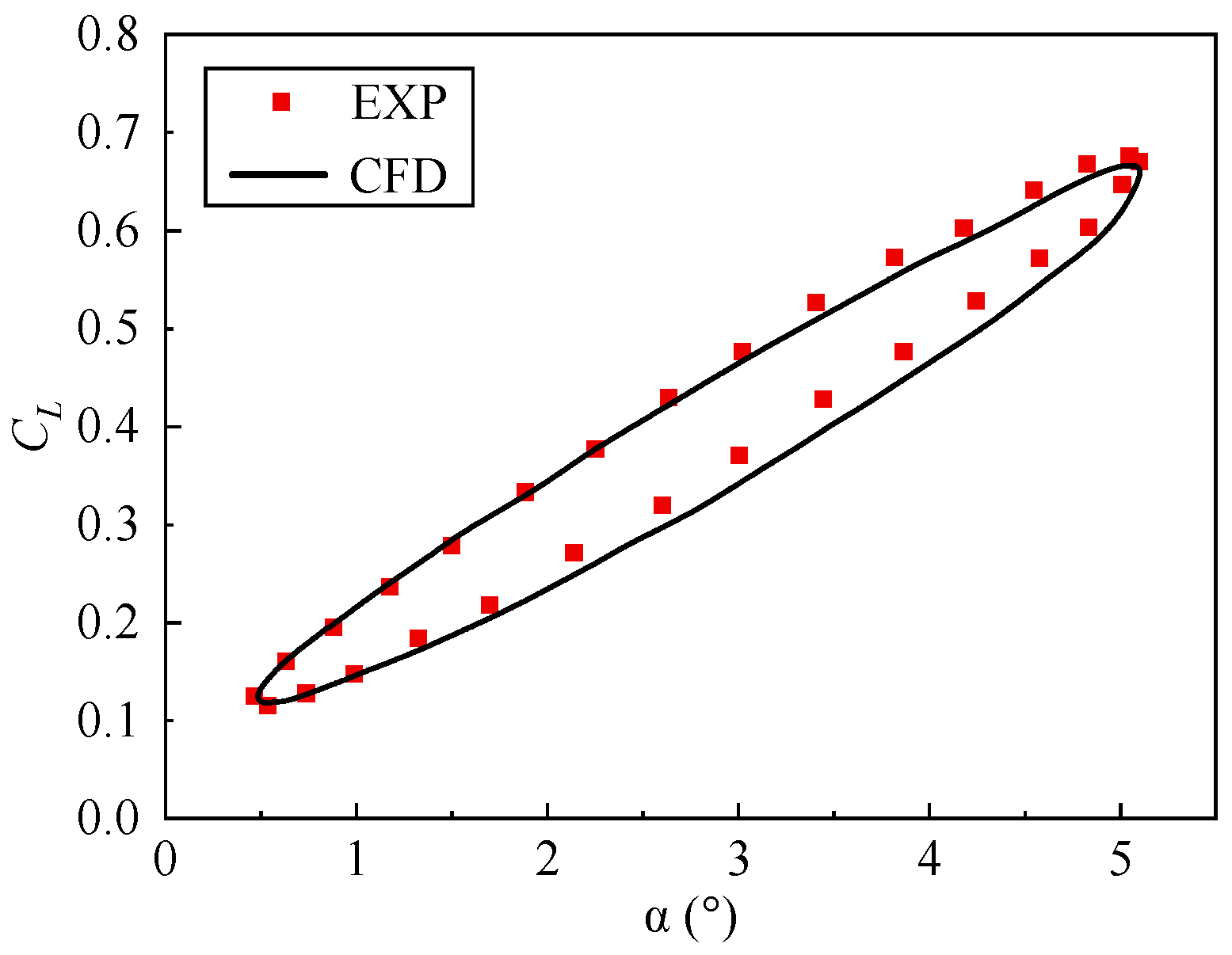
The numerical simulations are carried out using the commercial CFD software, ANSYS Fluent 2022 R1. To validate the accuracy of the unsteady flow solver, the pitching oscillation process of a NACA0012 airfoil is selected for numerical simulation and comparison against the experimental data [33]. The airfoil undergoes pitching oscillation about the quarter-chord position, and the variation law of the angle of attack follows Equation (4):
α = α m + α 0 sin ω t
where α m is the mean angle of attack, which is specified as a constant 2.89° in this validation case, α 0 is the airfoil pitching oscillation amplitude, with a fixed value of 2.41°, and ω is the angular frequency of the airfoil pitching oscillation. The dimensionless reduced frequency is defined as follows:
K = ω C 2 V
where V is the freestream velocity for Ma = 0.6, C is the airfoil chord length = 0.3434 m, and K is the dimensionless reduced frequency = 0.0808.
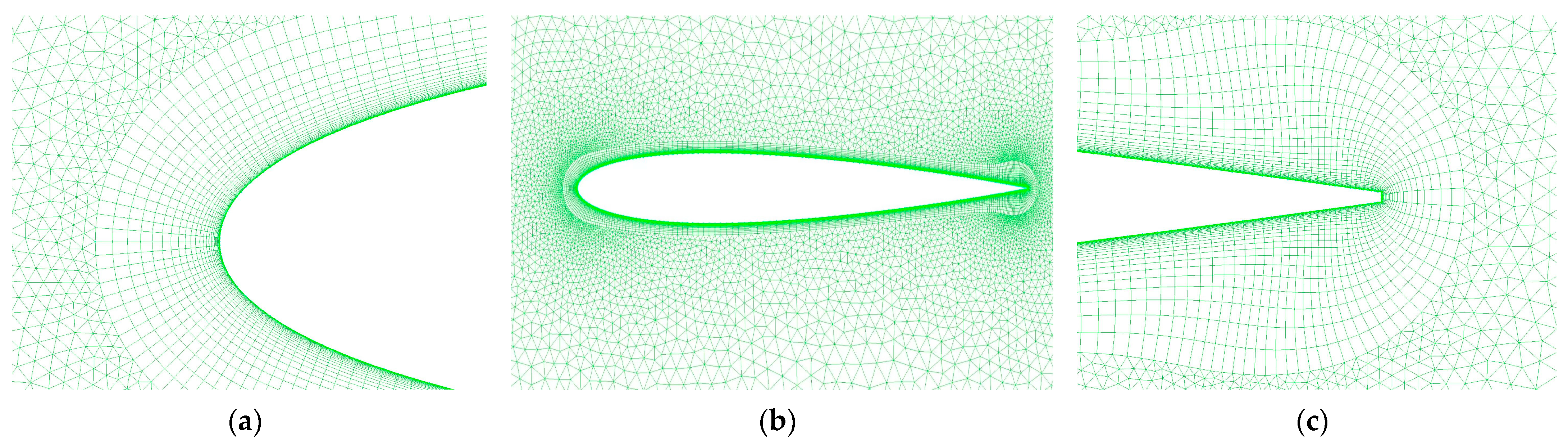
For the above pitching oscillation validation simulation, a C-type computational domain is adopted, with the far-field boundary set 20 times the chord length C from the airfoil to eliminate far-field interference on the flow around the airfoil. A hybrid structured–unstructured mesh is used for the domain, with a total of 1.25 × 10⁵ cells, as illustrated in Figure 1. The boundary layer on the airfoil surface is resolved with no less than 10 mesh layers, and the wall y+ is maintained at approximately 1, which fully satisfies the solution requirements of the Spalart–Allmaras turbulence model.
As shown in Figure 2, the calculated lift coefficient (CL) is in good agreement with the experimental data, which indicates that the core unsteady solution framework adopted in this study has good solution accuracy and can meet the calculation requirements of the unsteady aerodynamic characteristics of variable-sweep wings.

2.2. Description of the Motion During the Variable-Sweep Process

During unsteady simulations of variable-sweep wings, continuous boundary motion induces mesh distortion on the wing surfaces and within the flow field. Under large sweep variations, excessive grid morphing may cause significant numerical errors or computational failure. To address this, the dynamic mesh technique is employed to adapt the flow-field grid throughout the morphing process. This study focuses on flexible variable-sweep wings with large-scale morphing. Tetrahedral meshes are adopted, with mesh updating using smoothing and local remeshing. This strategy maintains grid quality during full morphing cycles, ensuring computational accuracy.
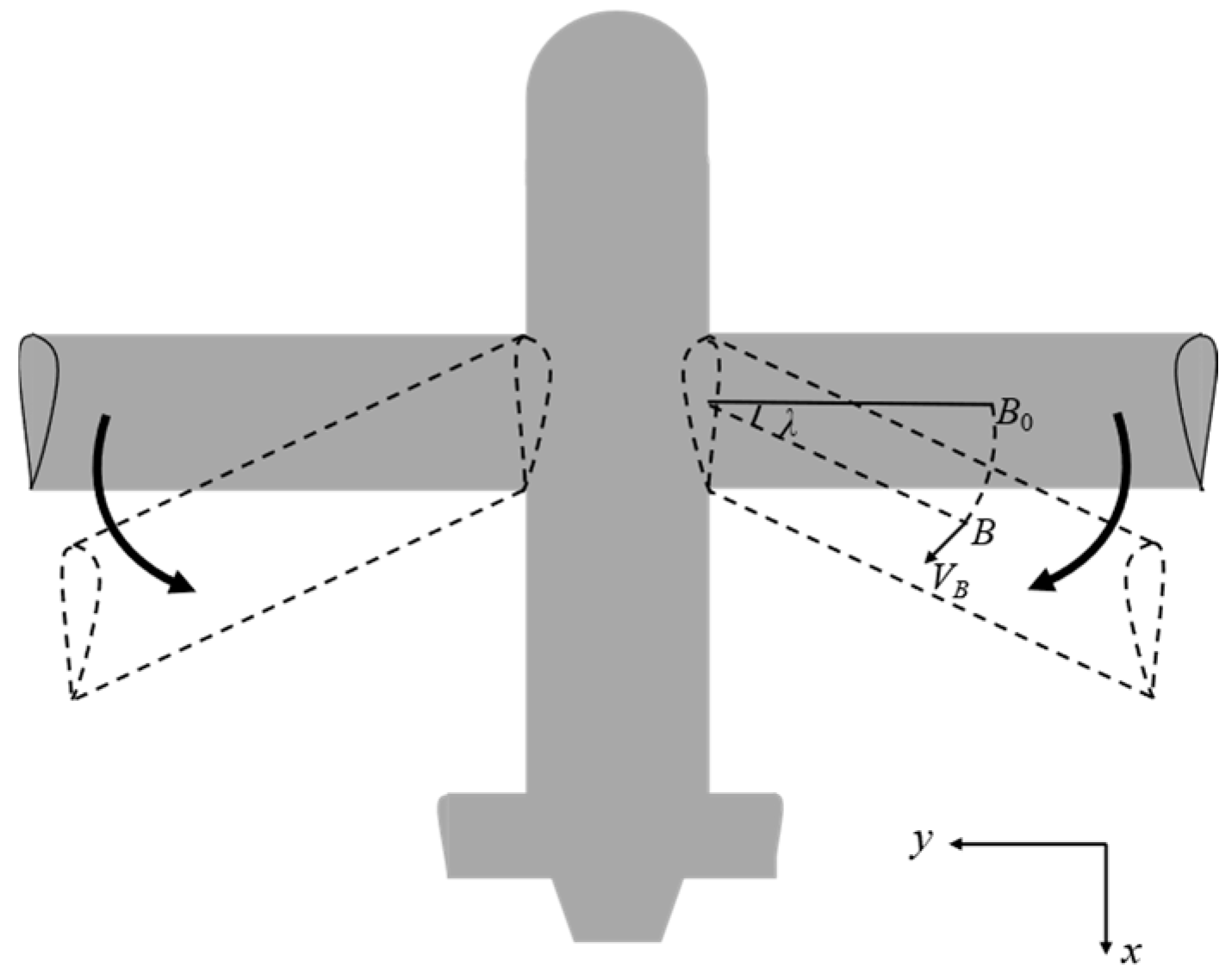
Figure 3 depicts the flexible variable-sweep process of a wing in UAVs. The dashed line portion represents the wing at a specific instant during the morphing process. The sweep angle of the wing at this instant is denoted as λ . Define an arbitrary point on the surface of the wing with a 0° sweep angle as B 0 , whose coordinates are ( x 0 , y 0 ). After time t, B 0 translates to position B(x,y) with velocity V B . This velocity vector has components V x and V y in the x y -plane (with V z = 0).
Let λ 1 and λ 2 denote the minimum and maximum sweep angles during morphing, respectively. T is the total morphing period. The time-varying sweep angle λ ( t ) can be derived by Equation (6):
λ = 1 2 λ 1 λ 2 cos 2 π T t + 1 2 λ 1 + λ 2
Then the angular velocity can be expressed as follows:
ω = λ 2 λ 1 π T sin 2 π T t
Based on the y-coordinates of point A and point B, the straight line distance between A and B can be calculated as follows:
A B = y B y A cos λ
By combining Equations (5) and (6), the velocity at point B can be determined as follows:
V B = A B ω
The velocity components at point B in the x and y directions are given by Equation (10):
V x = V B cos λ V y = V B sin λ
Consequently, the coordinates of point B at time t can be expressed as follows:
x = x 0 + V x t y = y 0 + V y t
The above derivation focuses on a representative point B on the wing surface. Crucially, Equation (9) governs the updated position of all wing surface nodes after duration time t of varying sweep. To operationalize this motion, a user-defined function (UDF) is developed to prescribe the node displacements during morphing. This compiled UDF drives the dynamic mesh updates in Fluent.

2.3. Efficient Prediction Framework for Unsteady Aerodynamic Characteristics Based on Kriging Surrogate Model

The Kriging surrogate model is a stochastic interpolation technique that offers superior global convergence and higher predictive accuracy compared to other surrogate approaches. It expresses the predicted response as a weighted linear combination of sample values as follows:
y ^ ( x ) = i = 1 n w ( i ) y ( i )
Once the weighting coefficients ω = [ ω ( 1 )   ω ( 2 )     ω ( n ) ] are determined, any predicted value within the design space can be obtained. The Kriging model calculates the weighting coefficients by introducing statistical assumptions and treating the unknown function as a specific realization of a Gaussian stationary random process. The mathematical expression of the unknown function Y(x) can be formulated as follows:
Y ( x ) = β + Z ( x )
where β represents the mathematical expectation value of Y(x), and Z(x) is a stationary Gaussian random process with a mean of 0 and a variance of σ2. For different x, the covariance of Z(x) can be expressed as follows:
C o v [ Z ( x ) , Z ( x ) ] = σ 2 R ( x , x )
where R(x, x′) is the correlation function.
Under this framework, the Kriging model seeks the optimal weighting coefficients to minimize the mean square error and satisfy the following interpolation conditions:
E i = 1 n w ( i ) Y ( x ( i ) ) = E Y ( x )
where i = 1, 2, …, n.
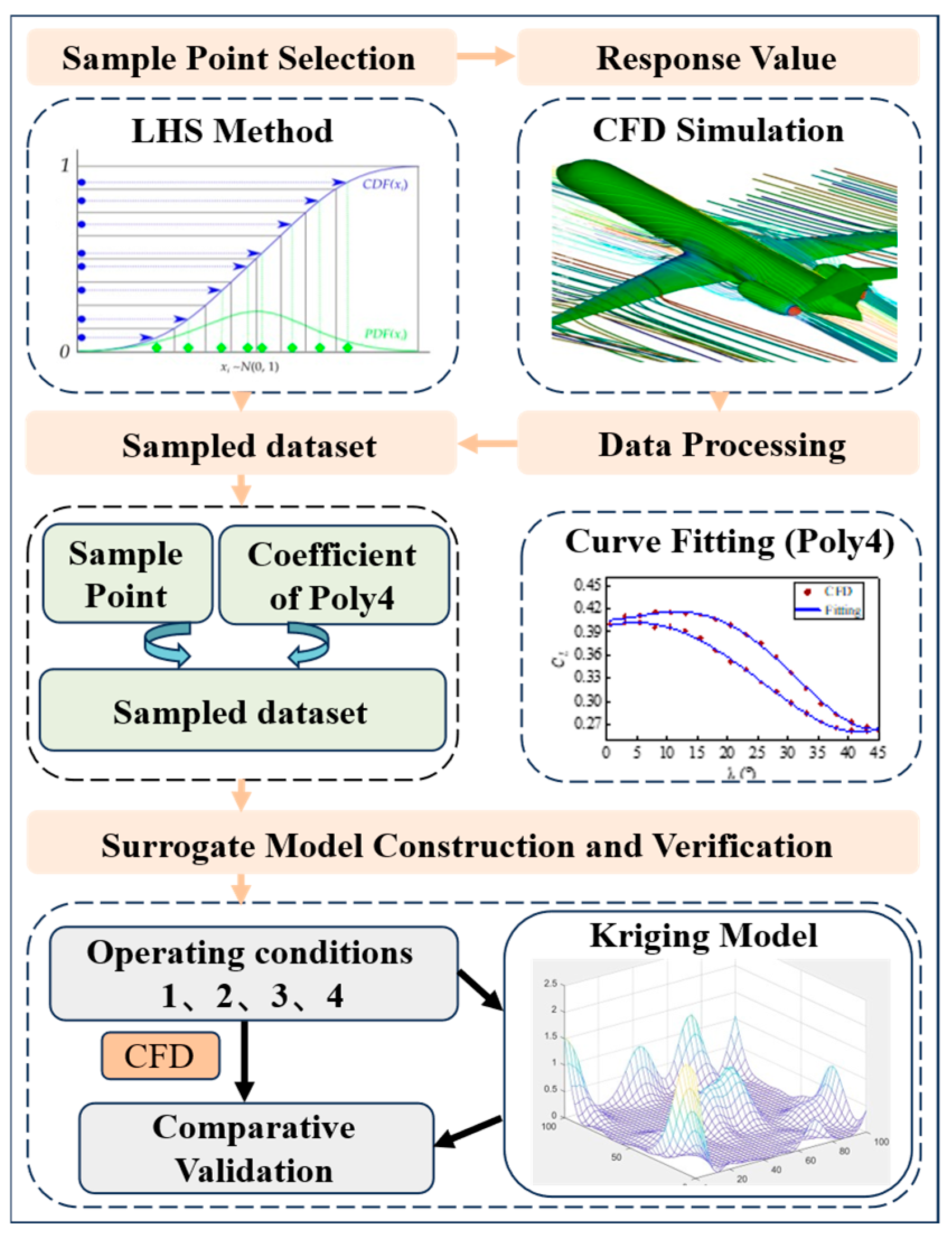
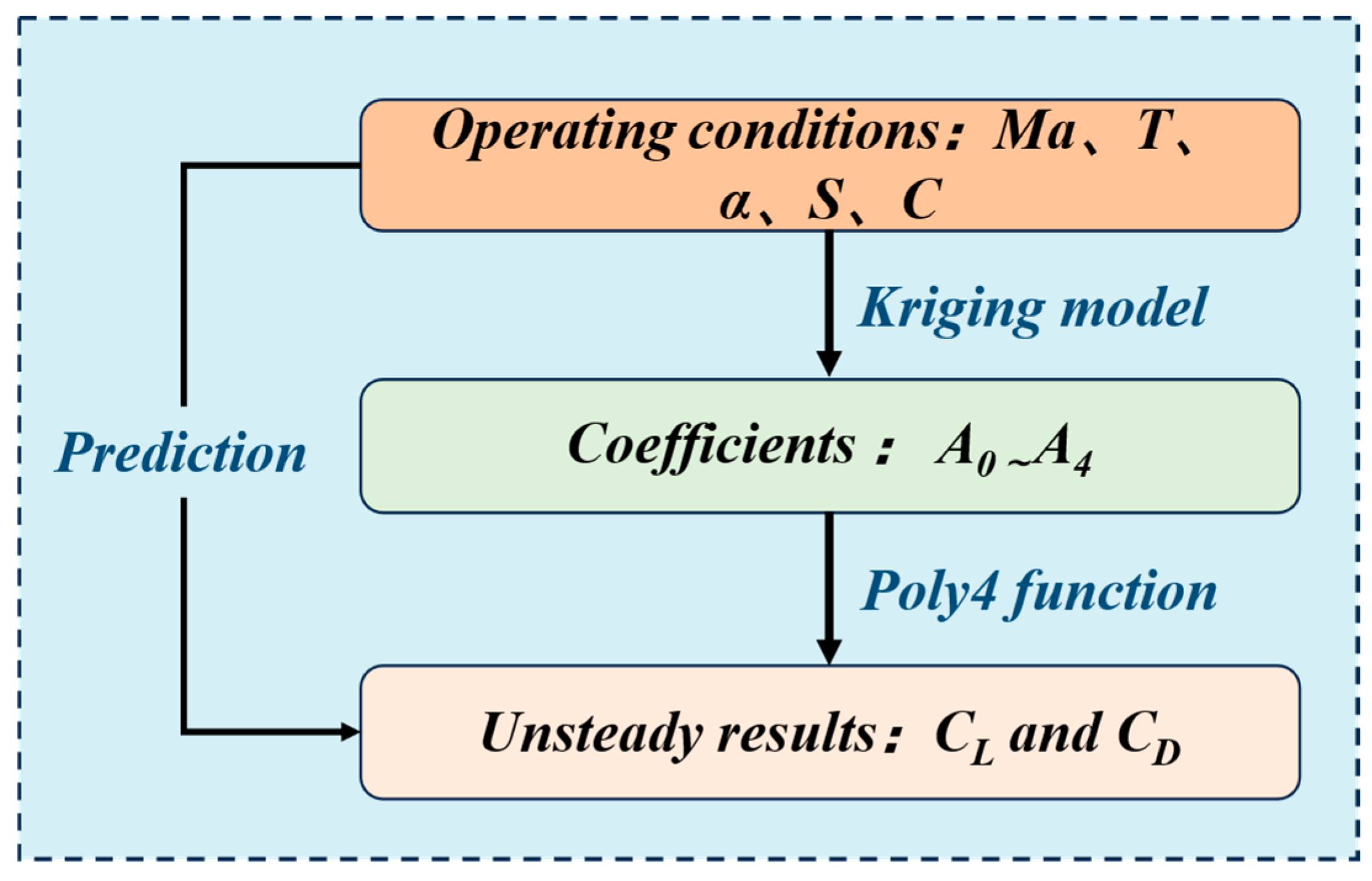
Figure 4 illustrates the framework for the efficient prediction of unsteady aerodynamics in flexible variable-sweep wings using a Kriging surrogate model. LHS [34] is adopted to generate 50 sample points within the five-dimensional design space spanning: freestream velocity, angle of attack, morphing period, wingspan, and chord length. High-fidelity CFD simulations compute unsteady aerodynamic characteristics at each sample point. The resultant force data are fitted with fourth-order polynomials (Poly4). A Kriging model is then constructed using sample points and the corresponding Poly4 coefficients. For unseen flight conditions, the model predicts the Poly4 coefficients to construct aerodynamic curves. Validation is performed by comparing the Kriging predictions against the independent CFD results.

3. Case Study

A flexible variable-sweep wing using the NACA0012 classic symmetric airfoil is studied in this research. The original wing model has a span length of 1 m and a chord length of 0.15 m. One sweep motion cycle of the wing is defined as the process in which the wing sweep angle changes from 0° to 45° and then reverts from 45° to 0°.

3.1. Mesh Independence and Time Step Independence

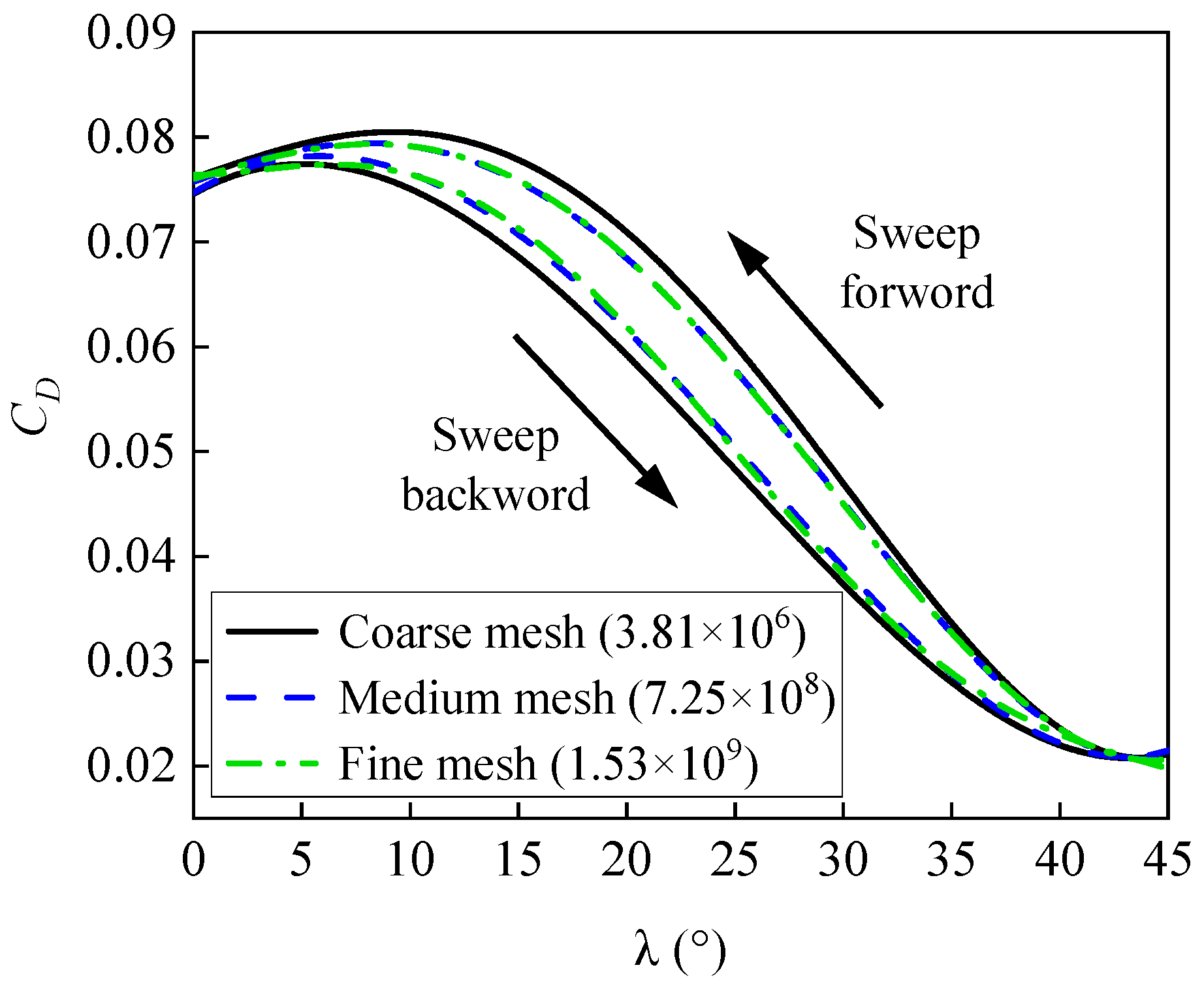
To validate the mesh independence, three mesh resolutions are compared, including a coarse mesh (3.81 × 10⁶ cells), a medium mesh (7.25 × 10⁸ cells), and a fine mesh (1.53 × 10⁹ cells), as shown in Figure 5. The simulated drag coefficients (CD) of the medium mesh and the fine mesh agree well, while the results of the coarse mesh deviate from the other two. In order to reduce the calculation time, the medium mesh size is chosen.
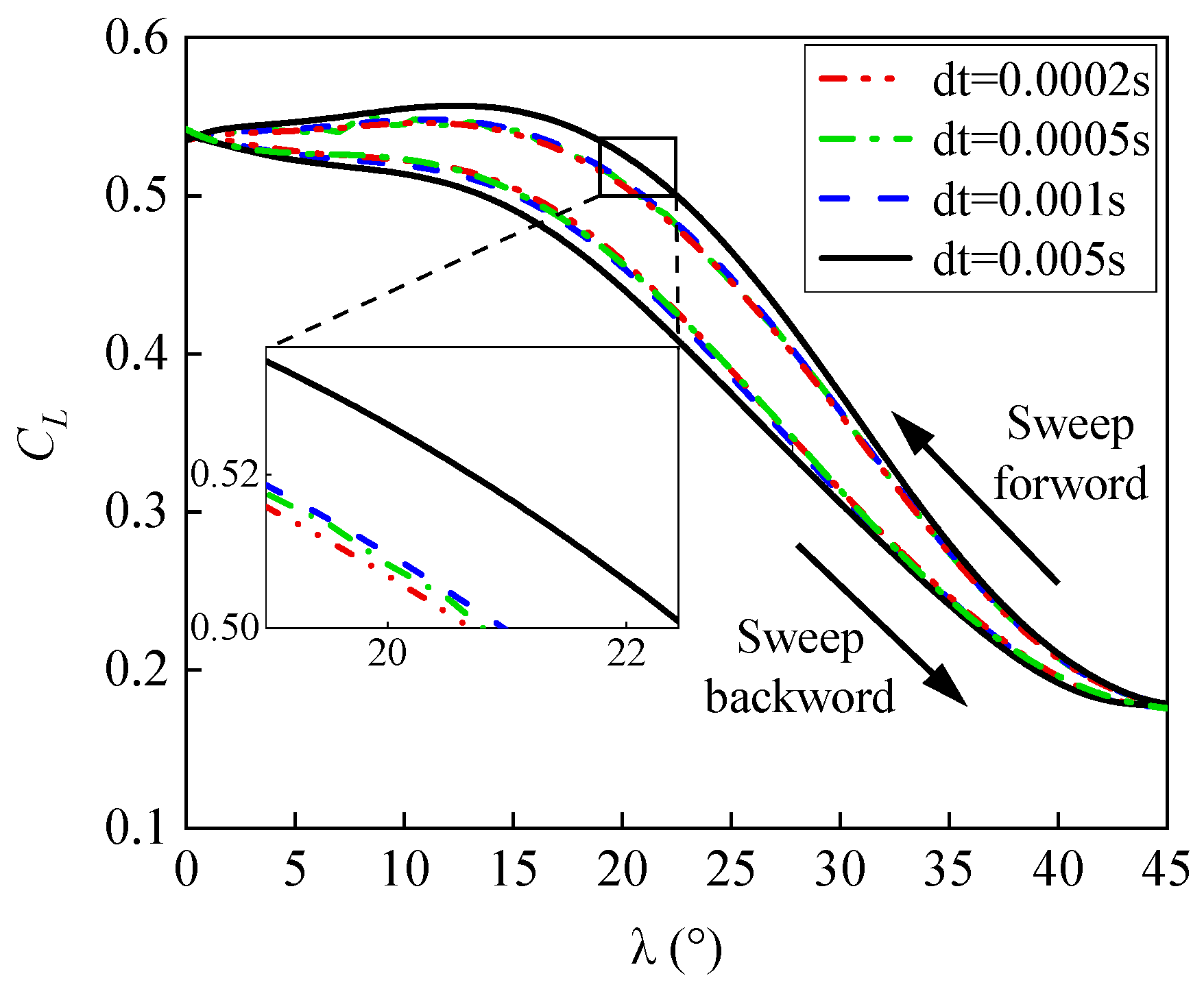
The unsteady time step is important in the unsteady simulation. Figure 6 shows the simulated CL of the variable-sweep wing under four different unsteady time steps, dt = 0.0002, 0.0005, 0.001, and 0.005 s. Compared to the time step of 0.005 s, the results for the time steps of 0.0002 s, 0.0005 s, and 0.001 s are nearly identical. Considering both the computational efficiency and accuracy, the time step dt = 0.001 s is selected.

3.2. Comparative Analysis of Quasi-Steady and Unsteady Aerodynamic Characteristics

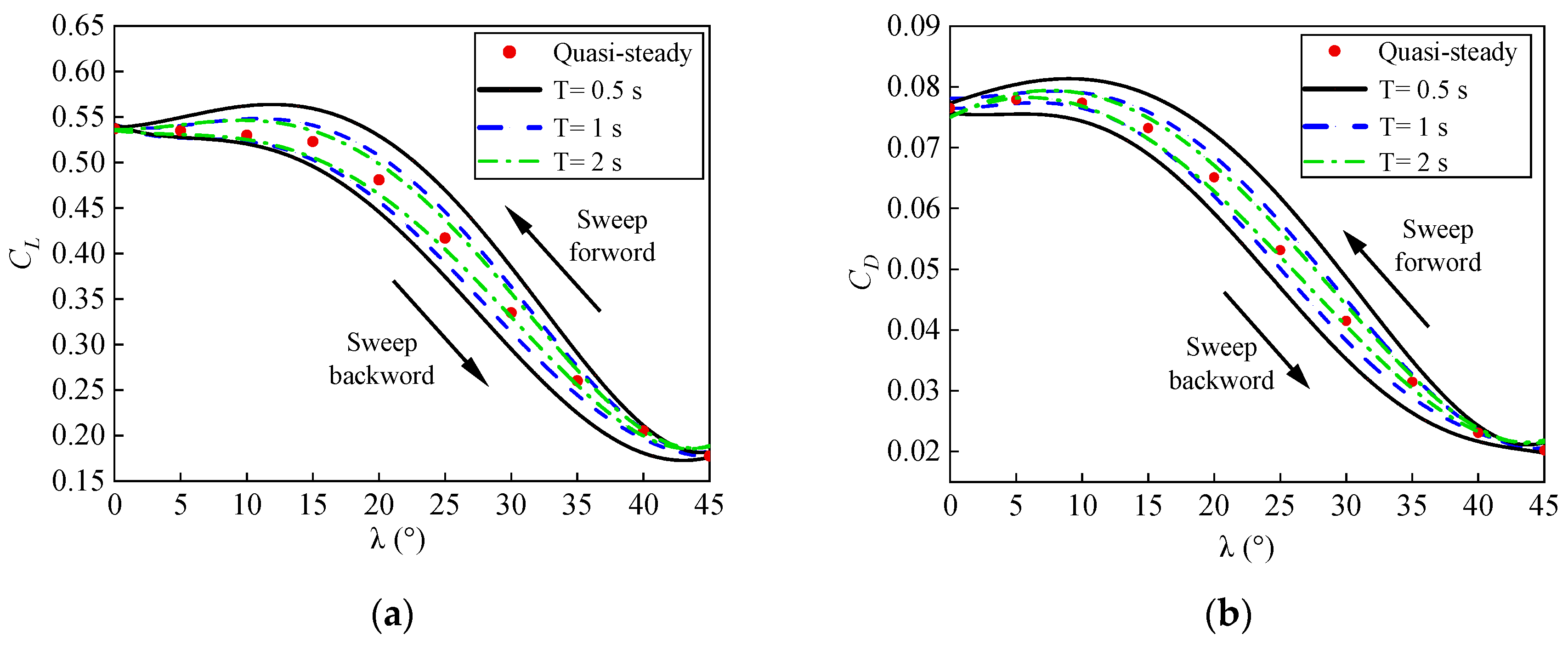
As shown in Figure 7, the scatter points represent quasi-steady aerodynamic characteristics during wing morphing. Three loops represent the unsteady aerodynamic characteristics under three distinct morphing cycles. The fixed parameters remain constant for angle of attack (10°), freestream Mach number (0.5), chord length (0.15 m), and wingspan (1 m). During wing morphing, increasing the sweep angle progressively reduces CL and CD, while decreasing the sweep angle elevates both coefficients. This variation creates hysteresis loops around the quasi-steady values. Specifically, in the sweep backward process, CL and CD lie below the quasi-steady values; in the sweep forward process, CL and CD exceed the quasi-steady values. Shorter morphing periods (higher sweep rates) amplify the loop dimensions, and the unsteady aerodynamic effect becomes more prominent.
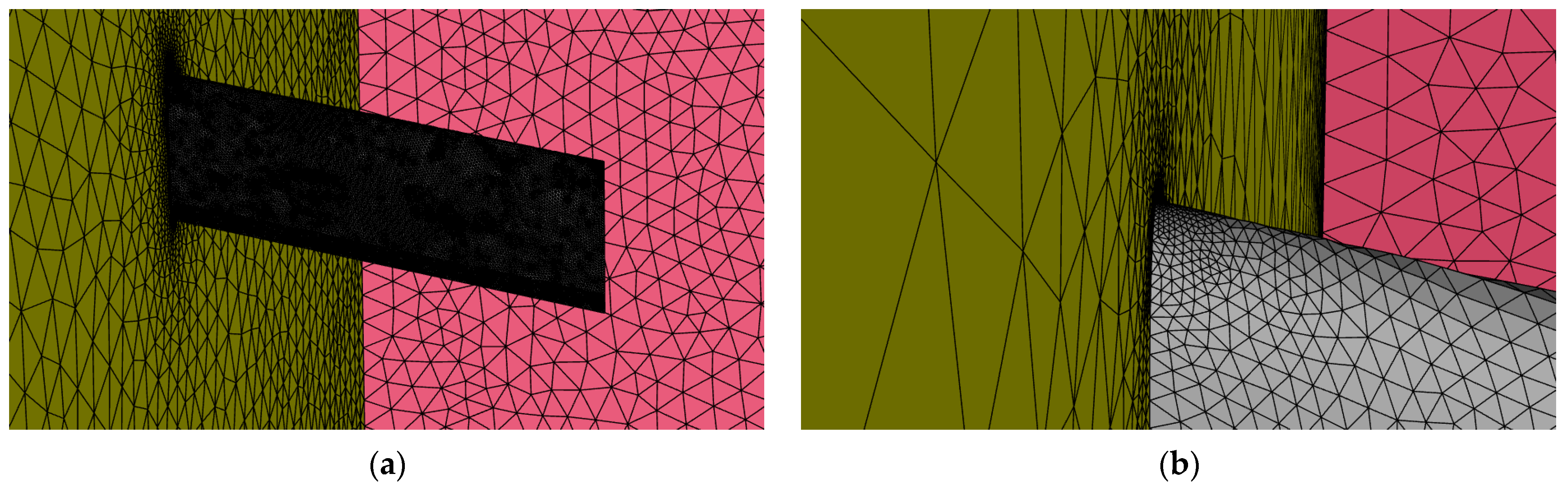
Figure 8 illustrates the mesh of the variable-sweep wing at a 15° sweep angle. Since the present study adopts a combination of the smoothing method and the local remeshing method for dynamic mesh updating, meshes with excessive morphing during the wing’s variable-sweep motion are reconstructed into new meshes. Thus, the mesh quality is maintained at a high level throughout the entire variable-sweep motion, as shown in Figure 8b.
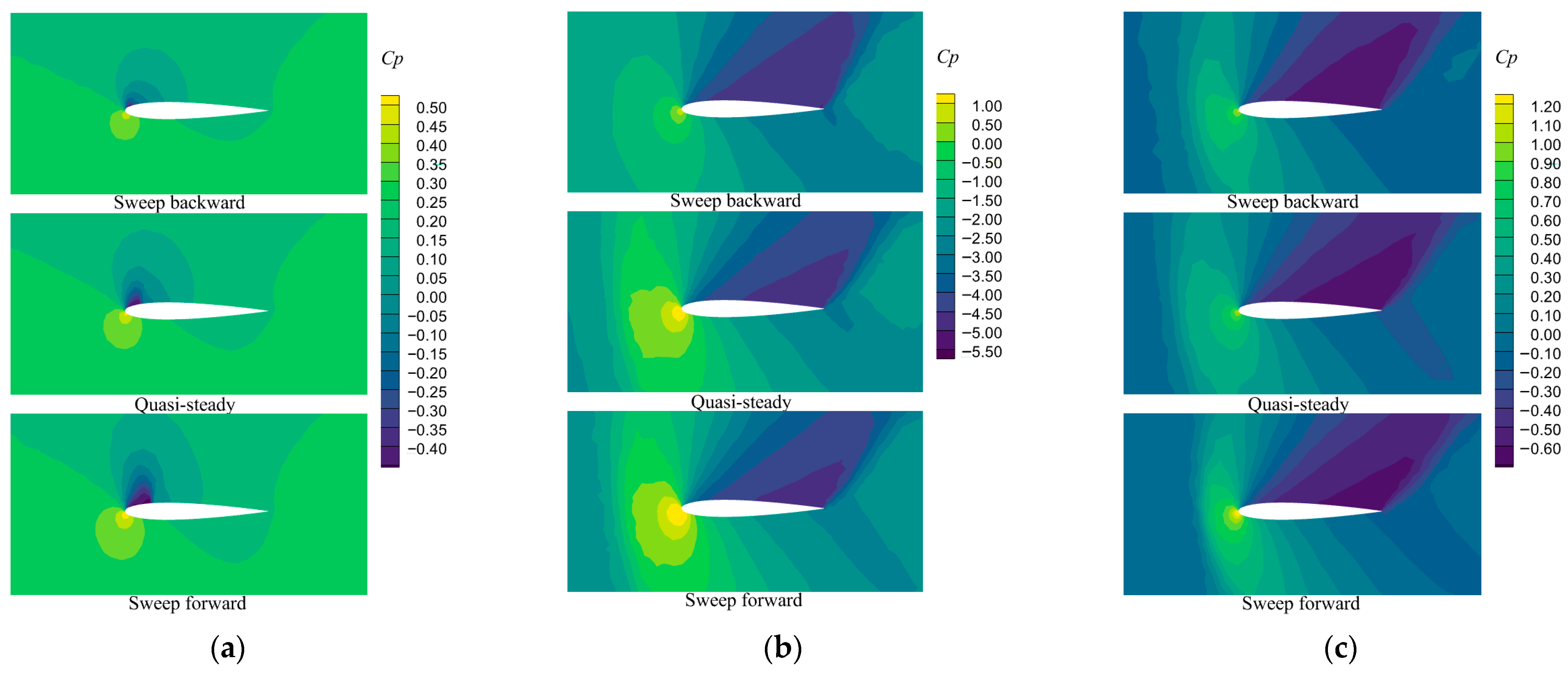
Figure 9 compares the quasi-steady and unsteady pressure coefficient (CP) distributions at a wing cross-section 0.3 m from the root with a 15° sweep, under subsonic (Ma = 0.6), transonic (Ma = 1.0), and supersonic (Ma = 1.3) freestream flow conditions. For all three flow regimes, the discrepancies between the quasi-steady and unsteady CP contours are primarily concentrated near the leading edge and along the upper surface—the regions that dominate lift and drag generation.
Taking the subsonic condition at Ma = 0.6 as a representative case for a detailed analysis, the qualitative trend of the discrepancy in CP between quasi-steady and unsteady results is fully consistent across both transonic and supersonic flow conditions. Compared to quasi-steady results, the unsteady sweep-backward phase exhibits a narrower positive-pressure region at the leading edge and a reduced suction strength on the upper surface, resulting in lower CL and CD. Conversely, during the unsteady sweep-forward phase, the leading edge positive pressure region expands and the upper-surface suction strengthens, yielding higher CL and CD than the quasi-steady values. This opposite trend of aerodynamic deviation between the sweep-backward and sweep-forward motions holds for all subsonic, transonic, and supersonic conditions investigated, demonstrating the persistent nature of the unsteady hysteresis effect across the entire Mach number range.

3.3. Influencing Factors of Unsteady Effects in the Variable-Sweep Process

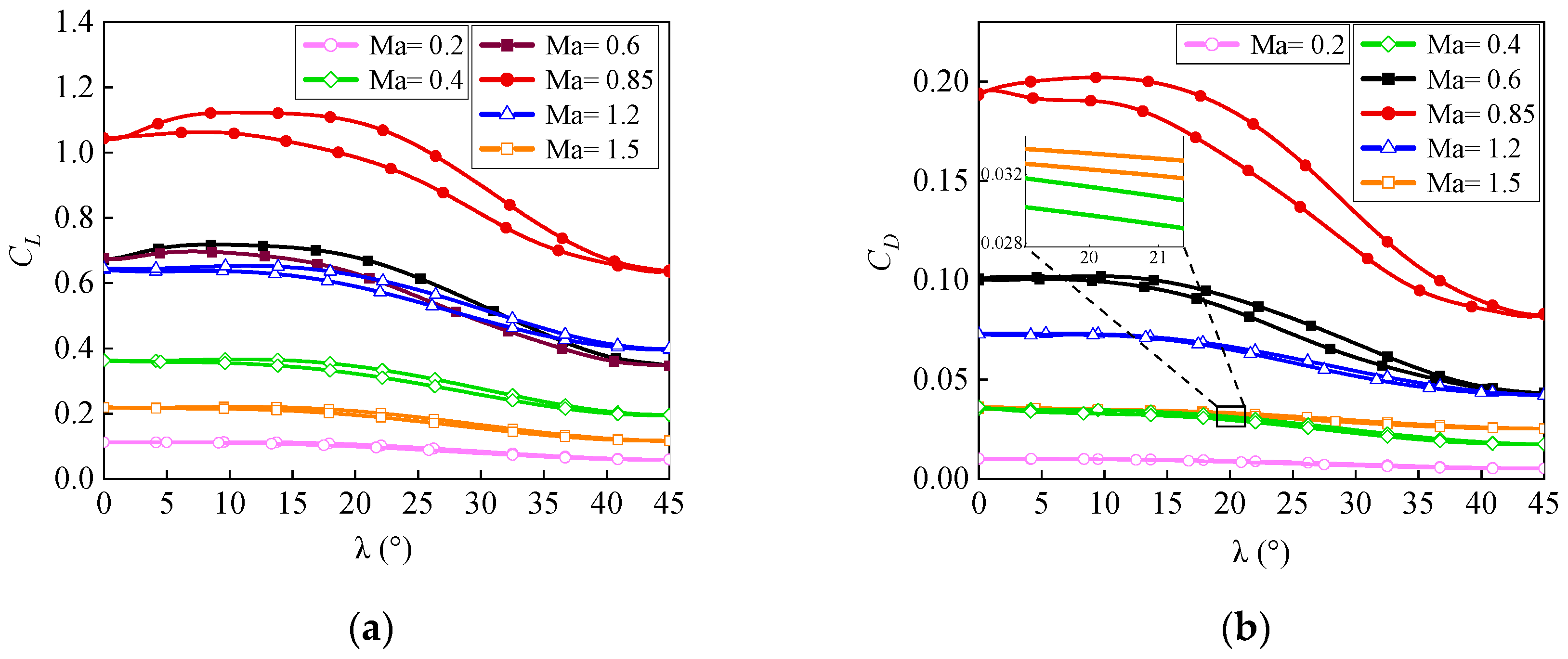
Figure 10 illustrates the influence of freestream velocity on unsteady aerodynamics during wing morphing. The fixed parameters are angle of attack (10°), morphing period (1 s), chord length (0.15 m), and wingspan (1 m). In the subsonic regime, the CL, CD, and hysteresis loop are maximum at Mach 0.85 and minimum at Mach 0.2. In the supersonic regime, CL and CD decrease with the increasing Mach number.
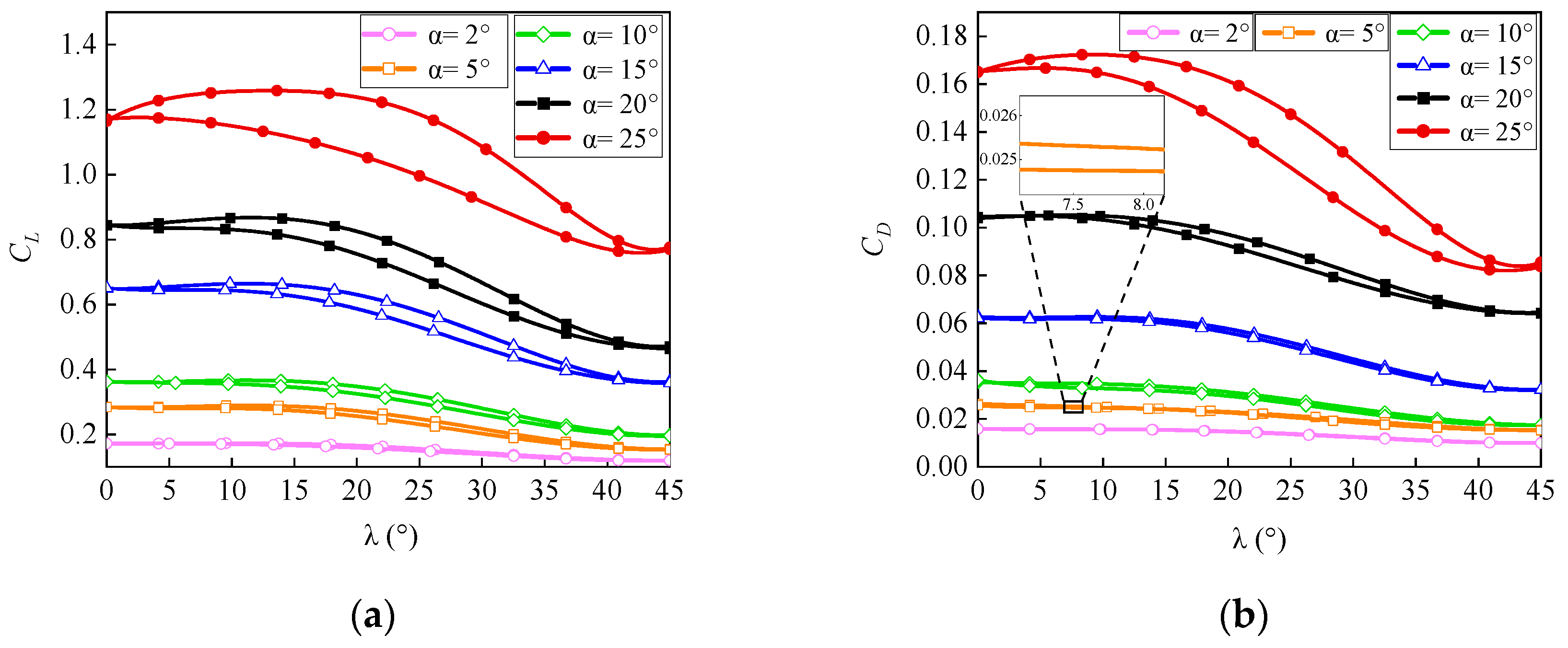
Figure 11 illustrates the influence of the angle of attack on unsteady CL and CD during continuous wing morphing. The fixed parameters remain constant for freestream velocity (Ma = 0.4), morphing period (1 s), chord length (0.15 m), and wingspan (1 m). The increase in the angle of attack raises the magnitudes of both CL and CD and enlarges the hysteresis loops during the morphing process. The enhanced discrepancies between sweep-backward and sweep-forward phases indicate stronger unsteady effects at higher angles.
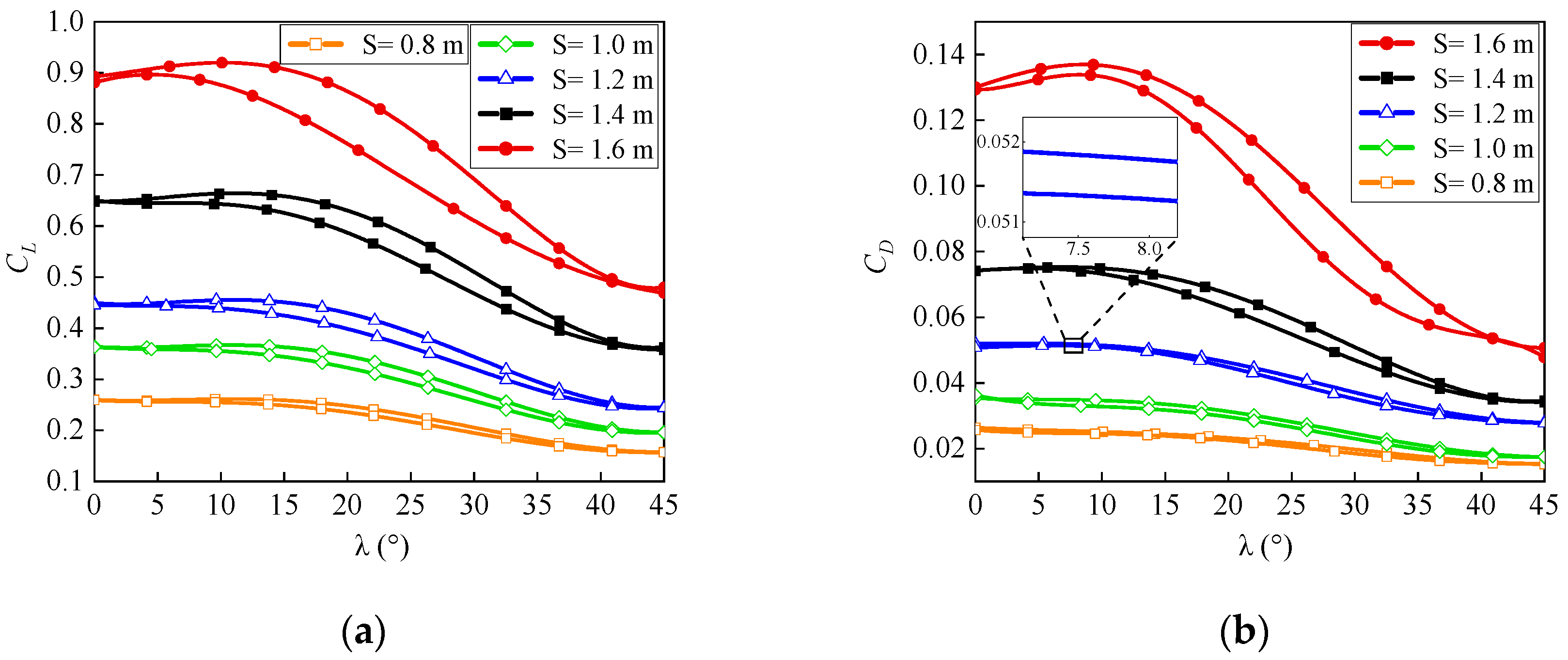
Figure 12 illustrates the influence of wingspan on unsteady aerodynamics during wing morphing. The fixed parameters are freestream velocity (Ma = 0.4), angle of attack (10°), morphing period (1 s), and chord length (0.15 m). An increase in the wingspan amplifies the unsteady aerodynamic effects, resulting in higher CL and CD values, larger hysteresis loops, and more pronounced discrepancies between the sweep phases.
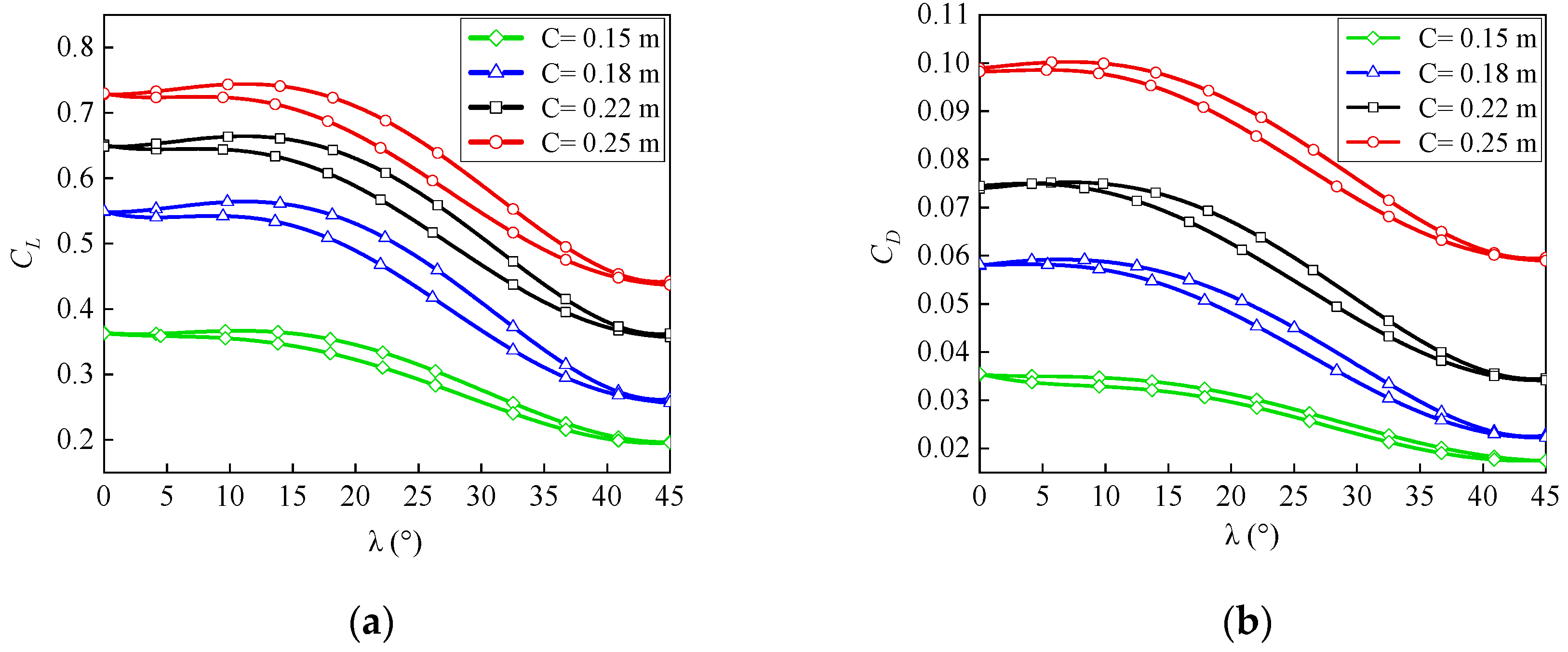
Figure 13 shows the influence of the chord length on unsteady CL and CD during continuous wing morphing. The fixed parameters are freestream velocity (Ma = 0.4), morphing period (1 s), angle of attack (10°), and wingspan (1 m). An increased chord length elevates the CL and CD magnitudes during morphing, while the hysteresis loop dimensions remain essentially unchanged. The fact that the hysteresis loop dimensions remain unchanged demonstrates that the chord length has a negligible influence on the unsteady effects.
Figure 7, Figure 10, Figure 11, Figure 12 and Figure 13 present the effects of wing morphing period, freestream velocity, angle of attack, wingspan, and chord length on unsteady aerodynamics. Based on these results, the unsteady factor K is defined to quantify the magnitude of unsteady effects, as shown in Equation (14):
K = A V α T M a < 1 K = A α V T M a > 1
where A is the projected area of the wing and V is the freestream velocity.

3.4. Efficient Predictions of Unsteady Aerodynamic Characteristics

Having established the influence of various parameters on unsteady aerodynamics during morphing, a Kriging surrogate model is developed to realize the efficient prediction of unsteady aerodynamic characteristics for aircraft design applications.
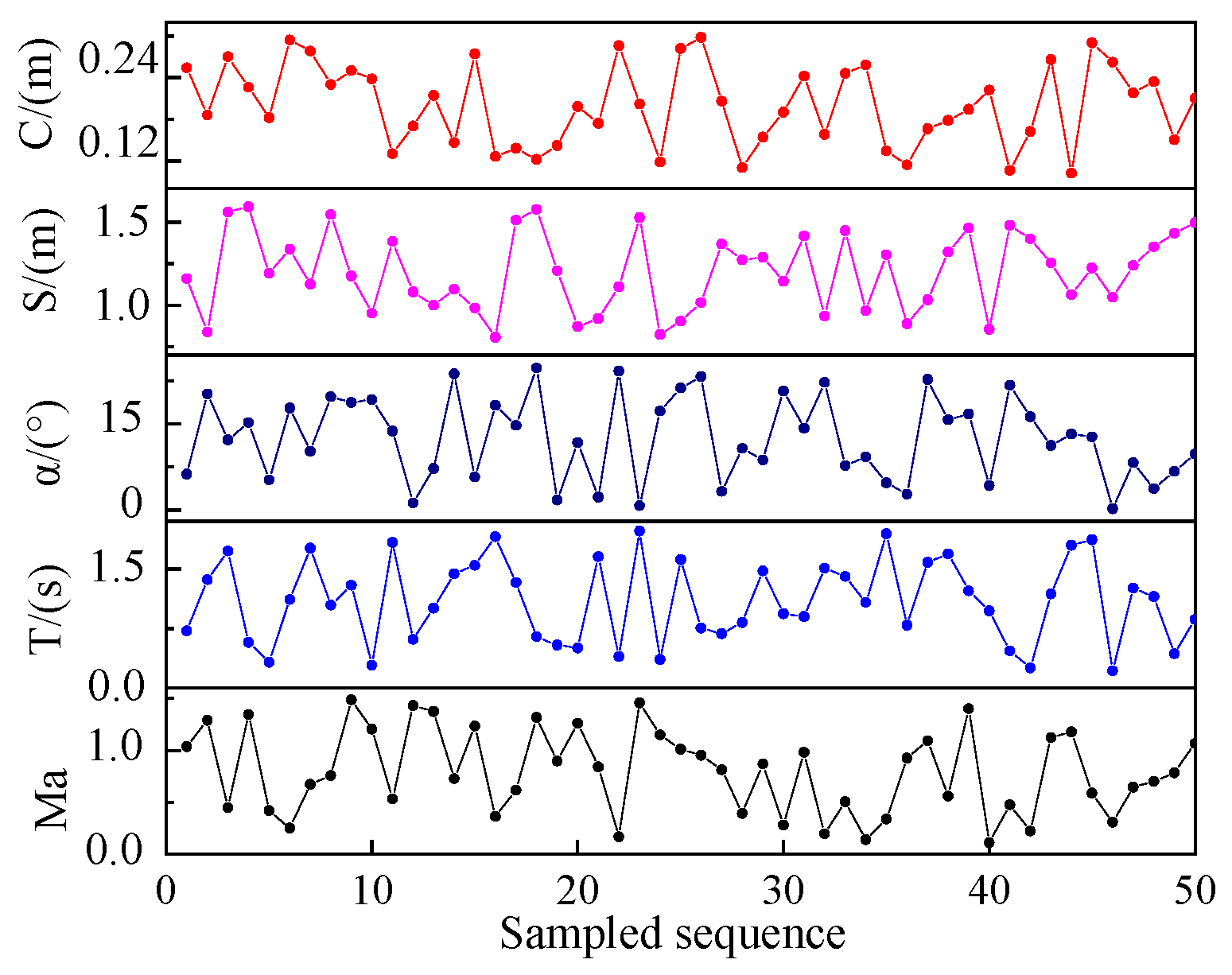
Prior to constructing the Kriging model, a high-fidelity CFD dataset was generated via standardized simulations. The input variables cover the design space of variable-sweep wings: wingspan 0.8–1.6 m, chord length 0.1–0.3 m, Mach number 0.1–1.5, angle of attack 0–25°, and morphing period 0.2–2 s. To ensure data reliability, a rigorous quality protocol was applied. All simulations used the validated mesh and time step from Section 3.1. Convergence required residuals below 10−6 and stable periodic aerodynamic coefficients over the full morphing cycle. To verify data sufficiency, a sample size convergence analysis was performed. LHS ensured uniform five-dimensional coverage. Prediction errors stabilized after 35–40 training samples, confirming that 50 samples provide an adequate dataset for constructing a reliable surrogate model.
Fifty sample points were generated in the five-dimensional design space via LHS; their distribution in the design space is presented in Figure 14. The unsteady aerodynamic force coefficient curves corresponding to these sample points were fitted using a fourth-order polynomial (Poly4) function as follows:
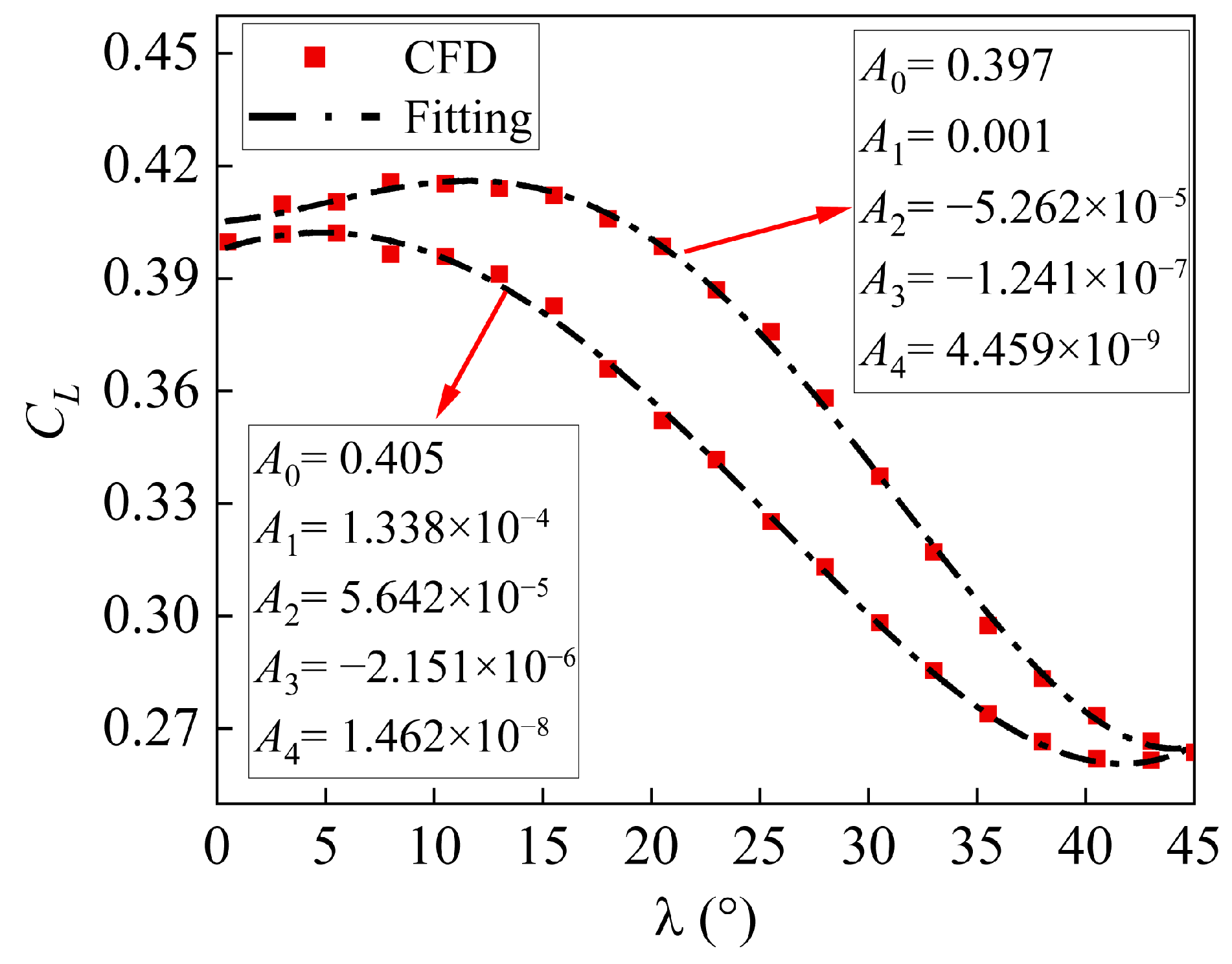
y = A 0 + A 1 x + A 2 x 2 + A 3 x 3 + A 4 x 4
This polynomial demonstrates a good fitting performance (R2 > 0.99) for all cases. Figure 15 shows the fitting quality for CL at a random sample case with freestream velocity = 0.27 Ma, angle of attack = 12.64°, morphing period = 0.51 s, wingspan = 0.91 m, and chord length = 0.142 m.
The Kriging model is constructed using a training dataset comprising sampled cases and associated polynomial coefficients. Subsequently, the established model can be employed to predict unsteady aerodynamic results under unknown operating conditions, as shown in Figure 16.
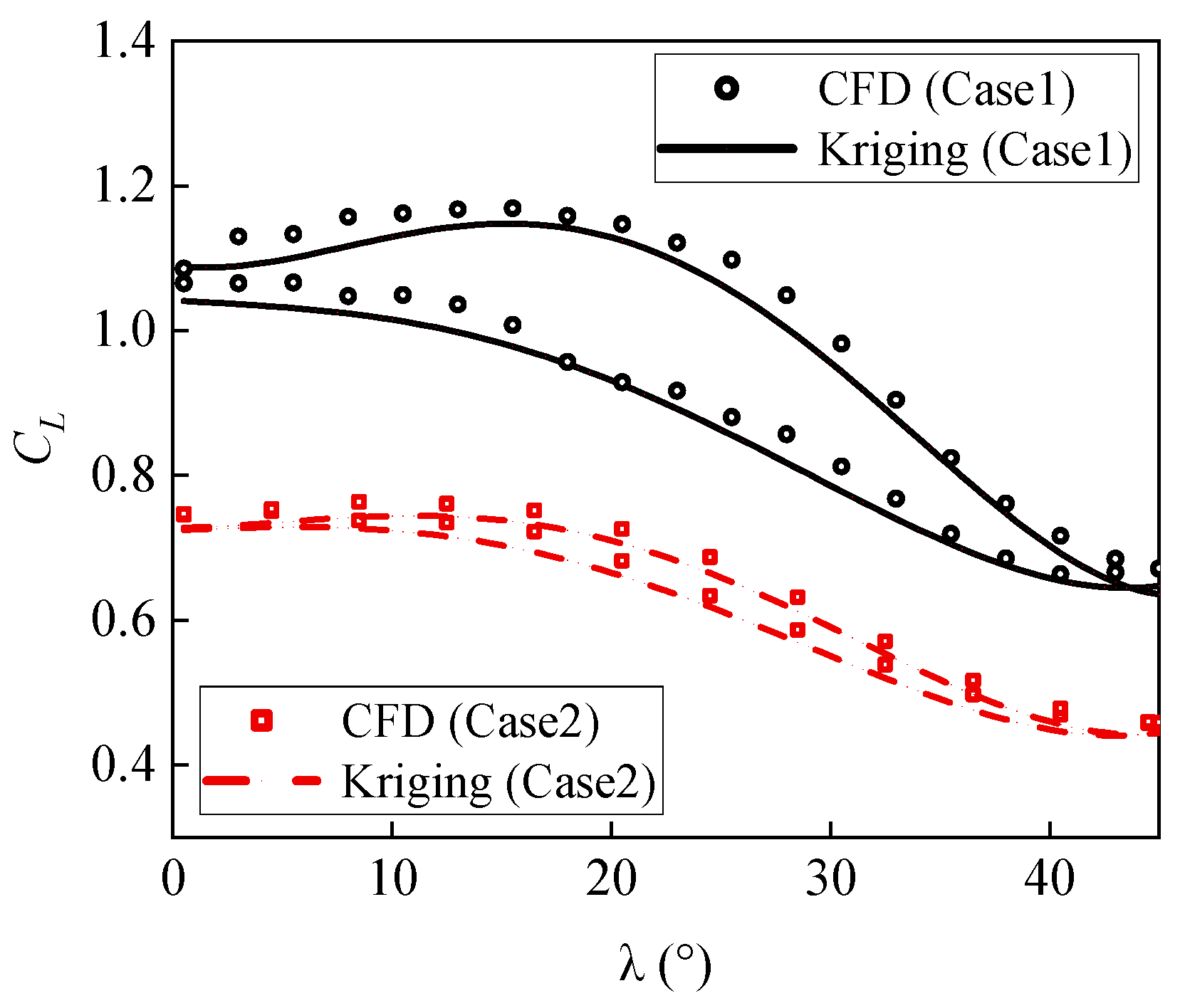
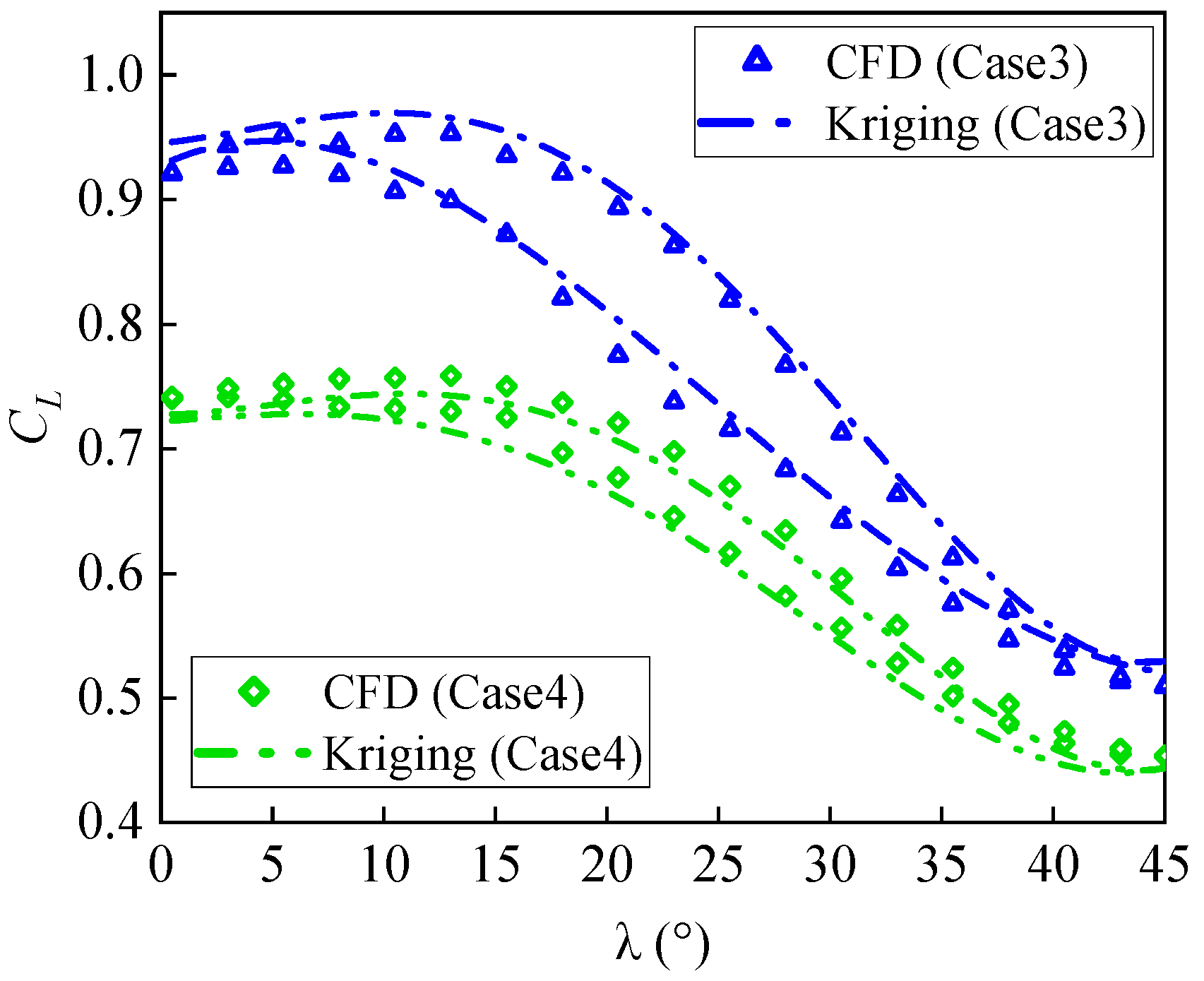
The predictive accuracy of the Kriging model is assessed by comparing its results with high-fidelity CFD simulation results. Figure 17 and Figure 18 present the comparative unsteady aerodynamics characteristics between the CFD and the Kriging model predictions for four randomly selected operating conditions (Table 1).
Figure 17 and Figure 18 demonstrate that the Kriging model successfully predicts aerodynamic hysteresis loops. While the predicted CL and CD exhibit trends consistent with the CFD simulations, quantitative discrepancies exist in magnitude. To precisely quantify these errors, Table 2 presents the average and maximum errors of the Kriging model predictions relative to the CFD results under the four operating conditions.
As shown in Table 2, the Kriging model predictions of unsteady CL and CD exhibit average errors no more than 5% and maximum errors not exceeding 9%. The time required for the aerodynamic prediction of each case does not exceed four minutes.
To further improve prediction accuracy, 30 additional operating conditions are sampled within the design space. The corresponding function parameters for these new conditions are obtained following the established procedure. Integrated with the original 50 samples, this formed an expanded dataset of 80 samples. Subsequently, the Kriging model is reconstructed using this expanded dataset and employed to predict the unsteady CL and CD for the four operating conditions listed in Table 1. The resulting prediction errors are presented in Table 3. The results show that, with the expanded dataset, the average prediction error falls below 4% and the maximum error falls below 6%. Moreover, the computational efficiency of obtaining unsteady aerodynamic characteristics using the Kriging model remains 97% higher than that of the direct CFD simulations. The data in Table 2 and Table 3 show that the predictive accuracy of the surrogate model is improved by employing a larger number of sample data points.

4. Conclusions

This study focused on the unsteady effects that arise in the aerodynamic characteristics of a flexible variable-sweep wing during morphing. The key factors governing the unsteady effects were clarified. The results demonstrated that wing morphing induces pronounced departures from quasi-steady behavior. Specifically, the aerodynamic coefficients during the sweep-backward phase were consistently lower than the quasi-steady values, whereas the sweep-forward phase yielded higher values. This clear phase dependence led to a distinct aerodynamic hysteresis loop within a single morphing cycle, providing direct evidence that the aerodynamic response is strongly history-dependent during sweep variation.
A parametric analysis further identified the dominant drivers of this unsteady behavior. The morphing period, angle of attack, freestream velocity, and wingspan exerted significant influence on both the magnitude and the shape of the hysteresis loops. Shorter morphing periods, higher angles of attack, and longer wingspans increased the loop area and intensified the unsteady effects, indicating stronger lag between aerodynamic response and geometric change. The role of freestream velocity was found to be regime-dependent: in subsonic flow, higher velocity enhanced the unsteady effects, while in supersonic flow, increasing velocity weakened them. By contrast, the chord length showed a negligible influence on the unsteady aerodynamic characteristics within the investigated range.
To enable the efficient prediction of unsteady aerodynamics for flexible variable-sweep wings during morphing, a Kriging-based surrogate model was established. Case studies demonstrated a 97% improvement in computational efficiency compared to direct CFD simulations, while maintaining average prediction errors below 5% and maximum errors under 9% across 50 operating conditions. By expanding the sample dataset, the accuracy of the Kriging model was further enhanced, reducing the average prediction error to below 4%. This prediction framework provides a powerful tool for rapid and accurate aerodynamic predictions, offering significant practical value for the conceptual design phase of morphing aircraft.
Despite the good prediction performance of the proposed framework, it still has limitations, which mainly come from the inherent characteristics of the CFD–Kriging coupling method and the boundary constraints of the simulation parameters adopted in this study. The specific limitations are as follows: first, the prediction framework is restricted by applicable boundary constraints, its high-precision prediction range is limited to the aforementioned five-dimensional design space; second, the computational efficiency improvement of the framework over direct high-fidelity CFD simulations is dependent on precomputed sample data, while achieving higher prediction accuracy necessitates additional computational time for the generation of the required CFD sample datasets.
While the current conclusions and data are only applicable to variable-sweep wings of the same type, the overall CFD–Kriging model framework is universally applicable to the practical engineering applications of variable-sweep wings.

Author Contributions

Conceptualization, Y.H.; data curation, R.Z.; formal analysis, R.Z.; methodology, J.L.; validation, J.L.; investigation, X.H.; writing—original draft preparation, X.H.; writing—review and editing, X.H.; visualization, J.L.; resources, R.Z.; software, R.Z.; supervision, Y.H.; project administration, Y.H.; funding acquisition, X.H. All authors have read and agreed to the published version of the manuscript.

Funding

This research was funded by the National Natural Science Foundation of China, Grant Number 52202445, and the Natural Science Foundation of Jiangsu Province, Grant Number BK20220406.

Data Availability Statement

The original contributions presented in this study are included in the article. Further inquiries can be directed to the corresponding author.

Conflicts of Interest

The authors declare that they have no financial or personal relationships with other people or organizations that could interfere with this study.

Abbreviations

The following abbreviations are used in this manuscript:
CFDComputational Fluid Dynamics
LHSLatin Hypercube Sampling
UAVUnmanned Aerial Vehicle
FVMFinite Volume Method
PISOPressure Implicit with Splitting of Operators
Roe-FDSRoe Flux-Difference Splitting Scheme
TVDTotal Variation Diminishing
UDFUser-Defined Function
Poly4Fourth-order Polynomial Function
CLLift Coefficient
CDDrag Coefficient

References

  1. Zhu, J.H.; Yang, J.N.; Zhang, W.H.; Gu, X.J.; Zhou, H. Design and applications of morphing aircraft and their structures. Front. Mech. Eng. 2023, 18, 0750. [Google Scholar] [CrossRef]
  2. Bai, Y.; Yang, G.; Xiao, H.; Guo, H.; Liu, R.; Liu, B. An Efficient Stiffness Analysis Model Based on Shear Deformation Theory for Flexible Skin Shear Variable-Sweep Wing. Chin. J. Aeronaut. 2024, 37, 445–458. [Google Scholar] [CrossRef]
  3. Ma, T.; Fan, Y.; Chang, N.; Yang, J.; Yu, Z.; Zhou, X. Design of a Variable-Sweep Wing Structure with Flexible Shear Skin. Aerosp. Syst. 2022, 5, 37–46. [Google Scholar] [CrossRef]
  4. Yang, H.; Jiang, S.; Wang, Y.; Xiao, H. Fluid-Structure Coupling and Aerodynamic Performance of a Multi-Dimensional Morphing Wing with Flexible Metastructure Skin. Aerospace 2023, 10, 678. [Google Scholar] [CrossRef]
  5. Chu, L.L.; Li, Q.; Gu, F.; Du, X.T.; He, Y.Q.; Deng, Y.C. Design, Modeling, and Control of Morphing Aircraft: A Review. Chin. J. Aeronaut. 2022, 35, 220–246. [Google Scholar] [CrossRef]
  6. Mardanpour, P.; Hodges, D.H. Passive Morphing of Flying Wing Aircraft: Z-Shaped Configuration. J. Fluids Struct. 2014, 44, 17–30. [Google Scholar] [CrossRef]
  7. Snyder, M.P.; Sanders, B.; Eastep, F.E.; Frank, G.J. Vibration and Flutter Characteristics of a Folding Wing. J. Aircr. 2009, 46, 791–799. [Google Scholar] [CrossRef]
  8. Chen, Q.; Bai, P.; Li, F. Morphing Aircraft Wing Variable Sweep: Two Practical Methods and Their Aerodynamic Characteristics. Acta Aerodyn. Sin. 2012, 30, 658–663. Available online: http://kqdlxxb.xml-journal.net/cn/article/id/11048 (accessed on 22 March 2026).
  9. Chen, Q.; Bai, P.; Li, F. Study on the Formation Mechanisms of Unsteady Aerodynamic Characteristics of Morphing Flight Vehicle in Sweep-Varying Process. Acta Mech. Sin. 2013, 45, 307–313. [Google Scholar] [CrossRef]
  10. Han, H.; Hu, J.; Yu, Y. Investigation of the Unsteady Aerodynamic Characteristics of an Unmanned Aerial Vehicle with Variable-Sweep Morphing. In Proceedings of the 32nd AIAA Applied Aerodynamics Conference, Atlanta, GA, USA, 16–20 June 2014; p. 3130. [Google Scholar] [CrossRef]
  11. Yao, Z.; Kan, Z.; Li, D. Gust Response of Spanwise Morphing Wing by Simulation and Wind Tunnel Testing. Aerospace 2023, 10, 328. [Google Scholar] [CrossRef]
  12. Xu, H.; Han, J.; Xi, Y.; Chen, G.; Cao, P. Comparative Study of Lifting Surface and CFD Methods in the Simulation of Morphing Process of Folding Wing. Int. J. Aerosp. Eng. 2022, 2022, 9856274. [Google Scholar] [CrossRef]
  13. Guo, Z.Z.; Dai, G.; Yang, H.; Chen, W.F. Unsteady Flow Simulation of a Variable-Sweep Morphing Aircraft Coupled with Flight Control System. Int. J. Mod. Phys. B 2020, 34, 2040073. [Google Scholar] [CrossRef]
  14. Gu, H.; Hong, H. Research and Improvement on Design Method of Morphing Wing Aircraft. J. Phys. Conf. Ser. 2020, 1600, 012013. [Google Scholar] [CrossRef]
  15. Rana, Z.A.; Mauret, F.; Sanchez-Gil, J.M.; Zeng, K.; Hou, Z.; Dayyani, I.; Konozsy, L. Computational Analysis and Design of an Aerofoil with Morphing Tail for Improved Aerodynamic Performance in Transonic Regime. Aeronaut. J. 2022, 126, 1144–1167. [Google Scholar] [CrossRef]
  16. Kabir, A.; Al-Obaidi, A.S.M.; Myan, F.W.Y. Comparative Analysis of Improved Aerodynamic Performance: Computational Fluid Dynamics Study of the Trailing Edge Morphing Concept Parameters. Int. J. Aeronaut. Space Sci. 2025, 26, 413–439. [Google Scholar] [CrossRef]
  17. Zeng, L.; Liu, L.; Shao, X.; Li, J. Mechanism Analysis of Hysteretic Aerodynamic Characteristics on Variable-Sweep Wings. Chin. J. Aeronaut. 2023, 36, 212–222. [Google Scholar] [CrossRef]
  18. Si, P.; Wu, M.J.; Huo, Y.; Wu, Z. Investigation of a tube-launched unmanned aerial vehicle with a variable-sweep wing. Drones 2024, 8, 474. [Google Scholar] [CrossRef]
  19. Rojas-Gonzalez, S.; Van Nieuwenhuyse, I. A survey on kriging-based infill algorithms for multiobjective simulation optimization. Comput. Oper. Res. 2020, 116, 104869. [Google Scholar] [CrossRef]
  20. Raul, V.; Leifsson, L. Surrogate-based aerodynamic shape optimization for delaying airfoil dynamic stall using Kriging regression and infill criteria. Aerosp. Sci. Technol. 2021, 111, 106555. [Google Scholar] [CrossRef]
  21. Shen, C.; Zhang, J.; Ding, C.; Wang, S. Simulation analysis and experimental study on airfoil optimization of low-velocity turbine. J. Mar. Sci. Eng. 2024, 12, 303. [Google Scholar] [CrossRef]
  22. Wang, Q.; Zhang, Z. Airfoil optimization design of vertical-axis wind turbine based on Kriging surrogate model and MIGA. Energies 2025, 18, 12927. [Google Scholar] [CrossRef]
  23. Phiboon, T.; Khankwa, K.; Petcharat, N.; Phoksombat, N.; Kanazaki, M.; Kishi, Y.; Bureerat, S.; Ariyarit, A. Experiment and computation multi-fidelity multi-objective airfoil design optimization of fixed-wing UAV. J. Mech. Sci. Technol. 2021, 35, 4065–4072. [Google Scholar] [CrossRef]
  24. Cairns, J.; Vezza, M.; Green, R.; MacVicar, D. Numerical Optimisation of a Ship Wind-Assisted Propulsion System Using Blowing and Suction over a Range of Wind Conditions. Ocean Eng. 2021, 240, 109903. [Google Scholar] [CrossRef]
  25. Wang, Q.; Ma, P.; Zhang, X.; Li, S. Aerodynamic Optimization of Wind Turbine Airfoil under Dynamic Stall Condition. Energy 2025, 334, 137588. [Google Scholar] [CrossRef]
  26. Liu, B.; Liang, H.; Han, Z.-H.; Yang, G. Surrogate-Based Aerodynamic Shape Optimization of a Sliding Shear Variable Sweep Wing over a Wide Mach-Number Range with Plasma Constraint Relaxation. Struct. Multidiscip. Optim. 2023, 66, 43. [Google Scholar] [CrossRef]
  27. Gong, C.; Ma, B.-F. Shape Optimization and Sensitivity Analysis of a Morphing-Wing Aircraft. Int. J. Aeronaut. Space Sci. 2019, 20, 57–69. [Google Scholar] [CrossRef]
  28. Li, W.H.; Liu, Y.W. Numerical investigation of corner separation flow using Spalart-Allmaras model with various modifications. Aerosp. Sci. Technol. 2022, 127, 107682. [Google Scholar] [CrossRef]
  29. Xie, B.; Xiao, F. Accurate and robust PISO algorithm on hybrid unstructured grids using the multimoment finite volume method. Numer. Heat Transf. Part B 2017, 71, 146–172. [Google Scholar] [CrossRef]
  30. Pelanti, M. Wave Structure Similarity of the HLLC and Roe Riemann Solvers: Application to Low Mach Number Preconditioning. SIAM J. Sci. Comput. 2018, 40, A1836–A1859. [Google Scholar] [CrossRef]
  31. Majima, Y.; Wakimura, H.; Aoki, T.; Xiao, F. A New High-Fidelity Total Variation Diminishing Scheme Based on the Boundary Variation Diminishing Principle for Compressible Flows. Comput. Fluids 2023, 266, 106070. [Google Scholar] [CrossRef]
  32. Meng, Z.F.; Wang, P.P.; Zhang, A.M.; Ming, F.R.; Sun, P.N. A Multiphase SPH Model Based on Roe’s Approximate Riemann Solver for Hydraulic Flows with Complex Interface. Comput. Methods Appl. Mech. Eng. 2020, 365, 112999. [Google Scholar] [CrossRef]
  33. Landon, R.H.; Davis, S.S. Compendium of Unsteady Aerodynamic Measurements; AGARD Report No. 702; Advisory Group for Aerospace Research and Development (AGARD): Neuilly sur Seine, France, 1982; p. 702. Available online: https://www.abbottaerospace.com/downloads/agard-r-702/ (accessed on 22 March 2026).
  34. Iordanis, I.; Koukouvinos, C.; Silou, I. On the efficacy of conditioned and progressive Latin hypercube sampling in supervised machine learning. Appl. Numer. Math. 2025, 208, 256–270. [Google Scholar] [CrossRef]
Figure 1. Meshing of NACA 0012 airfoil: (a) Local zoom-in of the leading edge; (b) Overall view; (c) Local zoom-in of the trailing edge.
Aerospace 13 00305 g001
Figure 2. CL comparison between CFD calculation and the experimental values.
Aerospace 13 00305 g002
Figure 3. Wing variable-sweep process.
Aerospace 13 00305 g003
Figure 4. Framework for efficient prediction of unsteady aerodynamics.
Aerospace 13 00305 g004
Figure 5. Mesh independence validation.
Aerospace 13 00305 g005
Figure 6. Time step independence validation.
Aerospace 13 00305 g006
Figure 7. Comparison between quasi-steady and unsteady results: (a) Lift coefficients; (b) Drag coefficients.
Aerospace 13 00305 g007
Figure 8. Variable-sweep wing mesh at 15°: (a) Overall view; (b) Local zoom-in.
Aerospace 13 00305 g008
Figure 9. Comparison of quasi-steady and unsteady CP contours of the wing cross-section: (a) Subsonic flow at Ma = 0.5; (b) Transonic flow at Ma = 1.0; (c) Supersonic flow at Ma = 1.3.
Aerospace 13 00305 g009
Figure 10. Effects of freestream velocity: (a) Lift coefficients; (b) Drag coefficients.
Aerospace 13 00305 g010
Figure 11. Effects of flight angle of attack: (a) Lift coefficients; (b) Drag coefficients.
Aerospace 13 00305 g011
Figure 12. Effects of wing span: (a) Lift coefficients; (b) Drag coefficients.
Aerospace 13 00305 g012
Figure 13. Effects of wing chord length: (a) Lift coefficients; (b) Drag coefficients.
Aerospace 13 00305 g013
Figure 14. The sampled data in the design space.
Aerospace 13 00305 g014
Figure 15. Poly4 fit of CL.
Aerospace 13 00305 g015
Figure 16. Relationship between operating conditions and unsteady results.
Aerospace 13 00305 g016
Figure 17. Comparison of CL under operating conditions 1 and 2.
Aerospace 13 00305 g017
Figure 18. Comparison of CL under operating conditions 3 and 4.
Aerospace 13 00305 g018
Table 1. Operating condition parameters.
VariableMaT/(s)α/(°)S/(m)C/(m)
10.880.697.161.350.13
21.221.6812.40.810.27
30.430.3316.21.470.22
40.271.321.61.080.16
Table 2. The prediction errors of the Kriging model based on 50 operating conditions.
Operating ConditionsCL CDAverage Error [%]Maximum Error [%]Prediction Time [min]
1CL3.174.782.52
CD1.8432.75
2CL2.715.352.6
CD4.028.232.3
3CL3.446.272.5
CD4.237.432.82
4CL2.234.193.17
CD2.575.032.5
Table 3. The prediction errors of the Kriging model based on 80 operating conditions.
Operating ConditionsCL CDAverage Error [%]Maximum Error [%]Prediction Time [min]
1CL2.574.192.43
CD1.322.863.15
2CL2.194.013.08
CD3.615.252.47
3CL2.625.412.75
CD2.324.032.7
4CL1.843.192.6
CD2.144.032.56
Disclaimer/Publisher’s Note: The statements, opinions and data contained in all publications are solely those of the individual author(s) and contributor(s) and not of MDPI and/or the editor(s). MDPI and/or the editor(s) disclaim responsibility for any injury to people or property resulting from any ideas, methods, instructions or products referred to in the content.