
A Vibration Response Prediction Model for Multi-Stage Assembled Rotors Based on Synchronous Excitation of Mass Eccentricity Error and Spigot Eccentricity Error

Abstract
1. Introduction
- Incomplete Excitation Sources: Existing models only consider the excitation from the resultant mass eccentricity (unbalance force) after assembly, completely neglecting the geometric displacement excitation generated by spigot eccentricity [16,17,18]. Yet, both error types change simultaneously during assembly angle variation.
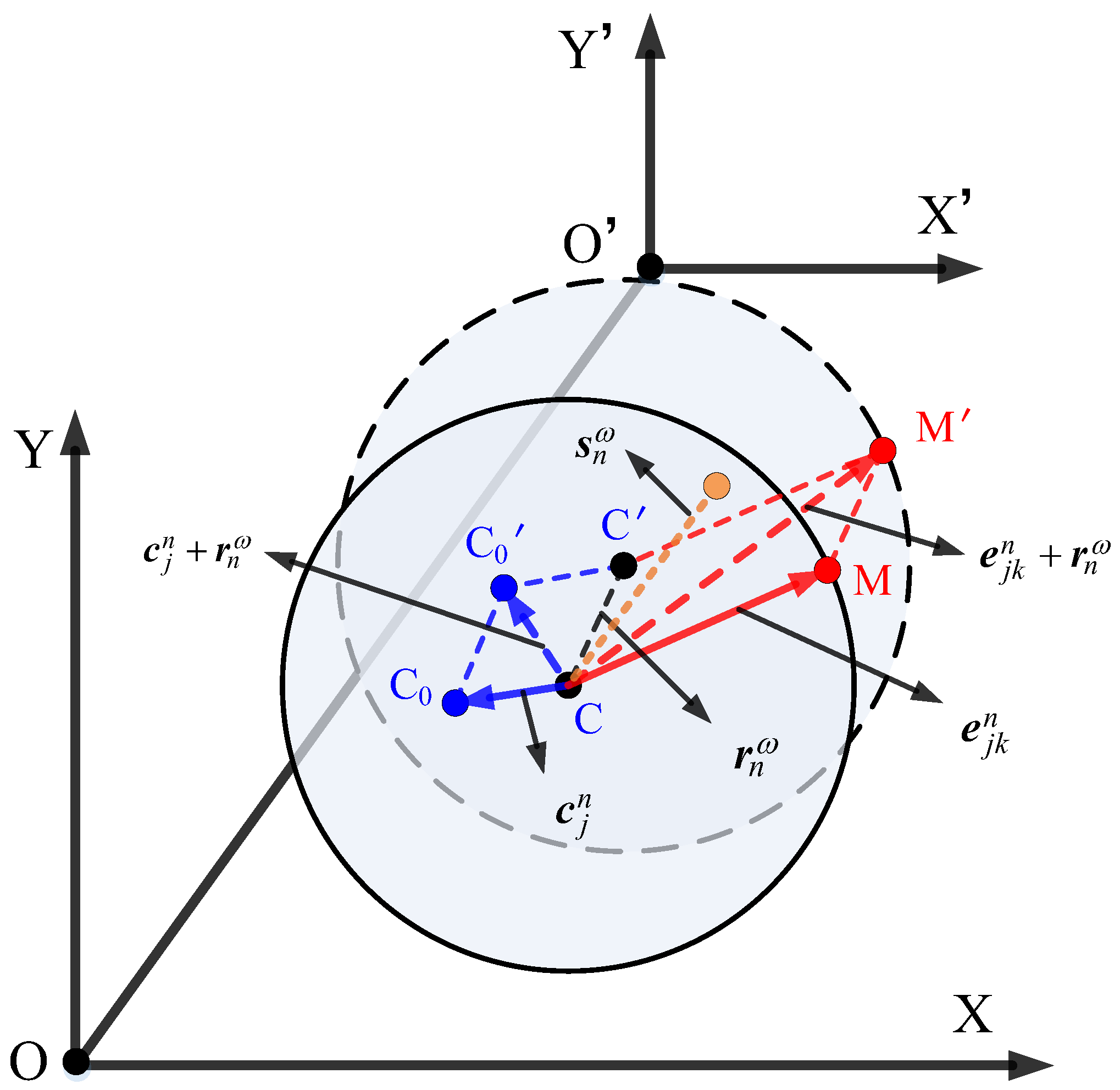
- Neglect of High-Speed Coupling Effects: Existing models fail to account for the significant influence of dynamic deflection at high speeds, particularly near critical speeds. When the rotor enters the flexible motion stage, the overall dynamic deflection causes a redistribution of all initial eccentricity errors, generating new dynamic unbalance and deflection—a coupled feedback process. Ignoring this effect severely limits the model’s predictive accuracy for high-speed vibration response, especially near critical speeds.
- Unclear Excitation Frequency Characteristics: The frequency characteristics of the vibration response excited by assembly errors lack clear analysis. This makes it difficult to effectively isolate the vibration components directly related to assembly optimization from complex experimental signals containing multiple fault frequency components (e.g., harmonics caused by misalignment or oil film instability [19,20,21]).
- (1)
- For the first time, the synchronous excitation from both mass eccentricity and spigot eccentricity is incorporated into a unified equation of motion, more accurately reflecting the nature of assembly error excitation;
- (2)
- The model systematically includes the excitation redistribution mechanism induced by dynamic deflection, enabling a more precise description of the rotor’s dynamic behavior throughout the transition from rigid to flexible motion, particularly near critical speeds;
- (3)
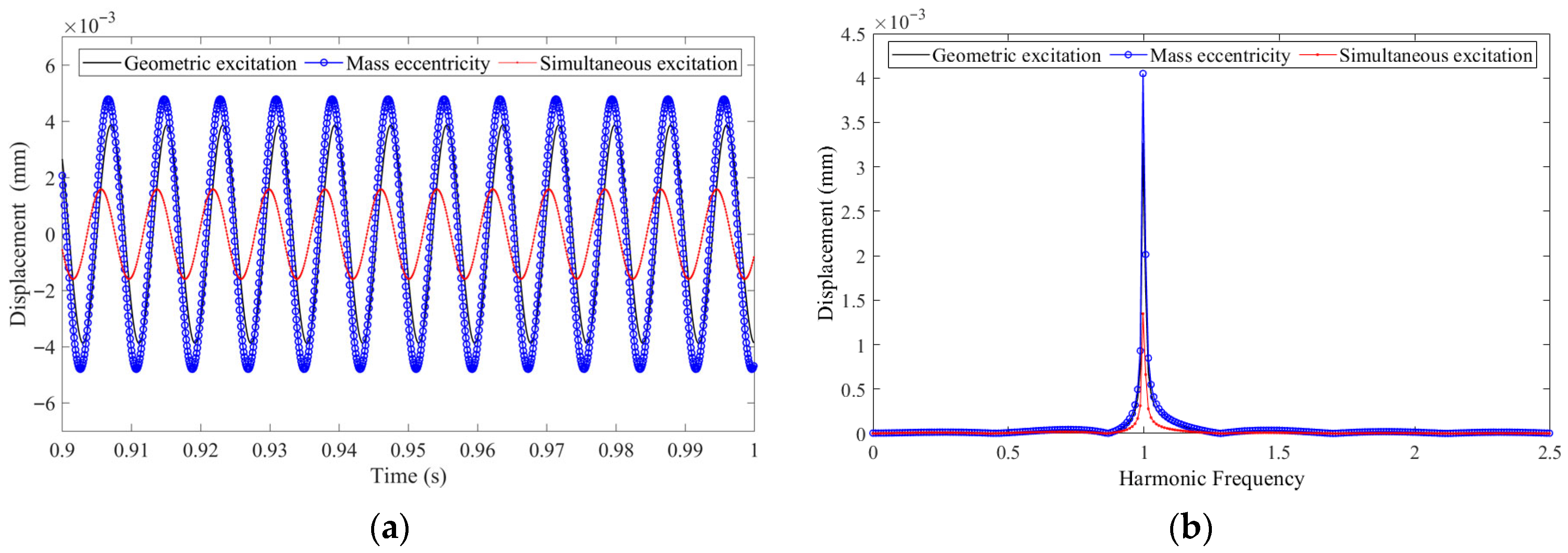
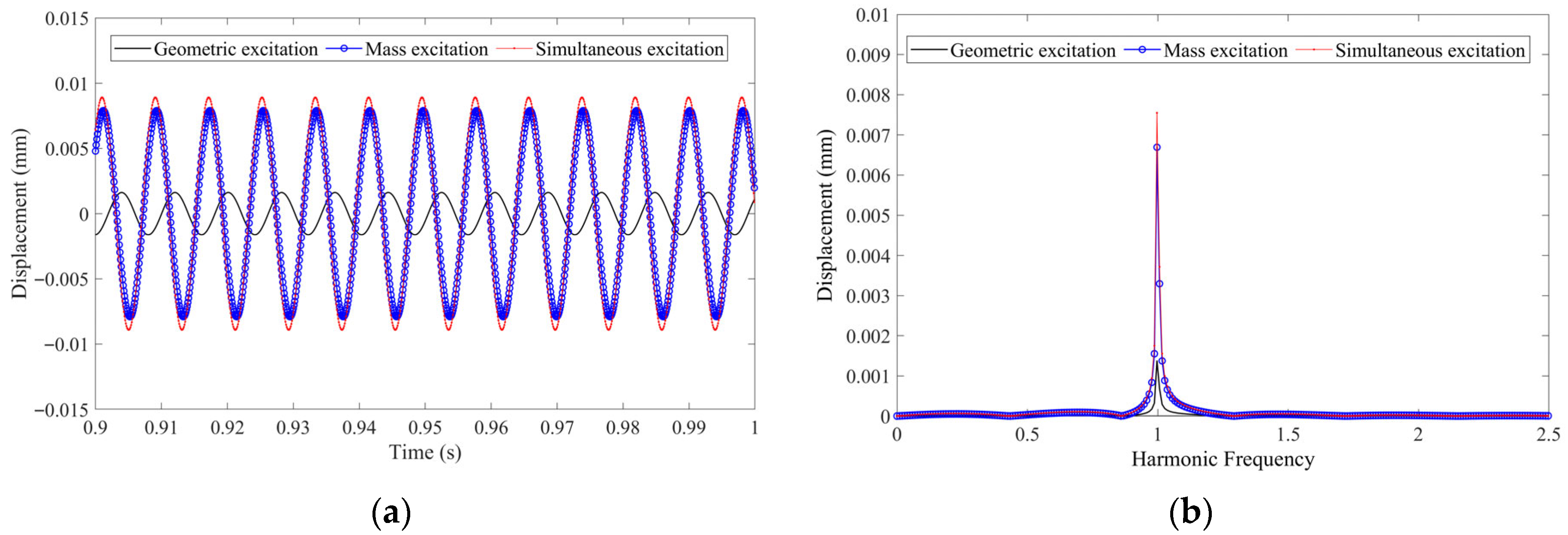
- It clarifies that the dual-eccentricity excitation exists solely at the fundamental frequency, providing a clear basis for signal processing in experimental validation.
2. Methods
2.1. Dynamic Equations of Multi-Stage Rotors Considering Dynamic Deflection
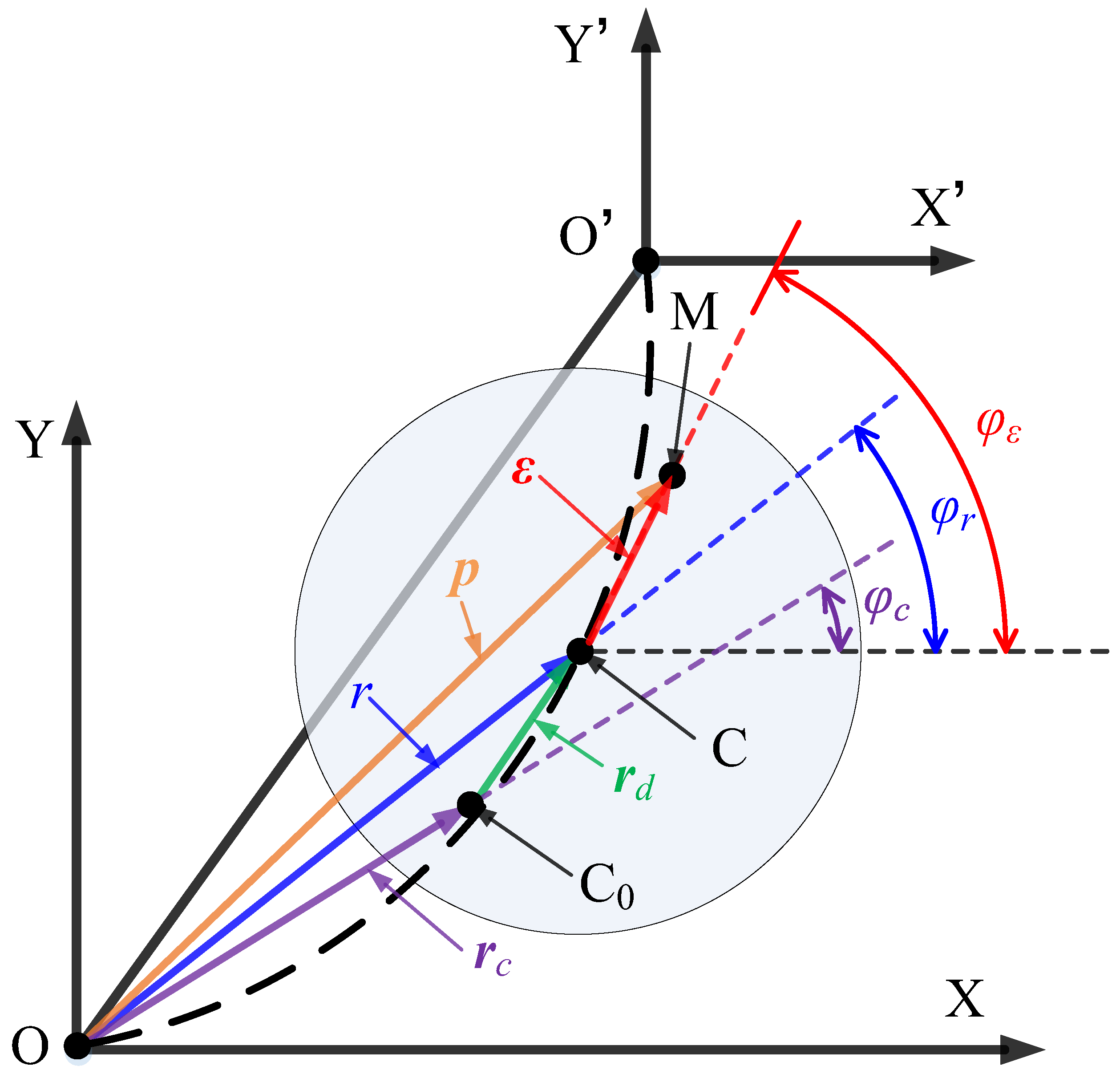
2.1.1. Synchronous Excitation from Mass and Spigot Eccentricity Errors in Multi-Stage Rotors
2.1.2. Dynamic Equations of the Multi-Stage Rotor System
3. Simulation
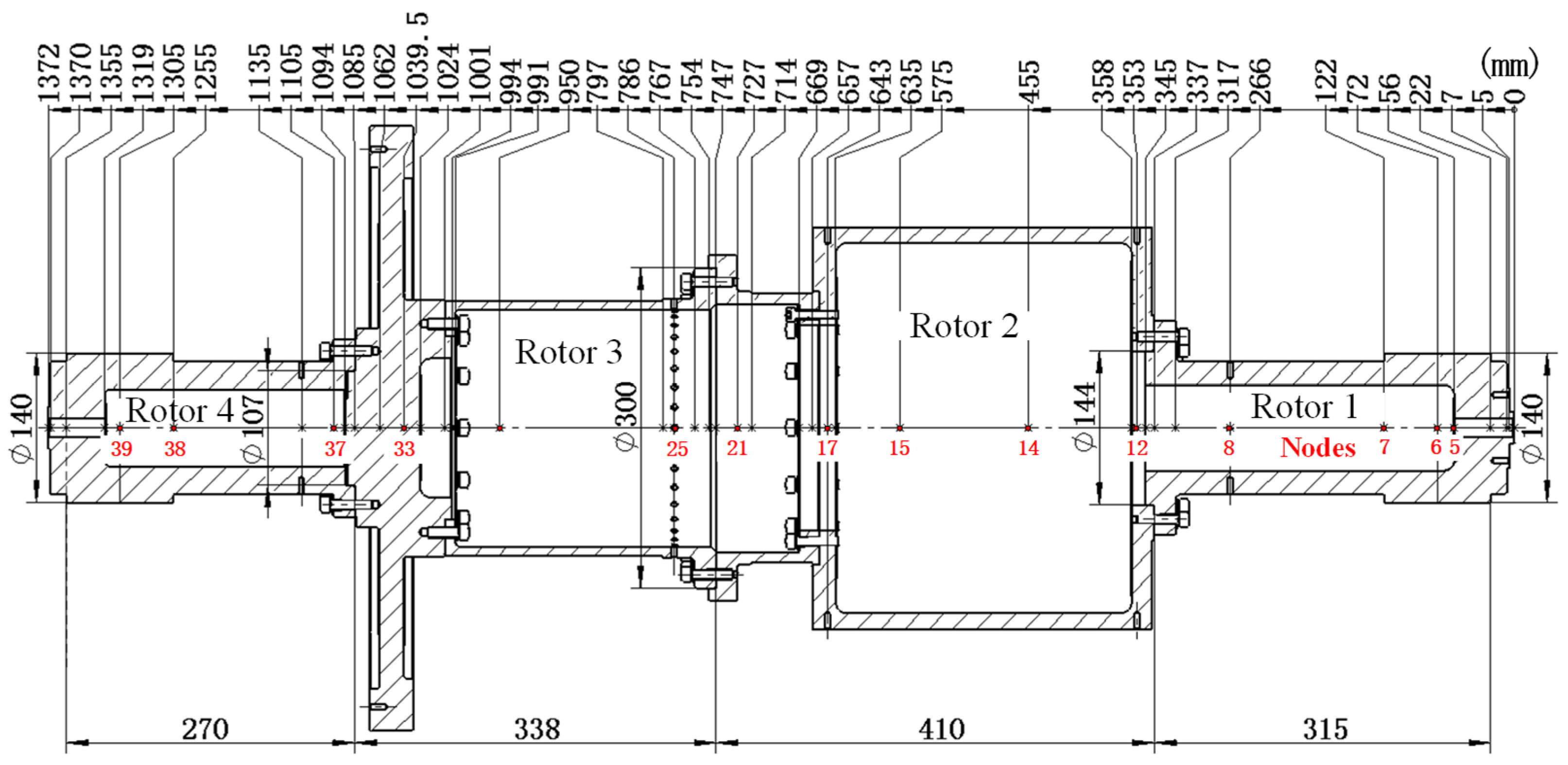
3.1. Finite Element Model of a Four-Stage Assembled Rotor
3.2. Analysis of Nodal Vibration Response Considering Dynamic Deflection
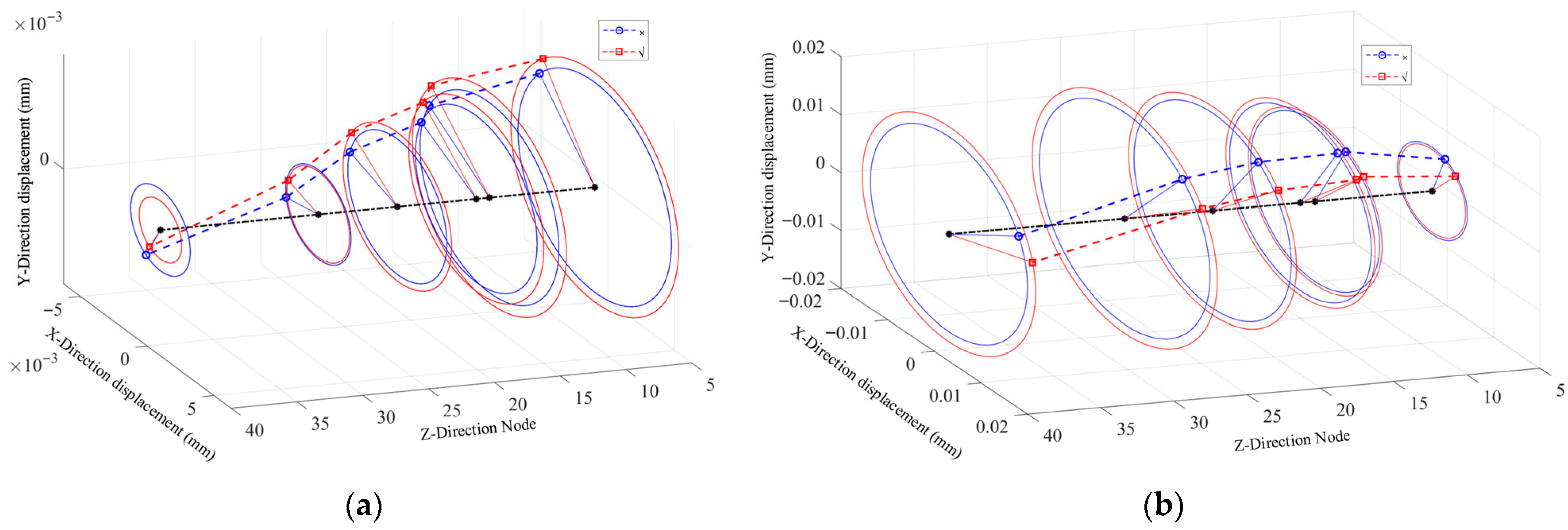
- Dominance of rotational speed: Regardless of the assembly sequence, both the mean and maximum values of increase monotonically with rotational speed, closely linked to the dynamic characteristics of the rotor system. In the rigid motion stage (1000 rpm), all values are below 1%, indicating a negligible influence.
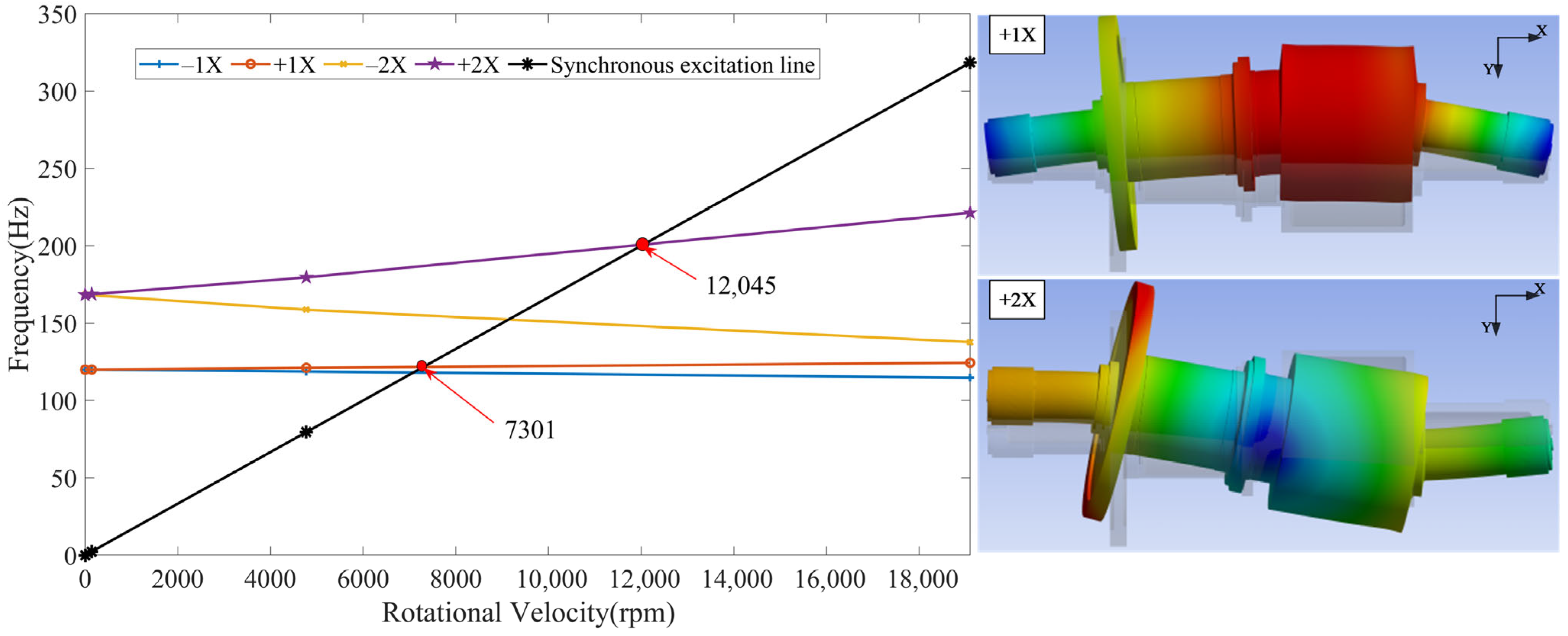
- Significance in the critical speed region: increases sharply near or at the critical speeds. For Sequence A at the first critical speed (7421 rpm), across nodes ranges from 2.2% to 9.2%, with a mean of 5.8%. At the second critical speed (11,810 rpm), the range expands to 1.7–36.4%, with a mean of 15.1%. A significant increase in is also observed for Sequence B within the critical speed regions.
- Determination of the effect threshold: Statistical analysis of all data points indicates that when the operational speed exceeds approximately 60% of the first critical speed (corresponding to the sub-critical speed of 3710.5 rpm in this study), generally surpasses 2%. When the speed exceeds about 85% of the first critical speed, E_rel consistently exceeds 5%, marking the point where the influence of dynamic deflection enters a range that must be considered in engineering practice.
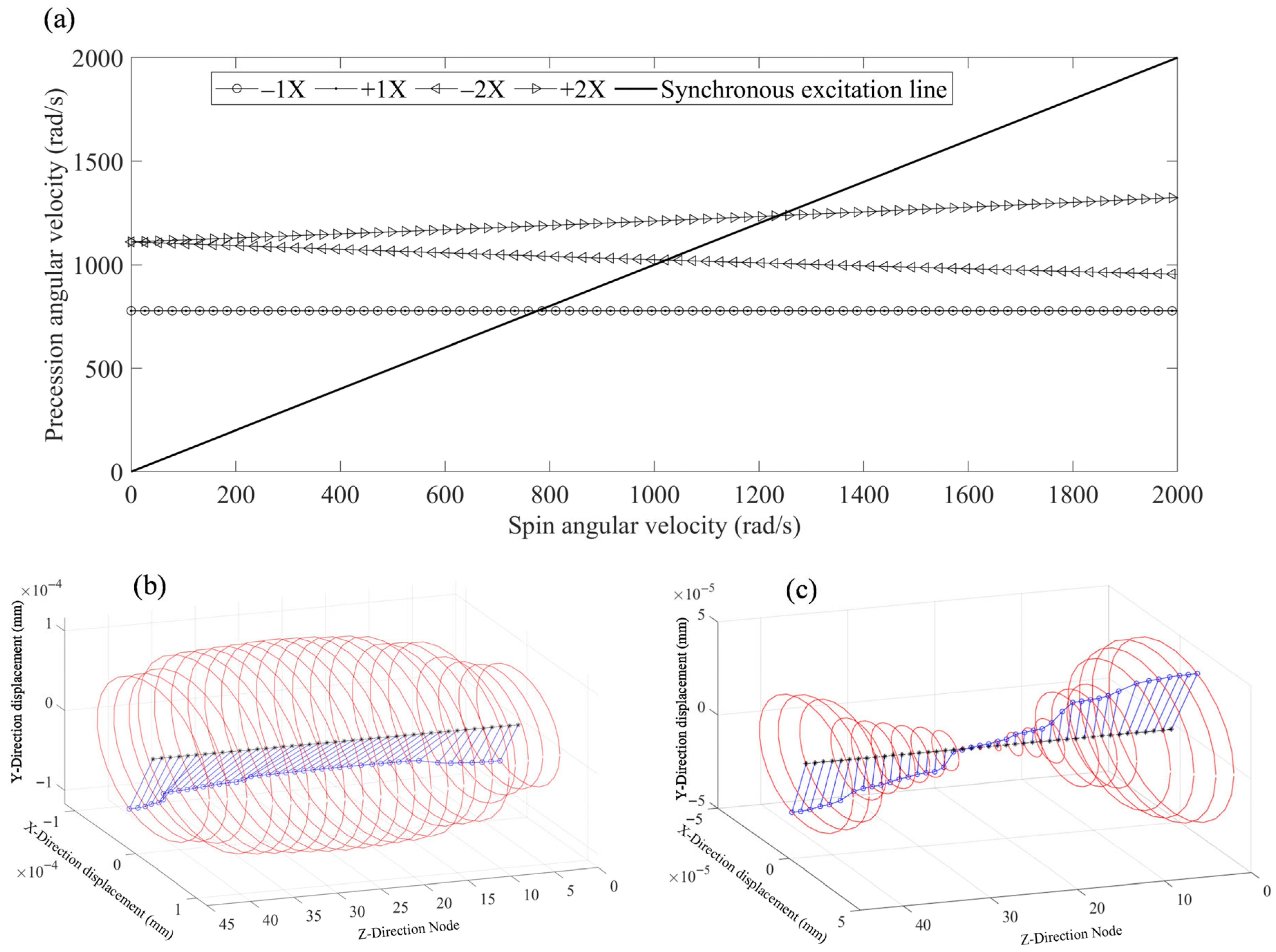
3.3. Analysis of Vibration Excitation Characteristics from Mass Eccentricity Errors and Spigot Eccentricity Errors
4. Experiment
4.1. Experimental Setup
4.2. Experimental Results
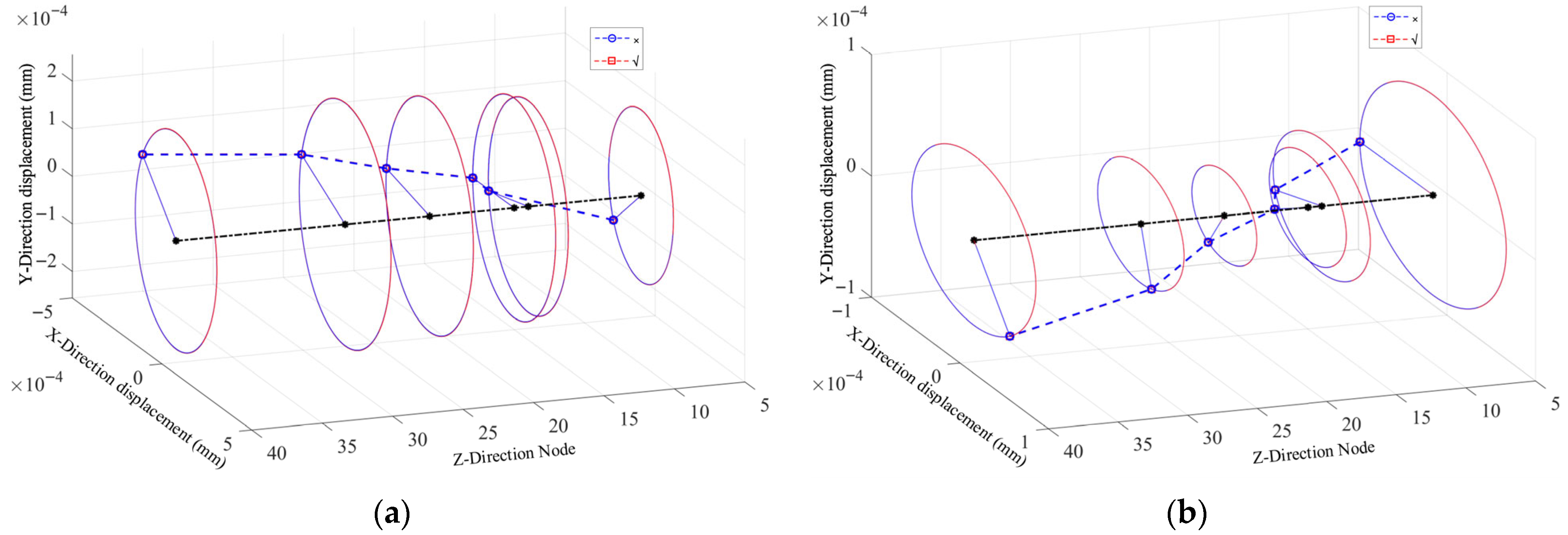
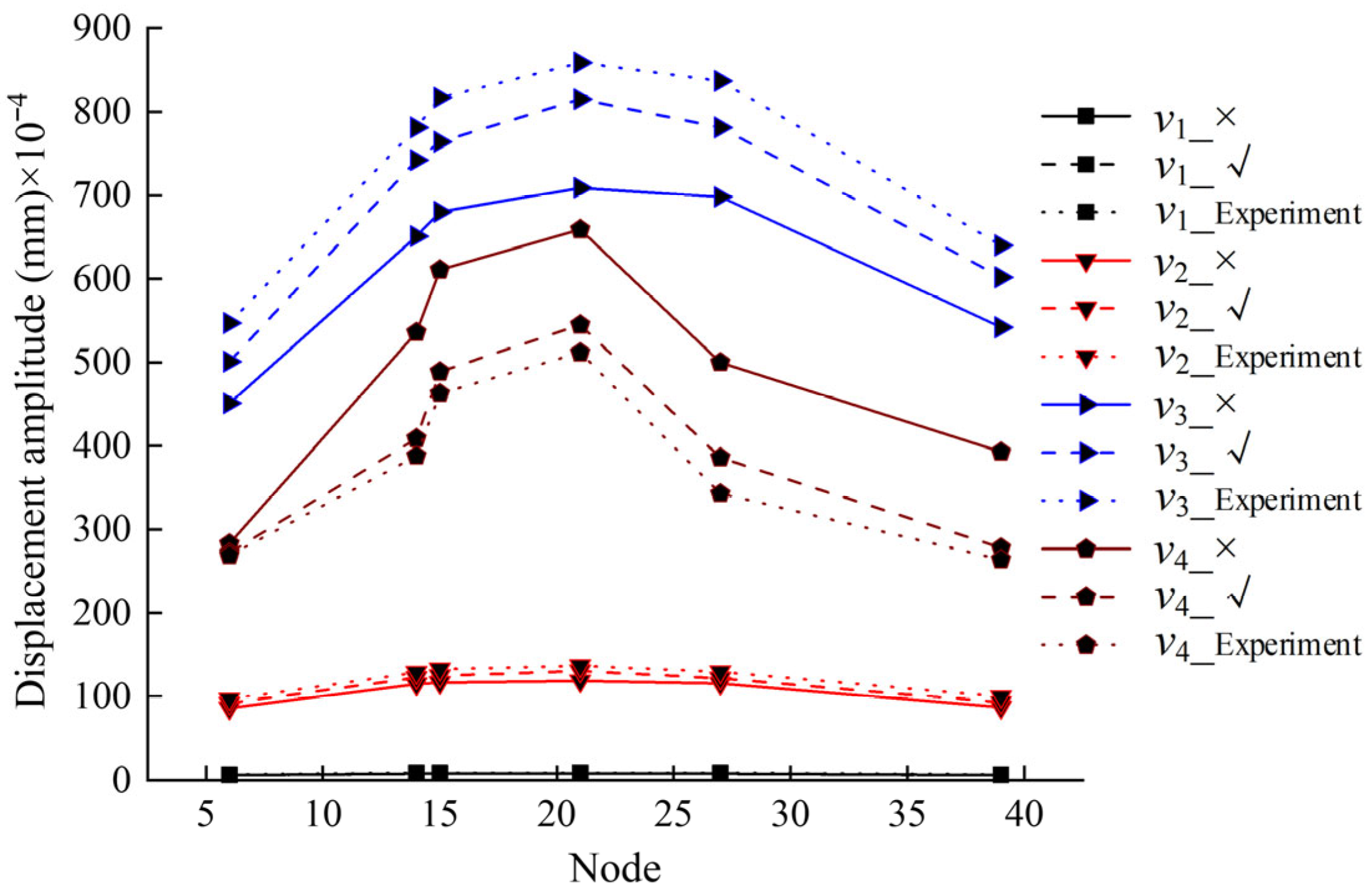
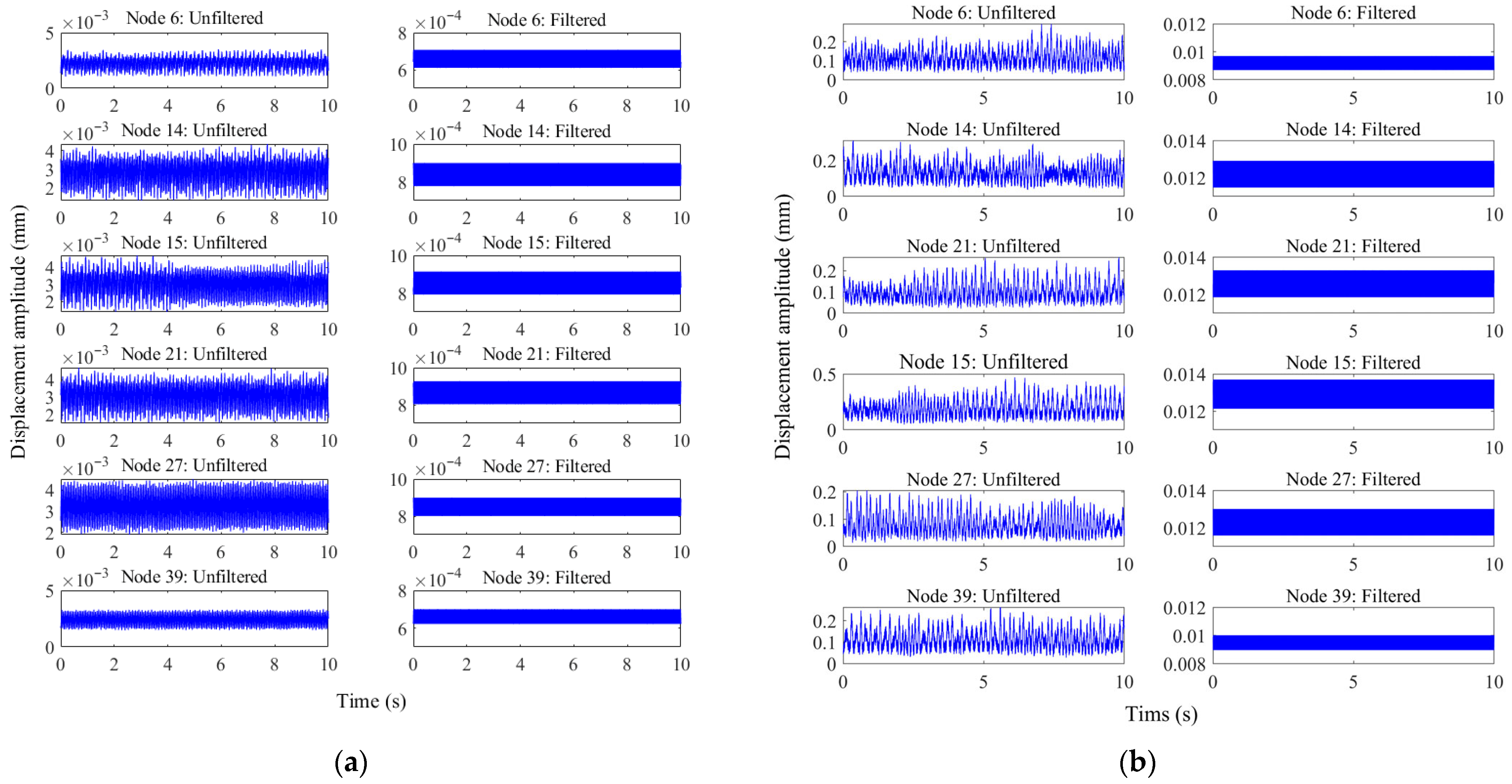
- At the rigid motion speed v1, the vibration responses of all six nodes in the four-stage rotor are minimal. When the calculated results from both models and the experimental results are rounded to the same number of significant digits, no deviations are observed among the three sets of data.
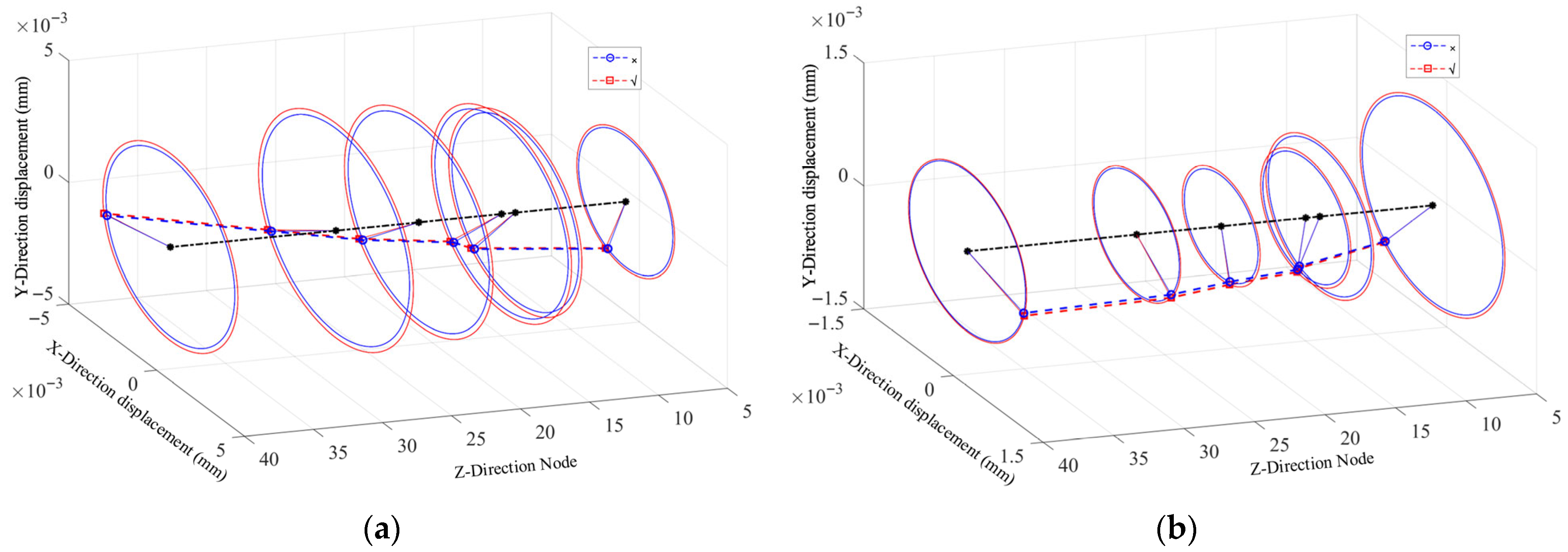
- At the sub-critical speed v2, the maximum prediction error for the six-node displacement amplitudes between the calculated results of the model considering dynamic deflection and the experimental results is 7.0%. In contrast, the maximum prediction error for the model neglecting dynamic deflection rises to 13.1%.
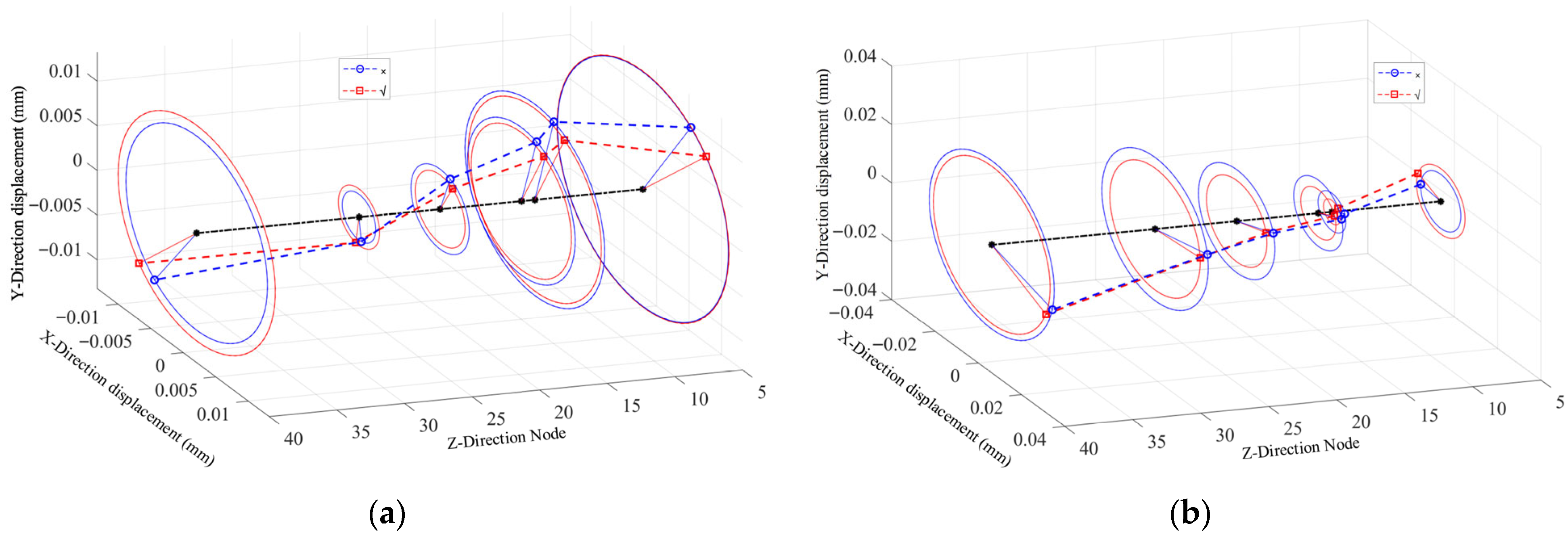
- At the first critical speed v3, the maximum prediction error for the model considering dynamic deflection is 8.4%, whereas that for the model neglecting dynamic deflection increases to 17.6%.
- At the second critical speed v4, the maximum prediction error for the model considering dynamic deflection is 12.5%, while the corresponding error for the model neglecting dynamic deflection rises significantly to 48.9%.
5. Discussion
6. Conclusions
- Dual-eccentricity excitation model: for the first time, a nodal dynamic equation simultaneously incorporating both mass eccentricity and spigot (geometric) eccentricity as synchronous excitation inputs was established. This correctly captures the complete physical nature of assembly error excitation, addressing a critical omission in existing models which consider only resultant mass unbalance.
- Dynamic deflection coupling mechanism: the model systematically integrates the excitation redistribution mechanism induced by dynamic shaft deflection. This innovation enables a physically accurate description of the rotor’s transition from rigid to flexible motion, particularly near critical speeds, where this coupling effect becomes significant and was previously overlooked.
- Quantitative accuracy improvement for critical speeds: The proposed model provides substantially improved predictive accuracy for high-speed responses, which is vital for flexible rotors that must traverse critical speeds. For the four-stage test rotor, the model achieved maximum prediction errors of 7.0%, 8.4%, and 12.5% at sub-critical, first, and second critical speeds, respectively. These represent reductions in the maximum error by 6.1%, 9.2%, and 36.4% compared to a model neglecting dynamic deflection.
Author Contributions
Funding
Data Availability Statement
Acknowledgments
Conflicts of Interest
Appendix A
Timoshenko Beam Element Matrices [23]
References
- Liu, J.; Ni, J.; Xia, H.; Zhang, J.; Xiong, A. Microstructure Evolution of Assembly Contact Interface Under Micro-Vibration. Trans. Beijing Inst. Technol. 2025, 45, 175–184. [Google Scholar]
- Hussain, T.; Yang, Z.; Popov, A.A.; McWilliam, S. Straight-build assembly optimization: A method to minimize stage-by-stage eccentricity error in the assembly of axisymmetric rigid components (two-dimensional case study). J. Manuf. Sci. Eng. 2011, 133, 141–149. [Google Scholar] [CrossRef]
- Hussain, T.; McWilliam, S.; A Popov, A.; Yang, Z. Geometric error reduction in the assembly of axis-symmetric rigid components: A two-dimensional case study. Proc. Inst. Mech. Eng. Part B J. Eng. Manuf. 2012, 226, 1259–1274. [Google Scholar] [CrossRef]
- Hussain, T.; Yasinshaikh, G.; Shaikh, S. Variation propagation control in straight-build assemblies: 2D case study. Mehran Univ. Res. J. Eng. Technol. 2013, 32, 71–80. [Google Scholar]
- Yang, Z.; Popov, A.; Mcwilliam, S. Variation propagation control in mechanical assembly of cylindrical components. J. Manuf. Syst. 2012, 31, 162–176. [Google Scholar] [CrossRef]
- Yang, Z.; Hussian, T.; A Popov, A.; McWilliam, S. A comparison of different optimization techniques for variation propagation control in mechanical assembly. In Proceedings of the International Conference on Materials Science and Engineering, Sheffield, UK, 9–10 September 2009; IOP Publishing: Bristol, UK, 2011; Volume 26, p. 1012017. [Google Scholar]
- Yang, Z.; Hussain, T.; A Popov, A.; McWilliam, S. Novel optimization technique for variation propagation control in an aero-engine assembly. Proc. Inst. Mech. Eng. Part B J. Eng. Manuf. 2011, 225, 100–111. [Google Scholar] [CrossRef]
- Yang, Z.; McWilliam, S.; Popov, A.; Hussain, T.; Yang, H. Dimensional variation propagation analysis in straight-build mechanical assemblies using a probabilistic approach. J. Manuf. Syst. 2013, 32, 348–356. [Google Scholar] [CrossRef]
- Wang, L.; Sun, C.; Tan, J.; Zhao, B.; Wan, G. Improvement of location and orientation tolerances propagation control in cylindrical components assembly using stack-build assembly technique. Assem. Autom. 2015, 35, 358–366. [Google Scholar] [CrossRef]
- Sun, C.; Li, C.; Liu, Y.; Liu, Z.; Wang, X.; Tan, J. Prediction method of concentricity and perpendicularity of aero engine multistage rotors based on PSO-BP neural network. IEEE Access 2019, 7, 132271–132278. [Google Scholar] [CrossRef]
- Sun, J.; Ding, S.; Li, Z.; Yang, F.; Ma, X. Point-based solution using Jacobian-Torsor theory into partial parallel chains for revolving components assembly. J. Manuf. Syst. 2018, 46, 46–58. [Google Scholar]
- Sun, Y.; Guo, J.; Hong, J.; Liu, G.; Wu, W.; Yue, C. Repair decision based on sensitivity analysis for aero engine assembly. Int. J. Precis. Eng. Manuf. 2019, 20, 347–362. [Google Scholar] [CrossRef]
- Ding, S.; He, Y.; Zheng, X. A probabilistic approach for three-dimensional variation analysis in aero-engine rotors assembly. Int. J. Aeronaut. Space Sci. 2021, 22, 1092–1105. [Google Scholar] [CrossRef]
- Liu, Y.; Zhang, M.; Sun, C.; Hu, M.; Chen, D.; Liu, Z.; Tan, J. A method to minimize stage-by-stage initial unbalance in the aero engine assembly of multistage rotors. Aerosp. Sci. Technol. 2019, 85, 270–276. [Google Scholar] [CrossRef]
- Sun, C.; Liu, Z.; Liu, Y.; Wang, X.; Tan, J. An adjustment method of geometry and mass centers for precision rotors assembly. IEEE Access 2019, 7, 169992–170002. [Google Scholar] [CrossRef]
- Sun, C.; Li, R.; Chen, Z.; Mei, Y.; Wang, X.; Li, C.; Liu, Y. Research on vibration suppression method based on coaxial stacking measurement. Mathematics 2021, 9, 1438. [Google Scholar] [CrossRef]
- Liu, Y.; Li, R.; Sun, C.; Chen, Z.; Mei, Y.; Xiao, P.; Wang, X.; Li, C. Research on rotary parts vibration suppression based on coaxiality measurement and unbalance constraint. Appl. Sci. 2021, 11, 5747. [Google Scholar] [CrossRef]
- Liu, Y.; Mei, Y.; Sun, C.; Xiao, P.; Li, R.; Wang, X.; Li, C. Multistage asymmetric rotors coaxial measurement stacking method based on minimization of exciting force. Symmetry 2021, 13, 1054. [Google Scholar] [CrossRef]
- Villalba, R.E.T.; Maury, H.E.R.; Aguila, H.E.; López, J.A.O.; González, A.F.R.; Barrera, K.O. Effect of Combined Misalignments on Vibrations of a Single-Stage Spur Gear Transmission System: An Experimental Approach. IEEE Access 2024, 12, 78154–78166. [Google Scholar] [CrossRef]
- Guan, H.; Ma, H.; Chen, X.; Mu, Q.; Zeng, Y.; Chen, Y.; Wen, B.; Guo, X. Nonlinear vibration of rotor-bearing system considering base-motion and bearing-misalignment. Mech. Mach. Theory 2025, 206, 105933. [Google Scholar] [CrossRef]
- Wang, P.; Wang, C.; Wen, B.; Ma, H.; Yang, Y. Vibration features and sidebands investigation of a planetary gear transmission system under misaligned bearing and damaged cage. Measurement 2025, 248, 116864. [Google Scholar] [CrossRef]
- Roy, D.; Rao, G.V. Elements of Structural Dynamics; John Wiley & Sons: Hoboken, NJ, USA, 2012; pp. 289–295. [Google Scholar]
- Wang, K.; Ji, X.; Wang, X.; Liu, Y.; Zhu, K.; Huang, H.; Pang, L.; Yang, L. Vibration suppression and transient tribo-dynamic stability for adjustable offset-elliptical journal bearings under time-varying load and bi-directional misalignment. Tribol. Int. 2024, 200, 110105. [Google Scholar] [CrossRef]
- Song, L.; Chen, Y. A Prediction Model of Two-Sided Unbalance in the Multi-Stage Assembled Rotor of an Aero Engine. Machines 2024, 12, 503. [Google Scholar] [CrossRef]








| Rotor Stage No. | Unbalanced Mass Point Number | γjk (mm) | ljk (mm) | ujk (g) | φjk (°) |
|---|---|---|---|---|---|
| 1 | 1 | 70 | 100 | 5 | 0 |
| 2 | 62 | 244 | 5 | 0 | |
| 2 | 1 | 188 | 16 | 5 | 0 |
| 2 | 188 | 306 | 5 | 0 | |
| 3 | 1 | 121 | 39 | 5 | 0 |
| 2 | 261 | 324 | 5 | 0 | |
| 4 | 1 | 62 | 50 | 5 | 0 |
| 2 | 70 | 170 | 5 | 0 |
| Rotor Stage No. | cj (mm) | θj (°) | pj (mm) | hj (mm) | δj (°) | dj (mm) |
|---|---|---|---|---|---|---|
| 1 | 0.02 | 0 | 0.02 | 315 | 0 | 72 |
| 2 | 0.02 | 90 | 0.02 | 410 | 90 | 150 |
| 3 | 0.02 | 180 | 0.02 | 338 | 180 | 53.5 |
| 4 | 0.02 | 270 | 0.02 | 270 | 270 | 70 |
| Node | Displacement Amplitude at v1 (mm) × 10−4 | Displacement Amplitude at v2 (mm) | Displacement Amplitude at v3 (mm) | Displacement Amplitude at v4 (mm) | ||||
|---|---|---|---|---|---|---|---|---|
| √ | × | √ | × | √ | × | √ | × | |
| 6 | 1.8028 | 1.8078 | 0.0027 | 0.0028 | 0.0091 | 0.0089 | 0.0093 | 0.0112 |
| 14 | 2.2209 | 2.2283 | 0.0036 | 0.0038 | 0.0177 | 0.0187 | 0.0064 | 0.0039 |
| 15 | 2.3061 | 2.3139 | 0.0038 | 0.0040 | 0.0197 | 0.0210 | 0.0114 | 0.0081 |
| 21 | 2.4304 | 2.4386 | 0.0040 | 0.0042 | 0.0220 | 0.0236 | 0.0117 | 0.0140 |
| 27 | 2.5506 | 2.5588 | 0.0042 | 0.0044 | 0.0238 | 0.0257 | 0.0246 | 0.0209 |
| 39 | 2.2707 | 2.2773 | 0.0037 | 0.0038 | 0.0214 | 0.0233 | 0.0289 | 0.0270 |
| Node | Displacement Amplitude at v1 (mm) × 10−4 | Displacement Amplitude at v2 (mm) × 10−4 | Displacement Amplitude at v3 (mm) | Displacement Amplitude at v4 (mm) | ||||
|---|---|---|---|---|---|---|---|---|
| √ | × | √ | × | √ | × | √ | × | |
| 6 | 8.2439 | 8.2581 | 12.0000 | 12.0000 | 0.0057 | 0.0063 | 0.0131 | 0.0132 |
| 14 | 5.4745 | 5.4880 | 8.6172 | 8.9944 | 0.0052 | 0.0058 | 0.0107 | 0.0102 |
| 15 | 4.3365 | 4.3501 | 7.1662 | 7.5401 | 0.0046 | 0.0051 | 0.0083 | 0.0077 |
| 21 | 3.6530 | 3.6667 | 6.1587 | 6.5079 | 0.0037 | 0.0041 | 0.0045 | 0.0038 |
| 27 | 4.8679 | 4.8792 | 7.1359 | 7.3664 | 0.0024 | 0.0023 | 0.0026 | 0.0032 |
| 39 | 6.9913 | 7.0023 | 9.6966 | 9.8593 | 0.0022 | 0.0016 | 0.0109 | 0.0121 |
| Rotor Stage No. | Unbalanced Mass Point Number | γjk (mm) | ljk (mm) | ujk (g) | φjk (°) |
|---|---|---|---|---|---|
| 1 | 1 | 70 | 100 | 3.7 | 19 |
| 2 | 62 | 244 | 5.1 | 67 | |
| 2 | 1 | 188 | 16 | 21.5 | 204 |
| 2 | 188 | 306 | 6.4 | 131 | |
| 3 | 1 | 121 | 39 | 8.9 | 193 |
| 2 | 261 | 324 | 12.2 | 297 | |
| 4 | 1 | 62 | 50 | 2.6 | 144 |
| 2 | 70 | 170 | 3.2 | 31 |
| Rotor Stage No. | cj (mm) | θj (°) | pj (mm) | hj (mm) | δj (°) | dj (mm) |
|---|---|---|---|---|---|---|
| 1 | 0.0245 | 206 | 0.0263 | 315.1401 | 144 | 72.0240 |
| 2 | 0.0384 | 27 | 0.0408 | 410.1939 | 231 | 149.9801 |
| 3 | 0.0477 | 123 | 0.0357 | 337.9233 | 219 | 53.5226 |
| 4 | 0.0189 | 181 | 0.0230 | 270.5056 | 36 | 70.0195 |
| Node | Displacement Amplitude at v1 (mm) × 10−4 | Displacement Amplitude at v2 (mm) × 10−4 | Displacement Amplitude at v3 (mm) × 10−4 | Displacement Amplitude at v4 (mm) × 10−4 | ||||||||
|---|---|---|---|---|---|---|---|---|---|---|---|---|
| √ | × | Experiment | √ | × | Experiment | √ | × | Experiment | √ | × | Experiment | |
| 6 | 6 | 6 | 6 | 86 | 92 | 97 | 451 | 501 | 547 | 283 | 272 | 269 |
| 14 | 8 | 8 | 8 | 115 | 123 | 129 | 651 | 742 | 781 | 536 | 409 | 388 |
| 15 | 8 | 8 | 8 | 117 | 125 | 133 | 680 | 764 | 817 | 611 | 489 | 463 |
| 21 | 8 | 8 | 8 | 119 | 131 | 137 | 709 | 815 | 859 | 659 | 545 | 512 |
| 27 | 8 | 8 | 8 | 116 | 122 | 130 | 698 | 781 | 837 | 500 | 386 | 343 |
| 39 | 6 | 6 | 6 | 87 | 93 | 100 | 542 | 602 | 640 | 393 | 278 | 264 |
Disclaimer/Publisher’s Note: The statements, opinions and data contained in all publications are solely those of the individual author(s) and contributor(s) and not of MDPI and/or the editor(s). MDPI and/or the editor(s) disclaim responsibility for any injury to people or property resulting from any ideas, methods, instructions or products referred to in the content. |
© 2026 by the authors. Licensee MDPI, Basel, Switzerland. This article is an open access article distributed under the terms and conditions of the Creative Commons Attribution (CC BY) license.
Share and Cite
Chen, Y.; Liu, G.; Jia, Y. A Vibration Response Prediction Model for Multi-Stage Assembled Rotors Based on Synchronous Excitation of Mass Eccentricity Error and Spigot Eccentricity Error. Aerospace 2026, 13, 218. https://doi.org/10.3390/aerospace13030218
Chen Y, Liu G, Jia Y. A Vibration Response Prediction Model for Multi-Stage Assembled Rotors Based on Synchronous Excitation of Mass Eccentricity Error and Spigot Eccentricity Error. Aerospace. 2026; 13(3):218. https://doi.org/10.3390/aerospace13030218
Chicago/Turabian StyleChen, Yue, Guiyang Liu, and Yuhao Jia. 2026. "A Vibration Response Prediction Model for Multi-Stage Assembled Rotors Based on Synchronous Excitation of Mass Eccentricity Error and Spigot Eccentricity Error" Aerospace 13, no. 3: 218. https://doi.org/10.3390/aerospace13030218
APA StyleChen, Y., Liu, G., & Jia, Y. (2026). A Vibration Response Prediction Model for Multi-Stage Assembled Rotors Based on Synchronous Excitation of Mass Eccentricity Error and Spigot Eccentricity Error. Aerospace, 13(3), 218. https://doi.org/10.3390/aerospace13030218