A Hybrid Algorithm Modeling on Test-Bench Data for Light-Duty Afterburning Turbojet Engine


Abstract
1. Introduction
- Most existing studies focus on single-method modeling or steady-state characteristic simulation of non-afterburning engines. Research on dynamic modeling and control of light-duty afterburning turbojet engines under afterburning conditions remains relatively limited.
- In data-driven engine modeling, many studies have employed algorithms such as neural networks and deep learning. With the continuous advancement of computational technology, traditional algorithms have gradually revealed limitations in efficiency and accuracy.
2. Problem Description and Solution Strategy
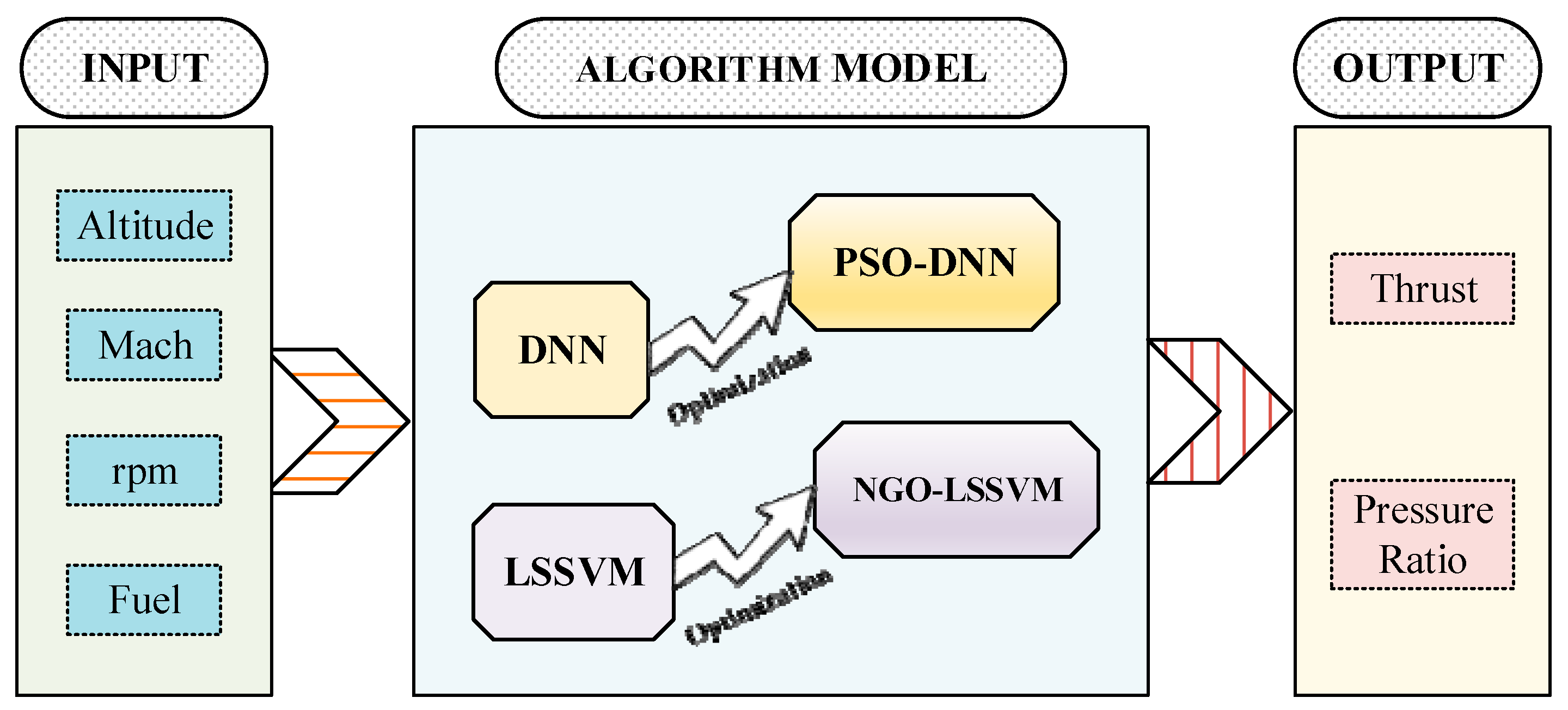
- Considering the complexity of the afterburning engine mechanism and the strong coupling among its parameters, a data-driven modeling approach is adopted. By utilizing experimental test data to establish nonlinear mappings, the dynamic characteristics of the engine under afterburning conditions can be effectively captured without relying on precise physical models.
- To overcome the limitations of traditional algorithms in terms of efficiency and accuracy, a hybrid algorithmic framework is introduced, which integrates optimization algorithms with traditional algorithm models. Through the synergy of global parameter optimization and local learning, this approach enhances the fitting accuracy and training stability, providing a feasible solution for high-precision modeling of complex nonlinear systems.
3. Theoretical Foundation
3.1. Traditional Modeling and Data-Driven Modeling
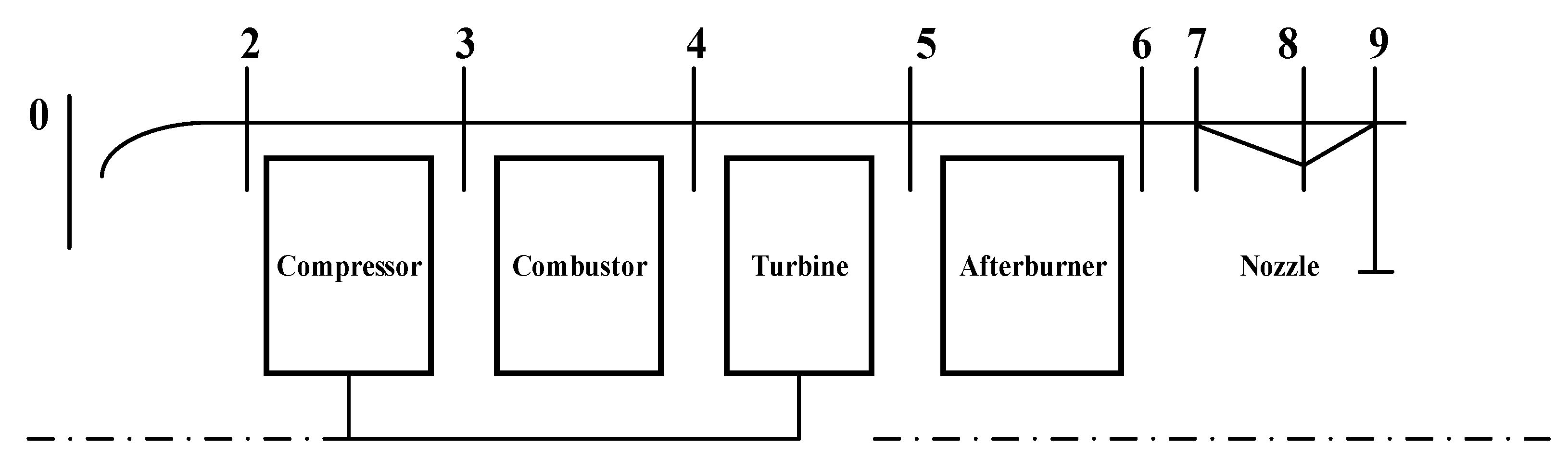
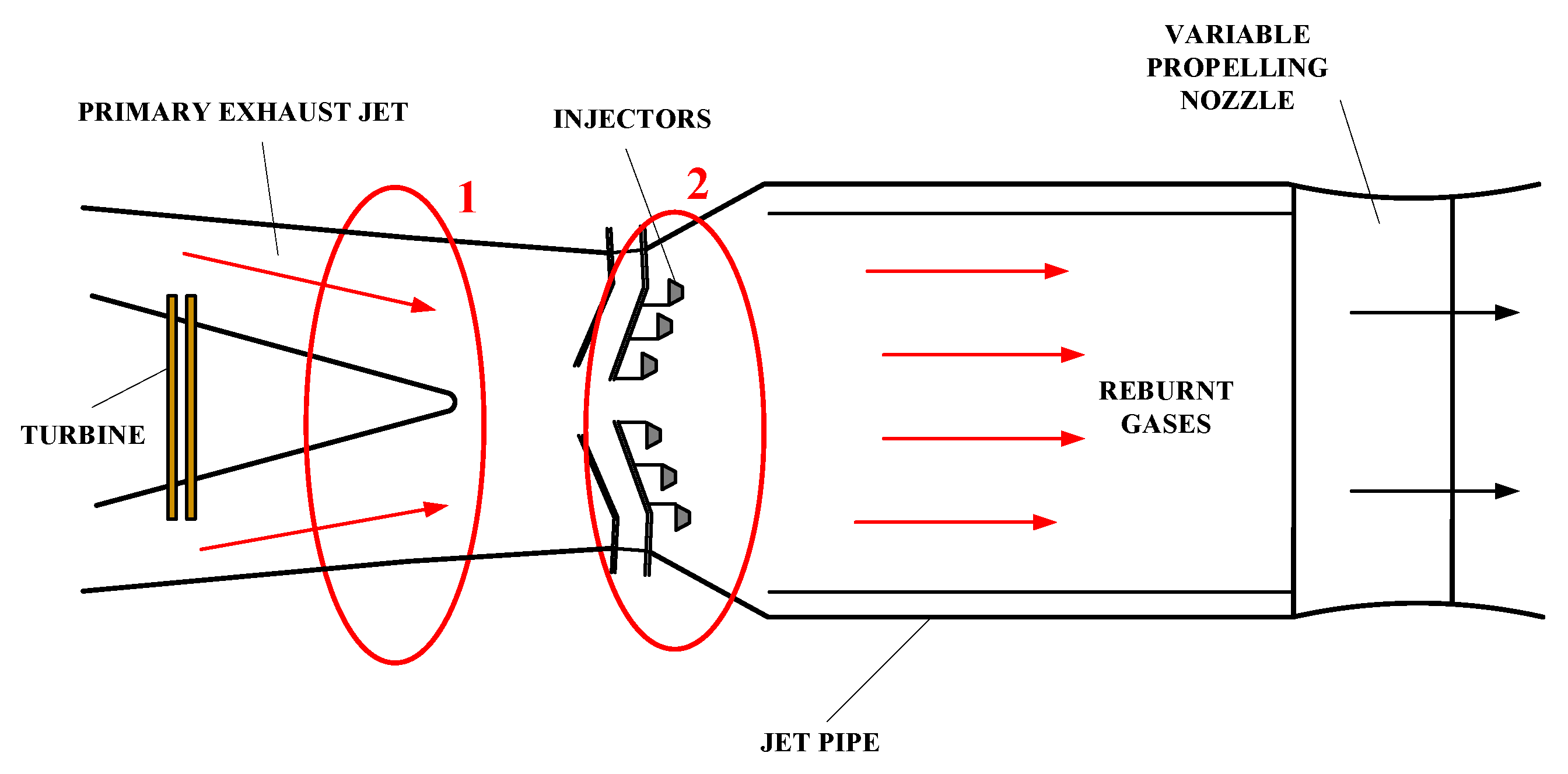
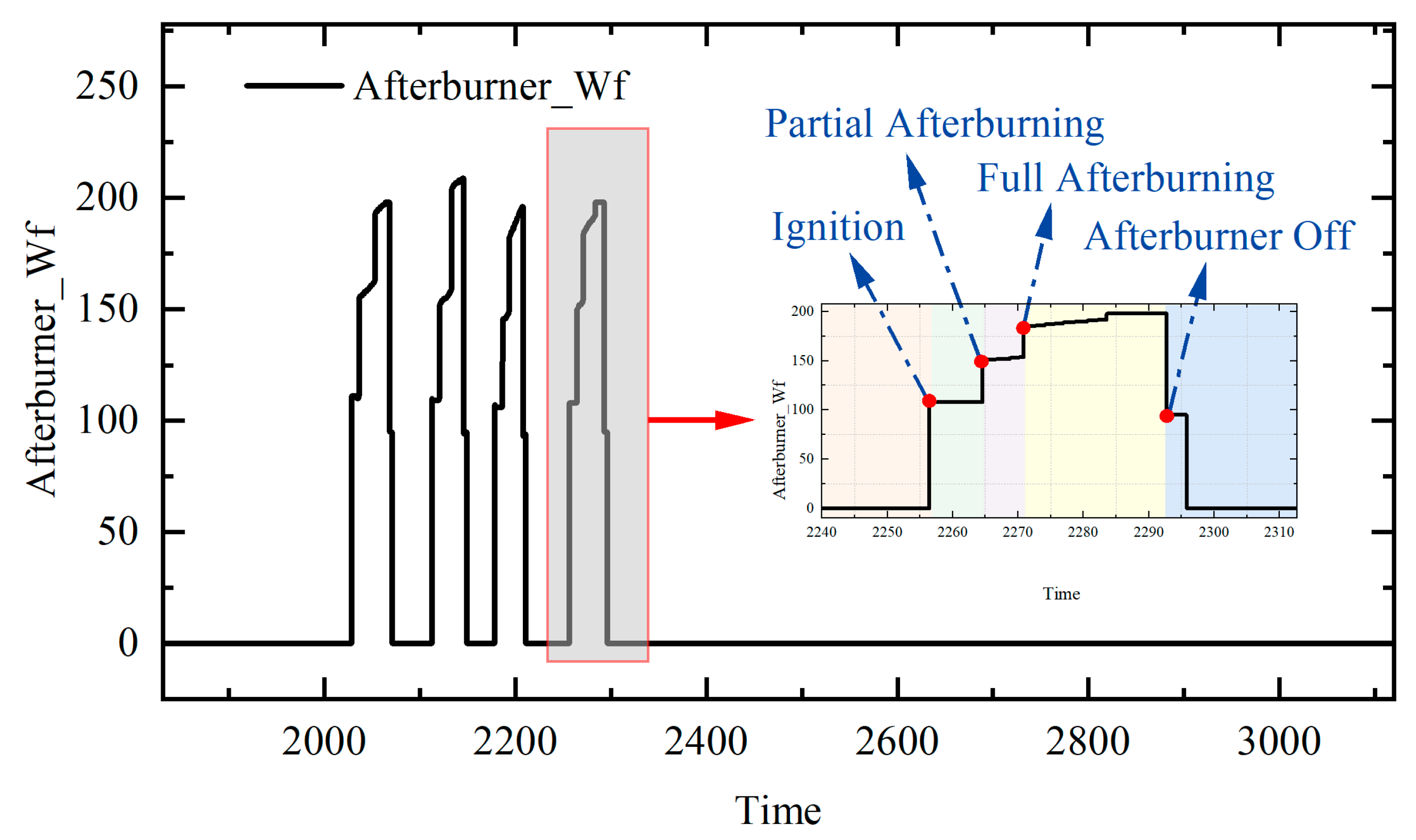
3.2. Working Mechanism of Afterburning Engines
3.3. Hybrid Algorithm
3.3.1. The Introduction of Hybrid Algorithms
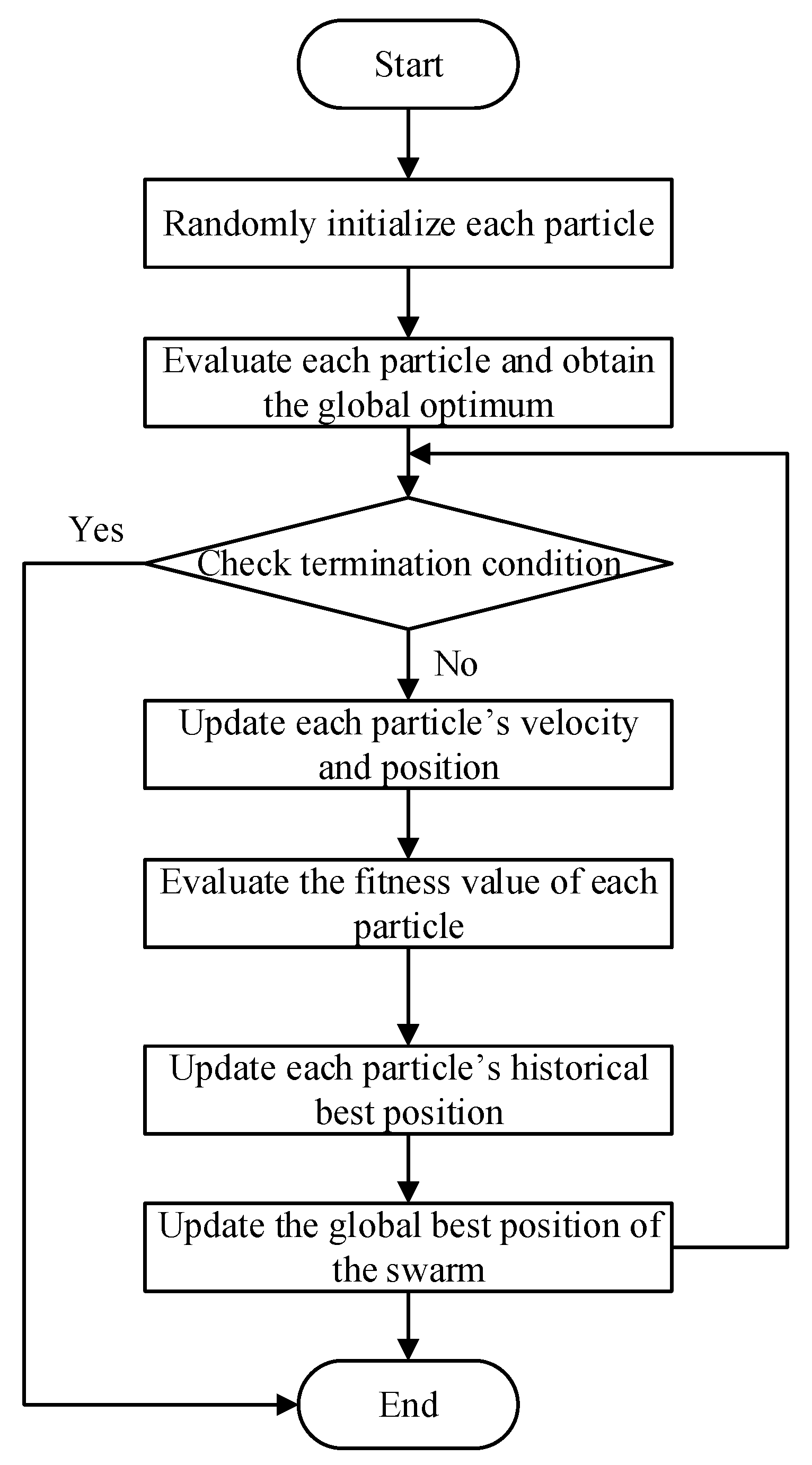
3.3.2. PSO-DNN
3.3.3. NGO-LSSVM
3.3.4. Comparison of Two Hybrid Algorithms
4. Modeling Process and Experimental Results
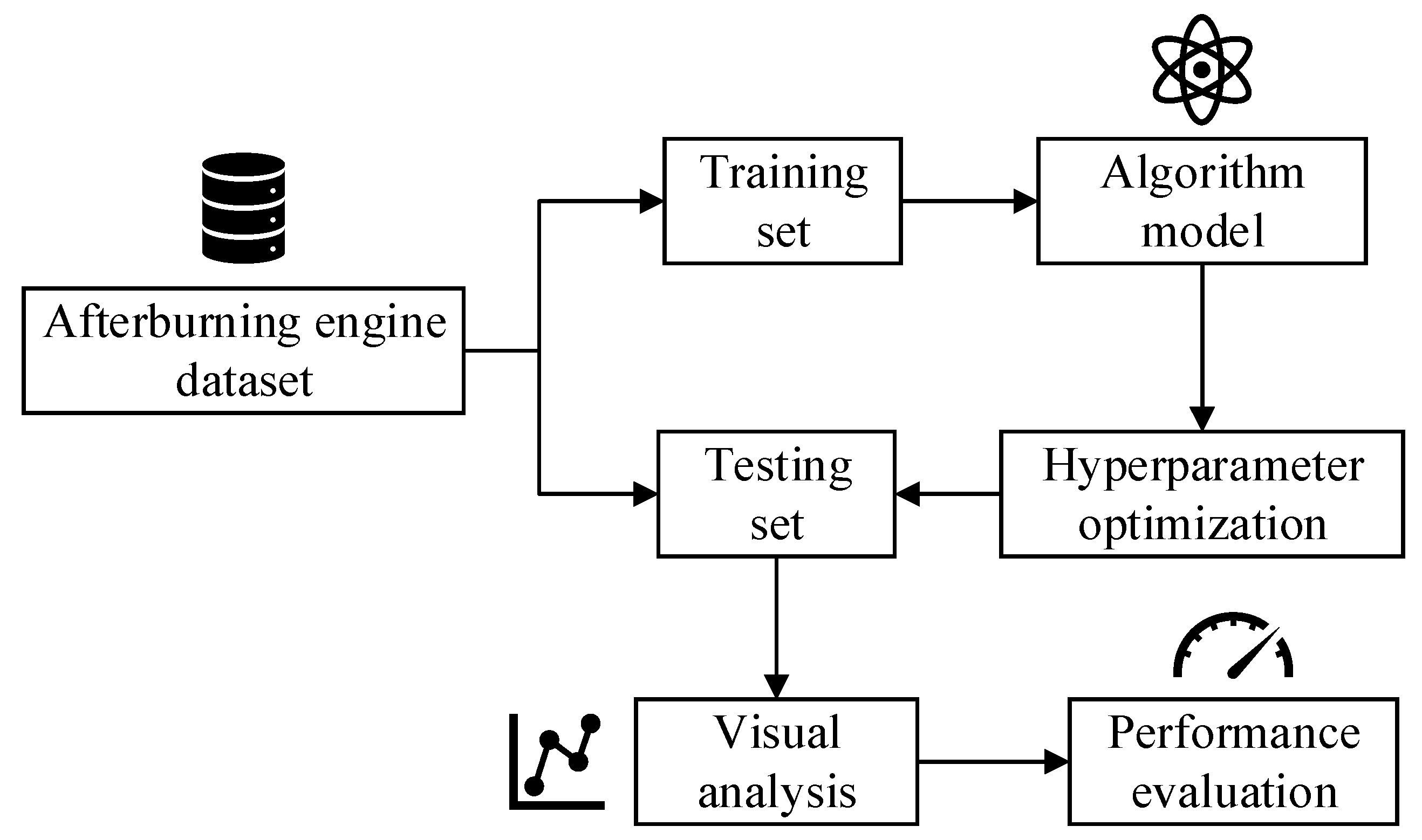
4.1. Model Construction and Hyperparameter Configuration
4.2. Model Simulation and Result Analysis
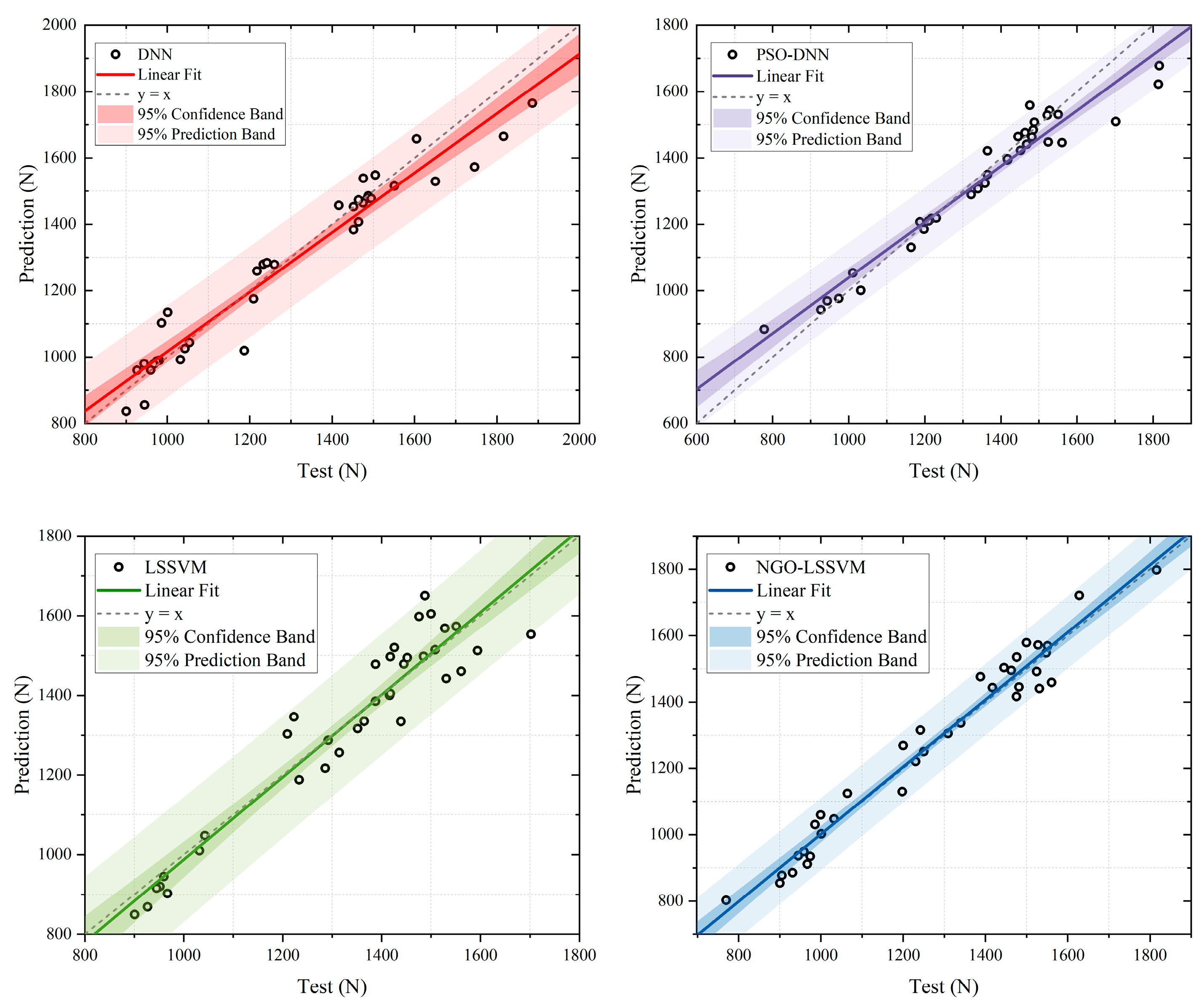
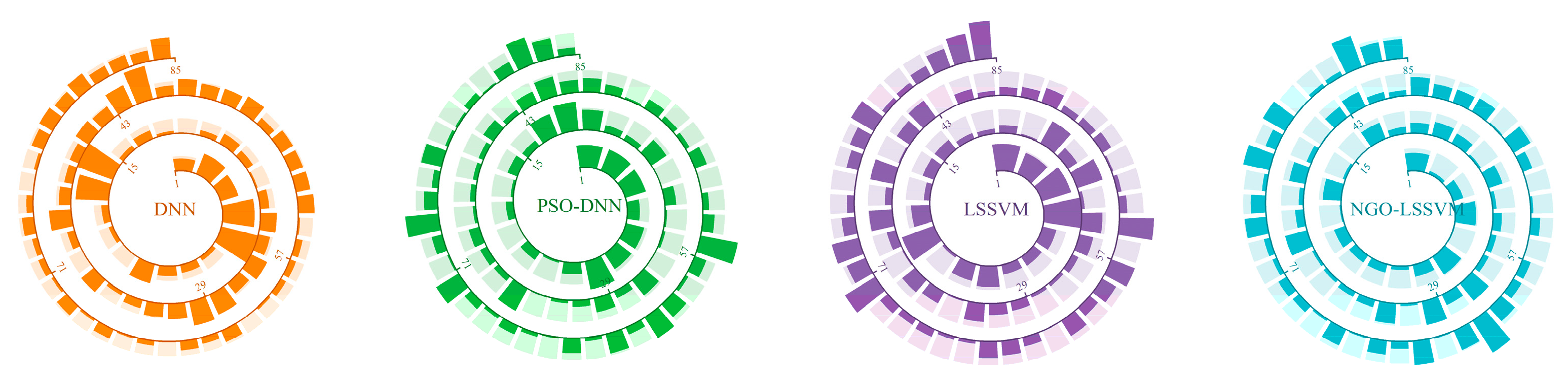
4.2.1. The Analysis of Thrust Prediction Model
4.2.2. The Analysis of Pressure Ratio Prediction Model
4.2.3. The Analysis of Regression Evaluation Metrics
5. Conclusions
Author Contributions
Funding
Data Availability Statement
Conflicts of Interest
References
- Zhang, X.; Zhang, Y.; Liu, T. Summary of Advanced Afterburner Design Technology. Aeroengine 2014, 40, 24–30. [Google Scholar]
- Liu, J.; Liu, Z. Conceptual Design and Research of Supersonic Target Drone. J. Astronaut. Metrol. Meas. 2016, 36, 60–63, 67. [Google Scholar]
- Li, H.; Feng, G.; Haung, J.; Long, J. Development Review of Aerial Target in China and Abroad. Mod. Def. Technol. 2025, 53, 1–10. [Google Scholar]
- Wang, P.; Cui, L.; Zhang, H. Numerical Study on Performance of Aviation Gas Turbine Engine Based on Component Method. Heilongjiang Sci. 2020, 11, 26–28+31. [Google Scholar]
- Pan, M.; Chen, Q.; Zhou, Y. A multi-dynamics approach to turbofan engine modeling. Acta Aeronaut. Astronaut. Sin. 2019, 40, 99–110. [Google Scholar]
- Shi, R.; Zhou, J.; Zhang, Q. Modeling of whole processes of mixing exhaust afterburner twin spool turbofan engine. J. Aerosp. Power 2013, 28, 2384–2390. [Google Scholar]
- Xia, F.; Huang, J.; Zhou, W. Modeling of and simulation research on turbofan engine based on MATLAB/SIMULINK. Heilongjiang Sci. 2007, 22, 2134–2138. [Google Scholar]
- Li, J.; Zhou, D.; Xiao, W.; Zhang, H. Hybrid Modeling of Gas Turbine based on Neural Network. J. Eng. Therm. Energy Power 2019, 34, 33–39. [Google Scholar]
- Keshun, Y.; Guangqi, Q.; Yingkui, G. A 3-D Attention-Enhanced Hybrid Neural Network for Turbofan Engine Remaining Life Prediction Using CNN and BiLSTM Models. IEEE Sens. J. 2024, 24, 21893–21905. [Google Scholar] [CrossRef]
- Zhao, Y.; Li, Z.; Hu, Q. A size-transferring radial basis function network for aero-engine thrust estimation. Eng. Appl. Artif. Intell. 2020, 87, 103253. [Google Scholar] [CrossRef]
- Alozie, O.; Li, Y.-G.; Wu, X.; Shong, X.; Ren, W. An Adaptive Model-Based Framework for Prognostics of Gas Path Faults in Aircraft Gas Turbine Engines. Int. J. Progn. Health Manag. 2019, 10, 13. [Google Scholar] [CrossRef]
- Xue, F.; Jin, G.; Tan, L.; Zhang, C.; Yu, Y. Predictive maintenance programs for aircraft engines based on remaining useful life prediction. Sci. Rep. 2025, 15, 41756. [Google Scholar] [CrossRef]
- Muneer, A.; Taib, S.M.; Fati, S.M.; Alhussian, H. Deep-Learning Based Prognosis Approach for Remaining Useful Life Prediction of Turbofan Engine. Symmetry 2021, 13, 1861. [Google Scholar] [CrossRef]
- Liu, Z.; Karimi, I.A. Gas turbine performance prediction via machine learning. Energy 2020, 192, 116627. [Google Scholar] [CrossRef]
- Gao, W.; Zhou, X.; Pan, M.; Zhou, W.; Lu, F.; Huang, J. Acceleration control strategy for aero-engines based on model-free deep reinforcement learning method. Aerosp. Sci. Technol. 2022, 120, 107248. [Google Scholar] [CrossRef]
- Zheng, Q.; Fang, J.; Hu, Z.; Zhang, H. Aero-Engine On-Board Model Based on Batch Normalize Deep Neural Network. IEEE Access 2019, 7, 54855–54862. [Google Scholar] [CrossRef]
- Harris, J.; Arthurs, F.; Henrickson, J.V.; Valasek, J. Aircraft System Identification Using Artificial Neural Networks With Flight Test Data. In Proceedings of the 2016 International Conference on Unmanned Aircraft Systems (ICUAS), Arlington, VA, USA, 7–10 June 2016; IEEE: New York, NY, USA, 2016. [Google Scholar]
- Du, D.; Jia, X.; Hao, C. A New Least Squares Support Vector Machines Ensemble Model for Aero-Engine Performance Parameter Chaotic Prediction. Math. Probl. Eng. 2016, 2016, 4615903. [Google Scholar] [CrossRef]
- Haung, Y.; Tao, J.; Sun, G. A Novel Digital Twin Approach Based on Deep Multimodal Information Fusion for Aero-Engine Fault Diagnosis. Energy 2023, 270, 126894. [Google Scholar] [CrossRef]
- Loboda, I.; Ruíz, J.L.P.; Castillo, I.G. Simplified Data-Driven Models for Gas Turbine Diagnostics. Machines 2025, 13, 344. [Google Scholar] [CrossRef]
- Lv, C.; Chang, J.; Bao, W.; Yu, D. Recent research progress on airbreathing aero-engine control algorithm. Propuls. Power Res. 2022, 11, 1–57. [Google Scholar] [CrossRef]
- Ma, M.; Jin, J.; Ji, H. Technology and New Configuration of Aero-engine Afterburner. Gas Turbine Exp. Res. 2008, 21, 55–59. [Google Scholar]
- Berberich, J.; Köhler, J.; Müller, M.A.; Allgöwer, F. Data-Driven Model Predictive Control With Stability and Robustness Guarantees. IEEE Trans. Autom. Control 2021, 66, 1702–1717. [Google Scholar] [CrossRef]
- Noori, F.; Gorji, M.; Kazemi, A.; Nemati, H. Thermodynamic optimization of ideal turbojet with afterburner engines using non-dominated sorting genetic algorithm II. Proc. Inst. Mech. Eng. Part G J. Aerosp. Eng. 2010, 224, 1285–1296. [Google Scholar] [CrossRef]
- Lian, X.; Wu, H. Aero Engine Principles; Northwestern Polytechnical University Press: Xi’an, China, 2005. [Google Scholar]
- Kennedy, J.; Eberhart, R. Particle swarm optimization. In Proceedings of the ICNN’95—International Conference on Neural Networks, Perth, WA, Australia, 27 November–1 December 1995; IEEE: New York, NY, USA, 1995; Volume 4, pp. 1942–1948. [Google Scholar]
- Shami, T.M.; El-Saleh, A.A.; Alswaitti, M.; Al-Tashi, Q.; Summakieh, M.A.; Mirjalili, S. Particle Swarm Optimization: A Comprehensive Survey. IEEE Access 2022, 10, 10031–10061. [Google Scholar] [CrossRef]
- Liu, X.; He, P.; Chen, W.; Gao, J. Multi-Task Deep Neural Networks for Natural Language Understanding. In Proceedings of the 57th Annual Meeting of the Association for Computational Linguistics; IEEE: New York, NY, USA, 2019; pp. 4487–4496. [Google Scholar]
- Koessler, E.; Almomani, A. Hybrid particle swarm optimization and pattern search algorithm. Optim. Eng. 2021, 22, 1539–1555. [Google Scholar] [CrossRef]
- Dehghani, M.; Hubálovský, Š.; Trojovský, P. Northern Goshawk Optimization: A New Swarm-Based Algorithm for Solving Optimization Problems. IEEE Access 2021, 9, 162059–162080. [Google Scholar] [CrossRef]
- Wei, M.; Wang, X.; Fu, Y.; Wang, D.; Li, Y. A Review of LSSVM Mathematical Models and Applications. In Proceedings of the 2024 5th International Conference on Mechatronics Technology and Intelligent Manufacturing (ICMTIM), Nanjing, China, 26–28 April 2024. [Google Scholar]
- Kaya, U.; Yılmaz, A.; Aşar, S. Sepsis Prediction by Using a Hybrid Metaheuristic Algorithm: A Novel Approach for Optimizing Deep Neural Networks. Diagnostics 2023, 13, 2023. [Google Scholar] [CrossRef]
- Shen, Y.; Fu, L. Sensor dynamic modelling based on NGO-LSSVM. In Proceedings of the Fifth International Conference on Control, Robotics, and Intelligent System (CCRIS 2024), Macau, China, 23–25 August 2024; Volume 13404. [Google Scholar]
- Deng, S.; Zhou, J. Prediction of Remaining Useful Life of Aero-engines Based on CNN-LSTM-Attention. Int. J. Comput. Intell. Syst. 2024, 17, 232. [Google Scholar] [CrossRef]
- Jin, Z.; Ouyang, T.; Liu, J.; Suo, S.; Xu, M.; Song, Z. Power-based self-tuning model for aero-engine using MLP-assisted inverse control with filtered error feedback. Aerosp. Sci. Technol. 2025, 168, 110927. [Google Scholar] [CrossRef]
- He, Y.; Wen, C.; Xu, W. Residual Life Prediction of SA-CNN-BILSTM Aero-Engine Based on a Multichannel Hybrid Network. Appl. Sci. 2025, 15, 966. [Google Scholar] [CrossRef]


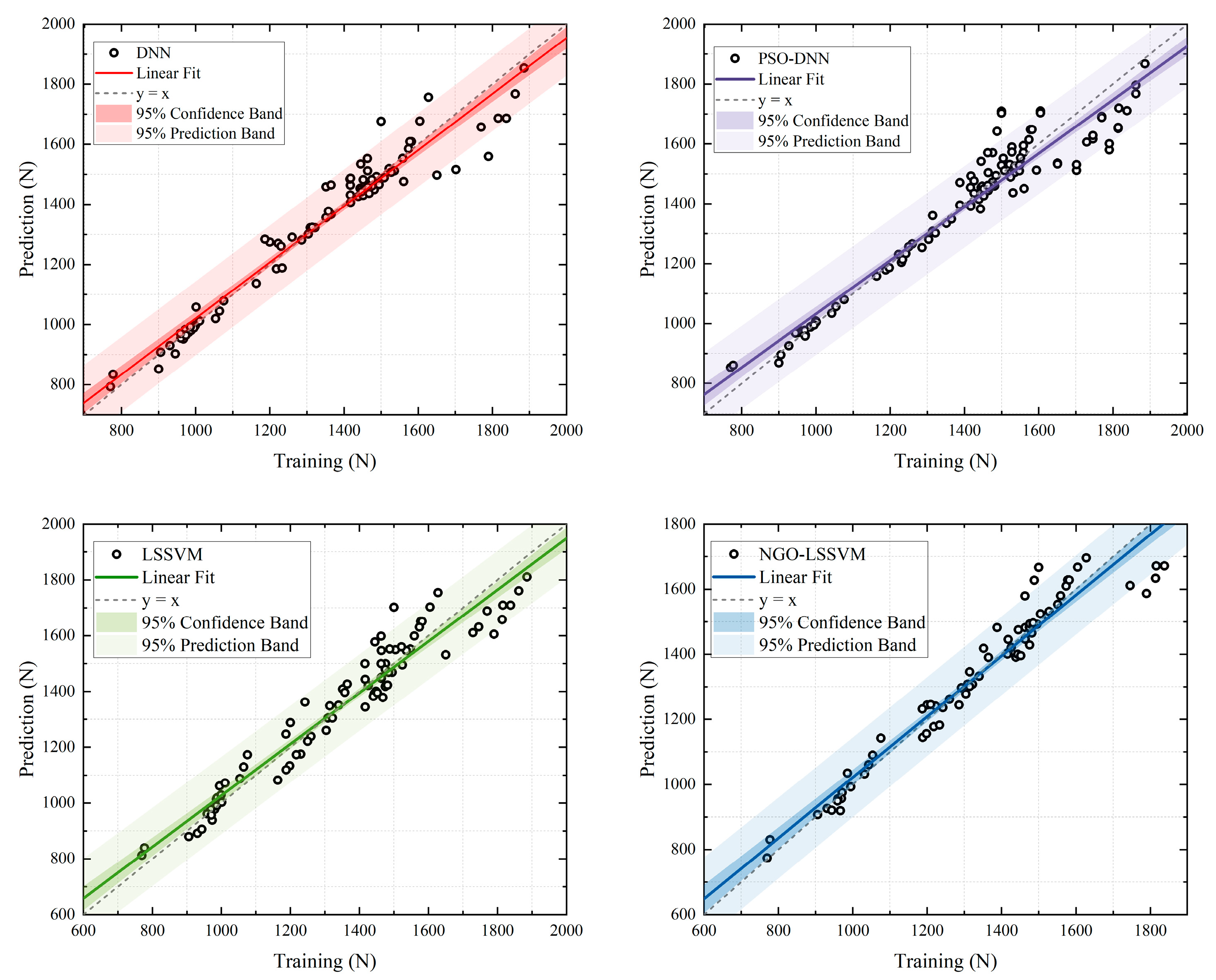

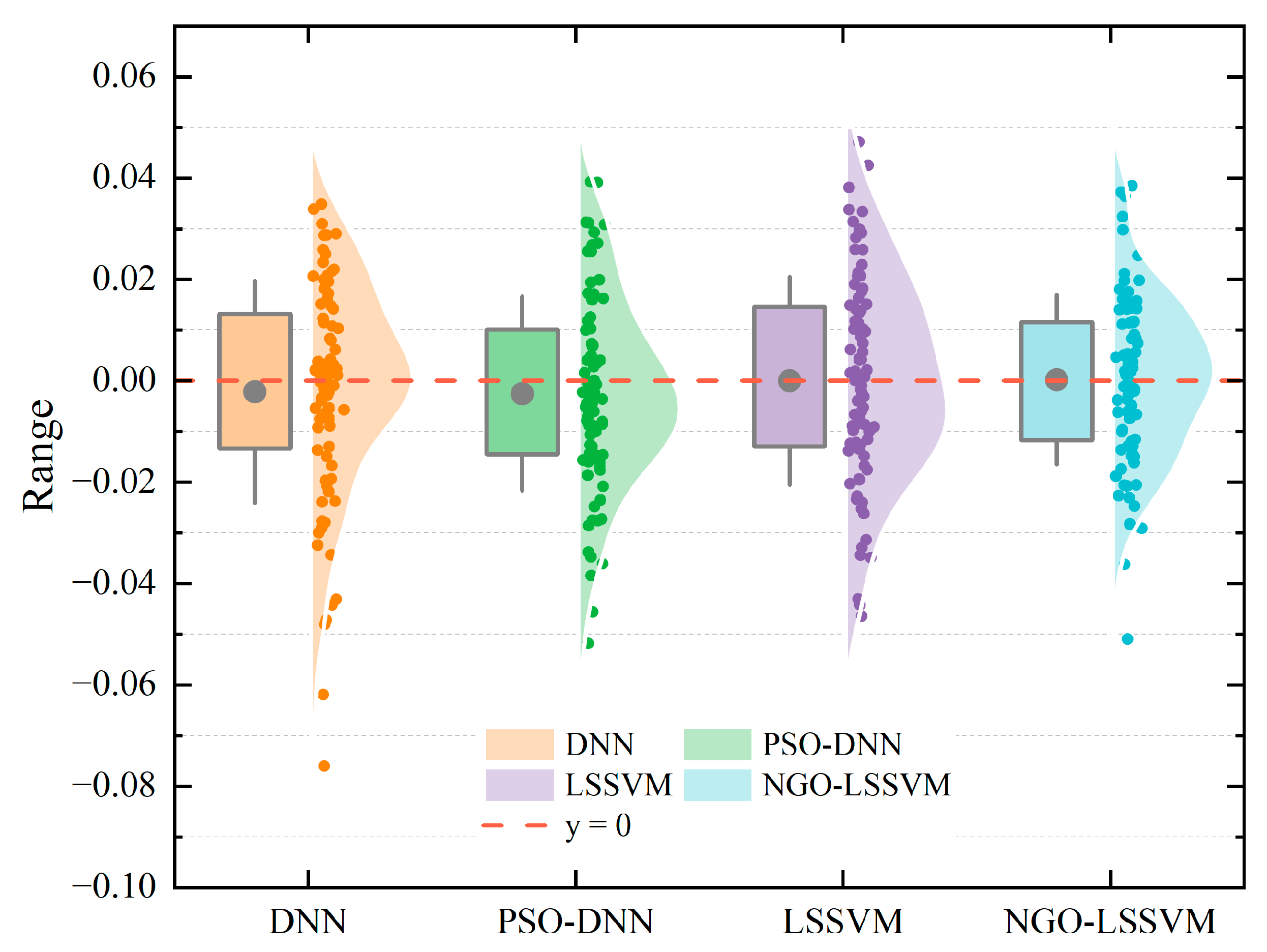



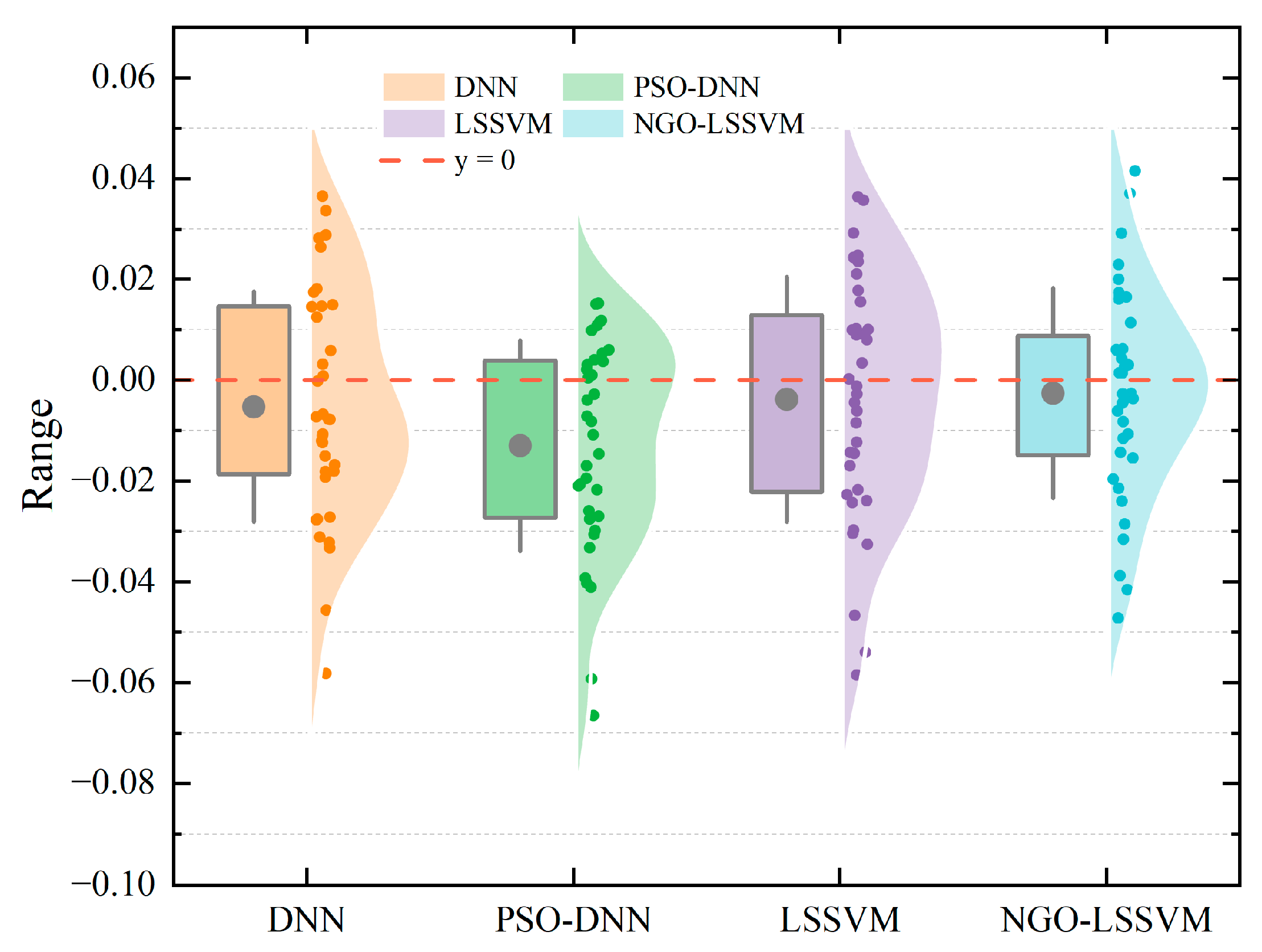
| Parameters | TWP220L |
|---|---|
| Thrust (N) | 2200 |
| Maximum Length (mm) | 1306 |
| Maximum Outer Diameter (mm) | 320 |
| Dry Weight (kg) | 48 |
| Parameter | Symbol | Unit | Measurement Device | Uncertainty |
|---|---|---|---|---|
| Flight Altitude | km | Barometric Altimeter | ±30 m | |
| Mach Number | - | Air Data Computer | ±0.01 | |
| Rotor Speed | r/min | Magnetic Speed Pickup | ±0.1% FS | |
| Afterburner Fuel Flow Rate | kg/h | Mass Flowmeter | ±1.0% |
| Category | Parameter | Value/Range |
|---|---|---|
| PSO Algorithm Parameters | Population size | 6 |
| Maximum iterations | 8 | |
| Optimization dimension | 2 | |
| Learning rate range | ||
| Hidden nodes range | ||
| Fitness function | @fical | |
| DNN Training Parameters | Optimization algorithm | adam |
| Maximum epochs | 500 | |
| Initial learning rate | (Optimized by PSO) |
| Category | Parameter | Value/Range |
|---|---|---|
| NGO Algorithm Parameters | Population size | 10 |
| Maximum iterations | 30 | |
| Optimization dimension | 2 | |
| Fitness function | @getObjValue | |
| LSSVM Model Parameters | Model type | Regression |
| Kernel function | RBF kernel | |
| Kernel parameter | [0.1, 800] | |
| Penalty parameter | [0.1, 200] |
| DNN | PSO-DNN | LSSVM | NGO-LSSVM | |
|---|---|---|---|---|
| R2 | 0.83 | 0.87 | 0.89 | 0.94 |
| MAE | 58.25 | 53.33 | 55.03 | 54.73 |
| MSE | 6237.06 | 8559.37 | 5222.74 | 4698.83 |
| MAPE | 0.039 | 0.036 | 0.044 | 0.034 |
| DNN | PSO-DNN | LSSVM | NGO-LSSVM | |
|---|---|---|---|---|
| R2 | 0.63 | 0.70 | 0.68 | 0.73 |
| MAE | 0.020 | 0.021 | 0.020 | 0.017 |
| MSE | 0.00067 | 0.00071 | 0.00059 | 0.00048 |
| MAPE | 0.012 | 0.012 | 0.011 | 0.0097 |
Disclaimer/Publisher’s Note: The statements, opinions and data contained in all publications are solely those of the individual author(s) and contributor(s) and not of MDPI and/or the editor(s). MDPI and/or the editor(s) disclaim responsibility for any injury to people or property resulting from any ideas, methods, instructions or products referred to in the content. |
© 2025 by the authors. Licensee MDPI, Basel, Switzerland. This article is an open access article distributed under the terms and conditions of the Creative Commons Attribution (CC BY) license.
Share and Cite
Xin, T.; Sun, J.; Hu, C.; Wang, C.; Pan, H. A Hybrid Algorithm Modeling on Test-Bench Data for Light-Duty Afterburning Turbojet Engine. Aerospace 2026, 13, 28. https://doi.org/10.3390/aerospace13010028
Xin T, Sun J, Hu C, Wang C, Pan H. A Hybrid Algorithm Modeling on Test-Bench Data for Light-Duty Afterburning Turbojet Engine. Aerospace. 2026; 13(1):28. https://doi.org/10.3390/aerospace13010028
Chicago/Turabian StyleXin, Tong, Jiaxian Sun, Chunyan Hu, Chenchen Wang, and Haoran Pan. 2026. "A Hybrid Algorithm Modeling on Test-Bench Data for Light-Duty Afterburning Turbojet Engine" Aerospace 13, no. 1: 28. https://doi.org/10.3390/aerospace13010028
APA StyleXin, T., Sun, J., Hu, C., Wang, C., & Pan, H. (2026). A Hybrid Algorithm Modeling on Test-Bench Data for Light-Duty Afterburning Turbojet Engine. Aerospace, 13(1), 28. https://doi.org/10.3390/aerospace13010028