Article

Compact Onboard Telemetry System for Real-Time Re-Entry Capsule Monitoring

by
Nesrine Gaaliche
1,*,
Christina Georgantopoulou
2,
Ahmed M. Abdelrhman
1 and
Raouf Fathallah
3,4
1
Mechanical Engineering, Bahrain Polytechnic, School of Engineering, Bahrain Polytechnic, Isa Town P.O. Box 33349, Bahrain
2
Mechanical Engineering Bahrain Polytechnic Dean of Engineering, Design and ICT School of Engineering, Bahrain Polytechnic, Isa Town P.O. Box 33349, Bahrain
3
Unit of Mechanical Production Engineering and Materials, National School of Engineers of Sfax, University of Sfax, Soukra Road Km 4 BP 1173, Sfax 3038, Tunisia
4
National Engineering School of Sousse, University of Sousse, BP 264 Erriadh, Sousse 4023, Tunisia
*
Author to whom correspondence should be addressed.
Aerospace 2025, 12(12), 1105; https://doi.org/10.3390/aerospace12121105
Submission received: 2 October 2025 / Revised: 19 November 2025 / Accepted: 24 November 2025 / Published: 14 December 2025

Abstract

This paper describes a compact low-cost telemetry system featuring ready-made sensors and an acquisition unit based on the ESP32, which makes use of the LoRa/Wi-Fi wireless standard for communication, and autonomous fallback logging to guarantee data recovery during communication loss. Ensuring safe atmospheric re-entry requires reliable onboard monitoring of capsule conditions during descent. The system is intended for sub-orbital, low-cost educational capsules and experimental atmospheric descent missions rather than full orbital re-entry at hypersonic speeds, where the environmental loads and communication constraints differ significantly. The novelty of this work is the development of a fully self-contained telemetry system that ensures continuous monitoring and fallback logging without external infrastructure, bridging the gap in compact solutions for CubeSat-scale capsules. In contrast to existing approaches built around UAVs or radar, the proposed design is entirely self-contained, lightweight, and tailored to CubeSat-class and academic missions, where costs and infrastructure are limited. Ground test validation consisted of vertical drop tests, wind tunnel runs, and hardware-in-the-loop simulations. In addition, high-temperature thermal cycling tests were performed to assess system reliability under rapid temperature transitions between −20 °C and +110 °C, confirming stable operation and data integrity under thermal stress. Results showed over 95% real-time packet success with full data recovery in blackout events, while acceleration profiling confirmed resilience to peak decelerations of ~9 g. To complement telemetry, the TeleCapsNet dataset was introduced, facilitating a CNN recognition of descent states via 87% mean Average Precision, and an F1-score of 0.82, which attests to feasibility under constrained computational power. The novelty of this work is twofold: having reliable dual-path telemetry in real-time with full post-mission recovery and producing a scalable platform that explicitly addresses the lack of compact, infrastructure-independent proposals found in the existing literature. Results show an independent and cost-effective system for small re-entry capsule experimenters with reliable data integrity (without external infrastructure). Future work will explore AI systems deployment as a means to prolong the onboard autonomy, as well as to broaden the applicability of the presented approach into academic and low-resource re- entry investigations.

1. Introduction

Recent advances in miniaturized satellite systems, such as CubeSats and NanoSats, have increased interest in small re-entry capsules for data recovery and payload [1]. Despite progress in miniaturization, launch capabilities, and early warning systems, a key challenge remains ensuring reliable, real-time monitoring of capsule conditions during atmospheric re-entry, particularly when external tracking infrastructure is unavailable or impractical [1].
Most existing solutions rely on ground-based radar, UAV tracking, or deployable aero-brake devices. These approaches, while effective, are infrastructure-dependent, costly, and often unsuitable for academic or low-budget missions [2]. In contrast, compact and fully self-contained telemetry systems for small-scale re-entry vehicles remain scarce. This gap creates risks of data loss and limited mission reliability in cases where external support cannot be provided [3].
The novelty of this paper lies in proposing a compact, onboard telemetry system that guarantees continuous monitoring and fallback data logging without external infrastructure. The system integrates commercial off-the-shelf sensors with an ESP32-based acquisition unit, dual communication (LoRa and Wi-Fi), and autonomous fallback data-logging. It is optimized for CubeSat-scale capsules and academic missions where size, cost, and infrastructure are constrained.
The paper presents the design and validation of this telemetry system through drop tests, wind tunnel experiments, and hardware-in-the-loop simulations. In addition, a visual dataset (TeleCapsNet) is introduced to enable CNN-based classification of descent states, further enhancing post-mission analysis. Together, these contributions address a critical gap in compact, low-cost, and infrastructure-independent solutions for re-entry monitoring of the internal environment, including temperature, pressure, and velocity inside the capsule.
The developed system is based on embedded commercial off-the shelf (COTS) sensors, a microcontroller to acquire the data, and LoRa/Wi-Fi wireless communications for transmission, with a fallback data-logging module which prevents loss of mission-critical data in case of poor signals. The system architecture is focused on modularity, low power consumption and small loading volumes compatibility, which makes it suitable for being integrated into a CubeSat-scale re-entry vehicle or academic missions.
In the literature, studies have focused on deployable/inflatable aero-brake devices for re-entry capsules. The parashield idea was presented when it had already been tested for several capsules, including manned ones [4]. BREM-SAT 2 was studied with emphasis on heatshield design, flight dynamics and thermal loads; the parashield increased the frontal area by a factor up to twelve [5]. More recently a drag deorbit device for CubeSats was designed to perform the mitigation task of 15 kg of satellite from 700 km in 25 years with passive three-axis stabilization [6]. A flare-membrane aeroshell design was demonstrated by an inflatable torus on a sounding-rocket experiment [7]. Longitudinal steady motion was also examined for a suborbital demonstrator optimization of re-entry methods [8]. The Inflatable Re-entry Vehicle Experiment (IRVE) was structurally defined and tested [9,10] and a semi-rigid deployable decelerator for Mars missions has been proposed using high-strength ribs covered by a flexible aerosurface [11].
In another work, authors extended guidance and control techniques for trajectory optimization, bank-to-turn reversal or heating limitation. An integrated entry guidance algorithm was developed including heating and structural load limits [12]. This was expanded to multiple no-fly zones and multiple cooperating hypersonic glide vehicle flights [13]. In [14], a dynamic lateral guidance logic was proposed for the calculation of bank reversals and heating constraints were dealt with optimization missions passing through two phases [14,15]. Analytic nonlinear optimal guidance algorithms are compared in [16], and Pontryagin’s principle is used for autonomous trajectory generation in [17,18]. More recent work has concentrated on trajectory optimization and control related to deployable capsules.
Unlike advanced re-entry control systems, which modulate trajectories in some form of active manner (by deployable aero-brakes or external tracking systems like UAVs or radar arrays), the proposed system would remain passive and be focused almost exclusively on internal acquisition and telemetry delivery. This unique concept results in relatively simple design not relying on any external infrastructure and hence is adequate for cost-sensitive or remote missions.
In related publications multiple approaches were proposed to track and manage re-entry of a returning capsule. A control and guidance of re-entry vehicle with a deployable aero-brake was presented, which integrated trajectory optimization using Genetic Algorithms (GA), following based on Nonlinear Model Predictive Control (NMPC) and robustness evaluation through numerical simulations. It contributed to better trajectory control and thermal load reduction, but it needed active surfaces, accurate environmental modelling and extensive onboard computation. In contrast, the current project focuses on missions without trajectory modulation, emphasizing reliable telemetry acquisition for calibration, validation, and scientific data [19]. Another contribution focused on deployable aerobrakes for the re-entry capsule, revealing their ability to mitigate both thermal and mechanical loads while allowing for a light-weighted thermal protection system weight. A successful control algorithm, verified in three degrees of freedom and Monte Carlo simulations, was developed to minimize landing dispersions under deorbit uncertainties. In contrast to the active control schemes, this work develops an onboard passive telemetry system focusing on data integrity [20].
Another study dealt with the Low Subsonic Instabilities of blunt body re-entry capsule in its final descent. Aerodynamic properties were determined from aerodynamic model and system identification techniques implemented on scaled prototypes, in conjunction with low altitude drop tests. Their results provided important information regarding the behaviour of the capsule and deployment in a safe manner of deceleration systems. In contrast, the current work does not focus on aerodynamic stability while it provides continuous monitoring of environmental conditions by means of onboard telemetry [21].
In [22], an autonomous tracking method for the Shenzhou re-entry capsule with heterogeneous UAV swarms and video detection was presented. Their approach fused deep learning–based recognition with 99.5% accuracy during deployment of the parachute for detection and a self-organized swarm control strategy demonstrated in hardware-in-the-loop simulations. Some recent research also adopted external tracking solutions, for example, using UAV swarms for the capsule recovery [22], or implemented actuated aerosurfaces to enhance landing accuracy [20]. Although efficient, the solutions require active control, significant computational resources or support infrastructure.
To address this gap, the design of a telemetry system should be simple, inexpensive and self-contained during descent—which is challenging for small academic missions and CubeSat-scale vehicles without the resources to afford active control or external monitoring. In this work, this requirement is met through a modular ESP32-based platform that combines COTS (commercial off-the-shelf) sensors, dual communication (LoRa, Wi-Fi) and an autonomous fallback data logger.
These contributions demonstrate progress in deployable decelerators, stability analysis, and external tracking. In contrast, the present project reduces mission risk where tracking support is limited by focusing on real-time temperature, pressure and velocity monitoring with fallback logging, offering a compact and scalable solution for CubeSat-scale re-entry vehicles.
The proposed telemetry system advances over the previous work in two significant aspects. First, it is fully onboard and operates autonomously during descent, reducing mission risks in the event when capsule visibility or external tracking infrastructure is unavailable. Second, it provides the ability to record continuously, combined with real-time wireless transmission of temperature, pressure and flow velocity in-flight, providing a robust solution for in-flight monitoring and detailed post-mission analysis.
From a systems perspective, the design emphasizes compactness and cost-effectiveness without compromising data integrity. An ESP32-based unit integrates commercial off-the-shelf sensors with dual communication links (LoRa and Wi-Fi), while an autonomous fallback module guarantees complete data recovery during transmission loss. This dual-path approach allows flexible operation in real-time, offline, or hybrid modes.
Validation is performed by means of drop tests, wind tunnel trials and hardware in the loop simulations simulating realistic deceleration forces thermal gradients and communication challenges. These experiments provide in situ testing of sensor durability, link stability, and latency compared with expected re-entry conditions.
The originality of this work lies in presenting a fully self-contained onboard telemetry solution that operates without external infrastructure, reducing mission risk in periods of limited capsule visibility. The system integrates real-time wireless telemetry with autonomous fallback logging in a compact architecture, suitable for CubeSat-scale capsules, high-altitude balloons, and sub-orbital payload missions where intermittent communication blackouts are expected. Its small form factor and low power demand make it applicable to academic and resource-constrained missions.
Most previous studies have focused on external tracking or trajectory control, while compact self-contained telemetry solutions remain limited. This work addresses this gap by delivering a reliable and low-cost design that supports academic payload recovery and provides a scalable platform for future small re-entry experiments.
This system is intended for sub-orbital, low-cost educational capsule missions and experimental atmospheric descent tests. The environmental loads, thermal envelope, and communication constraints considered are therefore aligned with CubeSat-class and academic mission profiles. Accordingly, the validation approach focuses on equivalent ground-based and atmospheric descent simulation methods commonly adopted in early-stage re-entry technology development.

2. Onboard Telemetry Architecture for Re-Entry Capsules

Unlike externally deployed systems such as UAV swarms or ground radar arrays, with a tether telemetry, the proposed onboard telemetry architecture is fully integrated in the capsule structure. Its main objective is to support real-time monitoring and autonomous recording of data during descent. Its design minimizes the weight, size and energy consumption of the system, making it suitable for integration into small-scale re-entry vehicles such as educational payloads, CubeSats, and suborbital return modules [23].
The architecture uses the modular configuration that is composed of four subsystems: (1) the sensing module, responsible for environmental data acquisition; (2) the data acquisition and control unit, implemented using a low-power microcontroller; (3) the communication module, supporting LoRa and Wi-Fi protocols for real-time data transmission; and (4) the fallback data logging unit, ensuring offline storage in case of communication failure. This design ensures dual-path data assurance, enabling both live telemetry and post-recovery data analysis depending on mission requirements [24].
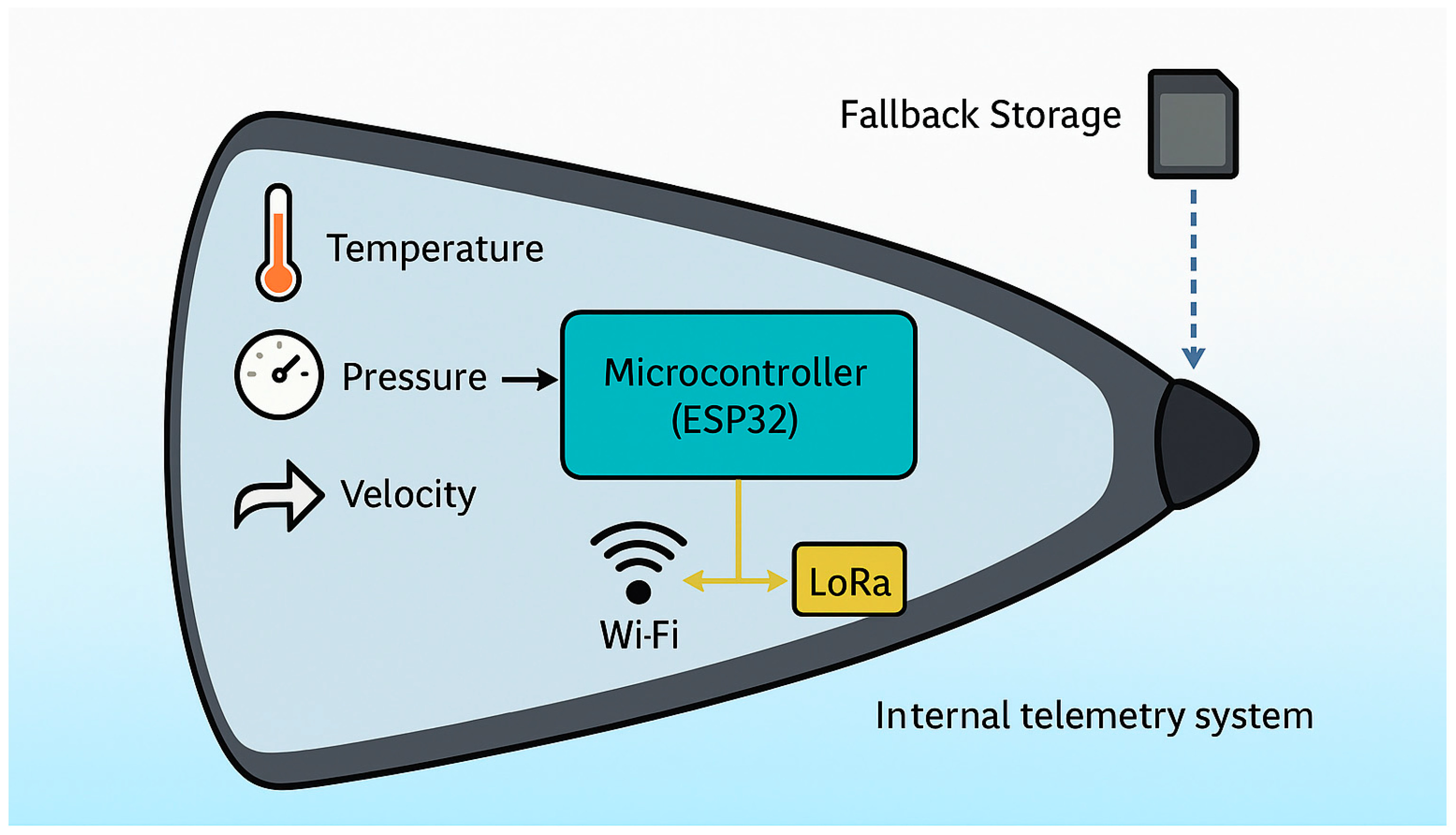
The internal telemetry system architecture is shown in Figure 1. Temperature, pressure and velocity are measured through environmental sensors and sent to an ESP32 microcontroller that manages acquisition and communication. Dual wireless protocols (LoRa/Wi-Fi) are configured to communicate the flight data in real-time and a backup storage device ensures no loss of flight information when signal connection is interrupted [25]. The integration of these subsystems into a single compact design demonstrates the reliability and adaptability of the system for various re-entry scenarios.
Unlike trajectory control systems, this telemetry solution operates passively, requiring no mechanical actuation, control surfaces, or external visual tracking support. Its role is purely observational and diagnostic to record essential thermodynamic and kinematic parameters during hypersonic and subsonic flight conditions [26].
To emphasize the novelty of the proposed design, Table 1 compares its features with existing telemetry approaches such as radar, UAV-based recovery, and deployable devices, as described in previous studies [1,2,3,19,20,21,22].
While Table 1 highlights the conceptual and functional differences with existing approaches, Section 6.5 complements this by presenting a quantitative performance benchmark against representative commercial, hobby-grade, and academic telemetry systems.

2.1. Hardware Subsystem Overview

The hardware implementation of the onboard system is designed to meet constraints in volume, mass, and environmental resilience [27]. Table 2 summarizes the specifications of the selected components used in the prototype implementation.
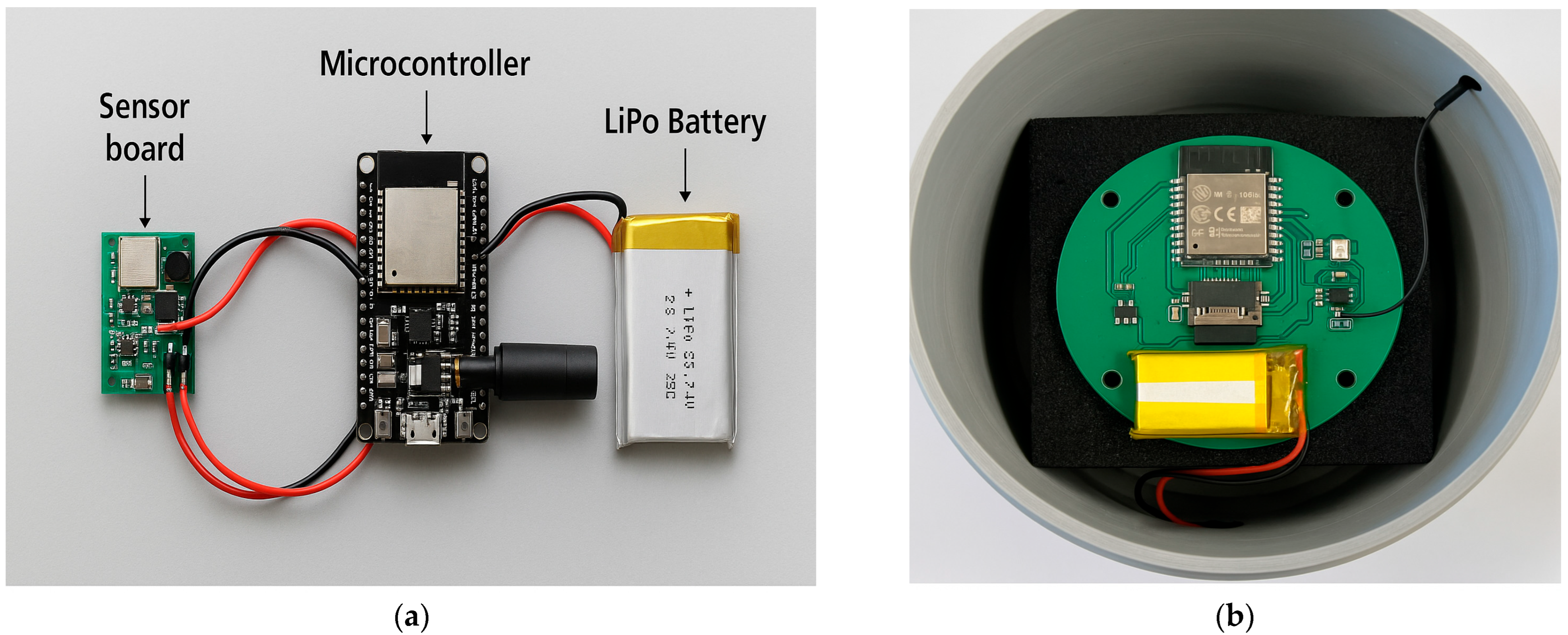
Figure 2 presents the hardware realization of the proposed telemetry system. The functional layout of the environmental sensors (BME688 and MPU6050) [31], and ESP32 microcontroller is depicted in Figure 2a, representing the prototype assembly prior to integration. Figure 2b illustrates the final printed circuit board (PCB) assembly, compactly packaging the sensors, communication modules (LoRa/Wi-Fi), and power supply for robustness under re-entry conditions [32].
The arrangement of the system is designed to allow for vertical capsule orientation and the sensor suite is placed near the aerodynamic nose cone for an accurate measurement of pressure and temperature. The microcontroller and the battery are placed centrally in a vibration-dampened cradle adhering to CubeSat subsystem integration standards [28], while the antenna and Wi-Fi module are positioned to maximize signal integrity during low-altitude descent [33].

2.2. Environmental Data Acquisition and Transmission Strategy

Due to the highly dynamic conditions experienced during sub-orbital atmospheric descent, particularly rapid changes in velocity, temperature, and pressure, a single operational telemetry mode cannot guarantee reliable data capture along the full descent profile [34]. The system is specifically designed for low-cost educational capsule missions and experimental sub-orbital atmospheric testing. To address this problem, the onboard telemetry system works under a dual-mode data assurance strategy: real-time telemetry by wireless communication and autonomous fallback to data-logging mode. This hybrid architecture guarantees reliable data acquisition even under conditions where wireless transmission becomes infeasible because of signal fading, ionization blackout or structural shadowing [35].
The main transmission mode is active in the phases of descent where line-of-sight communication to the ground station is available. In this mode, the payload continuously streams real-time telemetry using LoRa (433 MHz) or Wi-Fi (2.4 GHz), depending on altitude and signal propagation conditions. During the high-altitude descent (>5 km), LoRa is enabled, which allows long range and low power communication. Wi-Fi transmission is performed during low-altitude (<5 km) stages where high data rates are more achievable due to reduced attenuation [36]. The switch between LoRa and Wi-Fi is controlled through the simple RSSI-dependent thresholding algorithm implemented in the microcontroller.
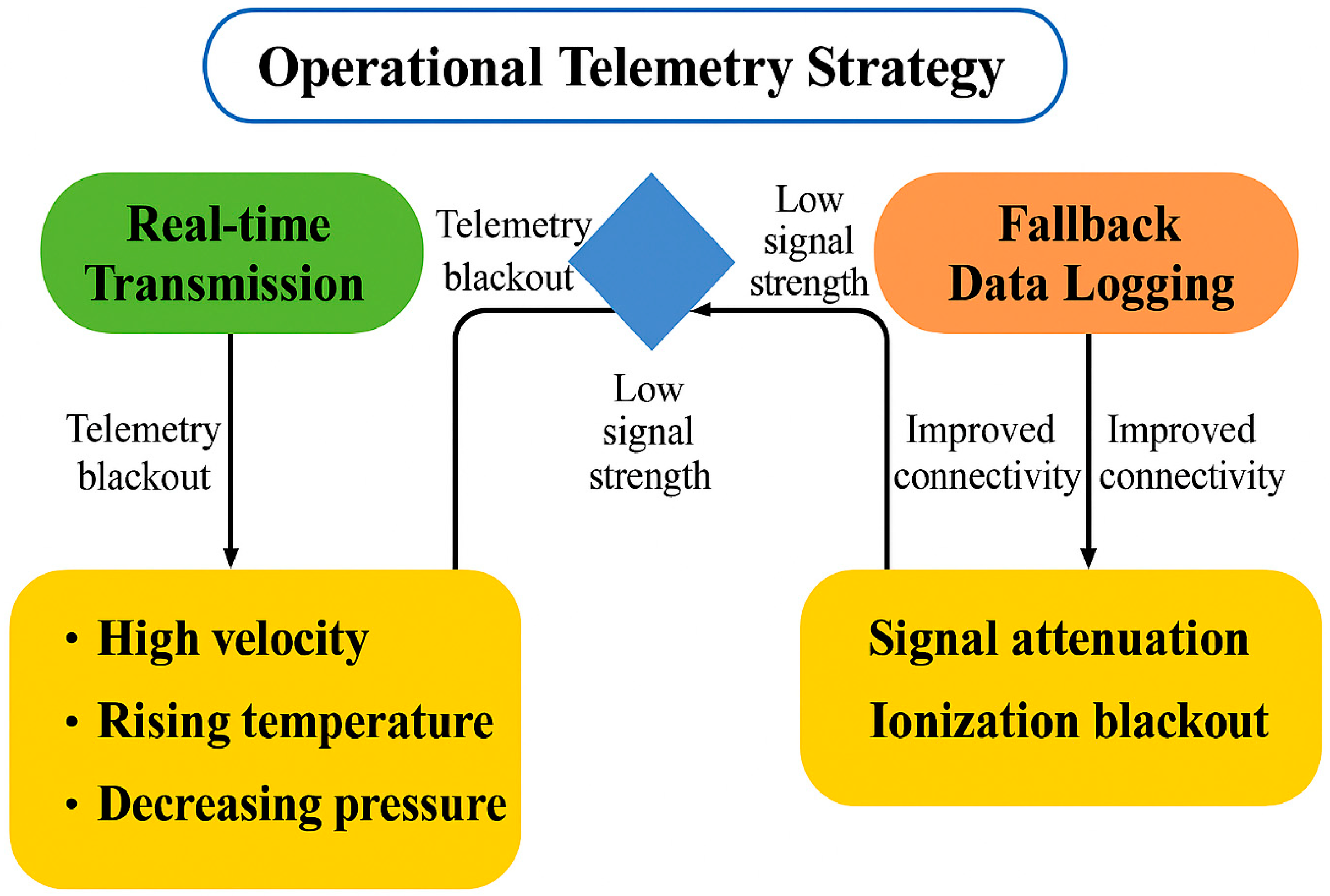
The operational telemetry approach is depicted in Figure 3. It emphasizes the transition between real-time transmission and fallback data logging according to signal level and environmental factors. During telemetry blackout due to ionization or heavy attenuation, the system will automatically switch over to blocked storage so that no mission data is lost.
When telemetry blackout occurs frequently due to atmospheric ionization or loss of signal integrity, it resorts to fallback logging mode. In this mode it logs sensor data locally onto a MicroSD card, using the SPI interface. Each data packet contains a timestamp, sensor ID, environmental reading, and error-checking CRC bit for post-recovery validation [29]. The automatic fallback mode is activated if wireless RSSI goes below −100 dBm for more than 3 s.
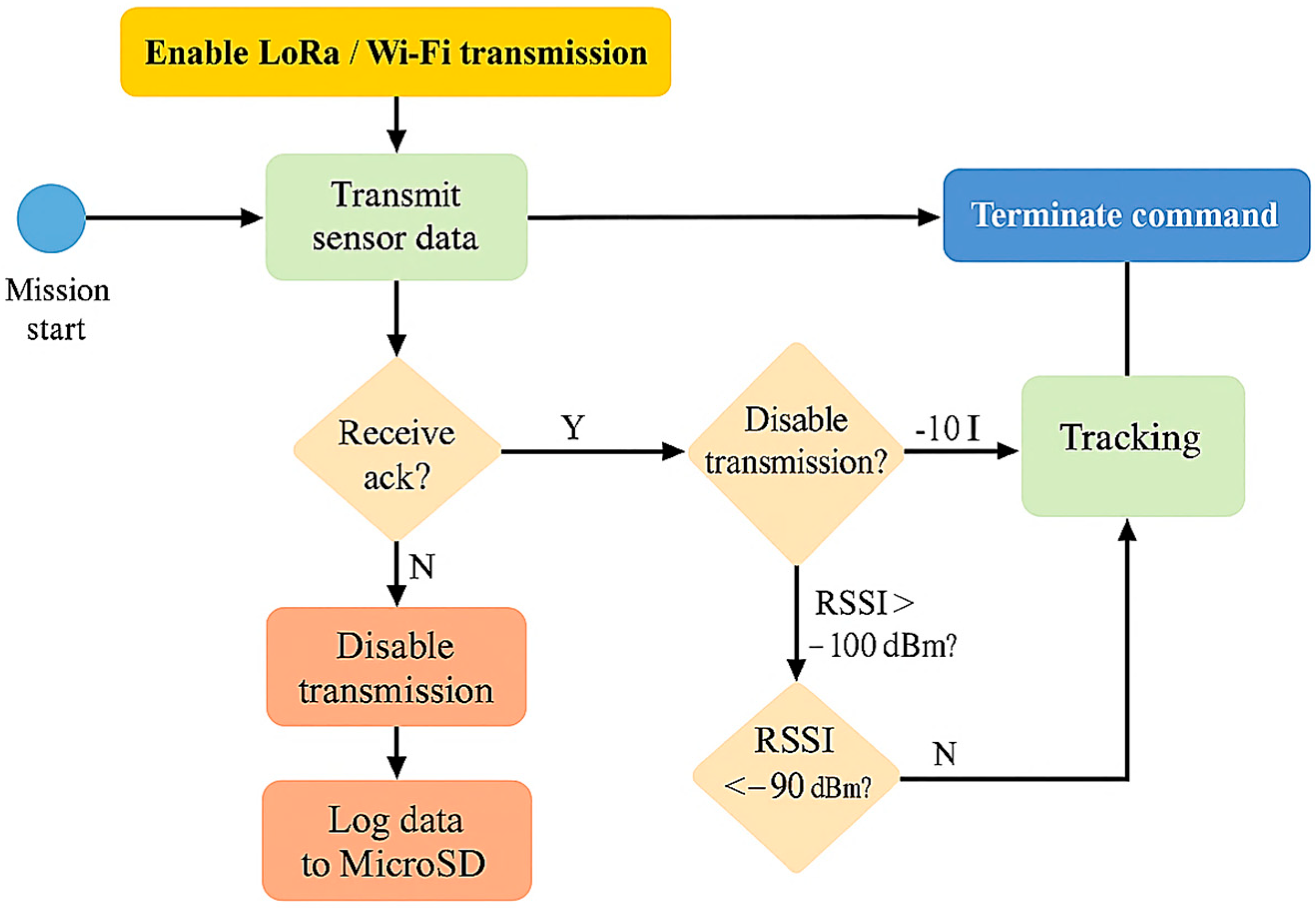
The mode-switching logic flow is illustrated in Figure 4. This figure presents the way the system evaluates the success of transmission, monitors Received Signal Strength Indicator thresholds (−90 dBm and −100 dBm) based on which it decides whether to go with real-time transmission or fallback logging. This logic ensures adaptive decision-making under dynamic re-entry conditions, balancing live telemetry and guaranteed data storage.
This dual-mode strategy enhances the system’s resilience and reliability, particularly for missions deployed in remote or infrastructure-limited environments [30]. It guarantees data integrity throughout hypersonic, transonic, and subsonic flight regimes, supporting robust post-flight analysis and validation of thermal shielding, aerodynamic stability, and mission-critical material performance [37].
The system switches modes based on signal strength and environmental conditions during the re-entry phase.
Real-time and fallback modes are triggered through onboard Received Signal Strength Indicator thresholds and transmission success indicators, ensuring adaptive and resilient data acquisition.

2.3. Enhanced Telemetry Strategy with Link-Budget and Interference Analysis

Rapidly changing propagation conditions, potential communication blackouts, and vehicle motion-induced varying antenna pointing complicate reliable wireless communication during atmospheric descent [34,35]. A dual-mode architecture is employed by the telemetry subsystem to combine real-time wireless transmission with autonomous fallback data logging. Contingent on link budget availability, real-time telemetry is supported by positive margins, with local storage oriented to secure data in instances of wireless integrity deterioration. Propagation performance, receiver sensitivity, and atmospheric attenuation reduction make LoRa at 433 MHz suitable for high-altitude and long-range phases [25]. Run-off at low-altitude and short distance benefits from the increased throughput and diminished ionization influence of Wi-Fi 2.4 GHz. Two Received Signal Strength Indicator RSSI thresholds, −90 dBm and −100 dBm, are used during in-orbit band switching. A link-budget assessment was performed to evaluate feasible communication ranges under normal conditions. The link budgets for both bands across representative descent altitudes are described in Table 3. The table values comprise frequency, link distance, transmit power, antenna gains, free-space path loss, received power, receiver sensitivity, and the resulting link margin.
As shown in Table 3, the 433 MHz LoRa link at 3 km and 5 km provides link margins of 47.3 dB and 42.8 dB, respectively. These margins are supported by a transmit power of 17 dBm, narrow 125 kHz bandwidth, and −125 dBm sensitivity, consistent with validated LoRa performance parameters [25]. The 2.4 GHz Wi-Fi link provides a 19.4 dB margin at 0.3 km and 10.9 dB at 0.8 km, assuming 14 dBm transmit power and a 6 dBi ground station patch antenna. These values confirm that LoRa supports reliable telemetry during early and mid-descent, while Wi-Fi is viable during the final segment prior to touchdown when higher data rate transmission is needed for burst-data transfer.
As shown in Table 3, margins in the design provide resiliency against ISM-band interference. The 42–47 dB margin for LoRa compensates for co-channel interference and sensitivity to packet decay under tumbling. Likewise, the 10.9–19.4 dB margin for Wi-Fi enables short, low-rate bursts so long as the vehicle is as close to the ground as possible, minimizing the threat of ISM interference. To mitigate interference, the design restricts Wi-Fi usage to the low-altitude phase only, where the probability of external interference impacting mission-critical windows is reduced.
While a capsule antenna should be a short monopole, the ground station uses a 6 dBi patch to make the link sufficiently strong while minimizing off-axis interference. This configuration balances simplicity and robustness for small-scale re-entry experiments. Implementation of antenna diversity, pattern steering, or null-forming techniques remains a future enhancement pathway for high-altitude or long-duration missions that require additional resilience against interference.
Since dual-mode telemetry was implemented, the link-budget presented in Table 3, as well as the design constraints detailed above, guarantee that data acquisition is achievable along the descent profile. When the link allows it, the system preserves in-flight telemetry while embedded loggers catch any lost packets.

3. Ground Simulation and Testing Framework

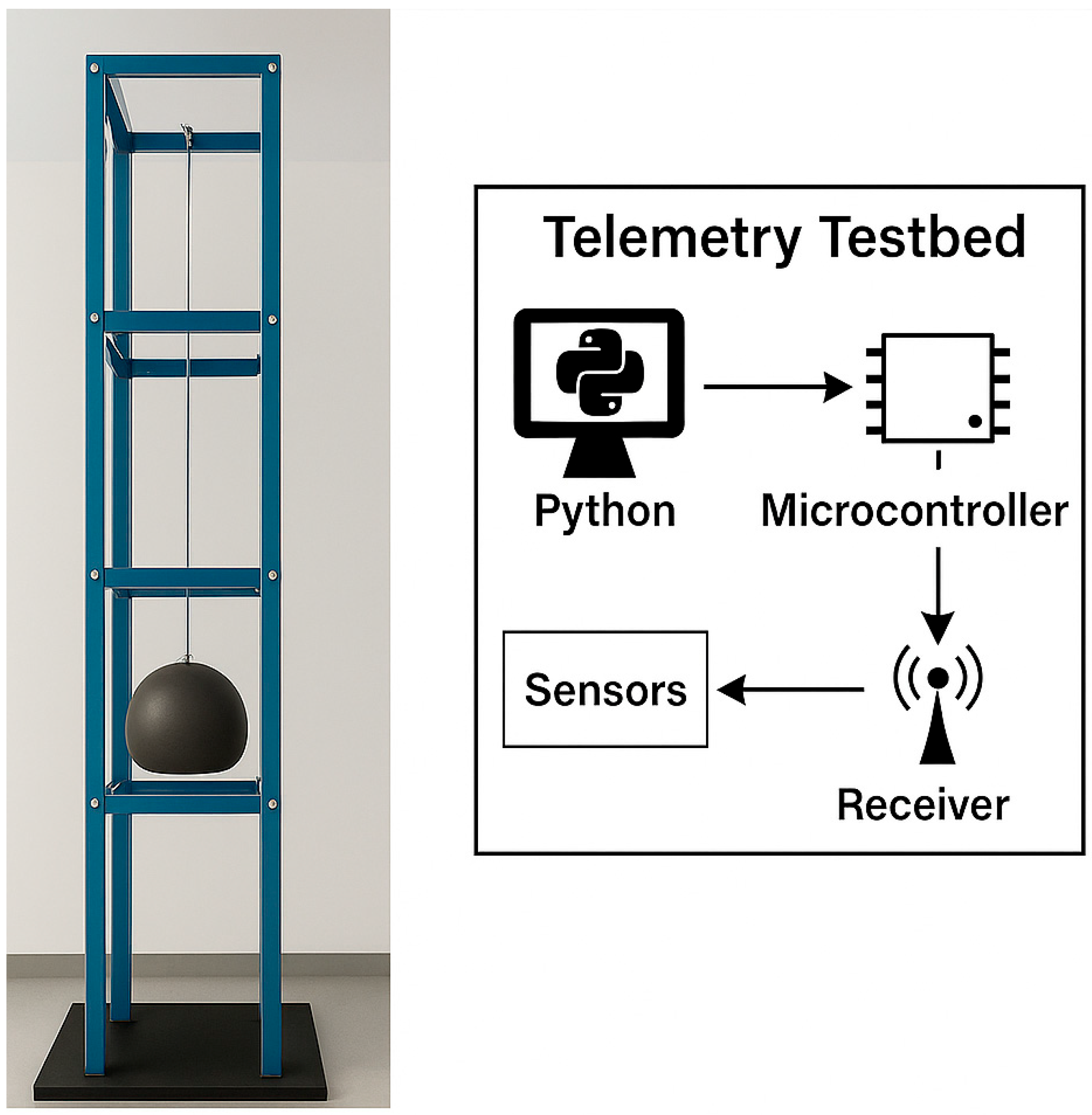
The validation of the data transmission on board the telemetry system requires an experimental setup to induce realistic re-entry conditions (acceleration forces, thermal gradients, communication limitations). Live re-entry capsule tests are resource intensive and not always available for testing, so ground-based testbeds are used in their place to evaluate systems performance [38]. Figure 5 shows the overall experimental arrangement, vertical drop rig, telemetry testbed schematic and the capsule prototype employed during validation testing.
To simulate the high-G and varying-velocity profiles, a custom small drop tower with adjustable height varying from 4.0 m to 15 m was developed [39]. The capsule prototype is enveloped in a soft-impact payload shell to protect the hardware during deceleration. Pressure, temperature and inertial measurements are obtained by environmental sensors during the drop. These readings are sent via LoRa and Wi-Fi to a ground-based array of receivers approximately 50 m away.
Wind tunnel experiments are performed, giving a maximum of 180 km/h airflow to simulate thermal boundary layer formation and pressure distribution over the capsule surface. Such techniques are also used in spacecraft re-entry studies to experimentally test aerodynamic and thermal properties [40]. Temperature sensors are calibrated by placing them on a heating table, and controlled heat generators are used to evaluate the thermal response time and signal stability. The performance of LoRa links is also analyzed under directed airflow interference.
During descent simulation artificial signal interference is introduced to test the fallback logging system. The write speed, packet integrity and the post-event retrieval efficiency for the MicroSD module are quantified. Testing demonstrates that the system can support ~15 kbps logging rates with no loss of data for up to 7 min of blackout duration [41].

3.1. Hardware-in-the-Loop (HIL) Validation Process

Telemetry consistency was tested with dynamic switch between transmission and fallback mode using a Hardware-in-the-Loop (HIL) simulation platform implemented in Python code (Python 3.10) and dashboard visualization and system feedback provided by Node-RED. A HIL platform is commonly adopted to validate aerospace communication and control system prototypes before full-scale testing [42].
As depicted in Figure 5, for the telemetry testbed environmental sensors are interfaced with the microcontroller to transmit data wirelessly and in real-time to a ground receiver. Real-time synthetic profiles simulated based on actual atmospheric re-entry data are loaded into the microcontroller. These inputs are fed to conditional logic that serves as triggers for RSSI drop thresholds and mode transitions [43].
The response latency between environmental stimulus and telemetry capture is logged and compared to ground truth reference values. A possible time delay of at maximum 140 ms is reached, in compliance with the system tolerance measured for hypersonic descent duration [44]. Repeated HIL cycles confirm reliability of both data transfer and fallback strategies among diverse test cases [45].
The vertical drop rig simulates dynamic descent forces, the telemetry testbed outlines the data acquisition and transmission pipeline, and the capsule prototype represents the integrated payload system tested under ground-based re-entry conditions.

3.2. Telemetry Capsule Image Dataset for Post-Descent Validation

TeleCapsNet was developed to support visual assessment of re-entry capsule deployment, descent behaviour, landing dynamics, and post-touchdown integrity. The dataset consists of RGB images collected from laboratory vertical-drop tests and outdoor prototype trials. Several landing and post-descent states are represented, including parachute-assisted descent, stabilization, capsule tilt, and ground impact. Image acquisition was conducted using fixed ground cameras, vertical-drop video recordings, UAV imagery, and DSLR photography. All images were annotated using LabelTool (version 1.0) on Ubuntu 22.04, generating Pascal VOC XML labels [46]. Data augmentation (Gaussian blur, rotation, brightness variation) was applied to improve robustness to illumination and visibility variations.
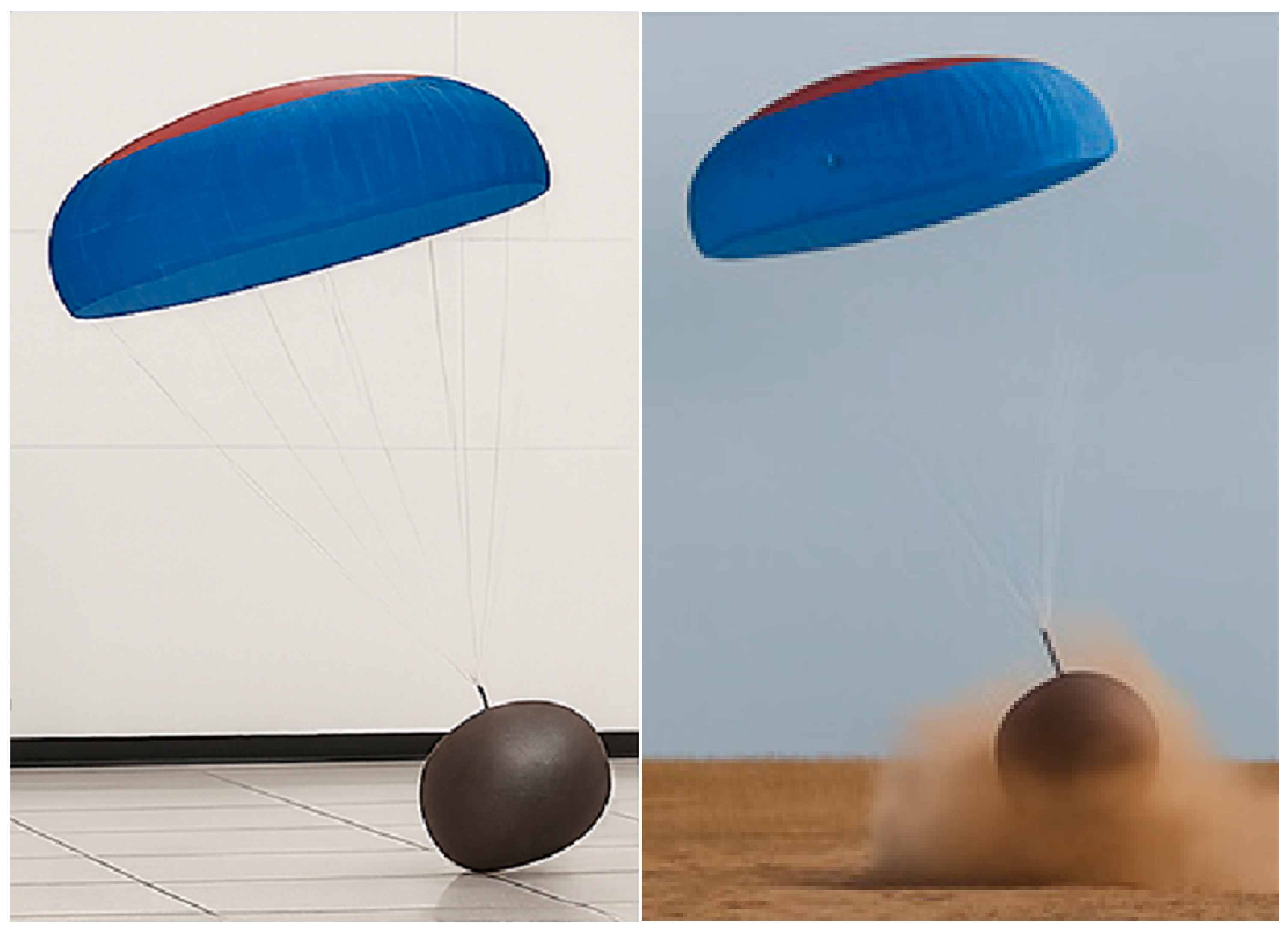
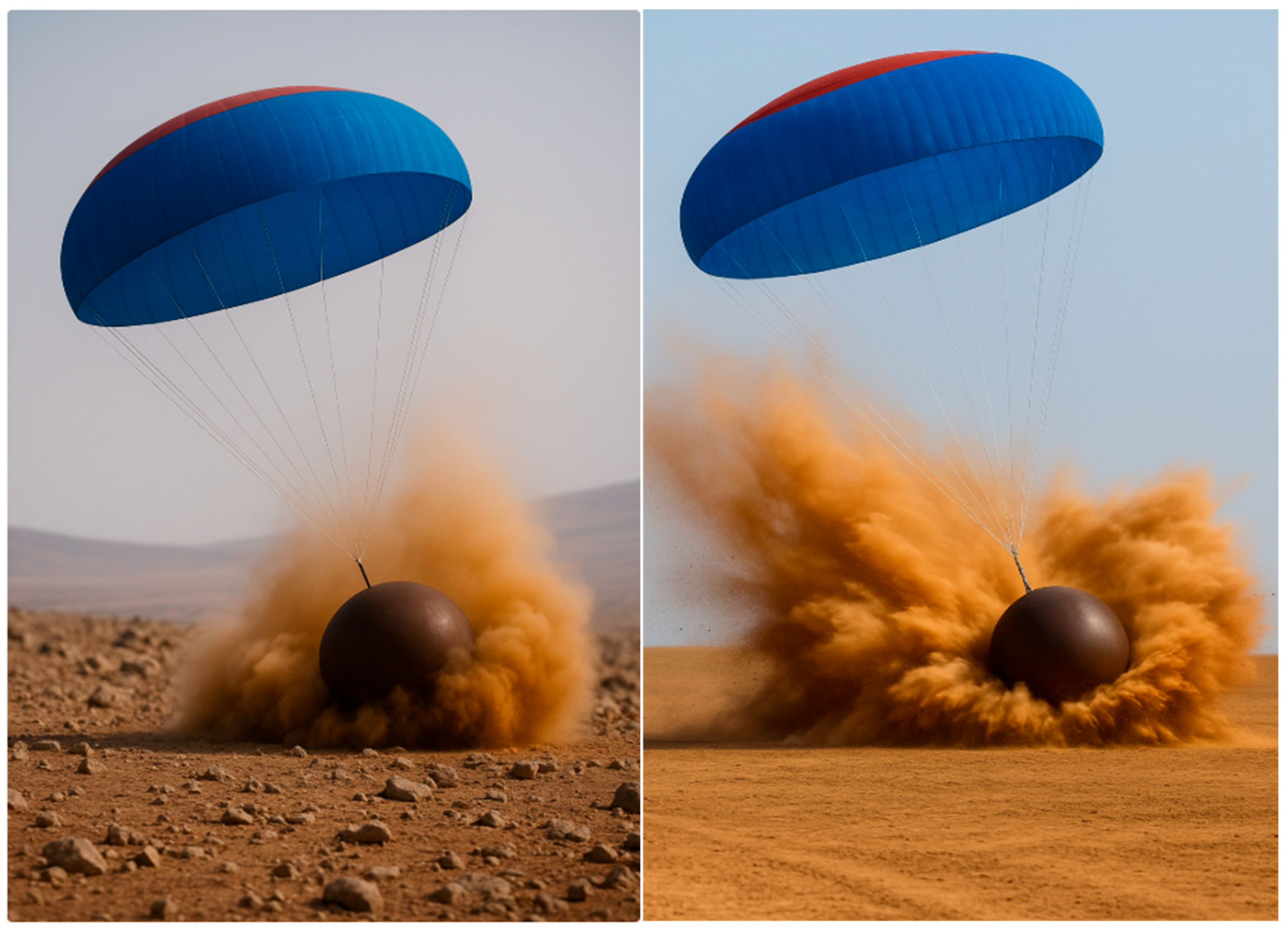
Figure 6 presents representative samples of the dataset, covering indoor laboratory tests and outdoor landings on sandy and semi-arid terrain. The visual data complement the onboard telemetry by linking landing conditions with measured acceleration peaks, orientation changes, and temperature records, enabling improved post-flight evaluation, anomaly identification, and recovery planning [47].
To ensure adequate representation of real landing environments, TeleCapsNet includes imagery from multiple outdoor campaigns featuring different terrain types (sand, rocks, compact soil) and natural lighting conditions. Dust-rich touchdown events were included to emulate typical landing sites encountered during capsule recovery. The dataset also incorporates imagery of three capsule geometries (baseline, conical, and spherical designs) to strengthen recognition across different configurations. These additions improve the robustness of descent-state identification when processing visual data from varied capsule shapes and surroundings.
A comparative evaluation of two lightweight CNN-based models was conducted to assess suitability for embedded inference. The first model was a custom baseline CNN trained from scratch on the TeleCapsNet indoor and outdoor imagery. The second model used a lightweight YOLOv5s variant fine-tuned for four capsule descent states. Table 4 summarizes the results.
TeleCapsNet currently contains 1580 annotated images spanning indoor laboratory tests, varied outdoor landing environments, and multiple capsule shapes. The dataset, combined with lightweight CNN architectures, enables reliable descent-state recognition for post-descent analysis.

3.3. Network Training and Validation Framework

For the purpose of automated classification of capsule descent states in the TeleCapsNet dataset, a convolutional neural network (CNN)-based object detection model is introduced. The model is trained to detect and classify four condition states of the capsule: Nominal Descent, Parachute Deployed, Surface Contact, and Structural Anomaly.
The annotated dataset is split into 70% training and 30% validation sets using a stratified split to have a large representation of both states. Augmentation techniques including flipping, adding Gaussian noise, and altering brightness are adopted to enhance its robustness under diverse lighting and terrains conditions. These augmentation schemes are widely used for improving generalization in small-scale datasets [48].
For academic feasibility and limited budget, the training is scheduled on a workstation with an NVIDIA GTX 1660Ti GPU (6 GB VRAM) and 16 GB of memory. YOLOv5s architecture is used as it represents a good trade-off between accuracy and computational requirements on modest hardware [49].
The training is performed using PyTorch (version 2.0.0), with stochastic gradient descent (SGD) with momentum as the optimizer. The multi-task loss function includes both classification (cross-entropy loss) and bounding box regression (Smooth-L1 loss), which is commonly used in object detection [50]. Hyperparameters used in this study are summarized in Table 5.
The multi-task loss function combined classification and localization components [50]:
L x , c , L , g = 1 N ( L c o n f x , c + L l o c ( x , l , g ) )
where L c o n f x ,   c is the cross-entropy classification loss, L l o c is the Smooth L1 bounding box regression loss, and N represents the number of matched anchors per image.
A multi-task loss function was used to integrate classification accuracy and bounding box localization during training. Convergence stability is achieved at around ~80 epochs; early stopping was used to prevent overfitting.

4. High-Temperature Thermal Cycling Test

The system’s robustness was evaluated using high-temperature thermal cycling tests conducted under rapid temperature changes mimicking the pre-re-entry and post-recovery conditions. Miniaturized re-entry payloads and capsule-based educational missions implement such conditioning tests to ensure the robustness of onboard electronics [23,28]. This step is necessary to validate continued operation of the sensors, microcontroller, wireless module, and data-logging unit after multiple cycles of low and high temperatures.

4.1. Experimental Setup

The assembled telemetry module, consisting of the STM32-based microcontroller, IMU (MPU-6050, TDK InvenSense, San Jose, CA, USA), digital temperature sensor (LM75, Analog Devices, Wilmington, MA, USA), RF transceiver (LoRa SX1278, Shenzhen Ai-Thinker Technology Co., Ltd., Shenzhen, China), and SD-card module, was placed inside a programmable thermal chamber (Model ESPEC SH-242, ESPEC Corp., Osaka, Japan). The test parameters were configured as follows:
  • Temperature range: −20 °C to +110 °C
  • Temperature ramp rate: 15 °C/min
  • Dwell time at each extreme: 20 min
  • Total cycles: 25
  • Power mode: Continuous operation
  • Sensor sampling frequency: 10 Hz.
Wireless transmission was enabled during cycles 1–10 to monitor live telemetry in line with standard telemetry evaluation practices [24]. Cycles 11–25 focused on internal data-logging stability and memory integrity, aligning with reliable logging strategies in embedded telemetry systems [29].

4.2. Performance Data Analysis

All hardware modules were viable across the 25 cycles. The system tracked log data uninterruptedly courtesy of the no data corruption files, consistent with recommended data-handling practices for CubeSat-class systems [24,27,29]. The data recorded before and after the thermal cycles for the various performance parameters are reported in Table 6.
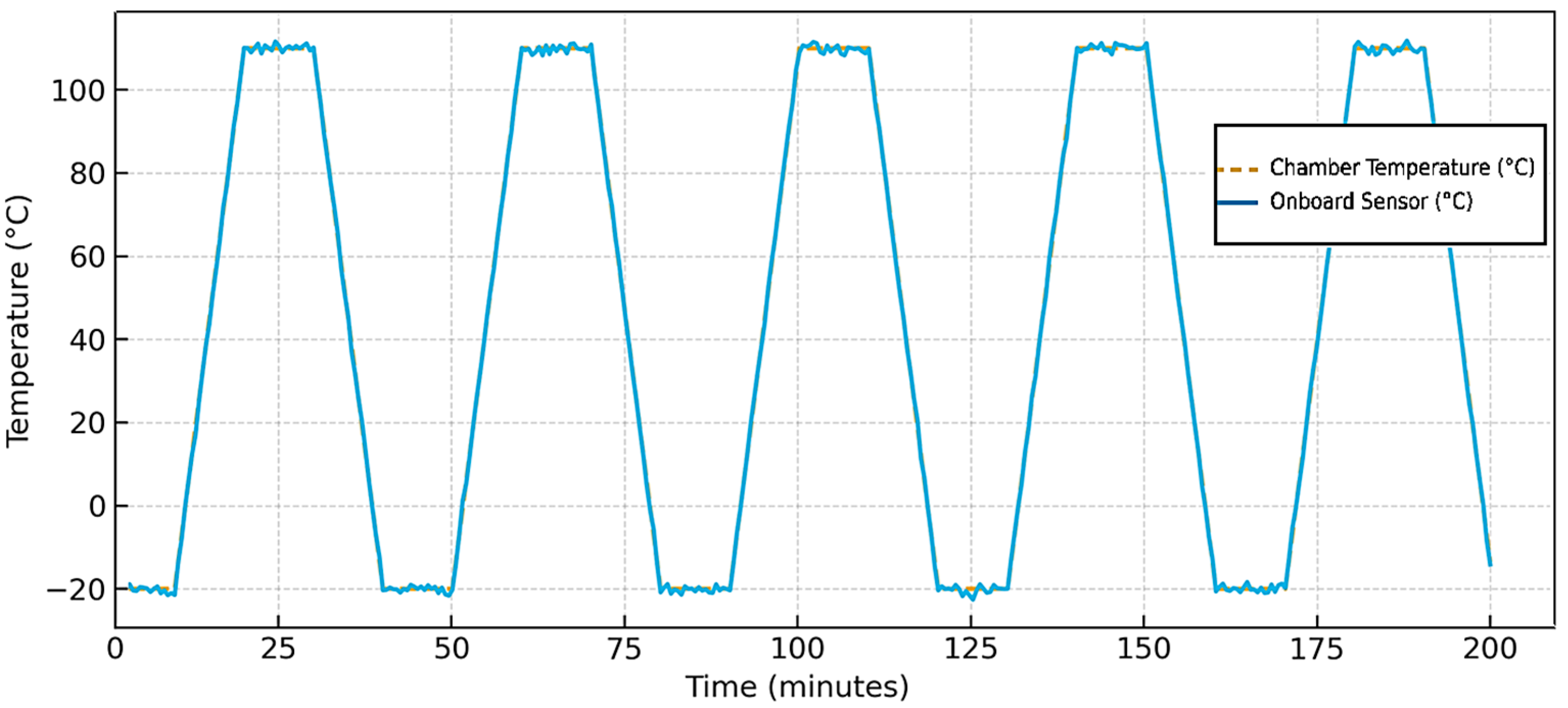
The observed variations did not exceed permissible operational thresholds, thereby suggesting minimal performance deterioration. A representative comparison of chamber temperature and real-time temperature measured by the onboard sensor for five full cycles is shown in Figure 7. At no time did the measured difference between the chamber and recorded temperatures exceed 1.3 °C.

4.3. System Integrity Verification

Upon conducting a full integrity scan on the SD-card following the 25th cycle, it was determined that all 3240 recorded data files were successfully accessed and verified; CRC-32 checksum validation was used. Files were free from cases of data corruption, missing files, or invalid timestamps. The system’s watchdog log recorded zero occurrences of an unplanned reset. During peak heating to 110 °C, the internal PCB temperature as measured by an onboard thermistor—stabilized at 83.7 °C, which is under the 85 °C component limit according to the STM32 datasheet. The wireless transmission module showed consistent signal of RSSI: –86 ± 2 dBm, which indicates a stable signal performance despite the elevated temperature.

5. Power Consumption and Battery Endurance Evaluation

The power assessment of the feasibility of the onboard telemetry system during extended field missions was conducted. The measurements concerned the standby, data acquisition, wireless transmission, and fallback logging modes. The endurance evaluation was based primarily on a 3-cell 11.1 V 2200 mAh Li-Po battery, which is widely adopted with low-cost academic payloads.

5.1. Power Measurement Setup

Power consumption was measured using a USB digital power analyzer on the 5 V subsystem and a DC inline wattmeter for the full battery supply. These results were obtained over 30 min continuous runs, and their average values are recorded in Table 7.

5.2. Battery Endurance

Battery endurance tests were performed at three mission-representative profiles as follows below (Table 8):
In total, the system can work from 4 to 6 h non-stop, depending on the duty cycle. The maximum transmitted power did not exceed 1.5 W, which allows using a system in small re-entry capsules with a limited energy storage size and mass.

6. Results and Discussion

Validation results of the proposed telemetry system under ground-based simulations for approximating capsule descent are also provided in this section. The presented results correspond to equivalent simulation-based validation conducted under controlled sub-orbital and atmospheric descent conditions. The drop tests, wind-tunnel experiments, thermal cycling, and hardware-in-the-loop evaluations follow established practices used for CubeSat-scale and academic capsule missions. These methods provide relevant insight into system robustness, telemetry performance, and operational viability within the intended mission scope. Attention is given to the integrity of data, reliability of transmission and feasibility for visual state detection in resource-limited academic settings.

6.1. Real-Time Telemetry and Fallback Logging

Wireless telemetry performance was evaluated through controlled drop tests from 12 to 15 m, a method commonly used for validating small atmospheric capsule systems at low altitude [51]. Real-time LoRa transmission maintained an average packet-success rate above 95%, with one short interval where fallback logging captured the full dataset during a temporary loss of wireless integrity.
Table 9 summarizes the statistics from four drop tests. The average Received Signal Strength Indicator (RSSI) ranged from −55 dBm to −70 dBm. One trial exhibited a deeper dip to −78 dBm, caused by rapid capsule tumbling and partial antenna shadowing, which triggered fallback logging. All sensor data were fully recovered after landing.
These results align with validation methods for small re-entry capsule prototypes [3] and CubeSat-class missions, where hybrid real-time telemetry and autonomous fallback logging ensure complete data recovery during transient link interruptions [6].
Temperature and pressure display indicates consistent response during rapid deceleration, and the fallback memory guaranteed full recovery at blackout. The same hybrid logging techniques have been already deployed in CubeSat-type telemetry systems [52].
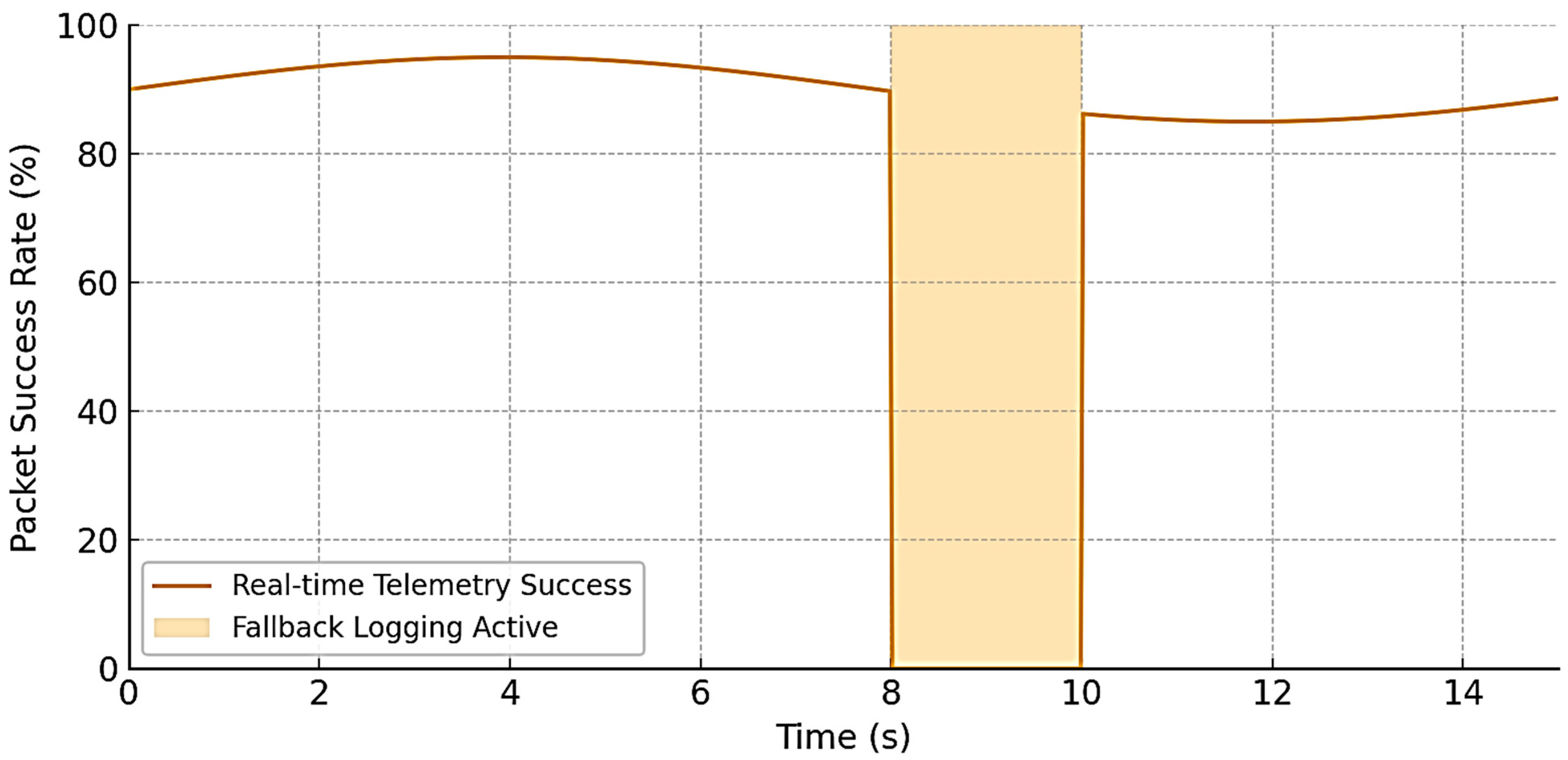
Packet success rate of a representative drop test is depicted in Figure 7. Real-time LoRa telemetry kept a 90% packet success throughout most of the descent, experiencing a brief blackout of about 8–10 s. In this time the fallback logging system was autonomously activated and that full recovery of sensor data is available after landing.
The results are consistent with small scale re-entry validation methods presented in CubeSat-class studies [53] and support that the dual-path approach (real-time transmission with autonomous fallback storage) ensures robust data integrity under limited experimental conditions.
Temperature and pressure readings showed consistent response during rapid deceleration, and the fallback memory ensured complete data recovery whenever the wireless link experienced a short disruption. Figure 8 illustrates a representative packet-success trace, where real-time telemetry remained above 90% for most of the descent, and a brief 8–10 s blackout was bridged by autonomous fallback logging.
These findings confirm that the telemetry subsystem delivers robust performance under the constraints of small-scale re-entry experiments and that the dual-mode strategy maintains full data integrity under realistic flight-like disturbances.

6.2. Blackout and Brownout Behaviour

To further characterize the telemetry link, additional analysis was performed to assess the link’s performance when the quality of the signal was impaired, and communication was lost completely. Two kinds of drop test link interruptions were identified. Short intermittent losses of packets were classified as brownouts, while complete disruption of downlink for more than three seconds was considered a blackout. Since re-entry is associated with high rotation, capsule shadowing, and ground signal obstruction, both these interruptions were chosen [1,23,35,41].
In the four drop trials, two to four brownouts volumed per run and each lasted from 0.5 to 2.0 s. Such a test could equal six events but, in fact, one blackout was recorded in the 15 m trial. Communication was lost for 8–10 s during this event. During the blackout period, autonomous fallback logging mode-backed up a full sensor recording continuously and provided a full data stream until the link was re-established [24,28,29]. Once communication resumed, the system required 1.2–1.6 s to re-synchronize telemetry transfer, after which the live feed proceeded normally.
The post-landing data extraction verified the effectiveness of the fallback mechanism. There were no corrupted logs retrieved, and CRC-32 verification showed no file integrity errors. The watchdog log recorded zero unplanned resets before and after each link-loss event [29]. Table 10 summarizes the main blackout and brownout metrics retrieved during testing.
These results confirm that the dual-path telemetry approach is resilient to temporary drops in communication quality and effectively bridges both short-term brownouts and full blackouts. Continuous logging ensured complete dataset availability at retrieval, preserving data continuity despite real-time transmission loss. This behaviour strengthens the suitability of the system for short-duration re-entry experiments where line-of-sight interruptions are expected at touchdown or during rapid attitude changes [1,23,41].

6.3. Acceleration Profiling

Onboard IMU data show a peak deceleration of ∼9 g during impact, demonstrating the system’s robustness to short-duration shocks. Similar levels of acceleration are found in academic drop tests for re-entry prototype [21].
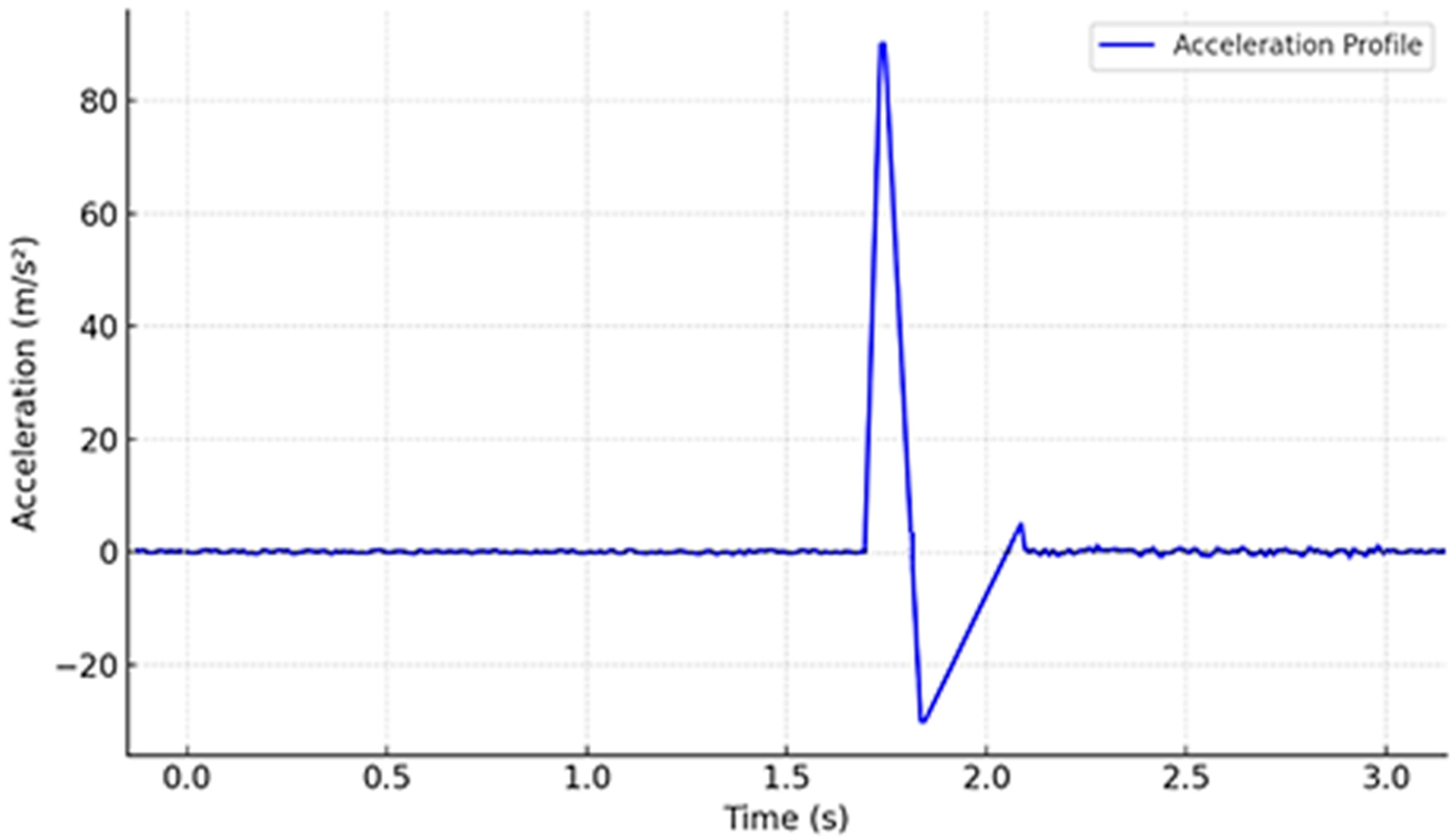
Figure 8 shows the acceleration profile extracted during a 15 m drop test, captured using the onboard MPU6050 IMU. During free-fall (0–1.7 s), acceleration was approximately 0 m/s2, indicative of a near-weightless scenario. Impact at 1.7 s resulted in a sharp spike of approximately 9 g followed by oscillations and damping as the capsule stabilized.
The results demonstrate the capacity of IMU to accommodate transient high-G events and resilience towards short-duration shocks. The measured peak agrees with academic scale re-entry capsule drop tests.

6.4. Visual Capsule Recognition

The CNN model on TeleCapsNet dataset performed well in classifying capsule descent states. Validation indicates the academic feasibility of the developed system without requiring high-performance hardware.
Table 6 lists detection results of our CNN Model trained with TeleCapsNet dataset. The mean Average Precision (mAP@0.5) was 87.4%, 88.6%, and 85.1%, reaching an overall F1 score of 0.82. These results show that the system can consistently identify capsule descent states regardless of the specific experimental setting with a small and limited training hardware.
The obtained accuracy was in line with existing works applying CNN for recognition of aerospace imagery which also reported similar levels of precision [54]. In addition, the use of augmentation strategies contributed to enhanced generalization over different lighting conditions and types of terrain as they have proved effective in the literature [55]. Such results confirm the feasibility of using lightweight recognition pipelines in academic capsule missions without requiring High-Performance Computing (HPC).
The obtained accuracy is in accordance with previously reported CNN-based recognition approaches for aerospace imagery under limited-size datasets [56].
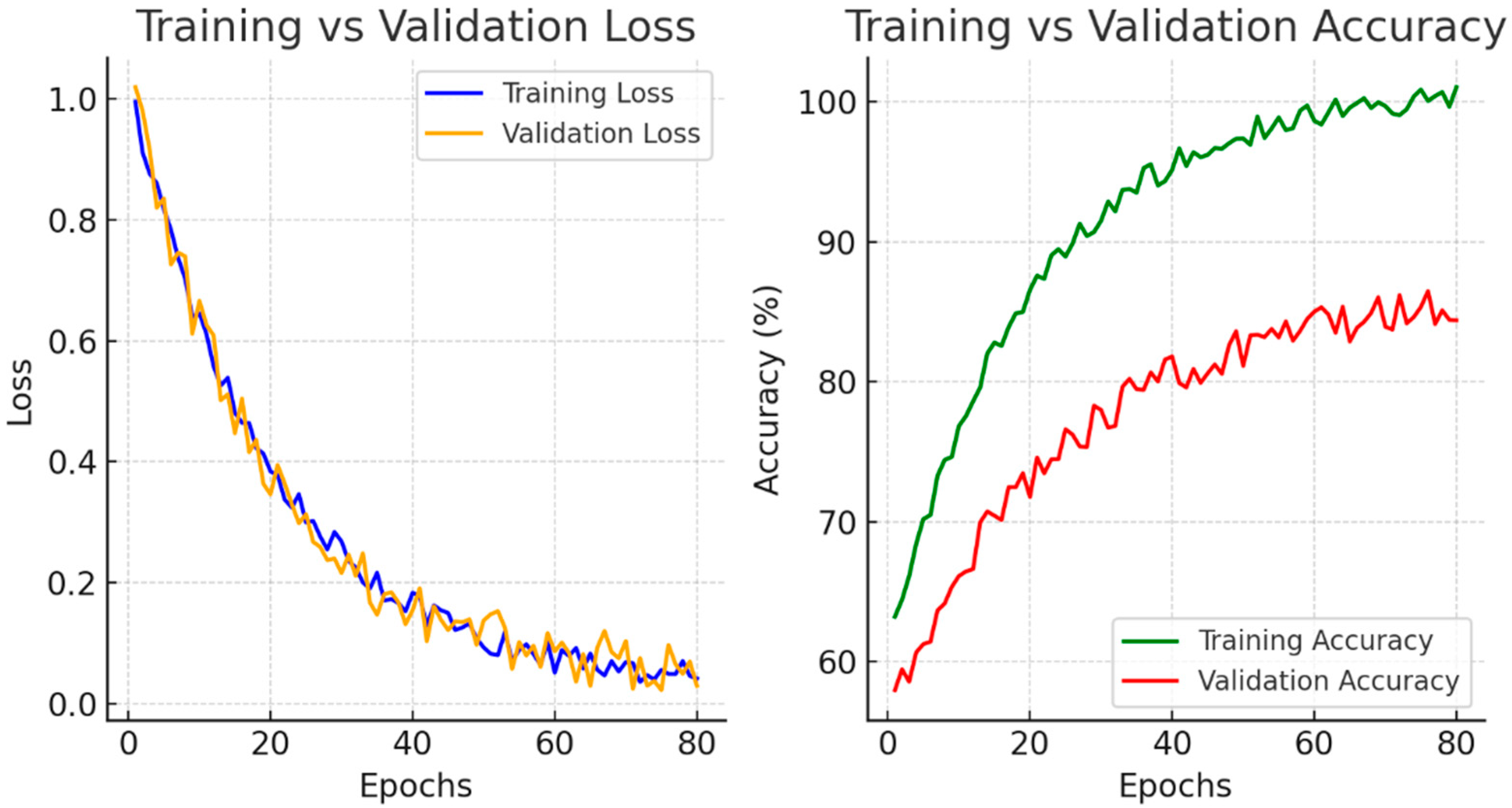
The training and validation results of the CNN-based capsule state detection model are presented in Figure 9. The left panel shows the training and validation loss rates decreasing evenly to 80 epochs, whereas for the right its accuracy stabilizes approximately at 90% for training and 85% for validation.
These results confirm that the model performs well with moderate overfitting, given the recognition accuracy in Table 11. Table 11 and Figure 10 illustrate that it is feasible to classify capsule descent states using CNN in academic, resource-limited settings.
These results demonstrate that the system is capable of successfully transmitting and recording telemetry data during dynamic descent with initial visual classification of capsule states.
The results confirm that the system is suitable for academic applications focusing not on large-scale mission readiness but focusing on simplicity, cost-efficiency and robustness.
While the present study focused on ground-based validation, the modular and compact design facilitates direct transition to flight testing. The next phase will involve integration with sounding rocket and suborbital re-entry missions to evaluate performance in realistic atmospheric conditions. These tests will provide a pathway for qualifying the system for orbital CubeSat-scale re-entry applications.

6.5. Comparative Performance Benchmarking with Existing Telemetry Systems

The performance of the proposed telemetry system was quantitatively compared with commercially available and open-source solutions used for small-scale aerospace and academic missions. The performance benchmark was the system cost, power consumption, wireless telemetry performance, and bit error rate (BER). Three reference systems were selected for comparison [23,24,28,33]:
-
Telemetry Tier-1 Commercial COTS Module (e.g., Quasonix Micro Downlink)
-
Hobby-Grade Open-Source Telemetry Kit (e.g., OpenLRS-M3)
-
Research-Grade Academic Telemetry Node (LoRa-based CubeSat prototype from the literature) [25,52].
Table 12 provides an overview of the comparative results.
Based on this comparison, the proposed system has a lower implementation cost compared to the professional COTS alternatives while maintaining the necessary core telemetry and data-logging functionality for re-entry experiments. The system also has low power consumption on the order of magnitude, giving it the ability to run for 4–6 h autonomously, which is more than other comparable commercial and academic systems, which mostly run for less than 3 h unless connected with larger batteries. The bit-error rate of less than 1.7 × 10⁻³ is sufficient for short-burst dynamic telemetry during descent, and the integrated fallback logging will ensure complete data recovery in the event of communication outage. These performance metrics suggest that the system achieves a good trade-off between cost, energy efficiency, and communication reliability for the intended academic missions and resource-constraint aerospace prototype testing [24,25,28,41,52].

7. Conclusions

This study presented the development and experimental validation of a compact, low-cost onboard telemetry system for re-entry capsules, emphasizing academic feasibility, robustness, and autonomy. Unlike earlier approaches that relied on external tracking or deployable structures, the proposed system is fully onboard and infrastructure-independent, ensuring reliable monitoring with dual-path telemetry and fallback logging.
Ground-based verification through drop tests, wind tunnel trials, and hardware-in-the-loop simulations confirmed system performance under dynamic descent conditions. Real-time telemetry achieved over 95% packet success, while fallback logging ensured complete data recovery in blackout scenarios. Acceleration profiling reproduced peak decelerations of approximately 9 g, validating sensor durability. Thermal cycling tests further demonstrated system stability from −20 °C to +110 °C, with no data corruption, hardware resets, or critical sensor drift, reinforcing readiness for harsh pre- and post-re-entry thermal environments. In parallel, the TeleCapsNet dataset enabled CNN-based descent state classification with ~87% mAP and an F1 score of 0.82, consistent with prior small-scale aerospace recognition studies.
The originality of this work lies in combining dual-mode telemetry with a compact design optimized for CubeSat-scale capsules, addressing a gap where most prior research emphasized control algorithms, deployable structures, or external infrastructure. Beyond CubeSats, the system’s modularity and independence from ground assets make it applicable to suborbital re-entry capsules, high-altitude balloon experiments, and even low-cost planetary entry probes where mission budgets are constrained. This adaptability extends its relevance to a wide range of academic and exploratory missions.
Future work will explore lightweight edge-AI deployment on affordable platforms to enable onboard recognition of descent states. Such advancements would provide academic missions with greater autonomy while maintaining simplicity, reliability, and cost-efficiency.


Author Contributions

N.G.: Conceptualization, Methodology and experimental setup, System architecture design and integration of telemetry sensors, Data curation, validation, and visualization, Writing the original draft and translating sections, Project administration and coordination among authors. C.G.: Development of data acquisition algorithms, Signal processing, LoRa/Wi-Fi integration, and reliability analysis, Formal analysis of telemetry communication behavior, Writing—review and technical editing. A.M.A.: Conceptual support in structural design and mechanical modeling, Verification of the experimental setup and validation of results, Review and approval of the final manuscript. R.F.: Conceptual support in structural design and mechanical modeling, Verification of the experimental setup and validation of test results, Review and approval of the final manuscript. All authors have read and agreed to the published version of the manuscript.

Funding

This research received no external funding.

Data Availability Statement

Data is contained within the article.

Conflicts of Interest

The authors declare no conflict of interest.

References

  1. Downey, F.W. Progress Towards Controlled Re-Entry and Recovery of CubeSats. 2023. Available online: https://core.ac.uk/download/pdf/590692997.pdf (accessed on 23 November 2025).
  2. Panico, A.; Di Lizia, P. Machine Learning Techniques Applied to Space Objects Uncontrolled Re-Entry Predictions. 9th European Conference for Aerospace. 2022. Available online: https://re.public.polimi.it/bitstream/11311/1223161/1/PANIA01-22.pdf (accessed on 23 November 2025).
  3. Dipollina, S. Methodologies and Tools for the Analysis of the Descent and Re-Entry Phase of a Reusable Access to Space Vehicle. 2024. Available online: https://webthesis.biblio.polito.it/secure/32280/1/tesi.pdf (accessed on 23 November 2025).
  4. Akin, D. The Parashield Entry Vehicle Concept: Basic Theory and Flight Test Development. In Proceedings of the Small Satellite Conference, 4th Annual AIAA/USU Conference on Small Satellites, Logan, UT, USA, 31 August–3 September 1990. [Google Scholar]
  5. Wiegand, M.; Konigsmann, H. A small re-entry capsule-brem-sat 2. In Proceedings of the Small Satellite Conference, 10th Annual AIAA/USU Conference on Small Satellites, Logan, UT, USA, 16–19 September 1996; Available online: https://digitalcommons.usu.edu/smallsat/1996/all1996/54/ (accessed on 23 November 2025).
  6. Guglielmo, D.; Omar, S.; Bevilacqua, R.; Fineberg, L.; Treptow, J.; Poffenberger, B.; Johnson, Y. Drag deorbit device: A new standard reentry actuator for CubeSats. J. Spacecr. Rocket. 2019, 56, 129–145. [Google Scholar] [CrossRef]
  7. Yamada, K.; Nagata, Y.; Honma, N.; Akita, D.; Imamura, O.; Abe, T.; Suzuki, K. Reentry demonstration of deployable and flexible aeroshell for atmospheric-entry vehicle using sounding rockets. In Proceedings of the 63rd International Astronautical Congress, Naples, Italy, 1–5 October 2012; pp. 8671–8676. [Google Scholar]
  8. Iacovazzo, M.; Carandente, V.; Savino, R.; Zuppardi, G. Longitudinal stability analysis of a suborbital re-entry demonstrator for a deployable capsule. Acta Astronaut. 2015, 106, 101–110. [Google Scholar] [CrossRef]
  9. Lindell, M.; Hughes, S.; Dixon, M.; Willey, C. Structural analysis and testing of the inflatable re-entry vehicle experiment (IRVE). In Proceedings of the 47th AIAA/ASME/ASCE/AHS/ASC Structures, Structural Dynamics, and Materials Conference, Newport, RI, USA, 1–4 May 2006; p. 1699. Available online: https://arc.aiaa.org/doi/pdf/10.2514/6.2006-1699 (accessed on 23 November 2025).
  10. Hughes, S.; Dillman, R.; Starr, B.; Stephan, R.; Lindell, M.; Player, C.; Cheatwood, F. Inflatable re-entry vehicle experiment (IRVE) design overview. In Proceedings of the 18th AIAA Aerodynamic Decelerator Systems Technology Conference and Seminar, Munich, Germany, 23–26 May 2005; p. 1636. Available online: https://arc.aiaa.org/doi/pdf/10.2514/6.2005-1636 (accessed on 23 November 2025).
  11. Venkatapathy, E.; Hamm, K.; Fernandez, I.; Arnold, J.; Kinney, D.; Laub, B.; Makino, A.; McGuire, M.; Peterson, K.; Prabhu, D.; et al. Adaptive deployable entry and placement technology (ADEPT): A feasibility study for human missions to Mars. In Proceedings of the 21st AIAA Aerodynamic Decelerator Systems Technology Conference and Seminar, Dublin, Ireland, 23–26 May 2011; p. 2608. [Google Scholar] [CrossRef]
  12. Lu, P. Entry guidance: A unified method. J. Guid. Control Dyn. 2014, 37, 713–728. [Google Scholar] [CrossRef]
  13. Yu, W.; Chen, W.; Jiang, Z.; Zhang, W.; Zhao, P. Analytical entry guidance for coordinated flight with multiple no-fly-zone constraints. Aerosp. Sci. Technol. 2019, 84, 273–290. [Google Scholar] [CrossRef]
  14. Shen, Z.; Lu, P. Dynamic lateral entry guidance logic. J. Guid. Control Dyn. 2004, 27, 949–959. [Google Scholar] [CrossRef]
  15. Zimmerman, C.; Dukeman, G.; Hanson, J. Automated method to compute orbital reentry trajectories with heating constraints. J. Guid. Control Dyn. 2003, 26, 523–529. [Google Scholar] [CrossRef][Green Version]
  16. Sands, T. Treatise on Analytic Nonlinear Optimal Guidance and Control Amplification of Strictly Analytic (Non-Numerical) Methods. Front. Robot. AI 2022, 9, 884669. [Google Scholar] [CrossRef]
  17. Sandberg, A.; Sands, T. Autonomous Trajectory Generation Algorithms for Spacecraft Slew Maneuvers. Aerospace 2022, 9, 135. [Google Scholar] [CrossRef]
  18. Raigoza, K.; Sands, T. Autonomous Trajectory Generation Comparison for De-Orbiting with Multiple Collision Avoidance. Sensors 2022, 22, 7066. [Google Scholar] [CrossRef]
  19. D’Amato, E.; Notaro, I.; Panico, G.; Blasi, L.; Mattei, M.; Nocerino, A. Trajectory planning and tracking for a re-entry capsule with a deployable aero-brake. Aerospace 2022, 9, 841. [Google Scholar] [CrossRef]
  20. Fedele, A.; Carannante, S.; Grassi, M.; Savino, R. Aerodynamic control system for a deployable re-entry capsule. Acta Astronaut. 2021, 181, 707–716. [Google Scholar] [CrossRef]
  21. Mark, C.P.; Netto, W. Determining dynamic stability of a re-entry capsule at free fall. Aerotec. Missili Spaz. 2023, 103, 101–116. Available online: https://link.springer.com/article/10.1007/s42496-023-00180-7 (accessed on 23 November 2025). [CrossRef]
  22. Qamar, S.; Khan, S.H.; Arshad, M.A.; Qamar, M.; Khan, A. Autonomous Drone Swarm Navigation and Multi-target Tracking in 3D Environments with Dynamic Obstacles. arXiv 2022, arXiv:2202.06253. [Google Scholar] [CrossRef]
  23. Dimino, I.; Vendittozzi, C.; Reis Silva, W.; Ameduri, S.; Concilio, A. A morphing deployable mechanism for re-entry capsule aeroshell. App. Sci. 2023, 13, 2783. [Google Scholar] [CrossRef]
  24. Asundi, S.; Fitz-Coy, N. Design of command, data and telemetry handling system for a distributed computing architecture CubeSat. In Proceedings of the 2013 IEEE Aerospace Conference, Big Sky, MT, USA, 2–9 March 2013; pp. 1–13. [Google Scholar] [CrossRef]
  25. Augustin, A.; Yi, J.; Clausen, T.; Townsley, W. A study of LoRa: Long range & low power networks for the Internet of Things. Sensors 2016, 16, 1466. [Google Scholar] [CrossRef] [PubMed]
  26. Ecker, T.; Zilker, F.; Dumont, E.; Hannemann, K. Aerothermal analysis of reusable launcher systems during retro-propulsion reentry and landing. In Proceedings of the Space Propulsion Conference, Seville, Spain, 15 May 2018. [Google Scholar]
  27. Puig-Suari, J.; Turner, C.; Ahlgren, W. Development of the standard CubeSat deployer and a CubeSat class PicoSatellite. In Proceedings of the 2001 IEEE Aerospace Conference, Big Sky, MT, USA, 10–17 March 2001. [Google Scholar] [CrossRef]
  28. NASA. CubeSat Design Specification and Integration Requirements. NASA Technical Reports. 2020. Available online: https://ntrs.nasa.gov (accessed on 23 November 2025).
  29. Riedesel, J. Software Telemetry: Reliable Logging and Monitoring; Manning Publications: New York, NY, USA, 2021. [Google Scholar]
  30. Newman, E.; Huang, J.; Pomerantz, M.; Sellin, J. Multi-Project Telemetry-based Digital Twin Environment for Space-Mission Development, Analysis, and Operations. In Proceedings of the 2023 IEEE Aerospace Conference, Big Sky, MT, USA, 4–11 March 2023. [Google Scholar] [CrossRef]
  31. Bosch Sensortec. BME688 Environmental Sensor Datasheet. Bosch Sensortec GmbH. 2021. Available online: https://www.bosch-sensortec.com (accessed on 23 November 2025).
  32. Munna, N.A.A.; Ahsan, M.; Based, M.A.; Rodrigues, E. Smart monitoring and controlling of appliances using LoRa based IoT system. Designs 2021, 5, 17. [Google Scholar] [CrossRef]
  33. Liu, S.; Theoharis, P.I.; Raad, R.; Tubbal, F.; Theoharis, A.; Iranmanesh, S.; Abulgasem, S.; Ali Khan, M.U.; Matekovits, L. A survey on CubeSat missions and their antenna designs. Electronics 2022, 11, 2021. [Google Scholar] [CrossRef]
  34. Yang, T. Telemetry Theory and Methods in Flight Test; Springer: Berlin/Heidelberg, Germany, 2021. [Google Scholar] [CrossRef]
  35. He, G.; Zhan, Y.; Ge, N. Adaptive transmission method for alleviating the radio blackout problem. Prog. Electromagn. Res. 2015, 152, 127–136. Available online: https://share.google/v7OQmFpVGgDVPrRDc (accessed on 23 November 2025). [CrossRef]
  36. Bisio, I.; Garibotto, C.; Haleem, H.; Lavagetto, F.; Sciarrone, A. RF/WiFi-based UAV surveillance systems: A systematic literature review. Internet Things 2024, 26, 101201. [Google Scholar] [CrossRef]
  37. Lian, F.; Li, B.; Yang, Q.; Zhao, J. Hypersonic trajectory prediction based on partially observable information. Adv. Space Res. 2025, 76, 4314–4335. [Google Scholar] [CrossRef]
  38. Zappulla, R., II; Virgili-Llop, J.; Zagaris, C.; Park, H.; Romano, M. Dynamic air-bearing hardware-in-the-loop testbed to experimentally evaluate autonomous spacecraft proximity maneuvers. J. Spacecr. Rocket. 2017, 54, 825–839. [Google Scholar] [CrossRef]
  39. Haya-Ramos, R.; Blanco, G.; Pontijas, I.; Bonetti, D.; Freixa, J.; Parigini, C.; Bassano, E.; Carducci, R.; Sudars, M.; Denaro, A.; et al. The design and realisation of the IXV Mission Analysis and Flight Mechanics. Acta Astronaut. 2016, 124, 39–52. [Google Scholar] [CrossRef]
  40. Wan, C.; Jing, G.; Dai, R.; Rea, J.R. Fuel-optimal guidance for end-to-end human-Mars entry, powered-descent, and landing mission. IEEE Trans. Aerosp. Electron. Syst. 2022, 58, 2837–2854. [Google Scholar] [CrossRef]
  41. NASA. Adaptive Telemetry Strategies for Entry, Descent, and Landing Communications; Technical Memorandum TM-20210017146; NASA: Washington, DC, USA, 2021.
  42. Bacic, M. On hardware-in-the-loop simulation. In Proceedings of the 44th IEEE Conference on Decision and Control, Seville, Spain, 15 December 2005. [Google Scholar] [CrossRef]
  43. Zhang, Z.; Yang, W.; Shi, Z.; Zhong, Y. Hardware-in-the-loop Simulation Platform for Unmanned Aerial Vehicle Swarm System. In Proceedings of the 39th Chinese Control Conference (CCC), Shenyang, China, 27–29 July 2020. [Google Scholar] [CrossRef]
  44. Chen, C.; Wang, B.; Huang, B. A coverage hole identification scheme for wireless sensor networks based on Elfes model. In Proceedings of the 4th International Conference on Computer Science and Application Engineering (CSAE ’20), Sanya, China, 20–22 October 2020. [Google Scholar] [CrossRef]
  45. Mihalič, F.; Truntič, M.; Hren, A. Hardware-in-the-loop simulations: A historical overview of engineering challenges. Electronics 2022, 11, 2462. [Google Scholar] [CrossRef]
  46. Mazzia, V.; Salvetti, F.; Chiaberge, M. Efficient-CapsNet: Capsule network with self-attention routing. Sci. Rep. 2021, 11, 14634. [Google Scholar] [CrossRef]
  47. Chen, C.; Rosa, S.; Miao, Y.; Lu, C.X.; Wu, W.; Markham, A.; Trigoni, N. Selective sensor fusion for neural visual-inertial odometry. arXiv 2019, arXiv:1903.01534. [Google Scholar] [CrossRef]
  48. Xu, M.; Yoon, S.; Fuentes, A.; Park, D.S. A Comprehensive Survey of Image Augmentation Techniques for Deep Learning. arXiv 2023, arXiv:2205.01491. [Google Scholar] [CrossRef]
  49. Jocher, G. YOLOv5 by Ultralytics; GitHub Repository. 2023. Available online: https://github.com/ultralytics/yolov5 (accessed on 23 November 2025).
  50. Liu, W.; Anguelov, D.; Erhan, D.; Szegedy, C.; Reed, S.; Fu, C.Y.; Berg, A.C. SSD: Single shot multibox detector. In European Conference on Computer Vision; Lecture Notes in Computer Science; Leibe, B., Matas, J., Sebe, N., Welling, M., Eds.; Springer: Cham, Switzerland, 2016; Volume 9905, pp. 21–37. [Google Scholar] [CrossRef]
  51. Ailor, W.H.; Kapoor, V.B.; Allen, G.A., Jr.; Venkatapathy, E.; Arnold, J.O.; Rasky, D.J. Affordable options for reentry measurements and testing. AIAA Atmospheric Flight Mechanics Conference and Exhibit. 2005. Available online: https://ntrs.nasa.gov/citations/20070014612 (accessed on 23 November 2025).
  52. Yuan, K.; Gadre, A.; Kumar, S. Exploring Time-series Telemetry from CubeSats. In Proceedings of the 20th ACM Conference on Embedded Networked Sensor Systems (SenSys ’22), Boston, MA, USA, 6–9 November 2022. [Google Scholar] [CrossRef]
  53. Schmidt, J.D. Kentucky Re-Entry Universal Payload System (KRUPS): Hypersonic Re-Entry Flight. Master’s Thesis, University of Kentucky, Lexington, KY, USA, 2022. Available online: https://uknowledge.uky.edu/me_etds/201 (accessed on 23 November 2025).
  54. Li, B.; Liu, B.; Han, D.; Wang, Z. Autonomous tracking of Shenzhou reentry capsules based on heterogeneous UAV swarms. Drones 2022, 7, 20. [Google Scholar] [CrossRef]
  55. Hao, X. A review of data augmentation methods of remote sensing data. Remote Sens. 2023, 15, 827. [Google Scholar] [CrossRef]
  56. Shorten, C.; Khoshgoftaar, T.M. A survey on Image Data Augmentation for Deep Learning. J. Big Data 2019, 6, 60. [Google Scholar] [CrossRef]
Figure 1. Internal telemetry system architecture integrated within the re-entry capsule. The system combines environmental sensors (temperature, pressure, velocity) with an ESP32 microcontroller for data acquisition and dual wireless communication (LoRa/Wi-Fi). A fallback storage unit ensures complete recovery of flight data during transmission loss, enabling reliable re-entry monitoring.
Aerospace 12 01105 g001
Figure 2. Hardware realization of the proposed telemetry system. (a) Prototype layout showing the environmental sensor suite (BME688, MPU6050) connected to the ESP32 microcontroller prior to integration. (b) Final printed circuit board (PCB) assembly, compactly integrating sensors, LoRa/Wi-Fi modules, and power supply into a vibration-dampened cradle suitable for CubeSat-scale re-entry capsules.
Aerospace 12 01105 g002
Figure 3. Dual-mode telemetry strategy of the onboard system. Real-time transmission is performed using LoRa at high altitudes and Wi-Fi at low altitudes. When signal degradation or blackout occurs, the system automatically switches to fallback data logging on a MicroSD module. This approach ensures continuous and reliable data acquisition throughout all descent phases.
Aerospace 12 01105 g003
Figure 4. Mode-switching logic for adaptive telemetry. The system evaluates transmission success and Received Signal Strength Indicator (RSSI) thresholds (−90 dBm and −100 dBm) to decide between real-time wireless communication and fallback logging. This adaptive logic ensures resilience against ionization blackout and signal fading during atmospheric re-entry.
Aerospace 12 01105 g004
Figure 5. Drop test rig, telemetry testbed schematic, and capsule prototype used during hardware-in-the-loop (HIL) validation.
Aerospace 12 01105 g005
Figure 6. Sample images from the TeleCapsNet dataset showing prototype capsules under different experimental conditions ranging from controlled indoor drop tests to outdoor landings in dusty environments featuring different terrain types (sand, rocks, compact soil).
Aerospace 12 01105 g006aAerospace 12 01105 g006b
Figure 7. Chamber vs. onboard sensor temperature response during five thermal cycles.
Aerospace 12 01105 g007
Figure 8. Real-time telemetry vs. fallback logging during drop test.
Aerospace 12 01105 g008
Figure 9. Example acceleration profile during 15 m drop test.
Aerospace 12 01105 g009
Figure 10. Training and validation curves showing smooth convergence (~85% validation accuracy).
Aerospace 12 01105 g010
Table 1. Comparison of Existing Telemetry Approaches with the Proposed Onboard System for Re-Entry Capsules.
FeatureExisting Systems (Radar/UAV Tracking, Deployable Aero-Brakes) [1,2,3,19,20,21,22]Proposed Onboard Telemetry System (This Work)
Infrastructure dependencyHigh—require ground radar stations, UAV networks, or deployable mechanisms [1,2,22]None—fully onboard, self-contained
CostHigh—large infrastructure, specialized hardware, high mission budgets [2,3]Low—based on COTS sensors and ESP32 [23,24,25]
Portability/IntegrationLow—bulky, mission-specific, not suitable for CubeSat-class capsules [19,20]High—compact, modular, CubeSat-scale compatible [23,27,28]
Data integrity during blackoutLimited—external systems lose contact during blackout phases [21,22]Full recovery via autonomous fallback logging [25,29]
Target missionsLarge, well-funded missions with external support [1,19,20,21,22]Academic, CubeSat, high-altitude balloon, suborbital return [23,28,30]
Table 2. Hardware parameters used in the compact onboard telemetry system prototype.
ModuleComponentSpecification
Sensor SuiteBME688 (Bosch, Stuttgart, Germany)Temp range: −40 to +85 °C; Pressure: 300–1100 hPa
Velocity EstimationMPU6050 + Algorithm Fusion6-axis IMU; integrated via Kalman filtering
Microcontroller UnitESP32 (Espressif, Shanghai, China)Dual-core 240 MHz; LoRa + Wi-Fi support
Communication ProtocolsSX1278 + ESP Wi-Fi ModuleLoRa: 433 MHz, 10 km LOS; Wi-Fi: 802.11 b/g/n
Power SystemLiPo Battery (2S 7.4 V)2200 mAh, 25C discharge rate
Data LoggingMicroSD SPI interfaceFAT32; max write speed: 12–20 Mbps
Table 3. Link budget summary for LoRa and Wi-Fi telemetry links.
ParameterLoRa 433 MHz (3 km)LoRa 433 MHz (5 km)Wi-Fi 2.4 GHz (0.3 km)Wi-Fi 2.4 GHz (0.8 km)
Frequency f (MHz)43343324002400
Range d (km)3.05.00.30.8
Tx power Pt (dBm)17171414
Antenna gain Tx Gt (dBi)0 (capsule monopole)02 (capsule PCB/flex)2
Antenna gain Rx Gr (dBi)2 (ground whip)26 (ground patch)6
Misc. losses Lm (dB)2 (cable, mismatch)25 (multipath, pol.)5
Free-space path loss FSPL (dB)94.799.289.698.1
Received power Pr (dBm) = Pt + Gt + Gr − FSPL − Lm−77.7−82.2−72.6−81.1
Receiver sensitivity (dBm)−125 (SF10, 125 kHz)−125−92 (6 Mbps)−92
Table 4. Performance comparison of lightweight CNN models for descent-state classification on the TeleCapsNet dataset.
ModelTraining ApproachmAP@0.5 (%)F1-ScoreInference Time per Image (ms)Model Size (MB)
Custom CNN (Baseline)Trained from scratch on TeleCapsNet82.10.7611.46.8
YOLOv5s Lightweight VariantPre-trained COCO backbone, fine-tuned for 4-class detection87.40.8212.714.2
Table 5. Hyperparameters for CNN-based capsule detection model training.
ParameterValueDescription
Initial Learning Rate0.001Starting rate for SGD
OptimizerSGD with Momentum (0.9)Stable convergence
Batch Size16Adjusted for GPU memory
Input Image Size416 × 416Reduced for faster training
Max Epochs100Maximum training cycles
Early Stopping Patience10 epochsStops training if no improvement
Anchor Boxes (YOLOv5s)Default (9)Bounding box templates
Loss FunctionSmooth L1 + Cross-EntropyCombines localization and classification
Validation Split30%Dataset portion for validation
Data AugmentationFlip, Blur, Noise, BrightnessImproves generalization
Table 6. Performance metrics before and after thermal cycling.
MetricPre-TestPost-TestChangeTolerance Limit
Accelerometer bias (mg)3.13.5+0.4±1.0
Gyroscope drift (°/s)0.080.11+0.03±0.2
Temperature sensor offset (°C)0.260.28+0.02±0.5
MCU clock drift (ppm)1922+3±10
SD-card write error rate (%)0.000.05+0.05<0.2
Table 7. Average power consumption by operating mode [23,27].
Operating ModeSystem State DescriptionCurrent Draw (mA) @ 5 VPower (W)
Standby/IdleMicrocontroller on, sensors idle, LoRa off1180.59
Sensor Acquisition OnlyMCU + IMU + Temperature + SD active1820.91
Telemetry Transmission (LoRa Active @10 Hz)Full sensor acquisition + LoRa uplink2641.32
Fallback Logging ModeAcquisition + continuous SD writing (LoRa off)2011.01
Peak Load (Short Duration)Full system load + SD + LoRa + IMU spikes2981.49
Table 8. Estimated battery endurance for typical mission profiles.
Mission ProfileMode CompositionAvg. Power (W)Estimated Endurance (h)
Short-Duration Drop/Recovery Test40% telemetry + 40% sensing + 20% idle1.114.9
Extended Outdoor Field Campaign60% sensing + 20% logging + 20% idle0.955.7
Telemetry-Dominant Stress Test80% LoRa telemetry + 20% sensing1.314.1
Table 9. LoRa packet transmission reliability.
TrialHeight (m)Avg. RSSI (dBm)Packet Loss (%)Fallback Triggered
112.3–554.8No
214.8−613.1No
315.0−784.4Yes
413.2−663.7No
Table 10. Summary of blackout and brownout performance.
MetricResult
Brownout events per run2–4
Brownout duration0.5–2.0 s
Blackout events per run0–1
Blackout duration8–10 s
Packet success rate outside outages90–96%
Fallback logging data recovery100% of records
CRC-32 integrity errors0
Watchdog resets0
Table 11. Capsule detection metrics.
MetricResult
mAP@0.587.4%
Precision88.6%
Recall85.1%
F1-score0.82
Table 12. Quantitative comparison with representative telemetry systems.
ParameterProposed System (This Work)COTS Commercial ModuleOpen-Source Hobby System
Approx. Unit Cost (USD)USD 118USD 3500–USD 6000USD 85
Power Consumption (W)0.59–1.32 (mode-dependent)4.8–7.50.95–1.8
Telemetry Range (km)5–12 (LoRa)50–1501–3
Peak Data Rate9.6 kbps (LoRa)/1.2 Mbps (Wi-Fi short range)1–20 Mbps2.4–19.2 kbps
Bit Error Rate (BER)<1.7 × 10⁻³ (LoRa, field-tested)<10−5~4 × 10⁻³
Onboard StorageFallback SD logging (32 GB)Optional/externalNone (telemetry only)
System Mass≈142 g450–980 g110–165 g
Disclaimer/Publisher’s Note: The statements, opinions and data contained in all publications are solely those of the individual author(s) and contributor(s) and not of MDPI and/or the editor(s). MDPI and/or the editor(s) disclaim responsibility for any injury to people or property resulting from any ideas, methods, instructions or products referred to in the content.