
Passive Localization in GPS-Denied Environments via Acoustic Side Channels: Harnessing Smartphone Microphones to Infer Wireless Signal Strength Using MFCC Features


Abstract
1. Introduction
1.1. Summary of Prior Works, Methodology and Major Contributions
- 1.
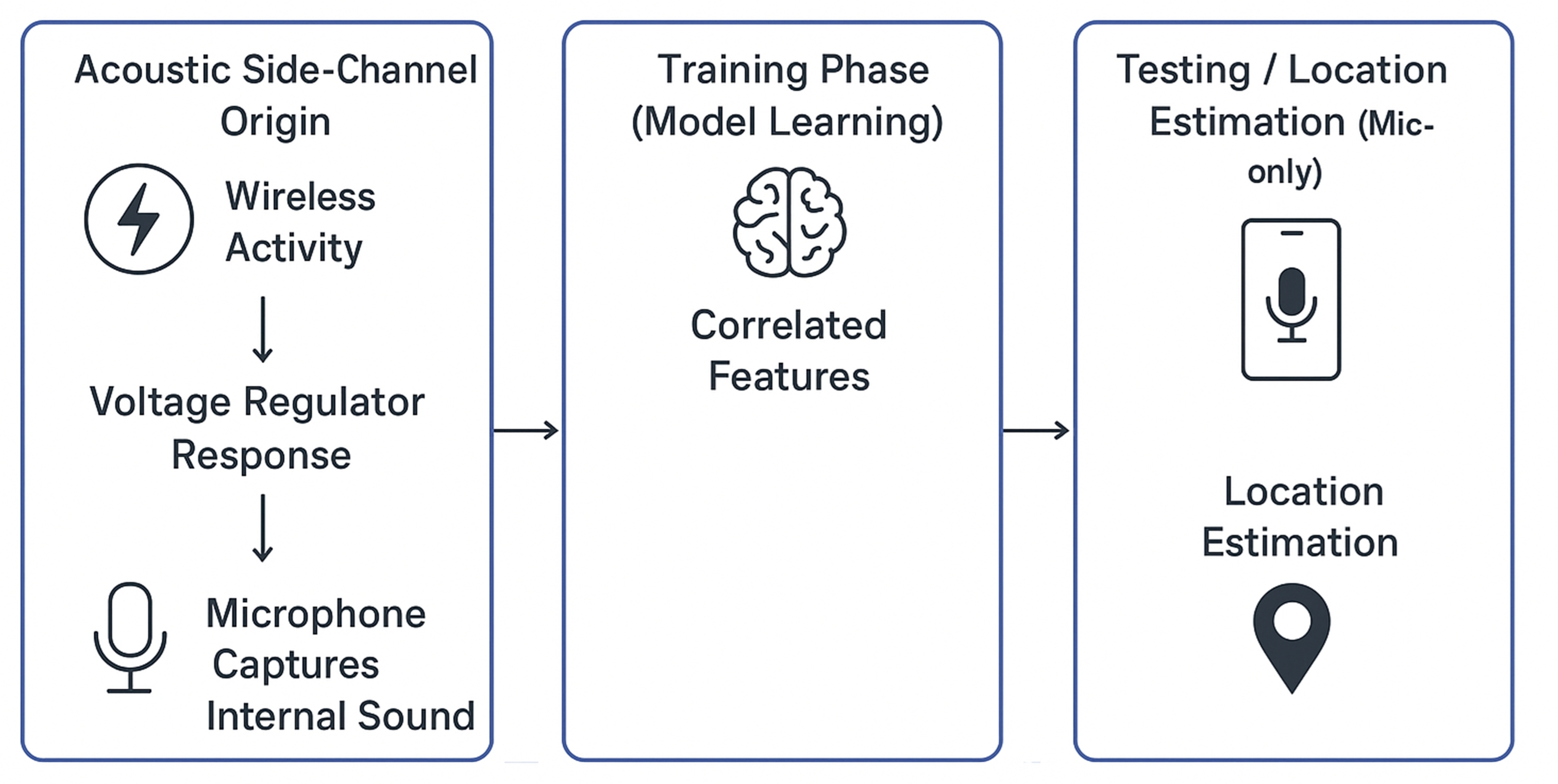
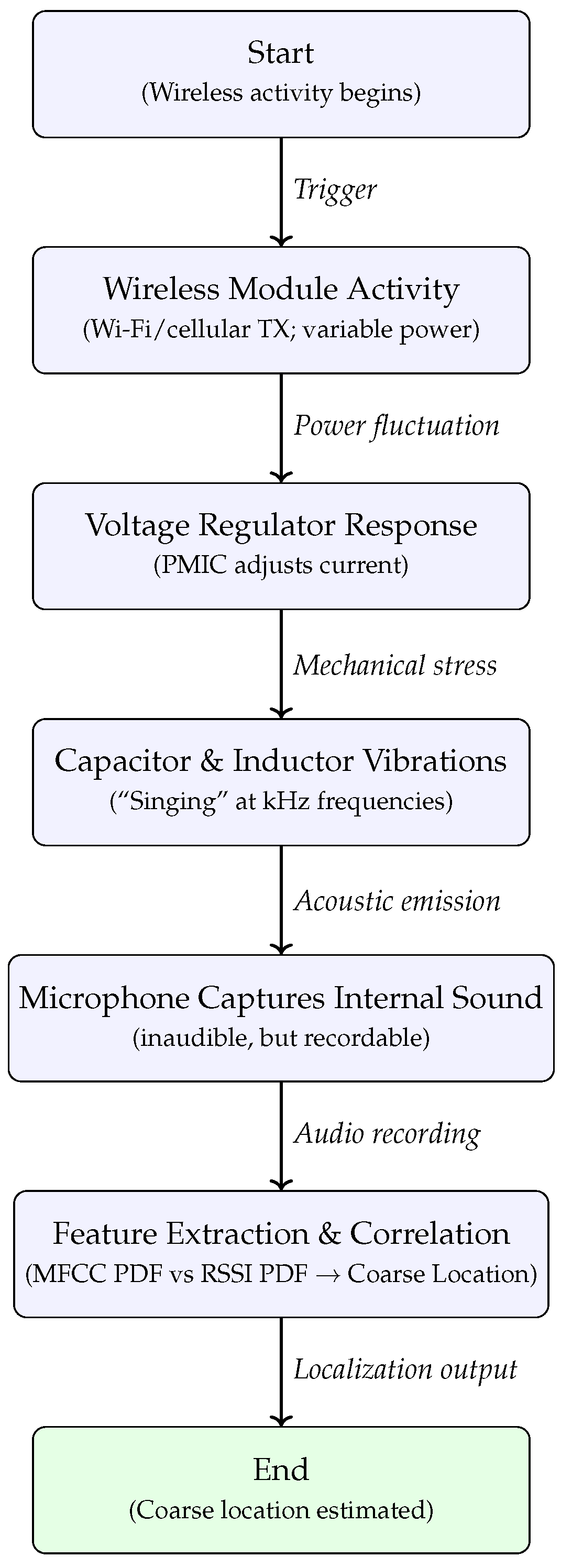
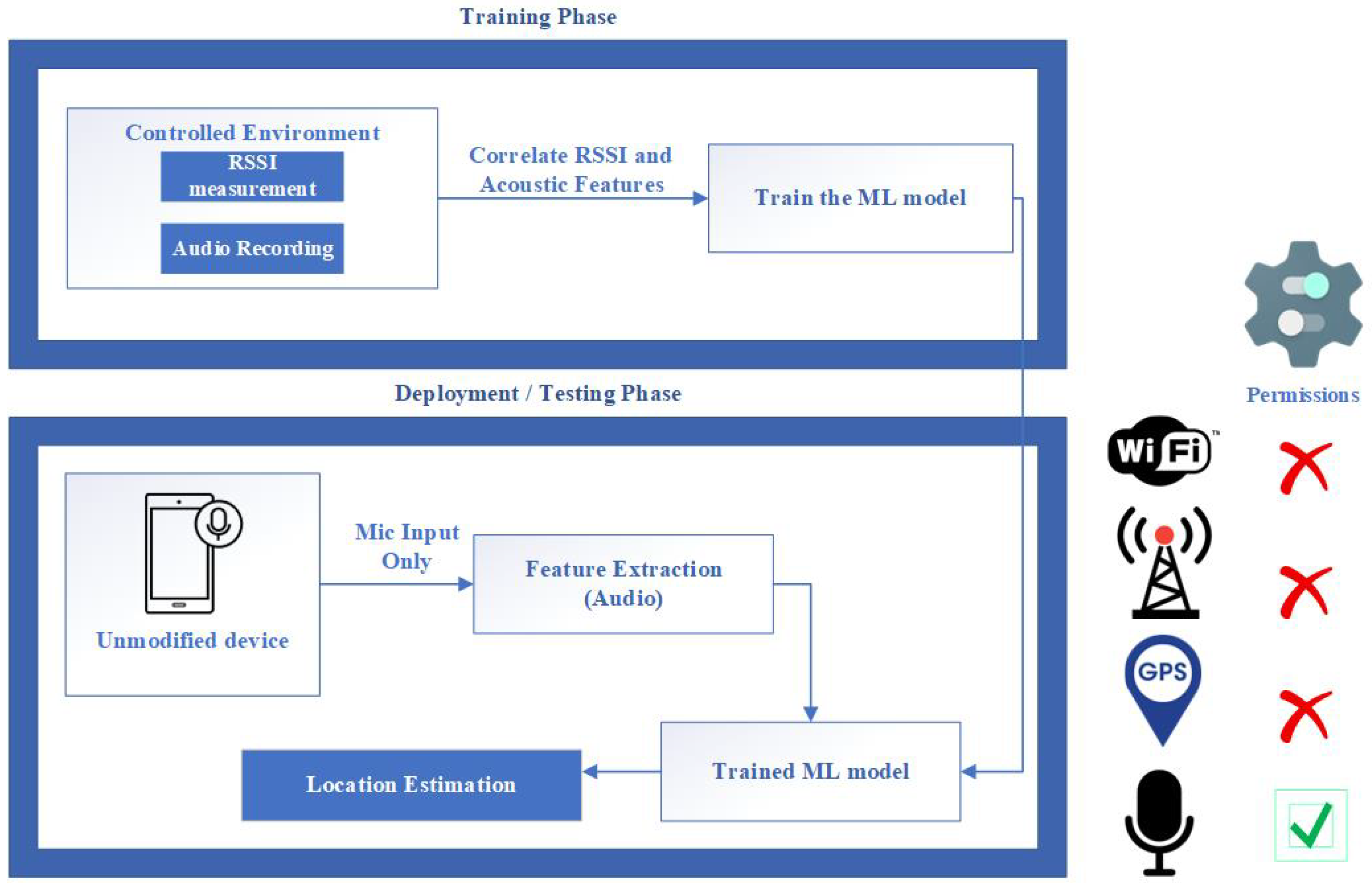
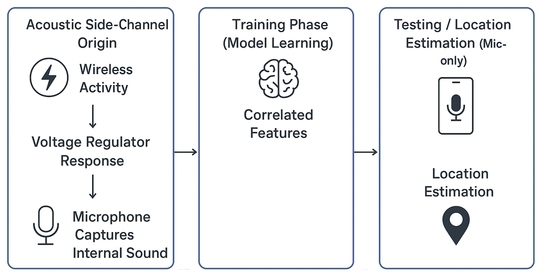
- We describe an acoustic side channel resulting from the power behavior of wireless components in mobile devices.
- 2.
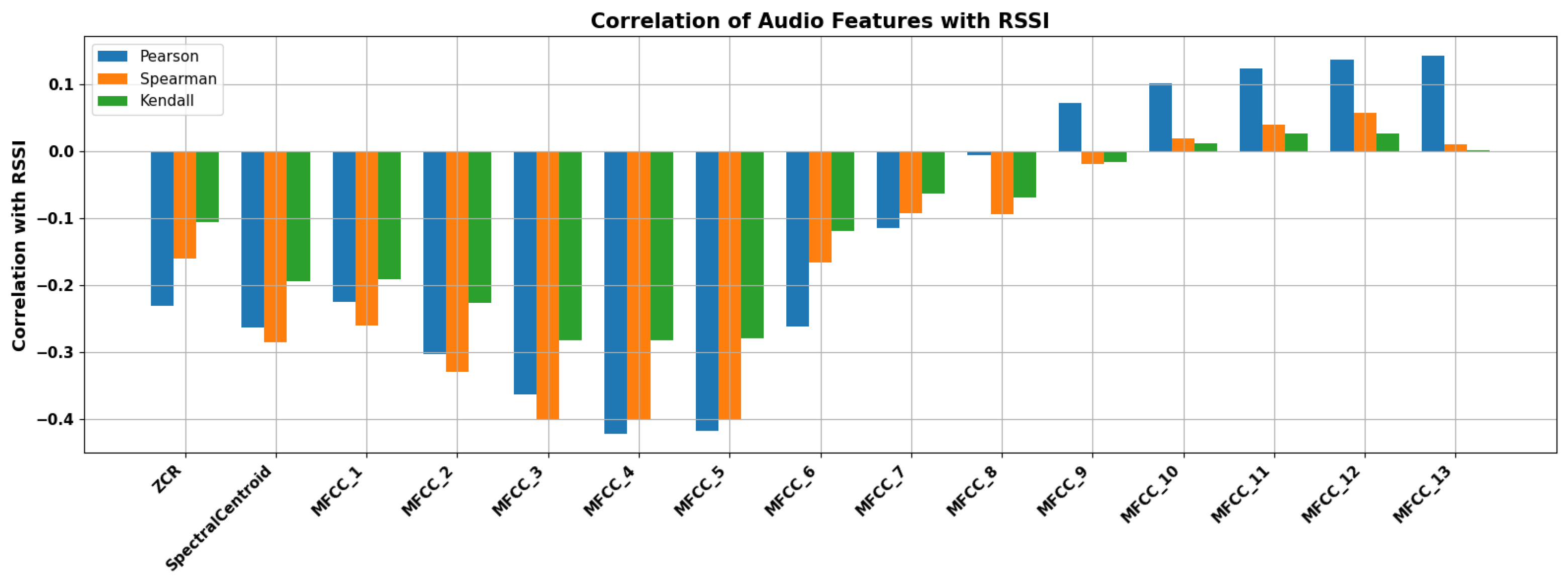
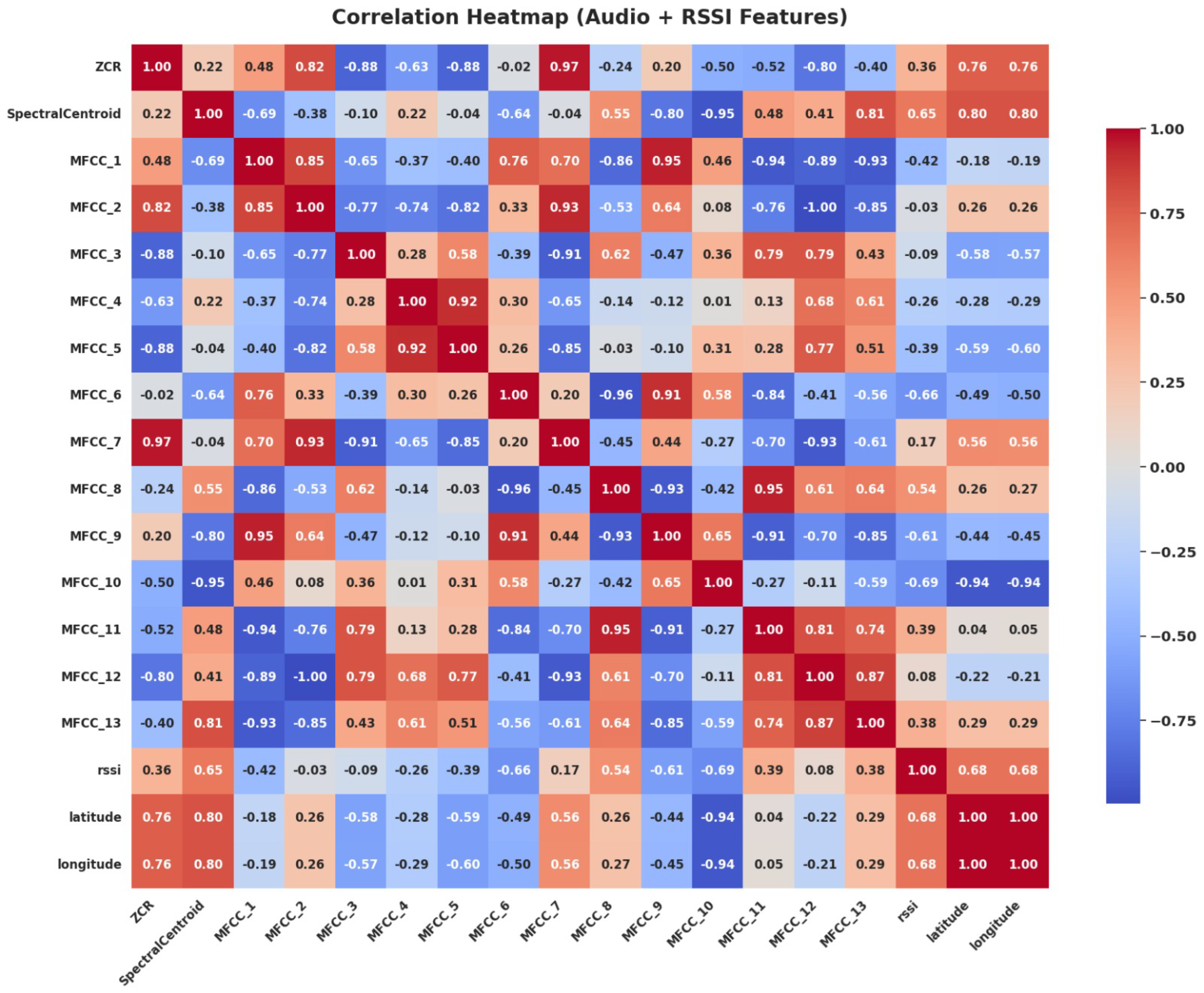
- We show a strong correlation between RSSI values and the MFCC features of audio captured during wireless activity.
- 3.
- We present a working localization model that operates solely on recorded audio signals.
- 4.
- We discuss the broader implications of this approach, including its potential applications in low-connectivity settings and the associated privacy risks of acoustic leakage.
1.2. Work Structure
2. Related Work
3. Background
3.1. Mathematical Formulation of the Problem
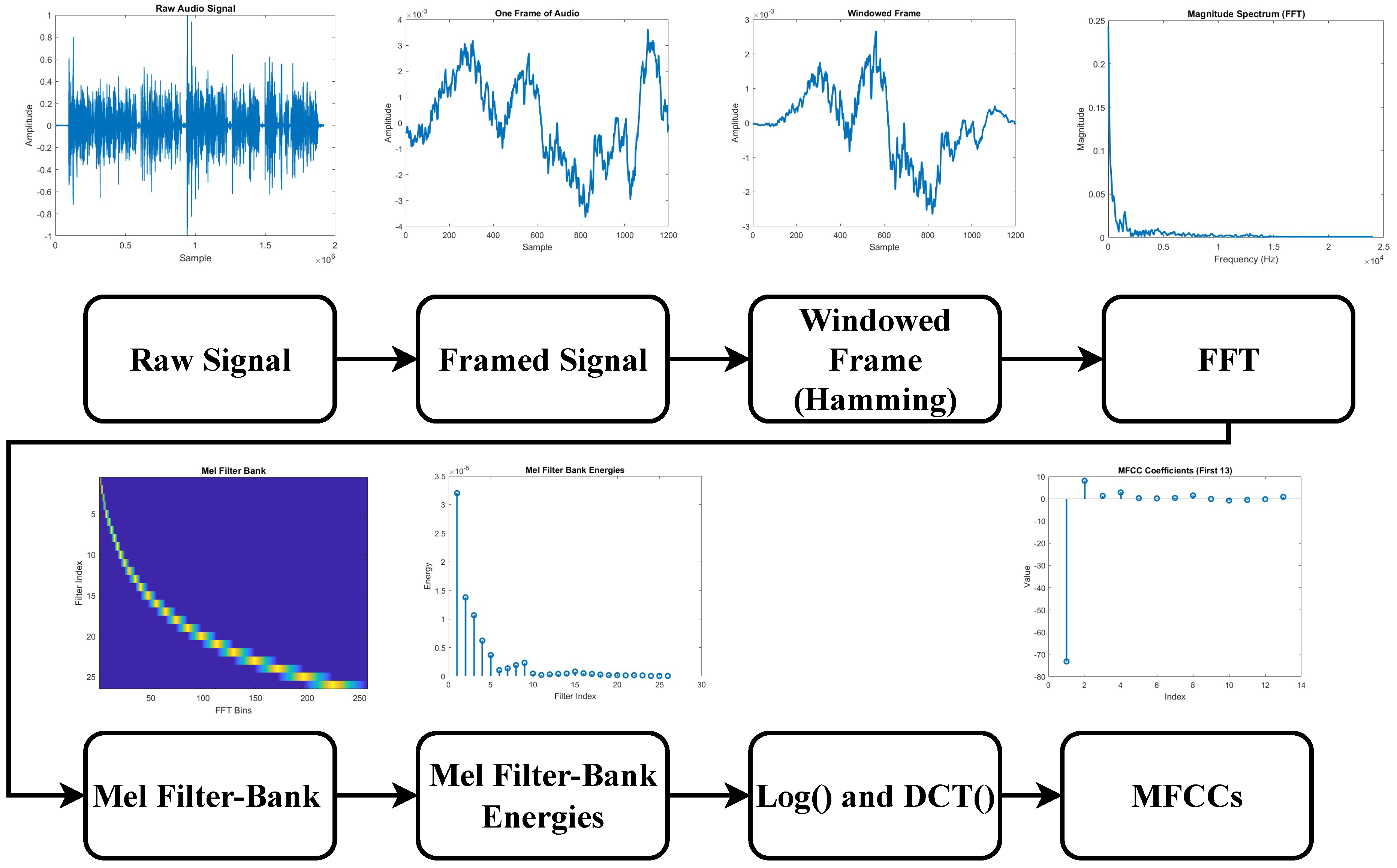
3.2. Mel-Frequency Cepstral Coefficients (MFCCs)
| Algorithm 1: Manual MFCC Extraction from Audio Signal |
|
3.3. Description of Machine Learning (ML) Models for Localization
4. Where the Sound Comes From: The Physical Basis of the Side Channel
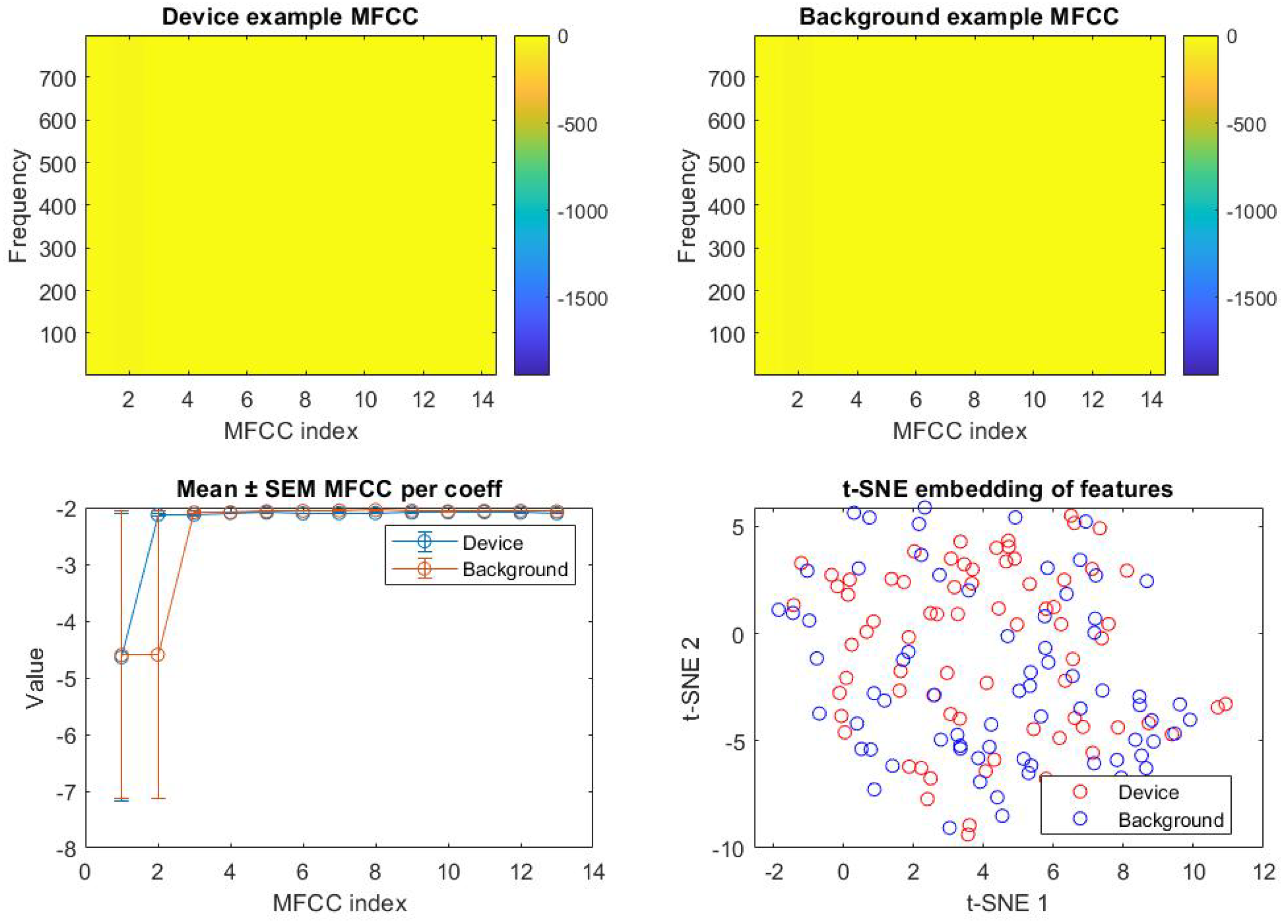
4.1. Experimental Proof That MFCCs Capture Smartphone Component Emissions
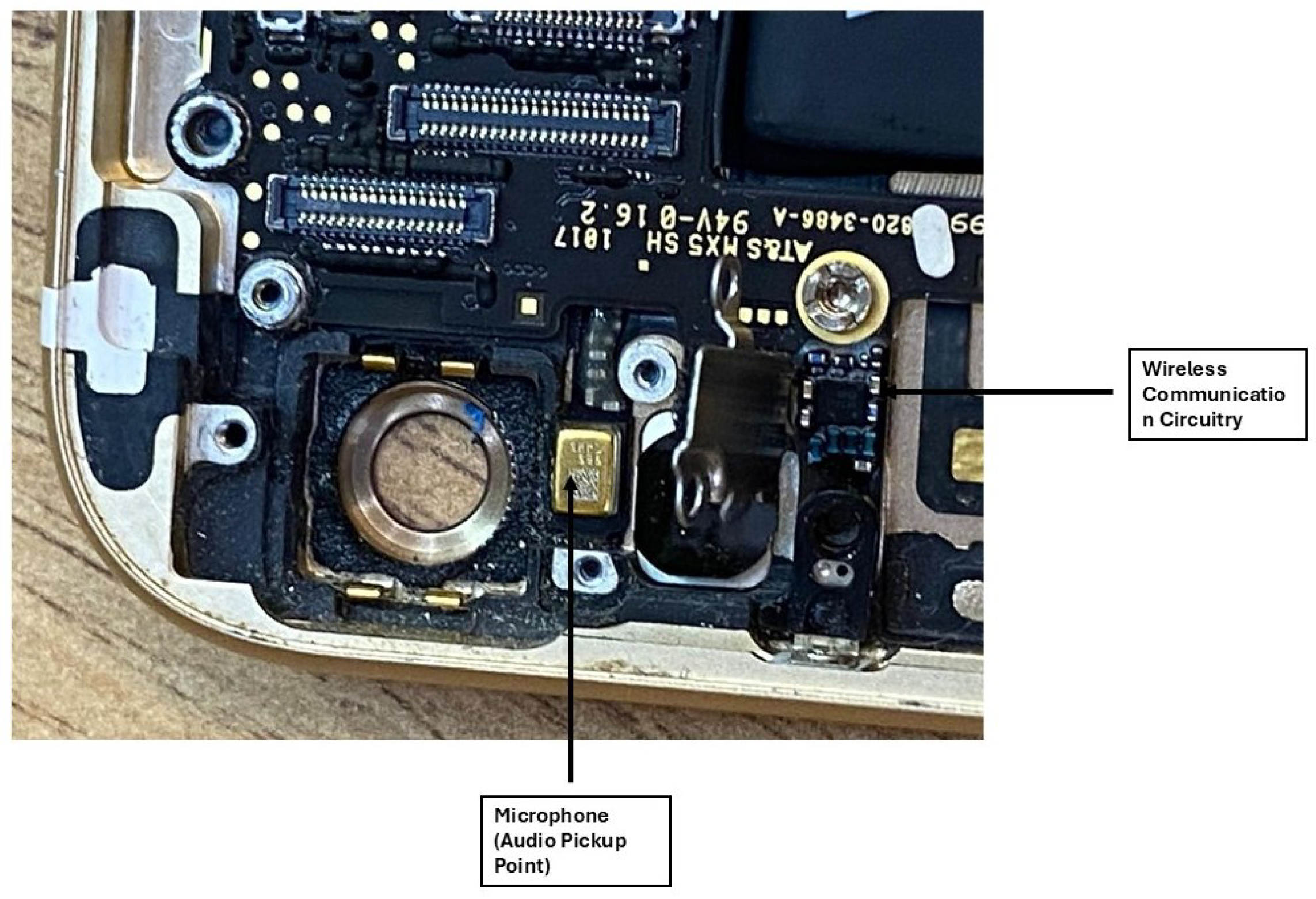
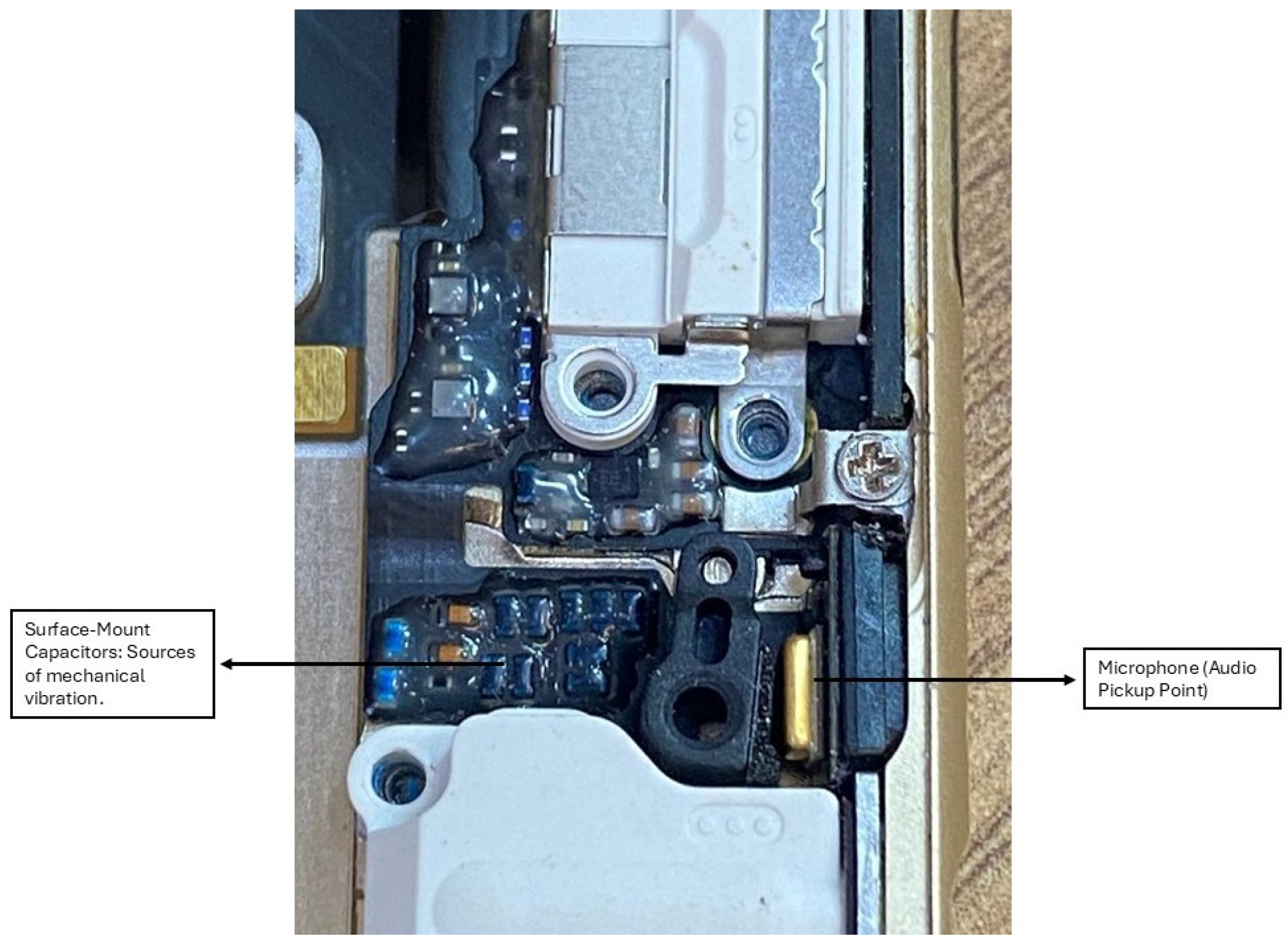
4.2. Annotated Views of Power and Audio Components in iPhone 6
5. Threat Model and Assumptions
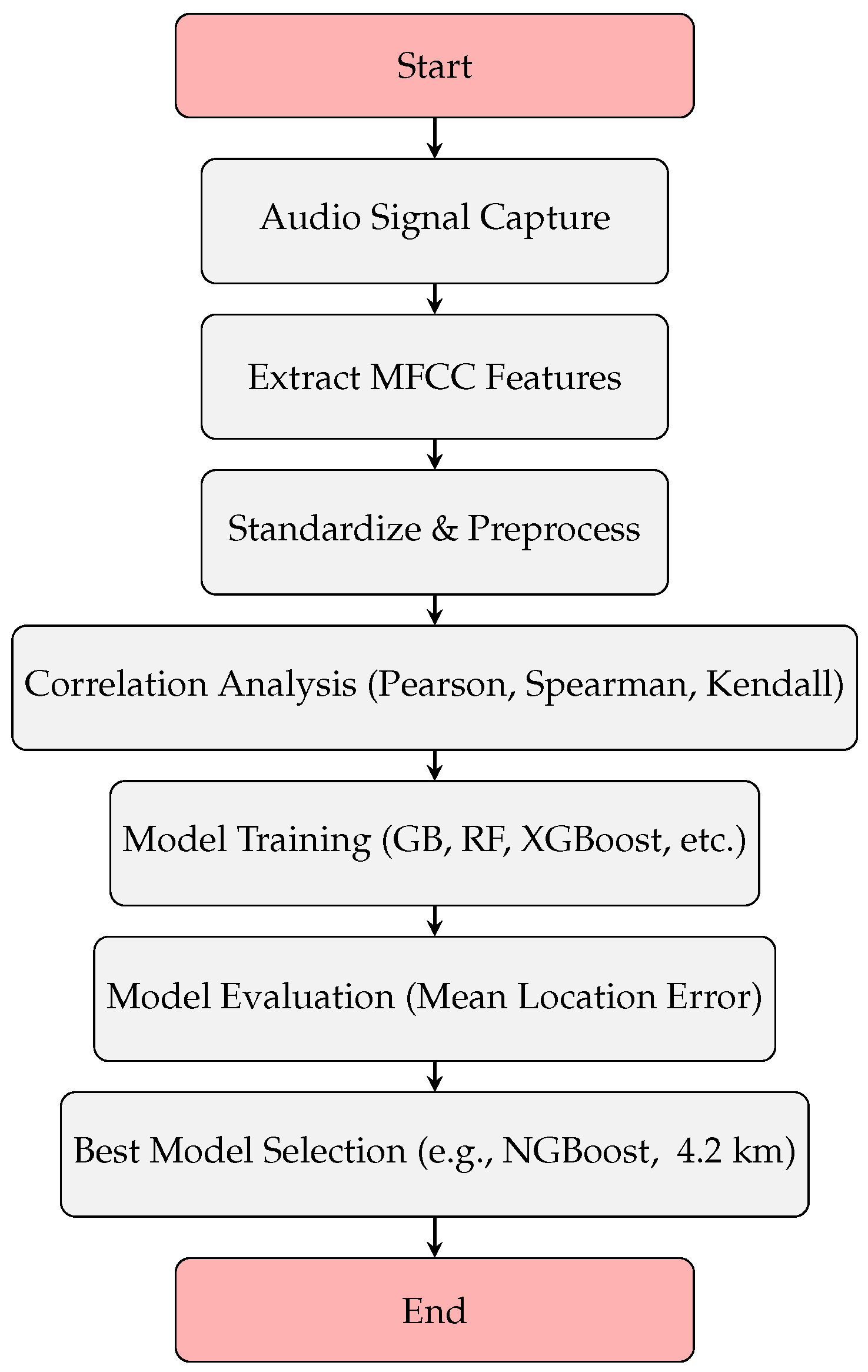
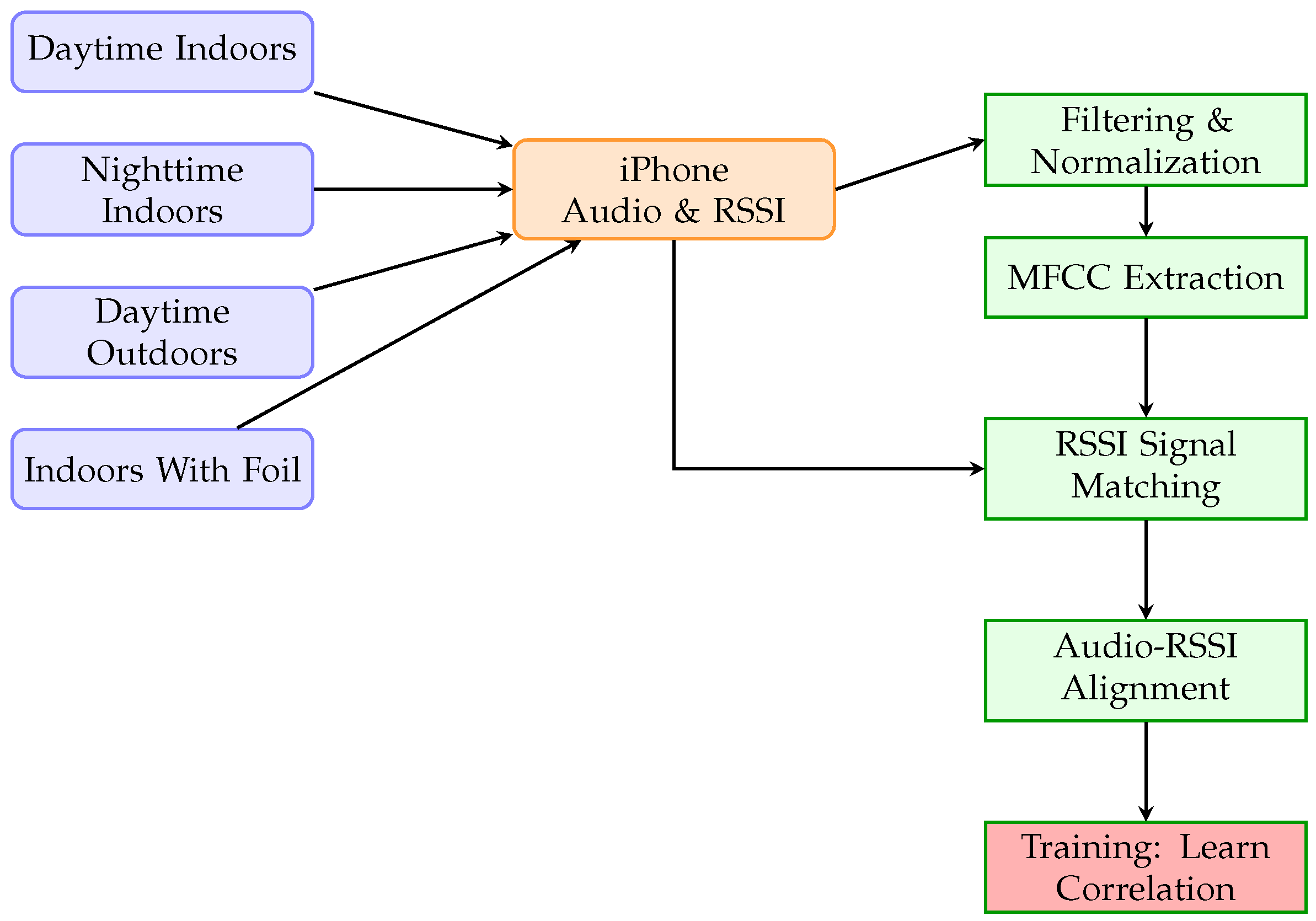
6. Analysis and Methodology
7. Experimental Setup
8. Results
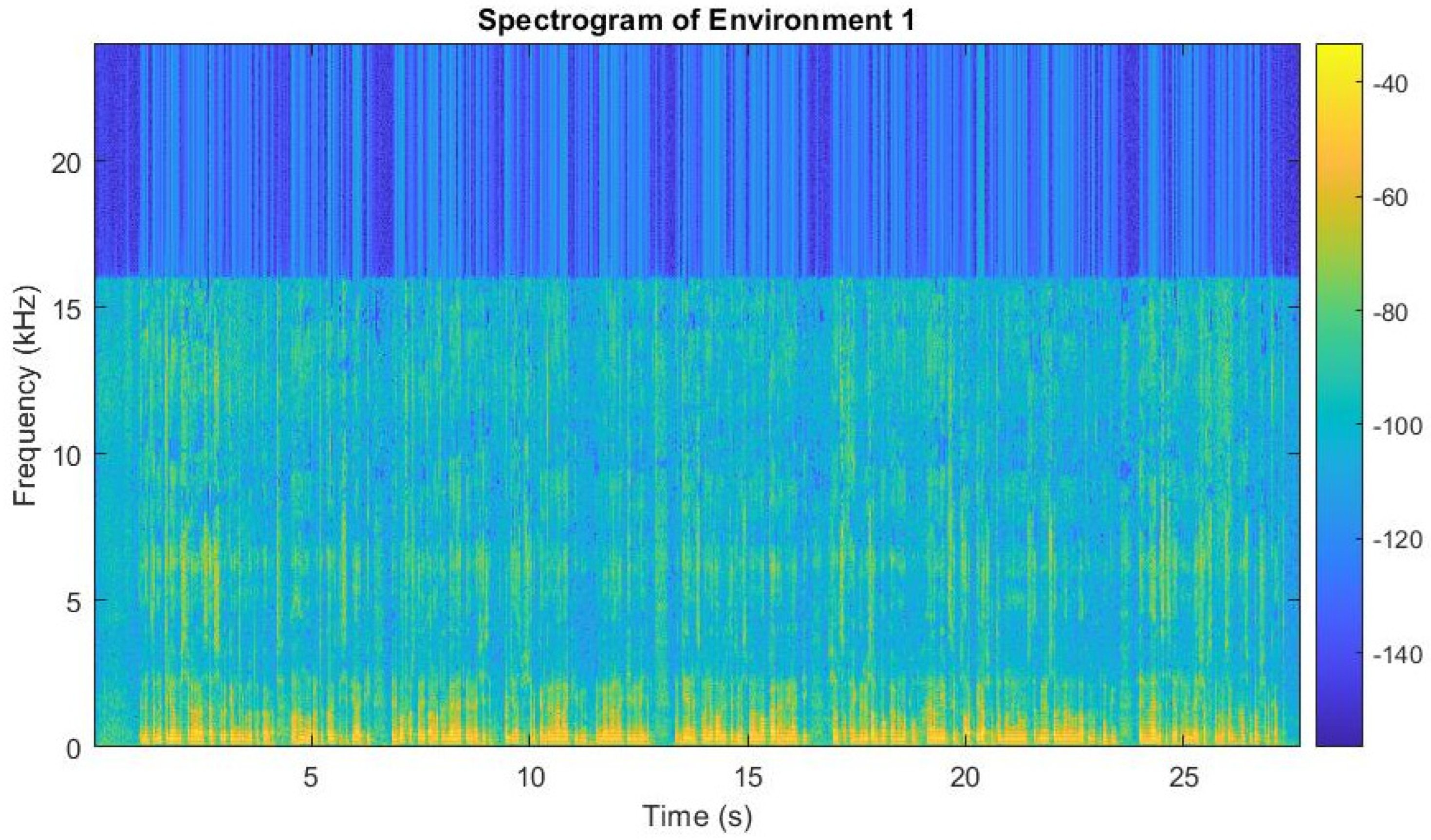
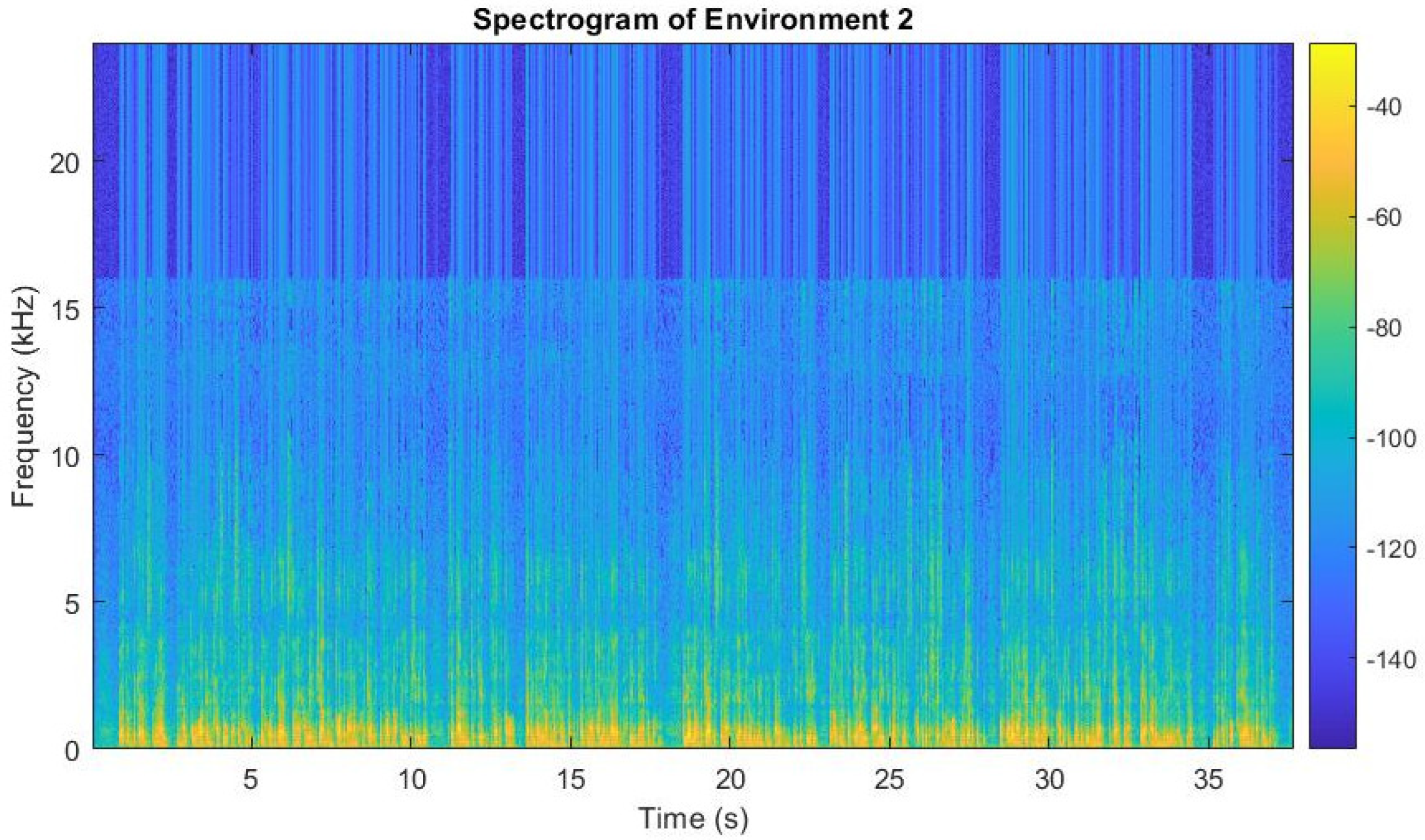
Spectrogram Analysis of Acoustic Emissions
9. Discussion
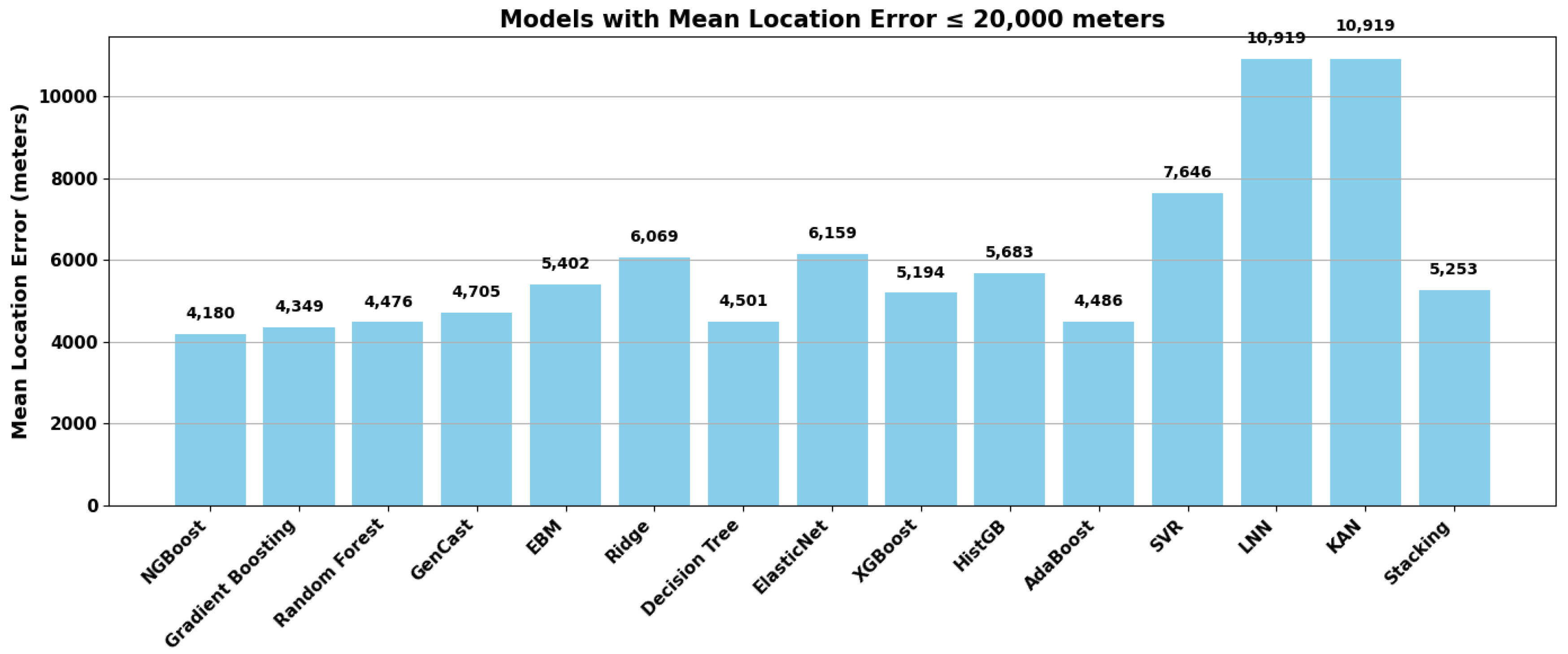
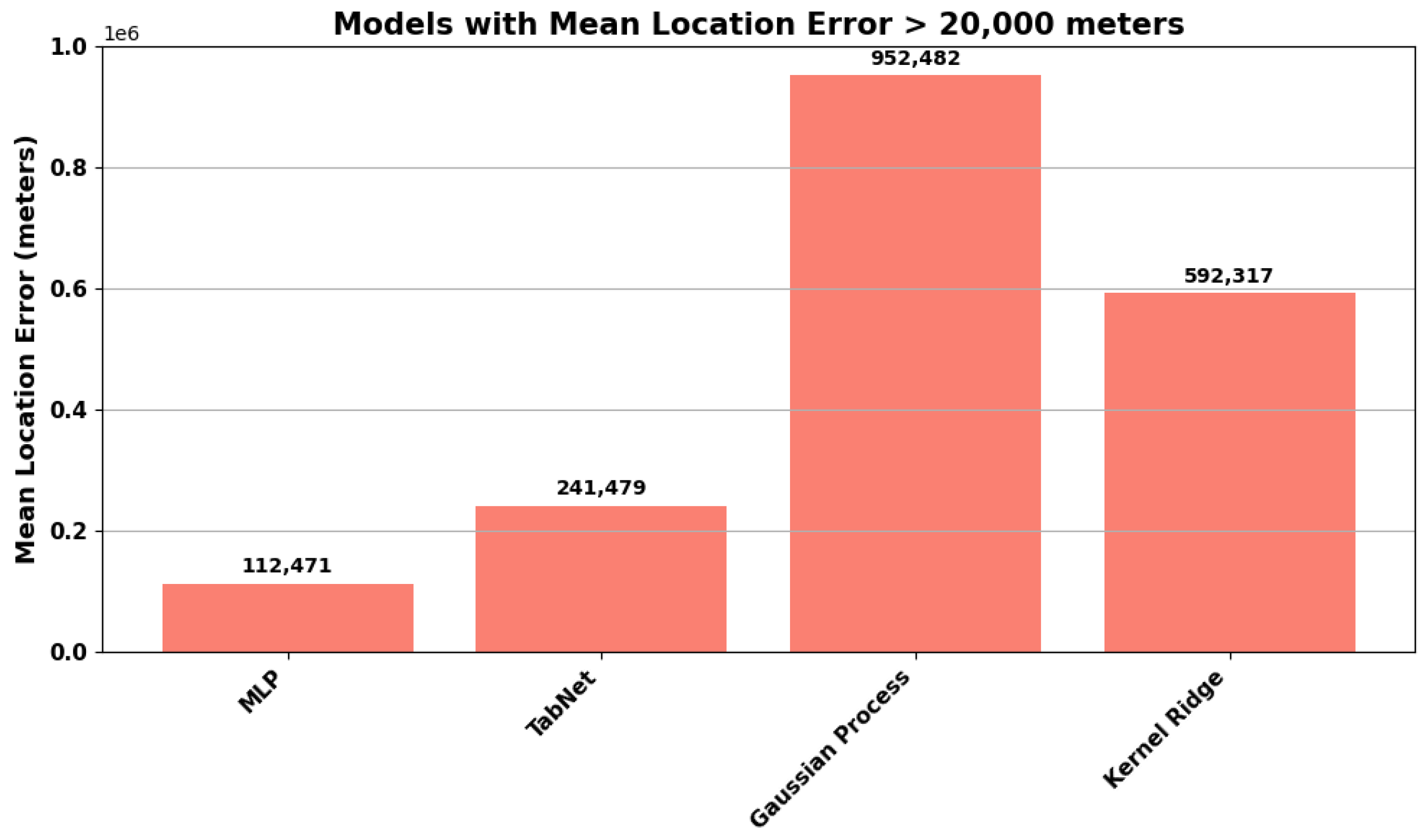
9.1. Model Selection and Justification
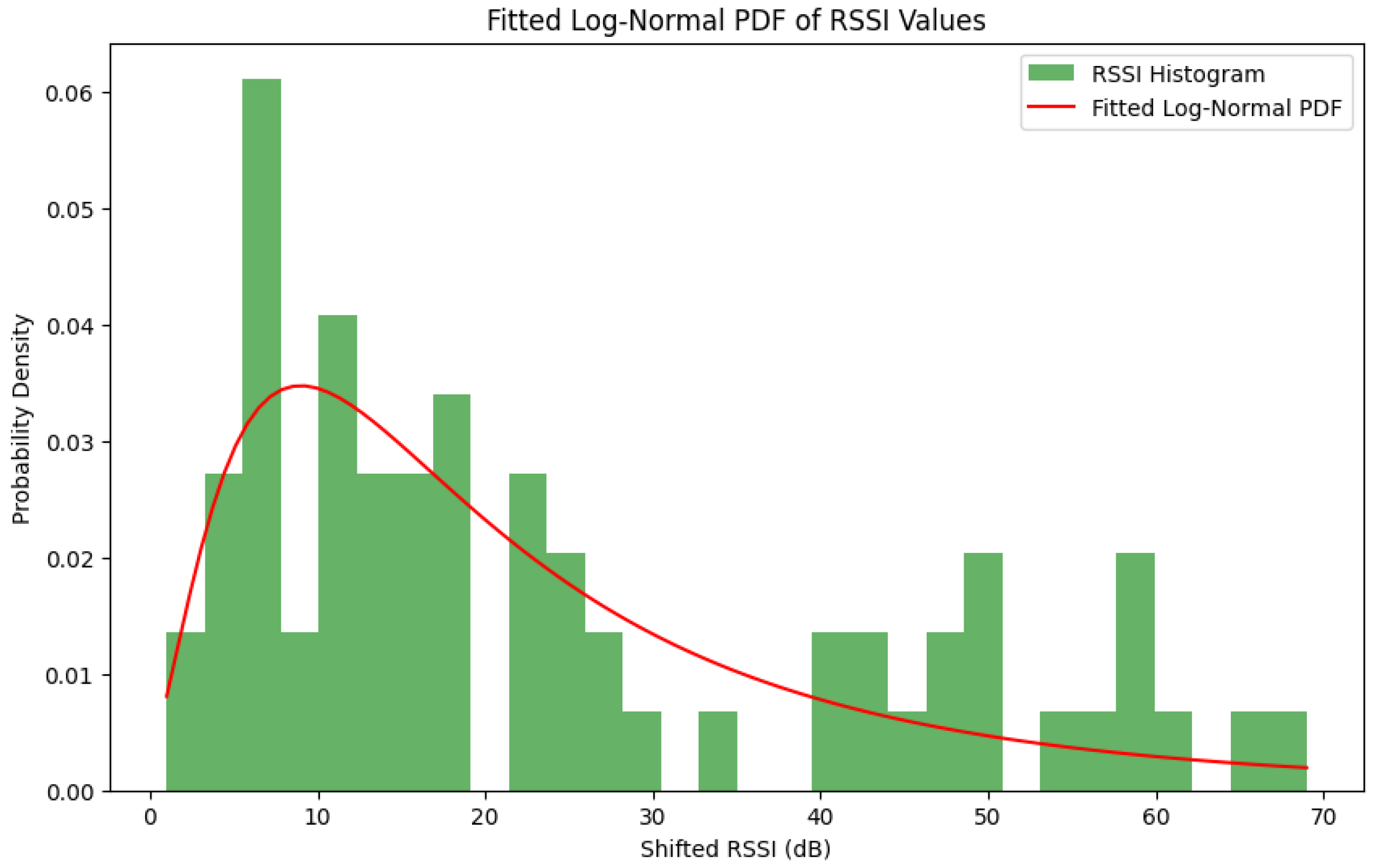
9.2. Dataset Initial Analysis
10. Privacy and Security Implications
11. Details of the Analysis
| Algorithm 2: Audio Denoising and Feature Extraction |
|
| Algorithm 3: Extract MFCC Features from Audio |
|
| Algorithm 4: Merge MFCC Features with RSSI CSV |
|
| Algorithm 5: Visualize MFCC Features on GPS Map |
|
| Algorithm 6: Train and Evaluate Models |
|
| Algorithm 7: Cluster and Evaluate with HDBSCAN |
|
| Algorithm 8: Predict New Location |
|
| Algorithm 9: Estimate Location Error |
|
| Algorithm 10: Visualize Prediction Accuracy |
|
12. Conclusions and Future Work
Author Contributions
Funding
Data Availability Statement
Acknowledgments
Conflicts of Interest
References
- Liu, H.; Darabi, H.; Banerjee, P.; Liu, J. Survey of wireless indoor positioning techniques and systems. IEEE Trans. Syst. Man Cybern. Part C 2007, 37, 1067–1080. [Google Scholar] [CrossRef]
- Chen, X.; Dovis, F.; Peng, S.; Morton, Y. Comparative Studies of GPS Multipath Mitigation Methods Performance. IEEE Trans. Aerosp. Electron. Syst. 2013, 49, 1555–1568. [Google Scholar] [CrossRef]
- Wildemeersch, M.; Slump, C.H.; Rabbachin, A. Acquisition of GNSS signals in urban interference environment. IEEE Trans. Aerosp. Electron. Syst. 2014, 50, 1078–1091. [Google Scholar] [CrossRef]
- Bahl, P.; Padmanabhan, V.N. RADAR: An in-building RF-based user location and tracking system. In Proceedings of the IEEE INFOCOM, Tel Aviv, Israel, 26–30 March 2000. [Google Scholar] [CrossRef]
- Tarzia, S.P.; Dinda, P.A.; Dick, R.P.; Memik, G. Indoor localization without infrastructure using the acoustic background spectrum. In Proceedings of the 9th Annual International Conference on Mobile Systems, Applications, and Services (MobiSys), Washington, DC, USA, 28 June–1 July 2011. [Google Scholar] [CrossRef]
- Priyantha, N.B.; Chakraborty, A.; Balakrishnan, H. The cricket location-support system. In Proceedings of the Sixth Annual International Conference on Mobile Computing and Networking (MobiCom), Boston, MA, USA, 6–11 August 2000. [Google Scholar] [CrossRef]
- Chakraborty, R.; Nadeu, C. Sound-model-based acoustic source localization using distributed microphone arrays. In Proceedings of the 2014 IEEE International Conference on Acoustics, Speech and Signal Processing (ICASSP), Florence, Italy, 4–9 May 2014; IEEE: Piscataway, NJ, USA, 2014; pp. 1–5. [Google Scholar] [CrossRef]
- Narain, S.; Zhang, W.; Wang, G. Echo-ID: Smartphone-Based Acoustic Region Identification. Proc. ACM Interactive Mobile Wearable Ubiquitous Technol. 2020, 4, 1–27. [Google Scholar] [CrossRef]
- Luo, W.; Song, Q.; Yan, Z.; Tan, R.; Lin, G. Indoor Smartphone SLAM with Acoustic Echoes. IEEE Trans. Mob. Comput. 2024, 23, 6634–6649. [Google Scholar] [CrossRef]
- Cheng, B.; Huang, Y.; Zou, C. Robust Indoor Positioning with Smartphone by Utilizing Encoded Chirp Acoustic Signal. Sensors 2024, 24, 6332. [Google Scholar] [CrossRef]
- Zhang, Z.; Lee, M.; Choi, S. Deep-Learning-Based Wi-Fi Indoor Positioning System Using Continuous CSI of Trajectories. Sensors 2021, 21, 5776. [Google Scholar] [CrossRef] [PubMed]
- Khan, D.; Alonazi, M.; Abdelhaq, M.; Al Mudawi, N.; Algarni, A.; Jalal, A.; Liu, H. Robust human locomotion and localization activity recognition over multisensory. Front. Physiol. 2024, 15, 1344887. [Google Scholar] [CrossRef] [PubMed]
- Genkin, D.; Shamir, A.; Tromer, E. RSA key extraction via low-bandwidth acoustic cryptanalysis. In Proceedings of the Advances in Cryptology—CRYPTO 2014, Santa Barbara, CA, USA, 17–21 August 2014. [Google Scholar] [CrossRef]
- Adhin, V.S.; Maliekkal, A.; Mukilan, K.; Sanjay, K.; Chitra, R.; James, A.P. Acoustic Side Channel Attack for Device Identification using Deep Learning Models. In Proceedings of the 2021 IEEE International Midwest Symposium on Circuits and Systems (MWSCAS), Lansing, MI, USA, 9–11 August 2021; pp. 857–860. [Google Scholar] [CrossRef]
- Hailu, T.G.; Guo, X.; Si, H.; Li, L.; Zhang, Y. Theories and methods for indoor positioning systems: A comparative analysis, challenges, and prospective measures. Sensors 2024, 24, 6876. [Google Scholar] [CrossRef] [PubMed]
- Jeon, Y.; Kim, M.; Kim, H.; Yoon, J.W. I’m Listening to Your Location! Inferring User Location with Acoustic Side Channels. In Proceedings of the World Wide Web Conference (WWW), Lyon, France, 23–27 April 2018; pp. 339–348. [Google Scholar] [CrossRef]
- Nagaraja, S.; Shah, R. VoIPLoc: Passive VoIP Call Provenance via Acoustic Side-Channels. In Proceedings of the ACM Conference on Security and Privacy in Wireless and Mobile Networks (WiSec), Seoul, Republic of Korea, 27–29 May 2021; p. 12. [Google Scholar] [CrossRef]
- Amro, O.; Jaswanth, S.; Banoth, S.D.; Chatterjee, U. i-Know What You Do: Privacy Evaluation of Apple Smartphones with Remote Acoustic Side-Channels. In Proceedings of the International Symposium on Quality Electronic Design (ISQED), San Francisco, CA, USA, 23–25 April 2025. [Google Scholar] [CrossRef]
- Stevens, S.S.; Volkmann, J.; Newman, E.B. A Scale for the Measurement of the Psychological Magnitude Pitch. J. Acoust. Soc. Am. 1937, 8, 185–190. [Google Scholar] [CrossRef]
- Hoerl, A.E.; Kennard, R.W. Ridge regression: Biased estimation for nonorthogonal problems. Technometrics 1970, 12, 55–67. [Google Scholar] [CrossRef]
- Zou, H.; Hastie, T. Regularization and variable selection via the elastic net. J. R. Stat. Soc. Ser. B 2005, 67, 301–320. [Google Scholar] [CrossRef]
- Breiman, L. Random forests. Mach. Learn. 2001, 45, 5–32. [Google Scholar] [CrossRef]
- Freund, Y.; Schapire, R.E. A decision-theoretic generalization of on-line learning and an application to boosting. J. Comput. Syst. Sci. 1997, 55, 119–139. [Google Scholar] [CrossRef]
- Friedman, J.H. Greedy function approximation: A gradient boosting machine. Ann. Stat. 2001, 29, 1189–1232. [Google Scholar] [CrossRef]
- Duan, T.; Avati, A.; Ding, D.Y.; Thai, S.; Basu, S.O.; Ng, A.Y. NGBoost: Natural gradient boosting for probabilistic prediction. In Proceedings of the International Conference on Machine Learning (ICML), Vienna, Austria, 12–18 July 2020. [Google Scholar]
- Caruana, R.; Lou, Y.; Gehrke, J.; Koch, P.; Sturm, M.; Elhadad, N. Intelligible models for healthcare: Predicting pneumonia risk and hospital 30-day readmission. In Proceedings of the 21th ACM SIGKDD International Conference on Knowledge Discovery and Data Mining, Sydney, Australia, 10–13 August, 2015; pp. 1721–1730. [Google Scholar] [CrossRef]
- Drucker, H.; Burges, C.J.; Kaufman, L.; Smola, A.; Vapnik, V. Support vector regression machines. In Advances in Neural Information Processing Systems; MIT Press: Cambridge, MA, USA, 1997; Volume 9, pp. 155–161. Available online: https://www.researchgate.net/publication/309185766_Support_vector_regression_machines (accessed on 21 October 2025).
- Yan, L.; Guo, Y.; Chen, X.; Mei, H. A Study on Power Side Channels on Mobile Devices. arXiv 2015, arXiv:1512.07972. [Google Scholar] [CrossRef]
- Wang, P.; Nagaraja, S.; Bourquard, A.; Gao, H.; Yan, J. SoK: Acoustic Side Channels. arXiv 2023, arXiv:2308.03806. [Google Scholar] [CrossRef]
- Arp, D.; Quiring, E.; Wressnegger, C.; Rieck, K. Privacy Threats through Ultrasonic Side Channels on Mobile Devices. In Proceedings of the EuroSP, Paris, France, 26–28 April 2017. [Google Scholar] [CrossRef]
- Genkin, D.; Nissan, N.; Schuster, R.; Tromer, E. Lend Me Your Ear: Passive Remote Physical Side Channels on PCs. In Proceedings of the USENIX Security Symposium, Boston, MA, USA, 10–12 August 2022; Available online: https://www.usenix.org/system/files/sec22-genkin.pdf (accessed on 21 October 2025).
- Xu, H.; Fan, Z.; Liu, X. Application of personalized federated learning methods to environmental sound classification: A comparative study. Eng. Appl. Artif. Intell. 2024, 135, 108760. [Google Scholar] [CrossRef]
- Xu, W.; Hou, Y.; Hung, Y.S.; Zou, Y. A comparative analysis of Spearman’s rho and Kendall’s tau in Normal and Contaminated Normal Models. Signal Process. 2013, 93, 261–276. [Google Scholar] [CrossRef]
- Singh, N.; Sangho, C.; Rajiv, P. Machine learning based indoor localization using Wi-Fi RSSI fingerprints: An overview. IEEE Access 2021, 9, 127150–127174. [Google Scholar] [CrossRef]
- Liashchynskyi, P.; Liashchynskyi, M. Grid search, random search, genetic algorithm: A big comparison for NAS. In Proceedings of the 2019 IEEE Third International Conference on Data Stream Mining & Processing (DSMP), Lviv, Ukraine, 21–25 August 2019; pp. 457–460. [Google Scholar] [CrossRef]
- Mathur, S.; Reznik, A.; Ye, C.; Mukherjee, R.; Rahman, A.; Shah, Y.; Trappe, W.; Mandayam, N. Exploiting the physical layer for enhanced security [Security and Privacy in Emerging Wireless Networks]. IEEE Wirel. Commun. 2010, 17, 63–70. [Google Scholar] [CrossRef]
- Youssef, M.; Agrawala, A. The Horus WLAN location determination system. In Proceedings of the 3rd International Conference on Mobile Systems, Applications, and Services (MobiSys), Seattle, WA, USA, 6–8 June 2005; pp. 205–218. [Google Scholar] [CrossRef]
- Chen, Z.; Zou, H.; Jiang, H.; Zhu, Q.; Xie, L. Fusion of WiFi, Smartphone Sensors and Landmarks Using the Kalman Filter for Indoor Localization. Sensors 2015, 15, 715–732. [Google Scholar] [CrossRef] [PubMed]
- Jekaterynczuk, P.; Kozlowski, K.; Niezabitowski, M. A Survey of Sound Source Localization and Detection Methods and Their Applications. Sensors 2024, 24, 68. [Google Scholar] [CrossRef] [PubMed]
- Nogueira, A.F.R.; Oliveira, H.S.; Machado, J.J.; Tavares, J.M.R. Sound classification and processing of urban environments: A systematic literature review. Sensors 2022, 22, 8608. [Google Scholar] [CrossRef] [PubMed]



| Study/Project | Year | MFCC Features | Environment | Real-Time Prediction | Regression-Based Coordinates | Machine Learning Model | Dataset Size | Main Objective |
|---|---|---|---|---|---|---|---|---|
| Noise Signature Indoor Localization [15] | 2023 | Yes (among features) | Indoor (room-level) | No (post-processed offline) | No (classification of room) | Ensemble classifiers (J48 DT, KNN, MLP, SVM, etc.) | 19 distinct rooms/hallways; 25 min ambient audio per room, segmented into 5 s samples (5700 samples total) | Classify the current room or corridor by its ambient noise “signature” using a smartphone, with no extra infrastructure |
| Echo-ID (Smartphone Echo Region ID) [8] | 2023 | No (uses STFT of echoes) | Indoor (region-level) | Partially (requires 17 s scan) | No (classification of region) | Deep learning classifier (CNN-based) on echo spectra | 5 region contexts (e.g., different rooms); user holds phone at 2 orthogonal angles for 8.5 s each to record chirps per region | Identify which predefined region/room the phone is in by actively emitting chirps and analyzing the acoustic echoes on-device |
| RATBILS (Encoded Chirp Positioning) [10] | 2024 | No | Indoor | Yes (designed for real-time) | Yes (x–y coordinates via TDOA) | No explicit ML (signal processing; improved TOA/TDOA detection) | Two indoor test scenes with multiple acoustic base stations; evaluated regions within a lab setting (sub-1 m accuracy achieved in line-of-sight) | Provide high-accuracy real-time indoor positioning using multilateration of arrival times of coded acoustic chirps with standard smartphone hardware |
| ELF-SLAM (Smartphone Echo SLAM) [9] | 2023 | No | Indoor | Yes (SLAM runs on-device) | Yes (x–y trajectory mapping) | Contrastive deep learning (self-supervised); integrated with IMU for SLAM loop-closure | 3 diverse indoor environments (office, mall, etc.); 128 reference spots in largest site; user walks with phone, echoes collected for mapping | Enable simultaneous localization and mapping using a phone’s own ultrasonic echoes; <1 m accuracy without prior fingerprint database |
| Khan et al. (Audio + IMU Localization) [12] | 2024 | Yes (MFCC) | Indoor & Outdoor | No (batch dataset analysis) | No (context classification) | CNN for environment classification; LSTM for motion/HAR | Two public datasets: Opportunity (indoor wearable data, 12 subjects) and Extrasensory (mixed indoor/outdoor smartphone data from 60 users) | Recognize user context and activities (e.g., locomotion, and whether indoors or outdoors) using smartphone sensors; MFCC features help distinguish environment type |
| Jeon et al. (“I’m Listening to Your Location!”) [16] | 2018 | No (uses ENF signatures) | Indoor | No (requires prior ENF map) | No (location classification) | Signal correlation with ENF database | 4 buildings; each with 3–5 floors; ENF audio recorded and aligned with reference data | Infer coarse location by matching ambient audio to regional ENF power grid noise; requires environmental profiling |
| VOIPLoc (Nagaraja and Shah) [17] | 2021 | No | Indoor (room-scale) | No (requires call recording) | No (differential inference of location) | Statistical analysis of echo fingerprinting | 40 recordings across rooms; used during real VoIP calls; focused on relative location change | Detect whether a user has changed rooms between VoIP calls by analyzing echo profile variations |
| Amro et al. (ISQED’25) [18] | 2025 | Yes (MFCC used on internal audio) | Indoor & Outdoor | No (offline change detection) | No (no absolute location estimation) | MFCC feature tracking and delta analysis with t-SNE and KNN | 10 locations; multiple smartphone sessions with calls triggered to induce wireless activity | Detect relative location changes between consecutive wireless events using internal acoustic emissions |
| our work | 2025 | Yes (MFCC used exclusively) | Indoor & Outdoor (urban areas) | No (offline post-processing) | Yes (regression-based coarse coordinates) | Ensemble models (NGBoost, Gradient Boosting, Random Forest); also tested SVR, MLP, TabNet, etc. | >10 locations; recordings under varied conditions, 30 sec sessions; 5 segments per recording | Passive location provenience using only audio from internal hardware vibrations (no GPS or Wi-Fi scanning) |
Disclaimer/Publisher’s Note: The statements, opinions and data contained in all publications are solely those of the individual author(s) and contributor(s) and not of MDPI and/or the editor(s). MDPI and/or the editor(s) disclaim responsibility for any injury to people or property resulting from any ideas, methods, instructions or products referred to in the content. |
© 2025 by the authors. Licensee MDPI, Basel, Switzerland. This article is an open access article distributed under the terms and conditions of the Creative Commons Attribution (CC BY) license (https://creativecommons.org/licenses/by/4.0/).
Share and Cite
Darabkh, K.A.; Amro, O.M.; Al-Qatanani, F.B. Passive Localization in GPS-Denied Environments via Acoustic Side Channels: Harnessing Smartphone Microphones to Infer Wireless Signal Strength Using MFCC Features. J. Sens. Actuator Netw. 2025, 14, 119. https://doi.org/10.3390/jsan14060119
Darabkh KA, Amro OM, Al-Qatanani FB. Passive Localization in GPS-Denied Environments via Acoustic Side Channels: Harnessing Smartphone Microphones to Infer Wireless Signal Strength Using MFCC Features. Journal of Sensor and Actuator Networks. 2025; 14(6):119. https://doi.org/10.3390/jsan14060119
Chicago/Turabian StyleDarabkh, Khalid A., Oswa M. Amro, and Feras B. Al-Qatanani. 2025. "Passive Localization in GPS-Denied Environments via Acoustic Side Channels: Harnessing Smartphone Microphones to Infer Wireless Signal Strength Using MFCC Features" Journal of Sensor and Actuator Networks 14, no. 6: 119. https://doi.org/10.3390/jsan14060119
APA StyleDarabkh, K. A., Amro, O. M., & Al-Qatanani, F. B. (2025). Passive Localization in GPS-Denied Environments via Acoustic Side Channels: Harnessing Smartphone Microphones to Infer Wireless Signal Strength Using MFCC Features. Journal of Sensor and Actuator Networks, 14(6), 119. https://doi.org/10.3390/jsan14060119