Physiological Responses and Heat Tolerance Evaluation of Eight Varieties of Primula vulgaris Under Natural High Temperatures
Abstract
1. Introduction
2. Materials and Methods
2.1. Plant Materials
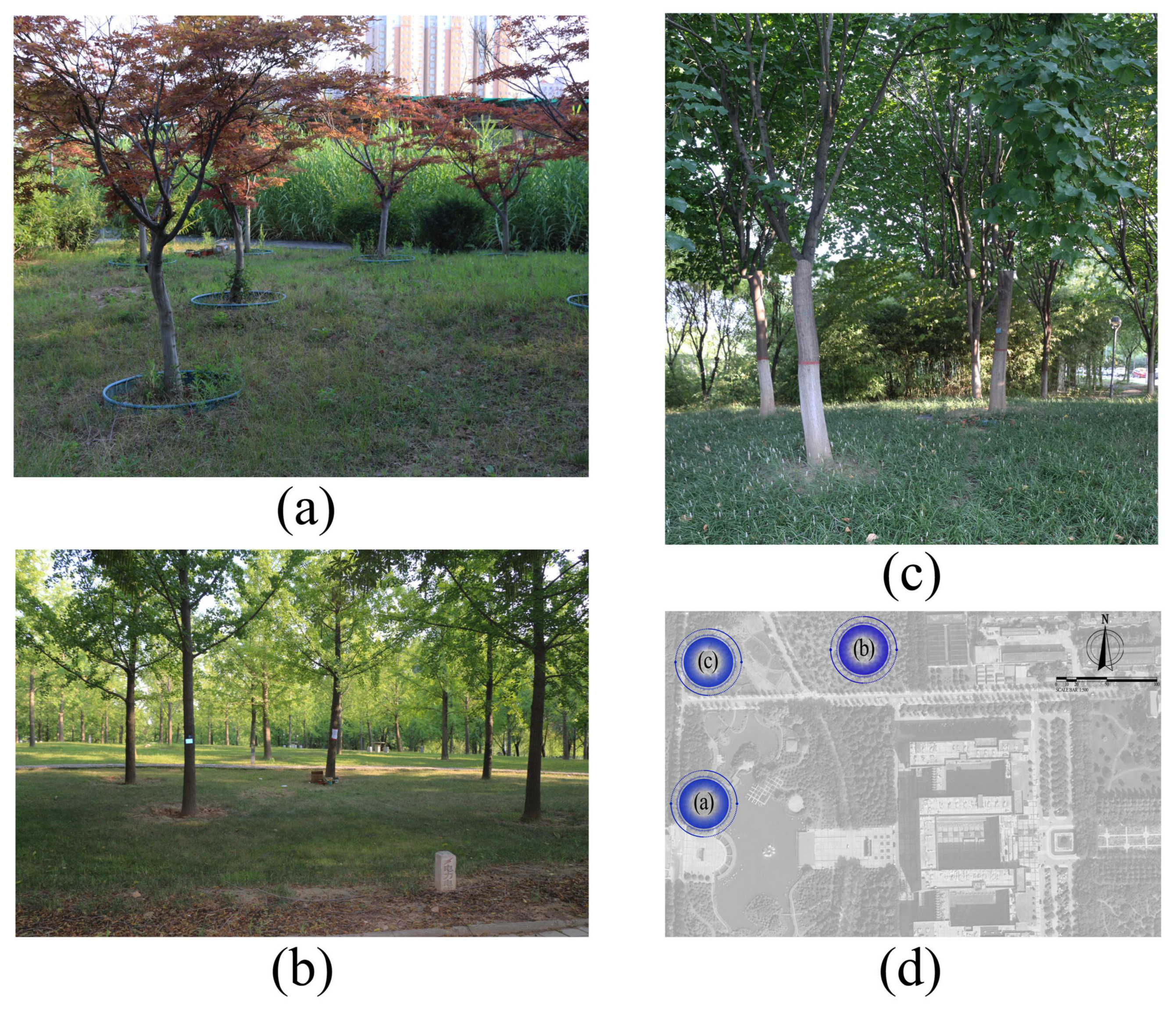
2.2. Experimental Location
2.3. Morphological and Physiological Measurements
2.3.1. Leaf Area Reduction Rate
2.3.2. Stomatal Structure of Leaves
2.3.3. Heat Damage Index Observation
2.3.4. Physiological Indicator Measurements
2.4. Quantitative Real-Time PCR Analysis
2.5. Comprehensive Heat Tolerance Evaluation
2.6. Data Statistics and Analysis
3. Results
3.1. Changes in the Heat Damage Index of P. vulgaris Leaves Under Natural High Temperatures
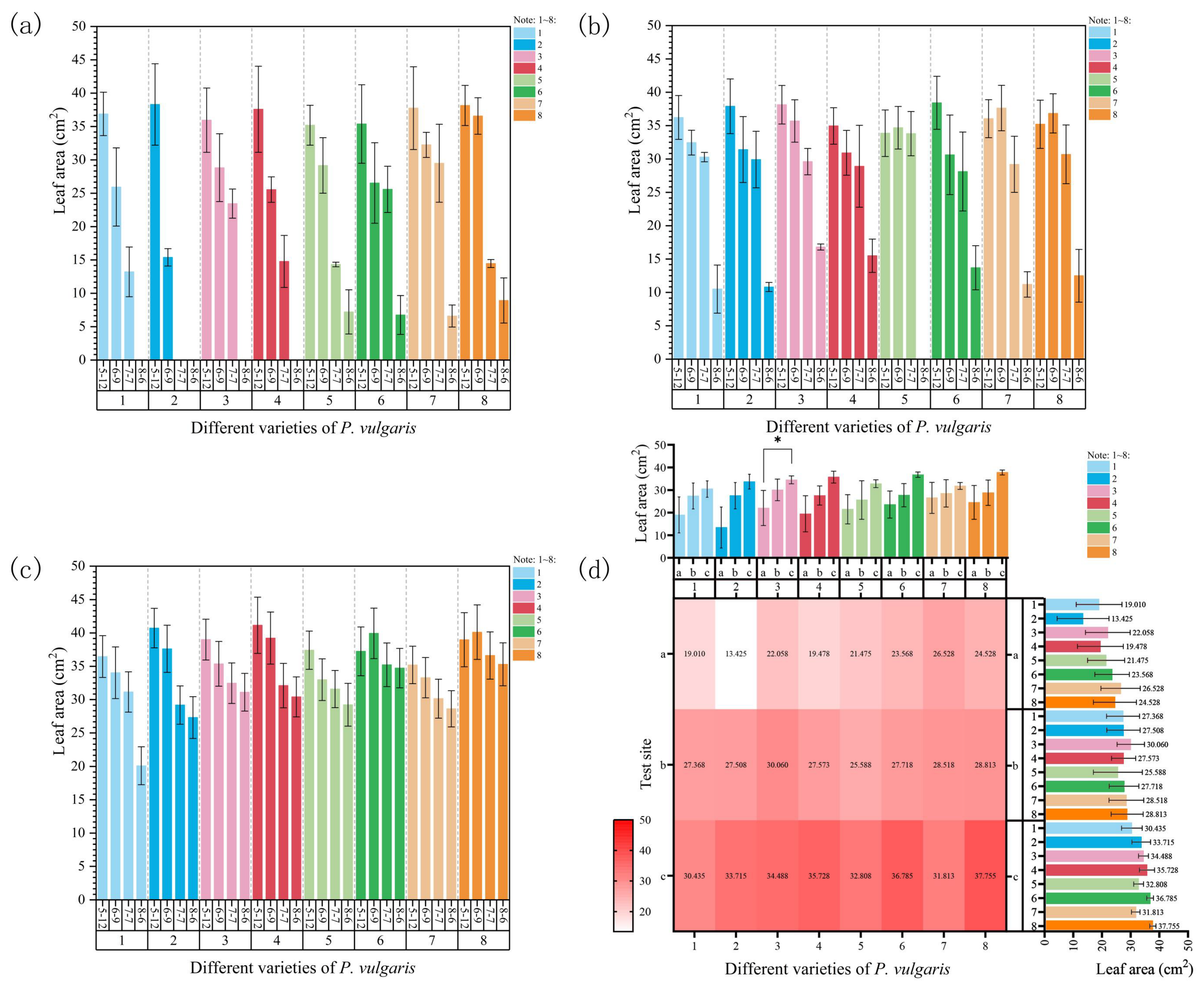
3.1.1. Leaf Area
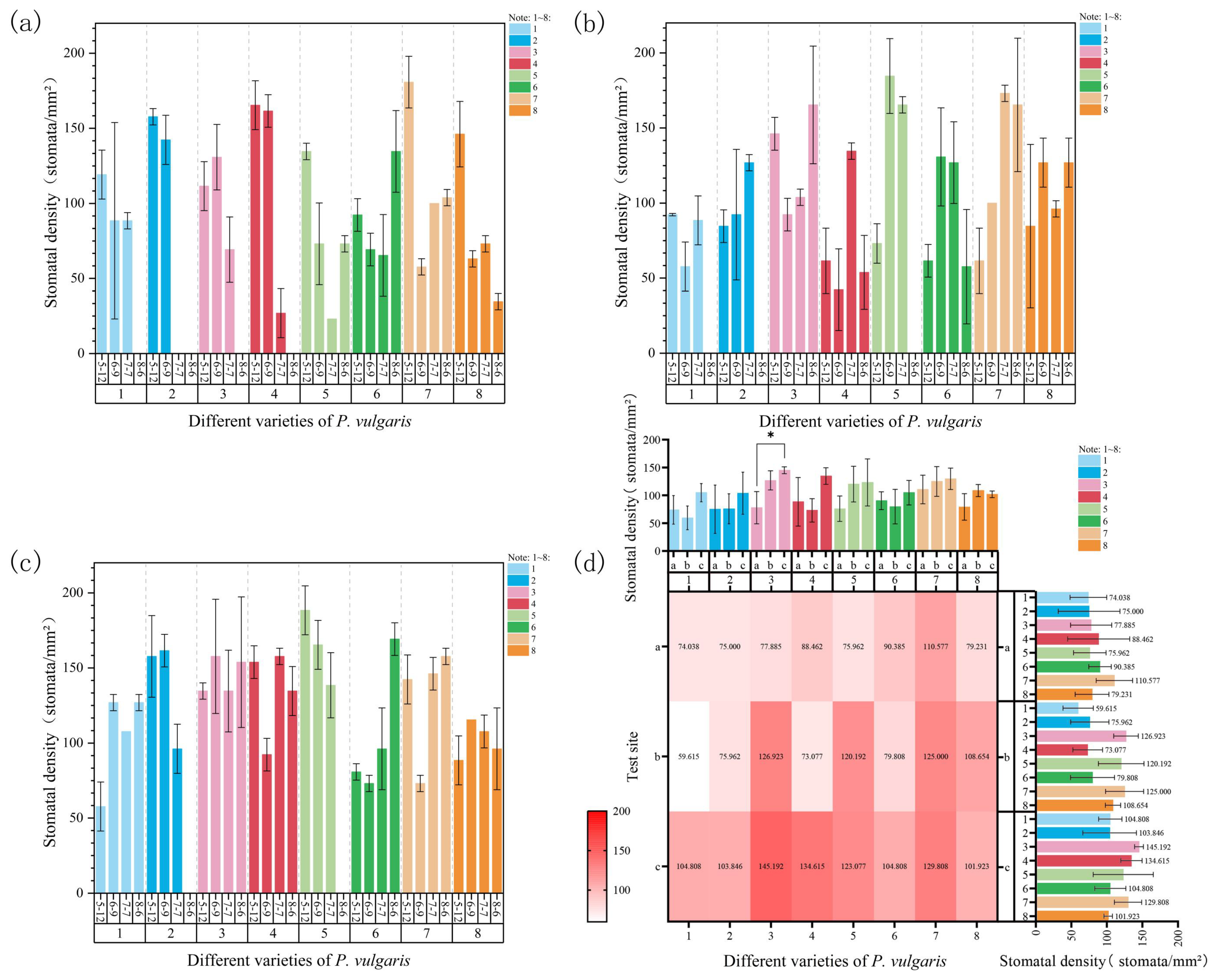
3.1.2. Changes in Stomatal Density
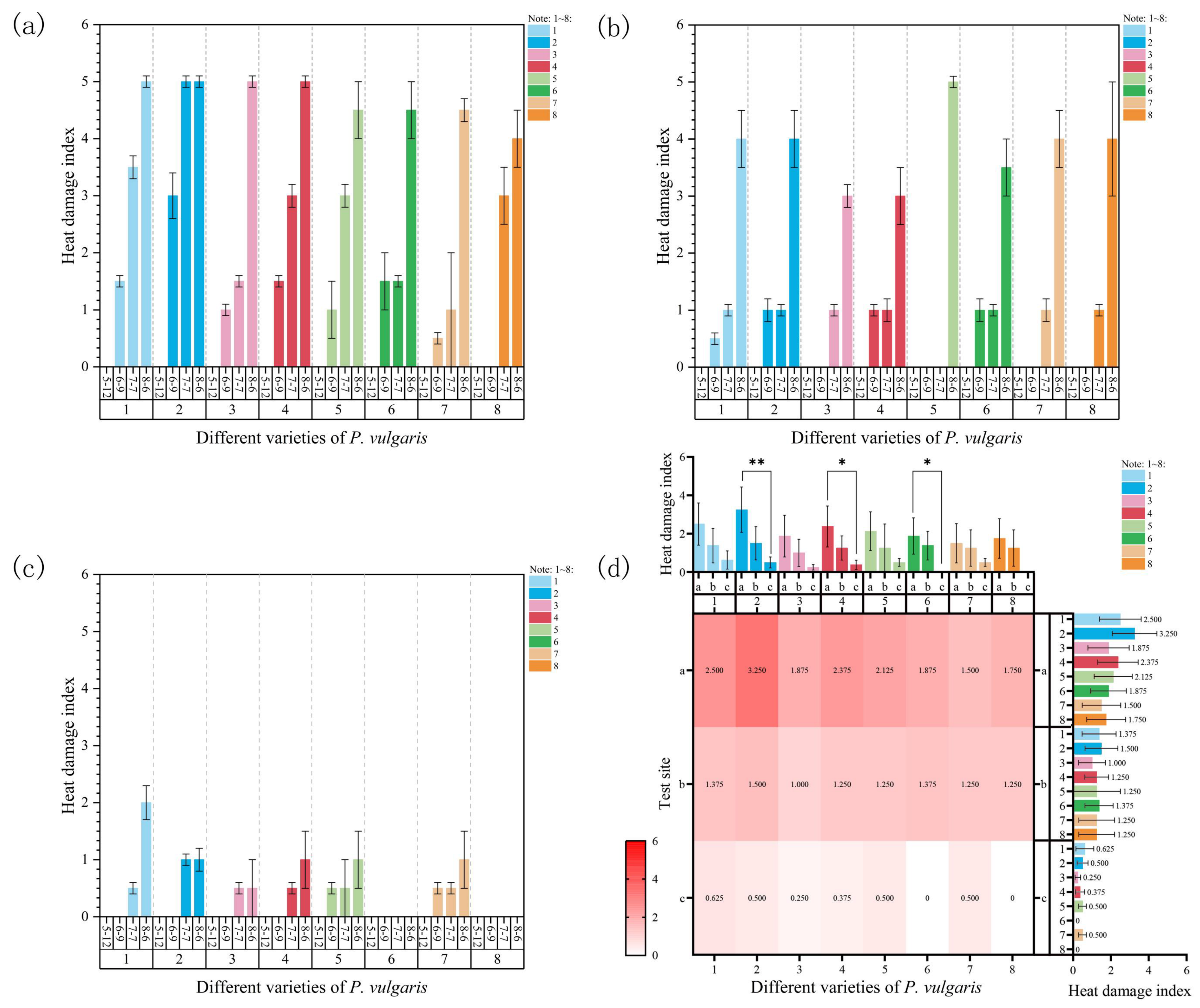
3.1.3. Heat Damage Index
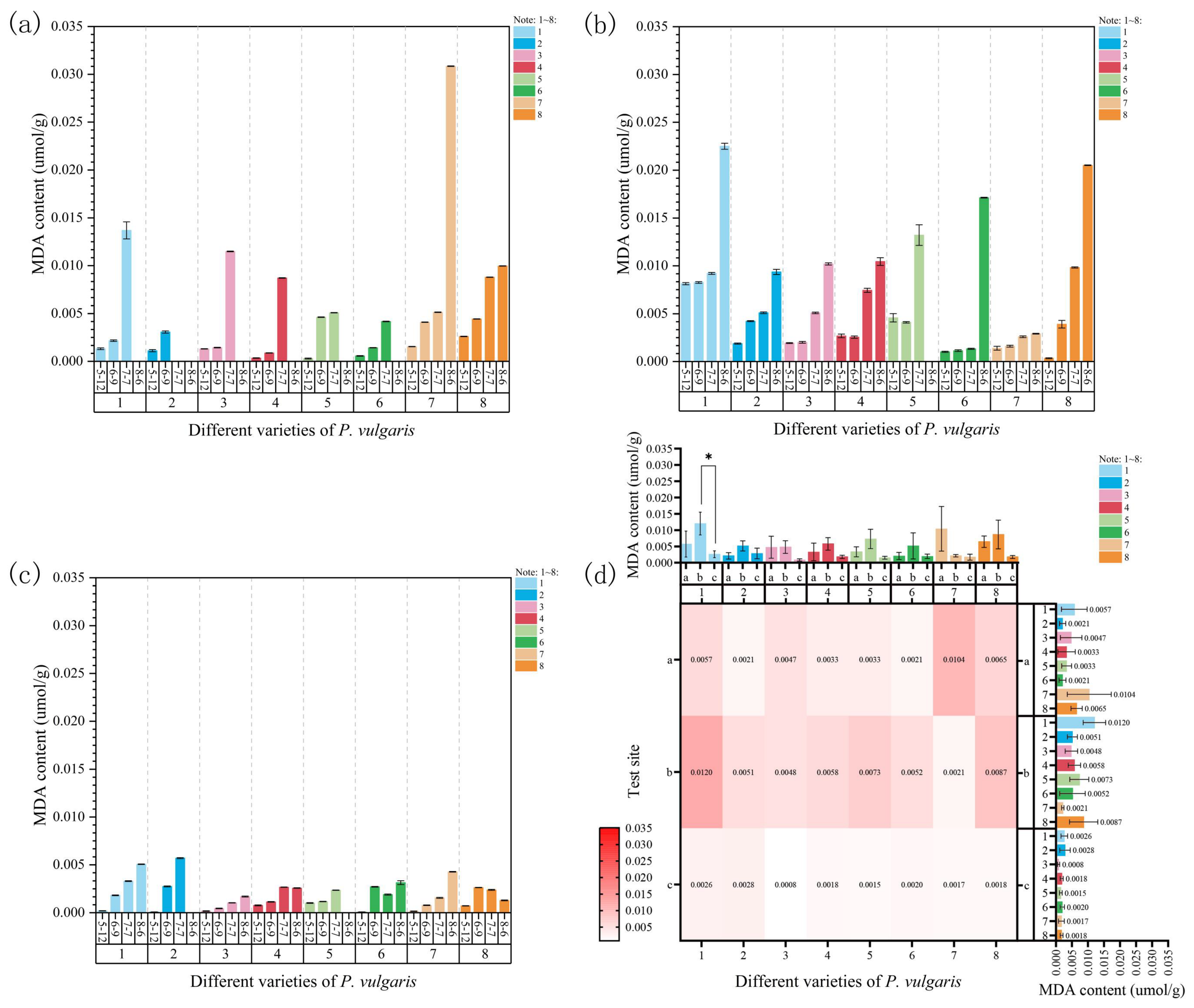
3.2. Effects of Natural High Temperatures on Malondialdehyde (MDA) Content of P. vulgaris
3.3. Effects of Natural High Temperatures on Protective Enzyme Activity of P. vulgaris
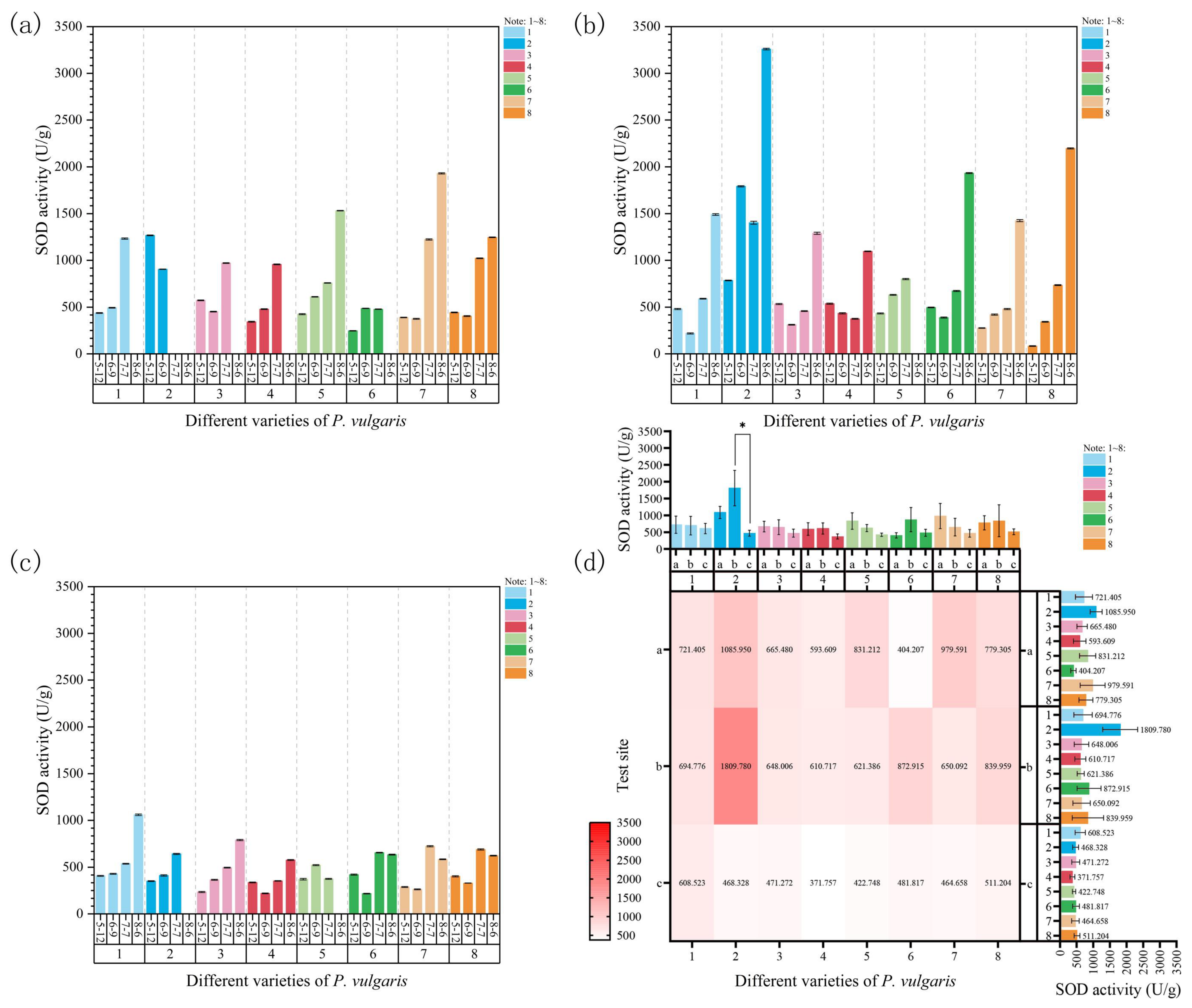
3.3.1. Superoxide Dismutase (SOD) Activity Analysis
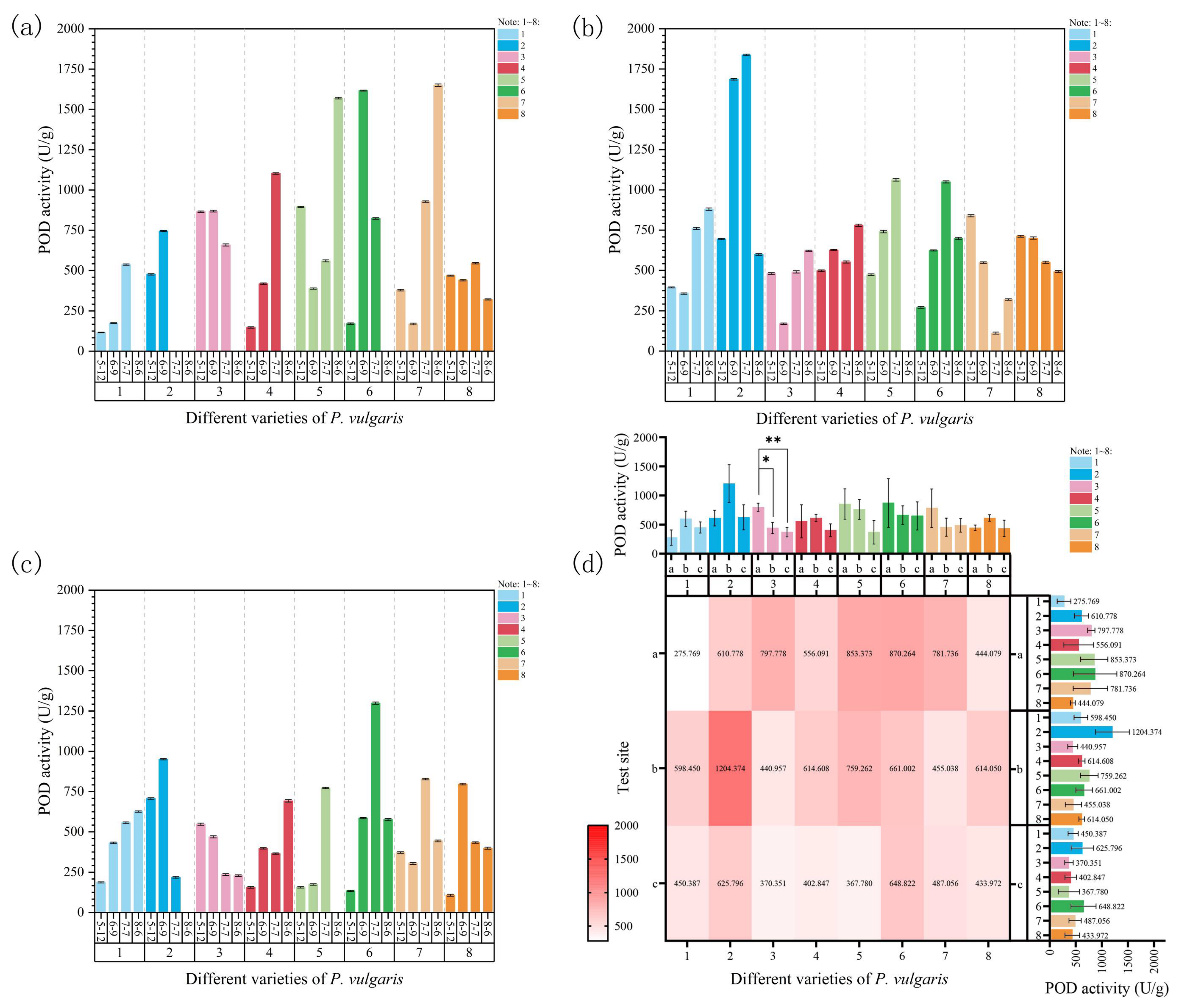
3.3.2. Peroxidase (POD) Activity Analysis
3.4. Effects of Natural High Temperatures on Osmoregulation Substances in P. vulgaris
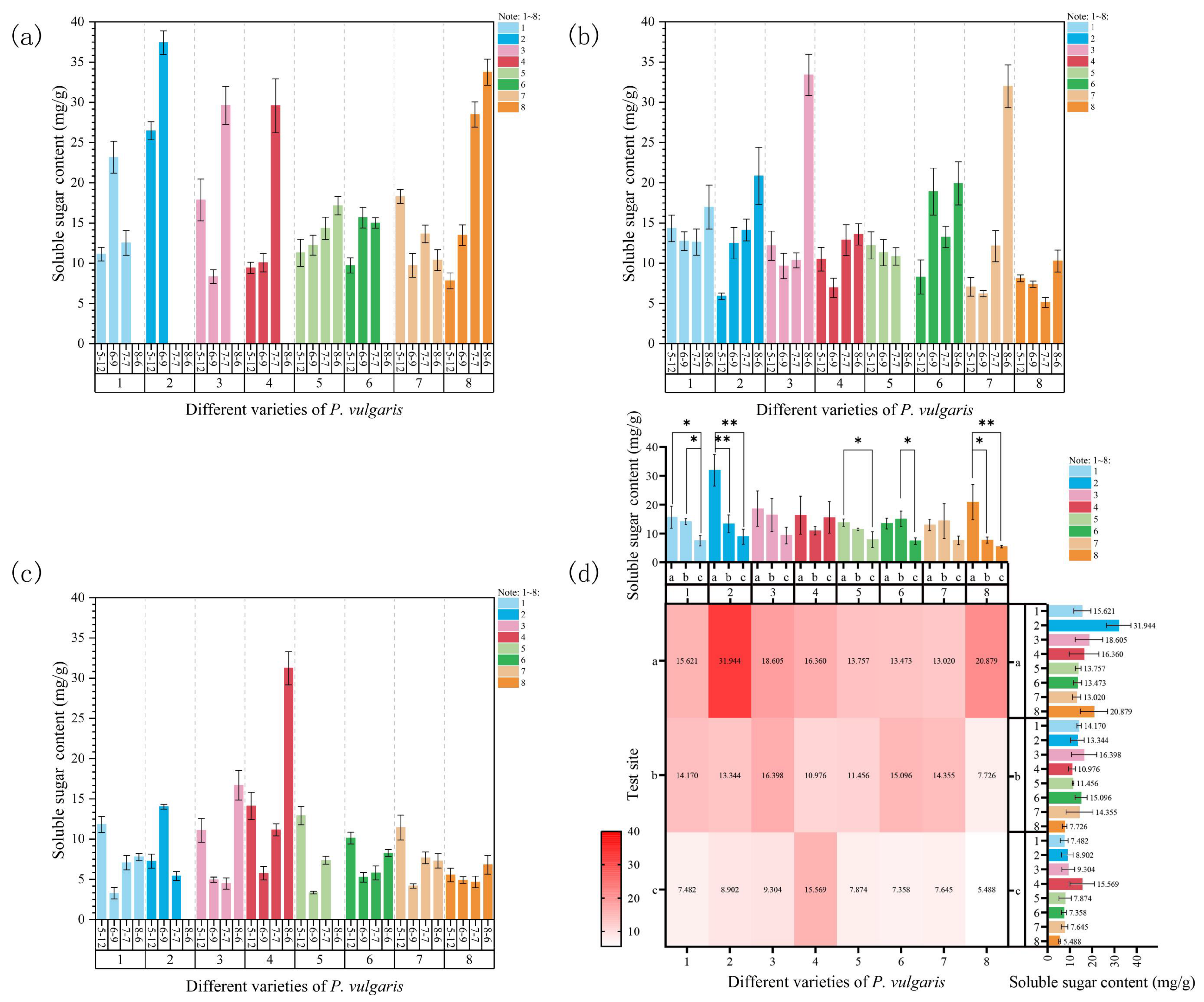
3.4.1. Analysis of Soluble Sugar Content Changes
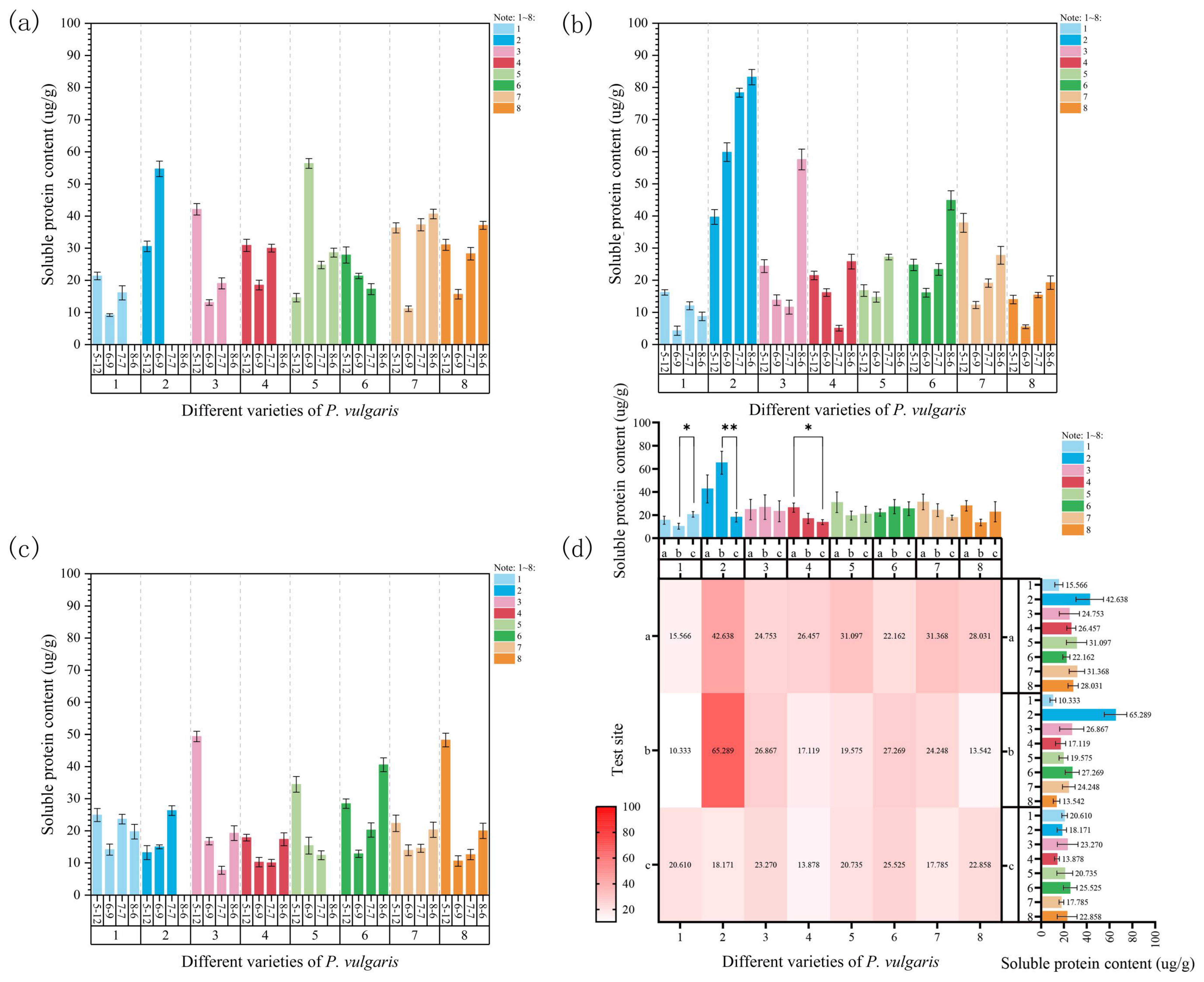
3.4.2. Analysis of Soluble Protein Content Changes
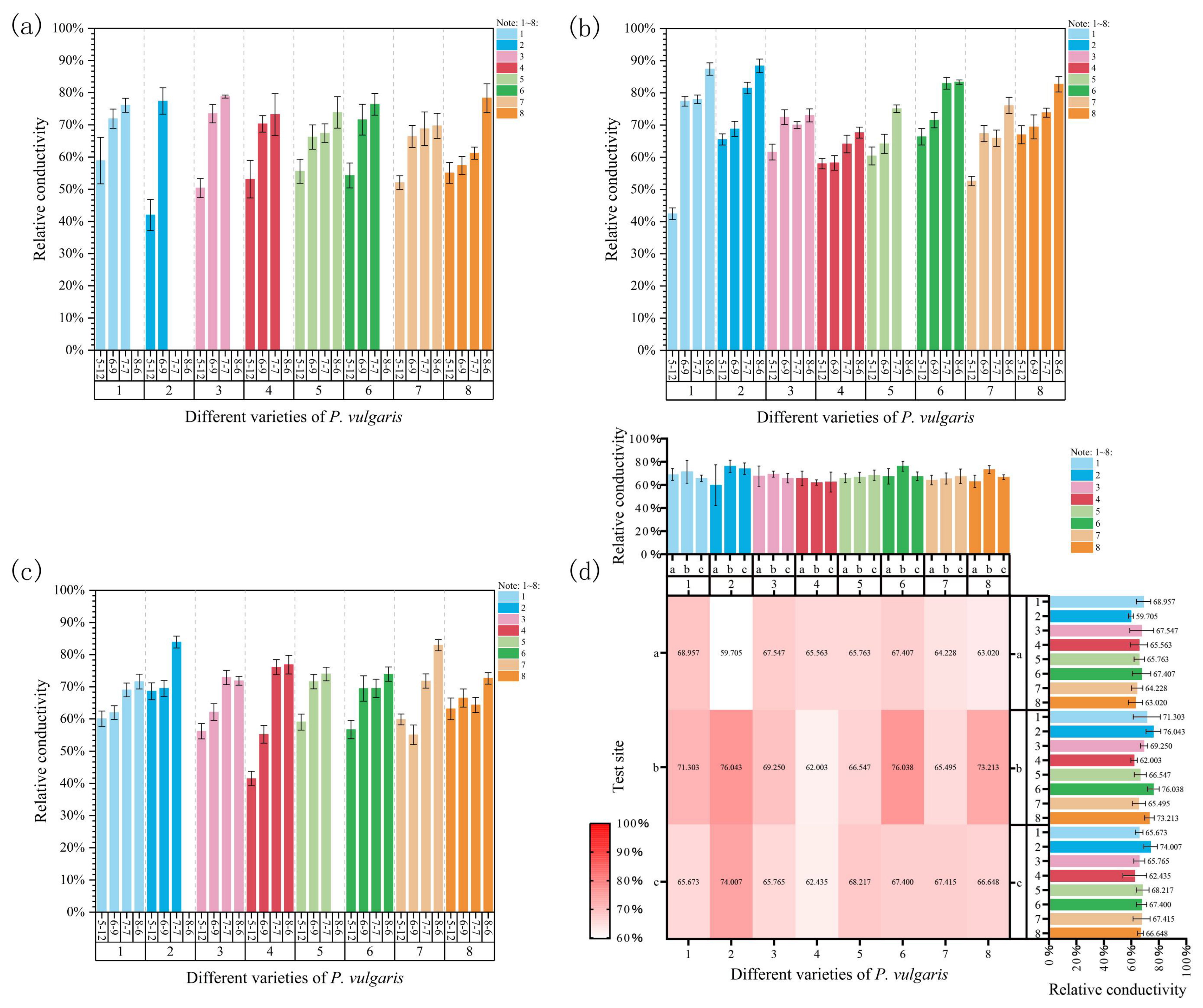
3.5. Effects of Natural High Temperatures on Relative Conductivity of P. vulgaris
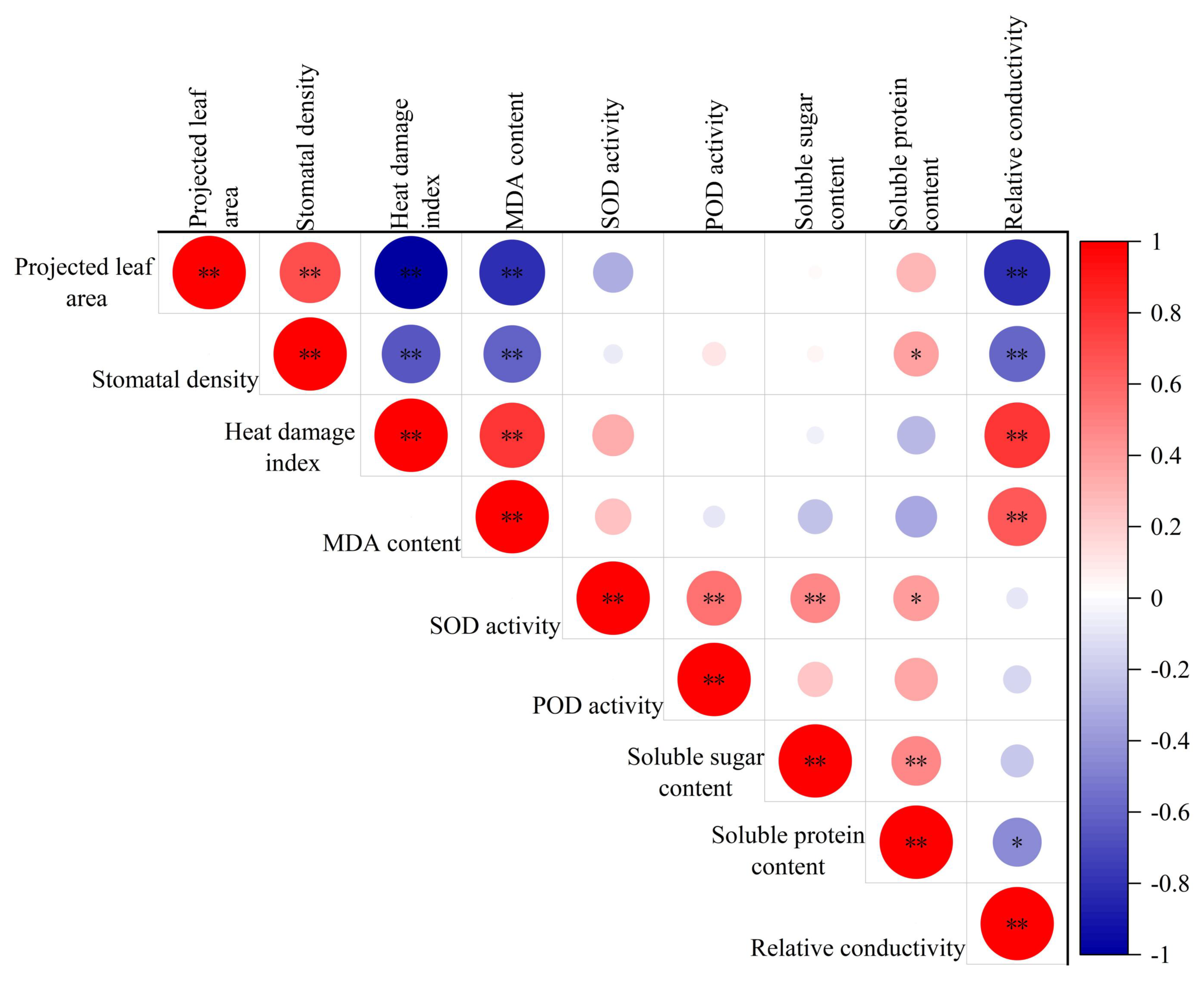
3.6. Correlation Analysis of Physiological Indicators
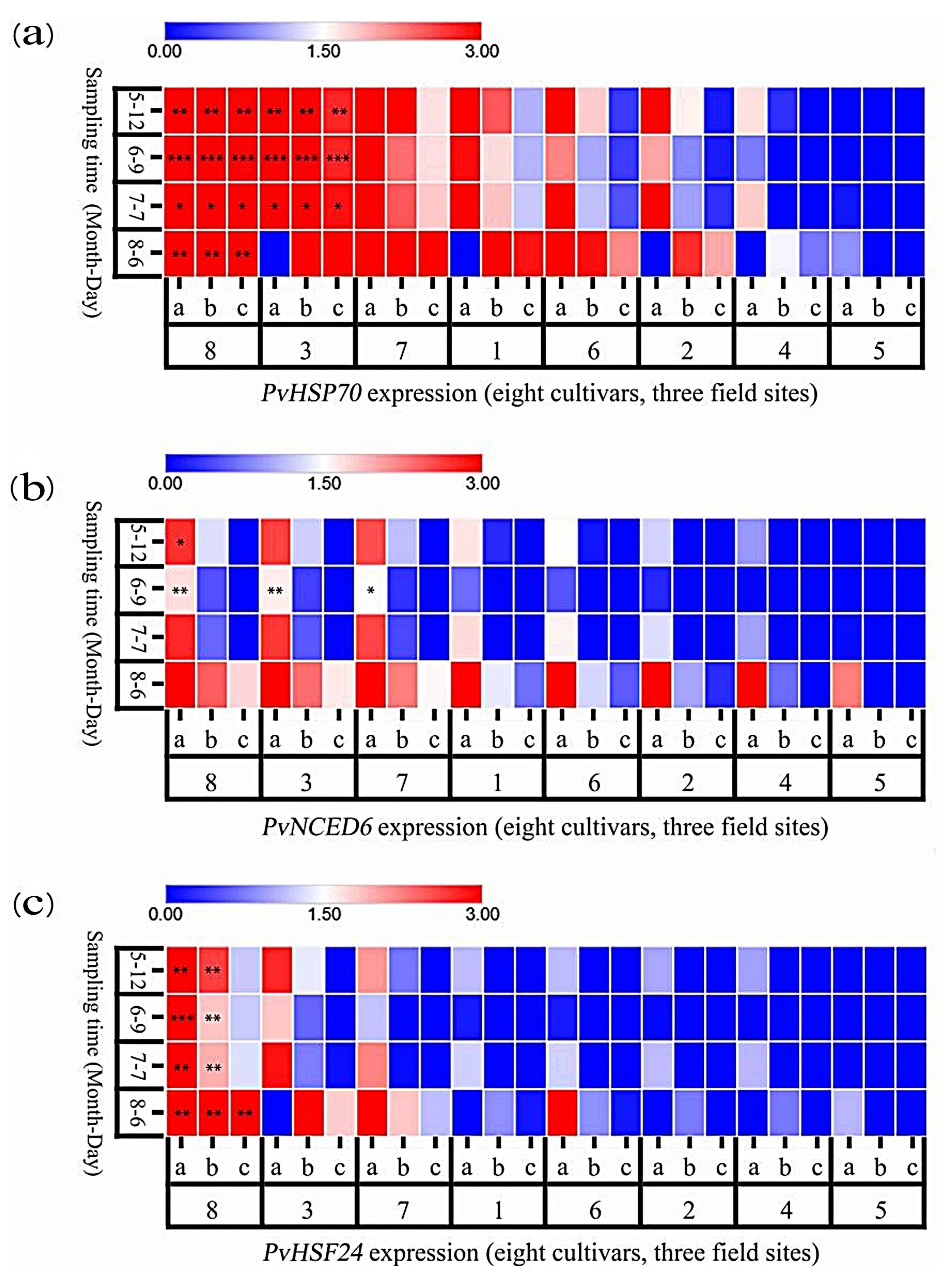
3.7. Heat-Responsive Gene Expression in P. vulgaris
3.8. Comprehensive Heat Tolerance Evaluation of P. vulgaris Varieties
4. Discussion
5. Conclusions
Supplementary Materials
Author Contributions
Funding
Data Availability Statement
Conflicts of Interest
References
- Zang, D.K.; Xu, Y.C. Comprehensive Application of Chinese Landscape Plants; China Forestry Publishing House: Beijing, China, 2015. [Google Scholar]
- Xiao, B. Exotic Plants and Flowers in China: Jasmine from Afar; Shanghai Cultural Publishing House: Shanghai, China, 2017; p. 80. [Google Scholar]
- Hayta, S.; Smedley, M.A.; Li, J.; Harwood, W.A.; Gilmartin, P.M. Plant regeneration from leaf-derived callus cultures of primrose (Primula vulgaris). HortScience 2016, 51, 558–562. [Google Scholar] [CrossRef] [Scilit]
- Aronne, G.; Buonanno, M.; De Micco, V. Reproducing under a warming climate: Long winter flowering and extended flower longevity in the only Mediterranean and maritime Primula. Plant Biol. J. 2015, 17, 535–544. [Google Scholar] [CrossRef] [Scilit] [PubMed]
- Lewis, E.; Phoenix, G.K.; Alexander, P.; David, J.; Cameron, R.W.F. Rewilding in the Garden: Are garden hybrid plants (cultivars) less resilient to the effects of hydrological extremes than their parent species? A case study with Primula. Urban Ecosyst. 2019, 22, 841–854. [Google Scholar] [CrossRef] [Scilit]
- Sunderland, N.; Dunwell, J.M.; Robert, M. Anther culture in the genus Paeonia. John Innes Inst. Annu. Rep. 1975, 66, 57–60. [Google Scholar]
- Zhou, Y. Evaluation of Heat Tolerance in Melon Germplasm Resources and the Alleviating Effects of Exogenous Substances Under Heat Stress. Master’s Thesis, Northwest A&F University, Xianyang, China, 2021. [Google Scholar]
- Te-Chato, S.; Lim, M. Plant regeneration of mangosteen via nodular callus formation. Plant Cell Tissue Organ Cult. 1999, 59, 89–93. [Google Scholar] [CrossRef] [Scilit]
- Fernandes, M.E.S.; Tomiozzo, R.; Freitas, C.P.O.; Roso, T.P.; de Sousa, M.H.L.; Uhlmann, L.O.; Zanon, A.J.; Streck, N.A. Damage and lethal temperature due to heat stress in field grown dahlia. Ornam. Hortic. 2023, 29, 216–223. [Google Scholar] [CrossRef] [Scilit]
- Zhu, H.; Wu, Y.; Zheng, Y. Effects of heat shock on photosynthesis-related characteristics and lipid profile of Cycas multipinnata and C. panzhihuaensis. BMC Plant Biol. 2022, 22, 442. [Google Scholar] [CrossRef] [Scilit]
- Hu, W.J.; Zhang, Q.X.; Pan, H.T.; Dong, L.L. Relationship Between Leaf Anatomical Structure and Heat Tolerance in Primula. J. Huazhong Agric. Univ. 2010, 29, 363–368. [Google Scholar]
- Bauer, H.; Senser, M. Photosynthesis of ivy leaves (Hedera helix L.) after heat stress II. Activity of ribulose bisphosphate carboxylase, Hill reaction, and chloroplast ultrastructure. Z. Pflanzenphysiol. 1979, 91, 359–369. [Google Scholar] [CrossRef] [Scilit]
- Zhang, L.; Gao, Y.K.; Pan, H.T.; Hu, W.J.; Zhang, Q.X. Cloning and characterisation of a Primula heat shock protein gene PfHSP17.1, which confers heat, salt and drought tolerance in transgenic Arabidopsis thaliana. Acta Physiol. Plant. 2013, 35, 3191–3200. [Google Scholar] [CrossRef] [Scilit]
- Zhang, L.; Zhang, Q.X.; Gao, Y.K.; Pan, H.T.; Shi, S.C.; Wang, Y. Overexpression of heat shock protein gene PfHSP21.4 in Arabidopsis thaliana enhances heat tolerance. Acta Physiol. Plant. 2014, 36, 1555–1564. [Google Scholar] [CrossRef] [Scilit]
- Zhou, H.; Wang, Y.; Zhang, Y.; Xiao, Y.; Liu, X.; Deng, H.; Lu, X.; Tang, W.; Zhang, G. Comparative analysis of heat-tolerant and heat-susceptible rice highlights the role of OsNCED1 gene in heat stress tolerance. Plants 2022, 11, 1062. [Google Scholar] [CrossRef] [Scilit] [PubMed]
- Scharf, K.D.; Berberich, T.; Ebersberger, I.; Nover, L. The plant heat stress transcription factor (Hsf) family: Structure, function and evolution. Biochim. Biophys. Acta (BBA)-Gene Regul. Mech. 2012, 1819, 104–119. [Google Scholar] [CrossRef] [Scilit] [PubMed]
- Zhang, L.; Chen, X.; Ke, Y.; Liu, B.; Hassan, M.A.; Zhang, Y.; Xu, H.; Li, J. Comparison of identification methods and evaluation indices for cold spring tolerance in winter wheat. Chin. J. Agrometeorol. 2021, 42, 146. [Google Scholar]
- Hu, W.J.; Zhang, Q.X.; Pan, H.T.; Dong, L.L. Preliminary Study on Physiological Indicators of Heat Tolerance in Primula Species. Chin. Agric. Sci. Bull. 2010, 26, 158–163. [Google Scholar]
- Yang, W.L.; Guan, X.L.; Zhang, R.L.; Leng, P.S. Changes in Antioxidant Enzyme Activities in European Primula Leaves Under High Temperature Stress. J. Beijing Agric. Coll. 2013, 28, 35–37. [Google Scholar]
- Jia, Y.; Yin, X.; Zhao, J.; Pan, Y.; Jiang, B.; Liu, Q.; Li, Y. Differential physiological responses and tolerance to potentially toxic elements in Primula forbesii Franch. Environ. Sci. Pollut. Res. 2023, 30, 67200–67216. [Google Scholar] [CrossRef] [Scilit]
- Haider, S.; Iqbal, J.; Naseer, S.; Yaseen, T.; Shaukat, M.; Bibi, H.; Ahmad, Y.; Daud, H.; Abbasi, N.L.; Mahmood, T. Molecular mechanisms of plant tolerance to heat stress: Current landscape and future perspectives. Plant Cell Rep. 2021, 40, 2247–2271. [Google Scholar] [CrossRef] [Scilit]
- Poorter, H.; Fiorani, F.; Pieruschka, R.; Wojciechowski, T.; van der Putten, W.H.; Kleyer, M.; Schurr, U.; Postma, J. Pampered inside, pestered outside? Differences and similarities between plants growing in controlled conditions and in the field. New Phytol. 2016, 212, 838–855. [Google Scholar] [CrossRef] [Scilit]
- Smillie, R.M.; Nott, R. Heat injury in leaves of alpine, temperate and tropical plants. Funct. Plant Biol. 1979, 6, 135–141. [Google Scholar] [CrossRef] [Scilit]
- Ullah, A.; Nadeem, F.; Nawaz, A.; Siddique, K.H.M.; Farooq, M. Heat stress effects on the reproductive physiology and yield of wheat. J. Agron. Crop Sci. 2022, 208, 1–17. [Google Scholar] [CrossRef] [Scilit]
- Jagadish, S.V.K.; Way, D.A.; Sharkey, T.D. Plant heat stress: Concepts directing future research. Plant Cell Environ. 2021, 44, 1992–2005. [Google Scholar] [CrossRef] [Scilit] [PubMed]
- Chen, S. Study on the Shading Effects of Common Street Trees on Sidewalks in Guangzhou. Master’s Thesis, Zhongkai University of Agriculture and Engineering, Guangzhou, China, 2022. [Google Scholar]
- Wang, R.; Ma, J.; Huang, R.; Wang, Y.; Jiang, Y.; Ling, Y.; Yang, J.; Liang, H.; Liu, X.; Liao, N. The Effects of Shading on the Photosynthetic Performance of Endangered Plant Horsfieldia hainanensis Seedlings. Forests 2023, 15, 3. [Google Scholar] [CrossRef] [Scilit]
- Royer, D.L. Stomatal density and stomatal index as indicators of paleoatmospheric CO2 concentration. Rev. Palaeobot. Palynol. 2001, 114, 1–28. [Google Scholar] [CrossRef] [Scilit]
- Sack, L.; Buckley, T.N. The developmental basis of stomatal density and flux. Plant Physiol. 2016, 171, 2358–2363. [Google Scholar] [CrossRef] [Scilit]
- Zhang, X.Q. Relationship between heat injury performance of trees and shrubs and their biological characteristics under continuous high-temperature conditions in Shanghai Chenshan Botanical Garden. Bot. Res. 2018, 7, 196. [Google Scholar]
- Zhang, Z.L.; Qu, W.J. Plant Physiology Experiment Guide, 3rd ed.; Higher Education Press: Beijing, China, 2003. [Google Scholar]
- Wang, X.K.; Huang, J.L. Principles and Techniques of Plant Physiology and Biochemistry Experiment, 3rd ed; Higher Education Press: Beijing, China, 2015. [Google Scholar]
- Shi, Q.; Li, L.; Zhang, X.X.; Luo, J.R.; Li, X.; Zhai, L.J.; He, L.; Zhang, Y. Biochemical and comparative transcriptomic analyses identify candidate genes related to variegation formation in Paeonia rockii. Molecules 2017, 22, 1364. [Google Scholar] [CrossRef] [Scilit]
- Wang, C.H.; Yu, B.X.; Zhou, H.R.; Liu, X.; Zhang, Z.; Zhong, G. Study on the varieties and standardization of medicinal Primulaceae plants in Tibetan medicine. China J. Chin. Mater. Medica 2016, 41, 4654–4662. [Google Scholar]
- Tütüncü, M. In vitro culture of primula: A review. Int. J. Agric. Nat. Sci. 2020, 13, 118–125. [Google Scholar]
- Jacquemyn, H.; Endels, P.; Brys, R.; Hermy, M.; Woodell, S.R.J. Biological flora of the British isles: Primula vulgaris Huds. (P. acaulis (L.) Hill). J. Ecol. 2009, 97, 812–833. [Google Scholar] [CrossRef] [Scilit]
- Aavik, T.; Reitalu, T.; Kivastik, M.; Reinula, I.; Träger, S.; Uuemaa, E.; Barberis, M.; Biere, A.; Castro, S.; Cousins, S.A.O.; et al. A pan-European citizen science study shows population size, climate and land use are related to biased morph ratios in the heterostylous plant Primula veris. J. Ecol. 2025, 114, e14477. [Google Scholar]
- Cheela, V.R.S.; John, M.; Biswas, W.; Sarker, P. Combating urban heat island effect—A review of reflective pavements and tree shading strategies. Buildings 2021, 11, 93. [Google Scholar] [CrossRef] [Scilit]
- Hasanuzzaman, M.; Nahar, K.; Fujita, M. Extreme temperature responses, oxidative stress and antioxidant defense in plants. Abiotic Stress-Plant Responses Appl. Agric. 2013, 13, 169–205. [Google Scholar]
- Marchin, R.M.; Backes, D.; Ossola, A.; Leishman, M.R.; Tjoelker, M.G.; Ellsworth, D.S. Extreme heat increases stomatal conductance and drought-induced mortality risk in vulnerable plant species. Glob. Change Biol. 2022, 28, 1133–1146. [Google Scholar]
- Elad, Y.; Pertot, I. Climate change impacts on plant pathogens and plant diseases. J. Crop Improv. 2014, 28, 99–139. [Google Scholar] [CrossRef] [Scilit]
- Zhao, D.; Hao, Z.; Tao, J. Effects of shade on plant growth and flower quality in the herbaceous peony (Paeonia lactiflora Pall.). Plant Physiol. Biochem. 2012, 61, 187–196. [Google Scholar] [CrossRef] [Scilit]
- Shao, C.F.; Li, D.F.; Guan, W.L.; Li, S.F. Effects of High-Temperature Stress on Growth and Development of Narcissus in Dian Lake. North. Hortic. 2016, 5, 85–88. [Google Scholar]
- Ferrante, A.; Mariani, L. Agronomic management for enhancing plant tolerance to abiotic stresses: High and low values of temperature, light intensity, and relative humidity. Horticulturae 2018, 4, 21. [Google Scholar] [CrossRef] [Scilit]
- Badji, A.; Benseddik, A.; Bensaha, H.; Boukhelifa, A.; Hasrane, I. Design, technology, and management of greenhouse: A review. J. Clean. Prod. 2022, 373, 133753. [Google Scholar] [CrossRef] [Scilit]
- Niu, Y.; Xiang, Y. An Overview of Biomembrane Functions in Plant Responses to High-Temperature Stress. Front. Plant Sci. 2018, 9, 915. [Google Scholar] [CrossRef] [Scilit]
- Sharma, P.; Jha, A.B.; Dubey, R.S.; Pessarakli, M. Reactive oxygen species, oxidative damage, and antioxidative defense mechanism in plants under stressful conditions. J. Bot. 2012, 2012, 217037. [Google Scholar] [CrossRef] [Scilit]
- Zhang, L.; Zhang, Q.X. Effects of High-Temperature Stress on Physiological Indicators of Primula forrestii. Southwest China J. Agric. Sci. 2011, 24, 1728–1732. [Google Scholar]
- Xiao, F.; Yang, Z.Q.; Lee, K.W. Photosynthetic and physiological responses to high temperature in grapevine (Vitis vinifera L.) leaves during the seedling stage. J. Hortic. Sci. Biotechnol. 2016, 92, 2–10. [Google Scholar] [CrossRef] [Scilit]
- Ali, M.B.; Hahn, E.J.; Paek, K.Y. Effects of temperature on oxidative stress defense systems, lipid peroxidation and lipoxygenase activity in Phalaenopsis. Plant Physiol. Biochem. 2005, 43, 213–223. [Google Scholar] [CrossRef] [Scilit]
- Yu, H.; Zhao, W.; Wang, M.; Yang, X.; Jiang, W. The exogenous application of spermidine alleviates photosynthetic inhibition and membrane lipid peroxidation under low-light stress in tomato (Lycopersicon esculentum Mill.) seedlings. Plant Growth Regul. 2016, 78, 413–420. [Google Scholar] [CrossRef] [Scilit]
- Zhang, X.L.; Jia, X.F.; Yu, B.; Gao, Y.; Bai, J.G. Exogenous hydrogen peroxide influences antioxidant enzyme activity and lipid peroxidation in cucumber leaves at low light. Sci. Hortic. 2011, 129, 656–662. [Google Scholar] [CrossRef] [Scilit]
- Yu, Y.P.; Mao, L.Y.; Bin, Z.J.; Hao, X.L.; Liang, F.; Wang, L.H. Effects of Shading Treatment on the Physiological and Ecological Characteristics of Liquidambar formosana Seedlings. J. Trop. Subtrop. Bot. 2017, 25, 323–330. [Google Scholar]
- Li, H. Evaluation of Heat-Tolerant Rhododendron Germplasm Resources and Study on Their Physiological Mechanisms. Master’s Thesis, Yangzhou University, Yangzhou, China, 2019. [Google Scholar]
- Shah, K.; Nahakpam, S. Heat exposure alters the expression of SOD, POD, APX and CAT isozymes and mitigates low cadmium toxicity in seedlings of sensitive and tolerant rice cultivars. Plant Physiol. Biochem. 2012, 57, 106–113. [Google Scholar] [CrossRef] [Scilit]
- Szymańska, R.; Ślesak, I.; Orzechowska, A.; Kruk, J. Physiological and biochemical responses to high light and temperature stress in plants. Environ. Exp. Bot. 2017, 139, 165–177. [Google Scholar] [CrossRef] [Scilit]
- Sharma, P.; Jha, A.B.; Dubey, R.S. Oxidative stress and antioxidative defense system in plants growing under abiotic stresses. In Handbook of Plant and Crop Stress, 4th ed.; CRC Press: Boca Raton, FL, USA, 2019; pp. 93–136. [Google Scholar]
- Yin, H.; Chen, Q.; Yi, M. Effects of short-term heat stress on oxidative damage and responses of antioxidant system in Lilium longiflorum. Plant Growth Regul. 2008, 54, 45–54. [Google Scholar]
- Qiu, J.Q.; Zhang, L.Y.; Lu, K.Z.; Yuan, X.; Chang, F.Y.; Zhang, X.M. Physiological Responses and Comprehensive Heat Tolerance Evaluation of Different Raspberry Cultivars Under Natural High Temperature. Anhui Agric. Sci. 2022, 50, 82–86. [Google Scholar]
- Johnová, P.; Skalák, J.; Saiz-Fernández, I.; Brzobohatý, B. Plant responses to ambient temperature fluctuations and water-limiting conditions: A proteome-wide perspective. Biochim. Biophys. Acta (BBA)-Proteins Proteom. 2016, 1864, 916–931. [Google Scholar] [CrossRef] [Scilit] [PubMed]
- Gandonou, C.B.; Bada, F.; Abrini, J.; Skali-Senhaji, N. Free proline, soluble sugars and soluble proteins concentration as affected by salt stress in two sugarcane (Saccharum sp.) cultivars differing in their salt tolerance. Int. J. Biol. Chem. Sci. 2011, 5, 2441–2453. [Google Scholar] [CrossRef] [Scilit]
- Mona, S.A.; Hashem, A.; Abd_Allah, E.F.; Alqarawi, A.A.; Soliman, D.W.K.; Wirth, S.; Egamberdieva, D. Increased resistance of drought by Trichoderma harzianum fungal treatment correlates with increased secondary metabolites and proline content. J. Integr. Agric. 2017, 16, 1751–1757. [Google Scholar] [CrossRef] [Scilit]
- Li, C.; Zhao, D.; Tao, J. Cloning and sequence analysis of the full-length HSP70 gene in tree peony (Paeonia suffruticosa). J. Yangzhou Univ. (Agric. Life Sci. Ed.) 2011, 32, 555–558. [Google Scholar]
- Zhang, Y.Z.; Cheng, Y.W.; Ya, H.Y.; Han, J.; Zheng, L. Identification of heat shock proteins via transcriptome profiling of tree peony leaf exposed to high temperature. Genet. Mol. Res. 2015, 14, 8431. [Google Scholar] [CrossRef] [Scilit]
- Jiang, C.H.; Gao, Y.; Ye, K.; Song, F.; Zhang, Y.L.; Qin, J.; Qin, S.C. Cloning and preliminary functional analysis of the PseIF5A gene in tree peony (Paeonia suffruticosa). Mod. Hortic. 2015, 4, 15–17. [Google Scholar]
- Hasanuzzaman, M.; Nahar, K.; Alam, M.M.; Roychowdhury, R.; Fujita, M. Physiological, Biochemical, and Molecular Mechanisms of Heat Stress Tolerance in Plants. Int. J. Mol. Sci. 2013, 14, 9643–9684. [Google Scholar] [CrossRef] [Scilit]
- Bita, C.E.; Gerats, T. Plant tolerance to high temperature in a changing environment: Scientific fundamentals and production of heat stress-tolerant crops. Front. Plant Sci. 2013, 4, 273. [Google Scholar] [CrossRef] [Scilit]
- Wahid, A.; Gelani, S.; Ashraf, M.; Foolad, M.R. Heat tolerance in plants: An overview. Environ. Exp. Bot. 2007, 61, 199–223. [Google Scholar] [CrossRef] [Scilit]
- Li, N.; Euring, D.; Cha, J.Y.; Lin, Z.; Lu, M.; Huang, L.-J.; Kim, W.Y. Plant hormone-mediated regulation of heat tolerance in response to global climate change. Front. Plant Sci. 2021, 11, 627969. [Google Scholar] [CrossRef] [Scilit] [PubMed]
- Ahammed, G.J.; Li, X.; Zhou, J.; Zhou, Y.H.; Yu, J.Q. Role of hormones in plant adaptation to heat stress. In Plant Hormones Under Challenging Environmental Factors; Springer: Dordrecht, The Netherlands, 2016; pp. 1–21. [Google Scholar]
- Dubrez, L.; Causse, S.; Borges Bonan, N.; Dumétier, B.; Garrido, C. Heat-shock proteins: Chaperoning DNA repair. Oncogene 2020, 39, 516–529. [Google Scholar] [CrossRef] [Scilit] [PubMed]
- Kim, Y.E.; Hipp, M.S.; Bracher, A.; Hayer-Hartl, M.; Ulrich Hartl, F. Molecular chaperone functions in protein folding and proteostasis. Annu. Rev. Biochem. 2013, 82, 323–355. [Google Scholar] [CrossRef] [Scilit] [PubMed]
- Tian, F.; Hu, X.L.; Yao, T.; Yang, X.; Chen, J.G.; Lu, M.Z.; Zhang, J. Recent Advances in the Roles of HSFs and HSPs in Heat Stress Response in Woody Plants. Front. Plant Sci. 2021, 12, 704905. [Google Scholar] [CrossRef] [Scilit] [PubMed] [PubMed Central]
- Khan, N. Molecular Insights into ABA-Mediated Regulation of Stress Tolerance and Development in Plants. Int. J. Mol. Sci. 2025, 26, 7872. [Google Scholar] [CrossRef] [Scilit]
- Kumar, R.R.; Goswami, S.; Rai, G.K.; Jain, N.; Singh, P.K.; Mishra, D.; Chaturvedi, K.K.; Kumar, S.; Singh, B.; Singh, G.P.; et al. Protection from terminal heat stress: A trade-off between heat-responsive transcription factors (HSFs) and stress-associated genes (SAGs) under changing environment. Cereal Res. Commun. 2021, 49, 227–234. [Google Scholar] [CrossRef] [Scilit]
- Zhang, J.; Li, H.; Jiang, Y.; Li, H.; Zhang, Z.; Xu, Z.; Xu, B.; Huang, B. Natural variation of physiological traits, molecular markers, and chlorophyll catabolic genes associated with heat tolerance in perennial ryegrass accessions. BMC Plant Biol. 2020, 20, 520. [Google Scholar] [CrossRef] [Scilit]
- Ohama, N.; Sato, H.; Shinozaki, K.; Yamaguchi-Shinozaki, K. Transcriptional Regulatory Network of Plant Heat Stress Response. Trends Plant Sci. 2017, 22, 53–65. [Google Scholar] [CrossRef] [Scilit] [PubMed]
- Yurina, N.P. Heat shock proteins in plant protection from oxidative stress. Mol. Biol. 2023, 57, 951–964. [Google Scholar] [CrossRef] [Scilit]
- Saini, N.; Nikalje, G.C.; Zargar, S.M.; Suprasanna, P. Molecular insights into sensing, regulation and improving of heat tolerance in plants. Plant Cell Rep. 2022, 41, 799–813. [Google Scholar] [CrossRef] [Scilit]
- Hsu, P.K.; Dubeaux, G.; Takahashi, Y.; Schroeder, J.I. Signaling mechanisms in abscisic acid-mediated stomatal closure. Plant J. 2021, 105, 307–321. [Google Scholar] [CrossRef] [Scilit]
- Ru, C.; Hu, X.; Chen, D.; Wang, W.; Zhen, J. Photosynthetic, antioxidant activities, and osmoregulatory responses in winter wheat differ during the stress and recovery periods under heat, drought, and combined stress. Plant Sci. 2023, 327, 111557. [Google Scholar] [CrossRef] [Scilit] [PubMed]
- Chen, Z.S.; Du, W.L.; Xu, D.X.; Lin, B. Comprehensive evaluation of Momordica charantia heat tolerance at seedling stage and screening of identification indexes. Acta Agric. Jiangxi 2022, 34, 1−7. [Google Scholar]
- Yang, Y.; Zhang, L.; Liang, H.; Li, X.X.; Li, H.L.; Ren, Y.Z.; Zhang, X.M.; Liu, Y.Q. Evaluation of the drought and heat tolerance of the ginger germplasm resource and its screening of identification indexes. Chin. J. Eco-Agric. 2024, 32, 860–876. [Google Scholar]
- Porch, T.G.; Jahn, M. Effects of high-temperature stress on microsporogenesis in heat-sensitive and heat-tolerant genotypes of Phaseolus vulgaris. Plant Cell Environ. 2001, 24, 723–731. [Google Scholar] [CrossRef] [Scilit]
- Singh, R.P.; Prasad, P.V.V.; Sunita, K.; Giri, S.N.; Reddy, K. Influence of high temperature and breeding for heat tolerance in cotton: A review. Adv. Agron. 2007, 93, 313–385. [Google Scholar]
- Scheibe, R. Maintaining homeostasis by controlled alternatives for energy distribution in plant cells under changing conditions of supply and demand. Photosynth. Res. 2019, 139, 81–91. [Google Scholar] [CrossRef] [Scilit]
- Fan, Q. Understanding Heat Stress Mechanisms in Creeping Bentgrass: From Physiology to Molecular Biology with a Focus on Protein. Ph.D. Thesis, University of Georgia, Athens, Georgia, 2025. [Google Scholar]
- Song, K.; Zhou, Z.; Huang, Y.; Chen, L.; Cong, W. Multi-omics insights into the mechanism of the high-temperature tolerance in a thermotolerant Chlorella sorokiniana. Bioresour. Technol. 2023, 390, 129859. [Google Scholar] [CrossRef] [Scilit]
- Kingsbury, N. Contemporary overview of naturalistic planting design. In The Dynamic Landscape; Taylor & Francis: Oxfordshire, UK, 2004; pp. 81–126. [Google Scholar]
- Taylor, K.; Woodell, S.R.J. Biological flora of the British isles: Primula elatior (L.) Hill. J. Ecol. 2008, 96, 1098–1116. [Google Scholar] [CrossRef] [Scilit]


| Breed Number | C1 | C2 | C3 | U1 | U2 | U3 | D | Heat Resistance Order |
|---|---|---|---|---|---|---|---|---|
| 1 | 13.471 | 5.586 | 2.021 | 0.397 | 0.464 | 0.661 | 0.447 | 4 |
| 2 | 20.069 | 4.491 | 1.953 | 0.000 | 0.750 | 0.647 | 0.304 | 6 |
| 3 | 12.513 | 3.533 | 1.322 | 0.454 | 1.000 | 0.510 | 0.629 | 2 |
| 4 | 17.591 | 7.365 | 3.112 | 0.149 | 0.000 | 0.898 | 0.186 | 7 |
| 5 | 18.177 | 7.197 | 1.760 | 0.114 | 0.044 | 0.605 | 0.147 | 8 |
| 6 | 12.752 | 7.227 | 3.583 | 0.440 | 0.036 | 1.000 | 0.377 | 5 |
| 7 | 8.639 | 6.171 | 2.209 | 0.687 | 0.311 | 0.702 | 0.573 | 3 |
| 8 | 3.439 | 5.588 | −1.029 | 1.000 | 0.464 | 0.000 | 0.723 | 1 |
Disclaimer/Publisher’s Note: The statements, opinions and data contained in all publications are solely those of the individual author(s) and contributor(s) and not of MDPI and/or the editor(s). MDPI and/or the editor(s) disclaim responsibility for any injury to people or property resulting from any ideas, methods, instructions or products referred to in the content. |
© 2026 by the authors. Licensee MDPI, Basel, Switzerland. This article is an open access article distributed under the terms and conditions of the Creative Commons Attribution (CC BY) license.
Share and Cite
Li, R.; Yang, J.; Meng, X.; Cheng, C.; Zhang, Y.; Han, X.; Liu, N.; Zhao, L.; Qu, Y.; Tang, T.; et al. Physiological Responses and Heat Tolerance Evaluation of Eight Varieties of Primula vulgaris Under Natural High Temperatures. Plants 2026, 15, 1000. https://doi.org/10.3390/plants15071000
Li R, Yang J, Meng X, Cheng C, Zhang Y, Han X, Liu N, Zhao L, Qu Y, Tang T, et al. Physiological Responses and Heat Tolerance Evaluation of Eight Varieties of Primula vulgaris Under Natural High Temperatures. Plants. 2026; 15(7):1000. https://doi.org/10.3390/plants15071000
Chicago/Turabian StyleLi, Ruicheng, Jiawei Yang, Xin Meng, Chen Cheng, Yingying Zhang, Xueying Han, Nuoxuan Liu, Liyuan Zhao, Ying Qu, Tianqi Tang, and et al. 2026. "Physiological Responses and Heat Tolerance Evaluation of Eight Varieties of Primula vulgaris Under Natural High Temperatures" Plants 15, no. 7: 1000. https://doi.org/10.3390/plants15071000
APA StyleLi, R., Yang, J., Meng, X., Cheng, C., Zhang, Y., Han, X., Liu, N., Zhao, L., Qu, Y., Tang, T., Chen, H., Li, L., & Shi, Q. (2026). Physiological Responses and Heat Tolerance Evaluation of Eight Varieties of Primula vulgaris Under Natural High Temperatures. Plants, 15(7), 1000. https://doi.org/10.3390/plants15071000