1. Introduction
Mung bean (
Vigna radiata L.) is an important short-duration leguminous crop that can grow in tropical, subtropical, and some temperate regions [
1]. Mung bean is rich in easily digestible protein, carbohydrates, amino acids, essential micronutrients and natural antioxidants, exhibiting exceptional nutritional value. It also has medicinal properties and contributes to sustainable agricultural development via biological nitrogen fixation, which helps optimize cropping systems and boost the high-quality seed industry. Accordingly, mung bean has gained widespread attention across the globe [
2,
3,
4]. As one of the centers of origin of mung bean, China has a cultivation history of more than 2000 years, giving the crop great economic and cultural significance [
5]. However, under increasingly complex climate change and evolving market demands, the mung bean industry faces severe challenges in yield enhancement, stable nutritional and edible quality, and breeding varieties with broad-spectrum stress resistance [
6].
Cultivating and protecting improved varieties is central to addressing these challenges. Plant variety protection relies on Distinctness, Uniformity, and Stability (DUS) testing, which serves as a scientifically rigorous evaluation system for new varieties [
7]. DUS testing is simple to analyze, cost-effective, and does not rely on experimental technologies, playing a crucial role in the production and certification of high-quality seeds [
8]. DUS testing has been successfully applied in breeding programs for major crops such as maize and rice, providing effective support for variety identification, protection of breeders’ rights, and guiding selection efforts. Applying it to mung bean breeding can similarly offer a reliable framework for germplasm identification and screening of desirable characteristics [
9,
10].
Despite its considerable potential, the systematic application of DUS testing in mung bean remains insufficient. Current studies are often limited to small-scale germplasm or single ecological regions, making it difficult to comprehensively reveal the population variation patterns of target characteristics [
11]. Furthermore, the current description of characteristics falls short in covering key characteristics, particularly yield components, and lacks systematic correlation with yield performance. This in turn constrains its predictive and applied value in breeding [
12]. Additionally, the loss of local mung bean germplasm resources is a widespread global concern, highlighting an urgent need for comprehensive and systematic characterization to facilitate the identification and conservation of elite genetic resources [
13].
To bridge this knowledge gap, current research on the distinctness, uniformity and stability (DUS) testing of mung bean remains insufficient. The identification of qualitative and quantitative traits closely associated with yield, quality and adaptability is largely inadequate. Furthermore, most existing studies are restricted to small sample sizes and lack large-scale systematic investigations, which limits the comprehensive understanding of genetic diversity and trait variation patterns in mung bean germplasm. Therefore, this study conducted a systematic DUS-based evaluation of 180 mung bean varieties, integrating characteristics analysis with yield assessment. We aimed to analyze the correlation between DUS traits and yield, identify elite varieties with desirable traits and high-yield potential, and provide a scientific basis for the genetic improvement and yield enhancement of mung bean.
3. Discussion
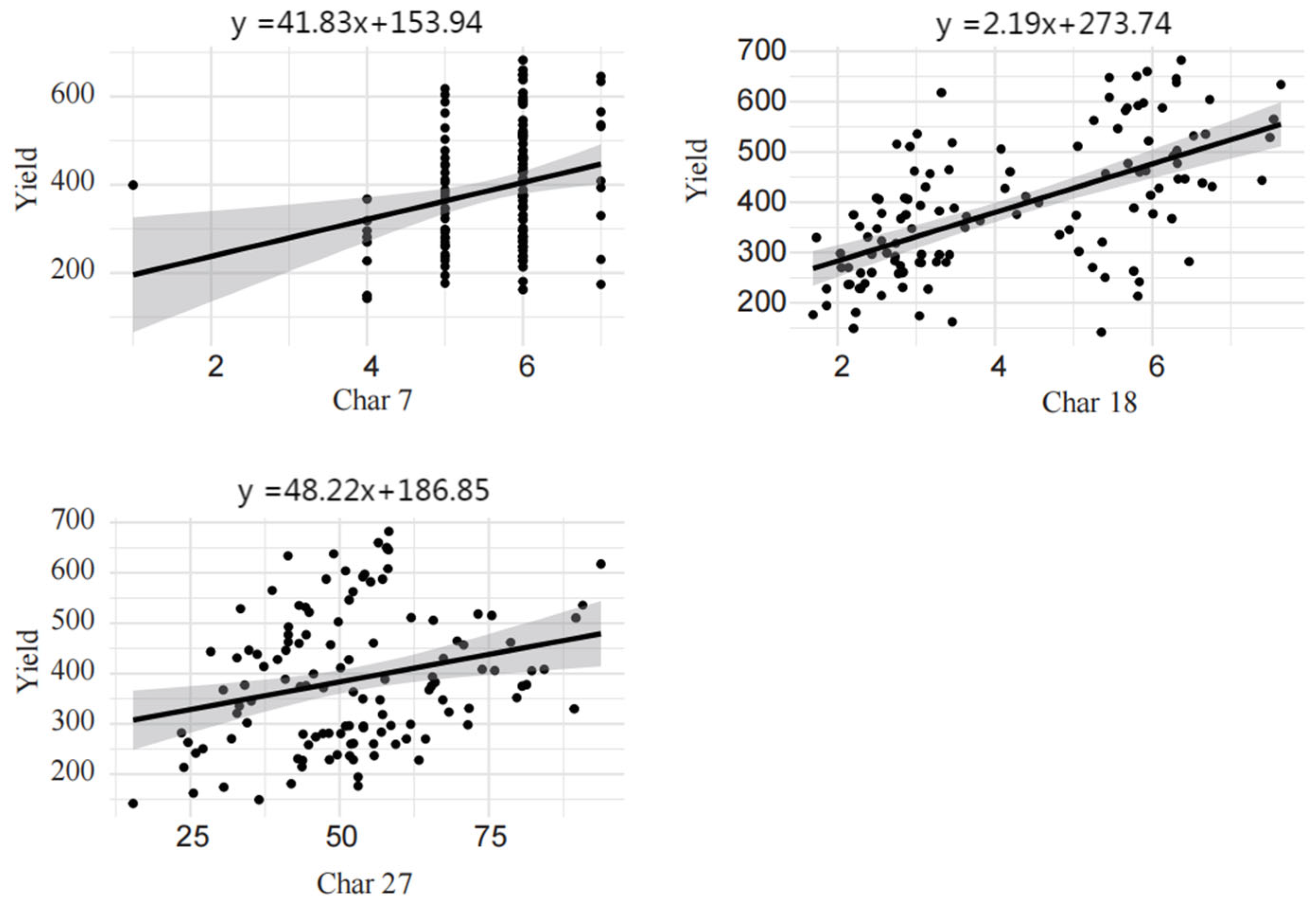
This study identified three core yield-predictive traits (Characteristic 7: Leaf: Degree of light green color, Characteristic 18: Plants: Number of pods, Characteristic 27: Seed: Weight per Hundred Seeds) with significant positive correlations with mung bean yield through correlation and linear regression analysis, among which Characteristic 27 showed the strongest correlation (r = 0.66,
p < 0.001), followed by Characteristic 7 and 18 (both r = 0.26,
p < 0.05). Linear regression models further quantified the yield contribution of these traits: each unit increase in Characteristics 7, 18 and 27 was associated with an average yield increase of 41.83, 2.19 and 48.22 units, respectively, indicating that these three traits are the key phenotypic determinants of mung bean yield formation and can serve as reliable yield-predictive indicators in DUS testing and breeding practice. On the basis of this core finding, we further discussed the phenotypic variation characteristics, trait correlation patterns, germplasm clustering characteristics and comprehensive evaluation system of mung bean DUS traits, and explored the genetic and breeding implications of these results for mung bean genetic improvement. In addition, this study found that Characteristic 5 (Leaves: Number of small leaves) and Characteristic 19 (Plants: Pod-frying property) each displayed only a single phenotypic state, which suggests that these characteristics may be under high genetic constraint [
14]. From an evolutionary perspective, such phenotypic conservation likely reflects the essential role of these characteristics in legume adaptation. For instance, leaflet number is likely under stringent control by developmental stability genes, such as those in the KNOX family [
15]. Similarly, the absence of explosive pod shattering may be closely linked to directional selection for pod indehiscence during artificial domestication [
16,
17]. In contrast, the four highly variable characteristics (characteristics 1, 8, 12, and 29) exhibited distinct genetic profiles. Their high coefficients of variation (0.510–1.278) indicate not only polygenic regulation but also considerable phenotypic plasticity, which may facilitate environmental adaptation. Notably, from a population genetics standpoint, the high diversity index of characteristic 18 (pod number) (H′ = 2.058) suggests that this characteristic has retained substantial allelic variation throughout natural and artificial selection [
18]. This diversity provides a valuable genetic foundation for further exploring yield potential via hybridization breeding [
19].
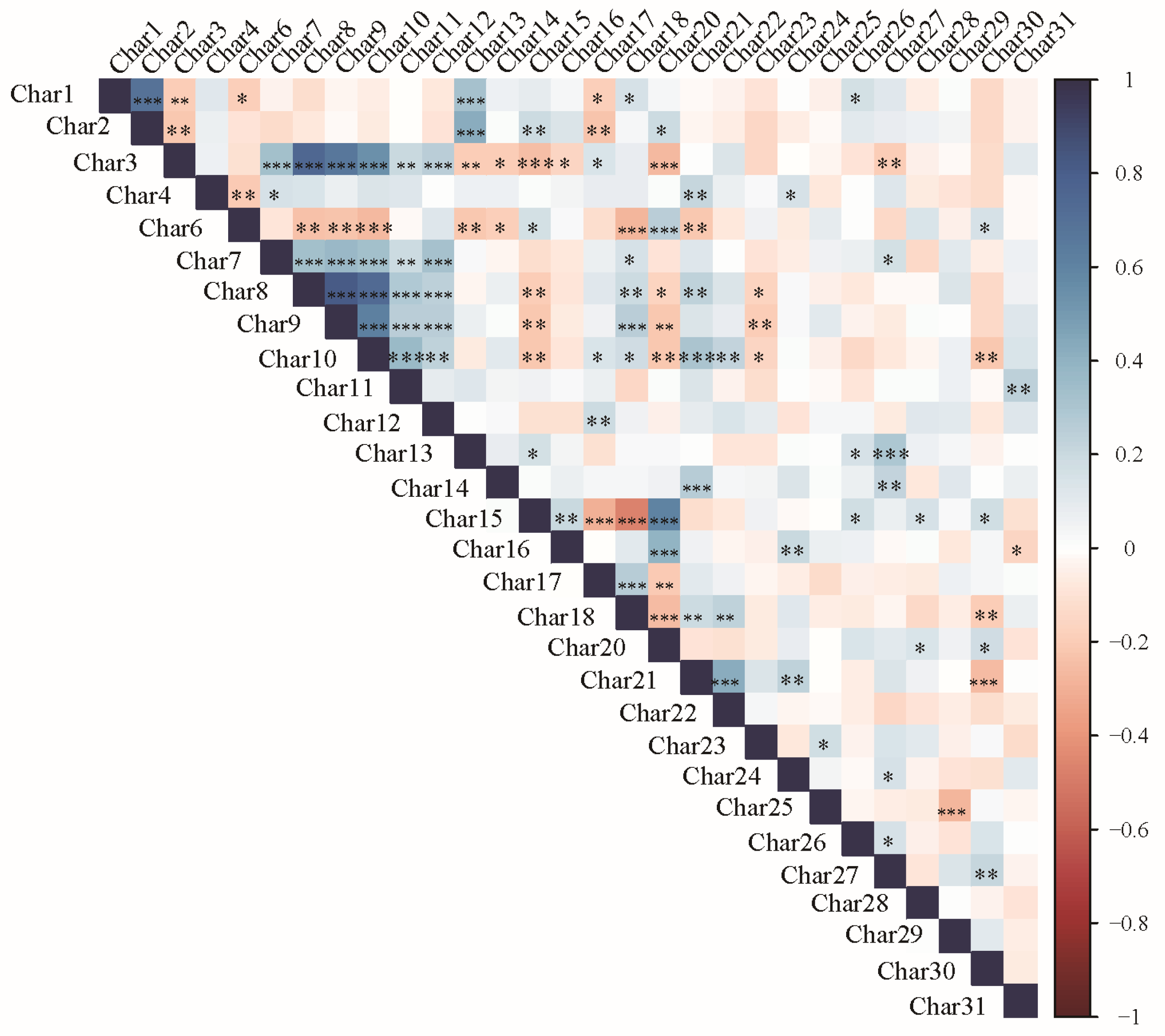
Correlation analysis across 29 characteristics indicated a particularly noteworthy polygenic nature for characteristic 3. Its broad associations with 13 other characteristics suggest that this characteristic may influence multiple developmental processes, potentially mediated by hormone signaling pathways or transcription factor cascades [
20,
21]. From a breeding standpoint, the positive correlation between characteristic 7 (leaf greenness) and characteristic 18 (pod number) supports the applicability of the “source–sink” theory [
22]. In contrast, the negative correlation between characteristic 15 (plant height) and characteristic 18 highlights key trade-offs to be balanced in plant architecture improvement [
23,
24].
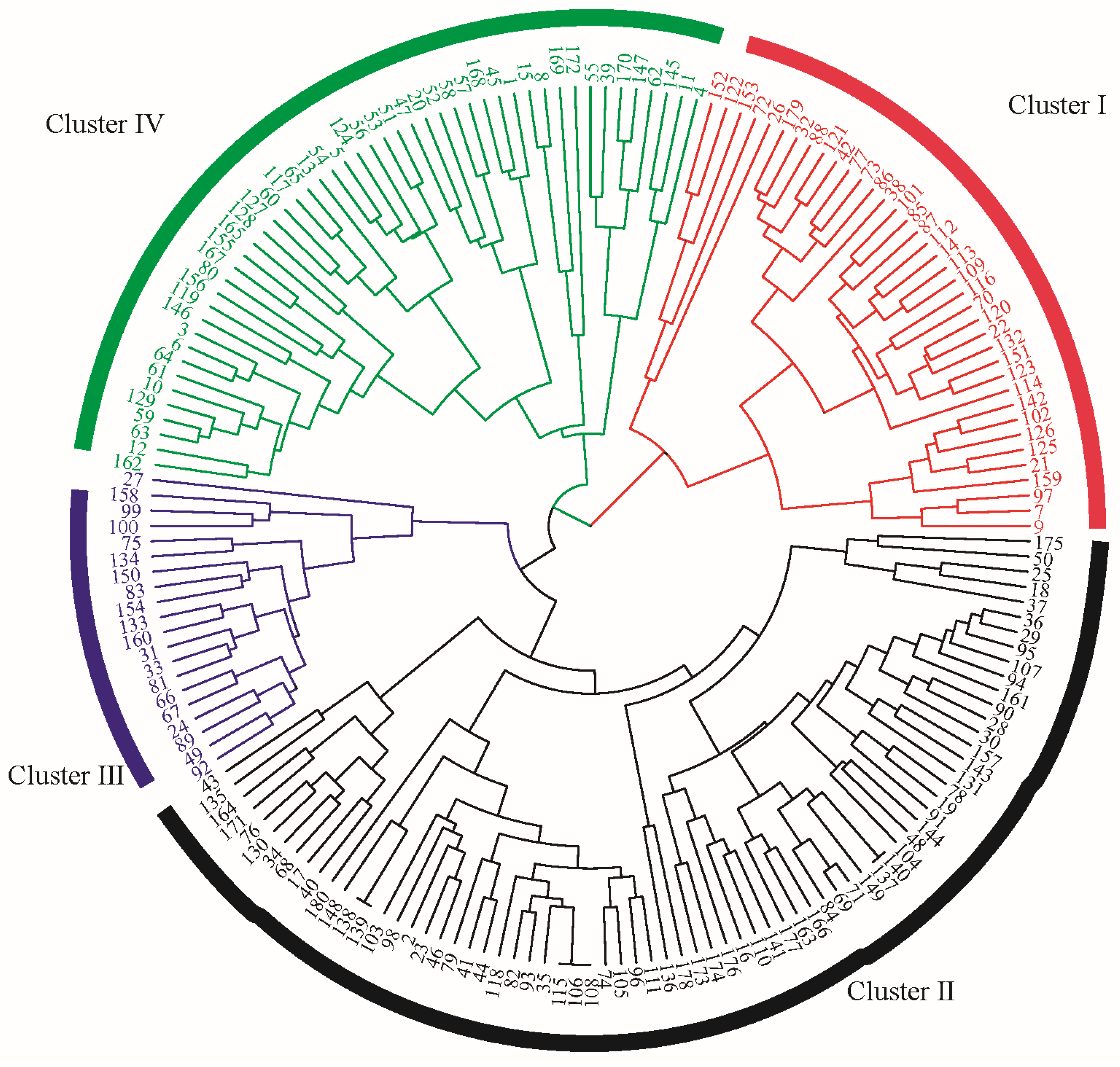
The clustering analysis based on phenotypic characteristics not only enabled the systematic classification of germplasm resources, but also suggested specific breeding strategies for different improvement objectives. The low anthocyanin content observed in Cluster 1 may be associated with its ecological adaptability, offering candidate materials for breeding varieties suited to specific ecological regions. Group 2 exhibited favorable yield performance. The plant architecture characteristics of Cluster 3 indicated potential for yield enhancement through morphological improvement, although its weak reproductive growth also implied the necessity for hybrid-based breeding to balance vegetative and reproductive development. Despite the disadvantage of low hundred-grain weight, Cluster 4 showed valuable characteristics such as a long growth period, which could be useful in selecting late-maturing cultivars. This phenotype-based classification system provides a scientific foundation for precise parental selection and targeted breeding programs.
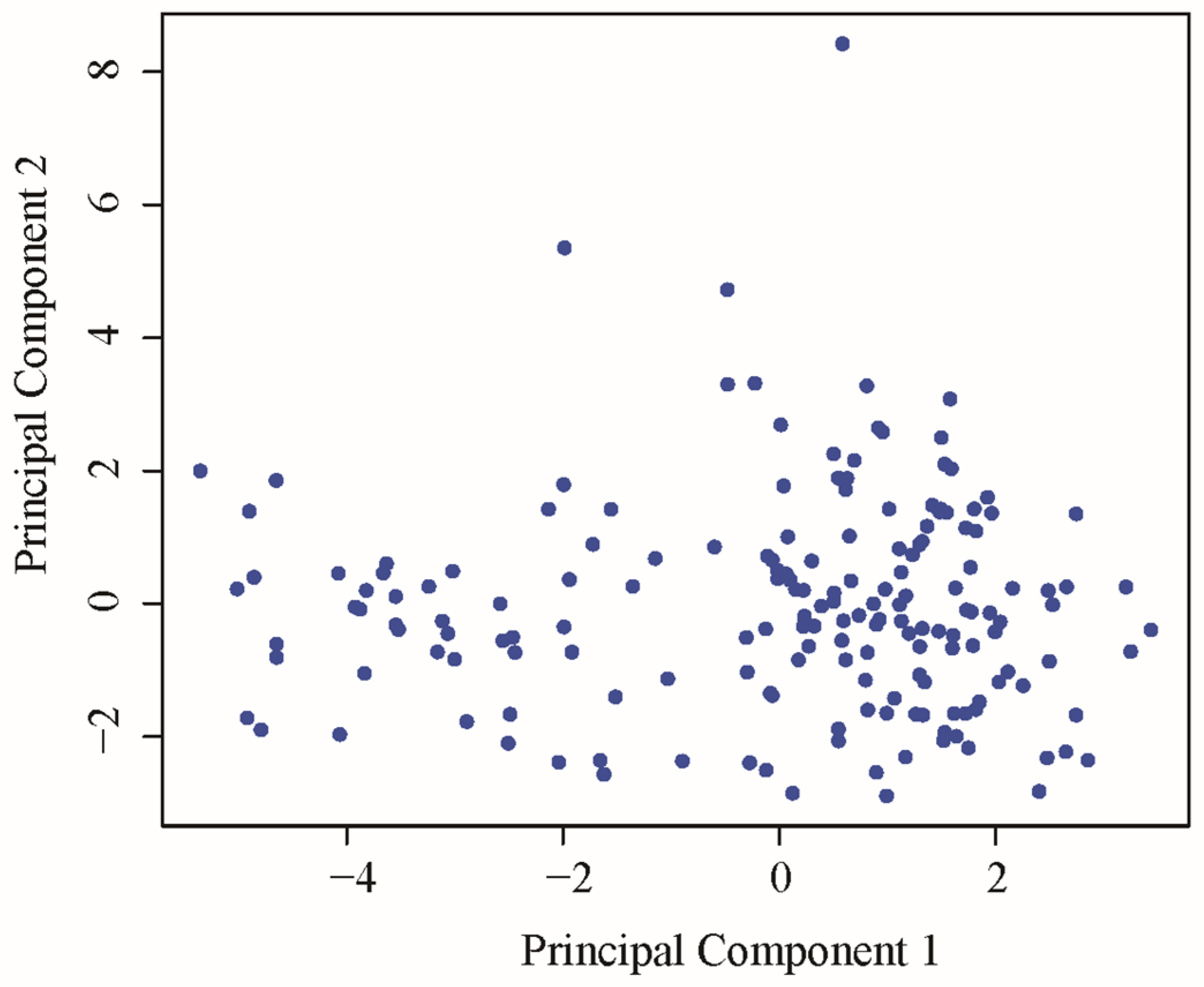
Principal component analysis (PCA) effectively reduced the complexity of the characteristic system to ten principal components, which is methodologically valuable. The cumulative contribution rate of the first ten components reached 66.493%, slightly lower than the 70% commonly reported in other crop studies. This outcome, however, plausibly reflects the greater complexity of the genetic background in mung beans. Notably, the first three principal components predominantly represent leaf color, plant architecture, and seed characteristics—characteristics that are also of major interest in soybean breeding. From the perspective of optimizing test protocols, this dimensionality-reduction approach could substantially enhance the efficiency of Distinctness, Uniformity, and Stability (DUS) testing. By focusing on characteristics with higher loadings in the leading principal components, the workload can be significantly reduced without compromising identification accuracy. Moreover, the dominant representation of pod- and seed-related characteristics in the principal components has been statistically confirmed, underscoring their central role in yield formation.
The establishment of the DTOPSIS comprehensive evaluation system marks a significant advancement in germplasm resource assessment methodologies. By incorporating weighted evaluations across multiple characteristics, this approach effectively mitigates the limitations inherent in conventional single-characteristic screening. The determination of an overall mean score of 0.5398 provides an objective benchmark for evaluating varietal quality. The superior performance of variety No. 15, with a score of 0.7093, further validates the practical efficacy of this system. From a breeding application perspective, this comprehensive evaluation method not only enables the rapid identification of varieties with favorable overall characteristics but also facilitates the discovery of innovative materials characterized by distinctive characteristic combinations. Three key characteristics—leaf greenness, pod number, and hundred-grain weight—collectively explain 76% of the observed yield variation. From a quantitative genetics standpoint, this result underscores the central role of these characteristics in yield formation. Notably, the mechanisms through which these characteristics contribute to yield differ significantly: hundred-grain weight primarily enhances yield by increasing individual seed weight, pod number ensures yield stability through the multiplication of yield components, and leaf greenness provides the material basis for yield by improving photosynthetic efficiency. This collaborative yet distinct mode of characteristic contribution suggests that differentiated selection strategies should be adopted in breeding programs. For hundred-grain weight, direct selection is warranted; for pod number, coordination with plant architecture should be considered; and for leaf greenness, stability under varying environmental interactions merits attention. The development of this model lays the groundwork for predicting yield potential based on DUS (Distinctness, Uniformity, Stability) characteristics during early breeding stages, which is expected to substantially enhance breeding efficiency.
5. Conclusions
This study systematically analyzed 31 distinctness, uniformity, and stability (DUS) test characteristics across 180 mung bean germplasm resources using multiple statistical methods. The main findings are as follows: Correlation analysis revealed shared regulatory patterns among color-related characteristics. Cluster analysis categorized the germplasm into four groups, with Group 2 (73 accessions) exhibiting darker leaf color, longer pods, more large pods, and higher hundred-grain weight, offering clear selection guidance for high-yield and high-quality breeding. Principal component analysis simplified the characteristic system by extracting 10 principal components that accounted for 66.493% of the cumulative variance, highlighting leaf color, plant morphology, and seed characteristics as core sources of variation. The DTOPSIS comprehensive evaluation objectively ranked germplasm quality and identified ‘Yingge 2’ as having superior overall characteristics, with outstanding regional adaptability; breeders may thus consider prioritizing its quantitative characteristics in subsequent breeding cycles. Linear regression analysis quantified the contributions of leaf greenness, pod number, and hundred-grain weight to yield, yielding a predictive model that explained 76% of yield variation and providing a reliable tool for early selection. Together, these results improved the understanding of the genetic architecture underlying mung bean DUS characteristics and suggested that breeders could select for superior traits such as leaf greenness, pod number per plant, and 100-seed weight to enhance yield stability and productivity in mung bean.