Article

Evaluation of Genetic Diversity in Sugar Beet Using SCoT and ISSR Markers

1
Graduate School of Education, Sivas University of Science and Technology, Sivas 58140, Türkiye
2
Department of Field Crops, Faculty of Agricultural Sciences and Technology, Sivas University of Science and Technology, Sivas 58140, Türkiye
3
Department of Plant Protection, Faculty of Agricultural Sciences and Technologies, Sivas University of Science and Technology, Sivas 58140, Türkiye
*
Author to whom correspondence should be addressed.
Plants 2026, 15(4), 613; https://doi.org/10.3390/plants15040613
Submission received: 29 December 2025 / Revised: 1 February 2026 / Accepted: 5 February 2026 / Published: 14 February 2026
(This article belongs to the Section Plant Genetics, Genomics and Biotechnology)

Abstract

Sugar beet (Beta vulgaris L.) is an economically important crop that accounts for approximately 20% of global sugar production. The success of future breeding programs depends on the effective utilization of existing genetic resources. The aim of this study was to assess the genetic diversity and population structure of 192 sugar beet (Beta vulgaris L.) genotypes, including commercial cultivars and accessions obtained from the USDA gene bank, using SCoT and ISSR molecular markers, and to identify potential genetic resources for sugar beet breeding programs. In this study, a total of 192 sugar beet genotypes, including 187 accessions from the USDA (U.S. Department of Agriculture) gene bank and 5 commercial cultivars, were evaluated for genetic diversity using Start Codon Targeted (SCoT) and Inter Simple Sequence Repeat (ISSR) markers. A total of 68 scorable bands were obtained from five SCoT and three ISSR primers, and all bands were found to be polymorphic (100% polymorphism). Parameters such as polymorphic information content (PIC), Nei’s genetic diversity, and Shannon’s index indicated a high level of variation within the gene pool, with SCoT markers being more informative than ISSR markers. Dendrogram analyses based on Nei’s genetic distance revealed that the populations were separated into two main groups, while the sub-clusterings contained broad genetic variation. STRUCTURE analysis identified four (K = 4) populations for the SCoT data and three (K = 3) populations for the ISSR data; the inclusion of a high number of individuals in the admixture population indicated extensive gene flow. Principal component analysis (PCA) revealed both homogeneous groups and differentiated genotypes contributing to within-population diversity. The results demonstrate that the combined use of SCoT and ISSR markers provides powerful and complementary tools for assessing genetic diversity in sugar beet. The findings provide a solid scientific basis for the development of new, high-yielding and high-quality sugar beet cultivars as well as for the conservation of existing genetic resources. Molecular data constitute an important reference for guiding sugar beet breeding programs and for the effective utilization of genetic resources.

1. Introduction

Sugar beet (Beta vulgaris L.) is an important industrial crop belonging to the Amaranthaceae family [1,2]. Sugar beet is a biennial and cross-pollinated plant with a diploid genome structure (2n = 18) [3] and accounts for approximately 20% of global sugar production [4]. In addition to being used as an important raw material for carbohydrate supply, biofuel, and pharmaceutical industries, its by-products, pulp and molasses, are widely used in animal nutrition [5,6]. Sugar beet cultivation, which has spread across Europe and other regions of the world, has today formed a broad genetic resource encompassing both commercial cultivars and their wild relatives [7,8]. However, the narrow genetic base of modern cultivars poses a serious threat to breeding programs, particularly under changing climatic conditions [9,10]. Molecular marker systems are widely used in sugar beet for assessing genetic diversity, constructing high-resolution genetic maps, and identifying quantitative trait loci (QTLs) associated with agronomically important traits [11,12,13]. Success in breeding programs largely depends on genetic diversity that provides new alleles for traits such as yield, stress tolerance, and disease resistance. Among DNA-based markers, RAPD, ISSR, SSR, and AFLP have been widely used in genetic diversity studies in sugar beet [14,15,16,17,18,19]. Among these markers, start codon targeted (SCoT) markers stand out as an effective tool for evaluating genetic diversity [20,21]. SCoT markers are derived from conserved regions flanking the ATG start codon of plant genes and are classified as dominant markers with high reproducibility [22]. Because they do not require prior sequence information and are low-cost, they can also be used in species with limited genomic resources. SCoT markers have been successfully applied for various purposes in many economically important crops, including genetic diversity analysis, cultivar and hybrid identification, construction of linkage maps, and genetic fidelity analysis of tissue culture-derived plants. The use of SCoT and ISSR markers in screening sugar beet germplasm will provide important information on population structure and genetic diversity and will contribute to the effective utilization of these resources in breeding programs. The primary rationale for using SCoT and ISSR markers in combination in this study was to enable the assessment of genetic diversity in sugar beet at different genomic levels through a complementary approach. Although RAPD, ISSR, SSR, and AFLP markers have been widely used in genetic diversity studies of sugar beet, each marker system targets distinct regions of the genome and therefore reflects different types of biological information. SCoT markers target gene-associated (functional) regions surrounding the ATG start codon, allowing the detection of genetic variation that may be associated with selection and breeding processes. In contrast, ISSR markers amplify regions between microsatellite loci and thus primarily represent neutral, genome-wide variation. Consequently, relying solely on SCoT markers could have limited the assessment of genetic diversity to functional regions only. In this context, the combined use of SCoT and ISSR markers enabled the comparative analysis of variation in gene-associated and neutral genomic regions, the evaluation of the consistency of genetic patterns obtained from different marker systems, and a more comprehensive and reliable interpretation of genetic structure relevant to sugar beet breeding programs [6,7,10,23].
In this study, the genetic diversity of 186 genotypes obtained from the USDA gene bank and five commercial cultivars was evaluated using SCoT and ISSR markers, and the genetic relationships within sugar beet germplasm were comprehensively elucidated.

2. Materials and Methods

2.1. Plant Materials

In this study, 187 sugar beet genotypes from the USDA Agricultural Research Service (USDA) genebank, along with 5 commercial beet varieties (Serenada, Varias, Evelina, Jaguar, Balaban), were used for genetic characterization (Table 1).

2.2. DNA Isolation

The 192 samples were grown under field conditions at the Agricultural R&D Center of Sivas University of Science and Technology. During the early emergence stage of the plants, approximately 100 mg of fresh leaf tissue was collected and transferred to the laboratory. DNA isolation was performed with minor modifications to the cetyltrimethylammonium bromide (CTAB) method described by Doyle and Doyle (1990) [24]. The leaves were frozen in liquid nitrogen and ground into a fine powder using a porcelain mortar and pestle. A buffer composed of extraction buffer, lysis buffer, and sarcosyl solutions was heated to 65 °C and then added to the powdered samples. The samples were incubated at 65 °C for 30 min, followed by the addition of chloroform–isoamyl alcohol (24:1) and mixing. After centrifugation at 6000× g for 20 min at 21 °C, the upper phase was transferred to a new tube and cold (−20 °C) isopropanol was added. Following centrifugation at 6000× g for 5 min at 21 °C, the supernatant was discarded and washing buffer (70% EtOH) was added. After incubation at room temperature for 20 min, the samples were centrifuged at 6000× g for 10 min at 21 °C and the supernatant was removed. The pellet was washed with cold ethanol and, after centrifugation at 6000× g for 10 min at 21 °C, the upper phase was discarded and the pellet was dissolved in 100 μL of ultrapure water. Stock DNA concentrations were measured using a MaestroNano Pro spectrophotometer (MN913A, MaestroGen, Hsinchu, Taiwan), and DNA samples were diluted to a final concentration of 5 ng/µL.

2.3. SCoT Marker Assay

A preliminary screening was performed using 36 SCoT primers defined by Collard and Mackill on ten different sugar beet genotypes [22]. The aim was to identify primers producing clear and well-defined polymorphic banding profiles. As a result of the preliminary screening, five SCoT primers (SCoT-1, SCoT-4, SCoT-15, SCoT-28, and SCoT-32) that produced the best polymorphic bands were selected for screening all genotypes (Table 2). For the evaluation of SCoT polymorphism, all isolated DNA samples were screened using these five markers developed by Collard and Mackill [22]. The PCR reaction mixture consisted of 4 μL DNA (20 ng), 1 μL primer, 10 μL PCR master mix (Eco Tech, Cat. No: ET5), and 10 μL dH2O. A total of 20 ng of template DNA was used in a 25 μL PCR reaction. The PCR conditions included an initial denaturation for 3 min, followed by 35 cycles of denaturation at 94 °C for 1 min, annealing at 54–61 °C for 1 min, and extension at 72 °C for 1 min, with a final extension at 72 °C for 10 min. For electrophoresis of PCR products, a 2% agarose gel prepared in Tris–borate–EDTA buffer was used. The gel was stained with ethidium bromide and visualized using a UV imaging system (Bio-Rad Laboratories, Inc., Hercules, CA, USA).

2.4. ISSR Marker Assay

A preliminary screening was conducted using 18 ISSR primers on ten different sugar beet genotypes. The aim was to identify primers producing clear and well-defined polymorphic banding profiles. As a result of the preliminary screening, three ISSR primers (UBC-831, UBC-836, and UBC-840) that produced the best polymorphic bands were selected for screening all genotypes (Table 2). For the evaluation of ISSR polymorphism, all isolated DNA samples were screened using these three markers. The PCR reaction mixture consisted of 4 μL DNA (20 ng), 1 μL primer, 10 μL PCR master mix (Eco Tech, Cat. No: ET5), and 10 μL dH2O. A total of 20 ng of template DNA was used in a 25 μL PCR reaction. The PCR conditions included an initial denaturation for 3 min, followed by 35 cycles of denaturation at 94 °C for 1 min, annealing at 50–52 °C for 1 min, and extension at 72 °C for 1 min, with a final extension at 72 °C for 10 min. For electrophoresis of PCR products, a 2% agarose gel prepared in Tris–borate–EDTA buffer was used. The gel was stained with ethidium bromide and visualized using a UV imaging system (Bio-Rad Laboratories, Inc., Hercules, CA, USA).

2.5. Statistical Analysis

During scoring, the presence of a band was coded as 1 and the absence of a band as 0. Evaluations were focused only on bright, clear, and well-resolved bands [25]. Diversity parameters such as the effective number of alleles [26], Nei’s (1973) gene diversity [27], and Shannon’s Information Index were calculated using POPGENE v.1.32 software [28]. The average polymorphic information content (PIC) for each SCoT and ISSR primer was calculated using the following formula (Equation (1)) [29]:
PIC = 2fi (1 − fi)
where PIC represents the polymorphic information content, fi is the frequency of band presence, and 1 − fi indicates band absence. The Nei’s genetic distance matrix obtained from POPGENE was used to construct a neighbour-joining dendrogram using MEGA software. The population structure of sugar beet genotypes was investigated using STRUCTURE software. The optimal number of clusters (K subpopulations) was estimated by performing the analyses three times for K values ranging from 1 to 10 [30,31]. In each run, the burn-in period and Markov chain Monte Carlo (MCMC) length were set to 50,000, and the number of iterations was set to 10. The resulting outputs were then processed using STRUCTURE HARVESTER v.0.9.94 software to determine the optimal K value [32]. To evaluate genetic relationships among sugar beet populations, Principal Component Analysis (PCA) was performed using MVSP 3.22 [33].
Table 2. Primers used for SCoT and ISSR assay, their sequence, GC content, Tm value, number of bands and diversity parameters.
MarkersSequence (5′-3′)GC%Tm °CNumber of BandsDiversity Parameter
Polymorphic BandsTotal BandsP%nehIPIC
SCoTSCoT-1CAACAATGGCTACCACCA505412121001.830.440.630.44
SCoT-4CAACAATGGCTACCACCT5054661001.760.410.600.41
SCoT-15ACGACATGGCGACCGCGA676115151001.420.270.440.27
SCoT-28CCATGGCTACCACCGCCA676110101001.540.320.480.32
SCoT-32CCATGGCTACCACCGCAC6761881001.500.310.470.31
ISSRUBC-831CTCTCTCTCTCTCTCTT4750661001.730.410.590.41
UBC-836AGAGAGAGAGAGAGAGYA4452551001.470.280.440.29
UBC-840GAGAGAGAGAGAGAGAAT4452661001.690.390.580.39
ne: Effective number of alleles, h: Nei’s (1973) gene diversity [27], I: Shannon’s Information index, PIC: polymorphism information contents.

3. Results and Discussion

3.1. Diversity Shown Through SCoT and ISSR Assay

A total of eight primers that produced strong PCR results were selected for genotyping all sugar beet samples (Table 2). Using these primers, a total of 68 scorable bands were obtained. A total of 51 scorable bands were obtained from the SCoT primers. All of these bands were polymorphic, with an average of 8.5 bands per primer. A total of 17 scorable bands were obtained from the ISSR primers. The lower number of bands produced by ISSR primers compared to SCoT primers in this study can be attributed to structural differences in the genomic regions targeted by the two marker systems. ISSR markers amplify the regions between microsatellite repeats (SSR regions) in the genome, the distribution and frequency of which may vary depending on the genome and species. In sugar beet, the relatively limited distribution and lower polymorphism of ISSR target regions may have resulted in a reduced number of amplified bands. In contrast, SCoT markers are designed based on the conserved start codon (ATG) regions of genes targeting gene-rich and more conserved genomic regions, which facilitates the generation of a higher number of reproducible and scorable bands. The number of bands per primer ranged from 5 (UBC-836) to 15 (SCoT-15). The use of these primers enabled the detection of a high level of polymorphism among the 192 samples. The polymorphism rate observed in these samples was calculated as 100%.
According to Table 2, among all primers, SCoT-1 exhibited the highest effective number of alleles (1.83), while SCoT-15 showed the lowest value (1.42). Gene diversity determined by SCoT primers ranged from 0.27 (SCoT-15) to 0.44 (SCoT-1), whereas gene diversity estimated using ISSR primers ranged from 0.28 (UBC-836) to 0.41 (UBC-831). The Shannon diversity index varied between 0.44 (SCoT-15) and 0.63 (SCoT-1) for SCoT primers, and between 0.44 (UBC-836) and 0.59 (UBC-831) for ISSR primers. Regarding PIC values, SCoT-1 had the highest value (0.44) and SCoT-15 had the lowest value (0.27) among all primers (Table 2). The higher polymorphism rates and PIC values observed for SCoT markers compared to ISSR markers can be explained by the structural and functional differences in the genomic regions targeted by these two marker systems. SCoT markers are gene-targeted markers that amplify conserved yet functionally variable regions flanking the ATG start codon of genes, which may be more susceptible to both natural and artificial selection pressures [22,23]. In particular, selective processes acting on genes associated with stress tolerance, environmental adaptation, and yield may contribute to increased allelic diversity in these regions [10]. In contrast, ISSR markers are primarily based on the amplification of regions between microsatellites located in non-coding and relatively neutral parts of the genome, and are therefore less influenced by selective forces [18]. Consequently, the higher genetic diversity detected by SCoT markers may reflect not only technical differences between marker systems but also the accumulation of evolutionary- and breeding-related variation in functionally relevant genomic regions [23]. This indicates that SCoT and ISSR markers are complementary, and that their combined use enables a more comprehensive assessment of both functional and neutral genetic variation [18].
When the two different primer groups used in this study were compared based on the results presented in Table 2, both primer groups were found to provide high levels of polymorphism. However, SCoT primers were evaluated as more powerful and informative than ISSR primers for the assessment of genetic diversity, as they produced a higher number of bands and yielded higher diversity indices (PIC, h, I).
Wild and cultivated beets were clearly distinguished using RFLP markers, and it was reported that wild beets possessed broader genetic variation than cultivated forms, with fodder beets in particular exhibiting low genetic diversity [34]. In sugar beet, very high polymorphism rates (93–97.2%) and high genetic diversity indices (0.86–0.91) were detected using RAPD and ISSR markers, demonstrating that both marker systems were effective in revealing differences among genotypes [35]. It was also reported that RAPD and ISSR markers captured a wider range of genetic variation compared to isozymes and provided high discriminatory power [36]. In studies employing SSR markers, a substantial proportion of genetic variation was found to occur among populations (48%), and clear genetic distances among lines were observed [37]. Furthermore, SSR markers were shown to offer strong resolution for discriminating sugar beet genotypes, with high PIC values ranging from 0.78 to 0.91 [38]. In a more recent study, polymorphism rates exceeding 97% and moderate PIC values were reported using SCoT markers [39]. Taken together, these studies consistently demonstrate that findings obtained using different molecular marker systems reliably reveal the level of genetic diversity and inter-population differentiation in sugar beet and that the results are supportive of the findings of the present study.

3.2. Genetic Distance

Based on the circular neighbor-joining dendrogram constructed using Nei’s genetic distance, the genetic structure of the analyzed populations was separated into two main groups (A and B) (Figure 1). Group A consisted of a limited number of samples and exhibited a compact structure that was clearly separated from all other groups in the dendrogram. This indicates that, although Group A populations possess a narrow genetic diversity, they represent a distinct gene pool. Therefore, this group has critical potential for the conservation and utilization of alternative genetic resources in breeding programs.
Group B, on the other hand, was divided into four subclusters (B1, B2, B3, and B4), revealing the presence of broader genetic variation. The samples in cluster B1 showed a high level of similarity to each other and, with their homogeneous structure, likely represent materials sharing a common selection history. In contrast, cluster B2, which contained a large number of populations and exhibited extensive branching diversity, emerged as the subgroup with the widest genetic base. This group is considered a rich source of variation that may harbor diverse traits and can be exploited in breeding programs. Clusters B3 and B4 displayed relatively more homogeneous structures but were clearly differentiated from each other. Populations in B3 are important for variety development due to their genetic proximity, whereas populations in B4 likely harbor different genetic variants associated with environmental adaptation. These findings clearly reveal not only the levels of genetic diversity within the populations but also their subpopulation structure.
Overall, the resulting dendrogram demonstrates that the molecular markers used accurately reflect the relationships among populations and provide a guiding dataset for both the conservation of genetic resources and breeding efforts. Using SCoT markers, very high levels of polymorphism (92.85%) and high PIC values (0.783–0.907) were obtained in sugarcane [40]. Based on UPGMA analysis, 132 sugar beet cultivars were grouped into six main genetic clusters [41]. Similar average Nei’s genetic distances (≈0.24) were obtained using DAMD and SCoT markers [11]. Using the UPGMA method, 106 sugar beet germplasm accessions were separated into four main groups [12]. Finally, high PIC values (0.58–0.83) and distinct clustering patterns were achieved using iPBS markers [42]. Taken together, these studies indicate that different PCR-based markers such as SCoT, RAPD, DAMD, and iPBS are effective in revealing the level of genetic diversity and population structure in sugar beet and related species and that the clustering patterns obtained strongly support the findings of the present study.

3.3. Population Structure Based on STRUCTURE Analysis

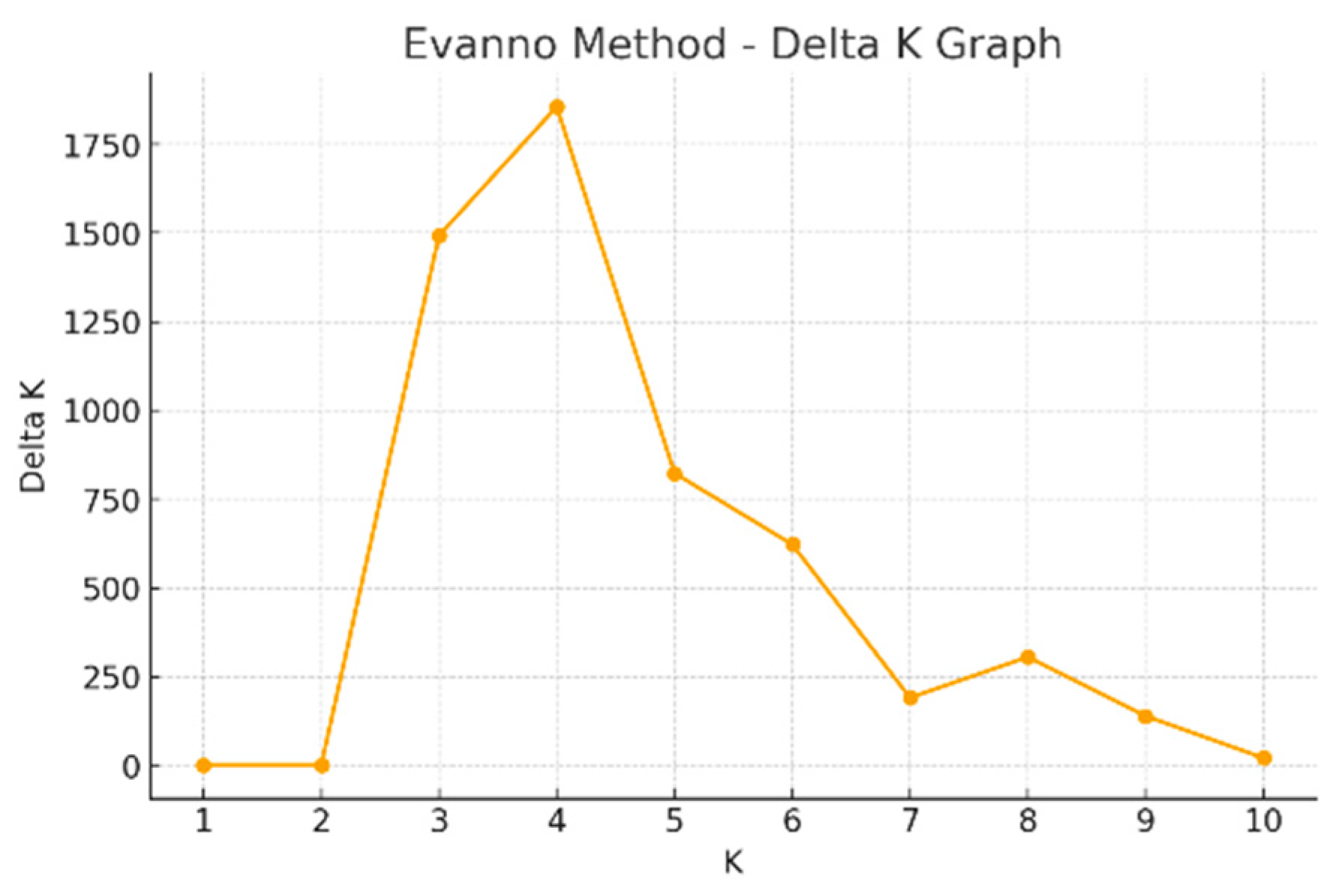
In the analysis of population structure, the number of populations (K) was evaluated over a range from 1 to 10 (SCoT). According to the ΔK criterion proposed by Evanno et al. (2005) [31], the highest ΔK value was observed at K = 4 (Figure 2). This result corresponds to the presence of four populations among the analyzed individuals.
In the bar plot obtained from the STRUCTURE analysis (Figure 3), the membership probabilities of each individual to different gene pools are represented by colors. Based on the membership coefficient criterion of ≥0.75, the majority of individuals were assigned to four main populations; however, a certain proportion could not be clearly assigned to any single population. These individuals were therefore classified as an admixture population. These results indicate that the analyzed populations show a substantial level of genetic differentiation and that the genetic material can be grouped into four main clusters. Furthermore, the presence of admixture individuals suggests ongoing gene flow among populations, which represents an important factor shaping the genetic structure.
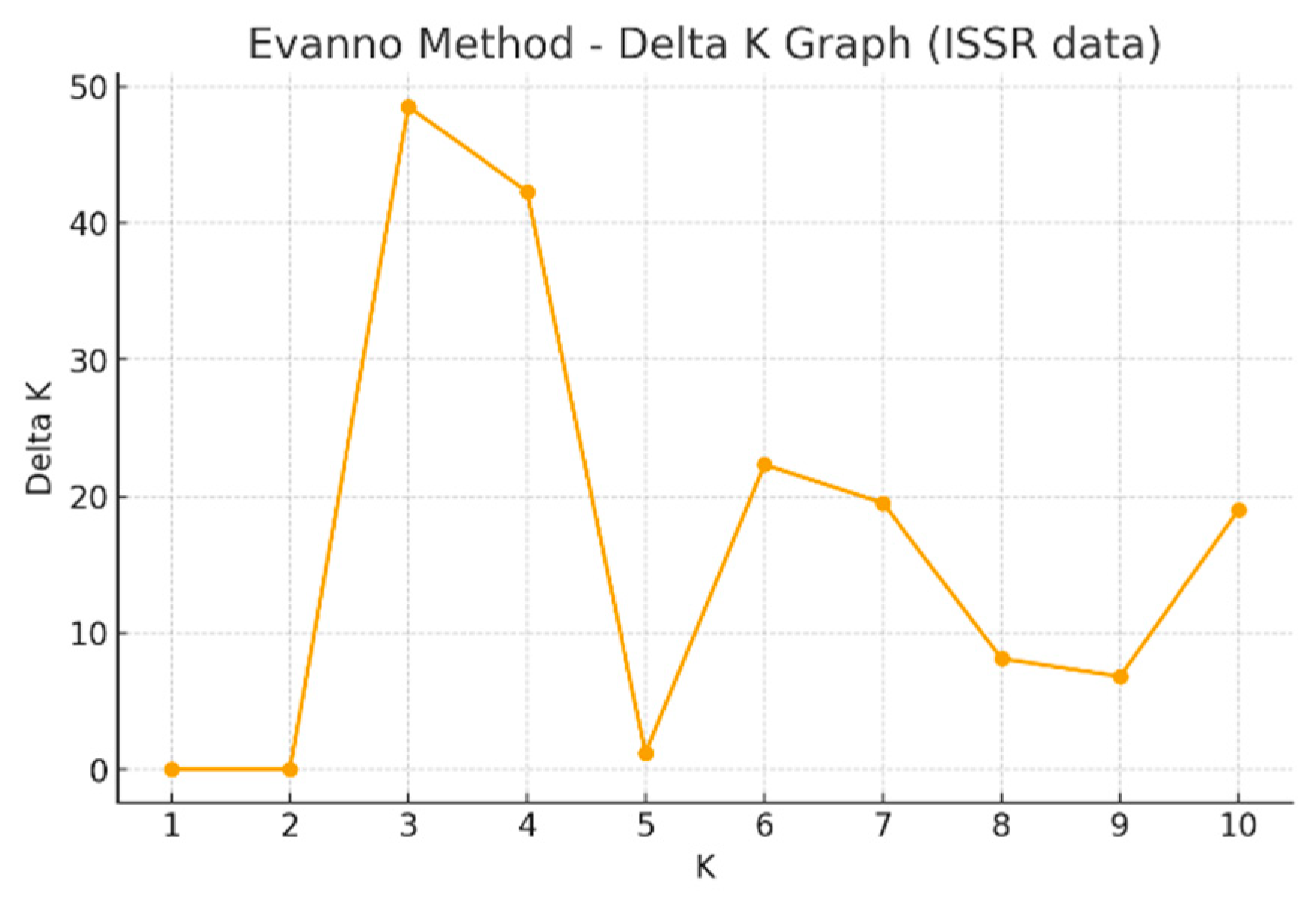
In the analysis of population structure, the number of populations (K) was evaluated over a range from 1 to 10 (ISSR). According to the ΔK criterion proposed by Evanno et al. (2005), [31] the highest ΔK value was observed at K = 3 (Figure 4). This result indicates the presence of three main gene pools among the analyzed individuals.
In the bar plot obtained from the STRUCTURE analysis (Figure 5), the membership probabilities of each individual to different gene pools are represented by colors. Based on the membership coefficient criterion of ≥0.75, the majority of individuals were assigned to three main populations; however, a certain proportion could not be clearly assigned to any single population.
Population structure in the Beta vulgaris complex was investigated using Bayesian clustering analysis, and individuals were assigned to two main clusters (K = 2) [43]. Using SSR and InDel markers, population structure analysis of monogerm sugar beet germplasm identified K = 2 as the most appropriate number of populations [44]. STRUCTURE analysis of elite sugar beet genotypes also yielded the highest value at K = 2 [45]. In contrast, population structure was best explained by three genetic groups (K = 3) [46]. Taken together, these studies indicate that Bayesian-based population structure analyses in sugar beet and the Beta vulgaris complex generally point to two main genetic groups; however, depending on the scope of the material and the extent of genetic diversity, higher K values may also emerge, which is consistent with the STRUCTURE results obtained in the present study.
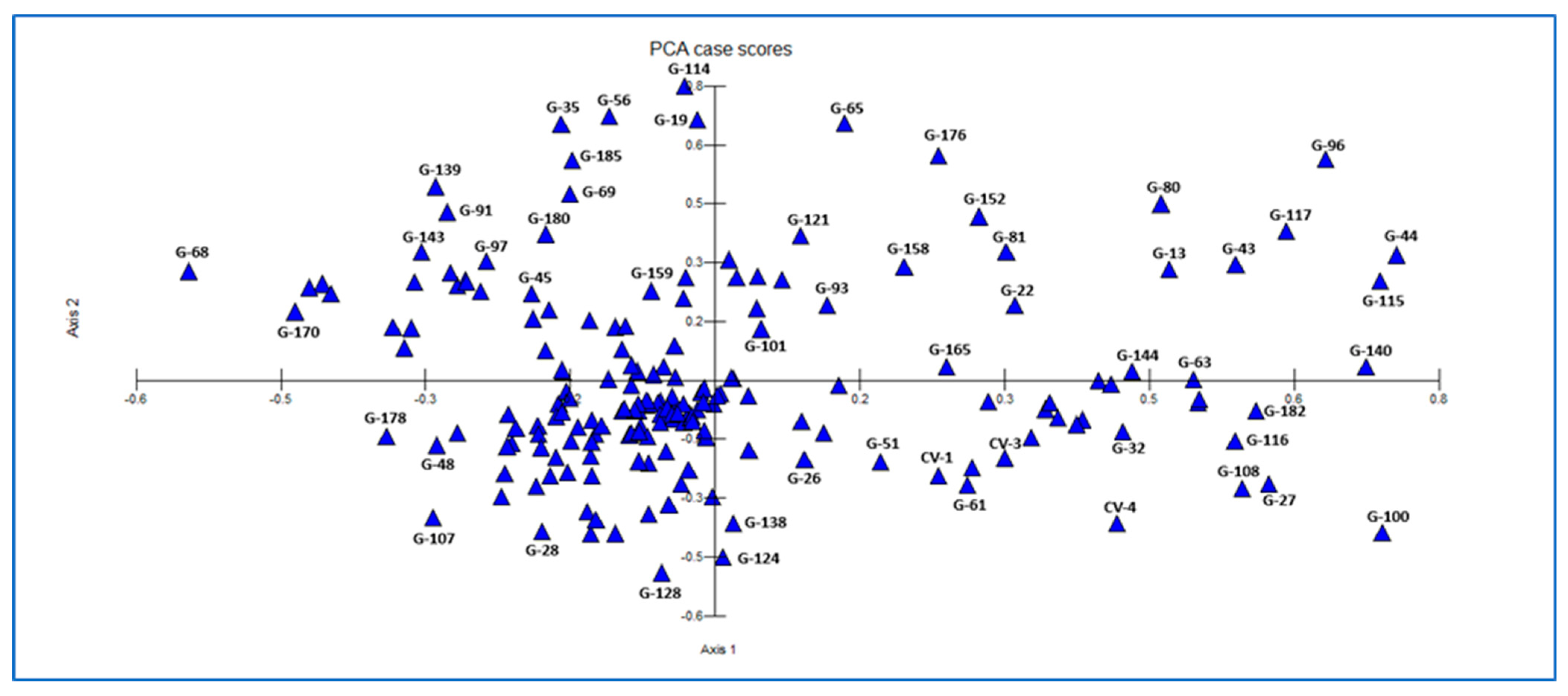
Figure 6 presents the two-dimensional PCA distribution, in which the first two components (Axis 1 and Axis 2) explain a substantial proportion of the genetic variation among genotypes. The majority of genotypes (G-1, G-26, G-28, G-45, G-51, G-61) are clustered near the center of the coordinate plane, indicating that they possess highly similar genetic structures, whereas several genotypes located at the extremes (G-68, G-170, G-178, G-96, G-140, G-100) exhibit high genetic distances and contribute most strongly to within-population diversity. In addition, the separation of genotypes, such as G-114, G-65, and G-19 along the positive direction of the second component and genotypes such as G-124, G-128, and G-138 along the negative direction of the second component, indicates partial differentiation within the population. The control cultivars (CV-1, CV-3, CV-4) are positioned close to the central region, suggesting that their genetic structures are similar to those of the broader population and that they are suitable representatives of overall diversity.
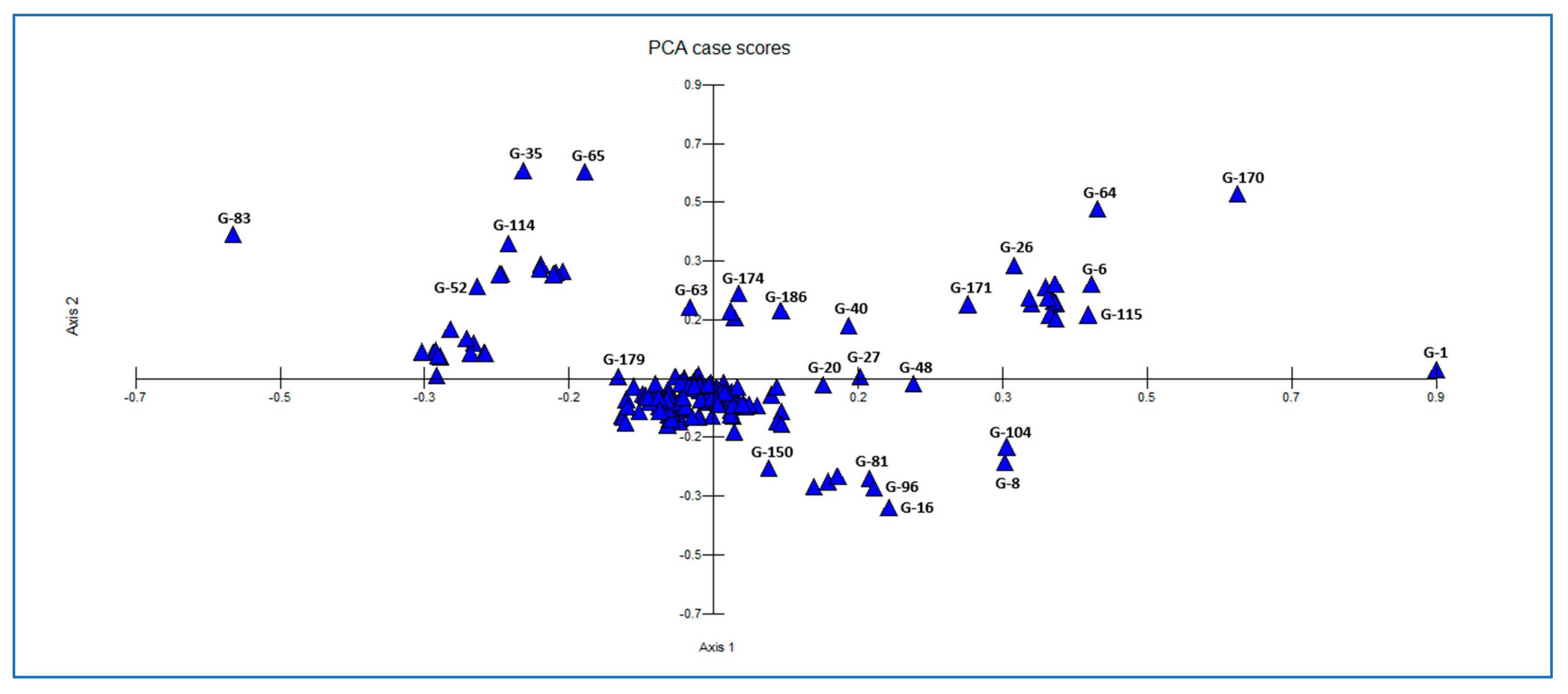
In the two-dimensional PCA distribution shown in Figure 7, the first two components account for a substantial proportion of the genetic variation among genotypes. The majority of genotypes are densely clustered near the center of the coordinate plane (G-20, G-27, G-40, G-48, G-150, G-179), indicating a high degree of genetic similarity among them. In contrast, genotypes located at the extremes (G-1, G-83, G-170) are clearly separated from the center and stand out as individuals contributing most strongly to within-population diversity. In addition, genotypes such as G-35, G-52, G-65, and G-114 are differentiated along the positive direction of the second component, whereas genotypes such as G-8, G-16, G-81, G-96, and G-104 are separated along the negative direction of the second component, forming small subgroups. This distribution indicates that the population is generally homogeneous, while certain individuals represent distinct gene pools due to their greater genetic distances.
Genetic similarity among exotic sugar beet cultivars was shown to be largely shaped by breeding companies; however, the presence of cultivars from different companies within the same clusters was attributed to the narrow genetic base of sugar beet and the exchange of genetic resources among breeding programs [41]. In a large-scale genomic study, wild beet populations belonging to the genus Beta were divided into two distinct subgroups of Mediterranean and Atlantic origin based on PCA, phylogenetic, and admixture analyses, with higher levels of genetic differentiation observed in Atlantic populations [47]. Using SRAP markers, high levels of polymorphism, wide similarity ranges (0.58–0.93), and five major genetic clusters were identified in chard genotypes [48]. In multigerm sugar beet germplasm, four major genetic groups were identified, and most of the genetic variation was shown to originate from within-population differences (93%) [12]. Employing SSR and InDel markers, monogerm sugar beet lines were divided into two main populations and several subgroups, with high genetic distances observed between specific genotype pairs, highlighting their potential importance as parental lines in breeding programs [44]. Similarly, moderate to high polymorphism (67.11%), wide genetic similarity ranges (0.485–0.925), and a generally homogeneous yet broadly variable distribution in PCA analysis were reported for 18 sugar beet genotypes evaluated using SCoT markers [49]. Taken together, these studies indicate that different marker systems, including genomic, SSR, SRAP, and SCoT markers, provide complementary and consistent insights into the level of genetic diversity, population structure, and identification of breeding-relevant genotypes within the genus Beta and sugar beet [50,51,52].

4. Conclusions

This study demonstrates that the combined use of SCoT and ISSR markers is highly effective for assessing genetic diversity and population structure in sugar beet germplasm. The 100% polymorphism observed across all primers indicates that the evaluated material possesses broad genetic variation. Clustering and STRUCTURE analyses revealed clear population stratification, while the high proportion of admixed individuals suggests strong gene flow among populations. The higher diversity indices obtained with SCoT markers compared to ISSR markers indicate that SCoT markers are more powerful in resolving genetic relationships. The identification of genetically differentiated individuals suggests that these genotypes may serve as valuable sources of alleles related to stress tolerance, disease resistance, and yield improvement. Overall, these findings emphasize the importance of conserving sugar beet genetic resources and effectively utilizing them in breeding programs, providing a strong foundation for sustainable production and cultivar development. The genetic diversity and population structure analyses presented in this study are not limited solely to the identification of basic genetic resources but also provide a framework for identifying materials that can be directly utilized in parent selection for sugar beet breeding programs. The genetic characterization of genotypes that were monitored under field conditions for four years and subjected to preliminary selection based on phenotypic observations using molecular markers enables the identification of genotypes possessing desired agronomic and adaptation traits as genetically distinct and complementary parents. This approach makes a significant contribution to the expansion of the genetic base in breeding programs, the development of combinations with targeted traits, and the implementation of more rational parent selection in hybridization studies. Therefore, this study provides a concrete resource for future breeding efforts focused on yield, quality, stress tolerance, and disease resistance by establishing a genotypic and phenotypic-based parent pool.

Author Contributions

Conceptualization, B.Y. and T.K.; methodology, B.Y., T.K., Y.Ç.; validation, B.Y. and T.K.; formal analysis, B.Y., T.K., Y.Ç.; investigation, B.Y. and T.K.; resources, B.Y., T.K., Y.Ç.; data curation, B.Y., T.K., Y.Ç.; writing—original draft preparation, B.Y., T.K., Y.Ç.; writing—review and editing, B.Y., T.K., Y.Ç.; visualization, B.Y., T.K., Y.Ç.; supervision, T.K.; project administration, B.Y. and T.K.; funding acquisition, B.Y. and T.K. All authors have read and agreed to the published version of the manuscript.

Funding

This study was carried out within the scope of the project numbered 2023-DTP-TBT-0001, which was supported by the Scientific Research Projects Coordination Unit of Sivas University of Science and Technology. We would like to thank the Scientific Research Projects Coordination Unit of Sivas University of Science and Technology for their valuable contributions and support.

Data Availability Statement

All data needed to conduct this study is provided within the manuscript.

Acknowledgments

This study is part of the PhD thesis of Betül YÜCEL, which was supported by the Scientific Research Projects Coordination Unit of Sivas University of Science and Technology.

Conflicts of Interest

The authors declared no competing interests and showed their willingness to publish this study.

References

  1. Stevanato, P.; Chiodi, C.; Broccanello, C.; Concheri, G.; Biancardi, E.; Pavli, O.; Skaracis, G. Sustainability of the sugar beet crop. Sugar Tech 2019, 21, 703–716. [Google Scholar] [CrossRef]
  2. Çilesiz, Y. Determination of Genetic Diversity in Sugar Beet Using ISSR Markers. Black Sea J. Agric. 2025, 8, 13–14. [Google Scholar] [CrossRef]
  3. McGrath, J.M.; Panella, L. Sugar beet breeding. Plant Breed. Rev. 2018, 42, 167–218. [Google Scholar]
  4. Gurel, E.; Gurel, S.; Lemaux, P.G. Biotechnology applications for sugar beet. Crit. Rev. Plant Sci. 2008, 27, 108–140. [Google Scholar] [CrossRef]
  5. Hergert, G.W. Sugar beet fertilization. Sugar Tech 2010, 12, 256–266. [Google Scholar] [CrossRef]
  6. Susar, A.; Şatana, A. Investigating the Impacts of Nitrogen Doses and Rhizobacteria on Sugar Beet (Beta vulgaris L.) Yield and Quality Parameters for Sustainable Cultivation. ISPEC J. Agric. Sci. 2024, 8, 789–803. [Google Scholar]
  7. Şahin, N.K. Stimulatory effects of different seed priming treatments on germination and early seedling growth of Sugar beet. ISPEC J. Agric. Sci. 2024, 8, 1056–1067. [Google Scholar]
  8. Çilesiz, Y. Utilization of RAPD Markers for Determining Genetic Diversity in Sugar Beet. ISPEC J. Agric. Sci. 2025, 9, 933–946. [Google Scholar]
  9. Hoffmann, C.M.; Huijbregts, T.; van Swaaij, N.; Jansen, R. Impact of different environments in Europe on yield and quality of sugar beet genotypes. Eur. J. Agron. 2009, 30, 17–26. [Google Scholar] [CrossRef]
  10. Tan, U.; Arabacı, O. Molecular Genetic Diversity of 12 Origanum vulgare subsp. hirtum Genotypes: EST-SSR Marker Analyses. ISPEC J. Agric. Sci. 2024, 8, 780–788. [Google Scholar]
  11. Liang, X.M.; Pi, Z.; Wu, Z.D.; Li, S.N. Constructing DNA fingerprinting and evaluating genetic diversity among sugar beet (Beta vulgaris L.) varieties based on four molecular markers. Sugar Tech 2023, 25, 1361–1373. [Google Scholar] [CrossRef]
  12. Song, Y.; Li, J.; Li, S.; Wu, Z.; Pi, Z. Genetic diversity analysis of sugar beet multigerm germplasm resources based on SRAP molecular markers. Horticulturae 2025, 11, 988. [Google Scholar] [CrossRef]
  13. Dalgıç, H.; Ali, A.; Karadaş, S.; Korkmaz, A.; Çolak, İ.A.; Harmankaya, M.; Karaköy, T.; Ceyhan, E.; Türkoğlu, A. Diallel analysis of cowpea (Vigna unguiculata L. Walp) for protein and mineral composition: Genetic variability and heritability. Euphytica 2025, 10, 168. [Google Scholar] [CrossRef]
  14. Smulders, M.J.; Esselink, G.D.; Everaert, I.; De Riek, J.; Vosman, B. Characterisation of sugar beet (Beta vulgaris L. ssp. vulgaris) varieties using microsatellite markers. BMC Genet. 2010, 11, 41. [Google Scholar] [CrossRef]
  15. Abdein, M.A.; Abd El-Moneim, D.; Taha, S.S.; Al-Juhani, W.S.; Mohamed, S.E. Molecular characterization and genetic relationships among some tomato genotypes as revealed by ISSR and SCoT markers. Egypt. J. Genet. Cytol. 2018, 47, 139–159. [Google Scholar]
  16. Ton, A.; Karaköy, T.; Anlarsal, A.E.; Türkeri, M. Genetic diversity for agro-morphological characters and nutritional compositions of some local faba bean (Vicia faba L.) genotypes. Turk. J. Agric. For. 2021, 3, 301–312. [Google Scholar] [CrossRef]
  17. Çilesiz, Y. Genetic diversity assessment of walnut (Juglans regia L.) genotypes from inner Anatolia region Türkiye using ISSR and RAPD markers. Sci. Rep. 2025, 15, 30850. [Google Scholar] [CrossRef]
  18. Çilesiz, Y. Genetic relationship among grape (Vitis vinifera L.) genotypes grown in inner Anatolia region Turkey analyzed by ISSR and RAPD markers. Sci. Rep. 2025, 15, 32842. [Google Scholar] [CrossRef]
  19. Sönmez, E.; Çilesiz, Y. Genetic variation analysis of selected grape (Vitis vinifera L.) accessions through SCoT markers. Selcuk J. Agric. Food Sci. 2025, 39, 418–426. [Google Scholar] [CrossRef]
  20. Ovalıoğlu, G.; Çilesiz, Y. SCoT marker-based evaluation of genetic diversity in selected walnut (Juglans regia L.) accessions. Int. J. Agric. Environ. Food Sci. 2025, 9, 570–576. [Google Scholar] [CrossRef]
  21. Temrel, T.M.; Çilesiz, Y. Investigation of genetic polymorphism in selected thyme (Thymus vulgaris L.) accessions using SCoT molecular markers. Selcuk J. Agric. Food Sci. 2025, 39, 459–466. [Google Scholar] [CrossRef]
  22. Collard, B.C.; Mackill, D.J. Start codon targeted (SCoT) polymorphism: A simple, novel DNA marker technique for generating gene-targeted markers in plants. Plant Mol. Biol. Report. 2009, 27, 86–93. [Google Scholar] [CrossRef]
  23. Atalay, E.; Yorgancılar, M.; Ceyhan, E. Genomic Insights into Cold-Tolerant Pea Genotypes: A Molecular Diversity Study Using ISSR Markers. ISPEC J. Agric. Sci. 2025, 9, 677–690. [Google Scholar]
  24. Doyle, J.J.; Doyle, J.L. Isolation of plant DNA from fresh tissue. Focus 1990, 12, 13–15. [Google Scholar]
  25. Yıldız, A.; Hajyzadeh, M.; Ozbek, K.; Nadeem, M.A.; Hunter, D. Molecular characterisation of the oldest domesticated Turkish einkorn wheat landraces with simple sequence repeat (SSR) markers. Biotechnol. Biotechnol. Equip. 2021, 35, 1291–1300. [Google Scholar] [CrossRef]
  26. Kimura, M.; Crow, J.F. The number of alleles that can be maintained in a finite population. Genetics 1964, 49, 725. [Google Scholar] [CrossRef]
  27. Nei, M. Analysis of gene diversity in subdivided populations. Proc. Natl. Acad. Sci. USA 1973, 70, 3321–3323. [Google Scholar] [CrossRef]
  28. Yeh, F.C.; Yang, R.; Boyle, T.J.; Ye, Z.; Xiyan, J.M. POPGENE32, Microsoft Windows-Based Freeware for Population Genetic Analysis, version 1.32; Molecular Biology and Biotechnology Centre, University of Alberta: Edmonton, AB, Canada, 2000. [Google Scholar]
  29. Roldan-Ruiz, I.; Dendauw, J.; Van Bockstaele, E.; Depicker, A.; De Loose, M. AFLP markers reveal high polymorphic rates in ryegrasses (Lolium spp.). Mol. Breed. 2000, 6, 125–134. [Google Scholar] [CrossRef]
  30. Pritchard, J.K.; Stephens, M.; Donnelly, P. Inference of population structure using multilocus genotype data. Genetics 2000, 155, 945–959. [Google Scholar] [CrossRef]
  31. Evanno, G.; Regnaut, S.; Goudet, J. Detecting the number of clusters of individuals using the software STRUCTURE: A simulation study. Mol. Ecol. 2005, 14, 2611–2620. [Google Scholar] [CrossRef]
  32. Earl, D.A.; von Holdt, B.M. STRUCTURE HARVESTER: A website and program for visualizing STRUCTURE output and implementing the Evanno method. Conserv. Genet. Resour. 2012, 4, 359–361. [Google Scholar] [CrossRef]
  33. Kovach, W.L. MVSP-A MultiVariate Statistical Package for Windows, version 3.1; Kovach Computing Services: Pentraeth, UK, 2007. [Google Scholar]
  34. Hjerdin, A.; Säll, T.; Nilsson, N.O.; Bornman, C.H.; Halldén, C. Genetic variation among wild and cultivated beets of the section Beta as revealed by RFLP analysis. J. Sugar Beet Res. 1994, 31, 59–67. [Google Scholar] [CrossRef]
  35. Izzatullayeva, V.; Akparov, Z.; Babayeva, S.; Ojaghi, J.; Abbasov, M. Efficiency of using RAPD and ISSR markers in evaluation of genetic diversity in sugar beet. Turk. J. Biol. 2014, 38, 429–438. [Google Scholar] [CrossRef]
  36. Srivastava, S.; Gupta, P.S.; Saxena, V.K.; Srivastava, H.M. Genetic diversity analysis in sugarbeet (Beta vulgaris L.) using isozymes, RAPD and ISSR markers. Cytologia 2007, 72, 265–274. [Google Scholar] [CrossRef]
  37. Amangeldiyeva, A.; Daniyarova, A.; Tabynbayeva, L.K.; Bastaubayeva, S.; Kovalchuk, N.; Yerzhebayeva, R. Assessment of the genetic diversity in sugar beet (Beta vulgaris L.) using SSR markers. SABRAO J. Breed. Genet. 2023, 55, 1616–1628. [Google Scholar] [CrossRef]
  38. Nalbandyan, A.A.; Hussein, A.S.; Fedulova, T.P.; Cherepukhina, I.V.; Kryukova, T.I.; Rudenko, T.S.; Mikheeva, N.R.; Moiseenko, A.V. Differentiation of sugar beet varieties using SSR markers: A tool to create promising hybrids. Russ. Agric. Sci. 2020, 46, 442–446. [Google Scholar] [CrossRef]
  39. Yalinkiliç, N.A.; Başbağ, S.; Altaf, M.T.; Ali, A.; Nadeem, M.A.; Baloch, F.S. Applicability of SCoT markers in unraveling genetic variation and population structure among sugar beet (Beta vulgaris L.) germplasm. Mol. Biol. Rep. 2024, 51, 584. [Google Scholar] [CrossRef]
  40. Que, Y.; Pan, Y.; Lu, Y.; Yang, C.; Yang, Y.; Huang, N.; Xu, L. Genetic analysis of diversity within a Chinese local sugarcane germplasm based on start codon targeted polymorphism. BioMed Res. Int. 2014, 2014, 468375. [Google Scholar] [CrossRef]
  41. Sun, B.; Li, S.; Pi, Z.; Wu, Z.; Wang, R. Assessment of genetic diversity and population structure of exotic sugar beet (Beta vulgaris L.) varieties using three molecular markers. Plants 2024, 13, 2954. [Google Scholar] [CrossRef]
  42. Sadık, G.; Yıldız, M.; Taşkın, B.; Koçak, M.; Cavagnaro, P.F.; Baloch, F.S. Application of iPBS-retrotransposons markers for the assessment of genetic diversity and population structure among sugar beet (Beta vulgaris) germplasm from different regions of the world. Genet. Resour. Crop Evol. 2025, 72, 3039–3049. [Google Scholar] [CrossRef]
  43. Viard, F.; Arnaud, J.F.; Delescluse, M.; Cuguen, J. Tracing back seed and pollen flow within the crop–wild Beta vulgaris complex: Genetic distinctiveness vs. hot spots of hybridization over a regional scale. Mol. Ecol. 2004, 13, 1357–1364. [Google Scholar] [CrossRef]
  44. Zhao, J.J.; Sun, L.L.; Pi, Z.; Li, S.N.; Wu, Z.D. Genetic Diversity Analysis of 89 Monogerm Maintainer Lines of Sugar Beet. Sugar Tech 2025, 27, 873–887. [Google Scholar] [CrossRef]
  45. Li, J.; Schulz, B.; Stich, B. Population structure and genetic diversity in elite sugar beet germplasm investigated with SSR markers. Euphytica 2010, 175, 35–42. [Google Scholar] [CrossRef]
  46. Peng, F.; Pi, Z.; Li, S.; Wu, Z. Genetic diversity and population structure analysis of excellent sugar beet (Beta vulgaris L.) germplasm resources. Horticulturae 2024, 10, 120. [Google Scholar] [CrossRef]
  47. Felkel, S.; Dohm, J.C.; Himmelbauer, H. Genomic variation in the genus Beta based on 656 sequenced beet genomes. Sci. Rep. 2023, 13, 8654. [Google Scholar] [CrossRef] [PubMed]
  48. Köse, A.M. Orta ve Doğu Karadeniz Bölgesinden Toplanan Pazı (Beta vulgaris var. cicla) Genotiplerinin Biyokimyasal, Morfolojik ve Moleküler Karakterizasyonu. Ph.D. Thesis, Ordu University, Ordu, Türkiye, 2021. [Google Scholar]
  49. Çilesiz, Y. Examination of genetic diversity in sugar beet (Beta vulgaris L.) using SCoT molecular markers. Int. J. Agric. Environ. Food Sci. 2025, 9, 648–653. [Google Scholar] [CrossRef]
  50. Wei, M.; Zhao, M.; Nan, X.X.; Wu, G.Q.; Chen, X.Y.; Zhuang, Y. Genome-wide identification and expression analysis of BvHDA genes in sugar beet (Beta vulgaris L.) under salt and drought stress. Plant Growth Regul. 2025, 105, 1221–1234. [Google Scholar] [CrossRef]
  51. Peng, F.; Li, S.; Pi, Z.; Wu, Z. Identification of molecular markers for fertility in sugar beet. Sugar Tech 2023, 5, 1167–1172. [Google Scholar] [CrossRef]
  52. Liu, D.; Wang, X.; Li, W.; Li, J.; Tan, W.; Xing, W. Genetic diversity analysis of the phenotypic traits of 215 sugar beet germplasm resources. Sugar Tech 2022, 6, 1790–1800. [Google Scholar] [CrossRef]
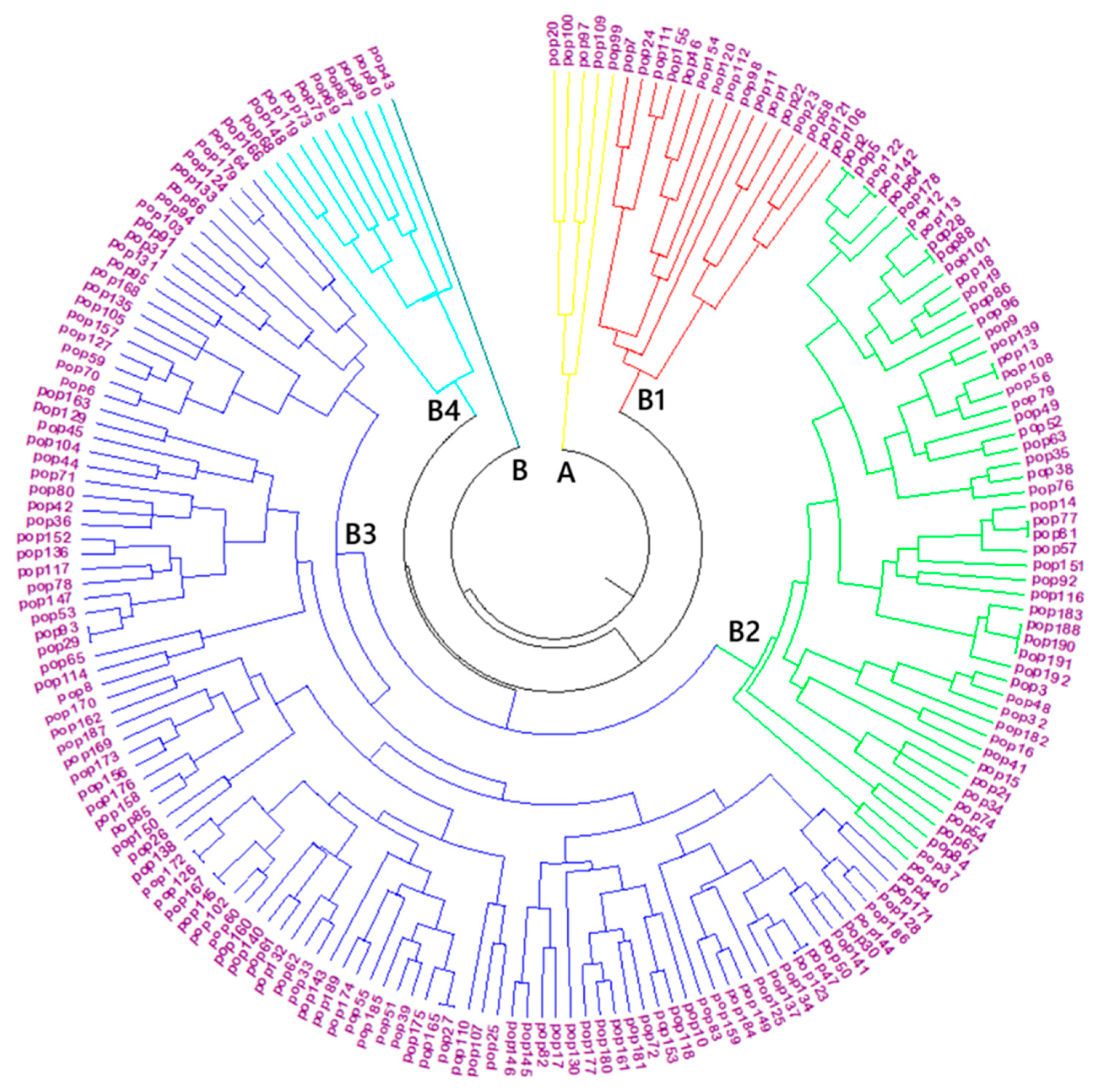
Figure 1. Clustering of sugar beet germplasm based on a neighbour-joining dendrogram constructed using Nei’s genetic distance (A (yellow), B (dark blue), B1 (red), B2 (green), B3 (blue), B4 (light blue)).
Plants 15 00613 g001
Figure 2. The K value of the sugar beet population indicates the presence of four populations when analyzed using SCoT primers.
Plants 15 00613 g002
Figure 3. Population structure of the sugar beet population inferred at K = 4 (SCoT). Population A (red) includes 6 samples, Population B (green) 14 samples, Population C (blue) 6 samples, Population D (yellow) 9 samples, while the admixture population consists of 157 samples (membership coefficient ≥ 0.75).
Plants 15 00613 g003
Figure 4. The K value of the sugar beet population indicates the presence of three populations when analyzed using ISSR primers.
Plants 15 00613 g004
Figure 5. Population structure of the sugar beet population inferred at K = 3 (ISSR). Population A (red) includes 35 samples, Population B (green) includes 43 samples, Population C (blue) 98 samples, while the admixture population consists of 16 samples (membership coefficient ≥ 0.75).
Plants 15 00613 g005
Figure 6. PCA Plot of 192 Sugar Beet Genotypes Based on SCoT Markers.
Plants 15 00613 g006
Figure 7. PCA Plot of 192 Sugar Beet Genotypes Based on ISSR Markers.
Plants 15 00613 g007
Table 1. Details of sugar beet populations used in the study.
Genotype NoPlant NameRegistration
Number
Genotype NoPlant NameRegistration
Number
1Ames 8283B15197PI 120694No. 1714
2Ames 8286B16998PI 590684C22
3PI 169017Pancar99PI 142815CHOGHONDAR
4PI 193458
Ames 15638
No. 8525100Ames 3060IDBBNR 4825
5Ames 15638BO 100101PI 163176PALOG
6Ames 8287B176102Ames 8292B192
7Ames 8295B199103PI 120692No. 1539
8PI 596528Rs-2b104NSL 6346LUCULLUS
9NSL 28024Extra Early105PI 610417EL40 BREEDING LINE 6 and 12
10PI 105335TZU LO PU TOU106PI 590581US 015
11PI 611062B55650107PI 590808MS EQUIVALENT OF CT 9
12Ames 8284B159108NSL 176412YUGO 7
13PI 142814CHOGHONDAR109PI 140355No. 6624
14Ames 8302B0152110PI 610291A77-46
15PI 140354No. 6526111PI 113306No. 323
16PI 169032No. 3709112PI 164671No. 9096
17PI 590621Extra Early Red113Ames 8447Thurles I
18PI 164968No. 44114PI 148625CHAGHONDA
19Ames 4436IDBBNR 5767115PI 171508No. 6728
20PI 171518No. 7164116PI 169014No. 1394
21PI 611059Ticha117Ames 8281B139
22PI 179176No. 9892118PI 120705No. 3208
23Ames 4377IDBBNR 4836119PI 140361No. 7178
24PI 613264GW 035120PI 179845PALAK
25Ames 3096IDBBNR 4828121PI 174060No. 8296
26PI 608800A78-32122NSL 188575NS-358 (C1)
27PI 176875No. 9335123NSL 6319KING RED
28Ames 4265IDBBNR 5652124NSL 8657972/4-41-2-T4
29Ames 4331IDBBNR 4831125Ames 2632L 4T
30PI 120691No. 1379126Ames 1083810603
31PI 124528CHAKUNDA127Ames 2652SLC 35
32PI 142809CHOGHONDAR128NSL 176410YUGO 5
33Ames 4375IDBBNR 4834129NSL 31344GIANT YELLOW ECKENDORF
34PI 142812CHOGHONDAR130NSL 142007044
35Ames 3039IDBBNR 4811131Ames 2631L 3T
36Ames 8288B180132PI 176425No. 8972
37Ames 8297B229133Ames 2656SLC 128
38Ames 2661SLC 132134PI 109040No. T-169
39PI 144675No. 8148135PI 6103171564AA
40NSL 28716WYOMING NO 09136PI 590584US 035-0
41PI 140357No. 6820137PI 169028No. 2960
42PI 140360No. 7121138PI 171513No. 6883
43Ames 4219IDBBNR 5606139PI 590582US 056/2
44PI 142810CHOGHONDAR140NSL 95223A77-52
45Ames 3047IDBBNR 4819141NSL 28026GARDENERS MODEL
46Ames 8448Thurles 2142PI 175597KOCABAS
47PI 120707No. 3264143Ames 15637BO-85
48PI 142816CHOGHONDAR144PI 169019No. 1844
49PI 610286A76-36145NSL 28719WYOMING NO 18
50PI 172733No. 7647146PI 109039No. T-184
51PI 176427KOCABAS147NSL 141985JANASZ
52PI 610323C301CMS148PI 176873KOCABAS
53PI 140356No. 6627149NSL 43404PARMA GLOBE
54PI 169029PANCAR150NSL 93285A77-17
55PI 142811CHOGHONDAR151NSL 28714WYOMING NO 04
56PI 142808No. 7352152PI 613230GW 389
57PI 165485CHOGHUNDAR153PI 590593IMPROVED EARLY EGYPTIAN
58Ames 8293B195154PI 590607EARLY BLOOD TURNIP
59Ames 10841WB 765155PI 590683C04
60Ames 8291B189156PI 610328750-2
61PI 164659No. 9084157PI 610266US 022/4
62Ames 4376IDBBNR 4835158Ames 2634L 8T
63Ames 2658SLC 131159Ames 2659SLC 131
64PI 179180CICLA160PI 590580US 033
65PI 610287A76-38161PI 590704WB 7
66PI 120695No. 1814162PI 613270A 0051
67PI 120693No. 1656163NSL 6320WINTER KEEPER
68PI 142821CHOGHONDAR164NSL 6624HALF SUGAR ROSE
69PI 140358No. 6899165NSL 80222RS-2
70PI 590697SP70756-0166PI 177269KOCABAS
71Ames 8280B138167Ames 2657SLC 129
72PI 590616ELITE DESPREZ TYPE R168Ames 2665U 5201
73PI 142823CHOGHONDAR169NSL 114616SP6926-0
74Ames 14432Bordo-60170PI 613270A 0051
75PI 256053No. 2171NSL 34674REDPACK
76Ames 2644CT5mm172PI 176421KOCABAS
77PI 120706No. 3238173PI 590589MUNERATI ANNUAL (SL 9470)
78NSL 8657772/4-4-2-0174PI 174058No. 7764
79PI 142818CHOGHONDAR175NSL 141986CS 42
80Ames 3049IDBBNR 4803176NSL 195503EL40 BREEDING LINE 24
81Ames 8294B197177NSL 28041B 236
82PI 142817CHOGHONDAR178Ames 8295B199
83PI 141909-179NSL 93280A76-39
84PI 117117No. 299180NSL 142025R and G PIONEER
85Ames 8279B131181NSL 28020EARLIDARK
86PI 611060Swiss chard182PI 590658FC 702/4
87PI 140353No. 6369183PI 590765F1006
88NSL 176303YUGO 1184PI 610321056
89PI 140351No. 6052185PI 172734KOCABAS
90PI 124404PALAG186PI 613266A 0010
91PI 140362No. 7249187PI 6103161502aa
92Ames 8282B140188SeranadaCommercial Variety
93PI 165062PAUCAR189VariasCommercial Variety
94PI 171519No. 7167190EvelinaCommercial Variety
95PI 164805CHOGHUNDAR191JaguarCommercial Variety
96PI 140350No. 5926192BalabanCommercial Variety
Disclaimer/Publisher’s Note: The statements, opinions and data contained in all publications are solely those of the individual author(s) and contributor(s) and not of MDPI and/or the editor(s). MDPI and/or the editor(s) disclaim responsibility for any injury to people or property resulting from any ideas, methods, instructions or products referred to in the content.