Article

Genetic Dissection and Breeding Potential of Carotenoid Content in Foxtail Millet (Setaria italica) Using a Major Gene Plus Polygene Model


1
College of Agriculture, Shanxi Agricultural University, Taigu 030801, China
2
Center for Agricultural Genetic Resources Research, Shanxi Agricultural University, Taiyuan 030031, China
3
Key Laboratory of Sustainable Dryland Agriculture of Shanxi Province, Taiyuan 030031, China
4
Institute of Crop Sciences, Chinese Academy of Agricultural Sciences, Beijing 100081, China
*
Authors to whom correspondence should be addressed.
These authors contributed equally to this work.
Plants 2026, 15(3), 486; https://doi.org/10.3390/plants15030486

Submission received: 17 December 2025 / Revised: 28 January 2026 / Accepted: 2 February 2026 / Published: 4 February 2026
(This article belongs to the Section Plant Genetics, Genomics and Biotechnology)

Abstract

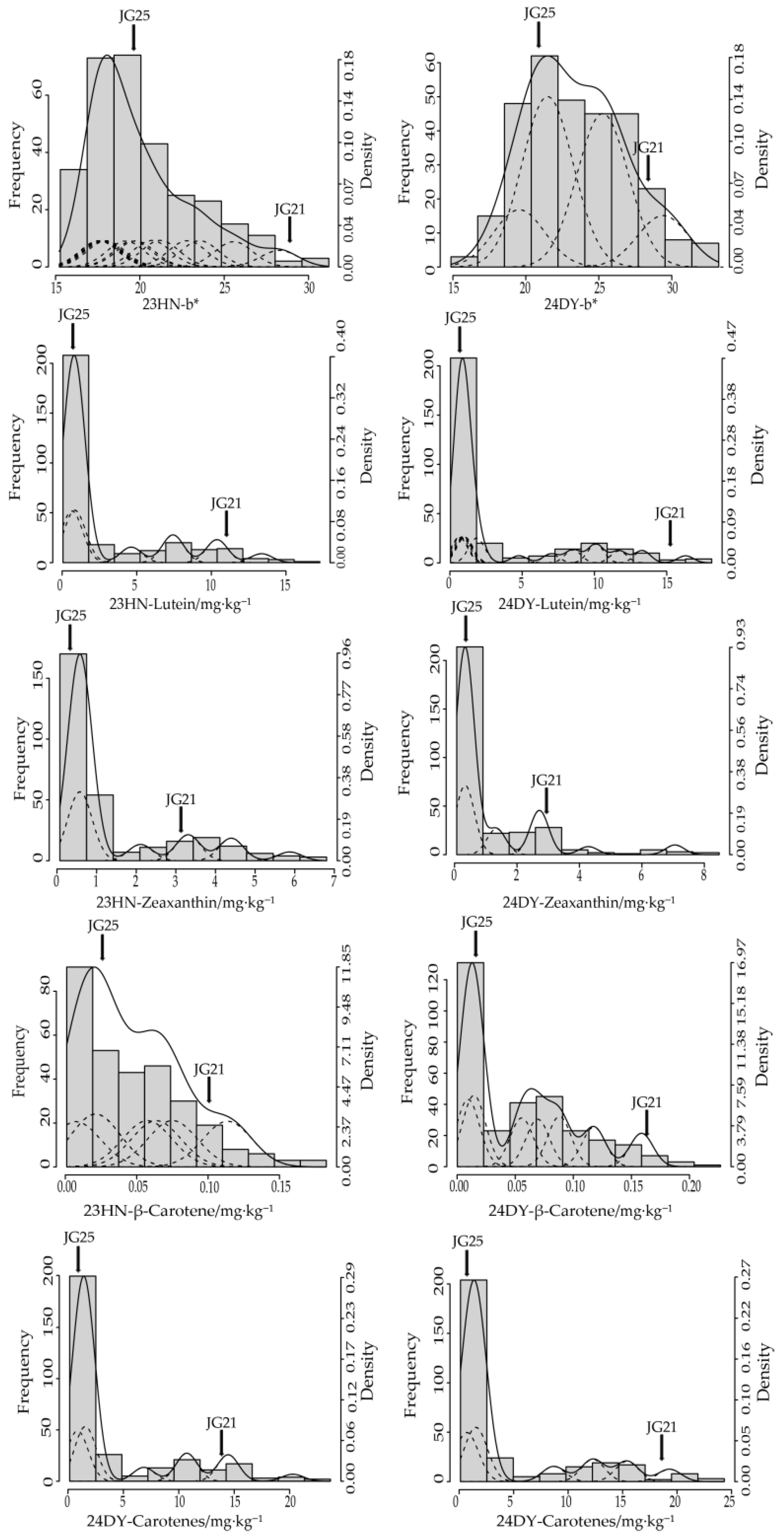
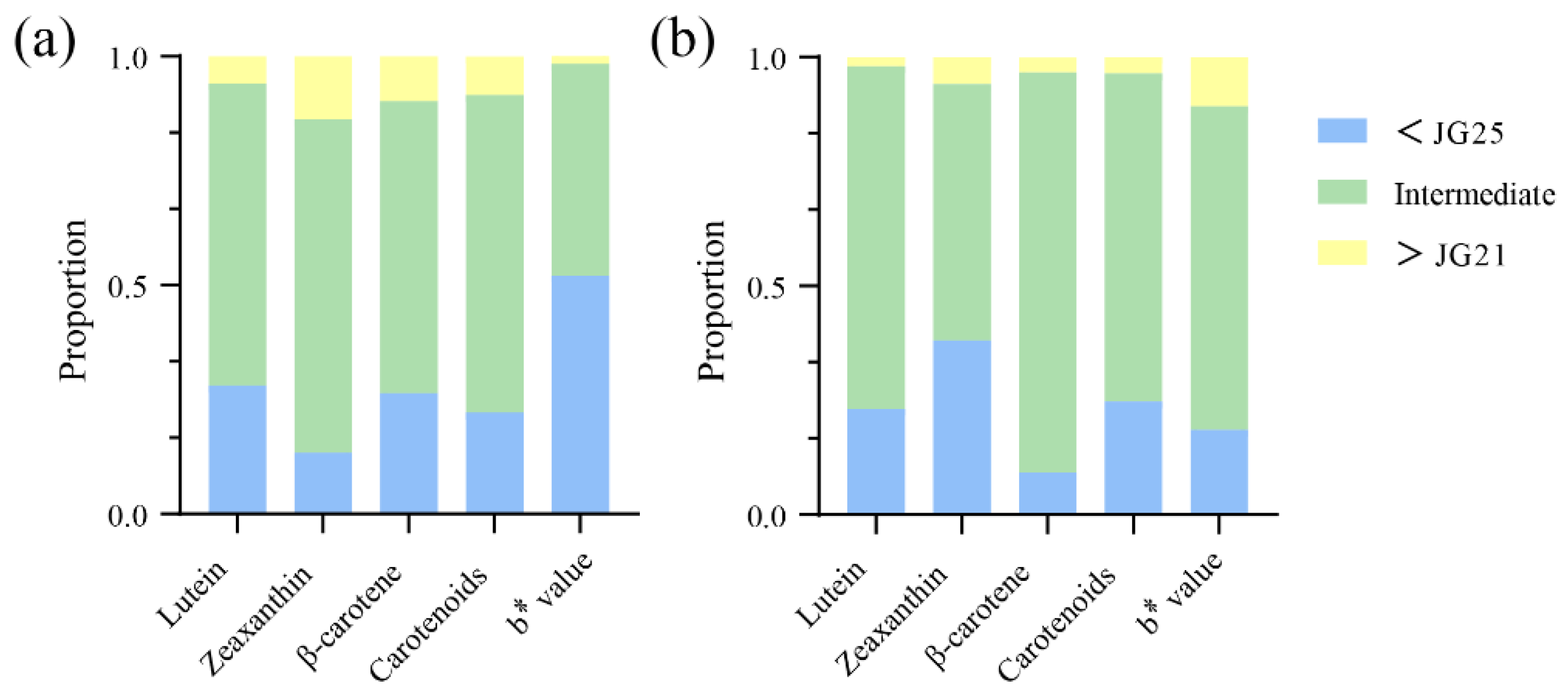
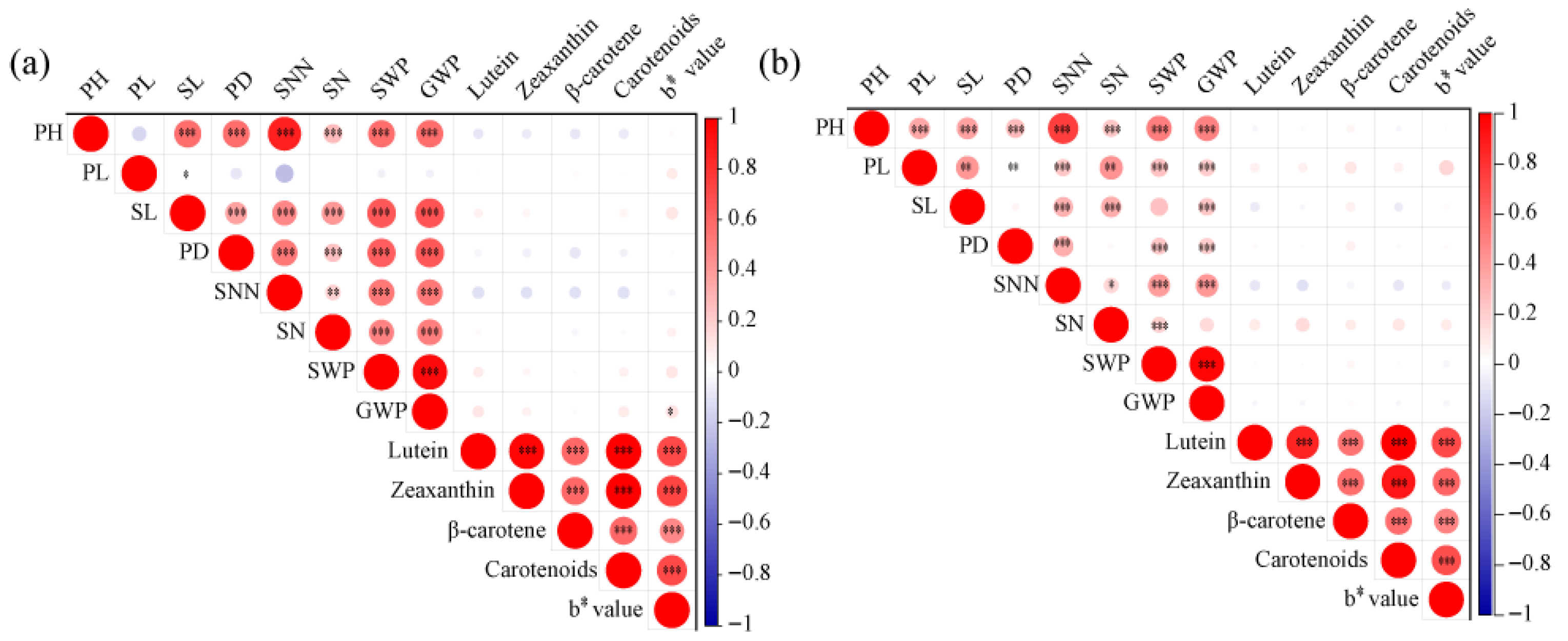
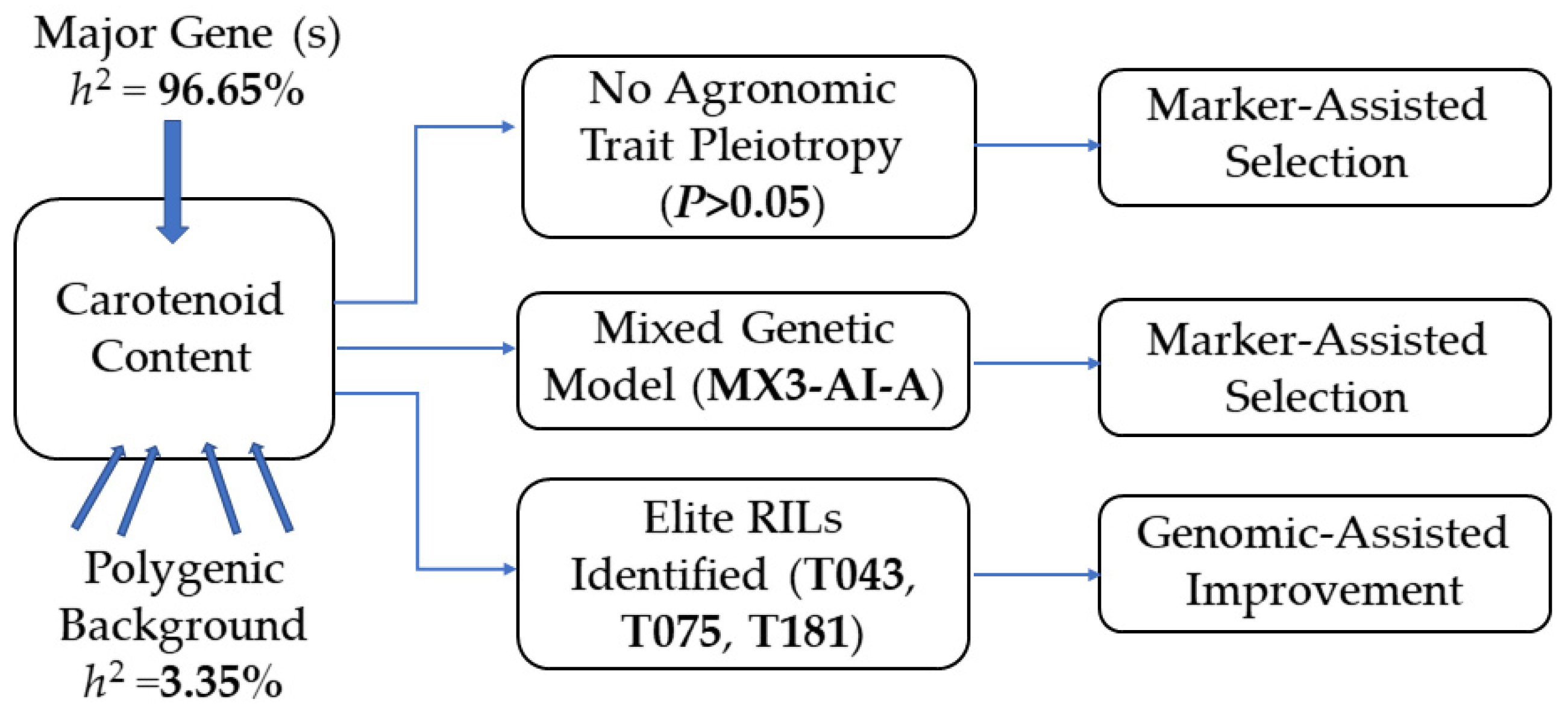
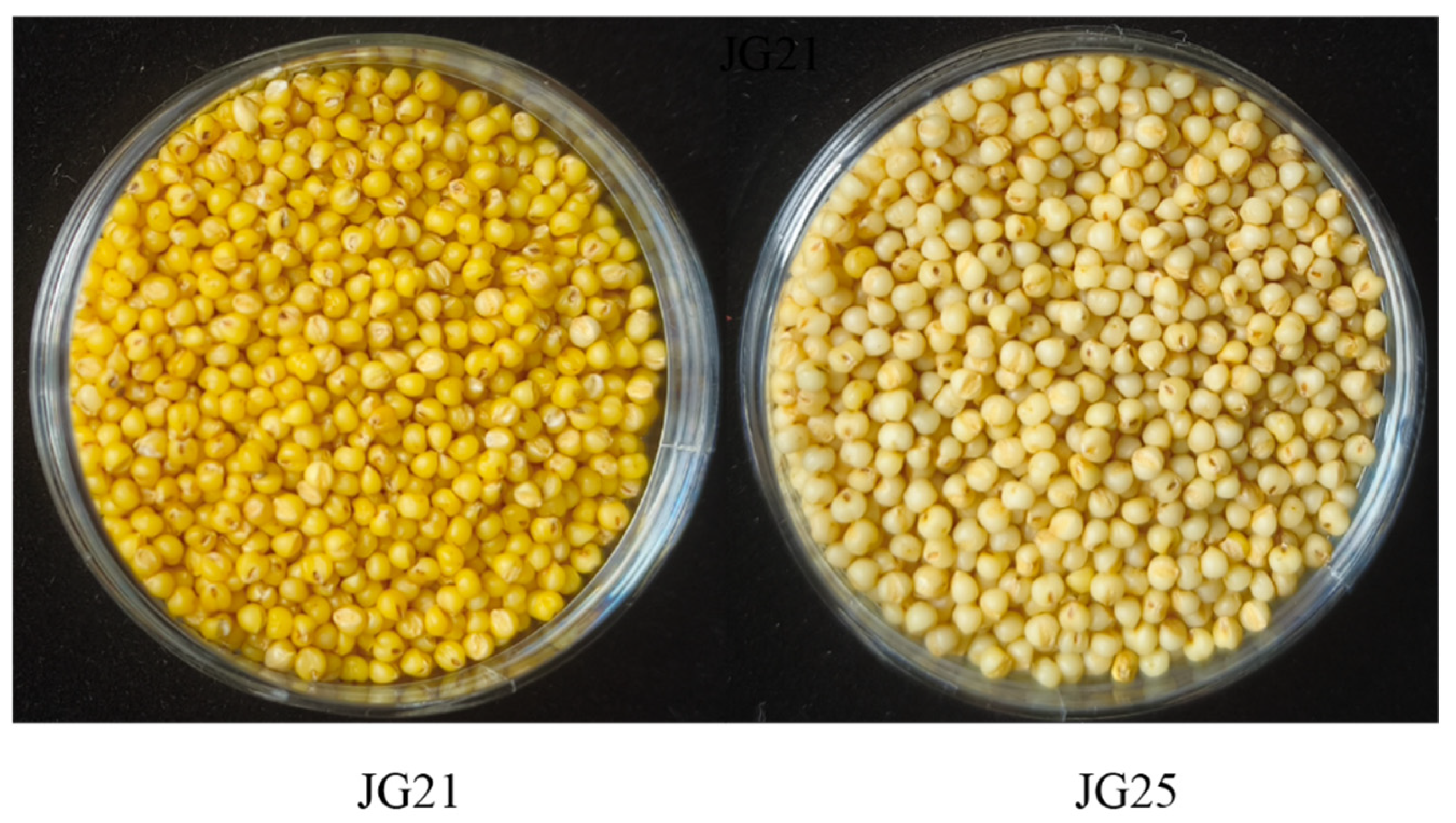
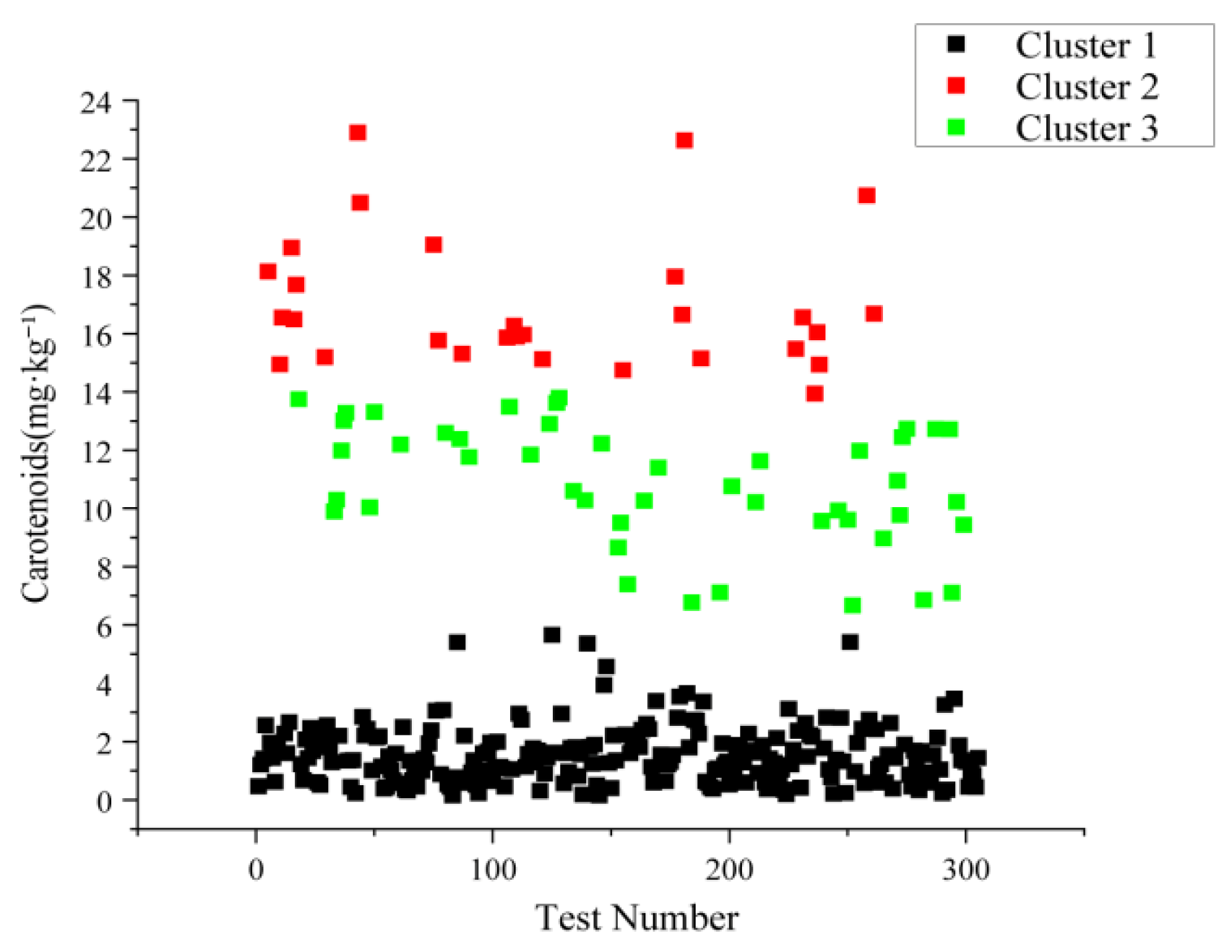
Carotenoid content is a key trait that defines the unique characteristics of foxtail millet varieties. Varieties with different levels of carotenoids often show distinct genetic features and nutritional profiles. However, the genetic basis of carotenoid content in foxtail millet remains mostly unknown. In this study, we explored the genetic basis of carotenoid content using a recombinant inbred line (RIL) population of 305 lines derived from two parental accessions, JG21 (high-carotenoid, 16.75 mg·kg−1) and JG25 (low-carotenoid, 0.93 mg·kg−1). The results showed that the RIL population exhibited continuous phenotypic variation and significant transgressive segregation for carotenoid components (lutein, zeaxanthin, β-cryptoxanthin) and kernel color (measured by b* value), with zeaxanthin reaching 8.47 mg·kg−1, significantly surpassing the higher parent (3.44 mg·kg−1) in 24DY. To ensure that enhancing this nutritional trait does not compromise grain yield, we analyzed its relationship with key agronomic traits, testing for pleiotropic trade-offs. Notably, carotenoid content showed no significant correlation with any of the 8 key agronomic traits (r ranged from −0.11 to 0.08, all p > 0.05), suggesting no apparent trade-off, although fine-mapping is needed to separate pleiotropy from tight linkage for concurrent improvement. Genetic modeling analysis revealed that carotenoid content is stably controlled by three major-gene pairs plus polygenes (MX3-AI-A model), with major-gene heritability of 96.65% and polygene heritability of 3.35%. Based on this framework, three elite RILs with >23% higher carotenoid and superior agronomic performance were identified and advanced to marker-assisted backcrossing. These results provide a clear genetic framework and immediate breeding resources for marker-assisted selection, enabling the development of high-yielding, carotenoid-enriched foxtail millet varieties without compromising agronomic value.
Keywords: foxtail millet; carotenoid; nutritional breeding; genetic analysis foxtail millet; carotenoid; nutritional breeding; genetic analysis