Article

Identification of a GA-Related Cis-Element Regulating Male Peduncle Elongation in Papaya

1
FAFU and UIUC-SIB Joint Center for Genomics and Biotechnology, Fujian Provincial Key Laboratory of Haixia Applied Plant Systems Biology, Fujian Agriculture and Forestry University, Fuzhou 350002, China
2
Department of Plant Biology, University of Illinois at Urbana-Champaign, Urbana, IL 61801, USA
*
Author to whom correspondence should be addressed.
Plants 2026, 15(2), 209; https://doi.org/10.3390/plants15020209
Submission received: 14 November 2025 / Revised: 30 December 2025 / Accepted: 5 January 2026 / Published: 9 January 2026
(This article belongs to the Section Plant Development and Morphogenesis)

Abstract

Papaya (Carica papaya L.) is a tropical trioecious crop with males, hermaphrodites, and females. There is a sequence difference between male and hermaphrodite SHORT VEGETATIVE PHASE (CpSVP), making SVP a strong candidate gene controlling peduncle length in papaya. To study the spatial and temporal expression and function of CpSVP in Arabidopsis, we constructed a translation fusion structure based on the native promoter of SVP in papaya. In the 2kb promoter, strong GUS staining was observed in the floral organs and pedicels. In the 1kb promoter, there is no GUS expression in the floral organs, and it is barely detectable in pedicels. Removal of a GA responsive P-box cis-element in the 1kb promoter enhanced expression in the floral organs and pedicels, and elongated pedicels. In the transgenic Arabidopsis plants expressing the male CpSVP allele, there was an increase in pedicel length, but not in the plants expressing the hermaphrodite CpSVP allele. CpSVP-Y is capable of pedicel elongation, with no defects in reproductive organs. These findings imply that CpSVP-Y and this P-box play a major role in peduncle elongation but not sex determination in papaya.

1. Introduction

Papaya (Carica papaya L.) is a trioecious (males, hermaphrodites, and females) tropical plant, and its sex types are controlled by a pair of sex chromosomes that are approximately 7 million years old [1]. There are two Y chromosomes: Y determines males, and Yh for hermaphrodites. These two Y chromosomes diverged about 4000 years ago with only 0.4% sequence difference between them [2]. This relatively small sex determination region is 3.4 Mb and 8.1 Mb on the X and Y/Yh chromosome, respectively, and contains the sex determination genes as well as genes responsible for sex-linked traits such as peduncle length [1,3]. Male papayas are the only sex type that possess a long peduncle; therefore, the gene responsible for the peduncle length is located on the male Y chromosome, and not on the hermaphrodite Yhor female X chromosome [4]. The long male peduncle resulted in approximately 400 times more pollen production than hermaphrodite flowers, providing a selective advantage for establishing dioecy in papaya [5]. SHORT VEGETATIVE PHASE (SVP) is annotated on the male and hermaphrodite genome, as well as on the autosome but not found on the X chromosome [1]. There are coding sequence differences of SVP between males and hermaphrodites as the male allele contains both MADS and K-box domains while the hermaphroditic allele contains only the latter.
MADS transcription factors are combinatorial, allowing single transcription factors to control multiple genes with various temporal and spatial expression patterns. MADS box proteins form dimers or multimers to bind unique cis-elements to control floral organ formation [6]. Arabidopsis SVP, a MADS box transcription factor, is regulated by the circadian clock and the autonomous, thermosensory, and gibberellin pathways [7]. In Arabidopsis, SVP acts as a floral repressor by forming a dimer with FLOWERING LOCUS C (FLC) to repress FLOWERING LOCUS T (FT) in the leaves and SUPPRESSOR OF CONSTANS 1 (SOC1) in the shoot apical meristem [7]. AtSVP and AGAMOUS-LIKE24 (AGL24) determine floral meristem identity [8]. SVP is expressed in vegetative tissues and at undetectable levels in the shoot apex when transitioning to flowering [9]. However, in other species, SVP has many other functions besides flowering-time regulation. SVP controls dormancy in apples [10] and kiwifruit [11]. The ectopic expression of Medicago truncatula SVP [12] and tobacco SVP [13] elongated pedicels. In Arabidopsis and Medicago, a pedicle supports a single flower. The equivalent structure in papaya is a peduncle, which supports an inflorescence.
Gibberellic acid (GA) is a plant hormone that plays an important role in plant growth and development. It is involved in many physiological processes, including seed germination, stem elongation, flowering, and senescence [14]. GA binds to receptor GID1, which then causes binding of the GID1-GA complex to DELLAS, leading to GA degradation via the ubiquitin–proteasome pathway [15]. Application of GA to papaya flowers increased peduncle length with no changes in sex [4].
In this study, we described the spatial and temporal expression pattern of CpSVP-Y and CpSVP-Yh in Arabidopsis. Additionally, we investigated the role of GA-related cis-element in the promoter region in regulating both transcriptional activity and phenotypic traits. Four such elements were identified as repressors; their removal specifically upregulated GUS transcript levels in mature pedicels. Moreover, deletion of these cis-elements led to varying increases in pedicel length. Both CpSVP-Y and CpSVP-Yh are transcriptionally expressed in restoring flowering time floral organs, pedicels, and leaves under the regulation of their native 2kb promoters. However, only the CpSVP-Y allele is capable of inducing pedicel elongation. CpSVP-Y is capable of pedicel elongation, with no defects in reproductive organs when it was expressed under the native promoter. We dissected the CpSVP-Y promoter and found that the removal of a pyrimidine box (P-box) at −461 bp increased expression in the floral organs and elongated pedicels. These findings imply that CpSVP-Y and this P-box play a major role in peduncle elongation but not sex determination in papaya.

2. Results

2.1. Expression Pattern of CpSVP Driven Under Its Native Promoter

To determine the spatial and temporal expression of CpSVP and to determine its role in pedicel elongation, 1kb and 2kb upstream promoter sequences (from ATG start site) from male and hermaphroditic alleles of CpSVP were fused to CpSVP-Y and CpSVP-Yh, respectively, and subsequently fused to the β-glucuronidase (GUS) reporter gene. The promoter-less GUS construct (pMDC162) was used as a negative control.
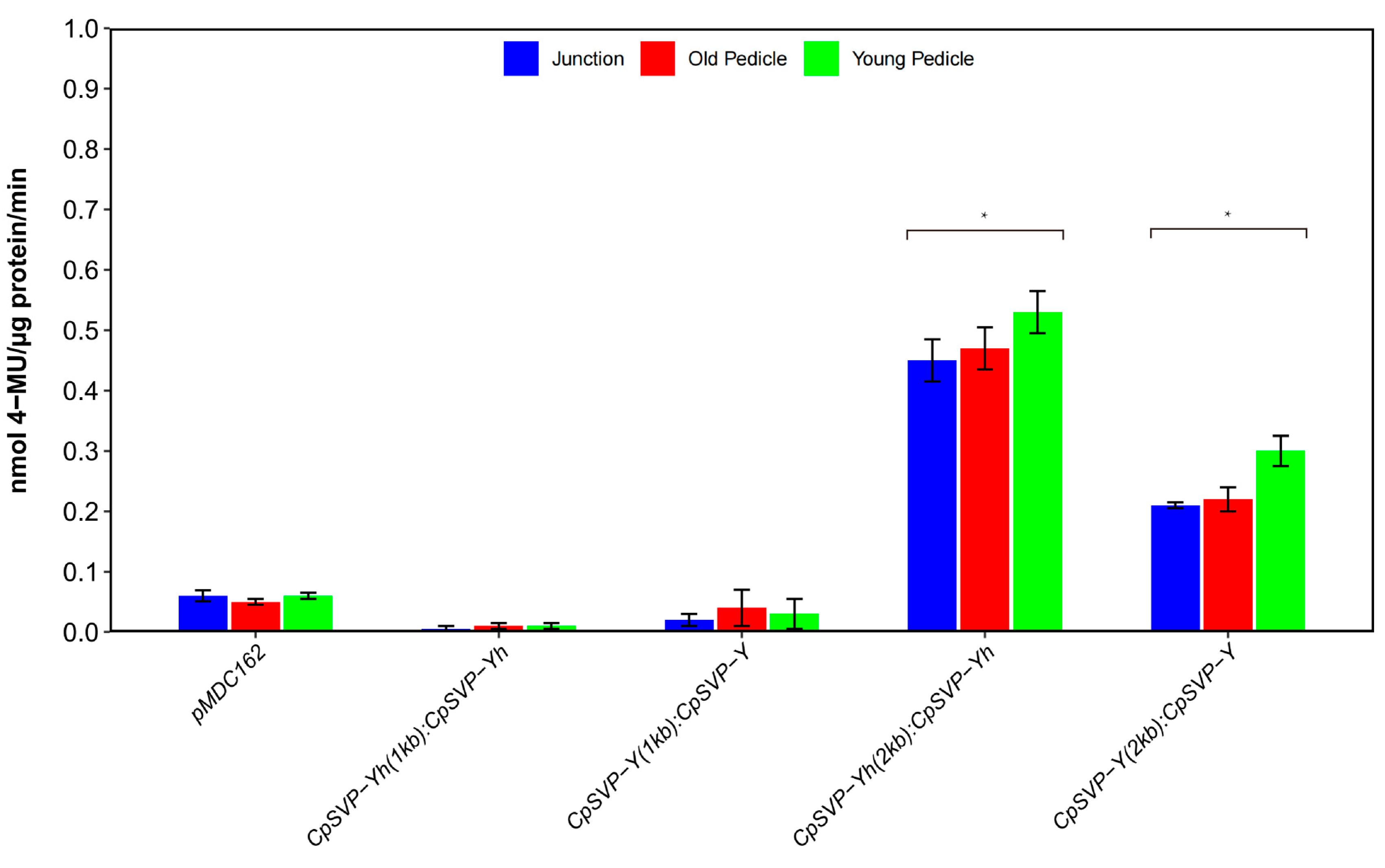
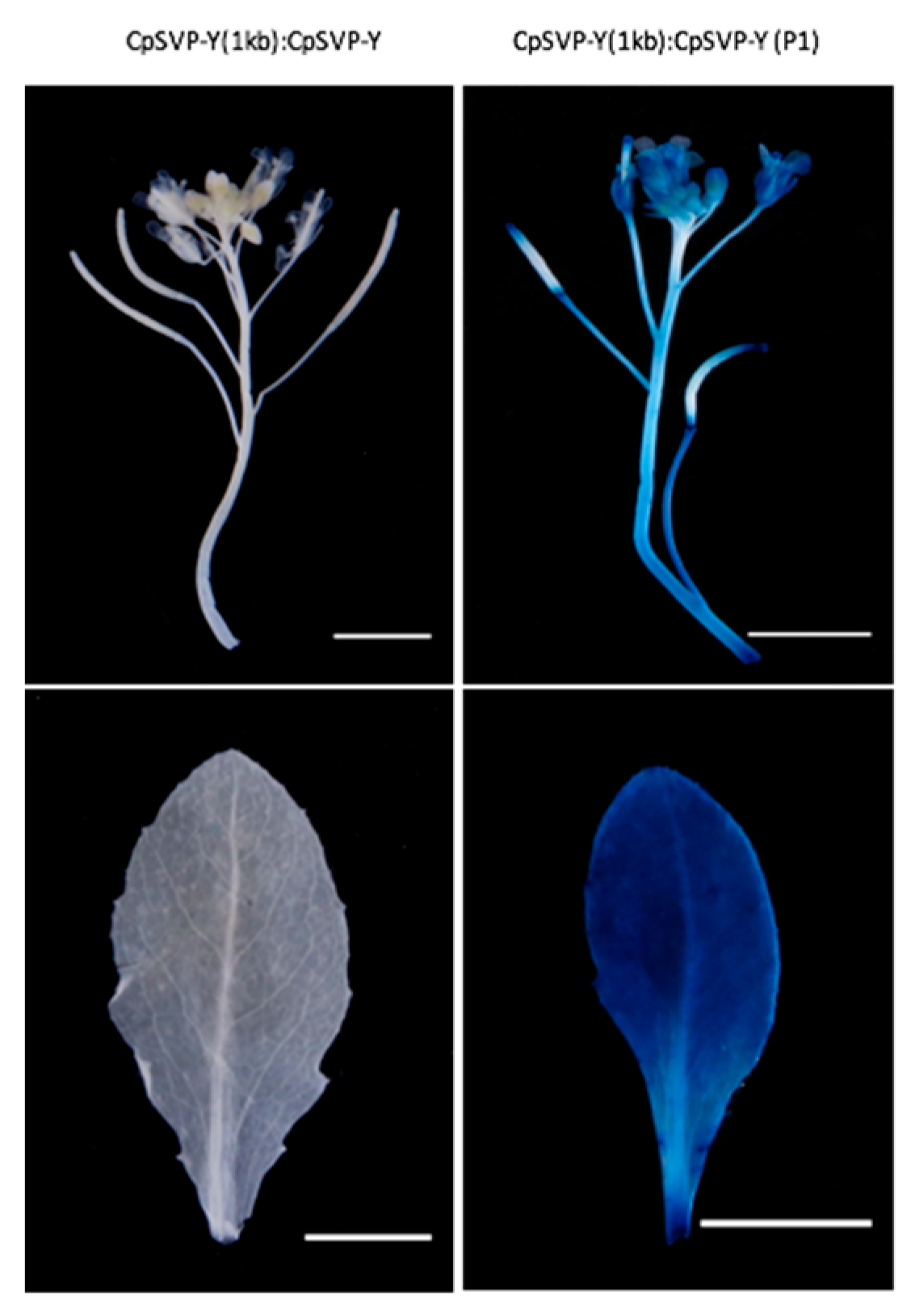
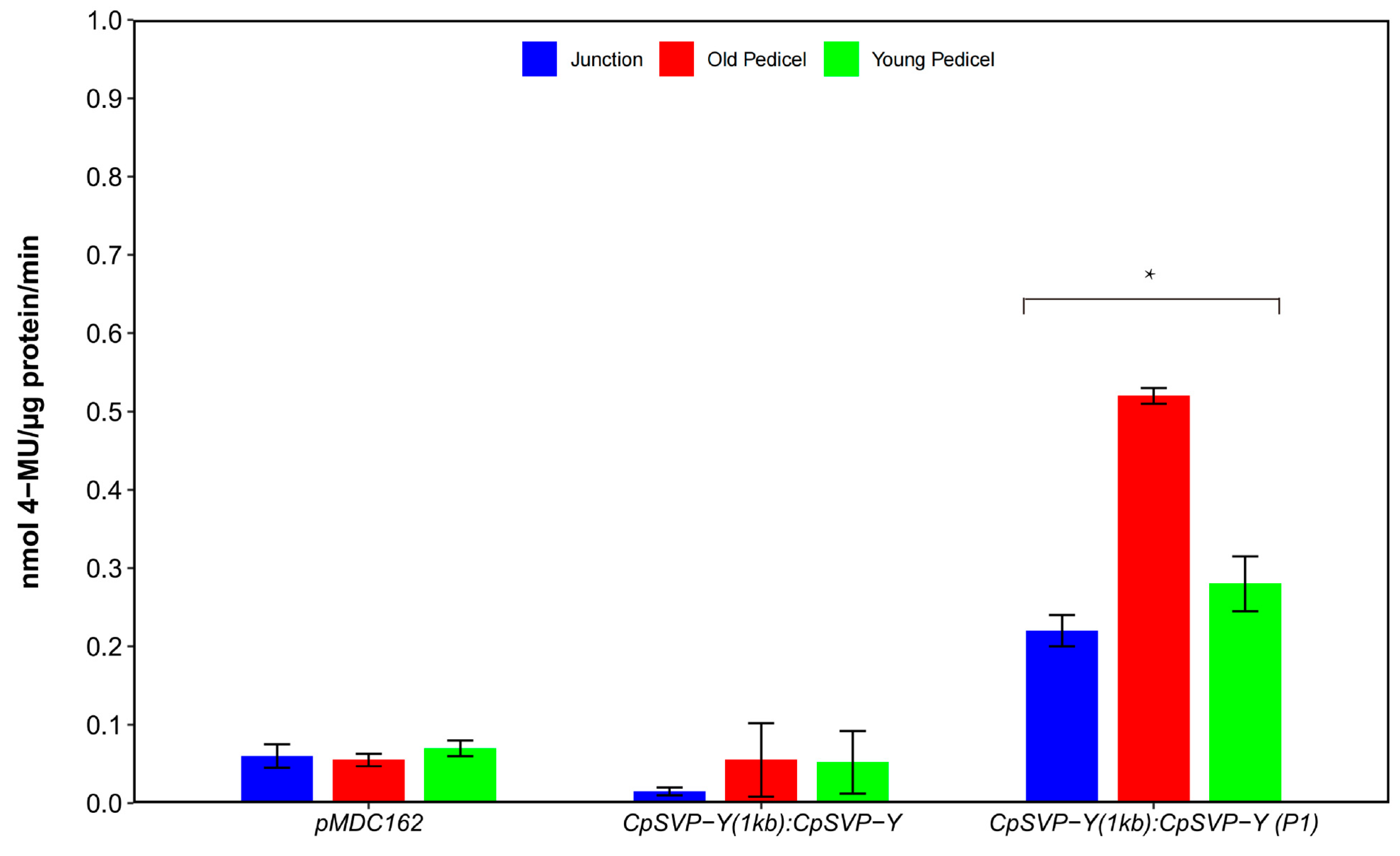
In CpSVP-Y (2kb): CpSVP-Y and CpSVP-Yh (2kb): CpSVP-Yh plants where GUS expression was driven by 2kb promoter sequence, GUS is highly expressed in leaves, pedicels, pollen grains, stigma, stamen, ends of siliques, and sepals (Figure 1). Old pedicels showed a stronger GUS signal than young pedicels for all CpSVP transgenic lines (Figure 1). For constructs driven by 1kb promoter sequence, GUS expression from CpSVP-Y (1kb):CpSVP-Y and CpSVP-Yh (1kb): CpSVP-Yh transgenic plants was only faintly detected in the leaves and pedicels and absent from the reproductive organs (Figure 1). To quantify the GUS activity, the MUG assay was performed on three tissues: junction (where the old pedicel meets the main inflorescence stem), and two stages of pedicels (young pedicel–open flowers with no siliques, and old pedicel–with siliques present). Since CpSVP-Y and CpSVP-Yh promoters are highly similar with only two nucleotide differences at −159 bp, we expect no differences in the expression pattern between them. As expected, there was no difference spatially or temporally in the histochemical stain between CpSVP-Y (1kb) and CpSVP-Yh (1kb), and between CpSVP-Y(2kb) and CpSVP-Yh 2kb) (Figure 1). The same pattern was observed when quantifying promoter activity fluorometrically (Figure 2). In transgenic plants driven by the 2kb promoter of CpSVP-Y or CpSVP-Yh plants, GUS expression was more intense in the pedicels and leaves and there was additional presence of additional signals in reproductive organs when compared to their counterparts, transgenic plants driven by 1kb promoter. This suggests there might be cis-element(s) located between the 1kb and 2kb promoter region that enhance the CpSVP expression in the leaves and pedicels, and that it is necessary for expression in the carpels and stamens.

2.2. Identification of CpSVP Promoter Cis-Elements Controlling Tissue-Specific Expression

To dissect the cis-element(s) that contributed to the CpSVP expression pattern difference between CpSVP-Y (1kb): CpSVP-Y and CpSVP-Y (2kb): CpSVP-Y, we scanned the 2kb promoter region using PLACE (https://www.dna.affrc.go.jp/PLACE/, accessed on 4 January 2026) [16] and PlantCARE (http://bioinformatics.psb.ugent.be/webtools/plantcare/, accessed on 4 January 2026) [17]. Cis-elements located between the ATG start site and 1kb region are light-responsive elements, Opaque-2 (O2) elements needed for zein metabolism regulation, TCA-elements involved in salicylic acid responsiveness, low-temperature responsive elements, binding sites for MYELOBLASTOSIS (MYB) transcription factors, defense and stress responsiveness, and a P-box involved in gibberellin acid (GA) response. Cis-elements located between 1kb and 2kb region are anaerobic induction elements, CAT-box for meristem expression, light-responsive elements, low-temperature responsiveness elements, binding sites for MYB and WRKY family of transcription factors, a homeodomain–leucine zipper (HD-ZIP) protein binding site, and the GA response element (GARE) and P-Box, which are both involved in GA response (Figure S1).
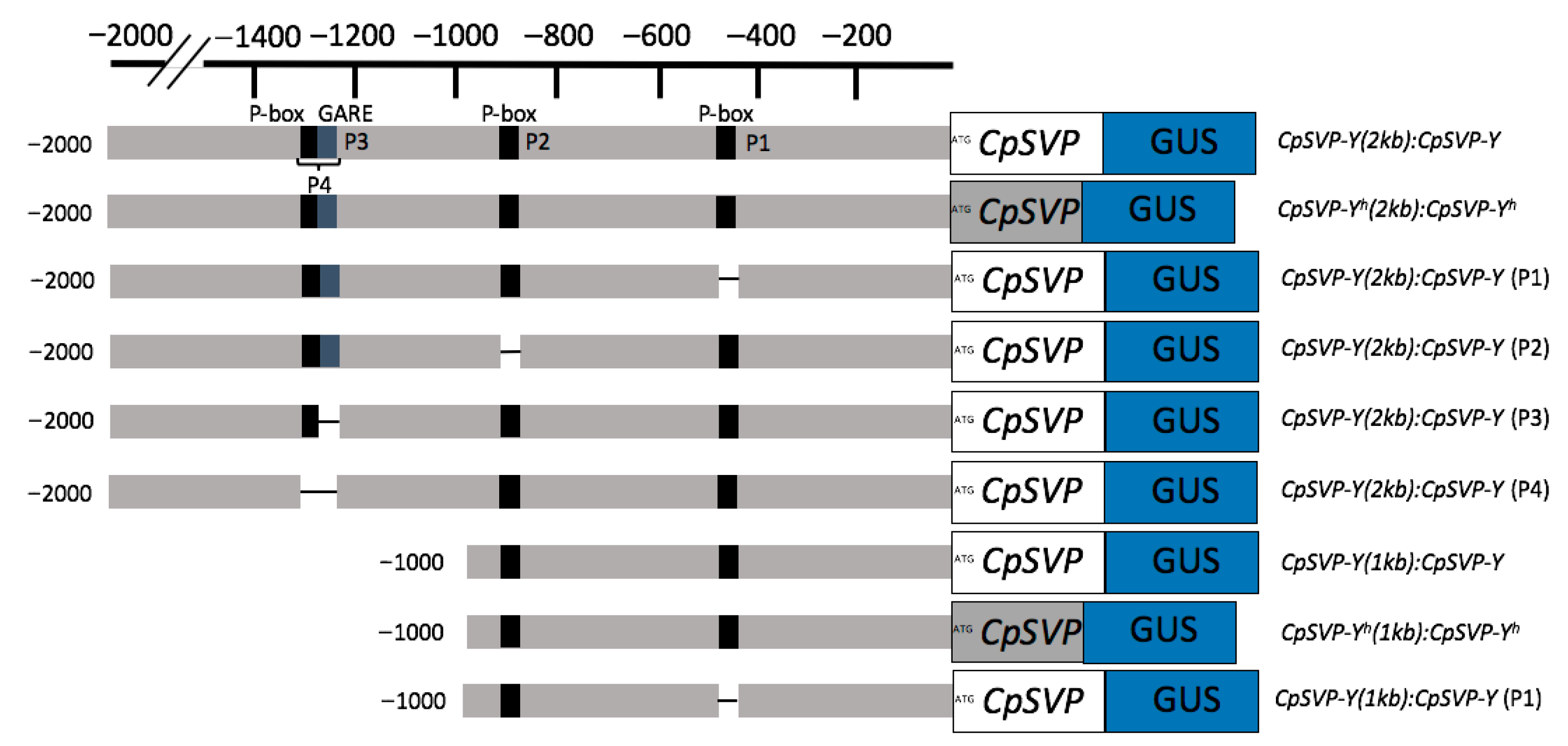
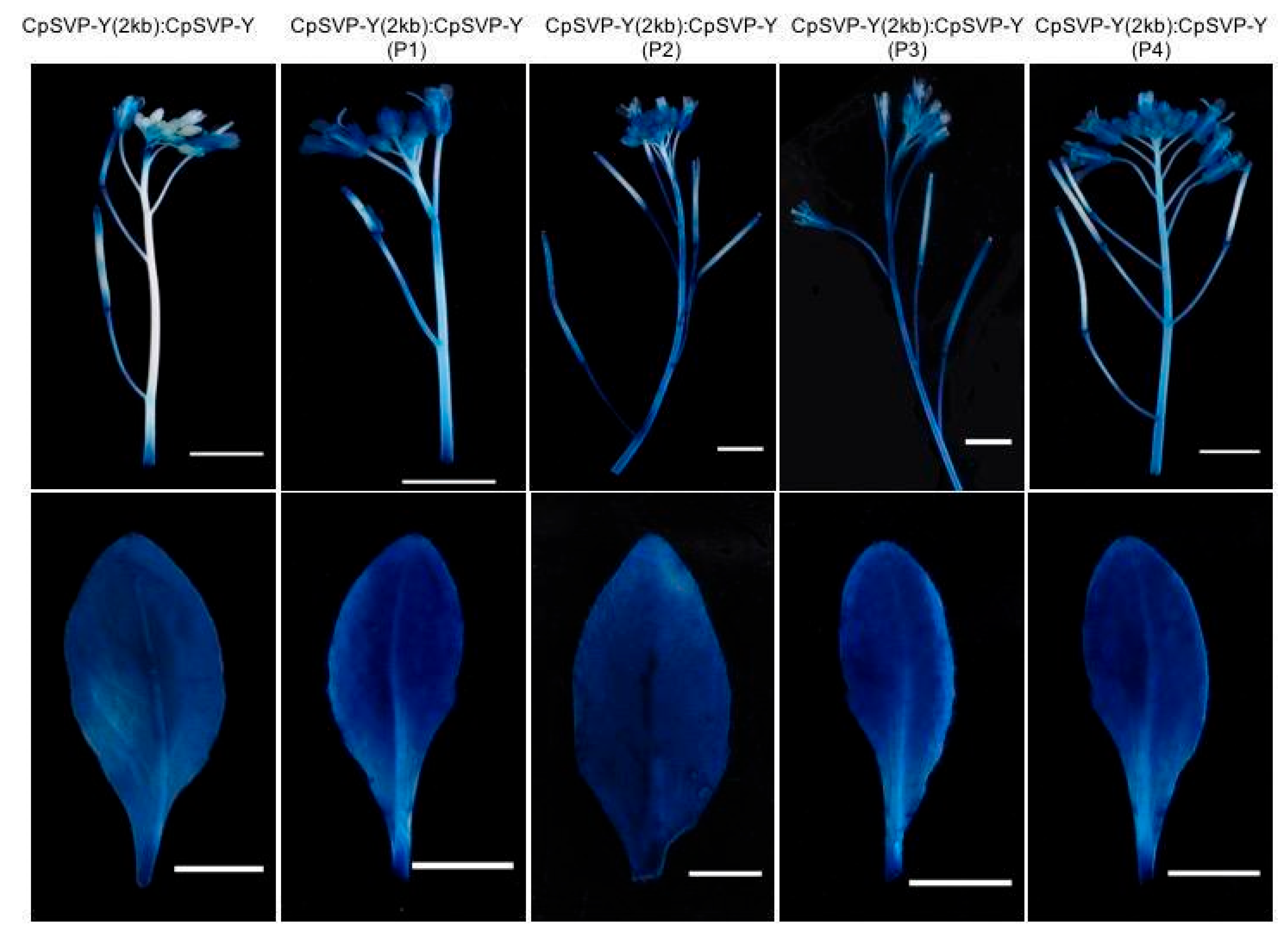
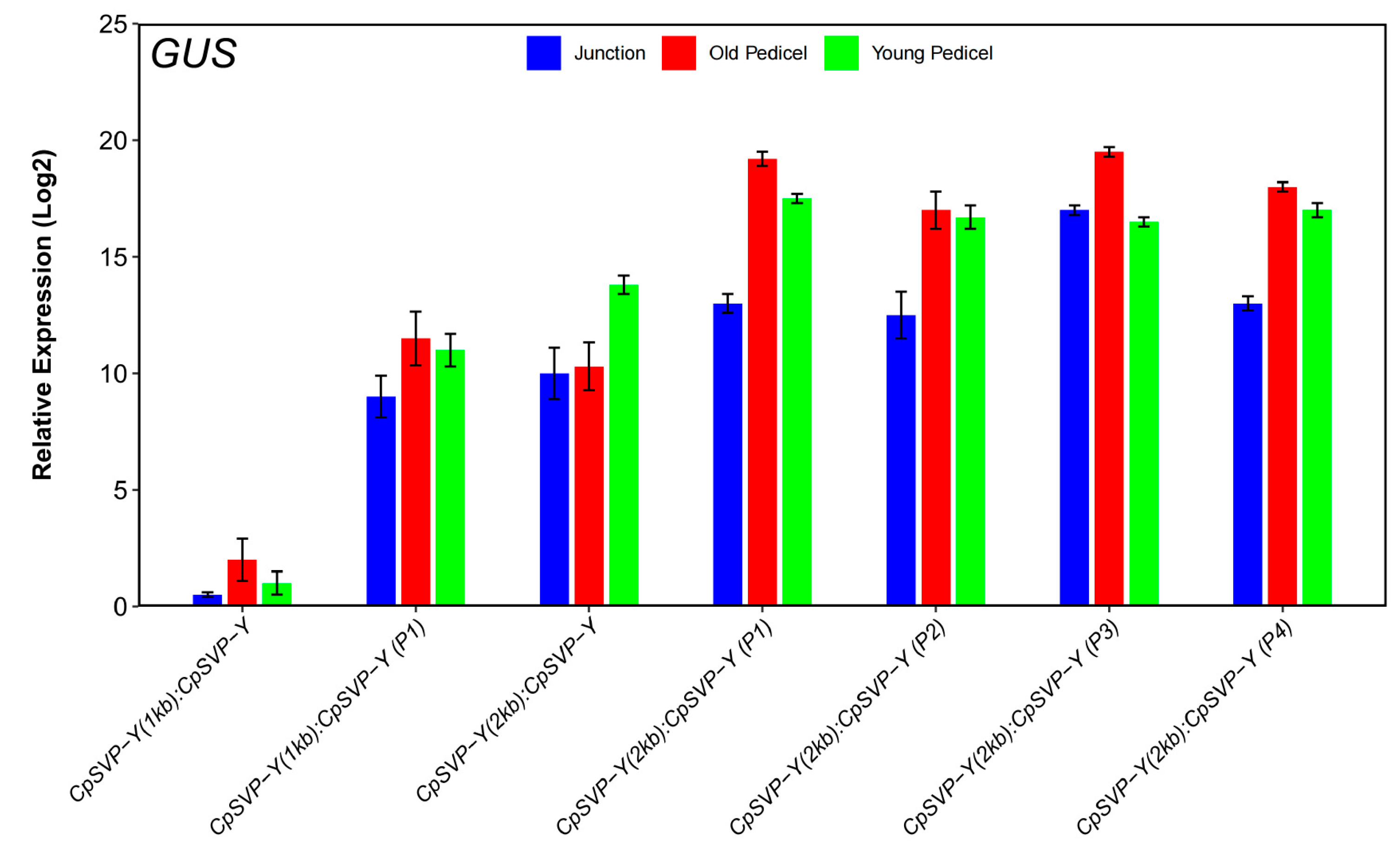
As exogenous application of GA3 to papaya flowers caused pedicels to elongate [4], there might be a correlation between GA and pedicel length through the involvement of CpSVP. Identified in barley, a GA response complex (GARC) is usually composed of three motifs: the GA response element (GARE) TAACAAA, the pyrimidine box (P-box) CCTTTT, and the Amy box TATCCAC [18,19,20]. There were four GA cis-elements identified in the 2kb CpSVP promoter region, termed P1–P4 based on their proximity to the ORF, with P1 being closest to the ATG start codon (Figure 3). P1 and P2 correspond to P-box motifs (CCTTTT), P3 corresponds to a GA-responsive element (GARE; TAACAAA), and P4 is a composite element containing both a P-box and a GARE. In this study, we collectively refer to these motifs as the GA-related cis-elements P1–P4 (Figure 3). We did not identify a complete GARC, only a partial GARC in the P4 element. We used site-directed mutagenesis (SDM) to delete these four GA-related cis-elements P1–P4 from the CpSVP-Y promoter. CpSVP-Y (2kb):CpSVP-Y has high GUS expression in the newly emerged floral buds and open flowers, and no expression in the mature flowering buds before opening (Figure 1). When removing P1–P4 elements individually from CpSVP-Y (2kb):CpSVP-Y, there was an increase in GUS expression in all floral buds, main inflorescence stem, and older pedicels (Figure 4). In all CpSVP-Y (2kb) mutagenized lines, GUS transcript expression was increased in the old pedicels (Figure 5). This suggests that P1–P4 act as repressors in a tissue-specific manner, as removal of these elements increased GUS transcript expression in the old pedicels specifically.
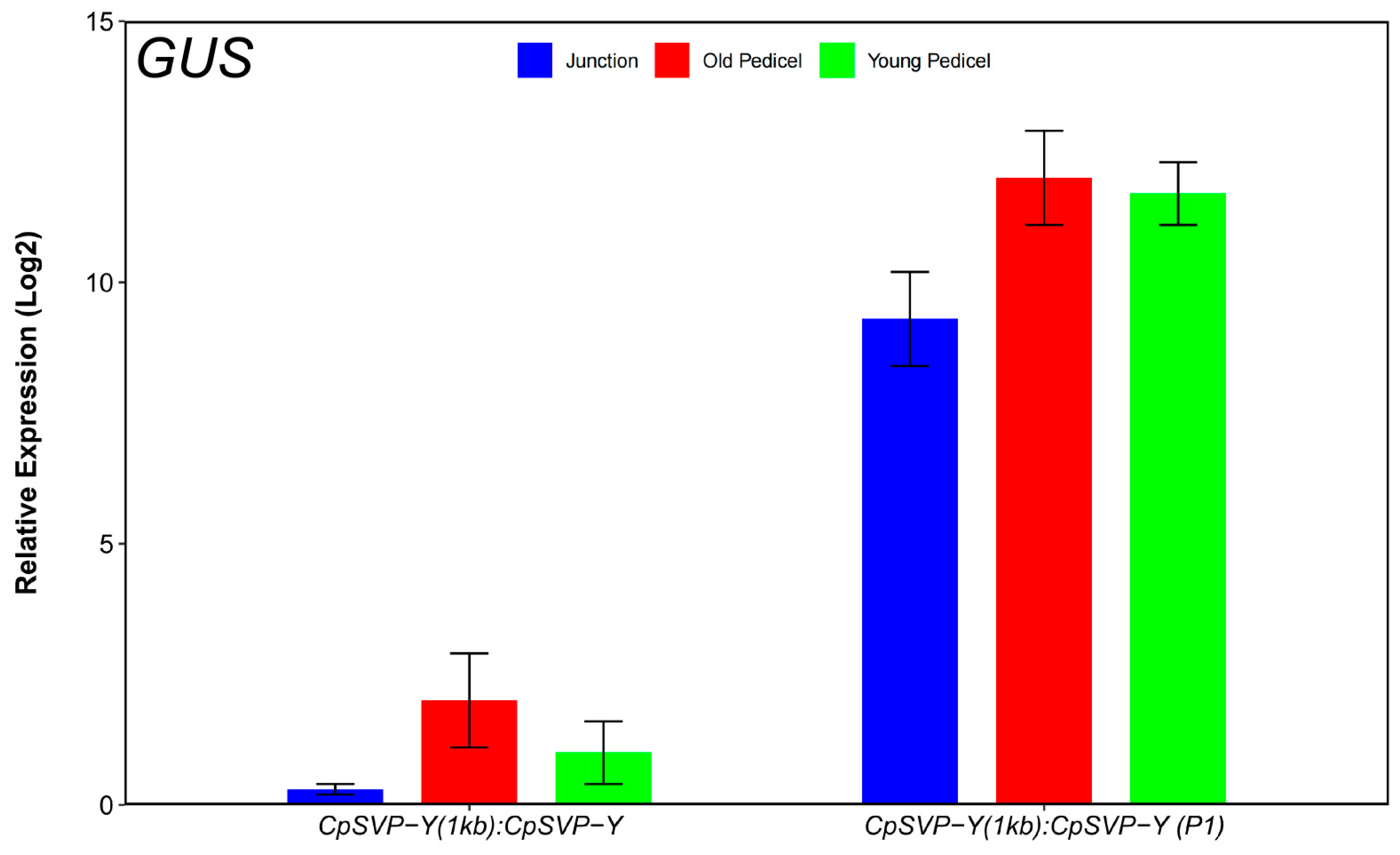
Removing the P1 GA cis-element from CpSVP-Y (1kb):CpSVP-Y restored GUS activity in the reproductive organs and enhanced expression in the pedicels and leaves, with a similar phenotype as CpSVP-Y (2kb): CpSVP-Y plants (Figure 1 and Figure 6). Quantification of GUS transcript and protein levels further confirmed the increment of GUS expression at pedicel tissues when compared to construct without P1 deletion (Figure 7 and Figure 8).

2.3. Cis-Element on CpSVP Promoter Regulates Pedicel Elongation

Male papaya plants are the only sex type that bear a long pedicel with large numbers of flowers situated on pedicels. Our studies showed that the CpSVP-Y gene can regulate pedicel growth in Arabidopsis, but not the CpSVP-Yh gene when it was expressed constitutively or driven by its native promoter. To determine if the CpSVP-Y promoter plays an additional role in pedicel elongation spatially and temporally, we introduced the intact translational fusion constructs native promoter fused with gene—CpSVP-Y (1kb): CpSVP-Y and CpSVP-Y (2kb): CpSVP-Y and the translational fusion constructs with deleted cis-elements [CpSVP-Y (1kb): CpSVP-Y (P1), CpSVP-Y (2kb): CpSVP-Y (P1), CpSVP-Y (2kb): CpSVP-Y (P2), CpSVP-Y (2kb): CpSVP-Y (P3), and CpSVP-Y (2kb): CpSVP-Y (P4)] into Arabidopsis Col-0 background (Figure 3). CpSVP-Y (2kb): CpSVP-Y had a mean pedicel length of 7.51 mm. Removing P1, P2, P3, or P4 elements resulted in an average pedicel length of 7.37 mm, 7.87 mm, 7.82 mm, and 8.66 mm, respectively (Figure S2). Deleting the P4 element increased the pedicel length by 15% when compared to the CpSVP-Y (2kb): CpSVP-Y transgenic plants (p < 0.01, Student’s t-test). Upon investigation of GUS transcript expression in junction, young, and old pedicels, the expression levels of the P1 to P4 deletion lines were very similar, suggesting that CpSVP-Y expression might also be comparable. This suggests that the significant pedicel elongation in the P4 deletion line might not be attributed to an increase in transcript expression but rather to enhancements at the post-translational and/or protein level. CpSVP-Y (1kb): CpSVP-Y had a mean pedicel length of 7.59 mm and CpSVP-Y (1kb): CpSVP-Y (P1), and the average pedicel length is 8.11 mm (Figure S3). Removal of P1 element from CpSVP-Y (1kb):CpSVP-Y resulted in a 7% increase in pedicel length (p < 0.05, Student’s t-test). As the 2kb promoter region contains an additional cis-element that could be bound by transcription factor(s) for repression, removing the P1 element from CpSVP-Y (2kb): CpSVP-Y did not increase pedicel length, as it did in CpSVP-Y (1kb): CpSVP-Y (P1) plants.

2.4. CpSVP-Y Delays Flowering

SVP regulates flowering in a dosage-dependent manner by repressing FLOWERING LOCUS T (FT) [21]. In this study, we observed the conserved role of CpSVP in controlling flowering time. CpSVP-Y (1kb): CpSVP-Y and CpSVP-Y (2kb): CpSVP-Y plants flowered later than Col-0 (p < 0.01, Student’s t-test, Table S3). Significantly, deletion of the P1 element from either the CpSVP-Y (1kb): CpSVP-Y and CpSVP-Y (2kb): CpSVP-Y construct abolished this late-flowering phenotype, restoring flowering time to that of Col-0. This could be due to the change in spatial expression as well as reduced or no CpSVP expression in the shoot apical meristem. Removal of P2, P3, and P4 elements from CpSVP-Y (2kb): CpSVP-Y also delayed flowering compared to Col-0, but similar to the CpSVP-Y (2kb): CpSVP-Y plants (Table S3). The removal of the P1 element downregulates CpSVP expression in the shoot apical meristem, which abolishes the late-flowering phenotype. This indicates that the P1 element is both unique and necessary for CpSVP-Y function in flowering time control. It likely acts as a transcription factor binding site and plays a critical role in activating CpSVP-Y-mediated regulation of flowering.

2.5. Elucidating the Mechanism for Pedicel Elongation

To understand how the removal of GA cis-elements affects GA signaling, we examined the transcript levels of AtGA20ox2 in the native promoter lines (CpSVP-Y (1kb): CpSVP-Y and CpSVP-Y (2kb): CpSVP-Y) and mutated lines. AtGA20ox2 plays a key role in GA biosynthesis, encoding the rate-limiting enzyme that catalyzes the second-to-last step of bioactive GAs [22,23]. The mutation of these GA cis-elements had minimal effect on AtGA20ox2 expression (Figure S4), suggesting they do not affect GA signaling. GUS is lowly expressed in CpSVP-Y (1kb): CpSVP-Y and highly expressed in CpSVP-Y (2kb): CpSVP-Y in all tissue types, but both show similar AtGA20ox2 expression pattern, suggesting no direct correlation between CpSVP and AtGA20ox2 expression (Figures S5 and S6). In addition, AtGA20ox2 expression is upregulated in CpSVP-Y (2kb): CpSVP-Y old pedicels, and removal of P1–P4 elements individually did not alter its expression.
In Arabidopsis, ASYMMETRIC LEAVES 2 (AS2) suppresses BREVIPEDUNCLELUS (BP) to control pedicel length [24]. To further dissect the mechanism of peduncle elongation in papaya, we analyzed the expression patterns of these genes in transgenic Arabidopsis plants expressing the papaya CpSVP-Y gene under the control of its native promoters (1kb or 2kb), as well as in lines with mutations in the putative cis-elements (P1–P4). The removal of the P1 element from the CpSVP-Y (1kb): CpSVP-Y construct resulted in the upregulation of AS2 in young pedicels compared to the non-mutated CpSVP-Y (1kb): CpSVP-Y line. Conversely, in the CpSVP-Y (2kb): CpSVP-Y background, the removal of P1 led to the downregulation of AS2 in young pedicels compared to the non-mutated CpSVP-Y (2kb): CpSVP-Y line. This suggests that the CpSVP (2kb) promoter region possesses additional cis-regulatory elements that could be bound by transcription factor(s), which CpSVP (1kb) is missing. CpSVP-Y (2kb): CpSVP-Y and CpSVP-Y (1kb): CpSVP-Y transgenic plants had higher BP expression levels compared to the wild-type Col-0. However, mutagenesis of the GA cis-elements increased CpSVP and decreased BP expression in the old pedicels, resulting in elongated pedicels compared to the non-mutated lines (Figure S6), suggesting that CpSVP could interact with BP for pedicel elongation.

3. Discussion

3.1. Mutagenesis of GA-Binding Site Caused Ectopic Expression of CpSVP-Y in Floral and Vegetative Organs and Elongated Pedicels

Promoter analysis of CpSVP-Y identified four GA-related cis-elements, designated P1–P4 [P1 and P2: P-box motifs; P3: GARE motif; and P4: composite P-box + GARE]. Site-directed mutagenesis of these elements in the CpSVP-Y (2kb): CpSVP-Y promoter—P1 at −461 bp, P2 at −895 bp, the GARE motif at P3 (−1268 bp), and the composite P4 element (P-box + GARE) at −1272 bp—revealed that all four deletions increased GUS expression in pedicels to varying degrees (16–58%) compared to the intact CpSVP-Y (2kb): CpSVP-Y line in Arabidopsis. However, only deletion of the composite P4 element produced a notable phenotypic effect, resulting in a 15% increase in pedicel length. In contrast, removal of P1, P2, or P3 caused minimal changes in pedicel elongation, despite elevated GUS levels. Deletion of the P3 GARE motif slightly decreased GUS expression in young pedicels and at the pedicel junction (by 3% and 16%, respectively), suggesting a positive regulatory role for this motif in these tissues. Overall, the magnitude of GUS transcriptional changes does not correlate with pedicel length variation, indicating that pedicel elongation is likely influenced by additional post-transcriptional or post-translational regulatory processes.
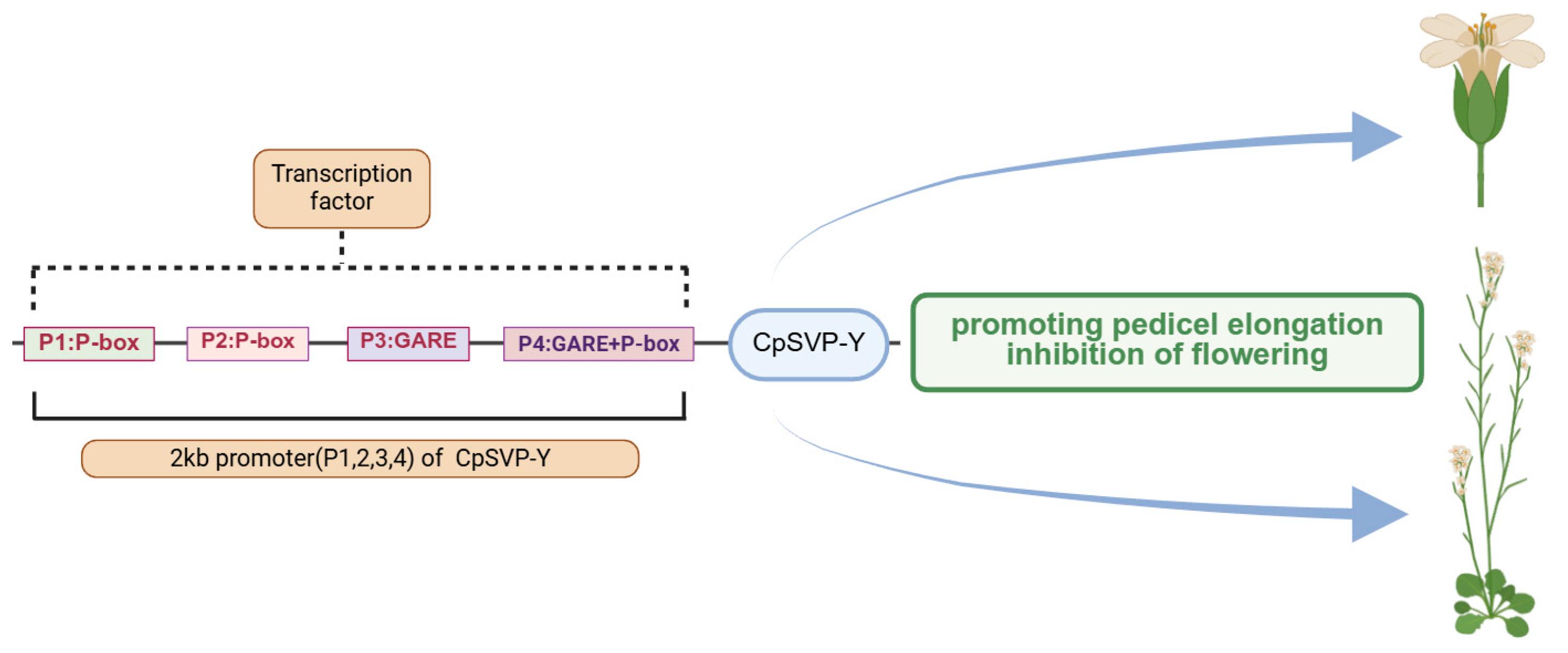
Mutation of a P-box at −461 bp in CpSVP-Y (1kb): CpSVP-Y enhanced GUS expression in the reproductive organs and the pedicels (Figure 3, Figure 4 and Figure 5), due to the increased CpSVP expression indirectly assayed by GUS; pedicel length increased by 7% compared to CpSVP-Y (1kb): CpSVP-Y. Interestingly, removal of P1 cis-element from CpSVP-Y (2kb): CpSVP-Y did not increase pedicel length, contrasting with the increase in GUS expression, as it did for CpSVP-Y (1kb): CpSVP-Y. This suggests that there is an additional cis-regulator(s) present in the 2kb promoter and absent from the 1kb promoter, enhancing pedicel elongation. Therefore, we primarily focus on the 1kb to 2kb region of the promoter, rather than the 1kb fragment, to investigate potential regulatory elements. Removal of the P4 cis-element significantly increased pedicel length, pointing to a particularly strong repressive role of its cognate transcription factor in limiting pedicel growth (Figure 9). Prolamin box binding factor (PBF), a DNA-binding with One Finger (DOF) transcription factor, has been identified in barley to interact with the P-box, as the complementary sequence ‘AAAG’ is the required binding site for DOF proteins [25,26]. DOF proteins are involved in many other biological processes, such as gibberellin response [27] and photoperiodic flowering [28]. The P-box at −461 bp plays a pivotal role for CpSVP-Y. Some trans-acting factor homologous to PBF could interact with the P-box to repress CpSVP expression in the reproductive organs and pedicels. DOF/PBF proteins function primarily as transcriptional regulators that bind to AAAG-containing P-box motifs, where they recruit co-regulators to modulate gene expression in GA-responsive and developmental pathways. Such DOF–P-box interactions provide a plausible mechanism through which P1 may influence CpSVP-Y transcription in reproductive tissues. Similarly, the maize Opaque-2 (O2) bZIP transcription factor activates target genes by binding its specific cis-element and often acts together with P-box and GARE motifs as part of a gibberellin response complex. Because the transcriptional output of this module depends on the spatial arrangement of these motifs, the proximity of the O2 site to the P1 P-box in the CpSVP-Y promoter suggests that O2-like factors may modulate GA-dependent regulation of CpSVP expression and pedicel elongation in Arabidopsis.
Both CpSVP-Y (1kb): CpSVP-Y and CpSVP-Y (2kb): CpSVP-Y had similar pedicel lengths, but significantly different GUS expression, suggesting that there are regulatory elements present on the 1kb promoter that is/are needed to elongate pedicels and enhance CpSVP-Y expression. This is consistent with our observation in P1-removed CpSVP-Y (1kb): CpSVP-Y plants, as the GUS activity was still lower than CpSVP-Y (2kb): CpSVP-Y plants. As CpSVP-Y (2kb): CpSVP-Y is still able to elongate pedicels compared to Col-0, the P4 cis-element will not prohibit papaya pedicel elongation completely. Earlier, we identified a TCA element associated with salicylic acid (SA) response, only found in the 1kb promoter region. In addition to the defense and abiotic stress response, salicylic acid is also involved in plant growth and development. In Iris (Iris hollandica), application of SA on the iris significantly increased pedicel length [29]. In Arabidopsis, overexpression of OBF-Binding Protein 3 (OBP3), a SA-inducible DOF transcription factor, decreased growth rate in the aerial parts of the plant [30]. OBP3 could bind to P-boxes and indirectly interact with the TCA element to alter SA levels to promote pedicel growth. Also, in the 1kb promoter region, we identified a putative binding site for opaque-2 (O2), a maize endosperm-specific transcription factor that regulates storage protein zein genes. The O2 cis-element, P-box, and GARE form a gibberellin response complex (GARC), and the GARE motif can substitute for the O2 cis-element to enhance transcription in barley aleurone cells in response to GA [20]. Positioning O2 and GARE 70 bp apart drastically reduced the basal level of GUS with or without GA induction; as the interaction of O2 cis-element, P-box, and GARE is positionally and spatially specific, this suggests that GARE does not function as an enhancer [20]. This O2 element is located at −405 bp and GARE is located at −1268 bp, suggesting it is unlikely GARE will enhance transcription due to its proximity to O2. However, O2 is located within distance of a P-box at −461 bp. O2 functions as a coupling element to affect the spatial and developmental response to GA. O2 could act as a coupling element with the P-box and GA to enhance CpSVP expression and elongate pedicels.
Removal of the P-box-containing GA-related cis-elements (e.g., P1 and P4) elongated pedicels suggesting that CpSVP-Y and the P-box is involved in pedicel elongation; however, there is no correlation between GUS transcripts and the 2kb-mutagenized cis-element lines. Pedicel length does not seem to be proportional to the transcriptional level of GUS, but potentially due to post-translational modifications and/or increased protein levels. It is worth noting that significant GUS activity was detected in the leaves, suggesting that CpSVP may play a role during vegetative development. Moreover, the coordinated enhancement of expression signals in both leaves and pedicels by the 2kb promoter indicates that the cis-elements located in the 1–2kb region likely function as basal transcriptional enhancers, rather than being limited to tissue-specific regulation alone. This broad expression profile underscores the potential pleiotropic functions of CpSVP in integrating growth signals across developmental stages.

3.2. CpSVP and the Pyrimidine Box Are Involved in Flowering

In the male and hermaphroditic (2kb) native promoter lines, CpSVP was highly expressed in the newly emerged floral buds, and then disappeared in the older floral buds, consistent with its role as a floral repressor in Arabidopsis. In addition to high CpSVP expression in the reproductive organs and pedicels, mutagenesis of the P-box also altered flowering time. CpSVP-Y plays a conserved role in controlling flowering, like its Arabidopsis homolog as CpSVP-Y (1kb): CpSVP-Y and CpSVP-Y (2kb): CpSVP-Y flowered later than Col-0. They differ drastically in GUS expression, suggesting that a shared regulatory element within the 1kb promoter region, which controls the spatial expression of CpSVP, is required for flowering-time regulation. However, mutagenesis of the P-box at P1 (−461 bp) abolished the late-flowering phenotype (Table S3), likely implying that transcriptional regulators acting via P1 dominantly suppress flowering in Arabidopsis and that removal of P1 releases this repression (Figure 9). Consistent with this, P1-mutated lines, which lose the localized GUS signal and show broader CpSVP-Y promoter activity, also exhibit reduced pedicel elongation compared with lines carrying the intact 1kb promoter, indicating that both the presence and the spatial restriction of CpSVP-Y expression contribute to the observed pedicel-length phenotype. Alternatively, the P1 element may be essential for the binding of transcription factor(s) that are involved in flowering-time regulation. In contrast, in the mutagenesis of the P-box at P2 (−895 bp), the GARE motif at P3 (−1268 bp), or both the P-box and GARE at P4 (−1272 bp) in CpSVP-Y (2kb): CpSVP-Y did not affect the late-flowering phenotype, suggesting that these three sites might not be directly involved in flowering-time regulation. Although moderate differences in GUS staining patterns were observed among the P2–P4 mutants, these changes did not translate into detectable alterations in flowering time or pedicel length, implying that the correlation between reporter activity and phenotype is not strictly linear and may involve threshold or tissue-specific effects.
CYCLING DOF FACTOR 1 (CDF1) transcription factor binds to the DOF binding sites, the complementary sequence of the P-box, in CONSTANS (CO) promoter, to repress CO transcription [28]. FLAVIN-BINDING, KELCH REPEAT, F-BOX 1 (FKF1) forms a complex with another F-box transcription factor, GIGANTEA (GI), and targets CDF1 for degradation while bound to CO, to activate CO transcription and allow CO to activate FT transcription [28,31,32]. Given that P-box (pyrimidine box) and GA-responsive GARE motifs function as cis-elements in multiple GA-regulated promoters, their presence in the CpSVP-Y promoter suggests that similar DOF–GA signaling modules could integrate hormonal and photoperiodic cues to fine-tune flowering and peduncle elongation in papaya. CDF, a DOF transcription factor, is capable of binding to P-boxes, as they contain the required binding sequence, to repress CO and FT, possibly coordinating the flowering transition in papaya. Removal of the P-box removes the CDF repressive mark on flowering, suggesting this could be how P1-removed transgenic plants lost the late-flowering phenotype. However, removal of P2–P4 cis-elements and CpSVP-Y (1 and 2kb):CpSVP-Y did not affect the late flowering phenotype, suggesting there must be additional regulatory elements present on the 1kb promoter to regulate the flowering transition. It is also possible that post-transcriptional and post-translational mechanisms contribute to the incomplete correlation between GUS expression and pedicel length. In Arabidopsis, SVP protein abundance and activity are modulated by environmental signals and interacting partners, adding regulatory layers beyond transcription [33]. By analogy, differences in CpSVP-Y mRNA stability, translation efficiency, or protein turnover, as well as regulation of CDF-like repressors, could modulate flowering time and pedicel elongation independently of the GUS reporter readout. These hypotheses may partially explain why some promoter mutations alter GUS patterns without proportionally affecting the developmental phenotype and highlight potential targets for future functional and molecular studies. The incomplete correlation observed between GUS expression levels and pedicel elongation suggests that the transcriptional changes may not be the sole determinants of this phenotype. This discrepancy could be explained by post-transcriptional or protein-level regulation, such as mRNA stability, translation efficiency, or protein modifications, which may influence pedicel elongation independently of transcriptional changes [34].

3.3. Potential Mechanism for Pedicel Elongation

We measured the transcript levels of AtGA20ox2, which plays a key role in GA biosynthesis. We observed a negative correlation between CpSVP-Y and GA20ox2 transcript expression in the junction. CpSVP is upregulated in the junction tissue of CpSVP-Y (1kb): CpSVP-Y and CpSVP-Y (2kb): CpSVP-Y, while GA20ox2 expression decreased an average of 4-fold for CpSVP-Y (1kb): CpSVP-Y and CpSVP-Y (2kb): CpSVP-Y. The cis-mutated lines did not vary in their AtGA20ox2 expression pattern, suggesting that these cis-elements do not affect GA signaling and that the GA-related transcription factor does not interact directly with CpSVP-Y through these four cis-elements.
In Arabidopsis, ASYMMETRIC LEAVES 2 (AS2) suppresses BREVIPEDUNCLELUS (BP) to control pedicel length [24]. AS2 is downregulated in young pedicels in CpSVP-Y (1kb):CpSVP-Y, and the removal of P1 results in the upregulation in young pedicels. However, in CpSVP-Y (2kb): CpSVP-Y, removal of P1 results in the downregulation of AS2 in young pedicels. This repressive mark could be due to CpSVP (2kb) possessing additional cis-regulatory elements that could be bound by transcription factor(s), which CpSVP (1kb) is missing. In tobacco, SVP interacts with BP to repress its expression, to regulate pedicel elongation [13]. CpSVP-Y (2kb): CpSVP-Y and CpSVP-Y (1kb): CpSVP-Y transgenic plants had higher BP expression than Col-0 when we introduced CpSVP-Y. Mutagenesis of the GA cis-elements decreased BP expression in the old pedicels compared to the non-mutated lines (Figure S6). As removal of the cis-elements subsequently increased CpSVP-Y expression and decreased BP expression to elongate pedicels, this suggests that this mechanism could be conserved and contribute to papaya peduncle elongation. However, further experiments are needed to confirm this mechanism.
In the 2kb CpSVP promoter region, CpSVP-Y and CpSVP-Yh are 99% similar. Hermaphroditic papaya is a product of human domestication 4000 years ago [2], so not enough time could have passed for drastic divergence from the male. In the 2kb CpSVP promoter region, males and hermaphroditic papaya differ in a single cis-element for a plastid response element, which acts as an enhancer in the Chlamydomonas HSP70A promoter and is induced by Mg-protoporphyrin IX (MgProto) and light [35]. MgProto is involved in the chloroplast retrograde signaling system. The floral repressor FLOWERING LOCUS C (FLC) is silenced by chloroplast retrograde signals to promote flowering under high light. Hermaphrodites have this cis-element intact and males have a 2 bp mismatch in this cis-element. In addition to other flowering genes, this could contribute to how hermaphrodites control the floral transition, as CpSVP-Yh is nonfunctional. With CpSVP-Y’s conserved role in flowering time, it could contribute to males flowering earlier than female and hermaphroditic plants. In addition to male papaya plants possessing an elongated peduncle, this helps to increase the spread of the Y chromosome in the population to maintain the high genetic diversity and increase fitness, and allows males to remain competitive against hermaphrodites.
The conclusion of this study is mainly based on the heterologous expression system of Arabidopsis thaliana. To directly verify the functions of these GA-related cis-elements in papaya, future work will utilize genetic transformation techniques to construct different deletion-line mutant plants in the male (XY) and hermaphroditic (XYh) backgrounds of papaya, and observe their direct effects on flower stalk length and flowering time. In addition, the direct determination of endogenous GA levels in flower stalks by LC-MS/MS, combined with transcriptome analysis to systematically identify the downstream gene networks regulated by these cis-elements, will help reveal the complete signal transduction pathways. Further in-depth understanding of the regulatory mechanism of this gene, through molecular design breeding to regulate plant structure and optimize reproductive allocation to increase yield and adaptability, provides a new theoretical basis for papaya breeding work.

4. Materials and Methods

4.1. Plant Material

Arabidopsis thaliana ecotype Col-0 was used in the study. All plants were grown in a chamber at 23 °C (16 h light) and 18 °C (8 h dark) with 50% humidity.

4.2. Flowering Time Measurements

For flowering time comparison, the number of rosette leaves was counted when the bolt of plants reached 2 cm tall. For pedicel length comparison, pedicel length was measured from seven independent T3 lines for each genotype. For each independent line, 8 plants were grown, and the top and bottom six pedicels of each plant were measured.

4.3. Plasmid Construction

The coding sequences of CpSVP-Y and CpSVP-Yh were blasted to papaya male and hermaphrodite pseudomolecules to determine the promoter region, and 2kb and 1kb sequences upstream of the start codon (ATG) of CpSVP-Y and CpSVP-Yh were extracted. Cis-regulatory elements were identified using PLACE [16] and PlantCARE [17]. These promoter sequences were amplified by PCR using sequence-specific primers (CpSVP-Y/Yh (1kb) and CpSVP-Y/Yh (2kb), Table S1) and subcloned into the vector pMDC162-GUS [36]. The coding sequences of CpSVP-Y and CpSVP-Yh were PCR amplified (CpSVP-Y and CpSVP-Yh primers, Table S1), and subcloned into vector pMDC162 containing the promoter region of interest. For the site-directed mutagenesis, plasmids containing the promoter were used as a template to amplify with inverse primers to remove the cis-element of interest (Table S1). Insert sequences of each construct were confirmed by Sanger sequencing.

4.4. Plant Transformation and Analysis of Transgenic Lines

Constructs were transformed into Agrobacterium tumefaciens strain GV3101. Arabidopsis plants were transformed using the floral dip method [37]. At least 12 independent, positive T1 lines were obtained for each construct. Seeds were sterilized and sown on ½ strength MS plates with hygromycin and cefotaxime, stratified at 4 °C for 2 days before placing them into the growth chamber. Once the seedlings reached the four-leaf stage, they were transferred to soil. At least 12 T1 plants were grown for each construct. T2 seeds were screened for single-locus transgene insertion based on 3:1 segregation on selective media and were genotyped using gene-specific primers with Kapa3G Plant PCR Kit (Cat no. KK7252), according to the manufacturer’s protocol.

4.5. Quantitative RT-PCR (qPCR)

Total RNA was isolated using the Trizol (Invitrogen, Waltham, MA, USA) method according to manufacturer’s protocol. RNA concentration was determined using Nanodrop 2000 (Thermo Fisher Scientific, Waltham, MA, USA), and integrity was assessed on 1% agarose gel. First-strand cDNA was synthesized with one microgram of total RNA using the Maxima cDNA kit with dsDNase (Cat no. K1672, Thermo Fisher Scientific) following the manufacturer’s suggested protocol. The qPCR reaction consisted of1.6 μL cDNA, 0.5 μM forward and reverse primers, 10 μL PowerUp SYBR Green Master Mix (Cat no. A25741, Applied Biosystems, Waltham, MA, USA), and ddH20 on a CFX96 Touch Instrument (BioRad, Hercules, CA, USA). qPCR primers used are listed in Table S2, as previously described or designed with Primer3 software [38,39]. The PCR program consisted of an initial denaturation at 50 °C for 2 min and 95 °C for 2 min, then 35 cycles of amplification at 95 °C for 15 sec and 60 °C for 1 min, followed by a dissociation curve. A minimum of three independent T3 lines (2 technical repeats each) were included for each experiment. Data were normalized to ACTIN2 and ELONGATION FACTOR 1-α using the ΔΔ Ct method [40].

4.6. Histochemical and Quantitative GUS Activity Assay

Histochemical staining of Arabidopsis GUS activity was conducted as previously described [41]. Various tissues from T3 transformants (leaf, inflorescence, stem, and pedicels) were collected 44 days after planting, and incubated in GUS staining solution (0.1 M NaPO4 at pH 7.0, 10 mM EDTA, 0.1% Triton X-100, 1 mM K3FE(CN)6 [Thermo Scientific], 2 mM X-Gluc [Gold Biotechnology, St. Louis, MO, USA]) overnight. Samples were cleared with 70% ethanol. Images were taken using a Zeiss AxioZoom V16 microscope (Zeiss, Jena, Germany) or Canon PowerShot SX50 HS (Canon Inc., Tokyo, Japan) camera and analyzed with FIJI software (ImageJ version 1.53t, https://fiji.sc/, accessed on 15 December 2025).
For GUS activity quantification, tissue (junction, young, and old pedicels) was collected from 44-day-old seedlings, flash frozen, and homogenized in GUS extraction buffer (100 mM KPO4 at pH 7.8, 1 mM EDTA, 1% Triton X-100, 10% Glycerol) for protein extraction. Total protein was quantified with Pierce 660 nm Reagent (Cat no. 1861426, Thermo Scientific), and standardized with bovine serum albumin. A total of 10 μL of protein sample and 200 μL GUS extraction buffer supplemented with 2.5 mM MUG were incubated at 37 °C for 60 min. Then, 1 M of sodium bicarbonate was added to stop the reaction. GUS activity was measured fluorometrically and normalized as per microgram of protein added. Readings were taken at excitation 360 nm and emission 460 nm using BioTek Synergy HTX Plate Reader with Gen 5 software. Four biological replicates and three technical repeats were assayed for each genotype.

Supplementary Materials

The following supporting information can be downloaded at https://www.mdpi.com/article/10.3390/plants15020209/s1. Table S1. Plasmid construction primers. Restriction enzyme site is underlined; Table S2. Primers used in quantitative RT-PCR study; Table S3. Flowering time of translational and mutagenized translational constructs; Figure S1. Analysis of cis-acting regulatory elements in the 2-kb promoter regions of CpSVP-Y and CpSVP-Yh; Figure S2. Peduncle length for CpSVP(2kb):CpSVP and mutagenized CpSVP(2kb):CpSVP lines. 12 peduncles from 16 individual plants were measured for each T3 line and 7 independent lines were used in this study. Values are represented as mean peduncle length (in cm) ± standard error. Results were compared to Col-0 and analyzed with Student’s t-test (* p < 0.05, ** p < 0.01); Figure S3. Peduncle length for CpSVP(1kb):CpSVP and P1-removed CpSVP(1kb):CpSVP lines. peduncle length for complementation study. 12 peduncles from 16 individual plants were measured for each T3 line and 7 independent lines were used in this study. Values are represented as mean peduncle length (in cm) ± standard error. Results were compared to Col-0 and analyzed with Student’s t-test (** p < 0.01); Figure S4. Relative expression of GA20ox2 transcript levels in translational and mutagenized translational lines. The qPCR expression level of each construct was normalized to ACTIN and EIF1 expression in wild type Col-0 plants. Values were obtained from three biological replicates and two technical replicates; Figure S5. Relative expression of GUS transcript levels in native promoter and mutagenized lines. The qPCR expression level of each construct was normalized to ACTIN and EIF1 expression in wild type Col-0 plants. Values were obtained from three biological replicates and two technical replicates; Figure S6. Relative expression of AS2 and BP transcript levels innative promoter and mutagenized lines. The qPCR expression level of each construct was normalized to ACTIN and EIF1 expression in wild type Col-0 plants. Values were obtained from three biological replicates and two technical replicates.

Author Contributions

Conceptualization, R.M.; writing—original draft preparation, J.N.-E.; validation, J.N.-E.; formal analysis, J.Y.; data curation, writing—review and editing, J.N.-E., J.Y. and R.M.; supervision, project administration, and funding acquisition, R.M. All authors have read and agreed to the published version of the manuscript.

Funding

This work was supported by US National Science Foundation (NSF) Plant Genome Research Program Award DBI-1546890 to R.M., and by startup fund from Fujian Agriculture and Forestry University to R.M.

Data Availability Statement

Data from experiments are presented in the figures and supplementary tables and figures.

Conflicts of Interest

The authors declare no conflicts of interest.

References

  1. Wang, J.; Na, J.-K.; Yu, Q.; Gschwend, A.R.; Han, J.; Zeng, F.; Aryal, R.; VanBuren, R.; Murray, J.E.; Zhang, W.; et al. Sequencing Papaya X and Yh Chromosomes Reveals Molecular Basis of Incipient Sex Chromosome Evolution. Proc. Natl. Acad. Sci. USA 2012, 109, 13710–13715. [Google Scholar] [CrossRef]
  2. VanBuren, R.; Zeng, F.; Chen, C.; Zhang, J.; Wai, C.M.; Han, J.; Aryal, R.; Gschwend, A.R.; Wang, J.; Na, J.-K.; et al. Origin and Domestication of Papaya Yh Chromosome. Genome Res. 2015, 25, 524–533. [Google Scholar] [CrossRef]
  3. Liu, Z.; Moore, P.H.; Ma, H.; Ackerman, C.M.; Ragiba, M.; Yu, Q.; Pearl, H.M.; Kim, M.S.; Charlton, J.W.; Stiles, J.I.; et al. A Primitive Y Chromosome in Papaya Marks Incipient Sex Chromosome Evolution. Nature 2004, 427, 348–352. [Google Scholar] [CrossRef] [PubMed]
  4. Han, J.; Murray, J.E.; Yu, Q.; Moore, P.H.; Ming, R. The Effects of Gibberellic Acid on Sex Expression and Secondary Sexual Characteristics in Papaya. HortScience 2014, 49, 378–383. [Google Scholar] [CrossRef]
  5. Zhou, Y.; Pang, Z.; Wang, W.; Ming, R. Identification and Molecular Analysis of the Y-Specific CpMp Gene Controlling Long Male Peduncles in Papaya. Nat. Commun. 2025, 16, 10638. [Google Scholar] [CrossRef]
  6. Kaufmann, K.; Melzer, R.; Theißen, G. MIKC-Type MADS-Domain Proteins: Structural Modularity, Protein Interactions and Network Evolution in Land Plants. Gene 2005, 347, 183–198. [Google Scholar] [CrossRef] [PubMed]
  7. Li, D.; Liu, C.; Shen, L.; Wu, Y.; Chen, H.; Robertson, M.; Helliwell, C.A.; Ito, T.; Meyerowitz, E.; Yu, H. A Repressor Complex Governs the Integration of Flowering Signals in Arabidopsis. Dev. Cell 2008, 15, 110–120. [Google Scholar] [CrossRef]
  8. Gregis, V.; Sessa, A.; Colombo, L.; Kater, M.M. AGAMOUS-LIKE24 and SHORT VEGETATIVE PHASE Determine Floral Meristem Identity in Arabidopsis. Plant J. 2008, 56, 891–902. [Google Scholar] [CrossRef]
  9. Hartmann, U.; Höhmann, S.; Nettesheim, K.; Wisman, E.; Saedler, H.; Huijser, P. Molecular Cloning of SVP: A Negative Regulator of the Floral Transition in Arabidopsis. Plant J. 2000, 21, 351–360. [Google Scholar] [CrossRef]
  10. Wu, R.; Tomes, S.; Karunairetnam, S.; Tustin, S.D.; Hellens, R.P.; Allan, A.C.; Macknight, R.C.; Varkonyi-Gasic, E. SVP-like MADS Box Genes Control Dormancy and Budbreak in Apple. Front. Plant Sci. 2017, 8, 477. [Google Scholar] [CrossRef]
  11. Wu, R.-M.; Walton, E.F.; Richardson, A.C.; Wood, M.; Hellens, R.P.; Varkonyi-Gasic, E. Conservation and Divergence of Four Kiwifruit SVP-like MADS-Box Genes Suggest Distinct Roles in Kiwifruit Bud Dormancy and Flowering. J. Exp. Bot. 2011, 63, 797–807. [Google Scholar] [CrossRef]
  12. Jaudal, M.; Monash, J.; Zhang, L.; Wen, J.; Mysore, K.S.; Macknight, R.; Putterill, J. Overexpression of Medicago SVP Genes Causes Floral Defects and Delayed Flowering in Arabidopsis but Only Affects Floral Development in Medicago. J. Exp. Bot. 2014, 65, 429–442. [Google Scholar] [CrossRef]
  13. Wang, D.; Chen, X.; Zhang, Z.; Liu, D.; Song, G.; Kong, X.; Geng, S.; Yang, J.; Wang, B.; Wu, L.; et al. A MADS-Box Gene NtSVP Regulates Pedicel Elongation by Directly Suppressing a KNAT1-like KNOX Gene NtBPL in Tobacco (Nicotiana tabacum L.). J. Exp. Bot. 2015, 66, 6233–6244. [Google Scholar] [CrossRef]
  14. Hedden, P.; Thomas, S.G. (Eds.) Annual Plant Reviews, The Gibberellins; Wiley-Blackwell: Hoboken, NJ, USA, 2016; Available online: https://www.amazon.co.uk/Annual-Plant-Reviews-49-Gibberellins/dp/1119210429 (accessed on 5 August 2025).
  15. Sun, T.; Gubler, F. Molecular Mechanism of Gibberellin Signaling in Plants. Annu. Rev. Plant Biol. 2004, 55, 197–223. [Google Scholar] [CrossRef] [PubMed]
  16. Higo, K.; Ugawa, Y.; Iwamoto, M.; Korenaga, T. Plant Cis-Acting Regulatory DNA Elements (PLACE) Database: 1999. Nucleic Acids Res. 1999, 27, 297–300. [Google Scholar] [CrossRef]
  17. Lescot, M.; Déhais, P.; Thijs, G.; Marchal, K.; Moreau, Y.; Van de Peer, Y.; Rouzé, P.; Rombauts, S. PlantCARE, a Database of Plant Cis-Acting Regulatory Elements and a Portal to Tools for in Silico Analysis of Promoter Sequences. Nucleic Acids Res. 2002, 30, 325–327. [Google Scholar] [CrossRef] [PubMed]
  18. Gubler, F.; Jacobsen, J.V. Gibberellin-Responsive Elements in the Promoter of a Barley High-pI Alpha-Amylase Gene. Plant Cell 1992, 4, 1435–1441. [Google Scholar] [CrossRef] [PubMed]
  19. Skriver, K.; Olsen, F.L.; Rogers, J.C.; Mundy, J. Cis-Acting DNA Elements Responsive to Gibberellin and Its Antagonist Abscisic Acid. Proc. Natl. Acad. Sci. USA 1991, 88, 7266–7270. [Google Scholar] [CrossRef]
  20. Rogers, J.C.; Rogers, S.W. Definition and Functional Implications of Gibberellin and Abscisic Acid Cis-Acting Hormone Response Complexes. Plant Cell 1992, 4, 1443–1451. [Google Scholar] [CrossRef]
  21. Lee, J.H.; Yoo, S.J.; Park, S.H.; Hwang, I.; Lee, J.S.; Ahn, J.H. Role of SVP in the Control of Flowering Time by Ambient Temperature in Arabidopsis. Genes Dev. 2007, 21, 397–402. [Google Scholar] [CrossRef]
  22. Huang, S.; Raman, A.S.; Ream, J.E.; Fujiwara, H.; Cerny, R.E.; Brown, S.M. Overexpression of 20-Oxidase Confers a Gibberellin-Overproduction Phenotype in Arabidopsis. Plant Physiol. 1998, 118, 773–781. [Google Scholar] [CrossRef]
  23. Rieu, I.; Ruiz-Rivero, O.; Fernandez-Garcia, N.; Griffiths, J.; Powers, S.J.; Gong, F.; Linhartova, T.; Eriksson, S.; Nilsson, O.; Thomas, S.G.; et al. The Gibberellin Biosynthetic Genes AtGA20ox1 and AtGA20ox2 Act, Partially Redundantly, to Promote Growth and Development throughout the Arabidopsis Life Cycle. Plant J. 2007, 53, 488–504. [Google Scholar] [CrossRef]
  24. Yamaguchi, N.; Suzuki, M.; Fukaki, H.; Morita-Terao, M.; Tasaka, M.; Komeda, Y. CRM1/BIG-Mediated Auxin Action Regulates Arabidopsis Inflorescence Development. Plant Cell Physiol. 2007, 48, 1275–1290. [Google Scholar] [CrossRef]
  25. Vicente-Carbajosa, J.; Moose, P.S.; Parsons, L.R.; Schmidt, J.R. A Maize Zinc-Finger Protein Binds the Prolamin Box in Zein Gene Promoters and Interacts with the Basic Leucine Zipper Transcriptional Activator Opaque2. Proc. Natl. Acad. Sci. USA 1997, 94, 7685–7690. [Google Scholar] [CrossRef]
  26. Yanagisawa, S.; Schmidt, R.J. Diversity and Similarity among Recognition Sequences of Dof Transcription Factors. Plant J. 1999, 17, 209–214. [Google Scholar] [CrossRef] [PubMed]
  27. Washio, K. Identification of Dof Proteins with Implication in the Gibberellin-Regulated Expression of a Peptidase Gene Following the Germination of Rice Grains. Biochim. Biophys. Acta (BBA)—Gene Struct. Expr. 2001, 1520, 54–62. [Google Scholar] [CrossRef]
  28. Imaizumi, T.; Schultz, T.F.; Harmon, F.G.; Ho, L.A.; Kay, S.A. FKF1 F-Box Protein Mediates Cyclic Degradation of a Repressor of CONSTANS in Arabidopsis. Science 2005, 309, 293–297. [Google Scholar] [CrossRef] [PubMed]
  29. Aziz, N.M.A.N.K.; Sadiq, S.M. Effect of the Period of Soaking and Concentrations of Salicylic Acid in the Growth and Production of Iris. IOSR J. Agric. Vet. Sci. (IOSR-JAVS) 2018, 11, 33–41. [Google Scholar]
  30. Kang, H.-G.; Singh, K.B. Characterization of Salicylic Acid-Responsive, Arabidopsis Dof Domain Proteins: Overexpression of OBP3 Leads to Growth Defects. Plant J. 2000, 21, 329–339. [Google Scholar] [CrossRef]
  31. Sawa, M.; Nusinow, D.A.; Kay, S.A.; Imaizumi, T. FKF1 and GIGANTEA Complex Formation Is Required for Day-Length Measurement in Arabidopsis. Science 2007, 318, 261–265. [Google Scholar] [CrossRef]
  32. Fornara, F.; Panigrahi, K.C.S.; Gissot, L.; Sauerbrunn, N.; Rühl, M.; Jarillo, J.A.; Coupland, G. Arabidopsis DOF Transcription Factors Act Redundantly to Reduce CONSTANS Expression and Are Essential for a Photoperiodic Flowering Response. Dev. Cell 2009, 17, 75–86. [Google Scholar] [CrossRef]
  33. Mateos, J.L.; Madrigal, P.; Tsuda, K.; Rawat, V.; Richter, R.; Romera-Branchat, M.; Fornara, F.; Schneeberger, K.; Krajewski, P.; Coupland, G. Combinatorial Activities of SHORT VEGETATIVE PHASE and FLOWERING LOCUS C Define Distinct Modes of Flowering Regulation in Arabidopsis. Genome Biol. 2015, 16, 31. [Google Scholar] [CrossRef]
  34. Li, T.; Huang, J.; Wang, G.; Li, H.; Lü, P. Regulatory Roles of RNA Modifications in Plant Development and Fruit Ripening. aBIOTECH 2025, 6, 472–488. [Google Scholar] [CrossRef]
  35. von Gromoff, E.D.; Schroda, M.; Oster, U.; Beck, C.F. Identification of a Plastid Response Element That Acts as an Enhancer within the Chlamydomonas HSP70A Promoter. Nucleic Acids Res. 2006, 34, 4767–4779. [Google Scholar] [CrossRef]
  36. Curtis, M.D.; Grossniklaus, U. A Gateway Cloning Vector Set for High-Throughput Functional Analysis of Genes in Planta. Plant Physiol. 2003, 133, 462–469. [Google Scholar] [CrossRef] [PubMed]
  37. Clough, S.J.; Bent, A.F. Floral Dip: A Simplified Method for Agrobacterium-Mediated Transformation of Arabidopsis Thaliana. Plant J. 1998, 16, 735–743. [Google Scholar] [CrossRef]
  38. Untergasser, A.; Cutcutache, I.; Koressaar, T.; Ye, J.; Faircloth, B.C.; Remm, M.; Rozen, S.G. Primer3—New Capabilities and Interfaces. Nucleic Acids Res. 2012, 40, e115. [Google Scholar] [CrossRef]
  39. Koressaar, T.; Remm, M. Enhancements and Modifications of Primer Design Program Primer3. Bioinformatics 2007, 23, 1289–1291. [Google Scholar] [CrossRef] [PubMed]
  40. Livak, K.J.; Schmittgen, T.D. Analysis of Relative Gene Expression Data Using Real-Time Quantitative PCR and the 2−ΔΔCT Method. Methods 2001, 25, 402–408. [Google Scholar] [CrossRef]
  41. Jefferson, R.A.; Kavanagh, T.A.; Bevan, M.W. GUS Fusions: Beta-Glucuronidase as a Sensitive and Versatile Gene Fusion Marker in Higher Plants. EMBO J. 1987, 6, 3901–3907. [Google Scholar] [CrossRef] [PubMed]
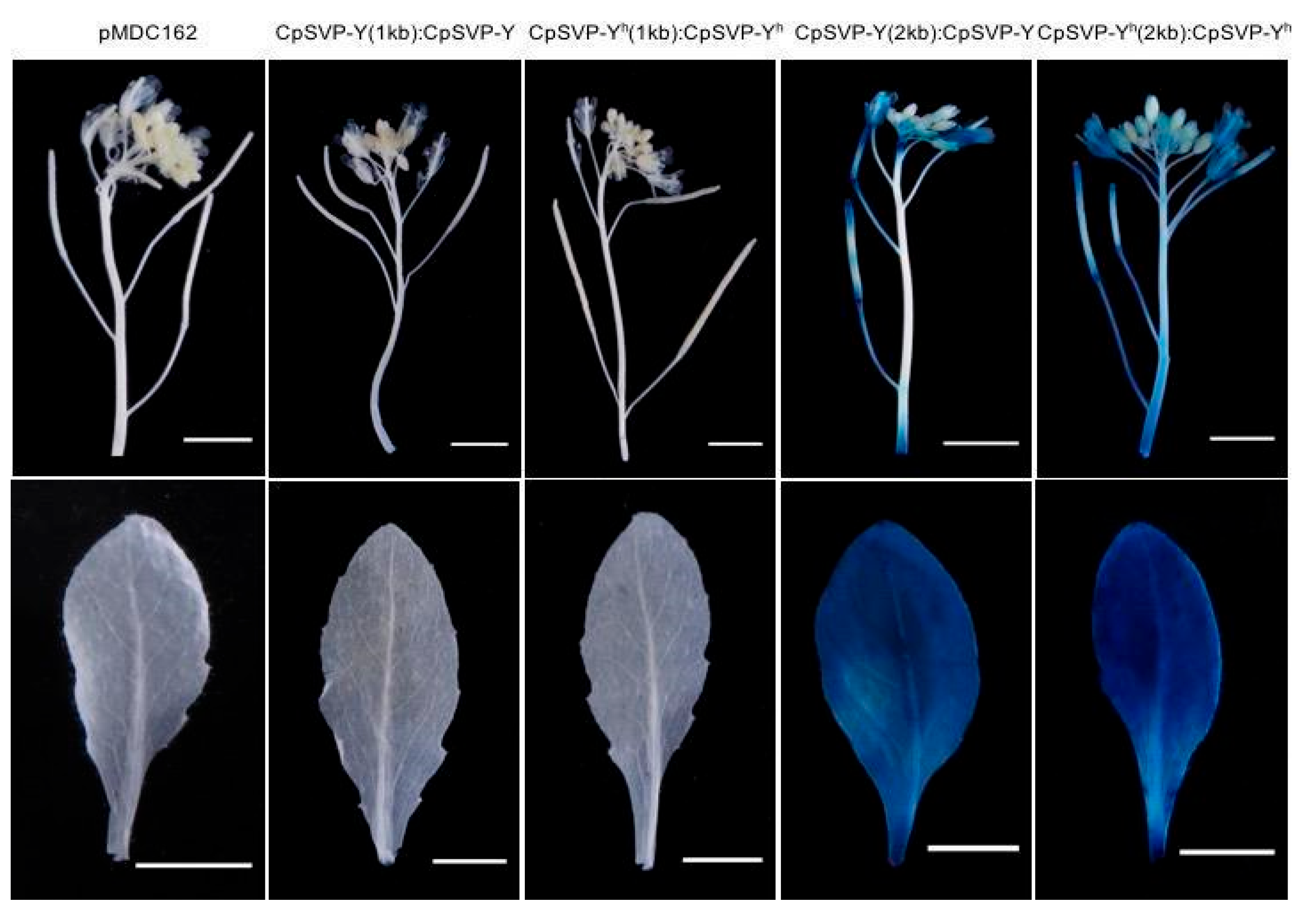
Figure 1. Histochemical staining of translational fusion constructs (designs in which a promoter drives the expression of a target gene coding sequence translationally fused to GUS, thereby producing a single fusion protein). Scale bars are 5 mm.
Plants 15 00209 g001
Figure 2. GUS activity of translational fusion constructs. Values are represented as mean ± standard error (mean ± SE). Results were compared to the pMDC162 empty vector and analyzed using Student’s t-test (* p < 0.05). Values were obtained from four biological replicates and three technical replicates.
Plants 15 00209 g002
Figure 3. Schematic diagram of translational fusion constructs and mutagenized translational fusion constructs. Gray boxes depict the CpSVP-Yh gene and white boxes depict the CpSVP-Y gene. The black and blue boxes indicate predicted cis-regulatory elements, including P-box and GARE motifs.
Plants 15 00209 g003
Figure 4. Histochemical staining of CpSVP-Y (2kb): CpSVP-Y translational fusion lines and mutagenized CpSVP-Y (2kb): CpSVP-Y lines. Scale bars are 5 mm.
Plants 15 00209 g004
Figure 5. Relative expression of GUS transcript levels in translational and mutagenized lines. Values are represented as mean ± standard error (mean ± SE). The qPCR expression level of each construct was normalized to ACTIN and EIF1 expression in wild-type Col-0 plants. Values were obtained from three biological replicates and two technical replicates.
Plants 15 00209 g005
Figure 6. Histochemical staining of CpSVP-Y (1kb): CpSVP-Y and P1-removed CpSVP-Y (1kb): CpSVP-Y lines. Scale bars are 5 mm.
Plants 15 00209 g006
Figure 7. Relative expression of GUS transcript levels in translational and mutagenized lines. Values are represented as mean ± standard error (mean ± SE). The qPCR expression level of each construct was normalized to ACTIN and EIF1 expression in wild-type Col-0 plants and analyzed using Student’s t-test (* p < 0.05). Values were obtained from three biological replicates and two technical replicates.
Plants 15 00209 g007
Figure 8. Quantitative GUS activity of CpSVP-Y (1kb):CpSVP-Y and the P1-deleted CpSVP-Y (1kb):CpSVP-Y lines. Values are represented as mean ± standard error (mean ± SE). Values were obtained from three biological replicates and two technical replicates.
Plants 15 00209 g008
Figure 9. Schematic diagram of CpSVP-Y promoting pedicel elongation and inhibiting flowering in Arabidopsis. Solid lines indicate experimentally validated regulatory relationships. Dashed lines indicate putative or indirect regulatory relationships inferred from bioinformatic or correlative analyses. Arrows indicate positive regulation or activation.
Plants 15 00209 g009
Disclaimer/Publisher’s Note: The statements, opinions and data contained in all publications are solely those of the individual author(s) and contributor(s) and not of MDPI and/or the editor(s). MDPI and/or the editor(s) disclaim responsibility for any injury to people or property resulting from any ideas, methods, instructions or products referred to in the content.