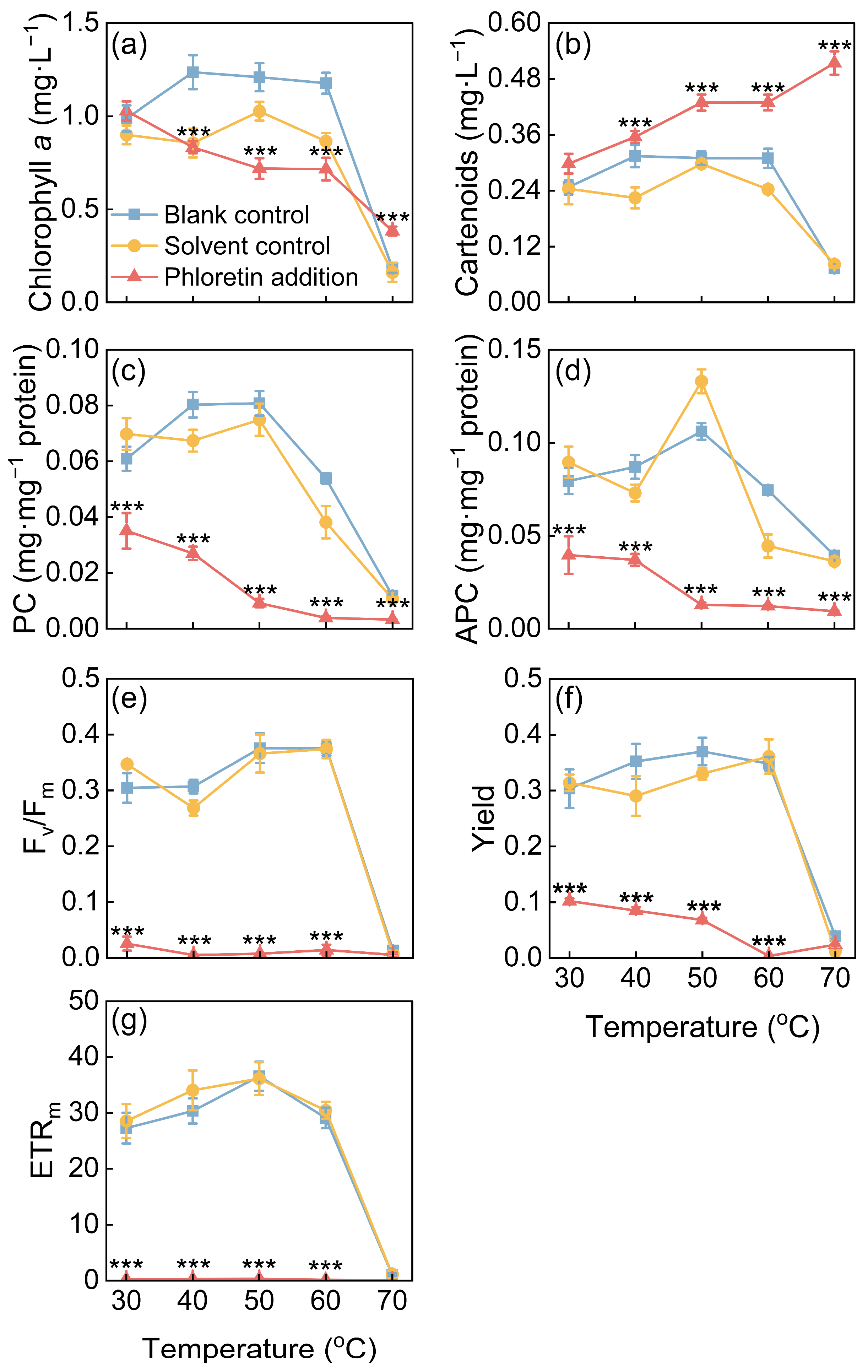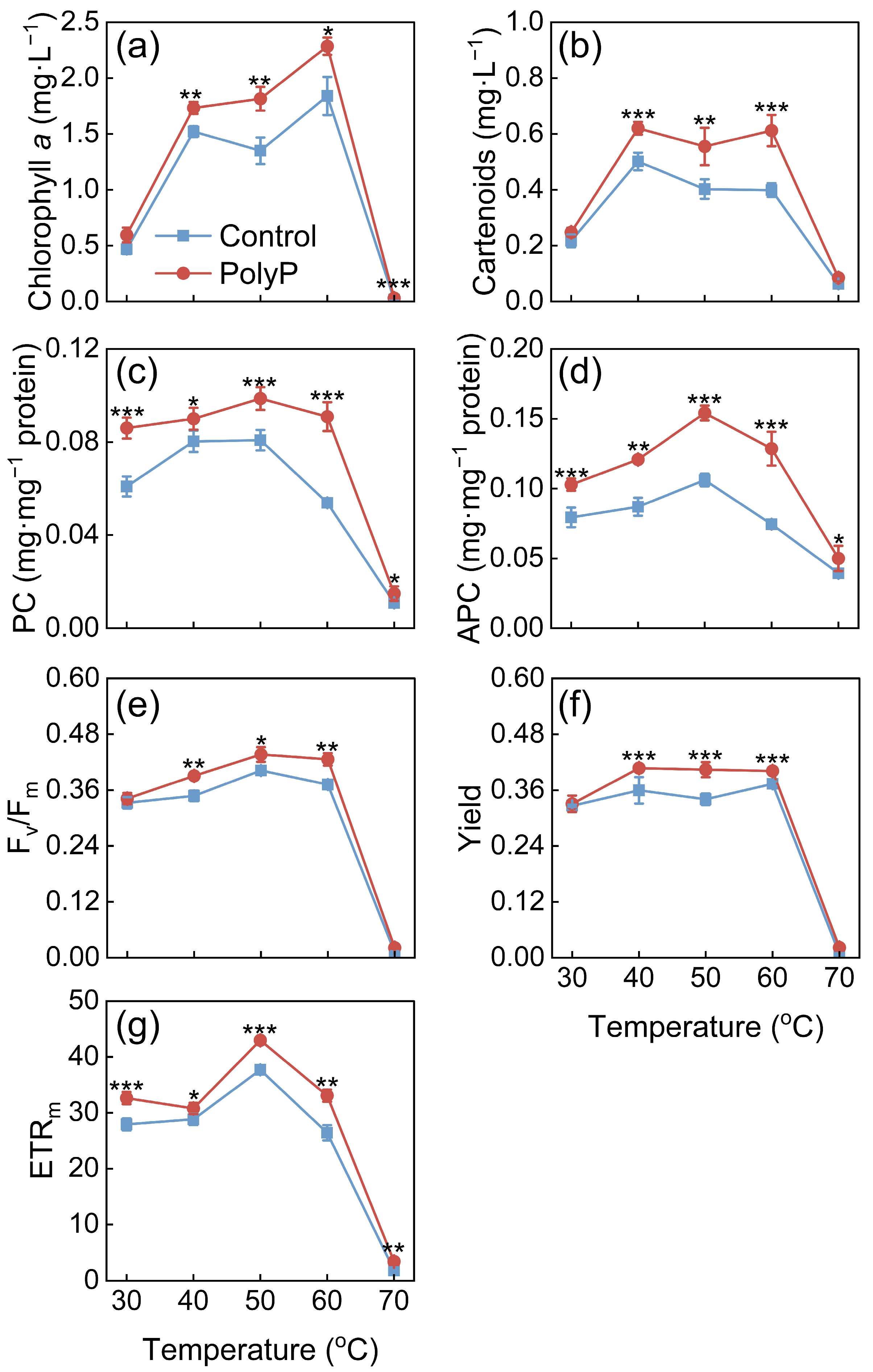
Polyphosphate Attenuates Oxidative Stress to Support Temperature Adaptability in Hot Spring Cyanobacteria
 ,
,
Abstract
1. Introduction
2. Materials and Methods
2.1. Thermophilic Cyanobacterial Cultivation
2.2. Mechanistic Exploration of PolyP Function in Broad Temperature Adaptation
2.2.1. PolyP Synthesis Inhibition
2.2.2. Exogenous PolyP Addition
2.2.3. Combined Phloretin, PolyP, and Inorganic Phosphate Treatments
2.2.4. In Vitro Added PolyP Removal of ROS
2.3. Physiological and Biochemical Parameters Determination
2.3.1. Biomass Quantification
2.3.2. Photosynthetic Parameters Measurement
2.3.3. Quantification of PolyP Content
2.3.4. PPK and PPX Activities Analysis
2.3.5. Antioxidant System and Biochemical Parameters Analysis
2.4. Data Processing and Statistical Analysis
3. Results and Discussion
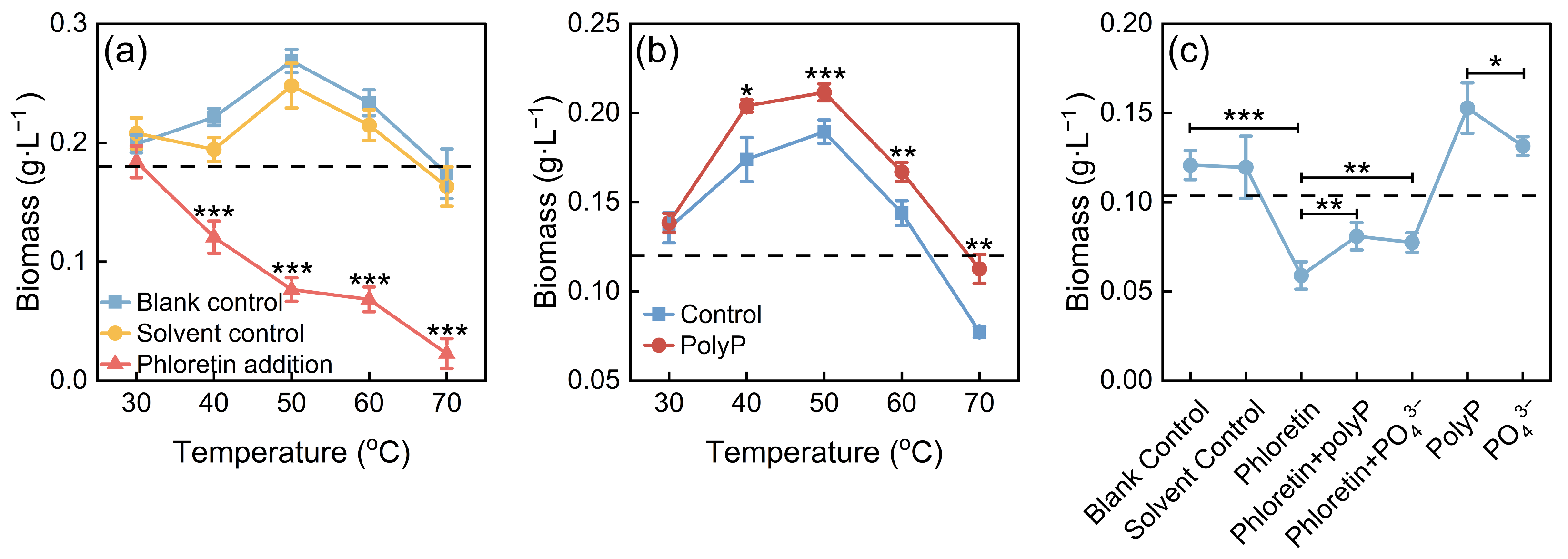
3.1. PolyP-Mediated Thermophilic Cyanobacterial Growth Across Temperature Fluctuations
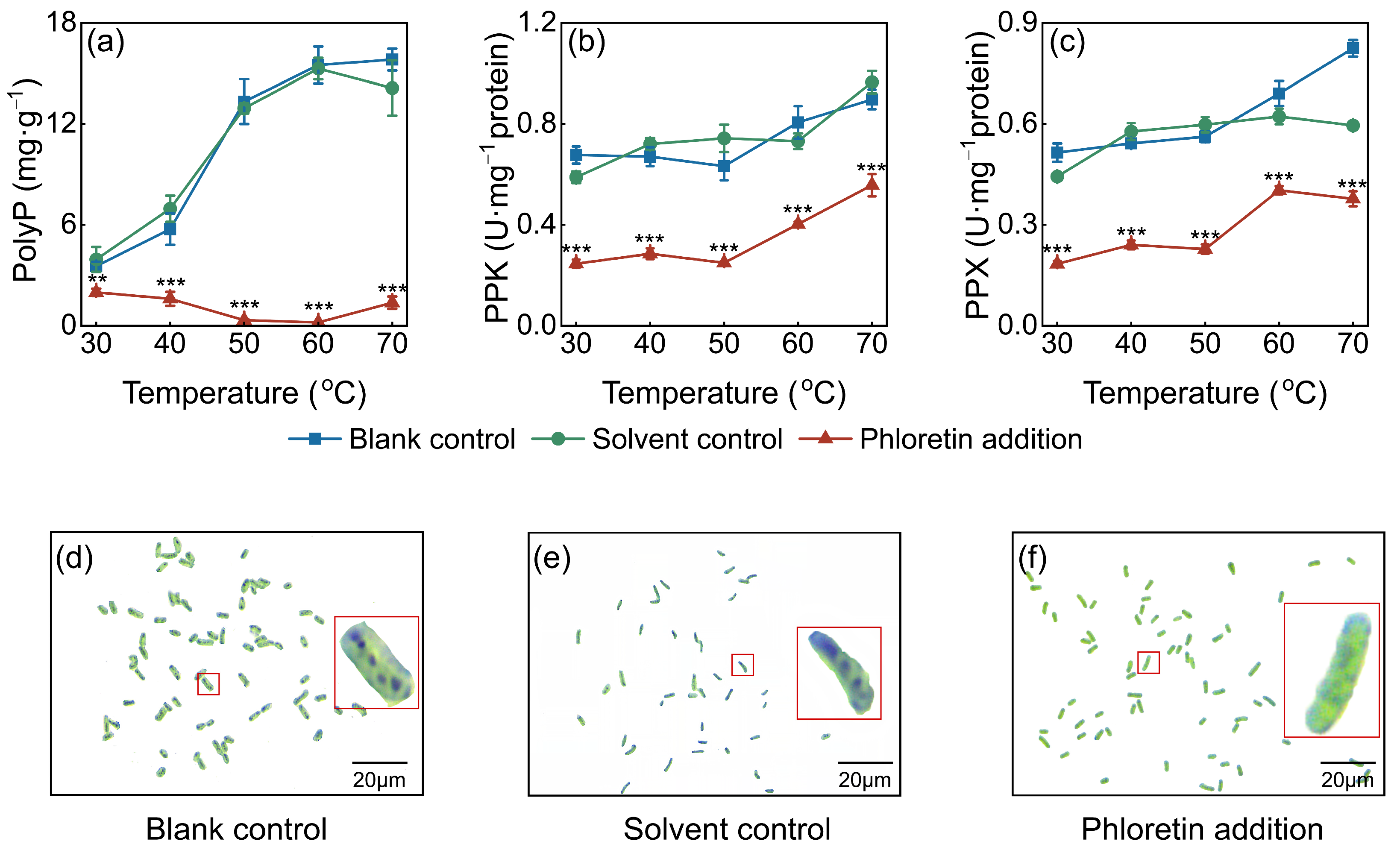
3.2. PolyP Metabolism-Mediated Homeostasis
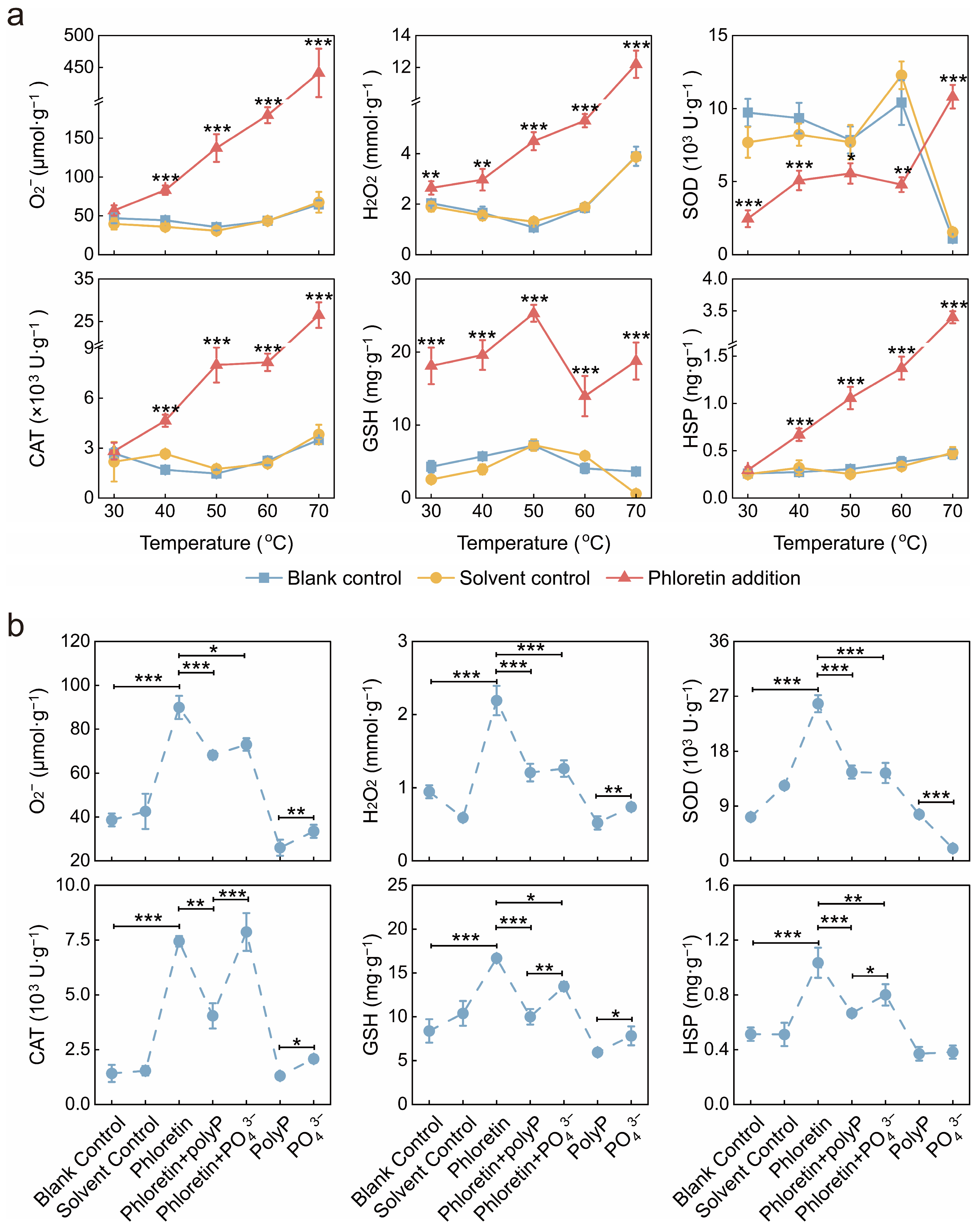
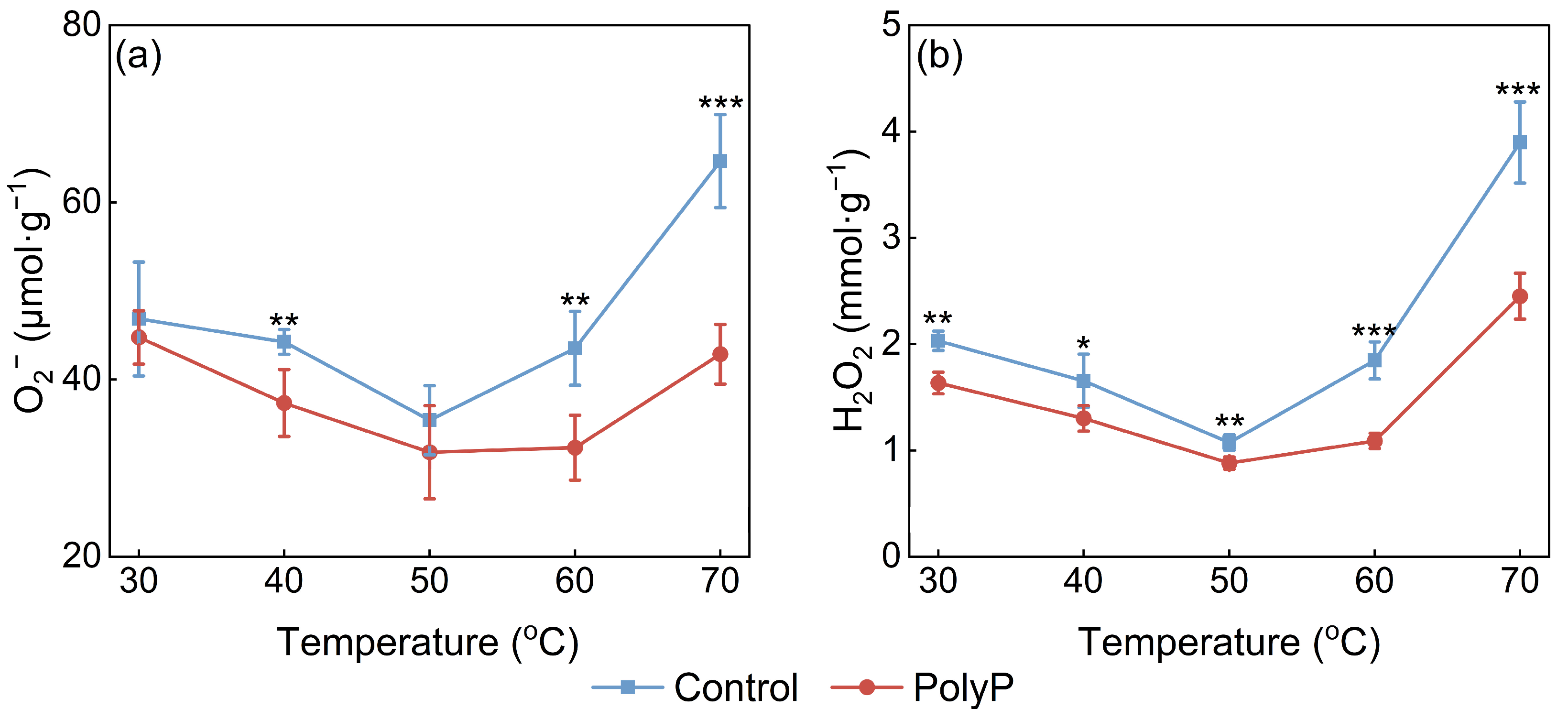
3.3. PolyP Attenuates Temperature-Induced Oxidative Stress
3.4. PolyP Protects the Photosynthesis System
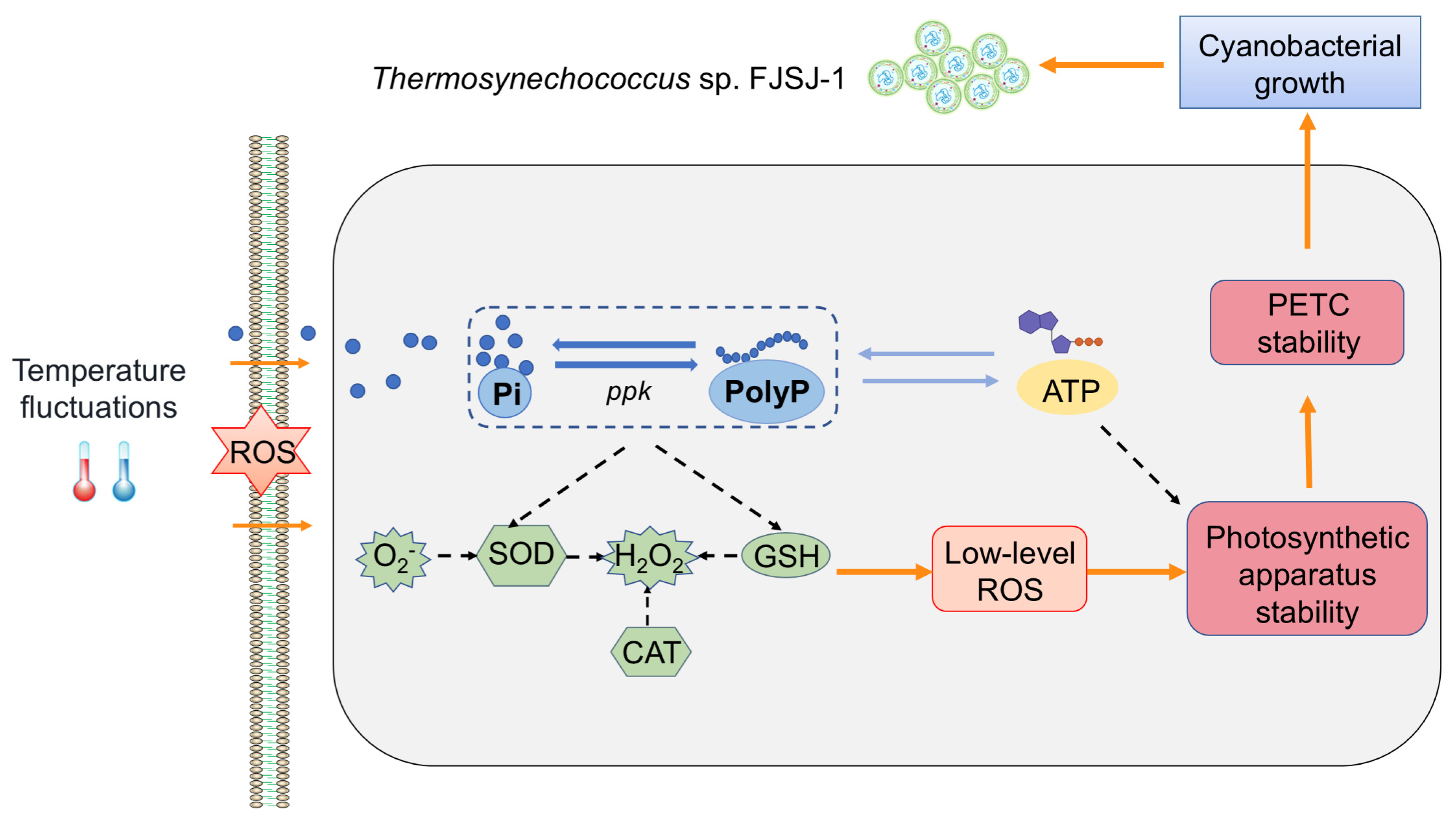
3.5. PolyP-Associated Physiological Responses Underlying Temperature-Range Adaptability
4. Conclusions
Supplementary Materials
Author Contributions
Funding
Data Availability Statement
Conflicts of Interest
Abbreviations
| PETC | Photosynthetic electron transport chain |
| ROS | Reactive oxygen species |
| PolyP | Polyphosphate |
| PPK | Polyphosphate kinase |
| PPX | Exopolyphosphatase |
| H2O2 | Hydrogen peroxide |
| O2– | Superoxide anions |
| PSII | Photosystem II |
| Chl a | Chlorophyll a |
| PC | Phycocyanin |
| APC | Allophycocyanin |
| PE | Phycoerythrin |
| TP | Total phosphorus |
| Pi | Inorganic phosphate-phosphorus |
| TCA | Trichloroacetic acid |
| GSH | Glutathione |
| SDO | Superoxide dismutase |
| CAT | Catalase |
| HSP | Heat shock proteins |
References
- Razzak, S.A.; Ali, S.A.M.; Hossain, M.M.; Delasa, H. Biological CO2 fixation with production of microalgae in wastewater—A review. Renew. Sustain. Energy Rev. 2017, 76, 379–390. [Google Scholar]
- Li, K.Y.; Zhou, J.L.; Guo, S.Y.; Dou, X.X.; Gu, J.J.; Gao, F. Advances of microalgae-based enhancement strategies in industrial flue gas treatment: From carbon sequestration to lipid production. Bioresour. Technol. 2025, 423, 132250. [Google Scholar] [CrossRef] [PubMed]
- Doan, L.; Tran, A.; Ong, Q.; Huynh, K.; Tran, K.; Phung, T. Enhancing lipid accumulation in marine microalgae for sustainable biofuel applications: A review of Nannochloropsis and Tetraselmis. Biomass Bioenergy 2026, 211, 109210. [Google Scholar] [CrossRef]
- Adeniyi, O.M.; Azimov, U.; Burluka, A. Algae biofuel: Current status and future applications. Renew. Sustain. Energy Rev. 2018, 90, 316–335. [Google Scholar] [CrossRef]
- Jaiswal, K.; Banerjee, I.; Singh, D.; Sajwan, P.; Chhetri, V. Ecological stress stimulus to improve microalgae biofuel generation: A review. Octa J. Biosci. 2020, 8, 48–54. [Google Scholar]
- Geremia, E.; Ripa, M.; Catone, C.M.; Ulgiati, S. A review about microalgae wastewater treatment for bioremediation and biomass production—A new challenge for Europe. Environments 2021, 8, 136. [Google Scholar] [CrossRef]
- Song, K.J.; Zhou, Z.Z.; Huang, Y.X.; Chen, L.; Cong, W. Multi-omics insights into the mechanism of the high-temperature tolerance in a thermotolerant Chlorella sorokiniana. Bioresour. Technol. 2023, 390, 129859. [Google Scholar] [CrossRef] [PubMed]
- Castenholz, R.W. Thermophilic blue-green algae and the thermal environment. Bacteriol. Rev. 1969, 33, 476–504. [Google Scholar] [CrossRef] [PubMed]
- Meeks, J.C.; Castenholz, R.W. Growth and photosynthesis in an extreme thermophile, Synechococcus Lividus (Cyanophyta). Arch. Mikroiol. 1971, 78, 25–41. [Google Scholar] [CrossRef]
- Boyd, E.S.; Fecteau, K.M.; Havig, J.R.; Shock, E.L.; Peters, J.W. Modeling the habitat range of phototrophs in Yellowstone National Park: Toward the development of a comprehensive fitness landscape. Front. Microbio. 2012, 3, 00221. [Google Scholar] [CrossRef]
- Liang, Y.; Tang, J.; Luo, Y.; Kaczmarek, M.; Li, X.; Daroch, M. Thermosynechococcus as a thermophilic photosynthetic microbial cell factory for CO2 utilisation. Bioresour. Technol. 2019, 278, 255–265. [Google Scholar] [CrossRef] [PubMed]
- Winayu, B.N.; Chiu, K.; Hsueh, H.; Chu, H. Thermosynechococcus sp. CL-1 (TCL-1) as an efficient cyanobacterium in CO2 fixation, C-phycocyanin production, and removal of Cd and Pb. Biochem. Eng. J. 2024, 208, 109367. [Google Scholar] [CrossRef]
- Varshney, P.; Mikulic, P.; Vonshak, A.; Beardall, J.; Wangikar, P. Extremophilic micro-algae and their potential contribution in biotechnology. Bioresour. Technol. 2015, 184, 363–372. [Google Scholar] [CrossRef] [PubMed]
- Sánchez-Baracaldo, P.; Cardona, T. On the origin of oxygenic photosynthesis and cyanobacteria. New Phytol. 2020, 225, 1440–1446. [Google Scholar] [PubMed]
- Sharma, S.; Chakraborty, S.; Sindhu, V.; Mishra, A.K.; Singh, S.S. Elucidating the role of compatible solutes in growth protection and amelioration of oxidative stress in the thermophilic cyanobacterium Mastigocladus sp. TA-8 during temperature shifts. Extremophiles 2025, 29, 40. [Google Scholar] [CrossRef] [PubMed]
- Cheng, Y.; Chou, L.; Chiu, Y.; Hsueh, H.; Kuo, C.; Chu, H. Comparative genomic analysis of a novel strain of Taiwan hot-spring cyanobacterium Thermosynechococcus sp. CL-1. Front. Microbiol. 2020, 11, 00082. [Google Scholar] [CrossRef] [PubMed]
- Kees Eric, D.; Murugapiran Senthil, K.; Bennett Annastacia, C.; Hamilton Trinity, L. Distribution and genomic variation of thermophilic cyanobacteria in diverse microbial mats at the upper temperature limits of photosynthesis. mSystems 2022, 7, e00317-22. [Google Scholar] [CrossRef] [PubMed]
- Prondzinsky, P.; Berkemer, S.J.; Ward, L.M.; McGlynn, S.E. The Thermosynechococcus genus: Wide environmental distribution, but a highly conserved genomic core. Microbes Environ. 2021, 36, ME20138. [Google Scholar] [CrossRef] [PubMed]
- Keshari, N.; Zhao, Y.; Das, S.; Zhu, T.; Lu, X. Cyanobacterial community structure and isolates from representative hot springs of Yunnan Province, China using an integrative approach. Front. Microbiol. 2022, 13, 872598. [Google Scholar] [CrossRef] [PubMed]
- Yilmaz-Sariozlu, N.; Yilmaz-Cankilic, M. Culturable thermophilic cyanobacteria in the hot spring Gediz-Kutahya, Turkey. Fresenius Environ. Bull. 2018, 27, 6137–6145. [Google Scholar]
- Dal Bello, M.; Abreu, C.I. Temperature structuring of microbial communities on a global scale. Curr. Opin. Microbiol. 2024, 82, 102558. [Google Scholar] [CrossRef] [PubMed]
- Zahra, N.; Hafeez, M.; Ghaffar, A.; Kausar, A.; Zeidi, M.; Siddique, K. Plant photosynthesis under heat stress: Effects and management. Environ. Exp. Bot. 2023, 206, 105178. [Google Scholar] [CrossRef]
- Sachdev, S.; Ansari, S.A.; Ansari, M.I.; Fujita, M.; Hasanuzzaman, M. Abiotic stress and reactive oxygen species: Generation, signaling, and defense mechanisms. Antioxidants 2021, 10, 277. [Google Scholar] [CrossRef] [PubMed]
- Giannuzzi, L.; Krock, B.; Minaglia, M.C.C.; Rosso, L.; Houghton, C.; Sedan, D.; Malanga, G.; Espinosa, M.; Andrinolo, D.; Hernando, M. Growth, toxin production, active oxygen species and catalase activity of Microcystis aeruginosa (Cyanophyceae) exposed to temperature stress. Comp. Biochem. Physiol. C Toxicol. Pharmacol. 2016, 189, 22–30. [Google Scholar] [CrossRef] [PubMed]
- Kholssi, R.; Lougraimzi, H.; Moreno-Garrido, I. Influence of salinity and temperature on the growth, productivity, photosynthetic activity and intracellular ROS of two marine microalgae and cyanobacteria. Mar. Environ. Res. 2023, 186, 105932. [Google Scholar] [CrossRef] [PubMed]
- Solovchenko, A. Polyphosphate polymerase—A key enzyme for the phosphorus economy of the microalgal cell and the sustainable usage of this nutrient. Plants 2025, 14, 3061. [Google Scholar] [CrossRef] [PubMed]
- Matsumoto, R.; Watanabe, T.; Yamazaki, E.; Kagawa, A.; Longo, L.M.; Matsuura, T. A universal polyphosphate kinase powers in vitro transcription. Nat. Commun. 2026, 17, 1252. [Google Scholar] [CrossRef] [PubMed]
- Rao, N.N.; Gómez-García, M.R.; Kornberg, A. Inorganic polyphosphate: Essential for growth and survival. Annu. Rev. Biochem. 2009, 78, 605–647. [Google Scholar] [CrossRef] [PubMed]
- Gray, M.J.; Jakob, U. Oxidative stress protection by polyphosphate—New roles for an old player. Curr. Opin. Microbiol. 2015, 24, 1–6. [Google Scholar] [CrossRef] [PubMed]
- Brown, M.; Kornberg, A. Inorganic polyphosphate in the origin and survival of species. Proc. Natl. Acad. Sci. USA 2024, 101, 16085–16087. [Google Scholar]
- Albi, T.; Serrano, A. Inorganic polyphosphate in the microbial world. Emerging roles for a multifaceted biopolymer. World J. Microbiol. Biotechnol. 2016, 32, 27. [Google Scholar] [CrossRef] [PubMed]
- Dyhrman, S.T. Putting together the polyphosphate puzzle for microalgae. J. Phycol. 2024, 60, 621–623. [Google Scholar] [CrossRef] [PubMed]
- Akiyama, M.; Crooke, E.; Kornberg, A. The polyphosphate kinase gene of Escherichia coli. Isolation and sequence of the ppk gene and membrane location of the protein. J. Biol. Chem. 1992, 267, 22556–22561. [Google Scholar] [CrossRef] [PubMed]
- Gray, M.J.; Wholey, W.Y.; Wagner, N.O.; Cremers, C.M.; Mueller-Schickert, A.; Hock, N.T.; Krieger, A.G.; Smith, E.M.; Bender, R.A.; Bardwell, J.C.; et al. Polyphosphate is a primordial chaperone. Mol. Cell 2014, 53, 689–699. [Google Scholar] [CrossRef] [PubMed]
- Jahid Iqbal, K.; Silva Anisia, J.; Benitez Jorge, A. Polyphosphate stores enhance the ability of Vibrio cholerae to overcome environmental stresses in a low-phosphate environment. Appl. Environ. Microbiol. 2006, 72, 7043–7049. [Google Scholar] [CrossRef] [PubMed]
- Alcántara, C.; Blasco, A.; Zúñiga, M.; Monedero, V. Accumulation of polyphosphate in Lactobacillus spp. and its involvement in stress resistance. Appl. Environ. Microbiol. 2014, 80, 1650–1659. [Google Scholar] [CrossRef] [PubMed]
- Nikel, P.I.; Chavarría, M.; Martínez-García, E.; Taylor, A.C.; de Lorenzo, V. Accumulation of inorganic polyphosphate enables stress endurance and catalytic vigour in Pseudomonas putida KT2440. Microb. Cell Fact. 2013, 12, 50. [Google Scholar] [CrossRef] [PubMed]
- Lv, H.F.; Li, S.F.; Guan, J.; Zhang, P.; Kong, L.C.; Ma, H.X.; Li, D.; Deng, X.; Niu, X.; Wang, J. Phloretin targets polyphosphate kinase 1 to attenuate Acinetobacter Baumannii virulence and persistence in vitro and in vivo. Engineering 2024, 43, 258–271. [Google Scholar] [CrossRef]
- Deng, X.; Wang, J.; Xu, L.; Zhou, Y.; Feng, H.; Qiu, J. Use of Phloretin in the Preparation of a Polyphosphate Kinase Inhibitor for Salmonella and its Pharmaceutical Application. CN Patent CN116019793A, 28 April 2023. [Google Scholar] [CrossRef]
- Roberge, N.; Neville, N.; Douchant, K.; Noordhof, C.; Boev, N.; Sjaarda, C.; Sheth, P.M.; Jia, Z. Broad-spectrum inhibitor of bacterial polyphosphate homeostasis attenuates virulence factors and helps reveal novel ohysiology of Klebsiella pneumoniae and Acinetobacter baumannii. Front. Microbiol. 2021, 12, 764733. [Google Scholar] [CrossRef] [PubMed]
- Gautam, L.; Sharma, P.; Capalash, N. Attenuation of Acinetobacter baumannii virulence by inhibition of polyphosphate kinase 1 with repurposed drugs. Microbiol. Res. 2021, 242, 126627. [Google Scholar] [CrossRef] [PubMed]
- Gomez-Garcia Maria, R.; Fazeli, F.; Grote, A.; Grossman Arthur, R.; Bhaya, D. Role of polyphosphate in thermophilic Synechococcus sp. from microbial mats. J. Bacteriol. 2013, 195, 3309–3319. [Google Scholar] [CrossRef] [PubMed]
- Elshobary, M.; Abdullah, E.; Abdel-Basset, R.; Metwally, M.; El-Sheekh, M. Maximizing biofuel production from algal biomass: A study on biohydrogen and bioethanol production using Mg-Zn ferrite nanoparticles. Algal Res. 2024, 81, 103595. [Google Scholar] [CrossRef]
- Liu, Z.L.; Cao, X.L.; Wu, M.L.; Huang, W.J.; Dong, X.; Chen, X.; Zhang, C. Mechanisms of PFBA toxicity in Chlorella vulgaris: Photosynthesis, oxidative stress, and antioxidant impairment. Environ. Res. 2025, 273, 121228. [Google Scholar] [CrossRef] [PubMed]
- Jeffrey, S.T.; Humphrey, G. New spectrophotometric equations for determining chlorophylls a, b, c1 and c2 in higher plants, algae and natural phytoplankton. Biochem. Physiol. Pflanz. 1975, 167, 191–194. [Google Scholar] [CrossRef]
- Küster, A.; Schaible, R.; Schubert, H. Light acclimation of photosynthesis in three charophyte species. Aquat. Bot. 2004, 79, 111–124. [Google Scholar] [CrossRef]
- Tang, J.; Zhou, H.; Yao, D.; Du, L.; Daroch, M. Characterization of molecular diversity and organization of phycobilisomes in thermophilic cyanobacteria. Int. J. Mol. Sci. 2023, 24, 5632. [Google Scholar] [CrossRef] [PubMed]
- Tandeau, N.; Houmard, J. Complementary chromatic adaptation: Physiological conditions and action spectra. Meth. Enzymol. 1988, 167, 318–328. [Google Scholar] [CrossRef]
- Zhu, J.L.; Wei, R.P.; Wang, X.; He, D.; Jiang, X.; Wang, M.M.; Yang, Y.; Yang, L. Polyphosphate promotes oxidation resistance of ppk-expressing transgenic rice in low phosphorus culture. Plant Physiol. Biochem. 2023, 203, 108006. [Google Scholar] [CrossRef] [PubMed]
- Iancu, C.; Morris, D.; Dou, Z.; Heinhorst, S.; Cannon, G.; Jensen, G. Organization, structure, and assembly of α-carboxysomes determined by electron cryotomography of intact cells. J. Mol. Biol. 2010, 396, 105–117. [Google Scholar] [CrossRef] [PubMed]
- Bourak, K.; Oulkhir, F.E.; Maghnia, F.Z.; Massart, S.; Biskri, L.; Jijakli, M.H.; Allaoui, A. A comprehensive approach combining short-chain polyphosphate and bacterial biostimulants for effective nutrient solubilization and enhanced wheat growth. Microorganisms 2024, 12, 1423. [Google Scholar] [CrossRef] [PubMed]
- Loudari, A.; Mayane, A.; Zeroual, Y.; Colinet, G.; Oukarroum, A. Photosynthetic performance and nutrient uptake under salt stress: Differential responses of wheat plants to contrasting phosphorus forms and rates. Front. Plant Sci. 2022, 13, 1038672. [Google Scholar] [CrossRef] [PubMed]
- Shiba, T.; Nishimura, D.; Kawazoe, Y.; Onodera, Y.; Tsutsumi, K.; Nakamura, R.; Ohshiro, M. Modulation of mitogenic activity of fibroblast growth factors by inorganic polyphosphate. J. Biol. Chem. 2003, 278, 26788–26792. [Google Scholar] [CrossRef] [PubMed]
- Robinson, P.K. Enzymes: Principles and biotechnological applications. Essays Biochem. 2015, 59, 1–41. [Google Scholar] [CrossRef] [PubMed]
- Powell, N.; Shilton, A.N.; Pratt, S.; Chisti, Y. Factors influencing luxury uptake of phosphorus by microalgae in waste stabilization ponds. Environ. Sci. Technol. 2008, 42, 5958–5962. [Google Scholar] [CrossRef] [PubMed]
- Barcytė, D.; Pilátová, J.; Mojzeš, P.; Nedbalová, L. The Arctic Cylindrocystis (Zygnematophyceae, Streptophyta) green algae are genetically and morphologically diverse and exhibit effective accumulation of polyphosphate. J. Phycol. 2020, 56, 217–232. [Google Scholar] [PubMed]
- Osorio, T.; Scoma, E.R.; Shain, D.H.; Melissaratos, D.S.; Riggs, L.M.; Hambardikar, V.; Solesio, M.E. The glacier ice worm, Mesenchytraeus solifugus, elevates mitochondrial inorganic polyphosphate (polyP) levels in response to stress. Biology 2022, 11, 1771. [Google Scholar] [CrossRef] [PubMed]
- Van Groenestijn, J.W.; Zuidema, M.; Van De Worp, J.J.M.; Deinema, M.H.; Zehnder, A.J.B. Influence of environmental parameters on polyphosphate accumulation in Acinetobacter sp. Antonie Leeuwenhoek 1989, 55, 67–82. [Google Scholar] [CrossRef] [PubMed]
- Alam, M.T.; Olin-Sandoval, V.; Stincone, A.; Keller, M.A.; Zelezniak, A.; Luisi, B.F.; Ralser, M. The self-inhibitory nature of metabolic networks and its alleviation through compartmentalization. Nat. Commun. 2017, 8, 16018. [Google Scholar] [CrossRef] [PubMed]
- Goldstein, A. The mechanism of enzyme-inhibitor-substrate reactions: Illustrated by the cholinesterase-physostigmine-acetylcholine system. J. Gen. Physiol. 1944, 27, 529–580. [Google Scholar] [CrossRef] [PubMed]
- Rao, N.N.; Kornberg, A. Inorganic polyphosphate supports resistance and survival of stationary-phase Escherichia coli. J. Bacteriol. 1996, 178, 1394–1400. [Google Scholar] [CrossRef] [PubMed]
- Suzuki, N.; Mittler, R. Reactive oxygen species and temperature stresses: A delicate balance between signaling and destruction. Physiol. Plant. 2006, 126, 45–51. [Google Scholar]
- Zhang, H.; Gong, W.; Wu, S.; Perrett, S. Hsp70 in redox homeostasis. Cells 2022, 11, 829. [Google Scholar] [CrossRef] [PubMed]
- Wang, C.Y.; Wang, M.M.; Xie, M.J.; Qi, L.Y.; Chen, M.G.S.; Song, X.H. Climate extremes intensify global lake eutrophication by increasing the stress resistance of harmful bloom-forming algae. Nat. Commun. 2026, 17, 2859. [Google Scholar] [CrossRef] [PubMed]
- Loudari, A.; Latique, S.; Mayane, A.; Colinet, G.; Oukarroum, A. Polyphosphate fertilizer impacts the enzymatic and non-enzymatic antioxidant capacity of wheat plants grown under salinity. Sci. Rep. 2023, 13, 11212. [Google Scholar] [CrossRef] [PubMed]
- Li, S.Z.; Zheng, A.J.; Chen, Z.M.; Wang, X.Y.; Chen, J.; Zou, Z.H.; Liu, G.H. Lactobacillus plantarum-derived inorganic polyphosphate regulates immune function via inhibiting M1 polarization and resisting oxidative stress in macrophages. Antioxidants 2025, 14, 428. [Google Scholar] [CrossRef] [PubMed]
- Yoo, N.G.; Dogra, S.; Meinen, B.A.; Tse, E.; Haefliger, J.; Southworth, D.R.; Gray, M.J.; Dahl, J.-U.; Jakob, U. Polyphosphate stabilizes protein unfolding intermediates as soluble amyloid-like oligomers. J. Mol. Biol. 2018, 430, 4195–4208. [Google Scholar] [CrossRef] [PubMed]
- Xie, L.H.; Jakob, U. Inorganic polyphosphate, a multifunctional polyanionic protein scaffold. J. Biol. Chem. 2019, 294, 2180–2190. [Google Scholar] [CrossRef] [PubMed]
- Beaufay, F.; Quarles, E.; Franz, A.; Katamanin, O.; Wholey, W.-Y.; Jakob, U. Polyphosphate functions in vivo as an iron chelator and fenton reaction inhibitor. mBio 2020, 11, e01017-01020. [Google Scholar] [CrossRef]
- Sanz-Luque, E.; Bhaya, D.; Grossman, A. Polyphosphate: A multifunctional metabolite in cyanobacteria and algae. Front. Plant Sci. 2020, 11, 00938. [Google Scholar] [CrossRef] [PubMed]
- Deng, S.; Wang, W. Redox control of copper biotransformation and its toxicity cascades in microalgae. Environ. Sci. Technol. 2025, 59, 13693–13704. [Google Scholar] [CrossRef] [PubMed]
- Dai, S.; Xie, Z.; Wang, B.; Yu, N.; Zhao, J.; Zhou, Y.; Hua, Y.; Tian, B. Dynamic polyphosphate metabolism coordinating with manganese ions defends against oxidative stress in the extreme bacterium Deinococcus radiodurans. Appl. Environ. Microbiol. 2021, 87, e02785–02720. [Google Scholar] [CrossRef]
- Tsednee, M.; Castruita, M.; Salomé, P.; Sharma, A.; Lewis, B.; Schmollinger, S.; Strenkert, D.; Holbrook, K.; Otegui, M.S.; Khatua, K.; et al. Manganese co-localizes with calcium and phosphorus in Chlamydomonas acidocalcisomes and is mobilized in manganese-deficient condition. J. Biol. Chem. 2019, 294, 17626–17641. [Google Scholar] [PubMed]
- Müller, W.E.G.; Schröder, H.C.; Wang, X. Inorganic polyphosphates as storage for and generator of metabolic energy in the extracellular matrix. Chem. Rev. 2019, 119, 12337–12374. [Google Scholar] [CrossRef] [PubMed]
- Schepler, H.; Wang, X.; Neufurth, M.; Wang, S.; Schröder, H.C.; Müller, W.E.G. The therapeutic potential of inorganic polyphosphate: A versatile physiological polymer to control coronavirus disease (COVID-19). Theranostics 2021, 11, 6193–6213. [Google Scholar] [CrossRef] [PubMed]
- Sharma, S.; Sindhu, V.; Mishra, A.K.; Singh, S.S. Unravelling the acclimation strategies in thermophilic cyanobacterium Mastigocladus sp. TA-8 at sub-optimal temperature using proteomics coupled with physiological and biochemical attributes. Plant Physiol. Biochem. 2025, 229, 110384. [Google Scholar] [CrossRef] [PubMed]
- Juan, C.A.; Pérez de la Lastra, J.M.; Plou, F.J.; Pérez-Lebeña, E. The Chemistry of reactive oxygen species (ROS) revisited: Outlining their role in biological macromolecules (DNA, lipids and proteins) and induced pathologies. Int. J. Mol. Sci. 2021, 22, 4642. [Google Scholar] [CrossRef] [PubMed]
- Kania, K.; Drożak, A.; Borkowski, A.; Działak, P.; Majcher, K.; Sawicka, P.D.; Zienkiewicz, M. Mechanisms of temperature acclimatisation in the psychrotolerant green alga Coccomyxa subellipsoidea C-169 (Trebouxiophyceae). Physiol. Plant. 2023, 175, e14034. [Google Scholar] [CrossRef] [PubMed]
- Vonshak, A.; Novoplansky, N. Acclimation to low temperature of two Arthrospira platensis (cyanobacteria) strains involves down-regulation of psII and improved resistance to photoinhibition. J. Phycol. 2008, 44, 1071–1079. [Google Scholar] [CrossRef] [PubMed]
- Lee, K.P.; Kim, C. Photosynthetic ROS and retrograde signaling pathways. New Phytol. 2024, 244, 1183–1198. [Google Scholar] [CrossRef] [PubMed]
- Allakhverdiev, S.I.; Kreslavski, V.D.; Klimov, V.V.; Los, D.A.; Carpentier, R.; Mohanty, P. Heat stress: An overview of molecular responses in photosynthesis. Photosynth. Res. 2008, 98, 541–550. [Google Scholar] [CrossRef] [PubMed]
- Komine, Y.; Eggink, L.L.; Park, H.; Hoober, J.K. Vacuolar granules in Chlamydomonas reinhardtii: Polyphosphate and a 70-kDa polypeptide as major components. Planta 2000, 210, 897–905. [Google Scholar] [CrossRef] [PubMed]
- Yang, W.L.; Huang, F.D.; Cao, Z.Z.; Lei, B.T.; Cheng, F.M. Effects of high temperature stress on PSII function and its relation to D1 protein in chloroplast thylakoid in rice flag leaves. Acta Agron. Sin. 2013, 39, 1060. [Google Scholar] [CrossRef]
- Wang, W.; Wang, Y.; Shu, X.; Zhang, Q. Physiological responses of soil crust-forming cyanobacteria to diurnal temperature variation. J. Basic Microbiol. 2013, 53, 72–80. [Google Scholar] [PubMed]
- Sathasivam, R.; Ki, J.-S. A review of the biological activities of microalgal carotenoids and their potential use in healthcare and cosmetic industries. Mar. Drugs 2018, 16, 26. [Google Scholar] [CrossRef] [PubMed]
- Adams Melissa, M.; Gómez-García María, R.; Grossman Arthur, R.; Bhaya, D. Phosphorus deprivation responses and phosphonate utilization in a thermophilic Synechococcus sp. from microbial mats. J. Bacteriol. 2008, 190, 8171–8184. [Google Scholar] [CrossRef] [PubMed]
- Khourchi, S.; Oukarroum, A.; Tika, A.; Delaplace, P.; Bargaz, A. Polyphosphate application influences morpho-physiological root traits involved in P acquisition and durum wheat growth performance. BMC Plant Biol. 2022, 22, 309. [Google Scholar] [CrossRef] [PubMed]
- Groitl, B.; Dahl, J.-U.; Schroeder, J.W.; Jakob, U. Pseudomonas aeruginosa defense systems against microbicidal oxidants. Mol. Microbiol. 2017, 106, 335–350. [Google Scholar] [CrossRef] [PubMed]
- Simbulan-Rosenthal, C.; Carney, B.; Gaur, A.; Moghe, M.; Crooke, E.; Moffatt, L.; Shupp, J.W.; Rosenthal, D. Inorganic polyphosphates are important for cell survival and motility of human skin keratinocytes and play a role in wound healing. In Contemporary Topics about Phosphorus in Biology and Materials; Churchill, D.G., Dutour Sikiric, M., Čolović, B., Füredi Milhofer, H., Eds.; IntechOpen: Rijeka, Croatia, 2019. [Google Scholar]
- Chen, C.; Zheng, C.Q.; Wang, M.M.; Yang, S.Q.; Yang, L.Y. Low concentration nitrate-nitrogen improves polyphosphate accumulation in Microcystis. J. Lake Sci. 2022, 34, 766–776. [Google Scholar] [CrossRef]
- Chtouki, M.; Naciri, R.; Garré, S.; Nguyen, F.; Oukarroum, A. Chickpea plant responses to polyphosphate fertiliser forms and drip fertigation frequencies: Effect on photosynthetic performance and phenotypic traits. Funct. Plant Biol. 2022, 49, 505–516. [Google Scholar] [PubMed]
- Dahmen-Ben Moussa, I.; Chtourou, H.; Karray, F.; Sayadi, S.; Dhouib, A. Nitrogen or phosphorus repletion strategies for enhancing lipid or carotenoid production from Tetraselmis marina. Bioresour. Technol. 2017, 238, 325–332. [Google Scholar] [CrossRef] [PubMed]
- Onai, K.; Morishita, M.; Kaneko, T.; Tabata, S.; Ishiura, M. Natural transformation of the thermophilic cyanobacterium Thermosynechococcus elongatus BP-1: A simple and efficient method for gene transfer. Mol. Genet. Genomics 2004, 271, 50–59. [Google Scholar]
- Ward, L.M.; Idei, A.; Nakagawa, M.; Ueno, Y.; Fischer, W.W.; McGlynn, S.E. Geochemical and metagenomic characterization of Jinata Onsen, a proterozoic-analog hot spring, reveals novel microbial diversity including iron-tolerant phototrophs and thermophilic lithotrophs. Microbes. Environ. 2019, 34, 278–292. [Google Scholar] [PubMed]
- Leu, J.Y.; Lin, T.H.; Selvamani, M.J.P.; Chen, H.C.; Liang, J.Z.; Pan, K.M. Characterization of a novel thermophilic cyanobacterial strain from Taian hot springs in Taiwan for high CO2 mitigation and C-phycocyanin extraction. Process Biochem. 2013, 48, 41–48. [Google Scholar] [CrossRef]
- Ward, L.M.; Idei, A.; Terajima, S.; Kakegawa, T.; Fischer, W.W.; McGlynn, S.E. Microbial diversity and iron oxidation at Okuoku-hachikurou Onsen, a Japanese hot spring analog of Precambrian iron formations. Geobiology 2017, 15, 817–835. [Google Scholar] [PubMed]
- Roy, C.; Rameez, M.J.; Haldar, P.K.; Peketi, A.; Mondal, N.; Bakshi, U.; Mapder, T.; Pyne, P.; Fernandes, S.; Bhattacharya, S.; et al. Microbiome and ecology of a hot spring-microbialite system on the Trans-Himalayan Plateau. Sci. Rep. 2020, 10, 5917. [Google Scholar] [PubMed]
- Tang, J.; Jiang, D.; Luo, Y.; Liang, Y.; Li, L.; Shah, M.M.R.; Daroch, M. Potential new genera of cyanobacterial strains isolated from thermal springs of western Sichuan, China. Algal Res. 2018, 31, 14–20. [Google Scholar] [CrossRef]
- Stolyar, S.; Liu, Z.; Thiel, V.; Tomsho Lynn, P.; Pinel, N.; Nelson William, C.; Lindemann, S.R.; Romine, M.F.; Haruta, S.; Schuster, S.C.; et al. Genome sequence of the thermophilic cyanobacterium Thermosynechococcus sp. strain NK55a. Genome Announc. 2014, 2, e01060-13. [Google Scholar] [CrossRef] [PubMed]
- Stewart, A.C.; Bendall, D.S. Properties of oxygen-evolving photosystem-II particles from Phormidium laminosum, a thermophilic blue--green alga. Biochem. J. 1981, 194, 877–887. [Google Scholar] [PubMed]
- Martinez, J.N.; Nishihara, A.; Lichtenberg, M.; Trampe, E.; Kawai, S.; Tank, M.; Kühl, M.; Hanada, S.; Thiel, V. Vertical distribution and diversity of phototrophic bacteria within a hot spring microbial mat (Nakabusa Hot Springs, Japan). Microbes. Environ. 2019, 34, 374–387. [Google Scholar] [CrossRef] [PubMed]
- Kaushal, G.; Kumar, J.; Sangwan, R.S.; Singh, S.P. Metagenomic analysis of geothermal water reservoir sites exploring carbohydrate-related thermozymes. Int. J. Biol. Macromol. 2018, 119, 882–895. [Google Scholar] [CrossRef] [PubMed]
- Yamaoka, T.; Satoh, K.; Katoh, S. Photosynthetic activities of a thermophilic blue-green alga. Plant Cell Physiol. 1978, 19, 943–954. [Google Scholar] [CrossRef]
- George, C.; Lim, C.X.Q.; Tong, Y.; Pointing, S.B. Community structure of thermophilic photosynthetic microbial mats and flocs at Sembawang Hot Spring, Singapore. Front. Microbiol. 2023, 14, 1189468. [Google Scholar] [CrossRef] [PubMed]
- Hsueh, H.T.; Chu, H.; Chang, C.C. Identification and characteristics of a cyanobacterium isolated from a hot spring with dissolved inorganic carbon. Environ. Sci. Technol. 2007, 41, 1909–1914. [Google Scholar] [CrossRef] [PubMed]



| Temperature (°C) | Growth Rate (g·L−1·d−1) | Parameter | Fitted Value |
|---|---|---|---|
| 30 | 0.0038 | Tmin 1 | 22.71 |
| 40 | 0.0083 | Topt 2 | 51.87 |
| 50 | 0.0178 | Tmax 3 | 69.19 |
| 60 | 0.0107 | R2 | 0.93 |
| 70 | −0.0012 | / 4 | / |
Disclaimer/Publisher’s Note: The statements, opinions and data contained in all publications are solely those of the individual author(s) and contributor(s) and not of MDPI and/or the editor(s). MDPI and/or the editor(s) disclaim responsibility for any injury to people or property resulting from any ideas, methods, instructions or products referred to in the content. |
© 2026 by the authors. Licensee MDPI, Basel, Switzerland. This article is an open access article distributed under the terms and conditions of the Creative Commons Attribution (CC BY) license.
Share and Cite
Song, X.; Wei, Y.; Xu, M.; He, D.; Pan, L.; Wang, C.; Yin, J.; Kong, C.; Ge, X.; Yang, S.; et al. Polyphosphate Attenuates Oxidative Stress to Support Temperature Adaptability in Hot Spring Cyanobacteria. Plants 2026, 15, 2011. https://doi.org/10.3390/plants15132011
Song X, Wei Y, Xu M, He D, Pan L, Wang C, Yin J, Kong C, Ge X, Yang S, et al. Polyphosphate Attenuates Oxidative Stress to Support Temperature Adaptability in Hot Spring Cyanobacteria. Plants. 2026; 15(13):2011. https://doi.org/10.3390/plants15132011
Chicago/Turabian StyleSong, Xiaohua, Yong’an Wei, Minxiang Xu, Di He, Liyu Pan, Chenyu Wang, Jingyun Yin, Chenyuan Kong, Xiaotong Ge, Shunqing Yang, and et al. 2026. "Polyphosphate Attenuates Oxidative Stress to Support Temperature Adaptability in Hot Spring Cyanobacteria" Plants 15, no. 13: 2011. https://doi.org/10.3390/plants15132011
APA StyleSong, X., Wei, Y., Xu, M., He, D., Pan, L., Wang, C., Yin, J., Kong, C., Ge, X., Yang, S., Yang, L., & Wang, M. (2026). Polyphosphate Attenuates Oxidative Stress to Support Temperature Adaptability in Hot Spring Cyanobacteria. Plants, 15(13), 2011. https://doi.org/10.3390/plants15132011