Review

From Prediction to Creation: Generative Plant Design

Institute of Cereal Crops, Henan Academy of Agricultural Sciences, Zhengzhou 450002, China
*
Authors to whom correspondence should be addressed.
Plants 2026, 15(13), 1967; https://doi.org/10.3390/plants15131967

Submission received: 28 May 2026 / Revised: 22 June 2026 / Accepted: 25 June 2026 / Published: 26 June 2026
(This article belongs to the Special Issue Artificial Intelligence in Crop Improvement)

Abstract

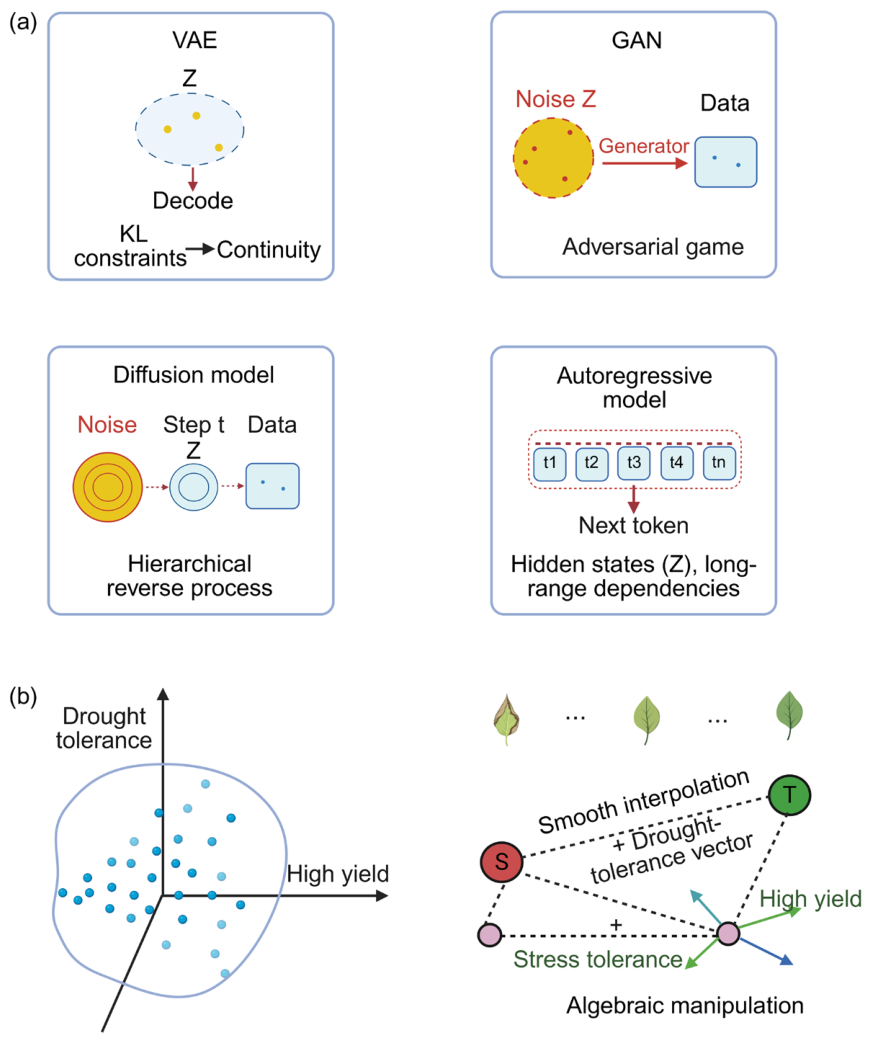
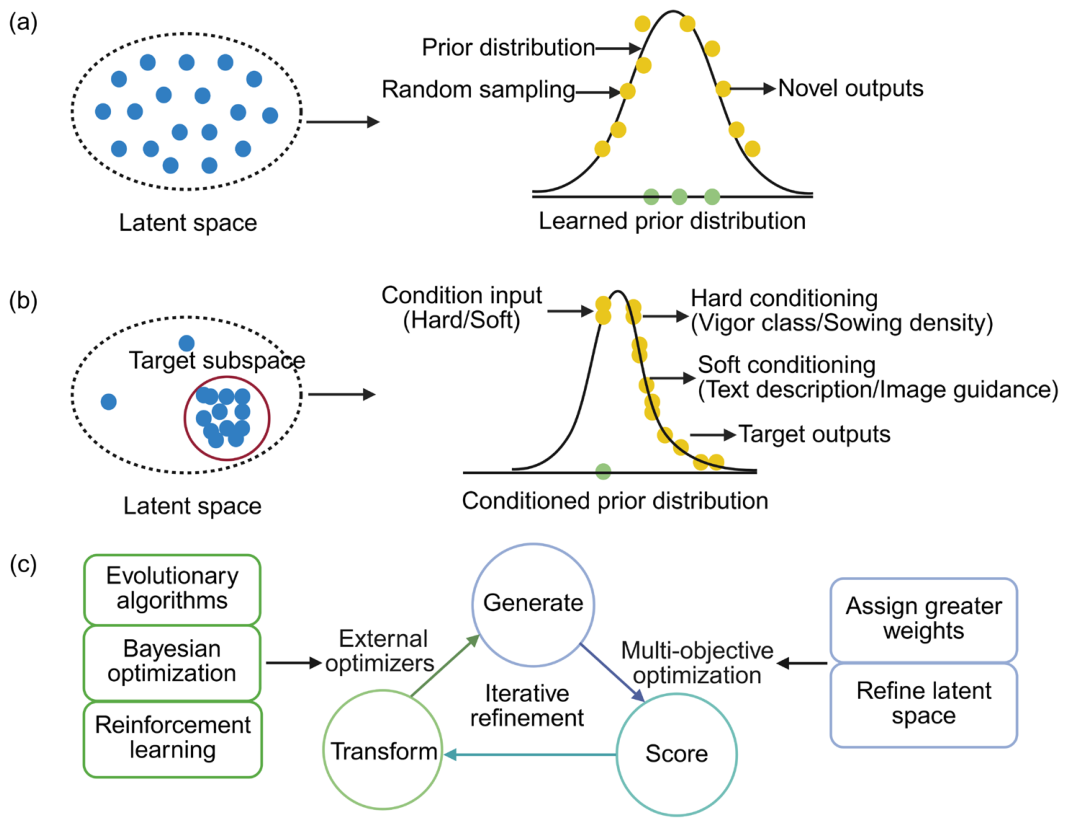
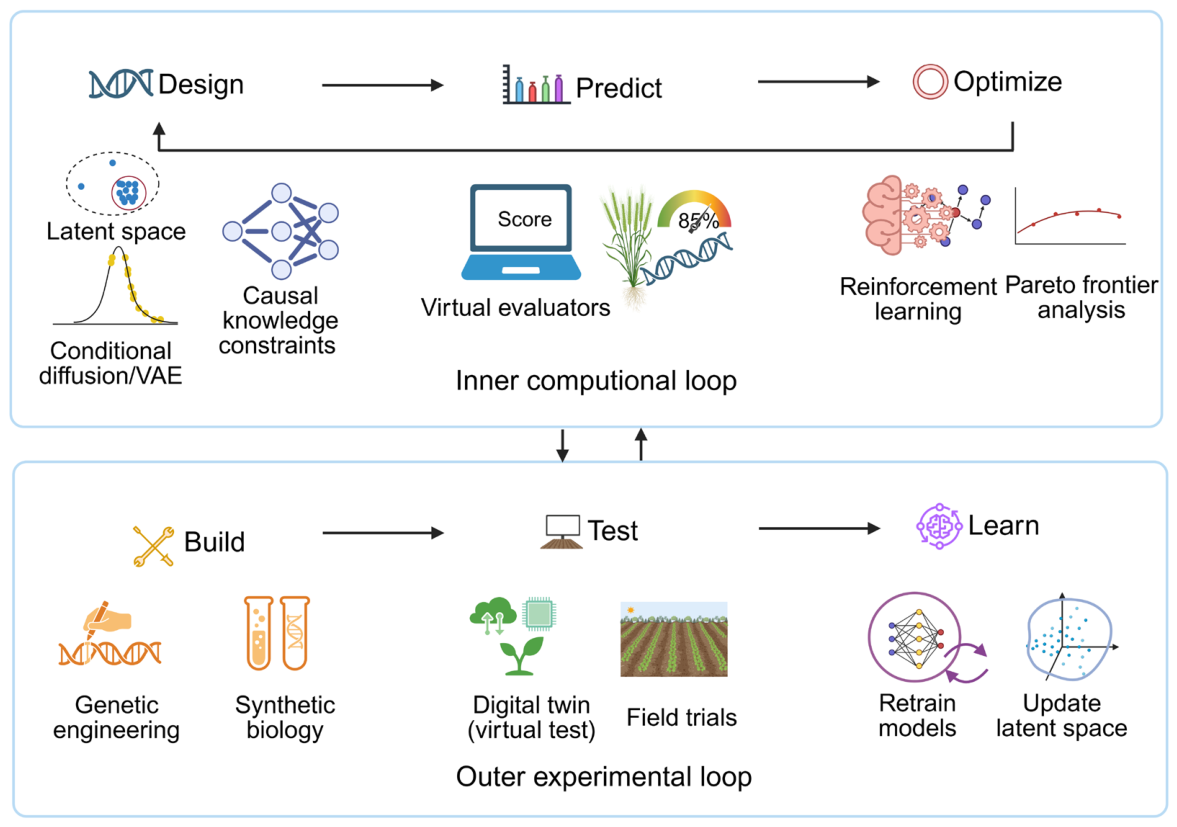
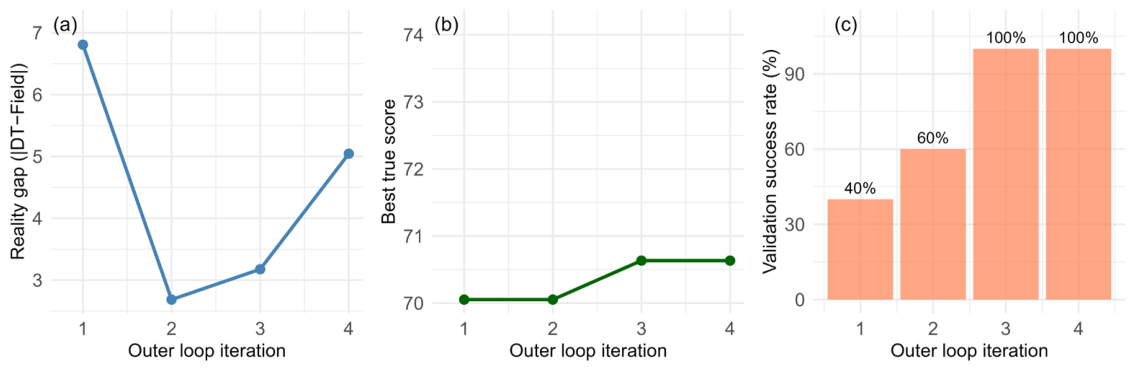
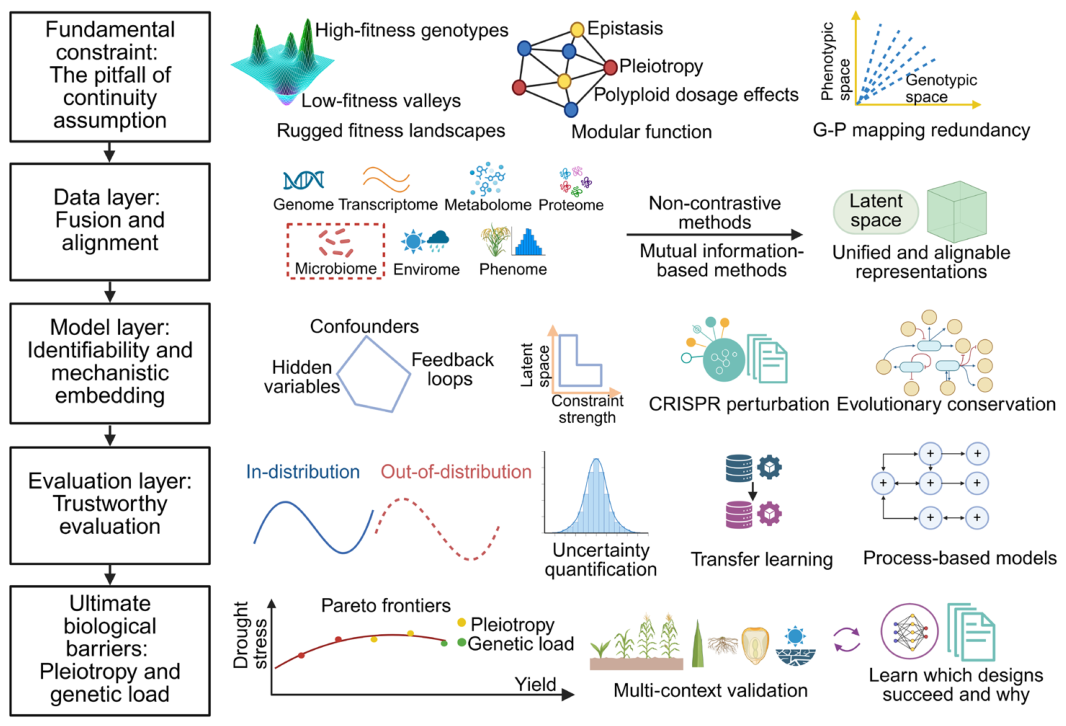
Recent advances in generative modeling have shifted plant breeding from predictive selection to de novo generative design. This review outlines generative methods for navigating the design space and introduces the latent space as a continuous, designable representation that enables a transition from static plant design to dynamic adaptive response programs. We then categorize navigation of the latent space into three strategies: exploration through unconditional generation, guidance through conditional generation, and optimization through feedback loops. We propose a dual-loop generative artificial intelligence-enhanced Design–Build–Test–Learn framework for accelerated plant design. The inner computational loop performs Design–Predict–Optimize guided by causal constraints and virtual evaluators, while the outer experimental loop (Build–Test–Learn) validates elite designs through digital twins and field trials to bridge the reality gap. A proof-of-concept simulation for drought-tolerance design demonstrates the framework’s dual-loop logic and quantitative performance. We further identify five hierarchical challenges that hinder real-world application: the pitfall of continuity assumption, multi-modal data fusion, causal identifiability, and trustworthy evaluation, as well as pleiotropy and genetic load. Finally, we discuss limitations and risks across data, model, regulatory, and interpretability dimensions and highlight critical open questions for realizing dynamic, adaptive, and climate-resilient breeding. This review provides a biology-grounded, systematic framework for next-generation intelligent plant improvement.
Keywords: generative plant design; generative AI; Design–Build–Test–Learn cycle; latent space navigation; digital twins generative plant design; generative AI; Design–Build–Test–Learn cycle; latent space navigation; digital twins