Semiochemical-Mediated Host-Searching and Biological Control Potential of Trichogramma Wasps: Mechanisms, Behavioral Plasticity, and Pest Management Applications

Simple Summary
Abstract
1. Introduction
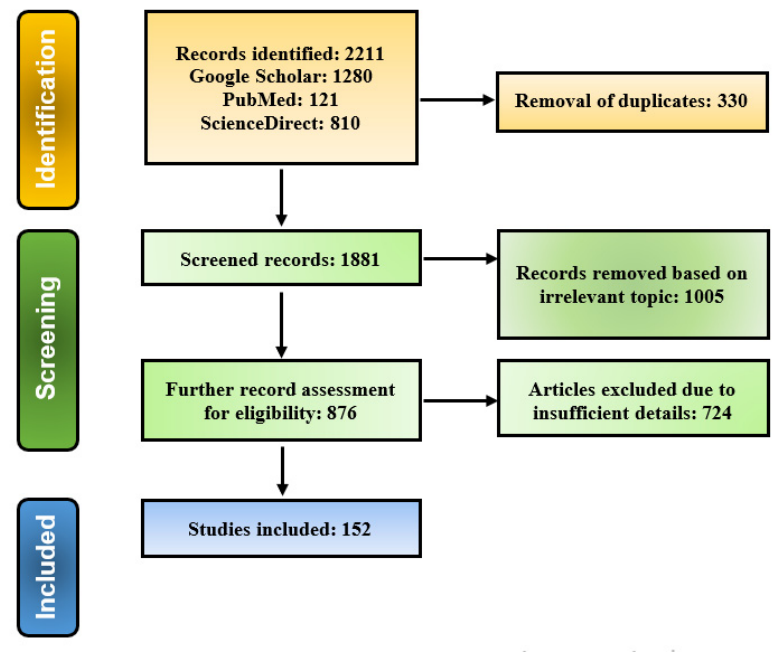
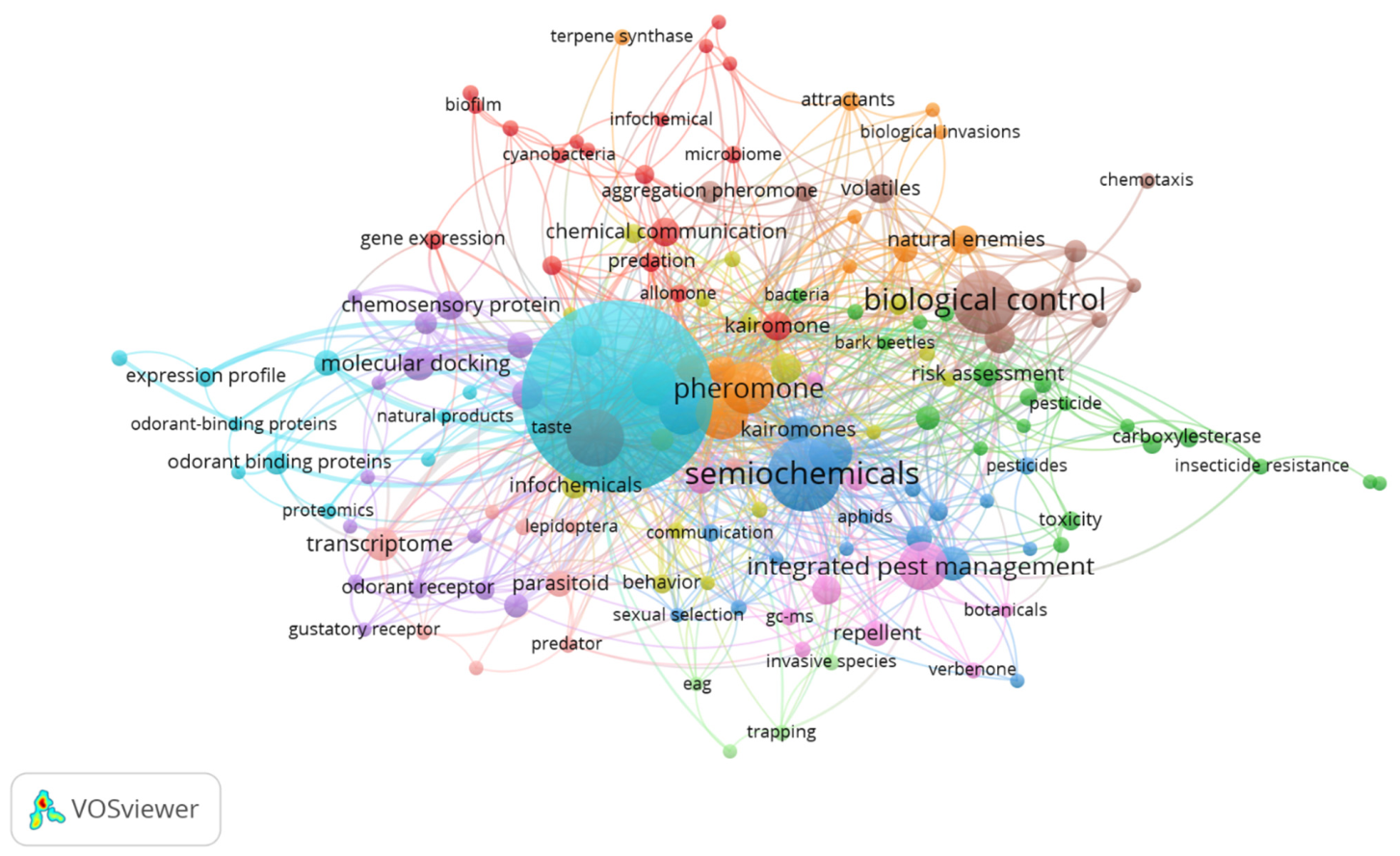
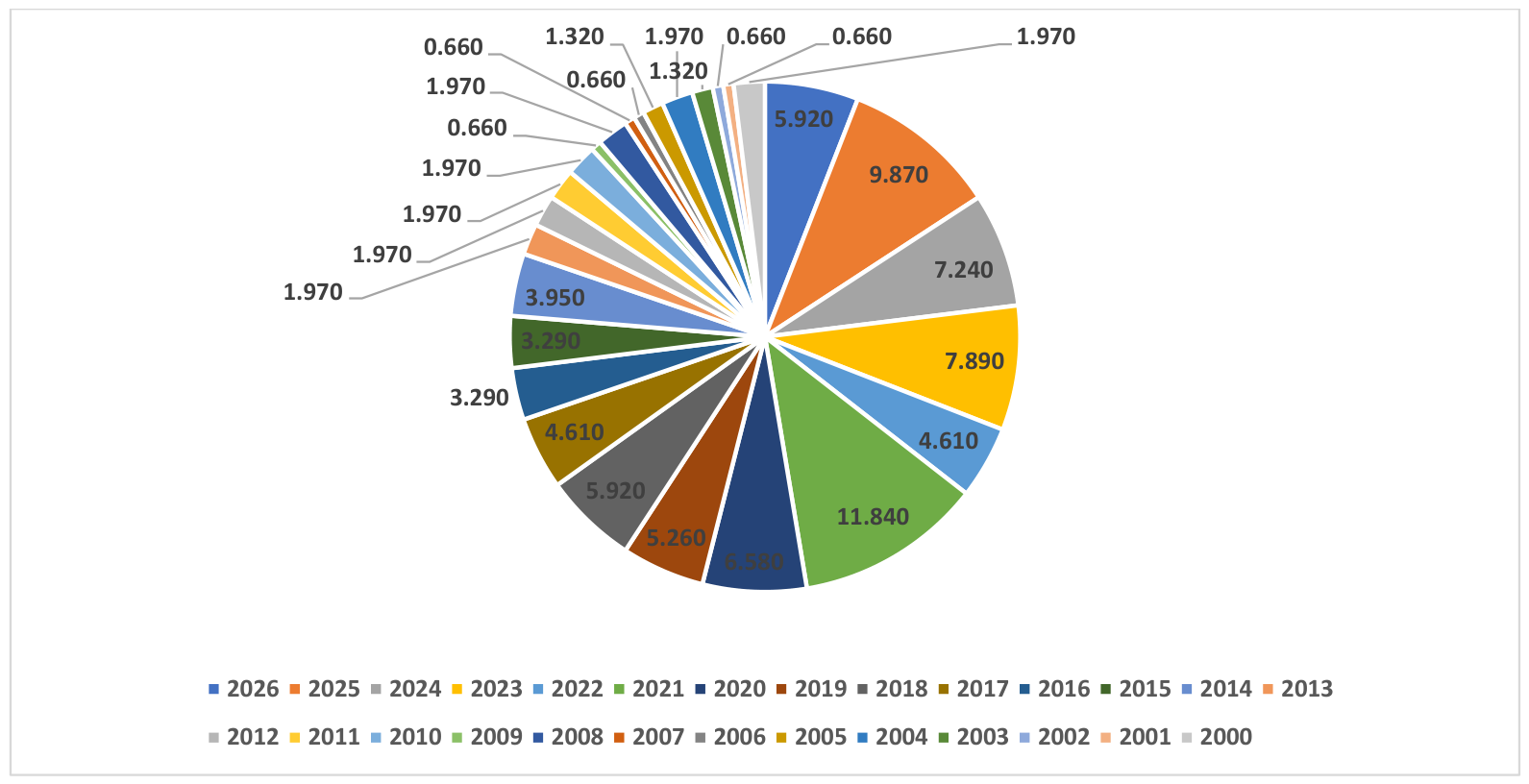
2. Review Methodology
3. Mechanisms of Semiochemical Perception in Trichogramma Wasps
4. Pheromone and Egg Surface Volatiles as Semiochemical Signals Guiding Trichogramma Host Detection
5. Plant-Derived Volatile Cues in Trichogramma Host Location and Egg Selection
6. Plant-Derived Semiochemicals and Their Impact on Trichogramma Behavior
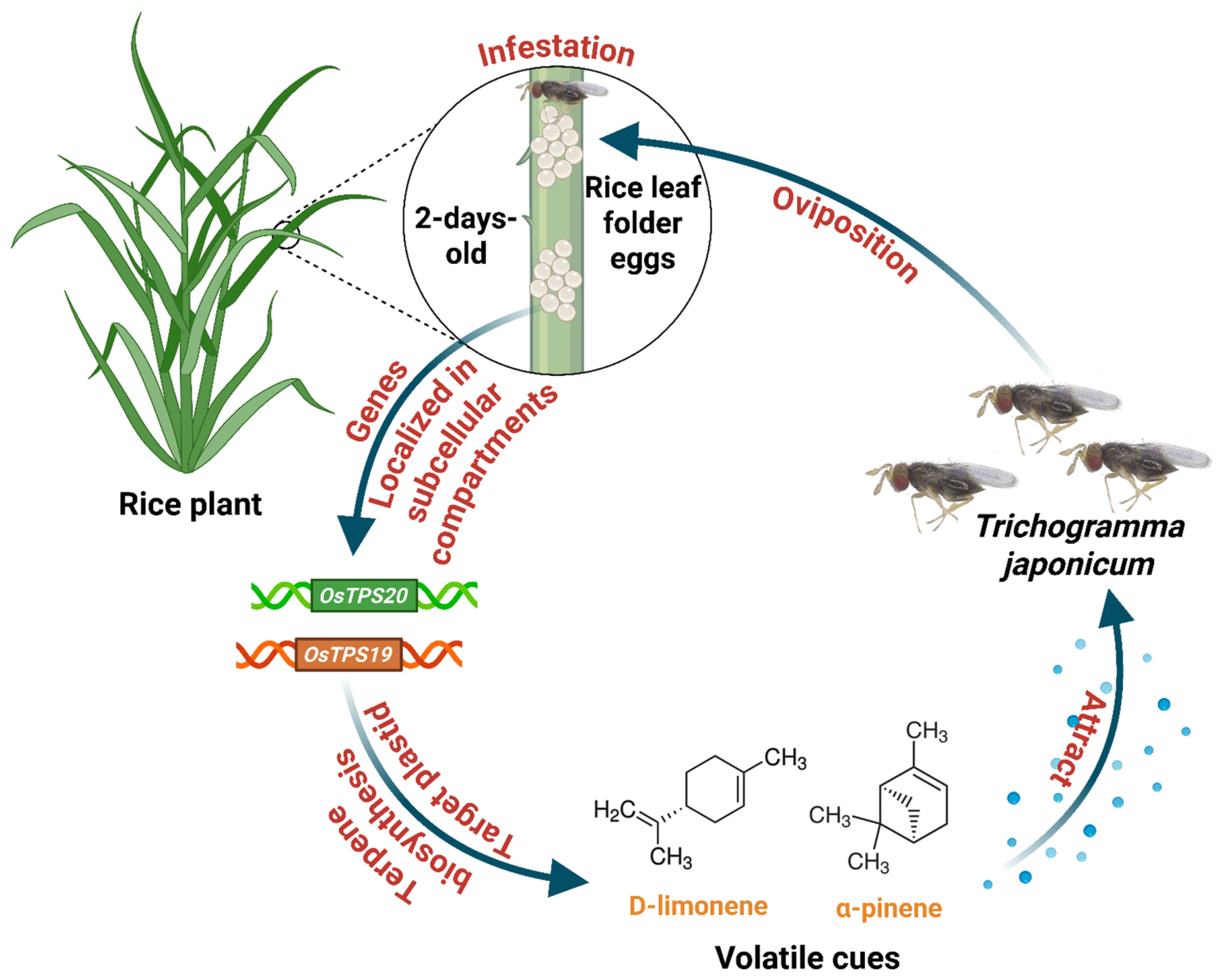
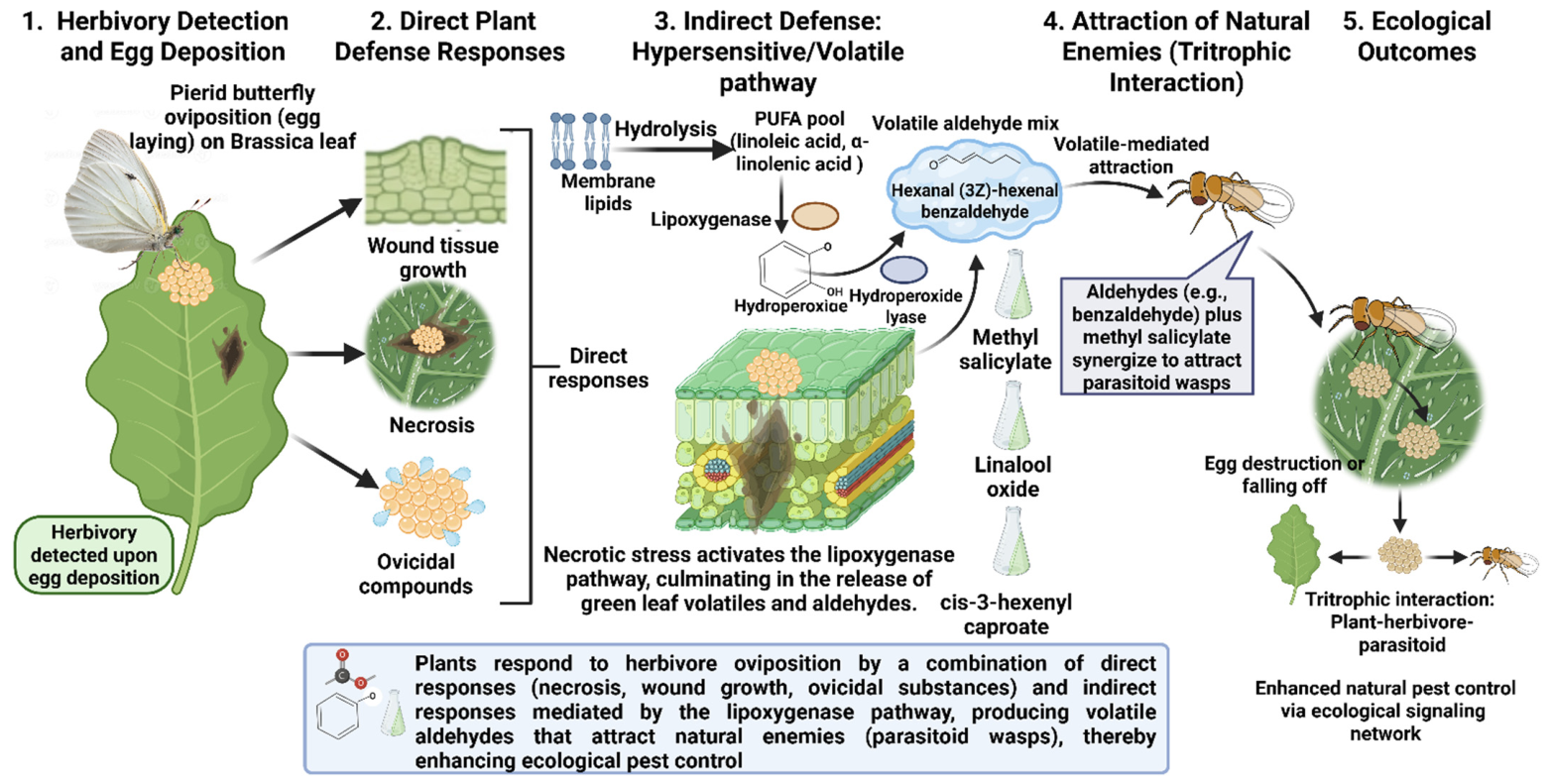
7. Trichogramma’s Detection of Plant Hypersensitive Response to Herbivore Eggs
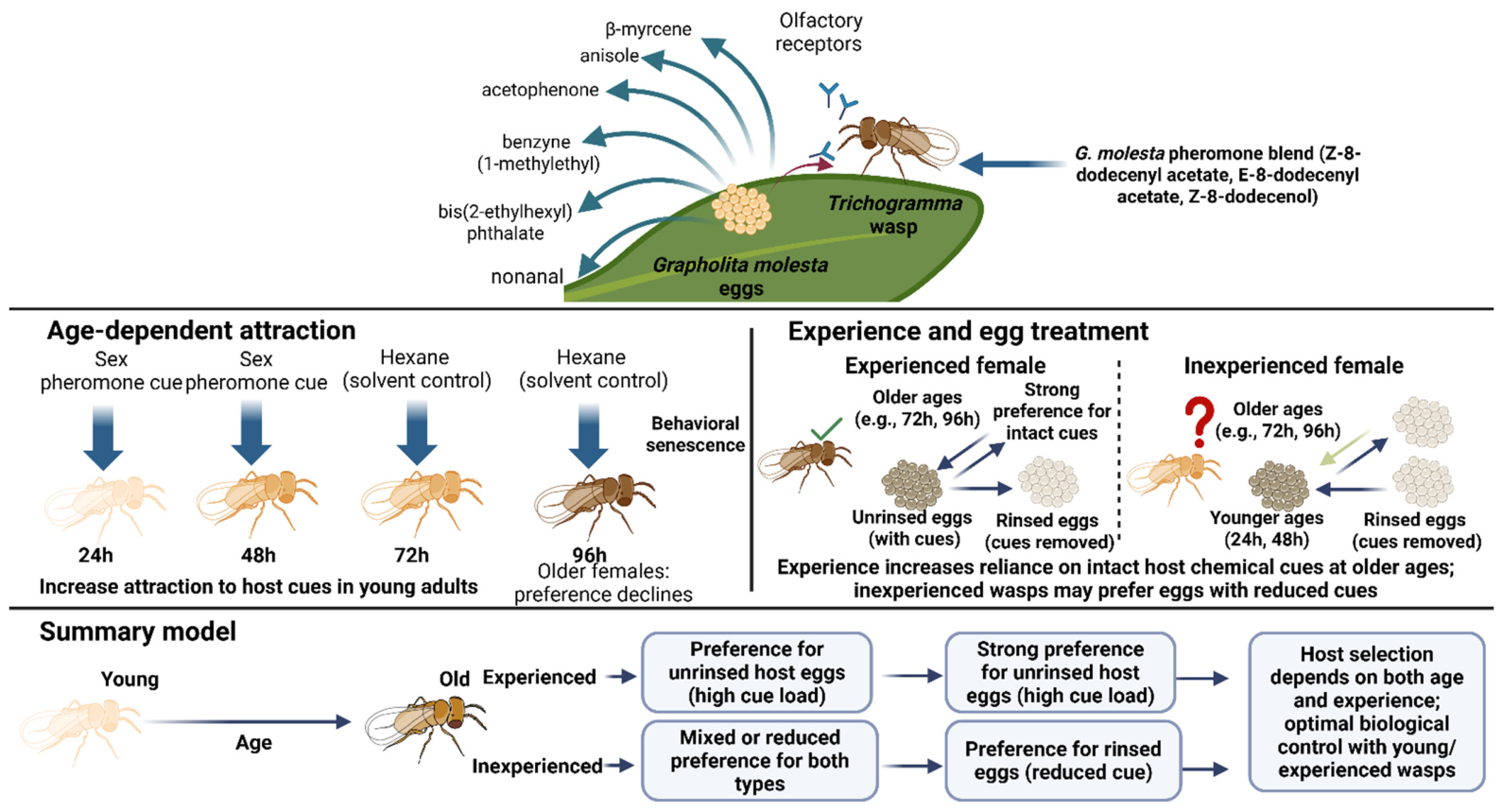
8. Age- and Experience-Dependent Responses of Trichogramma to Chemical Cues
8.1. Changes in Chemical Sensitivity with Age
8.2. Learning and Memory in Trichogramma’s Host-Searching Behavior
9. Role of Experience and Chemical Cues in Host Selection Behavior of Trichogramma
10. Effect of Associative Learning on Host-Searching Behavior
11. Interactions Between Plant Structure, Host Density, and Searching Speed
11.1. Effect of Plant Complexity on Host-Searching Efficiency
11.2. Host Density and Its Influence on Foraging Success
11.3. Influence of Host Age on Parasitism by Trichogramma Parasitoids
11.4. Searching Speed and Host-Finding Behavior in Trichogramma
12. Environmental and Climate Change Effects on Semiochemical Signaling
12.1. Impact of Climate Change on Volatile Organic Compound (VOC) Emissions and Parasitic Behavior
12.2. Impact of Air Pollution on Trichogramma
13. Novel Approaches for Enhancing Biological Control Through Chemical Cues
13.1. Integrating Semiochemical Technology into Pest Management
13.2. Developing Multi-Agent Pest Control Strategies
14. Effects of Host Egg Quality on Parasitism Behavior and Parasitoid Performance
Role of Physical Egg Quality in Parasitism
15. Applications of Biological Control with Trichogramma Wasps
16. Non-Chemical Cues and Their Role in Host-Searching Behavior
Visual Cues in Host Location
17. Thioredoxin System
17.1. Role of Thioredoxin (Trx) in Insect Physiology
17.2. Trx and Its Antioxidant Functions
18. Conclusions and Future Perspective
Author Contributions
Funding
Data Availability Statement
Acknowledgments
Conflicts of Interest
References
- Roriz, V.; Oliveira, L.; Garcia, P. Host suitability and preference studies of Trichogramma cordubensis (Hymenoptera: Trichogrammatidae). Biol. Control 2006, 36, 331–336. [Google Scholar] [CrossRef]
- Moreau, J.; Richard, A.; Benrey, B.; Thiéry, D. Host plant cultivar of the grapevine moth Lobesia botrana affects the life history traits of an egg parasitoid. Biol. Control 2009, 50, 117–122. [Google Scholar] [CrossRef]
- Iranipour, S.; Vaez, N. Egg Parasitoids: Chalcidoidea with Particular Emphasis on Trichogrammatidae. In Biological Control of Insect and Mite Pests in Iran: A Review from Fundamental and Applied Aspects; Karimi, J., Madadi, H., Eds.; Springer International Publishing: Cham, Switzerland, 2021; pp. 197–231. [Google Scholar]
- Cherif, A.; Mansour, R.; Grissa-Lebdi, K. The egg parasitoids Trichogramma: From laboratory mass rearing to biological control of lepidopteran pests. Biocontrol Sci. Technol. 2021, 31, 661–693. [Google Scholar] [CrossRef]
- Lobdell, C.E.; Yong, T.-H.; Hoffmann, M.P. Host color preferences and short-range searching behavior of the egg parasitoid Trichogramma ostriniae. Entomol. Exp. Appl. 2005, 116, 127–134. [Google Scholar] [CrossRef]
- Pashalidou, F.G.; Huigens, M.E.; Dicke, M.; Fatouros, N.E. The use of oviposition-induced plant cues by Trichogramma egg parasitoids. Ecol. Entomol. 2010, 35, 748–753. [Google Scholar] [CrossRef]
- Rani, P.U.; Sambangi, P.; Sandhyarani, K. Impact of Plant Phenolics as Semiochemicals on the Performance of Trichogramma chilonis Ishii. J. Insect Behav. 2017, 30, 16–31. [Google Scholar] [CrossRef]
- Brezolin, A.N.; Martinazzo, J.; Muenchen, D.K.; de Cezaro, A.M.; Rigo, A.A.; Steffens, C.; Steffens, J.; Blassioli-Moraes, M.C.; Borges, M. Tools for detecting insect semiochemicals: A review. Anal. Bioanal. Chem. 2018, 410, 4091–4108. [Google Scholar] [CrossRef] [PubMed]
- Gontijo, L.; Cascone, P.; Giorgini, M.; Michelozzi, M.; Rodrigues, H.S.; Spiezia, G.; Iodice, L.; Guerrieri, E. Relative importance of host and plant semiochemicals in the foraging behavior of Trichogramma achaeae, an egg parasitoid of Tuta absoluta. J. Pest Sci. 2019, 92, 1479–1488. [Google Scholar] [CrossRef]
- Sampaio, F.; Marchioro, C.A.; Takahashi, T.A.; Foerster, L.A. A new biocontrol agent against old enemies: The potential of Trichogramma foersteri for the control of Spodoptera frugiperda and Spodoptera eridania. Biol. Control 2024, 192, 105504. [Google Scholar] [CrossRef]
- Zang, L.-S.; Wang, S.; Zhang, F.; Desneux, N. Biological Control with Trichogramma in China: History, Present Status, and Perspectives. Annu. Rev. Èntomol. 2021, 66, 463–484. [Google Scholar] [CrossRef] [PubMed]
- Zhao, H.; Xian, X.; Yang, N.; Zhang, Y.; Liu, H.; Wan, F.; Guo, J.; Liu, W. Insights from the biogeographic approach for biocontrol of invasive alien pests: Estimating the ecological niche overlap of three egg parasitoids against Spodoptera frugiperda in China. Sci. Total Environ. 2023, 862, 160785. [Google Scholar] [CrossRef] [PubMed]
- Chailleux, A.; Bearez, P.; Pizzol, J.; Amiens-Desneux, E.; Ramirez-Romero, R.; Desneux, N. Potential for combined use of parasitoids and generalist predators for biological control of the key invasive tomato pest Tuta absoluta. J. Pest Sci. 2013, 86, 533–541. [Google Scholar] [CrossRef]
- Chailleux, A.; Biondi, A.; Han, P.; Tabone, E.; Desneux, N. Suitability of the Pest–Plant System Tuta absoluta (Lepidoptera: Gelechiidae)–Tomato for Trichogramma (Hymenoptera: Trichogrammatidae) Parasitoids and Insights for Biological Control. J. Econ. Entomol. 2013, 106, 2310–2321. [Google Scholar] [CrossRef] [PubMed]
- Fatouros, N.E.; Dicke, M.; Mumm, R.; Meiners, T.; Hilker, M. Foraging behavior of egg parasitoids exploiting chemical information. Behav. Ecol. 2008, 19, 677–689. [Google Scholar] [CrossRef]
- Laxmi, K.P.; Rani, P.U. Behavioral responses of parasitoid Trichogramma chilonis towards infochemicals from host plant Solanum melongena and pest Leucinodes orbonalis. Int. J. Entomol. Res. 2019, 4, 1–9. [Google Scholar]
- Greenberg, L.O.; Huigens, M.E.; Groot, A.T.; Cusumano, A.; Fatouros, N.E. Finding an egg in a haystack: Variation in chemical cue use by egg parasitoids of herbivorous insects. Curr. Opin. Insect Sci. 2023, 55, 101002. [Google Scholar] [CrossRef] [PubMed]
- Reddy, G.V.P.; Guerrero, A. Interactions of insect pheromones and plant semiochemicals. Trends Plant Sci. 2004, 9, 253–261. [Google Scholar] [CrossRef] [PubMed]
- Anderson, P.; Anton, S. Experience-based modulation of behavioural responses to plant volatiles and other sensory cues in insect herbivores. Plant Cell Environ. 2014, 37, 1826–1835. [Google Scholar] [CrossRef] [PubMed]
- Xu, H.; Turlings, T.C.J. Plant Volatiles as Mate-Finding Cues for Insects. Trends Plant Sci. 2018, 23, 100–111. [Google Scholar] [CrossRef] [PubMed]
- Ahmadi, S.; Poorjavad, N. Behavioral and Biological Effects of Exposure to Tuta absoluta (Lepidoptera: Gelechiidae) Sex Pheromone on Several Trichogramma (Hymenoptera: Trichogrammatidae) Populations. J. Econ. Entomol. 2018, 111, 2667–2675. [Google Scholar] [CrossRef] [PubMed]
- Guazzelli, P.; Giustina, D.; Luiza, R.; Redaelli, J.; Sant’ana, N.; Leite, N. Influence of Grapholita molesta semiochemicals on chemotaxis, parasitism, and learning ability of Trichogramma pretiosum. Bull. Insectology 2022, 75, 47–53. [Google Scholar]
- Page, M.J.; McKenzie, J.E.; Bossuyt, P.M.; Boutron, I.; Hoffmann, T.C.; Mulrow, C.D.; Shamseer, L.; Tetzlaff, J.M.; Akl, E.A.; Brennan, S.E.; et al. The PRISMA 2020 statement: An updated guideline for reporting systematic reviews. BMJ 2021, 372, n71. [Google Scholar] [CrossRef] [PubMed]
- Li, S.-S.; Yan, Z.-C.; Zhao, J.-J.; Li, Y.-X. Transcriptomic analyses of chemosensory genes in Trichogramma japonicum (Hymenoptera: Trichogrammatidae). Comp. Biochem. Physiol. Part D Genom. Proteom. 2021, 37, 100755. [Google Scholar] [CrossRef] [PubMed]
- Wicher, D.; Miazzi, F. Functional properties of insect olfactory receptors: Ionotropic receptors and odorant receptors. Cell Tissue Res. 2021, 383, 7–19. [Google Scholar] [CrossRef] [PubMed]
- Weiss, L.A.; Dahanukar, A.; Kwon, J.Y.; Banerjee, D.; Carlson, J.R. The Molecular and Cellular Basis of Bitter Taste in Drosophila. Neuron 2011, 69, 258–272. [Google Scholar] [CrossRef] [PubMed]
- Larsson, M.C.; Domingos, A.I.; Jones, W.D.; Chiappe, M.E.; Amrein, H.; Vosshall, L.B. Or83b encodes a broadly expressed odorant receptor essential for Drosophila olfaction. Neuron 2004, 43, 703–714. [Google Scholar] [CrossRef] [PubMed]
- Sato, K.; Pellegrino, M.; Nakagawa, T.; Nakagawa, T.; Vosshall, L.B.; Touhara, K. Insect olfactory receptors are heteromeric ligand-gated ion channels. Nature 2008, 452, 1002–1006. [Google Scholar] [CrossRef] [PubMed]
- Robertson, H.M.; Warr, C.G.; Carlson, J.R. Molecular evolution of the insect chemoreceptor gene superfamily in Drosophila melanogaster. Proc. Natl. Acad. Sci. USA 2003, 100, 14537–14542. [Google Scholar] [CrossRef] [PubMed]
- Ni, L. The Structure and Function of Ionotropic Receptors in Drosophila. Front. Mol. Neurosci. 2020, 13, 638839. [Google Scholar] [CrossRef] [PubMed]
- Zhang, X.; Jiang, Z.; Jiao, X.; Yu, Y.; Wang, Z.; Hou, Y.; Duan, G.; Du, W.; Ruan, C.; Zhang, J.; et al. Genome Assembly and Comparative Analysis of the Egg Parasitoid Wasp Trichogramma dendrolimi Shed Light on the Composition and Evolution of Olfactory Receptors and Venoms. Insects 2023, 14, 144. [Google Scholar] [CrossRef] [PubMed]
- Brunetti, A.E.; Carnevale Neto, F.; Vera, M.C.; Taboada, C.; Pavarini, D.P.; Bauermeister, A.; Lopes, N.P. An integrative omics perspective for the analysis of chemical signals in ecological interactions. Chem. Soc. Rev. 2018, 47, 1574–1591. [Google Scholar] [CrossRef] [PubMed]
- Serdo, D.F. Insects’ perception and behavioral responses to plant semiochemicals. PeerJ 2024, 12, e17735. [Google Scholar] [CrossRef] [PubMed]
- Ando, T.; Yamamoto, M. Semiochemicals containing lepidopteran sex pheromones: Wonderland for a natural product chemist. J. Pestic. Sci. 2020, 45, 191–205. [Google Scholar] [CrossRef] [PubMed]
- Anukiruthika, T.; Jayas, D.S. Chemical cues in grain storage: A review on semiochemical types, pest behavior, and control strategies. J. Stored Prod. Res. 2025, 113, 102674. [Google Scholar] [CrossRef]
- Ouaba, J.; Tchuinkam, T.; Waïmane, A.; Otieno Magara, H.J.; Niassy, S.; Meutchieye, F. Lepidopterans of economic importance in Cameroon: A systematic review. J. Agric. Food Res. 2022, 8, 100286. [Google Scholar] [CrossRef]
- Ma, G.; Ma, C.-S. Differences in the nocturnal flight activity of insect pests and beneficial predatory insects recorded by light traps: Possible use of a beneficial-friendly trapping strategy for controlling insect pests. Eur. J. Entomol. 2012, 109, 395–401. [Google Scholar] [CrossRef]
- El-Ghany, N.M.A. Semiochemicals for controlling insect pests. J. Plant Prot. Res. 2019, 59, 1–11. [Google Scholar]
- Montezano, D.G.; Sosa-Gómez, D.; Specht, A.; Roque-Specht, V.F.; Sousa-Silva, J.C.; Paula-Moraes, S.d.; Peterson, J.A.; Hunt, T.E. Host plants of Spodoptera frugiperda (Lepidoptera: Noctuidae) in the Americas. Afr. Entomol. 2018, 26, 286–300. [Google Scholar] [CrossRef]
- Sharma, S.; Sharma, P.L.; Sharma, P.; Verma, S.C.; Sharma, N.; Sharma, P. Demographic analysis and biotic potential of Spodoptera frugiperda (J.E. Smith) (Lepidoptera: Noctuidae) on pea. Bull. Entomol. Res. 2024, 114, 514–523. [Google Scholar] [CrossRef] [PubMed]
- Kannan, M.; Elango, K.; Kalyanasundaram, M.; Govindaraju, K. Ultra-structural and physico-chemical characterization of eggs and egg hairs (setae) of the new invasive pest, fall armyworm, Spodoptera frugiperda (J. E. Smith) in India: A first report. Microsc. Res. Tech. 2021, 84, 1422–1430. [Google Scholar] [CrossRef] [PubMed]
- Vargas, C.C.; Redaelli, L.R.; Sant’Ana, J.; Blassioli-Moraes, M.C.; Laumann, R.A.; Borges, M. Influence of semiochemicals present in the scales of Spodoptera frugiperda on chemotactic behavior of Trichogramma pretiosum. Entomol. Exp. Appl. 2021, 169, 393–402. [Google Scholar] [CrossRef]
- Schmidt, H.R.; Benton, R. Molecular mechanisms of olfactory detection in insects: Beyond receptors. Open Biol. 2020, 10, 200252. [Google Scholar] [CrossRef] [PubMed]
- Al-Jalely, B.H.; Xu, W. Olfactory Sensilla and Olfactory Genes in the Parasitoid Wasp Trichogramma pretiosum Riley (Hymenoptera: Trichogrammatidae). Insects 2021, 12, 998. [Google Scholar] [CrossRef] [PubMed]
- Kong, X.-x.; Zhang, H.-x.; Liang, H.-y.; Xiao, H.; Wang, Y.-q.; Gang, S.; Dong, H. TostOBP12 mediates the olfactory response to host volatiles in the parasitoid wasp Trichogramma ostriniae. Insect Biochem. Mol. Biol. 2026, 188, 104491. [Google Scholar] [CrossRef] [PubMed]
- Fatouros, N.E.; Bukovinszkine’Kiss, G.; Dicke, M.; Hilker, M. The Response Specificity of Trichogramma Egg Parasitoids towards Infochemicals during Host Location. J. Insect Behav. 2007, 20, 53–65. [Google Scholar] [CrossRef]
- Ali, A.N.; Wright, M.G. Response of Trichogramma papilionis to semiochemicals induced by host oviposition on plants. Biol. Control 2021, 154, 104510. [Google Scholar] [CrossRef]
- Tian, Z.; Wang, Y.; Sun, T.; Hu, X.; Hao, W.; Zhao, T.; Wang, Y.; Zhang, L.; Jiang, X.; Turlings, T.C.J.; et al. An egg parasitoid assesses host egg quality from afar using oviposition-induced plant volatiles. Curr. Biol. 2025, 35, 3001–3010.e3004. [Google Scholar] [CrossRef] [PubMed]
- Ninkovic, V.; Markovic, D.; Rensing, M. Plant volatiles as cues and signals in plant communication. Plant Cell Environ. 2021, 44, 1030–1043. [Google Scholar] [CrossRef] [PubMed]
- Iacovone, A.; French, A.S.; Tellier, F.; Cusumano, A.; Clément, G.; Gaertner, C.; Conti, E.; Salerno, G.; Marion-Poll, F. The role of contact chemoreception in the host location process of an egg parasitoid. J. Insect Physiol. 2016, 91–92, 63–75. [Google Scholar] [CrossRef] [PubMed]
- Elhakeem, A.; Markovic, D.; Broberg, A.; Anten, N.P.R.; Ninkovic, V. Aboveground mechanical stimuli affect belowground plant-plant communication. PLoS ONE 2018, 13, e0195646. [Google Scholar] [CrossRef] [PubMed]
- Fernández, P.C.; Braccini, C.L.; Dávila, C.; Barrozo, R.B.; Aráoz, M.V.C.; Cerrillo, T.; Gershenzon, J.; Reichelt, M.; Zavala, J.A. The use of Leaf Surface Contact Cues During Oviposition Explains Field Preferences in the Willow Sawfly Nematus oligospilus. Sci. Rep. 2019, 9, 4946. [Google Scholar] [CrossRef] [PubMed]
- Rizaludin, M.S.; Stopnisek, N.; Raaijmakers, J.M.; Garbeva, P. The Chemistry of Stress: Understanding the ‘Cry for Help’ of Plant Roots. Metabolites 2021, 11, 357. [Google Scholar] [CrossRef] [PubMed]
- Felton, G.W.; Chung, S.H.; Hernandez, M.G.E.; Louis, J.; Peiffer, M.; Tian, D. Herbivore Oral Secretions are the First Line of Protection Against Plant-Induced Defences. In Annual Plant Reviews; John Wiley & Sons: Hoboken, NJ, USA, 2014; pp. 37–76. [Google Scholar]
- Hilker, M.; Stein, C.; Schröder, R.; Varama, M.; Mumm, R. Insect egg deposition induces defence responses in Pinus sylvestris: Characterisation of the elicitor. J. Exp. Biol. 2005, 208, 1849–1854. [Google Scholar] [CrossRef] [PubMed]
- Eveleigh, E.; Silk, P.; Leclair, G.; Mayo, P.; Francis, B.; Williams, M. Spruce Budworm (Lepidoptera: Tortricidae) Oral Secretions I: Biology and Function. Environ. Entomol. 2015, 44, 1641–1651. [Google Scholar] [CrossRef] [PubMed][Green Version]
- Afentoulis, D.G.; Cusumano, A.; Greenberg, L.O.; Caarls, L.; Fatouros, N.E. Attraction of Trichogramma Wasps to Butterfly Oviposition-Induced Plant Volatiles Depends on Brassica Species, Wasp Strain and Leaf Necrosis. Front. Ecol. Evol. 2021, 9, 703134. [Google Scholar] [CrossRef]
- Pawar, P.; Murali Baskaran, R.K.; Sharma, K.C.; Marathe, A. Enhancing biocontrol potential of Trichogramma chilonis against borer pests of wheat and chickpea. iScience 2023, 26, 106512. [Google Scholar] [CrossRef] [PubMed]
- Bai, S.-X.; Wang, Z.-Y.; He, K.-L.; Im, D.-J. Olfactory Response of Trichogramma ostriniae (Hymenoptera: Trichogrammatidae) to Volatiles Emitted by Mungbean Plants. Agric. Sci. China 2011, 10, 560–565. [Google Scholar] [CrossRef]
- Cusumano, A.; Weldegergis, B.T.; Colazza, S.; Dicke, M.; Fatouros, N.E. Attraction of egg-killing parasitoids toward induced plant volatiles in a multi-herbivore context. Oecologia 2015, 179, 163–174. [Google Scholar] [CrossRef] [PubMed]
- Zhao, J.; Liang, M.; Wang, Z.; Zhao, Y.; Cheng, J.; Du, Y. Evaluation and optimization of blends for attracting Trichogramma dendrolimi based on semiochemicals mediating tritrophic interactions in the orchard habitat. Biol. Control 2022, 173, 104998. [Google Scholar] [CrossRef]
- Tamiru, A.; Bruce, T.J.; Woodcock, C.M.; Caulfield, J.C.; Midega, C.A.; Ogol, C.K.; Mayon, P.; Birkett, M.A.; Pickett, J.A.; Khan, Z.R. Maize landraces recruit egg and larval parasitoids in response to egg deposition by a herbivore. Ecol. Lett. 2011, 14, 1075–1083. [Google Scholar] [CrossRef] [PubMed]
- Hu, X.; Liang, Q.; Chen, J.; Yang, J.; Wu, J.; Ma, H.; Qi, Y.; Tang, M.; Ma, Y.; Chen, L.; et al. 2-Phenylethanol and o-Cresol Repel the Tomato Leaf Miner Phthorimaea absoluta and Attract the Parasitoid Trichogramma chilonis. J. Agric. Food Chem. 2026, 74, 3514–3522. [Google Scholar] [CrossRef] [PubMed]
- Nascimento, P.T.; Fadini, M.A.M.; Rocha, M.S.; Souza, C.S.F.; Barros, B.A.; Melo, J.O.F.; Von Pinho, R.G.; Valicente, F.H. Response of Trichogramma pretiosum females (Hymenoptera: Trichogrammatidae) to herbivore-induced Bt maize volatiles. Arthropod-Plant Interact. 2021, 15, 107–125. [Google Scholar] [CrossRef]
- Alsaedi, G.; Ashouri, A.; Talaei-Hassanloui, R. Behavioral responses of the three Trichogramma species to different odor sources. J. Entomol. Zool. Stud. 2016, 4, 19–24. [Google Scholar]
- Lopes, F.B.; Sant’Ana, J. Responses of Spodoptera frugiperda and Trichogramma pretiosum to Rice Plants Exposed to Herbivory and Phytohormones. Neotrop. Entomol. 2019, 48, 381–390. [Google Scholar] [CrossRef] [PubMed]
- Murali-Baskaran, R.K.; Yele, Y.; Sharma, K.C. Herbivore-induced pulse crop volatiles: Roles in non-nutritiveness to Spodoptera litura fitness and parasitoid attraction. J. Nat. Pestic. Res. 2025, 14, 100155. [Google Scholar] [CrossRef]
- Weber, N.C.; Sant’Ana, J.; Redaelli, L.R.; Dawud, E.F. Tomato plant defense induced by methyl jasmonate impacts on foraging behavior and parasitism of Trichogramma pretiosum. Entomol. Exp. Appl. 2023, 171, 162–171. [Google Scholar] [CrossRef]
- Ponzio, C.; Cascone, P.; Cusumano, A.; Weldegergis, B.T.; Fatouros, N.E.; Guerrieri, E.; Dicke, M.; Gols, R. Volatile-mediated foraging behaviour of three parasitoid species under conditions of dual insect herbivore attack. Anim. Behav. 2016, 111, 197–206. [Google Scholar] [CrossRef]
- Zannou, A.J.; Arnó, J.; Romeis, J.; Collatz, J. Compatibility of biocontrol agents with host plant resistance for management of the South American tomato pinworm Phthorimaea absoluta. Biol. Control 2025, 205, 105772. [Google Scholar] [CrossRef]
- Raghava, T.; Ravikumar, P.; Hegde, R.; Kush, A. Spatial and temporal volatile organic compound response of select tomato cultivars to herbivory and mechanical injury. Plant Sci. 2010, 179, 520–526. [Google Scholar] [CrossRef] [PubMed]
- Fatouros, N.E.; Cusumano, A.; Danchin, E.G.J.; Colazza, S. Prospects of herbivore egg-killing plant defenses for sustainable crop protection. Ecol. Evol. 2016, 6, 6906–6918. [Google Scholar] [CrossRef] [PubMed]
- Hilker, M.; Fatouros, N.E. Resisting the onset of herbivore attack: Plants perceive and respond to insect eggs. Curr. Opin. Plant Biol. 2016, 32, 9–16. [Google Scholar] [CrossRef] [PubMed]
- Griese, E.; Caarls, L.; Bassetti, N.; Mohammadin, S.; Verbaarschot, P.; Bukovinszkine’Kiss, G.; Poelman, E.H.; Gols, R.; Schranz, M.E.; Fatouros, N.E. Insect egg-killing: A new front on the evolutionary arms-race between brassicaceous plants and pierid butterflies. New Phytol. 2021, 230, 341–353. [Google Scholar] [CrossRef] [PubMed]
- Vincenti, S.; Mariani, M.; Alberti, J.-C.; Jacopini, S.; Brunini-Bronzini de Caraffa, V.; Berti, L.; Maury, J. Biocatalytic Synthesis of Natural Green Leaf Volatiles Using the Lipoxygenase Metabolic Pathway. Catalysts 2019, 9, 873. [Google Scholar] [CrossRef]
- Ali, M.Y.; Naseem, T.; Holopainen, J.K.; Liu, T.; Zhang, J.; Zhang, F. Tritrophic Interactions among Arthropod Natural Enemies, Herbivores and Plants Considering Volatile Blends at Different Scale Levels. Cells 2023, 12, 251. [Google Scholar] [CrossRef] [PubMed]
- Tabebordbar, F.; Shishehbor, P.; Ebrahimi, E.; Polaszek, A.; Riddick, E.W. Parasitoid age and host age interact to improve life history parameters and rearing of Trichogramma euproctidis. Biocontrol Sci. Technol. 2022, 32, 267–280. [Google Scholar] [CrossRef]
- Makarova, A.A.; Polilov, A.A.; Chklovskii, D.B. Small brains for big science. Curr. Opin. Neurobiol. 2021, 71, 77–83. [Google Scholar] [CrossRef] [PubMed]
- Waddell, S.; Park, A. Cognitive primitives of the insect brain. Trends Cogn. Sci. 2025, 30, 194–196. [Google Scholar] [CrossRef] [PubMed]
- Polilov, A.A.; Makarova, A.A.; Kolesnikova, U.K. Cognitive abilities with a tiny brain: Neuronal structures and associative learning in the minute Nephanes titan (Coleoptera: Ptiliidae). Arthropod Struct. Dev. 2019, 48, 98–102. [Google Scholar] [CrossRef] [PubMed]
- Fedorova, M.A.; Farisenkov, S.E.; Timokhov, A.V.; Polilov, A.A. ASSOCIATIVE LEARNING AND MEMORY IN TRICHOGRAMMA TELENGAI (HYMENOPTERA, TRICHOGRAMMATIDAE). Russ. J. Zool. 2023, 102, 284–290. [Google Scholar] [CrossRef]
- Li, J.; Zhang, L. Research progress on olfactory proteins involved in the recognition of sex pheromones and host volatiles in three lepidopteran fruit borers. J. Asia-Pac. Entomol. 2025, 28, 102455. [Google Scholar] [CrossRef]
- Tasnin, M.S.; Merkel, K.; Clarke, A.R. Effects of advanced age on olfactory response of male and female Queensland fruit fly, Bactrocera tryoni (Froggatt) (Diptera: Tephritidae). J. Insect Physiol. 2020, 122, 104024. [Google Scholar] [CrossRef] [PubMed]
- Ferreira Santos de Aquino, M.; Dias, A.M.; Borges, M.; Moraes, M.C.B.; Laumann, R.A. Influence of visual cues on host-searching and learning behaviour of the egg parasitoids Telenomus podisi and Trissolcus basalis. Entomol. Exp. Appl. 2012, 145, 162–174. [Google Scholar] [CrossRef]
- Papaj, D.R.; Lewis, A.C. Insect Learning: Ecology and Evolutinary Perspectives; Springer: New York, NY, USA, 2012. [Google Scholar]
- Gonthier, J.; Romeis, J.; Collatz, J. Species-specific learning of host plant cues in Trichogramma egg parasitoids. IOBC-WPRS Bull. 2023, 166, 44–45. [Google Scholar]
- Gingras, D.; Boivin, G. Effect Of Plant Structure, Host Density And Foraging Duration On Host Finding By Trichogramma evanescens (Hymenoptera:Trichogrammatidae). Environ. Entomol. 2002, 31, 1153–1157. [Google Scholar] [CrossRef]
- Gingras, D.; Dutilleul, P.; Boivin, G. Effect of plant structure on host finding capacity of lepidopterous pests of crucifers by two Trichogramma parasitoids. Biol. Control 2003, 27, 25–31. [Google Scholar] [CrossRef]
- Gingras, D.; Dutilleul, P.; Boivin, G. Effect of plant structure on searching strategy and searching efficiency of Trichogramma turkestanica. J. Insect Sci. 2008, 8, 28. [Google Scholar] [CrossRef] [PubMed]
- Wang, Y.; Iqbal, A.; Ahmed, K.S.; Zhang, Z.-K.; Cui, J.; Zhang, C. Impact of Oviposition Sequence and Host Egg Density on Offspring Emergence and Interspecific Competition in Two Species of Trichogramma Parasitoids. Insects 2025, 16, 214. [Google Scholar] [CrossRef] [PubMed]
- Saini, A.; Sharma, P.L.; Chandel, R.S. Host age influence on the parasitism of the species Cotesia vestalis (Haliday) (Hymenoptera: Braconidae). Egypt. J. Biol. Pest Control 2019, 29, 48. [Google Scholar] [CrossRef]
- Koutsogeorgiou, E.I.; Moysiadis, T.; Fifis, G.T.; Gogolashvili, N.E.; Chatzimpalasis, D.; Andreadis, S.S. Age- and Density-Dependent Parasitism Rate and Development Time of the Generalist Egg-Parasitoid Ooencyrtus telenomicida (Hymenoptera: Encyrtidae) on Eggs of the Brown Marmorated Stink Bug, Halyomorpha halys. Insects 2024, 15, 14. [Google Scholar] [CrossRef]
- Sun, G.; Yan, Y.; Cai, H.; Yang, Y.; Li, Z.; Cao, Y.; Lei, H.; Dai, Y.; Xiao, G.; Chen, B. Egg-age dependent parasitism by Trichogramma chilonis: Implications for host-use pattern and strategy of parasitoid in biological control on Phthorimaea operculella. Pest Manag. Sci. 2026, 15, 14. [Google Scholar] [CrossRef]
- Man, X.; Francis, F.; Megido, R.C.; Wan, F.; Yang, N.; Liu, W. Adaptive strategies in parasitoid wasps: Implications for enhanced biological control. Entomol. Gen. 2025, 45, 905–930. [Google Scholar] [CrossRef]
- Queiroz, A.P.d.; Costa, C.O.; Favetti, B.M.; Silva, G.V.; Bueno, A.d.F. Effects of parasitoid and host age on the parasitism of Trichogramma pretiosum on eggs of Anticarsia gemmatalis. Rev. Bras. Entomol. 2020, 64, e2019105. [Google Scholar] [CrossRef]
- Tian, J.-C.; Wang, Z.-C.; Wang, G.-R.; Zhong, L.-Q.; Zheng, X.-S.; Xu, H.-X.; Zang, L.-S.; Lu, Z.-X. The Effects of Temperature and Host Age on the Fecundity of Four Trichogramma Species, Egg Parasitoids of the Cnaphalocrocis medinalis (Lepidoptera: Pyralidae). J. Econ. Entomol. 2017, 110, 949–953. [Google Scholar] [CrossRef] [PubMed]
- Jiang, Z.-X.; Zhou, S.-W.; Yi, H.-M.; Sun, Y.; Zhang, J.-L.; Chen, G.-H.; Du, L.-Y.; Zhang, X.-M. Assessing parasitism and suitability of three Trichogramma parasitoids Tuta (=Phthorimaea) absoluta (Meyrick) based on parasitoid and host ages. Crop Prot. 2025, 190, 107099. [Google Scholar] [CrossRef]
- Van Hezewijk, B.H.; Bourchier, R.S.; Smith, S.M. Searching Speed of Trichogramma minutum and Its Potential as a Measure of Parasitoid Quality. Biol. Control 2000, 17, 139–146. [Google Scholar] [CrossRef]
- Suverkropp, B.; Bigler, F.; van Lenteren, J. Movement and host finding of Trichogramma brassicae on maize plants. Bull. Insectology 2010, 63, 115–127. [Google Scholar]
- Boivin, G.; Fauvergue, X.; Wajnberg, E. Optimal patch residence time in egg parasitoids: Innate versus learned estimate of patch quality. Oecologia 2004, 138, 640–647. [Google Scholar] [CrossRef] [PubMed]
- Boullis, A.; Francis, F.; Verheggen, F.J. Climate Change and Tritrophic Interactions: Will Modifications to Greenhouse Gas Emissions Increase the Vulnerability of Herbivorous Insects to Natural Enemies? Environ. Entomol. 2015, 44, 277–286. [Google Scholar] [CrossRef] [PubMed]
- Abbas, F.; O’Neill Rothenberg, D.; Zhou, Y.; Ke, Y.; Wang, H.-C. Volatile organic compounds as mediators of plant communication and adaptation to climate change. Physiol. Plant. 2022, 174, e13840. [Google Scholar] [CrossRef] [PubMed]
- Wang, L.; Lun, X.; Wang, Q.; Wu, J. Biogenic volatile organic compounds emissions, atmospheric chemistry, and environmental implications: A review. Environ. Chem. Lett. 2024, 22, 3033–3058. [Google Scholar] [CrossRef]
- Kamala Jayanthi, P.D.; Raghava, T.; Kempraj, V. Functional Diversity of Infochemicals in Agri-Ecological Networks. In Innovative Pest Management Approaches for the 21st Century: Harnessing Automated Unmanned Technologies; Chakravarthy, A.K., Ed.; Springer: Singapore, 2020; pp. 187–208. [Google Scholar]
- Chakravarthy, A.K. Innovative Pest Management Approaches for the 21st Century: Harnessing Automated Unmanned Technologies; Springer Nature: Singapore, 2020. [Google Scholar]
- Sun, Y.; Tian, C.; Xu, P.; Dong, J.; Wang, S. Semiochemicals Used by Insect Parasitoids and Hyperparasitoids in Complex Chemical Environments and Their Application in Insect Pest Management. Horticulturae 2026, 12, 2. [Google Scholar] [CrossRef]
- Munawar, A.; Zhang, Y.; Zhong, J.; Ge, Y.; Abou El-Ela, A.S.; Mao, Z.; Ntiri, E.S.; Mao, L.-J.; Zhu, Z.; Zhou, W. Heat stress affects potato’s volatile emissions that mediate agronomically important trophic interactions. Plant Cell Environ. 2022, 45, 3036–3051. [Google Scholar] [CrossRef] [PubMed]
- Salerno, G.; Frati, F.; Marino, G.; Ederli, L.; Pasqualini, S.; Loreto, F.; Colazza, S.; Centritto, M. Effects of water stress on emission of volatile organic compounds by Vicia faba, and consequences for attraction of the egg parasitoid Trissolcus basalis. J. Pest Sci. 2017, 90, 635–647. [Google Scholar] [CrossRef]
- Cui, H.; Su, J.; Wei, J.; Hu, Y.; Ge, F. Elevated O3 enhances the attraction of whitefly-infested tomato plants to Encarsia formosa. Sci. Rep. 2014, 4, 5350. [Google Scholar] [CrossRef] [PubMed]
- Chen, Z.-Y.; Petetin, H.; Méndez Turrubiates, R.F.; Achebak, H.; Pérez García-Pando, C.; Ballester, J. Population exposure to multiple air pollutants and its compound episodes in Europe. Nat. Commun. 2024, 15, 2094. [Google Scholar] [CrossRef] [PubMed]
- Sigmund, G.; Ågerstrand, M.; Antonelli, A.; Backhaus, T.; Brodin, T.; Diamond, M.L.; Erdelen, W.R.; Evers, D.C.; Hofmann, T.; Hueffer, T.; et al. Addressing chemical pollution in biodiversity research. Glob. Change Biol. 2023, 29, 3240–3255. [Google Scholar] [CrossRef] [PubMed]
- Ryalls, J.M.W.; Bishop, J.; Mofikoya, A.O.; Bromfield, L.M.; Nakagawa, S.; Girling, R.D. Air pollution disproportionately impairs beneficial invertebrates: A meta-analysis. Nat. Commun. 2024, 15, 5447. [Google Scholar] [CrossRef] [PubMed]
- Ryalls, J.M.W.; Bromfield, L.M.; Mullinger, N.J.; Langford, B.; Mofikoya, A.O.; Pfrang, C.; Nemitz, E.; Blande, J.D.; Girling, R.D. Diesel exhaust and ozone adversely affect pollinators and parasitoids within flying insect communities. Sci. Total Environ. 2025, 958, 177802. [Google Scholar] [CrossRef] [PubMed]
- Coelho, A.; Geremias, L.D.; Alves, G.R.; da Rocha, A.C.P.; Parra, J.R.P. The biology of Trichogramma pretiosum as atmospheric O2 becomes depleted and CO2 accumulates. Biol. Control 2017, 105, 1–5. [Google Scholar] [CrossRef]
- Pinto-Zevallos, D.M.; Blande, J.D. Challenges of climate change and air pollution for volatile-mediated plant–parasitoid signalling. Curr. Opin. Insect Sci. 2024, 66, 101290. [Google Scholar] [CrossRef] [PubMed]
- Sheikh, A.A.; Khursheed, I.; Ahmad, M.J.; Ahad, I.; Tali, F.A.; Nabi, S.U. Role of infochemicals to enhance the efficacy of biocontrol agents in pest management. Int. J. Chem. Stud. 2017, 5, 655–662. [Google Scholar]
- Rani, M.; Murali-Baskaran, R.K. Semiochemical potential of elicitor–induced plant volatiles strengthen wheat defense and enhance Trichogramma-mediated biological control of pink stem borer. J. Nat. Pestic. Res. 2026, 15, 100182. [Google Scholar] [CrossRef]
- Bresch, C.; van Oudenhove, L. A New Experimental Setup to Study the Olfactory Behaviour of Trichogramma Egg Parasitoids. Entomol. Exp. Appl. 2026, 1–7. [Google Scholar] [CrossRef]
- Pedigo, L.P.; Rice, M.E.; Krell, R.K. Entomology and Pest Management, 7th ed.; Waveland Press: Long Grove, IL, USA, 2021. [Google Scholar]
- Vaez, N.; Iranipour, S.; Hejazi, M.J. Effect of treating eggs of cotton bollworm with Bacillus thuringiensis Berliner on functional response of Trichogramma brassicae Bezdenko. Arch. Phytopathol. Plant Prot. 2013, 46, 2501–2511. [Google Scholar] [CrossRef]
- Nascimento, P.T.; Fadini, M.A.M.; Valicente, F.H.; Ribeiro, P.E.A. Does Bacillus thuringiensis have adverse effects on the host egg location by parasitoid wasps? Rev. Bras. Entomol. 2018, 62, 260–266. [Google Scholar] [CrossRef]
- Jamshidnia, A.; Abdoli, S.; Farrokhi, S.; Sadeghi, R. Efficiency of spinosad, Bacillus thuringiensis and Trichogramma brassicae against the tomato leafminer in greenhouse. BioControl 2018, 63, 619–627. [Google Scholar] [CrossRef]
- Alsaedi, G.; Ashouri, A.; Talaei-Hassanloui, R. Assessment of two Trichogramma species with Bacillus thuringiensis var. krustaki for the control of the tomato leafminer Tuta absoluta Meyrick (Lepidoptera: Gelechiidae) in Iran. Open J. Ecol. 2017, 7, 112–124. [Google Scholar] [CrossRef]
- Cheng, Y.; Li, H.; Yang, X.; Shang, S.; Bukero, A.A.; Zhang, F. Non-target effects of Bacillus thuringiensis and Metarhizium anisopliae on egg parasitoids of Spodoptera frugiperda. Biol. Control 2026, 213, 105957. [Google Scholar] [CrossRef]
- Fardiansah, R.; Rehling, F.; Rappa, N.J.; Dormann, C.F.; Klein, A.-M. Host identity, nest quality, and parasitism strategy: Influences on body size variation in parasitoid bees and wasps. Oikos 2025, 2025, e011052. [Google Scholar] [CrossRef]
- Du, W.-M.; Xu, J.; Hou, Y.-Y.; Lin, Y.; Zang, L.S.; Yang, X.; Zhang, J.-J.; Ruan, C.-C.; Desneux, N. Trichogramma parasitoids can distinguish between fertilized and unfertilized host eggs. J. Pest Sci. 2018, 91, 771–780. [Google Scholar] [CrossRef]
- Giri, K.; Pokhrel, M.R.; Bhandari, G. Influence of egg traits on parasitism by Trichogramma chilonis Ishii, 1941 and Telenomus remus Nixon, 1937 against Spodoptera frugiperda (J.E. Smith, 1797). Front. Insect Sci. 2026, 6, 1749736. [Google Scholar] [CrossRef] [PubMed]
- Thilak, K.S.; Parmar, D.N.; Rajeshbhai, M.A. Parasitoids as Biological Control Agents in Agroecosystems. In Role of Beneficial Insects in Agricultural Ecosystems; Sarangi, S., Reddy, S.N., Guntupalli, S., Aulakh, G.K., Eds.; Textify Publishers: Lucknow, India, 2025; pp. 178–202. [Google Scholar]
- Navik, O.; Yele, Y.; Kedar, S.C.; Sushil, S.N. Biological control of fall armyworm Spodoptera frugiperda (JE Smith) using egg parasitoids, Trichogramma species (Hymenoptera: Trichogrammatidae): A review. Egypt. J. Biol. Pest Control 2023, 33, 118. [Google Scholar] [CrossRef]
- Huang, N.-X.; Jaworski, C.C.; Desneux, N.; Zhang, F.; Yang, P.-Y.; Wang, S. Long-term and large-scale releases of Trichogramma promote pesticide decrease in maize in northeastern China. Entomol. Gen. 2020, 40, 331–335. [Google Scholar] [CrossRef]
- Zhang, J.; Ruan, C.; Zang, L.; Shao, X.; Shi, S. Technological improvements for mass production of Trichogramma and current status of their applications for biological control on agricultural pests in China. Chin. J. Biol. Control 2015, 31, 638. [Google Scholar]
- Wang, Y.; Hou, Y.-Y.; Iqbal, A.; Wang, S.; Monticelli, L.S.; Desneux, N.; Zang, L.-S. Inundative release of Trichogramma dendrolimi at different developmental stages enhances the control efficacy over Ostrinia furnacalis. J. Pest Sci. 2024, 97, 1889–1898. [Google Scholar] [CrossRef]
- Gavara, J.; Cabello, T.; Gámez, M.; Bastin, S.; Hernández-Suárez, E.; Piedra-Buena, A. Evaluation and Selection of New Trichogramma spp. as Biological Control Agents of the Guatemalan Potato Moth (Tecia solanivora) in Europe. Insects 2023, 14, 679. [Google Scholar] [CrossRef] [PubMed]
- Steidle, J.L.M.; Rees, D.; Wright, E.J. Assessment of Australian Trichogramma species (Hymenoptera: Trichogrammatidae) as control agents of stored product moths. J. Stored Prod. Res. 2001, 37, 263–275. [Google Scholar] [CrossRef] [PubMed]
- Murali-Baskaran, R.K.; Chander Sharma, K.; Sridhar, J.; Jain, L.; Kumar, J. Multiple releases of Trichogramma japonicum Ashmead for biocontrol of rice yellow stem borer, Scirpophaga incertulas (Walker). Crop Prot. 2021, 141, 105471. [Google Scholar] [CrossRef]
- Yang, L.; Li, F.; Lü, X.; Xing, B.; Pan, X.; Shi, X.; Li, J.; Wu, S. Performance of three Trichogramma species as biocontrol agents on Spodoptera frugiperda eggs. J. Appl. Entomol. 2022, 146, 1019–1027. [Google Scholar] [CrossRef]
- Tang, R.; Babendreier, D.; Zhang, F.; Kang, M.; Song, K.; Hou, M.-L. Assessment of Trichogramma japonicum and T. chilonis as Potential Biological Control Agents of Yellow Stem Borer in Rice. Insects 2017, 8, 19. [Google Scholar] [CrossRef] [PubMed]
- Sutil, W.P.; Roswadoski, L.; Bueno, A.d.F.; Colmenarez, Y.C.; Maciel, R.A.M. From laboratory to field: Performance and interaction dynamics of Telenomus remus and Trichogramma pretiosum for biological control of lepidopteran maize pests. Biol. Control 2026, 216, 106025. [Google Scholar] [CrossRef]
- Xue, J.-Z.; Tariq, T.; Shen, Z.; Zhang, Y.-H.; Tang, L.-D.; Luo, R.-B.; Sun, Y.; Hu, C.-C.; Zang, L.-S. Eri silkworm eggs as a superior factitious host for mass rearing Trichogramma leucaniae, the key natural enemy of soybean pod borer. Biol. Control 2025, 209, 105860. [Google Scholar] [CrossRef]
- Raven, C.; Nahrung, H.F. Trichogramma spp. as potential augmentative biocontrol agents of Poinciana looper, Pericyma cruegeri (Butler) (Lepidoptera: Noctuidae). Urban For. Urban Green. 2020, 50, 126656. [Google Scholar] [CrossRef]
- Myint, Y.; Huang, X.; Shuxiong, B.; Zhang, T.; Babendreier, D.; He, K.; Wang, Z. Field evaluation of Trichogramma strains collected from Myanmar for biological control of Asian corn borer, Ostrinia furnacalis (Guenée) (Lepidoptera: Crambidae) and sustainable maize production. Crop Prot. 2023, 171, 106284. [Google Scholar] [CrossRef]
- Wang, Z.-Y.; He, K.-L.; Zhang, F.; Lu, X.; Babendreier, D. Mass rearing and release of Trichogramma for biological control of insect pests of corn in China. Biol. Control 2014, 68, 136–144. [Google Scholar] [CrossRef]
- Kong, X.-X.; Wang, Y.-Q.; Che, W.-N.; Zhou, J.-C.; Dong, H. Identification of compounds from the egg volatiles of Asia corn borer, Ostrinia furnacalis, that attract egg parasitoid, Trichogramma ostriniae. Pest Manag. Sci. 2025, 81, 7827–7835. [Google Scholar] [CrossRef] [PubMed]
- Morehead, S.; Feener, D., Jr. Visual and Chemical Cues Used in Host Location and Acceptance by a Dipteran Parasitoid. J. Insect Behav. 2000, 13, 613–625. [Google Scholar] [CrossRef]
- Keasar, T.; Ney-Nifle, M.; Mangel, M. Evidence for Learning of Visual Host-Associated Cues in the Parasitoid Wasp Trichogramma Thalense. Isr. J. Zool. 2000, 46, 243–247. [Google Scholar] [CrossRef]
- Gardner, J.; Hoffmann, M.P. How important is vision in short-range host-finding by Trichogramma ostriniae used for augmentative biological control? Biocontrol Sci. Technol. 2020, 30, 531–547. [Google Scholar] [CrossRef]
- Yao, P.; Chen, X.; Yan, Y.; Liu, F.; Zhang, Y.; Guo, X.; Xu, B. Glutaredoxin 1, glutaredoxin 2, thioredoxin 1, and thioredoxin peroxidase 3 play important roles in antioxidant defense in Apis cerana cerana. Free Radic. Biol. Med. 2014, 68, 335–346. [Google Scholar] [CrossRef] [PubMed]
- Gřešková, A.; Petřivalský, M. Thioredoxin System in Insects: Uncovering the Roles of Thioredoxins and Thioredoxin Reductase beyond the Antioxidant Defences. Insects 2024, 15, 797. [Google Scholar] [CrossRef] [PubMed]
- Zhang, S.; Li, Z.; Nian, X.; Wu, F.; Shen, Z.; Zhang, B.; Zhang, Q.; Liu, X. Sequence analysis, expression profiles and function of thioredoxin 2 and thioredoxin reductase 1 in resistance to nucleopolyhedrovirus in Helicoverpa armigera. Sci. Rep. 2015, 5, 15531. [Google Scholar] [CrossRef] [PubMed]
- Gao, Y.; Liu, D.-Y.; Deng, Q.; Feng, W.-L.; Yu, J.-M.; Li, M.-Y.; Liu, S. Characterization of the thioredoxin peroxidase gene and its role in lambda-cyhalothrin tolerance in Agrotis ipsilon (Lepidoptera: Noctuidae). J. Asia-Pac. Entomol. 2025, 28, 102403. [Google Scholar] [CrossRef]
- Shen, Z.; Luo, Q.; Mao, J.; Li, Y.; Wang, M.; Zhang, L. Molecular identification of two thioredoxin genes and their function in antioxidant defense in Arma chinensis diapause. Front. Physiol. 2024, 15, 1440531. [Google Scholar] [CrossRef] [PubMed]
- Lu, J.; Holmgren, A. The thioredoxin antioxidant system. Free Radic. Biol. Med. 2014, 66, 75–87. [Google Scholar] [CrossRef] [PubMed]



| Effect on Trichogramma Behavior | Trichogramma Species | Chemical Class | Identified Compound(s) | Source Plant | Reference |
|---|---|---|---|---|---|
| Attractive | Trichogramma ostriniae | Monoterpene | Limonene | Mung bean, Vigna radiata | [59] |
| Attractive (enhanced foraging) | T. brassicae, T. evanescens | Terpenes | (E)-β-ocimene, linalool | Black mustard, Brassica nigra | [60] |
| Attractive (enhanced foraging) | T. achaeae | Monoterpene, fatty acid ester, terpene ester | α-pinene, (Z)-3-hexenyl acetate, tetradeca-3,8,11-trienyl acetate | Tomato, Solanum lycopersicum | [9] |
| Attraction | T. papilionis | Aromatic ketone, sesquiterpenoid, ether, terpene, ester, phthalate ester, phenylpropene, phthalate | Acetophenone, anisole, α-farnesene, β-myrcene, cis-3-hexenyl butyric acid, bis(2-ethylhexyl) phthalate, trans-isoeugenol, Di-2-ethylhexylphathalate | Maize, Zea mays and sun hemp, Crotalaria juncea | [47] |
| Attraction | T. dendrolimi | Ester, aldehyde, terpene, ester | Methyl salicylate, benzaldehyde, linalool oxide, Cis-3-hexenyl caproate | Pear, Pyrus communis Peach, Prunus persica | [61] |
| Attraction | T. bournieri | Sesquiterpene hydrocarbon | (E)-(1R,9S)-caryophyllene | Maize, Zea mays | [62] |
| Attraction | T. chilonis | Phenol, ortho-cresol | 2-phenylethanol, o-cresol | Tomato, Solanum lycopersicum | [63] |
| Attraction | T. pretiosum | Terpenoid, sesquiterpene, sesquiterpene aromatic hydrocarbon, monoterpene ketone, ester, sesquiterpene, and benzenoid/salicylate derivative | Linalool, β-gurjunene, calamene, thujone, (Z)-3-hexenyl acetate, (E,E)-α-farnesene, and methyl salicylate | Maize, Zea mays | [64] |
| Weak attraction of T. brassicae, T. evanescens to healthy plant odor (40–45%), whereas Trichogramma embryophagum was positively attracted to healthy plant odor (60%) | T. brassicae, T. evanescens, T. embryophagum | Not informed | Not informed | Tomato, Solanum lycopersicum | [65] |
| Positive chemotactic behavior | T. pretiosum | Jasmonate, phenolic acid | Methyl jasmonate, salicylic acid | Rice, Oryza sativa | [66] |
| Attraction | T. japonicum | Alkane, ester | Eicosane, octane, dodecane, tetrapentacontane, dotriacontane, henicosane, octadecane, ethyl acetate | Cow pea, Vigna unguiculata; green gram, Vigna radiate; black gram, Vigna mungo; soybean, Glycine max | [67] |
| Attraction | T. pretiosum | Jasmonate | Methyl jasmonate | Tomato, Solanum lycopersicum | [68] |
| Attraction | T. brassicae | Nitriles, alcohols, ketones, isothiocyanates, esters, terpenes, sesquiterpenes, disulfides, monoterpenes | 2-butenenitrile, 3-butenenitrile, 1-penten-3-ol, 3-pentanone, 2-methylbutanenitrile, (Z)-3-hexen-1-ol, allyl isothiocyanate, (Z)-3-hexen-1-ol acetate, (E)-4,8-dimethyl-1,3,7-nonatriene (E-DMNT), 7-b-H-silphiperfol-5-ene, silphiperfol-6-ene, dimethyl disulphide, myrcene, isomenthone, 7-a-H-silphiperfol-5-ene, pre-silphiperfol-7-ene, silphiperfola-5,7(14)-diene, alpha-funebrene, longifolen, beta-caryophyllene, alpha-caryophyllene, (E,E)-alpha-farnesene, tricyclo[6.3.0.0(1,5)]undec-2-en-4-one, 2,3,5,9-tetramethyl (TUT), | Black mustard, Brassica nigra | [69] |
| Lower attraction | T. achaeae | Nitriles, isothiocyanates, alcohols | 2-butenenitrile, allyl isothiocyanate, 3-pentanone, (Z)-3-hexen-1-ol | Resistant wild tomato, Solanum arcanum | [70] |
| Higer attraction | T. achaeae | Alcohols, terpenes, sesquiterpenes | (Z)-3-hexen-1-ol acetate, myrcene, alpha-caryophyllene, beta-caryophyllene | Resistant domesticated tomato, Solanum neorickii, Corona F1 | |
| Higher attraction | T. achaeae | Nitriles, alcohols, terpenes | 1-penten-3-ol, (E,E)-alpha-farnesene, (Z)-3-hexen-1-ol | Susceptible tomatoes, Rentita, Romabelle F1 | |
| Attraction | T. chilonis | Monoterpenes, sesquiterpenes, aldehydes | Myrcene, phellandrene, caryophyllene, limonene, carene | Tomato, Solanum lycopersicum | [71] |
| Octadecane application significantly enhanced parasitoid attraction | T. chilonis | Saturated hydrocarbons | n-hexadecanoic acid, n-octadecanoic acid, octadecane | Wheat, Triticum spp. and chickpea, Cicer arietinum | [58] |
| Authors | Trichogramma Species Used | Pest Species | Crop/Host Plant | Effectiveness in Pest Control | Geographical Distribution | Release Method | Number of Releases | Number of Wasps Per Release | Benefits | Challenges | Applicability (Crop/Area) |
|---|---|---|---|---|---|---|---|---|---|---|---|
| Gavara, Cabello [133] | T. achaeae, T. euproctidis | Tecia solanivora solanivora (Guatemalan potato moth) | Potato crops | High, particularly under field conditions | Canary Islands, Spain | Laboratory & semi-field tests | 2 releases | 60 wasps per release | Efficient in searching for eggs in soil, adaptable for field use | Limited performance under dark conditions; unsuitable under storage conditions | Potato crops in Canary Islands |
| Steidle, Rees [134] | T. brassicae, T. pretiosum, T. carverae | Ephestia kuehniella (Mediterranean flour moth or mill moth), Ephestia cautella (almond moth) | Stored products (grain) | Moderate, low host acceptance and fecundity | Australia | Inundative release | NI | NI | T. brassicae: Low host acceptance; inexpensive; T. pretiosum: Best for use, high fecundity and host acceptance; T. carverae: Good host-finding ability, low host acceptance | Low acceptance, especially at low host density | Stored grain-processing facilities |
| Murali-Baskaran, Chander Sharma [135] | T. japonicum | Scirpophaga incertulas (Yellow Stem Borer) | Rice (cv. Swarna) | Significant reduction in dead heart (54.7%) and white ear (66.1%) | India (Raipur, Chhattisgarh) | Inundative release | 4 (weekly intervals) | 50,000 wasps/ha × 4 releases | Effective in reducing pest damage and improving yield | Dependent on climate and pest cycles; requires careful timing of releases | Rice fields, particularly for controlling YSB |
| Yang, Li [136] | T. chilonis, T. dendrolimi, and T. pretiosum | Spodoptera frugiperda (Fall Armyworm) | Maize (corn) | Parasitism rates: T. chilonis: 10.65–24.49%; T. dendrolimi: 17.90–31.40%; T. pretiosum: 16.61–30.20% | China, Hong Kong | Inundative releases of parasitized egg cards (each containing approximately 2000 parasitized eggs). Release conditions: Parasitoid release ratio of 1:1 (parasitoids to FAW eggs). | Five releases | 100 wasps were released per cage along with 100 FAW eggs | Significant reduction in damage rate and index and maize yield increase of 19.4% | Inconsistent parasitism across different species in terms of environmental conditions, particularly temperature. | Effective in Hainan, Guangdong, and Hong Kong, with potential for broader expansion. |
| Tang, Babendreier [137] | T. japonicum, T. chilonis | Scirpophaga incertulas (Yellow Stem Borer) | Rice (Oryza sativa) | In cage tests: T. japonicum: 60% parasitism, 15.8% egg parasitism. T. chilonis: 40.7% parasitism, 2.8% egg parasitism. In field trials: T. japonicum: 9.0% ± 7.6% parasitism, 0.35% ± 0.36% egg parasitism. T. chilonis: 15.1% ± 14.1% parasitism, 0.68% ± 0.66% egg parasitism | Southwestern China | Inundative release | Three release densities were tested: 50,000/ha, 100,000/ha, and 200,000/ha wasps. | 50,000, 100,000, and 200,000 wasps per hectare, at 100 release points per hectare | T. japonicum showed higher parasitism than T. chilonis in both tests. T. chilonis was effective but had lower rates. | Low parasitism, especially for T. chilonis Egg mass accessibility hindered by protective hairs Concerns over mass-reared wasp quality due to transport/rearing conditions | Mainly for rice fields in regions affected by Scirpophaga incertulas, particularly in Southwestern China. |
| Sutil, Roswadoski [138] | T. pretiosum | Spodoptera frugiperda (Fall Armyworm), Helicoverpa armigera (Cotton bollworm) | Maize (corn) | T. pretiosum preferred H. armigera eggs (13.5%) over S. frugiperda (3.2%). | Brazil | T. pretiosum was released in envelopes at 100,000 parasitoids per hectare. | Three releases were performed per treatment over two consecutive maize seasons. | T. pretiosum: 100,000 parasitoids/ha | T. pretiosum is more effective on H. armigera. | T. pretiosum struggled with thick-shelled eggs | These parasitoids can control S. frugiperda and H. armigera in maize. |
| Xue, Tariq [139] | T. leucaniae | Leguminivora glycinivorella (Soybean Pod Borer) | Soybean | T. leucaniae improved parasitism from 43.33% to 90% over ten generations and was more effective on soybean pod borer eggs when reared on eri silkworm eggs. | China | Inundative release | Multi-generational rearing (F1 to F10) with regular parasitoid releases over successive generations | High-density releases | Eri silkworm eggs enabled cost-effective rearing of T. leucaniae with over 80% parasitism. | Rearing on Corcyra and Antheraea reduced performance, while eri silkworm is superior but needs adaptation. | Eri silkworm eggs are a sustainable source for mass-rearing T. leucaniae, boosting biocontrol in soybean crops. |
| Raven and Nahrung [140] | T. carverae, T. pretiosum, T. nr finiculatum | Pericyma cruegeri (Poinciana looper) | Poinciana (Delonix regia) trees | All Trichogramma species reduced Pericyma cruegeri emergence by 58%, with T. nr finiculatum most effective, averaging 2.1 wasps per egg. | Australia | Inundative release | Single release | NI | All Trichogramma species parasitized P. cruegeri eggs, with T. nr finiculatum being the most effective for pest control. | T. carverae was slower than T. nr finiculatum, and multiple wasp emergence may reduce efficiency. | Ideal for urban Queensland, offering a sustainable, non-chemical solution for Poinciana looper control. |
| Jiang, Zhou [97] | T. ostriniae, T. chilonis, T. dendrolimi | Tuta absoluta (Tomato Leafminer) | Tomato | T. ostriniae outperformed T. chilonis and T. dendrolimi in parasitizing Tuta absoluta eggs, with better performance at all ages. | China | Inundative release | Multiple release sessions | One female Trichogramma was released per dish with 30 Tuta absoluta eggs. | T. ostriniae was most effective, then T. chilonis, with T. dendrolimi least effective on older eggs. | As egg age increased, parasitism and emergence decreased. T. dendrolimi struggled with older eggs, reducing its field reliability. | T. ostriniae is best for Tuta absoluta control in Yunnan tomatoes, with T. chilonis as a secondary option. |
| Myint, Huang [141] | T. ostriniae, T. dendrolimi | Ostrinia furnacalis (Asian corn borer) | Maize | T. ostriniae from Yatsawk had 89% parasitism, increased maize yield by 60%, and reduced damage and yield loss by 50%. | Myanmar | Inundative releases | Two releases | Three release densities were tested: 50,000 wasps/ha (low), 100,000 wasps/ha (medium), 200,000 wasps/ha (high). | T. ostriniae from Yatsawk reduced plant damage (60–80%) and yield loss (50%), boosting maize yield by 60%. | Optimal release density, timing, and environmental factors are crucial for pest control, with field validation needed for long-term efficacy. | This study provides a sustainable, cost-effective alternative to pesticides for maize in Myanmar. |
| Wang, He [142] | T. dendrolimi, T. chilonis, T. ostriniae | Ostrinia furnacalis (Asian corn borer), Helicoverpa armigera (Cotton bollworm), Conogethes punctiferalis (Yellow peach moth) | Corn (Zea mays) | T. ostriniae controls Ostrinia furnacalis in China, parasitizing 90% of eggs, while T. dendrolimi and T. chilonis offer variable effectiveness. | Northeast China, Southwest China | Inundative release | Releases occurred in two Asian corn borer generations, with 150,000–300,000 wasps per hectare and multiple releases per season. | 150,000 to 300,000 wasps per hectare | Trichogramma reduced damage by 92%, increased parasitism to 85%, and reduced pesticide use. | Trichogramma effectiveness varies by climate, and production is costly with storage and transport challenges. | Trichogramma is used in key corn regions to control O. furnacalis, H. armigera, and C. punctiferalis. |
Disclaimer/Publisher’s Note: The statements, opinions and data contained in all publications are solely those of the individual author(s) and contributor(s) and not of MDPI and/or the editor(s). MDPI and/or the editor(s) disclaim responsibility for any injury to people or property resulting from any ideas, methods, instructions or products referred to in the content. |
© 2026 by the authors. Licensee MDPI, Basel, Switzerland. This article is an open access article distributed under the terms and conditions of the Creative Commons Attribution (CC BY) license.
Share and Cite
Wang, Y.; Liu, X.-D.; Iqbal, A.; Idrees, A.; Zhang, C.; He, W.-S. Semiochemical-Mediated Host-Searching and Biological Control Potential of Trichogramma Wasps: Mechanisms, Behavioral Plasticity, and Pest Management Applications. Plants 2026, 15, 1918. https://doi.org/10.3390/plants15121918
Wang Y, Liu X-D, Iqbal A, Idrees A, Zhang C, He W-S. Semiochemical-Mediated Host-Searching and Biological Control Potential of Trichogramma Wasps: Mechanisms, Behavioral Plasticity, and Pest Management Applications. Plants. 2026; 15(12):1918. https://doi.org/10.3390/plants15121918
Chicago/Turabian StyleWang, Yu, Xu-Dong Liu, Asim Iqbal, Atif Idrees, Chen Zhang, and Wan-Sheng He. 2026. "Semiochemical-Mediated Host-Searching and Biological Control Potential of Trichogramma Wasps: Mechanisms, Behavioral Plasticity, and Pest Management Applications" Plants 15, no. 12: 1918. https://doi.org/10.3390/plants15121918
APA StyleWang, Y., Liu, X.-D., Iqbal, A., Idrees, A., Zhang, C., & He, W.-S. (2026). Semiochemical-Mediated Host-Searching and Biological Control Potential of Trichogramma Wasps: Mechanisms, Behavioral Plasticity, and Pest Management Applications. Plants, 15(12), 1918. https://doi.org/10.3390/plants15121918